Life and Fate at the Theatre Royal Haymarket review ***

vasilij_grossman2c_1945

Life and Fate

Maly Drama Theatre of St Petersburg, Theatre Royal Haymarket, 20th May 2018

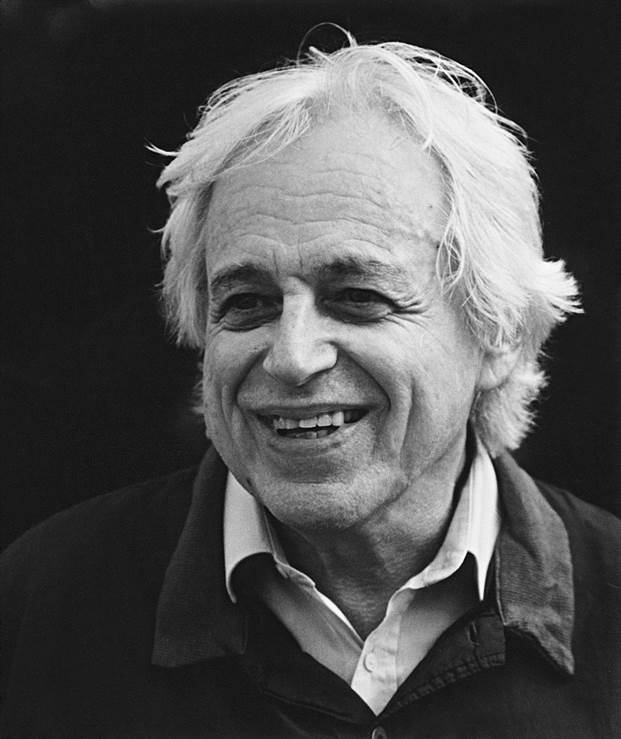
The Maly Drama Theatre of St Petersburg was founded in 1944 and is one of just three European theatre companies to have been awarded the title Theatre of Europe from the EU. (No I didn’t grasp the geography of that either). The company has been led by Lev Dodin since 1983 and is renowned for its Russian adaptations of theatrical classics and for its examination of the paradoxes and realities of culture, society, life and politics in the Soviet Union. The relationship between culture and government in Russia continues to fascinate me and I wasn’t going to miss an opportunity to see Theatre with a capital T come to London.

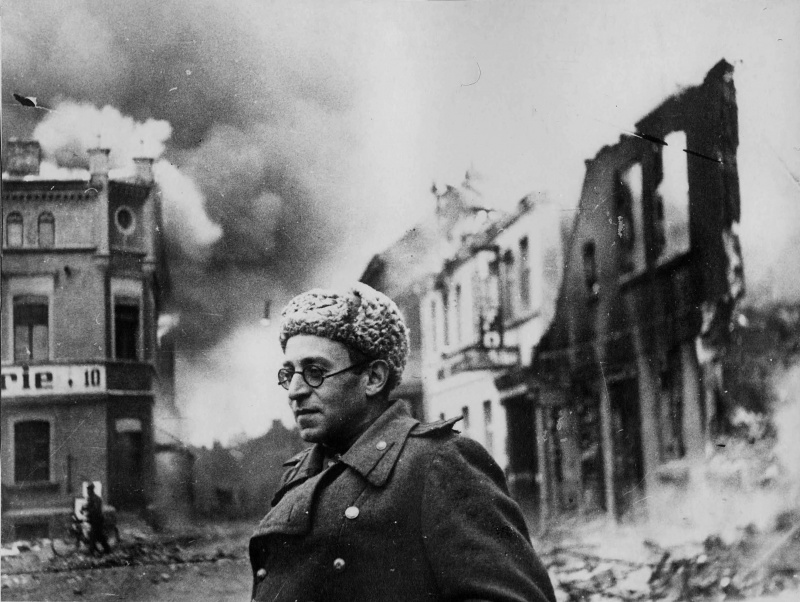
Life and Fate was premiered in Paris in 2007 and is based on the epic novel by Vasily Grossman, pictured above, which documents the life of the Shtrum family through the 1930s and WWII in Soviet Russia. Vasily Grossman was born in 1905, a Jew in Ukraine, and initially trained and worked as a chemical engineer. He took up writing full time after his one of his short stories In the Town of Berdichev attracted attention. In the 1930s he just about managed to stay the right side of the authorities, in contrast to many of his peers, but in 1938 his wife was taken into custody following the arrest of her ex-husband. He became a renowned war correspondent and was one of the first to enter Ukraine following its liberation, only to find his mother, and indeed the whole Jewish population of his hometown Berdichev, had been murdered by the Nazis. Ukrainian complicity in the genocide was covered up.

This personal history provided the material for Life and Fate which VG sought to get published in the thaw that followed Stalin’s death. However the manuscript was seized by the KGB and pronounced unpublishable for at least 200 years. After VG’s death in 1964 a secret copy was smuggled out and eventually published in Switzerland in 1980 and, finally, following Glasnost, in Russia though still with some passages removed.

It is then a Book with a capital B of immense significance. It is also a whopper extending to near 800 pages, echoing War and Peace. In another of the now not uncommon marital coincidences chez Tourist the SO has it near the top of her to-read list having been recently drawn into the world of investigative journalist Svetlana Alexievich, who also shines a light on Soviet and post Soviet life, albeit more recent decades. Unusually it was me that recommended her books. The cultural division of labour, with the SO doing the hard work of reading and writing, and me the easy jobs of seeing and hearing, art, theatre and music, is thus alive and kicking in the Tourist household.

Condensing down this work into three and a half hours of theatre must have been some undertaking, taking time (3 years in fact), effort, research and immersion. The play starts in 1943 after a prominent physicist, Viktor Shtrum, returns to Moscow and the Institute he works in. He lives in a flat with wife Lyuda, and schoolgirl daughter Nadya. Lyuda’s son from her first marriage, Tolya, has been killed in the war. Her first husband Abarchuk is a political prisoner in the gulag along with Krymov, the ex-husband of Lyuda’s sister Zhenya who comes to stay with the Shtrums.

The Soviet labour camp also houses another political prisoner Monidze and criminals Barkhatov and Ugarov. Their plight is contrasted with the prisoners in a Nazi concentration camp, Mostovskoy, Ikonnikov, Ershov and Osipov, overseen by SS officer Liss. There are scenes set in the Battle of Stalingrad with tank Colonel Norikov who is Zheya’s lover, his number two Getmanov and a runner Vershikov, and in the Moscow Institute with colleagues of varying political committment, Sevastnov, Sokolov, Shishakov and Kovchenko.

Fortunately there is no doubling up and the programme notes are excellent in providing context. For the scenes do deliberately mesh into each other, with some very well choreographed rearrangement of the set, and actors from one location often remain on stage when others take the lead. The chronology is also fluid and the presence of Victor’s dead mother Anna is made flesh in the most moving laments in between key scenes.

All this is intended to point up the equivalence between the totalitarian regimes of Nazi Germany and Soviet Russia and in this the play overwhelmingly succeeds. Viktor is Jewish and this leads to his ostracism and expulsion from the Institute as the policies of nationalism and anti-semitism infect Stalin’s regime in ways that mirror the more overt ideology of its enemy. If Viktor repents and confesses he might be able to save himself and his family, and continue with his work, but only if he abandons the truth and his identity.

And then along comes the fickle finger of fate as Stalin himself rings up and “wishes him success in his work”. It seems Viktor is the key to unlocking a nuclear bomb for the Soviets. He is safe. Life goes on. Except that the horror around him doesn’t stop. And Viktor is eventually faced with signing a letter that he knows will condemn dissidents to death.

It is an immense journey which in many ways is cleverly captured on this smallish proscenium stage. BUT it is very Actorly and very Speechy. Declamation is the go to style of delivery and this, compounded by the subject, makes for a gruelling evening. I was fortunately promoted to a much better seat, sightlines being untenable in my normal cheapskate TRH perch This exaggerated the staginess and meant a fair bit of my attention was lavished on the sur-titles for Francine Yorke’s translation. Now, I hear you cry, what did you expect going to see an epic set in the darkest period of the C20 delivered in Russian. Elf the Musical? Well no, I get that this did, to all intents and purposes, do exactly what it said on the can but I do think the production, not the material of course, tended to the overly grandiose.

I would find it invidious to pick out any of the cast or creative team for particular praise though you cannot deny the sheer presence of Sergey Kuryshev as Viktor and Tatiana Shestakova as Anna. I was also struck by Daria Rumyanantseva as Nadia, Alexander Koshkarev as Shishakov and Oleg Dmitriev as Liss but like I say this is large-scale, and I mean large, ensemble acting which I rarely see.

I feel unworthy saying this but the point of this blog is to record what I see, hear and learn. I have no doubt though that the next time one of the major Russian theatre companies comes to London I will be there. As with the visit of the Vakhtangov State Academic Theatre of Russia last year (Smile Upon Us Lord review at the Barbican Theatre review ***) the style may not grab me, the stories obviously do. And I am grateful to those who financed this visit. Anything that promotes mutual understanding of our histories must surely be valuable.

Christoph Sietzen and the Wave Quartet at the Concertgebouw review ****

11611295963_46a7279b5a_o

Christoph Sietzen, Wave Quartet (Bogdan Bacanu, Vladi Petrov, Emiko Uchiyama, Christoph Sietzen)

Het Concert-Gebouw, Recital Hall, 16th May 2018

  • Emmanuel Séjourné – Attraction for marimba, vibraphone and tape
  • Iannis Xenakis – Part B (from ‘Rebonds’) for percussion
  • J.S. Bach/Brahms – Chaconne (from Second Partita in D, BWV 1004) (arr. B. Bacanu) for marimba
  • Stewart Copeland – Sheriff of Luxembourg for marimba, percussion and tape
  • Ivan Boumans – The Cloth, op. 140 (encore) for percussion
  • Josh Groban – The Wandering Kind (arr. E. Uchiyama) for marimbas
  • J.S. Bach – Allegro (from Concerto in C, BWV 1061a) (arr. B. Bacanu) for marimbas
  • Astor Piazzolla – La muerte del ángel (arr. E. Uchiyama) for marimbas
  • Astor Piazzolla – Oblivion (arr. E. Uchiyama) for marimbas
  • Reentko Dirks – Danza non Danza (arr. The Wave Quartet) for marimbas
  • Astor Piazzolla – Milonga del ángel (arr. E. Uchiyama) for marimbas
  • Astor Piazzolla – Libertango (arr. E. Uchiyama) for marimbas
  • Rodrigo Sanchez / Gabriela Quintero – Tamacun (arr. E. Uchiyama) for marimbas
  • Rodrigo Sanchez / Gabriela Quintero – Juan Loco (arr. The Wave Quartet) (encore) for marimbas

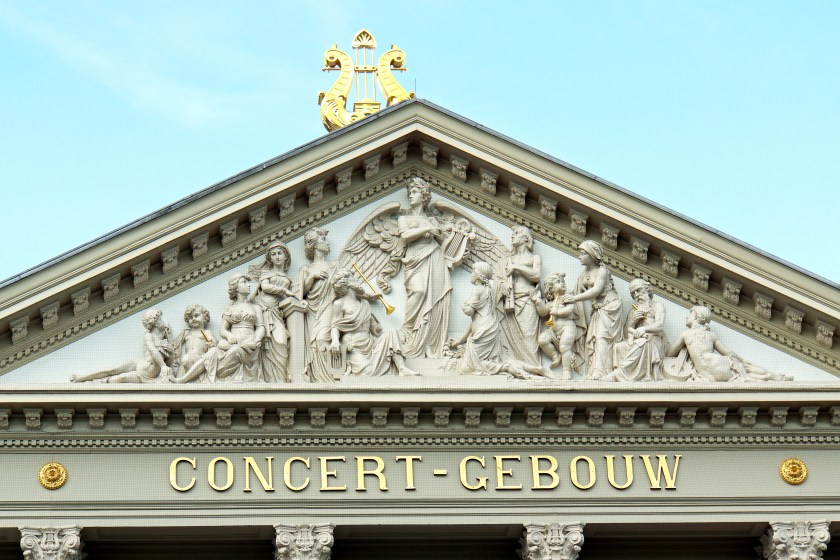
OK so I confess I was a captive buyer for this. This was what was on in the Concertgebouw on the night I was there. There were a few other tourists in the same boat, and a healthy contingent of local Amsterdammers. Which, even in the smaller, though still resplendent recital hall, made up a full house. The recital hall, in full blown neo-classical style, is topped by a rotunda with the names of the Romantic greats immortalised, and some not-so-greats as well.

Anyway whilst I didn’t know the percussionist Christoph Sietzen, and the crack marimba team of which he is a member, the Wave Quartet, this programme intrigued. In particular the Xenakis, who is near the top of my further investigation list, the Bach and the Piazzolla. The programme consisted of the first five pieces for solo percussion with Mr Sietzen and then the pieces for the entire quartet, largely arranged by Ms Uchiyama. Bogdan Bacanu, who might just be the most accomplished marimba player ever, and certainly its greatest advocate, was a child prodigy and went on to teach the other three members, amongst others, in Linz and Salzburg I believe. He is also responsible for the Bach arrangements, which are completely faithful to the originals.

Remember there are a lot of works by Bach that weren’t necessarily written for specific instruments but its a fairly safe supposition that he didn’t have a percussion instrument in mind when he set down the pieces here. On the other hand the marimba, which is by some way the most expressive and dynamically sophisticated of the percussion stable, ranging across 4 or 5 octaves, even if its timbre is so particular, isn’t too far away from the harpsichord in terms of effect. It is, as we see here, becoming increasing popular in contemporary classical music and the technical proficiency of playing has come on in leaps and bounds in part thanks to Mr Bacanu.

The first piece was by Emmanuel Sejourne who is the pre-eminent composer for marimba and vibraphone and a world renowned player. It was originally written for violin and marimba but here Mr Sietzen substituted violin with a vibraphone. I have to say it was impressive though I might have preferred to here it later on once I had adjusted to the marimba sounds. Even so it is breathtaking to hear what is possible for these instruments.

Xenakis composed two pieces for solo percussion, this piece Rebonds, and Psappha. It isn’t much of a surprise given the composer’s mastery of rhythm and structure but it is genuinely mind-boggling in its complexity. There are two movements in Rebonds. Mr Sietzen only played Part B, a shame as I would love to have heard Part A as well. It is scored for two bongos, one tumba, one tom-tom, one bass drum and a set of five wood blocks or wooden slats. Xenakis leaves some decisions on the score to the performer, all part of the mathematics of his music, (remember he was architect, engineer and mathematician as well as composer and not averse to shunting the laws of physics into his work). Xenakis is so far beyond what I understand in music but, trust me, the intensity of the rhythms here, despite the abstraction, still provokes a basic, primal reaction which needs no maths degree. You will laugh at me, but if you have listened through a John Bonham drum solo in Moby Dick (Google it kids), you will understand, though this is way more sophisticated than Bonzo thrashing away.

I took the opportunity to listen to Psappha. Amazing.

You will likely know the Bach Chaconne from the Violin Partita No 2 which Brahms amongst others transcribed for the piano left hand. (There is a YouTube performance by Danile Trifonov no less if you are interested and if you want the violin original please listen to Rachel Podger’s recording). I am not going to pretend that this marimba version matches that but it is still absolutely the same beautiful piece of music and shows astonishing virtuosity.

The Stewart Copeland piece, which was commissioned for Mr Sietzen, was a little less convincing by comparison to what else was on offer in this recital but was pleasant enough. Mr Copeland, for you youngsters who regard this as ancient history, was the drummer for popular English beat combo The Police in the 1980s, whose cod-reggae sound should never have worked, and never have been as popular, but it did, and it was. Mr Copeland has gone on to write film and game soundtracks and some classical compositions including this. Prior to the Police he was manager and drummer for Curved Air for those of you with an unhealthy interest in progressive jazz-rock. (Never ever get into conversation with me about Soft Machine).

After Mr Sietzen’s marvellous show of musical, and physical, prowess in the first half we might have expected something more sedate after the interval. No way Jose. (That being a reference to the Latin fuelled energy of the last few pieces). The Wave Quartet were decked out in bright red shirts, think Kraftwerk circa Man Machine without the black skinny ties and Fascist undertones.

There are many areas of music which are a complete mystery to me. I had never heard of Josh Groban before. Apparently he is a big noise though in the popera world. I can happily maintain my aloof indifference on the basis of this piece.

The second Bach piece is arranged from the first movement Allegro two harpsichord version of the Concerto BWV 1061 for the same instruments. So each of the four marimbas players with their two mallets (called knobs) in each hand is effectively one hand of the score. Given that the harpsichord notes can’t really sustain there is sound logic (literally) to transcribe to marimbas. It works, though I am not sure I would turn to this again in a hurry. I can’t deny Mr Bacanu’s dedication in adapting Bach in this way. I see the Wave Quartet have recorded the other harpsichord concerto arrangements with orchestra.

Astor Piazzolla was the genius Argentine who meshed the tango, the Baroque and jazz into a fresh and exciting musical world in the 1950s and 1960s. I can see exactly why the Wave Quartet would want to play these pieces. You will definitely know the Libertango. (I first heard in I’ve Seen That Face Before by Grace Jones). You will think you know the other pieces. The arrangements didn’t seem too complex which meant the Wave Quartet could pull of all sorts of flourishes. They were having a ball and so was the audience. The Reentko Dirks and Sanchez/Quintero pieces, originally for guitar, have similar heritage, with the final Juan Loco seeing young Vladi Petrov showing off on a simple beat box drum. Cheesy but undeniably joyous.

There you have it. A celebration of just what percussion can do and a salutary reminder not to get bogged down in serious classical music.


Spira Mirabilis at the Queen Elizabeth Hall review ****

Messier51_sRGB.jpg

Spira Mirabilis

Queen Elizabeth Hall, 15th May 2018

Beethoven – Symphony No 7 in A Op 92

Spira Mirabilis is a group of talented young musicians from around the world who play in various European orchestras. They hole up in Formigine in Northern Italy near Bologna to learn from each other and devote themselves to intensive study of major orchestral works of the canon which they then take around Europe to entertain us punters, and, more importantly, show us how it is done. I suspect they also have a bit of craic along the way.

The twist is that they have no conductor. Which means, in the spirit of a chamber ensemble, they have to “immerse themselves in the score with the aim of reaching an interpretative consensus on a shared vision and a complete synthesis with the work”. Now if you thought that the conductor of an orchestra, as I did a few years ago, was just there on the podium to provide a bit of visual light relief,  you would be very much mistaken. Someone has to impose a musical vision on even the most detailed score involving all manner of decisions on tempi, dynamics, who does what where, when and why, and all manner of other stuff way above my pay grade. If you dump his or her direction then I imagine you are collectively setting yourselves up for one hell of an away day. Yet this is exactly what they do with the intention then of trying to explain to us how they did it. Wonderful.

In this case they just happened to pick, IMHO, the most perfect piece of music ever written. I believe Beethoven to be the greatest of composers, the symphony to be the most complete musical form and this to be his best. Though I can see why others might disagree with any and every part of that statement. Moreover I admit that there are individual pieces by modern composer/performers in popular music genres that would just edge it for me on the eponymous desert isle. (I should probably post something on that).

Spira Mirabilis have in fact already been through an entire Beethoven cycle, good call, so this constituted something of a revival. Yet there was still a palpable sense of excitement in the Hall ahead of, and through, this performance. When Beethoven wrote this his hearing had significantly deteriorated and he had retired to the spa town of Teplice in order to gee himself up. There is no programmatic intent, unlike its predecessor the Pastoral, yet it is an astonishingly uplifting, happy work. That maybe because it is essentially dance music. Anyway it was a hit from the off and it is easy to see why.

The first movement starts slowly but when the “dotted” rhythmic figure finally kicks in LvB proceeds to push and pull it around in so many ways that it barely seems plausible that it can tolerate this level of innovation. If you ever need to understand Beethoven’s genius in taking simple material and wrestling it into music of unparalleled emotional and intellectual power through progressive variation, it lies here. This is the longest movement of any of the symphonies.

Then there is the Allegretto. A funeral march where the ostinato is repeated and repeated until it attains monumental proportions. Strings largely in minor keys, woodwinds take the major. If you need to give someone important to you a good send off, alive or dead, this is the music you need. It is the most hummable tune ever written. The Presto that follows is joyous and funny and contrasts with its central hymnal trio and the Finale cuts loose completely. I’ll warn you. Avoid sitting next to a fat bloke, likely in shorts, probably leaning forward, imperceptibly wiggling his fingers, in time just about, if the Finale of the Seventh should be playing. He might just start sobbing. With joy. Truly pathetic.

It takes a marvellous performance to overwhelm me and I have to confess this wasn’t quite there. It was insightful in glimpses, especially in the third movement, the negotiation between the players was intriguing and there was a slippery quality I liked. Tempos were sensible but I might have preferred something a little brisker in the first two movements, especially in the second subject of the Allegretto. But I still think the necessary compromises made everyone hold back just a bit. A sense of “after you Claude”. I am all about consensus in the “real” world but in the realm of the creative democracy can only take you so far.

I also have to confess that I didn’t stay for the post match replays and interviews. No good excuse other than wanting to see the SO and LD that evening. Though they of course completely ignored me when I got home early. I discovered that Spira Mirabilis had repeated the second movement, this time whilst randomly sitting in the audience. Damn. I wish I had stayed for that.

Still overall a fine performance of a transcendent work intriguingly delivered.


An Oak Tree the Orange Tree Theatre review ****

an_oak_tree_28conceptual_art_installation29

An Oak Tree

Orange Tree Theatre, 13th May 2018

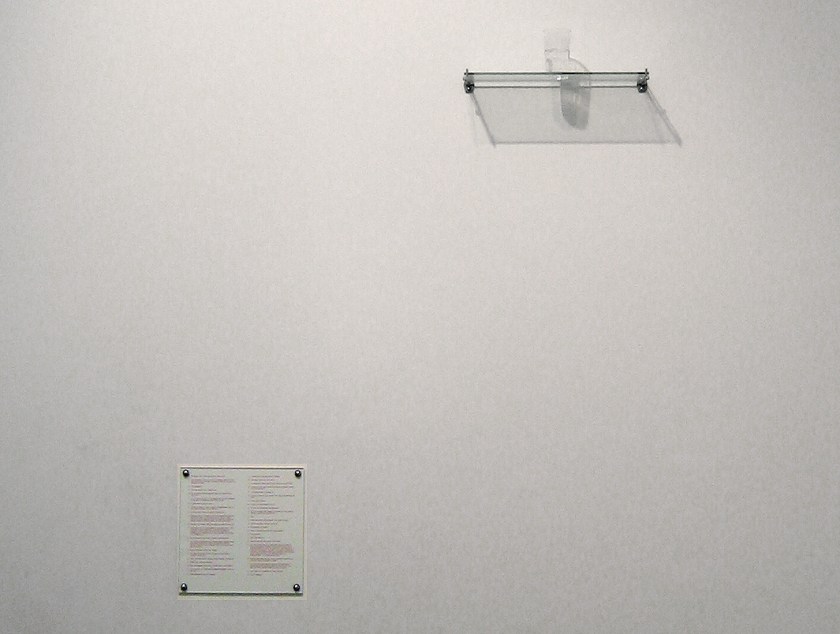
Tim Crouch’s An Oak Tree has been on my theatrical wish list for a little while now. First performed in 2005 at the Edinburgh Fringe it was, I understand, inspired by Michael Craig-Martin’s, (he of the day-glo technology), seminal work of conceptual art of the same name (see above) which “explains” why a glass of water balanced on a shelf is, in fact, an oak tree. Absolutely guaranteed to make the philistine’s blood boil. As so, to some extent, would Tim Crouch’s best known play.

Caryl Churchill no less described the play as “about theatre, a magic trick, a laugh and a vivid experience of grief, and it spoils you for a while for other plays”. Turns out that, for once, Ms Churchill maybe over-egging it a tad but it is still a fascinating work. Mr Crouch plays a stage hypnotist, complete with shiny waistcoat and cheap patter, whose act is crumbling, we discover, following a road accident which led to the death of a young girl (or maybe not). The other actor plays the father of the girl, Andy, who he encounters at one of his shows. The play then is ostensibly about guilt and grief, and how we process these emotions, a theatrical staple which has become something of a specialism at the OT.

But there’s a twist. The actor playing Andy, here Kate Hardie, hasn’t seen the play or the script before. Which leaves her being guided, like hypnosis, with a mixture of spoken and whispered instructions, headphones and script in hand, by Tim Crouch, in and out or character. It takes time for us, and her, to believe in Andy, though “he’ always remains slightly, and rightly, bewildered. Mr Crouch, on top of his “directing” duties also plays a character putting on an act, hypnotising an audience no less, and imagining an audience in parallel with us the real audience. We are asked to accept at various points that a chair is the dead child and that the grieving father in turns believes that an oak tree, (actually a tree which is part of the OT set for other current productions just in case this wasn’t all meta enough), is in fact his dead daughter, not just her spirit nor a symbol. It really is to him. This is analogous to the explanation of the Craig-Martin art work which informed the play. Indeed Mr Crouch exits the auditorium to fetch a glass of water at one point.

The wonder is that, as Mr Crouch piles on the deconstruction in his essay on performative language, counterpointing art and life, representation and reality, absence and presence, the artifice and magic of theatre, we actually end up caring about these two characters because of, and not in spite of, the form. No dry, academic exercise but a real play, albeit one with many conceptual layers through its 70 minutes.

You need to see it. And I need to see more of this magician’s work.


Oedipus at Amsterdam Stadsschouwburg review ****

OLYMPUS DIGITAL CAMERA

Oedipus

Tonneelgroep Amsterdam, Stadsschouwburg, 17th May 2018

The Tourist sets off to Amsterdam to see the new version of Oedipus from the mighty Toneelgroep Amsterdam. As well as his first visit to the Concertgebouw and a chance to reacquaint himself with one Rembrandt Harmenszoon van Rijn. The Tourist finally blogs as a Tourist.

What was the attraction. Oedipus first. Your man Sophocles could write a drama, no doubt about that, and for me, this, Oedipus the King (Rex or Tyrannus), tops his other oft-performed work, Antigone, (though that is still a cracker of a story). These two plays, in a trilogy, sandwiched Oedipus at Colonus where our unfortunate hero leaves Thebes with his daughters and proceeds to pop his clogs after a lot of philosophical chat.

I hope one day to see an adaption of Sophocles’s version of Electra, (all three Greek tragedians had a pop at this story), and Ajax, the miffed warrior who, surprise, surprise, tops himself. I hope, as has occasionally happened, some clever creative will also see the potential in Philoctetes, (wounded soldier on high horse – metaphorically of course – who doesn’t want to fight again). I gather the least interesting of Sophocles’s seven remaining plays is Women of Trachis.

Anyway, as you almost certainly know, the plot of Oedipus the King is an absolute belter. It’s been hard for any writer to top this, for sheer OTT intensity, ever since 429 BCE. That weirdo Freud even named a theory after it. Unwittingly kill your Dad and marry your Mum. It doesn’t end well.

How to adapt this though is the perennial creative conundrum. Which brings me to the second reason to hop on a train to see this. (Yes it is now possible to take the direct train from London to Amsterdam if not yet the return. Cheap as chips, door to door no longer than a flight. And so much more civilised. The bit from Brussels to Amsterdam was pretty much empty).

Namely director Robert Icke. For those that don’t know, Mr Icke, at just 32 years old, is the wunderkind of British theatre direction, though there are many others who match him in my opinion. He was responsible for the revelatory Almeida Hamlet with Andrew Scott, the recent Mary Stuart, 1984, Uncle Vanya and Mr Burns, all at the same venue, (where he is Associate Director), and The Red Barn at the National Theatre. Not all perfect but in many cases mightily close. Yet, of his work to date, probably the most breathtaking was his Oresteia, which even managed a West End transfer after its Almeida run.

Here he took Aeschylus’s mighty trilogy, dispensed with the chorus, pumped up the back story, gave the Gods a court-room at the end to weigh up Orestes’s guilt, (with a bit of audience participation), and carved out a family revenge drama of startling power, where black and white is mutated into every shade of grey, and where death is viscerally real. His adaptation translates the poetry into something more immediate which any audience can grasp. Greeks doesn’t get any better than this.

So no wonder he was invited into the Toneelgroep party to have a go at Oedipus. And there is a lot that Mr Icke has in common with the masters of TA, Ivo van Hove and Jan Versweyveld. The set of Oedipus is one of the modern, faceless, corporate offices which IvH and JV used so effectively in Kings of War and Roman Tragedies. Though given Mr Icke’s set up for Oedipus, a campaign headquarters on the night of an election result, Hildegard Bechtler’s design could hardly be more appropriate. As it happens Ms Bechtler designed the Hamlet set so she knows the Icke drill. The TA stage in the Stadsschouwburg is wide and deep like the Lyttleton. I reckon you could sit anywhere, (and seats are a bargain €30 or so), and see everything. As well as the set, the use of video (Tal Yarden) and screens, a bit of on-stage eating in a family dinner, the modern, relaxed dress, the sound of Tom Gibbons and the lighting from Natasha Chivers, all echo the TA aesthetic. Mr Icke also borrows freely from his own back catalogue, most noticeably with the giant digital clock counting down on stage, representing the time to the election result, but more importantly the revelation underpinning the prophecy. The domestic interplay, the interior setting, the on-stage suicide of Jocasta though thankfully not Oedipus’s gouging, (here with heels not dress pins, ouch), the bickering over the family dinner, the strategising, all will be familiar to those who have seen Oresteia.

The set-up is brilliant. We see a video of Oedipus talking to the press after the election has closed. He promises to clean up the plague which is debilitating Thebes. Here though the plague is shorthand for the political corruption and economic incompetence of the previous administration. “The country is sick”. He is offering a bright new future. “Yes we can” or “drain the swamp”. Take your pick. He also, on the hoof, commits to investigating, and getting to the truth of, Laius’s murder. Cut to the loyal speechwriter/adviser Creon, played here by Aus Greidanus Jr, having a go at Oedipus for making this risky promise. Tiresias (Hugo Koolschlin) is wheeled in to deliver the prophecy. Our first opportunity to see the nasty side of Hans Kesting’s Oedipus as he angrily dismisses the blind old boy’s “nonsense” and turns on Creon who he reckons wants the job of leader. Marieke Heebink’s Jocasta talks him out of sacking Creon, (no need for a chorus and executions in this scenario!), and we are on to the killing at the cross-roads.

But here Laius (Jocasta’s first hubby) is the victim of a road accident (limos not chariots obvs), and Oedipus starts to piece together his own accident story with the established version, questioning the Chauffeur, played by Bart Slegers. You know the rest …… and if you don’t you should. The way Robert Icke fits his version of the plot to the “original” is artful and ensures that the last third or so of the production is as powerful as it should be.

What Mr Icke also intelligently lays on top is the family dynamic as we see “Mum” Merope (Freida Pittoors), consumed by the agony of watching Oedipus’s unseen “Dad” Polybus dying whilst all Oedipus cares about is the prophecy and, here, his route to power, daughter Antigone (Helene Devos) and sons Polynices (Harm Duco Schut) and Eteocles (Joshua Stradowski). Their is some conflict between the two lads: remember they go on to bring Thebes to its knees by knocking seven bells out of each other. The entourage is rounded out by faithful retainer Corin (Fred Goessens) and assistant Lichas (Violet Braeckman).

The supporting actors are uniformly marvellous but it is Hans Kesting and Marieke Heebink who dominate the stage. Which brings me to the third reason to nip over to Amsterdam to see this. The Tourist considers Hans Kesting to be the best male actor in the world and Marieke Heebink to be the best female actor. They proved it once again here. No fear you see, massive emotional range and immense physicality. No point holding back as the revelations tumble out in Oedipus and, trust me, they don’t. The scene were Jocasta explains how she was abused by Laius, and conspires to smuggle her baby away, is unbearably moving. Love is about the trickiest emotion to capture on stage. These two show exactly how to do it.

So why just 4* and not the 5* that you might expect from this obviously gushing fan of the play, the ensemble and the director. Firstly there is maybe, as I allude to above, a bit of a sense that we have seen this all before. The setting works, how “fate” brings a “good, man” down, and, specifically whether it pays for a politician to be “honest”, but the look and feel is maybe just a bit too close to Mr Icke’s previous work. More importantly the text is maybe a little too direct. Remember I was following a sur-titled English translation of a Dutch adaption by Rob Klinkenberg of the original Greek filtered through numerous prior translations. This presumably makes its literalness even more literal. Helps plot and message but leaves poetry on the table. In TA’s other work I have seen, the Shakespeare for example, this has not been a constraint, the language still shines. In IvH/JW’s Antigone conversely, which came to the Barbican, the translation by Anne Carson was too challenging, though this disappointed more through Juliette Binoche’s miscasting it pains me to say.

Still overall this is a great piece of theatre. If it ever wends its way to London you must see it. Otherwise we have Marieke Heebink as the lead in Simon Stone’s Medea to look forward to next year at the Barbican and Simon McBurney makes his directorial debut at TA at the Staadsschouwburg with a Cherry Orchard. Yum. This creative collaboration, amongst so many other reasons, is why Europe is a good idea. Though I doubt any of the dumb-arses in England who think differently would care.


The Gronholm Method at the Menier Chocolate Factory review ****

menier_chocolate_factory

The Gronholm Method

Menier Chocolate Factory, 12th May 2018

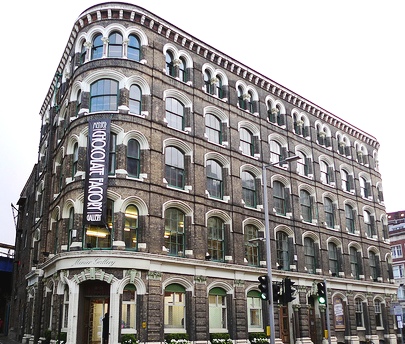
Curious place the Menier Chocolate Factory. Properly fringe in looks and feel. But programming which is more Bournemouth than Borough. Still it knows its audience and seems to pack ’em in, even with prices that seem a little more confident than some of its more fringe-y fringe theatre peers. And quite a variable output based on the critics and the opinions of one or two of the Tourist’s nearest and dearests. Still sometimes they nail it, especially with their musical revivals if that’s your bag, and their production of Stoppard’s Travesties, now on Broadway, was an absolute triumph.

So the Tourist pays attention to its offerings and saw something in The Gronholm Method which drew him in. Glad I did for it is a very pleasing, humorous, gentle satire on the world on modern employment practice, and specifically, the job interview. It is the most successful work from Spanish playwright Jordi Galceran, and has been performed in over 60 countries since its premieres in Barcelona and Madrid. The translators here are Anne Garcia-Romero and Mark St Germain and the director is BT McNicholl, the production having been imported from off-Broadway.

Frank (Jonathan Cake), Rick (John Gordon Sinclair), Carl (Greg McHugh) and Melanie (Laura Pitt-Pulford) pitch up in a smart office room in New York for an interview for some high-powered sales role. A draw opens with a set of instructions. One of them is an Human Relations ringer and they need to work out who. Further, increasingly bizarre and/or personal instructions, follow. One of them will get the job.

OK so it is a bit of a stilted set-up, which never quite relaxes, but it is the vehicle for some pretty amusing interchanges and some smart observations on the lengths people will go to in the modern, competitive workplace. The twists are not earth-shattering but they come at sufficiently regular intervals to intrigue. The performances are very fine, particularly Jonathan Cake as the viperous egoist Frank and John Gordon Sinclair as bumptious everyman Rick, and together the four players generate enough tension to convince. The direction is slick across the shortish 90 minutes, the set from Tim Hatley is spot on and the accents are convincing to my ear.

You will enjoy watching I am sure, but more for the games it plays, with us the audience, as well as between the actors, but any pretence it might have to offer psychological insight flounders on the rather cardboard cut-out nature of the characters served up. So, I would guess, you will largely forgot the entertainment not long after climbing the stairs out. No matter. Take it for what it is. As I did. Hence 4* not 3*.

If you want real workplace drama, look out for Mike Bartlett’s Bull. That’s so real it hurts.

Ligeti in Wonderland at the South Bank review *****

ligeti1

Ligeti in Wonderland

Queen Elizabeth Hall and Purcell Room, 11th, 12th and 13th May 2018

Pierre–Laurent Aimard (piano), Tamara Stefanovich (piano), Patricia Kopatchinskaja (violin), Marie-Luise Neunecker (horn), Daniel Ciampollini (percussion)

  • Ligeti – Poeme symphonique for 100 metronomes,
  • Ligeti – 3 pieces for 2 pianos (Monument, Selbstportrat, Bewegubg),
  • Ligeti – Trio for horn, violin and piano
  • Steve Reich – Clapping Music
  • Ligeti – Etude No 8 for piano and percussion
  • Conlon Nancarrrow – Piano Player studies Nos 4 & 9 arr. for 2 pianos
  • PL Aimard – Improvisation for 4 hands on Poeme symphonique for 100 metronomes
  • PL Aimard – Improvisation for piano and percussion on Ligeti’s Etude no 4 (Fanfares)

Shizuku Tatsuno (cello), Katherine Yoon, Yume Fujise (violins), Tipwatooo Aramwittaya, Ilaria Macedonia (harpsichords), lantian Gu, Laura Faree Rozada. Joe Howson (Pianos)

  • Sonata for solo cello
  • Ballad and Dance for two violins
  • Continuum for solo harpsichord
  • Passacaglia Ungherese for solo harpsichord
  • Musica Ricercata for solo piano

Pierre–Laurent Aimard (piano)

  • Etudes Books 1,2 and 3

Pierre–Laurent Aimard (piano), Patricia Kopatchinskaja (violin), Marie-Luise Neunecker (horn), Nicholas Collon (conductor), Aurora Orchestra, Jane Mitchell (creative director), Ola Szmida (animations)

  • Chamber Concerto
  • Piano Concerto
  • Hamburgisches Konzert
  • Violin Concerto

Hello. The review starts down here. As you can see the Tourist, along with many others, similarly intrigued and maybe enraptured by the music of Gyorgy Ligeti, put in a shift enjoying this weekend of music dedicated to his music.

Not one second was wasted. Some of the pieces stood out, the Trio, the piano works especially the Etudes and the Violin Concerto, but overall this was a fantastic array of performances of this brilliant composer. Wonderland for sure.

Now it takes a few decades before the new in all art forms is appreciated. Classical music, even in its most saccharine form, is not going to be for everyone. Yet it seems pretty clear to me that Ligeti, ahead of the other big name Modernists who transformed Western art music in the middle of the last century, is the one most people would choose to listen to. There is innovation and extension in his sound world for sure, there is intellect aplenty and there is memorable structure, though not the mathematical -isms of his peers, but most of all there is a depth of expression that anyone, even this muppet, can grasp. Add to this rhythm, of sorts, power, humour by the bucketload, and it’s easy to see why he gets performed a fair bit more than his contemporaries. He wasn’t sniffy about minimalism and he embraced music from other cultures. If you want to dip your toe in the modern classical world then this is definitely where to start.

There is a grand, ambitious, searching quality to his music, audible even in these smaller scale chamber and solo works. More often than not the works teeter on the brink of chaos but always, one way or another, resolve so I think it is optimistic on the whole. And, importantly, as with Luciano Berio, (another favourite for me alongside Xenakis and Penderecki), the history of art music is not smothered or ignored.

Where, variously Romania, Hungary, Germany and Austria, when, the War, (only his mother survived the concentration camps from his Jewish family), the Cold War, the 50s, 60s and 70s, what, as he moved through electronic and the Cologne School, to “micropolyphony” and then “polyrhythm”, all tumble out of his music like an avant garde encyclopedia. Know all those sounds that inhabit movie and TV soundtracks, when the creatives what to think big, go cosmic or generally scare the pants off you. Ligeti kicked it off, when Kubrick nicked his grooves for 2001. Music as texture. He even looks the part.

One more thing before I end this wall of pretentious guff. He always knew when to stop. Twenty minutes tops, even for the concertos. Most works clock in under ten minutes. Even opera Le Grande Macabre is under two hours. Genius.

The first concert kicked off with the Poeme symphonique for 100 metronomes. Yep there are 100 metronomes on stage set up with different beats. The performers skip on and set them off. Randomly. Of course it’s a joke, intended to explore the notion of chance in music (a la John Cage) but it becomes hypnotic, even a bit tuneful as patterns emerge from the chaos, and the gambler in me was desperate to have a punt on the last metronome clicking as it were. The survivor. An important concept for Ligeti given his personal history.

Pierre- Laurent Aimard was joined by regular collaborator Tamara Stefanovich for the two player piano pieces which preceded the Etudes. The first, Monument, sets up a cyclical rhythmic pattern which is then toppled with both players ending up at the very top of the keyboard. The second is an homage to minimalists Reich and Riley, fast scales and arpeggios with a backdrop of “silent” keys. This ends up in the bass. The third, Motion, is a canon, if you concentrate, which echoes the first piece.

The Trio is apparently an homage to Brahms. Search me. I suppose it does have a more Romantic structure than the polyrhythmic later Ligeti pieces. There is a sonata form opening, followed by a rapid ostinato with folky tunes wrapped around it, then a crooked march and a finale nicked from chords in Beethoven’s Les Adieux sonata. The main interest lies in the way the natural horn, with no keys and therefore lots of “out-of-tune” strange notes contrasts with the mannered piano, leaving the violin to hop between the two given its ability to produce natural harmonics. Since Ligeti dedicated his horn concerto (heard in the last concert) to Marie-Luise Neunecker, PL Aimard is the towering interpreter of Ligeti’s piano music and Pat Kop is my absolute favourite violinist in C20 music, there is no way this could have been bettered.

Then the fun started as PL Aimard and Daniel Ciampollini gave us a short rendition of Reich’s Clapping Music, (if you don’t know it the clue is in the title), which segued into Liget’s eighth Etude with Mr Ciampollini playing around it on his percussion kit, Nancarrow wrote his 49 Etudes for player piano because they were unplayable. Not so it seems, for these two particular studies, when four hands get involved. Then our percussionist interrupted on PL Aimard’s piano, and then both page turners, so all five were dinking out a version of the metronome piece that kicked things off. It was very droll though I admit you had to be there. Finally a dressed down version of Ligeti’s fourth etude.

Who knew classical music could be this much fun? OK maybe fun is stretching it but this whole performance emphasised the sharp humour which underpins Liget’s work as well as being a showcase for his rhythmic genius.

The next (free) concert was in the Purcell Room and involved students from the Royal College of Music. It mixed up some of the later solo Ligeti works with some from his early days in Romania and Hungary. As is always the case with RCM students the performance was at a very high level, better than many “professional” equivalents. Indeed this bunch already, largely, are on the circuit already. They all have jaw-droppingly impressive CV’s. I would single anyone out – they were all marvellous.

I heard the solo Cello sonata recently (Peter Wispelwey (cellist) at Kings Place review ****). It has been a nailed on cello classic since its premiere in 1979, though it was written in 1954. It was initially banned in Hungary by the “Composers Union”, a Stalinist censor. Two movements, a Dialogo, a conversation between a man and a woman, two ostinatos alternating between the upper and lower registers, and a Capriccio which has all sorts of thrilling extended techniques. (As an aside it would have been great to have recruited a cellist to the weekend cause to have a crack at the Cello Concerto with its bonkers high sustain at the end of the first movement).

The Ballad and Dance (1948) echoes Bartok with its loose transcriptions of Romanian folk songs. It is as easy to listen to as it sounds. Ligeti went on to explore Romanian folk songs in his Concert Romanesc (which sounds about as un-Modern and late C19 as it is possible to get).

Continuum was written for a two-manual harpsichord which can’t get up to much dynamically. The idea is that the notes are played so fast that the rhythm melts into a continuous blur. Almost to stasis. It looks and sounds like hard work to play but Tipwatooo Aramwittaya, (who appears to have medicine to fall back on if music and performance doesn’t pan out, which it will), was as cool as a cucumber. Like much of Ligeti the sounds are viscerally arresting but this is not mere novelty. Apparently it has been adapted for barrel organ to make it even simpler and even faster. The Passacaglia Ungherese, in contrast, is a repeated four bar descending ostinato intended to mimic the ground bass of the Baroque and was intended as a p*ss-take for his students, and those of us today, who love to keep moving to those Baroque grooves. It has some dancey counterpoints, obviously, and is marvellous. I need a recording.

The Musica Ricerta, like the Cello sonata, is a kind of experimental training work that Ligeti wrote in Hungary in the early 1950s away from the gaze of the censors. In each of the eleven pieces he places various restrictions on pitch, intervals and rhythms. they get sequentially more complicated as the number of pitch classes increases from the basic A in the first piece. Music for the brain for sure, but, as ever, Ligeti doesn’t skimp on the aesthetic. He loved sound you see.

This brings me neatly to the concert devoted to Ligeti’s 18 Etudes set across three books, started in 1985 and completed in 2001, his final work. All the influences on his “final late” period are there, central European folk music, Debussy, fractals, African cross-rhythms and Conlon Nancarrow. They are fiendishly difficult to play as Ligeti explores the entire range and possibility of the piano and piles layer upon layer of music. A fair few have a hectic, even aggressive quality, as they pile up into a rapid resolve but there are also poetic moments. There is a reason why M. Aimard is the pre-eminent performer of these pieces and the full house here was privileged to witness it. One of the best concerts I have ever attended.

The final concert expanded the player forces with the Aurora Orchestra under Nicholas Collon taking to the stage. The Chamber Concerto is a nailed on classic of the modern era, small-scale orchestra, 20 minutes in length, (no-one dares go further in new music, if only because it won’t get performed), and boundary-pushing. The opening movement has the instruments sliding around until they bash up against each other, then the winds sing out, before it all subsides. The second movements is a kind of mashed up Romantic fantasia which goes a bit awry, to be followed by a mechanical march, a clock factory under attack. The Presto finale is in a similar vein though ends perkily. If you ask me it is like a mini Rite of Spring, though as if some talented musicologist had discovered a partially burnt, muddled up copy of the score many years later. I am still trying to work it out.

The Piano Concerto is an even more uncompromising chap. Movements 1, 3 and 5, all quickest require the pianist to set the rhythms against which the orchestra adds snatches of melody. The second and fourth movements are more of a partnership. In the second the silly instruments, whistles and ocarinas, enter the chorale and in the fourth Ligeti sets up his head-spinning fractal structures. It is pretty quirky overall, sometimes confrontational, but immensely rich. I think it was the one piece over the weekend which really pushed the audience.

The Hamburgisches Konzert, Horn Concerto, was written for Marie-Luise Neunecker and in honour of Hamburg where he lived for 30 years. It is written, in part, for natural horn and exploits the strange harmonies which can emerge from the pure overtones of that beast. Finding out what sounds can do is part of the modern classical world but Ligeti, even here, never forgot to ensure this was set in a profoundly musical context. There are seven short movements. The soloist shifts between natural and valved horns, the four horn players in the orchestra, (all fine players, Pip Eastop, James Pillai, Ursula Monberg and Hugh Sisley), accompany on natural horns, the orchestra, except in the fourth movement takes a back seat. Now there is no doubt that the horn sound is a beautiful, extraordinary and eerie thing, (listen to Britten’s Serenade for a more comfortable alternative), but, to be fair, it can’t get up to much. But what it can do is showcased in this concerto and Ms Neunecker is probably the best person on the planet to show us how.

Having said that it was the Violin Concerto that brought the house down. Pat Kop is a magnetic stage personality, as she skips about, every inch the gypsy fiddler, in bare feet. The work is meat and drink for her, she even chucked in her own, entirely sympathetic cadenza, roping in the lead violin of Alexandra Wood. But the Aurora Orchestra also rose to the occasion. There are all sorts of non-standard tunings at work here, in the brass, in the woodwinds, even in one violin and viola. And, of course, the soloist, if they know what they are about, can bounce around to exploit the strange harmonics as GL intended. There are five movements, all of which exploit the coincidences, but the clarity of the interplay makes these sound more chamber-like than its two concerto peers. And dear reader there are passages, like the Aria at the beginning of the second movement, that are not at all scary. I promise. It’s a masterpiece I reckon.

So there you have. Possibly the best composer of the latter half of the C20 shown off to stunning effect by musicians who clearly love his work. You could feel the buzz in the room/s. The Barbican, courtesy of the BBCSO, has a “Total Immersion” day devoted to Ligeti on 2nd March next year, which repeats some of these works but offers up some choral and larger scale orchestra works. Do go.



DNA and The Fall: National Youth Theatre at the Southwark Playhouse review *****

3122307021_7d2a3d4cc4_z

DNA, The Fall – National Youth Theatre

Southwark Playhouse, 11th May and 14th May 2018

Let’s imagine you want to go to the theatre. To see a proper play. Let’s take the revival of Red for example at the Wyndham’s. 90 minutes straight through so not too taxing. Big name actor, Alfred Molina, in the lead. Michael Grandage directing. Very strong reviews just out. Best seats in the house? £120 in the middle of the stalls. Over £80 around that. Maybe if you wait they will come cheaper but who knows.

Par for the West End course now. Any alternative? Well yes as it happens.

For just £20, you could have ponied up to the Southwark Playhouse over the last three weeks or so (too late now – as usual I took too long to review this), plonked yourself in the front row and seen the gifted students of the NYT deliver some superb theatre, written for them, courtesy of two of this country’s finest playwrights. Dennis Kelly (DNA) was the writer behind Girls and Boys at the Royal Court which is off to New York with its dazzling lead Carey Mulligan (Girls and Boys at the Royal Court review *****), as well as Mathilda of course, and young James Fritz (The Fall) already has a string of prizes to his name, is cooking up something for the Hampstead Theatre and was the author of the vivid Parliament Square at the Bush (Parliament Square at the Bush Theatre review *****).

Mark me there were some superb actors at work for the performances I attended. In DNA Kitty Schneider as the taciturn, sociopathic Phil and, especially, Katie Ann Dolling as the garrulous Leah stood out. In The Fall I was particularly struck by the performances of Niyi Akin and Jesse Bateson and Troy Richards and Sophie Couch as the two couples. But honestly the acting of the entire ensemble in both plays was as good as, if not better, than most of what I see in major London theatres by established professionals. No fear. That’s the difference. And I am not being patronising or making allowances for these young’uns.

DNA, from 2007 and now a core GCSE text, follows a gang of teenagers after an “accident” that leads to the death of one of their members, Adam. They cover up to escape any consequences of their bullying, with Phil taking the lead. There is a twist or two. The way in which the play explores peer pressure and group dynamics, the need to belong and the effects of guilt Raskolnikov-style, in a not entirely naturalistic way, is fascinating. The relationship between Leah, painfully, and comically, self-aware as she desperately tries to impress an unresponsive Phil is particularly well-written.

The Fall explores the increasing divide between an older generation needing care but hoarding capital, and a younger generation who don’t see why they should be burdened and want the cash. Pretty topical huh. Mr Fritz is not a genteel writer, and wades in feet first with argument, humour and drama aplenty. Boy and Girl need somewhere to shag and end up in the house of the old, rich bloke that Girl helps care for. They discover, much to Boy’s disgust, he is lying in bed, close to death. One and Two’s relationship is charted from first meeting, through marriage, a child, poorly paid work, tiny rented flats, via a quick-fire exchange as they make and unmake the bed.linen. One’s Mum needs looking after, but what will happen to the flat she owns? In the final scene four old people, A.B,C and D, are holed up in a care home. They have a state sponsored option to die and release funds for their kids.

Like Parliament Square you might find the calculated structure of the play grating. Not me though. The energy, which the cast, complete with dance between scenes, revelled in, and the ambition, the play makes a lot of points in its 70 mins, bowled me over. As with DNA the performances were outstanding. I would love to see Mr Fritz re-write this from a reverse perspective, aged fear rather than millennial angst. Maybe when he is a bit older? That would be intriguing.

As an aside please do remember that the generational wealth gap which we are all banging on about, is as nothing compared to the class wealth gap. Knocking off the old early may not have the desired effect kids. Everyone will still suffer from plundering the earth willy-nilly and from voraciously conjuring up fictitious assets with fictitious debt pulled from the future. Still that’s Homo Sapiens for you. Exceptionalists prone to tantrums, unable to defer gratification.

The Fall was directed by Matt Harrison, DNA by Sean Hollands. Bravo chaps. I expect to see a lot more of their work in the future.

As I do from these talented actors. The major drama schools churn out beautiful actors from elite backgrounds. (I don’t use the term middle-class any more – it is meaningless). If my kids had any acting talent, and were not compromised by father having been hit by the ugly stick, despite their mothers’ beauty, they could be amongst them. But only because Dad was lucky to benefit from one of this country’s regular waves of capital expansion driven by financial intermediation. As I understand the NYT ethos though, access is not dependent on finance. So it is your duty to support it. I will remind you next time.


Nightfall at the Bridge Theatre review ***

nightfall-sky

Nightfall

The Bridge Theatre, 10th May 2018

If you haven’t been yet the Bridge Theatre offers up London’s best large scale flexible space. And very nice toilets. You’ve probably know that if you have any interest in things theatrical. You will also have probably have read that the space, and specifically the stage itself, here “thrust” into the audience, is the biggest handicap, as well as attraction, for this production of Barney Norris’s new play.

For mercurial designer Rae Smith, after the grim dystopian disappointment of the NT Macbeth, has conjured up a belter here along with lighting designer Chris Davey. A farmhouse cottage, its unkempt back garden, a massive, rusty oil pipe which runs behind it and a stunning realisation of the twilight sky, the backdrop for both acts. It looks amazing. Unfortunately the play itself, and its four characters, struggle to match its majesty. This is a play, as the criterati have unanimously observed, that would work better on a smaller stage. Not just because the subject, a dysfunctional family, is intimate, but also because the production, under the direction of Laurie Sansom, (he of the James Plays), is necessarily static.

That is not to say this isn’t an interesting drama, especially after the disclosures at the end of the first act. It just takes a bit of time to get going. We are on familiar territory. The inverse of the rural idyll. The trap that is the contemporary farm. I have raved before about director Hope Dickson Leach’s The Levelling, one of the best films of last year. which turns this setting into a visually and dramatically compelling narrative (The Levelling film review *****. The idea of Simon Longman’s Gundog at the Royal Court was powerful even if the play itself couldn’t support its weight (Gundog at the Royal Court Theatre review ***). Barney Norris himself has explored relationships in the rural setting of his native Hampshire before I gather, though I haven’t seen any of this work.

Jenny’s (Claire Skinner) husband has died leaving her the struggling farm. She is still grieving and prone to a sip or two of pinot grigio. Daughter Lou (Ophelia Lovibond) works at a local estate agent/developer but dreams of escape. Son Ryan (Sion Daniel Young, so good in Gary Owen’s Killology) has taken on the labouring. We first encounter Ryan with his friend Pete (Ukweli Roach) illegally tapping into the pipe, a ruse to rescue the farm. Pete has a bit of history with crime we learn and had a relationship with Lou, though she is now wary of him.

I understand why Barney Norris takes his time to flesh out his characters before advancing the plot but the wait does drag a little and, curiously, we don’t really get to appreciate why they have ended up tied to this place and each other. There are tensions, though again wisely, there are also still clear bonds between the four of them. As the secrets come out, as you knew then would, the pressure ratchets up. It doesn’t end well. Chekhov’s fingerprints are all over this.

Claire Skinner (a wonder in Terry Johnson’s underrated Prism at the Hampstead) does a grand job of showing Jenny’s slow disintegration and her desperation to keep the kids close at hand. Ukweli Roach and Ophelia Lovibond flesh out the relationship between Lou and Pete, alternately tender and matter-of-fact, and Sion Daniel Young shows us how immature Ryan tries to dodge reality.

It is worth staying with it, for there is truth in these characters, and it is easy to see what attracted Nicholas Hytner in wanting to stage it. I could also see, and hear, why people might be attracted to Barney Norris’s novels, where description and insight presumably augment any overly elegiac plotting. Writing about the everyday for the stage is hard, (the novel or film always works better), but Mr Norris knows how to. Just maybe not for this stage. Mind you I see that £15 will get you a seat up close in the pit for the last week or so and that is well worth it.


The Writer at the Almeida Theatre review *****

writer

The Writer

Almeida Theatre, 9th May 2018

The Writer is …. an absolutely staggering piece of …. writing. No other way to say it. I’d wager there were a few punters in the audience that disagree with me but I think Ella Hickson, along with director Blanche McIntyre and the rest of the creative team, and an outstanding cast, have conjured up a masterpiece. In the same breath it provokes, educates and entertains. It deserves a much wider audience that the well-heeled punters like the Tourist who make up the Almeida throng. Whilst the Almeida may not immediately struck you as part of the solution to the problem of access for telling stories from women on stage, it was heartening to see this project realised there.

It starts with an impellent Lara Rossi, (who is more than a match for Romola Garai, superb as the eponymous Writer), playing a young actor/writer who, post performance, eloquently demolishes the lazy, sexist premises on which a complacent Samuel West’s direction is constructed. As she says theatre is “famous people, doing boring things badly”! Men are judged on what they produce, women on how fuckable they are. They have inevitably met before. We discover though that they are acting out the Writer’s text and sharply shift to a staged Q&A in which the nervous, tongue-tied Writer’s work is undermined by the “real” Director imperiously played by Michael Gould who praises its “promise” but inveigles against it lack of “structure”. Just who is going to watch this sort of stuff?

Scene two switches to the home of the Writer and partner, also Samuel West, who bullies and cajoles the Writer into agreeing to adapting her work into a film. It is all about him. She yearns for, and needs, more. The “biological clock” is invoked. The next, I think deliberately disorientating and galling, scene sees the Writer in a safe, supportive female only space, a jungle-y retreat of sorts, invoking Semele and other Origin mythological mumbo-jumbo (with some fantastic realisation from Richard Howell’s lighting, Emma Laxton’s sound and Zakk Hein’s video). Scene four sees the now confident Writer arguing with Michael Gould’s director about the play to date. He is viciously pulling the prior scene apart, whilst patronisingly banging on about the “rawness” of the opening. The final scene sees the writer with another partner, this time played by Lara Rossi. The compromises and imbalances of scene two are revisited.

From this structure Ella Hickson is able to explore fundamental arguments about how power, the patriarchy and contemporary capitalism, (as Lara Rossi’s character explains early on), affects, and infects, the creative process, art and the theatre and our relationships. It is a polemic of sorts, but Ms Hickson dissects her material, with fearless, supple and sceptical self-awareness. It confronts and confounds the audience, for sure, is intellectually reflexive, but avoids aggressive predictable dialectic. It revels in, and reveals, the artifice of theatre. Which in some ways makes Romola Garai’s performance, remember she has to convincingly “act” this all out, even more remarkable.

If thats sounds like a recipe for a dry evening, think again. The “drama” is delivered with real passion, even anger, with wit, and with a formal inventiveness, that left the Tourist with bum glued to his seat, ears straining, mouth open. Anna Fleischle’s design, (and the on-stage managers), intelligently accommodate the play’s inversions with repeated construction and de-construction. Ultimately though it is the control that Ella Hickson exerts over her themes, assisted by Blanche McIntyre, that makes this brilliant. It twists and turns but it knows exactly what it is doing and saying.

I learnt a lot. I recognise the behaviours exhibited by the men on stage here, especially Samuel West in the second scene. I don’t know how to avoid them. I do know I had to think very hard about what I would say about the play. It will make you want to argue. Ideally not while it is going on although maybe we should.

At one point, forgive me I forget when, the point is made that the Writer will move on to more established theatrical storytelling forms. Presumably this will be so for Ms Hickson thought I doubt she will write anything as powerful as this story about the struggle to tell women’s stories. Mind you Oil was a work of near genius in my book and also shows she isn’t going to fuck about with little subjects. I think she might just be the best and most challenging writer for the British stage right now. Ignore those who will say this is just irritating, indulgent self-therapy. They are wrong. Leave them to watch nonsense like that revival of Absolute Hell or Rattigan knock-offs. This is what theatre is all about.