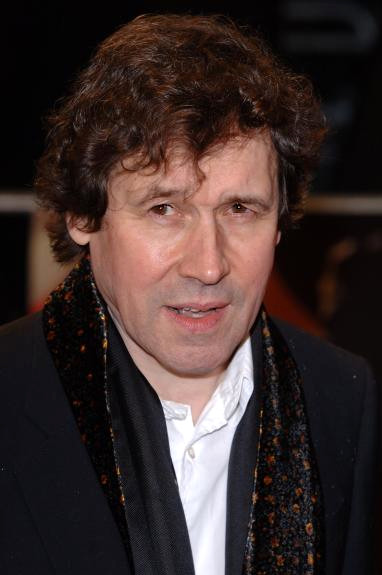
Cyprus Avenue at the Royal Court Theatre review ****

Cyprus Avenue

Royal Court Theatre, 4th March 2019

From one black comedy which imagines taboo breaking violence to make a political point (here big as well as small “p”) to another. Having seen the Ladykiller from The Thelmas at the Vault Festival it was off next evening with the SO, MS and MSC to see David Ireland’s much lauded play about sectarianism on its return to the Royal Court after a run in NYC.

Now I had originally signed up to see Cyprus Avenue on its first outing at the RC in 2016 but had to can it due to a diary clash. Didn’t know anything about David Ireland at that time so was a weensy bit peeved when the uniformly excellent reviews came through, especially after seeing The End of Hope, one of Mr Ireland’s earlier plays, which is one of the sharpest and funniest hours of theatre I have seen on stage in the last few years. So to say I was looking forward to this was an understatement. In fact maybe my expectations were a little too high. Don’t get me wrong. Cyprus Avenue delivers on so many levels. Not least the opportunity to see Stephen Rea on stage. Role for role Mr Rea might just be the most principled actor on Irish, British (or any other) stage and screen. He just doesn’t seem to take dodgy parts for money. To say the role of Eric in Cyprus Avenue could have been written for him is the understatement of understatements. But this is not quite the perfect play.

Actually maybe the understatement of understatements is to say that Eric is not a nice man. The play begins with him shuffling on stage into a nondescript room where he is interviewed by a black woman psychiatrist, (the excellent Ronke Adekoluejo, who, like the rest of the cast, has played the role in Dublin and NYC). Eric’s shockingly direct sexism and racism is quickly revealed. But this is not the half of it as it we flashback to Eric’s blunt treatment of wife Bernie (Andrea Irvine) and daughter Julie (Amy Molloy). And his realisation that his baby granddaughter Mary-May is, in fact, Gerry Adams, Republican, and the leader of Sinn Fein, (until last year). Not just a resemblance. He thinks his daughter really is Gerry Adams, complete with beard and glasses. For Eric, a diehard Unionist, this is anathema. His relationship with wife and daughter disintegrates and he even recruits a hardman, albeit comically incompetent, UVF paramilitary to “resolve” his dilemma. The end is shocking as Eric is forced to assert his bigoted identity, in the face of multiple threats, in the most violent way imaginable.

This is then a black comedy through which David Ireland skewers the lunacy of sectarian politics in Northern Ireland and, by implication, elsewhere. Eric’s religious and political values are so deeply ingrained that hate of Catholics and Republicans, the “Fenians” in his words, is his only currency. His warped logic is mined for laughs but the point is deadly serious. What makes the performance of the crumpled Stephen Rea so remarkable is that, through it all, he still makes Eric recognisably human. Not sympathetic of course. Just very real, his views to him are entirely logical and reasonable. You feel that if he were ever to abandon the certainties of religion and politics his entire psych would collapse in front of us. With a preposterous bunch of “British” religious and political zealots in the form pf the Democratic Unionist Party currently trying to hold our executive, and therefore legislature, and country, to ransom, the play could hardly be more relevant.

This is David Ireland’s metier. using uncomfortable comedy, and shocking violence, to interrogate, and maybe upend, our understanding, expectations and preconceptions of key political questions: sectarianism, identity, race, sexuality and culture. In his first play, What The Animals Say, this is filtered through acting and football, in Everything Between Us the setting is a Northern Ireland Truth and Reconciliation Commission, in the End of Hope, sex and celebrity through a surreal one-night stand, (as is the similar Most Favoured), in Half a Glass of Water, male rape and abuse, (Stephen Rea playing the abuser on its original outing), loyalist paramilitaries again in Yes, So I Said Yes, an age gap relationship in Can’t Forget About You, sectarianism once again in Trouble and Shame, and abuse, religion and homophobia in Summertime.

The sharp eyed amongst you will have noticed a pattern here with the same ideas, situations, issues and characters recurring through his plays. There is I suppose a risk of repetition and self-parody in all this “offensiveness”; indeed I gather that his poorly reviewed play, I Promise You Sex and Violence, was guilty of exactly that, though the title suggests Mr Ireland is alive to the possibility. Senseless violence and the urge to provoke can induce a reaction from the easily shocked or the tiresomely worldly but also even from those, like the Tourist, more open to this sort of caper. There were indeed one or two moments in Cyprus Avenue where I did think the point had been made and it was time to move on. MS was of a similar mind, whilst the SO rightly observed a few drops in pace, and MSC was a little nonplussed by all the savagery really .

Yet for all this duplication the provocation works, the dark, ironic parody is often very funny and the dialogue, in passages, sparks. Ulster American, his latest play, is returning to the Traverse in Edinburgh after selling out last year and, once again, dividing critics with its content. I suspect, one way or another, I will end up seeing it. Mr Ireland treads a line, no doubt, with the subjects he explores and with the way he explores them, but I would contend that is, amongst many other things, the purpose of drama. Trying to work out if people are laughing for the right or wrong reasons isn’t really going to work. As ever, in all art, it is the intention of the creator that is paramount.

Cyprus Avenue just could have done with being a little tighter, less overwritten, offering a little more surprise. On the other hand, for example in the scene where Eric and Slim, (the superb Chris Corrigan), meet, the lines are just so darned good, even when they say essentially the same thing, that I can see why Mr Ireland keeps serving them up. The way their mutual indignation at the backsliding of others in their community is captured, in that odd, overly eloquent tone of florid aggression, is delicious. For me, Martin McDonagh’s The Lieutenant of Inishmore, remains the definitive piss-take of sectarianism and is, line for line, funnier but it is not difficult to see why CA has proved a sell-out.

I assume Vicky Featherstone didn’t have to make too much in the way of adjustments to her sure-footed direction in moving the play from Upstairs too Downstairs at the RC and that Lizzie Clachlan’s spartan set was similarly re-used. The text calls for a muzak version of Van Morrison’s song from which the play’s title is drawn, the post part of East Belfast, but I don’t remember this. Perhaps because that might just be the most horrifying thing of all. Just joking. Anyone I have just put Astral Weeks, the album from which it is drawn on. Still as perfect as when it first came out in 1968. Doesn’t matter how grumpy he gets he is still The Man.


Ladykiller at the Vault Festival review ****

Ladykiller, The Thelmas

Vault Festival, 3rd March 2019

Blimey. The Thelmas, director and founder Madelaine Moore and writer Guleraana Mir, together with the writer here, Madeline Gould, aren’t pulling any punches here. The company is “dedicated to the development and promotion of early career female writers and theatre makers”. They “crave authentic and bittersweet stories outside of the traditional female stereotype and socially impactful narratives that reflect society but don’t look to solve prevalent issues”. They have certainly met the brief here.

Lights (from Jennifer Rose) up. Her, played by Hannah McClean, is a hotel chambermaid. Drenched in blood with a body (artfully made by Baska Wesolowska) at her feet. She appears to have killed a guest. In fact she has killed a guest. But, as she says, “it’s not what it looks like”. Over the next hour she takes us through her motives, means and opportunity. Initially because she is pissed off at having to clean up after someone who has shat the bed leaving no explanation or apology. She hold backs though and waits to plan the perfect murder. Because she can and because she enjoys it. And because she is overlooked and looked down on. That’s the premise. A woman with no reason to kill. She walks us through the history and typology of serial killing, invites us to consider our own reactions to her psychopathic tendencies and shows us how the sexist expectations of others have allowed her, maybe, to literally get away with murder.

The monologue constantly defies audience expectations often with a knowing wink or line. It is very funny in places and, which really surprised me, actually a little disturbing, inviting us to consider our own darkest impulses. (The Tourist may yet one day exact an ultimate retribution against those who put their feet on seats in trains).

That this should be the case is done to the brilliant performance of Hannah McClean. If acting is all about making a courageous leap to eliminate all traces of self-consciousness, to show no fear, so that an audience can suspend its own disbelief then Ms McClean succeeds in spades. Of course she hasn’t killed anyone and is not a killer for her own pleasure but she certainly makes you feel like she could be. Whilst simultaneously debunking and deconstructing the very idea. She is charming and unnerving by turns. Just occasionally the feminist message is a little too calculating, a little too strident, but it is still a powerful and effective conceit.

Unreliable narrators, especially the darkly comic, can often be relied on to tell a good story. To do this, and make telling points about gender expectations, in just 50 minutes or so, is a real coup. Pretty much every review of Ladykiller I have seen raves about it. With good reason. Definitely worth seeing should you get the opportunity. And I hope to see Hannah McClean again.

I see The Thelmas are working on a new show, Bootcamp, which involves women and boxing. I look forward to seeking that out too. (BTW The last play I saw which entered similar territory, The Sweet Science of Bruising by Joy Wilkinson, is getting a run at Wiltons in June. Well worth a visit in a venue which should suit it).

Unmythable at the Vault Festival review ****

Unmythable, Out of Chaos

Vault Festival, 3rd March 2019

There was all sorts of cutting edge theatre, comedy and performance on at the Vault Festival this year, but being the old fart that he is the Tourist largely plumped for the safe options of comic takes on Greek myths. Satisfying his pretensions and ensuring he doesn’t get too close to all the intimidating, fashionable London twenty-somethings who all seem to be permanently switched on whilst the Tourist languishes in his catatonic bubble. So having really, really enjoyed Pants on Fire’s Ovid’s Metamorphoses it was off to an hour or so in the company of Unmythable from Brighton based Out of Chaos.

Devised by the company and directed by Paul O’Mahony and Mike Tweddle, with sound from Rob Castell and Phil Ward and designed by Claire Browne (just a couple of boxes if truth be told), Unmythable offers a comic take on all the Greek myths (well maybe not all of them but a remarkably wide spread in just an hour) courtesy of three actors, I think Alice Haig, Hannah Barrie and one other whose name, to my eternal shame, I can’t find, having failed to secure a flyer. It takes the story of Jason and his 50 odd Argonaut mates and their city break to Colchis on the hunt for that Golden Fleece (above is a quattrocento Florentine take on the story) . The big name Argonauts get their own turns, as do I think, some non Argonaut gods and heroes, in the form of songs and skits. However Jason’s key wing-persons are the slightly less courageous bessies, Beta and Gamma. Nice touch.

Physical comedy, funny accents, costume changes, contemporary pop culture references, audience interaction, narrative, dialogue, monologue, are all employed with the emphasis on pointing up the brutality and often weirdness (and misogyny) of the myths. They don’t hang about so occasionally the switches are a little too swift, and the humour isn’t too subtle, but when to works it is genuinely hilarious. Jason dragging his feet, understandably, when out comes to marrying Medea, The Labours of Hercules, shushing in the Trojan horse, Midas at the salon, Aeetes as Brando as Don Corleone, Persephone as an adventurous pony club member and, simultaneously, peeved mum Demeter, trying to avoid the clutches of Hades.

Unmythable has already toured the globe over the past few years and I suspect if has many more years to go, though I think this years outing may be over. If you haven’t see it, and get a chance to, don’t hesitate. Ideally with mates and beer. No need to bone up on the Greeks. Didn’t bother me.

Ligeti Immersion Day at the Barbican review ****

Ligeti Immersion Day, Guildhall Musicians, BBC Singers, BBC Symphony Orchestra, Sakari Oramo (conductor), Sofi Jeaninn (conductor), Augustin Hadelich (violin), Nicolas Hodges (piano)

Milton Court Concert Hall, St Giles’ Cripplegate, Barbican Hall, 2nd March 2019

Not obligatory to illustrate the world of Gyorgy Ligeti with a “universe” picture. But given the associations of, particularly, his micropolyphonic and choral music, with such themes, (via, amongst others, its use by Stanley Kubrick in 2001 A Space Odyssey), I figured, why not? And this image. courtesy of the Hubble telescope is a beauty no? Just like Ligeti’s music.

From a relatively recent standing start I have immersed myself in Ligeti’s music, of which there are essentially three periods, the Bartokian, “secret” early music, the micropolyphonic phase, and the final polymodal, polyrhythmic works after the four year hiatus around 1980. All his work though incorporates pulse, process and humour and a fascination with pitch, texture and harmony. His music is intriguing but there is usually some immediate appeal. Its structures, often deliberately, hold back emotion, or show it in an exaggerated or comic way, perhaps a reflection of his extraordinary life story. Yet beneath the surface scepticism it worms its way in to your head and heart. Well it does me. It is easy to see why he is now probably the most popular modernist composer.

At the top pf his game he is up there with Bach and Beethoven. So you can imagine how excited I was by this Immersion Day, which followed a similar, though smaller scale celebration at QEH last year under the direction of Pierre-Laurent Aimard. This day kicked off with the documentary film All Clouds Are Clocks, then to Milton Court for a selection of chamber works from students at the Guildhall, a chat by Ligeti expert Tim Rutherford-Johnson, a survey of unaccompanied choral works at St Giles’ Cripplegate by the BBC Singers and finally some of the key orchestral works with the BBC SO under the baton of Sakari Oramo including the two late concertos for violin and piano. Here’s the complete list.

  • Musica ricerata
  • 10 Pieces for Wind Quintet
  • Horn Trio
  • Síppal, dobbal, nádihegedüvel
  • Éjszaka – Reggel
  • Zwei Kanons
  • Dri Phantasien
  • Idegen földön
  • Húsvét
  • Betlehemi királyok
  • Lux Aeterna
  • Magány
  • Nonsense Madrigals
  • Clocks and Clouds
  • Violin Concerto
  • Piano Concerto
  • Atmosphères
  • San Francisco Polyphony

I’ll spare you a great long regurgitation of the programme notes. Hardly seems worth it for the two readers who might stumble across this. Highlights then? The Horn Trio, Ligeti’s first statement of his mature style from 1982, which looks backwards in some ways to the Romantics but also contains astonishing new sounds and rhythms. A shout out to Karen Starkman’s horn playing, which was equally effective alongside the varied miniatures of the 10 Pieces for Wind Quintet. Best though was Síppal, dobbal, nádihegedüvel, (with pipes, drums, fiddle) from 2000, which sets four poems by Ligeti’s Hungarian mate Sandor Weores for mezzo-soprano, to a background of bonkers tuned and untuned percussion. Pure imagination. I particularly enjoyed the short, folk based, early choral pieces but star billing went to Lux Aeterna, the piece which Kubrick purloined, and which is the very definition of other worldly. Perfection from the BBC Singers. And in the evening, well all amazing but particularly Nicolas Hodges’s direct take on the metrical patters of the Piano Concerto from 1988 and, best of all, the closing San Francisco Polyphony, an eleven minute concerto for large orchestra which represents just about every idea GL ever had. Just immense.

Stones in His Pockets at the Rose Kingston review ***

Stones in His Pockets

Rose Theatre Kingston, 1st March 2019

Like Martin McDonagh’s The Cripple of Inishmaan, and written at the same time, Marie Jones’s Stones in His Pockets is a comedy which examines the impact when a Hollywood film crew descends on a small Irish community. But where one is sharp, dark and intriguing, this, for all of the sorrow at the heart of the play, is a much slighter affair, and can’t seem to make up its mind whether it is satirises or celebrating the outsider view of Ireland it examines. Maybe it was just the production, but the two hander structure, with both actors jumping incessantly between characters, seems to animate the broader, physical humour at the expense of the message about tired stereotyping which, I think, Marie Jones is trying to get across.

Not that it wasn’t funny in places. Though not as funny for me as it seemed to be for others. Some of the audience at the Rose were doubled up in mirth, others sat near stony-faced. Still there was pretty enthusiastic applause at the end for the efforts of Owen Sharpe (Jake) and Kevin Trainor (Charlie), which was very well deserved. Yet I had expected something more given the reception the play was afforded in its early years as it snowballed from its Belfast Lyric premiere, through a community tour, Edinburgh Fringe, the Tricycle and then into the West End for an award winning run of three years. Though perhaps this reflected the combined talents of actors Sean Campion and Conleth Hill (last seen by me steadfastly refusing to be out-acted by no less than Imelda Staunton in Who’s Afraid of Virginia Woolf). It has been revived on numerous occasions in Ireland, the UK and around the world. I even note that Kare Conradi, the AD of the Norwegian Ibsen Theatre (who was over here for The Lady From the Sea a couple of weeks ago), did a stint in a production over there. If it works in the land of Ibsen then who am I to argue.

Charlie Conlon and Jake Quinn are two friends in a rural town in County Kerry who sign up as extras for the Hollywood film. Charlie, on the run from his failed business, has written a script he dreams will be made into a film. Jake has recently returned from NYC, knows everyone in the village, and is besotted by the star of the movie, Caroline. The producers, directors and crew only care about getting the film done on time with plausibility, plot and accents taking a back seat. The “colourful” locals are initially excited at the arrival of Hollywood but soon tire of the glamour, and things take a turn for the worse when one of the villagers, druggie Sean, commits suicide after being humiliated by Caroline in the local pub. The flashpoint is Sean’s funeral. Jake and Charlie get the chance to pitch the script but it is rejected by the film’s for being insufficiently romantic and commercial.

Easy enough to see the tension between the Hollywood view of Ireland and reality. Martin McDonagh takes more direct aim at the liberties taken by Robert J Flaherty in his “documentary” Man of Aran in 1934, but the intent is similar. This touring co-production (with Bath Theatre Royal), is directed by Lindsay Posner, who has delivered it in NYC recently, and is as safe a pair of hands as it is possible to get, whether in classic or lighter theatrical fare (Mamet, Miller, Ben Johnson and Noises Off being particular highlights in my book). Peter McKintosh’s set is your standard Irish outdoorsy caper (see Rae Smith’s bigger budget version for the NT’s Translations last year), with the two actors manipulating a large chest to simulate the indoor scenes.

Moderately entertaining. For sure. Thought provoking. Nope, Fraid not.

A Skull in Connemara at the Oldham Coliseum review ****

A Skull in Connemara

Oldham Coliseum, 28th February 2019

Two successive nights. Two revivals of comedies looking at the nature of “Irishness”. Martin McDonagh’s A Skull in Connemara and Marie Jones Stones in His Pockets. Which did the Tourist prefer? McDonagh’s black comedy of course. Bit trickier to get to, train to Manchester, then an admittedly convenient tram to Oldham on a wet and windy evening, vs a 10 minute walk, but effort rewarded.

Thanks in large part to Chris Lawson who is the Acting Artistic Director (an entertaining if accidental play on words) at the Oldham Coliseum, an alumni of the Almeida and was responsible for this revival. Based on his work here, and the intelligent and accessible programme he has devised for this season, an in-house revival of Barney Norris’s Visitors, co-productions of Moira Buffini’s Handbagged and the musical The Hired Man, and touring productions of Approaching Empty (from the Kiln and worth seeing) and Charlotte Keatley’s local, and now global, smash hit My Mother Said I Never Should, if I were the Board of the OC I would give him the permanent job. Good people of Oldham and Greater Manchester I enjoin you to pitch up for any, or all, of these entertainments. You won’t be disappointed. I might join you for Visitors if I can rustle up the train fare.

I have bored you enough before on this site about the genius of Martin McDonagh’s plays so I’ll pipe down this time. Suffice to say A Skull in Connemara, first performed in 1997, was the second of the Leenane trilogy after The Beauty Queen of Leenane and before The Lonesome West and may be gets slightly overlooked compared to its peers, the later plays and the two produced plays in the Aran Islands trilogy, (the first of which, The Cripple of Inishmaan would provide an even more fruitful compassion with Stones in His Pockets – same conceit, Hollywood comes to rural Ireland – and both written in 1996).

Too often the words “black humour” or “black comedy” are the precursor to an entertainment that is neither dark nor funny. Not here though. This is quite literally graveyard humour. There is normally an expanding kaleidoscope of high (Synge and Beckett) and low (cop shows) culture references in MM’s work. Here surely Elsinore and everyone’s favourite, overly literal grave-digger has been transported to the west coast of Ireland. Loner Mick Dowd (John O’Dowd), amongst other things, is tasked each year with digging up and disposing of the skeletons in the local churchyard to make room for new entrants. His wife, who died seven years earlier, is interred there but, when he finally gets to her exhumation, she has disappeared. Bad news, especially when the village rumours is he bumped her off in the first place, so the story goes, for burning his scrambled eggs. He is assisted in his work by the local gobshite Mairtin Hanlon (Liam Heslin), whose chain smoking brother Thomas (Griffin Stevens) just happens to be the bumptious, corrupt local Garda, role models Starsky and Hutch. The cast is rounded off by the Hanlon’s elderly gran, Maryjohnny Rafferty (Jenny Lee), prone, like Mick to a shot of poteen, to tittle-tattle, cheating at bingo and bigotry.

Now for all his playful meta conversions, inversions and reversions (especially in the “fairy-tale plays” and the films), MM knows how to work structure, plot, character and rhythm. With just four characters in an isolated location, turned in on itself, where everyone’s business and history is shared, MM creates even more opportunity than usual to explore the personal dramas and relationships within the world he has created. Little does she know that he knows the she knows …. And then what do we know? All four characters have secrets of a more or less heinous kind.. Though this is still, by MM’s standards, a pretty “straight” play within the overall literal metaphor of “digging up the past”. He does treat us to some of the devices we have come to know and love: moral instability, dark, ironic humour and plot twists but this is gentler than many of the later plays.

Apart from the Tarantino-esque bone crushing scene choreographed to the sound of Dana’s All Kinds of Everything, Mairtin’s juvenile fascination with violence (road deaths, children drowned in slurry, boiling hamsters as well as his description of a bottle attack he perpetrated to revenge a slight oh how. trainers), his head wound and Thomas attempting to strangle Mick. Around this “comic” aggression though is some fairly good-natured verbal sparring, intended to upend “Oirish” stereotypes but not really with the vehemence, subversion and unpredictability of the later plays and films. The ending is satisfying ambiguous. We never find out whether Mick was responsible for his wife’s death but it feels like he might.

Katie Scott’s set, alongside the twilighted lighting design of Stewart Bartlett and resonant sound of Dan Bottomley, and a large helping of dry ice, is largely responsible for conjuring up a sense of chilly mystery and connection with the (Celtic) past. It slips seamlessly between graveyard (with falling crucifix looming out of the shadows) and the interior of Mick’s cottage. John O’Dowd, who was excellent as Jim in ETT’s touring production of Conor McPherson’s The Weir (another play which springs from the same place, not literally mind, as ASIC and Stones in His Pockets and was also premiered in 1997), brings the right tone of bluff pensive inscrutability to Mick and Liam Heslin’s explosive Martin seems unable to rein in his wild, morbid impulses in the face of repeated incomprehension. Griffin Stevens shows Thomas as a man supremely confident in his own inabilities. Jenny Lee understandably seems to take great pleasure in serving up Maryjohnny’s choicer acerbic lines.

Mining MM’s texts too insistently for laughs can play up the cartoonish tone at the expense of the darker overtones and pointed referencing . Not here though. Mr Lawson gets the balance right, the four characters are larger than life but the interplay between them is convincing and the simultaneous mocking and celebration of the form is well observed. I would have preferred the play ran straight through, and a fuller house would have served the cast better, but if this is what a portent of what is to come, in this very friendly space (I managed to get lost, don’t ask), then Manchester theatre-goers have even more to celebrate.

Mother Courage and her Children at the Royal Exchange Manchester review ****

Mother Courage and her Children

Royal Exchange Theatre Manchester, 28th February 2019

Brecht. Royal Exchange. Headlong (This House, People, Places and Things, Labour of Love, Common, Junkyard, 1984, The Glass Menagerie, American Psycho and Enron – and that’s just what I can vouchsafe), Anna Jordan adapting, Amy Hodge, the Associate Director alongside Jeremy Herrin at Headlong and Julie Hesmondhalgh as Mother Courage (“MC”) herself.

Strap yourself in. This was bound to be an exhilarating theatrical ride. And so it was. Full of great visual moments. Even if the transposition of the story to a future (2080’s) European war, Reds against Blues in a continent divided up by grids, probably subtracted from, rather than added to, its contemporary relevance. Brecht finished Mother Courage in 1939 and he pointedly set it in the Thirty Years War of 1618 to 1648, proportionately the most destructive conflict in human history, as a message of the forthcoming horror. The greatest “anti-war” dramatic statement of all time? Probably, though it is more analysis than fulmination. One pf the greatest plays of the C20, and all time? Certainly. So f*ck about with it at your peril.

On the other hand the whole point of BB’s epic, Verfremdungseffekt, theatre is to set the audience on its toes and get the grey matter working overtime, and to let the theatre makers create their own take. Which they certainly do here. With the utmost respect to Ms Hesmondhalgh who is predictably a mighty presence, the star of the show is a repurposed ice cream van, standing in for the cart of the original text. Not something I expect to write again on these pages. Joanna Scotcher’s design looks like it came from it was sneaked out of a forgotten storeroom at a Hollywood studio marked “Vietnam War/Mad Max for charity”, right the way down to Yvette’s (Hedydd Dylan) pink plastic “catsuit”. There isn’t much in the way of fixed bric-a-brac as it should be in Brecht and as is warranted by the Royal Exchange’s in-the-round space. Which left the van, sans engine but still with its jingle intact, free to perambulate across the stage, pulled, before their respective early demises, by each of MC’s three kids, Eilif (Conor Glean), Swiss Cheese (Simeon Blake-Hall) and Kattrin (Rose Ayling Ellis). Foods, drink, water, shirts, uniform, clothes, guns, furniture, you name it, MC stocked it in the ramshackle van. Everything you need to profit from a prolonged war. It even doubles up as a nightclub.

Music (Jim Fortune), which nods back to Weill, sound (Carolyn Downing) and lighting (Lizzie Powell) was similarly pimped up to match the setting and aesthetic. Musician Nick Lynn, positioned in the circle, served up, often at MC’s request, a barrage of sound at times to set alongside some of the gentler, folksy numbers. And Movement Director Raquel Meseguer put the hours in to marshal the nine strong cast through the 12 scenes (covering 12 years of the conflict).

Now the Tourist knows from Anna Jordan’s other recent, superb, work with Frantic Assembly, The Unreturning, that she is the doyenne when it comes to ambitious, physical theatre. And so it proves here. This adaptation comes in at a couple of hours. It can drift closer to three. With the on-stage intros to each scene and some fairly direct exposition it is easy enough to follow even for the uninitiated, and all the narrative elements are intact, but it scampers along at a heck of a lick and, with all the visual stimulus, the constant motion, the soundscape, the dizzying array of accents, there just isn’t much time to think about what is going on and what Brecht is telling us.

Not a complaint. The production looks and sounds so good that this is easily forgiven but don’t come here looking for any gestural detail in the main relationships, between MC and the children, or between MC and respectively the Cook (Guy Rhys), the Chaplain (Kevin McMonagle) and Yvette. Julie Hesmondhalgh and the rest of the cast, notably these three, are too good for Brecht’s messages not to sink in but the true horrors, the deal with the Recruiting Officer to conscript Eilif, Swiss Cheese’s torture, MC’s denial of her son after the botched ransom, Kattrin’s rape, Eilif’s execution, the Cook’s rejection of Kattrin and Kattrin’s sacrifice don’t always register as strongly as they might. Mind you the bleak conclusion certainly does: MC taking up the van’s harness as a single fire burns out.

MC’s determination, even desire, to profit however from the war, despite the damage it does to her and those around her, does ring clear. Julie H is a ballsy, artful fiercely protective but, ultimately wary and realistic, MC. As she should be. This isn’t Hollywood – we are supposed to engage emotionally with the characters but not be emotionally manipulated by them. Ultimately we aren’t really supposed to sympathise with MC, just to understand why she has to act as she does, to see the damage that war does to those at its periphery as well as the fighting protagonists. MC thinks that her business is the way to safeguard her children. Manifestly it is not. We see that. She cannot.

And to see how war, when churned through the prism of difference and ideology, is an integral part of the economic sub-structure, orchestrated by the powerful. One day perhaps Brecht’s lesson will have no relevance. No sign right now though we should remember that the global and supra-national institutions which were built post WWII to rein back our worst excesses have largely succeeded in restricting conflict to the national, or intra-national, level, though still often as proxies for economic accumulation.

Which is why MCAHC will go on being restaged and re-imagined (Lynn Nottage’s Ruined for example) for new audiences to watch and learn. At the matinee performance the Tourist attended there were, as is to be expected, throngs of school students. They seemed to be all over it. I assumed it was still some sort of set text for drama students. Apparently not. Only Brit playwrights good enough for the Government when it comes to reaching GCSE drama. Interesting in the context of the breakdown of the political order in Europe that this adaptation presages. Still we should be grateful that this shower of a Government hasn’t interfered with syllabus and teaching for, what, all of a couple of years. And, unless the nutters back down, they won’t be able to for many years to come as they sort out the never-ending shower of sh*t that is coming down the tracks once we have “Brexited”. It’s only just begun folks. And not in a nice, Karen Carpenterish kind of way.

Got me to thinking about what our proud youth study for drama at A level. Faustus, Lysistrata, Woyzeck, Antigone, Much Ado About Nothing, A Servant to Two Masters, Hedda Gabler, The Caucasian Chalk Circle, Accidental Death of an Anarchist, Jerusalem, Yerma, The Glass Menagerie, Metamorphosis, Cloud Nine, Our Country’s Good, Bronte, Earthquakes in London, Stockholm, The Crucible, The Visit. Across the various boards. Bloody Hell. If they master that lot then I have nothing to fear for they will know everything there is to know about the human condition. Drama is integral to democracy and citizenship. Ask Aeschylus, Sophocles or Euripides.

Cost of Living at the Hampstead Theatre review ****

Cost of Living

Hampstead Theatre, 27th February 2019

I can’t remember the last time I attended a performance at the Hampstead Theatre Upstairs or Downstairs that wasn’t, to all intents and purposes, full. Matinee or evening. Not a great surprise given the theatre’s reputation and location but still a testament to the winning mix of premieres of new plays by Brit drama royalty, (Mike Bartlett, Howard Brenton, Michael Frayn, Simon Gary, David Hare, Terry J0hnson, Nick Payne, Joe Penhall, Nina Raine< Beth Steel and Roy Williams for example), a smattering of revived recent classics, some vital new voices, some canny transfers and some top quality heavyweight American imports. When Edward Hall took over as AD decade ago, (alongside Executive Producer Greg Ripley-Duggan), the theatre was on its knees. Now it is thriving. All this without public subsidy. It will be interesting to see how Roxana Silbert, coming in now that Mr Hall is moving on, builds on his legacy.

All this has been achieved without compromising on quality or intellectual heft. Cost of Living being a perfect example, the hundredth premiere since Edward Hall came in. Martyna Majok’s four hander is another Pulitzer Prize winner seeing its UK premiere at the HT, (with one original cast member in Katy Sullivan who plays Ani), which looks at the marginalised in US society, through the voices of two people with disabilities and their carers. Ms Majok drew from her own experiences as a carer, (amongst many other precarious jobs, a first generation Polish immigrant to the US, with her mother, trying to build a career as a playwright), splicing together the opening monologue in a bar from Eddie (Adrian Lester), with a short play she had written about an academic wheelchair user with cerebral palsy, John (Jack Hunter) and his carer Jess (Emily Barber) and yet another short work with characters which became Ani (a bilateral above knee amputee) and husband Eddie. Whilst initially there isn’t much to link the three stories, Ms Majok just about brings the strands together by the end, though this is still more successful as a character, rather than plot, driven narrative.

That it works is in large part down to the accuracy of the writing and the performance of the cast. We learn how little money three of the characters have to get by on, (the exception being John), the “cost of living”, but, more importantly, we get to see how the three relationships develop, (Jess ends up with Eddie at the end – I’ll refrain from explaining how or why). There is dry humour and some moving, though utterly unsentimental, episodes, but always with a natural cadence in the dialogue and a clear-sighted purpose. Ms Majok, by choosing to just show, rather than confront or evade, stereotypes of people with disabilities and those who look after them, has created an involving, and entertaining, play whose minor structural flaws are easily forgiven.

Mind you this sort of had me with Eddie’s expansive opening monologue, or more accurately one-sided dialogue. He is in a bar buying drinks for a stranger and telling some of his, broken, life story. Now it helps that this was delivered by Adrian Lester who is a master of his craft and, if I am honest, the main reason I snapped up a ticket. Mr Lester may have devoted much of his considerable talent to film and TV but when he pitches up on stage it is always essential viewing as I know from the Hytner NT Othello with Rory Kinnear, (one of the Tourist’s best ever theatre experiences), and in Red Velvet, written by his missus. I am no expert on accents but his Eddie seemed utterly plausible and the way he pleads, pauses, corrects himself, changes expressions, reacts to the unseen stranger, engages with us but without breaking the wall, is just riveting.

Eddie is estranged from the feisty Ani, with a new partner, after the car accident that left her quadriplegic, but, when his truck-driving work dries up, he offers to become her paid carer despite her misgivings. Their shared past is revisited, often with great tenderness, but there is always the sense that Eddie is seeking redemption, despite not being to blame for the accident, and that Ani is only slowly coming to terms with her changed circumstances.

Jess may have recently graduated from Princeton but takes on the role as John’s carer to make ends meet alongside working in a dodgy all-night bar. John’s independent income allows him to pursue his academic career, also at Princeton, free from money worries but also gives him privilege. What makes him interesting is that he knows, and bluntly expresses, this. He is as matter of fact as the other three, struggling, characters and this is where the message of the play lies in its implicit criticism of the US healthcare and welfare systems.

Mr Lester’s performance as the gentle, melancholic Eddie is matched by his fellow cast. Katy Sullivan is mesmeric as Ani. whose wary, hard-arsed exterior only thinly masks a warm and loving interior. The bath scene is about as generous a scene as you could ever see on stage. Presumably because acting is so easy for her, Katy Sullivan is also a producer, writer and four time US 100m (T42) Paralympian champion. Martyna Majok asks a lot of Jack Hunter and Emily Barber to build a believable relationship from a few short scenes which also carry a much of the intellectual meat of the play, and it is to their credit that they pull this off. John verges on the overbearing and, initially, bluntly looks down on Jess. She in turn is defensive and evasive. A warm friendship blooms around their transactional relationship though their crucial, dislocating, final scene slightly strains credulity. The shower scene though, mirroring the bath scene of the other couple, is similarly affecting.

I knew I recognised Emily Barber but couldn’t place where. Turns out she was the Speaker, as Antigone, in the staging of Stravinsky’s Oedipus Rex at the Royal Festival Hall, a few years back. Top Kudos as Sophocles himself might have said. I also see Jack Hunter moonlights as a comedian. That figures. He has an easy confidence that suggests a bright stage future.

Edward Hall’s fluid direction is matched by the design of Michael Pavelka (new to me) who sketches out the four spaces, the bar, Ani’s functional flat, John’s tasteful apartment and Eddie’s threadbare motel room without getting in the way of the movement (with two wheelchairs) required to complement the dialogue.

Hopefully the HT will continue to get more than its fair share of the best of contemporary US plays to London to set alongside this and the likes of Gloria, Describe the Night, Good People, Rabbit Hole and The Humans which the Tourist has enjoyed in recent years.

Bodies at the Southwark Playhouse review ****

Bodies

Southwark Playhouse, 26th February 2019

Two’s Company is a theatre company which set out to explore plays written at the time of the Great War but has subsequently gone on to stage the English premiere of Hemingway’s only play and some Pinter productions. Here it has revived one of the most successful of James Saunders’s plays which originally premiered at the Orange Tree Richmond in 1977 before transferring to Hampstead Theatre and the West End. This is the first revival in 20 years or so.

James Saunders (1925-2004) was initially a champion of the Theatre of the Absurd, and even in his later work, (he wrote some 70 plays in all), he sought to push theatrical boundaries. He was closely associated firstly with the Questors Theatre in Ealing, (now one of the largest independent amateur theatres in Europe), and subsequently the Orange Tree.

Now I am not quite sure what attracted the prurient me to this intricate tale of wife-swapping in 1970s West London. Actually that snide observation does play and production a massive disservice. This really is a stealthily constructed portrait of marriage which has universal lessons beyond its central conceit.

Anne, on the surface the archetypal bored housewife, and Mervyn, frazzled and erudite English (head) teacher, are the embittered Ealing couple whose barbed conversation is fuelled by Scotch. So far, so Who’s Afraid of Virginia Woolf. They meet younger couple Helen and David, something in marketing, and become bessies. However we join them a decade after they initially befriended, Helen and David having returned to the seething maelstrom that is Esher from the US. We discover that they left after the couples swapped, the casual affair of Anne and David countered by Helen’s more calculated seduction of Mervyn, and then returned to, their partners, all those years ago. Helen and David have undergone some fairly intensive therapy to overcome the emotional impact, whilst Anne and Mervyn have simply buried it and their other “neuroses”. The therapy in question was a actual thing, Erhard Seminars Training, which the programme explains, went well beyond the usual hippyish 1970s mumbo-jumbo into some fairly aggressive group interventions. Worked for some apparently, though the organisation was dogged by accusations of brainwashing, bullying and extortion.

Anyway it has turned David, and Helen on the surface, into models of emotional stoicism and patronising rejectors of consumerism. Mervyn though is having none of that and, niceties dispatched, starts to pick away, at hypocrisies past and present, culminating in a full-on, pissed-up, stripped-bare (not literally but it might have worked) diatribe. These are all well-read people, they read on stage, which makes their opening expositional monologues, and subsequent conversation and interaction, all the more articulate. James Saunders clearly had a gift for provocative dialogue and the lucid four hander set-up is the perfect vehicle to show this off, especially when contrasted with an off-stage sub-plot of Simpson, a troubled, poetry obsessed, student of Mervyn’s.

Out of the mouths of his morally compromised characters Mr Saunders seems to conjure up rafts of argument that never feel too forced or contrived. Indulgent, middle-class philosophising under pressure can become tiresome in some playwright’s hands. Not here. I’ll admit that the absence of interruption feels a little less than naturalistic at first but is explained by Anne’s hauteur and the younger couple’s therapy. This leaves Mervyn as the apoplectic centrepiece and Tim Welton certainly lets it all come out in his closing heft of a monologue, an impassioned defence of human frailty. Annabel Mullion as Anne may not be gifted with quite the same knockout lines but when she gets her chance she offers a masterclass in waspish scorn from her chaise longue. Peter Prentice’s David, complete with black polo-neck, exudes the priggish certainty of the spiritual convert, and Alix Dunmore cleverly reveals the doubt under the surface of the willowy Helen.

Alex Marker’s set is a faithful Abigail’s Party like reconstruction of a 1970s lounge split by a jagged line, (and some sort of Atomium caper), to symbolise the fissures in the relationships. Costumes (Emily Stuart) and lighting (Neill Brinkworth) all expertly capture the 70s vibe and Tricia Thorn’s delicate direction doesn’t even attempt to distract from this excellent text.

I’ll admit that there were a couple of brief longuers across the two hours or so, but nothing to trouble the Tourist’s lardy bum on the Southwark Little’s ungenerous benches. The Tourist has sat through a few “lost classics” in the past few years that were nothing of the sort. This was, give or take, the real deal. It would be interesting to see more of James Saunders work though I doubt it will happen. (I also see that he was responsible for the script of Bloomers, the sit-com which starred the much-missed Richard Beckinsale of Rising damp and Porridge fame, before his untimely death. Never saw it. Mind you it sounds like it was infected by bog-standard 1970s misogyny).

Alys, Always at the Bridge Theatre review ****

Books HD

Alys, Always

Bridge Theatre, 25th February 2019

Said it before and I’ll say it again. You have to be careful with adaptations of novels and/or films on stage. There may be enough in character and plot to justify the transfer but there may not always, (no pun intended), be enough in the form of drama, spectacle and movement to make it a resounding success. So it proved here. There is plenty to enjoy here, and Nicholas Hytner’s direction wrings as much colour as its possible out of the material, especially against the backdrop of a crisp design concept from Bob Crowley, and it is, no doubt, a good story, but as theatre, well not quite.

I don’t know the Harriet Lane novel from 2012 on which Lucinda Coxon, (whose work for stage and screen I have also contrived to miss bar The Crimson Petal and the White adaptation), has created the text. But I can see the temptation. It would make a terrific mini-series. As would, I suspect, Her, Ms Lane’s second novel from the sound of it. Harriet Lane began as a journalist herself, I remember her Guardian column, before becoming a novelist when her eyesight was unfortunately imperilled.

Frances Thorpe is a humble millennial sub-editor cum factotum for a Sunday supplement, the Questioner, who, by a twist of fate, finds her life and career catapulted into a new, gilded league. How she plays the circumstances is the nub of the tale. Gold-digging schemer or realistic opportunist? Becky S, Brideshead, Ripley (without the sociopathic tendencies), Eve Harrington, Holly Golightly, those who find, or position, themselves amongst their “betters” are a cultural staple and these are only the most interesting ones. And, as it happens, in one of those serendipitous coincidences which punctuate the life of the idle Cultur-tarian, the Tourist has subsequently seen two of these iconic parvenus in the guise of stage versions of The Talented Mr Ripley and All About Eve. (More to follow, informed, as these comments are, by the far greater literary intelligence of the SO, my carer for all these entertainments).

The tale of Frances is more subtle than many of these comparators, being more contemporary, set in the rarefied world of publishing, but there isn’t too much that will come as a surprise here. Psychological thriller? That is probably a bit of a stretch. Wry comedy of manners? In parts yes, there is plenty to laugh at, but this doesn’t go all out to skewer the manners, pretensions and behaviour of its characters. We need Frances to present a conundrum, difficult to pin down, but not a total blank, and we do need the dimensions of her character to be explored. Which, by and large, they are not.

Frances’s journey is sufficiently supple though to require a convincing lead performance and, in Joanne Froggatt, (made famous by Downton Abbey I gather), that is what it gets. Whilst the narrative of put upon mouse at work rising to the top and dumping on former colleagues along the way is a little cumbersome it is, in parts, a treat. The relationship that develops with Alys’s family and specifically her grieving husband, Laurence Kyte, (not giving much away here you can’t read elsewhere), also provides an opportunity for some sparkling dialogue. However Robert Glenister has to work awfully hard to bring the overweening, prize winning author to life and the knife-edge of Frances’s conflicted motives starts to blunt in the later two-hander scenes.

Leah Gayer as vacuous daughter Polly has a lot more fun. This is her stage debut. She’ll be back. Polly verges on “poor little rich girl” cliche but Ms Gayer somehow manages to elicit some sympathy for the position her character finds herself in. Her brother Teddy (Sam Woolf) is initially on to Frances but fizzles out thereafter. Sylvestra Le Touzel has a lot of fun with Mary, Frances’s long-serving, frayed boss, as does Simon Manyonda as her condescending, partying colleague, Oliver. The rest of the cast don’t get much opportunity to delve beneath the lines with the exception of Joanna David as Charlotte, the family friend who alone seems to penetrate Frances’s feelings and actions.

If directing is all about moving actors from A to B then there is n0-one better than Mr Hytner, who creates forward momentum and some suspense, from what are quite static scenes. The set, with its thrust stage, sliding room configuration and generous use of video (Luke Halls), is likewise silky smooth. As is sound (Gareth Fry) and lighting (Jon Clark). But the impeccable presentation is part of the problem. The play’s two acts clock in at just over two hours but it doesn’t outstay its welcome nor feel rushed. I was intrigued and entertained but never really challenged. Nor was Frances. Her progress is untroubled by doubt, from self, the other protagonists or audience. I remember only one knowing aside from Frances and one killer line from Charlotte.

I gather the book is altogether darker and Frances a far sharper piece of work, and less reliable narrator, than we see here. Translating that tone, that voice, to stage is always challenging. By taking the safe route Mr Hytner, in the first play he has directed written by a woman, will deservedly get bums on the superb Bridge seats, which is after all his purpose, but I hope his next outing, a new Dream will be something more memorable. Mind you it’s Shakespeare so he is off to a head start. After all when it comes to stage tales of self-advancers big Will served up the very best. Richard III. Now that’s how to do it.