The Firm at the Hampstead Theatre review *****

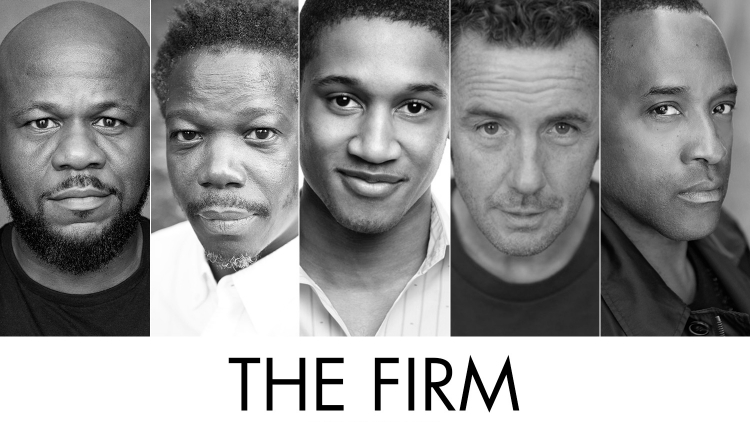
the2bfirm2breview2bhampstead2btheatre2bflyer

The Firm

Hampstead Theatre Downstairs, 22nd November 2017

N.B. The Firm is returning to the Hampstead Theatre Downstairs for another run between the 3rd May and 8th June 2019. The Tourist goes to a lot of theatre in London and, trust him, there is no better value than a preview ticket at HTD. Just £5. And here you are taking no risk as it is an excellent play. Even during the main run, at just £14, it is a steal. You’d be a mug to miss this. 

How does the Tourist choose whether to see a play?

Writer first, since he/she is the wellspring from which all else flows. In the end all there is is text, actors and audience. And observers and observed have nothing to share without the text. Poor text, poor play. Nothing anyone else can do about that.

Venue second. A function of convenience and familiarity, but also, not unreasonably, if you have enjoyed one production at a theatre, you may well enjoy another. This will probably reflect the vision of the artistic team and the rather grubbier fact of the demographic the executive team wants to prise cash from. On the downside, there are venues where comfort is so compromised that price does not represent value and must be avoided.

Then there is the subject. Not always easy to divine for new plays from the blurbs, teasers and trailers but something needs to pique my interest. As it happens most new drama has its finger firmly on the pulse or contrives relevance from places or times far removed from my cosy little world.

Director next. Same principle as the writer, if you have enjoyed their way of doing things once you may well do again, though this is not guaranteed.

Reviews of course, but the Tourist’s addiction and simple economics, (why paid 70 quid in the West End when I can get a top seat for half the price or less at the original production at the Royal Court or Almeida), means that reviews only help for transferred in productions.

Cast, relevant but not a deal breaker, though expectations rise when favourite names are announced.

Ideally a number of these factors come together. Sometimes though the Tourist takes a punt. As he did with The Firm. Downstairs at the Hampstead normally serves me well, but this is by no means guaranteed. I was interested in the subject, a gang reunited, but concerned it might lurch into cliche. I knew nothing about the work of playwright Roy Williams, director Denis Lawson or designer Alex Marker. I had not seen any of the cast on stage as far as I could remember (based on their bios), with the exception of Clarence Smith. I would like to pretend I had a feeling but I didn’t. And to cap it all I pushed my just-in-time arrival strategy to the limit. So a quick Jimmy, an inward groan at the 1hr 40mins run time and the only seat left tucked in a far corner (mind you the HT Downstairs benches are comfy).

As it turns out this is an excellent play and probably the biggest surprise of the year for me. Alex Marker’s set transformed the reconfigured Downstairs space into a “sophisticated” urban bar, complete with pristine Wurlitzer juke box and array of aspirational spirits brands. We first encounter the nattily dressed Gus (Clinton Blake) who owns the bar, (and, as we discover, quite a tidy portfolio of assets elsewhere), bantering with Leslie (Jay Simpson), the archetypal (and white) Sarf Londoner who has recently left prison. Gus and Leslie are waiting for Shaun to arrive. A party in his honour is planned followed by a night out on the town and then a trip to the Palace, (Selhurst Park not down the Mall, for regrettably they are Eagles), the next day. Shaun never comes. The rest of the “The Firm” do pitch up though, first stout Trent (Delroy Atkinson) followed by a nervous and limping Selwyn (Clarence Smith). But Selwyn brings a young stranger with him, Fraser (Simon Coombs) who, for various reasons, unsettles the gang. He comes with a proposal.

I’ll stop there. This all sounds way more mysterious than it actually is. This is an absolutely riveting insight into the nature of manhood, the camaraderie of criminality, the value of loyalties, the meaning of success and the trials of friendship. These forty/fifty somethings were happiest in the past, right the way back to when they first embarked on their “life of crime”, by The Wall near their school. The pace at which Roy Williams releases the many revelations that show who the characters are, and what they have become, is perfect. We learn enough, but not too much, to keep the dramatic intensity on the boil. We see the damage the past has done and we witness the final break-up of the gang. We see the love and the jealousy the mates have. There is a Pinteresque threat of violence and malice as you might expect throughout, most notably from Gus, who was the leader of the gang, and who is the only one to have avoided a stretch inside. He probes and manipulates the others, until they begin, in their various ways to fight back.

It is also very funny. The dialogue is utterly believable, the banter is spot on. The interplay between the cast is superb. Clinton Blake’s Gus is preening bully, but it is clear from the off that he is troubled. Jay Simpson excels as Leslie, the mediator and the joker, who is trying to start again. (If anyone is ever looking for a Joe Strummer in a play about the Clash here’s you man). Delroy Atkinson as Trent, at first submissive, gradually asserts himself and, in a very powerful scene, shows himself as the only one of the gang capable of pacifying the psychologically damaged, and desperate, Selwyn of Clarence Smith. Simon Coombs as “younger” Fraser is insolent and cocky, but, in a neat inversion, shows some maturity that escapes the others. His final scene with a defeated Gus is gripping.

The play offers no moral perspective on gang membership. It does make abundantly clear though that for men of current, this and proceeding generations, in the absence of other opportunities, this way of life, and the crime that comes with it, is the clearest path to securing the validation and respect of others. It also shows how fragile this respect can turn out to me and how poor men are in admitting, articulating and coping with their frailties and failings.

I may be guilty of reading too much into the play but that is what I saw. I highly recommend it. Roy Williams actually references Goodfellas and West Side Story in the dialogue to remind us of other masterful portrayals of this subject. Don’t get me wrong: this isn’t Goodfellas, but in its own way it is similarly involving. I understand that Mr Williams has mined issues of race, sport, poverty, random violence and teen parenthood in previous works, as well as the father/son relationship in Soul, his last play about the death of Marvyn Gaye. I really hope I get an opportunity to see some of them. He really, really has the measure of his stories and characters.
Slaves of Solitude at the Hampstead Theatre review ***

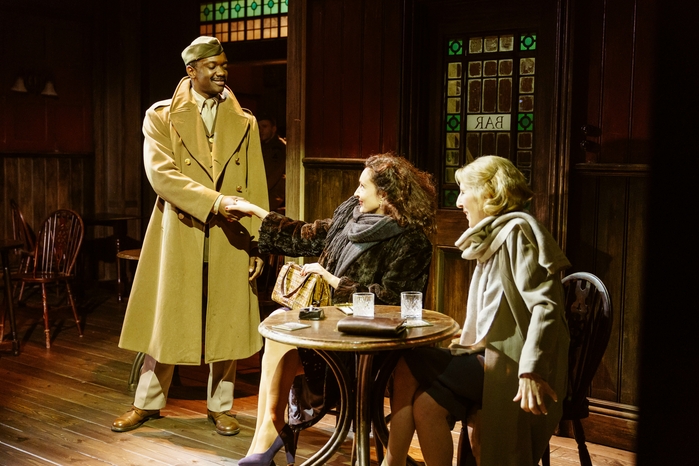
slaves-of-solitude-3

Slaves of Solitude

Hampstead Theatre, 8th November 2017

As this blog testifies I spend a lot of time in theatres, (too much I think), but the SO is far more circumspect in her choices. Occasionally, very occasionally, the SO’s desire to see a play, and her enjoyment thereof, outstrips mine. Slaves of Solitude was one such occasion, though we both agreed that this fell a little short of our expectations.

Patrick Hamilton (1904-1962) was a writer and playwright whose star is now very firmly in the ascendant after many years of neglect. His studies of working class London life between the wars, such as Hangover Square and the trilogy Twenty Thousand Streets Under the Sky, (adapted for TV a few years ago), bear comparison with Dickens. They are populated by recognisable characters and shot through with a sardonic wit. Early on he was an actor and his most famous plays, Gaslight and Rope, were both made into successful films (Gaslight twice in the UK and then the US – obviously the UK version is superior). If you know either of these films, especially Hitchcock’s version of Rope, then you will appreciate how skilled Mr Hamilton was at creating gripping thrillers, though these plays are somewhat removed from his novels.

He was not it seems, a happy chappie. Left scarred by a car accident in his twenties, disdainful of the culture around him and a committed Marxist, he sank into alcoholism and died at 58. Despite his heavy drinking he kept writing throughout although the tone of his work darkened through time. Slaves of Solitude is the only one of his novels set during WWII and is apparently a “lighter” work than some of his other novels.

The novel has been adapted for the stage by Nicholas Wright who is a dab hand at this sort of thing and is an admirer of Hamilton, along with master director Jonathan Kent, whose last major outing was the Chichester Young Chekhov Trilogy. The play is set in a genteel boarding house in Henley-on-Thames run by the brisk, but warm-hearted, Mrs Payne (Susan Porrett) and Irish assistant Sheila (a fine professional debut from Eimear O’Neill). It is December 1943. Residents include the redoubtable Mrs Barrett (Gwen Taylor) and the kindly spinster Miss Steele (Amanda Walker) and the bombastic, blazered Mr Thwaites (an authentic Clive Francis relishing the character’s preposterous turns of phrase). There is also the enigmatic Mr Prest (Richard Tate) who spends a lot of time up in London.

Our “heroine” is Miss Roach , a pitch perfect Fenella Woolgar with her prim exterior reserve concealing a more passionate, though buried interior. She works in publishing and has been forced to leave London to escape the Blitz. This is the stiff upper lip England of fading Empire, adapting to the war time privation of ration books, blackouts and the arrival of American troops. We see early on that the women are far more willing than the nasty, misogynistic, bullying Mr Thwaites to sympathise with the plight of individual “enemies” caught up in the war. This is put to the test after Miss Roach meets vivacious German emigre Vicky Kugelmann, (a magnetic performance by Lucy Cohu), who proceeds to move in to the boarding house.

Miss Roach’s afternoons in the pub also contrive for her to meet Lieutenant Dayton Pike (Daon Broni), a friendly American GI, who begins to chat her up. Casting Pike as a black soldier, in contrast to the book, creates a heightened level of interest which Mr Wright’s adaption capably, if not forensically, explores. Roach and Pike’s subsequent affair is complicated by the presence of Vicky and by Pike’s own excessive drinking. An impromptu party at the boarding house gets out of hand with, inevitably, unfortunate consequences. Miss Roach escapes but Pike catches up with her for one final goodbye.

Now Patrick’s Hamilton gift for characterisation and creating atmosphere is splendid. The set and costume design (the Hampstead excels in this) from Tim Hatley is ingenious and puts us right inside the dining room of the boarding house and the saloon bar of the pub. These are emotionally stiff, but still sympathetic, people. The established social order has been thrown into turmoil by the war. Outsiders have arrived. Risks can be taken, particularly by women, leading to behaviour which would have been shunned before the war. Yet there are still consequences.

Unfortunately we see that this precarious world will be shattered via a flash forward at the opening which, for me, was unnecessary. The plot drifts along fairly predictably until a lurch into something more melodramatic in the second half, and the ending, which is intended to offer a modicum of solace is a little abrupt. These shortcomings were broadly compensated by the overall “feel” of the production however. Yet I was left with the nagging doubt that this was one of those subtle stories that might have been better left on the page and not taken to the stage. Whilst I do sometimes find his work annoying and frustrating I can’t help feeling that Terence Rattigan has cornered the market in theatrical British forlornness.

Gloria at the Hampstead Theatre review ****

fillwyi3ntailci0mjiixq-gloria-final-landscapesmall2

Gloria

Hampstead Theatre, 4th July 2017

Right. This might actually be a review of, albeit dubious, utility. There are 3 weeks or so left on the run and there are  a fair few tickets left. And this is a fine piece of theatre with an interesting premise, formal innovation, enough material to cogitate on but not so taxing as to ruin your night out, and all in the convivial and convenient location that is the Hampstead Theatre.

The proper reviews give you a realistic flavour, though I think they maybe oversell the “frustrated millenials in workplace” drama that characterises the first half, and undersell the sharpness of the satire on “ownership of stories in today’s world of commoditised fake empathy” that drives the second half.

On the face of it this is a very different play from flavour of the month Branden Jacobs-Jenkins last London outing, An Octoroon at the Orange Tree (review here An Octoroon at the Orange Tree Theatre review ****). That play was a dissertation on the notion of identity in the theatre using the guts of C19 playwright’s Dion Boucicault’s “slavery” melodrama, The Octoroon. Very clever, very entertaining. Gloria is also clever and entertaining but in a more subtle way (one coup de theatre aside). Moreover it also riffs on the ownership of narratives which for me is something theatre is uniquely able to address.

The first half is set in an NYC magazine publishing house where three put-upon late 20s assistants bemoan their lot with a mixture of anger, humour and resignation. Kae Alexander plays Kendra, an entitled Asian-American princess who is long on railing against the iniquity of the thwarted career opportunities for her generation, but short on any work ethic that might help to change this. Ellie Kendrick (last seem by me out-Oscaring all those Hollywood chumps in the brilliant film The Levelling, which cost about the same as one Oscar night table of goodie bags to make) plays Ani, whose outward show of sweetness and light likely masks a more ruthless streak. Colin Morgan (you know Merlin in a former life) plays Dean, just turned 30 and still lapdog to unseen editor Nan. They are joined by the seemingly ineffectual intern Miles (Bayo Gbadamosi), and visited by the eponymous frustrated office lifer Gloria (Sian Clifford) and stressed fact checker Lorin.

The detail of the frustrations that each of these characters face is well observed (BJJ spent a few years at Vanity Fair) and pretty funny. This first half does get close to outstaying its welcome but BJJ has a cunning and surprising trick up his sleeve to bridge us into the second half. I will leave the description there: suffice to say that the second half explores its chosen themes with the same economy and insight as the first. I see some of the criterati don’t recognise the office workplace on show here: I think that says more about them than it will about you (assuming you are not some ancient has-been like me and the other educated pensioner types who are always getting in the way of the more worthy younger punters in the quality London theatres).

In contrast to An Octoroon this play is not chock full of meta devices and playful alienating effects. It is, broadly, a naturalistic structure but the use of doubling for “new” characters in the second half, whilst hardly revolutionary, works well, at least for me. I can’t wait to see more of BJJ’s plays over here. and, given the reception afforded to this and An Octoroon, these should not be too long in coming. And best of all when asked in the programme interview who his favourite playwright is, he answered Caryl Churchill. What an astute young(ish) man.

I am dubious about filling a cast up with young names off the telly even if it does offer the prospect of better economics for producers/artistic directors. Here however it worked a treat. The entire cast was faultless but our three millenials shone. Michael Longhurst is blessed with the ability to perfectly pace any play he directs and Lizzie Clachan turned in another set which which offered an elegant solution to functional necessity. It is possible to make a vernacular theatrical settings elegant, but I bet it’s not easy.

So if I were you I would give this a whirl. Worst case you get to here a bit of JS Bach (a slightly different take on Gloria).


Occupational Hazards at Hampstead Theatre review ****

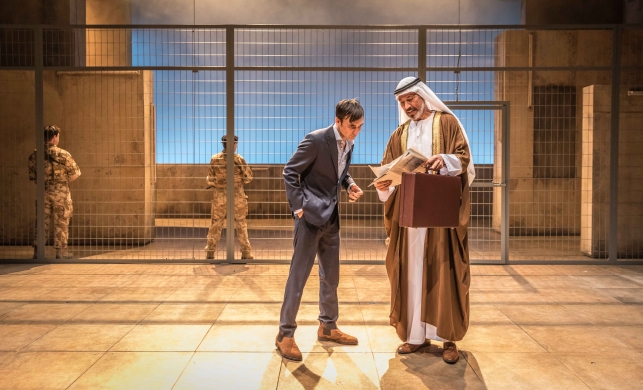
scaleheightwyizotaixq-occupationalhazards-prod-731

Occupational Hazards

Hampstead Theatre, 20th May 2017

You can learn a lot at the theatre.

Rory Stewart is (actually was, given Parliament is dissolved) a junior minister at the Department of International Development. Apparently he has known the playwright here, Stephen Brown, since they were kids. Mr Stewart sounds like a bloke with a fair amount of derring-do and an admirable compulsion to get stuck in. In September 2003, at the age of 30, and having already walked across vast chunks of near Asia with just the clothes on his back, he blagged his way into the role of a governor of Maysan province in Southern Iraq post the “liberation”. I am guessing that being a scion of Scottish aristocracy, child of a diplomat, Eton, Oxford PPE, tutor to the royal princes and the Diplomatic Service may have helped get the job, but he might just have got lucky (or unlucky as it turns out).

This play dramatises the book he wrote about his experiences. I haven’t read it but I am guessing there is a healthy dose of self-aggrandisement at work. No matter. The question is does this make a good play. After some initial misgivings I have to say it does. It is, unsurprisingly, event driven. There isn’t a lot of exploration of Mr Stewart’s character and motivation (or indeed of the other protagonists), he is the referee between the various parties, and the device of his explaining events direct to the audience only serves to heighten this impression. The play doesn’t go in for dramatic expositions of opposing views or for exploration of historical and geographical context. It gets on with it. Much like Mr Stewart himself did I suspect.

What this approach does mean is that the shifting nature of the struggle for political control post the liberation, and through the attempts to rebuild the province, are very well described. It is confusing at first but gradually the characters and the issues shift into focus which I guess deliberately mirrors the confusion rife in those few months. It certainly points up the multi-faceted consequences that arose from the failure to plan for government in Iraq after the Baathists were booted out.

I knew nothing of any substance or detail about these events beyond a few headlines and pre-conceptions. Now I know more. And this was delivered by a fine cast, led by Henry Lloyd-Hughes as Rory Stewart, and director Simon Godwin in a dynamic, thoughtful and eloquent way. Given the subject and the subject matter it might be easy for others to criticise this. I will not. The run is nearly over but if the subject matter holds any interest, and it probably should, I would genuinely recommend this and think there is a place for more of the same.


Some ideas for the culturally inclined in London

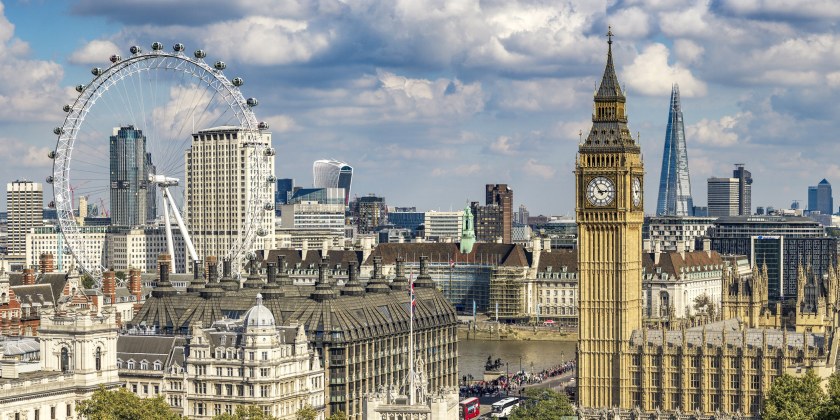
london-travel-guide-lede

Here is a very brief round-up, (apparently I can drone on a bit so have tried to be disciplined), of the current and forthcoming major theatre and exhibition events in London that have caught my eye (and ear). I have a list of classical concerts which is still good to go for those that way inclined (Some forthcoming classical music concert ideas (with a bit of nostalgia thrown in) and will take a look at the best of the forthcoming seasons at the two major opera houses in another post.

No particular order and not at all obscure. There should be tickets available for all of these but in some cases you may need to get your finger out.

Hope this helps if, unlike me, you are not over endowed with time.

Theatre

I can vouch for the first four below and the rest are those which I think are likely to be the most likely to turn into “must-sees”.

  • Hamlet – Harold Pinter Theatre – June to September 2017

If you think Shakespeare is not for you then think again. Andrew Scott as our eponymous prince could be chatting to you in the pub it is that easy to follow (mind you, you’d think he was a bit of a nutter) and Robert Icke’s direction is revelatory. Plenty of tickets and whilst it’s not cheap they aren’t gouging your eyes out compared to other West End shows. Here’s what I thought.

Hamlet at the Almeida review *****

  • The Ferryman – Gielgud Theatre – June to October 2017

This will almost certainly be the best play of 2017 and will be an oft revived classic. It is better than writer Jez Butterworth’s previous masterpiece, Jerusalem. Prices are steep but the Gielgud is a theatre where the cheap seats are tolerable. If you see one play this year make this it.

The Ferryman at the Royal Court Theatre review *****

  • Babette’s Feast – Print Room Coronet – to early June 2017

There are a couple of weeks left on this. Probably helps if you know the film or book. I was enchanted though proper reviews less so. Loads of tickets, cheap as chips, not demanding at all, lovely venue.

Babette’s Feast at the Print Room Coronet review ****

  • Othello – Wilton’s Music Hall – to early June 2017

Again just a couple of weeks left here. Once again perfect Shakespeare for those who don’t think it is for them. Big Will’s best play and an outstandingly dynamic production. Another atmospheric venue, though I would say get right up close. A bargain for this much class.

Othello at Wilton’s Music Hall review ****

  • The Tempest – Barbican Theatre – July and August 2017

This is the RSC transfer from Stratford. Simon Russell Beale, our best stage actor, as Prospero. Some fancy dan technology is employed. Reviews generally positive though you always get sniffiness from broadsheets whenever RSC plays a bit fast and loose with big Will. Not cheap but at least at the Barbican you will be comfy (if you don’t go too cheap).

  • Macbeth – Barbican Theatre – 5th to 8th October 2017

More bloody Shakespeare. Literally. On this you are going to have to trust me. Ninagawa is a Japanese theatre company renowned for its revelatory productions. So in Japanese with surtitles. But when these top class international companies come to the Barbican it is usually off the scale awesome. I’ve been waiting years to see them. Enough tickets left at £50 quid a pop but it will sell out I think.

  • The Suppliant Women – Young Vic – 13th to 25th November 2017

Reviews when this was shown at Royal Lyceum in Edinburgh were very good. Aeschylus, so one of them Greeks, updated to shed light on the refugee crisis. Maybe not everyone’s cup of tea, and you can probably wait until closer to opening, but I still think this will turn into a must see.

  • Ink – Almeida Theatre – June to August 2017

Writer James Graham’s last major outing, This House, about politics in 1970s Britain, was hilarious and insightful. This is based on the early life of Rupert Murdoch so expect a similar skewering. Directed by Almeida’s own Rupert Goold with Bertie Carvel the lead (the sh*t of a husband in that Doctor Foster off the telly). I have very high hopes for this,

  • Against – Almeida Theatre – August and September 2017

New play which sounds like it is about some crazy US billionaire taking over the world (I could be hopelessly wrong as Almeida doesn’t tell you much). Written by American wunderkind Chris Shin, directed by master of clarity Ian Rickson, and with Ben Wishaw in the lead. Don’t know how much availability as public booking only opens 25th May, but I would get in quick here and buy blind. Almeida now a lot comfier with the padded seats and still a bargain for what is normally world class theatre.

  • Prism – Hampstead Theatre – September and October 2017

New play from the marvellous Terry Johnson who writes brainy comedy Robert Lindsay in the lead role of a retired cinematographer. I have a feeling there will be more to this than meets the eye (!!) and will buy blind on the public booking opening. Usually around £30 a ticket so if it turns into a hit, as Hampstead productions sometimes do, it is a bargain.

  • Young Marx – The Bridge Theatre – October to December 2017

So this is the opener from the team at the Bridge which is the first large scale commercial theatre to be opened in London for decades. The genius Nick Hytner directs and the play is written by Richard Bean and Clive Coleman. The last time these three came together out popped One Man, Two Guvnors. Rory Kinnear and Oliver Chris (trust me you will know him off the telly) play the young Marx and Engels in London. Hard to think of a set up that could get me more excited but if any part appeals to you I would book now. There are loads of performances so no urgency but, if they have any sense at all, the seats here will be v. comfy with good views as it is all brand new, so taking a punt on a cheap seat will probably turn out well.

  • Julius Caesar – The Bridge Theatre – January to April 2018

Bridge again. Julius Caesar so probably need to know what you are letting yourself in for as solus Roman Shakespeare’s can sometimes frustrate. BUT with David Morrissey, Ben Wishaw, David Calder and Michelle Fairley, it is a super heavyweight cast. Same logic as above – it might be worth booking early and nabbing a cheap seat on the assumption they would be mad not to serve up the best auditorium in London if the venture is to succeed.

  • The Retreat – Park Theatre – November 2017

The Park often puts on stuff that sounds way better than it actually turns out to be, but this looks the pick of its forthcoming intriguing bunch. Written by Sam Bain (Peep Show and Fresh Meat) and directed by Kathy Burke. Comedy about a City high flyer who gives it all up but can’t escape the past. If anything is guaranteed to wheel in the North London 40 and 50 somethings then this is it. No cast announcement yet but I bet they rope some comic into the lead.

  • The Real Thing – The Rose Theatre Kingston – 2nd to 14th October

A co-production with Theatre Royal Bath and Cambridge Arts Theatre of one of Stoppard’s greatest plays. I really want this to be a cracking revival for my local.

Exhibitions

Here is the pick of the forthcoming blockbusters which I hope to get to see. The Jasper Johns and the Cezanne Portraits are the ones I am most excited about.

  • Giacometti – Tate Modern – just opened until 10th September 2017
  • Pink Floyd: Their Mortal Remains – V and A – until 1st October 2017
  • Into the Unknown: A Journey Through Science Fiction – Barbican Art Gallery – from 3rd June 2017
  • Grayson Perry: The Most Popular Art Exhibition Ever! – Serpentine Gallery – from 8th June 2017
  • Jasper Johns: Something Resembling Truth – Royal Academy – from 23rd September 2017
  • Opera: Passion, Power and Politics – V and A – from 30th September 2017
  • Cezanne Portraits – National Portrait Gallery – from 26th October 2017
  • Monochrome: Painting in Black and White – National Gallery – from 30th October 2017
  • Impressionists in London – Tate Britain – from 2nd November 2017
  • Red Star Over Russia – Tate Modern – from 8th November 2017
  • Modigliani – Tate Modern – from 23rd November 2017