English Touring Opera at the Hackney Empire review ****

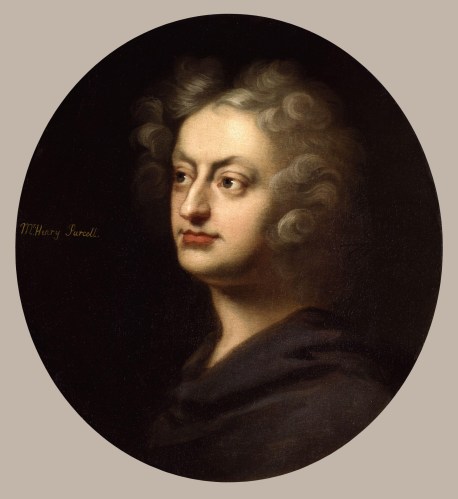
Henry_Purcell_by_John_Closterman

English Touring Opera

Hackney Empire, 12th October 2018

  • Purcell – Dido and Aeneas
  • Carissimi – Jonas
  • Gesualdo – I Will Not Speak

I am partial to English Touring Opera’s productions. The repertoire tends to be up my street, with a bias to smaller, chamber and Baroque works, reflecting resources and logistics. Suits me. I can’t be doing with all that C19 showy stuff. Last year’s Giulio Cesare went on a bit, but that’s Handel for you, their take on Monteverdi’s Ulysses in 2016 was a corker, and I recall a Coronation of Poppea and Albert Herring a few years ago (before I kept track of stuff). And the Hackney Empire is like a favourite old aunt, if I had been born into circles that had such things.

This also was another opportunity to expand BUD’s opera education after the very successful Mozart forays, and the rather more muted reception to Britten. Now spare a though for the poor chap who is, like all the other economically productive people around me, working far too hard. When capitalism had the bright idea of separating work and leisure time, thereby ensuring we worked harder to make more money to spend in our ever decreasing leisure time, it cannot have foreseen just how clever the wheeze would be. Especially when so many of us are both labour and capital simultaneously. Anyway it meant that he was a little bushed and, with the Empire not too sure where to pitch the internal temperature in these climatic tipping point times, it was a bit close in the auditorium. I have put myself through many hours of training in London’s less comfortable venues so this was water off the proverbial, but even so I have to admit to skirting with drowsiness, notably in the Gesualdo.

Which is a shame, as in some ways, this was the most interesting of the three part programme. Director James Conway, and the eight soloists on stage on this evening (see below), tell the story of Gesualdo’s life, interspersed with various of the responses from his Tenebrae setting, a handful of relevant madrigals, poems by Southwell, Donne, Herbert and some other religious stuff. Now as you no doubt know Gesualdo had a bit of a temper on him and got himself in a bit of a tizzy with pain, agony, ecstasy, love, death, passion, blood, honour, violence, sorrow, religious fervour, torment, being forsaken and the like. And above all by guilt. That’s Catholicism for you. These texts captured all of that and more, being helpfully relayed through sur-titles. A dark, reflective set, atmospherically lit by candles, black costumes and some prudent choreography all helped the mood of the piece. Gesualdo, a dark presence in another, somewhat perplexing, recent entertainment I attended (The Second Violinist at the Barbican review ***), seems to exert a powerful hold on us devotees of early music.

I had bigged up all of the strange dissonances, out-there chromaticism and dark intensity which pervades the prince’s compositions, but as it turns out, BUD took it all in its stride. As did the Old Street Band, here under Jonathan Peter Kenny. Maybe they could have been a little wilder and more sympathetic to the text, and they seemed to me to be more comfortable in the Purcell and especially the Carissimi, but overall, this “I Will Not Speak” is not to be missed if Gesualdo floats your boat.

Giacomo Carissimi was an important chap in the development of vocal music in Europe in the early Baroque, and the dominant player in Rome. He was all over motets and cantatas but he really excelled in the oratorio, basically inventing the form. He was to religious choral music what Cavalli was to opera. (I appreciate that only in very limited circles will that mean anything at all). His big break came when he was appointed chapel master at Collegium Germanicum, a Jesuit bastion of the Counter-Reformation, in his early 20’s where he stayed for the rest of his life.

Now think of an oratorio as a biblical opera without action. Mind you here we got a bit of staging courtesy of designer Adam Wiltshire and the excellent lighting of Rory Beaton and some stylised choreography. You probably know Jonas by his more common moniker of Jonah, so I won’t bore you with the detail of the story. Naughty Niveveh-ians up to no good. God to Jonah “sort them out”. Jonah runs away. Storm. Sailors chuck him overboard. Unpleasant fish/whale belly short break gets just one star on TripAdvisor. Big belch. Washed ashore. God sends him back to Nineveh. This time they promise to be better. Thanks merciful God. Jonah throws a hissy fit and he and God have some sort of “my job is worse than yours” tiff.

So all the standard “behave yourself or else” merciful/vengeful God parable stuff. What is interesting is the way Carissimi employs really quite simple musical structures, (and dumps the last part), to bring the words to life and to convey the silly/substantial story, (depending on your point of view). And he really doesn’t hang about. It’s all over in 20 minutes. Put this, and his more famous Oratorio Jepthe, on one CD and there’s still space for a filler. Now it is made up of some fairly dryish recitative, but there is enough solo melody, some duets and trios, and small chorus, as well as instrumental breaks (sinfonias)  to add flavour, and to show why he became such an influence on later composers notably Charpentier. Don’t expect the funky mash-ups and luscious chromaticism of Monteverdi, this is straight-laced by comparison, but it is very effective and very moreish. It shows just how the voice and instruments could be combined in the service of drama in a way that the barrage of sound that was the polyphony of the previous century never could.

Of course this all went up a notch, actually well past 11, three decades later when the boy wonder Purcell gifted the world the score of Dido and Aeneas, the ill-fated lovers from Carthage and Troy. There is his cherubic little boat at the top. It is an undeniable fact that Purcell’s opera, with Nahum Tate’s libretto, lacks a bit on the plausibility front. Dido works herself up into a right lather, for no good reason, at the prospect of her bloke going off to war. I guess you could argue she is emotionally damaged, maybe even depressed, from the off, but that requires an awful lot of intellectual back-filling.

For this we probably have to thank the forces of anti-Catholic propaganda. No camp sorceress in Virgil’s original remember so Tate fiddled with plot in his play, The Enchanted Lovers,  on which the libretto is based to curry favour with the Court. And why not? They had to earn a corn.

There are also a fair few tonal shifts, with plenty of upbeat numbers amongst the tragedy and an ambivalent approach to Dido’s virtue. All of this perhaps reflects its genesis in a country where the masque, and plays, pre and post the Restoration (for which HP wrote lots of music), were been the dominant dramatic forms. Merrie Olde England, always wary of those suspect Continental innovations, like opera. This ETO production, which I have to say looks superb, thanks to the aforementioned Messrs Wiltshire and Beaton, is set in Jacobean times, think Dowland and later Shakespeare, several decades before the opera was first performed and a time when melancholy (cue our mate Gesualdo) and magic (James I wrote books on it) were all the rage. Worked for me. The staging I mean, not the belief in the spirit world.

Who cares about the structure though with music as ravishing and so perfectly matched to the voice as this. Which is after all what Purcell was all about. Now I can’t lie. I can only take so much singing in classical music. So all those odes, anthems, hymns and songs, whilst attractive enough on first listening, do fade a bit from memory. And, to be fair, I couldn’t tell which suite, fantasy, trio sonata, overture, air, minuet, blah, blah, blah is which in HP’s oeuvre. But what I do know is pretty much anything you will hear by Purcell will provoke an immediate, and very direct, response. I cannot be doing with the “genius touched by God” theories of artistic accomplishment but it is hard to deny some composers just “had it”. Everything just makes sense from the first listen of the first bar. HP was one of them. (Mind you living just down the road from Westminster Abbey and having a musically well-connected uncle probably came in handy). There are those who would have you endure a world of maximalist complexity in order to render you worthy of “appreciating” “Classical” music. Ignore them. Rhythm and the dance is where it’s at.

So this, his only “proper” opera, was his finest hour, literally. Like I say don’t dwell too much on the clunky dramatic devices and half-baked classicism and just listen to those amazing sounds. HP’s music can make fake emotion seem real. There are a few operas that people who have no interest in opera should go see and listen to. Dido and Aeneas is one of them. No need to change your view on the art form, I that a lot of opera is piffle, just don’t spend a life without this one. Without the music it is just nonsense, (though don’t blame the Greeks, it is the Renaissance trivialisation and prettification that is to blame). With the music it is transformed.

HP’s opera didn’t come out of nowhere, owing something to his bestie John Blow’s D and A and, more obliquely, Cavalli’s Didone (which also has a lament for dizzy Dido). HP may have delivered up what his conservative patrons demanded but he was aware of musical developments across the Channel even if he didn’t study there. After all, post Restoration, England was awash with French and Italian musicians, who brought us the Baroque bug. (You see Brexiteers, we have always benefitted economically and culturally from them furriners, even importing a few to sit on our throne if we didn’t fancy the home-grown alternative). Here Dido and Aeneas kicks off with your standard two part French overture and its best known tunes, including you know what with its stepping ground bass, are Italian style arias. HP delighted in gentle dissonance, splashes of chromaticism, sighing falls and minor thirds, all audible in Carissimi, amongst others. Yet he also favoured one of Tallis and Byrd’s gifts to the world, false relations, a “natural” note and its “sharps” played simultaneously.

HP, as far as I can tell didn’t live fast, but he did die young, maybe through TB or maybe, in a slightly more rock’n’roll way, after being locked out by his missus following a night on the lash. We in GB have always been convinced of his greatness, and our American cousins agree, but this may reflect the fact that we came up short on the composer front until, IMHO Benjamin Britten came along. BB obviously worshipped HP. So should you.

  • Susanna Fairbarn – Soprano
  • Alison Manifold – Soprano
  • Sky Ingram – Soprano
  • Benjamin Williamson – Countertenor
  • Jorge Navarro-Colorado – Tenor
  • Richard Dowling – Tenor
  • Nicholas Mogg – Baritone
  • Frederick Long – Bass


Cock at the Minerva Theatre review ****

rooster-clipart

Cock

Minerva Theatre, Chichester, 10th October 2018

Another addition to my collection of Mike Bartlett plays. I have professed my admiration for his work on numerous occasions on these pages. You see he just writes gripping drama. Hyper-real, sometimes going a bit over the top, but that is what you pay your money to see. Or at least I think you should. He can range widely across subjects, big and small. And he experiments with form. All in all probably the best of the current generation of British dramatists, of which there is currently a very fine crop. Just need a revival of 13 which I missed on its first outing.

Cock is a comedy which focusses on the machinations of the somewhat weak-willed John (Luke Thallon) as he attempts to choose between his two lovers M (Matthew Needham) and W (Isabella Laughland). It is a sort of companion piece to Bull, written a few years later, about workplace bullying. Both examine the “games that people play” and were kind of inspired by bull-fighting (and cock-fighting) which MB discovered were still very much alive when he visited Mexico City. There are no scene headings or stage directions or props in Cock, only lines between each of the “bouts” between characters (here marked with an electronic “bell”). MB stipulates that there should be “no mime”. He evens leaves out full stops and commas to express natural speech rhythms and inserts blanks to create equivalent pauses. So all your are left with is 2, then 3, then 4 actors circling each other and tumbling out the lines. Just the verbal sparring if you will. Of which there is plenty. It sounds tricksy but it is anything but as MB cannot help putting the right words, at the right time, into his characters. Emotions, as in his other works, are heightened by the formal structure. Everything is clarified.

It transpires that John was pretty young when he moved in with M. M is a bit of an emotional bully but when John wants out after seven years it’s pretty clear M is devastated. Especially when John falls in love with a woman. W doesn’t care that, until now, John has been gay. She pushes John into choosing when M invites them to, what you can probably divine, an “awks” dinner party. Especially when M’s Dad F (Simon Chandler) turns up.

There are plenty of killer comic lines but what MB really nails is the constant, and often brutal, ebb and flow of coercion and pleading that all four employ to get what they want out of the situation. John is agonised by having to decide between M and W, and by implication his sexual identity, bisexual not sitting comfortably, but he is also loving the attention. M is all over the words “emotional blackmail” but he does not want to lose John. W appears more reasonable but she is still determined to “win”. The world has moved on and become more fluid in terms of sexual identity but MB’s play still plainly shows that there are personal costs (and benefits) to be negotiated in all relationships. Monogamy exerts a powerful hold on all of us it seems. I would stab a guess that Cock is the sort of play Pierre de Marivaux would be writing if he were alive today.

This is I think the first time I have been party to Kate Hewitt’s direction. If there is a better way of showing off this play, here in the round, I can’t imagine it. I see she is in the chair for Jesus Hopped The A Train at the Young Vic next year. Excellent. I have espyed the Matthew Needham at the Almeida, and after this he will reprise his role as John (no relation) in Rebecca Frecknall’s production of Summer and Smoke at the Duke of York’s and Luke Thallon stood out in MB’s Albion at the same house and, I gather, in the Young Vic The Inheritance. I’ve only seen Isabella Laughland on the telly. Anyway even a chump like me can see all three actors are destined for even greater things. I can’t imagine Georgia Lowe will get an easier gig than this in terms of design, a red square on the floor in this red auditorium, but it still is the exact right solution.

With Press, his journalism drama, now over, until the next time presumably, I can’t wait for MB’s next work. I loved Press, obvs, most notably because it seemed to wind up many members of the fourth estate because “that’s not how a newspaper works”. Numbnuts. That’s the point. It’s a drama. Which uses your grubby, noble and powerful profession to shine a light on contemporary mores. Not a documentary. Which is also not “real” and constructed. As is your own “reality”. And your stories.


OthelloMacbeth at the Lyric Hammersmith review ***

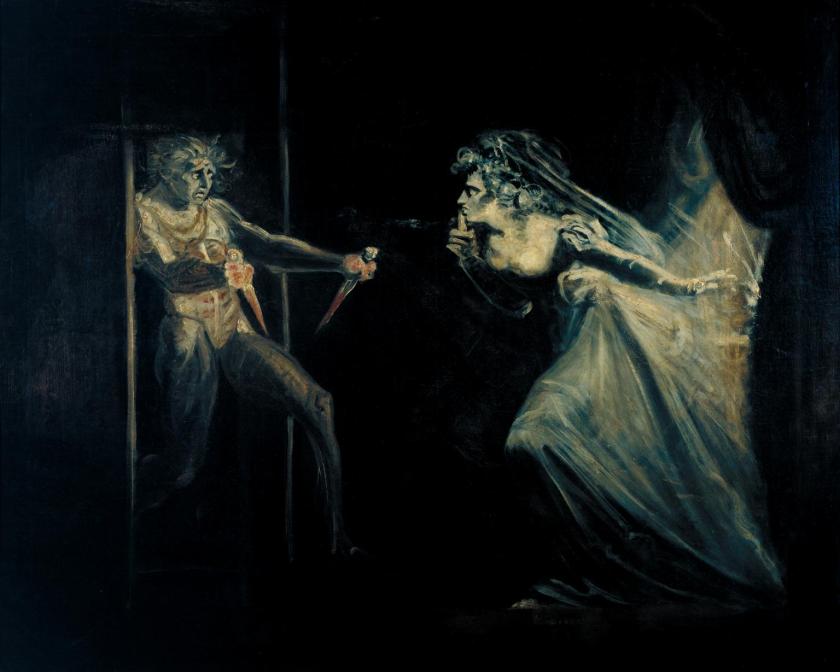
Lady Macbeth Seizing the Daggers ?exhibited 1812 by Henry Fuseli 1741-1825

OthelloMacbeth

Lyric Hammersmith, 8th October 2018

OK so this has its moments. By splicing together Othello and Macbeth, excising out extraneous context, sub-plot and characters, director Jude Christian has largely succeeded in achieving what she set out to do. That is to recast the two famous tragedies from the perspective of the female protagonists, Desdemona, Emilia and Bianca, the Ladies Macbeth and Macduff and, with a twist, the Three Witches. Without messing too much with the main plots. And with some occasionally breathtaking transfer of lines from one play to the other. However it is the Macbeth half that gets the best of the treatment, in large part because it benefits most from Basia Binkowska novel set design as it opens up. And this is definitely not for the purists who relish the verse. (I overhead some grumbling on the way out).

In part this reflected the cuts, in part the slightly uneven verse delivery on show and in part what happens when the psychological insight offered up by Shakespeare’s “roundest” characters is sold short. Samuel Collings as Iago/Macduff and, especially, Ery Nzaramba as Othello/Banquo had the most to lose. On the other hand there was much to learn from Kirsten Foster’s alert Desdemona and Caroline Faber’s measured Lady M, and the Witches, our two/three murdered/abused women from Othello. For this conceit, their revenge, as they unleash Lady M’s “unsex me now” monologue, and strumming on high pitched wires, is both clever and, in part, insightful.

Nagging away at me though is the belief that Shakespeare did offer up multiple vistas into what these women saw and felt whilst still getting on with the business of showing us that ambition, violence and jealousy are intrinsic, if ugly, facets of the human condition. I am not arguing that Shakespeare’s treatment of his female characters should be excused, the body count and violence meted out to them, tells its own story, just that, as in some much of his writing, there is insight and ambiguity when you look for it. And at least he has the excuse of history. The men today who continue to “fridge” women do not. After all Jude Christian in this mash-up, by using WS’s lines, is only highlighting what is already there in the text.

The cur-down version of Othello doesn’t need to tell us why “the Moor” is so hated, nor to have Iago poisoning his and our ears, but without it they come across a bit cartoonish. They are basically wankers from the off. The harsh brushed metal wall, there to mask the Macbeth reveal, only serves to highlight the static staging, and rushed delivery, with very rapid jump–cuts, of the first half of the first play. It does heat up post hanky mind you. Sandy Grierson squeezes a lot out of Cassio as do Kezrena James as Bianca and, especially, Melissa Johns as a blunt no-nonsense Northerner Emilia, who can sense what is coming. But this is maybe more to do with the “air-time” they have relative to standard interpretations rather than the actors really finding something new to say in the characters.

Sandy Grierson’s Macbeth does convince, because we know what to expect, because the call-back is more profound, because his is a fine performance and because the relationship with Caroline Faber’s Lady M stacks up. The early filleting of the text is less distracting, the motives of the power couple are still examined. Ms Faber makes chilling sense of the final Othello speech which falls to her. Even so at the end of the day it is Lady M who hatches the murderous plan, even if the narrative here is revenge for the wrongs of the first half. Once again I think there is more than enough complexity in Lady M as written by the Bard to make Jude Christian’s re-direction superfluous. Watch Judi Dench at work if you don’t believe me.

So a successful exercise on its own terms. I am just not sure that those terms were entirely necessary. New plays by women, telling women’s stories, with women creatives, would be more fruitful I think. (Lela & Co by Cordelia Lynn for example which Jude Christian directed). Or Jude Christian let loose on either one of this plays. Or a Caryl Churchill classic for example. This strand of wilful innovation has dogged the last few years of Sean Holmes’s stewardship of the Lyric. It hasn’t always worked as here. It will be interesting to see who, and what, comes next. It is a lovely theatre, thanks in large part to Mr Holmes’s industry, which deserves the best.


Peer Gynt at the Arcola Theatre review ***

solbad_raffelberg_kurpark_-_theater_an_der_ruhr

Peer Gynt

Arcola Theatre, 5th October 2018

I have never seen Ibsen’s Peer Gynt before. In retrospect a minimalist two hander, a “daring realisation”, by “internationally acclaimed” German company Theater an der Ruhr, might have been a somewhat challenging place to start. Still what doesn’t kill you makes you stronger, or whatever the theatrical equivalent of that maxim happens to be.

And there was much of value to take away from this production. But let’s start with the play. Given that he was the “father of realism”, Peer Gynt is a bit of a departure. A sprawling fantasy in Danish verse about an oddball whose grip on reality is far from secure. It is based on a Norwegian fairy tale, though it contains echoes of HI’s own life, with family members written in. It has elements of a romance, like Will Shakespeare’s last outings with Pericles, The Tempest and Cymbeline, lightly concealed satire on Norwegian insularity, strikingly surreal scenes immediately contrasted with natural, contemporary drama. It tracks the life and, presumed death (it isn’t explicit) of our Peer across 40 scenes which utterly disregard the normal conventions of staged theatre. HI saw it as a lyric poem. I bet he would be surprised at just what a hold it has in the canon.

That’s probably the case because, I gather, there are so many ways for creatives to impose meaning on this “masterpiece”. In fact there is just so much “theatre” that can be thrown at this piece of theatre. Peer is a waster and a drunk early on but he can tell stories. There is a persistent, emotional, and maybe futile for Solvieg, love story. There are trolls, and a half human, half troll baby, always a crowd pleaser. There is much philosophising on the nature of existence and reality. there’s all manner of Freudian interpretation. Peer is the ultimate egotist. Who loves Mummy. There is a swipe at capitalism, laced with overt racism. There is a madhouse. A travelogue. A shipwreck. And, at the end, an overtly Christian reckoning and possible epiphany. He might have been dreaming. Or he might have been extravagantly alive.

So you can see HI packed it in. One way to present this is to assemble a wide cast and let the creative minds loose to do their best, or worst. I hope to see such a production. (I see the NT has commissioned a new, contemporary adaptation by David Hare for 2019. There is a man who can do sprawling). Every year in Vinstra in the middle of Norway they stage a giant production as part of the Peer Gynt festival, this being the place where the chap on which the character might be based hails from. Never been there but will add it to the bucket list along with Borgund Stave Church. I remember my first holiday, a cruise along the Norwegian coastline with 600 post pubescent teens on the SS Uganda. We saw Greig’s house, he of the Peer Gynt suites. And in today’s athomehefeelslikeatourist list of cultural coincidences it was Greig’s Holberg Suite that I had the pleasure of listening to last night.

Enough rambling. So I suppose the other, perhaps trickier way, to stage the play is like this. Minimal props, table. chairs, a bed, two actors dressed in the monochrome suits which spell Lutheran phlegm. With the actors, Roberto Ciulii and Maria Neumann, taking on all the parts, and even sharing the role of Peer himself.  Vital then to know your stuff so I was handsomely rewarded for boning up on the plot beforehand. I highly recommend this strategy for the classics. Here it was a life-saver. Well OK maybe that is an exaggeration, it was only 90 minutes after all. But it certainly made for a much clearer understanding as, whilst the plot is pretty much intact, the dialogue has been ruthlessly sharpened, and even more so in translation to sur-titles.

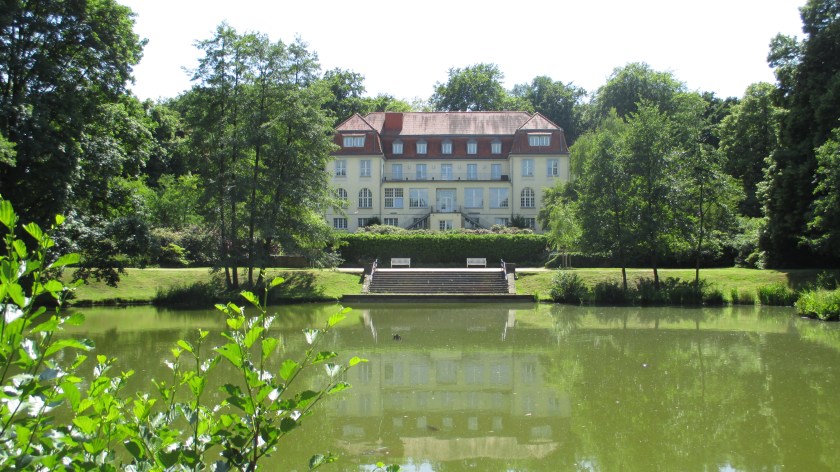
So I kind of worked out where we were, and what was going on. despite the limited display. Not sure everywhere in the audience was so lucky/prepared. You certainly cannot take your eyes off Roberto Ciulii, the Italian founder of Theater an der Ruhr with Helmut Schafer in 1981, and long time ensemble member Maria Neumann. They are mesmeric. Both are possessed of extraordinarily expressive faces, and Ms Neumann in particular is an amazingly physical and tactile presence. Major and minor changes in intonation and body shape indicate character changes. Dialogue, monologue and narrative intermingle. There are a few jokes. But the stripped back aesthetic, the small space, the absence of visual cues and distraction, together with the barrier of translation, however idiomatic Signor Cuilli’s text, can veer towards the monotonous. Not in a dull way. Just in a way that I suspect re-calibrates the dimensions of the play. Mind you this is what TadR sets out to do. A company that sets out to make theatre that can travel and abhors hierarchy. In a lovely looking building in a park in Mulheim near Duisberg (look see above).

The absence of spectacle does allow a focus on exactly how Peer’s identity is constructed. Is his life defined by what has happened to him, or what he has made happen? Is he, with all his obvious flaws, still to be admired, or is he just a bit of a knob? Is reality out there or just what goes on in our heads? See that’s what happens when you go to North London with other culturally aware trendies to watch modernist German theatre. If you are a real pseud, like someone here, you even buy a German programme for no apparent reason.

So a worthwhile journey for me. And for Peer. Whoever he was.


The Jungle at the Playhouse Theatre review *****

overview_of_calais_jungle

The Jungle

Playhouse Theatre, 4th October 2018

So this was my second attempt to see The Jungle. I had to bail out of the first halfway through as my back wasn’t up to squatting on the floor of the Young Vic. This is not a complaint. Given the subject it is a shameful indictment of just how privileged I am to have come this far in life, and to be this stuffed with entitlement, that I can’t even sit through a couple of hours of theatre without complaining. What a pr*ck.

Given that I couldn’t find a way of getting to see another performance in the Young Vic run I was relieved when this transfer to was announced. This time I was able to secure a more suitable berth in the “Cliffs of Dover” in a Playhouse Theatre transformed by Miriam Buether’s remarkable set. For make no mistake this is a simply marvellous piece of critical theatre. The posters advertising the play highlight the string of 5* reviews. Believe them. There are a few seats left in the remaining weeks. Grab one as I doubt, given the size, and diversity of the cast, that this will be easily staged again in the near future. It is off to St Ann’s Warehouse in Brooklyn so any New Yorkers reading this really have no excuse.

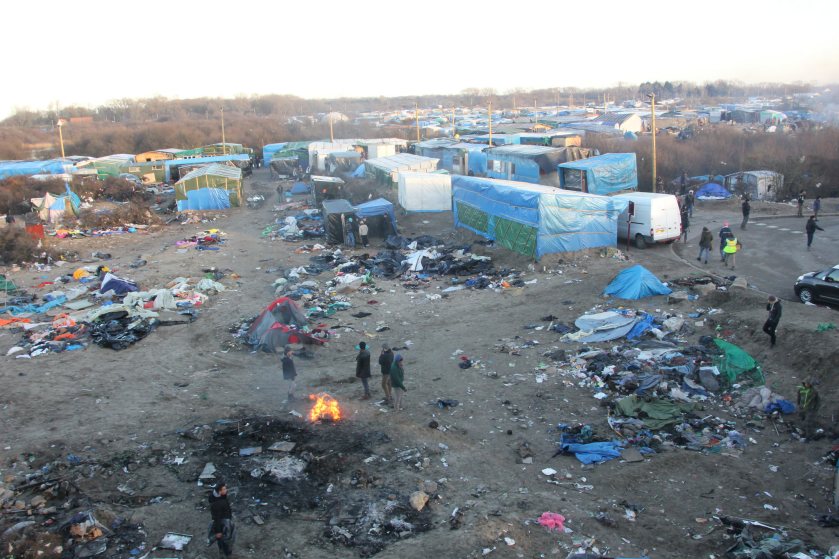
Anyone who vituperatively blathers on about “immigrants” and “asylum seekers” should be made to see this. It probably won’t change their minds, lack of empathy often runs deep, but it might force them to consider, at least for a couple of hours, an alternative, and human, point of view. Joe Murphy and Joe Robertson have written a “history” of the expansion of the refugee camp at Sangatte to over 6000 people, the eponymous Jungle, in the 18 months prior to its clearance by police in October 2016. (Though there are now still a couple of thousand people living rough in the area).

The two Joes set up the Good Chance theatre in the camp. They are now working in Paris. Read about them here. https://www.goodchance.org.uk/. Then give them some money.

This story is largely told through the relationship of two key characters, Syrian wordsmith Safi, who also acts as narrator, and Salar, the de facto leader of the Afghan community and the founder of the restaurant, The Afghan Cafe, the subject of the famous review by AA Gill, which is the setting for the action. Other members of the various communities, a French official and those who came to help, are also lucidly portrayed. In all there are some 23 named roles permanently occupying the “promenade” stage and its various interstices. With the audience seated around them though it often feels like more.

Directors Stephen Daldry, (who only ever deals in theatrical gold now), and Justin Martin have conjured up a riot of movement, sound, dance, music, video, conflict, language and costume, with the help of some of the best in the business (Paul Arditti, Jon Clark and Terry King for instance). The cast is superb. I would pick out Ammar Haj Ahmad as Safi, Ben Turner as Salar, Rachel Redford as idealist teacher Beth, Nahel Tzegai as the calming Helene and Dominic Rowan as the rational Derek, but frankly the whole ensemble is beyond committed.

The thing is though that beyond the production, the activity, the atmosphere of spontaneity, the performance, the polemic, the vital message of hope and despair, there is a bloody fantastic play here. Vivid human emotions are laid bare in just a few lines. The debate between the “optimist” Safi and the “realist” Mahmoud as to how to respond to their situation is electric. The suffering, and salvation, of the Sudanese teenager Okot (John Pfumojena, is humbling. The pride and determination of the camp is palpable. The motives of the volunteers are examined. The conflicts between communities are revealed. Individual journeys are graphically relayed. No-one leaves family, work, culture, community, education, society because they want to nick your hospital bed or school place, people of Britain. They come because the alternative is harassment, dislocation, destitution, torture or worse. Escaping a war zone or failed state is an act of desperation not a punt on economic advancement. And Britain is a destination because we are, (or were), tolerant and we have the language. Those should be reasons to be proud. Not running away and seeking two fingers up to the rest of Europe (and the world).

Throughout the play 6 year old Little Amal (Erin Rushidi I think at the performance I attended) flits wordlessly around the action. Apparently we tried, and try, to prevent these little kids getting to relatives in the UK. Breaks your heart.

The Malady of Death at the Barbican Theatre review ***

ocean-sea-waves-2802

The Malady of Death

Barbican Theatre, 3rd October 2018

I took a bit of persuading (of myself, by myself, this was never going to be an easy sell to any of the usual companions) to pitch up to this. No doubting the pedigree of the creative team. Alice Birch, (Lady Macbeth, Anatomy of a Suicide, Ophelia’s Zimmer, Revolt She Said Revolt Again), adapting Marguerite Duras’ 1982 novella which tells the story of a man who pays a woman to spend weeks with him so that he can “learn” how to love. Directed by Katie Mitchell, no introduction needed. Under the auspices of the legendary Theatre des Bouffes du Nord. And which came to London, via Edinburgh, with some fulsome reviews.

Of course the subject, a “provocative” dissection of the male gaze, complete with nudity, live video and on-stage narration from French acting royalty in the form of Irene Jacob (Au Revoir Les Enfants, The Double Life of Veronique, Three Colours Red), screams controversial. Nick Fletcher was The Man, holed up in a hotel room by the sea, watching pornography, desperate to “feel” something, and motivated, by the “malady of death”, I guess his own empty alienation, to “use” Laetitia Dosch’s The Woman, who has her own childhood trauma to excise. By examining the narrative of the story from both perspectives, literally using the video projection, we get to ponder just who has agency here in an intimate relationship between man and women. Alice Birch has re-written The Woman as a sex worker and single mother, (M. Duras reveals nothing of her background), to open out the correspondence and, as the nights progress, there is a clear shift in power even though She can offer no resistance or make no sound. When she finally does it is to goad and diagnose him.

Now there is no denying that this is an impressive technical achievement as the two camera-people (one man, one woman) and stage managers, as well as the actors, shift balletically through Alex Eales’ set (he also designed the costumes, such as they were). The live video was mixed seamlessly with pre-recorded footage (the sea, flashbacks of the Woman’s childhood) in Ingi Bekk’s design under Grant Gee’s direction. Paul Clark’s composition, Donato Wharton’s sound and Anthony Doran’s detailed lighting all added to the sense of clinically polished auteurship. Unfortunately for me this triumph of style, together with the narration and sur-titles, (the production is in French natch), only served to add distance to this indeterminate story. For such an intense subject it all felt curiously lifeless and maybe just a little, dare I say it, passe. These techniques can illuminate, here they served to obfuscate. Of course this idea of how the Man and the Woman “see” each other in an intimate, here transactional, relationship, is expanded through the use of video. A series of screens and compartments on stage push the audience into making choices about what to watch. At one point The Man using his phone to film the Woman in turn filmed by the cameras. Points made though there feels like there is nowhere else for us to go.

I suppose this inauthenticity, the absence of true emotion, the detachment, the sense of voyeurism, (a parody of art-house porn), exactly reflects what M. Duras was trying to say, but it does make for un-involving theatre. In stark contrast to Alice Birch and Katie Mitchell’s last outing, Anatomy of a Suicide at the Royal Court, one of last year’s best, and most emotionally involving, plays (Anatomy of a Suicide at the Royal Court Theatre review *****). It could be that my own identity leaves me entirely unequipped to understand the narrative here. Certainly worth a look. After all if I don’t challenge myself then how will I be, er, challenged.

The Humans at the Hampstead Theatre review ****

thanksgiving-cornucopia

The Humans

Hampstead Theatre Main Stage, 3rd October 2018

Sometimes it can feel like the whole history of US theatrical drama is one long story of family dysfunctionality. Mind you you can see why. When it works, Miller, O’Neill, Williams, Albee, Shepherd, Wilson, Kushner, to name a few, it is hard to top. The immediacy and thrill of recognition, with the visceral power of the Greeks. Ideally you need some fairly immediate character flaws, a specific social and/or economic milieu and enough humour to leaven the tragedy. Then you can hit the jackpot of “state-of-the-nation” relevance with “deep, psychological” human insight. That’s why playwrights keep plugging away. at the genre

Of course the drawbacks can be obvious. Indulgence seasoned with too much autobiography, bombast, captivity of form and an all round failure to recognise that what you think is a resonantly universal experience may actually be just plain bloody dull to the audience.

The Humans came with some cracking reviews out of NYC, four Tony Awards and full houses through its runs and tour. Edward Hall, who is off to pastures new having transformed the HT, treading a fine line between the popular and the pioneering, says he was desperate to nab this for the HT. Then again he says that about everything he has imported from the US. Here though the Roundabout Theatre production has come hook, line and sinker from Broadway with cast, director, Joe Mantello, and creatives, David Zinn (scenic), Sarah Laux (costume), Justin Townsend (lighting), Fitz Pattton (sound). And I suspect that is what made all the difference.

The Humans starts in the most cliched fashion. The Blake family meets for Thanksgiving. In the recently acquired Chinatown basement duplex flat of voluble, fervent daughter Brigid (Sarah Steele), who is recently married to the assiduous, slightly superior Richard Saad (Arian Moayed). Solicitous Mum Dierdre (Jayne Houdyshell) and decent Dad Erik (Reed Birney) have come to the city from Pennsylvania with wheelchair-bound grandma Fiona “Momo” (Lauren Klein). They are joined by big sister Aimee (Cassie Beck). Cue a round of rapid family banter as the parents bemoan the location of the flat, Grandma’s incapacities are revealed and Aimee’s work pressures highlighted. All robust, knockabout stuff, very witty, but you have heard it a million times. Then slowly, but surely, perspectives begin to shift. In entirely naturalistic fashion we get see the financial, emotional and intellectual pressures and insecurities weighing down on this all-American family, so that, like the best of these sort of plays, it holds up a mirror to contemporary US society. At the same time a faint sense of unease, the uncanny, starts to pervade the flat. Not quite with the same intensity as say, Annie Baker’s John (John at the National Theatre review *****), but, with the building itself burbling and croaking, lights flickering, enough to add a further, if not in my view entirely successful, dimension.

The play is in real time, though the family let a lot of food go to waste (!), and the revelations tumble out in an entirely believable way. Brigid’s creative frustrations and Richard’s never-ending studying. Aimee’s girlfriend troubles, her partner has just left her, and illness is set to curtail her banking career. But it is Mum and Dad’s troubles, and the need to care for grandma, which most bring home the precariousness of life for even “middle” Americans. Depression, dementia, illness, making ends meet, rejection, even bowel problems, get a look in, but this is a play that never feels dour. Nor is it some bash-you-over-the-head polemic. These are still people you very quickly care for and hope that things get better for them. The ups, and downs, and general messiness, of family are adroitly set out. Love, and resilience, might just see them through. Or maybe not, since resolution does not follow revelation.

All this in just 90 minutes. And all thanks to the writing talent of Stephen Karam. It will probably come as no surprise, based on the above, when I tell you that Mr Karam’s last stage outing in 2016, (The Humans dates from 2014), was an adaptation of Chekhov’s Cherry Orchard, and that his was the pen behind the recent screen version of The Seagull, (which got so-so reviews, so has been relegated to my Netflix list). Tragicomedy is his thing, and his ear for the way people who are close actually converse, cross-talking, sniping, apologising, is remarkable. And it is razor-sharp funny.

The performances are outstanding. Timing is impeccable, like clockwork. I guess no great surprise given how long the company have been together on the play but it is still as strong an ensemble as you are ever likely to see. Many of them have worked before with the playwright and Arian Moayed who plays Richard even roomed with Stephen Karam at college apparently. The set, on two levels, joined by a spiral staircase, is sublime, and, with the harsh artificial lighting, conjures up the kind of grim, monochrome, institutional atmosphere that, even when the couple have unpacked, can never truly become a “home”. The six family members are, with some cleverly crafted exceptions, always on stage, there are no breaks or fades here, but the set means we can also see where they are not as it were, the empty rooms, which adds to the sense that of this not being your standard family drama, all crammed into one room.

I am assuming that Stephen’s Karam’s previous full length plays, Speech and Debate, centred on three misfit teenagers, and Sons of the Prophet, a story about a Lebanese- American family (reflecting his own Maronite Christian heritage), haven’t yet crossed the Atlantic. Based on The Humans I think there is a more than fair case for some-one putting that right. Thanks to Edward Hall I have seen a number of excellent plays at Hampstead Theatre from US playwrights in the last couple of years: Dry Powder by Sarah Burgess, Describe The Night by Rajiv Joseph, Gloria by Branden Jacobs-Jenkins and a brace of Tony Kushner’s. And now this.  I do hope his successor carries on the tradition.


Holst’s The Planets: BBCSO at the Barbican review ****

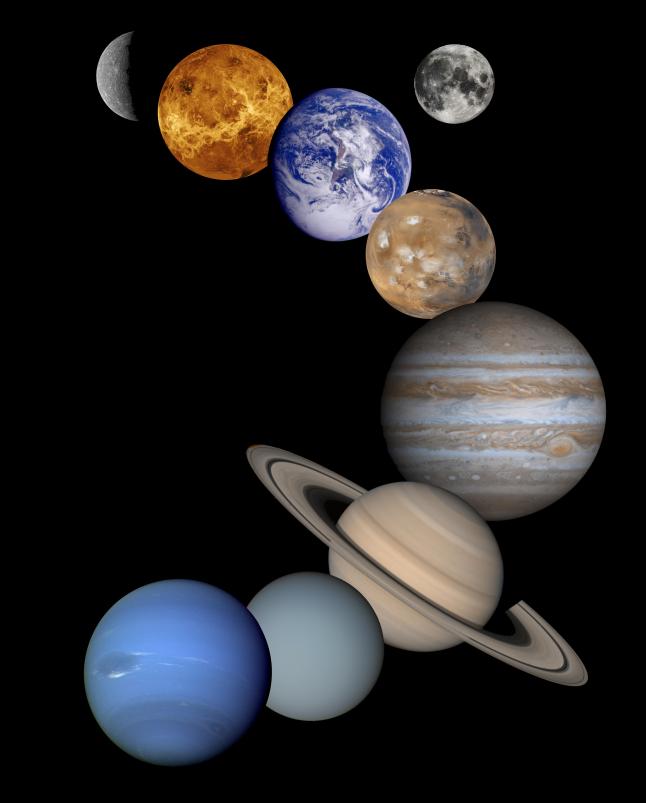
pia03153

BBC Symphony Orchestra, BBC Symphony Chorus (women’s voices), Professor Brian Cox, Ben Gernon

Barbican Hall, 29th September 2018

I wasn’t quite sure of what the format would be for this performance of Holst’s The Planets. Maybe a quick intro from our most famous and telegenic physicist, then a work-out for the BBCSO under Guest Conductor Ben Gernon, with a few unspecified other repertoire to be tacked on. What I hadn’t bargained for was a full-on lecture preceding each of the seven movements with state-of-the-art slide-show accompaniment showcasing some of the most famous images of our solar system.

It was therefore a very pleasant surprise. The Hall was packed to the rafters and, this being The Planets with a famous bloke off the telly, there was a far more diverse audience than you normally see at the Barbican or the South Bank. And my, my, did I learn a lot. Although I confess I can’t remember it all. The point is that Prof Cox, with his dulcet Manc tones, his child-like enthusiasm and his preposterous hair-cut is just the man to show us how the latest scientific understanding of our solar system, drawn from all that hard- and soft- ware sent out over the last four decades to examine it, both connects to, and contradicts, the more mystical and conjectural view prevalent in the early C20 when Holst wrote his masterpiece.

Holst, with his attachment to English folk-song and Eastern mysticism, was a curious fellow in some ways. Swedish extraction, frail constitution, mates with Vaughan-Williams, teacher at St Pauls Girls School, as fancy as it gets even then, nice gaff looking over the Thames in Barnes, committed socialist. An interest in theosophy, a right rag-tag of funny ideas as far as I can tell, but which had quite a hold over the Western creative community in the inter-war period.

His music is pretty curious as well. Uncertain tonalities, modal expressions, the kind of counterpoint more typical of medieval forms, irregular and often belting rhythms, ear-catching dissonance. It all tumbled out in The Planets, which itself it as big a subject as you can imagine for programmatic music. No surprise that it was such a success when finally completed in 1917, bolstering his career and reputation, and no surprise it is so popular today. Its best ideas might now appear to be a field full of hackneyed war-horses but, if you step back from the familiar, it still has the power to wow especially, I think, in the slower passages. At the time it was as “modern” as Debussy or Stravinsky, and, like them, its influence on “everyday” classical music now, is inescapable. No Planets, no fantasy film scores.

Holts’s starting point was the elemental character of each of the seven planets which is what lies behind astrology, (connected to this theosophy caper apparently). All b*llocks obviously, even at the time, but Holst believed it. And believing in the power of the planets to influence us did give a starting point for Holst to set out what he saw as important facets of the human condition: War (Mars), Peace (Venus), Messenger (Mercury), Jollity (Jupiter), Old Age (Saturn), Magician (Uranus), Mystic (Neptune), Scoff all you like but this nonsense also meant that, on this night, the exact centenary, Prof Cox could then riff on how far we have come in our understanding of what makes up our solar system, and that more existential question, what other life might be, or have been, out there.

The BBCSO, (with the female voices of the choir for the final wordless chorus in Neptune) was on top form and threw itself into the hyped-up interpretation under Ben Gerson. With the movements broken up by Prof Cox’s oration it was important to establish momentum in each of the movements tout suite as it were. After all the whole piece clocks in at just under an hour with only Saturn and Venus getting anywhere near the 10 minute mark. Easy enough to quickly stake your claim on the thunderous toccata of Mars, (here claimed as a wider critique of industrial capitalism and not just the horror of mechanised warfare), the carnival scherzo of Jupiter, the bitonal dance of Mercury or the sardonic fantasy of Uranus. I have to say though that the BBCSO was actually most convincing in the nagging processional of Saturn and the endless hush of Neptune which take more time to overawe.

All up a splendid idea. Of course individually the images, the music and the lecture might have had more lasting impact, but put them all together and a deeper impression was created. It would be nice if we humans could keep our sh*t together long enough to find out if we are not alone.

The Cardinal’s Musick at Wigmore Hall review ****

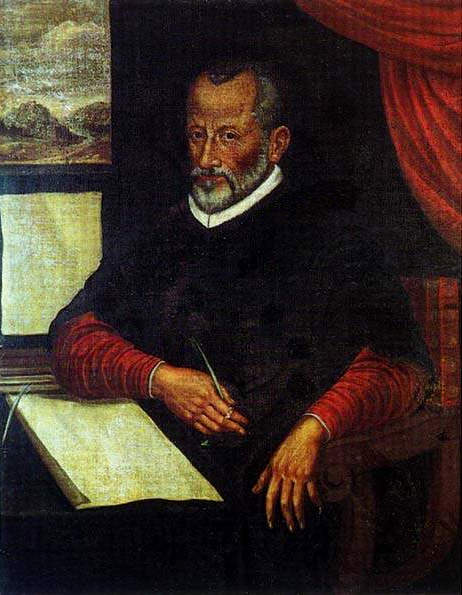
giovanni_pierluigi_da_palestrina

The Cardinal’s Musick, Andrew Carwood (director)

Wigmore Hall, 27th September 2018

  • Giovanni Pierluigi da Palestrina – Motet Tu es Petrus, Missa Tu es Petrus, Gregorian Chant, Magnus Sanctus Paulus a 8
  • Giovanni Bassano – O Rex gloriae
  • Jacob Handl – Sanctus Bartholomeus
  • Thomas Crecquillon – Andreas Christi famulus
  • Tomás Luis De Victoria – Vidi speciosam
  • Francisco Guerrero – Virgo prudentissima
  • Sebastián de Vivanco – Magnificat octavi toni

More people should hand themselves over to the musicianship and scholarship of the best of British Renaissance vocal ensembles such as The Cardinal’s Musick or The Tallis Scholars or The Sixteen. Or, on those rarer occasions, when the best of their European cousins pop over. (Let us hope that isn’t made prohibitively difficult by the clusterf*ck that is Brexit though I suspect nothing would give greater pleasure to the never-happy social conservatives than watching us metropolitan liberals lose the opportunity to listen to such poncey, suspect singing).

Surely, it is impossible not to like complex polyphony sung by experts. Of course you could invest some time into learning about the composers of this ravishing music and the context in which it was created. As the canon of Renaissance music has expanded so too has our knowledge about those who created it, though biographical details are normally scant. Some vague-ish birth and death dates, a list of where they trained and what positions they held and what patrons they, (and by implication we), need to be grateful to. More often than not there is some detail in the careers of the most renowned of these men, (women got more of a look in in Medieval music and in the early Baroque, as we are now, thankfully, discovering), which marks them out as tricky in some way. Often over what they got paid. You would think the aristos and the Church would have been happy to pay up for art of this quality. Clearly not.

There are now a wealth of recordings of the (largely) French, Flemish, English, Italian and Spanish masters and the repertoire is still expanding. However, given the relatively limited number of performances and performers it is still likely that the casual listener/attendee, like yours truly, will encounter something new at every concert. The scholars and musicologists that lead the way still have plenty to play with I gather, so the sense of exploration and novelty that pervades Renaissance music performance, even though we are now well into the sixth decade of “rediscovery” since the first ensembles set out, isn’t about to end. I assume devoting your life to this sort of caper isn’t a way to make a lot of money but I hope that the economic ecosystem is robust enough to underpin such vocation.

You could also seek to understand when, why and how these pieces were performed. I guess having some sort of faith would be a good starting point for grasping the meaning of the religious works, but I also think it is perfectly possible for the irreligious to take something from the words and purposes of the texts. Even if all the rules of Christian liturgy and its founding myths remain a bit fuzzy you will certainly learn a lot about the political, religious and social contexts in which this works were created.

You might arm yourself too with as much knowledge as you can about the musical forms and structures which define this music. Sacred and secular, masses and motets, madrigals, modal and tonal, the way in which the vocal parts are put together, parody, imitation, suspensions, homophony, antiphony, plainsong, cantus firmus, dissonance, dyadic counterpoint. I can’t say I am there yet but some of the terminology is staring to fall into place. And remember folks the Tourist is, by virtue of a grotesquely painful singing voice, unable to perform, a source of eternal shame, and, by dint of what his music teacher at school was wont to call “tone deafness”, in a time before such educational derogation was outlawed, an utter inability to “read” notes on a page, only a consumer, and not a producer, of music. At the time I gloried in Mr Vaughan-Williams’, (I kid you not, but I am pretty sure he was no relation), disapproval. Now I really wish I had listened to him. Mind you I still take pride in being booted out of RE on a couple of occasions, for, and I swear this is no malleably manufactured memory, arguing with the teacher whose name I forget about the existence of God. Calling me a “long-haired jessy”, however apt, only served to fuel my nascent atheism I am afraid.

Anyway, you could learn all you can about this glorious music. Or you could, as frankly I normally do, let it wash over, and through, you. You know the thing where you forget about everything but the now, mind empties, body relaxes, free of the grinding anxiety of what has happened or what might be about to happen? To get it you can, I suppose, teach yourself, or get some-one to teach you, some sort of mindfulness mumbo-jumbo. Or you could just listen to Palestrina or Victoria. I promise it will work. After all it was written for exactly that purpose. To lose yourself in devotion. So piggy-back off that and get yourself along to one of these concerts. Close your eyes and let the voices take over.

Here endeth the lesson.


The Village at Theatre Royal Stratford East review ****

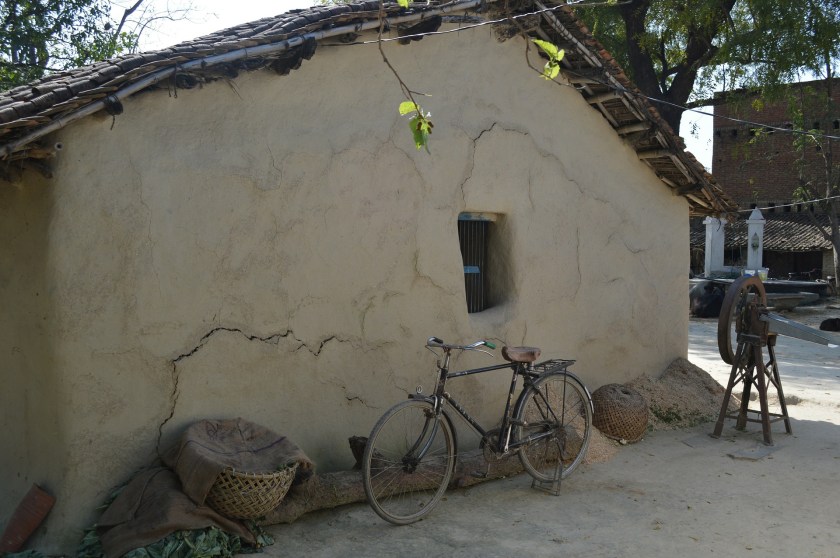
village-333070_1920

The Village

Theatre Royal Stratford East, 27th September 2018

One of the many advantages of the idle life of culture is the opportunity to savour the coincidences that it routinely throws up. I see a play, Losing Venice, about the end of Empire, written in a style which apes the dramatists of the Spanish Golden Age. (Losing Venice at the Orange Tree Theatre review ***). A couple of days later I see a play, An Adventure, about the immigrant’s journey out of India. (An Adventure at the Bush Theatre review ****). The next day I see a play, The Village, drawn from the most famous play from arguably the most famous playwright of the Spanish Golden Age, Fuenteovejuna by Lope de Veja, recast in modern rural India, still bearing the scars of post-colonialism. Learn, enjoy, repeat.

Lope de Veja’s 1619 story, based on a real incident in the village of the same name  in Castile in 1476, is pretty much guaranteed to get the pulse racing. A tale of honour, justice, reputation and chastity as so many of the Golden Age plays were, though here slightly subverted, which accounts for its continuing relevance. The women of the village, unable to stomach any more abuse from the local army chief, rise up to collectively kill him. They refuse to incriminate each other saying only that “Fuenteovejuna did it”. April de Angelis, who make such a fine job of adapting Elena Ferrante’s quartet My Brilliant Friend for the Rose Kingston stage (My Brilliant Friend at the Rose Theatre Kingston review ****), sticks pretty close to the plot of the original whilst offering up a text peopled with recognisably human characters. And, with a swagger that largely worked for me, much of the text is written in verse, which adds rhythm and pace to the story.

This, together with Nadia Fall’s kinetic direction and some top class performances especially from Anya Chalotra as Jyoti, and in his own villainous way, Art Malik, are what turns this from what might have been a sullen melodrama, into something altogether more supple and uplifting. The production might have benefitted from a bigger stage to accommodate Joanna Scotcher’s sloping set, and a little more technical sophistication, but, if this is the harbinger of things to come at Stratford Royal Theatre East under Nadia Fall, and the 18/19 season has great potential, then maybe SRTE can become a destination theatre as it was in the glory days of Joan Littlewood (who staged Fuenteovejuna in 1955), rather than an occasional, one-off hit machine (like Five Guys Named Moe).

No need to take my word for it. To save BD from sitting around all day in her PJ’s in front of a screen (though justified by an imminent return to uni) I dragged her alone. Only marginally easier to impress than her Mother, she agreed that this was a powerful, and satisfying, piece of theatre. And, even more extraordinary FKD, who has reason to know, and a bunch of her friends, gave it the thumbs up. Lopa de Veja’s original, whilst not directly informed by Catholic oppression, was a response to the violence of the Inquisition. AdA’s update similar doesn’t pull any punches when it comes to its portrayal of the BJP and the rise of Hindu nationalism.

The rural village, Sahaspur, is getting on with the business of life with Jyoti, daughter of of the joint mayor, Ramdev (Neil D’Souza), the bashful subject of the ardent affections of local Muslim lad Farooq (Scott Karim). He is egged on by comic sidekick Mango (Ameet Chana), she by no-nonsense buddy Panna (Rina Fatania). Both eke out plenty of laughs. Accents are more Bradford than Kolkata. When the sadist Inspector Gangwar (Art Malik) turns up, with soldier sidekicks Ved and Gopi, to fix the election for privileged BJP scion Vihaan (Naeem Hayat), the villagers are cowered, and then outraged, after he rapes Jyoti. The election is contested by Ishani (Sudha Bhuchar) for Congress with adviser Mekhal (Arian Nik) in tow, and it is she who is sent to investigate the Inspector’s murder.

A gripping tale for sure. And Nadia Fall’s high energy direction, with movement from Polly Bennett (especially striking in the revenge scene), lighting from Paul Pyant, sound from Helen Atkinson and composer Niraj Chang (with live on-stage music and Hindi songs courtesy of Japit Kaur), really brings it to life. Yet it will still make you angry that even now this kind of oppression is commonplace, and that horrific sexual violence in India (and elsewhere) is still legitimised by power. The mechanics of the ending are a little less than credible, but no matter, the message of successful resistance is the right one.