Europe at the Donmar Warehouse review ****

Europe

Donmar Warehouse, 6th August 2019

I have been mightily impressed with the two adaptations by David Greig, the AD of Edinburgh’s Royal Lyceum Theatre, that I have seen to date. The Suppliant Women, based on Aeschylus’s The Suppliants, which came to the Young Vic a couple of years ago, benefited from an excellent professional and amateur cast, some superb movement/choreography courtesy of Sasha Milavic Davies and music from percussionist Ben Burton and double aulos-ist (is that a thing) Callum Armstrong, but it was Mr Greig’s rhythmic text which powered the whole thing on. As for his skill in bringing Joe Simpson’s mountaineering epic, Touching the Void, to the stage, (which also features stunning movement work courtesy of Ms Davies), well I strongly suggest you make up your own mind and snap up a ticket for the transfer to London at the Duke of York’s. It was one of my top ten plays of 2018 at its original run in Bristol for good reason.

I am also set to see DG’s latest adaptation, Solaris, based on the 1961 novel by Polish writer Stanislaw Lem, made into a brilliant film by master Andrei Tarkovsky in 1972 and then subsequently sharpened up by Steven Soderbergh in 2002. If you like your science fiction to be all crash, bang, wallop, dispense-with-plot-and-character, CGI-fest, then this is not for you. It’s claustrophobia always felt like a good fit for the theatre to me and from the sound of the reviews from the current run in Edinburgh so it has proved, Can’t wait. And I should also probably consider seeing the Old Vic’s musical version of Bill Forsyth’s Local Hero next year where DG will write the book, though the involvement of one Mark Knopfler in the music department worries me. (In the Tourist’s post-punk musical heyday of the late 1970’s and early 1980’s, Dire Straits were the enemy of taste, no question).

Sadly though I had never seen any of DG’s original plays. I see there have been relatively recent revivals of Midsummer and The Strange Undoing of Prudencia Hart, and I would hope that one day soon the likes of The Events and Dunsinane reappear based on the reactions to their original outings. For the moment though I will make do with Europe, DG’s first ever play from 1994, and this marvellous revival at the Donmar Warehouse which Michael Longhurst choose to direct as the opener in his first season as the new AD at the Donmar. Big boots to metaphorically fill after Josie Rourke but with this production, Branden Jacob-Jenkins’s Appropriate and the revival of Caryl Churchill’s Far Away to come, he seems to be firmly on the right track.

Now if you had told me that the prophetic Europe was written in the 1930’s, or yesterday, I would have a) been very surprised since I don’t know you and b) even more surprised that you were actually reading this blog. But, limp jokes aside, I wouldn’t have been at all surprised, (an impression shared in the proper reviews). It is set in a mittel-European border town, a place, we sense, with a rich history, but now left-behind, chiefly known for “soup and lightbulbs”. Specifically we are taken to a railway station where young Adele (Faye Marsay) dreams of escape from her life and job as assistant to officious station-master Fret (Ron Cook). Adele is married to Berlin (Billy Howle who spends most of his time whinging and drinking with his jobless mates, the realist Billy (Stephen Wight) and proto-fascist Horse (Theo Barklem-Bigggs). Refugees from former Yugoslavia, Sava (Kevork Malikyan), and his daughter Katia (Natalia Tena), pitch up at the railway station one night. And stay. Initially to the consternation of Fret. But, after the train service is closed, he and Sava strike up a friendship and protest and Adele starts to break down Katia’s many emotional barriers. The three men however turn against the incomers and, when he returns from his travels, their childhood friend, the spivvish Morocco (Shane Zaza).

The story plays out, Brecht like, over twenty, titled, episodes. But Chloe Lamford’s scrupulous set, Tom Visser’s lighting and Ian Dickinson’s superb sound are anything but Brechtian. Even so Mr Longhurst’s direction still manages to draw out the thick metaphor in DG’s text, creating a universal out of this fascinating particular. This may be 1994, but Europe has seen this many times before, including right now, and, shamefully, will likely see it all again even, as it will, peace and tolerance triumph. (Always remember the bad guys know they are doing wrong: that is why they spend so much time and effort trying to deny and hide it). I gather Mr Greig has dealt with the themes of the cultural, personal and political differences between us, and specifically the fiction of borders and the plight of refugees, before but I wonder if he has done so as eloquently as here. I would like to find out if anyone fancies reviving his work.

That this Donmar production is so persuasive is also down to the excellent cast. Now normally when the Tourist says all the actors are tip-top he doesn’t really mean it. There are often stand-outs. He is just too polite to draw attention to them. Here though the entire ensemble shines. I am a huge fan of Ron Cook and here he matched his performances in Faith Healer, The Children and The Homecoming. I don’t think I had seen Turkish actor Kevork Malikyan before, other than in the best forgotten At Tale of Two Cities in Regent’s Park, but here he lends Sava immense dignity in the face of crushing adversity. Similarly I only know Natalia Tena from her turn as a Wildling in you know what, and that LD has a soft spot for her Potter role. Here she revealed a woman whose life experience leaves affection and trust as luxuries she simply cannot afford. I remember Faye Marsay and Shane Zaza from John Tiffany’s exemplary revival of Jim Cartwright’s road at the Royal Court a couple of years ago and Billy Howle I also remember from his performance as Galileo’s student in the Young Vic Life of Galileo. Both Theo Barklem-Biggs and Stephen Wight have familiar faces through TV roles but, on these performances I would like to see them on stage again.

The big, wide, “globalised” world is a scary place. But then again so, often, is home. Whether to stay or go feels like a question far too many have to grapple with. Europe with a mix of aggression, humour, tenderness and intelligence examines this dilemma through pointed narrative and character.

BTW is you want to see how a bitter tw*t at the other end of the humanity spectrum saw the play read the Spectator review. All the tired cliches and preposterous exaggeration. It must be hard work being this p*ssed off about everything all the time. Apparently “most borders are the product of geography”. Not history, politics or economics then. Unintentionally hilarious. I promise you I know a bit about this and I can assure you my academic specialism doesn’t wield that much power. Remember don’t let the idiocracy grind you down good people.
The Starry Messenger at the Wyndham’s Theatre review ***

The Starry Messenger

Wyndham’s Theatre, 5th August 2019

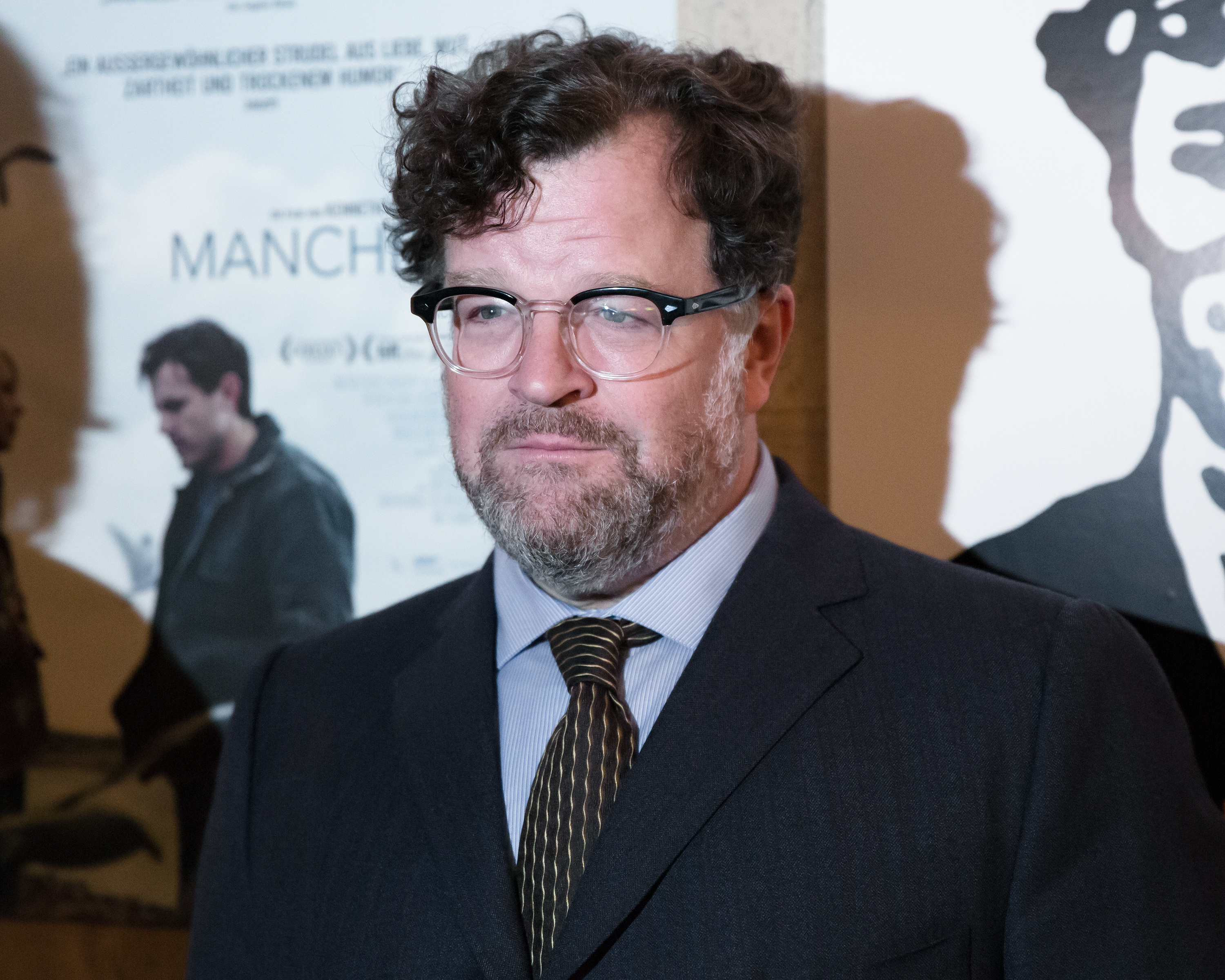
The Tourist, despite his evident theatre addiction, rarely jumps in to secure a ticket early for the “star” vehicles that crop up in the West End. It usually pays to wait to see how well regarded play and production are. Demand often adjusts to supply, pushing down price, in a pleasingly classical economics way. So far this year the strategy has worked for True West, The Price, Rosmersholm, Bitter Wheat and this, The Starry Messenger. I enjoyed Kenneth Lonergan’s last film Manchester by the Sea and see he had a hand in the writing of Scorsese’s The Gangs of New York, though plainly that film’s sprawling genius largely stems from Daniel Day-Lewis’s turn as Bill the Butcher. The reviews of A Starry Messenger from its original off-Broadway production in 2009 were also largely promising, (though it apparently got off to a very shaky start).

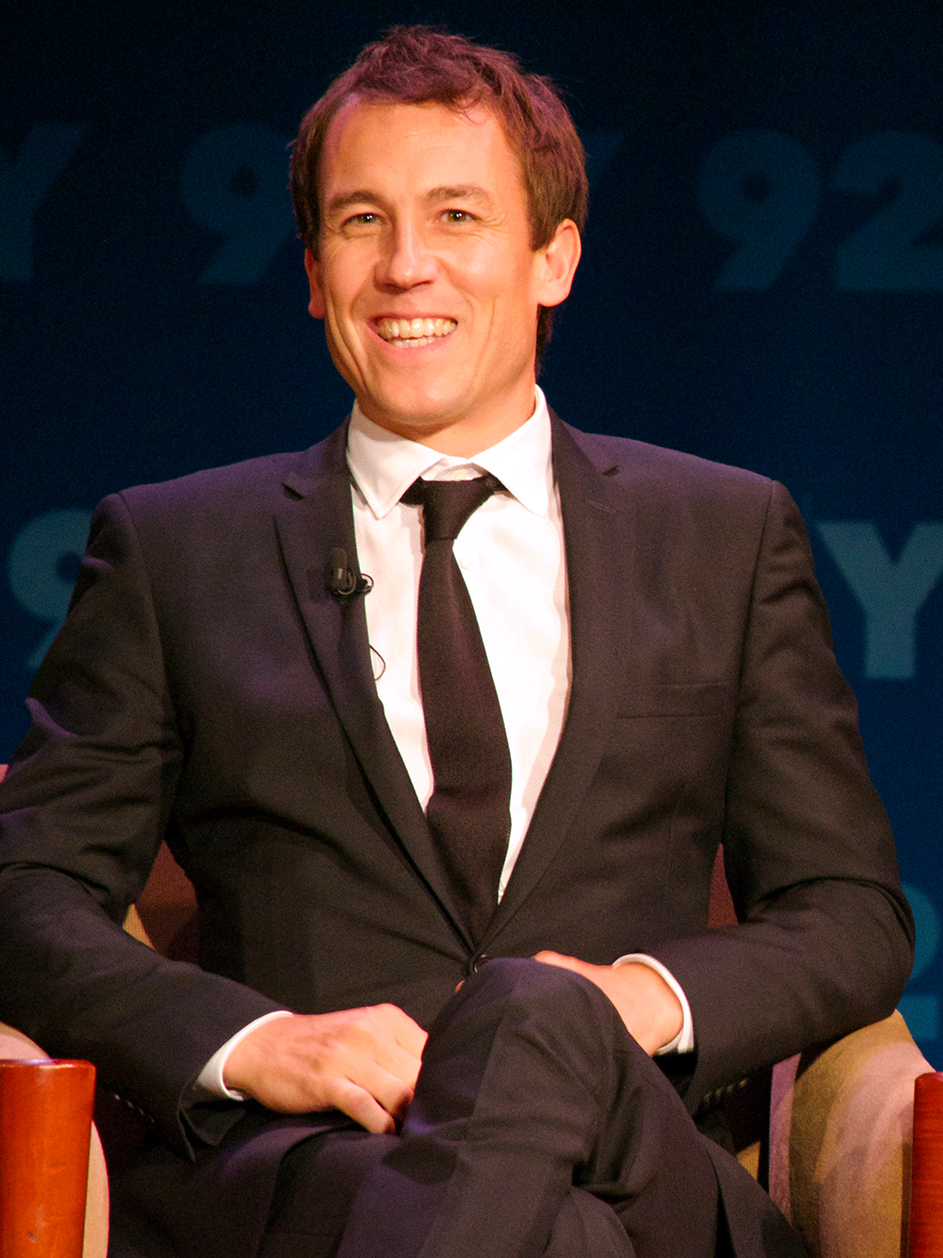
Matthew Broderick had a small part in MBTS and in Mr Lonergan’s epic failure Margaret, and larger roles in a whole string of Hollywood pap that has passed me by. However, he is probably still most famous for his early turn in cult teen movie Ferris Bueller’s Day Off, which is, IMHO, a bloody awful film, and, for the Tourist, in Alexander Payne’s Election, which is certainly not. And maybe also for being married to Sarah Jessica Parker, a terrible actor, though maybe that is the fault of the execrable Sex and the City in which she “starred”. And for a tragic traffic accident for which he seems to have escaped punishment. (The Tourist takes a dim view of the scale of justice usually meted out in such circumstances).

His co-star here was Elizabeth McGovern. Another Hollywood stalwart that the Tourist barely recognises. And this despite her living in Blighty and treading the boards in London in recent years. You will no doubt know her best as someone called Cora, the Countess of Grantham, in Downton Abbey. Of which I can truthfully, and proudly, say, I have only seen for maybe ten minutes in total, and that by accident. This is what comes of being an intellectual snob, devoting one’s cultural energies to quality British TV drama, art-house cinema from around the world, and elevating the theatre above all other performing arts.

Mr Broderick plays the stoical Mark Williams, a public lecturer in astronomy, at the Hayden Planetarium in New York. Ms McGovern is his chipper schoolteacher wife Anne. They have one, unseen though not unheard, teenage son. Mark is middle-aged, not quite in crisis, but a bemused, and amused, pedant whose life is passing him by. He still loves Anne but gentle bickering is their default mode of exchange. When animated, Puerto Rican, single Mom, nurse, Angela Vasquez stumbles into his lecture hall though, something of his life force returns. They have an unlikely affair. Tragedy strikes. So far so predictable. What makes all this cliche forgivable is Mr Lonergan’s ear for dialogue. These are ordinary people, doing ordinary things, in their ordinary lives, but with a depth of feeling which reaches for the infinite. They talk but don’t really listen. Misunderstanding and frustration abounds. At least that’s the idea. Hammered home with all the stargazey, metaphorical opportunity afforded by Mr Williams’s employ, especially right at the end. Faith plainly is not the answer in KL’s book.

It goes on a bit, nearly three hours, and, whilst I can remember the basics of the plot, and, Chiara Stevenson’s elegant set, with its night sky backdrop, the detail is already fading. It is fortunate that Matthew Broderick is playing a relatively dull man. Otherwise I might have mistaken him for a relatively bad actor. As it turns out, and particularly in the more humorous passages, his performance actually works. He is a modest man and, though, to paraphrase Churchill, he has much to be modest about, he is still striving for a good life.

Ms McGovern is an altogether more convincing stage presence but sadly we see too little of her and her part is underwritten. Rosalind Eleazar as Anela sails convincingly through the more hackneyed of her character’s traits, whether in the awkward and anguished scenes with Mark in her apartment, or in those with the terminally ill Norman (Jim Norton), the crusty old boy in her care, and his tetchy daughter Doris (Sinead Matthews), which provides the sub-plot. There are are regular laughs, often extracted from the regular members of the class Mark teaches, notably the some way behind the curve Mrs Pysner (Jenny Galloway), and from the wonderfully tactless, serial course-attender Ian (Sid Sagar). (I see that Kieran Culkin, another relater KL collaborator, played Ian in the original Broadway production. If you haven’t yet seen his turn as Roman Roy in HBO’s Succession then you are in for a treat). Another highlight is Mark’s conversations with his more successful, though still supportive as he pits Mark forward for a research role, academic colleague Arnold (Joplin Sibtain).

Chekhov it ain’t. But sometimes, in its wriggling ambivalence, it does a fair impression. KL, as you will probably have surmised, has spent far more time on the detail of the lines than the novelty of the plot or the wider context. But somehow, despite the irritations, I sort of quite liked it. Sam Yates last outing was with Ella Road’s excellent debut play The Phlebotomist but prior to that he, as here, rose to the occasion to direct acting royalty (notably Christian Slater) in the excellent Glengarry Glen Ross revival.

The original Hayden Planetarium, as we see at the end of the play, closed in 1997, to be reborn as Rose Centre foe Earth and Space attached to the American Museum of Natural History, (which I know from bitter experience feels almost as large as the universe itself). As he reveals in the programme he and Matthew Broderick went their together when they were kids. So now I understand why he has been so generous to his lifelong friend. After all, in the end, friends and relationships are all we really have.

The Hunt at the Almeida Theatre review *****

The Hunt

Almeida Theatre, 1st August 2019

I am not sure where I stand on the films of director, controversialist and misogynist Lars van Trier. I guess if you venture into dark territory you are going to make the audience that follows you uneasy. Which is how I feel about the likes of Breaking the Waves, Dancer in the Dark, Dogville, Melancholia and Nymphomaniac. Brilliant film-making if not always brilliant films. 

Fellow Dogme 95 founder Thomas Vinterberg is a much more palatable director however. More interested in social rather than individual psychology, more polis than eros, and less prone to stylistic innovation. Festen (The Celebration) is a work of unsettling, tonally ambiguous, tragi-comic genius, Submarino somehow extracts redemption from the unremitting pain of the brothers’ lives at its centre, Far From the Madding Crowd is better than the original, (Schlesinger’s and, I regret to say SO, Hardy’s), I’ve just seen the intriguing The Commune and I have Kursk on the watch list. But his best film for me is The Hunt, though it is helped by an outstanding central performance by the coolest actor on earth Mads Mikkelsen. 

All of his “original” films seem to be to be intrinsically dramatic, focussed on character, plot and idea, rather than spectacle, and not expansive in terms of time or place. Which makes them eminently suitable for theatrical treatment. It is a matter of some regret that the original Almeida production of Festen in 2004, which cemented the reputations of both Rufus Norris, now NT head, and playwright David Eldridge, who adapted the script of Vinterberg and his regular co-writer Tobias Lindholm, coincided with a theatrical “dry” period for the Tourist. Hopefully one day it will return.

This time it is Almeida AD Rupert Goold directing, following on from his string of hits , Shipwreck, Albion, Ink, Medea, King Charles III and American Psycho. We should never forget that it all starts with the writer, and that in this regard the Almeida has been lucky. More over the theatre is, I assume, now flush with enough cash and kudos to pull in any actor and creative team that is desires. Even so, and maybe forgiving a few recent misfires, the last few years have been a purple patch for the house even by comparison to its very high historical standards. Simple rule. Just buy a ticket for everything they put on. Even now that Robert Icke is on his way since Rebecca Frecknall looks to be a very capable replacement as Associate Director. (Next up her version of Webster’s The Duchess of Malfi. Any playwright good enough to inspire a Bunnymen song gets my vote).

A story of a man or woman wrongly accused and shunned by a small community is obvious theatrical catnip. Reference the film where teacher Lucas returns to his Danish hometown and a job in a primary school after redundancy and the break-up of his marriage in the city. After a misunderstanding in the school with Clara, the daughter of Lucas’s best friend Theo, that we, but not the community, see, Lucas is accused of paedophilia. The set-up, the investigation that follows and the violent fall-out is all painfully realistic. The story though ends with neither forgiveness or banishment as you might expect. There is plenty of symbolism along the way as Lucas’s relationships with colleagues, friends, son Marcus, church members and hunting pals is dissected. A thriller with a moral message, rich in ambiguity, taking a potshot at Danish society’s complacent view of its own tolerance. Like I say. Theatrical catnip.

But it still needed adapting. Enter David Farr. I don’t know any of Mr Farr’s original writing or adaptations in the theatre but I, and probably you, will know his work for television, particularly his adaptations of John Le Carrie’s The Night Manager and, less successfully maybe, Misha Glenny’s McMafia. For The Hunt he has stuck pretty closely I think to the plot and chronology of the film, though he has made Lucas more solitary by removing girlfriend Nadja and friend Bruun, altered his relationship with Marcus and cleverly updated the schoolroom set-up. The deer hunts, and the ritualistic machismo that pervades them, have also been highlighted and provide some intense theatre assisted by the costumes of Evie Gurney, lighting of Neil Austin, sound of Adam Cork and movement of Botis Seva. Lucas is, graphically, turned into the prey.

I have said before that Rupert Gould strikes me as a generous director who brings out the best in the creatives around him and The Hunt is no exception. This is a gripping story but could have been delivered in a predictable enter/dialogue/exit, scene after scene fashion, as literal as its source. Instead, as in the string of his other plays mentioned above, the play is replete with movement, symbolism and visual diversion. The tone is set by, er, Es Devlin’s set. Yes it is another of her trademark glass boxes, set on a blond wood circular stage, but, whether as school, house, church, hunt meeting hall or, brace yourself, deer enclosure, switching from transparent to opaque, from place of safety to place or threat, it still works to brilliant effect.

Tobias Menzies is set to play Phil the Greek in Series 3 and 4 of The Crown but he has already decorated TV and film with distinction, though looking at his bio I haven’t seen nearly enough of him. On stage he was excellent as Mikhail/Michael in Robert Icke’s underrated Uncle Vanya at, yep you guessed it, the Almeida, but other than that, again, I haven’t seen him perform. Here though he was perfectly cast. Lucas is innocent, of the crime of which he is accused for sure, but also in a broader sense. This story is not an attempt to create false parity or deny the victim. It is about the hypocrisy and anger that can infect a small community when threatened. Lucas is neither good nor bad, simply the catalyst for the reaction, though we can sympathise with his plight. This doesn’t mean that the play dodges the uncomfortable truths it confronts, just that it doesn’t go in, as is the Dogme 95 way, for an overt moral stance.

For this to work requires Tobias Menzies to present Lucas as self contained, curiously restrained, almost withdrawn, in the face of what happens. This he does. To devastating effect. Justin Salinger as the feckless Theo and Poppy Miller as his unhappy wife Mikala, the three of them have baggage, are equally convincing, torn between believing their daughter or their friend. Around this trinity, Michele Austin as head teacher Hilde, Stuart Campbell as the gawky, raging Marcus, Danny Kirrane as the hyper-aggressive Gunnar and Howard Ward as the investigator Per also stood out. And Abbiegail Mills as young Clara should definitely stick with this acting lark (though not to the exclusion of her other studies of course).

Adaptations of films for the stage don’t always work. Witness many of Ivo van Hove’s creations. Though Network was a recent triumphant exception. This was in large part though thanks to the unsung adaptation of Lee Hall. In the same way we must thank David Farr for his smart contribution here. As good as the film? Maybe not quite. But still something remarkable to set alongside it.

the end of history …. at the Royal Court Theatre review ***

the end of history …

Royal Court Theatre, 29th July 2019

Jack Thorne, (recents include H. Potter, Woyzeck, Junkyard and Kiri and The Virtues on the box), writing, (so blame him for the lower case affectation). John Tiffany, (H. Potter, Road, The Glass Menagerie), directing. A cast of Lesley Sharp, David Morrissey, Kate O’Flynn, Laurie Davidson, Zoe Boyle and Sam Swainsbury. A family drama set against the travails of the political Left across the last two decades. Whose title references Fukuyama’s dodgy theory about the triumph of neoliberalism. All at the Royal Court.

What could go wrong? Well not much as it happens. On the other hand it never really delivered on its promise. Acting top notch as you might expect. Same true of the directing and the set (Grace Smart), lighting (Jack Knowles), sound (Tom Gibbons), score (Imogen Heap) and, especially in the choreographed passages between the acts, movement (Steven Hoggett). Never dull, in fact engaging throughout with sharp dialogue and rounded characters. But …. it just didn’t really surprise with the way it handled the big issues it purported to tackle.

Heart-on-sleeve Sal (Lesley Sharp), a veteran of Greenham Common, and David (David Morrissey), are old school Labour intellectual types living in Newbury. Shabby (not chic) interior. Piles of books. “Ethnic” art. It’s 1997. They have no truck with Blair and his gain about to get elected. Carl (Sam Swainsbury) is bringing his posh, moneyed new girlfriend Harriet (Zoe Boyle) home for the weekend and awkward daughter Polly (Kate O’Flynn) is up from Cambridge to join in the fun/interrogation. Which just leaves youngest Tom (Laurie Davidson) finishing his detention and dashing back from school.

The family doesn’t hold back in the ensuing ding-dongs with plenty of sarcasm, pointed argument and negotiation, and there is a real sense of shared history, but it just doesn’t really go anywhere. We see the children face down their own triumph and disasters and there is a, somewhat predictable, plot twist at the end, (when it is now 2017 after we have passed Act 2’s 2007). Sal and David grow increasingly disillusioned with the world around them, and veer towards self-acknowledged parody, but with no specific event for us to latch on to the effect is of waves of, albeit quotable, dialogue flowing over us and no persuasive narrative arc.

A shame in some ways. A theatrical dissection of the failure of progressive politics is not unique but is still necessary and with this writer, director and cast more might have been achieved.

Whodunnit (Unrehearsed) at the Park Theatre review ****

Whodunnit (Unrehearsed)

Park Theatre, 25th July 2019

I am ashamed to say this but myself and LD were just a teensy teensy bit disappointed when we discovered that the guest at our performance of Whodunnit (Unrehearsed) at the Park Theatre was Clarke Peters. To recap. Park AD Jez Bond and writing/directing collaborator Mark Cameron created their parody Whoduunit (is there any other kind?) to raise a few quid to help fund the Park’s ongoing whirlwind of good, (and occasionally not so good it must be said), entertainments. To get the good people of North London, or in our case SW London, to dip their hands in their pockets, a volunteer was promised from luvvieworld who would play the role of the “Inspector” with the vital caveat that they wouldn’t see a script, and we wouldn’t know who they were, until the performance began.

Comedy luminaries such as Sandi Toksvig and Tim Vine (LD’s faves) had signed up alongside top drawer actors such as Adrian Dunbar, Jim Broadbent and Joanna Lumley (the Tourist’s). It was probably fair to say that, of all the candidates, Clarke Peters had, for us two, the lowest name recognition. Which I think reveals a shocking level of ignorance on our part. For you culture vultures will know that Mr Peters was a lynchpin of The Wire, has had a successful musical stage career in London and on Broadway, wrote Five Guys Named Moe and has an extensive UK TV bio. Pretty much none of which we had seen. And the worst thing of all. The Tourist had actually seen Mr Peters on stage just a few months ago. In the Old Vic production of Miller’s The American Clock. Which frankly is unforgivable.

All of which, as it turned out mattered not a jot. As Mr Peters was wonderful. Of course once we had seen and heard him it was clear we sort of did know who he was. Even so we were still blown away by how funny he was. Messrs Bond and Cameron have created a witty script ticking off every possible creaky murder mystery trope, and the rest of the cast, Candida Gubbins as housekeeper Anne Watt, Lewis Bruniges as her son and the handyman Jack Watt, Patrick Ryecart as the aristo owner of the house, Rigby Dangle and Omar Ibrahim as the suspicious stranger, Oscar Weissenberginelli, were all terrific. Though I would reserve special praise for Natasha Cottriall as Rigby’s daughter Felicity Dangle.

However the show can only be as amusing as the “star” allows given that they were fed their lines, and directions, via an earpiece, from Robert Blackwood. And this is where Mr Peters was so impressive. Not only did he enter into the spirit of the thing, with ad libs, inventions and playing off the rest of the cast, but actually he managed to create a character and sustain a plot over the couple of hours of the story. Of course it was all nonsense. But I suspect it wouldn’t have been half as funny if the “star” was uneasy with the technology and/or timing and therefore defaulted to too much mugging and derailing the proceedings. Mr Peters, once he was in the swing of things, certainly did not whilst still finding and milking a few repeated gags. The best of which involved an imaginary door, French chanson and a very alert team on the sound desk.

I gather this venture was a success for the Park, so, if they are tempted to roll it out again, you might want to give it a whirl.

Noises Off at the Lyric Hammersmith review ****

Noises Off

Lyric Hammersmith, 24th July 2019

Noises Off will transfer to the Garrick Theatre from 27th September.

It is a generally accepted truism in luvvie-world that Michael Frayn’s Noises Off is one of the funniest plays. An opinion with which the Tourist heartily concurs. Alongside Lysistrata and The Frogs, most of Shakespeare’s comedies, Volpone and The Alchemist, Tartuffe, Goldoni’s The Servant of Two Masters (Richard Bean’s version will appear on screen again on 26th September and a revival is due at the Queen’s Theatre Hornchurch), Uncle Vanya, Loot, The Real Thing, Serious Money, Dead Funny, The Habit of Art, The Lieutenant of Inishmore, Hangmen and The Play That Goes Wrong (whose makers have, not unreasonably, made a few quid following Michael’s Frayn’s lead). There’s probably a fair few more. But I haven’t seen them yet.

So I wasn’t about to miss this revival at the Lyric. And nor should you when it transfers to the West End. You know the drill or can easily find out. We see a touring performance of a sex farce, Nothing On, by one “Robin Housemonger”, or more precisely three performances of its first act: first in technical rehearsal at midnight the night before opening in Weston-Super-Mare, then from backstage a month later in Ashton-under-Lyme and finally from front of stage in Stockton-on-Tees at the end of the run. This is not an entirely happy troupe and the relationships between the cast, director and technical staff are, shall we say, complicated. Especially when their vanities, problems, passions and tantrums bleed into the performance. To, as the cliche goes, “hilarious effect”. So we get comedy driven by character, (notably the gap between on and off stage personas), situation, plot, wit and spectacle, through farce, slapstick and props. It is a treat for eyes, ears and also brain, as there is abundant comic logic just below the surface treats.

It requires immense skill to pull off. Not just from the cast but also from the creative team. To deliver a play within a play that doesn’t actually get pulled off. Michael Frayn completed the play in 1982 though the idea first came to him when watching one of his own farces, The Two of Us, from backstage in 1970. As with all of Mr Frayn’s plays, serious or comedy, he doesn’t stop where other writers might have done. He goes on buffing and polishing to create something close to perfection. Which I would contend he did, precisely, first time round here. though it hasn’t stopped him reworking it for subsequent revivals, and, as he reveals in the programme, actually editing out some unfortunate misprints which appeared in the original. Which is itself pretty amusing in a meta sort of way.

I can’t pretend this is quite up to the very high mark set by Lindsay Posner’s revival at the Old Vic in 2012. But it comes close. As it happens all the family saw that including LD, only 10 at the time. It is still, she says, the funniest thing she has ever seen, (along with the Mischief Theatre portfolio, so if you are tempted to take the nippers along don’t hesitate. In this production Headlong’s Jeremy Herrin directs which is helpful since he is the master of the high octane. Max Jones’s set does exactly what is required, front and back, as does Amy Mae’s lighting and Lorna Munden’s sound (which is at is most accomplished in the second act when the actors are effectively silent). And Complicite’s movement director, Joyce Henderson, shows why she is one of the best in the business.

Now it was pretty hot in the Lyric the night we went. Which wasn’t great for MIL who had to leave at the interval with the SO. A shame because I would have valued her opinion, since she is even more parsimonious with her praise that the SO. Still a thumbs up for the first half. It also meant that Daniel Rigby, as “leading man” Garry Lejeune probably lost a few pounds given how much he physically had to do. I was also taken with Lloyd Owen’s take on his namesake director, the supercilious predator Lloyd Dallas and with Jonathan Cullen’s take on the neurotic Frederick Fellowes. Frankly though a cast that includes the likes of Meera Seal as Dotty Otley who bankrolls the fictitious play, Simon Rouse as dipso lurvie Selsdon Mowbray and Debra Gillett as the maternal Belinda Blair, as well as Amy Morgan as the dramatically challenged Brooke Ashton, Lois Chimimba as put upon ASM Poppy and Enyi Okoronkwo as the even more put upon SM Tim, was always going to get this right, which with a couple of hutches they did handsomely.

Noises Off premiered at the Lyric Hammersmith, directed by Michael Frayn’s chief collaborator Michael Blakemore. It went on to a five year run in the West End. I hope they make a few quid from this revival.

And that Rachel O’Riordan’s in augural season turns out to be as good as it looks. There are still prime seats for a tenner at the previews of Solaris, Love, Love, Love and Antigone. Which frankly is a steal. The biggest bargain in London theatres anywhere right now IMHO.

Present Laughter at the Old Vic review ****

Present Laughter

Old Vic Theatre, 24th July 2019

Ummed and ahhed about whether to see this. On the one hand it was Andrew Scott in the lead as one of theatre’s most renowned hyper-narcissists, Gary Essendine. On the other hand it was a play from the dreadful old reactionary Noel Coward, albeit one of the quartet of classic comedies of manner, alongside Hay Fever, Private Lives and Blithe Spirit, before he became a terribly bitter sh*t.

Its problem is that it is smugly celebrating the very world and people that it purports to subvert. Of course it racks up caustic barb after knowing aside, many of which are admittedly pretty funny, all wrapped up in a well constructed, if gentle, farce, but it never really gets under the skin of its main, or supporting, characters. Which leaves me more annoyed than intrigued by the central conceit, that an actor/artist, and now just “celebrity”, needs the constant validation of others to stave off lonely despair as he/she negotiates the divide between reality and performance. Message to Gary/Noel. Just because you know you are a needy prick doesn’t make you any less of a needy prick. (Essendine, famously, is an anagram of neediness).

Still my adoration for Mr Scott won out, alongside a hunch, correct as it turned out, that director Matthew Warchus would be unable to resist having some fun making explicit the covert sexual relationships at the centre of the original play. And, in the end, I was very glad I went. Still can’t quite shake off the indignation that informs the above opinion of the snobbish, bullying Coward and his plays, but I have to admit the layers that emerge through the play really did surprise me.

Rob Howell’s set and costumes offer a striking jazzy deco period vibe, (the plays dates from 1943), with a contemporary twist, which helped enliven the somewhat cardboard supporting characters, and Mr Warchus instructed them not to hold back. Which suits the talents of Enzo Cilenti as Joe, Gary’s forthright paramour and Suzie Toase as his cuckolded wife Helen. Abdul Salis is Gary’s agent Morris Dixon, natural comic Sophie Thomson as Gary’s protective assistant Monica, Joshua Hill as stalwart valet Fred whilst rising talent Kitty Archer turns in another vivacious performance as young devotee Daphne. Though these are all a little overshadowed by Luke Thallon as super-fan and aspiring playwright Roland Maule and, especially Indira Varma as Liz, Gary’s world-weary wife. Not quite everyone is putting on a performance but Gary certainly is not alone in the attention seeking stakes. And they obviously need him as much as he needs them.

The deliberately ropey plot is never over-accelerated, although a few gags are still painfully telegraphed. And somehow the genius stage actor that is Andrew Scott managed to extract pathos and ambiguity, beyond the sexual, from Gary’s egomania. He cannot quite escape the masturbatory-squared approach that Coward takes to his stage alter-ego but he does leave you guessing as to his true feelings and the idea of Gary/Coward as some sort of mid-life, man-child, he is in his early 40s, is perspicacious. And, once again, Mr Scott manages that rare trick of projecting his performance not just to the whole audience but also to each and every one of us, (at least that’s what I felt).

So message received and understood. Though I don’t think I will ever feel pity for those who choose celebrity. If you can’t stand the heat get out of the kitchen. And definitely don’t stick your head in the oven whilst getting your publicist elicit public sympathy.

Noye’s Fludde at the Theatre Royal Stratford East review ****

Noye’s Fludde

Theatre Royal Stratford East, 3rd July 2019

You might think it’s a bit sad really. A grown man in his 50s on his own at a children’s opera performed by a community that he cannot claim to be any part of. Unfortunately my kids never caught the Britten bug when younger, despite what I thought were subtle attempts to influence them, and are now way too old to traipse along with Dad to this sort of thing. Actually what am I talking about? There was never a cat’s chance in hell that they were going to fall for Britten or opera, children’s or otherwise. A situation likely shared by 99.999999999% of the population. Which meant I was pretty much the only audience member there for the opera than the performers.

For this was the only Britten opera, (if you discount his version of Gay’s Beggars Opera), that the Tourist had never seen. And completism, as my regular reader undoubtedly registered sometime ago, is one of the Tourist’s many vices. As is condescension. So forgive me when I say that the bulk of the audience probably had next to no interest in Britten or his operas. But they did have a vested interest in seeing their little darlings on stage. And I can assure you that those kids made them properly proud. Though I would contend that, without the genius of BB, and the unnamed writer who created the Chester mystery play text from which the Victorian writer Alfred W Pollard drew his adaptation, this wouldn’t have been anything close to the uplifting entertainment it was.

BB had already written a little children’s opera, The Little Sweep, in 1949 (part of Let’s Make an Opera) and also previously adapted text from the Chester play cycle for his Canticle II, Abraham and Isaac. To Pollard’s text he added a few hymns, a Kyrie and an Alleluia chorus. There is a spoken Voice of God, played by acting royalty Suzanne Bertish no less, and Noah and his wife are both professional roles, here Marcus Farnsworth and Louise Callinan. Whilst Mr Farnsworth may be better known in recital he also has a distinguished opera CV to date and Ms Callinan is a veteran of multiple European houses. This, along with the 15 members of the ENO Orchestra, Martin Fitzpatrick, (Head of Music at ENO who conducted), Lyndsey Turner directing, and the likes of Soutra Gilmour (designer), Oliver Fenwick (lighting), Luke Halls (video), Lynne Page (movement), Oliver Jeffers (artwork) and Wayne McGregor (choreography), shows just how seriously the ENO took this production. This serious intent though never crushed the joy of its construction.

For Noye’s Fludde is really all about the amateur participants across the named human, (Noah’s sons and their wives and some gossips), and animal, (plenty of these, as you might expect), roles and the chorus. Step forward and take a bow Brampton Primary School, Churchfields Junior School, Newham Music and Newham Music Hub, and all the other local musicians and singers who were a part of this mammoth effort. And the Mums, Dads, siblings, Grannies, Grandads, carers, teachers, teaching assistants, community assistants, chaperones, ENO and TRSE back and front stage folk who chipped in. I hope you enjoyed it. I certainly did, even without any companions.

Special thanks though to BB. The idea of Noye’s Fludde had kicked around for a few years but it was a TV commission, eventually championed by Lew Grade at ATV, that spurred BB on to completing the score in March 1958. The wonder is that such genuinely inventive and atmospheric music should have been so brilliantly created for amateur musicians, as well as the professional core. And not just for the bugles, (hand)-bells, whistles and all manner of other improvised instruments that populate the music. No, there are proper parts for violins, violas, cellos, double basses and recorders. More than that these parts vary in difficulty with each section led by a professional. And there are plenty of passages which flirt with dissonance, in the manner of BB’s “grown-up” operas, well beyond the stuff you might expect from a “children’s” piece.

Listen to the first hymn which has an out of step bass line motif to contrast the chorus which lends a darker quality. This bass motif is taken up by the timpani to herald the first of God’s warnings. The syncopated song which follows as the Noah family come up is much more upbeat. The jaunty Mahlerian march which accompanies the Kyrie presages the entry of the animals and follows a striking, literally, as all manner of percussive effects are provided by the amateurs, passage as the Ark is built. There is a clever three part canon to introduce the birds. The storm scene at the centre of the opera is that old BB favourite an extended passacaglia, which uses the whole chromatic scale. Mugs hit by wooden spoons simulate raindrops, recorder trills become wind, strings become waves, percussion thunder and lightning, pianos provide the motif. A pastoral follows when the storm subsides and then, obviously, there are simple waltzes on cello and recorder to see off Raven and Dove. As the Ark empties out the bugles sound with handbells, (who pop up throughout until the very end), signalling the appearance of the rainbow. A rainbow that here spreads right across the stage, a fitting symbol of pride, to set alongside the. ecological message.

The way in which BB takes his trademark sound, simplifies it and recasts it for the different skills of his performers is really very, very clever. That it also able to incorporate all these various voices, including, sparingly, the audience and still create really effective, and moving, theatre is even more extraordinary. And just in case you are thinking this all sounds a little too tricksy-twee-schmatlzy-worthy there are plenty of clever visual gags from the animals to undercut it all.

BB specified the opera be performed in public, community spaces or churches rather than theatres. TRSE is such a dear old place however, and the “child’s picture book” design here, (which expertly captures the professional/amateur essence), so enchanting, that I am sure BB wouldn’t have complained. No idea if BB ever even met the architect of TRSE’s heyday Joan Littlewood but it is fitting that this vital piece of community theatre should have been so splendidly realised in such a space.

Bitter Wheat at the Garrick Theatre review **

Bitter Wheat

Garrick Theatre, 4th July 2019

The last time I saw a David Mamet play it was the very fine revival of Glengarry Glen Ross at the Playhouse with an outstanding cast of Christian Slater, Robert Glenister, Kris Marshall, Stanley Townsend, Don Warrington, Daniel Ryan and Oliver Ryan.

There is no doubt that Mr Mamet can write outstanding drama. But it has been a little while. And, when he has previously opted to lob his showcase incendiaries into the world of sexual politics, it is also true that opinion has been mixed. So we should have been warned. But it’s still David Mamet right? And more importantly it’s none other than Mr Charisma John Malkovich in the lead. as Barney Fein. A not even thinly disguised Harvey Weinstein. So topical huh?

What then is most bloody annoying about this play is not the material, the approach, the over- and under-tones. All this should not have taken us by surprise. It’s just that Mr Mamet doesn’t seem to have been arsed to even try to write a proper drama. Set up the monster lead. And then …. Well f*ck all really as the play goes nowhere in terms of plot, spectacle or message. And DM directed it. So he has no-one else to blame.

Yes there are a few funny lines, (when Barney discovers he is on the MMA board for example), though even some of these are so pointedly “close to the knuckle” that after a while they just come off as Mamet pastiching himself. And yes Mr Malkovich turns in a bravura performance which means it is never “boring” in the sense of clock-watching. But even he, the man who played the Vicomte de Valmont remember, can’t escape the clumsy material which weighs his down as much as the padding under his suit. Unlike Oleanna, there is no attempt at ambiguity here and hence no tension, moral or otherwise.

Go if you must to see the legend Mr Malkovich. Excuse, if you can, the ugly imperative that lies behind Mamet’s provocation. Even start to feel sorry, if you must though God only knows why, for the boringly venal character of Barney Fein as Mamet plainly intends. But surely even the most vocal proponent of “political correctness gone mad” won’t be able to excuse the fact that the dialogue is well, often a bit sh*t, the plot cumulatively tired and the supporting characters , (played by talents such as Doom Mackichan, Alexander Arnold, Teddy Kempner, Matthew Pidgeon and Zephryn Taitte and newcomer Ioanna Kimbook, who battles most valiantly) are pulp, not even cardboard, thin.

The programme cites 16 producers. To premiere this in London (presumably Broadway won’t touch it). Better that a couple of them rustled up a revival of Speed-the-Plow. You know. From back when DM was sharper, smarter and relevant. Mind you. What do I know. Looks like the theatre is being filled even if it requires a little discounting. So maybe they” make money. But I doubt this will make them proud.

Wife at the Kiln Theatre review ****

Wife

Kiln Theatre, 3rd July 2019

How difficult can it be to get to Kilburn? Very it would seem if you are the Tourist, this being the second time this year that he has missed the start of a matinee performance, (and having cut it perilously fine on another occasion). Message to self. Stop twatting about with the Overground and buses to get here and stick to the Jubilee.

Anyway it was a somewhat frustrating idea to watch the first scene of Wife on the tiny black and white stage telly, however accommodating the ever friendly front of house. Aussie Samuel Adamson’s latest play, (you may know him from The Light Princess musical at the NT of his Chekhov/Ibsen adaptations), is an intertwining affair which examines the relationships of four couples from 1959 to an imagined 2049. Ibsen is the stepping off point. Specially A Doll’s House, (there is a lot of Doll’s House inspiration coming up, see the Lyric Hammersmith, the Young Vic and International Theater Amsterdam).

After that scene and the infamous door slam, Wife opens with stiff-necked Robert (Joshua James) properly wound up after the performance, which he sees as an attack on the sanctity of marriage. His wife Daisy (Karen Fishwick), who dragged him along, doesn’t agree. She is in love with Nora the character and yearns for a similar freedom. Things ratchet up when we find out she is also in love with the actress, Suzannah (Sirine Saba) who plays Nora in the production. This is the scene I missed “live” but it was still plainly a compelling set up even if I couldn’t completely follow the subsequent ding-dong exchange of ideas and feelings between these three characters .

Next up 1988 and a couple of young gay men, with something of a class difference, the posh, volatile Ivar, (Joshua James again, named after one of Nora’s children), railing against the straight world, Thatcher and Section 28 and the younger, not-yet-out Eric (Calam Lynch) . They have retired to the pub after a Norwegian language version of the Doll’s House, and, after some exquisite verbal jousting, are joined by another Suzannah. On to 2019 and Clare (Karen Fishwick again) and Finn (the versatile Joshua James) who are at the Kiln Theatre bar (!) waiting for ….. well not the Suzannah who breezes in from the avowedly queer production of A Doll’s House being staged but Ivar, now 58 (Richard Cant, who also plays Peter in the first Doll’s House and the pub landlord in Scene 2), now bruised by life, and, after a while, his younger husband, bitchy actor Cas (Calam Lynch again). Clare and Ivar, as you pretty quickly surmise are connected.

And, in a final meta flourish, the finale is set in 2042, with an extract from a naturalistic play featuring Daisy, Robert, Suzannah and Marjorie (Pamela Hardman), a dresser. Now the whole point of this journey through time and coupledom is to show we are no closing to reconciling the struggle between the need to explore individual freedom, and the desire for equality, in domestic relationships, than Ibsen and his characters were in 1879.

In other hands this have could have become more than a little tricksy or worthy or muddled, but Mr Adamson pulls it off largely through the quality of his dialogue, they are some terrific lines and witty observations, and the way in which the cast it self has to shift pretty radically between the characters, even those that are linked by family ties, notably Joshua James (who has a knack of standing out in smaller roles in previous productions that the Tourist has enjoyed), Karen Fishwick (following her RSC stint, a fine Juliet, and Our Ladies from NT Scotland) and Calam Lynch (whose Claudio in the Rose Kingston’s Much Ado attracted disproportionate attention from LD, and not just for his acting talent). All three young actors served up really fine performances.

Of course it helped that Kiln AD Indhu Rubasingham took the chair herself lending customary energy to the production and papering over the cracks when words and actions pushed a little towards the artificial: these people don’t really do reflective silences. Richard Kent probably had more fun designing the costumes that the somewhat unremarkable set, as did Alexander Caplen with his sound contribution and Guy Hoare with lighting.

The proper reviews were, rightly, pretty positive overall. I have a very strong feeling that this will not be the last we see of this play.If so the Tourist will make damm sure he turns up on time.