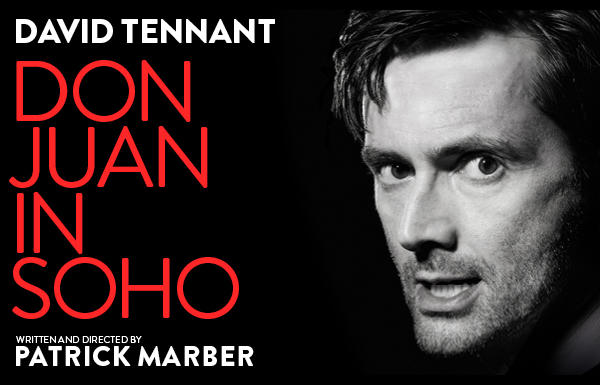
Don Juan in Soho at the Wyndham’s Theatre review ****

show_donjuaninsoho

Don Juan in Soho

Wyndham’s Theatre, 22nd May

Get this. The programme says that since a Spanish dramatist, Tirso di Molina, first brought Don Juan to the world in around 1620 he has appeared in at least 1,800 plays, operas, novels, films and poems. And I bet he appeared as a stock character in stories before the printing presses started rolling in earnest (though I am not away that this anti-hero was a feature of Greek or Roman theatre – but they were a cultured bunch right).

So what does this tell us. That people really like and admire him? Or that an overwhelmingly patriarchal artistic community keep shoving this obnoxious prick down our throats (literally), reflecting their own wish-fulfillment fantasies? Search me. I only really know the story from Mozart and Da Ponte’s opera, Don Giovanni (extracts from which unsurprisingly bookended this production). And every time I go into a performance of that, and usually for the first couple of scenes (the rape of Donna Anna for that is what it is, the murder of the Commendatore, and Leporello’s catalogue of conquests on behalf of his master), I think why I am watching this misogynistic clap-trap.

Then Mozart’s music takes over, Don Giovanni does eventually come unstuck and, finally, gets the comeuppance that maybe he deserves. This neatly then absolves us of any approbation we may have had for our anti-hero (and indeed any sneaking admiration some might harbour). All seems resolved except that within minutes of leaving I am once again questioning how I enjoying the tale of a dissolute libertine. I know, I know don’t judge a work of art written hundreds of years ago by today’s moral compass. But what I do often wrestle with is the audience reaction to this character.

Now the play, as interpreted by Moliere, also ups the ante by presenting Don Juan, in some ways, as worthy of our respect because he represents true freedom, the right to live your life as you please. Even more so he exposes the hypocrisy of all around him. This is where Patrick Marber, in this substantial adaptation originally produced in 2006, and which he also directs, pivots his attention with, I have to say, very considerable success. Our anti-hero, now just DJ, is alive and well in contemporary Soho, alongside his put-upon side-kick, Stan.

Now the first thing to say is that David Tennant and Adrian Scarborough end up with the audience in the palm of their hands so adept are their performances. There are times when I get annoyed by David Tennant who just seems to find it all too easy. I was not as bowled over as most by his last major stage work-out in the RSC’s Richard II and some of his TV work grates. And here, at first, I felt he was just too indulgent in his portrayal. But I was wrong and quickly came round. Similarly I felt Adrian Scarborough, at first, wasn’t getting to grips with any of the reasons why Stan would put up with this sort of treatment. Again I was wrong. The power of reflected glory is clearly an overwhelming aphrodisiac for the poor chap.

The same early apprehension I felt about the actors (remember too this is also the point when I am questioning the whole set up anyway) was manifest with Patrick Marber’s text. It just seemed too simplistic at first and inclined to allow the lead actor, ( I gather this was might also have been true of Rhys Ifans in the Donmar Warehouse original production), to lazily tick off the cheap laughs. Well, again  I was wrong as I think this approach means we too are quickly snared by our anti-hero’s charismatic web, which then serves to heighten the subsequent moral dualism. I have noticed this before with Mr Marber’s work. Dealer’s Choice, Closer and The Red Lion all take a bit of time to get going and his screenplay for Notes on a Scandal is similarly unhurried.

So what of the production itself. I am not sure the shoehorning in of Soho, as a symbol for London’s corrupted history, entirely works. It does give us the necessary statue in the form of King Charles II (he was of course the antidote to the cultural scourge of Puritanism). Soho also fuels a short, and not entirely relevant, piece in the programme focussed on the drunken antics of the artistic community in the 1950s and 1960s (Bacon, Thomas, Freud and hangers on). However, I think its symbolic value as the capital’s continuing den of sexual iniquity now looks a bit antiquated in a world of ubiquitous digital pornography. Anna Fleische’s modern setting and costumes, and the interpolation of dance and snatches of contemporary music (how can I not like a play that has masked dancers in white robes whirling around to Taking Heads’s Memories Can’t Wait!), does though set the perfect tone for this pursuit of gratification.

Mr Marber really cranks up the ambiguity in the scene with the beggar, here a Muslim who he forments, but fails, to blaspheme, the duping of Dad to keep the funds flowing and DJ’s climatic monologue, which I gather has been updated for this production. Here the railing against today’s grandiosity, virtue signalling and all-round attention seeking cant and humbug, induced slightly uneasier ripples of laughter through the audience when compared to the undemanding sallies at the expense of one D Trump earlier on. I’d say this is where Mr Marber really hit the mark.

So, overall, I think the writing, direction and performances richly decorate what remains, at its heart, still a very ugly construction. We are amused, we are seduced, we are instructed, we are chided for our complicity. The emptiness of hedonism that lies at the very heart of our DJ, is revealed and, ultimately, this proves his nemesis. Catharsis indeed.


Howard Hodgkin at the National Portrait Gallery review ***

self-portrait-of-the-artist

Howard Hodgkin: Absent Friends

National Portrait Gallery, 18th May 2017

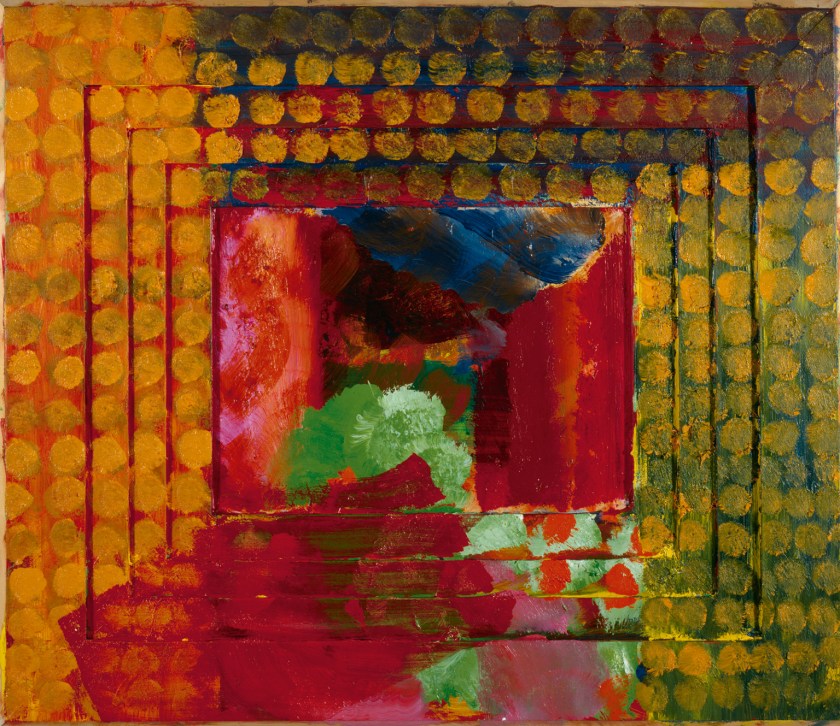
I haven’t really known what to make of the work of Howard Hodgkin who sadly passed away just before this exhibition began (having been involved in its creation). And I am still not sure what to make of it.

This was the first time I have seen a solo exhibition; previously I had only seen a few works in permanent collections. Now clearly it is impossible, at least for me, not to bowled over by the vibrant colours that he employed in his work and by the exuberance of the mark making. On the other hand I cannot say that I get any great reaction beyond this.

This exhibition focusses on his portraiture. This was largely done from memory and Hodgkin was always trying to capture the essence of the person or persons he was painting – the memory if you like. This means that his portraits became ever more abstract through his career, such that, by the end of his life, just a couple of broad brush strokes might suffice to capture the emotional core of his subject.

The problem for me is that as an observer I have no knowledge of these subjects (many of whom were fellow artists or collectors) and so cannot relate to the essence he has focussed on. So I am then just left with the colour and the patterns which, in some, though not all cases, are extraordinarily bold, vivid and certainly uplifting, with beautiful paint, but, unfortunately, offer me nothing beyond that. With more figurative portraiture, though not mimetic, I am able to see and examine the subject in a way that Hodgkin’s work precludes.

So definitely worth a good look and I have learnt far more about this important, though taciturn, British painter of the last few decades, but I am not sure he is an artist I will seek out in future visits unlike some of his contemporaries. Though as with other vivid colourists, there is no doubt that a good stare at their work makes subsequent real world colour burst into life, at least for a few hours. Be happy.

Some ideas for the culturally inclined in London

london-travel-guide-lede

Here is a very brief round-up, (apparently I can drone on a bit so have tried to be disciplined), of the current and forthcoming major theatre and exhibition events in London that have caught my eye (and ear). I have a list of classical concerts which is still good to go for those that way inclined (Some forthcoming classical music concert ideas (with a bit of nostalgia thrown in) and will take a look at the best of the forthcoming seasons at the two major opera houses in another post.

No particular order and not at all obscure. There should be tickets available for all of these but in some cases you may need to get your finger out.

Hope this helps if, unlike me, you are not over endowed with time.

Theatre

I can vouch for the first four below and the rest are those which I think are likely to be the most likely to turn into “must-sees”.

  • Hamlet – Harold Pinter Theatre – June to September 2017

If you think Shakespeare is not for you then think again. Andrew Scott as our eponymous prince could be chatting to you in the pub it is that easy to follow (mind you, you’d think he was a bit of a nutter) and Robert Icke’s direction is revelatory. Plenty of tickets and whilst it’s not cheap they aren’t gouging your eyes out compared to other West End shows. Here’s what I thought.

Hamlet at the Almeida review *****

  • The Ferryman – Gielgud Theatre – June to October 2017

This will almost certainly be the best play of 2017 and will be an oft revived classic. It is better than writer Jez Butterworth’s previous masterpiece, Jerusalem. Prices are steep but the Gielgud is a theatre where the cheap seats are tolerable. If you see one play this year make this it.

The Ferryman at the Royal Court Theatre review *****

  • Babette’s Feast – Print Room Coronet – to early June 2017

There are a couple of weeks left on this. Probably helps if you know the film or book. I was enchanted though proper reviews less so. Loads of tickets, cheap as chips, not demanding at all, lovely venue.

Babette’s Feast at the Print Room Coronet review ****

  • Othello – Wilton’s Music Hall – to early June 2017

Again just a couple of weeks left here. Once again perfect Shakespeare for those who don’t think it is for them. Big Will’s best play and an outstandingly dynamic production. Another atmospheric venue, though I would say get right up close. A bargain for this much class.

Othello at Wilton’s Music Hall review ****

  • The Tempest – Barbican Theatre – July and August 2017

This is the RSC transfer from Stratford. Simon Russell Beale, our best stage actor, as Prospero. Some fancy dan technology is employed. Reviews generally positive though you always get sniffiness from broadsheets whenever RSC plays a bit fast and loose with big Will. Not cheap but at least at the Barbican you will be comfy (if you don’t go too cheap).

  • Macbeth – Barbican Theatre – 5th to 8th October 2017

More bloody Shakespeare. Literally. On this you are going to have to trust me. Ninagawa is a Japanese theatre company renowned for its revelatory productions. So in Japanese with surtitles. But when these top class international companies come to the Barbican it is usually off the scale awesome. I’ve been waiting years to see them. Enough tickets left at £50 quid a pop but it will sell out I think.

  • The Suppliant Women – Young Vic – 13th to 25th November 2017

Reviews when this was shown at Royal Lyceum in Edinburgh were very good. Aeschylus, so one of them Greeks, updated to shed light on the refugee crisis. Maybe not everyone’s cup of tea, and you can probably wait until closer to opening, but I still think this will turn into a must see.

  • Ink – Almeida Theatre – June to August 2017

Writer James Graham’s last major outing, This House, about politics in 1970s Britain, was hilarious and insightful. This is based on the early life of Rupert Murdoch so expect a similar skewering. Directed by Almeida’s own Rupert Goold with Bertie Carvel the lead (the sh*t of a husband in that Doctor Foster off the telly). I have very high hopes for this,

  • Against – Almeida Theatre – August and September 2017

New play which sounds like it is about some crazy US billionaire taking over the world (I could be hopelessly wrong as Almeida doesn’t tell you much). Written by American wunderkind Chris Shin, directed by master of clarity Ian Rickson, and with Ben Wishaw in the lead. Don’t know how much availability as public booking only opens 25th May, but I would get in quick here and buy blind. Almeida now a lot comfier with the padded seats and still a bargain for what is normally world class theatre.

  • Prism – Hampstead Theatre – September and October 2017

New play from the marvellous Terry Johnson who writes brainy comedy Robert Lindsay in the lead role of a retired cinematographer. I have a feeling there will be more to this than meets the eye (!!) and will buy blind on the public booking opening. Usually around £30 a ticket so if it turns into a hit, as Hampstead productions sometimes do, it is a bargain.

  • Young Marx – The Bridge Theatre – October to December 2017

So this is the opener from the team at the Bridge which is the first large scale commercial theatre to be opened in London for decades. The genius Nick Hytner directs and the play is written by Richard Bean and Clive Coleman. The last time these three came together out popped One Man, Two Guvnors. Rory Kinnear and Oliver Chris (trust me you will know him off the telly) play the young Marx and Engels in London. Hard to think of a set up that could get me more excited but if any part appeals to you I would book now. There are loads of performances so no urgency but, if they have any sense at all, the seats here will be v. comfy with good views as it is all brand new, so taking a punt on a cheap seat will probably turn out well.

  • Julius Caesar – The Bridge Theatre – January to April 2018

Bridge again. Julius Caesar so probably need to know what you are letting yourself in for as solus Roman Shakespeare’s can sometimes frustrate. BUT with David Morrissey, Ben Wishaw, David Calder and Michelle Fairley, it is a super heavyweight cast. Same logic as above – it might be worth booking early and nabbing a cheap seat on the assumption they would be mad not to serve up the best auditorium in London if the venture is to succeed.

  • The Retreat – Park Theatre – November 2017

The Park often puts on stuff that sounds way better than it actually turns out to be, but this looks the pick of its forthcoming intriguing bunch. Written by Sam Bain (Peep Show and Fresh Meat) and directed by Kathy Burke. Comedy about a City high flyer who gives it all up but can’t escape the past. If anything is guaranteed to wheel in the North London 40 and 50 somethings then this is it. No cast announcement yet but I bet they rope some comic into the lead.

  • The Real Thing – The Rose Theatre Kingston – 2nd to 14th October

A co-production with Theatre Royal Bath and Cambridge Arts Theatre of one of Stoppard’s greatest plays. I really want this to be a cracking revival for my local.

Exhibitions

Here is the pick of the forthcoming blockbusters which I hope to get to see. The Jasper Johns and the Cezanne Portraits are the ones I am most excited about.

  • Giacometti – Tate Modern – just opened until 10th September 2017
  • Pink Floyd: Their Mortal Remains – V and A – until 1st October 2017
  • Into the Unknown: A Journey Through Science Fiction – Barbican Art Gallery – from 3rd June 2017
  • Grayson Perry: The Most Popular Art Exhibition Ever! – Serpentine Gallery – from 8th June 2017
  • Jasper Johns: Something Resembling Truth – Royal Academy – from 23rd September 2017
  • Opera: Passion, Power and Politics – V and A – from 30th September 2017
  • Cezanne Portraits – National Portrait Gallery – from 26th October 2017
  • Monochrome: Painting in Black and White – National Gallery – from 30th October 2017
  • Impressionists in London – Tate Britain – from 2nd November 2017
  • Red Star Over Russia – Tate Modern – from 8th November 2017
  • Modigliani – Tate Modern – from 23rd November 2017


London Symphony Orchestra at the Barbican review ****

dd962845a2824add53af118e7be7a9dcdb84a5b710a55991534227558486c096_dowz

Anne-Sophie Mutter, Sir Mark Elder, London Symphony Orchestra

Barbican Hall, 7th May 2017

Modest Mussorgsky, arr. Rimsky-Korsakov – Prelude to Khovanshchina
Tchaikovsky – Violin Concerto in D major Op.35
Shostakovich – Symphony No.15 in A major Op.141

Who’d be a Russian composer eh. Mussorgsky drinks himself to death at 42 (look at the famous Repin portrait to remind you there is no glamour in this form of self destruction) and p*sses away whatever talent he may had have (one powerfully dramatic opera in Boris Godunov). Tchaikovsky may have taken his own life, or fell victim to cholera, at just 53, and seemed by many accounts to have felt compelled to keep his sexuality a private matter. And Shostakovich lived a life of allusion and inference which kept his true feelings about the society he lived and worked in a mystery.

So you’d be surprised if they produced a jolly night out musically. Well then you might have been surprised. Well maybe only a bit, as some of this did sound exactly as you might have expected given these personal demons. Yet in other ways, these pieces seem to me at least quite a long way from the narratives that are routinely get trotted out to explain the work of these three composers.

So with the Khovanshchina Prelude we have the opening to Mussorgsky’s planned grand historical opera exploring the changes in Russia society in the reign of Peter The Great. Unfortunately it never got finished and Rimsky Korsakov had to step in and tszuj it up a bit and smooth it off. I am afraid that for me it is just a bit of a meandering melody with no great interest. The Tchaikovsky concerto is properly blingy with memorable tunes but gets a little less endearing with each hearing I think. The Shostakovich, on the other hand, gets more interesting for me with each hearing. Four movements, usual proportions, biggish orchestra but balanced. But what he then does with this structure is all over the shop. Lots of single instrument lines, loads of obvious and not so obvious musical quotations, exaggeratedly simple tunes and then complex twelve note themes. The parallels with Nielsen’s 6th Symphony are often drawn which makes sense and which I always love. Who knows what he was thinking but it does seem to me to be some sort of encapsulation of all of his output before set against some sort of commentary on all that he had seen in his life. Anyway its top notch.

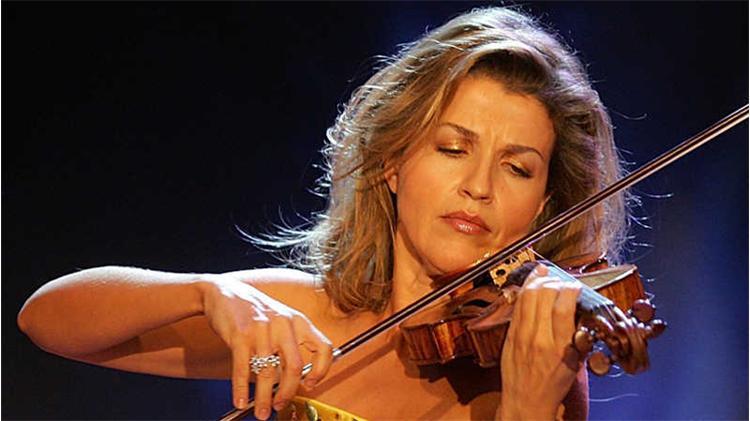
So the Shostakovich wqs the main reason for going to this concert (it is the programme that largely drives my choice now that I have a firm handle on the boundaries of what works for me like in the classical music world). However I am also keen to hear as many of the great performers and conductors and this was a chance to knock a couple off the list. I have to say Anne-Sophie Mutter must be the best violinist technically I have ever heard but this almost felt too perfect and furiously methodical. Still I will remember this performance, especially when she turned to the LSO to implore them punp it up, even if I am not sure I really enjoyed it. For the Shostakovich though I can see why Sir Mark Elder is held in such high regard.

So all in all a very fine programme and I will add Sir Mark Elder to the list of must see conductors (when they have the right pieces) which includes Rattle, Haitink, Jurowski, Jansons, Salonen and Chailly.

The Resistible Rise of Arturo Ui at the Donmar Warehouse review ****

the-resistible

The Resistible Rise of Arturo Ui

Donmar Warehouse, 18th May 2017

I see a lot of theatre now. Which means I read a lot of press reviews. Which is about the only time I ever step out of my Guardian reading, liberal, metropolitan elite cocoon. And that means reading reviews in the Daily Telegraph (because they often offer insight) and, when I just can’t resist it and assuming no-one is looking, the Daily Mail and Daily Express. (Why are all the hate rags called Daily – is it to remind staff and readers of the material fact of diurnality – if I were them I would be very wary of such scientific consensus).

Now I wagered to myself that in the satirical play about the rise of Hitler in 1930’s Germany (I know there is more to it but we will get to that once I have had my rant) by the Marxist playwright and guiding light of Epic Theatre, and proponent of Verfremdungseffekt, the still astounding Bertolt Brecht, that we might get some references to a certain orange POTUS. And that we might get a hint of a political message maybe even delivered direct to audience. And maybe God forbid a bit of audience interaction.

And I wagered further to myself when the Donmar announced this (with Bruce Norris as the adaptor – a man unlikely to be a scripting a Midsomer Murders episode any time soon), that the right wing rags wouldn’t be able to lay off with hysterical “beware of lefty creatives shoe-horning in references to poor defenceless Donnie” and “why oh why do these creatives have to distract us from the sacred text by involving the audience”. And I hoped it would be properly potty-mouthed as that still seems to get these people in a lather.

Well they, the rags, didn’t disappoint, and actually more of them than just the usual suspects. They really are a humourless bunch. It’s Brecht. We, the audience, are supposed to be bashed over the head with the message, both the direct historical satire and the generality of the warning. And we might find it funny. As we did. Whilst we have a good time. As we did.

Or maybe the DM and its ilk would be happier with a hot line straight to the Supreme Leader so they could denounce any of this degenerate stuff before it took root. Or maybe we should have some-one appointed to check this is all OK for us to see. Y’know just to be sure. I mean no-one wants faceless, unelected bureaucrats telling us what to do. But at least this would mean we could take back control and give the majority the strong and stable theatre that they crave. I mean right now, if you walk the streets of the West End, it is awash with subversive, pinko musicals and you risk some actorly type of indeterminate gender or, worse still, an American film actor, dragging you in to the theatre for a sing-song.

It was all so much better in the 1950s eh, Empire, no dusky types and the Lord Chancellor could help these luvvies see the error of their ways before they they could put on their so-called entertainments and thereby brainwash 27 of their Hampstead dwelling friends and colleagues (on a good night). Or better still back to the 1930’s eh, when any play critical of our Nazi friends could be refused a license. You know when the Daily Mail was firmly on the side of the righteous.

For the avoidance of doubt I am taking the p*ss here as I know that some of the silent majority that live in perpetual fear of us liberal, foreign-looking types may have a slim grasp of irony. Still you know what I mean. Or have I been too crude. Like Brecht and the key protagonists here, adaptor Bruce Norris, and director Simon Evans.

Anyway the play’s the thing. And in this case it was, by and large, a very enjoyable, energetic and thought-provoking thing. As I understand it Brecht was keen to create drama out of his gangster story as well as use the Verfremdungseffekt distancing effects to ram home the satire. I think that such drama did shine through with maybe just a little easing of the pace through scenes 11, 12 and 13, the murders of Roma and Dullfeet and I still think the Shakespearean references Brecht uses to augment the epic are sometimes more distracting than illuminating. I would also strongly recommend a bit of boning up on the rise of Hitler beforehand. The programme does an excellent summary of the events that each of the 15 scenes are satirising.

With the Donmar space done up at the outset to evoke a 1930s Chicago speak-easy, with the audience ranged around, a boisterous cast chatting to audience on entry, a wide variety of musical interjections, a narrator (with the obligatory swinging microphone) tasked with delivering a running commentary laced Marxist economic analysis and the coercion of audience members (who might now envy us up in the cheap seats), we also got the required “stepping away” from the story so that we could again examine how and why history takes this course, then, now, and, no doubt, in future.

All involved are to be congratulated notably Mr Evans and, especially for me, Mr Norris. Of his plays, I have only seen Clybourne Park, which I thoroughly enjoyed, (and I have never seen the play that provoked it, A Raisin in the Sun by Lorraine Hansberry, which I dearly wish to put right), back I hope more of them cross the pond. Of the cast my particular favourites were Giles Terera as a vicious Ernesto Roma and Lucy Ellinson as a hyper Emanuele Giri.

Oh and some bloke called Sir Lenny Henry. When you are very close to the top of the “National Treasure” pile you can do what you like, when you like, and I guess how you like. This is not naturalistic theatre but there were a couple of times when Sir Len’s AU had the whole place sh*tting itself at his barely controlled aggression. I tell you it was a relief when cuddly Sir Len ambled back on at the curtain call. Amidst all the comedy stuff his portrayal personified a damaged narcissist who pushes at boundaries, ostensibly manipulated by those who think they “control” him, and finds too few, through omission or commission, are prepared to resist. And that’s why the heavy handed contemporary parallels are not to be carped at but embraced in my book. Subtlety and allusion have their theatrical place but so does praxis.

They are amazingly a handful of tickets left. Nab one and see where, and if, you stand.

The Cardinal at the Southwark Playhouse review ***

cardinalweb

The Cardinal

Southwark Playhouse, 16th May 2017

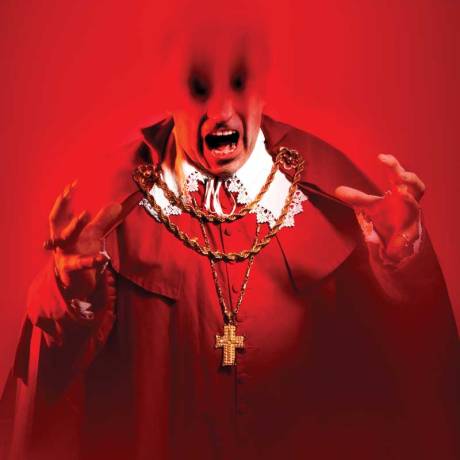
Scary picture huh. Southwark Playhouse is a constant whirr of activity serving up all manner of delights across the theatrical spectrum. I just never know what to expect. I am not so shallow as to buy a ticket on spec based on a bit of blurb and a striking image – actually maybe I am.

So I went into this not really knowing what to expect and came out not entirely sure what I had seen. On the face of it this a classic tale of revenge from 1641 (just before Cromwell’s miserablists closed down the theatres) by a chap named James Shirley – a playwright known more in academic than performing circles. Set in C16 (I’m guessing) Navarre at war with Aragon, our widow and heroine is forced into a proposed marriage with blunt, soldier type who happens to be nephew of scheming cardinal who has the ear of the king. But she wants dashing, handsome type and, by virtue of a curious plot device in the form of a misinterpreted letter is able to get dodgy suitor to set her free so she can marry the pretty bloke. The blunt one/nephew doesn’t take too kindly to this. Cue vengeance and the inevitable corpse pile-up.

So frankly it is not the plot that makes this at all interesting. What is fascinating though is the way our man Shirley seems to be taking the p*ss a little out of the revenge tragedy, Duchess of Malfi anyone, and the quite strikingly direct, acerbic text. It is not at all florid. And furthermore our heroine really does possess agency. Obviously she dies, as they all do, but there is a really interesting exploration of her journey here. Moreover the hypocrisy at the heart of our Cardinal’s religion is given a right slagging.

This apparently reflects the changing status of women pre and post Restoration (and no doubt England’s view of the dodgy Catholic foreigner). Now don’t run away with the idea that there is an undiscovered feminist or humanist text here. It’s just that it was interesting for me to see the preamble to the gore-fest portrayed in this way.

The problem though was that having set this up in the first act, and early into the second act, it then seemed to revert to the very type it had sort of subverted, with our now utterly calculating heroine/widow roping in life partner candidate number 4 to dispatch the eponymous cardinal. As for the Cardinal himself, whilst Stephen Boxer does his level best to play the part in the style of an arch John Hurt (I am sure I am not the first to remark on this), there are times when he sounded a bit more Kenneth Williams’s Thomas Cromwell in Carry on Henry.

The other cast members all performed admirably with what they had but the stand out for me was Nathalie Simpson as the lead Duchess Rosaura. She had stood out as Guideria in Molly Still’s gender mash-up RSC Cymbeline last year and was very convincing here. I also note the contribution of Marcus Griffiths as Alvarez here, though he was better as Cloten in the self-same Cymbeline.

So all in all worth seeing. With some very appealing lines and ideas. And a very fine (and slightly alarming) sword fight. It’s just that the plot sort of collapsed inwards, and this left a bit too much for cast and director to do to persuade me this is a vital link between revenge tragedy and Restoration comedy in the history of British theatre and a scandalously neglected gem. I wonder if some genius director out there might find something else of value in Mr Shirley’s oeuvre given his turn of phrase (though I gather this is considered his best work not least by the man himself).

Still great picture. And Southwark Playhouse still wins the prize for diversity of offer hands down. Which is a really good thing if you want people who don’t look like me to come. Which itself is a really good thing. Though in this particular case this probably is only going to appeal to people just like me.

Othello at Wilton’s Music Hall review ****

othello-collage

Othello

Wilton’s Music Hall, 17th May 2017

I think Othello is my favourite Shakespeare tragedy. And it follows, therefore, that it is my favourite Shakespeare play since the tragedies generally kick the most arse. And it therefore also follows that it is probably my favourite ever play since no-one bests big Will. Mind you I have so much more to explore so lets not be hasty. But to date this is the Daddy.

This means I might not be the most objective judge. Which for this production really helped. I fear that a combination of my hearing which is no longer up to snuff, my seating position up in the gallery, the acoustic at Wilton’s and, perhaps, the sound engineering here meant that I couldn’t clearly hear a lot of the lines. Which is a shame as pretty much everything else about this Othello was mightily impressive as it cut straight to the core of what this play is about.

So what made it so good despite my blinking ears?

Well, first off, the programme is at pains to explores Othello’s “otherness” as a “Moor” in terms of his colour, but also more so his faith, as probably a Muslim who is forced to, or chooses to, embrace Christianity. The production serves to handsomely illuminate this (it starts with Othello on a prayer mat and crucifixes are liberally bandied about), such that it is not just the vitriolic racism that is on show but also the suspicion accorded Othello by the Venetians because of his roots in Islam. This despite his victories over the “Turks”. This may be C16 Venice (and Wilton’s itself does a nice line in atmospheric material decay), but clearly there is plenty of food for thought in this production for our own times.

It also rightly centres on Iago. There are multiple ways to explore why Iago is driven to do what he does but I think this production gets as close as possible to the heart of what drives him.

Of course Iago is disfigured by the racism and misogyny of the society that he lives in. And, as he says, being passed over for preferment in favour of Cassio portends a powerful grudge. His hatred of Othello is certainly borne of envy yes – of his masculinity, his power, his sexual relationship with Desdemona (in contrast to what may be his stagnating marriage to Emilia, look out for the “non-kiss”) – but at its heart is the dissonance between his admiration (and even attraction) to Othello and his incomprehension that this “other” should have everything he can’t have. He loathes himself and cannot, and will not, stop until he has brought this man down. His jealously is so all encompassing that he can justify his actions to himself and, for me, the final vow of silence is a sign that he still believes he was “right” to do what he did in his own mind.

So the “why the f*ck should he get everything when I am better than him” is the bigger lesson here. And this is what Will S nailed as it seems as if it is a permanent feature element of the human condition. It is this deep psychological impulse that lies at the heart of the alienation that pervades neo-liberal capitalism and is what some will always seek to exploit. So the play is relevant in my mind, not just because of the way it explores the “fear of the other”,  but also because it shows the hate people can be driven to by perceived “unfairness”.

Blimey I think I may have got all carried away there. Sorry.

Anyway none of this would work if the players are not up to the task. And here Mark Lockyer as Iago was about as good as it is possible to be. His Iago properly hates himself. Not just in his words but in his movement – pacing, pointing, finger-clicking, advancing and retreating – all in some sort of Prosperian performance to justify his thoughts and actions to himself, as well as hide his intentions from others. Brilliant and horribly plausible.

In contrast I saw a “man-child” Othello who was maybe more open to manipulation than in other productions which perhaps better explains, whilst still condemning, his brutally misogynistic destiny. It is stating the obvious that debutant Abraham Popoola has an extraordinary physical presence, but the way he used this in the scenes with Desdemona, both tender and violent, and especially with Iago, where Iago is winding his jealously up to the max, was remarkable. As Othello oscillates between his disgust at the imagined betrayal by Desdemona and his trust in her true nature, so Iago oscillates between a visible fear that he has pushed Othello too far (he actually physically shrinks when this Othello gets right in his face) and an almost smug satisfaction in what he can do to his “friend” and, always remember, his military superior.

There is also another very fine performance in the form of the diminutive Norma Lopez Holden as a sensual Desdemona. Constantly in motion, tactile and perfect in conveying, even to the end, the sense of disbelief at what has come over her husband. Throughout the sexual attraction between her and Othello pervaded the theatre. This actor will surely go far. To round it off we had a fine, upright Cassio in Piers Hampton and an Emilia in Kate Stephens who is, ultimately, the best side of our nature. In fact the whole ensemble seemed to me to perfectly execute director Richard Twyman’s laser-guided vision.

BTW Mt Twyman s a very important man. As Artistic Director of English Touring Theatre he will have a hand in bringing the best of theatre to venues outside of the London commercial and subsidised venues. A vital role. From what I have seen of their past production and what he has achieved here it is therefore an immense blessing that he is very, very good at his job.

In this directing role, and along with his sound and, especially, lighting team, he has brought a prodigious energy to this Othello and some absolutely first rate scenes with an absolute minimum of props and costume, particularly through Acts 2 to 5. The soldier’s partying and drinking, the big fight scene, the Iago wind up of Othello, the murder of Cassio in the dark, Emilia and Desdemona’s drunken but unswerving dissection of the relationship between the sexes, Desdemona’s murder (a yoga mat replaces the usually crassly symbolic bed and calls back the beginning) – all these scenes were as good as I have seen. And that wretched hanky gets an early look in – as part of the apparently non-Christian wedding ceremony at the start – how brilliant is that.

But if I was to single out one contributor it would be movement director Renaud Wiser. Like I said some of the lines, particularly Othello’s, floundered on the rocks of my dodgy hearing. This, together with the harsh downlighting and fluorescent tubes at the corner of the tight, bare, in-the-round stage, maybe meant I focussed on movement in a way that I might not normally do but here I could see just how vital this ingredient was to the whole.

So, as you may have gathered, I liked this. And this despite the aural handicap without which I might even be prepared to rate it alongside Nicholas Hytner’s NT production in 2013 which, to this day, still leaves me nervous of befriending anyone who comes across like Rory Kinner’s matey Iago.

So please go along. There’s another three weeks or so and it looks like plenty of tickets. Probably best to go downstairs, maybe have a quick snifter beforehand and it will help if you like the play already. But if you do go you will be reminded of just how vital Shakespeare can be. I am pretty sure Mark Lockyer’s Iago will rank as one of the best performances of the year. And all this for 25 quid tops.

This is the first time that I have seen a production by Shakespeare at the Tobacco Factory. If this is what they do then it won’t be the last. Hopefully Wilton’s Music Hall will snap up anything they tour to allow the good burghers of London a chance to enjoy. Otherwise I now have the perfect excuse to go to Bristol. Here is the link to the website. Read it. This is how theatre should be done.

Shakespeare at the Tobacco Factory

Obsession at the Barbican Theatre review ***

15_0

Obsession

Barbican Theatre, 13th May 2017

In retrospect there were warning signs.

This was an adaptation of Luchino Visconti’s 1943 debut film, Obssessione, itself based on a book by James M. Cain, the Postman Always Rings Twice, which in turn was later made into an American film in 1946 (Lana Turner, John Garfield) and 1981 (Jack Nicholson, Jessica Lange with a David Mamet screenplay). There have apparently been 4 other film adataptions, another play and even an opera based on the book. I had seen both US films and Obssessione but I confess my memory of plot and character was more skewed to both of the US films and not Visconti’s “neo-realist’ masterpiece.

So, on this basis, and given the provenance of director and cast here, I got quite excited, so I strong-armed, in so far as that is possible with people of such admirably independent will, the SO and the Blonde Bombshells into coming with me to this performance. In doing so I broke my own golden rule – if a play is an adaptation of a novel or a film, or both, be careful to evaluate the source material before signing up. There have been plenty of recent marvellous adaptations for theatre but, if a play is not written expressly for the theatre then, in my view, the audience is at potentially greater risk of disappointment if the vision of the creative team falls short. A book has description (objective and subjective) and the reader’s imaginations to fill the gaps and film has the ever moving eye of the camera to direct the viewer. A play though needs the text, the things the characters say, to do the heavy lifting. When it works for me at least theatre trumps (see even this word still has some utility) any other artistic form and especially film.

Our director here, the mercurial Ivo van Hove, has a recognisable aesthetic and has used Visconti films as his inspiration before. The story here, on the one hand, is simple, but effective and timeless. A drifter finds himself at a restaurant, falls passionately in love with the trapped wife of her older husband who owns it, and they jointly resolve to do him in. The damaging consequences of this act are then cleverly explored. But Visconti was creating his film against the backdrop of censorship in Fascist Italy and looked to explore issues of agency, power, class, gender and sex in relationship to this backdrop. He also introduced another character, (here named Johnny), to contrast domesticity and control with freedom, both individual and political. There are a lot of lingering long and medium shots of rural Italian landscapes and interiors. The characters don’t say too much. There are dramatic devices (cats, the sound of the sea, guns, car crashes and so on) to heighten the whole confection.

So easy enough to see why Mr van Hove wanted to bring this into the theatre. The problems once again lie in the how he and his key collaborators, designer Jan Versweveld and scriptwriter Simon Stephens, choose to do this, and also, it pains me to say, who they cast to do it. This team is not one for fussy sets. Whilst not as minimalist as their A View from the Bridge or Crucible, there was not much to see, just the bare necessities to symbolise kitchen, bathroom/tap, car and jukebox, with some video close-ups, some video waves, Italian opera, Springsteen, Waits and Iggy on the soundtrack and a few props. Again this is not, of itself, a problem but when combined with a very sparse text, the deliberate eliding of time-frames and the giant Barbican stage, left the production feeling too one-paced and distant for me. In the Visconti film the camera is conveying information even when the characters are not; here we were not afforded that visual insight.

Now as I say I should have been cognisant of the risk. Mr van Hove does ask a lot of his audiences. By stripping back what you see to the bare essentials you are forced to focus on what the characters are saying and doing. When the text comes from the pen of Arthur Miller or Henrik Ibsen (with a bit of polishing up by another playwright in Patrick Marber for the NT Hedda Gabler) then the source material is so rich this can work splendidly. Or, when you have the riches of Shakespeare to play with, you can make it work even after taking a hefty scalpel to the source and translating it. Or indeed when Simon Stephens writes an original play, Songs From far Away for Mr van Hove to get his mitts on.

But if you have less to play with as here, and you are wedded to the notion of bringing this very cinematic film to theatrical life, then it can fall short. What I think we saw, and not just us judging by the reviews, was not, I think, what the creative team saw, in part because they were so immersed in what they were trying to create. And at times I fear it did come disturbingly close to self parody (witness the treadmill and profligate bin emptying).

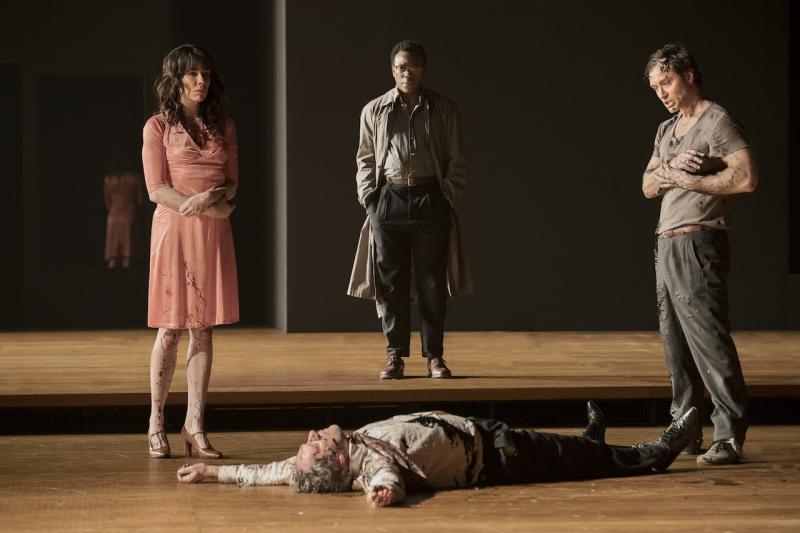
Which brings me to the third issue. I can’t put my finger on it but when I have seen the Dutch members of the cast in the Toneelgroep Amsterdam Shakespeare extravanganzas Kings of War or the Roman Tragedies, they were awesome, as in their performances inspired awe. Here, Gijs Scolten van Aschat and Halina Reijn just seemed more muted. And I had expected so much more of Jude Law playing Gino. He just didn’t look comfortable as a man of passion or of self doubt. It was nowhere near as disappointing as Juliette Binoche in Mr van Hove’s Antigone here in 2015. She was just out of her depth. Mind you that Antigone production also shows that if the words aren’t right (poet Anne Carson’s translation was all over the place) then the minimalist aesthetic cannot deliver.

So all in all a notable let-down. However, despite the elongation of tone and dearth of pace it wasn’t actually dull and there was stuff to chew on. It’s just that I had no opportunity for emotional engagement.

Yet I will not give up on Mr van Hove and his TA team. When it works it cannot be bettered. I just have to be more careful to think about the source. Next year, as an example, they are letting Robert Icke, our own British wunderkind director (Hamlet, Oresteia, 1984), loose on Oedipus. Yes that’s right Sophocles’s tale of f*cking it up big time with Hans Kesting in the lead. Blimey. That cannot possibly fail right?

P.S. I must also work out what this dramaturgy thing is all about as it is now dawning on me that it matters.


Babette’s Feast at the Print Room Coronet review ****

bfbanner

Babette’s Feast

Print Room at the Coronet, 10th May, 2017

Ahh Babette’s Feast. A gently understated but uplifting Oscar winning film directed by Gabriel Axel (it beat Au Revoir Les Enfants to the 1987 foreign film prize !!) that ranks pretty high up on my list of all time faves. Of course being the literary simpleton that I am, I know nothing of the Karen Blixen (pen name Isaak Dinesen) book on which the film was based nor of Ms Blixen herself. Other than, you guessed it, the film version of her memoir Out of Africa. So just as well then that I have the insight of the SO who is on top of (not literally) Ms Blixen’s work though, to my surprise, confessed to not having read Babette’s Feast. She does do a mightily convincing impression of Meryl Streep playing Blixen/Dinesen though.

So we went into this adaptation with high hopes but I confess lowish expectations just in case. The recent adaptations of films/books for the stage that I have seen have been mixed, Red Barn, City of Glass and, it sounds like, Obsession, on the debit side of the ledger, offset by the successes of My Brilliant Friend, The Kid Stays in the Picture and The Plague. Anyway I have to report that I think this Babette’s Feast is a resounding success.

There is a deal of poetry in the source material so getting a poet by trade, Glyn Maxwell, to write the play was inspired. There are a few minutes at the beginning when Babette, played by the striking Sheila Atim (who, along with Leah Harvey and Jade Anouka, blew my socks off in the Donmar Shakespeare trilogy alongside the splendid Harriet Walter, and is now set to star in the Old Vic’s Girl from the North Country), came on a bit strong with the lyricism. But the reasons for all of this became clear as we moved through the story which was told through spare but still elegant prose and with simple but haunting staging.

At its heart this is a tale of an outsider being embraced by a community and she, in turn, showing them that joy can be found here on earth as well as the heaven that they imagine. As well as capturing the harshness and drabness of a life in a village perched at the periphery (Northern Norway in the book, windswept Jutland, beautifully, in the film) it also shows how adherence to strict religious orthodoxy can also limit opportunity and imagination. The two daughters, Martine and Philippa, of an austere, though well meaning pastor father, find joy in love (a man in a uniform) and singing (the sublime Mozart) respectively, but no escape from duty. Babette in turn, is forced to flee Paris as the Commune is suppressed in 1871, and, through a fateful connection, finds sanctuary in the village. The suspicion of the tight-knit villagers, shown with real humour here, turns to love as Babette’s true art is revealed.

Wonderful stuff. And Mr Maxwell’s writing and Bill Buckhurst’s direction really resonant as we come to understand the loss that Babette has endured and as we empathise with the plight of the refugee. We also grasp the redemption that art (here in the form of opera and cuisine) can offer. Yet this is all laid bare without sacrificing the fairy-tale quality of Blixen’s work.

The experienced cast playing the more mature characters are uniformly top notch but, as well as Ms Atim, I would particularly draw attention to the performances of Rachel Winters as young Philippa and Whoopie van Raam as young Martine (in her professional debut – she was one of a collection of tremendously talented female actors I saw in a final year Guildhall School production of Caryl Churchill’s masterpiece, Top Girls).

This was our first visit to the Print Room at the Coronet in Notting Hill. What an absolutely enchanting space. It has the same shabby vibe as Wilton’s Music Hall and the dressing and lighting (you can’t beat a bit of candlelight) in the bar especially is tres romantique. Nice, open stage and a compact, but still airy auditorium. Mind you if you are a big unit beware the seats at the front of the “rear’ stalls where a low wall doubles up as a effective instrument of circulatory torture.

I see there are plenty of tickets left so I really think if you can carve out the time over the next month or so this is a splendid night out and at c. 100mins straight through, hardly demanding.


City of Glass at the Lyric Hammersmith review **

city-of-glass-final-image1

City of Glass

Lyric Hammersmith, May 11th 2017

So I remembered too late. I have thumbed copies of Paul Auster’s New York Trilogy so I think I must have read it, or at the very least City of Glass, when it came out in the 1980’s as any young, trendyish, new-to-theworld-of-work-but-still-able-to-go-out, indie man about town type would have done. I may even have professed to like it. But I’m not sure that I actually did. It is, as this adaptation (of orginal novel and a subsequent graphic novel augmentation) reminded me, a bit silly and a bit pleased with itself. No problem with subverting genres and getting all postmodern meta in books but you have to be very careful that you steer well clear of your own back passage or risk the proverbial disappearance.

So, in my view, this incredibly talented team comprised of Duncan MacMillan who did what he could to adapt the book into a suitable work for the stage, a score by Nick Powell, whose music is a vital part of The Ferryman at the Royal Court as we speak, and 59 Productions, including first time director Leo Warner, maybe just picked the wrong starting point. The staging is extraordinary showing just what can be done using cutting edge technology, but this has been employed to so much better effect in other productions by the 59 team (not the least of which was their contribution to the 2012 London Olympics Opening Ceremony).

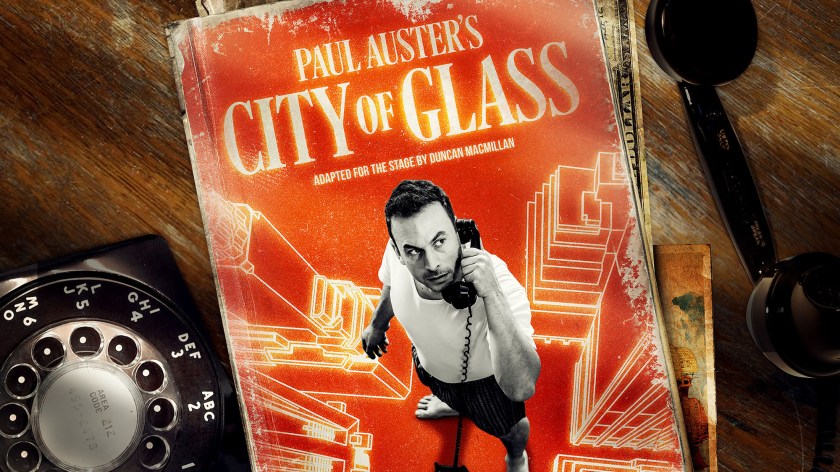
The opening gambit is promising enough with the telephone call out of the blue to our hero/narrator/writer, Daniel Quinn, (DQ same as Cervantes original meta hero), conjuring up the expectation of a classic noir detective thriller. He then proceeds to find himself drawn into ever more fracturing realities leading him, and us, to question what is real and what is imagined here and ultimately into questioning his own sanity. The production however relies on heavily a narrator to move the “action” such as it is along and to explain “what” is happening, and the characters are more ciphers than individuals with whom we might want to make an emotional investment. The pace is unvarying which only led me to keep on questioning whether this might all have been better left on the pages of the original novel. And as I say the novel itself is, in my view, ultimately an exercise in pretension, though I freely admit my heart and head will always lie with the modernism daddies and not the post-modernist bastard offspring.

So sorry I couldn’t like this, though I recognise the extraordinary technical skill brought to bear on how this looked, and will definitely keep an eye open for 59 Productions next project (hoping they steer clear of Auster). And I continue to think that the Lyric Hammersmith’s ongoing ambition will be rewarded with a home-grown, or bought in, slam dunker at some point and I want to be there when it happens.