Holst’s The Planets: BBCSO at the Barbican review ****

pia03153

BBC Symphony Orchestra, BBC Symphony Chorus (women’s voices), Professor Brian Cox, Ben Gernon

Barbican Hall, 29th September 2018

I wasn’t quite sure of what the format would be for this performance of Holst’s The Planets. Maybe a quick intro from our most famous and telegenic physicist, then a work-out for the BBCSO under Guest Conductor Ben Gernon, with a few unspecified other repertoire to be tacked on. What I hadn’t bargained for was a full-on lecture preceding each of the seven movements with state-of-the-art slide-show accompaniment showcasing some of the most famous images of our solar system.

It was therefore a very pleasant surprise. The Hall was packed to the rafters and, this being The Planets with a famous bloke off the telly, there was a far more diverse audience than you normally see at the Barbican or the South Bank. And my, my, did I learn a lot. Although I confess I can’t remember it all. The point is that Prof Cox, with his dulcet Manc tones, his child-like enthusiasm and his preposterous hair-cut is just the man to show us how the latest scientific understanding of our solar system, drawn from all that hard- and soft- ware sent out over the last four decades to examine it, both connects to, and contradicts, the more mystical and conjectural view prevalent in the early C20 when Holst wrote his masterpiece.

Holst, with his attachment to English folk-song and Eastern mysticism, was a curious fellow in some ways. Swedish extraction, frail constitution, mates with Vaughan-Williams, teacher at St Pauls Girls School, as fancy as it gets even then, nice gaff looking over the Thames in Barnes, committed socialist. An interest in theosophy, a right rag-tag of funny ideas as far as I can tell, but which had quite a hold over the Western creative community in the inter-war period.

His music is pretty curious as well. Uncertain tonalities, modal expressions, the kind of counterpoint more typical of medieval forms, irregular and often belting rhythms, ear-catching dissonance. It all tumbled out in The Planets, which itself it as big a subject as you can imagine for programmatic music. No surprise that it was such a success when finally completed in 1917, bolstering his career and reputation, and no surprise it is so popular today. Its best ideas might now appear to be a field full of hackneyed war-horses but, if you step back from the familiar, it still has the power to wow especially, I think, in the slower passages. At the time it was as “modern” as Debussy or Stravinsky, and, like them, its influence on “everyday” classical music now, is inescapable. No Planets, no fantasy film scores.

Holts’s starting point was the elemental character of each of the seven planets which is what lies behind astrology, (connected to this theosophy caper apparently). All b*llocks obviously, even at the time, but Holst believed it. And believing in the power of the planets to influence us did give a starting point for Holst to set out what he saw as important facets of the human condition: War (Mars), Peace (Venus), Messenger (Mercury), Jollity (Jupiter), Old Age (Saturn), Magician (Uranus), Mystic (Neptune), Scoff all you like but this nonsense also meant that, on this night, the exact centenary, Prof Cox could then riff on how far we have come in our understanding of what makes up our solar system, and that more existential question, what other life might be, or have been, out there.

The BBCSO, (with the female voices of the choir for the final wordless chorus in Neptune) was on top form and threw itself into the hyped-up interpretation under Ben Gerson. With the movements broken up by Prof Cox’s oration it was important to establish momentum in each of the movements tout suite as it were. After all the whole piece clocks in at just under an hour with only Saturn and Venus getting anywhere near the 10 minute mark. Easy enough to quickly stake your claim on the thunderous toccata of Mars, (here claimed as a wider critique of industrial capitalism and not just the horror of mechanised warfare), the carnival scherzo of Jupiter, the bitonal dance of Mercury or the sardonic fantasy of Uranus. I have to say though that the BBCSO was actually most convincing in the nagging processional of Saturn and the endless hush of Neptune which take more time to overawe.

All up a splendid idea. Of course individually the images, the music and the lecture might have had more lasting impact, but put them all together and a deeper impression was created. It would be nice if we humans could keep our sh*t together long enough to find out if we are not alone.
The Cardinal’s Musick at Wigmore Hall review ****

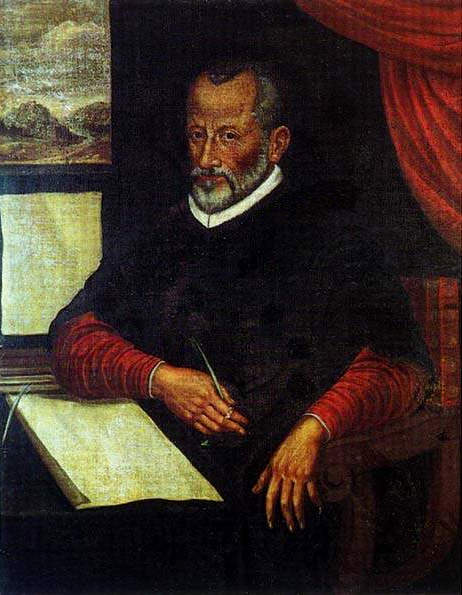
giovanni_pierluigi_da_palestrina

The Cardinal’s Musick, Andrew Carwood (director)

Wigmore Hall, 27th September 2018

  • Giovanni Pierluigi da Palestrina – Motet Tu es Petrus, Missa Tu es Petrus, Gregorian Chant, Magnus Sanctus Paulus a 8
  • Giovanni Bassano – O Rex gloriae
  • Jacob Handl – Sanctus Bartholomeus
  • Thomas Crecquillon – Andreas Christi famulus
  • Tomás Luis De Victoria – Vidi speciosam
  • Francisco Guerrero – Virgo prudentissima
  • Sebastián de Vivanco – Magnificat octavi toni

More people should hand themselves over to the musicianship and scholarship of the best of British Renaissance vocal ensembles such as The Cardinal’s Musick or The Tallis Scholars or The Sixteen. Or, on those rarer occasions, when the best of their European cousins pop over. (Let us hope that isn’t made prohibitively difficult by the clusterf*ck that is Brexit though I suspect nothing would give greater pleasure to the never-happy social conservatives than watching us metropolitan liberals lose the opportunity to listen to such poncey, suspect singing).

Surely, it is impossible not to like complex polyphony sung by experts. Of course you could invest some time into learning about the composers of this ravishing music and the context in which it was created. As the canon of Renaissance music has expanded so too has our knowledge about those who created it, though biographical details are normally scant. Some vague-ish birth and death dates, a list of where they trained and what positions they held and what patrons they, (and by implication we), need to be grateful to. More often than not there is some detail in the careers of the most renowned of these men, (women got more of a look in in Medieval music and in the early Baroque, as we are now, thankfully, discovering), which marks them out as tricky in some way. Often over what they got paid. You would think the aristos and the Church would have been happy to pay up for art of this quality. Clearly not.

There are now a wealth of recordings of the (largely) French, Flemish, English, Italian and Spanish masters and the repertoire is still expanding. However, given the relatively limited number of performances and performers it is still likely that the casual listener/attendee, like yours truly, will encounter something new at every concert. The scholars and musicologists that lead the way still have plenty to play with I gather, so the sense of exploration and novelty that pervades Renaissance music performance, even though we are now well into the sixth decade of “rediscovery” since the first ensembles set out, isn’t about to end. I assume devoting your life to this sort of caper isn’t a way to make a lot of money but I hope that the economic ecosystem is robust enough to underpin such vocation.

You could also seek to understand when, why and how these pieces were performed. I guess having some sort of faith would be a good starting point for grasping the meaning of the religious works, but I also think it is perfectly possible for the irreligious to take something from the words and purposes of the texts. Even if all the rules of Christian liturgy and its founding myths remain a bit fuzzy you will certainly learn a lot about the political, religious and social contexts in which this works were created.

You might arm yourself too with as much knowledge as you can about the musical forms and structures which define this music. Sacred and secular, masses and motets, madrigals, modal and tonal, the way in which the vocal parts are put together, parody, imitation, suspensions, homophony, antiphony, plainsong, cantus firmus, dissonance, dyadic counterpoint. I can’t say I am there yet but some of the terminology is staring to fall into place. And remember folks the Tourist is, by virtue of a grotesquely painful singing voice, unable to perform, a source of eternal shame, and, by dint of what his music teacher at school was wont to call “tone deafness”, in a time before such educational derogation was outlawed, an utter inability to “read” notes on a page, only a consumer, and not a producer, of music. At the time I gloried in Mr Vaughan-Williams’, (I kid you not, but I am pretty sure he was no relation), disapproval. Now I really wish I had listened to him. Mind you I still take pride in being booted out of RE on a couple of occasions, for, and I swear this is no malleably manufactured memory, arguing with the teacher whose name I forget about the existence of God. Calling me a “long-haired jessy”, however apt, only served to fuel my nascent atheism I am afraid.

Anyway, you could learn all you can about this glorious music. Or you could, as frankly I normally do, let it wash over, and through, you. You know the thing where you forget about everything but the now, mind empties, body relaxes, free of the grinding anxiety of what has happened or what might be about to happen? To get it you can, I suppose, teach yourself, or get some-one to teach you, some sort of mindfulness mumbo-jumbo. Or you could just listen to Palestrina or Victoria. I promise it will work. After all it was written for exactly that purpose. To lose yourself in devotion. So piggy-back off that and get yourself along to one of these concerts. Close your eyes and let the voices take over.

Here endeth the lesson.


The Village at Theatre Royal Stratford East review ****

village-333070_1920

The Village

Theatre Royal Stratford East, 27th September 2018

One of the many advantages of the idle life of culture is the opportunity to savour the coincidences that it routinely throws up. I see a play, Losing Venice, about the end of Empire, written in a style which apes the dramatists of the Spanish Golden Age. (Losing Venice at the Orange Tree Theatre review ***). A couple of days later I see a play, An Adventure, about the immigrant’s journey out of India. (An Adventure at the Bush Theatre review ****). The next day I see a play, The Village, drawn from the most famous play from arguably the most famous playwright of the Spanish Golden Age, Fuenteovejuna by Lope de Veja, recast in modern rural India, still bearing the scars of post-colonialism. Learn, enjoy, repeat.

Lope de Veja’s 1619 story, based on a real incident in the village of the same name  in Castile in 1476, is pretty much guaranteed to get the pulse racing. A tale of honour, justice, reputation and chastity as so many of the Golden Age plays were, though here slightly subverted, which accounts for its continuing relevance. The women of the village, unable to stomach any more abuse from the local army chief, rise up to collectively kill him. They refuse to incriminate each other saying only that “Fuenteovejuna did it”. April de Angelis, who make such a fine job of adapting Elena Ferrante’s quartet My Brilliant Friend for the Rose Kingston stage (My Brilliant Friend at the Rose Theatre Kingston review ****), sticks pretty close to the plot of the original whilst offering up a text peopled with recognisably human characters. And, with a swagger that largely worked for me, much of the text is written in verse, which adds rhythm and pace to the story.

This, together with Nadia Fall’s kinetic direction and some top class performances especially from Anya Chalotra as Jyoti, and in his own villainous way, Art Malik, are what turns this from what might have been a sullen melodrama, into something altogether more supple and uplifting. The production might have benefitted from a bigger stage to accommodate Joanna Scotcher’s sloping set, and a little more technical sophistication, but, if this is the harbinger of things to come at Stratford Royal Theatre East under Nadia Fall, and the 18/19 season has great potential, then maybe SRTE can become a destination theatre as it was in the glory days of Joan Littlewood (who staged Fuenteovejuna in 1955), rather than an occasional, one-off hit machine (like Five Guys Named Moe).

No need to take my word for it. To save BD from sitting around all day in her PJ’s in front of a screen (though justified by an imminent return to uni) I dragged her alone. Only marginally easier to impress than her Mother, she agreed that this was a powerful, and satisfying, piece of theatre. And, even more extraordinary FKD, who has reason to know, and a bunch of her friends, gave it the thumbs up. Lopa de Veja’s original, whilst not directly informed by Catholic oppression, was a response to the violence of the Inquisition. AdA’s update similar doesn’t pull any punches when it comes to its portrayal of the BJP and the rise of Hindu nationalism.

The rural village, Sahaspur, is getting on with the business of life with Jyoti, daughter of of the joint mayor, Ramdev (Neil D’Souza), the bashful subject of the ardent affections of local Muslim lad Farooq (Scott Karim). He is egged on by comic sidekick Mango (Ameet Chana), she by no-nonsense buddy Panna (Rina Fatania). Both eke out plenty of laughs. Accents are more Bradford than Kolkata. When the sadist Inspector Gangwar (Art Malik) turns up, with soldier sidekicks Ved and Gopi, to fix the election for privileged BJP scion Vihaan (Naeem Hayat), the villagers are cowered, and then outraged, after he rapes Jyoti. The election is contested by Ishani (Sudha Bhuchar) for Congress with adviser Mekhal (Arian Nik) in tow, and it is she who is sent to investigate the Inspector’s murder.

A gripping tale for sure. And Nadia Fall’s high energy direction, with movement from Polly Bennett (especially striking in the revenge scene), lighting from Paul Pyant, sound from Helen Atkinson and composer Niraj Chang (with live on-stage music and Hindi songs courtesy of Japit Kaur), really brings it to life. Yet it will still make you angry that even now this kind of oppression is commonplace, and that horrific sexual violence in India (and elsewhere) is still legitimised by power. The mechanics of the ending are a little less than credible, but no matter, the message of successful resistance is the right one.


Thomas Ades and the LPO at the Royal Festival Hall review ****

Lutoslawski2

London Philharmonic Orchestra, Thomas Ades, Kirill Gerstein (piano)

Royal Festival Hall, 26th September 2018

  • Igor Stravinsky – Symphony in Three Movements
  • Thomas Ades – In Seven Days (Concerto for piano and orchestra)
  • Witold Lutoslawski – Symphony No 3

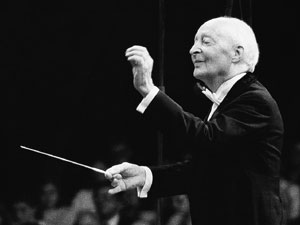
Thomas Ades is a talented chap. As composer, conductor and performer he follows in the footsteps of some of the greats., and I for one think there is a lot more to come. Some of the most memorable classical music evenings I have enjoyed in the past few years have been graced by his presence.

So although his own piano concerto, and the Lutoslawski (there he is above), were pieces I knew only by reputation, this, the opening concert of the LPO 18/19 season, looked a good bet. And it certainly came up trumps. Mr Ades has a way with Stravinsky as you might expect, his own music was greatly enhanced by Kirill Gernstein as the soloist (of sorts), who showed his affinity with TA’s music in one of his mazurkas as encore, but it was actually the Lutoslawski symphony that turned out to be the highlight of the evening.

Stravinsky’s Symphony in Three Movements marked another step in the ongoing Changing Faces retrospective of his music at the Sot Bank. It is trademark IS, sparkling brass, bubbling woodwind and pulsating strings, smoothed off spikiness if you will. Though for me the fact that the three movements were composed independently over time shows through, so it isn’t right at the top of his orchestral oeuvre. The Allegro overture first movement definitely has its moments, harking back to the early revolutionary ballet scores with prominent piano here played by John Alley. The second movement, marked Andante, is comprised of material originally intended for a film versions of the St Bernadette Soubirous, Our Lady of Lourdes, (she of the multiple visions and Catholic granny’s favourite) and has an innocent charm, with a couple of interruptions, and vocal harp line. The finale, con moto, is a lot more aggressive, reflecting its completion at the end of the war in 1945, with that motoric quality that inhabits IS’s music, at least until the final austere serial phase.

In Seven Days doesn’t muck about, taking as its inspiration the Creation. The religious one or maybe the real one. Hard to tell. It was originally performed alongside a video composition from TA’s then husband Tal Rosner. It certainly has a vivid, cinematic approach to go with the programme, think Ligeti in terms of mood if not structure. But it didn’t need any visual assistance. Tiny particles of sound combine, break-up, recombine, ever expanding as we move through the seven movements, out of Chaos through to Contemplation. It was originally scored for a smaller orchestra. Here TA had the freedom to really crank up the engine especially in percussion and brass. Eat your heart out Haydn and all the others who have also had a go at the greatest story ever told. God as scientist not mystic.

It is one of those fractal compositions, music made out of algorithms or rules, built on repetition, where the very small mimics the very large. Maths as music, or maybe the other way round. So it is in a state of constant flux but the thing with Ades is that he cleaves close enough to conventional tonality, and, the secret sauce (for me I now realise) that is rhythm, not to disappear out of sight into the impenetrable. I can’t say it all fell into place on this first hearing, but it “made sense” which is all I need to revisit. The more modern and contemporary classical music I encounter the clearer it is becoming to me what is needed to rule it in or out. I do seem to have a penchant for ever changing repetition in music with rhythm and harmony, not melody, as the hooks (as it were). Ades kicks off with extremes of pitch in the opening perpetuum mobile, (I know now these could be my favourite two words in Latin), led by strings. This breaks with a chorale and the piano kicks in leading the orchestra to further rising and falling repetitions, with some very snazzy percussion, to mark the second day. The third day is another variation starting in the bass and rising up before the glittering harmonies of day four. Days five and six are a linked fugue, sort of Bachian, with the piano appearing in the second. A calmer interlude and then back to the beginning.

Witold Lutoslawki’s third symphony is probably his most well known composition. WL’s first symphony came out in 1948 but he was, like any worthwhile composer behind the Iron Curtain, derided by the authorities for “formalism”, which as far as I can make out was anything that wasn’t rum-pum-pom patriotic. WL didn’t return to the symphony until 1965 by which time the world had changed politically and musically. He was a big fan of John Cage’s experiments in chance in music which he embraced as “aleatory counterpoint” in his work, including the second, and this, the third symphony. Never fear folks, it doesn’t mean some knotty, joyless, meandering. Just some passages where some of the orchestral players have a bit of fun as far as I could tell in this performance. (Actually what I have learnt about Cage, which isn’t much I fear, says to me he was a pretty jolly sort).

The original commission from the Boston Symphony Orchestra came in 1972 but WL couldn’t find the format he wanted.  In 1981 he alighted on the toccata which sits at the centre of the piece. Another two years and the rest of the work was signed off and delivered. A short prologue precedes the first of the two main movements, the toccata which is divided into three parts, each getting progressively “faster” by stretching out the basic rhythms, and punctuated by slower “intermezzi”. Apparently the Beethovian opening, and oft returning, four note motto is comprised of E naturals. Good to know. Then comes a shorter, slower “movement”, a swirling theme with string offsets. The symphony ends with a rapid coda and tutti. It is played through and comes across as a building of momentum culminating in huge crescendoes which subside and then build again. There is certainly a cosmic dimension which echoes the Ades piece, and like In Seven Days it always stays the right side of the tonality gulf and features some breathtaking instrumentation.

I could imagine that the symphony, even with this structure marked out, could get fuzzy. Not in Mr Ades’s hands though. It is a big leap to compare this performance to his ongoing, and outstanding, Beethoven cycle with the Britten Sinfonia at the Barbican, but, because he doesn’t hang about tempo wise, and because he prizes textural clarity over pompous showiness, in both cases, the layers of music are revealed not muddled.

So a big evening marshalled by a big man. There was much to bind the music together in terms of ambition, structure and feel. It normally takes Vladimir Jurowski, and the right repertoire, to bring the very best out of the LPO. He wasn’t missed here.


An Adventure at the Bush Theatre review ****

world_map

An Adventure

Bush Theatre, 26th September 2018

Now I cannot pretend that, when the lovely people at the Bush moved the matinee performance of An Adventure that I attended forward by an hour, and indicated it had metamorphosed into a three hour plus extravaganza, I wasn’t concerned. And reading the proper reviews, which were variable, but generally pointed to narrative ambition trumping dramatic momentum, didn’t help.

Well I can report that this is, give or take, a wonderful story, superbly, and smartly, told. The Bush is still claiming a 3 hour 15 minute running time but it isn’t, it certainly doesn’t feel anywhere near it, and there are a couple of intervals to catch your breath anyway. If anything I would have liked, whisper it, a bit more. It kicks off with feisty Gudjarati Jyoti, ostensibly 16, interviewing callow Rasik, ostensibly 22, one of the five suitors chosen by her father, on a stormy night on the outskirts of Ahmedabad in post-partition India in 1954. Not best qualified, Rasik doesn’t start his wooing too well but eventually, after a little sparring, Jyoti warms to him and the match is made. It is a cracking opening scene with emotional warmth set against the non-naturalistic set of Rosanna Vize, a golden plinth flanked by Louise Rhodes-Brown’s video designs (which help to anchor time and place throughout). The second scene, on a beach where Rasik, who can’t swim, clings on to Jyoti, is no less powerful and is the metaphor from which the rest of the story unfolds.

We then track the couple through Nairobi, during the fight for Kenyan independence in the late 1950’s, where Rasik goes into business with patriot David and buys him land, to London where the couple arrive in 1968, through the 1970’s, and daughter Sonal, and back to India, for the funeral of Joyti’s mother, where we meet niece Joy, and then finally Nairobi, in the present day. Along the way we see the India diaspora experience unfold, with exposition which generally doesn’t interrupt the flow, entwined with the personal journey of the couple. Home, emigration, immigration, post-colonialism, racism, gender roles, political activism, ageing, parenthood, the tyranny of everyday life, in fact just about everything that matters, is lightly ticked off along the way, but all is coherent.

The first part, (and the finale), in Kenya, is the most pointed in terms of political message, contrasting Kikuyu David’s support for violent Mau-Mau resistance with Rasik’s more pragmatic faith in a peaceful transition. This in turn contrasts with the personal politics of Jyoti who joins a union and campaigns to improve the conditions of British Asian working women in the 1970s. At the same time we see the racism that Rasik endures in his work and the strains that the struggle to get on put on their marriage. We see the next generation in the shape of Sonal looking to move up and on through education and travel encountering Jyoti’s motherly resistance.

This is though more a love story than history lesson and is all the more successful for it. In the final scenes, with the couple in their seventies, Rasik’s sight failing and mobility impaired, they look back and this, frankly, is where it really connected emotionally. I cannot claim to understand the journey of Jyoti and Rasik but I can certainly empathise with the prosaic intimacy of their relationship. For these final scenes Jyoti and Rasik are played by Nila Aalia and Selva Rasalingam, but you can still feel the essence of the characters shaped by the superb Anjana Vasan and Shubham Saraf in the earlier years. Jyoti may be headstrong but her inner strength shines through from the off. Rasik may be less certain, earnest in his youth, irascible in his old age, but they make an entirely believable couple. Writer Vinay Patel based his story on the life of his grandparents which is maybe just why.

Mr Patel’s expansive tale wears its learning pretty lightly. As with his previous work, notably his play True Brits and his TV drama Murdered By My Father, he shows that he has a way with story and character and can conjure up a lot of content from relatively straightforward starting points. An Adventure is more ambitious that his previous works, and maybe this time he has tried to pack a bit too much in to create his odyssey of marriage, but it is still a very entertaining and skilful attempt. I imagine he is a confident young man and I suspect he believes, as do I, that he will get even better from here. Madani Younis is, unsurprisingly, a completely sympathetic directorial presence; you get the feeling writer and director brought the best out of each other from the very start of the project. It will be very interesting to see what Mr Younis brings to the South Bank in his new role.

The cast, including a resolute Martins Imhangbe as David and impressive work from Aysha Kala as Sonal/Joy, is well matched to character, though, for me, Anjana Vasan stood out, as she did Life of Galileo at the Young Vic and Behind the Beautiful Forevers at the NT. Sally Ferguson’s lighting and Ed Clarke’s sound were able to navigate the intimate and expansive as the story demanded.

Six actors and seven characters, (well eight when you include younger daughter Roshni who literally phones in at the end), is not a lot to span this much history and geography. Then again the best way in drama to understand the big stuff is to see its repercussions at the human level. This is where Vinay Patel’s play works. He gets away with shoehorning in maybe just a bit too much of what he wantt to say because the characters are so real and the dialogue, with a few overly dreamy, symbolic interruptions, so apothegmatic. Above all there is that fearless enthusiasm for the power of drama that the best writers convey which makes this, for all its obvious faults, work.

Losing Venice at the Orange Tree Theatre review ***

L0064135 Map of Venice

Losing Venice

Orange Tree Theatre, 24th September 2018

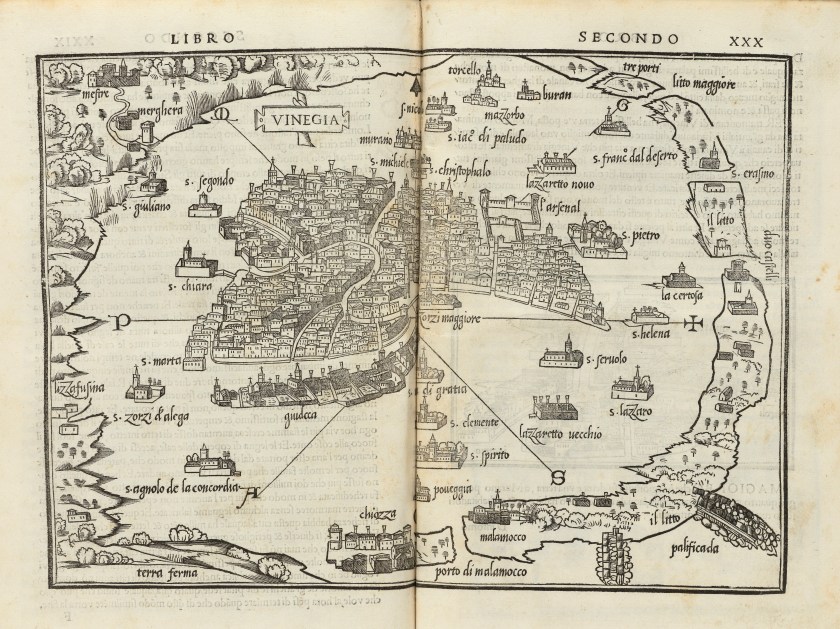
A modicum of research was all that was required to realise that this was going to be a curious, but also intriguing, entertainment. Which is near enough exactly what it was. Jo Clifford’s play was a hit at the Edinburgh fringe when it first appeared in 1985. With its story of a great Empire now in decline, and its scrutiny of strict gender roles in society, it is easy to see why the OT’s Paul Miller was drawn to revive it. The play certainly chimes with key contemporary debates on Brexit and toxic masculinity, and Jo Clifford’s own personal journey makes it more absorbing, but it is, structurally at least, something of an acquired taste.

Tim Delap plays the Pedro Tellez Geron (1574-1624) the third Duke of Osuna, a military adventurer, who, after becoming Viceroy of Sicily, and then of Naples, for Golden Age Spain, plotted to conquer Venice. The plot was uncovered and Osuna subsequently fell from favour after Philip III’s death in 1621. Jo Clifford’s play teams the Duke up with Francisco de Quevedo y Villegas, (played by Christopher Logan), a poet and secretary to Queen Ana in the Spanish Court of Felipe II. He put himself about a bit, generally ruffled feathers and was one of the prime exponents of a dramatic writing style at the time known as Conceptismo, characterised by rapid rhythm, directness, simple vocabulary, witty metaphors and word-play. It prized multiple meanings and conceptual intricacies, in stark contrast to the ornateness of rival style at the time of Culteranismo. Both were obsessed with honour, reputation and chastity building on the sort of flummery that had bedevilled the world of secular culture for centuries prior.

Now knowing this, and that Jo Clifford had previously translated some of the greats from Spanish Golden Age theatre such as Calderon de la Barca, and you can begin to understand the structure of Losing Venice. For this to is a story with multiple meanings which moves rapidly across space and time and appears quite stylised. Ms Clifford sought to take a current (in the 1980s) sensibility on politics and gender and fuse it with this ostensibly “true” history with a contemporary (for 1618) dramatic style. Designer Jess Curtis in this revival has highlighted this synthesis with her costumes which mix the Golden Age with a 1980s post-punk, New Romantic look.

The adventures of the strutting Duke and affected Quevodo draw in other parties, servants Pablo (Remus Brooks), Maria (Eleanor Fanyinka), the rejected and oddly coiffed Duchess (Florence Roberts, also a Priest), Secretary (Dan Wheeler who also provides some music), the grouchy King (David Verrey) and the prosaic “Mr and Mrs Doge” (David Verrey and Eleanor Fanyinka again). A key role is that of the Sister here played by Tia Bannon and not, unfortunately given the extra dimension this would have brought, the originally cast Josh-Susan Enright. Not that Ms Bannon didn’t try to fully commit, as did her colleagues, to the play. It is just that it is so striking in tone that I wasn’t entirely clear just how “inside” the characters Paul Miller wished them to be. The knowing, and sometimes farcical, tone, the sense that the performers, indeed the whole play, was “looking into” the events as a metaphor or lesson for something else, the decline of Empire and the desire of boys to always go fighting, didn’t completely take over, such that it could just be read as a rapid, and somewhat bitty, and increasingly odd, history play, (where I would guess most of the audience didn’t know the history).

Still once you adjusted to this idiosyncratic form there was stuff to savour and it didn’t drag on, even giving us an interval to ponder what was going on. The Duke doesn’t really do consequences, is locked in the past, sees everything as a contest and takes vanity to extremes. His fading libido is conjoined with that of his country. All in all a prize dickhead not unlike a few of our current crop of deluded politicians. Quevedo’s pen may be mightier than his sword but his fine words don’t necessarily resonate with his master and there are a whole heap of unbuttered parsnips here. The women and servants look on with various degrees of exasperation. Eleanor Mayinka stands out as the sympathetic Maria but maybe just because she is the most sincere character in the play.

So this might be a play whose novelty has played out, or it might be a play that was over-praised in the first place. Or maybe it is, as my Mum would have said, “too clever for its own good”. Or maybe it is a production where the normally very reliable Paul Miller couldn’t quite make up his mind. Or rather where he couldn’t quite pin down this slippery, and odd, fish. Or maybe, for once, the OT space was a hindrance not a help. I think it might be a little bit of all of these things but offsetting this is a spark of invention and bravado that I, for one, am always happy to see. Even if it didn’t quite come off, I can safely say I haven’t ever seen anything like it. And that it itself is no small praise. A counter to the excess of lazy literalism which pollutes the body politic is surely no bad thing.

The Fishermen at the Arcola Theatre review ****

of-the-congo-3073546_1920

The Fishermen

Arcola Theatre, 20th September 2018

Good to see the Arcola downstairs space filled to bursting for Gbolahan Obiesesan’s adaptation of Chigozie Obioma’s 2015 novel, a rapid transfer after a successful run in Edinburgh and then Manchester. Pretty clear that everyone in the audience was wowed by what they saw. The story has been stripped back to just two actors, here Michael Ajao and Valentine Olukoga, who, in a triumph of shape-shifting, take on all the characters. This is set against the most pared back of designs, a sort of raised deck taijitu, separated by metal poles. It really is one of the most plainly effective sets I have seen in a long time, symbolising the symbiosis of the two brothers whose journey the play describes. Bravo Amelia Jane Hankin who I see is also designing the set for the kids’ version of Comedy of Errors in Stratford. The lighting of Amy Mae and sound of Adam McCready are equally effective.

The two brothers, Ben and Obembe Agwu, reunite to go fishing in the Omi-Ala river where they were brought up. They proceed to act out, in flashbacks, the story of a prophecy, from village misfit Abulu, that foretold the dramatic events that broke up their family. Abulu, Mum, Dad, the two fated elder brothers, Ikenna and Boja, villagers, authority figures, soldiers, all come vividly to life, even as the two men disagree about what exactly happened. There are flashes of humour, suspense and, at times, real fear. We get a sense of what matters to them, now and in the past, and of how their lives in southern Nigeria, and the history of the country, the clash between tradition and modernity, has played out in the last couple of decades. I gather Mr Obiesesan has pruned the novel somewhat, but still preserved the conceit of Igbo oral storytelling, and cleverly given voice to the memories of two, rather than just one, of the brothers. The idea of a prophecy bringing down a family and of a father whose hubris is reflected in the ambitions he has for his children, couldn’t be more Greek, but this is very far from classical tragedy though it is certainly mythic in ambition if not length (in places it is almost too quick).

Above all though what really makes this work is some extraordinary inventive theatre to bring the text to life. Director Jack McNamara delivers remarkable idea after idea and the two brilliant actors, especially in their physicality, charisma and palpable bond, are more than able to convert these ideas into thrilling drama. the re-imagined fight between the two eldest brothers was a stand-out. I see Mr McNamara is signed up to direct the adaptation of Don DeLillo’s Love Lies Bleeding at the Print Room, which I look forward to, and, on the strength of this production (which is now touring), I would snap up tickets to anything his company, New Perspectives, based in Nottingham, serves up. And I would expect to see a lot, lot more of both of this actors.

I don’t read many books. I have no choice but to read this though.

Aristocrats at the Donmar Warehouse review ****

8799251458_84c30ef984_o

Aristocrats

Donmar Warehouse, 20th September 2018

Brian Friel, like his own dramatist hero Chekhov, can take a bit of time to get going. Faith Healer, at this theatre a couple of years ago, exerted a vice like grip on me from the open, though that may have been because it is such a brilliantly crafted and slippery multiple monologue, and thanks to the directorial magic of Lyndsey Turner (the director here as well), and the heavyweight thespian trio of Stephen Dillane, Gina McKee and Ron Cook. Translations, at the NT earlier in the year, is painted on an altogether broader and more thematic canvas, so required a little more cerebral investment (Translations at the National Theatre review ****). Aristocrats is closer to the Russian master, but once again we have a diversity of characters, all with, shall I say, the gift of the gab, so it takes some time for the pot to come to the boil.

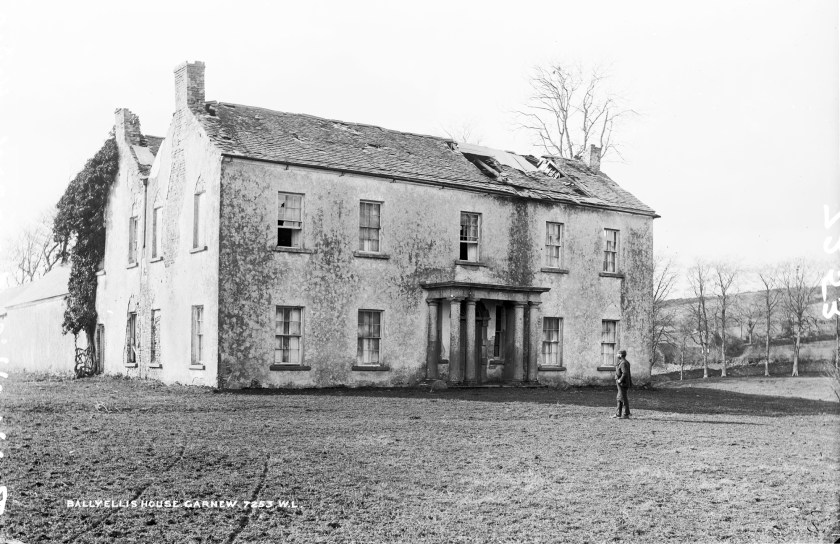
But when it does Mr Friel certainly scales the dramatic and semiotic heights,as revelations tumble out, and we watch this sad, trapped family fade from view. The play is set in “the big house”, the Hall, in Friel’s fictional Donegal settlement of Ballybeg. These (largely) Georgian country mansions were found throughout Ireland apparently, but were largely the domain of the Anglo-Irish Protestant families exported by us British to b*gger up Ireland through the centuries, and gifted their land by the Penal Laws from 1695. in Aristocrats the family though is, unusually, Catholic. Not quite Brideshead but cut from similar cloth.

The play is set in the 1970’s and the only income the O’Donnell family now derives from the land is through sales. For three generation the law has been their prime source of income with the largely unseen, and terminally ill, Father (James Laurenson) having been a District Justice. The only son, effete fantasist Kasimir (David Dawson), has failed as a solicitor and now, implausibly, works in a sausage factory in Hamburg with wife Helga and three kids. This leaves long suffering oldest daughter Judith (Eileen Walsh) to look after Dad and shoulder the burden of the decaying house and estate, with substantial help from local fixer Willie Diver (David Ganly). London based daughter Alice (Elaine Cassidy), mired in drink, is unhappily married to Eamon (Emmet Kirwan), the son of an ex-housekeeper, who fully grasps the family’s, and his own, plight. Youngest daughter Claire (Aisling Loftus) is recently engaged and the reason why the family has come together, though clearly vulnerable in her diagnosed depression.

The family is completed by the taciturn Uncle George (Ciaran McIntyre) who has lived in the house since the year dot, and, for the weekend that they all initially come together, an American academic Tom Hoffnung (Paul Higgins), who is researching the history of these very families and houses. The family celebration, predictably, evolves into a bout of ugly soul-searching and thwarted ambition.

This is a family isolated by geography, class, religion and history. Long resented by, and now largely irrelevant to,  the local “peasantry”, ignored by their Protestant peers, wealth dissipated through long economic decline, waiting for the patriarch to die so they can be set free. Dysfunctional, motherless, fearful families are meat and drink in the Irish dramatic tradition, indeed BF himself took this (and the O’Donnell surname) as the starting point for his breakthrough Ballybeg play Philadelphia Here I Come! Both feature three sisters, (well four here as it momentously turns out), and one brother, just like Anton, indeed Aristocrats might be best viewed as a bit too reverential a mash up of Three Sisters and The Cherry Orchard. This is, at heart, a story of a family who haven’t really come to grips with the reality of what they have become, just like Chekhov’s families. The past, in BF’s world, is constructed through the language of the present, “false” memories abound.

Indeed this is a little big a part of the problem with Aristocrats. BF’s evident enjoyment in building layer upon layer of character development and in analysing this particular social, cultural and economic milieu does make the first couple of acts just that teensy big tardy. The set of Es Devlin is the non-naturalistic, bluish sunken box, and carefully arranged objects, including a dolls house to signify Ballybeg Hall, that we have come to expect from her which doesn’t offer any visual distraction, adding further distance. When not involved the cast sits at the back, killing time. Uncle George is largely employed to peel away the covering on the back wall to reveal an idyllic C18 arcadian scene, the history of the house in reverse. This play is, after all, one long goodbye.

Fortunately we are treated to some vibrant performances and it is this that brings BF’s melancholic language to life. I expect it didn’t take long for David Dawson to be cast in the role of the “peculiar” Kasimir. Now nervous Kasimir clearly has a bunch of issues, probably caused by Mummy (a suicide) and Daddy. His elaborate invention of a family in Germany, presumably to mask his own sexuality, his apparent inventions about the distinguished literary and musical figures, most improbably Yeats, who visited the house in the past, his belief in Mother’s piano playing ability. Yet there is a kind of child-like desire to be liked which elicits sympathy. it would be pretty easy to under- or over- play Kasimir but Mr Dawson avoids both temptations.

Elaine Cassidy’s Alice is a more recognisably damaged character, purposeless, and here visibly lost to alcohol, with occasional painful glimpses of self-awareness. Eileen Walsh is persuasive when Judith finally gets to free herself from the house and its routine, and the ambiguity of her relationship wth David Ganly’s Willy (as it were), is neatly conveyed. After all his regard for Claire surely explains why he keeps helping, or maybe there is some residual duty and/or pity.

If the family cannot see the truth then it is left to the outsiders to supply it and Emmet Kirwan shows us Eamon’s duality as part of of, but not born into, the family, and the one who may perversely be most attached to the house. Paul Higgins can’t really convince us as to the reasons why Tom is there, he really is a device for BF to “look into” the play and prompt context, but it isn’t too intrusive.

There are some plays that work better after you have seem them. Aristocrats may be one of them for me. Not as perfectly constructed as Faith Healer, as pointed as Philadelphia Here I Come! or as densely clever as Translations, it takes time to break free from its artifice (which this production does nothing to allay). Yet, and in contrast to received critical wisdom, I have a feeling that the impressions left by the characters and the play may linger as long, if not longer, than these masterpieces. Funny things, memories.

The Outsider at the Print Room Coronet review ****

albert-camus

The Outsider

Print Room Coronet, 19th September 2018

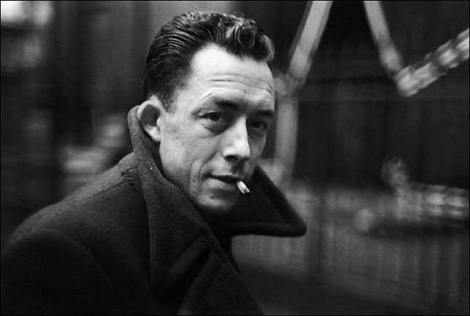
Tricky one this. I can’t pretend I was pinned back in my seat by the two and a half hours of Ben Okri’s adaptation of Albert Camus’ absurd existentialist classic written in 1942. Abbey Wright’s careful direction injects a little humour, (a dog is played by a mop and the trial scene is undercut with satire), but otherwise doesn’t take liberties with either Camus’ story or this intelligent text. The monochrome set, complete with multiple fans, and costume designs of Richard Hudson, bolster the sense of ennui. The Print Room dry ice machine gets yet another comprehensive work out. The plot, French Algerian bloke, bored at work as a clerk, can’t really get worked up about Mum’s death, finds girlfriend but can’t commit, gets involved with rum type neighbour, gets very hot, kills Algerian, is tried and condemned without really explaining himself, has its moments but isn’t going to pack them in at the Victoria Palace any time soon.

Yet this unhurried, unequivocal approach slowly and surely yields dividends assisted by an outstanding performance from Sam Frenchum. Now the Tourist got an inkling into of the talent of young Sam in the role of Hal in the Park Theatre’s excellent revival of Joe Orton’s Loot this time last year. Hal may not be the sharpest too in the box, so needs to be played dumb to get the laughs, but we need to see how his jealously of lover and criminal sidekick intensifies through the farce. That we got. Here though the young man, who is on stage throughout, rises up to a different challenge, gradually uncovering a man in Mersault, who reveals nothing. His delivery is deliberately monotone but far from mechanical. I expect him to go on to bigger things from here (actorally if not philosophically).

The pace gives the audience plenty of time to ruminate on what drives Mersault and why he is like he is. In the same way as the book. Ostensibly simple, almost banal, Mersault’s story yields pointed insight into the human condition, and specifically, the notion of alienation, of Mersault being a “stranger” or “outsider” to his own life and in the society around him. His utter indifference. Of course you might think it is a load of pretentious Gallic guff which only those who think too much and/or have too much time on their hands could possibly think is of any value. You might be right but I respectfully suggest you give it a go. After all you surely must have experienced the feeling of being utterly bemused by what is going on around you or unable to summon up apparently required emotions. Camus’ absurdist philosophy, his utter scepticism, is pretty bleak but it is ultimately truthfully humanist, even if it doesn’t always feel very human and can jar with post-modern sensibilities. It still needs to be understood though.

The book is written in the first person. Ben Okri has preserved that structure with Mersault speaking direct to audience in key passages to detail his experiences, perceptions, feelings, motivations, or more precisely lack thereof, whilst mixing this up with action across 13 speaking characters (and a few brave community locals). His first date with Marie Cardona (an innocently upbeat Vera Chok) on the beach, the murder, when he is alone in the cell and large parts of the courtroom scenes are straight narrative: the interactions with Raymond (an intimidating Sam Alexander), the undertaker and his defence lawyer (Josh Barrow moving swiftly on from his fine performance in The Silk Road at Trafalgar Studios), his boss and the prosecuting lawyer (David Carlyle) and the director and examining magistrate (Mark Penfold) are largely dialogue, though even here the sense that Mersault is at once removed from his own “reality” is palpable. Mind you he certainly “comes alive” when he violently rejects religion in the powerful scene with the chaplain (John Atterbury).

Mr Okri has preserved the minimalist quality of Camus’ text, or at least the translation I remember reading years ago, but still offers enough “colour” for Abbey Wright, lighting designer David Plater, sound designer Matt Regan and movement director Joyce Henderson to work with. Mind you he doesn’t quite scale the spartan heights of Robert Smith lyrics in The Cure’s early classic Killing An Arab.

If you do take the opportunity to see this production at the Print Room, there are a handful of tickets left, or if it pops up elsewhere, which it should, then don’t miss the accompanying short film by Mitra Tabrizian with text, in Arabic, once again from Ben Okri, which imagines events from the perspective of the Arab. Camus’ novel is discomforting in many ways, as was his principled ambivalence to Algerian independence, but giving a voice to the nameless Arab, here Mohamed Moulfath, (in the play Archie Backhouse), in a way similar to the 2014 novel The Mersault Investigation by Kamel Daoud, offers a valuable alternative perspective.

Holy Sh!t at the Kiln Theatre review ****

geograph-766483-by-David-Wright

Holy Sh!t

Kiln Theatre, 19th September 2018

Their exclamation mark not mine. Even at my age I get a vicarious thrill out of swearing to cause offence. A little bit of punk attitude remains I like to think.

Actually, on the subject of manufactured offence, I gather there have been picket lines outside the newly re-opened Kiln Theatre objecting to its change of name. Really? Like the Tricycle wasn’t a bit of a daft name to begin with. Maybe if the artistic team, led by the redoubtable Indhu Rubasingham, had ditched some connection to the building’s history, the Foresters’ Hall, I could see the point, but the original Tricycle didn’t even start here. Anyway what we now have is an absolutely wonderful space. The Kiln, in terms of design, comfort and facilities, has easily catapulted itself into the leading local, large, fringe theatre in London. All the scaffolding bric-a-brac of the interior is gone, sight-lines  are optimal upstairs and downstairs, leg-room is good, seats plush and wide enough for the Tourist’s ample rear. The performing space is intimate yet airy, as are the bar and restaurant, with the main entrance now matching the box office side. Staff tip top friendly as ever. The SO loved it, even convincing herself that the trek to urban Kilburn was “easy”.

And if Holy Sh!t is anything to go by, this season is shaping up to be one of Ms Rubasingham’s best. I like the look of the next two productions, White Teeth (based on the Zadie Smith novel) and Approaching Empty, and the new season, just announced, has such goodies as the UK premiere of Florian Zeller’s The Son (Zeller was a Tricycle “discovery”), Inua Ellams (Barber Shop Chronicles) latest work The Half God of Rainfall which sound bonkersly ambitious, Wife, connected with Ibsen’s Dolls House, which also looks similarly progressive, and When the Crows Visit, this time with Ghosts as an inspiration, and which looks set to add to a fine run of plays bringing modern India to the London stage. Oh, and if that weren’t enough, Sharon D Clarke in a blues musical revival. If you haven’t see her in Caroline, or Change, reprising at the Playhouse Theatre, then you are, I am sorry to say, a ninnyhammer.

I only know writer Alexis Zegerman from her role in Mike Leigh’s Happy Go Lucky but she can plainly wield a pen. Now I can see why some might think Holy Sh!t is a little overwritten, It identifies, and then takes aim, at its target demographic, and I mean target in both senses here, and doesn’t let go. Two couples, web designer Sam Green (Daniel Lapaine) and journalist Simone Kellerman (Dorothea Myer-Bennett), and teacher Nick (Daon Broni) and marketeer Juliet Obasi (Claire Goose), are forty-somethings whose friendship is put the test when they “compete” to get their daughters into St Mary’s, a North London Church school. Sam and Simone are liberal Jews though Sam now professes atheism, Nick is of Nigerian descent and Juliet is happy to turn up her Catholicism dial when it suits. The play starts off with a little too much forced exposition but once it gets into its stride, and moves beyond the par for the course comedy of manners, it doesn’t hold back using the four characters ethnicity and religion to expose the hypocrisy and prejudice that lie beneath their cultural liberalism as well as the lengths they will go to to protect themselves and their children.

I can’t pretend it is subtle, at times everyone gets a bit hysterical and the set-ups test credulity, but it does have killer line after killer line which left us (the SO agreed) hooked. It is the accumulation of well observed, and often funny, detail that made us forgive some of the crasser ploy mechanics. By the end, when Nick delivers his powerful rejoinder to the perceived victimhood of the other three, I did care about these people even as I recognised the forced stereotyping in their creation. Ms Zegerman has packed a lot of observation into the play, which is after all a comedy, and if some of it lands a little too heavily I didn’t object. I was still royally entertained. There is a whiff of Yasmina Reza about Ms Zegerman’s writing; you know you are being guided a little too forcefully down the corridors of her imagination but there is more than enough to see and enjoy along the way.

Ms Rubasingham’s brisk direction helped ensure the comic energy wasn’t dissipated whilst still making the points and Robert Jones served up pitch perfect (and flexible) aspiring metropolitan interiors. Dorothea Myer-Bennett was the standout performer the last time I say her at the Orange Tree (The Lottery of Love at the Orange Tree review ***) and once again she edges it. She captures Simone’s air of brisk certainty which contrasts with Claire Goose’s (Twitstorm at the Park Theatre review ***) more hesitant character. At first it is a little hard to believe they would be university friends but, as the tension escalates, their dependency does become more convincing. Daon Broni, who we last saw in the somewhat underpowered Slaves of Solitude, (Slaves of Solitude at the Hampstead Theatre review ***), was the most sympathetic of the four with Daniel Lapoine, (last seem by me in The Invisible Hand on this very stage), probably the actor who suffered the most from having to pull all of Sam’s traits into a believable whole.

So a production definitely worth seeing in a theatre definitely worth seeing. The first of many to come I’ll wager.