Pretty pleased with myself here. Played chicken with Delfont Mackintosh Theatres and won, eventually getting a cheap, in a known, if not entirely comfortable, berth at the Wyndham’s near the end of the run. Arthur Miller, David Suchet, Brendan Coyle and some very strong reviews from the original outing at the Theatre Royal Bath. I was never going to miss it but patience was rewarded.
Though not in quite the way I expected. The big draw here is obviously the masterly David Suchet who the Tourist has not see on stage nearly enough times, though his turns in Long Day’s Journey Into Night and All My Sons are cherished memories. And the chance to see a rarely performed Miller play, the second in this year’s unofficial London season, (The American Clock at the Old Vic, The Crucible at the Yard, All My Sons at the Old Vic and Death of a Salesman at the Young Vic – maybe someone should have another crack at the plays from the early 1990s, The Ride Down Mt Morgan, The Last Yankee and Broken Glass).
Mr Suchet plays Gregory Solomon, the elderly Jewish anti dealer who comes to give a valuation for the contents of the Franz family apartment. Mr Solomon is not however the central character in the play. That belongs to Victor Franz, a senior policeman, who together with his wife, Esther, meet Mr Solomon at the apartment having finally decided to sell up. They are unexpectedly joined by Victor’s estranged surgeon brother Walter. Cue the usual Arthur Miller family disintegration as the past is raked over, centred on the two brother’s relationship with their difficult father and the life opportunities, missed or otherwise, this therefore afforded them. Secrets spill out. Arguments ensue. Some tentative reconciliation. Life goes on.
This reminds me. If you should sense that you are stumbling into an Arthur Miller type. dysfunctional family type vibe, here’s my advice. Got it all out in the open early doors. Otherwise you risk one of these interminable confessionals. Great theatre. Not good for the rellies though. All My Sons next which makes The Price look like a minor fraternal tiff.
Anyway, not having to shoulder the burden of dissension, Mr Suchet is free to flex his comic muscles. Which he does. Brilliantly. You can probably guess that there is more than a whiff of cliche about Gregory Solomon but David Suchet still lands a laugh with every wisecrack, whilst still building a believable picture of a character who has watched his world change around him. It’s not just the words. It’s the way every action, every dart of the eyes, arch of the head or twist of the fingers serves an acting purpose. Even peeling a hard boiled egg. Which makes his slightly clunky transition into a sort of Chorus, as Mr Solomon acts as the moral arbiter, (there’s a clue in his name folks), between the brothers and Esther, entirely plausible. You can always see the joins in Mr Miller’s plotting but like Shakespeare and Euripides all is forgiven as the drama is ramped up to the next level.
However the performance of this evening came from Sion Lloyd as Victor Franz. Brendan Coyle, who I can vouch is as good as it gets on his day, was indisposed so Mr Lloyd as understudy stepped in. Hard to believe he hadn’t been there throughout the run. Timing perfect. The early exchanges with Sara Stewart’s Esther, (also excellent despite limited material), quickly revealed the frustration and disappointment underneath his genial exterior. When it came to the set-to scenes with Adrian Lukis’s imperious Walter, as it becomes clear that Victor was left to pick up the pieces after the family business collapsed in the Crash, freeing Walter to go on to college and secure financial success, he really came to life though. A put-upon man visibly not comfortable in his own skin to happy with his lot. This is where the rift between the brothers becomes the metaphor, Miller’s constant preoccupation, for the damage to individuals and families wrought by the systematic failure of the American, capitalist, Dream. Price, or value, as Solomon points out in his key intervention. Deal, or no deal. The Price is drawn from the same autobiographical inspiration for Miller as The American Clock – Miller’s brother Kermit became the Walter while he went on to academic and writing success – the family textile business having gone under in the Depression.
It is a wordy play, and can feel it, especially when the laughs fade in the second half, highlighted further by Simon Higlett’s claustrophobic set, furniture alarmingly suspended from the cueing to encase the proscenium stage. But, as usual with Miller, all the words count and there is no sense of pointless repetition. Moreover director Jonathan Church is unafraid of letting the dialogue and actors do their work, no snatching here, so that all the resonances, psychological, mythological and political, cumulatively hit home. It isn’t vintage Miller, no real sub-plots to open up the central arguments, but it is easy to see why, when it does crop up, (it didn’t bowl then over on its first outing in 1968), it can fill houses and allows actors to give of their best.
Which brings me back to Sion Lloyd. It looks like Mr Lloyd is a seasoned performer in the nether-world of West End musicals which the Tourist studiously avoids. On the basis on this performance I hope he finds a few meaty. “straight” theatre roles to get his teeth into. David Suchet applauded him generously at the curtain call. I don’t think he was just being professionally courteous.
I wouldn’t be at all surprised to learn that Ross Willis is a double espresso with extra shot man. How else to explain the blast of wild energy that is his debut play Wolfie. For sure it is hard to imagine two more vibrant actors than Erin Doherty and Sophie Melville, collectively the “future of British acting”, but even these fearsome talents need something special to get their teeth into. It was by no means perfect but there is an invention and a verve in the telling of this story which made it stand out.
Two sisters, Z and A, whose Mum is unable to cope, are separated at birth and cast into the UK care system. But this is no gritty documentary-drama. First off the story begins in the womb. Z’s foster Mum, Soggy Woman, never leaves the bath. A is brought up by a wolf after her Dad, Bony Man, leaves her for dead in the wood. Trees talk. Woodpecker social workers offer up brutal homilies. Chemistry teachers become parents in absentia. Charity workers donate slices of their kidneys. Mothers snort milk teeth. Waitrose opens and gives A an opportunity in butchery. There is a Jack Whitehall-esque, silver, mansplaining torso. And more. Much more.
It’s a Grimm, though not grim, fairytale, with plain nods to the likes of Angela Carter and Jose Saramango, as well as, minus the theory, Ionesco. However there is a blunt contemporary edge, think Mighty Boosh, even in the more surreal dialogue. The story moves at a hell of a lick, sometimes only becoming clear where we are, and when we are, at birth, aged 13 and 26, in retrospect. It is very funny and, in the hands of exciting young designer Basia Binkowska, lighting from Rajiv Pattani, sound from Richard Hammerton and movement direction by Belinda Lee Chapman, impressive in the way it transforms the tiny 503 space.
Maybe the message gets a little lost in all this metaphor, contrivance and stagecraft, I would have preferred 80-90 minutes straight through, and sometimes it comes close to spirally out of control, but this entertainment is very easy to forgive. Especially, as I say, with these two actors on stage. Sophie Melville and, most especially, Erin Doherty as lead character Soween, were by some margin the best things to emerge from Alan Ayckbourn’s muddled The Divide at the Old Vic, even after it had been slimmed down. Sophie Melville was simply breathtaking as Effie in Gary Owen’s brilliant Iphigenia in Splott. And I have raved before about Erin Doherty (Junkyard, My Name is Rachel Corrie) and I fully expect the world to catch up when she appears in the next series of The Crown on Netflix.
This text and space is made for them. If acting is all about having no fear, even when asked to do the daftest of things, then these two are, no question, actors. They take something which, on the page at least, must have looked pretty daunting and turn it into something utterly tangible. Director Lisa Spirling seems gifted with the same magic dust, or sparkles as Z and A would have it, having brought Rajiv Joseph’s equally ambitious Describe the Night to life at the Hampstead Theatre last year.
I liked this. A lot. Certainly more than I might have expected given the string of lukewarm reviews. I liked the way the important story was told, the structure, a later generation revisits and is shaped by its shared history, the three believable relationships that lie at the heart of the play, the way director Joe Harmston and designer Sean Cavanagh, (and a punchy contribution on sound from Matthew Bugg), made very effective use of the SP’s larger space, in transverse, to convey changes in time and place and, especially, I liked the committed performances from the cast of seven.
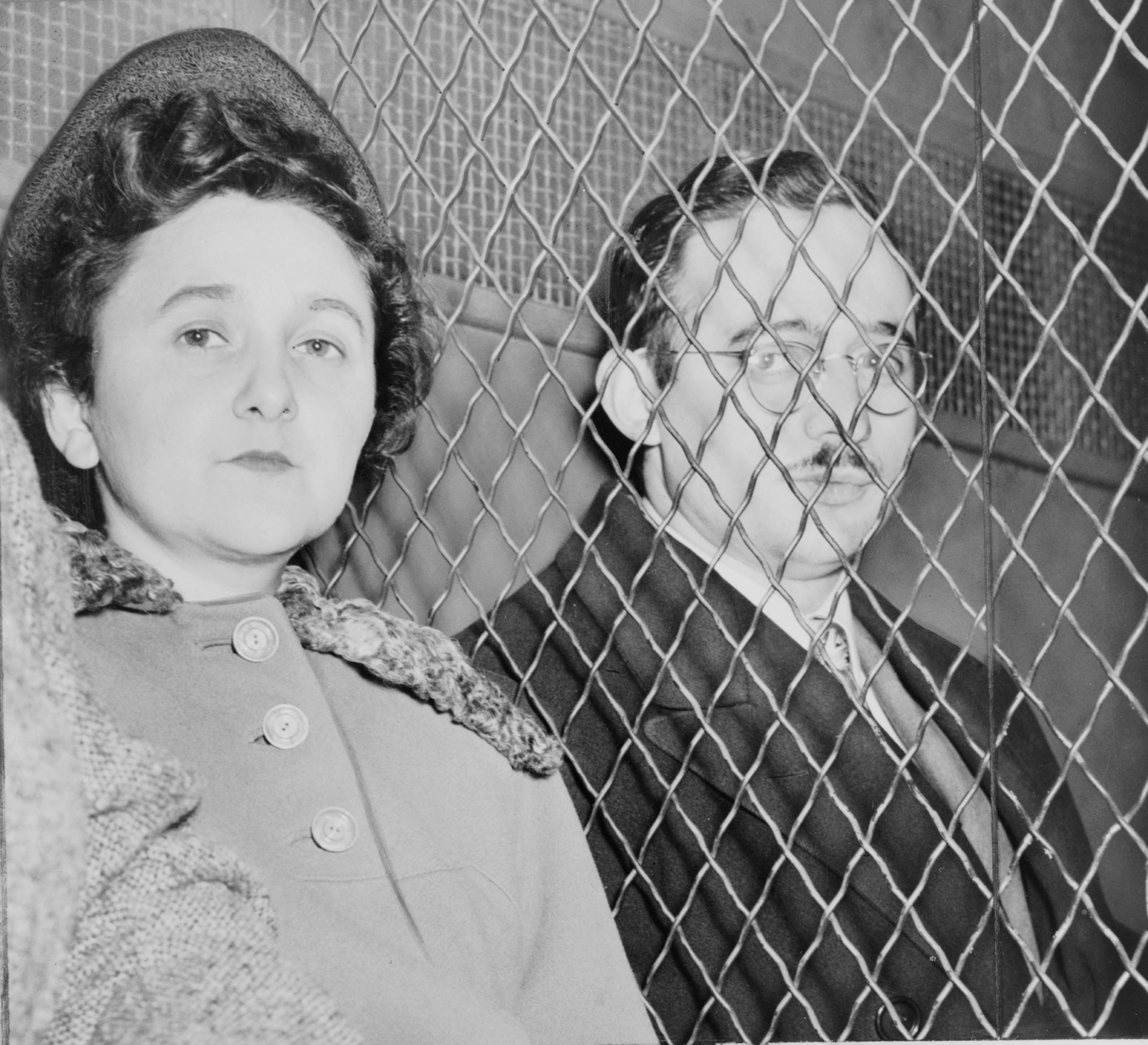
James Phillips’s play is based on the life and, still contested, crimes of Julius and Ethel Rosenberg. The Rosenbergs were convicted and executed in 1953, at the height of the Cold War, after spying for the Soviet Union, allegedly having passed secrets about nuclear weapon design secured by Ethel’s brother, David Greenglass. The play disregards the trial itself, focussing instead on the early lives of the Rosenberg’s and Greenglass’s, the interrogation of Julius Rosenberg and, in a constructive framing device, the attempts in later decades to clear their names after the executions.
Katie Eldred (a splendid stage debut performance) plays history teacher Anna Levi who meets lawyer Matthew Rubenstein (a similarly persuasive, if occasionally overly clamorous, Dario Coates) at an exhibition in 1970s NYC where he is staring at an iconic picture. It turns out that this is his parents kissing, (there is a similar image of the actual Rosenbergs, though the above is the most reproduced). I don’t think it is giving too much away to say that Anna and Matthew have a connection beyond the sexual relationship that follows, namely that he is the son of the Rubensteins and that she is the daughter of David Girshfeld (Sean Rigby) and Rachel Liebermann (Eva-Jane Willis). We go back in time to the small apartment where the earnest Jakob Rubenstein (Henry Proffit) and his spirited wife Esther (Ruby Rentall), who gave up a promising singing career, first set up home and bring up Matthew. Having left the army, where he worked in the nuclear bomb testing facilities in Nevada, (at a time when only the US had this technology), David is invited by Jakob to join his electricals business, allowing David and Rachel to also have a child, Anna. We see how Jakob and Esther’s upbringing, a child of the Great Depression, education and Jewish heritage inform their Communist idealism and sympathy for Soviet Russia (as did so many of their class and background did at the time). We also discover how Jakob was fired from his job as an engineer at a New Jersey facility which carried out research on missile systems for the army because of his CP membership.
In a series of flash-forwards, sometimes acted out in parallel, we also see how Jakob refused to renounce those ideals and confess to his crimes of espionage even when facing trial and under interrogation from FBI agent Stephen Cranmer, a man of considerably more complexity than you might expect, required an appropriately nuanced performance from Stephen Billington. And we see how and why David turns against Jakob and Esther, confesses his own involvement and implicates Jakob as the head of a Soviet spy ring. We also return to Anna and Matthew whose relationship is transformed by the revelation of their shared parental history and by Matthew’s involvement in the campaign to clear his parent’s names.
All this seems to follow much of the actual Rosenberg case, though we don’r really get to understand what exactly the Rubensteins, and David, did, nor, convincingly, why. Nor the events that have unfolded in the last couple of decades which point to the guilt of the Rosenbergs and have changed the way in which the cause celebre is viewed, now focussed on whether the punishment was appropriate to the crime. This is more about the relationships at the heart of the events, embellished and re-imagined, and all the better for it. There may well be another play located in the arrest, indictment, (the way the Greenglass’s changed their evidence is much simplified in TRK), trial, conviction and execution but it might not work effectively as drama and would be pretty thorny to grasp. There have certainly been other dramatic treatments of the people behind the facts on stage as well as film, though I can’t vouch for any of them. As an aside Roy Cohn, who later went on to play a leading role in the McCarthy trials and act for the Trump family, was involved in the Rosenberg prosecution case. And, as all good students of theatre will know, his particular brand of amoral, wanker-ism was spectacularly aired in Tony Kushner’s epic Angels in America.
So James Phillips has packed a lot into his award winning play which by and large works. This is its first revival following its premiere in 2006 and it is easy to see why Joe Harmston and the Devil You Know company alighted on it. I am happy to forgive Mr Harmston for his hyperbolic comments about its relevance to the “end of days apocalypse of division” we now face. Threats to the enlightened consensus are permanent and democracy always fallible. And, from what I read, there is much to debate around the “rights and wrongs” of the Rosenberg case. But, as drama, this really worked for me. When I fill in one of those stock surveys the major theatres send out to us regular attendees I always tick the “I want to be educated” and “I want to be entertained” boxes. Job done here. On both counts.
OK. So I might have oversold this one. It is still Caryl Churchill. With that extraordinary opening act. And that carefully calibrated feminist message, as relevant now as it was when it first appeared in 1982, of how to balance “success” in work and as a mother. The argument between collective and individualistic strands of feminism. To ape the patriarchal norms or to reject them.
But as an introduction to the greatest living playwright in the English language? Maybe this wasn’t the production. So profuse apologies to those most faithful of the Tourist’s recommendation followers, BUD and KCK, who came along. And to the most long suffering of all, in so many ways, the SO, whose previous CC exposure was the brilliant (to me), but admittedly knotty and OTT, production of Light Shining in Buckinghamshire on this very stage in 2015. I hope my chums could see where I was coming from even as the flaws in the production became apparent.
Not that these flaws were substantial. The opening scene here has a cast to die for, Siobhan Redmond as the indomitable Isabella Bird, Amanda Lawrence as the ebullient Pope Joan, Wendy Kweh as the enigmatic Lady Nijo, Ashley McGuire as the laconic Dull Gret and Lucy Ellinson as the most obviously misused Patient Griselda. The way CC takes Marlene’s drunken dinner party celebration and transforms it into a confessional which explosively, hilariously and movingly transcribes the fate of women, real and fictional, across time and geography, and specifically the way the patriarchy determines their roles as mothers, is still, for me about the most riveting half hour of theatre I have ever seen. Especially when the technical challenges of the multiple, simultaneous, conversations are, as here, perfectly realised, not to say the getting pissed part. And all presided over by the dauntless Marlene about to take the top job at the Top Girls employment agency. Katherine Kingsley, who you will probably know best from her musical theatre roles, initially locates Marlene firmly in the 1980’s Thatcherite, “ballsy”, power woman mode. To watch her equivocation, and Suffolk accent, emerge in the later scenes is a measure of just how good a performance this is.
The second scene, (here the usual order is shuffled a little), sees stage debutant Liv Hill, (Three Girls, on the telly, just watch it – though for my money Ria Zmitrowicz is actually the best of the trio of talent on display), initially at least, convincing as the immature Angie, sharing her angst with younger chum Kit (Ashna Rabheru). The two actors are confined to a small box room stage right as the technicians crack on, quietly, with transforming the space behind.
Into ….. the Top Girls agency. Which is where the full glory of the period detail of Ian MacNeil’s set and Merle Hansel’s costumes, (so superb for the dinner party), are revealed. And which also highlights one of those modest flaws is the production. By anchoring the look of the play so firmly in the year when it was written it encouraged the audience to do the same. The universality of the messages were diluted. Those of us who are old enough to recall the period, (all the Tourist’s party I am afraid), were drawn into thinking about the archetypes and behaviour of the period rather than the wider issues examined in the play, and I suspect you younger folk will have been affected more by the story here than its implications.
For it is, especially as we turn into Scene 4, and the not so big reveal, a mightily powerful piece of drama, especially when actors of the calibre of Ms Kingsley, and Lucy Black as her sister Joyce, are charged with delivering CC’s brilliant text. I don’t suppose I will ever tire of the thrill of listening to Ms Churchill’s dialogue. Complex and ambiguous ideas, observations and dilemmas framed in entirely natural dialogue, (even sometimes when how it is framed is formally inventive or even, frankly, a bit weird). There is so much dialectic revealed in Marlene and Joyce’s final argument that it is hard to keep up and yet it also sounds and feels exactly like the kind of set-to that any sisters might have had, at least in the modern world, about family, choices, dreams and disappointments, as well as politics. Family and/or career. Collective and/or individualistic feminism. All in less than half an hour.
And yet, as many critics have observed, this production, because the NT could, by not having actors double up from the first scene into the office scene, loses much of its resonance. CC didn’t specify doubling. That is just the way it has generally been done, a cast of seven for the simple reason of cost. But it certainly, at least when I have seen the play before, has far greater impact as the women that emerge from the interviews, Jeanine, who just want to travel and be with her husband, Louise, who has devoted her life to her job but still watched men promoted over her, and Shona forced to exaggerate her experience, as well as Mrs Kidd, who comes to plead for husband Howard who had expected to get the job Marlene has secured. This pivotal scene loses some impact because of the introduction of new faces, (the SO observed that she was expecting the dinner party guests to reappear in new guises and she has never seen Top Girls before), and maybe because, in an attempt to fill the Lyttleton stage, there is a fair bit of superfluous movement and furniture in this agency scene.
Director Lyndsey Turner, unsurprisingly given her experience in reviving Caryl Churchill’s work, pretty much nails the words, from Marlene’s initial instructions to the waitresses at the restaurant, (of course they are women), through to Angie’s final, plaintive, cries for her Mum at the end. This is such a rich play, just read it, and, with a cast of this distinction, the words can’t help but leap from the page. It is just that the look and feel of the production, even with the solid contributions of Jack Knowles (lighting) and Christopher Shutt (sound), didn’t quite work for me. Still to watch 18 women, (many of whom, in the “lesser” roles, were new to me), line up across the stage at the curtain call was pretty awesome. I doubt I will see that again.
I don’t doubt though that I will get another opportunity to see Top Girls. The programme lists 25 English language productions since the Royal Court premiere. With 6 last year alone, (though its been 8 years since the last major revival in the UK from Out of Joint).
That’s the thing with Caryl Churchill. She changes the game whilst being ahead of it.
Composer Iain Bell and his librettist Emma Jenkins wanted to call this just The Women of Whitechapel. Some marketing types at the ENO decided it needed to be prefixed with the title of the infamous murderer, charitably I suppose to let the potential audience know its subject. Worse, to continue the tiresome obsession with perpetrator and not victims. For this opera is specifically written about the women who were murdered. The murderer does not appear. Shame then that the creator’s original intentions could not have been fully honoured. Mind you I see that some bozo US deathcore band has appropriated the grotesque misogynistic fixation at the heart of this story by calling themselves Whitechapel. The band are in their 30s. Grow up lads.
I was predisposed to this new opera from the start. And I was extremely impressed with the end result. I see some proper reviewers who, to be fair, know their opera unlike the Tourist, think the opera is lacking in dramatic impact. I disagree. Yes there is no central single heroine to latch on to, there is no narrative arc towards some sort of tragedy or redemption, there are a fair few characters, the overall feel of the piece is dark and it is made up of a procession of set pieces. But that reflects the story of the five women that Mr Bell and Ms Jenkins wanted to tell, (based on scrupulous research where possible as well as some leaps of imagination). For me it was very powerful and very involving throughout.
I also accept that some of Iain Bell’s music and the way in which Daniel Kramer directed many of the scenes verged, on occasion, towards Les Mis style caricature, though this is no bad thing in terms of the immediacy of impact. However the more obvious inspiration might be Britten, Peter Grimes for the tone of the piece, and Death in Venice for the musical colouring. Worthy template. Mr Bell does not have BB’s compositional facility but the mix of solo and ensemble pieces, the set pieces with chorus, the unusual instrumentation, (the eerie elastic tone of the cimbalom to signify the presence of the murderer for example), the shifting in and out of tonal and more dissonant, atonal music, all conjure up a similar atmosphere.
The opera is centred on the last of the known victims, Mary Kelly, superbly sung and realised by Natalya Romaniw. Mr Bell and Ms Jenkins have created roles specifically for the mature voices of some ENO big stars, namely Marie McLaughlin (Annie Chapman), Janis Kelly (Polly Nicholls), Susan Bullock (Liz Stride) and Lesley Garrett (Catherine Eddowes), as well as the redoubtable Josephine Barstow as Maud, the proprieter of the doss house where the women are forced to live. The illustrious cast is further enhanced by the presence of Alan Opie as the aloof Pathologist who carries out the autopsies on the women’s bodies, Robert Hayward as the compromised Chief of Police and Paul Sheehan as the intimidated Coroner. From the current ENO vintage Nicky Spence provides a lighter touch as Sergeant Strong, James Cleverton is a Photographer with dubious intentions, William Morgan a rather underwritten, reformist Writer and Alex Otterburn is Squibby a local butcher’s boy. On the evening I attended Sophia Elton also stood out as Mary’s voiceless daughter Magpie.
Soutra Gilmour has conjured up another striking set, though it is sombre and dark, (and a bit Goth), in line with the mood of the piece, which is sufficiently versatile to persuade as doss-house, pub, street, mortuary and funeral procession for the coup de theatre of the, slightly over-long, ending (in which Paul Anderson’s lighting design, literally, really shines). Martyn Brabbins’s enthusiasm for the score and the commitment of the ENO Orchestra was never in doubt even in the slightly padded passages.
I think the opera makes its points about the callous way that the patriarchal society of the day treats these poor women – the murderer is simply an extension of the more “respectable” men that abuse them – the solace and support they take from each other and their overwhelming fear as the threat mounts. On its own this work cannot counter a century of writing out the victims as the expense of the sick fascination with the male perpetrator, (turn on your TV any night of the week to see that is still par for the course), but it is a brave, ambitious and engrossing attempt to do so and to provide a valid three hours of musical theatre. The symbolism, the Minotaur metaphor, the male chorus poking through the windows of the doss-house, the final ascension, is thought through and adds texture to the naturalism of previous scenes. The more poetic passages in Emma Jenkins’s libretto similarly contrast with the vernacular episodes.
I read a fair few reviews in thinking about this. They were all written by blokes. There were, with few exceptions, wrong about this. Presumably they would have been happier seeing yet another production of that scrupulously unmanipulative tale of female agency Madama Butterfly.
I’ve said it before and I’ll say it again. When opera works there is no other art form to touch. But when it doesn’t it can be mystifyingly dull. What’s more it can be the very same opera which is both of these things.
Take The Magic Flute. It is an undeniably daft opera. Its message is the triumph of the light and reason offered by the Enlightenment over the dark forces of Empress Maria Theresa’s absolutist Habsburg regime and the obscurantist Catholic Church. I understand that the Freemasons here are the good guys, even when they don’t appear to be, (though I gather the current mode de jour is to play down Mozart’s funny handshake connections), and that the Queen of the Night, even if she can hold a note (high F6 apparently), is not ideal mother-in-law material.
But even armed with sub-textual knowledge, insight into plot and familiarity with the score, (though that isn’t necessary though, this being Mozart, undeniably the greatest ever composer for dramatic voice), it can still it can still come across as upper class pantomime and take an age to get through. Unless of course it is directed by the genius that is Simon McBurney. There he is above in The Encounter. Mr McBurney OBE is the Artistic Director and a co-founder of Complicite. Complicite might just be the most important, and certainly the most innovative, theatre company in the UK. And therefore maybe the world. I say this secure in the knowledge that I have only seen a handful of their productions but when you see what they do you will know too. Which is what happened to BUD on the evening we went to see this Magic Flute. Mr McBurney has an eclectic list of film and TV, and directing, credits, so you are bound to have seen him somewhere, but it is his work with Complicite, extending far beyond direction and performance, given the vast array of associates involved in the company, that makes him special.
Now the Tourist, given his only rudimentary understanding of opera as an art form, and especially his inability to grasp the basics of musical constructions, find it tricky to opine on the subject. Moreover by rejecting pretty much all of C19 opera, (the bel canto of Rossini, Donizetti and Bellini, the pompous melodrama of Verdi, the sentimental, pot-boiler manipulation of Puccini, the meandering bombast of Wagner – I’ve tried it all and I can’t be doing with it), and seeing it as drama with music, not music and tunes to which the drama is stitched on, I appreciate I am drastically narrowing the field. There is plenty to like musically from the Baroque but you need to get on with gods, monsters and Classical Greece plot wise, and some of then don’t half go on a bit, (I am looking at you Mr Handel). There aren’t actually that many C20 operas that have stood the test of time and get a regular airing. All this means then that the Tourist, especially since he isn’t going to drop £200 for a decent view at the Royal Opera House, or worse still some poncey gaff like Glyndebourne, on the off chance he might be converted, is condemned to see a lot of Mozart, Britten and contemporary opera. Which suits him but doesn’t really qualify him to write about it, even to himself. And he has never seen a Gluck opera, nor Fielio and suspects he might put up with any old nonsense story if Vivaldi’s music backed it up.
Which is why he has failed to document some of his more recent brushes with Mozart. But, with this Flute, once again with BUD as Sancho Panza to the Tourist’s Don Quixote, some clear patterns, worthy of comment, have emerged. Cases in point. We saw the Die Zauberflute at the Royal Opera House in October 2017. Nice perch. Stalls Circle to the side, nose to nose with the pit, though the rear of half of the stage was cut off. Sur-titles on a little screen on the ledge in front. So a strong showing musically, and in terms of the acting from the cast, but less impact from the set and from the libretto. Lesson one then. Having to look down at the translation doesn’t help. Which brings me to the wider, and contentious, claim. For me opera is better in English. Not because I can understand every word that is sung but because I might, particularly if the translation of the libretto captures the meaning, spirit and musicality of the original. As evidence I offer up Jeremy Sams genius offering for The Marriage of Figaro in the Fiona Shaw ENO production. You can berate me as much as you like but, if the singing, and sur-titles, make a connection, (in so far as that is possible when some soprano is going balls-out coloratura on what feels like the twentieth reprise of her showcase aria’s first verse), then the Tourist can start to find a way into the drama. Anathema to the purist but there it is. As for this ENO Flute, Simon Jeffrey’s pithy translation certainly did the trick.
Lesson two. Now I couldn’t tell you why but clearly some opera singers are better than others. Stronger, more powerful, more resonant, more accurate. a wider range, a better understanding of language, breath control, squillo, tessitura,rubato, vibrato, etc, etc. The ROH Flute definitely had the edge on the singing front, even with a “second string” cast when compared to this ENO Flute, (with the exception of Lucy Crowe’s Pamina). The ovation accorded to Greek soprano Christina Poulitsi after she nailed Der Holle Rache was something and well deserved. Goodness knows how excited the punters will have been after Sabine Devieilhe, the dastardly Queen for the other performances and the critic’s darling, squeaked her damndest. Yet, in terms of performance I preferred the ENO version because the singing, and for that matter the musical interpretation from the ENO Orchestra, fitted the drama more satisfyingly than the ROH production.
Which brings me to lesson number three, the most important of all. In opera the director really matters. That is, of course, also true in straight theatre but in opera, where there are so many interpretative decisions to be taken and where spectacle matters, the vision the director brings, can, in the Tourist’s limited experience, may a huge difference, particularly in drawing out the universal themes and creating a “look” that resonants with a modern audience in works that were written a few hundred years ago. Now there are some that are going to prefer their opera unsullied by the hand of the Regieoper. I certainly get that if the creative mind goes on to wild a bender the result can be a mess. On the other hand seeing something that emphasises the drama, the theatre of opera, and imposes some meaning, or at least insight, is more interesting to me than a straight, “period” interpretation, whatever that might be.
Not that David McVicar’s “classic” 2003 ROH production, revived for the sixth time by Thomas Guthrie, with design from John MacFarlane and lighting from Paule Constable, comes straight out unvarnished from 1791. But it does emphasise the “pantomime” and “set-piece” look, feel and structure of what I imagine to be Mozart’s, and his librettist Emmanuel Schikaneder’s, original Singspiel vision. Magic, fable, predictable comic turns from the boy Papageno, starry night skies, Masonic temples, swathes of primary colours, sharply delineated light and dark, some immense puppetry, a spiritual journey. All present and correct but it did jog on a bit and there wasn’t really a thread that held the whole together. The cast was sometimes overwhelmed by the scale of the set and the dramaturgy a little stolid. The daft story, and the aforementioned clash of philosophies, were showcased but nothing really connected.
Now in contrast Mr McBurney’s ENO version was a revelation. In part because he utilises the whole arsenal of typical Complicite aural and visual tricks, video projection, here with on-stage digital blackboard, on-stage Foley artist, a tilting, floating stage, fluttering birds simulated through sheaves of paper, orchestra players incorporated into the action on stage and singers descending into the raised pit and auditorium, to create a spectacle that highlights the artifice and wit of the theatrical experience, but also in the “magical” plot and in Mozart’s spectacular score. It is entertaining for sure but when it needs to make a point, the book-shelf to symbolise Sarastro’s Temple for example, it does. And, as if to directly address one of the banes of the Tourist opera attending life, there is constant on stage movement. No member of the cast is parked. to sing or otherwise.
The three ladies (Susanna Hurrell, Samantha Price and Katie Stevenson) taking snaps of the unconscious Tamino (a properly hunky Rupert Charlesworth) on their phones, the three alarmingly old looking boy spirits (Guillermo Fernandez-Aguayo Martin, Richard Wolfson, and Nat Fukui), Julia Bauer’s Queen of the Night careering around in her wheelchair, the video snake, the “boardroom” table, the coup de theatre trials by fire and water with video backdrop covering the entire width of the stage, a genuine Prosperian “philosopher king” Sarastro, (bass Brindley Sheratt was compelling), and a genuinely strong and courageous Pamina (Lucy Crowe is both the best singer and actor I have ever seen on an opera stage, though appreciate experience is limited), a gentleman of the road Papageno, (Thomas Oliemans) and come to think of it Papagena (Rowan Pierce), with the ability to translate frankly p*ss poor comedy into real pathos, a greasy, lank-haired Monostatos (Daniel Norman) who is pure creep. And a magic flute which literally takes centre stage. Mr McBurney has thought about how it all fits together, about the story he wants to tell, and then worked on every detail to make us believe that this symbolic, numerological gibberish is really saying something to us.
It is as well that Mr McBurney’s creative collaborators were up to executing the vision. At this performance Chris Hopkins took the baton from young Ben Gernon. Sounded fine to me. I have no doubt that chief amongst all this invention was associate and movement director Josie Daxter who has worked with SMcB on his other opera A Dog’s Heart and A Rake’s Progress in Amsterdam. And there there was the set design of Michael Levine, the costumes of Nicky Gillibrand, the lighting design of Mike Gunning, (based on the original work of Jean Kalman), the video of Finn Ross, the sound of Gareth Fry and the aforementioned on stage artists Ben Thompson and Ruth Sullivan.
Now just in case you opera buffs were thinking the Tourist is some sort of lightweight with a toddler-esque attention span that delights in directors upending operatic tradition I offer up a recent visit to the Royal Opera House and Cost Fan Tutte. Overall this was a fine night out with the SO, BUD and KCK for company with much to enjoy. Admittedly in a cheap (for a reason) box which restricted the view but still. It was Mozart, a fine, if not perfectly matched, cast highlighted by Thomas Allen’s Don Alfonso and Serena Gamberoni’s Despina alongside the menage a quatre of Paolo Fanale (Fernando), Gyula Orendt (Guglielmo), Salome Jicia (Fiordiligi) and Serena Malfi (Dorabella), and a barnstorming performance in the pianoforte continuo from conductor Stefano Montanari who amped up the tempi to good effect.
However Julia Burbach’s direction of this revival of German Regie Jan Philipp Gloger’s original production didn’t really work for me. I had seen the original at the cinema and was mystified by some of its conceits then. Same here live. I get the notion that it is daft to believe that our funny lovers, even when the lads are dressed up as “east” Europeans, wouldn’t recognise each other, but it is equally daft to presume that they are all deliberately playing along to rediscover love and something about themselves. So we enter Don Alfonso’s School for Lovers, after a performance of the opera has ended, the scenes are played out in a rehearsal of the opera itself, with stagehands milling about and putting up each of Ben Bauer’s inconsistent designs ahead of each scene, there is plenty of implied guff about defining and reclaiming identity and the sexist title is repurposed to include us all rather that just the “women who are like that” with a simple replacement of an “e” by an “i” – tutti you see. All is artifice, all is deceit, and that includes you audience.
I get the idea. The problem is the plot and libretto. There is no way round it. This story and the words da Ponte sets to Mozart’s glorious sounds to tell it are sexist claptrap. So the gap between what Herr Gloger wants us to understand is the message and what we hear (or more exactly, read in translation) just gets wider and wider. Nothing wrong with director’s manipulating and mining sacred texts to resonate with contemporary audiences and to repurpose the arguments and nothing wrong with exploring the dissonance between what was acceptable then and what is acceptable now but there has to be some internal logic and clarity in what we see and hear that doesn’t require a download of the programme notes in advance to understand.
And the performers have to be convinced by the director’s vision that no-one here is convinced by what they are doing or singing. I don’t think they were, with perhaps the exception of Serena Malfi. So neither was I. Better to recognise the reality of the first, misogynist, take on the opera, and then start to tease out the ironies that might exist in da Ponte’s texts and Mozart’s music. It might not entirely paper over the ugly stereotypes at the heart of the “comedy”, nor the fact that it does go on a bit, but there is plenty to work with in the right hands, as with Shakespeare’s more cloth-eared passages, and, failing this, there is always the music and the farce.
Right that’s the state of play in the Tourist’s head Mozart opera wise. Until the next time when he will likely entirely reverse his opinions.
Orchestra of the Age of Enlightenment, Simon Rattle (conductor), Peter Sellars (director), Choir of the Enlightenment
Royal Festival Hall, 2nd April 2019
JS Bach – St John Passion
Camilla Tilling (soprano)
Christine Rice (mezzo-soprano)
Andrew Staples (tenor)
Mark Padmore (tenor, Evangelist)
Roderick Williams (baritone, Jesus)
George Nigl (baritone)
The Tourist, along with chum for the night TMBOAD, was recently blindsided, in a good way, by the staging of Britten’s War Requiem at the ENO which was far more theatrical than he had anticipated. Well blow me if if didn’t happen again with this St John Passion. I had not really clocked the presence of Peter Sellars on the list of creatives so had only anticipated a semi-staged version, a bit of movement, some subtle lighting, that sort of thing. However, from the moment we saw the OAE lined up on one side of the stage, it was clear something more was on the cards. What we didn’t expect was a full blown, punch to the gut emotional, acted out Passion, complete with modern dress costumes, (red and blue for the Marys, monochrome for the rest), occasional props, an immensely atmospheric lighting design courtesy of Ben Zamora, musical solos from memory, (my favourite was Simone Jandl and her viola d’amore and Katharine Spreckelsen and her oboe da caccia), and even walk-on contributions from Sir Simon Rattle himself.
The St John Passion is a powerful work of act even without the dramatisation, reflecting the subject, (even for those of us who have no faith), and the direct, even simple, way that JSB chose to set it. I can imagine that there will be those who would prefer, in theory, to be left to focus on the music, the voices and the text, but I would defy them not to be bowled over by the extra dimension that Peter Sellars staging brings to the work. This is not the first large scale Bach vocal work that the Tourist and BUD have shared in recent years, we have a B Minor Mass and a Christmas Oratorio under our belt, and the Tourist has a number of independent Bachian choral sojourns on top of this. The Tourist may have waited until his middle ages before he “got” Bach but now he consumes with the zeal of the convert.
Now as it happens Bach himself was reproached by some in the 1720s and beyond for the theatricality of his Passion settings and the fact that he revised them on multiple occasions in later years partly reflected this as well as a more realistic approach to the logistics of the piece and to tighten it up musically. So those who might initially object to this Sellars/Rattle ritualised version as liturgically inappropriate or offensive are in “good” company. There will have been a time after all when staging the Passion in the concert hall rather than the Church will have provoked the ire of some.
Whilst there are some belting chorus parts and chorales in the SJP the thing that really strikes me is the starkness of the settings with minimal instrumental accompaniment to many of the arias and with much use of recitative, and not just from The Evangelist’s narration. A lot of the first two parts is told from the perspective of those around Christ, and, assuming this translation is accurate, the text is very immediate and shorn of ornamentation. JSB cleverly creates a symmetrical structure, centred on the chorale Durch dein Gefangnis, as Pilate seeks to release Jesus, either side of which is the same pattern of choruses, some fugal, solos and chorales but in reverse order. This creates a musical order and narrative structure which informs the “drama”. It is not, as Sir Simon observes in the programme, a very melodic piece even if it does have some very arresting, and surprisingly experimental, musical passages. In short, with these forces, six soloists, a choir of 32 and the OAE numbering 30, it very much has the feel of opera, putting aside its subject. It certainly has emotional clout.
So easy to see why Sir Simon and Peter Sellars long cherished the idea of staging it in this way, finally realised in 2014 in Berlin when Sir Simon was head honcho at the Berlin Phil. The soloists here, led by the very deliberate Mark Padmore, who is pretty much the go too Evangelist, and the superb Roderick Williams as a visibly suffering Jesus, as well as Camilla Tilling, Christine Rice, Andrew Staples and George Nigl, were on top form and all can act as well as sing and the chorus brought real drama to their turns. The fact that the latter four soloists take multiple “roles” creates a texture and an audience empathy that a straight concert hall performance can lack. Contemporary resonance abounds with George Nigl’s equivocating politician Pilate yielding to the “will of the people” and the blindfolding and torture of Christus under investigation.
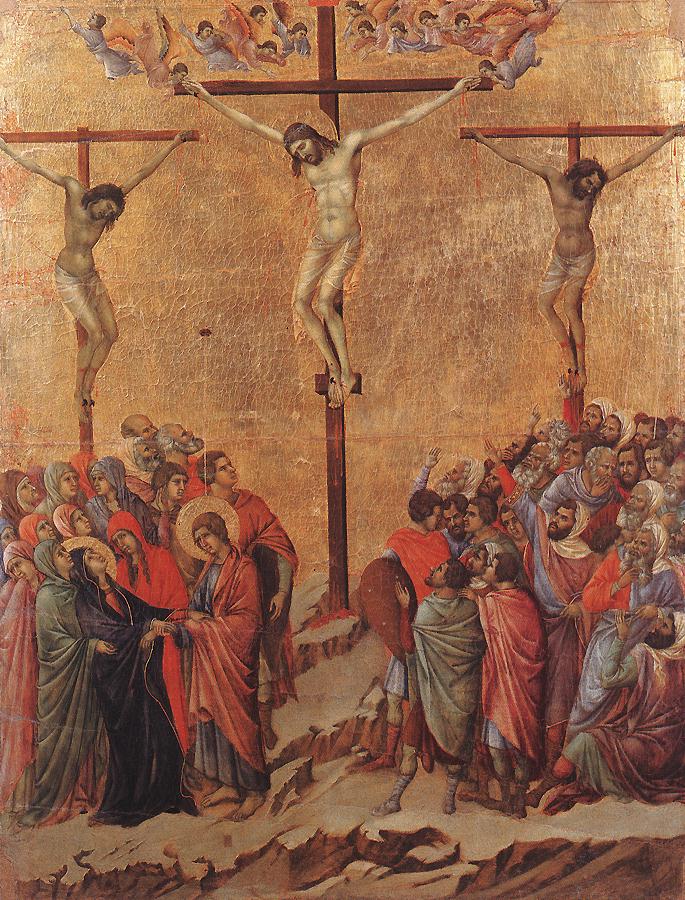
OK so occasionally some of Mr Sellar’s choreographic tropes grated a little, the hand gestures, the just-so re-creations of classic Renaissance paintings, the singing from prone positions, the pauses to get everyone in the right place, and the sur-titles, whilst a necessary part of the staging, were a bit too curt at times, and, whilst I don’t know where to take the interval the second half, as is usual, is a bit long compared to the first. Overall though this definitely ticked the box for BUD and myself.
Mind you we are, contrary to all appearances a couple of avowed modernists where it comes to our dramatic preferences. And so, I am willing to bet, are the vast majority of punters. Two hours plus of Bach and the story of Christ’s death may not float the boat of many outside us classical music buffs but I doubt there could be a better way to spread the word. Which ultimately is why the old fella wrote this masterpiece in the first place.
The Tourist never had a great deal of confidence in his ability in his chosen career. Unfortunate in a world where self-belief is everything, even in the face of overwhelming evidence that it was misplaced. Still many of those he had cause to interact with seemed to disagree for which he is eternally grateful.
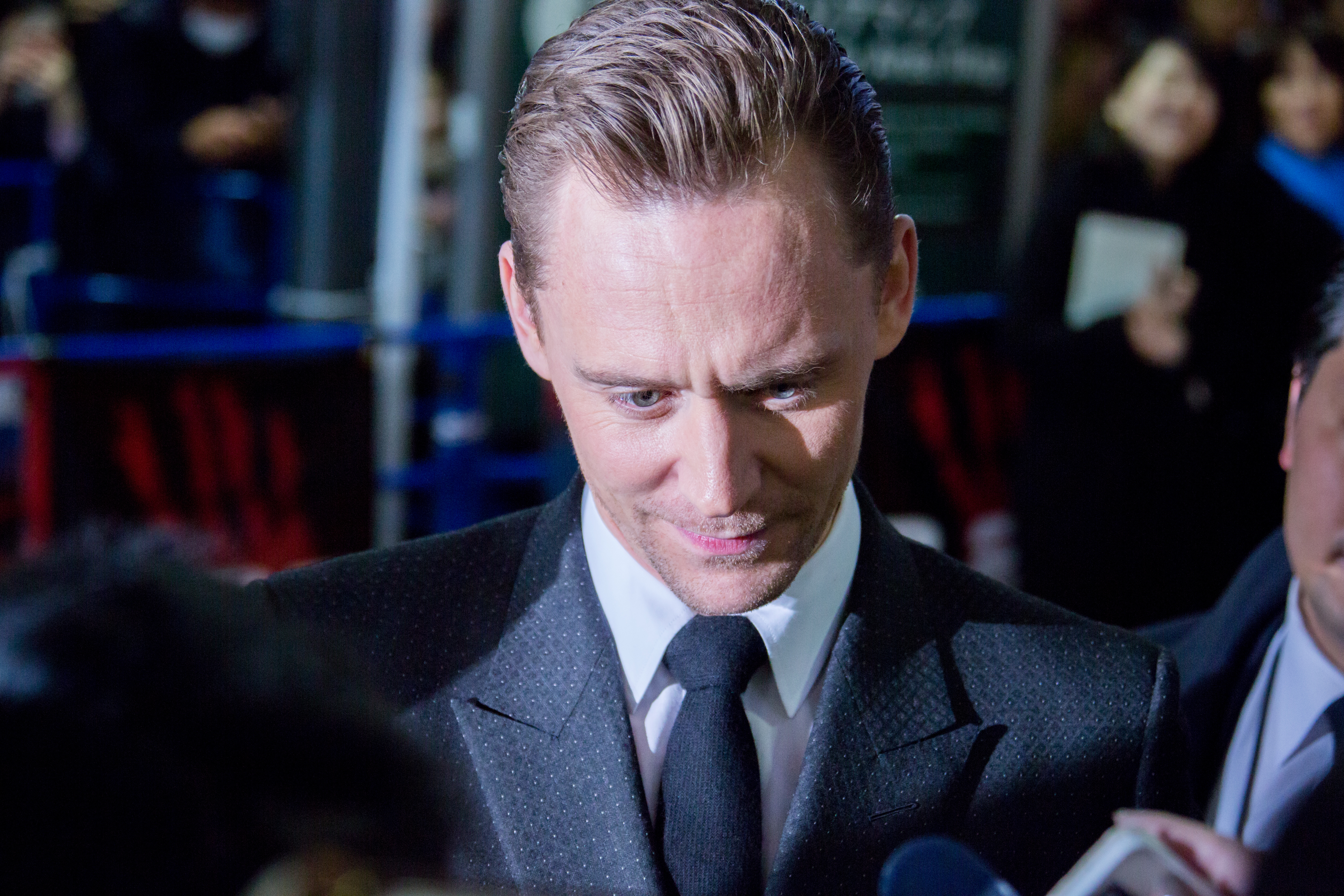
I would be surprised if Tom Hiddleston has this problem. With good reason. He is a mighty fine actor. And I think he knows it. And he is a gorgeous looking fella. And I see he went out with Susannah Fielding, herself a brilliant stage actor, to wit her turns in American Psycho, The Merchant of Venice, The Beaux Stratagem and Bull, and, most recently giving Steve Coogan lessons in comic timing in the uneven, though still often brilliant, This Time with Alan Partridge.
Until now I had only seen TH on stage in Cheek By Jowl’s The Changeling years ago, missing his award winning outings in Cymbeline, Othello, Coriolanus and the limited edition RADA Hamlet. And since I can’t be doing with all that super-hero gibberish the only film I know him from is Ben Wheatley’s adaptation of JG Ballard’s novel High Rise, which is the very definition of pretentious, art-house cinema. Obviously I quite liked it. So it is his TV roles in Wallander, The Hollow Crown and The Night Manager which I know best. He shines. And it is not like he isn’t up against some pretty stiff competition here.
So we come to Betrayal, the conclusion of Jamie Lloyd’s stupendous Pinter season. At first glance taking the role of the cuckold publisher Robert, rather than literary agent Jerry, his mate who has the affair with his wife Emma, seems a surprising decision. Yet he doesn’t even have to open his mouth, just lurking at the back of Soutra Gilmour’s revolve set, for this to immediately make sense. I have said before that there have been a handful of actors in this season who just seem get Harold Pinter’s language. By which I mean they turn it into something natural whilst still retaining that rhythm, whether it is passive or aggressive, that makes it unique to him. Tamsin Greig, Rupert Graves, Al Weaver, Brid Brennan, Tracy-Ann Oberman, Danny Dyer, John Heffernan, Ron Cook. Not always who you might expect but these where the ones who nailed it. To which we can now add Tom H. But Mr H also captures an inner emotional rhythm which makes him very, very special.
It helps that Betrayal, beyond its “going back in time” conceit, is one of HP’s least tricksy plays, indeed it can almost be delivered as the kind of naturalistic melodramas that HP first appeared in as an actor. And that Charlie Cox, an actor whose work is entirely new to me, and Zawe Ashton, who I remember from Jamie Lloyd’s persuasive, if sometimes wayward, production of Genet’s The Maids at Trafalgar Studios, are similarly impressive. And that Jamie Lloyd has pretty much turned himself into the best director of HP since HP himself, (The Homecoming at Trafalgar Studios still ranks as his best). I expect a definitive Caretaker to appear in the not too distinct future given the box office success here.
Betrayal, as I am sure you know, first appeared in 1978, with the affair which it dramatises beginning in 1968 when the play ends, and ending in 1977 when the play begins, with scenes from 1975, 1974, 1971, and proceeding chronologically within the other pivotal year of 1973. I am sure you also know that it is loosely based on HP’s own affair in the 1960’s with TV presenter Joan Bakewell. HP was simultaneously working on his great, unfinished, paean to Proust, a very clear influence. The structure means we already know the what, so that HP can focus on the how, and, especially get to the core of the deceptions to learn the why, of the betrayals. With the sparse plain set, few props and having all three actors always on stage the tripartite relationship is emphasised. What they know and don’t know. What they hide from each other and from themselves. The hurt they cause each other. The victories, defeats and compromises, for there is calculation here entwined with the passions. The key moments, the memories, of the affair, the marriage and the friendship, leap out with uncanny resonance from Mr Lloyd’s minimalist treatment. Robert’s attempts to intimidate Jerry in the restaurant scene and the pain when he finds out on the holiday in Venice, the best single scene of this entire season. Jerry’s needy, self-centredness. Emma’s ill-fated desire for both men. The dependence of the men on each other and on Emma. The truculence of the end of the affair the as mundane mechanics of break up are thrashed out.
As in the rest of the season Jon Clark’s lighting and the Ringham brother’s sound is impeccably delivered. Yet if I had to pick one thing that elevated this Betrayal into something very, very special it is the on stage movement of the three actors – the invisible link between them made visible. The silences are made part of the language and therefore the drama. That’s where Jamie Lloyd has the edge.
One example. The scene where TH is sitting on a chair cuddling Robert and Emma’s child. Whilst she and Jerry are languishing in bed on a stolen afternoon in the flat in Kilburn. Old TH managed to conjure up real tears in the Venice scene but this scene nearly had the Tourist blubbing. In Pinter. WTF.
What next for Tom Hiddleston. Other than the twenty fifth incarnation of this Loki bloke. I can’t wait.
Alexander Melnikov (piano), Alfredo Bernardini (oboe), Lorenzo Coppola (clarinet), Javier Zafra (bassoon), Teunis van der Zwart (horn)
Wigmore Hall, 31st March 2019
Wolfgang Amadeus Mozart – Adagio in B minor K540
Wolfgang Amadeus Mozart – Quintet in E flat for piano and winds K452
Ludwig van Beethoven – Horn Sonata in F Op. 17
Ludwig van Beethoven – Quintet in E flat for piano and winds Op. 16
A wind supergroup. I’ll resist the temptation to make a puerile joke. Still that’s what was on stage on this evening at the Wigmore. To play a couple of chamber music classics from the, er, Classical period. Whilst Beethoven went on to bigger and better things the Op 16 Wind Quintet is a piece of beauty and not insignificant innovation which owes a lot to its Mozartian predecessor but, especially in this direct comparison. also markedly departs from it. As for Mozart’s K452, well Wolfgang himself, at the time, 1784, reckoned it was the best thing he had ever written and who are we to argue. The evening was rounded off with Mozart’s K540 Adagio for piano, one of the most most poignant pieces he ever wrote, and Beethoven’s (only) virtuoso Horn Sonata.
Alexander Melnikov is probably as good as it will ever get, (maybe even than DSCH himself who was a bit of a ragged pianist by all accounts), when it comes to Shostakovich’s mighty Preludes and Fugues and his partnership with Isabelle Faust in the Beethoven violin sonatas is something I would pay good money to hear live. Annoyingly his next visit to the Wigmore with Ms Faust, and Jean-Guihen Queyras on cello, to play the Beethoven piano trios clashes with an even bigger gig; Philippe Herreweghe and the Collegium Vocale Gent taking on the Bach B minor Mass. (I also see the the CVG are touring Glass’s Einstein on the Beach. Now that would be, to use the modern parlance, a thing). I am hoping to see Mr Melnikov accompanying American soprano Claron McFadden in December when they take on some tricksy modern vocal repertoire including some Cathy Berberian staples.
As it happens Mr Melnikov’s fellow band members, all being experts in the HIP field, have close associations with the CVG, especially horn player Teunis van der Zwart. For this concert was unavowedly historically informed. Mr van der Zwart teaches in Holland, Javier Safra in Brussels, Lorenzo Coppola in Barcelona and Alfredo Bernardini in Salzburg, but they are all involved with top rank European period music ensembles and all studied in Holland as far as I can see, this being, with Belgium, the centre of the universe when it comes to HIP teaching and performance. The Tourist can never leave London but if he did that is probably where he would head.
AM set the scene with the Mozart Adagio, the only self-contained work by Mozart in the “melancholic” key of B minor, on his fortepiano. The initial phrases are pretty simple, and, on a fortepiano with its lack of sustain, it is a little underwhelming at first. But, as the second subject emerges, with the constant crossing of left had to right, things hot up and the fortepiano sound, with the twinklier higher notes and buzzy low notes, starts to properly emerge. In the development section Mozart piles up the pathos, first with an ascending harmonic sequence and then, descending, ending in a quick switch to B major, an unexpected twist after all that woe-is-me stuff. I don’t normally get too worked up by Mozart’s solo piano pieces, but this certainly did the trick. There is no doubt that, if you are used to hearing a piece on a modern piano, the fortepiano, with its distinct lack of oomph and narrow range, can be a disappointing alternative but with Mozart it works. My theory is that it turns “too many notes” into “just the right amount”, though to be fair this is not over-burdened with notes in the first place.
The rest of the ensemble then trooped on for the Mozart Quintet which again turned out to be a perfect illustration of why to makes sense to play music on the instruments it was designed for. Assuming the musicians are up to the task, which they were here. I doubt that this will ever become a favourite of mine, compared say to the late symphonies, some of the string quartets and the wind concertos and string/wind quintets, but this was very persuasive, highlighting the way in which WAM passed the phrases backwards and forwards between winds and keyboard, and, on these instruments, giving us a bit of rough to remove the complacent air that tends to creep into Mozart on modern instruments. The first movement starts off slow and the subsequent Allegro doesn’t get up to much, a gentle skip, but this allows the ear to get a taste for the sound, (I know, mixed metaphors), before the much more varied slow second movement where WAM takes us to some very interesting sounding places tonally led by clarinet and horn. This I liked. Just a hint of unease. The closing Rondo is much jollier, as the quickstep interplay between piano and wind becomes more elaborate.
Now the programme, (some excellent notes by Misha Donat), tells me that LvB wrote his horn sonata for one Giovanni Punto who was considered, in 1800, to be one of the greatest virtuoso soloists of the day. He was born Johann Wenzel Stich, in the service of one Count Wenzel Joseph von Thun, (reminding us that for most of human history even the ostensibly free were nothing of the sort), but, after learning his trade in Prague, Munich and Dresden, decided to skip away from his “employer” and take on a new identity to evade capture. I am guessing then that Count Thun wasn’t invited to the premiere of the piece where no less than LvB was the pianist.
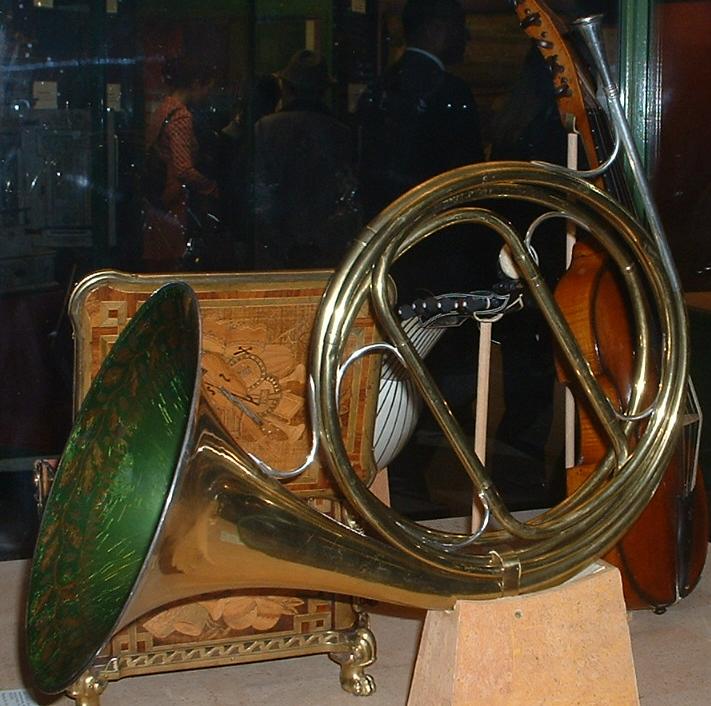
The Allegro opening contains a number of remarkable innovations to show off Herr/Signore Punto’s technique, hand-stopping, (altering the pitch by sticking the hand in the bell end – quiet at the back please), a descent into the lowest of low chords in tandem with the keyboard, (the same pitch as a cello’s open C string – that buzzy, growly sound), and a passage of rapid arpeggios which I am guessing are beyond the capability of all but the best horn players. The middle movement is not some drawn out Largo, (that wouldn’t really work on the horn), but serves as an intro to the concluding Rondo and also highlights a dotted motif that permeates the whole sonata. LvB went on to utilise this structure, to greater effect, in later works, piano sonatas but also in the symphonies. One reason why Beethoven’s music, above all others, makes sense.
Whilst Mozart’s Quintet may have been an influence on Beethoven’s equivalent I am not sure, even with the help of the experts, that I can discern this in more than the general shape, notably the gentle, slow intro into the Allegro first movement and some of the more dramatic statements in the development. The horn comes out well in this movement and the keyboard gets the chance to show off one of those massive octave, (four and a half here), leaps that LvB was so beloved of. There is another one of those little repeated dotted rhythms here as well. The central rondo shape, marked cantabile – singsong to you and me – with theme and accompaniment, allows all four wind players to show off, with increasing ornamentation, leaving the piano to take the final turn. The actual Rondo finale has a bouncy quality stemming from its 6/8 “hunting” theme and, with its runs on the keyboard and rapid exchanges between the instruments, this could easily be mistaken for Wolfgang.
A fine programme then delivered by experts in their fields highlighting two of the finest pieces of chamber music ever written for these instruments. I would be very happy if they went on to record this programme. Over to you fellas.
Guildhall School, Silk Street Theatre, 27th March 2019
Even the most casual reader of this blog will observe that the Tourist spends an inordinate amount of time in a theatre. A recipe for pity or jealousy depending on your point of view. Despite this satisfying his urge to hoover up the, er, classics of Classical Greek drama is proving surprisingly elusive. There isn’t as much of it about as you might expect. I appreciate that this might be the Firstest of First World Problems but it has, nonetheless, come as a surprise. So first sniff of a Sophoclean, Euripidean or Aeschylean (??) opportunity and the Tourist is straight in. As here. Also taking advantage again of the chance to see tomorrow’s acting and creative talent today, this time from the Guildhall School.
Orestes was written by Euripides and first performed in 408 BCE and tells the story of young Orestes after he has killed his Mummy. It follows on from the events catalogued in Electra, the play about his sister, dramatised by both Euripides and Sophocles, and in between The Libation Bearers and The Eumenides by Aeschylus, the latter two plays in his trilogy The Oresteia. In fact the well educated amongst you will be aware that young Orestes is perhaps the central character in this, to say the least, dysfunctional family tale. He crops up in something like a quarter of the extant plays by the three Greek tragedians.
He kills Mum Clytemnestra to avenge the death of Daddy Agamemnon by said Mummy. Mummy’s justification being that Agamemnon had, before setting off to bash the Trojans because they pinched his brother Menelaus’s wife Helen, (she of the ships), killed little daughter Iphigenia, Orestes’s Sis, to secure some favourable wind. Not a relieving flatulence you understand, but wind to set the fleet off to Troy. Now some would also have it that naughty Clytemnestra actually recruited lover Aegisthus, (who had a claim to the throne of Mycenae albeit via an incestuous route), to kill Hubby. So Orestes, taking no chances, bashed him in as well.
And you thought GoT was complicated. Next Christmas, when it’s all kicking off, cheer yourself up by thinking at least it isn’t as bad as this, the Atreus family curse. In fact it all started with Tantalus, oen of Zeus’s sons, who, to get back at his Dad and the other gods, boiled up his son for them to feast on after they had banished him, Tantalus that is, for having nicked some ambrosia. (Who would have thought they liked rice pudding so much). Tantalus goes to hell, the son, Pelops, is revived but, after some chariot race fixing skullduggery and general cursing, Pelops’s boys Atreus and Thyestes then fall out. Affairs, and some more pie based cannibalism, mean that the next generation, the generation described above, inherits the curse.
And so to this play. Electra opens up with a quick “and previously in the House of Atreus” synopsis whilst a weary Orestes kips next door. Auntie Helen swans in wanting to make an offering at Clytemnestra’s grave, the chorus of Argive women pitch up and Orestes awakes, tormented by Furies. Rough night. Uncle Menelaus and his father in law, so Orestes’s Grandad, Tyndareus, arrive, and Orestes makes his pitch for mercy to then, requesting an opportunity to talk to the Argive men. Cue discussion of the tensions between divine justice and natural law. Menelaus takes a stern line though. After all the Greek people have just about reached the end of their tether what with going to war for years just to get his missus Helen back and are in no mood to listen to any appeals for clemency.
Orestes, with his mate Pylades and Electra, then go direct to the assembly but this fails to forestall the death penalty for Brother and Sister, so the trio hatch a further play involving, you guessed it, more murder, this time of Helen and her daughter Hermione. Helen vanishes, but the trio capture Hermione, as well a slave who saves his own skin with some rousing argument. Menelaus catches the conspirators in the act ……
….. and then, ta-dah, deus ex machina in the form of the god Apollo who sets things to rights by explaining that Helen is in the stars (whaaaaaat), Menalaus must go back to Sparta, Orestes to Athens where the court will acquit him, after which he must marry Hermione, oh, and Electra will marry Pylades. Job done. Humans can go away in peace. Apollo can go back to arching, averting evil and all round being beautiful. As usual with Euripides, the gods don’t come across as the sharpest tools in the toolbox, their relationship with the humans is messy, the nature of justice is questioned and war is, as sagely observed by Boy George, stupid.
The director here Charlotte Gwinner, who has had spells at Sheffield Theatres, Liverpool Everyman and the Bush, opted for the prose translation by one Kenneth McLeish. Now as I am new to this game so have no idea how one translation differs from another, though I can imagine there are some high faultin’ verse options, but there is no messing about here. On with the action and as idiomatic as you like. Mind you I see Mr McLeish translated the complete Greek drama, all 47 plays, as well French farces, Ibsen and much, much else. Clever fellow.
Added to this was an impressive design concept courtesy of Simon Daw and equally uninhibited sound from Elizabeth Purcell and lighting from Guildhall student Christopher Harmon. I see young Harmon wants to make a career of this. On this evidence he will. The split level set showcases a dark, colonnaded underbelly, think vandalised car park/temple underneath a promenade which opens up at the end to reveal …. an Arcadian Olympus. Against this a majority of the final year acting students are able too strut their collective stuff. One or two were familiar from the four/five hander Detroit earlier in the season. I hate singling anyone out but I was very impressed by Uri Levy’s articulate and full throated, delirious but not mad, Orestes and, especially the Electra of Mirren Mack. And the members of the Chorus, complete with school uniform, were also impressive complete with choreography and howls.
I guess I could imagine an interpretation that plumbed the rhetoric more effectively and, as always with these productions, some of the actors are asked to play characters well beyond their years, which they gamely do, but as an astute, compact (90 minute) intro to the play my profound thanks to the Guildhall School. More please.







 At Home He Feels Like A Tourist