The Permanent Way at The Vaults review *****

The Permanent Way

The Vaults, 13th October 2019

I have to hand it Debbie Hicks and Alexander Lass, producer and director of The Permanent Way. Whilst David Hare’s 2003 verbatim dissection of the Tory rail privatisation in the 1990s, and the four fatal disasters which followed, is an undeniably powerful piece of theatre, which was praised at the time, it takes guts to revive it. Especially in a two month run. With a cast of nine. Admittedly the economics at the Vaults are attractive for theatre makers and performers, that is why the Festival goes from strength to strength, and the USP of a site specific production about the railways, under Waterloo with trains rumbling every few minutes, is self evident. And a few coats, uniforms, lamps and four benches is all that was needed set and costume wise (Ruth Hall). Even so I was surprised when this was announced, though very pleased as it had been on my watch list for years.

I was even more surprised that the Vaults was packed with twenty somethings on the Sunday afternoon when I attended. I guess this is ancient history from their perspective but then again, as our politics and civic discourse becomes more polarised, and with rail nationalisation firmly on Labour’s policy agenda, I guess the relevance of the play needs no explanation.

Now when I was their age, fresh out of uni, and keen to do something worthwhile, I sought work in the public sector. Civil service exams completed it was off for interviews at various departments (at least I think that was the chronology). Ever the statto, Department of Transport was top of the list. Some kind mandarin chaps quizzed me on the thorny issue of rail privatisation, already firmly on Thatcher’s agenda. To paraphrase I said it was a shite idea. How to split infrastructure from operations and how to make competition work across a fixed capital public good? The chaps didn’t really demur. Didn’t get an offer mind but it was pretty clear that if this jejune, if opinionated, grad could see this was bonkers idea, then so could everyone tasked to make it happen. From one entity to 113.

And so it came to pass. David Hare offers us a High Powered Treasury Thinker (Lucas Howe), a Senior Civil Servant (Jonathan Coote) and an Investment Banker (Anna Acton) to walk us through the how and why of privatisation, all retrospectively seeking exculpation. Wendy (Sakuntanla Ramanee), in a neat touch, just makes the tea. A turn of the political wheel and we meet John Prescott (Paul Dodds) and a Senior Rail Executive (Tej Obano) who ooze complacency. A Very Experienced Rail Engineer (Jonathan Tafler) warns of the dangers presented by the split of responsibilities and the lax safety regime, driven by commercial imperatives, before the four “accidents” are forensically examined. Southall (19th September 1997, 7 dead, 150 injured), Ladbroke Grove (5th October 1999, 31 dead, 523 injured), Hatfield (17th October 2000, 4 dead, 70+ injured) and Potters Bar (10th May 2002, 7 dead, 76 injured). For those that doubt the connections, after all the actions taken in the years after these tragedies, there have been minimal fatalities on Britain’s railways, outside of incidents on level crossings.

The cast, including Jacqui Dubois and Gabrielle Lloyd as well as the above, take on the roles of the bereaved, union leaders, campaigners and pivotally, a British Transport Policeman (Jonathan Coote), the MD of the eventually nationalised Railtrack (Lucas Hare), yes it turned out you couldn’t leave the infrastructure in private sector hands, and a Bereaved Widow, the author Nina Bawden, whose husband died at Potters Bar (Gabrielle Lloyd). The diversion into the schisms between the various groups of the bereaved feels prescient.

The play was inspired by Guardian journalist Ian Jack’s book, the Crash That Stopped Britain, and was based on interviews carried out by the cast of those involved selected by Max Stafford-Clark and transport journalist Christian Wolmar, (who I see is not standing this time as the Labour candidate in Richmond Park where, one expects, the hypocrite and quarter billionaire Zac Goldsmith, will lose out to the Lib Dems). This process is classic Joint Stock Theatre, which was founded by Hare and Stafford-Clark and out of which the original creator of The Permanent Way, Out of Joint …. well, emerged.

What is extraordinary is that David Hare added very little in terms of connecting tissue to the interviews. All he did was extract and order. Given the subject matter it is unsurprising just how vital and moving so much of the testimony is. What is surprising however is just how well it works as drama. There is a bit of policy wonking at the start but nothing intimidating and by the time we got to the aftermath of the crashes I was properly immersed. Of course it helps that this interests, and angers, me, but I think the rest of the audience were similarly engrossed.

For that we must thank director Alexander Lees, the movement, in a very tight transverse space, of Sian Williams, the lighting of Rick Fisher and the sound of Roly Witherow. And a very committed cast. The setting helped but this would have been just as effective in a standard theatre. A string of 3* reviews seemed a little stingy in my view. Political theatre at its best. And every single word is true.

Of course you could always just nip “upstairs” to see the complex in action, or, more often than not, inaction. And this at the London terminal for South Western Railways, better looked after than most because all us posh types use it. An under-invested infrastructure, owned and operated by the state at arms length through Network Rail, (most of the track, stations and signalling), regulated by the Office of Rail Regulation, with passenger train operators under short term franchises awarded by the Department of Transport, or through open access, and freight operators through open competition, paying to use that infrastructure. Rolling stock in the hands of leasing companies, sub-contractors a plenty for maintenance. Most franchises receive subsidies, with contracts and legalese rampant, conditions on service, punctualities and control of fares never ending. And of course there is the irony that one way or another most of the operating companies involve a European state owned rail company (Keolis, Deutsche Bahn, Nederlandse Spoorwegen, MTR Hong Kong and soon Trenitalia). Ooh and then there’s LNER, accidentally nationalised. I am pretty sure this was never the intention of the Thatcherite nutters. We pay more (fares and subsidies) and get less. Go figure.

Blood Wedding at the Young Vic review ****

Blood Wedding

Young Vic, 11th October 2019

I got a bit nervous going into this. For those who don’t know, South African director Yael Farber has a certain style, an aesthetic, and approach to interpretation of classic plays, which isn’t too everyone’s taste. For me it works. Mies Julie, Knives in Hens, Les Blancs, even the much derided Salome at the NT, all drew me in. Very satisfying. We have her take on Hamlet also at the Young Vic to look forward to next year and newbie, the Boulevard Theatre, has lined her up to direct her compatriot, Athol Fugard’s, Hello and Goodbye.

For Blood Wedding though I had roped in the SO, a more forbidding critic, who is not, as most chums rightly are, as tolerant as the Tourist of, shall we say directorial longueurs. And this was near 2 hours straight through. On the benches of the Young Vic main space. And with her back playing up.

As it turned out I had nothing to fear. Lorca’s play, (his day job was poet after all), has a mythic and elegiac quality perfectly suited to Ms Farber’s ethereal approach, though this tale of forbidden love and revenge is not without drama and lends itself to a clear feminist interpretation. All this and more was on show at the Young Vic. A barely there, in the round, set design from Susan Hilferty, with occasional visual declamation via doors on one side, some artful cascades and a rope and harness which permitted muscular bad boy Leonardo (Gavin Drea) and absconding (nameless) Bride (Aoife Duffin) the striking means to pretend gallop. The intervention of the symbolic Moon (Thalissa Teixera), who can now add superb flamenco singing to her acting flair, and woodcutters (Roger Jean Nsengiyumva and Faaiz Mbelizi) made perfect, just about, sense. The bold lighting of Natasha Chivers, the score of Isobel Waller-Bridge, the spectral hum of Emma Laxton’s sound design, the balletic movement of Imogen Knight, witness the closing fight (overseen by Kate Waters) and subsequent requiem.

Most of all though Marina Carr’s beautiful translation. By shifting the setting of Lorca’s revenge tragedy to rural Ireland, though never quite leaving 1930’s Andalusia behind, Ms Faber allowed Ms Carr the opportunity to conjure an English language translation which was sympathetic to the poetry, metaphor and idiom of the Spanish original. A colonised Irish interior, suppressed by Church and State, bears obvious similarities to the paralysed, benighted Spain that Lorca delineated, critiqued and celebrated in his rural trilogy (Yerma and The House of Bernarda Alba as well as BW). The hybrid setting also allowed the natural casting of the magnificent Olwen Fouere as the grizzled, austere Mother and the equally magnificent Brid Brennan as the Weaver. If I tell you that Annie Firbank as the Housekeeper and Steffan Rhodri as the outraged Father also graced the stage, along with relative newcomers Scarlett Brookes, (watch her closely in future) as Leonardo’s spurned wife and David Walmsley as the equally wronged Groom, then you can see that this was a grade A cast top to toe.

Lorca’s story is straightforward. Mother reminds son (the Groom) that his Dad and Bro were killed by the men of the Felix family next door. A dispute over land. Leonardo Felix and the Bride are still in love. Mrs Leonardo knows. The Mother finds out as well but decides to visit the Bride and her Dad. The wedding goes ahead by Leonardo turns up and steals the Bride. Outrage. Vengeance. Fight. Deaths. Sacrifice. It is very heady stuff but its chimerical qualities mean it is a long way from melodrama or even Greek tragedy. Closer to fable.

Anyway Yael Farber and Marina Carr have done a little nip and tuck with the plot but all the primitive elements are still there. That this is a traditional, brutally patriarchal society is never in doubt, as much but what the older women say, as the men, and yet there is still a sense of agency in the striking performances of Aoife Duffin and Scarlett Brooks. There is intentional comedy in the vernacular passages and there is no unintentional comedy in the brutal and fantastical scenes, (though once or twice it skirts close near the end – it is the women who mop up the blood). The cumulative effect is undeniably powerful even when the pace edges towards the, shall we say, Largo. In fact there is something of the minor key symphonic in Yael Farber’s reading.

I am not sure I would recommend this to fans of the Lion King or indeed anyway unfamiliar with this deliberately stylised auteur approach to theatre. On reflection I shouldn’t really have worried about the SO’s reaction. She reads books. Proper books. Lots of them. We are drowning in theme. Imagination, to augment the visual abstraction, is therefore no limitation for her.

Barber Shop Chronicles at the Oxford Playhouse review *****

Barber Shop Chronicles

Oxford Playhouse, 10th October 2019

My regular reader is likely on the verge of giving up on the grounds that otiose attitude, (a sign of which is that I am running out of synonyms for lazy in these preamble apologies), means most of these comments take so long to appear on the page that the associated entertainment has invariably come on and gone.

But even by the Tourist’s shocking standards this takes some beating. Barber Shop Chronicles, which catapulted the careers of writer Inua Ellams and director, Bijan Sheibani, first appeared at the NT in 2017. Since then it has embarked on two national tours and returned to the South Bank. In this tour it will finally visit Leeds Playhouse before crossing the pond for a week at Brooklyn Academy of Music. New Yorkers, do not miss it.

So you can see it took the Tourist an inordinately long time to get round to seeing it, having initially assumed that it wasn’t for him, what with all that modern dance music, then that it wasn’t convenient and then having got slightly antsy at all the people telling him he must see it. Finally, and somewhat shamefacedly, he snuck off to Oxford to take a peek at the ever delightful Playhouse. Where fortunately a bunch of students were lapping up the on stage pre-show that frames the play sparing us boomers from any embarrassment.

I don’t need to add to the reviews and word of mouth approval. This is as good as they say it is. Inventive, exciting, uplifting. All true. But what most impressed me was the ability of Inua Ellams to shine a light on what it means to be a “strong, black man”, a father, a son, a friend, a colleague, in Africa today. And he does this without apology or faint-heartedness. There isn’t really a plot as such, we switch between 6 barber shops/shacks in Africa and in London on the day in April 2012 when Chelsea take on, and beat, Barcelona in the Champions League semi. However, as the men talk football, politics, language, race, disapora, relationships, fatherhood, in argument, confession and in jest (they all share the same, tired, joke), the stories mesh together to reveal their shared hopes, fears and frustration. Actually when I say there isn’t a plot, that isn’t quite true as in London we learn the truth about Samuel’s (Mohammed Mansaray) father and his father’s friend Emmanuel (Anthony Ofoegbu), which turns into an epiphany for this angry young man. These two share their shop with the nonchalant Jamaican Winston (Micah Balfour), generally bemused by the Afrocan customers, and help support the acting dreams of new customer Ethan (Elmi Rashid Elmi).

Music and dance punctuate the rapid scene changes as chairs, tables, towels and razors are shifted into place, courtesy of Aline David’ s sublime choreography, across Rae Smith’s rough and ready set, spinning globe and posters signing location. Peckham, Lagos, Harare, Kampala, Johannesburg, Accra, may differ in terms of accent and fashion, (there are some very sharp threads on show), but these men share their masculinity, and, it is true, their misogyny, though generally in a humorous, not ugly, way. The 12 strong touring cast, (Okorie Chukwu, Maynard Eziashi, Adee Dee Haastrup, Emmanuel Ighodaro, Demmy Lapido, Tom Moutchi, Eric Shango, David Webber, in addition to the four above), effortlessly shift between the various characters, moving from cocky to compassionate in the blink of an eye. Maybe, at times, it might have been interesting to linger longer in each of the locations, though we do get to reflect on unsettling political truths in Zimbabwe, South Africa and Uganda, but, on balance, I can see why Inua Ellams, who spent six weeks interviewing and observing in Africa, whittling down 60 hours of recording to just two, wanted to cram so much of this vibrant dialogue in. After all his day job is a poet. Though with The Half God of Rainfall at the Kiln and his forthcoming take on Three Sisters back at the National it is his stage work which is in the ascendant.

Exhilarating, joyful thoughtful theatre. Ordinary lives rendered extraordinary. A must see. And a reminder to me that a) I am quite dull and b) that I am too awkward for anything but 10 minutes and a couple of grunted pleasantries in the Turkish barbers down the road. Never mind.

PS I also have learnt what a WHAM supervisor, here Andrew Whiteoak. Wigs, Hair and Make-up. Obviously pretty important in BSC And not, unsurprisingly, the DJ at Club Tropicana.

A Taste of Honey at Richmond Theatre review ***

A Taste Of Honey

Richmond Theatre, 9th October 2019

Not quite sure I know how a production such as this is taken under the wing of the National Theatre, and let’s face it it’s none of my business anyway. But I do think I can work out why this particular tour, which has taken in in some fair sized commercial theatres came to pass. This production of A Taste of Honey, with Lesley Sharp and Kate O’Flynn in the leads, was a qualified success in 2014 on the South Bank. But the NT needs to be more, er, National. So spread the cost and risk so that the NT provides the brand and product and the theatres stump up the cash. Take a renowned play, though probably better known as a film, with historical appeal and contemporary relevance, and wait for the curious punters to roll in. Let Bijan Sheibani, who has since had a monster hit with Barber Shop Chronicles, (which, in another of the coincidences that continue to punctuate the Tourist’s cultural adventures, I saw for the first time literally the next day), show his best. And cast big TV and musicals star Jodie Prenger as the brassy Helen, alongside relative newcomer, Gemma Dobson as punchy daughter Josephine.

Shelagh Delaney famously wrote A Taste of Honey, the archetypal kitchen sink drama, when she was just 19. It would be pretty unusual for a working class woman to announce herself as a writer for theatre in this way in 2019. To do so in 1958 was, literally, a miracle. For which Joan Littlewood and the Theatre Workshop, who first staged it at the Theatre Royal Stratford, were rightly grateful. Whilst she never quite went on to repeat the success of this mix of rich characterisation, sincere dialogue and dramatic allusion in her subsequent work, (the harsh reviews for her second play The Lion in Love stopped her from writing for the stage for the next 20 years), her place in theatrical history. Her ambition was fuelled after seeing a production of Terence Rattigan’s Variations on a Theme and thinking she could do better. She was right. But in a world dominated by grammar school boys, she was never entirely at home, despite her fierce intelligence.

ATOH is still remarkable for its absence of judgement, its focus on two irreverent women, its atmosphere and its poetry. Helen and Josephine rub along, and rub up against each other, in their dingy Salford flat. Helen escapes with booze and dickhead blokes, namely one-eyed spiv Peter (Tom Varey). Teenager Josephine escapes through a fling with Nigerian sailor Jimmie (Durone Stokes). Pregnant she then turns to her gay, arty student best friend Geoffrey (another talented newcomer Stuart Thompson) for tea, sympathy and bitching.

If you don’t the story it is pretty easy to guess, its novelty, and scandal, having worn off with repeated replication. No matter it is still brilliantly executed. Or at least it would be in this production if it wasn’t for the endless and unnecessary scene changes, the very busy set from Hildegard Bechtler ,which just didn’t fit properly into the Richmond stage, the fussy lighting of Paul Anderson, and the jazz interludes from the three piece band of David O’Brien, Alex Davis and George Bird, awkwardly wedged on stage, with music from Benjamin Kwasi Burrell and on stage singing. In moderation all of these elements would work but it was all just a bit too much distraction for a text that doesn’t need and, towards the end, does, whisper it, run out of steam a bit.

Whilst I am at it Jodie Prenger and Tom Varey also verge a little too much on the side of over expression which leaves the determined yet vulnerable Gemma Dobson as the best of the five strong cast.

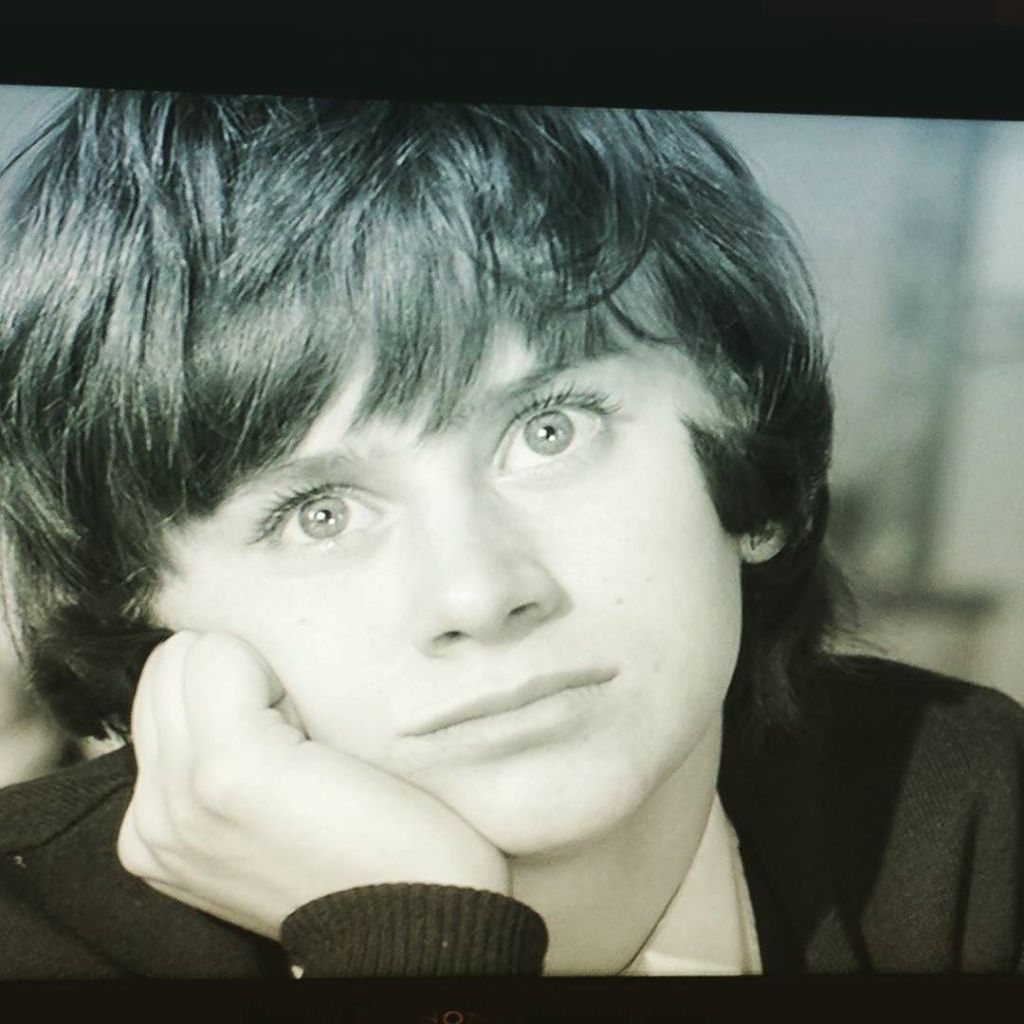
I am very glad that I got to see this important slice of theatrical history and I think it will do well when it comes to London at the end of the tour at the Trafalgar Studios. But if we want a better idea of why it is, even through the prism of sixty years of social change, (for the better of course), such vital drama, then Tony Richardson’s film is a better bet. I see Rita Tushingham (there she is above), whose debut role as Josephine was lauded nearly as much as Shelagh Delaney’s screenplay, is starring in Edgar Wright’s upcoming horror film alongside other legends Diana Rigg, (any way else out there fantasising about Lady Oleanna turning up at their Christmas lunch), and Terence Stamp. I wonder why. Looking forward to that.

Valued Friends at the Rose Theatre Kingston ***

Valued Friends

Rose Theatre Kingston, 8th October 2019

I am all for revivals of modern plays that have something to say to us right now. Assuming the play was good enough in the first place. And that the director and creative team have a clear idea of how they craft that relevance whilst still staying true to the time and place in which they were written. In my experience texts from the 1970s and before, or those written in the last 20 years, fare best in this regard but those through the 1990s, and especially the 1980s, pose the most headaches. Recreate or update? And this was, remember, a fertile period for drama after a decade or so of artistic stasis. Largely because us luvvies like nothing better than to censure society, politics and culture that shifts rightwards. Thatcherism was a heaven sent artistic opportunity.

This is the context in which Stephen Jeffreys, who passed away last year, wrote Valued Friends in 1989, which premiered at the Hampstead Theatre before a West End transfer. The original cast consisted of Peter Capaldi, Jane Horrocks, Serena Gordon, Tim McInnerney, Martin Clunes and Peter Caffrey. Four thirty-somethings, Marion (here Catrin Stewart), Paul (Sam Frenchum), Howard (Michael Marcus) and Sherry (Natalie Casey), have rented a flat in Earl’s Court then an up and coming, (they always are), part of London since meeting at uni. Posh developer Scott (Ralph Davies) wants to ponce up the block and sell on and makes them an offer he thinks they can’t refuse to get out. However the bourgeois Marion sees an opportunity to negotiate and persuades vacillating partner Paul, the relaxed in the paddock intellectual Howard and the impecunious motormouth Sherry to hold out. A few turns of the wheel later and Sherry is paid off, setting out to travel the world and find herself, and the other three have bought the flat at a discount to do it up, with the help of builder and homespun philosopher Stewart (Nicolas Tennant). High flyer Marion eventually cashes out after splitting up with man-child music journo Paul, who becomes ever more obsessed with making money from the property.

Sounds interesting eh. I can certainly see why director Michael Fentiman was drawn to reviving it and what the Rose and co-producer Original Theatre Company agreed. Especially when you consider Stephen Jeffrey’s reputation. The Libertine, which popped up at the Theatre Royal Haymarket in 2016 with Dominic Cooper in the lead, is probably his most famous play but Mr Jeffreys was as much teacher, in his roles at the Royal Court, as he was writer. Which, given his skill in pacing, character, structure and language, is unsurprising. Valued Friends is a very well built play, full of telling detail. I am just not sure this production fully reflected that or whether its line of attack would make sense to an audience who wasn’t there at the time it appeared. The nature of their relationship with “property” is rather different.

For trust me the desire to succeed, to get on, to make money, infected us all. And that was most obviously expressed in the delirium of property ownership. Of course that urge, that need, remains but a decade of single digit average price inflation and falling volume of transactions, despite cheap money, doesn’t compare to the madness of the late 1980s, peaking at over 30% in the year before SJ wrote Valued Friends. A group made up of a struggling journalist, a second rate stand up (Sherry), and admin worker (Marion) and a PhD student wouldn’t be contenders to buy a prime flat in inner West London today, but, trust me, there was nothing far fetched about this then for all the money illusion. SJ takes this phenomenon to make broader points about accumulation, credit, greed, the erosion of community, the rise of individualism and the failure of markets. There is more to his dialogue that meets the eye, or ear maybe, sorry mixed metaphors, but this is subtly woven in to a still credible story of friendship and relationships.

It is funny but it is not just a comedy. However it seems that Mr Fentiman didn’t quite trust that reading and decided to dial up the laughs. Now I gather Natalie Casey is best know for her work in Two Pints of Lager and a Packet of Crisps, Hollyoaks and West End musicals. All outside my ken I am afraid. She brings a feisty tenacity to Sherry, who keeps knocking at the comedy door despite making no money, but as an actor she is a bit full on and shouty. Conversely Ralph Davies’s reptilian Scott falters as the negotiation lengthens. And Nicolas Tennant’s turn as Stewart, whilst dissonantly amusing, rather distracts from an ending that already forces resolution. Sam Frenchum (so good in The Outsider adaptation at the Coronet), Michael Marcus and Catrin Stewart are much more sympathetic to the characterisation I think but still feel a little awkward at times, especially in the on-off relationship of the couple.

Michael Taylor’s set design, which shifts from student-y squalor to swish minimalism, does the job, and Madeleine Girling’s costume are spot on, but the lighting (Nic Farham) and sound (Richard Hammerton) are a bit too conspicuous.

Happy enough, especially for my tenner investment here, but couldn’t help thinking what it would be like to see a production of a play by Mr Jeffreys that really hit home.

Faith, Hope and Charity at the National Theatre review ****

Faith, Hope and Charity

National Theatre Dorfman, 8th October 2019

I didn’t catch the first two plays in Alexander Zeldin’s trilogy, Beyond Caring (zero hours contracts) and Love (a homeless hostel), about life for the disadvantaged in modern Britain. In fact worse that that I didn’t even know about them. And seeing Faith, Hope and Charity was something of a last minute decision driven by the strong reviews and a timing loose end.

Well more fool me. Creating a devised play about everyday life where not much happens but which still packs a powerful emotional and political punch is not easy. FH&C doesn’t shout, preach or hector because it doesn’t need to. It comes from the same place as the film collaborations of Ken Loach and Paul Laverty and I would imagine is driven by the same passion, but its mood is altogether more eloquent. Mr Zeldin’s other work, a play based on Lars van Trier’s The Idiots, directing Macbeth in Korea, Romeo and Juliet in Italy and operas in Russia (including Ades’s Powder Her Face) suggests he is a man of many talents and I can’t wait to see more of his work.

The simply astounding Cecilia Noble plays plays Hazel, a kind, redoubtable woman who volunteered to cook lunch for those in need in a dilapidated community hall on the edge of a nameless British town. With her soft, calm voice and unflappable temperament Hazel could hardly be more different from Ms Noble’s two previous roles on the Dorfman stage, as no-nonsense probation office in Bruce Norris’s Downstate and as comedic force of nature Aunt Maggie in Natasha’s Gordon’s brilliant Nine Night.

She is joined by reforming ex-criminal Mason, another superb performance from Nick Holder, who is setting up a choir, as much to aid his own rehabilitation as to help the locals. He starts to assist in the kitchen. The array of regulars include cranky pensioner Bernard (veteran stage actor Alan Williams) who can’t face his empty home, timorous Tharwa (Hind Swareldahab) and her daughter Tala, the extremely anxious Karl (Dayo Koleosho) always waiting for his carer, the truculent Anthony (Corey Peterson). And Beth (Susan Lynch), with teenage son Marc (Bobby Stallwood), whose chaotic life means she has lost custody of her 4 year old daughter, Faith, and is arguing with the court authorities to secure her return.

Mr Zeldin’s script makes plain the impact of austerity on the lives of his characters, the leaky community hall is eventually closed down due to lack of funds, but this is no grim polemic. His characters may be struggling but they are resilient, they are compassionate and, at times, optimistic. There is humour and joy through the various scenes, the Christmas lunch, the offer by Hazel to take in Faith though she has her own family issue, the relationship between Mason and Beth, the cheesy choral anthem “You’ve Got The Music In You”, but the realities of the impact of the broken social care system always looms large.

Natasha Jenkins’ set and Marc William’s utilitarian lighting is as note perfect as the dialogue. Mr Zeldin spent two years researching this play and it shows. Of course I know a couple of hours assuaging the guilt of a comfortable and sympathetic metropolitan audience makes fuck all difference to those people at the pointy end of austerity. Though I might respectively suggest the following.

  • Banish from your mind any thoughts that those in need are at fault. In any way. Ever. You are not better or cleverer. Just luckier.
  • Vote the right way. You know what to do.
  • Give £10 a month to the Trussell Trust. Pay for it by doing something veggie, green or healthy.

And now for the rant.

Local authorities will have seen an average 77% decrease in government funding in the four years to 2020. In real terms overall local government spending will have seen a fall in real terms of 30% since 2010. In the last 5 years food bank use in the UK has risen by 73%. According to the TUC` 3.1 mn children with working parents now live below the poverty line.

Austerity failed. Sucking demand out of a brittle economy will always fail. Spend on health (20%), education (15%) and pensions (15%) is going to run ahead of real growth and inflation. Slicing spend elsewhere and pretending that any job, however lowly paid and precarious, makes for healthy employment is nonsense. The UK cannot have the services it wants without paying for them. And if we don’t pay for them in the long run we will, as we are now, pay for it. Hiding debt by buying shitty assets was never a long term solution. We are already, public and private, the most indebted major economy on earth. Pretending we can cut ourselves off from Europe and pursue some buccaneering independent future is bollocks. Our debt cost will rise as our currency croaks and capital and labour will fuck off elsewhere.

The solution is simple. Pay more tax. Everyone who can afford it. The argument is over whether that be on wealth or income, not how much. And borrow more. A lot more. Everyone else is. And debt is cheap because there is no alternative. But use it to invest, support and drive sustainable growth, not buy votes. And right this minute end the farcical Brexit pantomime by immediate revocation. Doing something idiotic just because you don’t want to lose face, or hope that will make it go away is, well, idiotic. Time for toddler Britain to end the tantrum and face realities.

Merry Christmas.

Amsterdam at the Orange Tree Theatre review ***

Amsterdam

Orange Tree Theatre, 5th October 2019

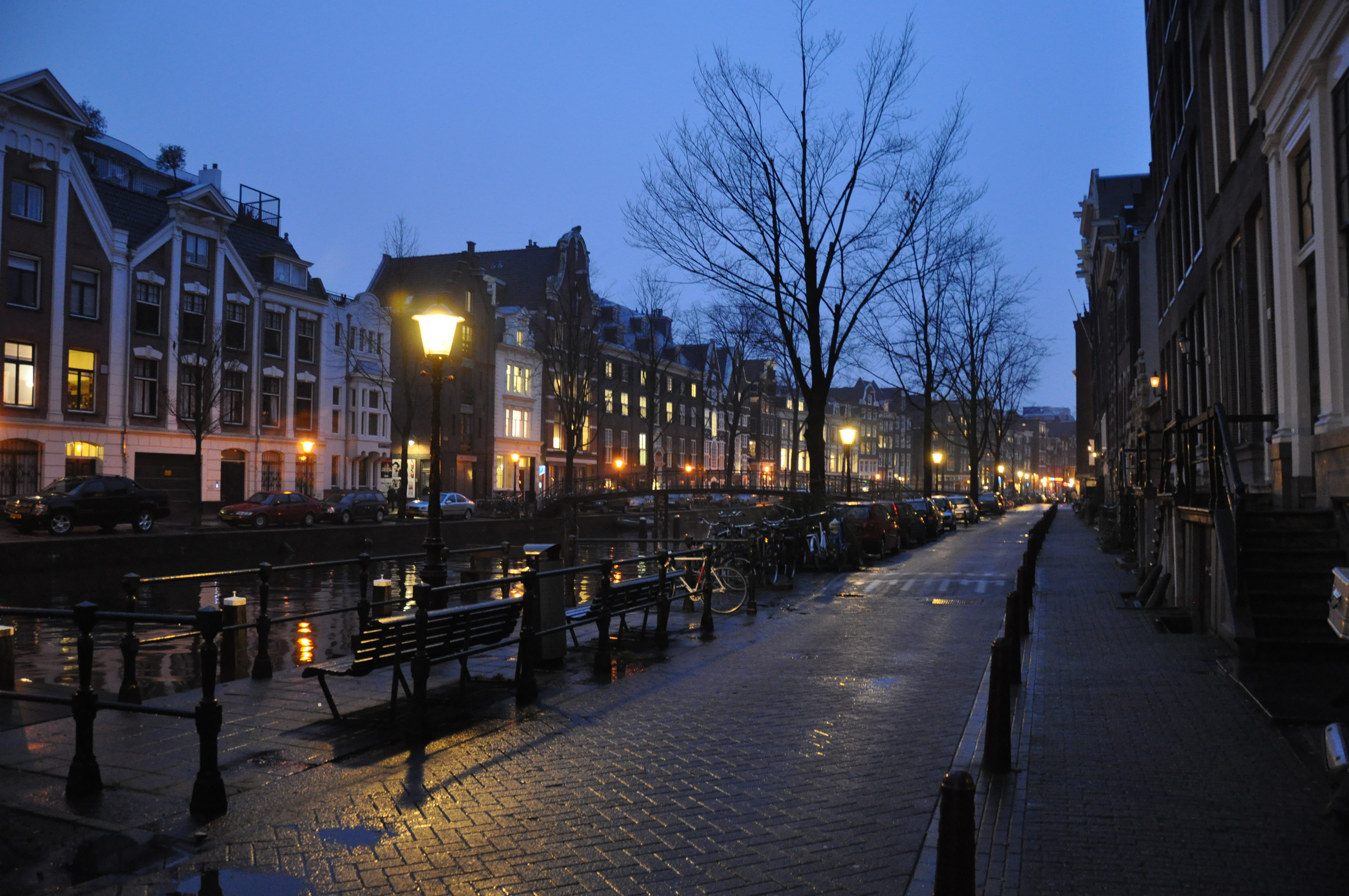
The UK premiere of Israeli playwright Maya Arad Yasur’s “strikingly original, audacious thriller”. Hmm. Striking yes. Original. I guess so. Audacious thriller. Not so sure. It is a fascinating story with a powerful message but its formal construction serves to distract and obfuscate rather than illuminate.

An Israeli violinist, living in Amsterdam, and about to give birth, receives an unpaid gas bill dating from 1945. From this premise the cast of four, deliberately diverse, tell the story of how this came to happen ranging across time, place and character. They start off bickering about where to start, interrupt, and comment on, each other, fracture and distort their narratives and regularly interrupt to ring a bell to amplify or translate. It takes time to adjust to the structure and the script is packed with details, repetitions, overtones and undertones, which can make events hard to follow.

Maya Arad Yasur (through Eran Edry’s translation) makes sure we understand the complexity and self-fabrication of narrative through her conceit and highlights the corrosive effect of hostility to the “other” but the expansion into contemporary conflict has the perverse effect of blunting the central historical fact. Over 75% of the Jewish population in the Netherlands was murdered by the Nazis and once the war was over, those returning home were forced to pay the utility bills of their wartime occupiers. The unnamed violinist’s own investigation, and disturbing discovery, and her personal journey as immigrant and mother to be, strike me as more than enough to make the point. Especially when the “scenes”, the arrival of the €1700 bill, the blithe response of the bureaucrat, the paranoiac unease in the supermarket, the birth anxiety, the “discussions” with her agent and the hairdresser, emerge through the conceptual fog. Dramatisation would have equally served as provocation and testament. We might then have been better able to see more clearly what she could see in a “foreign” place haunted by history.

I am all for experimentation and can’t fault the performances of Daniel Abelson, Fiston Barek, Michal Horowicz and Hara Yannas but, at the end of the day, this was harder work than I wanted it to be. Director Matthew Xia, as the new head honcho of the Actors Touring Company, who co-produced this with the OT and Theatre Royal Plymouth, is obviously a true believer in the power of the work though his previous engagements, Blood Knot here, Wish List at the Royal Court and the revival of Blue/Orange at the Young Vic, show his is equally at home in more naturalistic forms. Here though he opts to exaggerate the already contrived structure with lurches in tone and pace, simple staging (designed by Naomi Kuyck-Cohen) with dissonant props and constant motion (Jennifer Jackson).

The production will run in Plymouth in February next year before moving on to Salisbury, Glasgow, Manchester, Oxford, Coventry, Leeds, Birmingham, Newcastle and Bath. On balance? You should see it.

Seraglio at the Hackney Empire review ****

Seraglio

Hackney Empire, 4th October 2019

Or to give it its full name Die Entfuhrung aus dem Serail or The Abduction from the Seraglio. Here though Seraglio, not just to reflect the fact that this English Touring Opera production is sung, (and spoken), in English following a colloquial translation by Andrew Porter of Gottlieb Stephanie’s original German libretto, but also to deflect away from the abduction and attempted rape which lies at the heart of the story.

And that’s not all. The setting, the seraglio, (where wives and concubines were confined), of Pasha Selim, reflects the fascination in late C18 Austria with an exoticised Ottoman Empire which had recently been decisively defeated by the Hapsburg forces. A story of racist superiority is what patron Emperor Joseph II expected to see at the premiere in Vienna in 1782 and this is, broadly, what he got, notably in the character of the Baddie henchman overseer Osmin. But Mozart being Mozart, with his quirky Enlightenment sensibilities, he took something of an axe to audience preconceptions by, eventually, showing the Pasha as selfless in relinquishing his claim on Konstanze and passing her to our hero Belmonte. Put like that it doesn’t sound much more palatable. Yet this twist is what directors in the modern age have clung on to fuel their interpretations. Stephen Medcalf, the experienced director here, was no exception.

If you want to enjoy Mozart’s operatic genius you are going to have to take the historically conditioned plotting rough with the many-noted, (this is the piece about which Emperor Joe made his famous, though apocryphal, comment), smooth. This is not the best of Mozart by a long way. Gottlieb Stephanie’s libretto relies on spoken word to advance the plot, and was not built for recitative, and some of the tunes are a little bit too pastiche Turkish. Even so there are some very fine arias however, which hint at emotional depth, and are some of the most challenging the boy Wolfgang ever penned, and there are plenty of comic sparks. For Seraglio is, despite its dubious content, a comedy which pivots on two “love” triangles.

As usual then the Tourist has to get comfortable with the idea of a Mozart “comic” singspiel opera rooted in anachronistic tropes before he can sit back and enjoy, but also, as is usual, eventually the music takes over. Mind you when I say sit back that is a bit of an exaggeration. At just £15 the side of the Upper Circle at the Hackney Empire is a steal. Sight-lines are fine and you are close enough to the pit for the acoustic not to be an issue. These are not the comfiest of chairs. On the other hand they are no worse than the equivalent cheapest seats at the ROH and the ENO. And there you need oxygen and 8×40 binoculars. So I will take this option every time, (and so should you with a Cosi and a slimmed-down version of their Giulio Cesare to come in ETO’s spring season).

The sets in the handful of ETO productions I have seen have always impressed. Not too abstract but not too conservative. Touring plainly focusses the creative mind. Adam Wiltshire has devised a collection of gilded bird cages to symbolise the seraglio which swivels to provide Osmin’s Moorish gatehouse cum workshop, all framed by David W Kidd’s colourful lighting design. Costumes are faithful to the early C17 setting. Though it takes a little time before the big reveal given the perky extended orchestral intro that Mozart scored to show off his skills and introduce his themes. The Old Street Band orchestra, on top form under conductor John Andrews, was the standard 29 strong HIP Classical set up with a bit more percussion and wind (particularly convincing) to beef up the “Turkish” passages.

Enter Spaniard Belmonte in the form of John-Colyn Gyeantey who has come looking for his betrothed Konstanze (Lucy Hall), her maid Blonde (Nazan Fikret) and his steward Pedrillo (Richard Pinkstone). The two ladies have been captured by pirates and sold to Pasha Selim (Alex Andreou) who keeps perving the still virtuous Konstanze, with Blonde given to Osmin (Matthew Stiff, a well upholstered fellow much like the Tourist), as a slave. Osmin badmouths Belmonte, and then Pedrillo, prior to the two lads reuniting and hatching a plan to spring their lady loves. Pedrillo persuades the Pasha to give Belmonte a job as, er, an architect.

Act II. Blonde and Konstanze rebuff the advances of Osmin and the Pasha in turn. Pedrillo challenges Osmi to a drinking game. The two couples happily get together though only before, usual opera sexist nonsense, the fidelity of the ladies is confirmed.

Act III. Ladders. Distraction. Capture. An unfortunate bribe by Belmonte when it turns out his uncle Lostados is Pasha Selim’s sworn enemy. Likely torture and death until the Pasha’s extraordinary switchback as he decides he can make his point better by showing clemency. Happy ending.

Daft eh. Well yes. And torn, as was the Western intellectual and political fashion at the time, and maybe since, between admiration for “Oriental” culture and fear of the brutish “Muslim” other with sexual corruption a barely concealed sub-text. Mozart wasn’t the only composer of an “abduction/escape” comic opera. Audiences lapped them up. But whilst it takes a little time, the Pasha’s sensitivity and dignity, is eventually revealed, and Belmonte and Konstanze both explicitly voice their respect for him at the end. The finale may be a cheesy six way encomium, which puts Osmin back in his box, but the message of tolerance still shines through.

This doesn’t mean a get out of jail free card, (the pun is deliberate), for the comic shenanigans that precede this, even if there is more to the Pasha and even Osmin than meets the eye. And this is where the translation, the performances and Mr Medcalf’s clear-sighted direction persuaded. The acting, choreography and singing of the scenes between Pedrillo and Osmin (“Solche hergelaufne Laffen” and “Vivat Bacchus! Bacchus lebe!”), Osmin and Blonde (“Durch Zärtlichkeit und Schmeicheln” and “Ich gehe, doch rate ich dir”) and Konstanze and the Pasha (“Martern aller Arten” which is about as good as it gets Classical soprano wise), are tender and funny largely because they are the tussles of equals. Osmin’s amazing aria, (“O, wie will ich triumphieren”) where the bass part descends to a low D, is an empty triumphalism. Conversely there is a sense in Belmonte’s set pieces (“Konstanze, Konstanze, dich wiederzusehen … O wie ängstlich” and later, “Wenn der Freude Tränen fließen” and duet  “Welch ein Geschick! O Qual der Seele…. Weh, du soltest für mich sterben”) that he isn’t just going automatically win back Konstanze. In a plot built on rash negotiation the women here are definitely more in control.

It is still built on disconcerting premises but with acting and singing of this quality, especially from the feisty soprano Nazan Fikret, the dextrous light tenor Richard Pinkstone and plaintive Matthew Stiff, and the secure voices of John-Colyn Gyeantey, (bar a few wiggly vibratos), and Lucy Hall, it was impossible not to get carried along and I ended up thoroughly enjoying this production. Mozart wrote the parts for specific, and very talented, singers of the day, and Lucy Hall and Matthew Stiff particularly, were up to the task of navigating them. Alex Andreou was able to bring an air of thoughtful grandeur to the non-singing Pasha despite limited opportunity and a few shouty moments, especially when describing how he was so wronged by Belmonte’s uncle. And the small chorus of four, two guards, two concubines, (Rosanna Harris, Holle-Anne Bangham, David Horton, Jan Capinski) gamely mucked in with prop moving alongside their vocal duties.

So there you have it. A thoughtful production where director and designer simply nudge the material into the c21 and then allow the talented cast and well drilled orchestra to highlight the comedy in Mozart’s music and in the plot. And, for once, I didn’t really need the sur-titles. In my still far too limited experience opera either works or it doesn’t. Sometimes you can stake high and lose big. Not here though. A massive beat to expectations as I might have said in a past life.

Appropriate at the Donmar Warehouse review *****

Appropriate

Donmar Warehouse, 3rd October 2019

After deconstructing a Victorian melodrama in An Octoroon and satirising modern tragedy in Gloria, London now gets to see Branden Jacobs-Jenkins’s 2013 take on the dysfunctional American family drama. Only this time the secret which lies at the heart of the Lafayette family is about as shocking as it gets. Move over O’Neill, Williams, Miller, Albee, Hansberry, Wilson, Shepherd and Letts.

Franz (Edward Hogg), Toni (Monica Dolan) and Bo (Steven Mackintosh) have come back to the family home in Arkansas following their Dad’s death, with the intention of selling house and contents. Franz (Francois) is a classic fuck-up, addled by past addiction, but now seeking redemption with new, very young, new-ager girlfriend River (Tafline Steen). He is still hiding something however. Bo (Beauregarde), egged on by Jewish wife Rachael (Jaimi Barbakoff), wants, and needs, to extract the cash asap and get out. They have two kids, Gen Z tween, Cassidy (Isabella Pappas)and hyper 8 year old Ainsley (Oliver Savell). Toni, the eldest, was left to look after their increasingly difficult and infirm father, is therefore the dictionary definition of long-suffering and is keen that everyone knows it. She is joined by slacker teen son Rhys Thurston (Charles Furness).

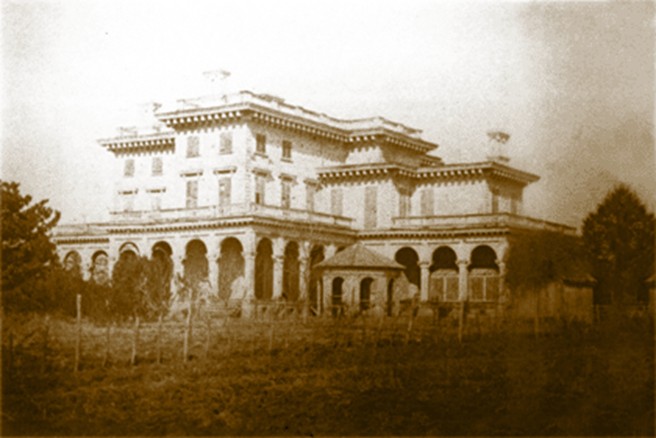
Not much happens beyond the inevitable arguments and raking over of the past. But this is not just a forum for the frustrations and grudges of the three siblings, though the fact that they seem incapable of restraint makes that forum often mordantly comic. The discovery of a book of photographs of black lynching victims, and worse, suggests that their father, who spent most of his life in the North East before retiring to the family pile, was no upright liberal but the worst sort of racist. Legacy and loss take on a far darker tone with each character’s. mostly, worst traits reflected through the prism of this pivotal disclosure.

As in BJ-J’s other plays, the plotting is perfect, the rhythm sublime and the dialogue riveting. What turns this into one of the best plays of this year though is Fly Davies’s breathtaking set, the junk filled interior of the dilapidated plantation house, which together with Anna Watson’s lighting and Donato Wharton’s, into a gothic place dripping with memory and history. More than that though is Ola Ince’s direction. Ms Ince worked as Assistant to Phyllida Lloyd in the Donmar all woman Shakespeare trilogy as well as Associate positions at the Finborough, the Lyric Hammersmith, Theatre Royal Stratford East and, now, the Royal Court, where she directed Poet in da Corner. On the strength of this I expect her to sustain a glittering career. Everything fell into place faultlessly to deliver a drama which thrilled and edified in equal measure.

Now it helps that all the cast brought their A games to the performance. And it helps even more if one of them is Monica Dolan. Even when she barely has anything to work with Ms Dolan ends up being the best of the best on stage and screen. When it is just her, as in her debut play monologue The B*easts, which should be a GCSE text already, or she has something to really sink her teeth into as here with Toni (Antoinette), she is, cliche alert, a force of acting nature. Bitter doesn’t even come close. And then, as the family history unfolds, increasingly vulnerable. I had to do the thing where I look away to a point above the stage to prevent and embarrassing blub near the end. Magnificent.

Appropriate is audacious, clever, funny, twisty, surprising, absorbing and insightful. By not hammering home, or resolving, the consequences of denying America’s racial past, in fact here that past is turned by the family into potential commodity, he makes us even more aware. The play is haunted by the ghosts of dramatists past. But it knows and relishes that. And what a genius title.

The Intelligence Park at the Linbury Theatre review ***

The Intelligence Park

Linbury Theatre Royal Opera House, 2nd October 2019

I have no-one else to blame for this. Having now heard a smattering of his larger scale works thanks in large part to Thomas Ades’s advocacy in his Beethoven cycle with the Britten Sinfonia, having invested in a CD of his chamber works and having thoroughly enjoyed the semi-staged version of his opera The Importance of Being Earnest at the Barbican a few yeas ago, I would certainly count myself a fan of Gerald Barry’s bracing, spikily rhythmic composition.

There were plenty of knowledgeable commentators however, including the composer himself, who warned that this, his first opera from 1990, is not the most transparent of entertainments. Though it was lauded on its first showing at the Almeida, largely for the music I gather, its plot is convoluted, the libretto from Barry’s Irish countryman, and Joycean scholar, Vincent Deane is florid, bordering on the impenetrable, and the aural intensity unyielding. Barry delights in music that bears no necessary connection with character, action or phrasing. 90 minutes, even with interval, is probably as much as even the most sympathetic of listeners can take.

And yet, out of this assault on the senses, comes something which is, well if not enjoyable, is certainly remarkable. The story, whilst admittedly needing more than a nudge from the programme synopsis, is no dafter than most opera buffa, complete with a knowing meta quality which I suspect would have appealed to C18 audiences. Something that Haydn would have attempted. Though also with an underpinning of Handelian serioso that the setting of this opera, and its successor, The Triumph of Beauty and Deceit, (how’s that for a late C18 opera catch all title), implies. Even so GB has said “as to what The Intelligence Park is about, I have no fixed idea” though there may have been with tip of tongue in cheek.

It is Dublin. 1753. Composer Robert Paradies (bass-baritone Michel De Souza) is struggling to complete his opera on the romantic tryst between warrior Wattle and enchantress Daub. Best mate D’Esperaudieu (Adrian Dwyer) pitches up to remind him of his impending marriage to Jerusha Cramer (Rhian Lois) which is required if he is to inherit Daddy’s riches. The boys pitch up to a party at Sir Joshua Cramer’s (Stephen Richardson) townhouse. Jerusha starts singing but is interrupted by her teacher, visiting castrato Serafina (Patrick Terry) who is in attendance with his bessie Faranesi (soprano Stephanie Marshall). Paradies falls for Serafina and falls out with D’Esperaudieu.

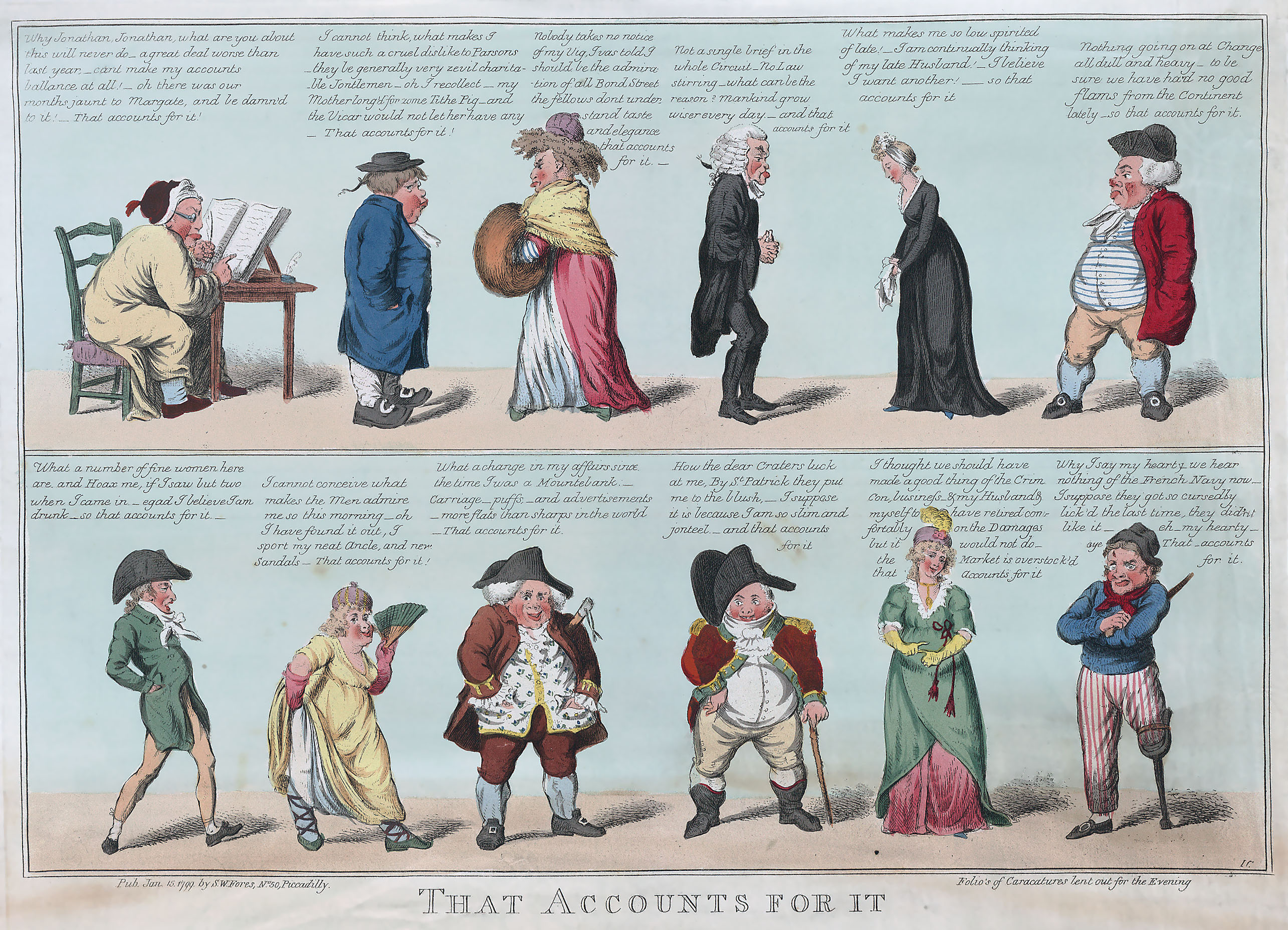
Then it gets properly weird as the Wattle and Daub characters, complete with puppet heads (!), pitch into the real proceedings and we find out Jerusha also has the hots for Serafina. Fantasies, arguments, elopements, a series of comic (sort of) vignettes, revenge, a banquet and death all pile up as art and life collide. Though frankly, even as I had secured a better viewing perch, (a few punters gave up at the interval), it all got a bit confusing post interval. No matter. The tropes of classical opera, (and Georgian comedy), were all on show, no doubt there were allusions and quotations that went right over my head, which Nigel Lowery’s ironic, cartoonish Baroque vision, as set and costume designer, director and lighting designer, sought to play up. Think Hogarth on acid.

I also gave up on the subtitles. Not because I could make out what the cast were singing. That was impossible. Not because of any failing on their part. To a man and woman they were tremendous given the singing, acting and, critically, concentrations demands made upon them by GB’s score. Take Stephen Richardson’s bass part which keeps flipping from its lowest register into falsetto, sometimes mid line. (Hats off to repetiteur Ashley Beauchamp who certainly earned his fee). No the fact is, after a while trying to take in Mr Deane’s densely connotative text, it just became too much to take in alongside the music and the visuals. In my experience contemporary opera can veer towards the sombre and static. Not here. This is intensely theatrical.

So you are probably thinking, based on the above, that this was all a bit shit and only really shows the Tourist up as the pseud he is. Well no actually. Just because I can’t cover all the bases in terms of plot, character, message, text doesn’t make this a bad opera. The story is deliberately confusing and the music deliberately unsettling and that is what makes it interesting and intriguing. Being challenged by art is all part of the deal and opera is pretty binary when it comes to comfort or challenge. If you want the former then Handel or Mozart will probably float your boat, and I admit, often mine too. But sometimes exposing yourself, as here, to their evil twin can be bracing. Remember the first time you heard the Sex Pistols? Same thing.

Barry has described The Intelligence Park as being set an an “unsettling diagonal”, a fair description. TIOBE, and Alice’s Adventures Underground which will appear next year on the main ROH stage courtesy of WNO, in part because we know what we are looking at (even through the looking glass) and because they are funnier, (deadpan humour is a big part of GB’s shtick), are easier fare to digest but GB’s musical language is still a long way from most of his historical, and contemporary, peers. Opera, however daft or reactionary the plot, insists that the participants really mean what they are singing. Emotions run high, feelings are big and bold. GB undercuts, though doesn’t subvert, all of that with his music normally going out of its way to upset the expected code. Shifting time signatures. Voices careering across the register. High notes when there should be low and low when they should be high. Stopping mid line. Repetition but of the wrong word at the wrong time. Exaggeration at points of banality or curious indifference at points where emotions should be highest. Unusual accentuation as GB terms it. The plot may be linear. The music is not. There is steady pulse and rhythm often at a fairly brisk lick, with one beautiful lyrical passage excepted, and there is plenty of noise when required. But none of the “divine” interplay of music, libretto and emotion that Mozart and da Ponte conjured up. These obsessive characters are not in control of the music, they are being attacked by it.

This relentless energy and manic aggression is tiring and sometimes frustrating but it is undeniably thrilling and there are so many brilliant, unpredictable musical ideas that it is better to go with it than set your will against it. After all, whilst there may be dissonance, there is harmony, lots of it, just not always pretty. Needless to say the London Sinfonietta took the score in their stride, they thrive on stuff far more challenging than this, but it takes a conductor of guts to take this on. Jessica Cottis is rapidly becoming the opera conductor of choice for challenging new and recent opera and here she wisely promoted vigour and animation over precision.

After the six performances, (same number as for next year’s sold out Fidelio – go figure), at the Linbury this Music Theatre Wales/Royal Opera co-production went on to Cardiff, Manchester and Birmingham. So bravo to them for reviving this, bravo to everyone involved to bring it to fruition despite its challenges and, why not, bravo to all us who listened to it.