Pericles, Prince de Tyr at Silk Street Theatre review *****

Pericles_Pio-Clementino_Inv269_n2

Pericles, Prince de Tyr

Barbican Silk Street Theatre, 19th April 2018

Trust me. You can trust experts. Parading your own ignorance against all the evidence of those who know more than you, just to satisfy your own prejudice, is an ugly human foible. In the very small commercial world of which I was once a part I like to think I knew what I was talking about. When it comes to theatre though I am no expert and you should always seek out the opinions of professional reviewers who do know their onions, as I do. If they think it is very good, it is normally very good, if best avoided, ditto.

In the case of this Cheek by Jowl production though, at their usual London home on Silk Street, it seems that the experts didn’t quite know what to make of it and certainly couldn’t agree. You can safely ignore me, and I recognise I am a pretty easy date theatrically, but I though it was tremendous.

This is the French company affiliate of Declan Donnellan and Nick Ormerod’s Cheek by Jowl empire. There is also a Russian branch. If you want theatre classics, reinterpreted with intelligence, wit and invention, there is no better port of call, (an early Pericles reference for you dear reader), than Cheek by Jowl. But “Shakespeare, in French, in London, what’s that all about Dad, isn’t that too much of a pose even by your standards” to paraphrase LD? Well, it is certainly a different experience, and Shakespeare is about so much more than the words, though I’m not an idiot, I know how important those words are. So a crack ensemble of Gallic thespians, whose previous productions of Ubu Roi and Andromaque did the business, according to them experts, wasn’t to be missed.

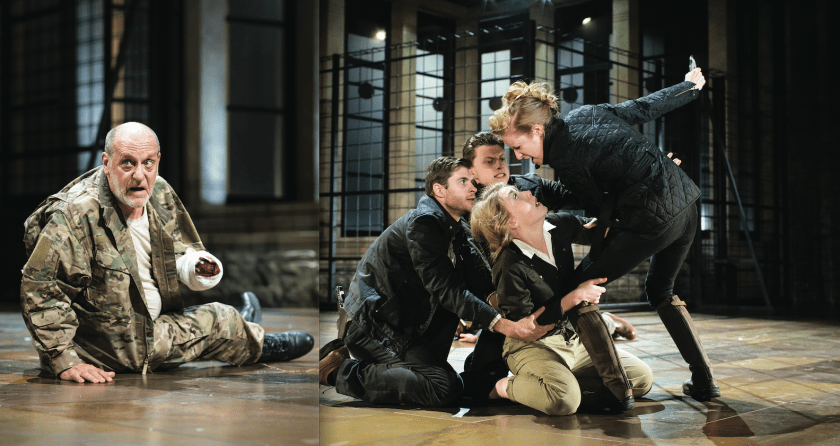
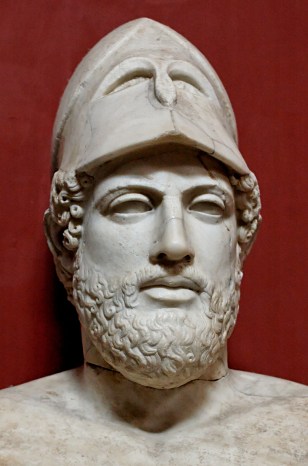
Now Pericles the play, if not the man himself shown above sporting a beard any denizen of Haggerston would be proud of, is a tricky customer. The first couple of acts were written by another bloke, George Wilkins, you can see the join before Will Shakespeare’s acuity becomes apparent, and it really is a rum old plot, written to excite the punters, rather than to make sense. It is a kind of road trip, by sea, of a bloke and his family who keep finding themselves in the wrong place at the wrong time, before it all turns out, improbably, alright in the end. And, as if it wasn’t confusing enough, Messrs Donellan and Ormerod have come up with the cunning idea of locating it all in a hospital ward and, therefore, largely in the mind of patient Pericles.

Apparently they are not the first to come up with this wheeze, but, for me, it was a triumph. They have taken a scalpel to the play’s wilder linguistic excesses, which, with the French translation, sur-titled for bumpkins like me, means it gallops through the story in an unbroken 100 minutes. It can take over three hours normally. It will be interesting to see what the NT comes up with in its forthcoming musical production of the play mixing up an amateur and professional cast.

Now with a story this silly you need your wits about you, especially since the seven strong cast each play at least 3 parts, and the helpful narrator, Gower, in the standard text has been cast adrift. This production, more than ever, supports the Tourist’s contention that it is always worth boning up on the synopsis ahead of any Shakespeare viewing, however many times you have seen the play. No need to treat it like GCSE revision, just a quick reminder of the story will suffice. Then you can focus on performance, spectacle, language, emotion, big Will’s uncanny insight into the human condition, or whatever else takes your fancy. Here, because of the lingo, I could savour the non-verbal communication of all the cast, and the way, they shifted character, and the ingenuity of the production as we shifted between the hospital room and the delusions inside our Prince’s head.

The floor and walls of Nick Ormerod’s set are a vivid, turquoise blue, enhanced by Pascal Noel’s understated lighting design. It was similar to the effect conjured up at the Gate in last year’s intriguing The Unknown Island, that too signalling all things oceanic and marine. The room is filled with hospital details, right the way down to the anti-bacterial hand-wash that the actors take advantage of on entry and exit. Always nice to see a production that cares about hygiene. This hospital room is unlike anything you might see in the creaking NHS though, or even a private hospital, being big enough to accommodate all of Pericles’s family as well as the action from all the exotic Mediterranean locations, Antioch, Tyre, Tarsus, Pentapolis, Ephesus and Mytilene.

(Having said that my one experience of the French healthcare system suggests such luxury might be possible. LD broke her arm pony-riding when she was little, the denouement in a holiday from hell. Very disappointing gite, terrible weather, mother in law crocked her back, dead rat in the swimming pool. The SO stayed with our brave little soldier in hospital, but, carless, a taxi was provisioned for me, by said hospital, so that I could visit prior to her being discharged. Unfortunately my idiocy, and criminal lack of French conversation, saw me dropped down in the wrong wing of the well-appointed hospital. Correct room number though. You can imagine the surprise, nay horror, of the poor French woman, in the early stages of labour, when I popped my head round the door. Mortified I make a rapid exit, mumbling my “pardons”. before I eventually found the right wife and patient. In all the confusion though I do remember the generous size of the room my petrified mon nouveau amie occupied).

Back to Pericles. Our hero, played magnificently by Christophe Gregoire, is asleep in his bed with talk radio humming in the background. He has the gaunt and fevered look of a man prone to psychotic episodes, probably enhanced by powerful medication. The doctor, played by Cecile Leterme, similarly impressive, is doing her rounds. Wife, daughter and friend are watching over him. Cue the first dream/delusion as we kick off with Antiochus (Xavier Boffier) and his rubbish riddle confessing to incest. Like I say you can check out the rest of your story but given that M. Gregoire doubles up as the duplicitous Cleon, Governor of Tarsus, who with wife Dionysa, plot to kill Pericles’s daughter Marina, after he has entrusted her to their care, you need to be on your mettle. He also ends up as the Master of the brothel that Marina escapes to. Meanwhile Mme Leterme, goes one role further, playing the physician, obviously, Cerimon, who revives the half-dead Thaisa, Pericles’s wife, who, he has agreed, should be chucked overboard during shipwreck number two (you read that right). She also plays Simonide, King of Pentapolis and Dad to Thaisa, whose hand Pericles wins through martial derring-do. Oh and goddess Diana, whose temple Thaisa retreats to when she thinks hubby is dead and daughter was never born.

All up to speed. Well Xavier Boffett, also plays Lysimaque, the Governor of Mytilene, brothel town remember, (of which he is a regular patron until swerved by Marina’s saintly virtue), and who brings father and daughter back together at the end. As well as the servant to the Master of the brothel and to bad Dionysa. Who in turn is played by Camille Cayol, in addition to wife, Thaisa, and the Mistress of the brothel. Valentine Catzeflis, thankfully just plays daughter Marina, and, briefly, Antiiochus’s abused daughter. To round things off Guillaume Pottier and Martin Nikonoff step up as various gentlemen, fishermen and knights, without whom the plot wouldn’t make sense (!!!).

In between the Pericleian adventure scenes, even in their truncated form, we have periods of silence when we are back in the (hospital) room, magic suspended, as well as scenes, where Pericles’s delusions are happening in “reality” as opposed to just in his head. Making all of this hang together is an act of imagination on the part of Declan Donellan which rivals that of George Wilkins and William Shakespeare in the first place.

And, for me, it really works. Obviously you lose the Tempest style fantasy from such an interpretation and location. But remember when this was written (1607/08 is the generally accepted date) the audience’s demand for special effects could be accomplished with a few bits of wood, a bit of glue, some pulleys, candles and distraction. If you are going to take a modern, hard-bitten audience, used to films, games and even funny helmets, where technology can conjure up any universe you like, on a believable stage version of Pericles’s journey, you’ll have your work cut out. Look at the technological lengths the RSC went to last year with its holographic Ariel in the Tempest to drag in the kids.

Even if this production eschewed such a journey there was still buckets of theatre-craft, and magic, on show, but it came from the ingenuity of matching the “action” in the play to the setting. The first storm kicks off with Pericles pouring a bed-pan over his head for example, not the only laugh here. The tournament where Pericles wins the hand of Thaisa is conveyed in the corridor behind the room as the orderlies try to pin down Pericles who has gone properly bat-shit. Thaisa’s revival sees her emerging from a body bag on a hospital trolley having been rushed off stage previously in childbirth.

This doesn’t make a lot of sense which ever way you look at it, so why not, literally, make it a dream play, or more exactly a succession of dream plays. And then wait for this supremely talented cast rise to the challenge of condensing character and plot into the transitions the concept afforded. The most powerful scene, and the one all this misadventure builds up to, is the reunion of father, daughter and wife, and I thought it was terrifically moving. If our patient Pericles thinks he is going to die, as it seems here, and therefore lose his family, then the parallels with our Prince Pericles, similarly imperilled, do, sort of, make sense.

Like I say, this may not be for everyone, and is a long way from what you might call, classic Pericles. Then again it is seldom performed probably because, a bit like Cymbeline, it is pretty daft and tricky to swallow. Hidden within, actually not really hidden, the byzantine, travelogue, plot, the stock scenes, the potential coups des theatre, and despite the mangling of Mr Wilkins at the outset, who is more concerned with soapy plot turns that character development, there is some balls out Shakespeare which properly entertains and moves. With a play this highly stylised why not overlay with one more layer of stylisation in an attempt to create a consistent narrative thread.

There is at least one person who cannot wait for next visit from Cheek by Jowl, in whatever language.


Hamlet at the Hackney Empire review ****

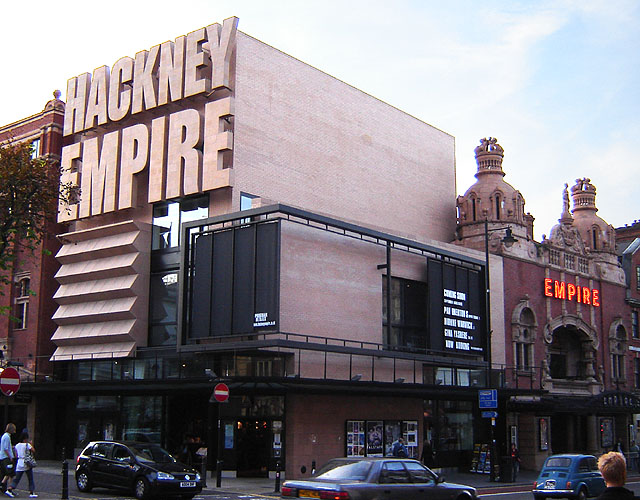
hackney_empire_2

Hamlet

Hackney Empire, 19th March 2018

Working on the premise that it surely is impossible to see Hamlet too often in a lifetime, and keen to make sure the RSC continues to bring as many productions as possible to London, I signed up some time ago for this gig. This despite having already seen the cinema broadcast from Stratford in 2016. A bit excessive I hear you cry. Nope, not when you have an actor as gifted as Paapa Essiedu. His Edmund in the RSC King Lear in 2016 was the best thing about the production, which was pretty good despite some misgivings about the play and Antony Sher’s Lear. Hopefully you had a chance to see him on the tour of this production before it came to the venerable Empire. If you are anywhere near the Kennedy Centre, Washington (DC not Tyne and Wear) in early May I commend you to get along for the last leg of this tour.

There is more to this production, directed by Simon Godwin, than Mr Essiedu however. Mr Godwin has demonstrated that he has a way of breathing new life into classic texts, combining innovation and fealty. (Twelfth Night at the National Theatre review ****). Denmark has been re-imagined as a West African state which yields some interesting insights and a design concept for Elsinore a long way from the usual Northern European Stygian gloom. The programme notes, (I don’t know why people don’t buy programmes, at the very least at the major subsidised theatres, there is so much to learn from them), refer to Hamlet coming “home” after his years studying in Wurttemberg and how he is torn between cultures. There is some mileage in this idea which the production gently explores. There are parallels with Tshembe Matoseh, the main protagonist in Lorraine Hansberry’s masterpiece Les Blancs. No doubt you clever people can think of other theatrical “culture-clash” conceits. Of course transporting the look and the backdrop of the play to West Africa, whilst still retaining a text and characters anchored in Shakespeare’s vague Denmark, throws up a few contradictions but I think that was largely the point. Your man Hamlet after all isn’t short of cognitive dissonance.

So our sweet Prince is already on edge and suspicious of how Claudius came to power. When he sees Dad’s ghost on the ramparts all togged out in tribal chief paraphernalia, in contrast to the modern dress of the present Court, he quickly resolves to action. There is a sense throughout that this Hamlet, whilst not knowing how and when, and running through the gamut of hesitant self examination, is powered by the powerful urge to right a wrong. His feigned madness, his toying with Polonius, the verbal sparring with Horatio, Rosencrantz and Guildenstern, the taunting of Claudius and Gertrude, the carousing with the players, are all in the service of avenging the old fella. The production breaks at the Claudius prayer scene with Hamlet circling in the shadows, gun in hand. I wasn’t sure but I reckon this was only ever going to be a reprieve for Claudius. (Of course I was sure, we all know what happens, but my point is this was a Hamlet who was just gearing up to the main event not a bottler with an uncertain grip on his own reality). “To be or not to be” is a pep talk to self here, not a page from Kierkegaard.

Paapa Essiedu fits this conflicted, mischievous Hamlet like a glove. There is not one single word, let along line, that doesn’t sound entirely right. He doesn’t hang around or over-elaborate, but there is still enough space around the words to take them in. Not the conversational musing of Andrew Scott at the Almeida or the irked ironic philosophising of Benedict Cumberbatch at the Barbican. Just a spontaneous intelligence which makes you wonder why other actors seem to agonise over the right tone to take for this admittedly complicated young fella. His movement and expression is flawless. He can project a single glance to the back of the balcony. He seems to find the shifts from comedy to tragedy, well, just easy. Look out for the laugh he conjures up when pulling Polonius’s body from behind the arras. And I know it shouldn’t matter but it really helps that he is the right age and he is beautiful. PE himself seeming to be a combination of child, student, lover, playboy, artist, he knows enough to question what it is all about, but not enough to buckle under the weight of his own existentialist uncertainties. And, despite all the moping about and hissy fits, you can see why people are really drawn to him and crave his approval.

Compare this to Clarence Smith’s Claudius which is far more old-skool declamatory, though this works pretty well in this context. A far cry from the last time I saw this fine actor as the broken Selwyn in Roy Williams’s brilliant latest play The Firm (The Firm at the Hampstead Theatre review *****). I wasn’t entirely convinced initially by the versatile Lorna Brown’s seemingly withdrawn and inert Gertrude, but this made more sense as the production unfolded and the final death scene was very poignant. He’s still her little boy you see.

In the scenes between Polonius (Joseph Mydell), Laertes (Buom Tihngang) and Ophelia (Mimi Ndiweni) there was a real sense of a loving family, something I had not really felt before. Matching Papa Essiedu’s dazzling performance was a tall order for the rest of the cast but Mmi Ndiweni, (taking on the role from Natalie Simpson in the first Stratford incarnation), came pretty close. The mad scene was both very moving and very scary. Mind you I am a sucker for a distraught Ophelia. And, thanks to both actors, Hamlet’s dismissal of Ophelia, here played out whilst writhing around in bed, actually made sense. Romayne Andrews and Eleanor Wyld as Rosencrantz and Guildernstern struck all the right notes, dislocated in this very different Denmark, and Ewart James Walters turned in some scene stealers doubling as a booming Old Hamlet and a Gravedigger who, judging by his accent, had taken a long way round to get to this particular Denmark.

The production really comes to vibrant life when the colours, sounds and dance of West Africa are brought to the stage thanks to Paul Anderson (lighting), Sola Akingbola (composer), Christopher Shutt (sound) and Mbulelo Ndabeni. The players are no afterthought here. Locating Hamlet’s antic disposition in the artistic milieu of Jean-Michel Basquiat works far better on stage than on paper. You are left wondering if Simon Godwin and the team might have found a few more visual or textual signifiers to flesh out Claudius’s rise to, (diplomatic duplicity alongside an arranged murder?), and fall from, power, and the effect of conflict with the “Norwegian” neighbours, though I get this might have made for an uneasy narrative. It may have helped ease the shift into the bloody carnage of Act V though.

Anyway not quite a perfect Hamlet (play) if such a thing where ever possible. But certainly a near perfect Hamlet (bloke) thanks to Paapa Essiedu. I think I have been guilty of saying too often that I can’t wait to see what xxxx does next on stage in this blog. In this case it is really true and I suspect most of those who have seen this production would agree. On this evidence anything is possible from this rare talent. There are some actors who convince but stay firmly rooted to the stage behind the invisible wall. There are some though that seem to magically come off and out to play to you alone. PE is one of these.


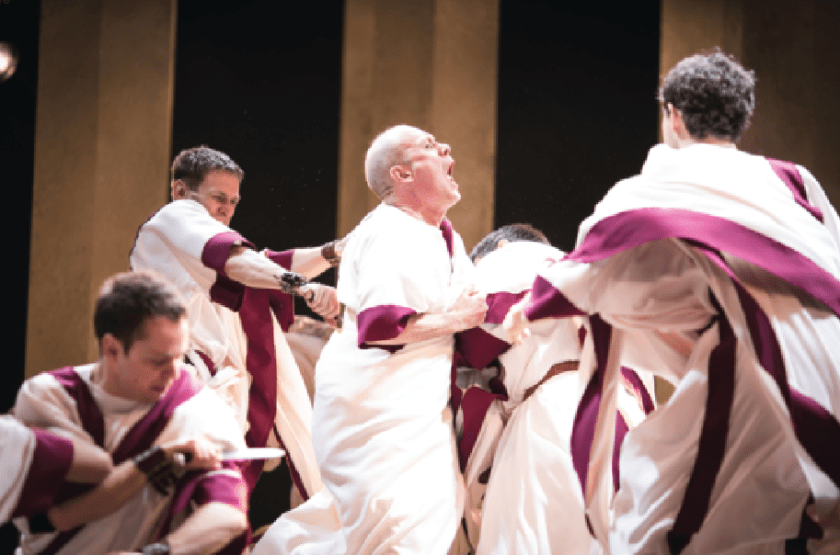
Julius Caesar at the Bridge Theatre *****

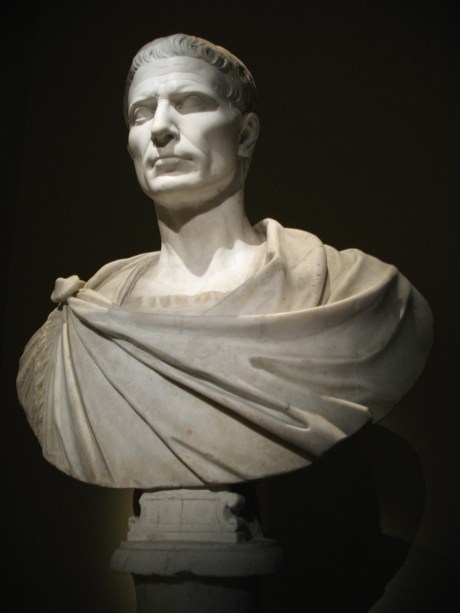
0092_-_Wien_-_Kunsthistorisches_Museum_-_Gaius_Julius_Caesar

Julius Caesar

Bridge Theatre, 28th February 2018

I had really, really been looking forward to this. Julius Caesar is one of my favourite Shakespeare plays. Contemporary relevance of course, but Shakespeare always has relevance. My appetite whetted by the excellent RSC production I saw at the Barbican last month, (Julius Caesar at the Barbican Theatre review ****) and by Phyllida Lloyd’s heady all-female interpretation at the Donmar Kings Cross in 2016. Nicholas Hytner in the director’s chair and Ben Whishaw, David Morrissey, Michelle Fairley and David Calder in the four lead roles.

So a little bit of snow wasn’t going to stop me getting there, and dragging the SO along with me. It didn’t disappoint. Best play I have seen so far this year, along with John at the NT: admittedly we are only a couple of months in, with the NT Macbeth having just opened and, I haven’t yet seen Network at the NT. Still this is a cracker. There are plenty of tickets left in the run, though the cheaper seats have largely gone, (it is hard to believe there is a bad seat anywhere in the Bridge), but it is well worth 50 quid or, if you are a fit young’un snap up a promenade ticket and be part of the action.

The transformation into a promenade space from the straight on staging of Young Marx shows just how marvellous the Bridge space is. The promenaders are shepherded around the pit by stewards, a metaphor for the manipulation of the populus as effective as it is obvious. Bunny Christie’s production design is equally blunt but effective, with a series of plinths rising from the floor as and when scenes change. A massive shout out to production manager Kate West, company stage manager Hetti Curtis and the rest of the team at work for this performance and behind the scenes. To make this intricate production succeed, whilst actually enhancing its dynamism, takes real skill. Watch and see, especially, the floor transformed into a battlefield for the final scenes. The stage management team were rewarded with well deserved applause at the end. Bravo.

Even before Caesar (David Calder) appears in front of the crowd with Mark Anthony (David Morrissey) in tow, we have a treat in storm with a some pumped up rock’n’roll for Lupercal courtesy of a street band made up of Abraham Popoola, Fred Fergus, Zachary Hunt and Kit Young. I already have a high regard for Mr Popoola, having seen his vigorous Tobacco Factory Othello alongside Norah Lopez Holden’s Desdemona and Mark Lockyer’s Iago at Wilton’s Music Hall. (Othello at Wilton’s Music Hall review ****). Turns out he can sing a bit too and he puts in a stint as a plotter in the form of a taciturn Trebonius. Fred Fergus doubles up as a slow-witted Lucius and gets a right kicking as Cinna, in that simple but so effective mistaken identity scene. Kit Young is a crafty Octavius.

David Calder’s Caesar ticks all the right boxes: proud, conceited, vainglorious. Here is a man used to getting his own way. His eventual dismissal of Calpurnia’s (an under-utilised Wendy Kweh) qualms about his visit to the Senate is insouciant but still reveals a hint of underlying unease. Our conspirators are a thoughtful bunch. Michelle Fairley as Cassius is neither bluntly straightforward in her entreaties to Brutus not bitter in her abhorrence of Caesar and what he is turning into. Instead she is logical, using force of argument to persuade Brutus to lead the coup. Books, glasses, a desk and Ben Whishaw’s innate demeanour make him a contemplative, but still determined, Brutus. You can easily see why his belief in his own rectitude might come across as priggish arrogance to the crowd. He seems to be going through the motions in his justification speech. Mind you I can see why he might underestimate David Morrissey’s Mark Antony. He comes across as a duplicitous chancer, making up as he goes along. I don’t recall being as struck by his mendaciousness before in the scene with Octavius at the beginning of the battle when he brusquely withdraws the pay-out to the people in Caesar’s will.

I reckon a woman playing Cassius, (and indeed women playing other of the conspirators), will, and should, become the norm. It creates a shift in the dynamic between Cassius and Brutus which can be profitably mined, both in the early conspiracy scenes and in the bust-up and reconciliation ahead of the battle. I am not sure whether the distance I sensed between Brutus and Portia, (Leaphia Darko who I hope to see in a much bigger role), was intended but it created an interesting ingredient. Every Casca should be as pointedly sardonic as the scene-stealing Adjoa Andoh. I know Ms Andoh has had an illustrious stage career but I couldn’t help thinking, for example, how much better the recent RSC production of Antony and Cleopatra would have been with her in the driving seat. The rest of the cast, Mark Penfold as Lepidus, Ligarius and the Soothsayer, Nick Sampson as Cinna, Leila Farzad as the reluctant Decius Brutus, Hannah Stokely as Mellellus Cimber, Sid Sagar and Rose Ede were all on top form.

Nick Hytner directed the first Shakespeare productions that ever made any sense to me; his RSC productions of King Lear and The Tempest with the incomparable John Wood. This was when I first “got Shakespeare”.. He is the master of modern dress, “contemporary” Shakespeare. Early on at the NT he created a Henry V with Adrian Lester which was the antithesis of jingoistic. All the surveillance stuff in Hamlet that Robert Icke loaded up on at the Almeida. Look no further than Hytner’s 2010 version with a bookish Rory Kinnear as the Dane. His Othello at the NT with, surprise, surprise, Adrian Lester and Rory Kinnear, is possibly the best Shakespeare production I have ever seen. His Timon of Athens with Simon Russell Beale kicked into a cocked hat any notion that this is a difficult, unbalanced play.

His visual language is so complete that, even if you don’t catch every line. (let’s face it that is going to happen with Will S, one reason why you can never see too many productions), you still comprehend pretty much everything in front of you. He takes a view for sure, but always in the service of the universal themes that the plays wrestle with. Every single detail is thought through. For anyone who thinks Shakespeare is not for them, Mr Hytner will change your mind.. It helps that his key collaborators in this production, Bruno Poet (lighting), Christine Cunningham (costume), Nick Powell (music), Kate Waters (fight) and, especially here, Paul Arditti (sound) are so expert in bringing his vision to life.

The Trumpian allusions are not overplayed. No need to. We can see the attraction of Caesar to the crowd, but we also see why the conspirators are so alarmed by his lazy demagoguery. The vacuum that is created after the assassination, a visual twist here, is palpable, as the patronising elitist Brutus and the pragmatic Cassius haven’t thought through what happens next. Sounds familiar eh. Which leaves a yawning gap for the opportunist Mark Antony to unleash those war dogs. The failure of the “liberal’ response to populism hangs heavy in the air.

Finally here is my plea to Mr Hytner. Whilst I absolutely get that Messrs Shakespeare, Bean, Bennett, Hodge and McDonagh are, incontrovertibly, the best of writing collaborators, and I see he has the scoop on Nina Raine’s new play, please can you have another crack at Ben Jonson or Marlowe. Maybe you can make sense out of Bartholomew Fair and pull the punters in. There’s a challenge.

P.S. I note that another play that deals with the had-wringing liberal response to populism, albeit in a very, very different way, Roland Schimmelpfennig’s Winter Solstice, still has a few more legs of its tour left, Plymouth, Edinburgh and Scarborough. Highly recommended.

Julius Caesar at the Barbican Theatre review ****

screen-shot-2017-04-07-at-10-31-13

Julius Caesar

Royal Shakespeare Company, Barbican Theatre, 11th January 2018

The third instalment, (for me), of the RSC “Rome” season at the Barbican which originally aired at Stratford. And, as is so often the case with this idiotic blog, it is about to end and is sold out anyway. Et tu numbnut.

Now JC (1599) was written a fair few years before its sequel, Antony and Cleopatra (1606), but both draw heavily on Plutarch, (via Sir Thomas North’s translation), for the guts of the story. Yet they could not be more different in tone. JC is austere in its construction of architecture and language, dripping with rhetoric. A&C is loose-limbed and florid as we watch the saucy couple get it on, often funny, and certainly over the top. All will be revealed when I see A&C as the last part of the RSC quartet shortly. (I note this attracted the most glowing reviews of the four).

I have to say that, generally, JC is my favourite of the two. Here we have four chaps, (unfortunately this is a terrible play for female roles even if the sensible trend to cast Cassius as a woman is followed, though it is not here), whose actions and relationships can be interpreted in an infinite variety of shades. In this production we have an unyieldingly peremptory Julius Caesar courtesy of Andrew Woodall, (nailing all that third person humblebragging), an overly smug and somewhat vain Brutus from Alex Waldmann, a Mark Antony who is more devious than he at first appears from James Corrigan and a vituperative, beguiling Cassius from Martin Hutson. I have to say this latter performance brought out facets of Cassius that I had not observed before, and, as with his Saturninus in the RSC Titus Andronicus, Mr Hutson near stole the show. Alex Waldmann is the go-too if you want a character “plagued by doubts”, (last seen by me as a brilliant Henry VI in the Rose Kingston’s War of the Roses), but the way Martin Hutson works off of his uncertain Brutus is just mesmerising.

Will S’s brilliant innovation in JC is to telescope all of the action up to the big man’s brutal knifing by the conspirators into what seems like just a couple of days. This means the reasons for the conspiracy, to take down Caesar who has got way too high and mighty in an echo of the Roman kings of pre-Republic days, come flying out of the blocks thick and fast. This resolutely includes the personal as well as the political.

Angus Jackson’s direction allows the momentum to build whilst still clearly laying the arguments around the use and abuse of power, the morality of rebellion against oppression and the legitimacy of political assassination. It is not what Caesar has done, but what he might do. On whose behalf are the conspirators acting, the people or themselves and their own class? The hoi-polloi is never happier than when they have a “strong” leader remember. The uncertainty around what would happen after QE1 died, in the context of the struggle between Protestant and Catholic, would have been clear to Will S’s contemporary audience. The impact of uncertainty is just as clear now.

But big Will didn’t stop there. Oh no. The carnage “unleashed” in the aftermath of JC’s death as Mark A and Octavius put the plotters to the sword, whose own resolve is shattered, is just as effective and thought-provoking. That is the problem with regime change. It usually goes t*ts up because none of these blokes thinks about what happens next. All summed up in two minutes with the horrific murder of Cinna by the confused mob.

Because we never learn Will S can keep on teaching us. Clever huh.

And, in this production, with complete clarity in the delivery of the lines, it was very easy to see that the main players were as much victims, as shapers, of events. The conspirators were uncertain, their tone and movement revealing the dissension between them. Caesar has got all imperious in part because no-one stopped him. Mark A’s sycophancy reflected an eye to the main chance: his famous rhetorical speech to the crowd, cynical, a man realising he could seize control. Watch him build up, then tear up, Caesar’s will. Cassius egging on Brutus, not prepared to take the lead. Brutus and Cassius falling out big time in the tent but always knowing they had to make up since they only, ultimately, had each other. Kidding themselves they really were “honourable” even to the end by getting some poor sap to administer the “coup de grace”. Honour in our appallingly individualistic society may look like an anachronistic concept, but the effect on the audience of its study in this play suggests it still has a place in our hearts and minds.

No need for modern dress. Togas are fine. Would sir like Doric or Corinthian columns. No need for video of an orange Donny spouting hate or rioting millenials. No need to ham up the famous lines or cut out Will’s words. Frankly no need for an interval if it were my choice. One of the best ways to see and hear JC is still Mankiewicz’s 1953 film with Gielgud. Mason and Brando. Not to be confused with Stuart Burge’s 1970 film with Gielgud effortlessly shifting from Cassius to Caesar, but with execrable performances from Charlton Heston as MA and, worse still, Jason Robards as Brutus who appears to have wandered out of an old folks’ home.

Now I am not saying that JC cannot benefit from a little bit of tidying up and reshaping. I think Phyllida Lloyd’s all-female outing at the Donmar was the best of her trilogy last year, (and was a top ten production for me), and Hans Kesting’s speech to the crowd in Toneelgroep Amsterdam’s Roman Tragedies might just be the best 10 minutes of theatre I have ever seen. It’s just that the play can be as, if not more, powerful as a whole, without needing the full directorial vajazzle. I see that many of the proper reviews felt this production was all a bit old-skool, declamatory. I disagree. It is about the power of language to change the direction of political action. Praxis if you will. So emphasising that language should not be seen as embarrassing.

The good news is that we have another chance to see JC in the very near future, (from 20th Jan), as Nick Hytner and team at the Bridge Theatre have a crack. With Ben Wishaw as Brutus, Michelle Fairley as Cassius, David Morrissey as Mark Antony and David Calder as Caesar. How about that for casting. Can’t wait.


Titus Andronicus at the Barbican Theatre review ****

screen-shot-2017-07-20-at-15-01-21

Titus Andronicus

Barbican Theatre, 13th December 2017

Titus Andronicus is a comedy right. Yet I see it is customarily bracketed with the other Shakespearean tragedies, and here forms part of the RSC’s latest take on the quartet of Roman tragedies, entitled, er, Rome.

Now I know this comedy/tragedy/history play division is confusing at the best of times, but here, trust me, it is piffle. Big Will packed sad bits and sundry trials for his heroes even in the lightest of his confections. And, even in the most miserable passages of the serious stuff there are plenty of gags, (though sometimes a bit obscure I admit). In this play though all I really see is one long, (it only just about stops short of one scene too many), parodic, black comedy. This kind of thing is ten a penny now, particularly in the world where art-house and horror cinema mix, but big Will was on to this over 400 years ago. Since there has never been anyway to match him, in English at least, in most other forms of dramatic expression, it should be no surprise that he could effortlessly turn his pen to a genre p*ss-take.

After all the revenge tragedy had been a sure-fire box office hit in the previous three decades before Titus Andronicus hit the South Bank in 1594. Jasper Heywood had translated Seneca’s tragedies, Troades, Hercules Furens and, most famously, Thyestes, in the 1560’s. Thyestes particularly spawned a whole host of imitations, not least of which Titus Andronicus itself which draws on elements of Seneca’s gore fest. (I see that the Arcola staged a version of Caryl Churchill’s version of Thyestes directed by Polly Findlay a few years ago. Wish I had seen that). Norton and Sackville’s Gorboduc came out in 1561. First early modern tragedy, first blank verse drama, a veiled commentary on contemporary politics. (Wish I had seen that too. Especially with Lizzie I in the room). And, most successfully, Thomas Kyd’s The Spanish Tragedy had wowed audiences in the 1580s already.

So Will S and chums were keen to meet the public demand for extreme violence on stage. And a few plot holes, (Will was never one to worry overmuch about these), wasn’t going to stand in their way. Lest we forget though young Will wasn’t yet the dominant force he would become in English drama. One farce, The Comedy of Errors, one decidedly dodgy comedy, The Taming of the Shrew, and a few, albeit brilliant, propaganda plays, Henry VI (1,2,3) and Richard III, might not have been enough to guarantee a hit. So Will collaborated with one George Peele, who apparently contributed the busy first Act, (where Titus A, bloody livid after losing most of his sons in the war with the Goths, sets up the cycle of revenge), the scene at the beginning of Act II when the dastardly Aaron goads the Goth brothers, Chiron and Demetrius, into planning their heinous crime, and the beginning of Act IV, the reveal with its classical allusions, specifically Ovid and the rape and revenge of Philomela. Remember dear readers the several hundred year veneration of Classical Antiquity ushered in the patriarchy’s very unhealthy obsession with sexual violence as well as nice pictures of urns.

Anyway it seems to me that Peele’s contributions provide the stout backbone of the classically driven tragedy plot which then leaves Will to engage in the genre twisting anddark humour. Now I admit that a lot of what I thought was funny in the play was not always shared by the entire audience. There were a few other titterers at some of the smutty innuendo and the ludicrous ,cartoonish violence. There may even have been others wryly smiling at Marcus Andronicus’s flowery blank verse when he stumbles across the mutilated Lavinia. For this is the only way I can fathom this bizarre incongruity. He should be hollering for the Roman equivalent of an ambulance not waxing lyrical about her fragrancy and showing off his classical education.

What else? Saturninus suddenly getting the hots for Tamora. The Roman brothers “accidentally” falling into the pit containing Bassanius’s murdered corpse. Titus A thinking it is a good idea to chop his hand off. His chat with that poor fly. Lavinia spelling out the names of the Dumb and Dumber bad boys in the sand. Little Lucius’s knowing asides to us followed by a gag about Horace’s poetry. Aaron taunting us with his “will he, won’t he” dangling of his new baby and then the unsuspecting Nurse talking herself into an early grave. The gruesome pie, of course, and finally the three blink-and-you-miss-them concluding deaths in as many seconds

Others may want to take this all at depressing face value. I can’t. The only way to accommodate the abrupt shifts in tone, I reckon, is to assume that Will was trying to subvert the very thing he had created. I think director Blanche McIntyre is happy to go with the blackly comic flow without over-egging it. Well maybe the messenger on a bike was a bit over the top. Though it got the biggest laugh of the night, proving that nothing works better than a blatant sight gag in Shakespeare.

Make no mistake TA was a huge hit in its first few years but thereafter was confined to the scrapheap by most every commentator until, surprise, surprise, Messrs Brooke and Olivier, worked their magic in 1955. Trying to take this too seriously just want wash in my book. It isn’t a sick pantomime for sure, there is too much stunning rhetoric to allow that to happen, but neither is this a proto-Lear. I don’t see any point in trying to fight against the dramatic conventions which shaped its construction, or in trying to pretend there is some great insight into the human or political condition here. The creative team seem to be suggesting this could be a metaphor for our uncertain political age. Nonsense. Things might look a bit sh*tty out there, and civic discourse is coarsening, (in part because every Tom, Dick and Harry think they can have a view – ah the irony), but government in Western democracies isn’t yet based on vendetta and cannibalism.

David Troughton as Titus A kicks off his performance as stiff, martial hero, a wizened Coriolanus, wedded to the justice of the battlefield and certain in his pronouncements. A brass band follows him around – a smart touch. Limbs and mind unknot as events unfold so that, by the end, he is as batsh*t crazy as you like in chef’s whites and a nice line in one-armed knife work. Martin Hutson’s toddlerish, paranoiac Saturninus is very amusing, and the similarity with a certain contemporary leader well observed. Attempts to shoehorn in other echoes of a chaotic White House administration, and some street riots signposted “austerity”, are less effective however. Hannah Morrish didn’t get much of a look in as Virgilia in the RSC Coriolanus but here, as a noble Lavinia even when mute, she was excellent. Nia Gwynne’s Tamora was a little underpowered. In contrast Stefan Adegbola as Aaron, once he get to open his mouth after prowling around in Act I, didn’t hold back. Let me say it. Aaron is an ugly, racist caricature which pandered to Will S’s contemporary audience. No Othellian complexity here.

Having guffed on above about embracing the funny side of TA I must say that, when the mutilation comes on stage, this production doesn’t hold back on visceral impact. A couple of nurses, a surgery trolley, a saw and some top-drawer illusion courtesy of Chris Fischer mean TA’s hand-job, (as it were), is the best of the gruesome bunch with the stylised throat-slitting of the two bad boys, suspended upside down, coming a close second. Lavinia’s rape and mutilation was genuinely shocking. 

So a production that, with a few maybe superfluous details, looks (and sounds) the part and delivers unflinching horror realism. A memorable central performance, with some excellent support in large part. A director who is not afraid to go where the words and plot take her, even if this points up the anachronistic structure of the play. Ms McIntyre is also very alert to the nature of our “enjoyment” of the play. Is it a bit sick to laugh at some of this? And if you are horrified then why did you turn up in the first place? Just how far can we go in pretending that Shakespeare is always “for all ages” or should we recognise that, early on at least, he was bound to his own time?

Of course it could just be that the diet of Tarantino and Korean revenge films which brings BD and I together has left me inured to this kind of thing. Anyway go see for yourself. There are a few tickets left for the remaining performances. And don’t forget to insert your tongue firmly into your cheek as you walk in.


Coriolanus at the Barbican Theatre review *****

coriolanus-production-photos_-2017_2017_photo-by-helen-maybanks-700x455

Coriolanus

Barbican Theatre, 16th and 17th November 2017

This angry looking chap is Sope Dirisu and he is playing Caius Martius ,who you might know better as Coriolanus, in the RSC’s latest production of Shakespeare’s last proper “tragedy”. This will be followed from Stratford to London by the other plays in the Rome season, Julius Caesar, Antony and Cleopatra, and the gorefest Titus Andronicus, as part of the “Rome” season. You can read all the proper reviews from the Stratford run, but, if this is anything to go by, I reckon I am in for a treat with the rest, as this was better, in my view, than those reviews let on.

Now it helps that I happen to like this play. A lot. Maybe not as much as Othello, Macbeth and Hamlet, but, whisper it, more than Lear. It is sparse, he (Coriolanus) is a flawed character, and the writing is, by Shakespeare’s sublime standards, a little lacking in poetry and lyricism. This is exacerbated by a “prose driven” production – suits me but maybe not the  purists. Like Macbeth and, indeed Titus A, it tells of a hero, (or maybe anti-hero, that is why it is so clever), whose destiny is bound up with that of his country, in this case 5th century BCE Rome, the early days of the republic. Coriolanus is, like these other “warriors”, a complex and unique personality, whose vanity and inability to compromise leads to his downfall. He harbours powerful homo-erotic desires for his mortal enemy, Tullus Aufidius, and he has the mother of all mother complexes, as it were.

There is some humour, and some satire, though I get that it is a bit buried. The body count, by the standards of Shakespeare tragedy, is minimal, just one at the end. There is War though, unusually very early on, which allows fight scenes that this cast revelled in. Fight  director Terry King deserves a great deal of credit. The plot is straightforwardish, (WS once again pinched his story from Plutarch), and revolves entirely around the Big C himself. It is his connections with his family, his own people and the Volscian people of the enemy state Corioles, that defines the play and what makes it interesting for our, (and probably plenty of other), times. For the play brutally examines the exercise of political power, the relationship between classes, the limits of democracy and representation, the dangers of populism, the nature of patriotism, the business of compromise, the call of duty in both military and civil society, in addition to all the deep, Freudian, psychological stuff. Ancient Rome is fundamentally different to our world today but the issues it grapples with are uncannily similar.

Which is why, in its way, its the best “Brexit” play I have seen this year. People’s visceral reactions to what is “right” and what is “fair” and the way in which they are, or think they are, being treated by their leaders, is what lies at the heart of this play. The continuing tensions between the haves and the have-nots, the “leaders” and the “led”. As ever though, there is no black and white with big Will, as you oscillate between hating and maybe admiring Coriolanus’s actions and intentions, and you see the ways in which those around him react, Mum, wife, nemesis, tribunes, friends, soldier colleagues and substitute Father, all try to influence and manipulate him.

Now a twist of fate “permitted” me to watch the first half twice, up to Big C’s banishment. A technical issue on the first performance I saw meant a return the next day to see the rest. I confess I was so pumped up by the first half and by the cliff-hanger when Coriolanus tells Rome to go f*ck itself that I was bound to return. And the tightwad in me wasn’t going to miss a free hour and a half of this. Turns out the repeat viewing was an insight into how the interplay of text, action, acting and audience can create a very different experience. Same play, same production but different lines and words leapt out; I focussed on different characters at different times and thought about different aspects of plot and message as it evolved.

Sope Dirisu turned out to be a suitably virile military man and the camaraderie and mutual admiration between him, Charles Aitken’s ardent consul Cominius, and Ben Hall’s pragmatic general Titus Lartius, rang true. As did his hesitation with Hannah Morrish’s wispy wife Virgilia. The turning point scenes with mother Volumnia also stood out. Whether extolling the virtues of her son’s military achievements in full on patrician mode, or achingly pleading with him to curb his revenge even though she knows what this will lead to, Haydn Gwynne was magnificent in the role. Duty trumping family. The best performance of the evening. Mr Dirisu also shines in the scenes with Tullus Aufidius, but once again this as much reflects the skill of James Corrigan’s performance as the bested Volsci. It is tricky to convey the admiration, nay passion, that he feels for Coriolanus whilst still letting us know that he intends to play him to his country’s advantage when Big C turns treacherous.

It does take a bit of time for our Coriolanus to ramp up from haughty disdain to bilious disgust of the people, and the two tribunes, Sicinius Veletus and Junius Brutus, who orchestrate them. This though created a welcome ambivalence in our political sympathies. Should we side with the put-upon plebeians, hungry and overlooked by the out of touch Senate and the aristocratic Consuls, or with fearless Coriolanus, who may saved Rome from the enemy, but who sneers at the people and refuses even a pretence of the humility expected to secure their approval for his election as Consul?

Having two women play the tribunes, given Coriolanus’s conflicted relationship with the opposite sex, added an interesting dimension, and the contrast between Martina Laird’s more measured Junius and Jackie Morrison’s more provocative Sicinius was also well observed. Paul Jesson’s patient, though frustrated, Menenius, father, mentor and apologist for Coriolanus, was another fine performance.

Now as it happens Paul Jesson has a bit of form with Coriolanus having played Junius Brutus in Ralph Fiennes’ 2011 film version. This is an outstanding production, with a magnetic performance by Mr Fiennes, who also directed, a stunning cast and the uneasy backdrop of Serbia. Angus Jackson, with this modern dress production, has, perforce, created a somewhat different tone, but, I think, similarly makes the case for what I think, is a riveting play. It seems to me that there is a case for moderating Coriolanus’s “pride” and subsequent “fall” and for questioning the political “rights and wrongs” and, if that is true, Mr Jackson’s definitely direction succeeded here. A bully oozing utter contempt may lead to more powerful lead performances but can be overbearing. I liked the contrast of Mira Calix’s string and voice led score and Robert Innes Hopkins design (excepting the troublesome plinth) was coherent (it carries through the whole season).

Coriolanus a tricky, difficult, awkward play. Nonsense, as many recent productions have shown. Mind you I’ve never understood the difference between Shakespearean tragedies and comedies, so you can safely ignore me.


Ninagawa’s Macbeth at the Barbican Theatre review ****

maxresdefault

Macbeth

Barbican Theatre, 8th October 2017

When I was a young’un, come to make my fortune in the Big Smoke, I was lucky enough to secure free or cut price tickets to productions at the Barbican and NT. But then, as now, I am afraid I was more “Dick” than “W(h)it”-tington, (how laboured was that), as I am pretty sure I passed on the opportunity to see the original version of this famous production of Macbeth at the NT because a) it was/is in Japanese and b) it was Shakespeare, which at that time I would only watch to impress others.

So it was a joy to see that this production, which has gone into the annals of theatrical history, was coming back to London, and that I could therefore atone for the sins of my younger self. The eponymous founder of the company, Yukio Ninagawa, unfortunately passed away last year, but his legacy is alive and kicking with the backing of producers HoriPro, Saitama Arts Foundation and the legendary Thelma Holt CBE.

So a packed house at the Barbican awaited a massive cast of 33, I think, actors with the proverbial bated breath (actually lively chatting but you know what I mean). Now I had expected a visual spectacle. I had expected dramatic, even melodramatic delivery. I had expected a massive soundscape. I had even expected a decent play (it’s Macbeth after all). But what I had not expected was such a surgical (no pun intended) delivery of the story. Nor had I expected such an adept translation, which was true to the key passages in the text and which highlighted the poetry of the repeated motifs and words (though there were a couple of inadvertently funny missteps). Chi, anyone? And I certainly had not expected to be sucked into the emotion of it all. In particular I reckon Keita Oishi’s Macduff was the best I have seen. Vengeance indeed.

Having said all of that it is how this Macbeth, re-imagined in a Samurai Japan, looks which remains the most extraordinary thing about it. The butsudan that frames the action. The ancient women who tearfully observe the action throughout. The cherry blossom, the traditional Japanese symbol of the ephemeral nature of life. The giant red sun which turns cold blue when Macduff finally biffs Macbeth. The bronze warrior statues when Macduff and Malcolm meet in England. The Samurai knights hollering in unison. The Kabuki witches – well played lads. The eight kings. Banquo’s ghost – you know he is coming but even so – OMG. The swooshing sword play. The Ninja assassins despatching Banquo and then, you bastards (!), Lady Macduff and the kids.

Now I do admit that a tiny part of me, call it a couple of per cent, couldn’t shake off the idea that is was a bit over the top. The make-up is caked on. The delivery is full on shouty declamatory. The music, with the Sanctus from Faure’s Requiem and Barber’s Adagio for Strings featuring heavily, doesn’t hold back – out damned minor keys, as it were. Masochika Ichimura as Macbeth and Yuko Tanaka as Lady Macbeth are giants of Japanese stage and screen but are no spring chickens. Yet in the scene ahead of the banquet, as they try to pull themselves together, they looked so vulnerable, and a lump came to my throat. I guess the point is that Ninagawa-san knew that Will S, through all the Jacobean flattery and the lecture on the perils of “vaulting” political ambition, still retained a deal of sympathy for the power-mad couple. The absence of the child is so keenly felt by this ageing pair. Anyway being sniffy about the melodrama, as some proper reviewers were, just seems discourteous to me.

So overall, whilst I wouldn’t want to give up on the stripped back Macbeths played out in Stygian gloom and occasional spotlights, I really, really enjoyed this operatic spectacle. Turns out that feudal Japan and Scotland are not so far apart. Sound and fury signified quite a lot as it happened.

I look forward to seeing another production from this marvellous company. I am an arse for not having seen any of their previous work.

The Tempest at the Barbican review ****

19919tempeste1

The Tempest

Barbican Theatre, 27th July 2017

Now I would watch Simon Russell Beale read the telephone directory. Particular past favourites of mine include a Brechtian Galileo, a Face in the Alchemist, alongside Alex Jennings and Lesley Manville, his Stalin in Collaborators, a Timon in the Hytner production, which persuaded me this is a greatish play, and his persuasive Lear. So his return to the RSC after a couple of decades was always going to be an event, particularly in the role of everybody’s favourite grumpy polymath/magician Prospero. The Tempest is not my favourite Shakespeare though I thoroughly enjoyed the all female Phyllida Lloyd Donmar production so maybe I am slowly coming round.

Anyway this production directed by Gregory Doran had secured very good if not outstanding reviews from its Stratford run so, one way or another, it had to be seen, Initially I plumped for the cinema option figuring this might prove a better way to soak in the technology on show. However, after a mix up with tickets and me throwing a tantrum (don’t ask), I missed out. So off to the Barbican it was.

Much has been made of the digital technology conjured up by Intel and Imaginarium Studios which has been used to conjure a real-time, holographic avatar of the Ariel played by a physically graceful Mark Quartley. Well there is no doubt this is an impressive spectacle, especially when combined with the striking designs of Simon Brimson Lewis, a set with a shipwrecked hulk with overtones of whale skeleton, and the dramatic lighting of Simon Spencer. And by and large it augments rather than supplants the words of the Bard notably around the storms, imagined drownings and some very dangerous dogs. In particular the masque created for the marriage of Ferdinand (an earnest Daniel Easton) and Miranda (a surprisingly worldly Jenny Rainsford) was spell binding with some beautiful singing from Samantha Hay, Jennifer Witton and Elly Condron and landscape projections which out-garished Hockney.

But the Tempest for me is a play of subtle shifts and meanings and sometimes all the gubbins on show (including the loudish soundscape conjured up by Jeremy Dunn and Andrew Franks) did just detract a little from the magic Shakespeare conjured up through, er, the magic of words. Once you cut out the comedy interludes supplied by Caliban, Trinculo and Stephano (with Joe Dixon, Simon Trinder and James Hayes respectively suitably broad) and the perfidy of the human aristos, you are left with tales of love and forgiveness (father-daughter, Miranda/Ferdinand, Prospero and pretty much everyone else on the Island). For these lessons to, er, work their magic sometimes needs a bit of peace and quiet. Which is why the last 10 minutes or so of this production, largely SRB speaking the verse in a pool of light, turned out to be the most satisfying, and moving.

A fine addition then to the panoply of big name Tempests and well worth a view (there are plenty of tickets left for the remaining performances). But also a reminder that, at the end of it all, it s the text that matters.


Richard III at the Arcola Theatre review ****

tn-500_greghicksandsarapowellinrichardiiidirmehmetergencalexbrenner

Richard III

Arcola Theatre, 10th June 2017

I have had a surfeit of Dickie IIIs over the last few years. Mind you I am not complaining.

Mark Rylance on his return to the Globe found a vulnerable, despairing Richard who didn’t seem to care about his actions. Ralph Fiennes was a ruthlessly efficient c**t which left next to no room for audience complicity. Lars Erdinger was the narcissistic showman, even in the buff, in the Schaubuhne Berlin production at the Barbican. Benedict Cumberbatch, in the Hollow Crown II version (just get this on DVD if you “don’t like Shakespeare” and then change your mind), upped the comedy quotient which I enjoyed but was ingratiating for others. Robert Sheehan (the pretty boy off the telly’s Misfits) was one of the best things in Trevor Nunn’s marathon, “proper Shakespeare” War of the Roses at the Rose Kingston (yep all in one day for me) with his youth offering up a more bolshie Dickie. Best of all was Hans Kesting in Toneelgroep Amsterdam’s Kings of War. Like the War of the Roses this had the advantage of providing the back-story for Richard’s tale that the standalone productions don’t have, which ensures the other characters are in the flow of the action from the off. Kesting, with his tight fitting suit and birthmark but with no limp or withered arm, created a Richard with physical presence and superior intelligence who is able to bully all those around him. His actions almost seem reasonable such was his charisma making the final “I am a villain” monologue, when his loneliness is laid bare, here delivered to a mirror, even more disturbing.

I have to say though that Greg Hicks, in this Arcola production directed by its inestimable head honcho Mehmet Ergen, tops the lot. This is because he captured all of the facets of what it is to be a Richard III in my view. Now remember this is a piece of Tudor propaganda as filtered through Will S’s imagination so no need to get too hung up on the “reality” of the body count or the misogyny. A bloody route to kingship was par for the English course through most of history. What matters is how the performance and production seeks to balance the contradiction between the audience’s repulsion and attraction to our leading man and the dialectic between the thirst for power and the self loathing that torments him. The best plays obviously feast on contradiction and big Will serves these up in spadefuls in this play.

Greg Hicks was not setting out to play the joker here, though the delivery of some of the classic asides to audience served that purpose. His crystal clear delivery of the lines, together with changes of tone and phrasing, and the masterful use of pauses, revealed intent in ways that had not been clear to me before, notably in the “group’ scenes with Rivers, Hastings and Stanley. His constant movement of face and body (with leg permanently chained to arm) and habit of getting right in the face of the other characters emphasised the desire to twist events to his advantage. This was a Richard in a hurry. The crown was the payback for the hate meted out to him in the past. The unhidden misogyny and careless manipulation was simply the means to this end. Not “pure evil”, not a charming pantomime villain, not solely motivated by self hate and a desire to avenge, self-aware but still consumed by the deception of rightful inheritance. This is when an intervention by a trained psychotherapist in childhood might had saved a whole lot of bother later on.

The compact Arcola space with its steepish seating, the sparse staging and costumes, sympathetic staging and lighting, all served to focus attention on the actors. The support from this medium sized cast (there was a bit of doubling) was admirable, particularly Paul Kemp as Clarence/Stanley, Sara Powell (so good in the recent The Plague on this very stage) as Elizabeth and Matthew Sim as a full-on psycho henchman Catesby, but matching Mr Hicks proved a big ask.

We know Greg Hicks is an outstanding Shakespearian actor having been and done it with the RSC and NT and I hope there are many more to come. But I would love to see him revisit some Pinter, create a hard-arsed Volpone or have the lead role in a future Martin McDonagh play.  For the moment though I have this performance to savour.

Othello at Wilton’s Music Hall review ****

othello-collage

Othello

Wilton’s Music Hall, 17th May 2017

I think Othello is my favourite Shakespeare tragedy. And it follows, therefore, that it is my favourite Shakespeare play since the tragedies generally kick the most arse. And it therefore also follows that it is probably my favourite ever play since no-one bests big Will. Mind you I have so much more to explore so lets not be hasty. But to date this is the Daddy.

This means I might not be the most objective judge. Which for this production really helped. I fear that a combination of my hearing which is no longer up to snuff, my seating position up in the gallery, the acoustic at Wilton’s and, perhaps, the sound engineering here meant that I couldn’t clearly hear a lot of the lines. Which is a shame as pretty much everything else about this Othello was mightily impressive as it cut straight to the core of what this play is about.

So what made it so good despite my blinking ears?

Well, first off, the programme is at pains to explores Othello’s “otherness” as a “Moor” in terms of his colour, but also more so his faith, as probably a Muslim who is forced to, or chooses to, embrace Christianity. The production serves to handsomely illuminate this (it starts with Othello on a prayer mat and crucifixes are liberally bandied about), such that it is not just the vitriolic racism that is on show but also the suspicion accorded Othello by the Venetians because of his roots in Islam. This despite his victories over the “Turks”. This may be C16 Venice (and Wilton’s itself does a nice line in atmospheric material decay), but clearly there is plenty of food for thought in this production for our own times.

It also rightly centres on Iago. There are multiple ways to explore why Iago is driven to do what he does but I think this production gets as close as possible to the heart of what drives him.

Of course Iago is disfigured by the racism and misogyny of the society that he lives in. And, as he says, being passed over for preferment in favour of Cassio portends a powerful grudge. His hatred of Othello is certainly borne of envy yes – of his masculinity, his power, his sexual relationship with Desdemona (in contrast to what may be his stagnating marriage to Emilia, look out for the “non-kiss”) – but at its heart is the dissonance between his admiration (and even attraction) to Othello and his incomprehension that this “other” should have everything he can’t have. He loathes himself and cannot, and will not, stop until he has brought this man down. His jealously is so all encompassing that he can justify his actions to himself and, for me, the final vow of silence is a sign that he still believes he was “right” to do what he did in his own mind.

So the “why the f*ck should he get everything when I am better than him” is the bigger lesson here. And this is what Will S nailed as it seems as if it is a permanent feature element of the human condition. It is this deep psychological impulse that lies at the heart of the alienation that pervades neo-liberal capitalism and is what some will always seek to exploit. So the play is relevant in my mind, not just because of the way it explores the “fear of the other”,  but also because it shows the hate people can be driven to by perceived “unfairness”.

Blimey I think I may have got all carried away there. Sorry.

Anyway none of this would work if the players are not up to the task. And here Mark Lockyer as Iago was about as good as it is possible to be. His Iago properly hates himself. Not just in his words but in his movement – pacing, pointing, finger-clicking, advancing and retreating – all in some sort of Prosperian performance to justify his thoughts and actions to himself, as well as hide his intentions from others. Brilliant and horribly plausible.

In contrast I saw a “man-child” Othello who was maybe more open to manipulation than in other productions which perhaps better explains, whilst still condemning, his brutally misogynistic destiny. It is stating the obvious that debutant Abraham Popoola has an extraordinary physical presence, but the way he used this in the scenes with Desdemona, both tender and violent, and especially with Iago, where Iago is winding his jealously up to the max, was remarkable. As Othello oscillates between his disgust at the imagined betrayal by Desdemona and his trust in her true nature, so Iago oscillates between a visible fear that he has pushed Othello too far (he actually physically shrinks when this Othello gets right in his face) and an almost smug satisfaction in what he can do to his “friend” and, always remember, his military superior.

There is also another very fine performance in the form of the diminutive Norma Lopez Holden as a sensual Desdemona. Constantly in motion, tactile and perfect in conveying, even to the end, the sense of disbelief at what has come over her husband. Throughout the sexual attraction between her and Othello pervaded the theatre. This actor will surely go far. To round it off we had a fine, upright Cassio in Piers Hampton and an Emilia in Kate Stephens who is, ultimately, the best side of our nature. In fact the whole ensemble seemed to me to perfectly execute director Richard Twyman’s laser-guided vision.

BTW Mt Twyman s a very important man. As Artistic Director of English Touring Theatre he will have a hand in bringing the best of theatre to venues outside of the London commercial and subsidised venues. A vital role. From what I have seen of their past production and what he has achieved here it is therefore an immense blessing that he is very, very good at his job.

In this directing role, and along with his sound and, especially, lighting team, he has brought a prodigious energy to this Othello and some absolutely first rate scenes with an absolute minimum of props and costume, particularly through Acts 2 to 5. The soldier’s partying and drinking, the big fight scene, the Iago wind up of Othello, the murder of Cassio in the dark, Emilia and Desdemona’s drunken but unswerving dissection of the relationship between the sexes, Desdemona’s murder (a yoga mat replaces the usually crassly symbolic bed and calls back the beginning) – all these scenes were as good as I have seen. And that wretched hanky gets an early look in – as part of the apparently non-Christian wedding ceremony at the start – how brilliant is that.

But if I was to single out one contributor it would be movement director Renaud Wiser. Like I said some of the lines, particularly Othello’s, floundered on the rocks of my dodgy hearing. This, together with the harsh downlighting and fluorescent tubes at the corner of the tight, bare, in-the-round stage, maybe meant I focussed on movement in a way that I might not normally do but here I could see just how vital this ingredient was to the whole.

So, as you may have gathered, I liked this. And this despite the aural handicap without which I might even be prepared to rate it alongside Nicholas Hytner’s NT production in 2013 which, to this day, still leaves me nervous of befriending anyone who comes across like Rory Kinner’s matey Iago.

So please go along. There’s another three weeks or so and it looks like plenty of tickets. Probably best to go downstairs, maybe have a quick snifter beforehand and it will help if you like the play already. But if you do go you will be reminded of just how vital Shakespeare can be. I am pretty sure Mark Lockyer’s Iago will rank as one of the best performances of the year. And all this for 25 quid tops.

This is the first time that I have seen a production by Shakespeare at the Tobacco Factory. If this is what they do then it won’t be the last. Hopefully Wilton’s Music Hall will snap up anything they tour to allow the good burghers of London a chance to enjoy. Otherwise I now have the perfect excuse to go to Bristol. Here is the link to the website. Read it. This is how theatre should be done.

Shakespeare at the Tobacco Factory