
Valued Friends at the Rose Theatre Kingston ***

Valued Friends

Rose Theatre Kingston, 8th October 2019

I am all for revivals of modern plays that have something to say to us right now. Assuming the play was good enough in the first place. And that the director and creative team have a clear idea of how they craft that relevance whilst still staying true to the time and place in which they were written. In my experience texts from the 1970s and before, or those written in the last 20 years, fare best in this regard but those through the 1990s, and especially the 1980s, pose the most headaches. Recreate or update? And this was, remember, a fertile period for drama after a decade or so of artistic stasis. Largely because us luvvies like nothing better than to censure society, politics and culture that shifts rightwards. Thatcherism was a heaven sent artistic opportunity.

This is the context in which Stephen Jeffreys, who passed away last year, wrote Valued Friends in 1989, which premiered at the Hampstead Theatre before a West End transfer. The original cast consisted of Peter Capaldi, Jane Horrocks, Serena Gordon, Tim McInnerney, Martin Clunes and Peter Caffrey. Four thirty-somethings, Marion (here Catrin Stewart), Paul (Sam Frenchum), Howard (Michael Marcus) and Sherry (Natalie Casey), have rented a flat in Earl’s Court then an up and coming, (they always are), part of London since meeting at uni. Posh developer Scott (Ralph Davies) wants to ponce up the block and sell on and makes them an offer he thinks they can’t refuse to get out. However the bourgeois Marion sees an opportunity to negotiate and persuades vacillating partner Paul, the relaxed in the paddock intellectual Howard and the impecunious motormouth Sherry to hold out. A few turns of the wheel later and Sherry is paid off, setting out to travel the world and find herself, and the other three have bought the flat at a discount to do it up, with the help of builder and homespun philosopher Stewart (Nicolas Tennant). High flyer Marion eventually cashes out after splitting up with man-child music journo Paul, who becomes ever more obsessed with making money from the property.

Sounds interesting eh. I can certainly see why director Michael Fentiman was drawn to reviving it and what the Rose and co-producer Original Theatre Company agreed. Especially when you consider Stephen Jeffrey’s reputation. The Libertine, which popped up at the Theatre Royal Haymarket in 2016 with Dominic Cooper in the lead, is probably his most famous play but Mr Jeffreys was as much teacher, in his roles at the Royal Court, as he was writer. Which, given his skill in pacing, character, structure and language, is unsurprising. Valued Friends is a very well built play, full of telling detail. I am just not sure this production fully reflected that or whether its line of attack would make sense to an audience who wasn’t there at the time it appeared. The nature of their relationship with “property” is rather different.

For trust me the desire to succeed, to get on, to make money, infected us all. And that was most obviously expressed in the delirium of property ownership. Of course that urge, that need, remains but a decade of single digit average price inflation and falling volume of transactions, despite cheap money, doesn’t compare to the madness of the late 1980s, peaking at over 30% in the year before SJ wrote Valued Friends. A group made up of a struggling journalist, a second rate stand up (Sherry), and admin worker (Marion) and a PhD student wouldn’t be contenders to buy a prime flat in inner West London today, but, trust me, there was nothing far fetched about this then for all the money illusion. SJ takes this phenomenon to make broader points about accumulation, credit, greed, the erosion of community, the rise of individualism and the failure of markets. There is more to his dialogue that meets the eye, or ear maybe, sorry mixed metaphors, but this is subtly woven in to a still credible story of friendship and relationships.

It is funny but it is not just a comedy. However it seems that Mr Fentiman didn’t quite trust that reading and decided to dial up the laughs. Now I gather Natalie Casey is best know for her work in Two Pints of Lager and a Packet of Crisps, Hollyoaks and West End musicals. All outside my ken I am afraid. She brings a feisty tenacity to Sherry, who keeps knocking at the comedy door despite making no money, but as an actor she is a bit full on and shouty. Conversely Ralph Davies’s reptilian Scott falters as the negotiation lengthens. And Nicolas Tennant’s turn as Stewart, whilst dissonantly amusing, rather distracts from an ending that already forces resolution. Sam Frenchum (so good in The Outsider adaptation at the Coronet), Michael Marcus and Catrin Stewart are much more sympathetic to the characterisation I think but still feel a little awkward at times, especially in the on-off relationship of the couple.

Michael Taylor’s set design, which shifts from student-y squalor to swish minimalism, does the job, and Madeleine Girling’s costume are spot on, but the lighting (Nic Farham) and sound (Richard Hammerton) are a bit too conspicuous.

Happy enough, especially for my tenner investment here, but couldn’t help thinking what it would be like to see a production of a play by Mr Jeffreys that really hit home.

The Outsider at the Print Room Coronet review ****

albert-camus

The Outsider

Print Room Coronet, 19th September 2018

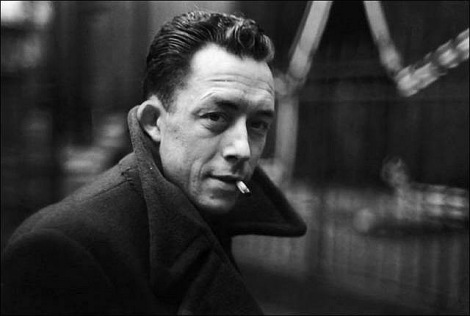
Tricky one this. I can’t pretend I was pinned back in my seat by the two and a half hours of Ben Okri’s adaptation of Albert Camus’ absurd existentialist classic written in 1942. Abbey Wright’s careful direction injects a little humour, (a dog is played by a mop and the trial scene is undercut with satire), but otherwise doesn’t take liberties with either Camus’ story or this intelligent text. The monochrome set, complete with multiple fans, and costume designs of Richard Hudson, bolster the sense of ennui. The Print Room dry ice machine gets yet another comprehensive work out. The plot, French Algerian bloke, bored at work as a clerk, can’t really get worked up about Mum’s death, finds girlfriend but can’t commit, gets involved with rum type neighbour, gets very hot, kills Algerian, is tried and condemned without really explaining himself, has its moments but isn’t going to pack them in at the Victoria Palace any time soon.

Yet this unhurried, unequivocal approach slowly and surely yields dividends assisted by an outstanding performance from Sam Frenchum. Now the Tourist got an inkling into of the talent of young Sam in the role of Hal in the Park Theatre’s excellent revival of Joe Orton’s Loot this time last year. Hal may not be the sharpest too in the box, so needs to be played dumb to get the laughs, but we need to see how his jealously of lover and criminal sidekick intensifies through the farce. That we got. Here though the young man, who is on stage throughout, rises up to a different challenge, gradually uncovering a man in Mersault, who reveals nothing. His delivery is deliberately monotone but far from mechanical. I expect him to go on to bigger things from here (actorally if not philosophically).

The pace gives the audience plenty of time to ruminate on what drives Mersault and why he is like he is. In the same way as the book. Ostensibly simple, almost banal, Mersault’s story yields pointed insight into the human condition, and specifically, the notion of alienation, of Mersault being a “stranger” or “outsider” to his own life and in the society around him. His utter indifference. Of course you might think it is a load of pretentious Gallic guff which only those who think too much and/or have too much time on their hands could possibly think is of any value. You might be right but I respectfully suggest you give it a go. After all you surely must have experienced the feeling of being utterly bemused by what is going on around you or unable to summon up apparently required emotions. Camus’ absurdist philosophy, his utter scepticism, is pretty bleak but it is ultimately truthfully humanist, even if it doesn’t always feel very human and can jar with post-modern sensibilities. It still needs to be understood though.

The book is written in the first person. Ben Okri has preserved that structure with Mersault speaking direct to audience in key passages to detail his experiences, perceptions, feelings, motivations, or more precisely lack thereof, whilst mixing this up with action across 13 speaking characters (and a few brave community locals). His first date with Marie Cardona (an innocently upbeat Vera Chok) on the beach, the murder, when he is alone in the cell and large parts of the courtroom scenes are straight narrative: the interactions with Raymond (an intimidating Sam Alexander), the undertaker and his defence lawyer (Josh Barrow moving swiftly on from his fine performance in The Silk Road at Trafalgar Studios), his boss and the prosecuting lawyer (David Carlyle) and the director and examining magistrate (Mark Penfold) are largely dialogue, though even here the sense that Mersault is at once removed from his own “reality” is palpable. Mind you he certainly “comes alive” when he violently rejects religion in the powerful scene with the chaplain (John Atterbury).

Mr Okri has preserved the minimalist quality of Camus’ text, or at least the translation I remember reading years ago, but still offers enough “colour” for Abbey Wright, lighting designer David Plater, sound designer Matt Regan and movement director Joyce Henderson to work with. Mind you he doesn’t quite scale the spartan heights of Robert Smith lyrics in The Cure’s early classic Killing An Arab.

If you do take the opportunity to see this production at the Print Room, there are a handful of tickets left, or if it pops up elsewhere, which it should, then don’t miss the accompanying short film by Mitra Tabrizian with text, in Arabic, once again from Ben Okri, which imagines events from the perspective of the Arab. Camus’ novel is discomforting in many ways, as was his principled ambivalence to Algerian independence, but giving a voice to the nameless Arab, here Mohamed Moulfath, (in the play Archie Backhouse), in a way similar to the 2014 novel The Mersault Investigation by Kamel Daoud, offers a valuable alternative perspective.

Loot at the Park Theatre review ****

loot_460x375

Loot

Park Theatre, 14th September 2017

There has been a lot of progress in the last 50 years in this country. Good people are more tolerant and accepting of the identity of others (though there are still plenty of bigoted d*ckheads to be found polluting the discourse), The fairy tales of religions are losing their grip on peoples’ thoughts, (though some still get fired up by this tosh and just will not leave us unbelievers alone). The police will always have unconscionable biases and corruptions but great strides have been made in remedying institutional failings.

Oh and the idea of shoving a dead body around a set for comedic effect in the theatre is unlikely to outrage any but the most conservative of Mail readers. All this means that the dark satire of Joe Orton’s famous play Loot is now muted, and the outrage which greeted its first performances seems quaint to this observer. BUT it is still, when performed well, a very funny, subversive play and its targets are still worth taking aim at. Taking the piss intelligently out of the institutions which create the superstructure is still a vital artistic imperative. And an antidote to all those digital crusaders who get wound up for nanoseconds about ephemera.

And be assured this production, directed by Michael Fentiman, at the Park is very good indeed, and it would be a shame if the remaining sold out performances are the last we see of it. The set and costumes from Gabriella Slade are exemplary – the action cleverly all takes place in an all-black funeral parlour with a hefty dose of religious iconography. The costumes put us slap bang in the middle of the 1960s, not the flower power generation but the more mundane, tired, conservative world which was the reality. The production kicks off with a speech from that tiresome crone Mary Whitehouse. And we have an actor as corpse rather than a dummy which adds a new and funny dimension.

The excellent cast take a great delight in playing up the characters faults and rapidly firing off the lines in the faux sincere way that they require (and largely avoiding the Carry On-esque trap that bedevils amateur interpretations). Everyone here is on the take in some way. Following a “bank job” lovers Dennis (Calvin Demba) and Hal (Sam Frenchum) need somewhere to store the loot. Hal’s Mum has just passed away but her murderous nurse Fay (Sinead Matthews) has designs on his Dad, McCleary (Ian Redford), or, more exactly, his money. Truscott (Christopher Fulford) is the copper investigating the bank robbery but poses as an inspector from the Water Board to grill the others. Cue the acid humour and farcical form and a conclusion where everyone gains financially though loses morally, not that they give a sh*t.

Sam Frenchum show’s up Hal’s jealously in the face of Dennis’s bisexuality and avarice. This is where the restoration of the cuts demanded by the Lord Chamberlain (yes kids we had a bloke in a wig telling us what we could watch until the 1960s) is most welcome, sharpening the ambivalent relationship between the two lads. Shades of Orton and Halliwell’s own relationship? Ian Redford’s McLeary feigns, but cannot entirely claim, innocence. Sinead Matthews is outstanding as the hypocritical Irish nurse and her comic timing is flawless. And Christopher Fulford as Truscott defines splenetic as our bent copper whose twisting of judicial logic ends up with, for example, the priceless concept of Christ’s crucifixion as a put up job. Oh and Anah Ruddin as Mrs McLeavy almost steals the show despite not uttering a word.

So no longer a shocking black satire: more a clever parody with astute commentary on “that old whore society” as Orton observed.  I am guessing it helps if you have a feel for the period but the stereotypes and absurdities are recognisable and the laughs abundant. Like Ben Johnson but without the need for a degree in Ben Johnson studies to understand it. If the production pops up somewhere else (beyond Newbury where it is off to next) take a look. It is perfectly possible to make a sh*tshow of Loot which entirely misses the points in the pursuit of forced laughs and overplayed farce. Indeed, by all accounts, the first productions failed until Orton rewrote and licked it into shape and the 1970 film version is weak.

If you are interested get along to the Queer British Art exhibition at Tate Britain (Queer British Art at Tate Britain review ***). Not a treasure trove of great art but a fascinating journey through gay history in Britain in the century or so proceeding the Sexual Offences Act 1967 which partially decriminalised homosexuality. Orton’s play premiered a couple of years before the Act. The exhibition shows some of the library books that Joe Orton and Kenneth Halliwell “defaced” and for which they were unbelievably imprisoned for 6 months.