The Cane at the Royal Court Theatre review ***

The Cane

Royal Court Theatre, 21st January 2019

Somehow, until now, the Tourist has failed to see any of the work of Mark Ravenhill, either as writer, performer or director, or even his columns in the Guardian, surprising given the Tourist’s status as a paid up Guardianista. There was a recent revival of his breakthrough play, Shopping and Fucking, at the Lyric Hammersmith, but sadly the performance the Tourist signed up for was cancelled. (Made worse by the fact that the Tourist had gone straight to the theatre from an outing elsewhere during a period of deliberate mobile phone estrangement. It should be possible to chuck the bloody thing away, and to this day the Tourist doggedly persists without data, ring-tone or any social media, but realistically the everyday organisation of modern life prohibits a complete embargo. That, and the unhealthy compulsion to surf free wi-fi so as to rubber-neck the latest instalment in the Brexit car-crash).

Anyway the chance to see Mr Ravenhill’s latest play, after a hiatus of many years, at the ever reliable Royal Court, and its apparent subject, the education system, was not to be missed, and the SO agreed. Especially when directed by RC AD Vicky Featherstone and with a cast comprising Alun Armstrong, Maggie Steed and Nicola Walker. You will know all three off the telly, but their stage appearances are all too rare, though Maggie Steed was in the first instalment of Jamie Lloyd’s current Pinter anthology, and it was a privilege to watch Nicola Walker’s brand of nervy, restless emotional plasticity being applied to the role of Beatrice in Ivo van Hove’s A View From The Bridge.

Vicky Featherstone kicks off proceedings at a fair lick as we learn that Edward’s (Alum Armstrong) retirement as a teacher after 45 dedicated years is being disturbed by his historical engagement with capital punishment and by his school’s imminent takeover by an academy. There is a mob of kids outside Edward and Maureen’s (Maggie Steed) house and their estranged daughter Anna (Nicola Walker) has now turned up. It is a somewhat improbable set up but no matter. Mt Ravenhill uses this as a jumping off point to explore the uneasy relationship between the fretful couple and their seething daughter, how we apply the morality of the present to actions in the past, how much responsibility an individual should assume, and how much an institution, for excessive punishment and how violence and disciple become conflated, accepted and even internalised,

Within this tricky web Mark Ravenhill, using precise and considered language, cleverly shifts moral perspectives around and between the questions and the characters, sometimes even on a line by line basis. He asks a lot of questions but is never so crass as to give clear answers. There is a constant undercurrent of tension and hostility fuelled by the subject matter, and the symbolic cane, the weight of the past and the menacing family dynamic, visually realised in Chloe Lamford’s off-kilter, grim, and increasingly claustrophobic, set. The three actors are superb in the way they draw us in to this queasy moral maze. The looks they give each other, the barbs that they spit out, the arguments they advance and retreat from, the flashes of violence and acquiescence, all are expressively portrayed. However, over the unbroken 100 minutes or so, the flaws of all three characters become unremitting, the premise becomes over-stretched and just a teensy bit too slippery and the dialogue just a bit too predictably adversarial.

It made us squirm, it made us think and the acting is top notch. But this is a play that deliberately sets the audience outside its world. Fair enough but it might have worked better for us in more concentrated form, or with some eventual solid pay-off to all the rug-pulls and hypocrisy exposures.

My top ten theatre shows of 2018 … and top ten to look forward to

Right even by the standards of the drivel that the Tourist usually posts on this site this is an utter waste of your and my time. Weeks too late, built on flaky foundations of understanding and appreciation and precious little use to anyone. Except maybe me that is, as an aide memoire. You can find my thoughts on these shows elsewhere on this site, if you can be arsed.

I have also appended a list of the top ten plays, so far announced, that I am looking forward to seeing this year in a desperate attempt to beef up the content. Some marginal utility in that maybe. Or maybe not.

BTW you can, and should, see The Lehman Trilogy at the Piccadilly Theatre from May through August. You can, and really should, see Caroline, or Change at the Playhouse Theatre right now. The good people of Edinburgh can see Touching the Void and it will go to Hong Kong, Perth and Inverness before coming back to Bristol. I bet it pops up in London. And, if you are in NYC, and haven’t yet seen Network, jump to it.

  1. Network – National Theatre
  2. John – National Theatre
  3. The Wild Duck – Almeida Theatre
  4. The Lieutenant of Inishmore – Noel Coward Theatre
  5. The Writer – Almeida Theatre
  6. The Lehman Trilogy – National Theatre
  7. Touching the Void – Bristol Old Vic
  8. Julius Caesar – Bridge Theatre
  9. Death of a Salesman – Manchester Royal Exchange
  10. Caroline, or Change – Playhouse Theatre

Near misses? Girls and Boys at the Royal Court, Cheek By Jowl’s Pericles, The Phlebotomist (now coming back to the main stage at Hampstead – do not miss), Nine Night (at Trafalgar Studios from February), Quiz, Love and Information at Sheffield’s Crucible Studio, Copenhagen at Chichester, Henry V from Shakespeare at the Tobacco Factory, The Jungle (support the two Joes in their plan to put this in front of the Home Secretary !!) and The Madness Of George III at Nottingham Playhouse.

What about this year? Take your pick from these if you trust my judgement. Which would be a surprise. No particular order BTW. There’s a few big tickets missing from this (When We Have Sufficiently Tortured Each Other, All About Eve, Betrayal, All My Sons). Like I said it’s what I am most looking forward to.

  1. Sweat – Donmar Warehouse. Too late to get in now except for returns but this may well pop up elsewhere.
  2. Mother Courage and Her Children – Manchester Royal Exchange. Julie Hesmondhalgh as Brecht’s survivor.
  3. A Skull in Connemara – Oldham Coliseum. For my fix of McDonagh.
  4. Cyprus Avenue – Royal Court. Finally I will get to see this.
  5. Medea – Barbican Theatre. Internationaal Theater Amsterdam bring Simon Stone’s Euripides to London with best female actor in the world Marieke Heebink.
  6. Berberian Sound Studio – Donmar Warehouse. How the hell are they going to make this work?
  7. Top Girls – National Theatre. Caryl Churchill. Enough said.
  8. Three Sisters – Almeida Theatre. Best of the Chekhov offerings.
  9. Death of a Salesman – Young Vic. Miller, Elliott, Pierce, Clarke, Kene. Best play of 2019?
  10. Blood Wedding – Young Vic. Lorca given the Farber treatment.

Oh and Antipodes, Annie Baker’s latest. Obviously.

Dealing With Clair at the Orange Tree Theatre review ***

Dealing With Clair

Orange Tree Theatre, 30th November 2019

The Orange Tree, along with the Royal Court, must presumably be one of Martin Crimp’s favourite theatres. Whilst he has primarily been engaged with writing libretti for George Benjamin’s excellent trio of operas in recent years, Into the Little Hill, Written on Skin and Lessons in Love and Violence, and will have his next play, When We Have Sufficiently Tortured Each Other, premiering at the National next year (the Tourist has tickets, yea), many of his early plays started life at the Orange Tree, where he was championed by Sam Walters.

So it was nice to see the Orange Tree hosting English Touring Theatre’s revival of MC’s breakthrough play 30 years after its premiere in this very house. Surprisingly I managed to rope the SO and the Blonde Bombshells into the evening. Now, whilst I have an inordinate amount of time for the opera collaborations and his Chekhov translation, I am still making my mind up on Mr Crimp’s original drama. Mind you this was only the second such exposure, after The Treatment at the Almeida. Now there is no doubt there is something substantial there in his caustic stories which pick away at the underbelly of human behaviours, and in the painfully direct language he employs to tell them, but there is also a streak of irksome pretension which needles me.

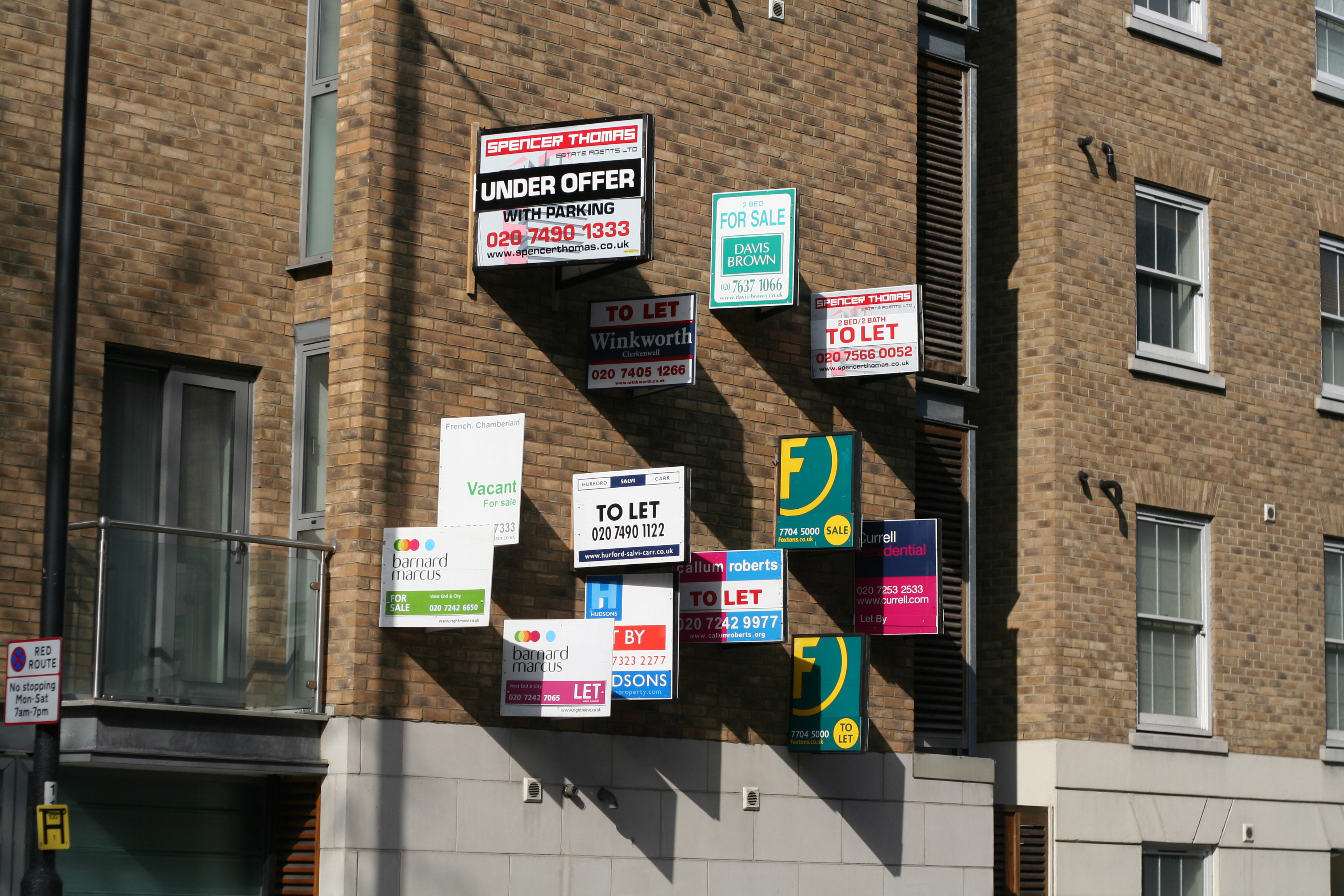
Clair (Lizzy Watts) is an estate agent acting for the increasingly loathsome bourgeois yuppie couple Mike (Tom Mothersdale) and Liz (Hara Yannas). Anna (Roseanna Frascona) is their ill-used Italian au-pair. Art-dealer James (Michael Gould) is the increasingly threatening potential buyer. The cast is completed by Gabriel Akuwudike who variously plays Clair’s colleague, a builder and Anna’s boyfriend.

Now the play was originally written a couple of years after the still unsolved disappearance of the estate agent Suzy Lamplugh in Fulham (and who is commemorated in a stained glass window just down the road from the OT in East Sheen). Coincidentally the police were pursuing a new lead in the case as this revival opened. For those familiar with the circumstances of these tragic events it isn’t too difficult to guess where MC goes with the plot. But what he was really trying to expose was the venality of the time, the greed of the property owning classes, as well as playing with his usual themes of power and violence. It could have been written yesterday alas.

Fly Davies has delivered a cube on a raised platform in the centre of the OT stage masked by diaphanous gauze curtains and coldly lit by Joshua Carr. This only serves to heighten the voyeuristic quality that permeates MC’s play. We begin with Clair in her tiny, train-blighted flat on the phone to an unseen caller setting out, for want of a better term, the aggression that underpins the “art of the deal”. Every one of the cast, (even Gabriel Akuwudike at the end), is tasked with drawing out the worst traits in each of the protagonists, (and way more in the case of Michael Gould as James’s sadistic intent is revealed), whilst making sure we know they are still “one of us”. It is an unsettling watch in that respect and, for me, Lizzy Watts, given the truncated part she played, was particularly adept in capturing Clair’s ambitious pragmatism to get on and get the sale done even as her discomfort with James’s behaviour grew.

Clair’s flat also serves as the location for the disturbing, and slightly hyperbolic, ending but most of the action tales place in Mike and Liz’s house which they are looking to trade up from, (see how transactional language now permeates the everyday and which MC cleverly elides with the “business” of relationship). They start off blathering on about their “ethical” stance but their evasive attitudes, their treatment of Anna and the conversations they have behind the backs of Clair and, after his first viewing, James, reveal their true avaricious and condescending colours. Pretty soon they are making jokes about the “crumbling spine” of the buyer they happily gazump and gleefully ramping up the price they will settle for. Hara Yannas and, especially, Tom Mothersdale have plenty of opportunity to reveal the odiousness of the couple which, in terms of their performances, they relish.

Michael Gould as James runs the gamut from curt and business-like, through slightly odd, to Pinteresque menacing, then into creepy, sinister and finally full blown abusive psycho. I do hope in real life he is a kindly uncle type for here, in the scenes with Clair especially, he genuinely made me fell queasy, which is ironic in some ways, given that in a particularly memorable scene, Mike is the one who is actually sick in the play.

So some very fine performances, dextrously directed by ETT director Richard Twyman, of an intelligent play, built out of considered language and symbols, with streaks of dark humour, which deals with the dark side of human nature. So what’s not to like Tourist? Well I think it might just be the cumulative effect of the slightly off-kilter naturalism of the action and dialogue. It feels to me, with the odd stresses and unbroken pessimism, to be about 5% away from where it should be. I appreciate that is a daft thing to say, and I wish to be clear that it is not the subject or the form that I mildly object to, just the tone which I found a little wearing over the 100 minutes. And, whilst I am sure that MC is, like Pinter, merely highlighting the iniquity of misogynistic threat through his characters, thereby to condemn it, it would be reassuring if he this was occasionally made a little more explicit.

Mind you, like all good theatre, the bloody thing has got stuck in my head ever since, and, even with the misgivings, I am looking forward to his new play, so clearly MC is doing something right even as I think he might not be. The SO, hasn’t volunteered much of an opinion on DWC, not one to waste her words, but is happy enough to join me in the next leg of the Crimp journey.

Love and Information at Sheffield Theatres review *****

sheffield_wide_from_meersbrook_park

Love and Information

Sheffield Crucible Theatre Studio, 7th July 2018

So here was my cunning plan. LD wanted/needed to have a sniff around the University. I spied this revival on the very evening. A chance to have a good look at this fine city. And, though not the original intention, time to watch the England game, (thanks Novotel), whilst LD and the SO had the shops to themselves before they set off back to London.

Love and Information is by Caryl Churchill, the greatest living writer in the English language. She would be the greatest ever if it wasn’t for some long dead geezer from Stratford (upon-Avon not Ontario).

Love and Information was first performed at the Royal Court, (where CC’s plays are normally first presented), in 2012, but despite its relative youth, it has already seen numerous revivals around the world. No surprise there. Like everything she writes it is a work of staggering genius, in terms of dramatic impact, formal invention and intellectual insight. OK so sometimes I have no idea why she chose to show specific scenes and exchanges or what they might “mean”, but that’s all part of the “fun”. It just makes your brain fizz – “my head’s too full of stuff” as one of the characters says early on – indeed. It is exhilarating, if very occasionally frustrating, stuff.

There are seven sections in total whose order is specified by CC. Within these sections however the 57 individual scenes/episodes can be performed in any order. Moreover a random selection of some of these episodes at the end of the text can be inserted wherever the director chooses. There are over 100 characters in all but CC offers no detail as to age/gender/race. And as is typical for CC there are no stage directions or instructions leaving it to director, cast and creatives to decide how they are going to stage the scenes/episodes. So the way in which the relationship between text, performer and audience is constructed and mediated is about as loose as it is possible to get whilst still avoiding the trap of pretentious twaddle.

There are two clear themes: er, Love and Information. Each episode has some moreorless explicit connection with, and/or insight into, these themes, though there is plenty more to chew on besides that, (memory, ageing and ecological crisis pop up for example which also inform most of CC’s recent work) . The effect is of a kaleidoscope of interactions and relationships alongside an essay on the proliferation of “knowledge, both pointless and valuable. We are bombarded with information? How does that affect the way we interact? The structure of the play reflects the very questions it seeks to confront. A philosophical variety show if you will.

Despite the absence of context, identities, names, narrative or indeed any “normal” dramatic anchors CC still manages, often in the space of just a few lines or a couple of minutes to sketch character, to serve up humour, longing, sadness, regret, anger, jealousy, joy, in fact the whole gamut of human emotions. Like so much of CC’s work it is an exercise in distilling drama down to its very essence in order to create lasting impressions and arresting ideas. And all because CC knows how to use words.

The original production used 16 actors. Here Sheffield Theatres associate director Caroline Steinbeis cut this down to just 6. Which means she and her colleagues did a lot of thinking about how to put the scenes together. It also means that some of the scenes were very effectively stitched together, most notably the “children’s TV show” near the end, to create a longer arc of meaning. Max Jones’s set, a bare stage backed by six coloured light boxes, also permitted rapid cutting between the episodes. Costumes, movement (Jenny Ogilvie), lighting (Johanna Town) and sound (the Ringmam brothers yet again) were also carefully considered to create far more concrete settings where abstraction might have been more tempting (and easier). I see that some critics found this more precise and considered technical achievement, (compared to the premiere apparently), somewhat distracting. I loved it, though having not seen a previous production, I knew no better.

I would imagine the cast had a ball putting this together. It is hard to imagine a more challenging, though ultimately satisfying, acting job. So thank you very much Debbie Chazen, Marian McLoughlin, Mercy Ojelade, Ciaran Owens, Ian Redford and Sule Rimi.

And thank you Sheffield Theatres. And Sheffield. But most of all thank you Caryl Churchill.


One for Sorrow at the Royal Court Theatre ****

magpie-846146_1920

One For Sorrow

Royal Court Theatre, 5th July 2018

Sometimes I wonder why I bother with this blog. It takes me so long to get round to seeing and commenting on anything that any post here is worse than useless to the unlucky reader who inadvertently stumbles across it. And all it ever does is recycle far more learned opinions from more talented commentators and bloggers. I can’t be doing with social media so no-one gets to hear about it anyway. I could pretend I like it that way but that would be untrue: my ego needs as much stroking as the next man or woman. I’m just a bit intimidated by this new world of immediate communication.

Sometimes, as here with One for Sorrow, I even momentarily forget what is is that I have seen. Which, in essence, is why I keep going. For there is no better way to learn than writing stuff down and learning through consuming culture is where I am at. So here we go again.

The premise for One for Sorrow was intriguing if not entirely novel – young, privileged, “middle-class”, idealist type invites “victim” of attack in London into the family home despite the misgivings of her liberal family – and playwright Cordelia Lynn was, by all accounts, someone worth listening too. The Royal Court certainly believes in her talent. And I can confirm that, broadly, they are right (no surprise there), and that the play delivers on its promise, even if it does get a little stuck in a cul-de-sac plot-wise towards the end.

Irfan Shamji, who stole the show in Joe White’s excellent debut play Mayfly at the Orange Tree (Mayfly at the Orange Tree Theatre review *****), plays the stranger John. The scene is set with his breathless voiceover as we sit in total darkness. He has a gentle, yet intense, presence that convinces you that he might just be the perpetrator, rather than the victim, of the atrocities that have descended on the capital. Pearl Chanda captures elder daughter Imogen’s air of stubborn righteousness, but also her desire to test her own, and her family’s, commitment to the politics of tolerance. When John turns up after responding to Imogen’s social media invitation to help he is understandably agitated and disheveled but his defensiveness, rucksack and refusal to remove his coat, sow the first seeds of doubt in the family. The sublime Sarah Woodward and the unshowy Neil Dudgeon are perfectly cast as Guardianista parents Emma and Bill, and Kitty Archer, as the breezily self-absorbed, excitable younger daughter Chloe, on her stage debut, also turns in a fine performance to complete the quintet. Ms Lynn has a way of pinpointing not just what this family would say if such an existential threat were posed to them but exactly how they would say it. Shades of Pinter, whose estate commissioned this play.

As the scale of the terror outside becomes apparent, up to and including gunshots on the surrounding streets, and a direct personal connection is unveiled, the tensions within the family, catalysed by John, ratchet up, and the gulf between what they say and how they act, widens. John’s sympathies, and his engineering knowledge, create greater uncertainty and, to Imogen’s disgust, the rest of the family turns on him. The problem is that, in order to maintain the suspense, “is he or isn’t he”, the plot does go round in circles somewhat and the arguments become a little over-extended. However with writing, acting and directing, from the ever reliable James MacDonald, of this quality it is pretty easy to forgive the meandering momentum in the second half.

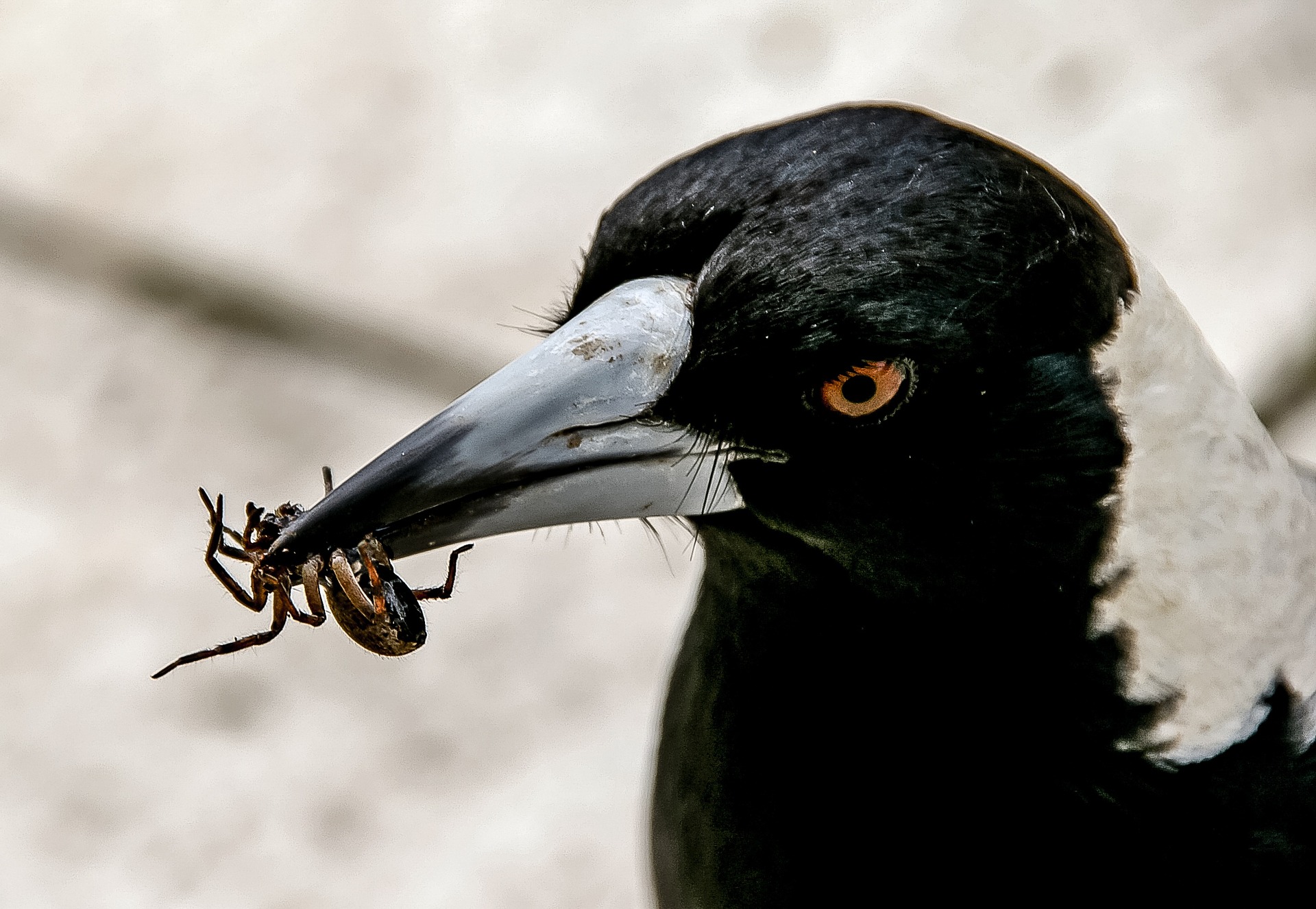
The culture of fear (and fascination) of terrorist violence, the hypocrisy of the “liberal elite” (that’s me), the impetuosity of youth, the hollowness of hashtag activism, all are eloquently exposed. The title comes from a story Imogen tells about a trapped magpie in the house, bird symbolism being de riguer in London theatre recently. I was reminded of Winter Solstice, the superb play by Roland Schimmelpfenning, which, taking different subject matter also skewered the crisis of liberalism in Western society.

It was a warm day outside, (state the bleedin’ obvious why don’t you Tourist), so I can’t be sure if a dial turn on the air-con, or deliberation, accounted for the streaks of moisture that emerged on the walls of Laura Hopkin’s efficient set but it certainly helped add to the unsettling tenor of the play, alongside Max Pappenheim’s dynamic sound design.

Ms Lynn has the dramatic knack, no doubt about that. I suspect there is much more to come from her pen. She also writes opera librettos apparently and is a mean pianist. She’s only 29.

Instructions For Correct Assembly at the Royal Court Theatre review ****

technology-2025795_1920

Instructions For Correct Assembly

Royal Court Theatre, 23rd April 2018

I was much taken with Thomas Eccleshare’s previous outing, Heather, on a recent outing at the Bush Theatre (Heather at the Bush Theatre review *****). Instructions for Correct Assembly looked similarly intriguing and, much to my surprise, I manage to rope in both the SO and the Blonde Bombshells to hold my hand. Well I can report that satire IFCA is well worth a viewing even if Mr Eccleshare doesn’t seem to fully explore the ramifications of the imaginative scenario he conjures. Mind you what do I know. I am so dull I couldn’t even come up with an idea one tenth as good and then wouldn’t know what to do with it anyway.

Hari, played by Mark Bonnar, who I guarantee you will know from the telly, and Max, Jane Horrocks, who needs no introduction, are keen to have a second shot at parenthood. Only this time they are taking no chances and opt for a technological solution. An off the shelf AI robot in kit form, think IKEA, which they are trying to put together in the opening scene, whose behaviour, emotions and attitudes can be altered by remote control. The result, Jan, as we soon find out, is the spitting image of their human son, Nick, who, let’s say, didn’t quite meet their expectations. I’ll say no more but the set up provides plenty of opportunity for wicked humour, particularly when Nick’s failings are set against the achievements of Amy (Shaniqua Okwok), daughter of next door neighbours bragging Laurie (Michele Austin) and condescending Paul (Jason Barnett). It also examines the relationship between parents and their children as they turn into adults and specifically what happens when someone “throws their life away” as Nick does on drugs. Would we really want, need or trust technology to help us make perfect kids and what should we do when the real thing fails to live up to our hopes and dreams?

What really makes the play come to life, as it were, is Brian Vernel’s performance as Jan/Nick. I was much impressed by young Mr Vernel’s performance as Konstantin in Sean Holmes’s erratic Seagull at the Lyric (The Seagull at the Lyric Hammersmith review ***), a production which I think in retrospect was better than I gave it credit for. He also stood out in the otherwise disappointing Future Conditional at the Old Vic as well as on the telly (David Hare’s Collateral and in the Last Kingdom, which I was addicted to). He has a slightly other-worldly quality, which, unsurprisingly, fits the bill here, but can turn convincingly nasty when required. Here, as he shifted between a desperate Nick and the machine Jan he was tremendous.

The set design of Cai Dyfan is the other star of the show, as a narrow window into Hari’s and Max’s suburban home, complete with conveyor belt of parts as they put Jan together, opens up in subsequent scenes before metaphorically collapsing again into the finale. This is an enterprising solution to Mr Eccleshare’s text which calls for a lot of different rooms and fairly rapid switches between them. The visual trickery courtesy of illusionist Paul Kieve is similarly eye-catching. Hamish Pirie’s direction is geared to making the most of the clever set pieces even if he can’t quite work out a way to fully realise the emotional torments that the plot should realise. We can only assume that Nick turned into the person he was in part because of Max and Hari’s influence and that their doomed attempt at redemption reflects their guilt. There is not enough in the play though to make this connection. The whole may be somewhat less than the sum of the parts, as it were.

Even so it gets its points across, is often wryly amusing, the dinner party scene in particular, and doesn’t outstay its welcome as some “dystopian satire'” plays are prone to do. The SO and the Blonde Bombshells were more than satisfied with their outing and I await Thomas Eccleshare’s next writing move (he is also a founder of visual theatre company Dancing Brick with his partner Valentina Ceschi) with interest. Meanwhile I humbly recommend you pop along to this

A (flawed) guide to London theatres

5082213817_08e9837e3f_z

When I was a young teenager I took to making up some very odd games. I wasn’t lonely, with a handful of very good friends as I remember, and my very earliest encounters with the ladies were amongst my most successful, since my true nature, an awkward mix of the needy and the misanthropic, had yet to be revealed. I was something of a swot, what you might call bookish and then, as now, was sometimes a little confused by what others did or said in social situations. But definitely not on any sort of spectrum I reckon, beyond that of the awkward 16 year old lad with lank, long hair, (despite the advent of punk), robust flares, bumfluff and the ability to make a pint of lager last a whole evening.

But enacting an entire Subbuteo World Cup, sixteen teams, (these were the days when FIFA could just about control its financial appetites – if you want to see what the future, actually present, of human “governance” looks like, like no further than the masters of the beautiful game), then quarters, semis and a final. All stats carefully recorded in a special notebook. All done on my own. That’s right. I played with myself, (no titters at the back please). Which meant that, whilst pretending to myself that this was an entirely objective exercise exercise, I got to see England play Holland in the final. England because that’s the fiction that is most deep-rooted in my psychology. But Holland won. Retribution for the injustice meted outed in the “real” World Cup final in 1974, (and, though I did not know it, but somehow feared it, again in 1978), and an early indication of my rabid pro-Europeanism.

Sounds a bit weird right. Except that PlayStations hadn’t been invented. So I like to think of myself as an early adopter, not a sad adolescent.

Anyway responsibility, albeit of a most shrunken kind, has meant I have had to let go of such childish things but I still like a good list, dictated by me, which purports to be based on “facts” but is in fact nothing of the kind. Though, as you know, (tautology alert), there are no such things as facts, only theories yet to be unproven, and “information” is mediated, and mutilated, by both provider and consumer. Do not believe anything, least of all if it comes out of your own head. Proud to be a sceptic.

So you can safely ignore what follows.

Since theatre is my current passion, I thought I would tot up the ratings that I had given the entertainments I had enjoyed over the past three years, derive some averages, adjust for frequencies and thereby show what London theatres reliably put on the best work. Thereby confirming my own biases, with my own biased ratings, mashed through a filter of spurious statistical analysis. Just the kind of woeful shite that organisations, opinion formers and your governors do everyday apparently on your behalf.

So here’s my top ten (well eleven actually). Turns out that it is a proven fact (!) that the Almeida under Rupert Goold is the best of the bunch, the Royal Court is a thing of wonder, especially when you reflect on the fact that the work is almost entirely new, and the National Theatre under Rufus Norris is not, repeat not, undergoing any sort of existential crisis, despite what some would say. The trouble with all those right-wing cultural commentators is that they are only happy when they have something to moan about; they can only argue the negative. I hope the Theatre Royal Haymarket continues its more enlightened programming under the new owners. The Young Vic remains the most exciting major theatre, even if that means a few misfires, and the one where I learn the most. The Barbican benefits from the RSC and the International companies that come through the door. The Donmar rarely drops a bollock but here you really have to be quick at the gate to get a seat. The Arcola and The Orange Tree get my vote for best of the fringe, and the Gate for those with more adventurous tastes. The Old Vic doesn’t always belt it out of the park but is pretty reliable.

In fact overall I doubt there is anything here that would surprise the seasoned theatre-goer. thus adding a nice line in utter pointlessness to the sins of commission I have already committed in compiling, and worst still, writing up this list.

There are a couple of lessons though for the more casual consumer of drama. Firstly, do not think for one moment that watching a film or series on a tiny screen can in any way match the thrill of live theatre, and secondly, if you want to avoid being the sap who comments that “I would liked to have seen that but it was all sold out before the reviews appeared … ” or end up paying three times the price for a painfully uncomfortable seat in some West End mausoleum, then sign yourself up to the Almeida, Royal Court and National lists and take the plunge as soon as you seen something half-interesting.

  1. Almeida Theatre 4.33
  2. Royal Court Theatre 3.87
  3. National Theatre 3.81
  4. Theatre Royal Haymarket 3.80
  5. Young Vic 3.79
  6. Barbican Theatre 3.78
  7. Donmar Warehouse 3.75
  8. Arcola Theatre 3.71
  9. Orange Tree Theatre 3.67
  10. Old Vic 3.60
  11. The Gate Theatre 3.60

Girls and Boys at the Royal Court review *****

30495363885_2658ef66a1_z

Girls and Boys

The Royal Court Theatre, 12th March 2018

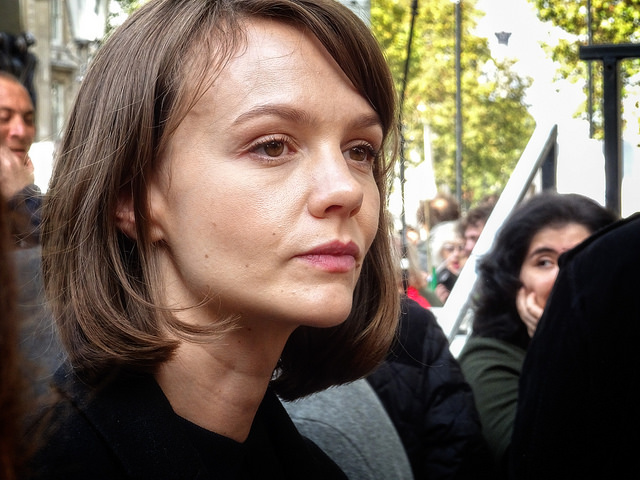
Flippin’eck. That Carey Mulligan can act. I had a fair idea from her turns on the telly and in films. She has an unerring knack of choosing roles in dramas that appeal to myself, the SO, and often both of us, in itself a rare skill. I have never seen her on stage though, having missed the 2015 revival of Skylight, (and been told I was a fool to do so), and her stint as Nina in the RC Seagull some years back, that being a dark period in my theatre-going career.

This is a revelation though. Dennis Kelly’s play, a 90 minute monologue which follows the relationship of an unnamed woman from first encounter to its brutal conclusion, provides plenty of material for her to get her teeth into, but even so, this is jaw-dropping stuff. You might reasonably arraign Mr Kelly’s story for being overly transparent and tendentious, but no matter, the points he makes about male psychology and its propensity to violence are valid even when spelled out this volubly. Ms Mulligan copes effortlessly with the shift from comedy to tragedy. We may guess the form of the tragedy fairly early on but it doesn’t make it any less gut-wrenching and Mr Kelly takes care to disclose ahead of the narrative curve to keep us involved.

The opening anecdote, when She first sees Him shame a couple of queue jumpers at an airport, is genuinely very funny. Carey Mulligan could successfully moonlight as a stand-up on the basis of this scene, impeccable timing and winning glances to the audience. The tone shifts through the recognisable description of the passionate early days of the relationship into marriage, domesticity and the birth and early years of children Leanne and Danny. She blags her way into a job as PA to a development executive’s assistant in documentary film-making, then sets up her own company, wins awards. His business meanwhile fails. He disintegrates.

The story is told through a mixture of “chats” which incorporate Her reflections on his male behaviour and identity, which betray more universal instruction, and “scenes” where She is looking after the two, imaginary kids. The play of the children declares there gender with Danny’s games always informed by violence. These scenes are played out in a contemporary interior lit entirely in pale blue in Es Devlin’s amazing set. We glimpse the true colours only very briefly in the switch from the chats, apart from one or two significantly highlighted objects. This device, together with the somewhat stilted, though still very convincing way that Carry Mulligan “interacts’ with the absent children, is ambitious and striking. It also offers an early clue as to where the drama is heading.

With an actor on this form I am tempted to suggest that the directing task for Lyndsey Turner was made easy. Not so. Mr Kelly’s text contains some remarkable language but the stark message and the “dualistic” structure required careful management to extract the full dramatic power, (and justify the tribute to Euripides), to avoid looking flat-footed.

I suspect that this may prove to be a play that finds it hard to outlive its first performer. We shall see. What I do know is that if Carey Mulligan steps on to the stage again, just go. Whatever she’s in and wherever it is.


Gundog at the Royal Court Theatre review ***

geograph-3297652-by-Lewis-Clarke

Gundog

Royal Court Jerwood Theatre Upstairs, 15th February 2018

Always a tricky business knowing what to pick out when booking in advance for productions at the Royal Court. Obviously if it is a big name playwright, or someone with previous form, probably best to get in there sharpish and buy blind. For newer writers it is a trickier proposition. Even I can’t justify/manage pitching up at everything they stage but waiting until productions open, or worse still, reviews trickle in, is a losing strategy given the generally high quality of the offer from the world’s greatest “writers’ theatre”.

Now I really liked the sound of Simon Longman’s debut major play Gundog. The blurb suggested a meditation on the rigours of rural life, the passing of time and the impact of a stranger. With maybe the prospect of a twist. Which, broadly, is exactly what it was. Without the twist. We were presented with a stage of mud, lots of mud. (I have seen a few of these indoor fields now: Joe Hill-Gibbons’s Midsummer Nights Dream at the Young Vic and Pina Bausch’s Rite of Spring at Sadler Wells – la di dah. In this case I spent maybe a little too long contemplating how long it took, and who got roped into helping, to get the earth up and down the Royal Court stairs/lifts).

Loud bang, A flash of light and we are presented with a dead lamb, (not real so keep calm animal lovers). On stage are garrulous Anna, holding a shotgun, taciturn Becky, and Guy, who is plainly “not from round there”. Turns out Anna and Becky are sisters who run the failing family sheep farm and migrant Guy Tree, (“no-one can pronounce my real name”), has wandered into their world. He stays to help out. For a few years. Mum died way back. Dad, unseen, is mired in deep depression, mourning for his wife. Grandad is losing his marbles, though with flashes of lucid pathos. The less than prodigal son Ben returns after having conspicuously failed to secure his fortune. He’s even had his shoes nicked.

Time passes. In the first and third acts, forwards. In the second act, backwards. Each act ends with the death of an animal, the final and fourth act with a torrential storm. Disease ravages the flock, perhaps caused by Ben’s ineptitude, and the already precarious economics of the farm unravels. The sisters take to rustling. This is a miserable existence make no mistake. Dad takes his own life. Ben has tried and failed to escape, Becky has no choice, consumed, as she is, by the business of running the farm, Anna sees no point in any other life, she has given up on school, and Guy has nowhere else to go. Certainly not the idyllic arcadia we urban softies might dream about.

Lighting courtesy of Lee Curran, sound from Peter Rice, Chloe Lamford’s aforementioned set and Vicky Featherstone’s direction all work to emphasise this static, invariable world. Mr Longman’s dialogue, which is laced with dark humour, and the structure of the play feels very accurate. Perhaps too accurate for without any shift in tone or plot there are times when this became a little wearing. The idea is laudable, the execution powerful. Just a little too, er, still.

Ria Zmitrowicz as Anna once again caught the eye as she did in Alistair McDowall’s wonderful play X at the RC a couple of years ago. I look forward to seeing Rochenda Sandall again based on this understated portrayal of Becky. Alec Secareanu is a talented Romanian actor who, unsurprisingly, convinced as Guy. Alan Williams was as dependable as ever as grandad Mick and I know just how good Alex Austin, who played Ben, can be from his performance in Thebes Land at the Arcola, though in this he pushes a little at the histrionic.

Definitely worth seeing but maybe Simon Longman’s play is just a little bit too enclosed, as it were. The malleability of time and the power of nature are absorbing themes to explore, (look no further than the stage adaption of the mythic Picnic at Hanging Rock brought to the Barbican by Aussies Malthouse and Black Swan State Theatre). The precariousness and grind of rural existence is also a more than legitimate subject for artistic exploration. Mind you this was more satisfactorily captured by Hope Dickson Leach’s recent debut film The Levelling, which also had its own, mysterious plot (The Levelling film review *****). Still Simon Longman is clearly a writer with real credibility so I await his next move with considerable interest.


Saved at Guildhall School Milton Court Studio review ****

bondbw

Saved

Milton Court Studio, 10th February 2018

Now one of the manifold pleasures of being a layabout theatre addict is the ability to pitch up midweek to one of the invariably excellent performances served up by the students at London’s prestigious drama schools. Outstanding talent, likely to go on to glittering careers, matched by similarly gifted technicians and creatives and often guided by big name directors and designers. The auditoria at the Guildhall and RADA are some of the best in London, state of the art, comfortable, with perfect sight lines, and tickets are a bargain.

What’e not to like. Well as one, slightly confused, old boy at one performance I attended remarked afterwards, “they’re a bit young aren’t they”. Even if we accept the literal truth of this it rarely matters, with audaciousness often trumping inexperience. Best of all it often gives the curious theatre-goer a chance to see “classic” plays which maybe don’t often get an airing for one reason or another.

That certainly describes Saved. Edward Bond’s (in)famous 1965 play. The play premiered at the Royal Court Theatre to a private audience, as writer and director, William Gaskell, refused to make the cuts demanded by the Lord Chamberlain’s Office to secure a licence. The Lord Chamberlain decided to prosecute. The theatrical world was outraged, and, despite those involved in the production pleading guilty and getting fined, the absurdity of this censorship eventually helped to hasten the demise of this licensing system in 1968. The play was then immediately revived at the Royal Court, but was rarely performed thereafter, (in large part because Mr Bond rejects most professional requests to perform it), until Sean Holmes, (of course given his pedigree with provocative theatre), took it on in 2011 at the Lyric Hammersmith.

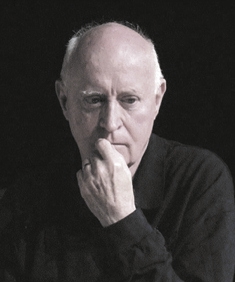
Autodidact Edward Bond, (there he is above), brought all the violence he had seen through the war years, and in his working-class upbringing, to bear on Saved, his second full length play. Indeed violence is the theme that runs through much of his work and his influence on later generations of British playwrights is patent. Saved is set in the South London of the 1960’s, socially, culturally and economically impoverished. This is no “kitchen-sink” period piece though. In some way it could have been written yesterday with a few tweaks to the language, (it being a fairly hackneyed, “gor-blimey”, argot with fairly pedestrian swearing).

Len and Pam hook up. They go boating, where Pam meets Fred, who she falls for even though he is a prize sh*t. Len has moved in with Pam and her parents, Mary and Harry. Theirs is not a happy marriage. Pam has a child by Fred, though neither turn out to be naturally suited to parenthood it’s fair to say. Fred goes fishing, watched by Len. Fred’s mates turn up ,as does Pam with the baby. She leaves the baby. Goading each other on, the gang taunts, and then stones, the baby in its pram. When Pam returns she doesn’t realise her child is dead. Fred is jailed for his part in the crime. When he gets out Pam begs him to come back to her. Len and Mary flirt. There is a huge row. Len fixes a broken chair: offering some hope of redemption at the end.

It may sound like bleak, visceral stuff. The central scene which so offended the critics at the public premiere is brutally shocking. As shocking as I have seen on stage. Violence may permeate contemporary culture, but theatre makes it more “real”. To the gang the baby is no more than a “thing”, such is their poverty of empathy. Despite this extreme, the play seems to me to present some real truths about an alienated society and the psychological damage it inflicts on people. No need to chuck drink, drugs, crime, consumerism, media into the mix. The essence of the relationships, fuelled by anger, resentment, bitterness, jealousy, boredom and frustration, rang true to me without foregrounding these addictions. The violence simmering under the surface of humanity colours each scene, each line, each interaction. The tone is not moralising, hectoring or judgemental. These are delicate, damaged, hopeless people. The final, wordless scene, is almost as affecting as the central, brutal scene.

Edward Bond’s plays were increasingly ignored from the 1980s, in part reflecting his own dissatisfaction with contemporary theatre practice. His most recent plays have been largely confined to the Big Brum company in Birmingham in this country, though his work is more widely performed in Europe, especially France. This is a shame, if that is the right word for drama suffused with violence. I would love to see, Early Morning, the surreal satire that followed Saved, or his other “classic”, Bingo, which puts a violent twist on Shakespeare’s later years. In fact, on the basis of Saved, I would try any of his work now that I have read about it.

He does though allow students to take on his work regularly. Which gave this accomplished cast an opportunity they all grasped with both hands. Toheeb Jimoh as Len had something of the observer about him, complicit in his manipulation by Pam, Fred and Mary. Shalifa Kaddu’s Pam was riveting, initially confident, crushed by Fred’s rejection, finally consumed by anger. I was also extremely impressed by Ellie Rawnsley as Mary, who effortlessly captured the brassy bearing and rancour of a character twice her age. Similarly Alex James-Cox, with very little dialogue until his heart to heart with Len near the end, shows Harry as a careworn, shuffling man clinging to routine to fill the void of his life and marriage. Joe Bolland, who played Fred, was perhaps the most assured. This is a powerful, brilliantly constructed play, make no mistake, and this cast, under experienced director John Haidar, did it real justice.