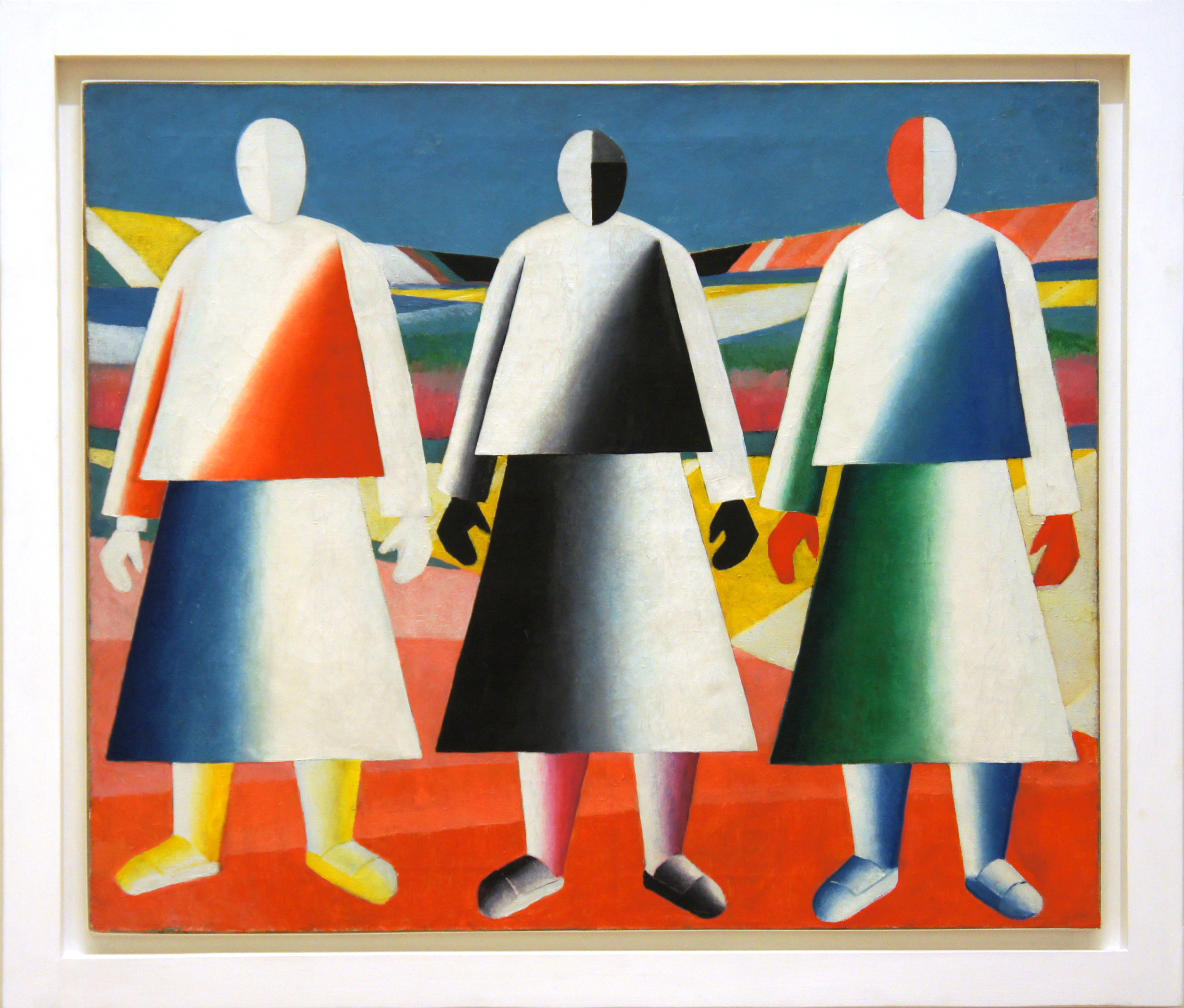
Rembrandt’s Light at the Dulwich Picture Gallery (and others) review *****

Rembrandt’s Light

Dulwich Picture Gallery, 17th January 2020

The Tourist has been a bit remiss in keeping up the records on art exhibitions over the last few months so in addition to the above he will offer a few thoughts on other visits.

Rembrandt‘s Light first. The DPG exhibition space is bijou. Just four rooms. Which means you have to time your visit to get a good look. Left this late in the run but not too late but was still worried it might be busy. No need to worry. Late in the day worked.

It’s Rembrandt. With a twist as the rooms imagine the kind of light that the old, (and young with plenty of early/mid work on show,) boy was trying to capture. Like some sort of modern designer/cinematographer. Hence the drafting in of one Peter Suschitzy, a cinematographer on shite like Star Wars to light the show. Daft idea no? Still doesn’t matter. It’s Rembrandt. And by cobbling together loans from the great Rembrandt collections, including the likes of the Louvre and the Rijksmuseum, these 35 often still breathtaking paintings, and a fair few drawings and prints, show just what RHvR could create from one light source and often simple subjects.

So if you ignore all the stupid effects and dispense with an audio guide, (why do I need to listen to someone chirruping on when I should be looking and seeing, information can come later, or before), you’ll be reet. No need to filter these marvels through contemporary reception. If a punter wants to turn art into a flat, lifeless, colourless thumbprint on a phone let ’em I say. Though why they feel the need is a mystery to me. But if you want the hair-raising thrill of imaging just how RHvR fight multiple ways to shine a light on darkness, metaphorically as well as figuratively, then stand and stare.

The portraits at the end, (though I was floored by the Portrait of Catrina Hooghsaet from a private collection – lucky bastard), some of which will be very familiar to Londoners, and the earlier works (and School of) are a little less diverting. However the core of the exhibition, either side of the fake candlelight octagon, (and excluding the mess the concept made of Christ and Mary Magdalene at the Tomb from the Queen’s collection), play a blinder, largely with more intimate works than the blockbusters left at home in Amsterdam. The Flight into Egypt (see above), The Denial of St Peter, The Presentation in the Temple, the studio room etchings and drawings, many just student exercises, Philomen and Baucis, The Entombment, present drama where the biblical sources barely matter. Who’s that there lurking in the darkness? What’s going on in their minds? What happens next?

But mostly you wonder how this complicated man could churn out this sublime stuff for money and why pretty much no-one frankly has been able to match him since.

What else then? In reverse order.

The Bridget Riley retrospective (****) at the over-lit Hayward gallery was proof that less is more when it comes to the impact of the work of the eye-boggling Op Art pioneer. I much preferred the early, monochrome dotty and “folding” checkerboard works, recently revisited with the latest, (she is still had at work aged 88), limited colour palette but was also quite partial to the candy stripes and parallelograms. The Goldsmiths student drawings and life studies, and the later, private, portraits, were new to me but the plans and sketches felt like padding. I might have preferred a little more information on the how and why of her work; the response to nature and her lifelong fascination with how we perceive and see, though the debt to Georges Seurat was acknowledged. And maybe a little bit of science: after all experimental neuroscience and psychology now offer explanations for her magic which weren’t really there in the 1960s when she found her practice. Having said that the way she messes with eyes and brain, rightly, continues to delight pretty much any and every punter who encounters her work. Perhaps explaining her popularity; this was her third retrospective in this very space.

Lucien Freud‘s Self-Portraits (****) at the Royal Academy highlighted both the honesty and the cruelty the great painter brought to his depictions of the human form. The early work reveals the egoist presenting a front to the world – plainly this was a geezer who loved himself. The game-changing addition of Cremnitz white to his palette to create the full fat flesh in which he revealed. The room of often disturbing portraits of friends and family where he lurks in the background, often in reflection. Through to the final, famous, aged nude self portrait where finally he turns his unflinching eye truly back on himself. Seems to me he channeled a fair bit of Grandad Sigmund’s nonsensical methods and conclusions into his work. There is confrontation in every painting: artist and subject, subject and observer and, thereby, artist and observer, this latter being the relationship that most intrigues. It seems he wants to exert control over us but ultimately he cannot, in the same way that however hard he looks, (his sittings were notoriously punishing), he cannot truly capture what he sees.

I like to think that Anselm Kiefer would be the life and soul of the party, a witty raconteur, putting everyone at ease. If you are familiar with his work you might see this as optimistic. AK is the artistic conscience of Germany, now 74, but still constantly returning to its past and particularly the horrors of Nazism and the Holocaust. The monumental scale of his works, the materials, straw, ash, clay, lead and shellac, the objects, names, signatures, myths and symbols, the themes of decay and destruction, the absence of humanity, all point to his provocation and engagement with his birth country’s history. And, in this latest exhibition at the White Cube Bermondsey, Superstrings, Runes, The Norns, Gordian Knot (****), apparently the devastation that we have wrought on the earth itself. The blasted landscapes are thick with paints, emulsions, acrylics, oils and, of course, shellac, then overlaid with wire, twigs and branches, as well as metal runes, axes and, another AK constant, burnt books. The vitrines which make up superstrings are full to bursting with coiled tubes overlaid with equations in AK’s trademark script. As scary, as sinister and as insistent as all his previous work.

Kathe Kollwitz was an artist who confronted war, as well as poverty and the role of women, not as abstract history but as immediate reality. The small, but perfectly formed, Portrait of an Artist (*****) exhibition at the British Museum (after a UK tour), showcased 48 of her most important prints, woodcuts and lithographs, drawn primarily from the BM archives and elsewhere. Self portraits, premonitions of war, maternal grief, working class protest, all subjects stir powerful emotion but also mastery of line and form.

Elsewhere, Bomberg and the Old Masters at the National Gallery had minimal new to me works on show by IMHO the best British artist of the C20, Leonardo: Experience a Masterpiece at the NG was a joke, I have no idea why anyone would like William Blake‘s (Tate Britain) childish illustrations and Nam June Paik‘s (Tate Modern) admittedly prescient artistic investigation into technology from the 1960s onwards left me nonplussed. The Clash collection of memorabilia at the London Museum was, like so many of these music surveys, just pointless nostalgia.

We (BD and I) didn’t really devote enough time to Olafur Eliasson: In Real Life (****) at Tate Modern, it was pretty busy, but message and invention overwhelm, even if it all feels just a bit too Instagram slick. I dragged the family around Kew Gardens one evening in September last year to see Dale Chihully‘s (****) beautiful organic glass sculpture. I was mightily impressed, SO, BD and LD less so. Bloody annoying traipse around the west end of the park when all the action was concentrated around the Palm House.

Which just leaves the massive Antony Gormley (*****) retrospective at the Royal Academy. I know, I know. There is nothing subtle about AG’s work or “brand” but it is undeniably effective, even if its meanings are often frustratingly unspecific. Coming at the end of an already dark November day, to peer at the utterly flat, and silent, expanse of briney water which filled one room, called Host, was worth the entrance fee alone. It triggers something in collective memory and experience though fuck knows what he is trying to say with it. Same with Iron Baby nestling in the courtyard. Thrusted iron shell men modelled on AG himself, famous from multiple public art installations globally, coming at you from all angles, defying gravity. AG’s body reduced to arrangements of cubes. The imprint in toast. A bunch of rubbish drawings and body imprints. A complex coil of aluminium tube, 8km in total filling one room and a mega-skein of horizontal and vertical steel poles, enclosing, of course, a figure in an empty cube, in another. A metal tunnel that the Tourist was never going to enter in a month of Sundays. Sculpture as engineering to signal an eternal, and inoffensive, spirituality. AG as Everyman. Easy enough to pick holes in but just, er, WOW.
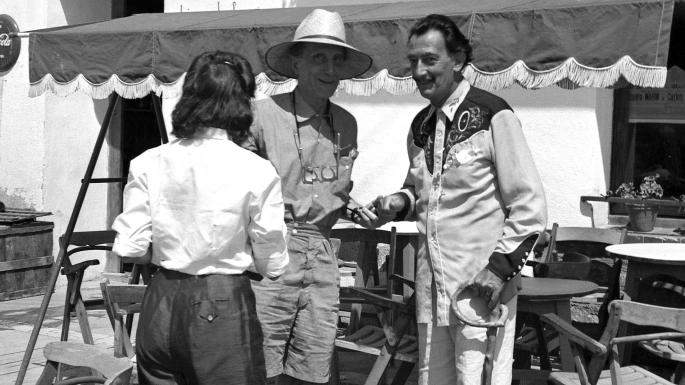

Dali/Duchamp at the Royal Academy review ***

methode2fsundaytimes2fprod2fweb2fbin2fac990400-a81f-11e7-b7be-58a193c81665

Dali/Duchamp

Royal Academy, 29th December 2017

I don’t really get Salvador Dali. Maybe it is the over-familiarity with images of his work. Maybe it is the obviousness of the in-yer-face Freudian, symbolism. Maybe it is the flat, lifeless effect of his paintings. Maybe it is the fact that once he found a formula that worked he didn’t let go. Or maybe it was the fact that he was a bit too full of himself. I admit there is a lot of fun to be had in scouring the canvases, (and, in this fairly concentrated display, you get a fair few for your money), for his wackier conceits. But it is a transitory, and for me, slightly cheap, pleasure. Mining the sub-conscious always seems to require Surrealists to think just that little bit too long and hard about what they want to show and tell. Contrived not automatic.

Now in contrast your man Marcel Duchamp was the real deal. I am glad I have no artistic talent, (actually I am not but I have learnt to live with the disappointment), because if I were a plastic artist then I would be constantly peeved by the discovery that any great idea in modern art had already been realised by M. Duchamp. The rejection of painting and embracing of “non-traditional” media, ready mades, “anti-art” and the challenging of the commodification of art, conceptualism, game-playing and changing identity, Scratch the surface of many a contemporary artist and M. Duchamp will be visible and, without him, public discourse on the question of “what is art” would be far more muted.

The exhibition does an excellent job in portraying the friendship between these ostensibly disparate figures. Both were driven by a need to tear down convention, in art and life, and their understanding clearly went beyond a shared passion for smutty jokes and dodgy puns. IMHO though Dali’s impact, in retrospect, has been superficial, a poster art dead end, whereas, as this exhibition fleetingly shows, Duchamp’s artistic enquiry was profound. Whatever your reaction to a urinal turned upside down and signed R, Mutt you will have had a reaction. And this is 2017, (well 2018 since it has taken this long to get off my lardy arse to write this). Imagine what those lucky few observers must have thought when then first saw this 100 years ago. An artist with a female alter-ego. Commonplace now but revolutionary then. A bloke who convinces everyone he has given up art to become a chess professional. Brilliant. Taking stuff he found and sticking it together to make new things. Most major modern and contemporary artists from the middle of the last century onwards, and students today, will have had a period when they have a go at this. The results are normally awful. But Duchamp got there first. Sticking a tache on the Mona Lisa. A bona fide meme if I am not mistaken, so be grateful to M. Duchamp. Chance, language, gesture, semiotics, maths, provocation, the rejection of “craft”. All fundamental tenets of the today’s artistic conversation, all “invented” by M. Duchamp.

As you might expect carving a way through the work of these two boundary-breakers, given their eclectic output, and constraints on what they could beg, steal or borrow, likely presented a headache for the curators. They have chosen to cram as much as they can into a few of the RA rooms, which highlights the imaginations of both artists even if it does make viewing a jostled affair. It also means there is little escape from the overt misogynism of both. I was most interested in Duchamp’s early paintings (Cezanne’s influence plain to see), the wealth of holiday snaps, Duchamp’s St Sebastian, that moustache in L.H.O.O.Q. , Dali’s experiments with Cubism, then Duchamp’s (so much better). Best of all The Bride Stripped Bare …. , reconstructed by Richard Hamilton, and Duchamp’s messing around with optical discs.

I suspect I was in the minority but I would have been so much happier just with Duchamp alone, with as much contextual material as the curators here, Dawn Ades and William Jeffett, Sarah Lea and Desiree de Chair. would have dared to throw at me. Even so there was much to chew on here and more to go away and learn.

Jasper Johns at the Royal Academy review ***

3220

Jasper Johns “Something Resembling Truth”

Royal Academy of Arts. 10th November 2017

So here’s my theory. Sometime in the mid 1970s the real Jasper Johns was kidnapped by aliens and replaced with a cloned doppelganger. All the AI software was packed in but they forgot to prevent him from clicking “remind me later” when the updates rolled in. Which means that somewhere out there some little green fellas with one eye and a pokey-out antenna in a parallel Piccadilly are right now swooning over some sexy encaustic rendition of a far away galaxy. Whilst we look at bits of string dangling over some grubby canvasses or some vague tracings from a man too preoccupied with his own mortality.

How else to explain the chasm between the powerful and seductive work of the 1950s and 1960s and the relatively mundane offerings of the last few decades? This large scale retrospective kicks off with an introductory room with an iconic 1967 Flag, a trademark 1961 Target, and one of the grey cross hatched paintings from the 1980s where the doors have closed. Which seems prophetic. The curators have chosen to follow a broadly chronological format but have snuck in some of the later works to emphasise the links between the different periods of Mr Johns illustrious career. For me it just serves to highlight the fade in the power of the ideas and of the execution.

Mind you when it’s good it’s bloody marvellous. I can’t see how anyone could fail to be blown away by their first sight of Johns’ US flags from the mid 1950s. Conjured by a dream apparently, begun in oil but finished with strips of paper and that drippy, waxy encaustic paint, they have the material quality of their Abstract Expressionist predecessors but none of the boorish arrogance. Here is an everyday image, rendered realistically, but of a symbol charged with meaning. A sign of the signified. Having experienced this eureka moment there was no holding JJ back in his hunt to give us ““things that are seen and looked at, not examined”. Targets, the contents of his studio, hooks, coathangers, cutlery, beer cans. And the maps, those marvellous maps. I love maps, (I confess, without shame, to a geography degree), but these are something else. Of course I say maps, but bar one diversion, it is just one country and one typology. And then the numbers. One font, multiple variations, multiple materials. I wanted to go and lick the wall of bronzes. Don’t ask me why. Had to settle for staring.

All this symbolic stuff mixes the best of the pop, the conceptual, the minimalist and the Duchampian everyday with the beauty of the making. The fascination with language and meaning and the urge to deconstruct the painting itself led to some other jaw dropping stuff. Paintings prised apart by balls, the dissonance of primary colours and their linguistic identities, a canvas bitten by a bloke, presumably Johns. Bits of bodies. The bronzes perfect in their verisimilitude and the inspiration for subsequent generations. Love it.

Then he discovered that wretched cross-hatching and it all came off the boil. I can see the urge to portray repetition, literalness, the absence of meaning. But take away the mystery of the symbols and you risk banality. Trying to make us think there is something behind this doesn’t cut it for me. Same with the references to Munch, the collaboration with Samuel Beckett, the Catenary series, the revisit of his Seasons work which take up the second half of the exhibition. There is still much to chew on for sure and the imagination is fertile. They just don’t grab you by the throat like the earlier work.

In contrast to his mate Robert Rauschenberg, whose sense of fun and collaborative urges meant he could keep leaping from one bonkers project to the next, I reckon this dissection of the everyday might have been a bit of a trap for Jasper Johns which proved tricky to escape. Which is maybe why he has ended up quoting himself, always a bad sign. Still lucky for us he fell into it in the first place as we would be much poorer without it. As a reminder “art” is simply that which the rich and powerful buys, (with their own money or yours via pubic galleries), in this most perfect of capitalist markets. But, luckily for us plebs, the key externality is the opportunity to see some life enriching stuff. The first five or so rooms of “Something Resembling Truth” are about as good as it gets in terms of the second half of the C20 for such stuff.

Some ideas for the culturally inclined in London

london-travel-guide-lede

Here is a very brief round-up, (apparently I can drone on a bit so have tried to be disciplined), of the current and forthcoming major theatre and exhibition events in London that have caught my eye (and ear). I have a list of classical concerts which is still good to go for those that way inclined (Some forthcoming classical music concert ideas (with a bit of nostalgia thrown in) and will take a look at the best of the forthcoming seasons at the two major opera houses in another post.

No particular order and not at all obscure. There should be tickets available for all of these but in some cases you may need to get your finger out.

Hope this helps if, unlike me, you are not over endowed with time.

Theatre

I can vouch for the first four below and the rest are those which I think are likely to be the most likely to turn into “must-sees”.

  • Hamlet – Harold Pinter Theatre – June to September 2017

If you think Shakespeare is not for you then think again. Andrew Scott as our eponymous prince could be chatting to you in the pub it is that easy to follow (mind you, you’d think he was a bit of a nutter) and Robert Icke’s direction is revelatory. Plenty of tickets and whilst it’s not cheap they aren’t gouging your eyes out compared to other West End shows. Here’s what I thought.

Hamlet at the Almeida review *****

  • The Ferryman – Gielgud Theatre – June to October 2017

This will almost certainly be the best play of 2017 and will be an oft revived classic. It is better than writer Jez Butterworth’s previous masterpiece, Jerusalem. Prices are steep but the Gielgud is a theatre where the cheap seats are tolerable. If you see one play this year make this it.

The Ferryman at the Royal Court Theatre review *****

  • Babette’s Feast – Print Room Coronet – to early June 2017

There are a couple of weeks left on this. Probably helps if you know the film or book. I was enchanted though proper reviews less so. Loads of tickets, cheap as chips, not demanding at all, lovely venue.

Babette’s Feast at the Print Room Coronet review ****

  • Othello – Wilton’s Music Hall – to early June 2017

Again just a couple of weeks left here. Once again perfect Shakespeare for those who don’t think it is for them. Big Will’s best play and an outstandingly dynamic production. Another atmospheric venue, though I would say get right up close. A bargain for this much class.

Othello at Wilton’s Music Hall review ****

  • The Tempest – Barbican Theatre – July and August 2017

This is the RSC transfer from Stratford. Simon Russell Beale, our best stage actor, as Prospero. Some fancy dan technology is employed. Reviews generally positive though you always get sniffiness from broadsheets whenever RSC plays a bit fast and loose with big Will. Not cheap but at least at the Barbican you will be comfy (if you don’t go too cheap).

  • Macbeth – Barbican Theatre – 5th to 8th October 2017

More bloody Shakespeare. Literally. On this you are going to have to trust me. Ninagawa is a Japanese theatre company renowned for its revelatory productions. So in Japanese with surtitles. But when these top class international companies come to the Barbican it is usually off the scale awesome. I’ve been waiting years to see them. Enough tickets left at £50 quid a pop but it will sell out I think.

  • The Suppliant Women – Young Vic – 13th to 25th November 2017

Reviews when this was shown at Royal Lyceum in Edinburgh were very good. Aeschylus, so one of them Greeks, updated to shed light on the refugee crisis. Maybe not everyone’s cup of tea, and you can probably wait until closer to opening, but I still think this will turn into a must see.

  • Ink – Almeida Theatre – June to August 2017

Writer James Graham’s last major outing, This House, about politics in 1970s Britain, was hilarious and insightful. This is based on the early life of Rupert Murdoch so expect a similar skewering. Directed by Almeida’s own Rupert Goold with Bertie Carvel the lead (the sh*t of a husband in that Doctor Foster off the telly). I have very high hopes for this,

  • Against – Almeida Theatre – August and September 2017

New play which sounds like it is about some crazy US billionaire taking over the world (I could be hopelessly wrong as Almeida doesn’t tell you much). Written by American wunderkind Chris Shin, directed by master of clarity Ian Rickson, and with Ben Wishaw in the lead. Don’t know how much availability as public booking only opens 25th May, but I would get in quick here and buy blind. Almeida now a lot comfier with the padded seats and still a bargain for what is normally world class theatre.

  • Prism – Hampstead Theatre – September and October 2017

New play from the marvellous Terry Johnson who writes brainy comedy Robert Lindsay in the lead role of a retired cinematographer. I have a feeling there will be more to this than meets the eye (!!) and will buy blind on the public booking opening. Usually around £30 a ticket so if it turns into a hit, as Hampstead productions sometimes do, it is a bargain.

  • Young Marx – The Bridge Theatre – October to December 2017

So this is the opener from the team at the Bridge which is the first large scale commercial theatre to be opened in London for decades. The genius Nick Hytner directs and the play is written by Richard Bean and Clive Coleman. The last time these three came together out popped One Man, Two Guvnors. Rory Kinnear and Oliver Chris (trust me you will know him off the telly) play the young Marx and Engels in London. Hard to think of a set up that could get me more excited but if any part appeals to you I would book now. There are loads of performances so no urgency but, if they have any sense at all, the seats here will be v. comfy with good views as it is all brand new, so taking a punt on a cheap seat will probably turn out well.

  • Julius Caesar – The Bridge Theatre – January to April 2018

Bridge again. Julius Caesar so probably need to know what you are letting yourself in for as solus Roman Shakespeare’s can sometimes frustrate. BUT with David Morrissey, Ben Wishaw, David Calder and Michelle Fairley, it is a super heavyweight cast. Same logic as above – it might be worth booking early and nabbing a cheap seat on the assumption they would be mad not to serve up the best auditorium in London if the venture is to succeed.

  • The Retreat – Park Theatre – November 2017

The Park often puts on stuff that sounds way better than it actually turns out to be, but this looks the pick of its forthcoming intriguing bunch. Written by Sam Bain (Peep Show and Fresh Meat) and directed by Kathy Burke. Comedy about a City high flyer who gives it all up but can’t escape the past. If anything is guaranteed to wheel in the North London 40 and 50 somethings then this is it. No cast announcement yet but I bet they rope some comic into the lead.

  • The Real Thing – The Rose Theatre Kingston – 2nd to 14th October

A co-production with Theatre Royal Bath and Cambridge Arts Theatre of one of Stoppard’s greatest plays. I really want this to be a cracking revival for my local.

Exhibitions

Here is the pick of the forthcoming blockbusters which I hope to get to see. The Jasper Johns and the Cezanne Portraits are the ones I am most excited about.

  • Giacometti – Tate Modern – just opened until 10th September 2017
  • Pink Floyd: Their Mortal Remains – V and A – until 1st October 2017
  • Into the Unknown: A Journey Through Science Fiction – Barbican Art Gallery – from 3rd June 2017
  • Grayson Perry: The Most Popular Art Exhibition Ever! – Serpentine Gallery – from 8th June 2017
  • Jasper Johns: Something Resembling Truth – Royal Academy – from 23rd September 2017
  • Opera: Passion, Power and Politics – V and A – from 30th September 2017
  • Cezanne Portraits – National Portrait Gallery – from 26th October 2017
  • Monochrome: Painting in Black and White – National Gallery – from 30th October 2017
  • Impressionists in London – Tate Britain – from 2nd November 2017
  • Red Star Over Russia – Tate Modern – from 8th November 2017
  • Modigliani – Tate Modern – from 23rd November 2017


Russian Art at the Royal Academy review ****

SONY DSC

Revolution: Russian Art 1917-1932

Royal Academy of Arts of Arts, 15th March 2017

Right short and sweet I think here. This was fascinating. But maybe less for the art itself and more for the insight into Soviet history. I only had a vague sense of the events that marked the Revolution, the civil war, the ascent of the Bolsheviks under Lenin and the dictatorship of Stalin. And even less of an idea of how art developed in the period beyond the vague shift away from the avant-garde towards a state approved Socialist Realism. Thanks to this fascinating exhibition I now know a lot more.

So what struck me most was the diversity of artistic movements jostling side by side under Lenin and how the early optimism led the artists of the period to try to support the aims of the Revolution and Bolshevism. We see how the state tried to accommodate the various strands of avant-garde art notably its arguably most important figure Malevich. But it also becomes quickly apparent that the communist regime cannot accommodate this diversity and that the attempts of artists across all forms to criticise the regime as it all starts to go wrong are brutally extinguished. Then we are left with artists either being co-opted entirely by the propaganda of the state or offering a critique in the most elliptical fashion possible. (My only previous exposure to this is through the life and music of Shostakovich so a real eye opener to see this going on elsewhere).

So I highly recommend you take a whizz around this exhibition. Optimism turns to despair and then suffering or deception. Better still contrast with the America After After the Fall exhibition also at the RA as I am sure the curators intend you to. I saw this in Paris (how lah di dah is that) and will run along again to see it shortly (it is that good) but from memory this also shows how art reveals the darker undercurrents in a society racked by economic collapse in the 1930s albeit with a veneer of optimism about the future.

In no particular order the highlights for me of the Russian Art exhibition were ….

  • Just how quickly the cult of Lenin took hold – the crowds turning out for his arrival in St Petersburg and the scale of the mourning at his death
  • Kliment Redko – Insurrection 1925 – this is in the first room I think – looking back critically on the Revolution and aftermath and a very powerful work
  • The real beauty of some of the photographs and paintings in room 2 which capture the industrial advance and the heroic worker
  • The early optimism of some of the artists as they embraced Lenin’s attempt to turn art into propaganda and perhaps how easily they were co-opted
  • The paintings of Pavel Filonov in room 3 – made up of small fragments building into beautiful images
  • Just how quickly the optimism was broken and how brutal was the repression as there were killed – there is a row of photographs of key artists in I think room 3 which conveys this eloquently
  • I don’t really get on with Malevich’s suprematist paintings but the casts of the buildings in room 4 were very interesting
  • The disastrous impact of collectivisation on rural Russia is well conveyed as is the links back to the pre-Revolutionary past – I loved the two Chagalls which have been sneaked in as part of these rooms
  • The various food coupons in I think room 7
  • The model of Tatlin’s glider is a real stand-out and a thing of beauty
  • The room devoted to Kuzma Petrov-Vodkin – never heard of him before but the still lifes in particular are really fascinating in terms of colour, perspective and content – the one with the herring is beautiful and very sad
  • The last room contrasts the daft socialist realist Stalinist sport paintings – and the complete stamping out of any Modernist art –  with a moving memorial

Sorry not so short in the end. Go take a look.