
The Doctor at the Almeida Theatre review *****

The Doctor

Almeida Theatre, 13th September 2019

He’s only gone and done it again. Robert Icke, the departing Associate Director at the Almeida, has ended on a high. Like that is any great surprise. Once again he has taken a classic text, this time Arthur Schnitzler’s dissection of anti-Semitism in pre WWI Vienna, and updated it for our contemporary age. Though to be fair it is a pretty good story even without the deconstruction and reconstruction. Yet by expanding the critique, and the central dilemma which underpins it, beyond religion and cultural identity and into gender and race, through both his adaptation and the casting, Mr Icke opens up a whole Pandora’s box of unresolved questions.

There are times when the clever dick nature of the project can irritate but, as I have said before, in the context of his Wild Duck on this stage, he is so, well, clever, that he gets away with it. His self professed aim is to clear away the fusty patina of performance history and get back to the roots of these often disturbing and radical plays. Professor Bernhardi fits the bill perfectly. But as well as bringing the play alive for a modern audience, and making them think, so hard that sometimes it hurts, Mr Icke also rarely fails to entertain us, ensuring the plot is as transparent as the message and the characters.

Of course we are fortunate that one of his favourite collaborators Juliet Stevenson was up for the central role of Doctor Ruth Wolff, an authority in Alzheimer’s disease, who heads up the Elizabeth Institute. She is a secular Jew who doesn’t suffer fools gladly and is dedicated to her calling. She is however unable to prevent a 14 year old Catholic girl from dying who has been admitted to the hospital after a self-administered abortion. She refuses to allow a priest to see the girl just before she passes, a decision that splits her team and has repercussions, social media outrage, petitions and political debate, when it leaks to the outside world. The Institute’s funding is threatened and Dr Wolf is forced to choose between her principles and self sacrifice.

This plot sticks fairly closely to Schnitzler’s original but divisions within the Institute, and outside, open up along gender and racial lines, as well as between Catholic and Jew. This is made more striking as we see that the cast largely plays characters which do not “fit” our perception of their identity and are not identified by name in the programme. Even after you grasp this central conceit it can still surprise, notably when we discover the priest is black. We see how medical ethics are shaped by professional and public opinion, and economics, and how identity, and the language which defines and contains it, can be co-opted for personal and political gain.

Naomi Wirthner is outstanding as the deputy plotting to oust Ruth, accurately capturing male entitlement. Paul Higgins plays the passionate priest with an agenda and Ria Zmitrowicz is once again captivating as the young transgender friend that Ruth inadvertently betrays. Pamela Nomvete and Oliver Alvin-Wilson, as Ruth’s loyal colleagues are pitted against Daniel Rabin, Mariah Louca and, eventually, Kirsty Rider who all see warped principle and pragmatic advantage, in turning against her. All this takes place against the clinical, fluid set design of Hildegard Bechtler, never black or white but shades of grey, with lighting and sound from Natasha Chivers and Tom Gibbons to match. And a live drumming performance from Hannah Ledwidge which serves to discomfort and ratchet up the tension.

If all this sound too tricksy, or woke-y, well it isn’t. Juliet Stevenson brilliantly portrays Ruth as some-one who is right, but hard to like, obdurate and emotionally naive. Her final monologue is shattering, played in conjunction with Joy Richardson, her lost partner, “Charlie”. RI keeps pulling us into arguments that simultaneously assert the inviolability of identity and the strictures and contradictions it can impose. The dichotomy between “freedom to” and “freedom from” as my old history teacher taught me all those years ago. The scene where the sceptical Ruth is interrogated for a TV show “Take the Debate” is the most acute satire of identity politics. And all this is done with sacrificing any momentum in the story: quite the reverse, the near 3 hours just bombs along.

The religious schism which informs the original play just about survives the expansion (primarily through the “right to life” debate which the unseen girl’s abortion precipitates), and there will be some for whom all this subversion detracts from the plot but the Tourist, once again, was awed by Mr Icke’s theatrical genius. I am signed up for his next outing with ITA in Amsterdam based on The Doll’s House and I see his version of Chekhov’s Ivanov is currently pulling then in in Stuttgart. I hope we see him back in Blighty soon though too, ideally having another pop at the Greeks, or maybe some Marlowe or Webster.

No great surprise to learn that this is transferring to the Duke of York’s Theatre from April next year. If you didn’t catch it at the Almeida here’s your shot at redemption.

Genesis Inc at the Hampstead Theatre review **

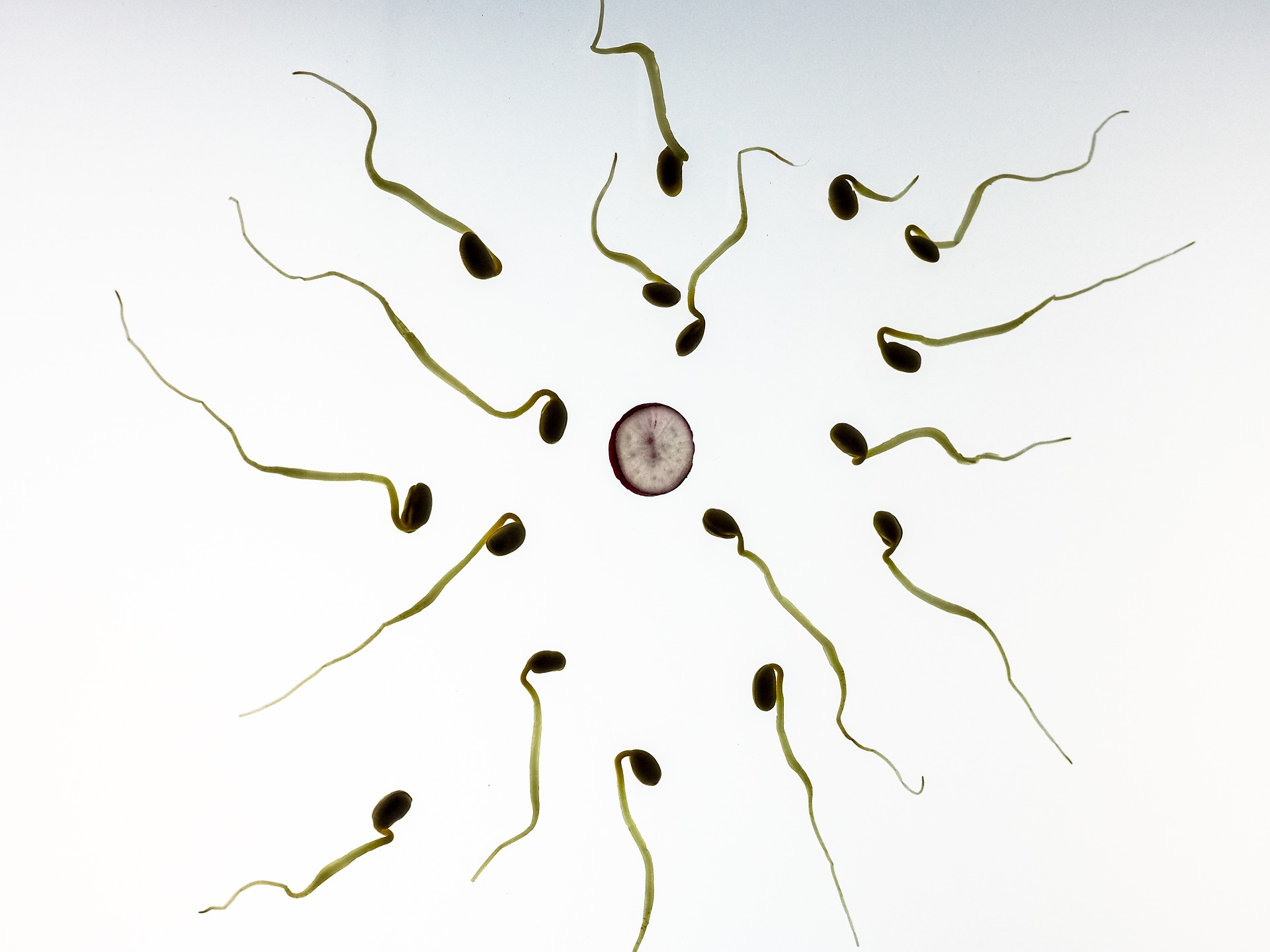
sperm-956480_1920

Genesis Inc.

Hampstead Theatre Upstairs, 25th June 2018

Sometimes less is more. A lesson that writer Jemma Kennedy and director Laurie Sansom here chose to, if not ignore, certainly bypass. Made even more frustrating because, at the kernel of this play, and in its execution, are some very good ideas. I applaud the ambition of the creative team at the Hampstead Theatre under Edward Hall, and the variety of the offerings, but it does mean that, just occasionally, there is a misfire amongst the hits and the deserved West End transfers. Some of my favourite productions over the last couple of years, (Gloria, Prism, The Firm, Dry Powder, The Phlebotomist and Describe the Night), have shown at the HT, both Upstairs and Downstairs, and often I have enjoyed them more than the critics. Sadly Genesis Inc. was not one of them.

Jemma Kennedy, who is also a screenwriter, has based her first major commission for the stage, (I believe), on her own experience of IVF treatment. She has also chosen to write a comedy. So far, so good. There is a vital personal and political story to be told about the commercialisation of reproduction and fertility in an ageing capitalist society and the dilemmas this creates. She has well-structured arguments to present, and, with distressed couple Jeff (Oliver Alvin-Wilson) and Serena (Rita Arya), and prospective single parent banker Bridget (Laura Howard), sympathetic, and sufficiently complex, characters to present those arguments. Harry Enfield plays Dr Marshall, the medical entrepreneur behind the fertility clinic that the three of them turn to. There are some pointed exchanges, sharp observation and some very funny lines,

But Ms Kennedy cannot then resist the temptation to add complication through additional characters and formal invention. And this is where the play goes awry. Bridget has a gay, impecunious, teacher friend/housemate/ex, Miles, played by Arthur Darvill who does a musical turn and falls for the priest, Father Scales (Arthur Wilson), at the school he rocks up in. He needs money to get on the property ladder so decides to sell his sperm for a few quid. Serena’s Mum, and dead Great-GrandMum, (played by Shobu Kapoor), poke their noses in. There is a sub-plot involving a social worker and salt of the earth victim of domestic violence played by the wonderful Claire Perkins, who also plays the childless alpha-female boss at the investment bank she works in. They, of course, get to IPO Dr Marshall’s clinic. Karl Marx and Susan Sontag are wheeled in. There is even a biblical scene involving Old Testament Abraham, wife Sarah, (90 years old when she conceived if you believe the big book), concubine Hagar and son Ishmael, and even, as you can probably guess by now, God himself. And maybe more startling, Serena’s ovary and vagina get to say a few words

All this is thrown in to allow Jemma Kennedy to make important points about the way in which women and their fertility has been treated through history and how the patriarchy and capitalism have degraded reproduction. This scattergun approach, taking aim at so many different targets, leads to some odd tonal shifts though, especially in the fantasy scenes, and especially at the end, and results in a distractingly complex set from Jess Curtis and some awkward on stage prop-shifting and costume-changing, (there are 42 named roles!).

It was a more than a little frustrating because there was so much in the basic premise, the satire of the moral framework which supports this unsavoury industry, which seems to trade on hope through unsubstantiated claims. Ms Kennedy is a smart enough writer I think to have made some of her points, and still got the laughs, within the context of the narrower personal stories. Harry Enfield is still an awkward stage presence, as he was in Once In A Lifetime at the Young Vic, but here his charm, alongside comic SA accent, masking a more ruthless commercial streak, seemed to work. Kirsty Besterman, as his officious assistant and sales jockey, had some choice lines. The stress that the IVF treatment put on the relationship between Jeff and Serena was well observed as was Bridget’s struggle to balance her desire for a child, by freezing her eggs, with career and demand for a relationship. Arthur Darvill has an unsteady naivety which matched his character and gamely rose to the challenges he was posed.

I can certainly see why the idea of stripping out the sub-plots and fantasy sequences would not have been an option for Ms Kennedy or director Laurie Sansom. The ambition to emulate the dense intellectual and theatrical experience of say an Angels in America, (cited by Edward Hall in the programme), is laudable but it didn’t really come off. And, by over-egging the pudding, I was left dissatisfied with the whole. Intrigued yes, entertained at times, made to think for sure, but just that bit uncomfortable that everyone involved was straining too hard to pull this off.


Nine Night at the National Theatre review *****

jamaica-655083_1920

Nine Night

National Theatre Dorfman, 3rd May 2018

You never quite know what you are going to get at the National Theatre. Mind you the Dorfman has turned into a pretty safe bet. After a painful 90 minutes, (it seemed much longer), sitting through the first half of Absolute Hell in the Lyttleton, I was praying for theatrical Heaven. And I’m an atheist. No review of Absolute Hell because we left at the interval. The SO might have been more forgiving but I can’t recall seeing a worse play. Not a worse production. Design, direction and cast did what they could but I just think there are some “classic” plays, which Absolute Hell purports to be, that are nothing of the sort. A few drunks and sexual libertines careering round a stage, with no plot or message to speak of, might do it for some plummy critics, but it doesn’t cut it in today’s world. We weren’t the only ones to feel that way. The NT has come in for a few knocks in the last couple of years, undeservedly in my view, but why this was revived, and why Joe Hill-Gibbins as director wanted to get involved, is a mystery to me.

And then there was Nine Night. Which is an absolute crackerjack of a play. OK so there are maybe a few too many plot strands spinning around and left unfinished at the end but it doesn’t really matter as there is so much to enjoy from what is wrapped up in just 100 minutes. It never ever drags. In fact I wanted more. Maybe someone could even prevail upon writer Natasha Gordon to create further plays drawn from this milieu and these characters. There is more than enough here to justify it.

It leaves me speechless that this is Ms Gordon’s debut play. I see that she is of Jamaican descent. Which was pretty handy when it came to writing Nine Night. The title refers to the ninth night after a death in Jamaican culture, a celebration involving food, drink, talking, stories, music, dancing (here Kumina rituals from eastern Jamaica) to support the bereaved, pay respects to the deceased and to properly bid them farewell. I understand that many of the traditions have been altered through time and when transposed, as here, into another place, today’s London, but the connections back to the belief systems of an Africa before monotheistic religions can be tracked. These customs are what lie behind the shattering conclusion to the play.

Single Mum Lorraine is caring for her Mum, Gloria. Her brother Robert is an entrepreneurial type married to Sophie, who is white. They are childless. Lorraine’s daughter Anita in turn has a baby daughter with partner Nathan (neither of whom we see). Lorraine and Robert have a half-sister, Trudy, who remained in Jamaica when Gloria, whose husband Alvin left her with the kids, came over to seek work as part of the Windrush generation. When Gloria subsequently passes we also get to see a lot of her cousin Aunt Maggie, and husband Vince. So we have three generations of Britons of Jamaican heritage, and Trudy herself when she comes over, all under the same roof. Celebration and, it probably won’t surprise you to know, recrimination, ensues.

By the way it is a hell of a roof. Or, to be exact. room under a roof in Rajha Shakiry’s beautifully detailed set. George Dennis’s sound design, crammed with off-stage dancehall rhythms is also a delight.

Families coming together after a death, and processing their grief, is theatrical meat and drink. This is different though because of the push and pull between two cultures in the past and in the present, the quality of the writing and the immediacy of the characters. Lorraine’s frustrations at being a single parent and then  having to give up her career to be the carer, and at having to organise all the celebrations, are universal as are Robert’s thwarted financial ambitions and his sense of male entitlement. Sophie is unconditionally accepted by her relations but still, however well intentioned, manages to say the wrong things. Trudy’s brash exterior barely conceals real pain at being left behind. Anita’s struggles to reconcile her heritage with her home also seemed well crafted to me (though I would have happily heard more from her).

Which brings me to Aunt Maggie. Now it may turn out, when this play is revived, as I am sure it will be, that it transpires that only Cecilia Noble could do justice to the part, though so juicy is the role that I doubt it. Certainly she turns in a performance that, on the face of it, steals not just this show, but every show now on across London. Aunt Maggie is a force of comedic nature who turns out a string of belly-aching laughs. The proper reviews have identified the best of these though you have to be there to really savour the delivery. If you ask me though it is Cecilia Noble’s facial expressions, (even from where I was up in the balcony), her movements and the tonal shift at the end that turn this into a shoe-in for an award if there is any justice. For just a few moments I may just have believed in a a world of spirits thanks to Cecilia. Silly me.

For my money though she is not the best actor on the stage. That accolade belongs to Franc Ashman as the careworn coper who cannot allow herself to grieve. Not to say that Oliver Alvin-Wilson as Robert, Ricky Fearon as Uncle Vince, Michelle Greenridge as Trudy, Hattie Ledbury as Sophie and Rebekah Murrell as Anita don’t deliver, they do, just that Franc Ashman lends a real depth to Lorraine. And she, rather than the prior generation, articulates the shame of a country that, even now, will appropriate a community’s labour, whether freely give or not, but will not fully accept its culture, or even, as we now see, grant it legal equivalence in belonging.

I haven’t seen any of the productions where Roy Alexander Weise was in the director’s chair though I see that he was an Assistant on some masterpieces of the last few years at the Royal Court; X, Escaped Alone, Hangmen and Liberian Girl. He is destined for great things. I cannot know what Natasha Gordon would have hoped for when she finished her draft but if it looked and worked any better than this I’d be surprised. The plot and action work like clockwork. The performances are great and in some cases, as I say, outstanding. By putting the weight on the right lines in each of the scenes Mr Weise turns the slight hurdle of over-plotting in Ms Gordon’s text into a desire for us the audience to know more about these people, their back-stories, and their futures.

Nine Night definitely ticks the National box in the National Theatre moniker. It also, unequivocally, ticks the Theatre box. So now it needs to be seen by a bigger audience. A tour maybe? A transfer? That would count as progress.