Appropriate at the Donmar Warehouse review *****

Appropriate

Donmar Warehouse, 3rd October 2019

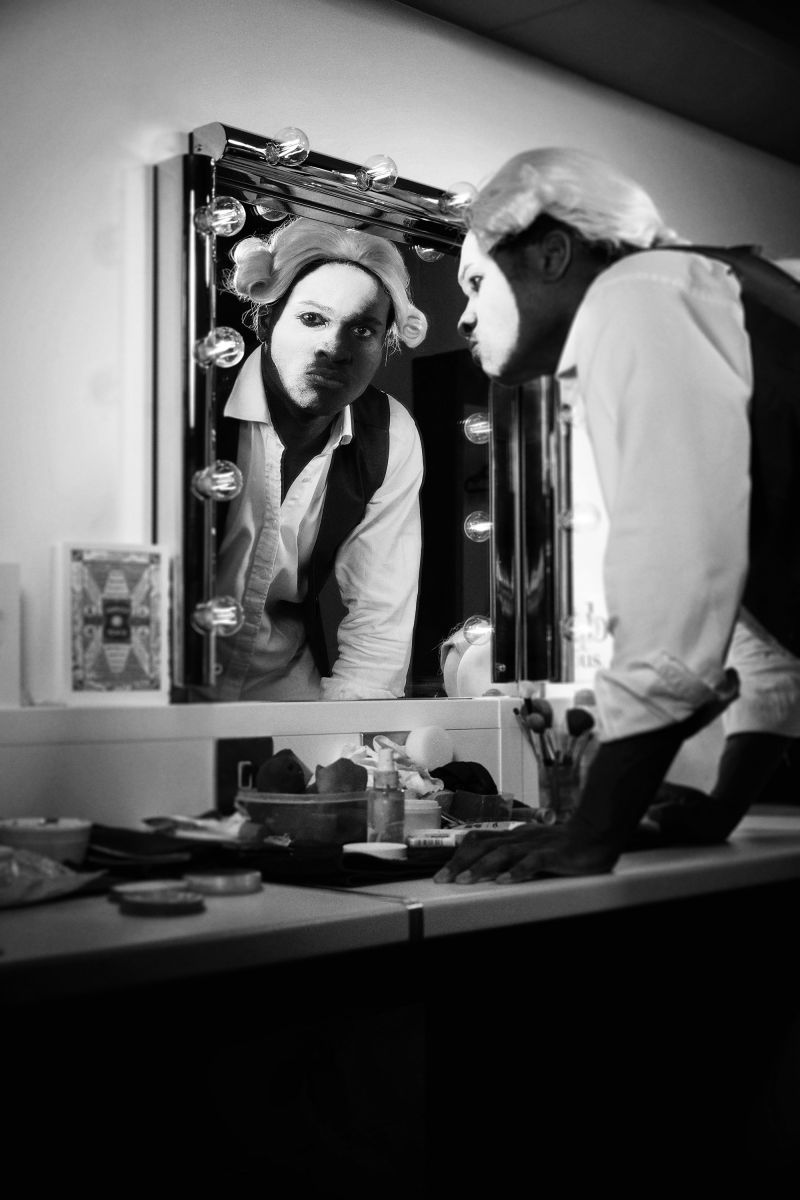
After deconstructing a Victorian melodrama in An Octoroon and satirising modern tragedy in Gloria, London now gets to see Branden Jacobs-Jenkins’s 2013 take on the dysfunctional American family drama. Only this time the secret which lies at the heart of the Lafayette family is about as shocking as it gets. Move over O’Neill, Williams, Miller, Albee, Hansberry, Wilson, Shepherd and Letts.

Franz (Edward Hogg), Toni (Monica Dolan) and Bo (Steven Mackintosh) have come back to the family home in Arkansas following their Dad’s death, with the intention of selling house and contents. Franz (Francois) is a classic fuck-up, addled by past addiction, but now seeking redemption with new, very young, new-ager girlfriend River (Tafline Steen). He is still hiding something however. Bo (Beauregarde), egged on by Jewish wife Rachael (Jaimi Barbakoff), wants, and needs, to extract the cash asap and get out. They have two kids, Gen Z tween, Cassidy (Isabella Pappas)and hyper 8 year old Ainsley (Oliver Savell). Toni, the eldest, was left to look after their increasingly difficult and infirm father, is therefore the dictionary definition of long-suffering and is keen that everyone knows it. She is joined by slacker teen son Rhys Thurston (Charles Furness).

Not much happens beyond the inevitable arguments and raking over of the past. But this is not just a forum for the frustrations and grudges of the three siblings, though the fact that they seem incapable of restraint makes that forum often mordantly comic. The discovery of a book of photographs of black lynching victims, and worse, suggests that their father, who spent most of his life in the North East before retiring to the family pile, was no upright liberal but the worst sort of racist. Legacy and loss take on a far darker tone with each character’s. mostly, worst traits reflected through the prism of this pivotal disclosure.

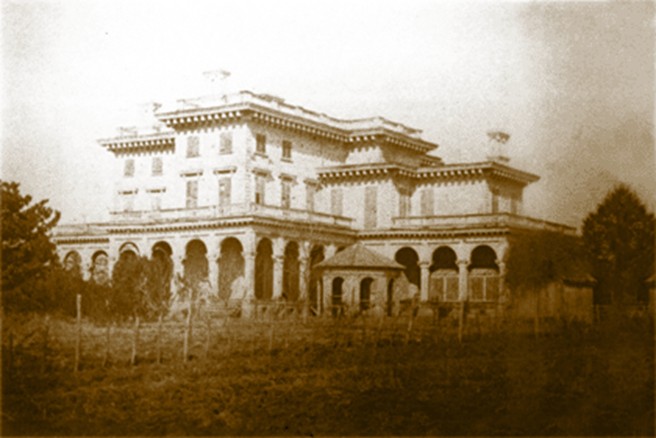
As in BJ-J’s other plays, the plotting is perfect, the rhythm sublime and the dialogue riveting. What turns this into one of the best plays of this year though is Fly Davies’s breathtaking set, the junk filled interior of the dilapidated plantation house, which together with Anna Watson’s lighting and Donato Wharton’s, into a gothic place dripping with memory and history. More than that though is Ola Ince’s direction. Ms Ince worked as Assistant to Phyllida Lloyd in the Donmar all woman Shakespeare trilogy as well as Associate positions at the Finborough, the Lyric Hammersmith, Theatre Royal Stratford East and, now, the Royal Court, where she directed Poet in da Corner. On the strength of this I expect her to sustain a glittering career. Everything fell into place faultlessly to deliver a drama which thrilled and edified in equal measure.

Now it helps that all the cast brought their A games to the performance. And it helps even more if one of them is Monica Dolan. Even when she barely has anything to work with Ms Dolan ends up being the best of the best on stage and screen. When it is just her, as in her debut play monologue The B*easts, which should be a GCSE text already, or she has something to really sink her teeth into as here with Toni (Antoinette), she is, cliche alert, a force of acting nature. Bitter doesn’t even come close. And then, as the family history unfolds, increasingly vulnerable. I had to do the thing where I look away to a point above the stage to prevent and embarrassing blub near the end. Magnificent.

Appropriate is audacious, clever, funny, twisty, surprising, absorbing and insightful. By not hammering home, or resolving, the consequences of denying America’s racial past, in fact here that past is turned by the family into potential commodity, he makes us even more aware. The play is haunted by the ghosts of dramatists past. But it knows and relishes that. And what a genius title.


Downstate at the National Theatre review *****

Downstate

National Theatre Dorfman, 17th April 2019

Sweat, Shipwreck and now Downstate. Some of the best new plays I have seen this year have come from established US playwrights. Whilst Brits can usually be relied upon to come up with more innovative theatre in terms of subject and form, (well maybe Shipwreck fits that bill), if you want talky, gritty, politicised, soundly structured drama then the American heavyweights fit the bill. I guess it reflects their history, we are currently being treated to a Miller-fest in London, one of the greats, and, socially, culturally and political, the US theatre community has much to comment on right now.

We have more to look forward to later in the year with the world premiere of David Mamet’s latest play Bitter Wheat, a “farce” inspired by the Weinstein scandal, Appropriate, Branden Jacobs-Jenkins’s take on the classic American family drama at the Donmar, Fairview at the Young Vic, the Pulitzer Prize winner from Jackie Sibblies Drury and The Starry Messenger from Kenneth Lonergan. Judging from the reviews in the US, (they do go on a bit those Broadway critics – mind you, pot, kettle, black), they are all well worth seeing. And maybe later in the year, or next year, we have Antipodes from the mighty Annie Baker to look forward to at the NT.

Now Bruce Norris is most renowned for his play Clybourne Park from 2010, a kind of sequel to Lorraine Hansberry’s classic A Raisin in the Sun from 1959, and The Low Road from 2013, which is pretty much at the top of my “you f*ckwit, how did you manage to miss that” list since its premiere at the Royal Court with a cast to die for. Property, race, the contradictions of capitalism, the marginalised. These are the beefy concerns of Mr Norris and many of his peers. And Mr Norris has an advantage in that his work is usually brought to life by the world famous, (well in certain circles), Steppenwolf Theatre Company in Chicago.

Downstate premiered at Steppenwolf’s Upstairs Theatre last year but, having been jointly commissioned by the NT, the company, including our own Cecilia Noble and Aimee Lou Wood, has been preserved for the London premiere. And it shows. This is ensemble acting at its best, and, I assume, the weeks of performance have polished up Mr Norris’s already sparkling dialogue to the jewel we see here. Downstate is not an easy subject to dramatise. Four paedophiles, released from prison but restricted in terms of movement (electronic tags and restriction zones), money, jobs and access to technology by state laws, are sharing a house in downstate Illinois overseen by weary police probation officer Ivy (Cecilia Noble). The elderly Fred (Francis Guinan) is wheelchair bound and the play starts with him listening to the testimony of one of his two victims, Andy (Tim Hopper) accompanied by his wife Em, (Matilda Ziegler). Andy, fresh from a survivors group, is plainly damaged and angry and determined to hear Fred acknowledge the abuse. Fred, who in all respects appears a kindly, almost naive old man, admits the crime but more as a matter of fact than remorse.

Fred is cared for by Dee (K Todd Freeman), a witty, intelligent and acerbic gay man, who still loves the young man, pointedly a Lost Boy in a production of Peter Pan, who was his evident victim. Gio (Glen Davies) is a garrulous younger man who refuses to accept he committed an offence, having had sex with young woman who “lied” about her age and, in breach of the conditions which govern his freedom, has befriended his young co-worker, bolshie Effie (Aimee Lou Wood) . The quartet is completed by Hispanic American Felix (Eddie Torres), who is barred from any contact with his family having abused one of his daughters. Like Gio, he has turned to religion, to atone and deflect.

Bruce Norris has thus created a realistic situation, (the programme offers some vital insights into the way sex offenders are treated in the US after they have nominally served their sentences), and four believable characters who cover the spectrum in terms of offences and the way in which they accept and acknowledge their actions. The play highlights the way in which society seeks to punish and secure revenge for these crimes as well as the debilitating impact on these men of the need to secure “protection” for any future potential recidivism. Punishing offenders for crimes that they have yet to commit is what makes sex offenders a special category of criminal. Which apparently doesn’t work anyway.

The brilliance of Mr Norris’s writing is that, without in any way lessening the impact of the suffering of the victims, Andy continues to play a central, if ambiguous, role throughout, we are asked to see them as sympathetic individuals, not monsters, and to listen to their accounts of what they did and who they are. They all see themselves in some way as victims. The uneasy fact is we start to understand, if never accept, why they would believe this and persist with the self-pity. Some of the bait and switches, and the speechifying, is a little mechanical, and I have still to make up my mind about the ending, but this is forgivable given the drama and dimensionality that it creates. It is not a comfortable watch but it grips from start to finish, and, if ultimately the task of a great playwright is to make you grapple with complex moral issues, without providing definitive answers, whilst still telling a story, then Mr Norris has delivered. It pokes and provokes, with no little humour, and even manages to generate audible audience gasps. That makes it a great play.

Todd Rosenthal’s set, Clint Ramos’s costumes, Adam Silverman’s lighting and Carolyn Downing’s sound, are note perfect. We are in the house with the characters. Pam McKinnon, who is the AD of the American Conservatory Theatre in San Francisco, is a long time collaborator with Bruce Norris. It shows. The rhythm here is well nigh perfect. And the cast is, as I said, superb. Normally when I say this it actually means one or two members didn’t quite bring the A game that most of their colleagues did. Not here though. Even so, if I had to pick out one performance, it would be K Todd Freeman’s Dee. It is he who has to say most of the unsayable.

I would be surprised if, like Clybourne Park, this doesn’t quickly become a staple, and, whilst I find it hard to believe a future production could match this, it is a play you must see. If only to reflect on how easy it would be to fail when dramatising these issues, (Lucy Prebble has fortunately gone on to bigger and better things since her debut The Sugar Syndrome which addressed a similar subject). Mr Norris is a brave writer, like many of the peers mentioned above. I look forward to seeing more of his work.

Gloria at the Hampstead Theatre review ****

fillwyi3ntailci0mjiixq-gloria-final-landscapesmall2

Gloria

Hampstead Theatre, 4th July 2017

Right. This might actually be a review of, albeit dubious, utility. There are 3 weeks or so left on the run and there are  a fair few tickets left. And this is a fine piece of theatre with an interesting premise, formal innovation, enough material to cogitate on but not so taxing as to ruin your night out, and all in the convivial and convenient location that is the Hampstead Theatre.

The proper reviews give you a realistic flavour, though I think they maybe oversell the “frustrated millenials in workplace” drama that characterises the first half, and undersell the sharpness of the satire on “ownership of stories in today’s world of commoditised fake empathy” that drives the second half.

On the face of it this is a very different play from flavour of the month Branden Jacobs-Jenkins last London outing, An Octoroon at the Orange Tree (review here An Octoroon at the Orange Tree Theatre review ****). That play was a dissertation on the notion of identity in the theatre using the guts of C19 playwright’s Dion Boucicault’s “slavery” melodrama, The Octoroon. Very clever, very entertaining. Gloria is also clever and entertaining but in a more subtle way (one coup de theatre aside). Moreover it also riffs on the ownership of narratives which for me is something theatre is uniquely able to address.

The first half is set in an NYC magazine publishing house where three put-upon late 20s assistants bemoan their lot with a mixture of anger, humour and resignation. Kae Alexander plays Kendra, an entitled Asian-American princess who is long on railing against the iniquity of the thwarted career opportunities for her generation, but short on any work ethic that might help to change this. Ellie Kendrick (last seem by me out-Oscaring all those Hollywood chumps in the brilliant film The Levelling, which cost about the same as one Oscar night table of goodie bags to make) plays Ani, whose outward show of sweetness and light likely masks a more ruthless streak. Colin Morgan (you know Merlin in a former life) plays Dean, just turned 30 and still lapdog to unseen editor Nan. They are joined by the seemingly ineffectual intern Miles (Bayo Gbadamosi), and visited by the eponymous frustrated office lifer Gloria (Sian Clifford) and stressed fact checker Lorin.

The detail of the frustrations that each of these characters face is well observed (BJJ spent a few years at Vanity Fair) and pretty funny. This first half does get close to outstaying its welcome but BJJ has a cunning and surprising trick up his sleeve to bridge us into the second half. I will leave the description there: suffice to say that the second half explores its chosen themes with the same economy and insight as the first. I see some of the criterati don’t recognise the office workplace on show here: I think that says more about them than it will about you (assuming you are not some ancient has-been like me and the other educated pensioner types who are always getting in the way of the more worthy younger punters in the quality London theatres).

In contrast to An Octoroon this play is not chock full of meta devices and playful alienating effects. It is, broadly, a naturalistic structure but the use of doubling for “new” characters in the second half, whilst hardly revolutionary, works well, at least for me. I can’t wait to see more of BJJ’s plays over here. and, given the reception afforded to this and An Octoroon, these should not be too long in coming. And best of all when asked in the programme interview who his favourite playwright is, he answered Caryl Churchill. What an astute young(ish) man.

I am dubious about filling a cast up with young names off the telly even if it does offer the prospect of better economics for producers/artistic directors. Here however it worked a treat. The entire cast was faultless but our three millenials shone. Michael Longhurst is blessed with the ability to perfectly pace any play he directs and Lizzie Clachan turned in another set which which offered an elegant solution to functional necessity. It is possible to make a vernacular theatrical settings elegant, but I bet it’s not easy.

So if I were you I would give this a whirl. Worst case you get to here a bit of JS Bach (a slightly different take on Gloria).


An Octoroon at the Orange Tree Theatre review ****

an20octoroon20-20orange20tree20theatre20-20publicity20photo20by20the20other20richard

An Octoroon

Orange Tree Theatre, 14th June 2017

Crikey. An Octoroon. I am not entirely sure what I saw and learnt here. I do know it will stay in the memory for many years though and I am very glad I saw this.

Playwright Branden Jacobs-Jenkins takes the bones of early Irish playwright/impresario Dion Boucicault’s hugely popular 1859 melodrama, The Octoroon, to create a riveting meditation on slavery and on black voices in the theatre. (As an aside this immediately puts the lie to the idea of American drama only really getting going in the C20 – there was clearly vibrant theatre in the C19 – it just might not be palatable to modern audiences).

It starts with lead actor Ken Nwosu (last seen by me as a laconic Face in the RSC’s tip top Alchemist) ambling on in his undies ostensibly as the “black” playwright BJJ to explain why he came to write the play and what he wanted to say. Droll and self reverential. We start to guess we are in for a treat. He then starts to “white-up” in order to play George the lead in DB’s original. He is joined by Kevin Trainor playing DB who proceeds to go “red-face”. The assistant to BJJ played by Alistair Toovey then also “blacks up” to play two different slaves, Pete and Paul, on George’s soon-to-be inherited plantation.

All the female characters, in contrast, are played by “colour-appropriate” actors – I don’t know how else to say that. Emmanuella Cole and Vivian Oparah play Dido and Minnie, house slaves in George’s inheritance plantation, though their sass is entirely contemporary. Iola Evans is Zoe, the Octoroon of the title whose father I think was George’s uncle, and who is one-eighth black. This means that George cannot marry her. Celeste Dodwell is Dora, a rich, white, heiress neighbour who is pursuing George. Cassie Clare plays Grace, a pregnant slave and Br’er Rabbit (I am still not entirely sure why). Oh and lest I forget, Ken Nwsosu also plays M’Closky the evil neighbour (and former overseer on the plantation) who tries to secure George’s land and slaves on the death of his aunt.

All clear? It will be. The plot of DB’s play revolves around a mortgage foreclosure and an intercepted letter and sees the villain M’Closky’s dastardly deeds undone with the help of cutting edge technology (for the 1850’s), to whit, a camera. It is, despite its material, a rollickingly good tale by itself which BJJ plainly recognises. It both uncomfortably wallows in the conventions of its time and the subject of its setting, but also partially unpicks those mores. With BJJ himself then subverting and critiquing DB’s play and by implication the nature of racial stereotyping, whilst getting plenty of laughs along the way, it is unlike anything you will ever see. There is all manner of deconstruction going on – quite literally at one point as the stage is pulled to pieces. A lot of references passed me by but there was enough to feast on despite this.

I know this sounds preposterously oblique but the whole mash-up put me in mind of the work of artist Robert Rauschenberg who also created funny and insightful works from stuff he “found”. BJJ shows a similar fierce intelligence and delight in unsettling his audience. This is play as well as a play. You will be properly entertained in a broad Vaudevillian way but simultaneously made to squirm and therefore think long and hard about race and the theatre’s depiction of race.

Highly recommended. Another hit for the ever inventive Orange Tree. The cast is outstanding, director Ned Bennett pulls all the strands together, (and trust me there are many), and the solutions that designer Georgia Lowe has conjured up to deal with the limitations of the OT stage are endlessly inventive. I am now looking forward to BJJ’s next play, Gloria, which is coming up very soon at the Hampstead Theatre, though I gather it could not be more different in subject.