The Tragedy of King Richard the Second at the Almeida Theatre review ****

The Tragedy of King Richard the Second

Almeida Theatre, 9th January 2019

Vain, frivolous, self pitying, introverted. Richard II doesn’t come across too well at the beginning of this play, Shakespeare’s first instalment of his histories that chart the origins of the “War of the Roses” and end with the death of Richard III and accession of Henry VII. Yet by the close of Richard II, acutely aware of his own fate, we see, not a different person, but a man who finally realises how his actions, as well as those of his aristocratic rivals, brought him to where he is. The distinction in Joe Hill-Gibbons’s quick-fire take on his tragedy is that his nemesis, Bolingbroke, who becomes Henry IV, travels in the entirely opposite direction, secure in his right to reclaim his titles, and then the throne, on returning from banishment, he quickly descends into a vacillating arbitrator of facile dispute.

The play highlights the fact that political power often overwhelms those that seek to wield it, as competing interests compromise consensus, a valuable lesson for our troubled times. Kings, and their democratic equivalents, are those that divvy up the prizes, once land, now patronage, to lords and their modern equivalents. These may owe allegiance but they can get mighty uppity if they feel taken for granted or hard done by. The joy, and instruction, of Shakespeare’s history plays, which examine the delicate balance between those that lead and those that keep them there, is that the deadly embrace continues to this day. Only now, we, the hot-polloi, have the right to stick our oar in as well. Apparently the “will of the people”, even if no-one knows what it is, least of all the people, is now the only source of legitimacy. Hmmmm.

In order to get to the heart of this tragedy though the production does take a few liberties with us the audience. First off it starts at the end, kind of, with Simon Russell Beale’s Richard II pronouncing “I have been studying how I may compare/This prison where I live unto the world.” Famous soliloquy dispatched what follows might be, TV drama style, his flashback.

Richard II is written entirely in patterned verse, (as are the first and third parts of Henry VI and the ropey King John), even down to the gardeners who get to comment, memorably, on the state of the country under their warring betters. The verse remains intact through the 100 minutes of the production, (with a few pointed additions), but its rhythms take something of a back seat. Especially in the first half hour or so, when the lines are delivered at breakneck speed. Not a problem for Simon Russell Beale as Richard II or Leo Bill as Bolingbroke (whose lines are deliberately less florid and more direct than Richard’s). However one or two of the less seasoned members of the cast snatched a little, noticeably in the arbitration, tournament and banishment scenes. The rhythm settles down by the time we get to John of Gaunt’s lament (“this sceptred isle …. now bound in with shame … hath made a shameful conquest of itself”; the speech is not about how great we are but how we manage to f*ck it all up, that, and a couple of lines of blatant anti-Semitism). Even then you have to keep your ears open and your wits about you.

There is also, (not unreasonably since, as events pile up, it really works as a conceit, especially when combined with some inspired choreography), a lot of character doubling and more. The Tourist always recommends that Shakespeare is best consumed following a little homework into context and synopsis. A quick Google on the way in is all that is required, as witness BUD who was my guest here, even for those who think they know the plot backwards. Ironing out your Aumerle (here Martins Imhangbe) from your Carlisle (Natalie Klamar) from your York (John Mackay) from your Northumberland (Robin Weaver) always pays dividends. Knowing which aristo is on which side has historically always been a sound real life lesson as it happens: knowing why is a bonus.

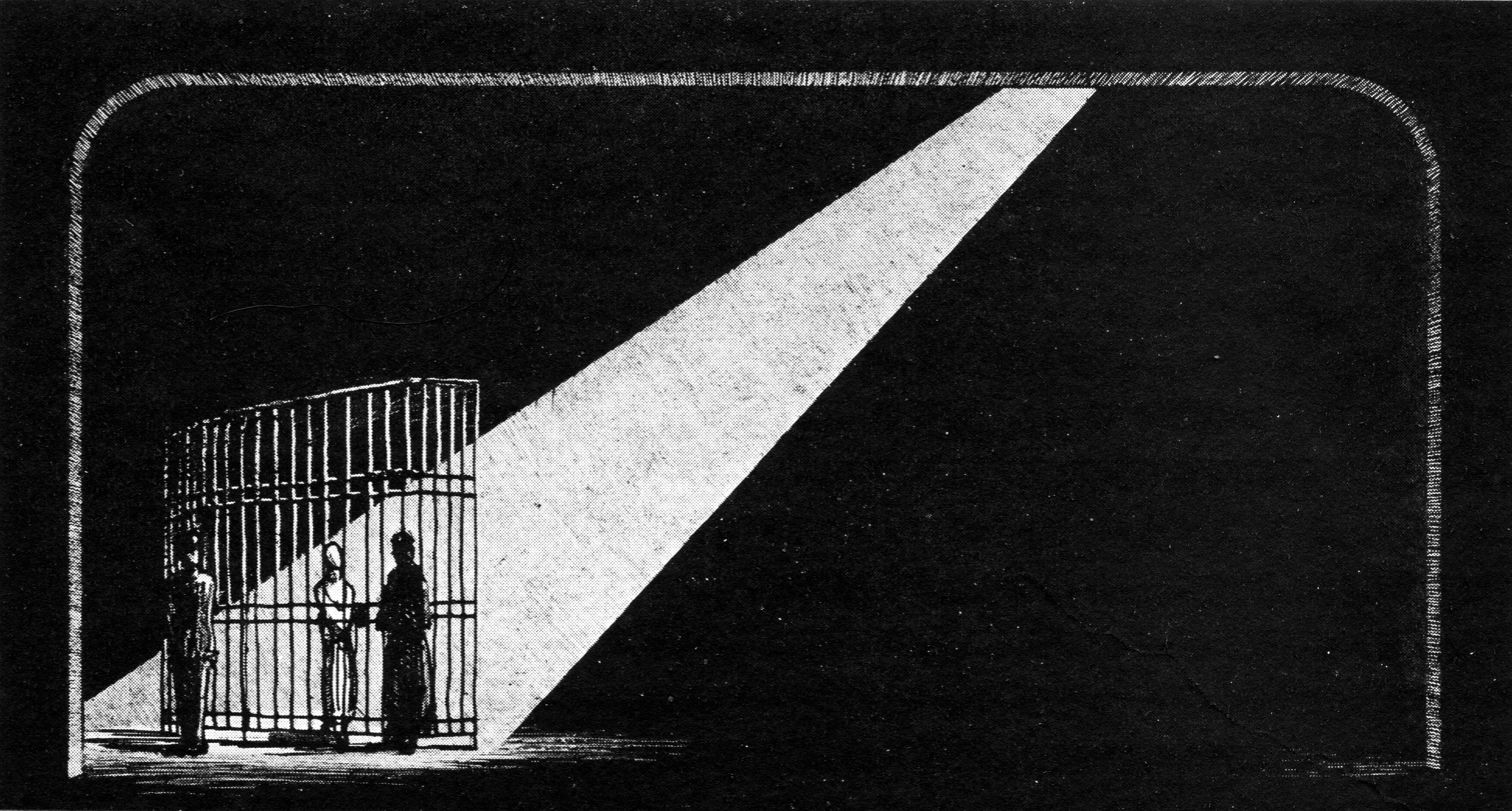
Fans of “historical” Shakespeare, whatever that is, are also in for a bit of a shock here. ULTZ’s set is a stark, bare cube, comprised of brushed metal panels riveted together, topped by a frosted glass ceiling. It serves very well as prison cell, less figuratively as castle, garden or jousting field. As a way of showing how power plays out in claustrophobic rooms and crushes those who exercise it, it does the business though thank you very much, and, remember, we might be in the prison of Dickie’s mind anyway.

This set works especially well when combined with James Farncombe’s bold lighting design. JH-G had a huge cast on his last outing and a magnificent recreation of a Soho drinking den at the close of WWII courtesy of Lizzie Clachlan and a fat lot of good that did him. It was awful. Though that was more the play’s fault than his. Here he is on much firmer ground as he was with his excellent Midsummer Night’s Dream and measure for Measure at the Young Vic. His fascination with soil continues, there are buckets of earth, water and blood lined up and neatly notated at the back of the stage. I like to think they symbolised “this England”: they certainly left SRB needing a hot shower post curtain call.

Of the supporting cast I was particularly taken with Saskia Reeves, as I always am, who got to be the argumentative Mowbray, the unfortunate Bushy, (with Martins Imhangbe playing Bagot, his head-losing mate), the other favourite Green, and the Duchess of York, and Joseph Mydell, a composed Gaunt as well as Bolingbroke sidekick Willoughby. Various explicit nobles on both sides are excised from this reading, as is the Queen amongst others, and, should a fill-in be required, out stepped one of the cast from the “chorus”-like crowd. Brutal it may be for purists, but in terms of reinforcing the hurtling momentum, very effective.

Leo Bill once again shows why JH-G has faith in his Shakespearean abilities, but it is Simon Russell Beale who carries the weight of the production on his shoulders. How he ensures that we not only take in but understand the impact of every line he utters is a wonder, especially in the return to England and Flint Castle surrender scenes. Even when he wasn’t dashing out his metaphor and simile strewn lines in double quick time, and wasn’t soaked through covered in mud, this was a cracking performance. The fact that he was, and that we can still savour Shakespeare’s language, and sense the difference between the body politic and the body natural, (the, er, embodiment of the medieval king), shows again why he is now unarguably our greatest living Shakespearean actor.

In this performance Richard’s early, flawed, decision-making seems less vanity or indecisiveness and more high-handed hauteur, the desire just to get the job done regardless of consequences. I’m the king, by divine right, so of course I know what to do. There isn’t much in the way of Christ-like martyrdom here as there was in David Tennant’s guilt-ridden 2013 RSC take or in Ben Whishaw’s petulant Hollow Crown reading. No white robes or flowing mane of hair here. The fact that SRB is “too old”, the real Dickie was in his early thirties for the last two years of his reign when the play is set, and that he, and Leo Bill, look nothing like the generally accepted take on the characters, only adds to the universality of the message.

The early years of the actual Richard’s reign weren’t too jolly for him by all accounts. Acceding to the throne aged just 10, with a bunch of nobles preferring a series of ruling councils to a regency under Uncle John (of Gaunt), the Hundred Years War with France not going England’s way, Scotland and Ireland playing up and labour growing its share of the prosperity pot at the expense of landed capital (the Black Death had led to a sharp spike in agricultural wages). In 1381 the Peasants even had the temerity to Revolt. By now though the young king was throwing his weight around but many of the entitled aristos, (whom we meet in the play), didn’t hold with the company he kept and in 1387 the so called Lords Appellant, (Gloucester, Surrey, Warwick, Bolingbroke and Mowbray), seized control and one by one, tried and disposed of Richard’s favourites.

By 1389 Richard was back in control, with Gaunt’s oversight, and, for a few years, got on with the job. But he never forgot what his opponents had done and, come 1397 he started taking revenge, notably, on Gloucester, his uncle, who he had bumped off. This is often where the play steps off with the King’s bloody guilt informing the four short years before his death, probably by starvation, after Bolingbroke’s usurpation.

Richard was allegedly a good looking lad, see above, who believed absolutely in his divine right to rule at the expense of the uppity Lords. He wasn’t a warrior, rather a man of art and culture, aloof and surrounded by a close knit retinue. As with all the big players in the history plays, our perception of Richard II, is though to some degree shaped by the Bard’s not always favourable publicity (that’s if you have any view at all of course). Via his favourite contemporary historian Raphael Holinshed. There was apparently a time when historians thought Richard was insane: now the wisdom is that he had some sort of personality disorder that contributed to his downfall.

Mind you if you were locked up in solitary confinement you might well lose the plot. There is an extract in the programme taken from Five Unforgettable Stories from Inside Solitary Confinement by Jean Casella and James Ridgeway from Solitary Watch. Solitary Watch tracks the estimated more than 80.000 prisoners in the US system held in solitary confinement on an average day. Here four prisoners eloquently describe their experience. Left me speechless. 80,000. That’s not a typo. Google it.

So another success from the Almeida hit factory, another masterclass from Simon Russell Beale and another validation of Joe Hill-Gibbons radical(ish) way with Shakespeare. BUD, whose first exposure this was to the history plays, agreed. Mind you there isn’t much in this world that he can’t size up within 5 minutes of first introduction.

There is probably a case for JH-G slowing down proceedings just a little, another 15 minutes wouldn’t have been a stretch, just to let the poetry work a bit more magic, give a little more complexity to Bolingbroke and the nobles, and draw out more from the themes. And the stylised, expressionist visual concepts won’t, (and haven’t), pleased everyone. But as a coruscating denunciation of the perennial failure of the political class, you want see much better on a stage even if it was written over 420 years ago.

My top ten theatre shows of 2018 … and top ten to look forward to

Right even by the standards of the drivel that the Tourist usually posts on this site this is an utter waste of your and my time. Weeks too late, built on flaky foundations of understanding and appreciation and precious little use to anyone. Except maybe me that is, as an aide memoire. You can find my thoughts on these shows elsewhere on this site, if you can be arsed.

I have also appended a list of the top ten plays, so far announced, that I am looking forward to seeing this year in a desperate attempt to beef up the content. Some marginal utility in that maybe. Or maybe not.

BTW you can, and should, see The Lehman Trilogy at the Piccadilly Theatre from May through August. You can, and really should, see Caroline, or Change at the Playhouse Theatre right now. The good people of Edinburgh can see Touching the Void and it will go to Hong Kong, Perth and Inverness before coming back to Bristol. I bet it pops up in London. And, if you are in NYC, and haven’t yet seen Network, jump to it.

  1. Network – National Theatre
  2. John – National Theatre
  3. The Wild Duck – Almeida Theatre
  4. The Lieutenant of Inishmore – Noel Coward Theatre
  5. The Writer – Almeida Theatre
  6. The Lehman Trilogy – National Theatre
  7. Touching the Void – Bristol Old Vic
  8. Julius Caesar – Bridge Theatre
  9. Death of a Salesman – Manchester Royal Exchange
  10. Caroline, or Change – Playhouse Theatre

Near misses? Girls and Boys at the Royal Court, Cheek By Jowl’s Pericles, The Phlebotomist (now coming back to the main stage at Hampstead – do not miss), Nine Night (at Trafalgar Studios from February), Quiz, Love and Information at Sheffield’s Crucible Studio, Copenhagen at Chichester, Henry V from Shakespeare at the Tobacco Factory, The Jungle (support the two Joes in their plan to put this in front of the Home Secretary !!) and The Madness Of George III at Nottingham Playhouse.

What about this year? Take your pick from these if you trust my judgement. Which would be a surprise. No particular order BTW. There’s a few big tickets missing from this (When We Have Sufficiently Tortured Each Other, All About Eve, Betrayal, All My Sons). Like I said it’s what I am most looking forward to.

  1. Sweat – Donmar Warehouse. Too late to get in now except for returns but this may well pop up elsewhere.
  2. Mother Courage and Her Children – Manchester Royal Exchange. Julie Hesmondhalgh as Brecht’s survivor.
  3. A Skull in Connemara – Oldham Coliseum. For my fix of McDonagh.
  4. Cyprus Avenue – Royal Court. Finally I will get to see this.
  5. Medea – Barbican Theatre. Internationaal Theater Amsterdam bring Simon Stone’s Euripides to London with best female actor in the world Marieke Heebink.
  6. Berberian Sound Studio – Donmar Warehouse. How the hell are they going to make this work?
  7. Top Girls – National Theatre. Caryl Churchill. Enough said.
  8. Three Sisters – Almeida Theatre. Best of the Chekhov offerings.
  9. Death of a Salesman – Young Vic. Miller, Elliott, Pierce, Clarke, Kene. Best play of 2019?
  10. Blood Wedding – Young Vic. Lorca given the Farber treatment.

Oh and Antipodes, Annie Baker’s latest. Obviously.

The Wild Duck at the Almeida Theatre review *****

The Wild Duck

Almeida Theatre, 28th November 2018

He’s only gone and done it again. Director Robert Icke has taken Ibsen’s perhaps most circumspect, but probably greatest, masterpiece, from 1884, and adapted it to make it shine anew and say something profound about our world today. There may be a small price to pay in terms of subtlety, (and the sense of eyebrows-raised irony that permeates old Henrik’s world), but the gain, in terms of the clarity of text and story, and the lecture on the nature of truth, more than compensates. Mr Icke, to paraphrase Ian Drury, ain’t half a clever bastard, and he has no qualms about showing us that he is, but when he creates theatre as powerful as this then we should all be grateful. Mary Stuart, Uncle Vanya, Oresteia, Hamlet, 1984, Oedipus, Romeo and Juliet and now this. One or two hiccups outside these triumphs for sure but when he takes a classic and lets fly with his intellectual vajazzling you know you are in for a treat.

Gregory Woods (yep, as in his Vanya, Icke has anglicised the names), has just returned from a self-imposed exile. His father Charles is having a party to celebrate his betrothal to his housekeeper Anna Sowerby, also attended by Greg’s old school chum, jobbing photographer James Ekdal. James has married Gina, previously a servant in the Woods household, who may have had an “affair” with patriarch Charles, at least according to Greg’s now dead (unhappy) mum. Greg believes James and Gina’s life is built on a lie. In subsequent acts, set in the Ekdal’s apartment and photography studio, we also meet James’s own broken, alcoholic father Francis, once Charles’s business partner, daughter Hedwig, who is slowly losing her sight, and cynical neighbour, John Relling.

Oh and there is a wild duck upstairs, (or not as it turns out). And, when Bunny Christie’s set extravagantly pays off near the end, (in tandem with the production itself), much more besides. It is artifice, of course, that’s Icke’s point, but it is so dammed affecting.

You might have guessed that Mr Icke treats us to more than the naturalism normally accorded to Mr Ibsen’s play however. The play opens with an empty stage. It’s the old rehearsal room schtick. Kevin Harvey as Gregory, (last seen by me in preposterously high heels and sparkly drag in the marvellous community theatre Pericles at the National), sets the scene armed with microphone and explanation. “All stories are lies”. That’s the gist of it. Edward Hogg’s James enters from the stalls and borrows a jacket from an unfortunate front-rower. He takes the mic and starts to explain his character. And so we continue with the actors coming in, seizing the mic, (Nicholas Day’s Charles started off in a seat next door to the Tourist), and then breaking into the narrative of the play itself to offer reflections on their characters motivations, the way Ibsen’s own life, (notably the illegitimate daughter he fathered with a servant girl and abandoned), interact with the play and to explain sub-text. Gradually though Ibsen’s own words, (filtered through modern Norwegian and then Icke’s idiomatic English from archaic Danish-Norwegian as Greg reminds in an initial aside), take centre stage and the brilliance of his plot is revealed. Simultaneously the stage is, almost imperceptibly, transformed into a period version of the Ekdal household, as the props accumulate and Elliot Grigg’s lighting gradually dims.

Pretty much everyone in the Wild Duck lies to themselves and to each other. For that is what they do just to keep going, just like we all do. Their “life-lies” in Ibsen’s words. Political idealist Greg though is having none of this and, as he picks away at the scabs of the past, starting with his Dad, everything unravels. For him truth is what matters, regardless of the damage caused by its revelation. So he wades in with his size twelves leaving James as the main casualty, as the multiple skeletons cascade out of multiple metaphorical cupboards.

Now you might contest that Mr Icke too has aggressively waded in feet first in his determination to expose the message and the context of the play. Mind you I don’t know how big his boots are nor, indeed, whether he is, indeed, too big for them. It is just a clumsy metaphor. Just like the many that Ibsen employs. And now Icke. The real time “deconstruction” hammers home these metaphors but the attention to detail and intelligence of the “interventions” only serves to increase our understanding and enjoyment. The audible gasp from the audience at the big reveal shows me that Icke’s restoration job has made the Ibsen “original” arguably more powerful and more vivid. It certainly doesn’t want for emotional power. I’ll even forgive him the torch version of Love Will Tear Us Apart. Some might prefer their Old Masters in a mausoleum, dark, dingy and covered with layers of accumulated interpretative varnish. Not me. Get back to the original colours, slap them in a white, light filled room and provide copious notes please.

I’ll warrant that the cast also profited from the reworking. Kevin Harvey strikes just the right note of fractured righteousness in his soft Scouse. Edward Hogg is mesmerising as his pride is undone and his moods shift alarmingly. Nicholas Farrell and Nicholas Day excel as the two estranged fathers and Rick Warden as Relling and Andrea Hall as Anna Sowerby both offer convincing support. However for me the standout was Lyndsey Marshall as Gina, whose pain is most acute but who still has to pull the threads of her family together. “I don’t know if I love you but it is my best guess that I do”. Just marvellous. And finally I was frankly bloody stunned by the performance off Clara Read, as Hedwig in our performance. Little Hedwig is largely the reason why so many lies are told. Most young actors, when surrounded by adult characters, are always still acting however good their performance. Ms Read didn’t appear to be acting, ironic since, as I recall she was the only one on stage who didn’t break the fourth wall. I would love to see her perform again.

The Wild Duck sadly has flown away from the Almeida and, like The Writer, I suspect it may prove a little bit too cerebrally audacious for a West End sojourn. But it does prove the current No 1 rule of London Theatre. Always take a punt when booking opens on anything at the Almeida. Especially when directed by Mr Icke, Mr Goold or Ms Frecknall. Sounds like the Tragedy of King Richard the Second with Simon Russell-Beale is dividing the criterati – I have yet to see it, though reading between the lines and based on Joe Hill-Gibbons’ recent Shakespeare outings I suspect I’ll love it. But the new play by Annie Washburn, Shipwreck, looks tempting, (even if I had some reservations about her last two outings premiered here, Mr Burns and The Twilight Zone), and the Three Sisters, in an adaption by Cordelia Lynn, directed by Rebecca Frecknall, (whose Summer and Smoke is now bowling ’em over at the Duke of Yorks), and with Patsy Ferran and Pearl Chanda in the cast, is near guaranteed to be a belter.

Regular readers of this blog, (ok some kindly chums), have oft remarked that I am prone to generosity in my reviews, if not in life. True. But in this case if you don’t believe me then take the word of the SO who rated this Wild Duck up there with Network and The Lehman Trilogy as her plays of the year. And trust me she isn’t always easy to please. Theatrically that is, not domestically.

One final aside. I spend a lot of time in the theatre. It is therefore quantifiably a large part of my own reality. And sometimes it feels more real than reality. This was one of those times. I could still happily be sat in the Almeida watching the unhappiness of the Ekdals and the Woods three weeks later so immersed was I by the end. Pick the bones out of that.

Machinal at the Almeida Theatre review ****

machinal-1928-setting-cell

Machinal

Almeida Theatre, 27th June 2018

I always like to do as much reading as I can before seeing a play. Reviews, synopses, articles, cross referencing creatives to previous work. You get the idea. The SO however will have none of that, preferring to go in cold and then see what she makes of it. And so it was with Machinal at the Almeida. Which made it a great deal more fun for me when I asked her after we came out to guess when it was written. She guessed the 1980s and was taken aback when I told her that Sophie Treadwell wrote this, her most famous and provocative play, in 1928.

For the most striking thing about the play is its modernity. It has an Expressionist structure, with nine scenes (“episodes”) and 29 characters telling the story of A Young Woman, (named Helen Jones we learn at the end), from her dull office job as a stenographer who lives with her Mother, through to her trial and execution after she murders her Husband, George H. Jones. It is inspired by the notorious real-life case of Ruth Snyder, but Sophie Treadwell significantly changes the facts of that case to portray the Young Woman as, in part, a victim of the mores of the patriarchal society she lived in. This is what has made the play relevant to later generations as this woman’s story could have been told yesterday. The rhythm of the dialogue, the choice of scenes, the motivations of the character,s all display a formal invention that was apparently not so apparent in most of Ms Treadwell’s other, more prosaic, plays (there are 39 in total). Her prime concern though in these plays, and in her short stories and journalism (which also took in sport, theatre and WWI), is the place of women in contemporary society, specifically in the domestic and economic spheres, the role of journalism and questions of race, all of which are addressed here.

Interest in her work waned after her death but has increased over the last three decades or so with major revivals of Machinal. It is easy to see why for this is a startling play. Not just in the story, which is gripping enough, and in the message, a powerful indictment, but in the way in which Ms Treadwell structured the play. I have to think there must be valuable creative opportunity in the rest of her dramatic oeuvre based on this.

No surprise to see this play paired in this Almeida spring/summer season with Ella Hickson’s brilliant The Writer (The Writer at the Almeida Theatre review *****). They both subvert dramatic form in order to express controlled fury at the way women’s desires and creativity are crushed by the expectations of men. And both remember to deliver their ideas in a thrillingly entertaining way.

Director Natalie Abrahami locates this production at the opening in a recognisably late 1920’s America but thereafter adds timeless twists to reinforce how little has changed. Miriam Buether’s set is framed, (in a way similar to The Twilight Zone on this stage), so that each scene is viewed through a window as it were, which, in turn, is reflected by a mirror angled above the stage. This creates a suitably claustrophobic atmosphere and allows for some dramatic contrasts between each scene, (and some extraordinarily quick work by the stage management team at the Almeida led here by Kate McDowell who could give a Formula 1 pit stop crew a run for their money). The opening scene, rows of typewriters and desks, is a tour de force as the Young Woman’s colleagues gossip and bicker as she is hauled up before the boss who eventually becomes her Husband.

The rapid fire dialogue is matched by the superb sound design of the Ringham brothers and lighting of young Jack Knowles, (together these might just be my favourite sound and lighting team especially when it comes to more uninhibited shows). All this sound and rhythm is written into Sophie Treadwell’s text which is astoundingly modernist. Subsequent scenes, at home with Mother, as the Young Woman talks herself into the doomed marriage, in the hotel room on the honeymoon night, especially queasy, in the bar where the Young Woman, helping out a colleague on a double “date’ begins her ill-fated affair with a Man, through to the courtroom scenes and the execution, are also brilliantly realised. There is so much that the Almeida gets right which makes it the best theatre in London right now, but the quality and imagination of the design is always just amazing.

Emily Berrington is spot on as the Young Woman. She is simultaneously the author of her own fate, (the real life Ruth Snyder was the instigator of her husband’s murder egging on her lover), with agency, but also sometimes apparently meek, helpless, naive, accepting, submissive even. She is disgusted by her work and husband but, when offered a way out of the trap, she seizes it, albeit with tragic consequences. The murder is not shown. It is simply the consequence of her escape from the inexorable social and economic forces that weigh down on her. She falls in love, real passion, but, here too, she is eventually disappointed and disillusioned.

Denise Black as her caustic Mother, husband long gone, is from a generation with absolutely no opportunity and sees an “economic” marriage as her daughter’s only path. Jonathan Livingstone as the smothering Husband sees her as a trophy and baby-maker with no interest in her thoughts, ideas or well-being. The Doctor, (Andrew Lewis), in the hospital where she gives birth to the daughter she doesn’t want is a patronising tosser. Her lover (Dwane Walcott) offers excitement, a path to an imagined new life, but you know his interest in her is transient, and he soon takes her for granted too.

Machinal means mechanical or automatic in French and this is what Sophie Treadwell seeks to reveal, the trapped automaton. The art of the 1910s and 1920s was preoccupied with the rapid social and economic change brought on by the rise of the machine. Yet this crushing imperative is contrasted by a series of emotional monologues delivered by the Young Woman which describe her resistance and which only theatre can proffer. I was struck by the resemblance to Alice Birch’s outstanding Anatomy of a Suicide shown at the Royal Court Downstairs directed by Katie Mitchell. Another breathtakingly original, formally experimental, superbly staged dissection of female entrapment with a tragic, repeated, outcome. That too didn’t need swathes of expositional dialogue to get the story across, just rapid, vivid exchanges. Yet that was written in 2015 not 1928.

So another hit for the Almeida. Next up is Dance Nation which is probably not for me but I can’t wait to see what Rupert Goold and the team have up their sleeve for the autumn/winter season.


Oedipus at Amsterdam Stadsschouwburg review ****

OLYMPUS DIGITAL CAMERA

Oedipus

Tonneelgroep Amsterdam, Stadsschouwburg, 17th May 2018

The Tourist sets off to Amsterdam to see the new version of Oedipus from the mighty Toneelgroep Amsterdam. As well as his first visit to the Concertgebouw and a chance to reacquaint himself with one Rembrandt Harmenszoon van Rijn. The Tourist finally blogs as a Tourist.

What was the attraction. Oedipus first. Your man Sophocles could write a drama, no doubt about that, and for me, this, Oedipus the King (Rex or Tyrannus), tops his other oft-performed work, Antigone, (though that is still a cracker of a story). These two plays, in a trilogy, sandwiched Oedipus at Colonus where our unfortunate hero leaves Thebes with his daughters and proceeds to pop his clogs after a lot of philosophical chat.

I hope one day to see an adaption of Sophocles’s version of Electra, (all three Greek tragedians had a pop at this story), and Ajax, the miffed warrior who, surprise, surprise, tops himself. I hope, as has occasionally happened, some clever creative will also see the potential in Philoctetes, (wounded soldier on high horse – metaphorically of course – who doesn’t want to fight again). I gather the least interesting of Sophocles’s seven remaining plays is Women of Trachis.

Anyway, as you almost certainly know, the plot of Oedipus the King is an absolute belter. It’s been hard for any writer to top this, for sheer OTT intensity, ever since 429 BCE. That weirdo Freud even named a theory after it. Unwittingly kill your Dad and marry your Mum. It doesn’t end well.

How to adapt this though is the perennial creative conundrum. Which brings me to the second reason to hop on a train to see this. (Yes it is now possible to take the direct train from London to Amsterdam if not yet the return. Cheap as chips, door to door no longer than a flight. And so much more civilised. The bit from Brussels to Amsterdam was pretty much empty).

Namely director Robert Icke. For those that don’t know, Mr Icke, at just 32 years old, is the wunderkind of British theatre direction, though there are many others who match him in my opinion. He was responsible for the revelatory Almeida Hamlet with Andrew Scott, the recent Mary Stuart, 1984, Uncle Vanya and Mr Burns, all at the same venue, (where he is Associate Director), and The Red Barn at the National Theatre. Not all perfect but in many cases mightily close. Yet, of his work to date, probably the most breathtaking was his Oresteia, which even managed a West End transfer after its Almeida run.

Here he took Aeschylus’s mighty trilogy, dispensed with the chorus, pumped up the back story, gave the Gods a court-room at the end to weigh up Orestes’s guilt, (with a bit of audience participation), and carved out a family revenge drama of startling power, where black and white is mutated into every shade of grey, and where death is viscerally real. His adaptation translates the poetry into something more immediate which any audience can grasp. Greeks doesn’t get any better than this.

So no wonder he was invited into the Toneelgroep party to have a go at Oedipus. And there is a lot that Mr Icke has in common with the masters of TA, Ivo van Hove and Jan Versweyveld. The set of Oedipus is one of the modern, faceless, corporate offices which IvH and JV used so effectively in Kings of War and Roman Tragedies. Though given Mr Icke’s set up for Oedipus, a campaign headquarters on the night of an election result, Hildegard Bechtler’s design could hardly be more appropriate. As it happens Ms Bechtler designed the Hamlet set so she knows the Icke drill. The TA stage in the Stadsschouwburg is wide and deep like the Lyttleton. I reckon you could sit anywhere, (and seats are a bargain €30 or so), and see everything. As well as the set, the use of video (Tal Yarden) and screens, a bit of on-stage eating in a family dinner, the modern, relaxed dress, the sound of Tom Gibbons and the lighting from Natasha Chivers, all echo the TA aesthetic. Mr Icke also borrows freely from his own back catalogue, most noticeably with the giant digital clock counting down on stage, representing the time to the election result, but more importantly the revelation underpinning the prophecy. The domestic interplay, the interior setting, the on-stage suicide of Jocasta though thankfully not Oedipus’s gouging, (here with heels not dress pins, ouch), the bickering over the family dinner, the strategising, all will be familiar to those who have seen Oresteia.

The set-up is brilliant. We see a video of Oedipus talking to the press after the election has closed. He promises to clean up the plague which is debilitating Thebes. Here though the plague is shorthand for the political corruption and economic incompetence of the previous administration. “The country is sick”. He is offering a bright new future. “Yes we can” or “drain the swamp”. Take your pick. He also, on the hoof, commits to investigating, and getting to the truth of, Laius’s murder. Cut to the loyal speechwriter/adviser Creon, played here by Aus Greidanus Jr, having a go at Oedipus for making this risky promise. Tiresias (Hugo Koolschlin) is wheeled in to deliver the prophecy. Our first opportunity to see the nasty side of Hans Kesting’s Oedipus as he angrily dismisses the blind old boy’s “nonsense” and turns on Creon who he reckons wants the job of leader. Marieke Heebink’s Jocasta talks him out of sacking Creon, (no need for a chorus and executions in this scenario!), and we are on to the killing at the cross-roads.

But here Laius (Jocasta’s first hubby) is the victim of a road accident (limos not chariots obvs), and Oedipus starts to piece together his own accident story with the established version, questioning the Chauffeur, played by Bart Slegers. You know the rest …… and if you don’t you should. The way Robert Icke fits his version of the plot to the “original” is artful and ensures that the last third or so of the production is as powerful as it should be.

What Mr Icke also intelligently lays on top is the family dynamic as we see “Mum” Merope (Freida Pittoors), consumed by the agony of watching Oedipus’s unseen “Dad” Polybus dying whilst all Oedipus cares about is the prophecy and, here, his route to power, daughter Antigone (Helene Devos) and sons Polynices (Harm Duco Schut) and Eteocles (Joshua Stradowski). Their is some conflict between the two lads: remember they go on to bring Thebes to its knees by knocking seven bells out of each other. The entourage is rounded out by faithful retainer Corin (Fred Goessens) and assistant Lichas (Violet Braeckman).

The supporting actors are uniformly marvellous but it is Hans Kesting and Marieke Heebink who dominate the stage. Which brings me to the third reason to nip over to Amsterdam to see this. The Tourist considers Hans Kesting to be the best male actor in the world and Marieke Heebink to be the best female actor. They proved it once again here. No fear you see, massive emotional range and immense physicality. No point holding back as the revelations tumble out in Oedipus and, trust me, they don’t. The scene were Jocasta explains how she was abused by Laius, and conspires to smuggle her baby away, is unbearably moving. Love is about the trickiest emotion to capture on stage. These two show exactly how to do it.

So why just 4* and not the 5* that you might expect from this obviously gushing fan of the play, the ensemble and the director. Firstly there is maybe, as I allude to above, a bit of a sense that we have seen this all before. The setting works, how “fate” brings a “good, man” down, and, specifically whether it pays for a politician to be “honest”, but the look and feel is maybe just a bit too close to Mr Icke’s previous work. More importantly the text is maybe a little too direct. Remember I was following a sur-titled English translation of a Dutch adaption by Rob Klinkenberg of the original Greek filtered through numerous prior translations. This presumably makes its literalness even more literal. Helps plot and message but leaves poetry on the table. In TA’s other work I have seen, the Shakespeare for example, this has not been a constraint, the language still shines. In IvH/JW’s Antigone conversely, which came to the Barbican, the translation by Anne Carson was too challenging, though this disappointed more through Juliette Binoche’s miscasting it pains me to say.

Still overall this is a great piece of theatre. If it ever wends its way to London you must see it. Otherwise we have Marieke Heebink as the lead in Simon Stone’s Medea to look forward to next year at the Barbican and Simon McBurney makes his directorial debut at TA at the Staadsschouwburg with a Cherry Orchard. Yum. This creative collaboration, amongst so many other reasons, is why Europe is a good idea. Though I doubt any of the dumb-arses in England who think differently would care.


The Writer at the Almeida Theatre review *****

writer

The Writer

Almeida Theatre, 9th May 2018

The Writer is …. an absolutely staggering piece of …. writing. No other way to say it. I’d wager there were a few punters in the audience that disagree with me but I think Ella Hickson, along with director Blanche McIntyre and the rest of the creative team, and an outstanding cast, have conjured up a masterpiece. In the same breath it provokes, educates and entertains. It deserves a much wider audience that the well-heeled punters like the Tourist who make up the Almeida throng. Whilst the Almeida may not immediately struck you as part of the solution to the problem of access for telling stories from women on stage, it was heartening to see this project realised there.

It starts with an impellent Lara Rossi, (who is more than a match for Romola Garai, superb as the eponymous Writer), playing a young actor/writer who, post performance, eloquently demolishes the lazy, sexist premises on which a complacent Samuel West’s direction is constructed. As she says theatre is “famous people, doing boring things badly”! Men are judged on what they produce, women on how fuckable they are. They have inevitably met before. We discover though that they are acting out the Writer’s text and sharply shift to a staged Q&A in which the nervous, tongue-tied Writer’s work is undermined by the “real” Director imperiously played by Michael Gould who praises its “promise” but inveigles against it lack of “structure”. Just who is going to watch this sort of stuff?

Scene two switches to the home of the Writer and partner, also Samuel West, who bullies and cajoles the Writer into agreeing to adapting her work into a film. It is all about him. She yearns for, and needs, more. The “biological clock” is invoked. The next, I think deliberately disorientating and galling, scene sees the Writer in a safe, supportive female only space, a jungle-y retreat of sorts, invoking Semele and other Origin mythological mumbo-jumbo (with some fantastic realisation from Richard Howell’s lighting, Emma Laxton’s sound and Zakk Hein’s video). Scene four sees the now confident Writer arguing with Michael Gould’s director about the play to date. He is viciously pulling the prior scene apart, whilst patronisingly banging on about the “rawness” of the opening. The final scene sees the writer with another partner, this time played by Lara Rossi. The compromises and imbalances of scene two are revisited.

From this structure Ella Hickson is able to explore fundamental arguments about how power, the patriarchy and contemporary capitalism, (as Lara Rossi’s character explains early on), affects, and infects, the creative process, art and the theatre and our relationships. It is a polemic of sorts, but Ms Hickson dissects her material, with fearless, supple and sceptical self-awareness. It confronts and confounds the audience, for sure, is intellectually reflexive, but avoids aggressive predictable dialectic. It revels in, and reveals, the artifice of theatre. Which in some ways makes Romola Garai’s performance, remember she has to convincingly “act” this all out, even more remarkable.

If thats sounds like a recipe for a dry evening, think again. The “drama” is delivered with real passion, even anger, with wit, and with a formal inventiveness, that left the Tourist with bum glued to his seat, ears straining, mouth open. Anna Fleischle’s design, (and the on-stage managers), intelligently accommodate the play’s inversions with repeated construction and de-construction. Ultimately though it is the control that Ella Hickson exerts over her themes, assisted by Blanche McIntyre, that makes this brilliant. It twists and turns but it knows exactly what it is doing and saying.

I learnt a lot. I recognise the behaviours exhibited by the men on stage here, especially Samuel West in the second scene. I don’t know how to avoid them. I do know I had to think very hard about what I would say about the play. It will make you want to argue. Ideally not while it is going on although maybe we should.

At one point, forgive me I forget when, the point is made that the Writer will move on to more established theatrical storytelling forms. Presumably this will be so for Ms Hickson thought I doubt she will write anything as powerful as this story about the struggle to tell women’s stories. Mind you Oil was a work of near genius in my book and also shows she isn’t going to fuck about with little subjects. I think she might just be the best and most challenging writer for the British stage right now. Ignore those who will say this is just irritating, indulgent self-therapy. They are wrong. Leave them to watch nonsense like that revival of Absolute Hell or Rattigan knock-offs. This is what theatre is all about.


A (flawed) guide to London theatres

5082213817_08e9837e3f_z

When I was a young teenager I took to making up some very odd games. I wasn’t lonely, with a handful of very good friends as I remember, and my very earliest encounters with the ladies were amongst my most successful, since my true nature, an awkward mix of the needy and the misanthropic, had yet to be revealed. I was something of a swot, what you might call bookish and then, as now, was sometimes a little confused by what others did or said in social situations. But definitely not on any sort of spectrum I reckon, beyond that of the awkward 16 year old lad with lank, long hair, (despite the advent of punk), robust flares, bumfluff and the ability to make a pint of lager last a whole evening.

But enacting an entire Subbuteo World Cup, sixteen teams, (these were the days when FIFA could just about control its financial appetites – if you want to see what the future, actually present, of human “governance” looks like, like no further than the masters of the beautiful game), then quarters, semis and a final. All stats carefully recorded in a special notebook. All done on my own. That’s right. I played with myself, (no titters at the back please). Which meant that, whilst pretending to myself that this was an entirely objective exercise exercise, I got to see England play Holland in the final. England because that’s the fiction that is most deep-rooted in my psychology. But Holland won. Retribution for the injustice meted outed in the “real” World Cup final in 1974, (and, though I did not know it, but somehow feared it, again in 1978), and an early indication of my rabid pro-Europeanism.

Sounds a bit weird right. Except that PlayStations hadn’t been invented. So I like to think of myself as an early adopter, not a sad adolescent.

Anyway responsibility, albeit of a most shrunken kind, has meant I have had to let go of such childish things but I still like a good list, dictated by me, which purports to be based on “facts” but is in fact nothing of the kind. Though, as you know, (tautology alert), there are no such things as facts, only theories yet to be unproven, and “information” is mediated, and mutilated, by both provider and consumer. Do not believe anything, least of all if it comes out of your own head. Proud to be a sceptic.

So you can safely ignore what follows.

Since theatre is my current passion, I thought I would tot up the ratings that I had given the entertainments I had enjoyed over the past three years, derive some averages, adjust for frequencies and thereby show what London theatres reliably put on the best work. Thereby confirming my own biases, with my own biased ratings, mashed through a filter of spurious statistical analysis. Just the kind of woeful shite that organisations, opinion formers and your governors do everyday apparently on your behalf.

So here’s my top ten (well eleven actually). Turns out that it is a proven fact (!) that the Almeida under Rupert Goold is the best of the bunch, the Royal Court is a thing of wonder, especially when you reflect on the fact that the work is almost entirely new, and the National Theatre under Rufus Norris is not, repeat not, undergoing any sort of existential crisis, despite what some would say. The trouble with all those right-wing cultural commentators is that they are only happy when they have something to moan about; they can only argue the negative. I hope the Theatre Royal Haymarket continues its more enlightened programming under the new owners. The Young Vic remains the most exciting major theatre, even if that means a few misfires, and the one where I learn the most. The Barbican benefits from the RSC and the International companies that come through the door. The Donmar rarely drops a bollock but here you really have to be quick at the gate to get a seat. The Arcola and The Orange Tree get my vote for best of the fringe, and the Gate for those with more adventurous tastes. The Old Vic doesn’t always belt it out of the park but is pretty reliable.

In fact overall I doubt there is anything here that would surprise the seasoned theatre-goer. thus adding a nice line in utter pointlessness to the sins of commission I have already committed in compiling, and worst still, writing up this list.

There are a couple of lessons though for the more casual consumer of drama. Firstly, do not think for one moment that watching a film or series on a tiny screen can in any way match the thrill of live theatre, and secondly, if you want to avoid being the sap who comments that “I would liked to have seen that but it was all sold out before the reviews appeared … ” or end up paying three times the price for a painfully uncomfortable seat in some West End mausoleum, then sign yourself up to the Almeida, Royal Court and National lists and take the plunge as soon as you seen something half-interesting.

  1. Almeida Theatre 4.33
  2. Royal Court Theatre 3.87
  3. National Theatre 3.81
  4. Theatre Royal Haymarket 3.80
  5. Young Vic 3.79
  6. Barbican Theatre 3.78
  7. Donmar Warehouse 3.75
  8. Arcola Theatre 3.71
  9. Orange Tree Theatre 3.67
  10. Old Vic 3.60
  11. The Gate Theatre 3.60

Summer and Smoke at the Almeida Theatre review ****

1024px-tennessee_williams_by_juan_bastos

Summer and Smoke

Almeida Theatre, 14th March 2018

I don’t always find it easy to get into the “Tennessee Williams zone”. My head takes a little bit of time to adjust to all that dreamy lyricism and I find it easier to stomach if there is something to cling on to, a social structure lurking in the background, the interaction of a few characters such that the usual TW human foibles are spread around a bit, a production that is not overly “directorial”.

The Almeida production of Summer and Smoke didn’t offer too much of what I look for, so I can’t say I was quite as bowled over as some of the proper critics who reckon this production was enough to set S&S, written in 1948, alongside the classic TW’s such as A Streetcar Named Desire which premiered the year before. It is very, very good though and should be seen, if you are sharp enough to snaffle some of the Rush tickets that Almeida offers up for sold-out stuff like this, or if it finds its way into the West End as it might. It is also yet another reminder, if this were needed, for all you casual theatre-goers out there. that it is always worth taking a punt on Almeida productions for fear you end up shelving out twice as much when they transfer, as so many have done under Rupert Goold’s tenure. Romola Garai has already been announced in the lead role of Ella Hickson’s new play The Writer, and you can bet your bottom dollar that they will line up another outstanding female actor to take on the challenge in Sophie Treadwell’s Expressionist classic Machinal. Invest in both I say.

In S&S Patsy Ferran has, deservedly, attracted all the plaudits for her performance as the uneasy and multiloquent Alma Winemuller, alongside the equally impressive Matthew Needham as tall, dark, handsome, and troubled, boy-next-door John Buchanan. I wasn’t entirely persuaded by My Mum’s A Twat, Ms Ferran’s last outing, but there is no denying her comic credentials. This though is her first major opportunity to showcase her “serious” acting credentials and she grabs it wth both hands. Mesmerising. Yet, if you ask me, the real star to emerge here is director Rebecca Frecknall.

Ms Frecknall has directed this very play before at the Southwark Playhouse which went down well I gather, and has already rung up a string of awards recognising her precocious talent. She clearly has a deep understanding of the text and the battle between body and soul, which lies at the heart of the play. The way she has marshalled the contributions of designer Tom Scutt, the sparse set and simple costumes backed by a ring of 9 upright pianos, the lighting of Lee Curran, the sound of Carolyn Downing and, especially, composer Angus MacRae, is what turns this into a great production, despite my minor misgivings about the play itself.

Across two acts and thirteen scenes the play explores the ultimately unrequited relationship between the nervous, conventional pastor’s daughter Alma and the maverick John Jr, who comes home to become, like his father, the town’s doctor. It is set in the first decade or so of the C20 in the backwoods of Mississippi. A study of doomed desire, we see Alma shift from sexual repression to, eventually, abandonment, as John simultaneously grows out of his wild, drunken, early years into something approaching conformity, though his hasty marriage to Rosa, daughter of a Mexican immigrant who runs a casino, isn’t going to end well. There are a few other plot twists and turns, one decidedly dramatic if predictable, but the vast majority of the “action” centres on the will they, won’t they couple.

Of course out of this TW fashions something with limitless emotional depth and the apparent linear arc of the story dissolves into something more timeless and circular. Rebecca Frecknall seizes on this and, rightly. doesn’t let go. She has a keen eye for the best of contemporary theatre direction but offers her own, clear voice. Ms Ferran and Almeida regular Mr Needham are sympathetic to this interpretation, and importantly, to each other, and are aided by some heavyweight supporting performances from the likes of Forbes Masson (who plays both fathers – clever eh) and Nancy Crane and another remarkable turn from Anjana Vasan (who was so very good in the Young Vic’s Life of Galileo – Life of Galileo at the Young Vic review ****), as all the other young women in the story (clever again eh).

There were, I admit, a few moments where the intoxicating combination of TW’s poetry, the warm lighting and the minimalist piano score, felt a little too adagio, but, like I said in the open, this is probably more a reflection of my limited attention span that the artfulness of play and production. If you have ever fallen in love with the wrong, or indeed, the right person, and ultimately bollocksed it up, then you are going to recognise Alma and John, even if their world should seem a long way from ours. And, of course, whatever melodramatic nonsense was playing through the theatre of your mind during your great affair/s, it was going to look anaemic in comparison to the intensity of TW’s vision.

If this is what Patsy Ferran can root out of a character like Alma then heavens knows what we have to look forward to in years to come. Nora, Hedda, Martha, Queen Margaret, Lady Macbeth or a host of, I am sure, stunning parts to be written by the crop of outstanding female playwrights this country is fortunate to have right now. I really cannot wait to see what Rebecca Frecknall turns her hand and eye to next. Presumably she will have another crack at the Almeida. On this showing that nice Mr Icke has some competition.

The Twilight Zone at the Almeida Theatre review ***

ttz_1470x690v2

The Twilight Zone

Almeida Theatre, 13th January 2018

Based on my entirely objective reviews, (of which more to follow when I get round to it), I see that the Almeida has, over the last three years or so, consistently offered the best theatrical experience in London. No great surprise really given the writers, casts and especially directorial talent, (notably AD Rupert Goold and Associate Director Robert Icke), at its disposal, but, still, it has been a remarkable run. There have been hiccups along the way though and one of these was, for me, if not for many others, Mr Burns. Too drawn out once you have got past the central conceit, and too pleased with itself.

Having said that the riff on contemporary culture, in that case one episode of the Simpsons (Cape Feare), was a splendid nugget of an idea and I could see where writer Anne Washburn was headed. So it didn’t seem like too much of a risk to sign up for the Twilight Zone, her reshaping of 8 of the original episodes from the ground-breaking, eponymous 1960s CBS TV show. For the benefit of you young’uns think vintage Black Mirror. Now I am pretty sure I have seen a few of the episodes, they must have been on terrestrial telly decades ago when we had no choice over what we watched, but I can’t really remember any of them. So its appeal lay more in its reputation. Same for the SO who was keen to come along, the Almeida being one of her favourite haunts as well.

Now a domestic crisis meant the SO had to leave at the interval, which was not a cause for deep regret. Why? Well this production didn’t quite come together in our view. The cutting up of the stories is, by and large, an admirable idea, highlighting their fractured, and paranoiac, nature, and keeping the audience on their toes, but it also led to an overdose of scene shifting. The way the cast was incorporated into these shifts, rigged up in dark boiler suits and googles, like disturbed chemical industry technicians, was inventive, and the set and costumes from Paul Steinberg and Nicky Gillibrand was immensely creative. The monochrome tones, the use of spinning cut-outs to simulate the memorable graphics of the TV series, the framing of the set as if in a retro TV screen, incorporating a back and white TV set dangling above the stage, the starry background. All this conjured up the look and feel of the series. The lighting design from Mimi Jordan Sherin, together with the sound and music from Sarah Angliss, Christopher Shutt and Stephen Bentley-Klein, and the illusions of Richard Wiseman and Will Houstoun, all elevated the visual and aural impression.

Now none of this should come as a surprise given the provence and history of director Richard Jones who revels in the playful, or, dare I say, cartoonish. The problem is the uncertain tone this creates. The production is an homage to the original series but the concept and design leaves it veering towards parody. Not saying this is wrong: there are plenty of funny moments here, most notably the running gap with cigarettes, and a theatrical adaption of a “cult 1960’s sc-fi series” for a contemporary audience was hardly ever going to get away with any other approach. But it does rather drown out the messages of alienation, delusion and psychosis that permeate the original. The Twilight Zone was all about projecting inner fears onto apparent external realities. Nightmares, other possible lives, cracks in time and space, paradoxes, you get the picture. With an unhealthy fear of the other.

Once the conceit in each story is revealed however, there is little room to develop and there is nothing in the characters. As drama then this lacks dimension. Which is unfortunate for an entertainment that seeks to explore human reaction to other dimensions. Now I don’t think this is the fault of the cast, all ten of them hurl themselves into the many roles they are asked to play. Nor, as I say, is it the fault of the creative team. And I would not criticise Anne Washburn’s text. No I think the problem is that the stories themselves do not stand up to theatrical adaption because there is not enough there in the first place. What works for half an hour on the box falls short on the stage however clever the manipulation.

So, overall, a flattish evening. Well worth seeing, and hearing, and in places there are some real thrills, but not a truly engaging piece of theatre. Maybe we set our expectation bar to high. Blame the Almeida. Too good at what they do.

My pick of London theatre – on now and booking ahead

national-theatre-pyrotechnics

Right let me cut to the chase. Here is my latest attempt to distil the best of what is on now and what is coming up in the world of London theatre. There is a bunch of new stuff notably at the National Theatre, the Barbican, the Donmar Warehouse, the Hampstead Theatre and in the West End which has been announced since my last round-up which should be investigated. Happy theatre going.

Top 10 – all on now

1. The Ferryman at the Gielgud Theatre. I know most of you theatre lovers will have already seen it but if you haven’t you must. The Ferryman at the Royal Court Theatre review *****

2. Oslo at the Harold Pinter Theatre. This shouldn’t work – a straight narrative of the negotiations that led to the Oslo Accord between Israel and the PLO – but it does and is bloody magnificent. Oslo at the National Theatre review *****

3. Follies at the National. I hate musicals. This is different though. Made me want to cry and punch the air. Pretty much sold out but if it transfers snap it up or watch the cinema transmission next week. Follies at the National Theatre review *****

4. The End of Hope at the Soho Theatre. Go see this this weekend if you have nothing else to do. I saw this at the Orange Tree. A two hander which set in Northern Ireland by David Ireland and directed by a student amazingly. Just 60 mins and cheap as chips. It is hilarious and cutting. Highly recommended. Directors’ Festival at the Orange Tree Theatre review

5. Young Marx at the Bridge Theatre. The Bridge’s first offering. Not perfect but still v. funny and the new Bridge Theatre is wonderful. Young Marx at the Bridge Theatre review ****

6. Albion at the Almeida Theatre. Mike Bartlett’s (he who wrote the lines that have you shouting at the telly when Dr Foster is on) latest offering. A state of the nation thing. I loved it. Looks like it is sold out so you should have paid attention when I recommended it months ago. Albion at the Almeida Theatre review ****

7. Beginning at the National Theatre. Two hander on the excruciating pain of dating. Terrific. A few tickets left for the last week. Beginning at the National Theatre review ****

8. Minefield at the Royal Court. Only a couple of dates this weekend. Six veterans from the Falklands War act out their experiences. Really engrossing and moving.

9. Heather at the Bush Theatre. Tiny venue. Gold star from me if you see this. Amazingly clever play about a children’s author who is not what she seems. Only an hour.

10. The Comedy About a Bank Robbery at the Criterion Theatre. I went with LD to see this for the second time recently. Terrible West End venue and full of tourists (no offence intended) but it is still the funniest thing on the London stage so an Xmas treat if you haven’t been. The Comedy About a Bank Robbery at the Criterion Theatre review ****

Top 12 – booking ahead

1. A Very, Very, Very Dark Matter at the Bridge Theatre. I WILL WRITE THIS IN CAPITALS. YOU MUST BOOK THIS. This has just been announced. A new play from Martin McDonagh about Hans Christian Anderson (don’t laugh). McDongah’s last play was Hangmen which me and the SO think is the best play we have seen in the last 3 years. He wrote the classic film In Bruges. It will be caustically funny and gripping. I know it is next year but don’t blame me if you miss out as this won’t transfer since the Bridge is already a commercial theatre.

2. Julius Caesar at the Bridge Theatre. I know. Bloody Shakespeare. But the cast here is to die for. Plenty of tickets.

3. Macbeth at the National. Rory Kinnear and Anne_Marie Duff, our two finest stage actors of their generation, as the Lord and Lady. Will be unmissable. Booking opens next week.

4. John at the National. New Annie Baker play. This will likely sell out in hours as she has a cult following. Booking opens next week. Make sure to look at the “coming soon” part of the National as there is lots of good stuff.

5. Network at the National. High expectations but should be justified. Bryan Cranston as the TV anchor who has a meltdown. Looks like it is pretty much sold out so again should have listened a few months ago.

6. The Encounter at the Barbican. Bear with me on this. It is amazing. Simon McBurney (who is a genius) brings to life a book about a bloke getting lost in the Amazon. They give you fancy headphones and then he takes you on the journey. Booking opens tomorrow.

7. Pericles at the Barbican. From Cheek by Jowl a theatre company I love. A rare(ish) outing for a late(ish) Shakespeare. In French with surtitles so if you are a French speaker this is your time to shine. Booking opens tomorrow

8. The Twilight Zone at the Almeida. Don’t know if this is going to work but it’s the Almeida so I will give them the benefit of the doubt. Based on the 60s sci-fi TV series !! Plenty of tickets.

9. Belleville at the Donmar Warehouse. US transfer. Main draw is that James Norton in the lead who my ladies fancy something rotten. Looks like it may have sold out. Sorry. Elsewhere in the Donmar season is Congreve’s restoration comedy Way of the World which has Linda Bassett in the lead who is a genius actor (only a few tickets left cos us luvvies snap them up) and The York Realist a gay love story set in the 60s. Like the Almeida and the Royal Court the Donmar doesn’t generally do duds.

10. Glengarry Glen Ross at the Playhouse Theatre. Mamet’s shouty modern classic with a stellar cast and Sam Yates given the director’s chair.

11. The Birthday Party at the Harold Pinter Theatre. Pinter’s guest house to avoid with a fascinating cast and Ian Rickson directing.

12. Gundog at the Royal Court Theatre. I pretty much book anything that looks even vaguely interesting at the Royal Court, Orange Tree, Arcola and Young Vic. This is a guaranteed way to see stunning theatre at bargain prices. (though the RC prices have crept up) I can’t tell you why Gundog is on this list. I just have a feeling.