The Remains of the Day at the Yvonne Arnaud Theatre review *****

The Remains of the Day

Yvonne Arnaud Theatre, Guildford, 13th April 2019

Right all you good citizens of Derby, Salisbury, Cambridge and Bristol. There is still time for you to book tickets to see this excellent adaptation of Kazuo Ishiguro’s celebrated novel The Remains of the Day. A very well crafted script by Barney Norris, (just the fellow to write pensive studies of “Englishness” based on his previous work), in an excellent production from one of our premier touring companies Out of Joint, thoughtfully directed by Christopher Haydon, (latterly of the Gate Theatre), with a pair of sparkling central performances from Stephen Boxer and Niamh Cusack.

Now the Tourist has never been much good at reading. Nothing ever seems to sink in without repeated exposure. Especially with fiction. And especially with fiction he read in his youth. A vague recollection of the big picture, a few specific episodes and a general “I like that author”. Not like the SO who can trot out plot, character, meaning, style, context, like an A* student even for things she read decades ago. Maybe this low level intimidation is what stops the Tourist picking up a book except when on hols. That and spending too much time at the theatre and writing this stupid f*cking blog.

Anyway you probably. like the Tourist. know this work more from the 1993 Merchant-Ivory film with Anthony Hopkins and Emma Thompson as Stevens and Kenton, both quietly upstaged by Peter Vaughan as Stevens Senior. Nominated for 8 Oscars, won none. Mind you that was the year the Academy rewarded Spielberg for Schindler’s List. Fair dos. I see that one Harold Pinter wrote an original screenplay for the film when Mike Nichols was slated to direct. Bits of Harold’s work made it to the end but he removed himself from the credits. Might have been a very different film with him and Mr Nichols in the driving seat.

Instead I remember the central, unrequited, relationship between the stiff Hopkins and the droll Thompson, the look and feel of the thing, (Merchant-Ivory being allowed to film in any toff’s house at the time such was their fame), and the almost elegiac take on the history under examination, the 1950’s and the 1930’s. Yes the politics were there but not as sharply delineated as in this play. Class, deference, knowing one’s place, belief in the wisdom of the elite, are common to both treatments but I was far more struck in this treatment by the desire of many in the aristocratic class in the 1930’s to broker a deal with Hitler, to appease, than I was in the film. And specifically the reasons why, the guilt at having inflicted so much economic misery on Germany post First World War, as well as the memory of the human carnage of that war, and, of course their anti-semitism, which motivated them to pursue this course.

It may just be that, like my reading of the book, I just don’t remember the film very well. Which is salient given that The Remains of the Day is a memory book/film/play. Or maybe more specifically a memory of a history, personal and political, book/film/play. To solve the “problem” of butler Stevens remembering the events at Darlington Hall in the run up to the Second World War, (as he undertakes the road trip in 1958 to pay the visit to the ex-housekeeper, Miss Kenton, prompted by her letter), the film makes generous use of flashbacks. And a cast of thousands.

Well maybe not quite but tons of extras and actors of the calibre of James Fox, Christopher Reeve, Hugh Grant, Michael Lonsdale and Tim Pigott-Smith to fill all the named characters, (trust me, a lot of people found their way to Darlington Hall). Even the minor parts are filled by the likes of Ben Chaplin, Patrick Godfrey, Peter Eyre, Pip Torrens and, the go-to actor for Germans in British films, Wolf Kahler. Blimey even a young Lena Headey, Cersei in you know what, gets a look in. Basically if you could do plummy or gor-blimey, and you weren’t engaged elsewhere, you got a part in the film.

No such technology of budget for Out of Joint and Messrs Haydon and Norris. So a fair bit of character pruning, some adroit exposition to incorporate those written out, and extensive doubling. But this is not just any old “exit Act 1, turn up as someone else in Act 2 with new costume and wig” stagecraft. This is seamlessly executed, on stage choreography, a hat, a coat, a pipe, to turn a cast the cast of 8 into the staff and guests of pre war Darlington Hall and the locals Stevens meets on his pint-sized odyssey of self-discovery. This means that the ghosts of the past are always present. Very clever and very easy to follow.

Stevens devotion to duty even in the face of the shocking demand by Lord Darlington to sack the two Jewish maids, Kenton teasing Stevens about his book, Stevens carrying on his duties even as his father dies and Mme Dupont, (a gender change to accommodate the casting pyrotechnics), whinges about her feet, Reginald’s increasing awareness of what his godfather is up to, Stevens disowning the past in his conversations with Dr Carlisle, the mocking Stevens is forced to undergo from “Sir David” the composite collaborator with Lord D, the radical conservatism, or conservative radicalism, espoused by everyman Morgan in the pub and, of course, the extraordinarily moving scenes between Kenton, or Mrs Benn later on, and Stevens, as the happiness they might might have had slips through their fingers. You flipping noodle Stevens.

All of these scenes are memorable, providing plenty of minor key drama, but the best things about the play are the performances of Mr Boxer and Ms Cusack. I’ll stick my neck out here and say that for me, and remember this is based on my faulty memory, they capture the essence of Stevens and Kenton more that Hopkins and Thompson in the film. The ten year age gap between these actors seems more convincing than the 20 years of the film. Mr Boxer seems to me to bring out more of the interior life of Stevens, the way he buries the emotions that he plainly has in the cause of maintaining the dignified exterior he believes is required of him, the way he is puzzled by, but still craves, Miss Kenton’s attention. Ms Cusack seems more playful as Kenton, holding back the regret until the very end. the structure of the play lends more prominence to the conversations in the pub and the way this changes Stevens’s perspective.

The directness of the political dilemma, and its flawed morality, is far more pointed here than in the film. And the reliability of Steven’s recollection is more nuanced as in the book, (yes I took a quick peep again whilst writing this). In fact generally Mr Norris seems to capture the essence of the book in a, er, more reliable way that the period-drama aesthetic of the film does.

The rest of the cast step up. Miles Richardson captures the naivety, in life as well as politics, of Lord Darlington and the middle class bonhomie of Dr Carlisle. Sadie Shimmin offers us an uncomplicated pub host in Mrs Taylor alongside the hauteur of fascist sympathiser Mme Dupont. Edward Franklin warms to his task as the bespectacled, conscientious godson Reginald, (drawn from the film not the book), Patrick Toomey is the arrogant American politician Lewis (and, I think Farraday, Steven’s current employer) and Pip Donaghy marks out Stevens Senior decline. Top marks to Stephen Critchlow though as he he shifts from Morgan to the real “villain” of the piece the anti-semitic Sir David.

I see a lot of plays but this is one of the more satisfying I have seen so far this year. “Knowing” the content helps of course, and, from a personal geographical perspective a hop to Guildford, and the fine design and accumulated history of the Yvonne Arnaud Theatre, was no inconvenience. I get that Out of Joint rightly values its touring credentials and I am grateful to the Royal and Derngate, (on my list to visit), and the Oxford Playhouse for co-commissioning Barney Norris’s script. But I am stunned that this hasn’t secured, as far as I know, secured a berth in London.

The familiar story, the quality of the acting, the script and the production, (Lily Arnold’s set is another stand-out as is Elena Pena’s sound design), the themes it explores and their contemporary echoes – the dangers of passivity and nostalgia – all would suggest to me that this would pack them in in a mid sized West End venue. There is plenty for the customary theatre demographic to enjoy, (they certainly did on this Saturday afternoon), but, with the right tone, I reckon some younger folk could be persuaded. I know that Out of Joint’s last major production, Rita, Sue and Bob Too, had a false start, understandably, before eventually gathering plaudits as the Royal Court but most of the rest of their historical efforts have popped up in the capital. This, whilst still posing some thorny questions, looks to be a far more commercial proposition than many of those predecessors.

Barney Norris plainly says that “the play must be unlike the book or the film or it shouldn’t exist” in the programme. Fair dos. But, whilst its structure and perspective match his manifesto, there is more than enough of both earlier manifestations to justify your attendance should you know them.

Over to you nice people at ATG.


Top Girls at the National Theatre review ****

Top Girls

National Theatre Lyttleton, 4th April 2019

OK. So I might have oversold this one. It is still Caryl Churchill. With that extraordinary opening act. And that carefully calibrated feminist message, as relevant now as it was when it first appeared in 1982, of how to balance “success” in work and as a mother. The argument between collective and individualistic strands of feminism. To ape the patriarchal norms or to reject them.

But as an introduction to the greatest living playwright in the English language? Maybe this wasn’t the production. So profuse apologies to those most faithful of the Tourist’s recommendation followers, BUD and KCK, who came along. And to the most long suffering of all, in so many ways, the SO, whose previous CC exposure was the brilliant (to me), but admittedly knotty and OTT, production of Light Shining in Buckinghamshire on this very stage in 2015. I hope my chums could see where I was coming from even as the flaws in the production became apparent.

Not that these flaws were substantial. The opening scene here has a cast to die for, Siobhan Redmond as the indomitable Isabella Bird, Amanda Lawrence as the ebullient Pope Joan, Wendy Kweh as the enigmatic Lady Nijo, Ashley McGuire as the laconic Dull Gret and Lucy Ellinson as the most obviously misused Patient Griselda. The way CC takes Marlene’s drunken dinner party celebration and transforms it into a confessional which explosively, hilariously and movingly transcribes the fate of women, real and fictional, across time and geography, and specifically the way the patriarchy determines their roles as mothers, is still, for me about the most riveting half hour of theatre I have ever seen. Especially when the technical challenges of the multiple, simultaneous, conversations are, as here, perfectly realised, not to say the getting pissed part. And all presided over by the dauntless Marlene about to take the top job at the Top Girls employment agency. Katherine Kingsley, who you will probably know best from her musical theatre roles, initially locates Marlene firmly in the 1980’s Thatcherite, “ballsy”, power woman mode. To watch her equivocation, and Suffolk accent, emerge in the later scenes is a measure of just how good a performance this is.

The second scene, (here the usual order is shuffled a little), sees stage debutant Liv Hill, (Three Girls, on the telly, just watch it – though for my money Ria Zmitrowicz is actually the best of the trio of talent on display), initially at least, convincing as the immature Angie, sharing her angst with younger chum Kit (Ashna Rabheru). The two actors are confined to a small box room stage right as the technicians crack on, quietly, with transforming the space behind.

Into ….. the Top Girls agency. Which is where the full glory of the period detail of Ian MacNeil’s set and Merle Hansel’s costumes, (so superb for the dinner party), are revealed. And which also highlights one of those modest flaws is the production. By anchoring the look of the play so firmly in the year when it was written it encouraged the audience to do the same. The universality of the messages were diluted. Those of us who are old enough to recall the period, (all the Tourist’s party I am afraid), were drawn into thinking about the archetypes and behaviour of the period rather than the wider issues examined in the play, and I suspect you younger folk will have been affected more by the story here than its implications.

For it is, especially as we turn into Scene 4, and the not so big reveal, a mightily powerful piece of drama, especially when actors of the calibre of Ms Kingsley, and Lucy Black as her sister Joyce, are charged with delivering CC’s brilliant text. I don’t suppose I will ever tire of the thrill of listening to Ms Churchill’s dialogue. Complex and ambiguous ideas, observations and dilemmas framed in entirely natural dialogue, (even sometimes when how it is framed is formally inventive or even, frankly, a bit weird). There is so much dialectic revealed in Marlene and Joyce’s final argument that it is hard to keep up and yet it also sounds and feels exactly like the kind of set-to that any sisters might have had, at least in the modern world, about family, choices, dreams and disappointments, as well as politics. Family and/or career. Collective and/or individualistic feminism. All in less than half an hour.

And yet, as many critics have observed, this production, because the NT could, by not having actors double up from the first scene into the office scene, loses much of its resonance. CC didn’t specify doubling. That is just the way it has generally been done, a cast of seven for the simple reason of cost. But it certainly, at least when I have seen the play before, has far greater impact as the women that emerge from the interviews, Jeanine, who just want to travel and be with her husband, Louise, who has devoted her life to her job but still watched men promoted over her, and Shona forced to exaggerate her experience, as well as Mrs Kidd, who comes to plead for husband Howard who had expected to get the job Marlene has secured. This pivotal scene loses some impact because of the introduction of new faces, (the SO observed that she was expecting the dinner party guests to reappear in new guises and she has never seen Top Girls before), and maybe because, in an attempt to fill the Lyttleton stage, there is a fair bit of superfluous movement and furniture in this agency scene.

Director Lyndsey Turner, unsurprisingly given her experience in reviving Caryl Churchill’s work, pretty much nails the words, from Marlene’s initial instructions to the waitresses at the restaurant, (of course they are women), through to Angie’s final, plaintive, cries for her Mum at the end. This is such a rich play, just read it, and, with a cast of this distinction, the words can’t help but leap from the page. It is just that the look and feel of the production, even with the solid contributions of Jack Knowles (lighting) and Christopher Shutt (sound), didn’t quite work for me. Still to watch 18 women, (many of whom, in the “lesser” roles, were new to me), line up across the stage at the curtain call was pretty awesome. I doubt I will see that again.

I don’t doubt though that I will get another opportunity to see Top Girls. The programme lists 25 English language productions since the Royal Court premiere. With 6 last year alone, (though its been 8 years since the last major revival in the UK from Out of Joint).

That’s the thing with Caryl Churchill. She changes the game whilst being ahead of it.


Shipwreck at the Almeida Theatre review *****

Shipwreck

Almeida Theatre, 18th March 2019

The Tourist, as this blog shows, is a nice bloke given to giving creatives the benefit of the doubt. Hence the string of positive reviews on these pages. He likes to think that he is wise in his choice of entertainment. The reality is that he just wants to be liked, even when it manifestly doesn’t matter.

Even so he admits to toddling off to the Almeida to see Shipwreck with some trepidation. Reviews were mixed but rarely overwhelming. The SO, BD and LD had all bailed out in advance, for good reasons, though Dad’s sales pitch was about as convincing as that of The Apprentice candidate, (a clever Trump reference there people), who is fired in week one. The Tourist and BD had abandoned Anne Washburn’s Mr Burns one act in, though this was in part due to “cold-induced fatigue”/teenage hangover, and the SO had to abandon The Twilight Zone, now playing at the Ambassadors Theatre, due to a domestic crisis. A poor familial showing all round. Would lightning strike thrice then?

Certainly not. I bloody loved this. As usual that is of no use to you if you fancy seeing it since it is now all over but it really shows why Rupert Gould and the Almeida have such faith in Ms Washburn’s abilities. There may be some dramatic shortfalls, largely born of excess ambition, but boy can she turn a phrase. Now I don’t know when, or if, this will make its way to the other side of the pond but if it does, assuming you are a member of the very echo chamber it purports to excavate, then you should definitely see it. (I think I can safely assume that the Trumpian side of the cultural divide will have no interest in watching their “opposition” introspect, though they would get apoplectically wound up).

Shipwreck is a meticulous unpicking of liberal America’s current paralysis in the face of angry populism. It may be very time and place specific but its messages are universal. Populist politics, which can and will turn ugly, cannot be dismissed, mocked, pandered to or ignored. It has to be confronted and unpicked, piece by piece, through argument, mobilisation and democratic will. Hand wringing and virtue signalling won’t cut it.

By bringing together seven privileged, articulate, white bar-one, liberal American progressives in a snowbound, holiday farmhouse in upstate New York, and then letting then slug out the arguments one by one, with a useful, if not unsurprising twist, AW is able to rehearse all the arguments in forensic detail. The dialogue is actually centred on June 2017 after the ex head of the FBI, James Comey, offered up his damning testimony before the Senate Intelligence Committee. Comey, you will recall, or maybe you won’t for that is one of the points the play forcibly makes, was the bloke who was fired by Trump, ostensibly on the recommendation of the attorney general Jeff Sessions and deputy attorney general Rod Rosenstein because the FBI rank and file had allegedly lost confidence in their director, but, in reality, because Trump feared the net closing in the the strands of collusion with Russia in the election, taken up subsequently in the Mueller enquiry. Comey, you may also remember, was the chap who rashly indicated that he was re-opening an investigation into the so-called Hilary Clinton e-mails just before the election having previously said there was no case to answer. Confused? I am and that is the point. Keeping up with the truth is tough enough. Unpicking truth, lies and fantasy when narrative and ideology conflict and when there are multiple “reporting” platforms makes it near impossible even for those with the time, inclination and critical faculty to care.

One of the pivotal moments in the debate between the Shipwreck crew comes when, I think, Adam James’s lawyer Andrew reminds then of the time when Trump, in a Republican primary event, claimed the GOP bigwigs had pleaded with him to cool his opposition to the Iraq War. He had not publicly declared any such opposition. He just made it up. And kept repeating it. Then this kind of breathtaking audacity was a surprise. Now many have have become inured to it, just accept it or positively embrace it. Truth has always been a slippery fellow, manipulated by teller and beholder, and more so as time passes, but deliberate, outright fabrication is plainly dangerous to the body politic. But pitifully easy it seems.

The other key moment comes when Andrew’s partner, banker Yusuf, (Khalid Abdalla), admits he voted for the comb-over bogeyman in the election. With the age old excuse of “wanting to shake things up”. Justine Mitchell plays Allie, the sarky, Facebook-ing keyboard warrior “activist”, who criticises the complacency of others but whose logic can send her liberalism way off-beam. The hosts Jools (Raquel Cassidy) and Jim (Elliot Cowan) are more concerned with day-to day accommodation of the changed environment, expecting a reversion to their comfortable mean, whilst Tara Fitzgerald as Teresa and Risteard Cooper as Lawrence are the hippyish slackers, who bang on about the natural birth they have just come from and who see their green-tinged, near-socialism as adequate inoculation. And so all the strands of liberal call and response are represented.

Now I would have been happy with a couple of hours of this fascinating, pointed, if admittedly wordy, to and fro, but, AW being AW, she clearly felt we needed more. So we are introduced to Mark, an orphan of Kenyan descent, who has ended up in the foster care of a traditional, Christian, Trump-voting, rural couple Richard and Laurie, doubled by Risteard Cooper and Tara Fitzgerald. The connection is the farmhouse which Jools and Jim bought from them. Mark then becomes the mouthpiece for racial politics and identity. It is a clunky device but all is forgiven pretty much as soon as Fisayo Akinade as Mark opens his mouth. Now for those that don’t know Mr Akinade, he was the comic turn as Eros in the NT Antony and Cleopatra where he near stole the show from under Ralph Fiennes and Sophie Okonedo. He also starred in Barber Shop Chronicles which, for my sins, I haven’t seen, and in the Donmar’s Way of the World, St Joan and The Vote, as well as the Caryl Churchill short Pigs and Dogs, all of which I have. Here, in a series of monologues, in total contrast to the structure and mood of the group scenes, he charts the subtle, and not so subtle, racial dilemmas in his upbringing, imaging what it would be like to be a slave and describing his difficulties in describing the American racial divide to his own child. It is powerful stuff, sharp, funny and rhetorical, made more so by a very fine performance.

And there’s more. As if enough ideas haven’t been explored, AW then goes on to subvert the dramatic form in a very Churchillian (Caryl not Winnie) way and thereby offer up multiple theatrical opportunities for Mr Goold and, especially, the lighting and sound of veterans Jack Knowles and Paul Arditti. Firstly by having Fisayo Akinade playing a sheepish George HW Bush who is rounded on by the besuited, megalomaniac Trump about the Iraq War. And secondly, and this is where the fun really starts, going all out fantasy as Elliot Cowan (I think), bravely, morphs into a gold-painted, Caesar-esque unhinged tyrant, complete with bird-hooded priests, (yep you read that right), berating a nervous James Comey (Khalid Abdella again) during the infamous one-on-one meeting with Trump in the Oval Office where the POTUS allegedly tried to influence the investigation and demanded his loyalty. Mythic.

As in her previous plays AW shows she doesn’t seem to have an edit function, so even within the tripartite form she crams in so much more. References to Greek tragedy, the nature of art, politics and theatre (“art needs time, space and reflection” as Jools says – not here, AW just gets stuck in), class, incessant social media chatter and mock outrage, the lack of food and drink and their practical shortcomings, disparities in wealth between the couples. But always returning to the uncomfortable idea that the rise of Trump is a retaliation to the pious entitlement and performative shortcomings of white liberalism. And that what these people are most afraid of is losing their economic and cultural dominance to the unenlightened.

No plot, occasionally bonkers, no apologies speechifying, three hours plus, repetition and circularity. Shipwreck is so obviously flawed. But I don’t care because AW, even when she goes too far, can still slum-dunk ideas, message and theatrical thrills which the uniformly excellent cast and Rupert Goold, (and the rest of the creative team, including Miriam Buether symbolic, circular design and Luke Halls, who else, with his striking political and religious iconographic video,) greedily feast upon. It is complex, over-stuffed, baggy, ill-disciplined but in going beyond the usual incredulity at how the Orange One gets away with it, it is brilliant and telling.


Cyprus Avenue at the Royal Court Theatre review ****

Cyprus Avenue

Royal Court Theatre, 4th March 2019

From one black comedy which imagines taboo breaking violence to make a political point (here big as well as small “p”) to another. Having seen the Ladykiller from The Thelmas at the Vault Festival it was off next evening with the SO, MS and MSC to see David Ireland’s much lauded play about sectarianism on its return to the Royal Court after a run in NYC.

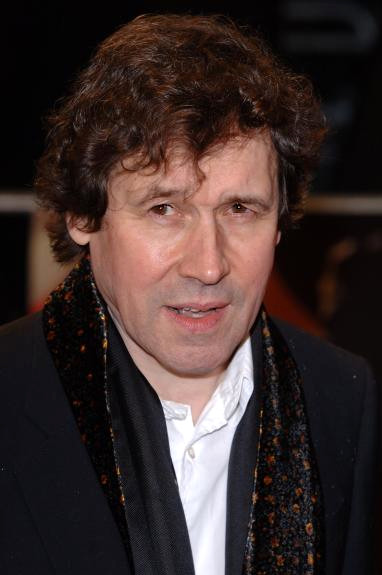
Now I had originally signed up to see Cyprus Avenue on its first outing at the RC in 2016 but had to can it due to a diary clash. Didn’t know anything about David Ireland at that time so was a weensy bit peeved when the uniformly excellent reviews came through, especially after seeing The End of Hope, one of Mr Ireland’s earlier plays, which is one of the sharpest and funniest hours of theatre I have seen on stage in the last few years. So to say I was looking forward to this was an understatement. In fact maybe my expectations were a little too high. Don’t get me wrong. Cyprus Avenue delivers on so many levels. Not least the opportunity to see Stephen Rea on stage. Role for role Mr Rea might just be the most principled actor on Irish, British (or any other) stage and screen. He just doesn’t seem to take dodgy parts for money. To say the role of Eric in Cyprus Avenue could have been written for him is the understatement of understatements. But this is not quite the perfect play.

Actually maybe the understatement of understatements is to say that Eric is not a nice man. The play begins with him shuffling on stage into a nondescript room where he is interviewed by a black woman psychiatrist, (the excellent Ronke Adekoluejo, who, like the rest of the cast, has played the role in Dublin and NYC). Eric’s shockingly direct sexism and racism is quickly revealed. But this is not the half of it as it we flashback to Eric’s blunt treatment of wife Bernie (Andrea Irvine) and daughter Julie (Amy Molloy). And his realisation that his baby granddaughter Mary-May is, in fact, Gerry Adams, Republican, and the leader of Sinn Fein, (until last year). Not just a resemblance. He thinks his daughter really is Gerry Adams, complete with beard and glasses. For Eric, a diehard Unionist, this is anathema. His relationship with wife and daughter disintegrates and he even recruits a hardman, albeit comically incompetent, UVF paramilitary to “resolve” his dilemma. The end is shocking as Eric is forced to assert his bigoted identity, in the face of multiple threats, in the most violent way imaginable.

This is then a black comedy through which David Ireland skewers the lunacy of sectarian politics in Northern Ireland and, by implication, elsewhere. Eric’s religious and political values are so deeply ingrained that hate of Catholics and Republicans, the “Fenians” in his words, is his only currency. His warped logic is mined for laughs but the point is deadly serious. What makes the performance of the crumpled Stephen Rea so remarkable is that, through it all, he still makes Eric recognisably human. Not sympathetic of course. Just very real, his views to him are entirely logical and reasonable. You feel that if he were ever to abandon the certainties of religion and politics his entire psych would collapse in front of us. With a preposterous bunch of “British” religious and political zealots in the form pf the Democratic Unionist Party currently trying to hold our executive, and therefore legislature, and country, to ransom, the play could hardly be more relevant.

This is David Ireland’s metier. using uncomfortable comedy, and shocking violence, to interrogate, and maybe upend, our understanding, expectations and preconceptions of key political questions: sectarianism, identity, race, sexuality and culture. In his first play, What The Animals Say, this is filtered through acting and football, in Everything Between Us the setting is a Northern Ireland Truth and Reconciliation Commission, in the End of Hope, sex and celebrity through a surreal one-night stand, (as is the similar Most Favoured), in Half a Glass of Water, male rape and abuse, (Stephen Rea playing the abuser on its original outing), loyalist paramilitaries again in Yes, So I Said Yes, an age gap relationship in Can’t Forget About You, sectarianism once again in Trouble and Shame, and abuse, religion and homophobia in Summertime.

The sharp eyed amongst you will have noticed a pattern here with the same ideas, situations, issues and characters recurring through his plays. There is I suppose a risk of repetition and self-parody in all this “offensiveness”; indeed I gather that his poorly reviewed play, I Promise You Sex and Violence, was guilty of exactly that, though the title suggests Mr Ireland is alive to the possibility. Senseless violence and the urge to provoke can induce a reaction from the easily shocked or the tiresomely worldly but also even from those, like the Tourist, more open to this sort of caper. There were indeed one or two moments in Cyprus Avenue where I did think the point had been made and it was time to move on. MS was of a similar mind, whilst the SO rightly observed a few drops in pace, and MSC was a little nonplussed by all the savagery really .

Yet for all this duplication the provocation works, the dark, ironic parody is often very funny and the dialogue, in passages, sparks. Ulster American, his latest play, is returning to the Traverse in Edinburgh after selling out last year and, once again, dividing critics with its content. I suspect, one way or another, I will end up seeing it. Mr Ireland treads a line, no doubt, with the subjects he explores and with the way he explores them, but I would contend that is, amongst many other things, the purpose of drama. Trying to work out if people are laughing for the right or wrong reasons isn’t really going to work. As ever, in all art, it is the intention of the creator that is paramount.

Cyprus Avenue just could have done with being a little tighter, less overwritten, offering a little more surprise. On the other hand, for example in the scene where Eric and Slim, (the superb Chris Corrigan), meet, the lines are just so darned good, even when they say essentially the same thing, that I can see why Mr Ireland keeps serving them up. The way their mutual indignation at the backsliding of others in their community is captured, in that odd, overly eloquent tone of florid aggression, is delicious. For me, Martin McDonagh’s The Lieutenant of Inishmore, remains the definitive piss-take of sectarianism and is, line for line, funnier but it is not difficult to see why CA has proved a sell-out.

I assume Vicky Featherstone didn’t have to make too much in the way of adjustments to her sure-footed direction in moving the play from Upstairs too Downstairs at the RC and that Lizzie Clachlan’s spartan set was similarly re-used. The text calls for a muzak version of Van Morrison’s song from which the play’s title is drawn, the post part of East Belfast, but I don’t remember this. Perhaps because that might just be the most horrifying thing of all. Just joking. Anyone I have just put Astral Weeks, the album from which it is drawn on. Still as perfect as when it first came out in 1968. Doesn’t matter how grumpy he gets he is still The Man.

The Good Person of Szechwan at the Barbican Theatre review ****

The Good Person of Szechwan

Moscow Pushkin Drama Theatre, Barbican Theatre, 9th February 2019

I am a sucker for these Russian theatre companies. Despite the fact that I can’t say I was bowled over by the last visits of the Maly Drama Theatre of St Petersburg and the Vakhtangov State Academic Theatre of Russia. Much to admire but they don’t half go on a bit. Still it’s the idea of seeing Russian drama in Russian that appeals to this culture vulture. So I signed up for the Chekhov Cherry Orchard and this Brecht classic in an instant, though given that past experience, I went for the cheap seats just in case.

Which turned out to be a wise choice in the case. of The Cherry Orchard. No review for the simple reason that I only made it to the interval. To be absolutely clear this was not because it is a poor play, I have seen TCO on many occasions and when it works it can be as good as theatre gets, (though I prefer Uncle Vanya’s dose of comic deprecation alongside all the revelatory ennui). Translation is, and was, not a problem, though this version felt a bit peremptory, and my eye was a little caught between the sur-title banners. A minor irritation. Nor was I phased by the vogue-ish set and setting. A raked stage, made up of various entrances, a kind of crucifix in the centre, expressionist lighting, modern-ish dress, devoid of samovar and birch, stylised choreography with multiple “crowd tableaux”. Maybe the production advertised its Absurdism a little too loudly but nothing the Tourist can’t deal with having seen, and enjoyed, some challengingly bonkers stuff in the last few years. Creatives can, and should, arse about with Chekhov. The old boy can take it.

Nope the problem for me was that, amidst all this invention from director Vladimir Mirzoev and team, which certainly looked brilliant, and lent rhythm and context to the drama, Chekhov’s philosophical musings got a bit lost along the way. There was some pretty heavy-handed symbolism; one or two little sailor-suited Grishas, Madame Raneskaya’s dead son kept popping up, Lopakhin was sex symbol as well as vulgar, proto-capitalist, governess Charlotta, in full on Kate Bush Withering Heights mode, becomes a kind of spirit presaging the coming Revolution, there are blood-bags standing in for the Orchard !!!!. If there was a meaning in the text, or in the sub-text, then this production wasn’t going to hold back from offering up a visual signifier to make sure the you didn’t miss it. TCO is so much more than a bunch of air-head, spendthrift aristos blind to what is happening around them. There are individuals wrestling with their own destinies and there are relationships to be unpicked.

I could see the parallels with the world today, an exalted elite about to be overwhelmed by a populist wave, interesting in the context of modern Russia, but it was also pretty clear that this wasn’t for me. So I missed the techno party in swimsuits and Alexander Petrov turning Lopakhin into a full-on oligarch, but I think it was the right call.

What it did do though was get the juices flowing for The Good Person of Szechwan. If this was the way a Russian company was prepared to shake up their own uber-dramatist, what might they do with the German sage, albeit with a different director, Russian wunderkind Yury Butusov in the hot seat. The last time I saw TGPOS was so long ago I had forgotten the details but I did remember it makes a few strong points tellingly well, even if it takes it time to do so, it is long on tunes and that whoever plays Shen Teh earns their fee.

Basics first. Brecht completed the play in 1941 by which time he was in the US though its first performance was in Zurich in 1943. Long-time collaborators Margarete Steffin and Ruth Berlau worked with Brecht, and the score and songs were created by Swiss composer Huldreich Georg Früh. However in 1947, Paul Dessau created and alternative collection of songs which is now the standard and which was used in this production. TGPOS has all the Brechtian “epic theatre” hallmarks though it was obviously inspired by an interest in the conventions of Classical Chinese drama, not just in terms of subject, a parable involving the intervention of gods on humans, but also the situation and performance style. There is also, to my eyes, more than a nod to classical Geek drama, with the intervention of the Gods at beginning and, in the trial, at the end. As well of course, as a classic double identity plot.

The original title translates in German as “love as a commodity” but also, in a different spelling as ‘true :one” which gives a fair idea of Brecht’s target. Shen Teh is a prostitute who struggles to live a “good life” in line with the morality handed down by the gods. Everyone around her takes advantage of her generosity to the point where she invents an alter ego male Shui Ta, to protect her interests. Shen Teh meets a suicidal unemployed pilot, Yang Sun, with whom she falls in love, but he too, egged on by his mum. only ends up exploiting her. Eventually Shen Teh deception is revealed and a trail ensues.

And so we have a dualism, a dialectic if you will, between gender, between altruism and exploitation, between the individual and society. Economic substructure defines the morality in the human superstructure; the gods gift Shen Teh the money to buy her tobacco shop, the relations between Shen Teh and her customers and her landlord, Yang Sun pretending to love Shen Teh to get his hands on her capital. There is also, for me, a religious dimension. Why won’t the all powerful goods intervene to prevent this naughty humans getting up to no good rather than piling all the pressure on Shen Teh? It’s not subtle but it’s still vital.

So plenty to get your teeth into if this is the bag you are into. Which I most definitely am. This being Brecht, there is plenty more beyond the Marxist, (filtered through the writings of theoretician Karl Korsch,) economics lesson. We begin, for example (after bit of sand play) in the prologue with a direct address to us, well the Gods, through the character of Wong, the unfortunate water seller, he played by Alexander Matrosov, in a somewhat disturbing, palsied “village idiot” manner. (I have to assume Russian audiences have a rather less enlightened attitude to disability). The set, designed by Alexander Shishkin is spare, and dark, denoting a “derelict, abandoned world” according to the programme, with props, (chairs, beds, bicycles, a noose, dogs – you know the usual apocalyptic detritus), scattered across the Barbican stage and three birch trees shielding a backdrop for sledgehammer visuals (Diane Arbus’s twins a particular brazen favourite). The lighting design of Alexander Sivaev is suitably harsh, though effective. The jazzy Dessau score and songs, in German, are used in their entirety though the on-stage band, under director Igor Gorsky, doesn’t skimp on additional eclectic arrangement and material, even some incongruous dub and EDM.

A well choreographed Anastasia Lebedev plays all the Gods, and Alexander Arsentiev is Yang Sun, here just Unemployed Man. The rest of the cast (with a few familiar faces from The Cherry Orchard) loads up on supporting roles with no doubling and the whole ensemble moves, sings and performs with gusto. And that is certainly the case with a shouty Alexandra Ursulyak in the lead role, for which she has been garlanded in Russia. Apparently the production is rooted in the concept of “behavioural plasticity” which is a real biological thing where organisms react to changing external stimuli. And there was me thinking they were acting. Anyway Ms Ursulyak’s torn fishnets, shiny plastic mac and gars make-up for Shen Teh, and baggy pinstripe suit, bowler and pencil moustache screamed alienated cabaret Weimar which persuaded me.

There were a few scenes which lagged (200, 330, 500 silver dollars) but, overall, as it should be with competent Brecht the 3 hour 20 minute running time wasn’t a chore, given a translation to follow, political lessons to be absorbed, songs to enjoy, after a fashion, and Shen Teh’s journey to absorb. And some cracking stagecraft. Rice rain anybody? Or better still a deluge of fag packets? The production first appeared in 2013, and I’ll warrant will be playing for many years yet.

The Tourist consumes a play that explores the contradiction between morality and capitalism, especially the commodification of relationships, bought to London by its most famous Russian oligarch emigre. Pick the bones out of that BD.

Sweat at the Donmar Warehouse review *****

Sweat

Donmar Warehouse, 24th January 2019

Who is the greatest living playwright (in the English language). Caryl Churchill. Obviously. Who is, in the opinion of the Tourist, probably the most talented playwright under 40 in Britain today. Ella Hickson. What was the best original play the Tourist saw last year. John by Annie Baker. And the best play so far this year. Sweat by Lynn Nottage.

So far this year the Tourist has seen 19 plays (well 18 and a half to be exact of which more in a future post. Actually it is quite a bit more than that but I have condensed the Pinter at Pinter season ). Too many. Certainly but such is the life of the friendless, privileged layabout.

Only 4 by women though. Not good enough. Either by me or the industry. Last year, (I shall refrain from the total number – it is embarrassing), just 25% of the plays of the plays I saw were by women. If I take just new plays (not classics or revivals) the ratio edges towards 40%. Not great but getting better.

Before I get started I note that Sweat is transferring to the Gielgud Theatre from 7th June for 6 weeks or so. If you haven’t seen it don’t hesitate.

Sweat is set largely in a bar in a de-industrialising town in the rust belt of the American North East. Lynn Nottage and her team spent over two years interviewing residents of Reading, Pennsylvania in preparation for writing the play. Now, as I know from having seen another Pulitzer Prize winning entertainment, Julia Wolfe’s oratorio Anthracite Fields, Reading was, in its heyday through the second half of the C19 and first few decades of the C20, a powerhouse of US industry built on iron and then steel, its proximity to coalfields and on the railway. Its fall was precipitous however and it became, by the time of the 2011 census, one of the poorest cities in the entire country, though it is now being reinvented as a centre for cycling nationally.

Ms Nottage’s play is set in 2000, though it begins in 2008, with the release of Jason (Patrick Gibson) from prison into the hands of probation officer Evan (Sule Rimi who has, thankfully, popped up on numerous occasions for my viewing pleasure). Jason is “reunited” with once friend Chris (Osy Ikhile). Neither is in a good place. We then flash back to see how we got to that place. Jason’s mum Cynthia (Claire Perkins), Chris’s mum Tracey (Martha Plimpton) and Jessie (Leanne Best) are celebrating in the bar managed by Stan (Stuart McQuarrie) and where Hispanic-American Oscar (Sebastian Viveros) is employed. Cynthia is estranged from husband Brucie (Wil Johnson) who has spiralled downwards after being shut out from the factory during a strike some years ago. All three, tough, women are also employed at the local steel-works, as are the boys, (though Chris wants another life), and as was Stan until an industrial accident, and it is against this back-drop that the story unfolds.

Now you might be thinking, uh-oh, this is going to be one of those terribly worthy political plays where a finger-pointing, hand-wringing lesson about economic and social injustice sucks the life out of the drama and leaves you with conscience enhanced but ever so slightly bored. Well nothing could be further from the truth. The relationships between the characters, and the extraordinary, often moving, dialogue, that describes them is perfectly pitched. The play is flawlessly plotted, structured and executed. The fact that Lynn Nottage is able to locate this within a broader economic and social context (blimey, she even nails the mixed blessings of NAFTA), to conjure up time and place (and history) and to explore fault-lines along racial, class and gender divides, without getting in the way of the personal drama, is what makes this such a complete work of theatre. This is fiction, with no trace of verbatim, but the process of its creation, the people that Ms Nottage talked too, make it very real.

There is nothing redemptive or uplifting here but that is the reality of the damage that the economic dislocation and industrial change has brought to the region and by implication, those left behind in the US and across the Western world. The play opened in New York in 2016 just before Trump’s election. It could not be more relevant. The shattering of the American Dream is hardly a novel subject for drama but Sweat brings home the causes and consequences of the shift away from heavy industry and manufacturing, from managed capitalism, through financial capitalism into the information age. Ms Nottage has said that “we are a nation that has lost our narrative”, which sums up the disillusionment, rage and frustration which is now being vented by those that have lost out and, for whom, the dignity of labour has been upended and faith shattered in a system which was supposed to protect them. Setting the play in an all-American bar, rather than the workplace itself, is a masterstroke, for this is an arena in which the tensions can truly erupt.

Even a play this perfect still needs cast and creatives to deliver. Indeed any flaw in delivery would probably be more visible. Fortunately we are in the secure hands of director Lynette Linton, assistant at the Donmar and now in the hot seat at the Bush. Frankie Bradshaw’s set is wonderful as the bar descends, altar-like, inside a framework of steel girders, supported by Oliver Fenwick’s lighting design and George Dennis’s sound. The cast is uniformly exemplary, another triumph for dialect coach Charmian Hoare, (though this Brit is no expert), with Claire Perkins particularly excellent as the striving Cynthia and Martha Plimpton just, and for once the vernacular is justified, awesome.

Best of all Lynn Nottage didn’t just helicopter in to extract her story and then move on (as it happens now to a work around the life of Michael Jackson – crikey!). No, she and the team, went back to show the play and to engage in many ways with the community across multiple projects. Drama matters. The Greeks knew that. Hard to see how it could matter more than with Sweat.

I’m Not Running at the National Theatre review ***

I’m Not Running

National Theatre Lyttleton, 22nd January 2019

If you have a moment one day take a look at the writing credits of David Hare, both for stage and screen. There are a lot, including some of the finest dramas written in the English language over the past four decades. And he shows no sign of slowing down in contrast to some of his eminent peers. I enjoyed his interpretation of Chekhov’s The Seagull and his last original play, The Moderate Soprano, (even if it veered towards the hagiographic), as well as his screenplay for the film Denial, and prior to that the Worricker thriller trilogy on telly, which he also directed. I can’t say I was completely persuaded by The Red Barn, his adaptation of a Georges Simeon story, his last outing at the NT, though it looked brilliant nor by Collateral, his four part TV police procedural/thriller on the Beeb last year, which was packed with detail and performance but didn’t quite hang together (especially when compared to the likes of Line of Duty and Informer).

So is the old boy going off the boil. Well, obviously not. Here is someone who can literally churn out line after line of exquisitely apposite dialogue in his sleep, (even if it does verge on catechism), his drama continues to be stuffed with commentary on big moral, political, social and economic issues, the sine qua non of state-of-the-nation drama, he can sketch out a character in just a few lines, (even if deeper psychological details can sometimes move elusive), and his stories normally have a verve and pace that rapidly draws you, in provided you are prepared to engage the brain as well as the heart. All of this is on show in I’m Not Running, which also features a couple of bravura lead performances from Sian Brooke and Alex Hassell (and fine supporting turns from especially Joshua McGuire and Amaka Okafor, Brigid Zengeni and Liza Sadovy).

Yet it is not an entirely convincing play and, IMHO, falls short of vintage political Hare seen in the likes of Gethsemane, or The Power of Yes and Stuff Happens, and falls well short of the likes of The Secret Rapture, Plenty or, on a similar theme, The Absence of War. This, I think reflects, the slightly awkward conjunction of the personal connection and political rivalry of the main characters Pauline Gibson and Jack Gould, and the censure of a Labour party, (always a favourite target for Hare), which smacks more of the Blair years than the current incarnation. There is surely much that Mr Hare could have criticised about the current Opposition in his play, notably its enabling of Brexit, but here we are asked to look instead at how the party machine locks out “outsiders”, specifically a woman, in favour of well-connected, “professional” politicians, with the NHS as the idealogical battleground. Whilst the points it makes, and this being David Hare, the way it makes those points, are elegant and indubitably valid, the absence of Corbyn, Momentum and the B-word, seems curious.

The play opens with a media scrum ahead of an announcement from Pauline Gibson (Sian Brooke) and her adviser Sandy Mynott (Joshua McGuire) about whether she will stand as leader of the Labour Party. We then flashback to Newcastle University in 1997 and the Blair landslide when Pauline, a headstrong medical student, and boyfriend, hesitant would-be lawyer, Jack (Alex Hassell), are splitting up. Pauline, whilst dealing with the fall-out from her alcoholic mother Blaise, (a savvy, though somewhat wasted, performance from Liza Sadovy), enters Parliament as an Independent defending her Corby hospital from closure. She crosses paths again with Jack, scion of an intellectual heavyweight of the Left, who is now a smooth careerist rising up the Parliamentary ranks tasked with NHS reform. Principles vs pragmatism, single issue vs party machine, popularity with party and public, institutional sexism in politics, all are explored against the backdrop of the smouldering passions of the voluble couple.

It is still a testament to Mr Hare’s dramatic gift that the arguments can be interrogated without any hint of cumbersome exposition and that the characters he recruits to the cause still come across as real, if not in both cases here, as completely likeable. Director Neil Armfield could hardly do more to tease out the detail of the text and Ralph Myers rotating blank room set doesn’t get in the way (though there are occasions when the actors look a little lost when standing at the wings of the Lyttleton stage).

Sian Brooke’s Pauline contains enough distanced vulnerability to set alongside her self-righteousness and Alex Hassell’s fly-by-night Jack convinces as he treads the path littered with compromise that he was ordained to follow, but the Tourist couldn’t escape the feeling that this was all a little bit David Hare by numbers and that the couple, even with the supporting characters, seemed to be operating in a bubble devoid of external context. Still well worth seeing though for me James Graham’s Labour of Love was a far more entertaining, and insightful, take on similar territory.

Pinter at Pinter 6 review *****

Pinter at Pinter Six: Party Time and Celebration

Harold Pinter Theatre, 17th January 2019

This for me was the best off the bunch so far in the Pinter at Pinter one act play season. And proof that Jamie Lloyd is the Man when it comes to directing the menacing Master. Mind you cop this cast. John Simm, Phil Davies, Eleanor Matsuura, Celia Imrie, Katherine Kingsley, Tracy-Ann Oberman, Gary Kemp, Ron Cook and Abraham Popoola. It is something when probably the least well known on this list, Abraham Popoola, just happens to be, as anyone who saw his performances in STF’s Othello, the Bridge’s Julius Caesar and Pity will know, one of our finest young stage actors.

Jamie Lloyd has profitably emphasised the clear connection between the two plays. Both have a cast of 9 and both are centred on functions in swanky locations. Soutra Gilmour’s alternately monochrome and gaudy sets and costume designs, and Richard Howell’s sharp focus lighting, elegantly reflect this. In both cases a wealthy elite, inured to the concerns of, and detached from, wider society, bickers amongst itself. There is the usual menace, threat, misogyny, oneupmanship, bitterness, jealousy, entitlement and exaggeration that is the HP hallmark but here employed in the service of biting satire. The social class that HP is shredding may differ in each play but the message is the same.

Party Time dates from 1991 and originally premiered with the more overt political satire of Mountain Language seen in Pinter One in this season. Phil Davis’s businessman Gavin is hosting a party where the barbed chat revolves around country club membership, luxury island holidays and past affairs. John Simm’s Terry cruelly bullies his wife Dusty (Eleanor Matsuura), particularly when she mentions Jimmy, her estranged brother. The other guests are equally offensive and vapid in their various ways. Occasionally the sniping and boasting stops and a bright white light is revealed through open doors at the rear. The outside world has plunged into violent disorder, suppressed by the state, and eventually Jimmy (Abraham Popoola) stumbles through the light to deliver a poetic monologue describing this collapse.

Celebration, from 2000., sees Ron Cook’s Cockney villain/businessman (“strategy consultant” in his own words) Lambert celebrating his wedding anniversary with wife Julie (Tracey-Ann Oberman) and brother Matt (Phil Davies), and his wife Prue (Celia Imrie), who is also Julie’s sister, in a swanky restaurant. Vulpine banker Russell (John Simm) and partner Suki (Katherine Kingsley) who Lambert “knows” eventually join them. Restauranteur Richard (Gary Kemp) and Maitresse d’ Sonia (Eleanor Matsuura) alternately schmooze and patronise their ignorant, nouveau riche guests. Waiter (Abraham Popoola) “interjects” to tell tall stories about the literary circles that his grandad mixed with. Here class is the target though some rather darker themes, misogyny, misandry, incest, domestic violence, also emerge.

As elsewhere in this excellent season, the connections that run through HP’s work, and their continuing relevance, are highlighted. The divisions between an elite, defined by wealth, and the rest of society are laid bare. The callous indifference and amoral stupidity of this moneyed, brash, narcissistic class, and those who seek to emulate it, is laid bare. Materialism reigns supreme.

Of course this being Pinter there are times when you are going to fell pretty uncomfortable with some of the dialogue, but, this also being Pinter, you are also going to laugh, a lot, notably in Party Time. Whether you are laughing at, or with, the characters, or at, or with, yourself, is for you to decide.

Impossible to pick out favourites with a cast of this calibre, but if pushed, I would go for Ron Cook and Tracy-Ann Oberman. The latter does not have quite as many lines as some of her equally renowned peers but every one strikes home (it would be good to see her back in some Shakespeare) and Ron Cook is about as perfect a Pinter actor as it is possible to get. Mind you the last few times I have seen him he has pretty much stolen the show (The Children, Girl From the North Country, The Faith Healer and The Homecoming).

One more collection to go as well as the production Betrayal. Even the venerable Danny Dyer, Martin Freeman, Tom Hiddleston et al are going to have there work cut out to top this.

The Tragedy of King Richard the Second at the Almeida Theatre review ****

The Tragedy of King Richard the Second

Almeida Theatre, 9th January 2019

Vain, frivolous, self pitying, introverted. Richard II doesn’t come across too well at the beginning of this play, Shakespeare’s first instalment of his histories that chart the origins of the “War of the Roses” and end with the death of Richard III and accession of Henry VII. Yet by the close of Richard II, acutely aware of his own fate, we see, not a different person, but a man who finally realises how his actions, as well as those of his aristocratic rivals, brought him to where he is. The distinction in Joe Hill-Gibbons’s quick-fire take on his tragedy is that his nemesis, Bolingbroke, who becomes Henry IV, travels in the entirely opposite direction, secure in his right to reclaim his titles, and then the throne, on returning from banishment, he quickly descends into a vacillating arbitrator of facile dispute.

The play highlights the fact that political power often overwhelms those that seek to wield it, as competing interests compromise consensus, a valuable lesson for our troubled times. Kings, and their democratic equivalents, are those that divvy up the prizes, once land, now patronage, to lords and their modern equivalents. These may owe allegiance but they can get mighty uppity if they feel taken for granted or hard done by. The joy, and instruction, of Shakespeare’s history plays, which examine the delicate balance between those that lead and those that keep them there, is that the deadly embrace continues to this day. Only now, we, the hot-polloi, have the right to stick our oar in as well. Apparently the “will of the people”, even if no-one knows what it is, least of all the people, is now the only source of legitimacy. Hmmmm.

In order to get to the heart of this tragedy though the production does take a few liberties with us the audience. First off it starts at the end, kind of, with Simon Russell Beale’s Richard II pronouncing “I have been studying how I may compare/This prison where I live unto the world.” Famous soliloquy dispatched what follows might be, TV drama style, his flashback.

Richard II is written entirely in patterned verse, (as are the first and third parts of Henry VI and the ropey King John), even down to the gardeners who get to comment, memorably, on the state of the country under their warring betters. The verse remains intact through the 100 minutes of the production, (with a few pointed additions), but its rhythms take something of a back seat. Especially in the first half hour or so, when the lines are delivered at breakneck speed. Not a problem for Simon Russell Beale as Richard II or Leo Bill as Bolingbroke (whose lines are deliberately less florid and more direct than Richard’s). However one or two of the less seasoned members of the cast snatched a little, noticeably in the arbitration, tournament and banishment scenes. The rhythm settles down by the time we get to John of Gaunt’s lament (“this sceptred isle …. now bound in with shame … hath made a shameful conquest of itself”; the speech is not about how great we are but how we manage to f*ck it all up, that, and a couple of lines of blatant anti-Semitism). Even then you have to keep your ears open and your wits about you.

There is also, (not unreasonably since, as events pile up, it really works as a conceit, especially when combined with some inspired choreography), a lot of character doubling and more. The Tourist always recommends that Shakespeare is best consumed following a little homework into context and synopsis. A quick Google on the way in is all that is required, as witness BUD who was my guest here, even for those who think they know the plot backwards. Ironing out your Aumerle (here Martins Imhangbe) from your Carlisle (Natalie Klamar) from your York (John Mackay) from your Northumberland (Robin Weaver) always pays dividends. Knowing which aristo is on which side has historically always been a sound real life lesson as it happens: knowing why is a bonus.

Fans of “historical” Shakespeare, whatever that is, are also in for a bit of a shock here. ULTZ’s set is a stark, bare cube, comprised of brushed metal panels riveted together, topped by a frosted glass ceiling. It serves very well as prison cell, less figuratively as castle, garden or jousting field. As a way of showing how power plays out in claustrophobic rooms and crushes those who exercise it, it does the business though thank you very much, and, remember, we might be in the prison of Dickie’s mind anyway.

This set works especially well when combined with James Farncombe’s bold lighting design. JH-G had a huge cast on his last outing and a magnificent recreation of a Soho drinking den at the close of WWII courtesy of Lizzie Clachlan and a fat lot of good that did him. It was awful. Though that was more the play’s fault than his. Here he is on much firmer ground as he was with his excellent Midsummer Night’s Dream and measure for Measure at the Young Vic. His fascination with soil continues, there are buckets of earth, water and blood lined up and neatly notated at the back of the stage. I like to think they symbolised “this England”: they certainly left SRB needing a hot shower post curtain call.

Of the supporting cast I was particularly taken with Saskia Reeves, as I always am, who got to be the argumentative Mowbray, the unfortunate Bushy, (with Martins Imhangbe playing Bagot, his head-losing mate), the other favourite Green, and the Duchess of York, and Joseph Mydell, a composed Gaunt as well as Bolingbroke sidekick Willoughby. Various explicit nobles on both sides are excised from this reading, as is the Queen amongst others, and, should a fill-in be required, out stepped one of the cast from the “chorus”-like crowd. Brutal it may be for purists, but in terms of reinforcing the hurtling momentum, very effective.

Leo Bill once again shows why JH-G has faith in his Shakespearean abilities, but it is Simon Russell Beale who carries the weight of the production on his shoulders. How he ensures that we not only take in but understand the impact of every line he utters is a wonder, especially in the return to England and Flint Castle surrender scenes. Even when he wasn’t dashing out his metaphor and simile strewn lines in double quick time, and wasn’t soaked through covered in mud, this was a cracking performance. The fact that he was, and that we can still savour Shakespeare’s language, and sense the difference between the body politic and the body natural, (the, er, embodiment of the medieval king), shows again why he is now unarguably our greatest living Shakespearean actor.

In this performance Richard’s early, flawed, decision-making seems less vanity or indecisiveness and more high-handed hauteur, the desire just to get the job done regardless of consequences. I’m the king, by divine right, so of course I know what to do. There isn’t much in the way of Christ-like martyrdom here as there was in David Tennant’s guilt-ridden 2013 RSC take or in Ben Whishaw’s petulant Hollow Crown reading. No white robes or flowing mane of hair here. The fact that SRB is “too old”, the real Dickie was in his early thirties for the last two years of his reign when the play is set, and that he, and Leo Bill, look nothing like the generally accepted take on the characters, only adds to the universality of the message.

The early years of the actual Richard’s reign weren’t too jolly for him by all accounts. Acceding to the throne aged just 10, with a bunch of nobles preferring a series of ruling councils to a regency under Uncle John (of Gaunt), the Hundred Years War with France not going England’s way, Scotland and Ireland playing up and labour growing its share of the prosperity pot at the expense of landed capital (the Black Death had led to a sharp spike in agricultural wages). In 1381 the Peasants even had the temerity to Revolt. By now though the young king was throwing his weight around but many of the entitled aristos, (whom we meet in the play), didn’t hold with the company he kept and in 1387 the so called Lords Appellant, (Gloucester, Surrey, Warwick, Bolingbroke and Mowbray), seized control and one by one, tried and disposed of Richard’s favourites.

By 1389 Richard was back in control, with Gaunt’s oversight, and, for a few years, got on with the job. But he never forgot what his opponents had done and, come 1397 he started taking revenge, notably, on Gloucester, his uncle, who he had bumped off. This is often where the play steps off with the King’s bloody guilt informing the four short years before his death, probably by starvation, after Bolingbroke’s usurpation.

Richard was allegedly a good looking lad, see above, who believed absolutely in his divine right to rule at the expense of the uppity Lords. He wasn’t a warrior, rather a man of art and culture, aloof and surrounded by a close knit retinue. As with all the big players in the history plays, our perception of Richard II, is though to some degree shaped by the Bard’s not always favourable publicity (that’s if you have any view at all of course). Via his favourite contemporary historian Raphael Holinshed. There was apparently a time when historians thought Richard was insane: now the wisdom is that he had some sort of personality disorder that contributed to his downfall.

Mind you if you were locked up in solitary confinement you might well lose the plot. There is an extract in the programme taken from Five Unforgettable Stories from Inside Solitary Confinement by Jean Casella and James Ridgeway from Solitary Watch. Solitary Watch tracks the estimated more than 80.000 prisoners in the US system held in solitary confinement on an average day. Here four prisoners eloquently describe their experience. Left me speechless. 80,000. That’s not a typo. Google it.

So another success from the Almeida hit factory, another masterclass from Simon Russell Beale and another validation of Joe Hill-Gibbons radical(ish) way with Shakespeare. BUD, whose first exposure this was to the history plays, agreed. Mind you there isn’t much in this world that he can’t size up within 5 minutes of first introduction.

There is probably a case for JH-G slowing down proceedings just a little, another 15 minutes wouldn’t have been a stretch, just to let the poetry work a bit more magic, give a little more complexity to Bolingbroke and the nobles, and draw out more from the themes. And the stylised, expressionist visual concepts won’t, (and haven’t), pleased everyone. But as a coruscating denunciation of the perennial failure of the political class, you want see much better on a stage even if it was written over 420 years ago.

The Favourite film review *****

The Favourite, 3rd January 2019

The more theatre I see, the more I am turning into an insufferably superior luvvie. “A play will always trump a film because it is organic, dynamic, viewed from multiple perspectives, energised by audience complicity, palpable, alive, more daring in terms of form and structure” and much other such guff.

However sometimes I have to accept that the cinematic trumps the theatrical and that is definitely the case for The Favourite. For only a couple of years earlier, writer Helen Edmundson, director Natalie Abrahami, the massed ranks of RSC creatives and a cast led by Romola Garai and Emma Cunniffe served up Queen Anne, a play that, like The Favourite, dramatises the relationship between Anne, Sarah Churchill and interloper Abigail Hill. Except that the play offered a much broader sweep of history, Anne’s accession, the War of the Spanish Succession in Europe between the Grand Alliance and the Spanish and French Catholic monarchies, the rise of the Duke of Marlborough, Sarah’s husband, as well as Lord Godolphin and Anne’s political interventions. It also focusses on the birth of the free press in England at the turn of the C18 and, specifically, the spread of satirical publications. All this in addition to the personal troika.

In contrast The Favourite, whilst referencing the political manoeuvrings between protectionist Whig and free-trade Tory, and the impact of the growing tax burden to finance the war on landowners, is firmly focussed on the relationship between the three principal women. Mark Gatiss gets a look in as Marlborough (Winston Churchill’s ancestor) but not much opportunity to show off. Same goes for James Smith as Godolphin. Both were Tories but they became ever more reliant on Junto Whigs to finance the war.

(As an side I personally continue to sh*t myself about the long term, and increasingly short term, effect of debt on this country. As it happens public debt to GDP ballooned in the years after William III first went cap in hand to the City spivs with the idea of issuing Government bonds. At the peak of the War of Spanish Succession it approached 200%. War tends to do that. Anyway now good old Blighty runs at around 90%, not too far away from our major developed economy neighbours. But when you add in private debt it gets closer to 300% of GDP. There are a bunch of countries with “higher” levels but this reflects their tax friendly approach to issuers of corporate debt. Our debt is built on the backs of consumers.

So for those Brits who now purport to prize “sovereignty at any price” I would venture we are already in more of a pickle than all the Euro economies you take a pop at. But that is not all. Our current account deficit currently runs at 5% or so. Comparable with the likes of Turkey and Argentina. This has to be financed by foreign investors, “the kindness of strangers” as the Governor of the BoE would have it. Who knows what might happen in the next few weeks and months but if we balls this up, sterling depreciation, imported inflation, capital flight and sale of assets is guaranteed. And there may be f*ck all the BoE and Government can do to protect us. Forget about your ten quid for a visa, roaming charges, lorry queues or medicine stockpiling. That’ll be the least of your worries).

Oops I’ve done it again. Back to the script. So Anne, a natural Tory, became increasingly less enamoured of the Junto dominated government, especially when she fell out with Sarah, and the non-Junto Whigs started to break bread with the Tories led by Robert Harley. Cue the terrific Nicholas Hoult for it is he that plays Harley, sumptuously powdered and bewigged, but still brutally Machiavellian. He intrigues with the ambitious Abigail, eventually marrying her to his ally Masham (a virile Joe Alwyn), with the Queen’s approval. Harley wins the political battle, last straw for Sarah, but the Whigs win the battle after Anne’s death when the Hanoverian line is established, the Jacobites are defeated and the Whig supremacy is ushered in. The new money trounces the old.

Anyway I suspect that once the mercurial director Yorgos Lanthimos, in 2009, got his mitts on Deborah Davies’s original script, first written twenty odd years ago, it was always likely that the political context was going to be downplayed. Mr Lanthimos went on to garner deserved critical acclaim for Dogtooth (my favourite of his until, er, this Favourite), The Lobster and The Killing of a Sacred Deer. For those that don’t know, these are not your run of the mill Hollywood blockbusters. So, in many ways, The Favourite it surprisingly in its near naturalism. It is beautifully shot courtesy of cinematographer Robbie Ryan, the costumes (Sandy Powell) and set decoration (Alice Felton) are, as you might expect, exceptional and the locations, mostly Hatfield House, also Hampton Court Palace and the Bodleian’s Divinity School, are all stunners. The soundtrack, without exception, is divine, though amongst all the Purcell, Handel, Vivaldi and Back (WF as well as JS) make sure to listen out for Anna Meredith’s rasping contribution from her string quartet Songs for the M8.

So it looks and sounds wonderful. A period drama with a twist of Peter Greenaway’s Draughtsman Contract. But it is the relationship between the three women that is Mr Lanthimos’s concern and, with a little embellishment and ornamentation, he constructs a drama that the Tourist thinks sheds more light on the workings of power than any dry “historically accurate” portrayal could do. It is a drama, so “historical accuracy” for all the pedants out there is meaningless in this context, and, in any event, history is simply what is left and what is found, and it always changing. I suspect what really winds these punters up is the functional lesbian love triangle but, without that there would be no drama. The power games between the three women seem to echo, and directly, influence the power games between politicians and Crown and State.

Queen Anne, (we never see husband George who was an arse by all accounts), famously lost all 17 of her children and left no heir, hence the invitation to the Germans, 26 years after the invitation to the Dutch. Protestant royal kids eh, never there when you need them. This, unsurprisingly, leaves her sad, needy, physically incapacitated and isolated. Hence her bunnies. And her cake. She has a friend from childhood, Sarah Churchill, but these two chums are beyond dysfunctional. Having opened the door to her, she, Sarah, is in turn is manipulated by impecunious upstart cousin Abigail Hill, who then steps in to manipulate the Queen, literally and emotionally. Except that she, the Queen, whilst vulnerable is also capable of manipulating both, and ultimately pulls rank.

There are external scenes, in the palace gardens, on horseback, to Parliament, but most of the action takes place indoors and specifically in the Queen’s bedchamber and the corridor outside. Genius. Adds to the damaging intensity and claustrophobia of the relationships. As does the roving camera. And the predominantly wide-lens shots. The dialogue is dynamic and contemporary, the humour broad and often incongruous, the tone ambivalent. Your sympathies will constantly oscillate between the characters.

It is probably a comedy, but not one of those “dark” or “black” comedies where you don’t laugh. There are hints of Restoration romp and barbed bitch-fest a la Les Liaisons Dangereuses but then the idiom is right here, right now. It might be a tragedy but who is the heroine? Historical drama? But no-one normally speaks or moves like this in the bog-standard drama. The Madness of King George filtered through an absurdist lens. Maybe, but then it isn’t that absurd. Parallels with the arch Whit Stillman’s Love and Friendship, or the recent ITV Vanity Fair. Yes, but with more filth and camp. Could another director have taken the scrip and budget and churned out a more than passable film. For sure but it wouldn’t be half as much fun or half as original.

All of this reflects Yorgos Lanthimos’s off-kilter, deadpan style but it was never going to work without the three leads stepping up and, crikey, they do. In any other filmic context Emma Stone’s opportunist Abigail would take your breath away. Then along comes Rachel Weisz’s cruel to be kind, then to be cruel, and then back again, Sarah. And then, in probably the least surprising acting triumph of all time, Olivia Colman comes along and chews them up with her Queen Anne. The way all three bring out the conflicts implicit, and explicit, in their relationships is, frankly delicious, but OC takes it to another level.

I have already intimated that IHMO the present shower of Parliamentary sh*te might as well be dissolved to be replaced by a matriarchy comprised of acting Dames. Judi Dench as PM, Maggie Smith as Chancellor, Helen Mirren as Foreign Secretary, Eileen Atkins as Home Secretary, Joan Plowright as Education Secretary, Patricia Routledge at Health, Harriet Walter Justice, Kristin Scott Thomas International Development, Julie Walters Work and Pensions. You get the idea.

Culture Secretary I hear you cry. Easy. Sarah Caroline Olivia Colman. Only a matter of time before she is be-Damed. And surely she could cheer us all up. Telly, film or, too rare, on stage (she was close enough to touch in Mosquitoes), how she manages to get so deep into the emotional core of the characters she has played, even in relatively “lightweight” roles, is astounding. Anyway she now seems to have cornered the market in screen Queens, as it were, and here she is simply magnificent. Whether vomiting up blue cheese, petulantly cutting short a recital, stroking her rabbits (no euphemism), freezing in Parliament, linguistically weaponising cunnilingus (yep that’s what I meant), weeping for her lost child, ecstatically responding to Abigail’s poultice (again no euphemism) or bullying some poor footman, she always convinces, even as we snigger.

I see The Favourite, and Olivia Colman, Emma Stone and Rachel Weisz, are all over t’internet as Oscar candidates. I haven’t seen many of the other films habitually mentioned bar Blackkklansman and Black Panther (note to self: get on to that Roma caper asap). I doubt they will get far. But just maybe Olivia Colman can do the business and the whole world can see how perfect she is. That would be nice.