Some forthcoming London theatre ideas

image

So we have had a few new season announcements over the past few weeks so here is a wrap up of what I think looks interesting in terms of stuff coming up on various London stages.

To spare you crawling through all this guff here is my top ten, including the best of these recent new season announcements in my view, and some other incumbent recommendations.

  1. The Ferryman at the Gielgud Theatre. So I know the decent seats are exorbitantly priced and this has come in for a bit of “paddywackery” backlash but it is still a towering play and is a must see.
  2. Hamlet at the Harold Pinter Theatre. Ditto. This is just a brilliant Hamlet from Andrew Scott and must be seen whatever you view on Will S.
  3. Network at the National Theatre. Should be a cracker – more details below
  4. Macbeth at the Barbican. In Japanese (with surtitles) but this is a classic production which I am very excited about.
  5. I Am Rachel Corrie at the Young Vic. Erin Doherty in the lead in this revival.
  6. Gundog at the Royal Court Theatre. I have a feeling this will be good.
  7. Albion at the Almeida Theatre. The next hit from the Almeida?
  8. Young Marx at the Bridge Theatre. I have banged on about this before but all is in place for the Bridge’s first offer.
  9. Insignificance at the Arcola Theatre. Revival of Terry Johnson brainy classic.
  10. Poison at the Orange Tree Theatre. I think this will be another triumph of discovery at Paul Miller’s Orange Tree.

More detail below.

Young Vic

New season is up. Best of the bunch for me is a revival of I Am Rachel Corrie based on the eponymous activists diaries with Erin Doherty in the lead. I have said before that I think Ms Doherty will become a stage legend and this should support that idea. The Jungle also caught my eye, with a whole bunch of tip-top creatives weaving stories from the Calais refugee camp. This is the sort of thing the Young Vic excels at. I am also looking forward to Wings with Juliet Stevenson in the lead and the Suppliant Women.

Royal Court Theatre

A whole bunch of goodies in the new season with three takes on the impact of war, Minefield, Bad Roads and Goats, and a US transfer, Grimly Handsome which has already sold out. My money is on My Mum’s a Twat a debut play from Anoushka Warden which RC’s Artistic Director Vicky Featherstone is directing, Girls and Boys, a relationship drama from Dennis Kelly (who writes for the telly) and directed by Lyndsey Turner, and, sounding best of all, Gundog, which has a nice ring of folk horror about it in the blurb. As usual with the RC there is not much to go on but I have a very good feeling about this. Ms Featherstone also directing.

Almeida Theatre

The Almeida can’t put a foot wrong under Rupert Goold with Ink the latest hit (sold out at the Almeida but go see it in the West End Transfer – you won’t regret it). I am booked for all 3 of the new season productions.

Mr Goold himself will direct Albion, Mike Bartlett’s new play. This has “state of the nation” written all over it but Mr Bartlett is a terrific writer so no need to fear. His last outing Wild at the Hampstead was good if not outstanding but this seems to have all the ingredients including a rareish outing for Victoria Hamilton on stage (you will have seen her in numerous period dramas).

Also intriguing is the Twilight Zone a world premiere from Anne Washburn based on, you guessed it, the Twilight Zone TV series from the 60’s. Now I can’t pretend I was bowled over by Ms Washburn’s Mr Burns but you have to admit this sounds quite exciting especially as it will be directed by the reliably controversial opera director Richard Jones.

After all this excitement the last play in the new season is a bit more classical in Tennessee Williams’s Summer and Smoke directed by Rebecca Frecknall (who has taken on this relative rarity before at the Southwark Playhouse) and with Patsy Ferran seemingly perfectly cast in the lead.

Donmar Warehouse

There are still a few tickets left for the new version of Ibsen’s Lady from the Sea and more for the Knives in Hens revival which should show director Yael Farber in her best light after the tricky Salome at the NT. Knives in Hens is a spare, poetic love triangle that gets regular revivals because, er, it is very, very good.

Old Vic 

Tickets now on sale for The Divide the new dystopian drama from the pen of Alan Ayckbourn. It is in two parts and I have no idea how it will pan out. It will be premiered at the Edinburgh Festival so probably worth waiting to see how it is received. It does have my favourite Erin Doherty (see My Name Is Rachel Corrie) above so I have already taken the plunge to get my favourite seats but I might have gone too early.

Arcola Theatre

A slew of interesting stuff in the new season including the Grimeborn opera offerings, but the standout plays for me look like the revivals of Terry Johnson’s Insignificance (his new play Prism is also coming up at the Hampstead Theatre) and Howard Barker’s Judith: A Parting from the Body with Catherine Cusack in the lead.

Orange Tree Theatre

Everything in the new season looks interesting to me including productions of Duncan Macmillan’s Every Brilliant Thing, Elinor Cook’s Out of Love and Brad Birch’s Black Mountain, but I think the UK premiere of Poison by Dutch writer Lot Vekermans may turn out to be the best of the bunch.

National Theatre

I am seeing Angels in America shortly (always seem to end up near the end of the run) so review will follow. Common is still trundling on – I didn’t think it was too bad but others were less forgiving (Common at the National Theatre review ***). No official reviews for Mosquitoes by Lucy Kirkwood which kicked off recently but I am looking forward to this immensely. Unfortunately the run is sold out so queueing on the day is the only way in.

Coming up are Follies, the Sondheim musical with Imelda Staunton belting out the tunes, Oslo, the sold out Broadway transfer which already has a West End transfer, St George and the Dragon, which I would take a punt on as a “modern folk tale” (expect Brexit allusions) written by Rory Mullarkey and directed by Lyndsey Turner, and Beginning, which I am guessing is a relationship drama (I assume with twists) written by David Eldridge and directed by the inestimable Polly Findlay.

My highest hopes are reserved for Network, based on the mid 70s Oscar winning film satire on the media, to be adapted by Lee Hall, directed by Ivo van Hove and with Bryan Cranston in the lead. Now film adaptions and Ivo van Hove disappointed on the last outing (Obsession at the Barbican – Obsession at the Barbican Theatre review ***) but I still would take the risk. This isn’t going to work if it follows the minimal, psychological insight route so I am assuming it will look more like Mr van Hove’s relentlessly busy Shakespearean efforts. There are tickets left for later in the run.

Barbican Theatres

Mr van Hove will also be bringing his Tonnelgroep Amsterdam team to the Barbican for After the Rehearsal/Persona and the main theatre will also show all the RSC Roman Shakespeares transferring from Stratford. I am signed up for the marathon Smile On Us Lord (I hope he/she does) from Russia’s Vakhtangov State Academic Theatre though I recognise this might be a bit hardcore for most. I do think the Ninagawa company’s Macbeth will be worth the £50 though. This is a revival was the production that first brought this innovative visual feast to the “West” so it really is a “once in a lifetime” theatrical experience.


Salome at the National Theatre ***

salome-olivier-285

Salome

National Theatre, 5th July 2017

Salome, much like Common also currently residing on the Olivier stage, has been given a bit of a pasting by the criterati. Not utterly trashed but its obvious flaws have been highlighted. And much like Common I have to say I think the criticism is a little misplaced (Common at the National Theatre review ***.

The text is ponderous, with a strange mix of bombastic Biblicality, overwrought imagery and sometimes vague, paradoxical didacticism but the themes are still revealed and once you adjust to the style and pacing it exerts a sort of spell. Yael Farber has directed some cracking theatre, not least the NT’s Les Blancs on this very stage last year. She is not afraid of bashing you over the head with the messages she whats to convey and is the antithesis of theatrical reserve. Having set out to direct Wilde’s version of the Salome “story” she found that the truth of that “story” had been revised, reviled and distorted at the hands of the unholy trinity of history, religion and patriarchy. So, following a bout of impressive scholarship, she set out to write her own version.

Nameless (our Salome in her dotage), played with sonorous venom by Olwen Fouere, acts as our “narrator” as we are introduced to Judea c. AD 26. Cue flashback. Pontius Pilate is whinging about getting the gig here, the Pharisees are getting all orthodox and hanging on to their cash. Herod (there were a few of them) is swanning about as vassals do and getting all lathered up about his niece who may be Salome. John the Baptist pitches up, berating everyone in Aramaic (I assume) for being insufficiently hairshirt. Authorities decide to lock him up rather than crucify to stop the hoi-polloi turning nasty. Dance, head, plate, end. But the crafty Salome/Nameless and John B have outwitted the Roman occupier for martyrdom and revolt are the consequence.

Ms Farber, through the shouty stuff, shows that the whole Salome myth was laid on top in subsequent centuries and gives a flavour of these fervent times when monotheistic religions was developing. And it looks and sounds spectacular courtesy of Susan Hilferty and Adam Cork respectively. Renaissance art comes to life. I know that set, sound, movement. lighting, costume and other visual flummery is not enough on its own to justify a trip to the theatre but this comes mighty close. The singing of Yasmin Levy and Lubana Al Quntar was spell-binding. And the multi- nationality cast largely gives a full-throated bash at delivering even the most pretentious twaddle. In particular I was taken with Lloyd Hutchinson’s Pilate, the aforementioned Olwen Fouere, and especially Ramzi Choukair’s Iokanaan (the Baptist to you and me). 

So yes it is all a bit elliptical, it is trying too hard to be good for you and the text is undeniably orotund (I bloody love that word) but it has a hazy, mystical quality which I think suits the “action” such as it is. Myth and ritual are central to any conception of art and the ideas here do eventually penetrate the fog, particularly the tragedy of occupation and the masculinisation of history through the metaphor of the female body. So I say good on ya, Yael and don’t let the bastards grind you down.


Gloria at the Hampstead Theatre review ****

fillwyi3ntailci0mjiixq-gloria-final-landscapesmall2

Gloria

Hampstead Theatre, 4th July 2017

Right. This might actually be a review of, albeit dubious, utility. There are 3 weeks or so left on the run and there are  a fair few tickets left. And this is a fine piece of theatre with an interesting premise, formal innovation, enough material to cogitate on but not so taxing as to ruin your night out, and all in the convivial and convenient location that is the Hampstead Theatre.

The proper reviews give you a realistic flavour, though I think they maybe oversell the “frustrated millenials in workplace” drama that characterises the first half, and undersell the sharpness of the satire on “ownership of stories in today’s world of commoditised fake empathy” that drives the second half.

On the face of it this is a very different play from flavour of the month Branden Jacobs-Jenkins last London outing, An Octoroon at the Orange Tree (review here An Octoroon at the Orange Tree Theatre review ****). That play was a dissertation on the notion of identity in the theatre using the guts of C19 playwright’s Dion Boucicault’s “slavery” melodrama, The Octoroon. Very clever, very entertaining. Gloria is also clever and entertaining but in a more subtle way (one coup de theatre aside). Moreover it also riffs on the ownership of narratives which for me is something theatre is uniquely able to address.

The first half is set in an NYC magazine publishing house where three put-upon late 20s assistants bemoan their lot with a mixture of anger, humour and resignation. Kae Alexander plays Kendra, an entitled Asian-American princess who is long on railing against the iniquity of the thwarted career opportunities for her generation, but short on any work ethic that might help to change this. Ellie Kendrick (last seem by me out-Oscaring all those Hollywood chumps in the brilliant film The Levelling, which cost about the same as one Oscar night table of goodie bags to make) plays Ani, whose outward show of sweetness and light likely masks a more ruthless streak. Colin Morgan (you know Merlin in a former life) plays Dean, just turned 30 and still lapdog to unseen editor Nan. They are joined by the seemingly ineffectual intern Miles (Bayo Gbadamosi), and visited by the eponymous frustrated office lifer Gloria (Sian Clifford) and stressed fact checker Lorin.

The detail of the frustrations that each of these characters face is well observed (BJJ spent a few years at Vanity Fair) and pretty funny. This first half does get close to outstaying its welcome but BJJ has a cunning and surprising trick up his sleeve to bridge us into the second half. I will leave the description there: suffice to say that the second half explores its chosen themes with the same economy and insight as the first. I see some of the criterati don’t recognise the office workplace on show here: I think that says more about them than it will about you (assuming you are not some ancient has-been like me and the other educated pensioner types who are always getting in the way of the more worthy younger punters in the quality London theatres).

In contrast to An Octoroon this play is not chock full of meta devices and playful alienating effects. It is, broadly, a naturalistic structure but the use of doubling for “new” characters in the second half, whilst hardly revolutionary, works well, at least for me. I can’t wait to see more of BJJ’s plays over here. and, given the reception afforded to this and An Octoroon, these should not be too long in coming. And best of all when asked in the programme interview who his favourite playwright is, he answered Caryl Churchill. What an astute young(ish) man.

I am dubious about filling a cast up with young names off the telly even if it does offer the prospect of better economics for producers/artistic directors. Here however it worked a treat. The entire cast was faultless but our three millenials shone. Michael Longhurst is blessed with the ability to perfectly pace any play he directs and Lizzie Clachan turned in another set which which offered an elegant solution to functional necessity. It is possible to make a vernacular theatrical settings elegant, but I bet it’s not easy.

So if I were you I would give this a whirl. Worst case you get to here a bit of JS Bach (a slightly different take on Gloria).


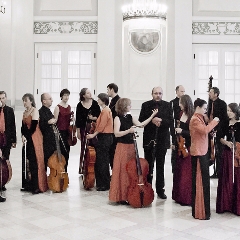
Akademie fur Alte Musik Berlin at the Wigmore Hall review *****

50709-0-m114-510-akademie-fur-alte-musik-berlin-kristof-fischer

Akademie fur Alte Musik Berlin, Isabelle Faust, Bernhard Forck

Wigmore Hall, 29th June 2017

  • JS Bach – Suite No 2 in A Minor BWV 1067a
  • JS Bach – Violin Concerto in E Major BWV 1042
  • JS Bach – Violin Concerto in A Minor BWV 1041
  • CPE Bach – String Symphony in B Minor Wq 182/5
  • JS Bach – Concerto for Two Violins in D Minor BWV 1043

I had never seen the Akademie fur Alte Musik Berlin nor Isabelle Faust before but was aware of their reputations so I was really looking forward to this concert. Well I certainly wasn’t disappointed. This was thrilling stuff. I can safely say these were the best performances of Bach Violin Concertos that I have ever heard (mind you I haven’t heard that many live to be fair).

The opening suite set out the stall. The Akamus was founded in 1982 with many long standing members. It is also boasts a prolific performance schedule. This shared experience shows. The unanimity of the playing was astounding with the whole chamber ensemble moving as one, with every line of Bach’s music audible. A masterclass in amplitude if you like. The A Minor Suite is comprised of six dance movements preceded by an overture and was compelling from the off. There are only relatively brief periods when the solo violin line shines through but this was our introduction to Ms Faust’s ostensibly delicate, but remarkably convincing, playing. It is a mystery to me how someone who appears to barely stroke the strings with the bow creates such grand and convincing phrases.

In the subsequent JS Bach pieces,, the violin of Bernhard Forck was increasingly prominent, both as sympathetic leader, and and as support to Ms Faust. This really was Bach concerto musicianship of the highest order especially in the closing Double Concerto with its majestic fugal opening, sweet slow movement and finale with that three note repeated riff running through The link back to Vivaldi (ritornello is great for dummies like me – all the music I love is repetitive in some way) was highlighted, but the clarity of the playing made it easy to pick out the Bach innovations in each of the violin concertos. I haven’t heard better. 

The CPE Bach piece was new to me and was a fair way from the inoffensive galant style that I had thought was the hallmark of these String symphonies. Not sure I will go out of my way to explore these pieces further but this was more striking than I had anticipated.

I would love to hear more of this ensemble and soloist playing this repertoire. I am even prepared to forgive the couple of frightening perms and suspicious mullet sported by some of the gentleman on show. This will definitely figure in my annual top ten. How sad is that. I am 53. I am not holed up in a musty smelling bedroom. I should have grown out of making lists four decades ago.


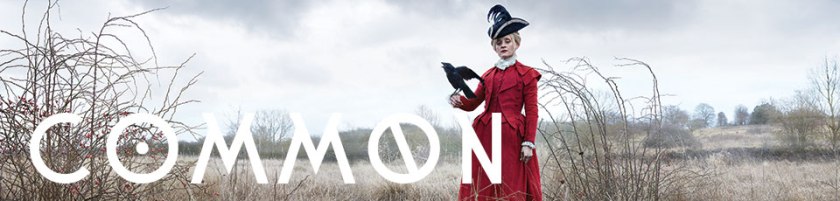
Common at the National Theatre review ***

common_960x230_tcm618-162513

Common

National Theatre, 28th June 2017

Is it possible to feel sorry for a play? Common has had some pretty poor reviews from the criterati and the public alike and there are tons of tickets left for the month or so left on the run.

Well I can’t pretend it isn’t without some pretty deep flaws but I didn’t think it was as bad as some have painted. As usual the Tourist has come late to the run. I gather it has been subject to some judicious cuts and it might be that the cast has become more attuned to playwright DC Moore’s curious and fruity language. It is a bit bonkers and a long way from what I had expected but I have seen much worse.

Our heroine Mary, played by Anne-Marie Duff who proves once again she is incapable of a having an off day at work, returns to her unspecified “home” after a spell in the den of iniquity that is London. Why she returns is never made clear. She might be seeking to exact revenge on her “brother” King (John Dagleish), she might be returning to her love, and “sister” Laura (a spirited Cush Jumbo), she might be seeking to help the ‘”villagers” succumb to the pernicious consequences of land enclosure. She has run ins with a bunch of Irish labourers, with the “Lord” (a perfectly cast though somewhat reticent Tim McMullan) and the Lord’s henchman Heron (Trevor Fox in full on Geordie) and with assorted villagers including the naive Eggy Tom (a touching Lois Chimimba). She, Mary, dies, is resurrected and then wreaks various revenges. Is she a con-woman, a seer, a harbinger? Who knows.

The programme some excellent essays. One is on the impact of enclosure on rural England from the late Medieval period, through the Tudors and, most aggressively, in the last C18 and early C19, when Common is set (1809). Capital has been screwing over labour, in more or less brutal ways, from the off and there is hardly anything more vital for theatre to examine. Another essay is on the importance of magic and spirits in the everyday existence of the “common people” alongside established religion and in the absence of universal education. These are interesting and important themes that the play seeks to explore. However, the slipperiness of the plot, and the focus on how the characters sound and look, serves to obscure these themes in my view.

DC Moore’s text in parts is written in a mangled, “rustic” English (think Yoda as a Wurzel) with plenty of profanity. Most of the criterati don’t seem to get on with this at all. I did. It takes a bit of getting used to but I think this, together with the lighting (Paula Constable deserves a special mention), the sound, the costumes, the set (though once again the Olivier stage offered too much space to the production) and the appropriate music written by Stephen Warbeck, all served to create an atmosphere which I think worked to the play’s advantage. And, as I have indicated, the performances, in large part, gave as good as they got with the material on offer.

The faults then for me largely lie in the meandering plot and the absence of an overarching narrative. This was not some non naturalistic, surreal or absurdist theatre. There was a story and there were ideas; they simply didn’t coalesce. I think Jeremy Herrin, the director, and the Headlong production team, who can normally be relied upon to manufacture a “hit”, probably know Common is a way off what they all hoped to create, but I for one would still applaud their bravery in trying to make this work.

So overall then I don’t think this is quite the turkey that some have painted it as. Yes it does fall down on many counts but it is also, in my view, interesting in other ways. You have been warned but if your expectations have been set low you might be pleasantly surprised if you do splurge all of £15 on one of the remaining performances.

And I wouldn’t mind betting that one day, after a re-write and a re-think, it comes back and is heralded as a misunderstood classic. Mind you it won’t be at the National I suspect.

Monteverdi Vespers at the Barbican Hall review *****

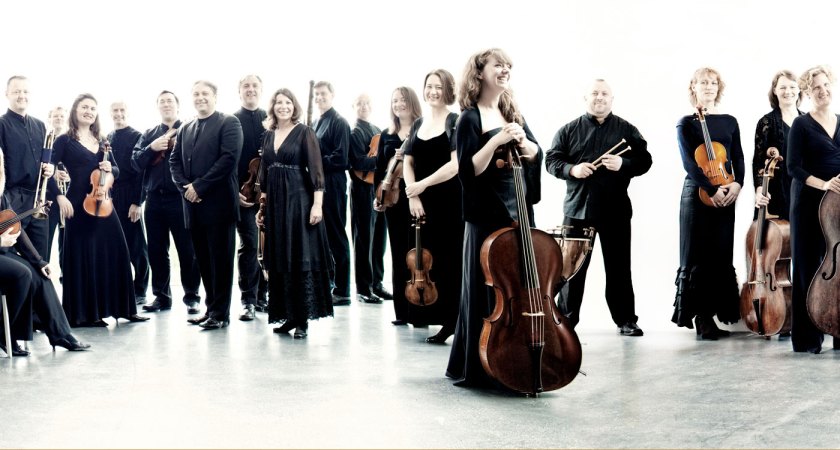
orchestra

The Academy of Ancient Music, Choir of the AAM, Robert Howarth, Louise Alder, Rowan Pierce, Thomas Hobbs, Charles Daniels

Barbican Hall, 23rd June 2017

It was the Academy of Ancient Music and its choir performing Monteverdi’s 1610 Vespers. It was bound to get 5 stars.

If you have spent your life blissfully unaware of Monteverdi’s Vespers then I implore you to take a listen. I can see that a few people have accidentally stumbled upon this blog, normally when looking for reviews of plays that proper critics and bloggers haven’t bothered to see. So they had no choice but to read my nonsense. If you are one of these people and you happen to open this post by mistake, PLEASE PLEASE PLEASE find a way to listen to the Vespers of 1610.

I don’t care what bag of music you are into. I don’t care if you think classical music is a load of nonsense. This is different. I promise. It does go on a bit I admit. Hour and a half. But it is broken up it to lots of different chunks. And it is divine. In both the sacred and secular sense.

Now if you or I wanted a new job we would ask around. Probably scan the press, specialist and general. Contact an agency or if you are an important sort, tap a headhunter. You would dust off the CV and hawk it around. Not our Claudio though. When he wanted to escape from his overbearing employer the Duke of Mantua, feeling overworked and under-appreciated, he wrote this and sent it off to the movers and shakers in the rest of Italy (though it wasn’t Italy then of course) with a particular eye on a job with the cashed up Pope. He was well known largely for his madrigals, where he was the bees knees, the Ed Sheeran of his day. But he wanted a more prestigious position where he could churn out more weighty stuff – like what happens to all talented pop stars when they “want to be taken seriously”. In the end he got the top gig at St Mark’s in Venice.

This explains why Monteverdi mixed up the various styles of church music, some taken from tunes he had already written, to create this Vespers. The title says it all: “To the Most Holy Virgin: a Mass for four voices, for Church chorus, and Vespers to be sung by several voices, with a few sacred songs”. All of the elements of the standard Catholic Vespers are there but interspersed with other elements which make for a masterly mash-up. The piece is unique for its time in the way it looks back to the Renaissance with plainchant melodies anchoring the structures in the five psalms, the hymn (Ave maris stella) and the choruses of the Magnificat, that make up the Vespers. Yet it also looks forward into the Baroque of Bach, and even some proto-Classical homophony, in the four “concertos” and sonata which are more “secular” in sound despite still praising the Virgin Mary to the hilt. All of the contrasting textures, both for voices and instruments, also show why Monteverdi effectively invented opera.

The performance by the AAM and chorus under the guiding hand of Robert Howarth at the harpsichord was excellent I think. Of the soloists we, (BUD wasn’t going to be allowed to miss this one), were most taken with Thomas Hobbes (tenor) and Louise Alder (soprano) but it almost seems churlish to say so. The twenty strong choir was on top form and the AAM (which is made up of some of the finest period music interpreters anyone) was magnificent.

Now you will find smartarses who reject this way of performing the Vespers – several voices to a part, two tenors and two sopranos, step out soloists, “echo’ effects meaning soloists whizzing around the building and so on – but trust me, they can safely be ignored. A perfect Vespers might need a Cathedral and candlelight rather than the Barbican stage but the music is just so amazing that I strongly recommend that you just add this to your bucket list and get on with ticking off. I cast iron guarantee you won’t regret it.


Ensemble InterContemporain at the Wigmore Hall review ****

ensemble-intercontemporain-wigmore-hall

Ensemble InterContemporain

Wigmore Hall, 20th June 2017

  • Debussy – Premiere rapsodie
  • Bruno Maderna – Viola
  • Messiaen – Le merle noir
  • Philippe Schoeller – Madrigal
  • Luciano Berio – Sequenza 1
  • Ravel – Violin Sonata
  • Matteo Franceschini – Les Excentriques

Ensemble InterContemporain was founded in 1972 by Pierre Boulez and tenures 31 musicians, based in Paris but international in origin, and allows them to focus on contemporary chamber music. Thank you dirigiste France and take note you English philistines.

Having said that I confess I needed a bit of encouragement to pitch up to this which was provided by the Ravel Violin Sonata, which I haven’t heard performed live for donkeys years, as well as the Berio and the Messiaen pieces. I was less interested in the Debussy and the others works were going to be pot luck. But I figured if anyone could make this all work it would be this renowned collective.

Anyway it turned out to be a largely fascinating programme. The Debussy was more colourful than I anticipated. It was written as a test piece for students at the Paris Conservatoire so it gave clarinettist Jerome Comte a chance to work out accompanied by pianist Hideki Nagano (who I think on the night was the most assured performer – I would like to here him play in a solo capacity). The Bruno Maderna is a whole different barrel of fish. This is scored in open form which means the performer (Odile Auboin here) can choose their own route through the score. Interesting but I couldn’t help feeling this made for a somewhat tentative performance with no line I could follow,

The Messiaen piece was also written for students at the Conservatoire, this time flautists. There is a bit of bird song at the off as you might expect, then a few twiddly phrases and finally a mix of serial phrases on the piano and more rhythmic patterns on the flute, here sympathetically played by Sophie Cherrier. Good stuff. Now I confess the structure of the Philippe Schoeller piece escaped me, and the programme notes here went in to pretentious overdrive as they did with the premiered work by Matteo Franceschini. It is a piano quartet “informed” by Renaissance madrigals which contained some dazzling tremolo and glissando sounds as strings and piano came together. It will require some further investigation.

Berio’s Sequenza I is written for flute and, like all the Sequenzas, is a fine, direct piece. It consists of individual notes but you can discern the chords these would create so has a logic which makes listening straightforward. I thought Sophie Cherrier’s rendition was perfect. Ravel’s Violin Sonata (No 2) took him a bit of time to complete and is contemporaneous with his opera L’Enfant et les Sortileges. Like that work it is imbued with the spirit of the jazz, most notably in the “Blues” second movement, but also in phrases in the first movement. The last movement with its dancing semi-quavers for the violin is a personal favourite and I thoroughly enjoy Jeanne-Marie Conquer’s playing.

The soloists all returned for the Franceschini piece which is a collection of six character studies based on real though unnamed “eccentric” people. The first and last studies had a bit of pace about them but the other four were a bit more pedestrian and I am afraid I wasn’t up to the task of following the thread of the music.

Overall this was a rewarding evening listening to some fine musicians explore some exciting repertoire. Both Mr Schoeller and Mr Franceschini were in attendance. It is such a joy to see a composer and performers taking a bow. Glad I took the plunge. Contemporary classical music is a specialist pursuit and I get that for the vast majority of people this is all nonsense. But for me it is important that composers and musicians push the boundaries. The audience for modern and contemporary plastic arts is expanding. In time I think the same will happen for contemporary classical music. Mind you finding some mug to go along with is proving a challenge for me but I am convinced I will prevail, even if I may have to employ a little subterfuge.


Royal Philharmonic Orchestra at Cadogan Hall review ****

cadoganhall2

Royal Philharmonic Orchestra, Martyn Brabbins, Jan Mracek

Cadogan Hall, 16th June 2017

  • Berio – Sequenza V for solo trombone
  • Prokofiev – Quintet in G Minor
  • Debussy – Prelude a l’apres-midi d’un faune,
  • Beethoven – Violin Concerto,
  • Shostakovich – Symphony No 5

A welcome innovation from the RPO at its Cadogan Hall home. As a prelude to the main concert a short chamber concert was served up. In this case, an intriguing pairing of one of Berio’s Sequenzas, here for trombone, alongside Prokofiev’s infrequently programmed (at least in my experience) Quintet. The main concert was a triptych of favoured warhorses which can usually tempt me in.

The Berio piece is the usual exploration of musical technique that these sequenzas demand. There is a healthy dose of humorous novelty at work here in the techniques employed and some of the directions in the score, best of all, the fact that the soloist, has to dress up as a clown (I’ll let you look up Berio’s reasons for this!). The Principal Trombone of the RPO, Matthew Gee, didn’t disappoint, either in his rather elegant outfit (shoes and bald bloke wig being the main concessions) or in playing. The piece is fascinating but smartly doesn’t outstay its welcome.

The Prokofiev Quintet is scored for oboe, clarinet, violin, violin and double bass which gives plenty of opportunity for the quirky invention that our Sergei seemed to revel in. The six movements have plenty of dynamic colour and the derivation of the piece, originally a commission for a chamber ballet, is very clear, I was reminded once again that I need to pay more attention to Prokofiev’s chamber music. So I will.

As for the main orchestral pieces, well the Debussy washed over me as it always does so I am afraid I am no real judge of Mr Brabbin’s interpretation nor the RPO’s performance. The Beethoven however took me back to familiar ground and this was a stirring performance by all concerned. Jan Mracek was making his debut with this orchestra having established a growing reputation in his native Czech. His playing is certainly idiomatic of his homeland which made for an interesting contrast with Mr Brabbin’s very deliberate reading. It livened up for finale though I confess I have heard more uplifting endings.

The Shostakovich was the meat course for me though and here Mr Brabbin’s careful phrasing and cool incision paid dividends. This was a performance that really drew out the Mahlerian parallels especially in movements 2 and 3. No irony in the ending here. This was definitively the response to “just criticism” that Shostakovich claimed it was (probably to save his own skin) and could easily be digested by those partial to a bit of C19 romanticism. The pounding Russian rhythms and banal folksy melodies were in evidence but this was more Autumnal middle Europe than Siberian winter. Stalin would have been made up with this first movement. I am not sure this is how I want my DSCH 5 to always sound but it was satisfying to hear this approach given a full airing.


Life of Galileo at the Young Vic review ****

log-blog

Life of Galileo

Young Vic, 21st June 2017

My Brechtian education continues apace. Who would have thought that until a couple of years ago I hadn’t see any Brecht plays at all and frankly wasn’t that interested having been put off by the great man’s reputation. What a klutz I was. Turns out that our Bertolt is just the man for me.

Director Joe Wright (the go to man now for cinematic literary adaptions – and responsible for the best of Season 3’s Black Mirror) makes a number of incisive observations in the programme. Notably he was struck by just how emotionally rich this play is. So was I. You expect Brecht to load you up with ideas and get the grey matter putting a shift in, but you don’t expect to empathise with the characters. Brechtian epic drama requires a distancing between action and audience. That is still achieved, but here however I was also properly drawn in to Galileo’s struggles.

This in part reflects the committed performance of Brendan Cowell. Even before the play “opens” he is pumping up the audience along with the pounding beats of Tom Rowlands’ score (he of Chemical Brothers fame). Through the popularisation of the telescope in C17 Padua and Venice, the observation of planetary motion that supported Copernicus’s theories, the protection accorded to him in Florence, the promulgation of his ideas in vernacular Italian, his years of silence, the summoning to Rome, the torture by the Inquisition, the recantation of his theories, and the final secret dissemination of his ideas, Mr Cowell is a constant and imposing presence. He is just so physically full of belief.

This is ultimately a play about ideas, and specifically pits the rationalism of Science against the dogmatism of the Church. But this production also delivers an emotional wallop and explores Galileo’s (not historically accurate) relationship with his daughter (played by Anjana Vasan, whose advantageous marriage is sacrificed to her father’s certainties) and his pupil Andrea (played by Billy Howle, whose worship turns to disillusionment and finally to advocacy).

This being Brecht though there was still plenty of Verfremdungseffekt to keep you on your toes. A song and dance routine, some excellent puppetry from Sarah Wright to accompany each scene’s introduction, some interesting costume choices, plenty of doubling or more of roles, a “disappearing” scene, aggressive lighting and sound. Best of all though was Lizzie Clachan’s set, in the round, with a circular runway enclosing brave audience members, topped by a dome on to which the techies at 59 Productions (last seen by me working their magic in City of Glass at Lyric Hammersmith) projected cracking images of the cosmos. Our very own planetarium with punters acting as planetary bodies. This is not the first time that I have seen a set designed by Ms Clachan that has prized function as much as form.

Once again I doff my cap to the translator here, John Willett, for providing such a clear and involving rendition of the text. In particular the big speeches are perfectly rendered especially the best of the bunch in the penultimate scene. This is where, I understand, in 1947, Brecht revised the play, goes beyond technological determinism and questions the objectivity of scientific rationalism and the dangers of the Enlightenment project. This chimes with the Marxist Critical theorists in the US at the same time as Brecht (before he went back to East Germany) whose ideas had been shaped by the horrors of WWII. Most of this whizzes over my head but it is still powerful stuff. Remember people a bit of Marxist dialectics isn’t going to turn you into a raving Commie despite what some would have you believe. The nature of Truth in human discourse plainly never goes away.

Sorry veering off again. I just like this combination of drama, theatre craft and ideas. This production is nearly over but I crave the next fix of Brecht. In particular, whilst I loved this “big” production of Life of Galileo, I do hope one day to see a more stripped back version by way of contrast.

My favourite London theatre of 2016

Right then. I know what you are thinking. Doesn’t this numpty know that it’s June 2017. Bit pointless talking about theatre from last year then. Well yes, you may well have a point. However this blog only started in March 2017 and it’s mine anyway so I can do what I like. And the idea primarily is to help identify some lessons about good stuff to come in future, whether it be from writer, director, cast, other creatives or venue. Anyway I suspect all you theatre obsessives will know where I am coming from anyway.

1. Hangmen – Wyndham’s Theatre/Royal Court Theatre
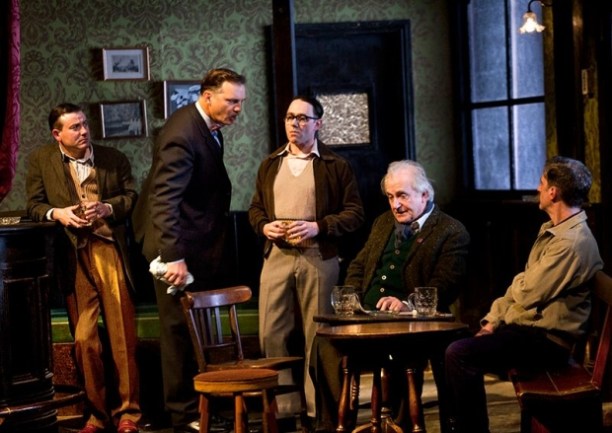
99296

So i know that technically this was from 2015. But we didn’t get to see it until the transfer to the Wyndham’s Theatre having missed the Royal Court run because I am an idiot who failed to book it in time.

It is an extraordinary work. There is no-one who writes for the stage (or film) like Martin McDonagh, though there are echoes to me of the likes of Pinter and Tarantino. It is the combination of fierce intelligence, violence, humour and atmosphere. If you don’t know the plays then you may know his films, notably In Bruges and Seven Psychopaths.

So if this, or the Pillowman, A Behanding in Spokane or any of the five Galway plays from the 1990s, are revived we should pay attention depending on who takes it on. If he makes another film we should also pay attention.

If we are in New York at the beginning of next year then we should see this production of Hangmen at the Linda Gross Theater. Please just go.

We should see what Matthew Dunster, the director, can do with his adaptation of Dickens’ Tale of Two Cities at the Open Air Theatre this summer (his involvement with the Globe has been mixed – I can’t really comment as the Globe is off limits for me as it is too uncomfortable – sorry).

If and when Johnny Flynn stops singing and acting in mini-series (he is in that Einstein thing apparently – you know it is everywhere on the tube), and takes on another stage role we should go – he is mesmeric – and appears only to do top-notch theatre, Propellor Shakespeares, Richard Bean’s The Heretic, Butterworth’s Jerusalem and Rylance’s Globe Twelfth Night (though I didn’t get on with this).

And best of all we should be salivating at the prospect of David Morrissey taking on the role of Mark Antony at the new Bridge Theatre alongside Ben Wishaw, Michelle Fairley and David Calder. With Nick Hytner directing. We had a few magnificent productions of Julius Caesar recently but this has the potential to match them.

Oh and finally if there is one theatre where you should just buy “blind” if you have any interest at all in the subject based on the admittedly thin blurbs they provide just book it. Pick of the current bunch for me of the current season is Anatomy of a Suicide.

2. Yerma – Young Vic Theatre

cw-11513-medium

So if you have any interest in London theatre you are probably all over this. BUT if you haven’t seen it (the performances later this year sold out sharpish) or if you don’t think this serious theatre caper is for you, then I highly recommend you watch it at the cinema through the NT Live thingamabob on 31st August.

There is much to like here. Lorca’s original play, Simon Stone’s radical re-write and direction, Lizzie Clachan’s stark but effective staging, the performances of Maureen Beattie, John MacMillan, Charlotte Randle, Thalissa Teixeira and, especially, Brendan Cowell. But in the end it is all about Billie Piper. You will be hard pressed to ever see a more emotionally involving performance at the theatre. No holding back at all.

My guess is we will have to wait a couple of years before Ms Piper returns to the stage but whatever she does after this and The Effect is likely to be mandatory (I didn’t get through Great Britain, Richard Bean’s satire at the NT though I had a good excuse).

And if we want to see Mr Stone’s magic elsewhere then we need to follow Toneelgroep Amsterdam where he has productions of Medea and an Ibsen mash-up. Will be interesting to see whether either comes to London at any point.

As for the Young Vic well right now the Life of Galileo by Brecht is playing with, drum roll please, Brendan Cowell, in the lead. Tickets still available and I loved it.

3. Uncle Vanya – Almeida Theatre

uncle_vanya_banner

This seemed to sneak under the wire a bit. I thought it was outstanding. Maybe director Robert Icke’s Red Barn at the National Theatre or his version of Schiller’s Mary Stuart with Lia Williams  and Juliet Stevenson garnered more attention, or perhaps everyone was taking a breather after Mr Icke had smashed it out of the park with his Oresteia for the Almeida in 2015. Any way up he is the most exciting director right now in the UK and this cemented that reputation.

Mr Icke himself updated the text and shifted the “action” to rural England. The production took its time and the sense of ennui was attenuated by Hildegard Bechtler’s slowly revolving set. And Paul Rhys as Vanya/John could hardy be bettered with his man-child lost demeanour. The rest of the cast, notably Jessica Brown Findlay, Vanessa Kirby, Hilton McCrae and Tobias Menzies, collectively kept their ends up. The detail of the characterisations was riveting. The individual pyscho-dramas perhaps can more to the fore pushing the social context back a bit but I reckon you can have a bit too much of the “everything’s about to go tits up in Russia and these minor aristos don’t know it” benefit of hindsight in Chekhov anyway. It is always better when you you get more of sarky Anton nailing the “shit just happens” frustrations of life.

So if you are one of the infinitesimally tiny number of regular readers of this blog you will know that I have high hopes for the next couple of productions at the Almeida: Ink by James Graham (writer of This House which may yet turn out to be an instruction manual for the vicissitudes of minority government in the UK) directed by Rupert Goold with Bertie Carvel and Richard Doyle and then Against by Christopher Shinn and directed by Ian Rickson with Ben Wishaw in the lead.

Meanwhile one of Robert Icke’s next projects is an Oedipus with Toneelgroep Amsterdam and with Hans Kesting in the lead. I pray this come to London as Hans Kesting without question is the best stage actor I have seen. OMG.

4. Kings of War – Barbican Theatre
kings-of-war-barbican-922

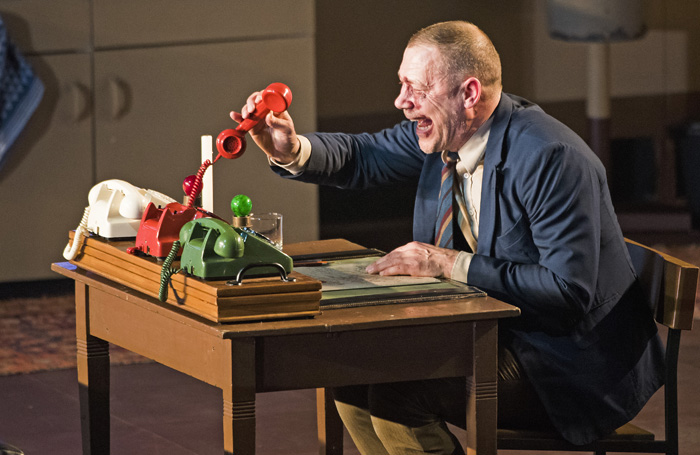
Talking of Hans Kesting here is a picture of him as Richard III in the Toneelgroep Amsterdam’s production of Kings of War at the Barbican. TA premiered this production in 2015 and brought in to London last year. It takes five Shakespeare history plays, Henry V, Henry VI Parts 1, 2 and 3 and Richard III, and mashes them up to extract the best bits in a four and a half hour spectacle that gets to the heart of what political power means.

Is it better than the similarly envisioned Roman Tragedies? (review here – Roman Tragedies at the Barbican review *****). I couldn’t tell you. There are both works of astonishing theatre. There have been a few let downs from TA and its inspirational artistic director Ivo van Hove, notably Obsession, but this showcases what he and his ensemble is capable of. So, as and when, this returns do not miss it.

And Mr van Hove has a number of forthcoming engagements on the London stage with Network coming up later in the year at the National the pick of the bunch.

5. Escaped Alone – Royal Court Theatre

ESCAPED ALONE

I have something of a weakness for unsubstantiated hyperbole. But here goes. Caryl Churchill is the greatest British playwright since Shakespeare. The best theatre plays with ideas and form and creates lasting impressions in the mind which simply cannot be replicated by any other artistic medium. Caryl Churchill does this again and again and again. No hype, no endless interviews explaining what she is doing/has done. Just perfectly formed, intense works that magically appear and seem to have addressed everything worth addressing over the past five decades or so. I just wish I had seen more of them.

Escaped Alone, in under an hour, explored the nightmare of apocalyptic, ecological collapse in a hilariously surrealist way, intertwined with, at turns, the banal and sinister fears and stories of four mature women ostensibly chatting in a back garden. That is my attempt at a summary but it does no justice at all to the ideas and images that just pour out of this play. As always with Caryl Churchill you just marvel at the alchemy of how so much insight into the big questions of humanity flows from these non-naturalistic, but never truly absurd, structures.

So as and when the next new play appears just go. And the same advice applies to any Churchill revival, anywhere. anytime.

6. Oil – Almeida Theatre

oil_website_1470x690

Back to the Almeida for Ella Hickson’s ambitious play Oil, directed by Carrie Cracknell and with the magnificent Anne-Marie Duff in the lead. So I get that the text and the pacing of the production was a little uneven but I didn’t care. Ms Hickson created such a compelling narrative, mixing the geo-political epic with a detailed mother-daughter relationship which hits you on some many levels. I have seen Anne-Marie Duff steal the show in a number of very different plays but she has never been better than in this role. And I doubt there is a better director in Britain today of towering female roles than Ms Cracknell (The Deep Blue Sea, A Doll’s House and Medea are recent examples).

Now it looks like Anne-Marie Duff’s latest outing at the National Theatre, Common, is getting a bit of a pasting. I will be taking a peek shortly so will make up my own mind. She is also pencilled in to a Macbeth next year alongside Rory Kinnear and directed by Rufus Norris. Surely that will be unmissable.

As for Ella Hickson, I would love to see a revival of Boys, and I think that it is only a matter of time before she pens an undisputed contemporary classic. And if anyone knows what Carrie Cracknell is tackling next I would love to know.

We are blessed in this country right now with a generation of outstanding female playwrights and directors but I for one would like to see way more come through. This play shows why.

7. The Rolling Stone – Orange Tree Theatre
the_rolling_stone_1142_484x580_20151215

Royal Court, Almeida and Young Vic all unsurprisingly represented in my top ten list and I have no doubt they will be again this year. As will, I suspect, the Orange Tree which continues to turn out work of the highest quality, whether revivals or new plays. They may not always be my cup of tea but artistic director Paul Miller and his team seem to have an extraordinary knack of identifying and staging rich theatrical material.

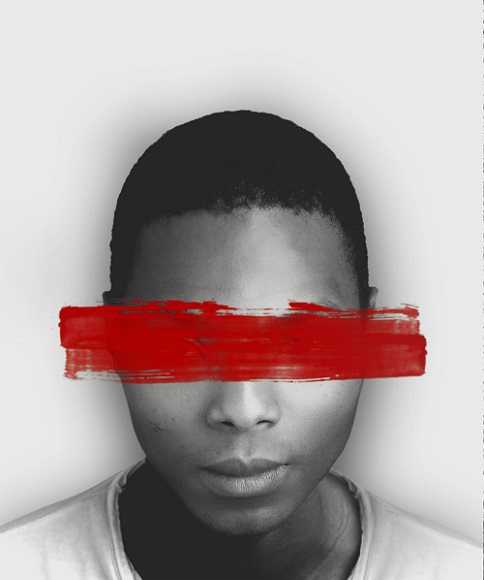
The Rolling Stone by Chris Urch was a winner of the biennial Bruntwood Prize winner in 2013 and premiered at the Royal Exchange Manchester so was hardly a secret. But it was still terrific to see the Orange Tree pick it up for its London premiere and it deservedly won a slew of Offies (the London fringe theatre awards).

It is an examination of the persecution that gay men face in Uganda largely told through the words and actions of one family. It packs an extraordinarily powerful emotional punch and will leave you seething with anger at the actions of church, state and media which combine to pursue a modern witch-hunt.

This is Chris Urch’s second play and I await with interest his next project which I believe is a screenplay for a biopic of the life of Alexander McQueen. And without exception I keep my eye out for the excellent cast, Faith Alabi, Fiston Barek, Jo Martin, Julian Moore-Cook, Faith Omole and Sule Rimi (who has popped up in a number of subsequent productions I have seen and has been uniformly excellent in these).

8. Les Blancs – National Theatre
lesblancs-1280x720-sm

The proper luvvies are in a little bit of a tizzy over Rufus Norris’s stewardship of the National. I admit it has become a bit of a lottery, particularly when it comes to the Olivier stage, but there have been some belting productions in the last couple of years. And for me this was the best of the bunch last year.

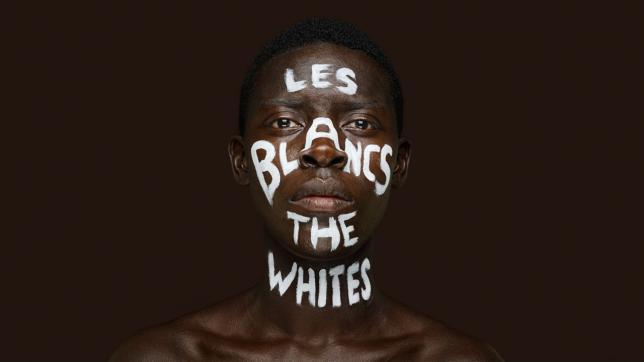
Now this probably reflects the fact that I have never seen A Raisin in the Sun, Lorraine Hansberry masterpiece. Following this version of Les Blancs it is now right at the front of the queue of plays that I simply must see. I was bowled over by this version of Les Blancs. It is an immense play which explores post-colonialism in 1960s Africa with an unforgiving eye. There is a lot of grand speechifying to advance the arguments but the didacticism never proceeds to simplistic resolution. I gather Ms Hansberry’s husband, Robert Nemiroff, had a major hand in completing this play after her untimely death. The set, sound, lighting, music and even smell could not have been bettered and for once I think the best seat in the house was upstairs at the back since there was so much to savour.

South African director Yael Farber seems to have presided over a duffer with Salome currently on at the National (I haven’t seen it yet) but her direction in this Les Blancs was sublime. And I don’t know what stage Danny Sapani will next grace (you will have seen him on the telly) but wherever it is I will try to go.

9. Orca – Southwark Playhouse

orca-at-southwark-playhouse-rona-morrison-maggie-carla-langley-fan-and-simon-gregor-joshua1-700x455

This was Matt Grinter’s debut play which won the Paptango new writing prize. I thought it was brilliant. In just 75 minutes Mr Grinter conjures up a place which seems far removed from our modern world and his tale of ritual abuse in a closed community conjures up a real sense of foreboding. I suppose some might label it “folk horror” at a pinch but it was just so much smarter than that label implies. It confronts the reality of the outrages that even today are visited upon women by men who hold power over them.

The setting is a fishing community on an island to the north of Scotland I surmised. An elder sister Maggie played by Rona Morison tries to prevent her younger sister Fan (Carla Langley) from undergoing the same unspecified but clearly dreadful fate which she refused to endure. Their father (Simon Gregor) won’t step in because he cannot face continuing to be shunned by the rest of the tight knit community. The patriarchal head of the community The Father played by Aden Gillett is genuinely one of the most disturbing characters I have ever seen on stage,

I’ll stop there just in case it gets revived but this was a riveting watch under the direction of Alice Hamilton. And the set by Frankie Bradshaw in the smaller space in the Southwark Playhouse (where they put on all the good stuff) was beyond ingenious. I don’t know if I imagined the cold, damp sea air that night, or whether that was all part of the production, but I really felt I was cut off from the rest of the world and not a few yards from the Elephant and Castle.

I await Matt Grinter’s next writing excursion with extreme interest.

10. Julius Caesar – Donmar King’s Cross
julius-ceasar-donmar-warehouse1

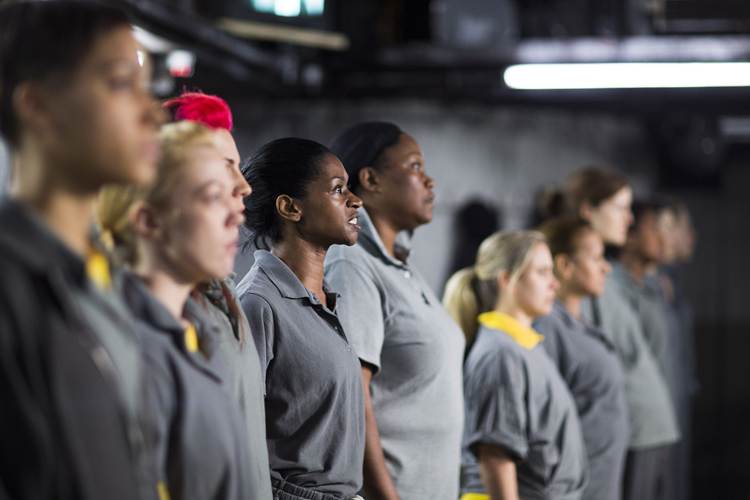
This is what Shakespeare is all about. Phyllida Lloyd and her all female cast led by the redoubtable Harriet Walter added The Tempest to the previous productions of Julius Caesar and Henry IV and set them up in a temporary stage at bargain prices in Kings Cross. All three took the venerable texts and smashed them over your head. Breathtaking.

I pick Julius Caesar solely because it is my favourite of the three plays. And I think the setting of all three plays in a women’s prison achieved most resonance in this play with its themes of conflict and the misuse of power. Directorial concepts in Shakespeare are vital in my view to illuminate the timeless brilliance of the insight but they can fall flat. Not here.

I think Harriet Walter’s Brutus is the best I have seen and I would also, if pushed, single out Jade Anouka’s Mark Antony (to add to her amazing Ariel in The Tempest). She was the only decent contributor to the dreadful Jamie Lloyd Faustus and I await her next major role with interest. The same goes for Sheila Atim who next pitches up in Girl from the North Country at the Old Vic.

Harriet Walter can read the phone directory and I would still go and Phyllida Lloyd could direct a bunch of phone directories and I would still go.

Best of all this Julius Caesar will be in cinemas soon so catch it if you haven’t already seen it.


So there we go. My favourites from last year. Honourable mentions also to Complicite’s Encounter which I finally got to see at the Barbican, Schaubuhne Berlin’s The Forbidden Zone also at the Barbican, Tim Minchin’s Groundhog Day musical at the Old Vic, and Jess and Joe Forever by Zoe Cooper and Blue Heart by the mighty Caryl Churchill both at the Orange Tree.

This year is ramping up to be similarly fine for London theatre with plenty of contenders already. Enjoy.