The Women of Whitechapel at the ENO review *****

Jack the Ripper: The Women of Whitechapel

English National Opera, 3rd April 2019

Composer Iain Bell and his librettist Emma Jenkins wanted to call this just The Women of Whitechapel. Some marketing types at the ENO decided it needed to be prefixed with the title of the infamous murderer, charitably I suppose to let the potential audience know its subject. Worse, to continue the tiresome obsession with perpetrator and not victims. For this opera is specifically written about the women who were murdered. The murderer does not appear. Shame then that the creator’s original intentions could not have been fully honoured. Mind you I see that some bozo US deathcore band has appropriated the grotesque misogynistic fixation at the heart of this story by calling themselves Whitechapel. The band are in their 30s. Grow up lads.

I was predisposed to this new opera from the start. And I was extremely impressed with the end result. I see some proper reviewers who, to be fair, know their opera unlike the Tourist, think the opera is lacking in dramatic impact. I disagree. Yes there is no central single heroine to latch on to, there is no narrative arc towards some sort of tragedy or redemption, there are a fair few characters, the overall feel of the piece is dark and it is made up of a procession of set pieces. But that reflects the story of the five women that Mr Bell and Ms Jenkins wanted to tell, (based on scrupulous research where possible as well as some leaps of imagination). For me it was very powerful and very involving throughout.

I also accept that some of Iain Bell’s music and the way in which Daniel Kramer directed many of the scenes verged, on occasion, towards Les Mis style caricature, though this is no bad thing in terms of the immediacy of impact. However the more obvious inspiration might be Britten, Peter Grimes for the tone of the piece, and Death in Venice for the musical colouring. Worthy template. Mr Bell does not have BB’s compositional facility but the mix of solo and ensemble pieces, the set pieces with chorus, the unusual instrumentation, (the eerie elastic tone of the cimbalom to signify the presence of the murderer for example), the shifting in and out of tonal and more dissonant, atonal music, all conjure up a similar atmosphere.

The opera is centred on the last of the known victims, Mary Kelly, superbly sung and realised by Natalya Romaniw. Mr Bell and Ms Jenkins have created roles specifically for the mature voices of some ENO big stars, namely Marie McLaughlin (Annie Chapman), Janis Kelly (Polly Nicholls), Susan Bullock (Liz Stride) and Lesley Garrett (Catherine Eddowes), as well as the redoubtable Josephine Barstow as Maud, the proprieter of the doss house where the women are forced to live. The illustrious cast is further enhanced by the presence of Alan Opie as the aloof Pathologist who carries out the autopsies on the women’s bodies, Robert Hayward as the compromised Chief of Police and Paul Sheehan as the intimidated Coroner. From the current ENO vintage Nicky Spence provides a lighter touch as Sergeant Strong, James Cleverton is a Photographer with dubious intentions, William Morgan a rather underwritten, reformist Writer and Alex Otterburn is Squibby a local butcher’s boy. On the evening I attended Sophia Elton also stood out as Mary’s voiceless daughter Magpie.

Soutra Gilmour has conjured up another striking set, though it is sombre and dark, (and a bit Goth), in line with the mood of the piece, which is sufficiently versatile to persuade as doss-house, pub, street, mortuary and funeral procession for the coup de theatre of the, slightly over-long, ending (in which Paul Anderson’s lighting design, literally, really shines). Martyn Brabbins’s enthusiasm for the score and the commitment of the ENO Orchestra was never in doubt even in the slightly padded passages.

I think the opera makes its points about the callous way that the patriarchal society of the day treats these poor women – the murderer is simply an extension of the more “respectable” men that abuse them – the solace and support they take from each other and their overwhelming fear as the threat mounts. On its own this work cannot counter a century of writing out the victims as the expense of the sick fascination with the male perpetrator, (turn on your TV any night of the week to see that is still par for the course), but it is a brave, ambitious and engrossing attempt to do so and to provide a valid three hours of musical theatre. The symbolism, the Minotaur metaphor, the male chorus poking through the windows of the doss-house, the final ascension, is thought through and adds texture to the naturalism of previous scenes. The more poetic passages in Emma Jenkins’s libretto similarly contrast with the vernacular episodes.

I read a fair few reviews in thinking about this. They were all written by blokes. There were, with few exceptions, wrong about this. Presumably they would have been happier seeing yet another production of that scrupulously unmanipulative tale of female agency Madama Butterfly.

Medea at the Barbican Theatre review *****

Medea

International Theatre Amsterdam, Barbican Theatre, 6th March 2019

Now you can’t always be sure that wunderkind director Ivo van Hove delivers the goods when he comes to the UK, which is now surprisingly often with All About Eve his latest offering. When it comes to the company where he is AD, alongside design partner Jan Versweyveld, International Theatre Amsterdam, (previously Toneelgroep Amsterdam), you can pretty much guarantee theatre of the very best quality.

Especially when the story is Medea, Euripides’s most performed play, and still a rich source of inspiration some 2,450 years after its first performance. If you accept Euripides as the guiding light of drama, and you should, then this must rank as one of the greatest plays ever written. Mind you apparently it didn’t get rave reviews on its first run, Euripides coming last at that particular City Dionysia. The Romans took to it though as did the Renaissance Europe and it’s been a staple ever since.

However, if not re-interpreted for a modern audience, (it’s a two hander in the original), you might beg to differ. Left to the creative devices of writer and director Simon Stone you can be sure it will connect. Which it surely does. Mr Stone, an Aussie as you can see above sporting the casual surfer look, has an impressive track record, initially with new interpretations of classics in Oz and then in Europe, in Basel, Amsterdam and London. His Yerma, with Billie Piper, at the Young Vic was a knockout. And his debut film The Daughter, based on Ibsen’s The Wild Duck, (he brought his stage version to the Barbican a few years ago), is also a triumph.

If that wasn’t enough the lead in his version of Medea is Marieke Heebink, who is one of the most impressive stage actors I have ever seen (Oedipus, After The Rehearsal/Persona, Kings of War, Roman Tragedies, After the Fall). MH has been with the ITA ensemble since 1994 and now seems to get first dibs on the plum mature female roles in the ITA flagship productions though there is stiff competition.

Hence I had been raving about the visit of this production to the Barbican, (hopefully ITA will be back later in the year), for months and buttonholing anyone and everyone to get a ticket for one of the five performances. As usual they completely ignored me. Well more fool you. It was magnificent.

Simon Stone has taken the true story of one Deborah Green and woven this in to the classic Medea story. Ms Green is an American doctor who has spent 22 years in prison for attempting to poison her husband and setting fire to her house in 1995, killing two of her children. Her marriage to fellow doctor Michael Farrar was volatile but it was his affair with Margaret Hacker which prompted Deborah Green to become increasingly unpredictable with Farrar eventually leaving the family house. One of their daughters managed to escape the blaze.

In the play Marieke Heebink plays Anna, a research scientist whose own career has been eclipsed by her former assistant, and husband, Lucas (Aus Greidanus Jr), as she has brought up their two sons Gijs (Poema Kitseroo) and Edgar (Faas Jonkers). Lucas has moved in with the much younger Clara (Eva Heijnen) who happens to be the daughter of Christopher (Leon Voorberg), the head of the Institute where Anna and Lucas work. Anna has returned home after a breakdown and an attempt to poison Lucas. Her increasingly frantic attempts to get Lucas back, to rebuild her family and return to work, all fail and so we build up to the inevitable, though still shocking, conclusion.

All this is played out on Bob Cousins’s unadorned, brilliant white, set, (redolent of lab and hospital), with a panel above on which the sur-titles are projected, (the play is in Dutch with translation from Vera Hoogstad and dramaturg Peter van Kraaij), as well as the videos taken by the two sons for their school project. This allows us to cut to the actors at moments of high drama and provides a vital plot development. Just about the cleverest use of on stage video the Tourist has seen. The blank set does eventually see some adornment in the form of blood and ash but that’s about all. The costumes, courtesy of regular ITA collaborator An D’Huys, are nondescript modern dress.

So all our attention is focussed on the story and the characters. This is, once again, an immensely physical performance, not just from Ms Heebink but also from Aus Griedanus Jr. Watching her unravel and watching him watching her unravel is utterly compelling. There is no sign of a god, no Medea rising up with the dead bodies in the chariot of the Sun God, and Mr Stone has wisely only intersected with the detail of the original plot where it makes sense and fits the narrative of the Green story. Even so it has the same visceral power as Euripides and the same ability to make you sympathise with Medea/Anna who understandably takes revenge as everything that makes up her life is taken away from her.

The set and Simon Stone’s direct text, (created as the performance takes place), also means no time is wasted in scene setting or exposition. Scenes just pile up into each other. This means the play takes just 80 minutes adding to its raw impact and the clarity of its message. There are moments of tenderness and much humour in the family scenes with both of the young actors playing the sons turning in polished performances to match there more seasoned colleagues. Eva Heijnen’s pregnant Clara, in her dismissal of the desperate and bitter Anna, is especially cutting and the drinking scene between Lucas and Christopher shows male privilege at its most crudely transparent. Indeed every scene has been thought through in detail, there is not a wasted line or movement in the entire play. Intensity. Perfectly distilled.

I was pretty sure this would be one of the best things I would see this year, or indeed, any year. It was. Mind you a string of reviews from its previous staging pretty much guaranteed it would be. Even so when theatre is this good there is nothing better. Simon Stone is quoted in the programme notes. “I think theatre could well be the most important art form of this time. Where else do people still come together to collectively experience and think about something?” Quite. Though I would say it is the most important art form of this, or any, time.

Can’t wait for Simon Stone’s next move. Electra might be fun.

The Lady From The Sea at the Print Room Coronet review ****

The Lady From The Sea

Print Room Coronet, 20th February 2019

Hummed and hawed about this one. Never been entirely sure about TLFTS when compared to other Ibsen’s, was not bowled over by it’s last London outing at the Donmar, couldn’t get the cheap Wednesday seat option (that is a steal) and was trepidatious about the billed mix of Norwegian and English creatives. On the other hand the last time the Norwegians came over, in the form of the National Theatre of Norway, to this very stage with their Little Eyolf (which I do care for) it was, by all accounts, a success, and the Print Room under AD Anda Winters can usually be relied upon to deliver a thought-provoking, if sometimes obtuse, evening’s entertainment.

And so it turned out. The combination of modern idiom English and Norwegian text, and British and Norwegian acting “styles” was both captivating and illuminating, as it drew out the differences between . Now as I am sure you all know Ibsen, after some chap name of Shakespeare, is the most performed dramatist worldwide (though, as with all such claims, the Tourist is dubious as to how this was proved. Remember people, always question). However, Norway had no theatre company dedicated to Henrik’s works, a la the RSC, though there is a successful biennial Ibsen festival sponsored by the National Theatre in Oslo . Which is why, in 2016, AD Kare Conradi, set up the NIC, to sponsor both new productions and to work with other theatre-makers internationally on the work of the master. The company is bi-lingual by design and targets those who might otherwise not get to see HI. This is their first in-house production. Good on ’em.

Wangel (Adrian Rawlins) is the English doctor who has ended up in the provincial Norwegian seaside with daughters Bolette (Marina Bye) and Hilde (Molly Windsor). His new wife Elida is played by Norwegian acting royalty, Pia Tjelta, who was in the Little Eyolf last year, and Kare Conradi himself plays the returning schoolteacher and family friend Arnholm. The Stranger, the object of Elida’s obsession is, obvs, Norwegian in the form of veteran Oystein Roger. Our sickly, would-be artist Lyngstrand is however English, played by Edward Ashley.

Elida likes the sea. Elida is miserable. Elida and Wangel lost their son as a baby. Elida and Wangel’s marriage is under pressure. Arnholm arrives to help. Arnholm falls for Bolette who longs to escape. Lyngstrand is a bit of a ninny but mopes sound after feisty Hilde who feels rejected by step-mum. The seaman Stranger who Elida loved and lost returns to take her back. Only when Wangel accepts she is free to decide her own destiny does she elect to stay and put the marriage back together. Without the symbolism its a belting story about the “choices” that we make. With the symbolism, as long as it is not overwrought (and this is where I sometimes get fidgety), it could be, I would imagine, intoxicating.

That isn’t quite the case here but it is still engrossing stuff. Mari Vatne Kjeldstadli’s (she also acts as dramaturg) new version, based on the translation of May-Brit Akerholt, is mercifully purposeful stuff, a text located in the right here, right now, which still just about manages to dreamier elements and finds the comedy. Pia Tjelta takes a nice line through Elida’s frustration with the present borne out of her idealised past. The final scene with Adrian Rawlin’s Wangel, when the penny finally drops for him, was as convincing, (and a little bit moving), as good as it gets. Kare Conradi’s captured the threat that underpins the bargain that Arnholm offers Bolette. Molly Windsor has been lauded for her performance in TV drama, Three Girls. It was easy to see why in this her stage debut. Her petulant Hilde was particularly effective as she dragged the damp Lyngstrand around the houses, physically and metaphorically, and in her interaction with Elida, notably in the “reconciliation” at the end.

No messing with Erlend Bierland’s set. Beach backed by beach-house backed by mountain view. And, a la mode, a fish tank. This is some way up the Norwegian coast. Lovely when the sun comes out. Not so perky during the long dark seasons. I need to imagine the whiff of sea, sand, engine oil and disappointment which I got here, though maybe a more nuanced lighting design (Simon Bennison) might have added more texture. Nils Petter Molvaer’s composition and sound lent a mildly brooding air when required.

So a production that uses a bi-lingual text and cast to emphasis difference and which, subtly, but insistently, marks out Ibsen’s photo-feminist message of self-determination. It sometimes came across as a little uneven but then again Ibsen wouldn’t be Ibsen without the messy stuff of life.

Company at the Gielgud theatre review ****

Company

Gielgud Theatre, 29th November 2018

Regular readers will know that the Tourist doesn’t like musicals. However, with Company now ranking alongside Follies, Caroline, Or Change, Groundhog Day, Gypsy, Girl From the North Country, Junkyard and White Teeth, the list of exceptions to the rule is growing alarmingly long. Looks like I may need to revise my opinion. Maybe I just don’t like crap musicals. Or, in a witlessly circular way, just musicals I don’t like.

Company, as you can read at great length elsewhere, is very far from being crap. It’s Sondheim for a start. With a twist as the, artistically and commercially, gifted Marianne Elliott (Angels in America, Curious Incident, War Horse) has inverted the story casting Bobbie (Rosalie Craig, there she is) as a single, female thirty-something mulling the “attractions’ of a life of domestic, married bliss. All done with the blessing and assistance of Lord Sir Stephen S, (well he would be if he were British), who is notoriously, and rightly, possessive about his work. And a trademark, stunning multi-neon, multi-light box design a la Curious Incident from Bunny Christie that could even accommodate a bigger stage.

Now there were still one or two moments when the Tourist’s anti-musical radar started twitching. A fair few of the c(C)ompany dance routines were a little too slick, with choreographed “leaning in” and the suspicion of jazz hands. The camp quotient meter lurched close to the red on occasions. Some of the dialogue seemed a little workaday in places. I am probably alone in failing to understand why Patti LuPone, playing Joanne, is a legend, or maybe the cliche of hard-bitten Broadway broad is just not my bag.

But the music, here played by a bad-ass band under musical supervisor and conductor Joel Fram, with its motifs, repetitions, parodies, consistent surprises, and the lyrics, intelligent, arch, acerbic, funny, thoughtful, wistful, put it into a different league from the fluffy, zero to hero, musical norm. It’s not Chekhov, but unlike what I think of as most musicals, it does ring true to life. It doesn’t have a plot or chronology to speak of, rehearsing Bobbie’s central dilemma over and over again, with different partners and different couples, it doesn’t resolve and it certainly isn’t any sort of “genre”. In fact I can see why, in its garish expressionism, why some punters think this production is all actually going on inside Bobbie’s head.

SS, together with book-writer George Furth, set their musical in the New York of 1970, and built it around nine linked scenes that Furth had previously created for a play. “The increasing difficulty of making emotional connections in an increasingly dehumanised society”. That was how SS described the theme at that time. Marianne Elliot has stuck with the setting, but by inverting the gender of the protagonist, (and many of the gender roles in the couples who come together to give her a surprise 35th birthday party), she brings it bang up to date. Mind you, given extended single-dom, Tinder and the quest for on-line perfection, maybe the world has moved closer to the theme. Don’t ask me, this sort of caper is miles outside of my comfort zone, but Company still struck chords, and not just musically, ta-dah. Anyway throwing the so-called “biological clock” into the mix is a master-stroke. The personal is still political.

There are some absolutely stunning set pieces, in part due to illusionist Chris Fisher, lighting design of Neil Austin and choreography and dance routines of Liam Steel and Sam Davies. Bobbie’s Tardis of an apartment, the street and subway scenes, Another Hundred People, the party games, Company and What Would I Do Without You, the daily routine of living together and the imagined future, (this is where the babies come in), in instrumental Tick Tock with the procession of Bobby body doubles, Jamie’s (Jonathan Bailey, brilliant, again) altar-jilting of Paul (Alex Gaumond), Getting Married Today, the barbershop trio of You Could Drive A Person Crazy (the three boyfriends now being PJ, Andy and Theo),

That’s All I Can Remember. Oh hang that’s not a song that’s just a remark. Whatever. Not knowing the songs or the story, such as it is, means I am not a particularly reliable correspondent but I can assure you that you can believe the positive reviews.

Now Rosalie Craig can sing. And she can dance. But best of all she can act, as the Tourist knows from her turns as Rosalind in the Polly Findlay NT As You Like It alongside Patsy Ferran, and as Polly in the NT Threepenny Opera. Here she plays Bobbie as a wry, detached, almost observer, of her own life, (is it a dream?), occasionally breaking out into a more impassioned soliloquy, firstly in Marry Me A Little and then, most vehemently, in the finale Being Alive. She humours her friends, accepting their foibles, justifications and disappointments and accepting with good humour their attempts to couple her up. but you always sense her reticence in embracing an unknown future when compared to her spirited past and predictable present. Her red dress, and forgive me for the crass and cliched observation, her flame-red hair, make her the focus of attention even when the action is flowing around her. Bobbie’s ambivalence towards coupledom is always present.

Whilst I may not have been entirely convinced by Joanne as performed I see exactly why the character is necessary. With Bobby now as Bobbie, the forceful and intelligent, if somewhat embittered, older woman serves as both guardian and warning. Gavin Spokes, (I wondered where I has seen him last – as the unfortunate Major Ingram in James Graham’s Quiz), as Harry gives Mel Giedroyc, as wife Sarah, a run for her money in the hamming it up stakes. Both are very funny. I was also struck by Jennifer Saayeng’s uneasy Jenny, Ashley Campbell’s conflicted Peter and Daisy Maywood’s haughty Susan but this really is a fine ensemble.

From what I read Company always wows audiences and critics when it is performed, from its first run through many major revivals. It’s easy to see why. If it wasn’t for that Hamilton caper this Elliott/Harper production would sweep up all the musical awards for 2018. I wonder, when it gets its next major UK or US outing (for it is off, of course, to Broadway next year), whether anyone would dare return to Bobby.

Plenty of seats left for the remainder of the now extended run to end March. The prices they are charging for the best seats are in the category of “you’re sh*tting me” but for once it might be worth it and, if you want to, or have to, go cheaper, the Gielgud is not the worst of the West End theatres for sight-lines and legroom. Whatever you do through, don’t miss it. Even if, like me, you hate musicals!!!

The Sweet Science of Bruising at the Southwark Playhouse review ****

fight-306372_1280

The Sweet Science of Bruising

Southwark Playhouse, 16th October 2018

Now that MS, BD and LD have turned into exemplars of their youthful generation, (I am their Dad so may be biased), we no longer watch Doctor Who. However with Malorie Blackman, Ed Hime, Pete McTighe and Vinay Patel (An Adventure at the Bush Theatre review ****) on the writing roster, and Jodie Whittaker as the good Doctor, perhaps I need to rethink.

Even more so since the writing team also comprises Joy Wilkinson, who is the pen behind The Sweet Science of Bruising, which is, if you get your skates on, still playing at the Little at Southwark Playhouse. Joy Wilkinson first wrote the play in 2007 but it has taken until now for it to be stage thanks to the enlightened team at Troupe theatre under Ashley Cook, (who takes on three of the minor males roles here), responsible for Rasheeda Speaking, Dear Brutus and The Cardinal (The Cardinal at the Southwark Playhouse review ***), and the theatrical factory that is the Southwark Playhouse.

The reason it has taken so long to come to life is that it demands (here) 10 actors for 15 named parts. Thus making it an expensive proposition to stage. Still here it is, and what a fine, and novel, play it is. Its subject is the world of women’s boxing in pre-suffrage, Victorian times, 1869 to be exact. Its message is powerfully feminist. Four women, earnest nurse and would-be doctor Violet Hunter (Sophie Bleasdale), clever Irish street-walker Matty Blackwell (Jessica Regan), suppressed and abused upper class wife Anna Lamb (Kemi-Bo Jacobs) and gutsy Northern pugilist Polly Stokes (Fiona Skinner), a real life boxer, come to the boxing club of “Professor” Charlie Sharp (Bruce Alexander) to seek fame, fortune, validation, redemption and political awakening.

Joy Wilkinson cleverly intertwines their personal stories with the oppression and prejudice that women faced from men and society in Victorian times, with boxing, it transpires, the perfect metaphor to realise this. It proceeds energetically across 26 scenes. Director Kirsty Patrick Ward, designer Anna Reid and, especially, fight and movement director Alison de Burgh bring the spirit of time, place and spectacle alive. There are a few scenes where the message is a little shoe-horned in, as often happens when playwrights wish to expose their scholarship, but this is more than compensated by the genuine connection Ms Wilkinson creates to the stories of these four (yes four, how good is that) women.

There is an awful lot of drivel shown on stages much bigger than this, with much less to say and much less entertaining. This really should find a bigger home, or, if there is any justice, some shrewd TV type should commission Joy Wilkinson to adapt it for the telly.


OthelloMacbeth at the Lyric Hammersmith review ***

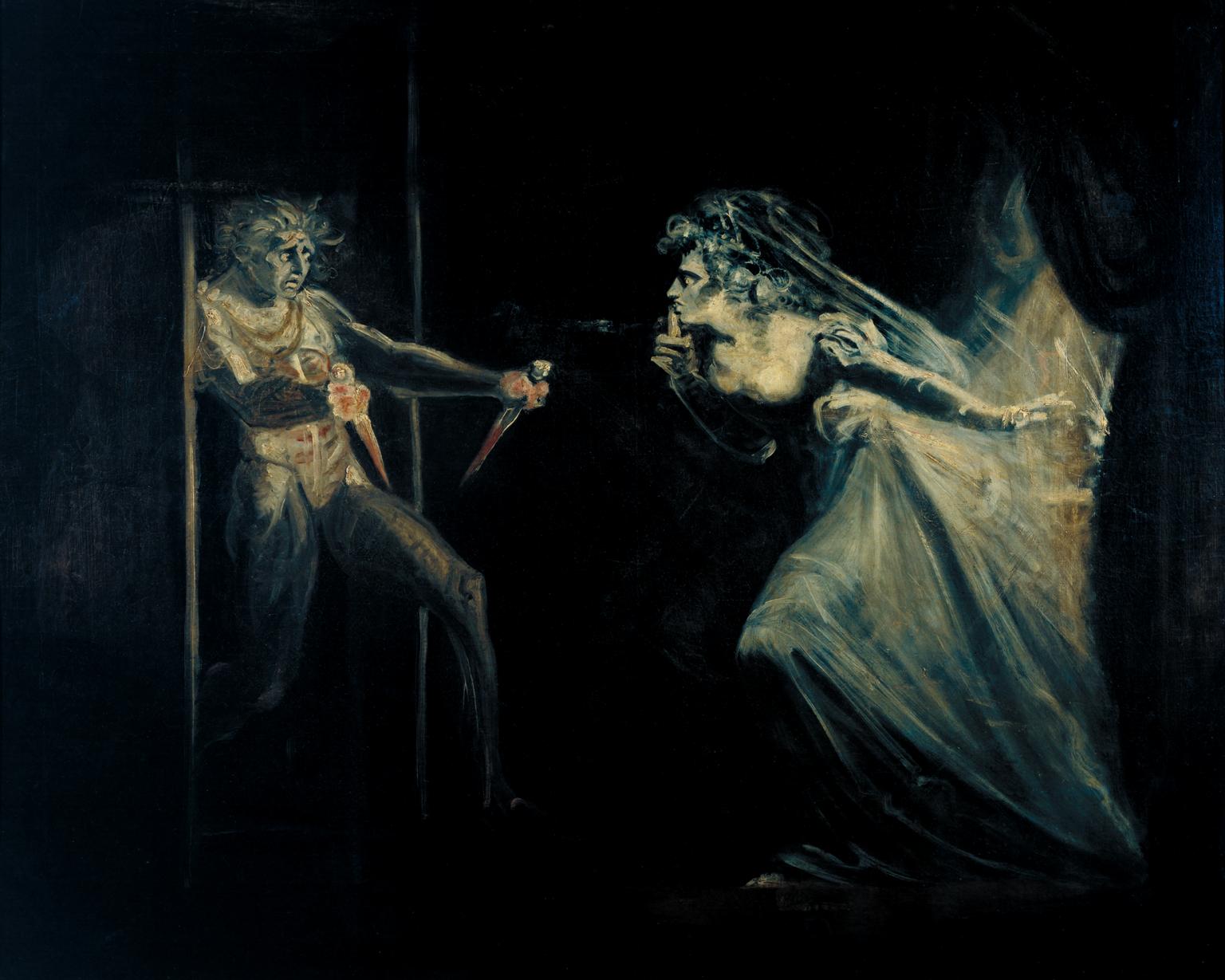
Lady Macbeth Seizing the Daggers ?exhibited 1812 by Henry Fuseli 1741-1825

OthelloMacbeth

Lyric Hammersmith, 8th October 2018

OK so this has its moments. By splicing together Othello and Macbeth, excising out extraneous context, sub-plot and characters, director Jude Christian has largely succeeded in achieving what she set out to do. That is to recast the two famous tragedies from the perspective of the female protagonists, Desdemona, Emilia and Bianca, the Ladies Macbeth and Macduff and, with a twist, the Three Witches. Without messing too much with the main plots. And with some occasionally breathtaking transfer of lines from one play to the other. However it is the Macbeth half that gets the best of the treatment, in large part because it benefits most from Basia Binkowska novel set design as it opens up. And this is definitely not for the purists who relish the verse. (I overhead some grumbling on the way out).

In part this reflected the cuts, in part the slightly uneven verse delivery on show and in part what happens when the psychological insight offered up by Shakespeare’s “roundest” characters is sold short. Samuel Collings as Iago/Macduff and, especially, Ery Nzaramba as Othello/Banquo had the most to lose. On the other hand there was much to learn from Kirsten Foster’s alert Desdemona and Caroline Faber’s measured Lady M, and the Witches, our two/three murdered/abused women from Othello. For this conceit, their revenge, as they unleash Lady M’s “unsex me now” monologue, and strumming on high pitched wires, is both clever and, in part, insightful.

Nagging away at me though is the belief that Shakespeare did offer up multiple vistas into what these women saw and felt whilst still getting on with the business of showing us that ambition, violence and jealousy are intrinsic, if ugly, facets of the human condition. I am not arguing that Shakespeare’s treatment of his female characters should be excused, the body count and violence meted out to them, tells its own story, just that, as in some much of his writing, there is insight and ambiguity when you look for it. And at least he has the excuse of history. The men today who continue to “fridge” women do not. After all Jude Christian in this mash-up, by using WS’s lines, is only highlighting what is already there in the text.

The cur-down version of Othello doesn’t need to tell us why “the Moor” is so hated, nor to have Iago poisoning his and our ears, but without it they come across a bit cartoonish. They are basically wankers from the off. The harsh brushed metal wall, there to mask the Macbeth reveal, only serves to highlight the static staging, and rushed delivery, with very rapid jump–cuts, of the first half of the first play. It does heat up post hanky mind you. Sandy Grierson squeezes a lot out of Cassio as do Kezrena James as Bianca and, especially, Melissa Johns as a blunt no-nonsense Northerner Emilia, who can sense what is coming. But this is maybe more to do with the “air-time” they have relative to standard interpretations rather than the actors really finding something new to say in the characters.

Sandy Grierson’s Macbeth does convince, because we know what to expect, because the call-back is more profound, because his is a fine performance and because the relationship with Caroline Faber’s Lady M stacks up. The early filleting of the text is less distracting, the motives of the power couple are still examined. Ms Faber makes chilling sense of the final Othello speech which falls to her. Even so at the end of the day it is Lady M who hatches the murderous plan, even if the narrative here is revenge for the wrongs of the first half. Once again I think there is more than enough complexity in Lady M as written by the Bard to make Jude Christian’s re-direction superfluous. Watch Judi Dench at work if you don’t believe me.

So a successful exercise on its own terms. I am just not sure that those terms were entirely necessary. New plays by women, telling women’s stories, with women creatives, would be more fruitful I think. (Lela & Co by Cordelia Lynn for example which Jude Christian directed). Or Jude Christian let loose on either one of this plays. Or a Caryl Churchill classic for example. This strand of wilful innovation has dogged the last few years of Sean Holmes’s stewardship of the Lyric. It hasn’t always worked as here. It will be interesting to see who, and what, comes next. It is a lovely theatre, thanks in large part to Mr Holmes’s industry, which deserves the best.


The Malady of Death at the Barbican Theatre review ***

ocean-sea-waves-2802

The Malady of Death

Barbican Theatre, 3rd October 2018

I took a bit of persuading (of myself, by myself, this was never going to be an easy sell to any of the usual companions) to pitch up to this. No doubting the pedigree of the creative team. Alice Birch, (Lady Macbeth, Anatomy of a Suicide, Ophelia’s Zimmer, Revolt She Said Revolt Again), adapting Marguerite Duras’ 1982 novella which tells the story of a man who pays a woman to spend weeks with him so that he can “learn” how to love. Directed by Katie Mitchell, no introduction needed. Under the auspices of the legendary Theatre des Bouffes du Nord. And which came to London, via Edinburgh, with some fulsome reviews.

Of course the subject, a “provocative” dissection of the male gaze, complete with nudity, live video and on-stage narration from French acting royalty in the form of Irene Jacob (Au Revoir Les Enfants, The Double Life of Veronique, Three Colours Red), screams controversial. Nick Fletcher was The Man, holed up in a hotel room by the sea, watching pornography, desperate to “feel” something, and motivated, by the “malady of death”, I guess his own empty alienation, to “use” Laetitia Dosch’s The Woman, who has her own childhood trauma to excise. By examining the narrative of the story from both perspectives, literally using the video projection, we get to ponder just who has agency here in an intimate relationship between man and women. Alice Birch has re-written The Woman as a sex worker and single mother, (M. Duras reveals nothing of her background), to open out the correspondence and, as the nights progress, there is a clear shift in power even though She can offer no resistance or make no sound. When she finally does it is to goad and diagnose him.

Now there is no denying that this is an impressive technical achievement as the two camera-people (one man, one woman) and stage managers, as well as the actors, shift balletically through Alex Eales’ set (he also designed the costumes, such as they were). The live video was mixed seamlessly with pre-recorded footage (the sea, flashbacks of the Woman’s childhood) in Ingi Bekk’s design under Grant Gee’s direction. Paul Clark’s composition, Donato Wharton’s sound and Anthony Doran’s detailed lighting all added to the sense of clinically polished auteurship. Unfortunately for me this triumph of style, together with the narration and sur-titles, (the production is in French natch), only served to add distance to this indeterminate story. For such an intense subject it all felt curiously lifeless and maybe just a little, dare I say it, passe. These techniques can illuminate, here they served to obfuscate. Of course this idea of how the Man and the Woman “see” each other in an intimate, here transactional, relationship, is expanded through the use of video. A series of screens and compartments on stage push the audience into making choices about what to watch. At one point The Man using his phone to film the Woman in turn filmed by the cameras. Points made though there feels like there is nowhere else for us to go.

I suppose this inauthenticity, the absence of true emotion, the detachment, the sense of voyeurism, (a parody of art-house porn), exactly reflects what M. Duras was trying to say, but it does make for un-involving theatre. In stark contrast to Alice Birch and Katie Mitchell’s last outing, Anatomy of a Suicide at the Royal Court, one of last year’s best, and most emotionally involving, plays (Anatomy of a Suicide at the Royal Court Theatre review *****). It could be that my own identity leaves me entirely unequipped to understand the narrative here. Certainly worth a look. After all if I don’t challenge myself then how will I be, er, challenged.