Lucie Horsch and the AAM at Milton Court review *****

Academy of Ancient Music, Richard Egarr (harpsichord, director), Lucie Horsch (recorder) 

Milton Court Concert Hall, 24th February 2019

  • Antonio Vivaldi – Flautino Concerto in C major, RV443 (arr in G major for recorder)
  • JS Bach – Harpsichord Concerto No 3 in D major BW V1054
  • Giuseppe Sammartini – Recorder Concerto in F major
  • JS Bach – ‘Erbame Dich’ from St Matthew Passion
  • JS Bach – Oboe Concerto in D minor BWV1059r (arr for recorder)
  • JS Bach – Concerto for Harpsichord No 7 in G minor BWV1058
  • Antonio Vivaldi – Flute Concerto in G minor ‘La Notte’, Op 10 No 2 RV104

Lucie Horsch is just 19 years old. That’s her above, at 14 when she appeared in the Eurovision Young Musician festival. Her first recording of Vivaldi came when she was just 16. Now she may not be a household name outside the world of Baroque music and probably never will be given her choice of instrument, the recorder, but inside that select, (though I think widening), club she is a sensation. The recorder is a tricky instrument to play and to hear. Not in the lads of Ms Horsch. She is simply an astonishing musician. I haven’t heard anyone come close to the articulation, beauty, control and variation of sound that she achieves on these instruments. And her virtuosity in some of the faster passages on show in this concert was dazzling. Richard Egarr and the rest of the AAM, unsurprisingly, looked as pleased as punch throughout.

Now to be fair young Lucie started off with a few advantages. Mum and Dad are professional cellists, Dad with the Concetgebouw. Though perhaps this makes it more surprising that she stuck with the recorder, the “beginners” instrument. Mind you this beginner never even managed to master the basics, his music teacher quietly suggesting to his mother at age 10 that young Michael might want to stick to his books.

Anyway lucky for us that Ms Horsch decided she liked the sound and the immediacy of the connection between this “simple” instrument and performer. Of course the recorder doesn’t have too much in the way of “standard” repertoire beyond the Baroque and as the “pastoral”cue in early operas. There are a few Classical offerings and even one or two later works but generally there is none of the interminable showy sh*te from the Romantic and early C20. The technology of woodwind moved up a gear in the second half of the C18, the concerto became an ever blowsier conversation between soloist and orchestra and the textures of chamber music became more complex.

Go back in time though and it is time for the recorder to shine. Early and Renaissance music is brimful of the little fella, whether in instrumental ensembles or consorts, in dance music or as an accompaniment to voices. It is the Baroque though that shows the recorder at its most virtuosistic with the Vivaldi and Sammartini pieces on show here somewhere near the top of the pile. And this is not just one recorder. Ms Horsch is equally adept across the size range, sopranino, descant, treble and tenor. Mid C20, and some contemporary, composers have explored the unique sound of the instrument, technology has expanded the range and Baroque and earlier specialists are discovering new scores and arranging existing works, as here, for the humble recorder.

Vivaldi’s RV443 is just such an arrangement having been written for a flautino, though frankly it matters little since this is effectively the C17 version of the sopranino recorder. In this performance though the key was shifted down to the less stratospheric G major from the original C minor. This is the Baroque party piece for recorder (and piccolo) players with its lilting Largo monologue framed by showpiece brisk Allegro movements with dazzling solo parts. In the first movement the soloists chimes in with and unbroken string of 84 eighth notes! And that’s just for starters. The final movement calls for a seemingly never-ending run of triplets. Even by AV’s standards this is intoxicating stuff. He wrote a couple more concertos for flautino, RVs 444 and 445 as well as two specifically for recorder RVs 441 and 442. This though is the Daddy and there are literally billions of recordings HIP and not so HIP. I doubt I will hear a better live version that Lucie Horsch’s however. I have no idea where she gets the puff from.

The other Vivaldi concerto in this programme is also a staple. RV439 is one of the six flute concertos which make up ABV’s published Opus 10 from 1728/29. It was printed by the Roger firm in Amsterdam, which first brought out the Op 3 L’Estro Armonico, though a second version was also printed in Venice for recorder for which it will have likely been originally scored with a chamber accompaniment, 2 violins, bassoon and continuo, R10 4. This is explains its suite-like structure with six, blink and you’ll miss ’em, movements. La Notte is the night in Italian, hence the second title of the rapid second movement Fantasmi or ghosts, (though they seem quite playful spirits), and the slow fifth movement il Sonno, sleep. The first movement is a staccato affair, a sort of nodding off, the central Presto has a touch of the REM (dreams not band) flickers about it, and the finale turns very perky, showing off Ms Horsch’s skills to great effect.

Giuseppe Francesco Gaspare Melchiorre Baldassare Sammartini (1695-1750) was renowned in his lifetime as a wind performer, (musical not flatulist, a performance style I for one would like to see revived), notably the oboe, but I can also testify to the invention of his recorder concentre compositions of which this is by far the most well known. There may not be too much to distinguish the accompaniment but as a workout for the recorder player this is up there with Vivaldi, though with more variation and less reliance on repeated arpeggios and the like. Now we must be careful not to confuse Giuseppe with younger brother Giovanni, also a composer and oboist, who was one of the precursors of the galant Classical style, taught Gluck, counted JC Bach as a fan and influenced Haydn through his concert symphonies which are definitely worth a listen, (if only as musical history lessons). It helped the brothers that Dad was a professional French oboist.

Giuseppe wasn’t quite as forward thinking as little bro’ but there is still plenty to admire in his late Baroque/proto-Classical grooves. Outside of the concertos there is plenty of action for the recorder in his sonatas and trios. He kicked off his career in Milan but it took off when he moved to London and the court of Freddy Prince of Wales. Handel no less considered him the greatest oboist ever. (Note to the gammons. You see that those bloody foreigners have been coming over here and stealing your jobs for centuries. Musicians, composers, even the bloody royal family. Worth thinking about, should you ever choose to think, when you are humming the Hallelujah chorus. Actually scrub that. Most gammons in my limited experience couldn’t give a flying f*ck about classical music. Nor culture in general. One reason why they are always so bloody angry about everything especially the very Brexit they craved).

Or maybe they are angry because the Germans got all the best tunes. Well specifically Beethoven and JS Bach. Here were a few of them. Ms Horsch took a well deserved breather when Richard Egarr took centre stage, (actually this is when his harpsichord was moved side on), for a couple of JSB’s harpsichord concertos. In 1713 whilst working at the Weimar court you Bach was assigned the tasking of making keyboard transcriptions of some Italian concertos including 10 by Vivaldi himself. This was the wellspring from which much of his Italianate instrumental music emerged with the harpsichord concertos first performed in the 1730s at his weekly jams in Leipzig’s Collegium Musicum. These two started life as violin concertos and the original scores have no tempo markings. So nothing to stand in the way of Mr Egarr cranking up the rhythm and fiddling with his stops and couplers (don’t ask).

You probably know “Erbame dich” – Have mercy – from the St Matthew Passion with its violin lament supporting the singer’s teary plea to God. St Peter breaking down after his triple denial of Jesus. Here the instrumental version. led by Bojan Cicic’s expressive violin, was effective but lost a little bit by being taken out of context and “de-lyricised”.

So that just leaves JSB’s BWV 1059r. Now pay attention. This is the final one of the eight harpsichord concertos, a companion to nos 3 and 7 above. Except that this only survived as fragments so had to be reconstructed to create an oboe concerto. Utilising the two instrumental outer movements of BWV 35, the cantata Geist und Seele vird verwirret which have long passages of keyboard writing, which probably came from a concerto which might have been written for oboe. And some bars repurposed from another cantata BWV 156. Oh and the slow central movement of the three, (the first has no tempo guidance), is pilfered from an oboe concerto by Venetian composer Alessandro Marcello (also worth a listen) which JSB came across in his Weimar days, see above.

And here the oboe part was arranged for recorder. Confused? I’m not surprised. That’s what happens when composers have to churn out new works for money. Which JSB certainly had to do. No wonder he reused his back catalogue. And if we don’t have the original scores there is more room for interpretation and scholarship. Most of the harpsichord concertos started off somewhere else.

It matters here because this concerto, however arrived at, has some mighty fine riffs even by JSB’s standards. I didn’t know it at all. I liked it a lot, Which probably won’t come as a great surprise to you. As did my new companion, MSBDOB, newly returned to London and keen to hear some tip top playing. This was a fortuitous start methinks.

The beauty of the recorder sound is the connection between player and sound. There isn’t much between their breath and what hits your ears. This vulnerability and innocence, if you will, is also what makes it a sometimes awkward listen. In the best hands though, including these, it is a sublime experience. Lucie Horsch will surely get better with experience and when whatever tosser of a record company executive can no longer surround her with all that sexist, gamine, prodigy sh*te that the classical music world is riddled with.
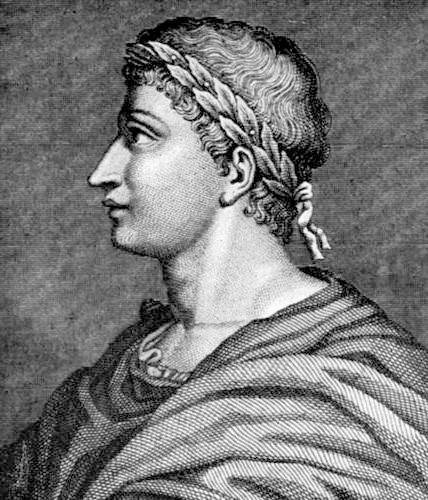

Ovid’s Metamorphoses at the Vaults Festival review *****

Ovid’s Metamorphoses

Pants on Fire, Vaults Festival, 23rd February

Seven years in to the Vaults Festival and finally the Tourist takes the plunge. If there is a cutting edge to avoid you can be sure the Tourist finds it. It is not even as if the Waterloo location is inconvenient. It could hardly be more accessible. Still better late than never.

Last year the Festival, which I read somewhere is now the biggest outside Edinburgh, attracted some 70,000 punters over 8 weeks. This year there are over 400 shows from around 2000 artists and performers. You pay £15 or so for an hour or so’s entertainment. The organisers get 30% of the take to cover costs, the artists 70%. That, I am assured, is way more attractive for the creative that the usual economic model. So everyone’s a winner.

Especially when the hour, or in this case, 80 minutes or so is of the quality of Pants on Fire’s Ovid’s Metamorphoses. Now I could bullshit you and pretend I have read Ovid’s magnum opus, basically a history of the world from the creation to the deification of Julius Caesar, part mythic, part factual, in the form of a narrative poem made up of 12,000 lines over 15 books and incorporating over 250 myths. I haven’t. But, such is the pervasive nature of these myths in Western culture, I am, like any reasonably aware culture vulture, au fait with most of the stories.

And that is all you need to enjoy this show. The selected stories are, adroitly, set in Britain during WWII. Think period uniforms. Each of the chosen myths, (I would have been happy to watch the cast of seven take on the entire 15 books, but I guess they, and we, had homes to go to), takes the form of a sketch if you will, with narration, performance, on stage music, various props and enterprising video, lighting and sound design. There is even some puppetry and animation. Whilst the Crescent may be the biggest of the various venues across the Festival this is still a tiny stage so the creative team, led by director Peter Bramley, had to be pretty ingenious to fit it all together. The four panels centre stage which served as backdrop and screens seemed to be in constant motion. Favourite setting? The Underground as the Underworld. Genius. Favourite transformation? Io complete with tin can hooves and gas mask. Double genius. Favourite scene? Narcissus as Hollywood idle with Echo as usherette. Triple genius.

Now I can’t pretend I clocked all of the stories on show but the following were all name-checked. The Creation, Sirens, Gorgons, Apollo, Daphne, Io, Mercury, Cadmus, Diana, Semele, Bacchus, Tiresias, Narcissus, Echo, Cupid, Icarus, Salmacis, Hermaphroditus, Perseus, Arachne, Marsyas, Medusa, Jason, the Minotaur, Hercules, Orpheus, Eurydice, Midas, Achilles, Ajax and Ulysses. At least I think they were. I might have got confused with Unmythable from Out of Chaos that I saw a week or so later, equally as entertaining. Anyway the point is that Metamorphoses is innovative, imaginative and above all very, very funny. I gather that Ovid’s poem ticks the form box marked epic but also takes in the elegiac, tragic and pastoral along the way. It is certainly keen to mock and subvert its own pretension; it is properly “meta” in the modern argot. This is wryly captured in Pants on Fire’s routines. As is the theme of metamorphosis or transformation from one form to another, and the power of love, Amor, to upset various narrative apple carts.

Pants on Fire was founded by AD Peter Bramley, who trained with Jacques Lecoq, in 2004, alongside Heather Winstanley who devised the visuals and produced Ovid’s Metamorphoses. Lucy Eggers composed the original music for OM, the Andrews Sisters style chorus numbers being one of the highlights. Whilst POF have created a number of shows it is this that has garnered awards and toured extensively following its debut in 2010 (at the dear old Greenwich Theatre and then Edinburgh). It is easy to see why. (I do like the sound of their Splice mind you, an hour long theatrical tour through the history of cinema). They are currently working on creating a festival of one person, performance “shorts”. Sounds good.

The cast here included Beth Lockhart who is the other principal of Pants on Fire along with Adam Boakes, Max Gallagher, Sindre Kaurang, Chloe Levis, Bridget Mylecharane and Rosie Ward. A splendid ensemble largely drawn from Rose Buford College where Peter Bramley teaches movement. There were moments when the timing went awry and accents wobbled but frankly that is all part of the improvisational charm.

Theatre is about transformation and can be transformative. Ovid was ploughing the same furrow. Certainly one of the best hour’s entertainments I have seen in this or any other year. It will be back. Don’t miss it.

The Animals and Children Took to the Streets at Lyric Hammersmith review ****

The Animals and Children Took to the Streets

Lyric Hammersmith, 23rd February 2019

This took my eye in large part because of the description of its form in the Lyric blurb and in the many reviews that have followed its progress around the world since 2010 following a commission by Battersea Arts Centre, Malthouse Theatre Melbourne and the University of Chichester. Theatre company 1927, made up of writer/director Suzanne Andrade, film and animation designer Paul Barritt, costume designer Esme Appleton and composer Lillian Henley, had a big hit in 2007 with Between the Devil and the Deep Blue Sea at the Edinburgh Festival. This was the follow up. It combines animation and video design with live music and songs, narration and performance, like a “graphic novel burst into life”. It is, technically and creatively, a tour de force even if the story itself doesn’t quite match up.

Bayou Mansions on Red Herring Street, in the Bayou, is a decrepit tenement block in an imagined city, where the poorest members of society are concentrated and the feral kids run riot. Agnes Eaves and little daughter Evie pitch up with an ambition to change things through the power of Blue Peter-ish craft. A reluctant janitor steps in to help. The kids invade the posh neighbourhood. You can guess the rest. The plot, as in most parables, doesn’t stand up to much scrutiny, and the subversive message, let the kids play again in public spaces, with a few nods at wider social and economic injustice along the way, isn’t really developed. Who cares though when this level of visual and musical invention is on show.

Mr Barritt’s animations are stunning. The aesthetic is 1920’s German Expressionism/Berliner cabaret filtered through 1970s kids cartoons with Tim Burton lurking in the background (in my head at least). The way that the three white-faced performers, Genevieve Dunne, Rowena Lennon and Felicity Sparks, integrate their movement, performance, piano music and costume changes with the moving animation, is occasionally breath-taking. The monologue narration of the caretaker, voiced by James Addie, is similarly seamlessly integrated. There is plenty of dry wit from this, and other characters, and a few (not enough mind) sinister undertones.

This wasn’t full on our visit and there are a few tickets left for the remaining performances. It might be that the Lyric is a little on the ample side capacity-wise for such a show, and I am not entirely sure the younger patrons, and indeed LD who I roped in to coming along, were entirely persuaded, but if you are prepared to take a punt and revel in the craft on show the is well with the £20 or so asking price.

Philippe Herreweghe and Philharmonia at the Royal Festival Hall review ****

Philharmonia Orchestra, Philippe Herreweghe (conductor),
Bertrand Chamayou (piano)

Royal Festival Hall, 21st February 2019

  • JS Bach – Orchestral Suite No.3 in D
  • Mozart – Piano Concerto No.23 in A, K.488
  • Mozart – Symphony No.41 (Jupiter) 

A rare opportunity to hear modern instruments tackle some core Baroque and Classical orchestral repertoire in an HIP style, which, when it works, can a thrilling musical experience. But here the Philharmonia was under the baton of not just any old conductor but one of the founding fathers of historically informed performance in the guise of Belgian maestro, and Jonathan Pryce look-a-like, Philippe Herreweghe.

Mr Herreweghe is the Artistic Director of the renowned Collegium Vocale Gent which he founded in 1970 whilst studying at the music conservatory in his native Ghent. It didn’t take long before the HIP world stood up and took notice of PH’s authentic and enthusiastic way with the Baroque, especially Bach, and recordings, for example of the Bach cantatas, with the likes of Nikolaus Harnoncourt and Gustav Leonhardt, soon followed. In 1977 PH also founded the La Chapelle Royale to focus on the French Baroque, the likes of Lully and Charpentier, and he has subsequently branched out into other eras and other ensembles (he is principal conductor of the Royal Flemish Philharmonic), but it is his JS Bach interpretations which garner most praise. Generally, if he is the conductor on a recommended recording, you can safely take the plunge. If it is a Bach recording you would be daft not to.

BTW for those Brits who have never been to Ghent – more fool you. Leave St Pancras mid morning and you can still be there for lunch. Easy stroll around the centre taking in a couple of Gothic church crackers, a Belfry (with lift), a C10 castle, the Graslei medieval houses lining the canal – boat trip mandatory, a couple of supernatural art galleries (MSK if, like the Tourist you are drawn to early Flemish and first half of the C20, and the Contemporary Art Museum), two vouchsafed decent hotels (Marriott and Pillows Grand Reylof), some very tidy trough (with a fair few Michelin stars scattered throughout), lashings of great beer and, best of all, the greatest painting ever, the Van Eyck boys’ Adoration of the Lamb. Busy, but not as nuts as Bruges. The city is gearing up for a van Eyck celebration next year. So off you trot.

Now the Collegium Vocale Gent is a regular, if not frequent, visitor to London. They are over for a Bach B Minor Mass on 14th June at the Barbican. There are still plenty of tickets left. So go on, treat yourself. I also see they are taking the Glass opera, Einstein on the Beach, on a tour around the Low Countries. Crikey.

Prior to that though PH put a stripped back PO, and an excellent young French pianist in the shape of Bertrand Chamayou, through its paces. In fact prior to that a string quartet led by PO violinist Adrian Varela offered a free concert of Bach transcriptions (two Bach chorals, BMV 269 and 86, two Art of Fugue Contrapuntuses, is that the plural?), Stravinsky’s Concertino and the suite Punta del Este, from Argentinian, Aster Piazzolla, which was as good as it sounds.

Only four orchestral suites by JSB survive, in contrast to the 100 or more from composition whirlwind Telemann. They likely date from the Cothen years, written for Prince Leopold, and are some of the funkiest grooves the old boy ever laid down. They all begin with a lengthy overture followed by a series of dance movements; so French in structure if not always in sound. The overture of No 3 itself is French style, a slow stately D major opening, then a rapid, dotty fugue before a short reprise. Number three augments strings and woodwinds with timpani and three trumpets, which gives the first idea an Handelian majesty which suits the modern orchestra. JSB wastes no time shifting to the running semiquavers of the fugue which follows. You may well know the overture. If you don’t you will know the Air which follows, “On a G string”. It may be ubiquitous but it is still special. No Bach, no symphonic slow movements. The Gavotte, a courtly knees up, which follows is in two parts. Things heat up in the scrabbling Bouree which follows, but it is the final Gigue which takes us back to the jollity of the opening, trumpets blazing.

Now your man PH doesn’t hang around. Brisk is the usually ascribed epithet. Suits me. But with no dawdling or vibrato to hide behind this called for precision from the PO. Which they delivered. This sharp, clean sound, with steel in the 44 (yep count ’em) strings (literally), controlled wind (if you get my meaning) and hard stick timpani (oh dear), with the perpetual motion of Bach’s invention, is what really got me excited. Getting the balance right with such a full orchestra was always going to be tricky but PH and the PO, for the most part, were on to that.

I was a little less convinced by the Mozart PC. Not Bertrand Chamayou’s subtle and supple playing, proper Classical (not his normal specialism), but more in the drive of the orchestra. They didn’t quite match up in the jolly opening Allegro and in the closing, vivacious sonata-rondo. By the time BC joined the orchestra in the opening they had built up a head of stem that he was hard pressed to match, and things got a bit too racey by the end of the concerto, where WAM launches more than a few surprises. In the beautiful, dreamy F sharp minor Adagio, pretty much all piano and the only passage ever in this key from Wolfgang A, we could hear just how fine a pianist BC is, at least when it comes to delicate emotion. WAM wrote PC’s 22, 23 and 24 in a hurry to drum up some cash. They are, IMHO, his best 3 in the form, with the operatic 23 probably edging 24 to the top spot.

Mozart also churned out the last 3 symphonies in a matter of weeks. Still hard to credit. Jupiter is, of course, the best. And the final movement is the best of the four. The two themes of the opening Allegro jockey for supremacy with more than a whiff of Don Giovanni-esque irony. The Andante takes a simple theme and turns into into something altogether more knowing and the Menuet and Trio elevates that Classical staple to new heights. But that last movement, up there with Beethoven’s best, and therefore the best ever, is something else entirely. Four notes, upside down, inside out, round about, in fact very which way but loose, then twisted around another four themes similarly pushed and pulled, then all weaved together in celestial, head-banging perfection (I know, I know, it’s just music, but f*ck me, what music). Easy enough to make a hash of by going balls-out bluster. Not here though showing how “flexible HIP” is now, really, the only sensible option with Mozart. Even with repeats PH brought this in under the half-hour. I have a Norrington recording with LCP, again with all the repeats, which tops 35 minutes and he is no slouch.

Regular readers will know that I can’t be doing with the staples of the Romantic repertoire. This though pays the wages of the PO and its peers. They barely get near Bach, or even Mozart, at least in an orchestral context. Perhaps that is why they look pleased as punch at the end of this. Happy days. And for those of you who like a little more Romantic in your lives, albeit the early variety, PH is back with the PO in November to show off some Beethoven and Schubert.

The Lady From The Sea at the Print Room Coronet review ****

The Lady From The Sea

Print Room Coronet, 20th February 2019

Hummed and hawed about this one. Never been entirely sure about TLFTS when compared to other Ibsen’s, was not bowled over by it’s last London outing at the Donmar, couldn’t get the cheap Wednesday seat option (that is a steal) and was trepidatious about the billed mix of Norwegian and English creatives. On the other hand the last time the Norwegians came over, in the form of the National Theatre of Norway, to this very stage with their Little Eyolf (which I do care for) it was, by all accounts, a success, and the Print Room under AD Anda Winters can usually be relied upon to deliver a thought-provoking, if sometimes obtuse, evening’s entertainment.

And so it turned out. The combination of modern idiom English and Norwegian text, and British and Norwegian acting “styles” was both captivating and illuminating, as it drew out the differences between . Now as I am sure you all know Ibsen, after some chap name of Shakespeare, is the most performed dramatist worldwide (though, as with all such claims, the Tourist is dubious as to how this was proved. Remember people, always question). However, Norway had no theatre company dedicated to Henrik’s works, a la the RSC, though there is a successful biennial Ibsen festival sponsored by the National Theatre in Oslo . Which is why, in 2016, AD Kare Conradi, set up the NIC, to sponsor both new productions and to work with other theatre-makers internationally on the work of the master. The company is bi-lingual by design and targets those who might otherwise not get to see HI. This is their first in-house production. Good on ’em.

Wangel (Adrian Rawlins) is the English doctor who has ended up in the provincial Norwegian seaside with daughters Bolette (Marina Bye) and Hilde (Molly Windsor). His new wife Elida is played by Norwegian acting royalty, Pia Tjelta, who was in the Little Eyolf last year, and Kare Conradi himself plays the returning schoolteacher and family friend Arnholm. The Stranger, the object of Elida’s obsession is, obvs, Norwegian in the form of veteran Oystein Roger. Our sickly, would-be artist Lyngstrand is however English, played by Edward Ashley.

Elida likes the sea. Elida is miserable. Elida and Wangel lost their son as a baby. Elida and Wangel’s marriage is under pressure. Arnholm arrives to help. Arnholm falls for Bolette who longs to escape. Lyngstrand is a bit of a ninny but mopes sound after feisty Hilde who feels rejected by step-mum. The seaman Stranger who Elida loved and lost returns to take her back. Only when Wangel accepts she is free to decide her own destiny does she elect to stay and put the marriage back together. Without the symbolism its a belting story about the “choices” that we make. With the symbolism, as long as it is not overwrought (and this is where I sometimes get fidgety), it could be, I would imagine, intoxicating.

That isn’t quite the case here but it is still engrossing stuff. Mari Vatne Kjeldstadli’s (she also acts as dramaturg) new version, based on the translation of May-Brit Akerholt, is mercifully purposeful stuff, a text located in the right here, right now, which still just about manages to dreamier elements and finds the comedy. Pia Tjelta takes a nice line through Elida’s frustration with the present borne out of her idealised past. The final scene with Adrian Rawlin’s Wangel, when the penny finally drops for him, was as convincing, (and a little bit moving), as good as it gets. Kare Conradi’s captured the threat that underpins the bargain that Arnholm offers Bolette. Molly Windsor has been lauded for her performance in TV drama, Three Girls. It was easy to see why in this her stage debut. Her petulant Hilde was particularly effective as she dragged the damp Lyngstrand around the houses, physically and metaphorically, and in her interaction with Elida, notably in the “reconciliation” at the end.

No messing with Erlend Bierland’s set. Beach backed by beach-house backed by mountain view. And, a la mode, a fish tank. This is some way up the Norwegian coast. Lovely when the sun comes out. Not so perky during the long dark seasons. I need to imagine the whiff of sea, sand, engine oil and disappointment which I got here, though maybe a more nuanced lighting design (Simon Bennison) might have added more texture. Nils Petter Molvaer’s composition and sound lent a mildly brooding air when required.

So a production that uses a bi-lingual text and cast to emphasis difference and which, subtly, but insistently, marks out Ibsen’s photo-feminist message of self-determination. It sometimes came across as a little uneven but then again Ibsen wouldn’t be Ibsen without the messy stuff of life.

The Tempest at Greenwich Theatre review ****

The Tempest

Greenwich Theatre, 16th February 2019

As my dear old mum would say “sometimes Michael you would forget your head if it wasn’t screwed on”. Not for the first time the Tourist managed to leave the programme for this performance by Lazarus Theatre Company of The Tempest in a shopping basket in Marks and Spencer’s. Which regrettably means I can’t call out all the excellent performances of this generally young and upcoming cast. Sorry.

I can however once again recommend director Ricky Dukes’s way with classic texts. The Tempest followed on from A Midsummer Night’s Dream, Lord of the Flies and Edward II. All at the Greenwich Theatre and all created on a shoestring. There is an energy, vitality and intelligence that this director and company bring to their interpretations that put many a bigger company and budget to shame. To be fair this doesn’t quite match the best of the Tempests the Tourist has seen in recent years, the all female Donmar version from Phyllida Lloyd or the technologically enhanced RSC version with Simon Russell Beale, or my all time favourite from the RSC in 1989 with John Wood as Prospero, but it delivered some fresh (to me) insights and some proper spectacle.

Casting a female (or indeed non-binary) Prospero is not new. But casting a man as Miranda is to me. Micha Colombo’s Prospero was a benign, loving mother, seemingly devoid of rancour at her fate. She was always going to forgive the nasty Milanese and Neapolitans. Alexander de Fronseca as Miranda (no changes to text required) was the picture of innocence. No sign of the perplexing street-wisery that overtakes some Mirandas in order to simulate agency in the romance. Aaron Peters was a little less secure as Ferdinand, (he suffered, along with the shipwrecked aristos from some sizeable cuts to the text), but they made a lovely couple (and Prospero here seems to agree from the start). Abigail Clay’s Ariel had all the right, sprite moves but, mirroring Prospero, was more accepting of his/her bondage and keen to get the job done and taste freedom. Having Antonio (Peace Oseyenum) as a sister to Prospero also made for an interesting perspective.

The Tempest is about many things: autobiography, art, learning, theatrical illusion, magic, Manichaeism, justice, revenge, forgiveness, free-will, sexuality, post-colonialism and male dominance. It is about as pure a Romance form as big Will conjured up (ha, ha) and strictly obeys the unities of time, place and action, (though with all the supernatural goings-on it is pretty clear that WS is taking the Aristotelian p*ss). It has bags of Classical allusion in text and plot. Overall though, and despite the “flat” nature of the characters, I think the message is that it is good to be alive and good to be human. That is certainly the case here.

Mr Dukes once again makes abundant and inventive use of light (Stuart Glover) and sound (Sam Glossop) to offset a limited budget (I assume) for set and costume (Rachel Dingle). Prospero’s island is imagined as a light filled hexagon on the stage floor which opens up at the front, to reveal a deep blue sea. The light shifts with the narrative so that by the end the stage is bathed in red. Light, sound and the energetic cast literally kick up a storm at the opening. The dance and drone rhythms punctuate the rest of the play. It doesn’t always work but when it does it is undeniably effective. Costumes are work-a-day modern dress except for Prospero, where Micha Colombo is clad in green and red fairy ball-gown and cape (which works far better than it sounds). There is constant movement from the cast with the aisles and auditorium once again playing a part. Umbrellas double up as swords and, rainbow coloured, as props during the masque, here imagined as a blessing, with a shower of gold. Iris and Ceres are thus symbolised without the need for a tiresome “faerie pageant”. Trinculo’s (David Clayton) Union Jack boxers and Stephano’s (James Altson) clipped Home Counties vowels gently hammer home the colonialist theme.

Some of the cast coped with the poetry of redacted text rather better than others. For me the standouts were James Altson and especially Micha Colombo herself. I seem to remember from reading her bio that she has devoted a fair amount of theatrical energy to the other side of the stage, in narration, voice-overs and corporate work , as well as with Lazarus. On the basis of this performance I am surprised she hasn’t landed some bigger roles. Her delivery of the lines is crisp with perfect rhythm and, assuming this is the Prospero that the director imagined, her performance was perfectly pitched. I wish I had an Aunty like this Prospero when I was younger. She would have made me a better person.

Next up (after a re-run of AMSND) is Salome. Suspect Mr Dukes will have some fun here. The blurb is promising “full male nudity, gun shots and scenes of a sexual and violent nature”. Surprise, surprise.

I Am Ashurbanipal exhibition at the British Museum review ****

I Am Ashurbanipal King of the World, King of Assyria 

British Museum, 15th February 2019

Crikey. Those Assyrians had a way with reliefs carved in gypsum/alabaster. Even if it was primarily all in the service of terrifying aggrandisement. The King hunting, the King and his soldiers slaying his enemies, the King relaxing with the ladies. It is all about the big man. Seeing these panels adorning the main rooms of the Empire’s palaces, painted in bright pigments, you certainly would have known who was the boss.

The Neo-Assyrian Empire took in most of modern day Iraq, Syria and Iran from 911 BCE to 612 BCE and Ashurbanipal was in the hot seat at its zenith from 668 BCE to 627 BCE. One way or another the Assyrians had been a big noise in the region for the previous 1500 years or so but it is only when the factions came together, and decisively defeated their neighbours, that the Empire was able to take in Cyprus, the Eastern Mediterranean, Eastern Turkey, Egypt and the Persian Gulf. The Neo-Assyrian Empire kicked off with Adad-nirari II but it was Ashburanipal’s daddy, Esarhaddon, the son of a “palace-woman” not the Queen, who did the blood-thirsty groundwork for his favourite son. Even so little Ashurbanipal had to initially share with big brother Shamash-shum-ukin who ruled the rebuilt Babylon.

Whilst Ashurbanipal’s geographical inheritance was vast it needed looking after. First he had to take on the various Empires in Egypt including the Nubians. Then he had to decisively crush the Assyrians’ arch-enemies, the Elamites, and finally he had to take on his own older brother when Babylon rebelled. There is plenty of pictorial and written evidence to show just how cruel Ashurbanipal could be when it came to waging war but, as all you students of ancient history know, you can’t build an empire on brain-dashing alone. You needs brains that stay in heads as well. And this is where the exhibition steps in showing just how learned the great king was, (he had been trained to rule, and to spy and intrigue, from an early age), as he amassed his great Library, oversaw an unrivalled system of communication across the Empire, negotiated treaties and vassalships too hold together his various, proud peoples and turned Nineveh into the greatest city on Earth. He wasn’t troubled by modesty mind as the translations show. It all went to sh*te when he died, isn’t that always the way, but what is on show graphically reveals just how magnificent, (assuming you were on the right side, and ideally you weren’t a lion), it all was at its peak.

Now the British Museum has the lion’s share (haha) of the world’s Assyrian artefacts so curating this exhibition wasn’t too much of a struggle, I imagine. Even so much of this material is not on permanent display, there are plenty of astonishing loans on show and the way the story is told, as is usual at the BM, is superb. Most Assyrian art was lifted in the mid C19, (the Victorians went mad for it), having previous been ignored by scholars in Europe and the US. You can argue about the ethics of such an enterprise, but then again you might also want to consider the centuries before when the exquisite calcite alabaster palace reliefs, lamassu and large scale statuary went walkabout, and you also need to think about the wholesale destruction of what remained in situ by ISIS especially around Mosul. At the end of the exhibition this part of the story is highlighted including the work of the BM in supporting and training local archaeologists to examine and conserve what is left.

Highlights? The small-scale lion hunts, (though I reckon, based on the casual manner in which Ashurbanipal is despatching the beasts, that these reliefs may incorporate a little poetic licence even if they are anatomically perfect) . The Garden Party in the palace of Nimrud. (Let us hope Queen Liz doesn’t take up the custom of decorating the Buck Palace gardens with enemy heads). The wall of cuneiform on clay tablets, a summation of the Knowledge of the day, (a word to the wise – if you want your library to resist a fire, use clay). The copy of the Epic of Gilgamesh, the first ever work of literature. The battle scenes illuminated with modern technology. The “painted” relief similarly enhanced. The lamassu, the human headed bull/lions with wings that stand guard. (How do you move these things? With great care I should imagine and without enlisting the services of the congenitally weak and clumsy like the Tourist). The sphinx of his arch-enemy. Taharqa. The imported Nimrud ivories. The decorated bronze helmet.The tiles. The obelisks. The statue of the big fella himself, alongside his bro. The Elamite art, pedestrian when compared to its Assyrian overlords.

The thing with the reliefs is that not only are they historically and aesthetically pleasing and interesting but they also tell an immediate story. It is this clear, (well, with a bit of help from the curators comments), narrative which makes this art and this exhibition special even if you aren’t normally one for the “dusty” as LD terms most History. Obviously some of the content, the pre-flaying, tongue-ripping, the bone-grinding, the beheading, appeals to our voyeuristic cravings, (don’t worry it isn’t TOO realistic), but it is the muscle, the movement, the energy, the vivid impression of something happening (even if the perspectives are that odd mix of profile and frontal/three-quarter that characterised pre-Grecian art), that makes it special.

And a lesson to all would-be tyrannical despots. If you are going balls-out to subjugate your people, do show an interest in reflecting your “glory” in art. Otherwise no-one will remember you.

The American Clock at the Old Vic review ***

The American Clock

Old Vic Theatre, 11th February 2019

All the reviews will tell you the same thing. This was not one of Arthur Miller’s finest moments. Mind you his finest moments are amongst the greatest in theatrical history so the bar is set pretty high. A series of vignettes, with musical accompaniment, inspired by the oral histories of Studs Terkel, notably Hard Times, which intend to knit together to offer a dramatic critique, if you will, of the Wall Street Crash and The Great Depression. Almost bound by its form perhaps to fall short dramatically but could still fly as theatre.

It might have flopped on Broadway when it first appeared in 1980 but apparently the NT production from the mid 1980’s, (albeit under the guidance of master director Peter Wood, the man who breathed life into Stoppard’s comedies), was a great success. So I can see why Matthew Warchus entertained the idea of American musical director Rachel Chavkin having a crack at it on the Old Vic stage. Especially after the success of Conor McPherson’s Girl From the North Country, which to me, albeit with the powerful addition of the music of one B. Dylan, it somewhat resembles.

Miller himself termed it a vaudeville, a variety entertainment popular in the US before the Depression, and similar to music hall in good old Blighty. A long way from the original French precursor, (which I have just learned about – thanks teach), from the late C18 which was the lightest of comedies interspersed with songs and ballets. Comic opera with no intention of lecturing its audience. Unlike Mr Miller who leaves you in no doubt about what he is trying to say. It probably “helped”, at least artistically, that Miller’s own family like so many other well-to-do types were ruined by the Crash.

The American Clock is centred on the Baum family, an initially well to do Manhattan Jewish family, Moe, Rose and son Lee, who lose it all in the Crash and are forced to move in with family in Brooklyn, (Rose’s sister Fanny, her son Sidney and his wife Doris, and Grandpa). A narrator of sorts appears in the guise of sagacious money man, Theodore K. Quinn, who sells out ahead of the crash, in contrast to a bunch of his peers, who we meet, along with a whole host of other characters incidental to the Baum’s journey. In total there are some 26 named characters. Thus the whole of American society is represented. And, just to emphasise the timeless relevance, and thereby add more bodies to the stage, Rachel Chavkin has chosen to cast the Baum family with three different sets of actors, White Jewish, African American and Asian American. Actually it turns out this is less of an annoying conceit that in sounds.

Now I can see why uber critic Frank Rich archly observed that, “It is Mr. Miller’s notion, potentially a great one, that the Baums’ story can help tell the story of America itself during the traumatic era that gave birth to our own. As it happens, neither tale is told well in The American Clock: indeed, the Baums and history fight each other to a standoff.” That about sums it up though it is a little harsh. Each episode in the “story”, and there are many, sheds light on a slice of American life across those fateful few years, whilst still giving primacy to the journey of the Baums. But we never get to see enough of these characters to make any emotional connection to them and the narrative arc is too fragmentary to generate any real direction.

Having said that some of the scenes, individually are powerful, the dispossessed Mid-West farmers taking control of an auction on behalf of one of their number, the call to action from an oratorically gifted Communist agitator in the office for poor relief, the dance marathons, for example. And the play looks at sound fantastic. Chloe Lamford’s in-the-round set starts out as a commodities trading floor and, then, through constant evolution (and revolution,) becomes speakeasy, club, family home, diner, auction house and much much more. Rose Elnile’s costumes are similarly evocative. The combined talents of composer Justin Ellington, sound designer Darron L West, musical director Jim Henson and his on stage band made up of Shaney Forbes, James Mainwaring and Laurence Ungless create a rich, jazz based, aural tapestry. Top of the class though is surely choreographer Ann Yee, (and not for the first time in my experience, Caroline, or Change, the War Requiem at the ENO, and the Donmar Shakespeare Trilogy are all recent examples of her work), who oversees some smashing dance routines..

There are also many committed performances notably from Clarke Peters, Clare Burt, Francesca Mills, Golda Rosheuvel, Ewan Wandrop and Abdul Salis.

So, if you are tempted, and there are plenty of reasonably priced tickets left, I wouldn’t stop you. Just don’t go expecting to get the emotional punch in the gut that classic Miller delivers. I have certainly endured worse history lessons.

Wild East at the Young Vic review ***

Wild East

Young Vic Theatre, 13th February 2019

So after an hour spent in the florid company of an unraveling traveller couple courtesy of Cuzco at Theatre 503, followed by a hour lapping up the detail of natural and man-made beauty through the eyes of John Ruskin (The Power of Seeing at Two Temple Place – do go – it’s free and open late on Wednesdays) how would the Tourist’s day end?

In the bonkers company of April de Angelis. That’s how. You know how something turns out to be not quite what you expect. This hour or so was exactly that. What with her adaptation of My Brilliant Friend and The Village based on Lope de Veja’s Fuenteovejuna, as well as After Electra, (I haven’t seen her acclaimed play Jumpy), I have been much taken with Ms de Angelis’s work. So I signed up for Wild East reading that it was a satire on the corporate interview, (a comfortable space for a recovering running dog/capitalist lackey). I imagined something along the lines of Jordi Galceran’s play The Gronholm Method which went down well at the Menier Chocolate Factory last year.

Should probably have focussed more on the words “surreal”, “outlandish” and “human chaos”, and the reference to Ionesco, in the Young Vic blurb. For that about sums up Ms Angelis’s three hander which debuted at the Royal Court in 2005. Frank (Zach Wyatt) is plainly nervous as he begins his interview/evaluation with Dr Jacqueline Pitt (Lucy Briers) and Dr Marcia Gray (Kemi-Bo Jacobs). So was I as I realised the creatives weren’t joking when they indicated that this would be old-stool bench seating. The audience in the Clare is ranged around an entirely MDF set courtesy of Sarah Beaton. Nothing else. The Tourist managed to find a perch with some back support but there was still a palpable sense of WTF as the cast emerged from audience. As it turned out props, and in some cases bits of costume, also adopted the plywood aesthetic, though this shifted as the play developed.

Frank is an accidental anthropologist, keen to return to Russia, to help a nameless corporation further its greenwashing agenda. Dr Gray is a stiff-backed stickler for the bureaucratic selection “process”. Dr Pitt is unconvinced by Frank’s credentials but clearly has issues stemming from PTSD after a recent “accident” in Russia. Turns out the two women are past lovers and Frank a pawn in their personal battles even as they plead loyalty to the “bosses” that are watching them as they in turn decide who is next for the chop. Or something like that. The targets of April de Angelis’s ire come thick and fast: anthropology and psychology as marketing technique, “developing markets” environmental cover-ups, learned corporate behaviours, the subjugation of personal identity to organisational process, and so on. But it does get pretty messy and pretty weird, especially when it goes full-on shaman at the end.

These are entirely unbelievable characters so it is just as well that the cast play this up, with Zach Wyatt near mugging the audience with his comic portrayal of Frank, who journeys from nerd to willing yes-man, Kemi-Bo Jacobs sounding like she had just stepped out of a science programme from the 1950s as she tries to staunch her insecurity and Lucy Briers adopting a air of sardonic victimhood throughout. Lekan Lawal as director, (the recipient of this year’s Genesis prize), also runs with the “if you can’t beat ’em, join ’em” approach to interpretation of the play, heightened by the use of microphones for key chunks of dialogue.

Another 90 minutes I wouldn’t have missed but another 90 minutes I won’t get back (nor will, literally, my back). Weird day. Still if you don’t want intellect or lumbar to be challenged you can always stay in and watch an interminable “realistic’ US box set on Netflix. Just like billions of other slack-jawed consumers.

Cuzco at Theatre 503 review ***

Cuzco

Theatre 503, 13th February 2019

Wednesday afternoon. Quite nice weather as I recall. Near the end of the run. No great surprise that Theatre 503, (above the Latchmere in Battersea), was home to just a few, presumably, lost souls including your intrepid correspondent. Hopefully a few more punters pitched up for the more sociable slots as this play, about a couple “finding themselves” on the Inca trail, whilst not overwhelming at the time, has actually, and unexpectedly, lodged in my memory.

It is written by Víctor Sánchez Rodríguez, a young playwright with quite a reputation in his native Spain, and here translated by William Gregory. The nameless couple, played here with fearless commitment by Dilek Rose and Gareth Jones, are holed up in a hotel room in Cuzco, the historic capital of the Inca Empire, destroyed by the Conquistadors. She is feeling a bit peeky. He is frustrated that he has to go sightseeing on his own. Their relationship is plainly a bit rocky but as She, who is Spanish and riddled with post colonial guilt, rejects the tourist trappings to get “in touch” with the locals, and He contemplates a threesome with a vacuous rich US couple, things start to spiral out of control. She ends up rejecting her life in Europe to “come home” to a world replete with Inca symbolism. He cannot “follow” her and gets increasingly paranoid.

As quotidian dialogue gives way to philosophical monologue the play does go a bit kooky, but its themes still come across clearly and, briskly directed across its 70 minutes by Kate O’Connor, it doesn’t hang about. It did sometimes feel that the writer (and probably the translator) were straining a bit too hard for effect over content, and the simple set of Stephanie Williams, dictated by necessity, constrained the imagination. Mind you Max Pappenheim’s sound design did it best to open up the vistas, geographical and psychological.

Holidays eh. Always bring out the worst in people.