Plenty at the Chichester Festival Theatre review ****

Plenty

Chichester Festival Theatre, 27th June 2019

Sir David Hare has written a fair few plays. Important plays. As well as TV screenplays and film scripts. I’ve only seen a handful but it’s not difficult to work out why the old boy is so important. Even if some would suggest he has gone off the boil a bit in recent years. Maybe that’s true though for me there was still much to admire in his last two plays I’m Not Running and his adaptation of The Red Barn, and in the TV drama Collateral. Is he Britain’s greatest living playwright? I think Mr Stoppard’s admirers would have something to say about that and, for me, Caryl Churchill, trumps them both.

So to this revival of Plenty. It wasn’t Sir David’s first success in the theatre. Slag from 1970, performed at the Royal Court, was the breakthrough with Knuckle, Brassneck, (written in collaboration with Howard Brenton as was 1985’s Pravda, a truly great play which is still lodged in my mind), and, especially, Fanshen, the Joint Stock workshopped production about land reform in revolutionary China, all attracting considerable attention. But Plenty stands as one o the clearest expositions of his talent. At least so I was told by those in the know. So I leapt at the chance to nip down to Chichester to see this new production. Especially as the CFT had handed the keys over to a talented, but not big name, cast (with maybe one obvious exception) and creative team.

Mind you director Kate Hewitt had already shown her gifts to the good people of Chichester in last year’s revival of Mike Bartlett’s Cock in the Minerva and again, at the Young Vic, with Jesus Hopped the A Train. Designer Georgia Lowe also worked on Cock and has come up with some grand designs for recent ETT productions and An Octoroon which the Tourist has enjoyed. For Plenty she has produced a lean but richly toned representation with further depth courtesy of Lee Curran’s lighting, Giles Thomas’s sound and Nina Dunn’s backgrounds and close up live video. There are a lot of scene changes in Plenty as the action flips from 1943 to 1956 and 1962. Every scene looks the part in this production and none of these changes get in the way of the story.

The title was inspired by the idea that post war Britain would be a land of “plenty”, an idea that Sir David has always been keen to contend. In Plenty he does this through the life of Susan Traherne, a heroine in the wartime Special Operations Executive whose life after the war is blighted by disappointment and regret. As the wife of a repressed career diplomat, Raymond Brock, she cannot replicate the rush of her secret missions behind enemy lines and, as depression sets in, she in turn drags down her husband. Their childlessness being the most crushing outcome both literally and metaphorically. Apparently 75% of the women engaged by the SOE divorced soon after the war. Susan’s own decline is intended to mirror that of post war Britain with Raymond’s postings and specifically his actions alongside boss Sir Leonard Darwin at the time of the Suez Crisis creating a brilliant counterpoint.

This is what Sir David does. Mixes the political and the personal. The way in which an individual’s life is intertwined with the, here, upper class, repressed British society into which they are thrust. Fair to say he is not the only dramatist who has ploughed this particular furrow. But he is amongst the best. Because he has the gift for the gab. Lines spill effortlessly out of the mouths of his characters. Any exposition, and with all these big themes lurking in the not-so background, a lot of ground needs to be covered, flows naturally in the dialogue. OK so maybe they get to the big picture arguments a bit too rapidly but then again in Plenty, as in his other plays, his people actually live in the big picture.

But this never detracts from the interior journey of the main protagonists. Here Susan and Raymond. Sir David may be a Chekhov groupie like so many of his illustrious peers but Susan Traherne might have stepped straight out of the pages of an Ibsen classic. In reverse trajectory. And with a nod to Rattigan’s Hester in The Deep Blue Sea which CFT also revived earlier in the year. Same class, same period, (though TDBS is set over one day compared to the 20 years of Plenty), same frustrations. This is a woman trying to revive the agency of her past life whilst surrounded by men determined, for reasons moreorless deliberate, to thwart her.

You have probably surmised that Susan Traherne is a gift of a part but it takes an actor of rare skill to do justice to it. Rachael Stirling is just such an actor. (Mind you if your Mum is Diana Ring I guess you wee genetically predisposed to be brilliant on stage). She refrains from laying on too thickly ST’s descent into depression and, maybe, psychosis, and handles the shifting time frames with ease. The bitter sarcasm she levels at, most memorably, the dinner party guests at the height of the Suez crisis and, then again, in 1962 at Raymond’s bosses at the FCO, is not entirely absent even at the outset when she meets “Codename Lazar” (Rupert Young) and “A Frenchman” (Raphael Desprez) in occupied France. She’s brutally honest in a social and political milieu that doesn’t want to listen. Which is what makes the play so popular with us lefty, liberal types though in far too subtle a way to register with the gammons, then and now. As it happens I am not sure I share Sir David’s implied pessimism about the direction of GB’s travel since the war. There have been periods of ascent over the past decades, but I do think this is usually despite, not thanks to, the c*cks who are generally in the box seats.

Rory Keenan never loses sight of the fact that Raymond Brock is a bit of a dick imprisoned by his own values and upbringing but he still offers emotional support above and beyond for the woman he loves. Yolanda Kettle offers light(-ish) relief as ST’s life long chum Alice Park, an archetypal toff playing at the bohemian, but with a freedom ST years for, and Antony Calf and Nick Sampson also shine as the two knighted diplomat, the latter more sceptical of the Establishment system than the former.

“State of the Nation” and, for want of a better phrase, the dramatisation of institutional structures, is what we have paid Sir David Hare to deliver over the last five decades. Too many lightly sketched characters? Too many targets for his ire? Or too preoccupied with fighting the battles of previous years? A sometimes uncomfortable shoehorning of the personal into the political. All maybe true but this ain’t easy and, with line after line, Is David shows us why he is as good as it gets with this sort of stuff. And Plenty is about as good as it gets as an example of his sort of stuff.
Radio at the Arcola Theatre review ****

Radio

Arcola Theatre, 25th June 2019

Never easy to work out what to sign up for at the Arcola Theatre since so much of quality and interest passes through the doors. So the Tourist has adopted a somewhat whimsical approach and given up worrying too much if he misses the cream of its output, However this was different. I was very taken with Al Smith’s take on Diary of a Madman at the Gate and thus more annoyed that I missed his last effort, Harrogate, at the Royal Court, So this, a revival of one of his first plays, written when he was a regular for Holby City and Eastenders, was an opportunity not to be missed.

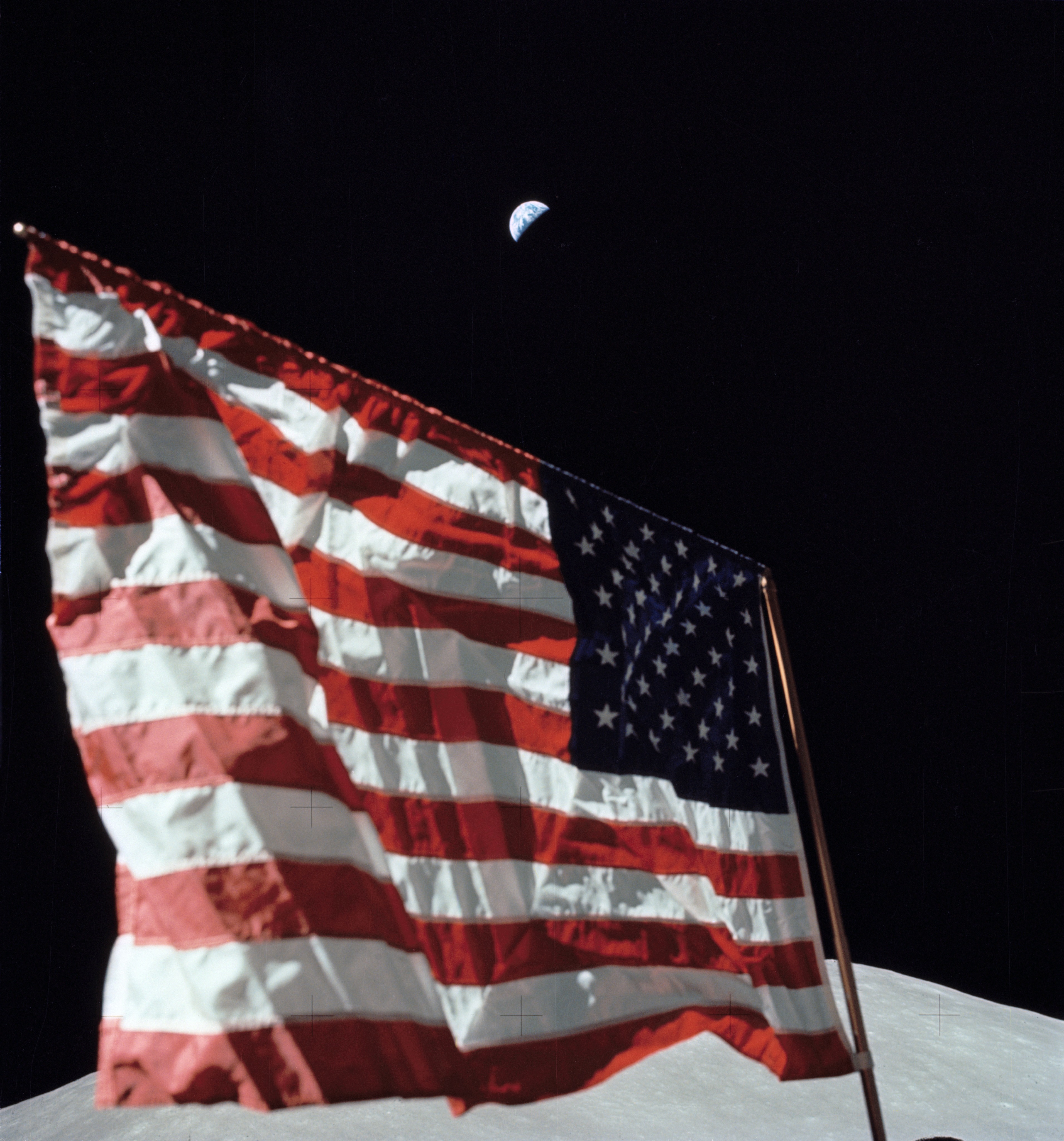
And, whilst I cannot imagine another way of playing Peter Shaffer’s gift of a part, Adam Gillen was a memorable Mozart in the NT Amadeus from 2016. For Mr Gillen it is who plays Charlie Fairbanks the “star” of Radio. As the blurb says, “Charlie Fairbanks was born in the dead centre of the United States at the deda centre of the 20th century. Americans are going to the Moon and Charlie’s sure he’ll be the first one three. But as he shines his spotlight on the Moon, so too does it illuminate the darker side to his nation’s history. Radio is a story about memory, love and spaceships“.

A pretty fair summary. From this notion Mr Smith spins a yarn that more than holds out attention for its 80 minutes or so running time even if it only hints at a critique of modern America’s inability to live up to its Dream. Adam Gillen’s Charlie is an optimist, brought up in Kansas, though his Dad moves the family around to ensure his tourist schtick, the house at the centre of the US from which he sells flags, is maintained. His dreams of being an astronaut, fuelled by the radio and the optimism of the 1950s and the Kennedy presidency, fade as he confronts the reality of the Vietnam War, the actual Moon landings and destitution as a veteran through the Nixon and Ford years.

The intricate text meanders but always illuminates, Josh Roche’s direction is never rushed, Sophie Thomas’s set is minimal, a skein of wires in red, white and blue and a few props and Peter Small’s lighting is similarly direct in the atmospheric downstairs space in the Arcola. So everything is focussed on Mr Gillen. There is more than a whiff of Forrest Gump in Charlie but his performance commits and so persuades us of Charlie’s brand of self-conscious sincerity, whilst still sketching out the supporting characters, Mum, Dad, girlfriend and so on. This kind of close-up monologue always takes guts on the part of the actor, especially when playing an Everyman on to which the external world is projected, but AG, bar a few accent slips, is utterly convincing.

Les Damnes: Comedie-Francaise at the Barbican Theatre review *****

Les Damnes (The Dammed)

Comedie-Francaise, Barbican Theatre, 21st June

The Tourist is now so far off the pace in terms of commenting om his cultural adventures that there must surely be a strong case for giving up. Hurrah I hear you cry. Well I am afraid any joy you feel will be short lived. The purpose of this blog is to force me to collect my thoughts on what I see and hear. Any interest from you beyond that is a happy by-product. So time is not, I am sorry to say, of the essence. Which means I am going to soldier on and try to catch up.

However this dilatory attitude does have clear drawbacks. Not least of which is that the Tourist can’t always remember the details of his what he has seen. Take The Damned at the Barbican for example. The abiding single image is of a couple of naked fellas, including the simply brilliant Denis Podalydes as Baron Konstantin von Essenbeck, rolling around in beer on the Barbican stage, Tackle out. Drunkenly singing fascist songs. Before being massacred. Filmed and projected then meshed together with previous footage to create the full brownshirt bierkeller effect. This being the so called Night of the Long Knives. A powerful image which is very difficult to shake off.

It wasn’t the only one. It is also impossible to look away from the unsettling scene where the young, and very disturbed, scion of the von Essenbeck family Martin, (a stunning performance from Christophe Montenez), “befriends” his young cousin. This is echoed later on in his encounter with the daughter of a prostitute, though the play holds back from emulating the corresponding scene in the film which is the most brutal signifier of the decay and destruction that the Third Reich represented.

Or the funeral scenes, announced by a factory siren, as members of the clan shuffle off the mortal coil in more or less nasty ways, to be “buried alive” in the coffins lined up stage left. Especially the tarred and feathered Baroness Sophie (Elsa Lepoivre), mother of Martin and widow of the patriarch’s only son who was killed in WWI. Then there is the awkward dinner party, complete with artfully choreographed silver service. All of this takes place on a day-glo orange platform with on stage costume changes and make up stage right and backed by video screens relaying the live camera-work.

Now you theatre luvvies will have probably worked out from all the above that all this wizardry comes courtesy of theatrical mastermind Ivo van Hove. His busy, high concept approach, of which this is the epitome, doesn’t always come off but then again neither doesn’t his stripped back, high tension, “psychological insight” alternative.

This though is a triumph. And what makes it extra special is that it is achieved without the collaboration of the Internationaal Theater Amsterdam company, IvH’s own troupe. Mind you if you are going to play away then it would be hard to beat the Comedie-Francaise. Founded in 1680 thanks to a decree of Louis XIV it is the world’s oldest theatre company. It’s had its up and downs but, backed financially by the French state since 1995 and with three venues to showcase its vast repertoire, this is about as good as it gets acting wise. Shame we in the UK have nothing similar.

Not for the first time, when they dreamt this up in 2016 with the company, IvH and designer partner Jan Versweyveld, turned to the Italian film auteur Luchino Visconti in seeking the source for their theatrical adaptation, Specifically his 1969 epic which charts the disintegration of the Essenbeck family, who own a steel company thatcollaborates with the Nazi regime in the 1930s. The reciprocity between state and industry, which forged the autarky that powered the Third Reich war machine, often takes a back seat in dramatic representations of Nazi Germany. Not here though. Yet this is still primarily a terrifying family psychodrama, with an emphasis on the psycho, Greek in scope and savagery.

The story kicks off with a party and then the the murder of the paterfamilias Baron Joachim (Didier Sandre – would have been good to see more of him). On 27th February 1933. The same night as the Reichstag fire. The Baron detests the Nazis. His kids and nephews, with the exception of Herbert Thalmann (Loic Corberry), who runs the company, are less principled, in fact they turn on Herbert and frame him for the murder. He escapes but his wife Elisabeth (Adeline d’Hermy) and kids are shopped to the Gestapo. Leadership of the company passes to the Baron’s thuggish nephew Konstantin (see above) an SA officer ahead of his own bookish son Gunther (Clement Hervieu-Leger) and his deviant nephew, the aforementioned Martin. Meanwhile the firm’s fixer, Friederich Bruckmann (Guillaume Gallienne), makes his bid for control egged on by his lover Baroness Sophie, despite not being a family member and coming from an lowly background. He is initially aided by her cousin Wolf von Aschenbach (Eric Genovese) who happens to be a high ranking SS officer and all round c*nt. It is he who drives the company into the arms of the Nazi Party. To realise his ambitions Fred shoots the drunken Konstantin during the SS coup against the SA in 1934 the infamous Night of the Long Knives. Wolf however turns on him denouncing him as a traitor to the Nazi cause. Herbert returns for his exile and reveals that wife Elisabeth died in the Dachau concentration camp and hands himself over to the Gestapo to save his kids. Aschenbach and the now certifiable Martin who has also joined the SS cook up a deal to oust Friedrich and Sophie from control of the firm. Martin shags his Mummy but allows Friedrich to marry her as long as they then commit suicide. Marty finally hands the firm over to his beloved Party. The End.

See what I mean. Uber nasty and very Greek. Or maybe twisted Racine is a more apposite label. Visconti’s film is tiled La caduta degli dei in Italian, which translates as The Fall of the Gods. In German then Gotterdammerung, the actual subtitle, this conjuring up an OTT Wagnerian vibe. The film doesn’t stint on sets, costumes or symbolism. Though it does on lighting and linear storytelling. And IvH and his dramaturg Bart Van den Eyede, who also worked on Roman Tragedies, have taken their lead from this deliberately mannered approach. Now I can understand why some might recoil at this operatic approach, chock full of modern European theatre tropes, and at the less than subtle allusions to our own troubled times. Notably when the house lights go up after each death and a camera is trained on the audience to remind us of our complicity if we just stand by. Me I don’t mind. This offers theatrical spectacle by the bucket load, a cast of cracking deplorable characters for this superb company to sink their teeth in to and if the moral of such immorality is overwrought, well why not? The lessons of history require magnification and repetition if our vicious species is ever to learn. And for once, in contrast to IvH’s Obsession or his Bergman homages, this is definitely an improvement on the film.

The two unbroken hours passed by in a heartbeat which is not something the Tourist can always say. OK so there were moments when the images distracted a little from the telling of the story and a modicum of effort and knowledge of relevant German history was required to keep up. Tal Yarden’s video, Eric Sleichim’s woodwind and brass driven score, (which makes ironically liberal use of Rammstein’s militaristic thudding NDH grooves) and JV’s lighting don’t hold back but this suits both story and space. And you either love or hate sur-titles.

I do wonder whether the whole would have been quite the equal of the sum of its parts without this extraordinary cast. As with ITA it is thrilling to see and hear actors of the quality, both as individuals but, more than this, as a company. They join initially as pensionnaires, paid a wage, before graduating to societaires, with a stake in the company’s profits. Just a brilliant structure. There have only been 533 since 1680. The longest tenured on the stage here, Sylvia Berge, had the smallest part, the least experienced, still a pensionnaire, Christoph Montenez, had the “best” part as Martin. None of that “star” billing stuff that debilitates West End theatre. And remember all this admiration from the Tourist for a play delivered in a language that he cannot speak. Acting isn’t just the words folks.

The Cherry Orchard at the Stadsschouwburg Amsterdam review *****

The Cherry Orchard (De Kersentuin)

Internationaal Theater Amsterdam, Staddschouwburg Rabozaal, 20th June 2019

One of the world’s greatest theatre makers in Simon McBurney directing. Actors from probably the world’s greatest theatre company in the form of the ITA (previously Toneelgroep). An adaptation from Robert Icke no less with his Dutch equivalent Peter van Kraaij as dramaturg. Luminaries such as Miriam Buether as designer, Paula Constable on lighting, Pete Malkin on sound and video from Will Duke. All working on, what for me, is actually Chekhov’s best, and final, play The Cherry Orchard. I wasn’t going to miss this. And nor should you either in Amsterdam or in London as I wouldn’t be at all surprised if this pops up at the Barbican next year.

Brace yourself mind. Mr McBurney was never going to offer us samovars and birch trees. Nor just a bitter-sweet, tragi-comedy focussed on text and character. He treats Chekhov in the same way as he has treated Brecht or opera. Whilst this may be his debut with the ITA he has illustrious past form at the Holland Festival, of which this production is a part, with productions of Stravinsky’s A Rake’s Progress and the joint Dutch National Opera/ENO Magic Flute, as well as Bulgakov’s Master and Margarita.

The Cherry Orchard offers a portrait of an impoverished landowning family and their retinue, forced to sell their beloved cherry orchard to pay their debts. Their world is changing. Serfdom, following the 1861 emancipation reform, has disappeared. The proletariat is set to overturn their masters who have failed to modernise economy and society. A new, moneyed middle class bourgeoise has emerged. The context should provide an atmosphere of impending doom and a kind of warped nostalgia against which the individual relationships between the characters can be explored. Mr McB’s modern-dress, kinetic interpretation, (we are in 1970’s Holland as the optimism of the 1960’s have given way to economic crisis and political unrest I assume), maybe plays this down a little but the insight this affords into the individual psyches of the characters, the futility of their existence, and the subversions of their class, more than compensates. This is a long way from naturalistic, and I suspect may not have been everyone’s glass of genever; indeed I overheard one very irate middle-aged British couple bailing out at the interval.

Chekhov productions, and especially The Cherry Orchard with its twelve main parts, all of which have plenty to say, can take a little while to gain momentum. Not here. Mind you, that in part reflects the power of this company which, emotionally and physically, never holds back. Bouts of intense activity are followed by periods of listlessness and ennui, reflecting the gap between the lofty intentions of these people and their lived indifference. Most of the action is focussed on a relatively constrained, dramatically lit plinth in the front centre of the wide Rabozaal stage upstairs in the Staadschouwburg. This functions as nursery in Acts I and IV, (there is a little doll’s house to make the point), but with no walls or doors, though a bold sound design simulated the slamming of doors and heavy footsteps, and as the garden in Act II. For the Act III party, here a pretty racy affair, with Hendrix and the Velvet Underground as soundtrack, the rest of the stage was utilised. The beloved orchard appeared only in video projection, alongside the Paris that the family has left and, to highlight the theme of ecological catastrophe that the perpetual student and would be revolutionary Trofimov (Majd Mardo) declaims, a nuclear power station.

Chris Nietveld’s world weary Madame Ranevskaya, here just Amanda, seeks attention but it is, deliberately, Gijs Scholten van Aschat’s Lopakhin, here Steve, who is the focus of attention. He takes no pleasure in buying the estate from the family, in fact their inability to grasp their fates just makes him miserable. These two, as I know from previous ITA productions, simply cannot help but draw the eye, but I was also taken with Eva Heijnen’s feisty Anya, Janni Goslinga’s doleful Clara, Steven van Watermeulen’s wheedling Boris and Bart Seegers’ doltish Leopold.

Maybe all this sharpened imagery and performance takes away from the sense of a past in snapshot that other productions have described. And some scenes teeter towards farce though to be far this only reflects AC’s voiced intention. Mind you he said that in response to the super gloomy opening night in 1904. There is an improvisatory quality to proceedings to set alongside the technical barrage which I can see would wind a lot of punters up. And it got a bit of a pasting from the Dutch press.

Me though, I loved it.

William Kentridge retrospective at the Eye Film Museum Amsterdam review *****

William Kentridge – Ten Drawings for Projections, O Sentimental Machine

Eye Film Museum, 20th June 2019

The Tourist can’t really be doing with blockbuster art exhibitions in London any more. Too lazy to take the early morning members’ option and too impatient to put up with the crowds of selfie takers who clutter up the galleries and have no interest in seeing the art. Better to focus on permanent collections here, and in Europe, away from the hordes.

So it was a joy to spend a few hours in the company of William Kentridge in the Eye Film Museum in Amsterdam. A wonderful building with some diverting displays and a ever-changing roster of films old and new from around the world across its four state of the art screens. And a beautiful view of the IJ from the caff. It pains me to say but it probably has the edge on the BFI. And then there are the exhibition spaces currently devoted to this, a display of WK’s breakthrough animation works created between 1989 and 2011 which he donated to the Museum in 2015. The 10 short films are set alongside a selection of the silhouette and map tapestries which WK has designed (some of which I think I have seen before in the Smoke, Ashes, Fable exhibition in Bruges) which similarly address the history of his native South Africa and the film installation from 2015 O Sentimental Machine which is centred on archive footage of the Russian revolutionary Leon Trotsky.

For those familiar with WK’s work, which frankly should be all of you, there is nothing too surprising here in terms of his Expressionistic method and technique. The animations are comprised of the charcoal sketches which WK draws, redraws, erases and reshapes, which he then films with gaps of between a quarter of a second to a couple of seconds, to create moving, in all senses, images. The act of drawing and erasing leaves traces of the past to remain in the present in metaphor for the evolution of South African society, the cycle of remembering and forgetting. The animations allude to but do not always address key events in South Africa’s modern history both pre and post Apartheid, such as the Sharpeville massacre, the release of Mandela, the passing of abolition and the Truth and Reconciliation hearings.

The films set these events against the life stories of two fictional characters, the dreamy philosophiser, Felix Teitlebaum, who is most obviously the alter ego of WK himself and Soho Eckstein, an amoral industrialist who, through time, begins to see the human suffering his business empire has wrought and seeks redemption. Felix’s history is more focussed on his interior and love lives and on his questions about the world around him. Given their physical similarities though it seems clear that Eckstein represents a darker side of WK’s own nature and, over the course of the series, the identities of the two characters begin to merge.. At least that was what I saw. As WK says, in this series he is interested in “a political art, that is to say, an art of ambiguity, contradiction, uncompleted gestures and uncertain endings”.

Each film is accompanied by music either composed by WK’s regular collaborators or an appropriate classical piece. Even without the reflections on the evils and crimes inflicted by the apartheid regime on the South African people it is easy to become transfixed by the stories of Felix and Eckstein. Put the allusion and metaphor on top and the fascination of their construction, so simple yet so powerful, and it is impossible not to sit through every one. Which makes for a very satisfying couple of hours.

  • Johannesburg, 2nd Greatest City After Paris (1989)
  • Monument (1990)
  • Mine (1991)
  • Sobriety, Obesity & Growing Old (1991)
  • Felix in Exile (1994)
  • History of the Main Complaint (1996)
  • Weighing and Wanting (1997)
  • Stereoscope (1999)
  • Tide Table (2003)
  • Other Face (2011)

O Sentimental Machine is a little less immediate in its impact. it is made up of five screen projections, and various objects, to recreate the office of Leon Trotsky. The archive film of a Trotsky speech on the future of Communism, which is, give or take, overwritten with cut up subtitles, is drawn from the Eye’s own archives. WK and his collaborators provide additional footage involving various machines and routines with plenty of the trademark megaphones. WK parodies Trotsky whose secretary Evgenia Shelepina has to deal with his ever expanding writing. Apparently Trotsky was in exile in Turkey when he wrote the speech. He also said that “humans are sentimental but programmable machines” which became unreliable if they fell in love, thus providing the inspiration for the installation. Many layers then though the prime message I guess is the idea that technological progress and grand ideas may not necessarily be unalloyed goods and doesn’t necessarily help

WK was born in Johannesburg in 1955 the son of two prominent, ethnically Jewish, anti-apartheid lawyers. He went on to study Politics and then Fine Art, followed by mime and theatre at the Jacques Lecoq school in Paris. Which perhaps explains why his art is so committed, how it manages to successfully spans various media and why he has also been successful as a theatre and opera director.

The exhibition runs through to September. Of course you could go and hang out in a brown cafe of the red light district with all the other tourists ravaging Amsterdam. Or you could come here. You decide.

Concertgebouw Orchestra at the Concertgebouw review ****

Royal Concertgebouw Orchestra, Semyon Bychkov (conductor), Nikolaj Szeps-Znaider (violin) 

Het Koninklijk Concertgebouworkest, 19th June 2019

  • Detlev Glanert – Weites Land
  • Tchaikovsky – Violin Concerto in D major, Op 35
  • Bedrich Smetana – Vysehrad, De Moldau and Sárka from Má vlast 

There’s a clue in the title. The Tourist finds himself in Amsterdam once again for his yearly pilgrimage to the Internationaal Theater this time to see the Simon McBurney take on The Cherry Orchard. More to follow. Prior to that though sightseeing in Delft, Leiden and Haarlem and more culture in Amsterdam. Including this. My first look inside the Grand Hall in the Concertgebouw and my first experience of this superlative band on their home turf.

Now the Tourist yields to no man or woman when it comes to the reputation of the London orchestras and especially the London Symphony Orchestra. Things are looking up with Sir Simon Rattle in the conducting chair but I reckon the Gergiev years saw the band slip back compared to the best of their European peers, the Bavarian Radio Symphony Orchestra, the Berlin and Vienna Philharmonics and the Leipzig Gewandhaus, say. Yet if I had to pick one orchestra above all others, based on recordings and a couple of London dates years ago, (both sporting Shostakovich), the Concertgebouw would be it.

The RCO is currently between Chief Conductors having dispensed with Daniele Gatti following complaints of “inappropriate behaviour” from female members of the orchestra, to add to accusations from elsewhere. No prevarication here. Another reason to rate the band. Finally classical music is doing something about this sort of sh*te. The RCO was built on the bond between its Chief Conductor and the players. From 1963 until 2015 there were just three CC’s. They happened to be Bernard Haitink, Riccardo Chailly and Mariss Jansons. Who also just happen to be the greatest three conductors alive today. Though I have a few contenders still on the wish list.

A few of whom are on the list of guest conductors for this year and next year. Semyon Bychkov is not one of them. I have already been privileged to hear his take on Britten and especially Shostakovich with the LSO. Now I have to admit the core of his repertoire, showcased here, is not entirely up my street but I figured he and the band would win me over. They did. Of course I know the Tchaikovsky VC, who doesn’t, as well the big tunes from Ma vlast. But I find the former usually just a bit too showy and the latter can drone on a bit .The German composer Detlev Glanert is mostly known for his opera but SB is a big fan and tireless promoter of all his work.

I am also sure I have seen Danish-Israeli violinist Nikolai Sneps-Znaider before but my computer says no so I must have made it up. Anyway the Tchaikovsky concerto, alongside Mozart, looks like it is one of his specials and I see that he has even taken on Ma vlast as a conductor. Anyway the point is this two fellas are all over this programme.

Since I have never heard any of Mr Glanerto ‘s work before this familiarity was not immediately clear. But what was is that sound. You would be hard pressed to imagine an auditorium that screamed late C19 Romantic more. It was opened in 1888 and the Grote Zaal, with its beautiful moulded white woodwork and plaster interior, plush red velvet and plaques devoted to great, not so great and frankly forgotten composers popular at the time, is an absolute peach. The Tourist went cheap, of course, which meant a bit of neck ache looking up to the raised stage and only a few players visible, but perfect to study soloist and conductor. And hear that sound. Given that the Tourist is a bit sub-par on the hearing front and not really smart enough to know what he is listening to anyway the whole thing with acoustics might be expected to pass him by. But trust me you can hear it. Apparently the reverb time is perfect for lush Romantic repertoire. I can vouch for that. The rich sound literally envelopes you but never obscures the detail. Apparently the RCO’s style of playing is perfectly matched to this acoustic. Again I believe the experts.

This perfection has been secured with a bit of engineering jiggery-pokery down the years but broadly the original architect Adolf Leonard van Gendt and his team got it right first time. Remember this was at a time when the science of concerto hall acoustics was in its infancy. And the building was built on log piles (subsequently replaced with concrete when it started to sink). Amsterdam is full of exquisite buildings, new and old. This is one of the best.

The Glanert piece is sub-titled Music with Brahms so no prizes for guessing its inspiration, the Fourth Symphony to be exact, nor for realising why it was programmed with the Tchaikovsky and Smetana. Now Brahms may not be right at the top of the table of music the Tourist can’t abide, (Wagner since you ask), but it is certainly not his mug of Darjeeling. Weites Land translates as Open Land and so reflects the landscape programming of Ma vlast here transposed to the open marshland and wide skies of Northern Germany apparently. It shifts from gently lyrical to passages of vigorous tutti and was a decent opener even if I wouldn’t listen to it again.

But, that sound. Like I say I was hear for the occasion and experience not necessarily the music. It strikes me that the VC needs a performance that lifts up and rides along with Tchaikovsky’s exuberant vision. No point holding back. This is what NS-Z did on top of the fluffy shag-pile of sonorous sound piled up by the RCO and Mr Bychkov. NZ tacked on some Bach for an encore just to make me even happier.

Now I can’t pretend I am a convert to the set of symphonic poems that make up Smetana’s paean to his Czech homeland, the first three of which were on display here. BS was well on the way to deafness by the time he completed Vysehrad, inspired by the castle in Prague. De Moldau, or Vltava in Czech has that tune, you know it, which signifies, as intended, a Big River. Sarka was inspired by a myth about a Czech female warrior, again with music to match. In each poem BS does tend to have his cake and eat, and then go back for seconds. But there is some exquisite instrumentation, perfect I would have thought for this band, and Mr Bychkov put everything and more into the performance. The RCO, at least from my vantage point, is, to use a luxury car motoring analogy, more Bentley Continental than the Jaguar F Type of the LSO that I am used to, and chalk and cheese compared to the classic kit car Baroque specialists. But f*ck it, if I had the money, I would happily sit my ample arse in such svelte upholstery every day of the week.

And so I just lapped up the sound. Very satisfying. A fine evening. Made even more memorable when a fine looking Dutch chap turned on the way out, mistook me for his equally attractive young lady partner and reached out with his hand. Fear quickly turned to merriment across all three faces. I hope to be back. Not to worry the beautiful people of Amsterdam. No. To hear the RCO playing something I actually like, (though I realise their Mahlerian and Brucknerian core isn’t mine). Perhaps under the new Chief Conductor when finally chosen. They could do worse than choose Mr Bychkov.

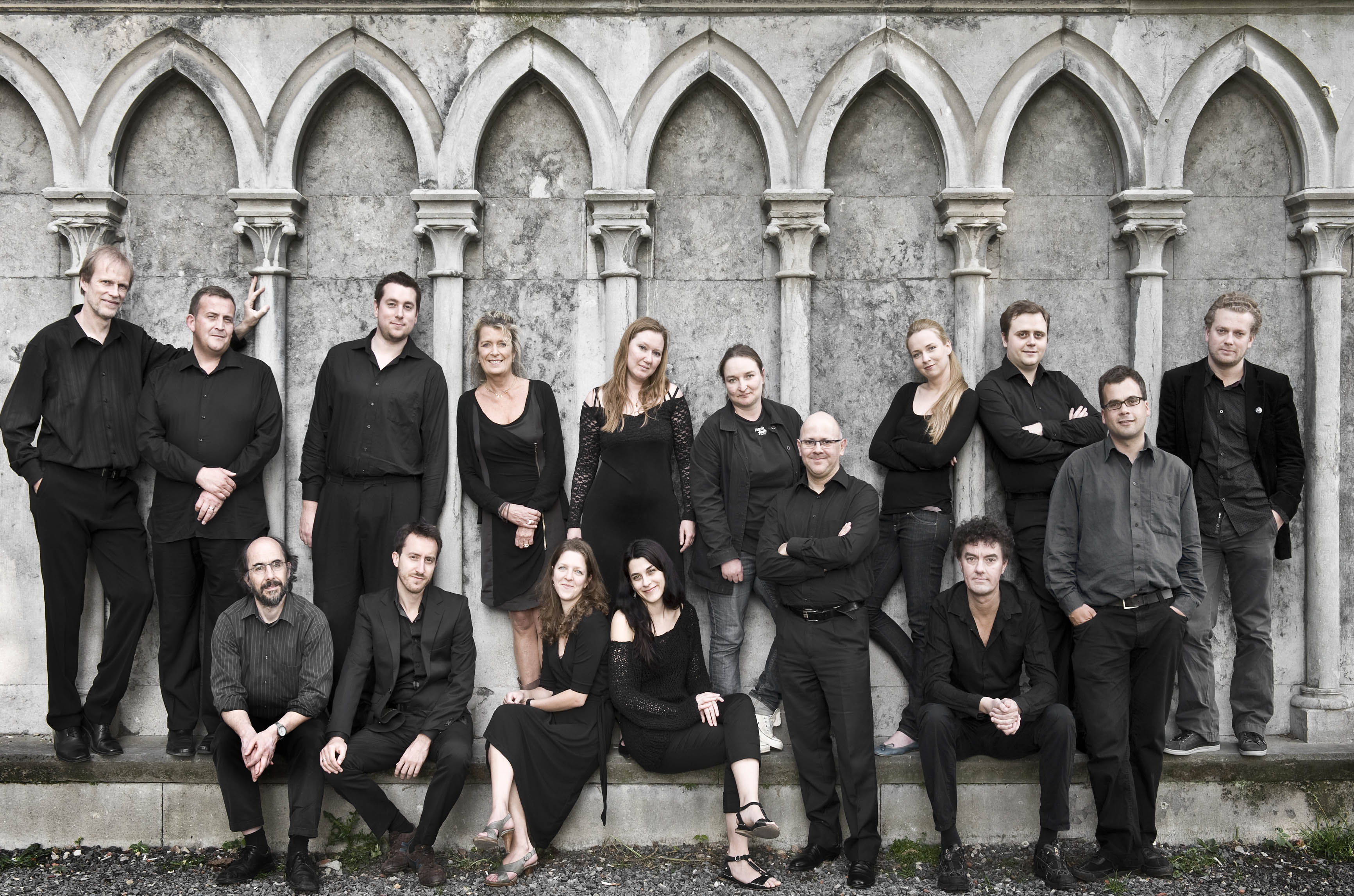
Collegium Vocale Gent at the Barbican review *****

Collegium Vocale Gent, Philippe Herreweghe (conductor), Dorothee Mields (soprano), Hanna Blazikova (soprano), Alex Potter (countertenor), Thomas Hobbs (tenor), Krešimir Stražanac (bass)

Barbican Hall, 14th June 2019

It’s Bach. It’s the B Minor Mass. So of course it is beautiful. But it can be a bit, well, “bitty”. After all the old boy did cobble it together at the end of his life from a few of his greatest hits, probably to impress the big-wigs in Leipzig. Not that you would notice. It is still one of the most sublime works of art ever created. And you don’t need a religious bone in your body to understand that.

So the real pleasure on this special evening was hearing the Collegium Vocale Gent under Philippe Herrewghe deliver a performance that articulated the work as a whole, as well as the individual parts. Crucial given they played 2 hours straight through, (which meant it was too long for any liturgical purpose). PH and the CVG have been perfecting their HIP interpretation of the work for decades. I doubt there is anyone who understands the work better. That means the standard HIP set up of a chorus of just 18 including our 5 soloists who step out, (of the chorus, not with each other), and a band of 24, with strings, timpani, a couple of flutes and bassoons, 3 oboes and 3 trumpets and a horn. And a violone (a kind of viol double bass) to set alongside the dinky organ to augment the continuo. Which means three or four singers to each SATB part expanding to two per part in the Sanctus.

There was nothing forced about the performance. The chorus, soloists and band have no interest in trying to blow the bloody doors off which created a purity of tone that, in the high points, the Kyrie, the Sanctus, Bennedictus ossana, was simply magical. And PH had no interest in forcing the pace, trusting in JSB’s rhythmic bounce and spare lines to make the point. There was no vibrato so that even in the Barbican cavern thee was absolute clarity of tone and Latin text. If you want a great slab of swirling sound then this isn’t the B minor for you. But if you want rhetoric and comprehension then this is the way forward for you. Though don’t for one minute think these 18 voices can’t raise the roof when required.

No doubt a fair few talents have come and gone since the CVG was founded in 1970. But PH has been at the helm throughout. Which shows. No baton. Level with the band. More directing the traffic than keeping the beat, secure in the knowledge that everyone on the stage knows what they are doing. There was a sense that we in the seats were intruding on some sort of private devotion. The two sopranos were perfectly matched, similar in tone, most beautifully in the Christe eleison. Yet the most sublime moments came when individual voices were matched by individual instruments. Violin and soprano in Laudamus te, soprano, tenor and flute in Domine Deus, counter-tenor and oboe d’amore in Qui sedes and bass and horn in the Quoniam.

I loved it. And MSBD, who had already put in a hard days’ work unlike the layabout Tourist, maybe even more judging by the rapturous grin. he sported throughout.

The Pope at the Royal and Derngate review ****

The Pope

Royal and Derngate Theatre Northampton, 13th June 2019

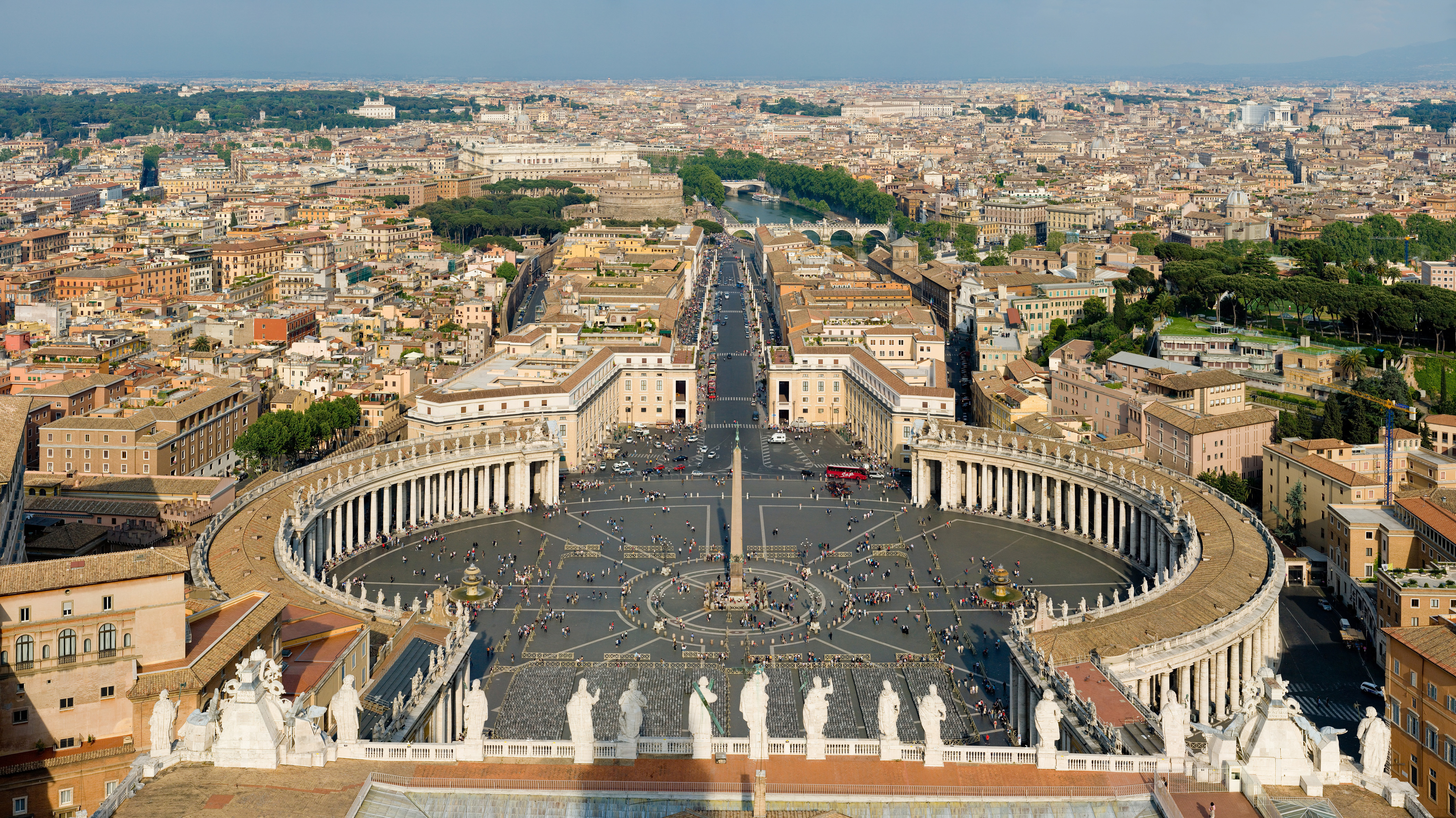
I suspect Kiwi Anthony McCarten has trousered a few quid in the last fewyears. What with writing the screenplay for The Theory of Everything, Darkest Hour and Bohemian Rhapsody. But he has returned to his roots with this play, The Pope. Well maybe not exactly since this is actually going to end up as a film, released later this year, entitled Two Popes,(which to be fair is a more literally correct title), and starring Jonathan Pryce and Anthony Hopkins. Whether these two titans of the stage and screen will match their two peers on show here in Northampton will likely be moot but I can report that this is a cracking story which, whilst packing a powerful dramatic punch, will likely benefit from the expanded breadth and location that film can bring.

Particularly in the first half of the story. The Pope takes the real life “abdication” of Pope Benedict XVI, Joseph Ratzinger, (Anton Lesser) who is then succeeded by the current Pope Francis, Jorge Bergoglio, (Nicholas Woodeson), to contrast the conservative and liberal theological and practical viewpoints in the Catholic Church. When the two meet, after PBXVI summons PF to Rome to tell him of his intention, we get a good old fashioned dualistic debate which, in the hands of AL and and NW is absolutely gripping. In the first half however, when we get to see how each of them “got to where they are now” practically and philosophically, each with the help of a nun sidekick, the theatre is a good bit clunkier.

Even so it is pretty easy to see why Mr McCarten is such a good writer for the screen. There is, once we are into the swing of things, some sparkling dialogue and some properly powerful ding-dong. You don’t have to be a student of the Catholic Church or of religion generally to get the arguments. Of course it helps that Ratzinger is a buttoned up German, brought up in Nazi Germany, and a stickler for tradition, God’s Rottweiler as he was dubbed. He is devoted to Mozart, cabaret and some dog based soap opera (!). Bergoglio in contrast was a football loving, tango dancing Argentinian whose liberation theology was forged during the very dark days of the junta. He has a playful sense of humour, likes The Beatles and, I reckon, an eye for the ladies. And he becomes the first Jesuit Pope.

The regular reader of this blog will know that the Tourist takes a very dim view of organised religion in all its forms, (though he is somewhat hypocritically a massive fan of Christian art and architecture). And those Catholics seem to still be so f*cked up about sex. And cannot seem to confront the stain of abuse. All this angst though provides the ruminative material for Mr McCarten’s thoroughly researched, though speculative, text. The way that the contrasts between the two also highlight their similarities, such that antagonism and suspicion eventually resolves into mutual respect for each other and the bedrock of their shared faith, is a tale as old as the hills. After all it is Ratzinger who wants to break with 700 years of tradition and resign rather than die with his boots on in the Vatican.

Of course whilst Mr McCarten has the knack of drawing you in and pumping you up, he can’t resist, as those familiar with the films above will know, turning the emotional hyperbole dial up to 11. But whilst this occasionally grates it is easily forgiven especially when delivered by two actors of this calibre. I have no idea how Nicholas Woodeson has plotted his career through stage and screen. Maybe he just does what ever he fancies. But he is always bang on the money. Anton Lesser may have more of a classical bent, and I have some very fond early memories of him on the RSC stage, but he is similarly brilliant in whatever he does. It was genuinely thrilling to see him back in a theatre. Watching the two of them knock seven bells out of each other philosophically and then make up in some sort of liturgical bromance was delicious. And all this for less than a tenner.

Jonathan Pryce and Anthony Hopkins will have their work cut out to top this even if one might argue they are even bigger draws. (For my money Anton Lesser and Jonathan Pryce, along with Diana Rigg, Charles Dance and Stephen Dillane, were the very best of the illustrious bunch that showed the way to the newbies in GOT).

Even with these two leads and peppy script the play needed direction though and once again James Dacre was the man for the job. I guess having Paul Dace as your Dad, going to Eton, then Cambridge, and an intensive spell in US theatre, was never going to be a recipe for doubt or apprehension but you still have to admire the young man’s ambition. He may have inherited a space and a legacy from previous AD Laurie Sansom but even so it is easy to see why the R&D continues to scoop regional theatre awards. It might not be too much of a trek for the Tourist from the Smoke to Northampton but for theatre of this quality he would happily sit on a train for hours. Just take this 2019 Made in Northampton season. So far Our Lady of Kibeho (en route to Theatre Royal Straford), the terrific adaptation of The Remains of the Day., a belting Ghosts, Headlong’s Richard III with Tom Mothersdale. Just opening Complicite’s The Last of the Pelican Daughters. To come August Wilson’s Two Trains Running and A View From The Bridge to add to the R&D’s Miller stable. I assume the R&D makes a decent enough turn from all the touring of its productions but I strongly recommend if Northampton is anywhere near you you come join us old folk who still dominate and swell the coffers further.

Whilst the two female supporting roles of Sister Brigitta and Sister Sophia largely serve as devices to illuminate the Popes’ back stories Faith Alabi and Lynsey Beauchamp are as committed as the leads. And no expense has been spared on the elegant set and costumes courtesy of Jonathan Fensom, the lighting and sound designs of Charles Balfour and David Gregory respectively and even the composition from Anne Dudley and the video from Duncan McLean. There is nothing that would look out of place here on St Martins Lane. Who knows maybe after the film, (and the book, did I mention that?), that is precisely where it well end up.

Anna at the National Theatre review ****

Anna

National Theatre Dorfman, 11th June 2019

After a false start, (the indolent Tourist failed to wake up in time on the appointed on-sale day and this sold out fast), a couple of returns were secured so it was off to the Dorfman with MS in tow for Ella Hickson’s latest play. With high expectations given Ms Hickson’s last two outings, The Writer and Oil, both at the Almeida. Expectations that were, largely, met.

I say Ella Hickson but without the sound wizards of Ben and Max Ringham Anna would not have been possible. For, as I am sure your seasoned theatregoers know, the USP of the play is that the audience listens to the proceedings on stage through headphones. The action being set in the modish East Berlin apartment of Ann (Phoebe Fox) and Hans (Paul Bazely) Weber in 1968, expertly designed by Vicki Mortimer. Anna enters in the dark, potters about. Hans joins her, returning from work. They are about to host a party to celebrate Hans’s promotion. Their elder neighbour, Elena Hildebrand (the ever wonderful Diana Quick), joins them before Hans’s work colleague pitch up en masse, including his intimidating boss Christian Neumann (Max Bennett).

Anna is nervous of Herr Neumann and, with a nod to Death and the Maiden, we soon find out why. Or do we? Across the brief 70 minutes or so Ms Hickson pops in a few twists whilst ramping up the tension as the party drinks flow. We are listening in from Anna’s aural standpoint, as it were, so it’s pretty clear all is not what it seems, though to be fair I didn’t see the end coming. Maybe it didn’t quite hang together dramatically but as a way of conjuring up an atmosphere of claustrophobia, surveillance and suspicion, the cornerstone of Communist East Germany, the technology certainly did the job. And just to be sure we embrace the spying vibe. we are separated from the Dorfman stage by a glasss wall.

The cast, especially those aforementioned as well as Nathalie Armin, Jamie Bradley, Michael Gould, Georgia Landers, Lara Rossi and Duane Walcott, all rose to the technical challenge even if they had limited opportunity to get under the skin of the characters. And director Natalie Abrahami, and movement guru Anna Morrissey, deserve immense credit for orchestrating the party. Phoebe Fox has to portray a range of real, and fake, emotions as Anna and sometimes, much like the play itself, which has to support a number of themes inside its thriller structure, doesn’t quite manage to keepit together. But it is still impossible not to get immersed in the story, even if it warranted twice the length, and you never stop marvelling at what the Ringham boys are punching down your lugholes. Not sure I would want to experience theatre this way every day of the week, (the whole point is that this was not a communal experience), but, like Simon McBurney’s The Encounter, you need to try this once.

The Knight of the Burning Pestle at the Barbican Theatre review ****

The Knight of the Burning Pestle

Barbican Theatre, 8th June 2019

The Tourist has fallen embarrassingly behind on his documentation of a cultural life. Ironically because he has been on holiday. Unfortunately for you though this is not (yet) one of those countless dormant blogs, casualties of time and application. So back to early June, the Barbican and the inestimable Cheek by Jowl. But this time the Russian ensemble under the direction and design of Declan Donellan and Nick Ormerod. The last time they visited was 2015 with Measure for Measure, though I venture I recognised a couple of cast members from the rep season earlier this year of the Moscow Pushkin Drama Theatre (on this stage, of course) who make up the CbJ company.

Now The Knight of the Burning Pestle makes a fair claim to being the first work of meta-theatre in the English language. Written by Frances Beaumont in 1607, and first published in 1613, it is a satire on the chivalric romances of earlier centuries, in a similar vein to Cervantes’ Don Quixote, which specifically parodies the work of contemporaries Thomas Heywood, The Four Prentices of London, and Thomas Dekker, The Shoeman’s Holiday. CbJ stick fairly closely in this adaptation to the original plot, though of course, delivered here in Russian with English sur-titles. Which heritage provides inspiration for a further twist. Since before the grocer George and his wife Nell emerge from the audience to berate performers and director on stage, and subsequently promote the acting “talents” of their inept nephew, we are treated to some hard core minimalist European auteur theatre (of the type that CbJ itself excels at). Monochrome, mannered and mystifying, beginning with actors shuffling up chairs in hands, even a few minutes of this leaves the audience feeling like it is going to be in for a long, “high concept”, night.

So that the laughs which come when Alexander Feklistov and Agrippina Steklova, our “low” culture delegates, pipe up, are as much from relief as from the character’s gaucheness in breaking theatrical convention. They want to be entertained (we later find out they couldn’t get tickets for The Lion King!) and demands changes. Our bemused director Tim (Kirill Sbitnev), the spit of Brecht, eventually persuades then to sit stage left and we return to the staging of “The London Merchant” but it is not long before the couple call young Rafe (Nazar Safonov) to the stage and insist he be allowed to act out his own “knight (grocer) errant” role complete wit burning pestle heraldic device, apparently a medieval knob gag.

The actual play concerns the attempted elopement of Jasper Merrythought (Kirill Chernyshenko) and Luce (Anna Vardevanian), who is betrothed to toff Humphrey (Abdrei Kuzichev). The lovebirds dream up a fake elopement scam, Jasper’s long suffering Mum (Anna Karmakova) decides to leave his feckless Dad (Alexei Rakhmanov) taking younger brother Michael (Danila Kazakov), there is some jewellery, a coffin, fights, testing of devotion, but all ends happily. At the same time the hapless knight Rafe gets in on the action, swanning off to Moldavia, rejecting a princess, before, egged on by his employers, giving us his ostentatious death scene.

Amongst all this meta upon meta upon meta conflation, (the set is a rotating cube, each scene is announced by Brecht-like projections, there is live video, obvs, there is a psychedelic-dance-dream routine to thumping techno), the daft story is actually quite entertaining, the crack Russian cast, especially Mr Feklistov and Ms Steklova, actually manage to project real character, and there are a fair few laughs, even if of some of the theatrical in-jokes went over my head. And the serious point about what theatre is for and who “owns” it, audience, writer or performers, is deftly made. Of course the Tourist would expect nothing less from Messrs Donellan and Ormerod. And even if the main, conceptual, joke wears a little thin after a while the whole thing is wrapped up in 90 minutes and thus easily forgiven. Apparently in versions that stick to the original text this can top 3 hours.

Francis Beaumont started out as a lawyer before studying with Ben Jonson no less, and went on to write in partnership with John Fletcher who collaborated with Shakespeare on Henry VIII, The Two Noble Kinsmen and the lost Cardenio. On the strength of this it would be interesting to see a new take on the Beaumont/Fletcher collaborations which generally went down well with Jacobean audiences, in contrast to TKOTBP which bombed apparently as the punters failed to appreciate the irony and satire. Which, if you think about it, probably gave Beaumont a great deal of pleasure given that his play is about the failure of an audience to appreciate the play presented to it. I also wonder what they would make of current popular culture, dripping as it is, with self-reverential, meta-, post-modernism.