Porgy and Bess at the ENO review ****

5415298151_f79aac8ec5_o

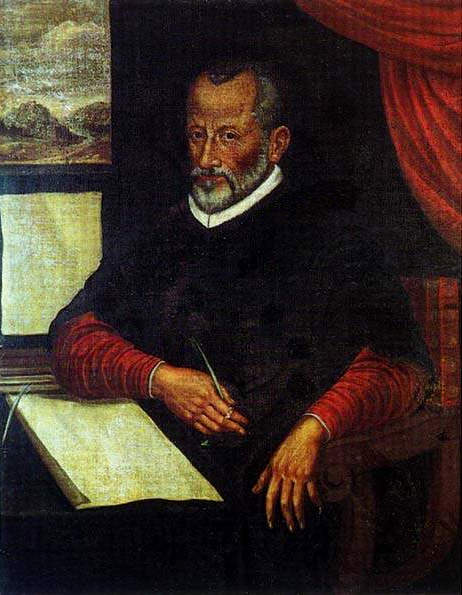
Porgy and Bess

English National Opera, 31st October 2018

It has been a long time coming. This co-production, together with the Met and the Dutch National Opera, is the first time it has appeared on the Coliseum stage. The re-written version, with book by Suzanne Lori-Parks, (which attracted the ire of Stephen Sondheim no less), popped up at the Open Air Theatre a few years ago and I gather that Welsh National Opera staged the Cape Town Opera production transcribed to South Africa in 2009. Prior to that I believe you have to go back to Trevor Nunn’s various tilts, at Glyndebourne in 1986, the Royal Opera House in 1992 and the less than successful musical theatre version, with speech replacing recitative, from 2006 at the Savoy. (Which, I have surmised, was what my special guests for this evening BUD and KCK, must have seen).

You’d think with all those tunes it would be a far more regular feature. On the other hand, one look at the set, and the massed cast at the opening of this production, perhaps reminds you why it is such an infrequent visitor. This must have cost a few bob. And assembling this many fine black singers from around the world, for this amount of time, will have required a patient, and skilled, logistical hand. The ENO has come under the cosh in the last few years, often unfairly in my view, so it is terrific to see that this has been a resounding critical and commercial success with standing room only across the run.

That is not so say it is perfect, at least from where the Tourist was sitting. (Nothing wrong with the view mind, though the old back was playing up a bit). The First Act does go on a bit: a fair few punters took the steamboat whistle as their cue to head to the bar. The chopping and changing of the time signatures in the jazzier parts of the score gets a bit wearing and I wouldn’t have minded if debutante conductor John Wilson has taken some passages at a greater lick. Not to say that he dawdled, just that I am all for brevity and clarity when it comes to orchestral music.

The plot and characterisation is very much of its time, Charleston in South Carolina in the 1920s. Not woke for sure. Even in the 1930s casts and creatives wrestled with the stereotypes that the opera presents. By the 1960s the opera had been pretty much consigned to the dustbin: no-one would perform it. It wasn’t just the characterisation, plot and language that vexed but also the appropriation of musical styles. In the last few decades performers have reclaimed the piece however, notably in South Africa. Ira Gershwin refused permission for the opera to be performed with white casts under apartheid as he and George had from the outset. Their stipulation for black only casts hasn’t always been maintained however, most notably by the Hungarian State Opera in their last season with a predominantly white cast, which looked, on the face of it, like a political provocation.

Having said all that I can absolutely see why the creative team, led by James Robinson AD of the Opera Theatre of St Louis, on his ENO debut, have played this absolutely straight, (and I suspect they always had one eye on the reception from the punters at the Met). Putting the condescension to one side, the characters in Porgy and Bess, even if there are probably too many, are more emotionally rounded than in most opera, and the drama, with its mythic underpinning, more engaging. This in large part reflects the work of Dorothy and DuBose Heyward from whose play and book the story is taken. That doesn’t mean it is without flaw however. Porgy’s seeming accommodation of his poverty and disability, Bess’s total lack of agency and final descent: these require a great deal more exploration than the few lines that opera can offer, especially one where so many other voices are heard. And Gershwin’s music as it slips from folk to jazz to blues to gospel to spiritual to, very obviously in the melodies of some big songs, his own Jewish heritage, doesn’t always match up to the psychology of the character. Say what you like about Mozart and Da Ponte’s plots, when words fall short and music needed to take over, Wolfgang was your man.

George Gershwin’s ability to mix popular, musical theatre with high art classical composition is there from the very beginning of the piece. The jazzy theme for full orchestra that emerges from the frenetic opening, with the entire cast on stage, drops down to a simple piano roll. Then Clara emerges and launches into you know what. If there has ever been a tune that more defines time and place in musical theatre, the bluesy Summertime is it. It’s hot, we are on Catfish Row and, for a lullaby about protecting the child, there is something infinitely sad about it. Which of course there is when it subsequently re-appears later on before the murder of Robbins by Crown and after the fatal storm.

Up to now George and lyricist brother Ira had delivered Broadway musical but George was determined to filter this through European classical modernism to create a unique American opera style, just as Bernstein would in the following decades. They must have got something right in this their operatic debut. The programme mentions an estimate of 25,000 version of Summertime. Billie Holiday, Ella Fitzgerald and The Fun Boy Three in my library. From there on, for all the twist and turns of the music when it stands alone or supports the recitative (and kind of arioso), for all of the musical call-forwards, call-backs and motifs it is the songs and arias that the audience came to hear. Gone, Gone Gone, spirituals My Man’s Gone Now and It Take A Long Pull To Get There, It Ain’t Necessarily So, love duet Bess You Is My Woman Now,, Oh Doctor Jesus, Oh Lawd I’m On My Way., even banjo song I Got Plenty of Nuttin’.  Hard not to be carried away by that lot.

I have said before that I am not up to the task of commenting on the technical skill of the performers and, for me, acting in opera is as important as singing. If I had to pick out individuals then I would plump for Eric Greene’s rich, powerful baritone voice, which builds through the evening, and the poignancy he brings to Porgy. Nadine Benjamin’s sweet, sensitive Clara and Frederick Ballentine’s oily Sportin’ Life also stood out and I was taken with, at our performance, Gweneth-Ann Rand’s noble Serena and Tichina Vaughn’s gritty (acting not voice!) Maria. Soprano Nicole Cabell’s Bess was a little too reticent at times and Nmon Ford’s Crown, complete with rippling torso, a little too brisk, but what do I know. It is though when the chorus and orchestra come together in the big set-pieces, the fights, the murder, the funeral, the prayer-meetings, when the opera really takes off, and this chorus drawn from as far apart as the US, South Africa and New Zealand, was as good as I have heard anywhere. This was when I got the “opera buzz”. I am looking forward to the War Requiem that will follow at the ENO from this chorus.

For all the story-telling, playing, singing and dancing (courtesy of Dianne McIntyre) though, it was the look of the production that was perhaps the best thing about it. The set from legendary American designer Michael Yeargan, gives us the the bare bones of the Catfish Row tenements. The flesh then comes from another legend, lighting designer Donald Holder and the video design of our own Luke Halls, who is about the best in the business. No innovative representation or symbolism here. Sun, rain, water, daybreak, twilight, moonlight, quick time, slow time, public space, private space. All were vividly imagined. Catherine Zuber’s costumes are equally effective. Wheeling out the best of Broadway and pooling the budgets of the three producing houses has paid dividends handsomely. Even the SO to whom plot is everything was bowled over by the look as were keen companions BUD and KCK. We definitely got our money’s worth.

I see that I have a recording of Porgy and Bess, the LPO under Simon Rattle. I don’t listen to it though. I do listen to Miles Davis’ instrumental versions though, which are all over the shop. Not sure what that means. Essence of trumpet maybe.
 

The Australian Chamber Orchestra at Milton Court review *****

mozart_jupiter_finale_final_section2c_bars_389-396_all_five_themes_together

The Australian Chamber Orchestra, Richard Tognetti (director)

Milton Court Concert Hall, 22nd October 2018

WA Mozart

  • Symphony No 39 in E flat major K543
  • Symphony No 40 in G minor K550
  • Symphony No 41 “Jupiter” in C major K551

If you don’t know the Australian Chamber Orchestra then you should. I don’t mean personally one by one. Though I am sure that the 17 permanent members are all excellent people. No I mean that if you have any interest in classical music, or in music generally, for under their director and lead violinist, Richard Tognetti, they cast their net pretty widely for a classical band, you should find a way to see, and hear, them. In their chosen repertoire, primarily large chamber and small orchestral works, whether original scores or those adapted by the mercurial Mr Tognetti, they are well nigh unbeatable, I reckon. It’s the combination of scholarship, musicianship and enthusiasm you see.

There were magnificent last year in the concert I attended (Australian Chamber Orchestra at the Royal Festival Hall review ****) and there were again this evening. Only this time they had expanded their strings core with more strings, woodwinds, brass and percussion drawn from various other ensembles to perform Mozart’s last 3 symphonies, which I defy anyone not to accept are amongst the finest pieces of music ever composed. And the biggest treat for me. The presence of MS whose intellectual and cultural curiosity knows no bounds, but who has been way too infrequent a companion for me at classical concerts. Let us just say that, by the end of the Jupiter, my boy was hooked.

There is plenty of Mozart that passes me by, too nice and too many notes. But not these symphonies, the da Ponte operas, the later piano concertos, the famous wind chamber pieces and various string quartets and quintets. After all you would have to be made of stone not to connect to this. These last three symphonies however are something else because they seem to operate on a higher musical and emotional level. Written in 1788, over a period of just six weeks, we don’t now who they were written for or where they were intended to be performed. His Dad Leopold, who was a big of a control freak by all accounts, had died the prior year. In the last couple of years of his life, Wolfgang was pretty poorly and reduced to begging from mates, but at the time of the composition of the symphonies, he had a decent income from his work at the Viennese Court, his and Constanza were happy and his operas had been a storming success in Prague. I don’t have too much truck with biographical or genius theories of creativity but I think these symphonies, whilst challenging on places, are pretty jolly overall, and there is enough invention to suggest that Wolfgang didn’t just download from brain to stave, however rapid their formation.

39 kicks off with a slow intro a la Haydn but soon perks up as it shifts to a cantilena with trumpets, timpani and descending strings. The second subject is softer, led by clarinets. The slow movement starts tentatively but then gets into a trademark groove as strings and winds each take the lead across three different themes, again with clarinets and bassoons, getting a workout. You might well know the minuet and trio tunes, (even if you don’t as is so often the case with WAM), and you certainly should know the Allegro finale which is as resolutely upbeat as anything he composed. It is easy to see why some smart punters reckon this was his best ever.

40, along with 25, is the only symphony in minor keys, and it is the use of clarinets once again which sticks in the ear (and mind). The Allegro opening, with the violin tune, two quaver, one crotchet, underpinned by pulsing violas, is another WAM classic, only he could have written it. There is a second theme, but you barely register it, such is the brilliance with which this opening tune is tweaked. Violas kick off the slow movement as well but here there are tics and tremors that point to what would have happened if WAM had managed a couple more decades. The minuet that wraps around the trio in the next movement also has its dissonant moments and the final Allegro really breaks the mould, famously, with its twelve note “serial” theme.

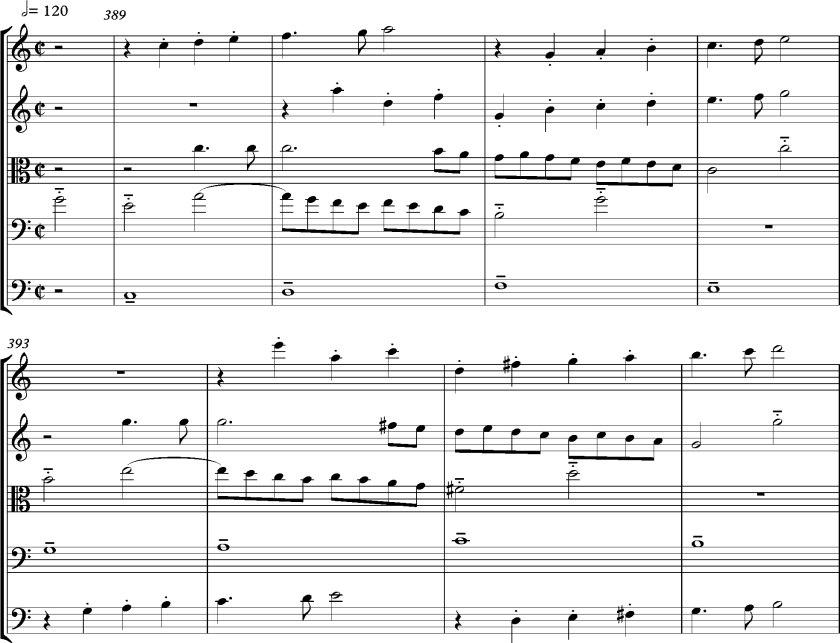
Apparently 41 was unperformed during WAM’s remaining 3 years, and it was a few decades before the world caught up. No clarinets here, oboes and bassoons get to do the wind work, and using the triumphal key of C major. Surely it is no coincidence that Beethoven kicked off his symphonic career in this key. The Tourist yields to no man (or woman) when it comes to the all time greatest, that’s LvB, but with 41 at least I get why some favour Wolfgang. From the jokey military demeanour of the opening movement through sweet mystery of the Andante, to the deceptively simple dance movement and into that “fugal” finale, which is as good as it gets, it is a marvel. Five themes, all magically locked together, by the end. There it is above. Seems so simple doesn’t it. It doesn’t sound it though.

It certainly pumped up MS as I said, and the Australian Chamber Orchestra, wasn’t in the mood to hold back. Richard Tognetti is known for the drama and intensity he brings to performance and the ensemble, including guests, rehearses to within an inch of their lives as far as I can hear. The strings, literally, play as one and their is no room for any mawkish vibrato. HIP on mostly modern strings with period winds and brass suits me. The tempi are quick throughout and the phrasing is muscular. Right up my street. Mr Tognetti and the band have been playing the last three for over 25 years. I reckon they’ve nailed it.

The Habit of Art at Richmond Theatre review *****

richmond_theatre_2013-09-23_20-19-48

The Habit of Art

Richmond Theatre, 19th October 2018

There are a handful of plays that I regret not seeing when they first appeared. Not those I wish I had seen, That would be a very long list and cover those periods where I was not putting the required viewing effort in, being too consumed by work and/or drink. No I mean those where I toyed with the idea of going but didn’t get round to it one way or another. The Habit of Art is definitely one of those. I can see why some might get irritated by the voice of Alan Bennett. Not his actual voice of course. Surely everyone loves that unmistakable broad Yorkshire drone. No I mean his theatrical voice with its now ever-present risk of self-parody.

The Habit of Art, from 2009, along with The History Boys (2004), The Lady in the Van (1999) and The Madness Of George III (1991) must all surely rank somewhere near the top of the pile of great British plays written in the last three decades for all the pervasiveness of the last three.  The Habit of Art “imagines” a meeting between WH Auden and Benjamin Britten in 1973 as a departure for an investigation not just into their specific art and lives but into art and theatre as a universal. Right up my street. And best of all for me at least, Benjamin Britten, for all his flaws, which are far from concealed here, is one of my favourite composers.

My only concern then, perhaps, was the cast. The NT run saw Alex Jennings, near full time Alan Bennett impersonator, take on the role of BB with the sorely missed Richard Griffiths as WHA having stepped in for the indisposed Michael Gambon, which I gather was more than fortuitous. You can take your pick as to your favourite Richard Griffiths role: in Potter, as Hector in The History Boys or as Henry Crabbe. I have two words for you though: Uncle Monty. As for Alex Jennings. Is there nothing this man cannot play? There are literally no duff roles or performances on his CV. The last thing I saw him in on the telly was Unforgotten Series 3. As chilling sociopath doctor Tim Finch. Sh*tting ‘eck as AB might say.

Anyway Matthew Kelly as WHA and David Yelland as BB, and indeed Philip Franks as director of this production, Nick Hytner (who else) having directed first time round, had big boots to fill then. And fill them they did. And then some. This is the first ever revival and I can report that it is really very. very good. And don’t just take my word for it. TMBOAD can vouch for it as well, my viewing partner on this evening, and he is one of the cleverest people I know. Ditto some elegant and cultured Richmond ladies of my acquaintance. The production, in addition to Richmond, has popped up in York, Brighton, Salisbury, Oxford, Guildford and Ipswich. It is in Liverpool as we speak and goes on to Cambridge, Coventry, Salford, Southend and Malvern. Residents, you would be mugs to miss it.

Richmond Theatre doesn’t always get the best of touring productions but here they struck gold. The Original Theatre Company, led by Alistair Whatley and Tom Hackney similarly didn’t quite hit the nail on the head with their last outing, Torben Bett’s Monogamy (Monogamy at the Park Theatre review ***) but on this outing I should look out for their next production at the Park. Richmond also hosts pre West End fare. I can’t think of anything more suited to the West End than this brainy, but not too brainy triumph.

Anyway what about the play. Well as I should have pointed out Messrs Yelland and Kelly don’t actually play BB and WHA. For the players are actually Fitz (Kelly), Henry (Yelland), Donald (John Wark) and Tim (Benjamin Chandler), who are rehearsing a play called Caliban’s Day. The play is set in WHA’s rooms in Christ Church Oxford on the set (keep up) of said play with Company Stage Manager Kay (Veronica Roberts) and her Assistant SM George (Alexandra Guelff) keeping the luvvies, and precious playwright Neil (Robert Mountford) ticking over.

Neil’s play draws it’s title from WHA’s contention that The Tempest was incomplete and requires an epilogue. In the play Donald, playing Humphrey Carpenter, the real-life biographer of WHA and BB amongst others, has come to interview the somewhat impatient WHA (played by Fitz), who it transpires, confuses him with the time-limited rent-boy Stuart, played by Tim, that he has procured. Donald also though steps out to narrate proceedings. Henry as BB arrives to join the set-up. He has been auditioning boys to play the part of Tadzio in BB’s Death in Venice, but wants to discuss his concerns over its plot with WHA, despite them not having met since their falling out 25 years earlier in America after WHA wrote the libretto for the somewhat derided Paul Bunyan. WHA though assumes that BB wants him to replace Myfanwy Piper as librettist for Death in Venice. After his father-in-law was Thomas Mann, the author of Death in Venice.

Neil’s play however, as I said, is in rehearsal so we have Kay kicking things off before Neil arrives and her and George standing in for various minor roles. notably two cleaners. The actors constantly bounce in and out of character, though never confusingly, and this is what allows us to see into them as individuals, as well as into the process of acting and performing. At the same time the play itself and the discussions between the actors. Neil, Kay and George, about what it is saying and why, offers multiple insights into BB and WHA, their art and the society in which they practiced their art. Alan Bennett doesn’t hold back from showing what it meant to be a gay artist through the middle of the C20 nor the paedophiliac controversy that surrounded BB.

Now normally with this much learning on show, play within a play meta-ness, theatrical self-referencing, in fact all round arty-farty pretentiousness, you would be a) rightly very wary and b) waiting for the whole thing to unravel . Not here though and not with Alan Bennett pulling the strings. It is very, very funny, (this time the smut isn’t laboured), but also very, very sincere. It dazzles with just how much intellectual and emotional ground it covers yet never fails to entertain. Even if some of the references pass you by, they did me, the perspicacity of the insight into the “cast” will not. And being a play about an “event” it moves from A to B.

I have seen Matthew Kelly, “tonight Matthew”, on stage in recent years in Richard Bean’s Toast, and for about 20 minutes before rain stopped play (ha, ha), at the Open Air in Pride and Prejudice. He makes for an excellent Fitz, fruity and cantankerous, but still vulnerable, qualities that segue into WHA but with the intellectual spotlight switched on to full intimidating beam. An actor playing an actor playing a man who relished playing the role of artist. David Yelland’s Henry,  like BB, is more tentative, more restrained, who then takes on the needy, sickly and child-like BB and his “obsession” with innocence corrupted. Their debate about Britten’s obsessions in his art, as well as Auden’s creative regrets, are what drew me in the most but I am sure you will find your own point(s) of contact.

Robert Mountford shows us Neil’s exasperation with actors who wish to distort his precious script. Veronica Roberts expertly shows us how much, in this case, maternal nourishment is required to bring a play into being but also shows us how Kay rues her own missed opportunities. John Wark gets to reveal, at one point with surreal humour, just what happens when an actor tries too hard to look for meaning in character.

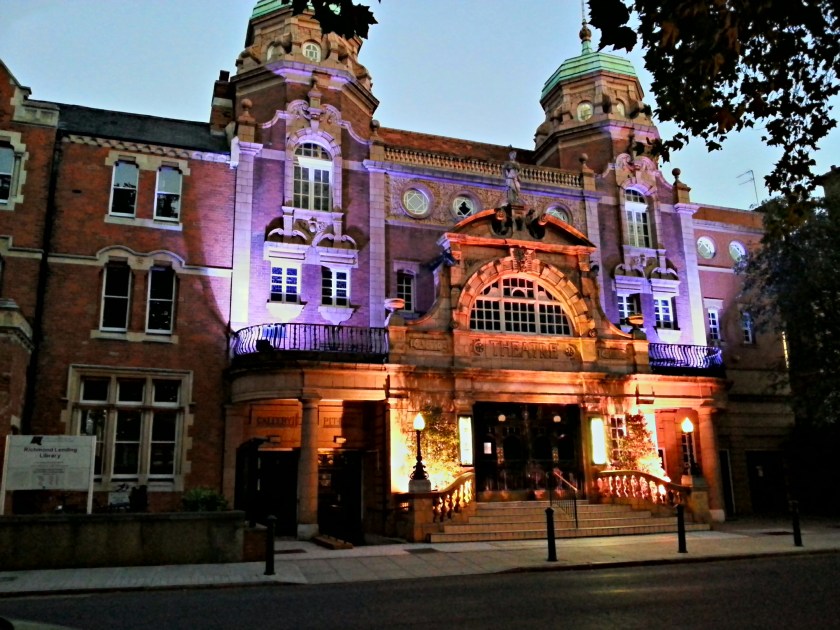
It is hard to imagine a more appropriate set that Adrian Linford’s rehearsal space, with rough cut scenery and busy props, fitting into a classic proscenium stage, which Frank Matcham’s Richmond Theatre jewel (there she is) perfectly frames in a nod to the play itself. Philip Franks’s direction makes everything perfectly clear, no mean challenge as you might surmise from the above.

By some margin my favourite Bennet play. Mind you next up Mark Gatiss and Adrian Scarborough in The Madness of George III. This is showing live at cinemas but I see there are more than a few tickets left at the Playhouse. So students of Nottingham University. amongst others, save your beer money and go see this instead.


BBC Symphony Orchestra at the Barbican review ****

20150227_150301ae-spco_frost

BBC Symphony Orchestra, Sakari Oramo (conductor), Martin Frost (clarinet)

Barbican Hall, 17th October 2017

  • Dmitry Shostakovich – Symphony No 9 in E flat major Op 70
  • Aaron Copland – Clarinet Concerto
  • Sergei Prokofiev – Symphony No 6 in E flat major Op 111

Vikings, stave churches, Celsius, Bohr, Angstrom, Ibsen, Strindberg, Laxness, Kierkegard, Nielsen, Sibelius, Greig, Munch, Balke, Olafur Eliasson, ABBA, Bjork, Bergman (x2), Lars von Trier, Ullman, Sofia Helin, Mads Mikklesen, Kim Bodnia, the laconic Kimi, Schmeichel (P), Salonen (EP), Lego, IKEA, SAAB, zips, mobile phones, seat belts, loudspeakers, Alvar Aalto, Arne Jacobsen, art glass, Georg Jensen, BIG, arket, meatballs, herring, saunas, Gamla Stam, Djurgarden, Tivoli, that Bridge, Roskilde Cathedral, Uppsala Cathedral, Copenhagen Opera House, Temppeliaukio Church. There’s a few of my favourite Scandi  people and things. And that’s before anything from the natural world. And doesn’t include those Scandinavians I would count as friends. There are good reasons why Scandis are generally pretty pleased with themselves, though not in a wanky kind of way. They have much to be pleased about.

Anyway it turns out that there is an organisation for promoting the Scandinavian countries and their culture. CoScan. The Confederation of Scandinavian Societies. And every year since 1994 it has given an award to recognise the contribution of an individual. body or group on the international stage. Previous winners have included Sandi Toksvig, Magnus Carlsen (the best chess player in the world), Hans Blix, The Nordic Optical Telescope, that Bridge and Mika Hakkinen. This year was the turn of Finn Sakari Oramo, the Finnish Conductor of (amongst others) the BBC Symphony Orchestra. Presented on this very evening. Good on you Sakari. He seems like a thoroughly decent bloke and we here should be eternally grateful for the musical contribution he has made, especially to the Proms (five this year alone). He is a whizz across much of the Scandi composer repertoire, but especially Carl Nielsen, whose symphonies and, especially string quartets, don’t get enough of an airing IMHO.

in this programme he also wheeled out three works that should be performed more often. DSCH’s 9th may not be down there with the weird and whacky modernism of Nos 2 and 3 and the overly patriotic, fim-scorish 12th, but it does get neglected. Copland’s jazzy Clarinet Concerto is one of his favourites and was written for Benny Goodman but is pretty tricky so needs a top-notch soloist to do it justice. And Prokofiev’s 6th Symphony is rated by enthusiasts of his work but it is 1 and 5 that get trotted out most often.

So this seemed to me to be well-worth the effort. Which it certainly was. All three works come from the immediate post WWII era, and a scary time personally for DS and SP, but they are far from completely gloomy, at least in places.

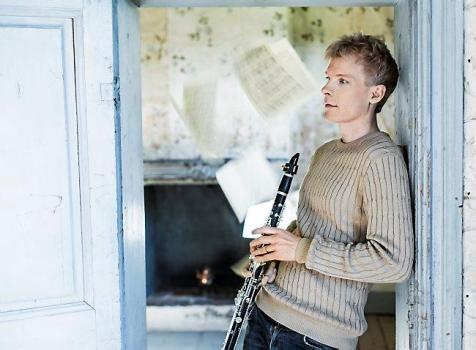
Copland’s concerto is genuinely untroubled, and was premiered by Goodman in 1950. The slower opening drops straight out of Copland’s Americana, specifically Appalachian Spring, kicking off with low strings and harps, against which the clarinet meanders, with the violins then following. Just like the sad scene when the love interest dies in a Western. It then jumps into what seems to me to be a fiendishly tricky cadenza, fully written out, which Martin Frost, doing that curious Pied Piper jig that woodwind soloists seem to adore, made look simples. Of course maybe it is. What would I know. I got booted out of recorder practice at school on the grounds of persistent ineptitude. It ends with a fortissimo scale from one end of the clarinet range to the other. Amazing. Straight into the faster, final section, with all sorts of string effects like a sort of mega Bartok quartet. More showing off from Mr Frost with a jazz jam to finish. He encored with a klezmer arrangement from his brother Goran which near brought the house down. There he is above looking suitably impish. Frost is a good name for him.

DSCH initially promised a big splash for his Ninth, with soloists and chorus, just like you no who. Shostakovich being Shostakovich though what he actually served up was a five movement, small scale (by his terms) joke, which barely gets over the finish line. Obviously he has form with odd, almost embarrassingly jejune structures, and musical satire, as much as he could get away with, witness the Sixth, but here we have what I read as an entire flippant f*ck you across a whole symphony. Maybe not just to his political masters but also to the music world in general. Everything he is routinely accused of is there but recast in a sort of Haydn-esque jollity. Scurrying strings, whistling woodwind, boy soldier drums, farting brass fanfares, an abrupt “I’ve done enough” concluding chord. And that’s just the first movement. The second movement is one of those desolate stalking Moderatos but never plumbs the depths and the screaming strings never come. The scherzo lollops along but with no repeat slows into the regulation Largo with doomy fanfare and bassoon lament which as always for me at least conjures up the battlefield dead. But again it is on a tiny scale. This is the sort of movement DSCH can crank up to 20 minutes plus. This is all over in four. The symphony ends with a quick movement which kicks of with a folksy little lick which builds up and eventually dashes over the line to the close. The whole thing is like some child’s Toy-town version of a DSCH symphony. Oramo and the BBCSO, correctly, didn’t attempt to make a case for profundity, taking it straight. I loved it.

Once again I found myself being really taken with a major Prokofiev piece that I had dismissed previously. It is the most symphonic of his symphonies, the most expansive and the most, dare I say Shostakovich-ian. It does occasionally start to go a little too C19 Romantic on your ass but there are enough of the trademark SP lurches and new twists to forestall tedium. So, like DCSH, got himself into a lot of bother with Stalin’s “realist” henchman by being a sarky, modernist clever clogs. The difference is SP actually came back to Russia to face this, er, critical music. He liked to satisfy his customer but the iconoclast in him could never be entirely suppressed. The Sixth, as a commemoration for the war dead was initially OK’d by the authorities but then, in 1948, censured.

The first movement kicks off with a couple of lazy themes led by strings then oboes before snapping into gear with a third, more forthright chanting theme, set against a tick-tock rhythm, which revives the first theme and sets up a massive tutti climax. A mixture of Mahler, Shostakovich and Saint Saens, it collapses into horn squeals, then all three themes are reprised. As usual with SP it lurches around a bit but has some great colours and sounds. It can probably turn into a bit of a grandiloquent mess in the wrong hands but I reckon Mr Oramo, by cracking on, get it about right.

The second movement Largo starts off with a series of big, chromatic gestures, but with some swinging brass, a bit like Wagner loosened up and had a nice long toke. Then we move into a kind of dreamy, lyrical reminiscence, all Hollywood love story, which breaks back into the tick-tock march of the second theme, before the first is reprised, in size. Overall this movement is genuinely unsettling.

As, in some ways, is the final movement marked Vivace, but only because it kicks off in perky neo-Classical vein. Though the bass line is anything but gallant, thumping away angrily, and backed up with percussive piano. The second idea is another jolly scamp led by woodwind, then rising strings, but this time with the tuba doing its best to create havoc. Gradually the dance starts going off-kilter, the fun peters out, and nasty stuff jumps out. The chant from the first movement returns now over the percussive thuds and deep brass fanfares. A major triad to conclude. Happy and triumphant it ain’t.

Very convincing. I have subsequently revisited the work listening to a couple of Russian orchestra performances. It wasn’t just Sakari Oramo and the BBCSO who nailed this. It really is a terrific piece of music. I think I am properly converted to SP’s world. That’s the thing with “high” art. You just need to put the hours in.


Southbank Sinfonia and Vladimir Ashkenazy at Milton Court review ****

sergei_prokofiev_04

Southbank Sinfonia, Vladimir Ashkenazy

Milton Court Concert Hall, 16th October 2018

  • Edvard Greig – Holberg Suite
  • Sergei Prokofiev – Symphony No 1 “Classical”
  • Ludwig van Beethoven – Symphony No 7

I am very partial to Vladimir Ashkenazy’s musicianship. Especially his way with Beethoven and Chopin on the piano. I gather the cognescenti think he is a bit bland and a tad direct. I disagree. I can’t be doing with all that showy rubato. I want to hear Chopin’s, and especially Beethoven’s, notes. He is best known for his Rachmaninov but I can’t be doing with all that syrup and I probably need to find out if he is my way into Scriabin.

Anyway he doesn’t play piano live any more but he is still an inspirational, and energetic in his 81st year, presence on the podium. And here he was with the Southbank Sinfonia where he is Patron. The Southbank Sinfonia is an orchestral academy which each year brings together 33 young musicians, supported by a bursary, to provide an opportunity and plenty of hands on experience from which to launch into their professional career. There have been many successful alumni since the initiative was launched by Music Director Simon Over in 2002. They are based in St John’s Waterloo, (London, not Liverpool or Canada, that might be an expensive trip), and offer excellent rush hour concerts each month for any of you classical curious.

They are an impressive and enthusiastic bunch and I rarely miss an opportunity if convenient to hear a Beethoven Seventh, it being, along with Vivaldi’s Four Seasons (scoff if you like but it won’t change my mind), Bach’s Partita No 2 for violin, Britten’s Serenade, Holst’s Planets, Mozart’s Jupiter, Ligeti’s Etudes, Monteverdi’s Vespers, Part’s Speigel am Speigel, Steve Reich’s Drumming, Shostakovich’s Eighth String Quartet, Stravinsky’s Rite of Spring and Tallis’s Mass for 5 Voices, the greatest works of classical music. The Seventh is the best of all though. I am now remembering the interpretation from Kirill Petrenko and the Berlin Philharmonic at this year’s Proms (No 68). Pardon my French, but f*ck me that was about the most exciting musical experience I have ever had, up there with Led Zeppelin at Knebworth and the Bunnymen in their pomp.

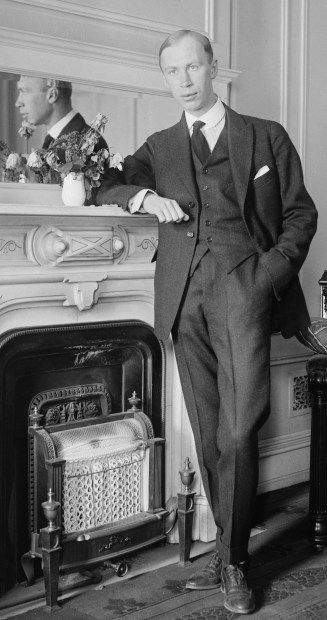
Anyway VA and the band delivered a very palatable rendition here, though the first movement was a little plodding and the last a bit unkempt, which the audience lapped up. As they did in the Greig. I had only heard the Holberg Suite once before, (with a quick revisit ahead of this). It’s neo-classical feel, an introduction then four dances, is attractive and Greig can conjure up a tune but it’s not really my bag. My regular reader will know that I have an ambivalent attitude to the boy Sergei, (there he is above looking well dapper), but that I am being increasingly persuaded. The First Symphony though is always a joy though, and being so, and because its all over in less than 15 minutes, it does pop up quite a lot in concert programmes.

Now we know that Prokofiev, even before that magpie Stravinsky, was on to the Classical, what with this First Symphony and his love of Haydn. Anyone with half an ear should love Haydn after all. It kicks off with a Mannheim Rocket, the same eight-note ascending arpeggio figure that Mozart uses in the finale of his G minor Symphony No 40 and Beethoven employs in the Scherzo of the Fifth. Way to go Sergei. The opening allegro keeps off in D major but soon bobs its way along into C. Come in anywhere and you could be listening to Haydn or Mozart, only just slightly off-kilter. There’s a rousing tutti about half way through then back to the scurrying. The second movement marked larghetto has a delicate string melody set against one of SP’s typical tick-tock rhythms. A brisk bunny hop. It could be early Beethoven. The third movement is a short plodding French gavotte, backed by characteristic drone, not the elegant minuet and trio of the genuinely Classical. If you think you’ve heard it before that’s because you have as it crops up again in Romeo and Juliet the ballet. Full on foot-tapper. The rousing finale races around the orchestra, the love child of a Shostakovich scherzo and a Beethoven rondo, wth sweet woodwinds, much like the finale of the Seventh.

So nice programme, enthusiastically, if not always entirely accurately, played, drenched with Mr Ashkenazy’s customary enthusiasm.


English Touring Opera at the Hackney Empire review ****

Henry_Purcell_by_John_Closterman

English Touring Opera

Hackney Empire, 12th October 2018

  • Purcell – Dido and Aeneas
  • Carissimi – Jonas
  • Gesualdo – I Will Not Speak

I am partial to English Touring Opera’s productions. The repertoire tends to be up my street, with a bias to smaller, chamber and Baroque works, reflecting resources and logistics. Suits me. I can’t be doing with all that C19 showy stuff. Last year’s Giulio Cesare went on a bit, but that’s Handel for you, their take on Monteverdi’s Ulysses in 2016 was a corker, and I recall a Coronation of Poppea and Albert Herring a few years ago (before I kept track of stuff). And the Hackney Empire is like a favourite old aunt, if I had been born into circles that had such things.

This also was another opportunity to expand BUD’s opera education after the very successful Mozart forays, and the rather more muted reception to Britten. Now spare a though for the poor chap who is, like all the other economically productive people around me, working far too hard. When capitalism had the bright idea of separating work and leisure time, thereby ensuring we worked harder to make more money to spend in our ever decreasing leisure time, it cannot have foreseen just how clever the wheeze would be. Especially when so many of us are both labour and capital simultaneously. Anyway it meant that he was a little bushed and, with the Empire not too sure where to pitch the internal temperature in these climatic tipping point times, it was a bit close in the auditorium. I have put myself through many hours of training in London’s less comfortable venues so this was water off the proverbial, but even so I have to admit to skirting with drowsiness, notably in the Gesualdo.

Which is a shame, as in some ways, this was the most interesting of the three part programme. Director James Conway, and the eight soloists on stage on this evening (see below), tell the story of Gesualdo’s life, interspersed with various of the responses from his Tenebrae setting, a handful of relevant madrigals, poems by Southwell, Donne, Herbert and some other religious stuff. Now as you no doubt know Gesualdo had a bit of a temper on him and got himself in a bit of a tizzy with pain, agony, ecstasy, love, death, passion, blood, honour, violence, sorrow, religious fervour, torment, being forsaken and the like. And above all by guilt. That’s Catholicism for you. These texts captured all of that and more, being helpfully relayed through sur-titles. A dark, reflective set, atmospherically lit by candles, black costumes and some prudent choreography all helped the mood of the piece. Gesualdo, a dark presence in another, somewhat perplexing, recent entertainment I attended (The Second Violinist at the Barbican review ***), seems to exert a powerful hold on us devotees of early music.

I had bigged up all of the strange dissonances, out-there chromaticism and dark intensity which pervades the prince’s compositions, but as it turns out, BUD took it all in its stride. As did the Old Street Band, here under Jonathan Peter Kenny. Maybe they could have been a little wilder and more sympathetic to the text, and they seemed to me to be more comfortable in the Purcell and especially the Carissimi, but overall, this “I Will Not Speak” is not to be missed if Gesualdo floats your boat.

Giacomo Carissimi was an important chap in the development of vocal music in Europe in the early Baroque, and the dominant player in Rome. He was all over motets and cantatas but he really excelled in the oratorio, basically inventing the form. He was to religious choral music what Cavalli was to opera. (I appreciate that only in very limited circles will that mean anything at all). His big break came when he was appointed chapel master at Collegium Germanicum, a Jesuit bastion of the Counter-Reformation, in his early 20’s where he stayed for the rest of his life.

Now think of an oratorio as a biblical opera without action. Mind you here we got a bit of staging courtesy of designer Adam Wiltshire and the excellent lighting of Rory Beaton and some stylised choreography. You probably know Jonas by his more common moniker of Jonah, so I won’t bore you with the detail of the story. Naughty Niveveh-ians up to no good. God to Jonah “sort them out”. Jonah runs away. Storm. Sailors chuck him overboard. Unpleasant fish/whale belly short break gets just one star on TripAdvisor. Big belch. Washed ashore. God sends him back to Nineveh. This time they promise to be better. Thanks merciful God. Jonah throws a hissy fit and he and God have some sort of “my job is worse than yours” tiff.

So all the standard “behave yourself or else” merciful/vengeful God parable stuff. What is interesting is the way Carissimi employs really quite simple musical structures, (and dumps the last part), to bring the words to life and to convey the silly/substantial story, (depending on your point of view). And he really doesn’t hang about. It’s all over in 20 minutes. Put this, and his more famous Oratorio Jepthe, on one CD and there’s still space for a filler. Now it is made up of some fairly dryish recitative, but there is enough solo melody, some duets and trios, and small chorus, as well as instrumental breaks (sinfonias)  to add flavour, and to show why he became such an influence on later composers notably Charpentier. Don’t expect the funky mash-ups and luscious chromaticism of Monteverdi, this is straight-laced by comparison, but it is very effective and very moreish. It shows just how the voice and instruments could be combined in the service of drama in a way that the barrage of sound that was the polyphony of the previous century never could.

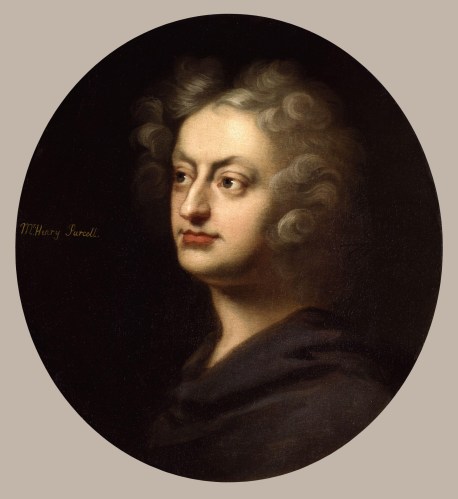
Of course this all went up a notch, actually well past 11, three decades later when the boy wonder Purcell gifted the world the score of Dido and Aeneas, the ill-fated lovers from Carthage and Troy. There is his cherubic little boat at the top. It is an undeniable fact that Purcell’s opera, with Nahum Tate’s libretto, lacks a bit on the plausibility front. Dido works herself up into a right lather, for no good reason, at the prospect of her bloke going off to war. I guess you could argue she is emotionally damaged, maybe even depressed, from the off, but that requires an awful lot of intellectual back-filling.

For this we probably have to thank the forces of anti-Catholic propaganda. No camp sorceress in Virgil’s original remember so Tate fiddled with plot in his play, The Enchanted Lovers,  on which the libretto is based to curry favour with the Court. And why not? They had to earn a corn.

There are also a fair few tonal shifts, with plenty of upbeat numbers amongst the tragedy and an ambivalent approach to Dido’s virtue. All of this perhaps reflects its genesis in a country where the masque, and plays, pre and post the Restoration (for which HP wrote lots of music), were been the dominant dramatic forms. Merrie Olde England, always wary of those suspect Continental innovations, like opera. This ETO production, which I have to say looks superb, thanks to the aforementioned Messrs Wiltshire and Beaton, is set in Jacobean times, think Dowland and later Shakespeare, several decades before the opera was first performed and a time when melancholy (cue our mate Gesualdo) and magic (James I wrote books on it) were all the rage. Worked for me. The staging I mean, not the belief in the spirit world.

Who cares about the structure though with music as ravishing and so perfectly matched to the voice as this. Which is after all what Purcell was all about. Now I can’t lie. I can only take so much singing in classical music. So all those odes, anthems, hymns and songs, whilst attractive enough on first listening, do fade a bit from memory. And, to be fair, I couldn’t tell which suite, fantasy, trio sonata, overture, air, minuet, blah, blah, blah is which in HP’s oeuvre. But what I do know is pretty much anything you will hear by Purcell will provoke an immediate, and very direct, response. I cannot be doing with the “genius touched by God” theories of artistic accomplishment but it is hard to deny some composers just “had it”. Everything just makes sense from the first listen of the first bar. HP was one of them. (Mind you living just down the road from Westminster Abbey and having a musically well-connected uncle probably came in handy). There are those who would have you endure a world of maximalist complexity in order to render you worthy of “appreciating” “Classical” music. Ignore them. Rhythm and the dance is where it’s at.

So this, his only “proper” opera, was his finest hour, literally. Like I say don’t dwell too much on the clunky dramatic devices and half-baked classicism and just listen to those amazing sounds. HP’s music can make fake emotion seem real. There are a few operas that people who have no interest in opera should go see and listen to. Dido and Aeneas is one of them. No need to change your view on the art form, I that a lot of opera is piffle, just don’t spend a life without this one. Without the music it is just nonsense, (though don’t blame the Greeks, it is the Renaissance trivialisation and prettification that is to blame). With the music it is transformed.

HP’s opera didn’t come out of nowhere, owing something to his bestie John Blow’s D and A and, more obliquely, Cavalli’s Didone (which also has a lament for dizzy Dido). HP may have delivered up what his conservative patrons demanded but he was aware of musical developments across the Channel even if he didn’t study there. After all, post Restoration, England was awash with French and Italian musicians, who brought us the Baroque bug. (You see Brexiteers, we have always benefitted economically and culturally from them furriners, even importing a few to sit on our throne if we didn’t fancy the home-grown alternative). Here Dido and Aeneas kicks off with your standard two part French overture and its best known tunes, including you know what with its stepping ground bass, are Italian style arias. HP delighted in gentle dissonance, splashes of chromaticism, sighing falls and minor thirds, all audible in Carissimi, amongst others. Yet he also favoured one of Tallis and Byrd’s gifts to the world, false relations, a “natural” note and its “sharps” played simultaneously.

HP, as far as I can tell didn’t live fast, but he did die young, maybe through TB or maybe, in a slightly more rock’n’roll way, after being locked out by his missus following a night on the lash. We in GB have always been convinced of his greatness, and our American cousins agree, but this may reflect the fact that we came up short on the composer front until, IMHO Benjamin Britten came along. BB obviously worshipped HP. So should you.

  • Susanna Fairbarn – Soprano
  • Alison Manifold – Soprano
  • Sky Ingram – Soprano
  • Benjamin Williamson – Countertenor
  • Jorge Navarro-Colorado – Tenor
  • Richard Dowling – Tenor
  • Nicholas Mogg – Baritone
  • Frederick Long – Bass


Holst’s The Planets: BBCSO at the Barbican review ****

pia03153

BBC Symphony Orchestra, BBC Symphony Chorus (women’s voices), Professor Brian Cox, Ben Gernon

Barbican Hall, 29th September 2018

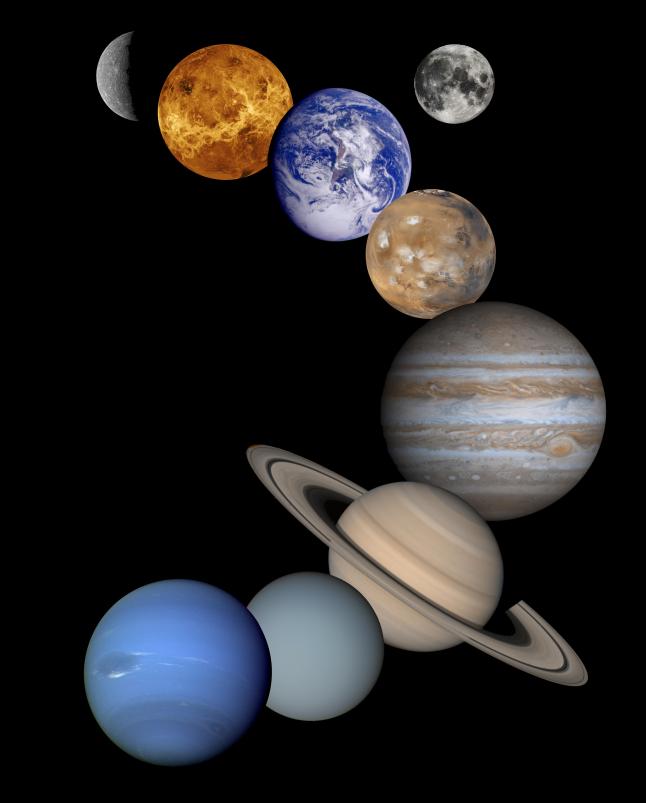
I wasn’t quite sure of what the format would be for this performance of Holst’s The Planets. Maybe a quick intro from our most famous and telegenic physicist, then a work-out for the BBCSO under Guest Conductor Ben Gernon, with a few unspecified other repertoire to be tacked on. What I hadn’t bargained for was a full-on lecture preceding each of the seven movements with state-of-the-art slide-show accompaniment showcasing some of the most famous images of our solar system.

It was therefore a very pleasant surprise. The Hall was packed to the rafters and, this being The Planets with a famous bloke off the telly, there was a far more diverse audience than you normally see at the Barbican or the South Bank. And my, my, did I learn a lot. Although I confess I can’t remember it all. The point is that Prof Cox, with his dulcet Manc tones, his child-like enthusiasm and his preposterous hair-cut is just the man to show us how the latest scientific understanding of our solar system, drawn from all that hard- and soft- ware sent out over the last four decades to examine it, both connects to, and contradicts, the more mystical and conjectural view prevalent in the early C20 when Holst wrote his masterpiece.

Holst, with his attachment to English folk-song and Eastern mysticism, was a curious fellow in some ways. Swedish extraction, frail constitution, mates with Vaughan-Williams, teacher at St Pauls Girls School, as fancy as it gets even then, nice gaff looking over the Thames in Barnes, committed socialist. An interest in theosophy, a right rag-tag of funny ideas as far as I can tell, but which had quite a hold over the Western creative community in the inter-war period.

His music is pretty curious as well. Uncertain tonalities, modal expressions, the kind of counterpoint more typical of medieval forms, irregular and often belting rhythms, ear-catching dissonance. It all tumbled out in The Planets, which itself it as big a subject as you can imagine for programmatic music. No surprise that it was such a success when finally completed in 1917, bolstering his career and reputation, and no surprise it is so popular today. Its best ideas might now appear to be a field full of hackneyed war-horses but, if you step back from the familiar, it still has the power to wow especially, I think, in the slower passages. At the time it was as “modern” as Debussy or Stravinsky, and, like them, its influence on “everyday” classical music now, is inescapable. No Planets, no fantasy film scores.

Holts’s starting point was the elemental character of each of the seven planets which is what lies behind astrology, (connected to this theosophy caper apparently). All b*llocks obviously, even at the time, but Holst believed it. And believing in the power of the planets to influence us did give a starting point for Holst to set out what he saw as important facets of the human condition: War (Mars), Peace (Venus), Messenger (Mercury), Jollity (Jupiter), Old Age (Saturn), Magician (Uranus), Mystic (Neptune), Scoff all you like but this nonsense also meant that, on this night, the exact centenary, Prof Cox could then riff on how far we have come in our understanding of what makes up our solar system, and that more existential question, what other life might be, or have been, out there.

The BBCSO, (with the female voices of the choir for the final wordless chorus in Neptune) was on top form and threw itself into the hyped-up interpretation under Ben Gerson. With the movements broken up by Prof Cox’s oration it was important to establish momentum in each of the movements tout suite as it were. After all the whole piece clocks in at just under an hour with only Saturn and Venus getting anywhere near the 10 minute mark. Easy enough to quickly stake your claim on the thunderous toccata of Mars, (here claimed as a wider critique of industrial capitalism and not just the horror of mechanised warfare), the carnival scherzo of Jupiter, the bitonal dance of Mercury or the sardonic fantasy of Uranus. I have to say though that the BBCSO was actually most convincing in the nagging processional of Saturn and the endless hush of Neptune which take more time to overawe.

All up a splendid idea. Of course individually the images, the music and the lecture might have had more lasting impact, but put them all together and a deeper impression was created. It would be nice if we humans could keep our sh*t together long enough to find out if we are not alone.

The Cardinal’s Musick at Wigmore Hall review ****

giovanni_pierluigi_da_palestrina

The Cardinal’s Musick, Andrew Carwood (director)

Wigmore Hall, 27th September 2018

  • Giovanni Pierluigi da Palestrina – Motet Tu es Petrus, Missa Tu es Petrus, Gregorian Chant, Magnus Sanctus Paulus a 8
  • Giovanni Bassano – O Rex gloriae
  • Jacob Handl – Sanctus Bartholomeus
  • Thomas Crecquillon – Andreas Christi famulus
  • Tomás Luis De Victoria – Vidi speciosam
  • Francisco Guerrero – Virgo prudentissima
  • Sebastián de Vivanco – Magnificat octavi toni

More people should hand themselves over to the musicianship and scholarship of the best of British Renaissance vocal ensembles such as The Cardinal’s Musick or The Tallis Scholars or The Sixteen. Or, on those rarer occasions, when the best of their European cousins pop over. (Let us hope that isn’t made prohibitively difficult by the clusterf*ck that is Brexit though I suspect nothing would give greater pleasure to the never-happy social conservatives than watching us metropolitan liberals lose the opportunity to listen to such poncey, suspect singing).

Surely, it is impossible not to like complex polyphony sung by experts. Of course you could invest some time into learning about the composers of this ravishing music and the context in which it was created. As the canon of Renaissance music has expanded so too has our knowledge about those who created it, though biographical details are normally scant. Some vague-ish birth and death dates, a list of where they trained and what positions they held and what patrons they, (and by implication we), need to be grateful to. More often than not there is some detail in the careers of the most renowned of these men, (women got more of a look in in Medieval music and in the early Baroque, as we are now, thankfully, discovering), which marks them out as tricky in some way. Often over what they got paid. You would think the aristos and the Church would have been happy to pay up for art of this quality. Clearly not.

There are now a wealth of recordings of the (largely) French, Flemish, English, Italian and Spanish masters and the repertoire is still expanding. However, given the relatively limited number of performances and performers it is still likely that the casual listener/attendee, like yours truly, will encounter something new at every concert. The scholars and musicologists that lead the way still have plenty to play with I gather, so the sense of exploration and novelty that pervades Renaissance music performance, even though we are now well into the sixth decade of “rediscovery” since the first ensembles set out, isn’t about to end. I assume devoting your life to this sort of caper isn’t a way to make a lot of money but I hope that the economic ecosystem is robust enough to underpin such vocation.

You could also seek to understand when, why and how these pieces were performed. I guess having some sort of faith would be a good starting point for grasping the meaning of the religious works, but I also think it is perfectly possible for the irreligious to take something from the words and purposes of the texts. Even if all the rules of Christian liturgy and its founding myths remain a bit fuzzy you will certainly learn a lot about the political, religious and social contexts in which this works were created.

You might arm yourself too with as much knowledge as you can about the musical forms and structures which define this music. Sacred and secular, masses and motets, madrigals, modal and tonal, the way in which the vocal parts are put together, parody, imitation, suspensions, homophony, antiphony, plainsong, cantus firmus, dissonance, dyadic counterpoint. I can’t say I am there yet but some of the terminology is staring to fall into place. And remember folks the Tourist is, by virtue of a grotesquely painful singing voice, unable to perform, a source of eternal shame, and, by dint of what his music teacher at school was wont to call “tone deafness”, in a time before such educational derogation was outlawed, an utter inability to “read” notes on a page, only a consumer, and not a producer, of music. At the time I gloried in Mr Vaughan-Williams’, (I kid you not, but I am pretty sure he was no relation), disapproval. Now I really wish I had listened to him. Mind you I still take pride in being booted out of RE on a couple of occasions, for, and I swear this is no malleably manufactured memory, arguing with the teacher whose name I forget about the existence of God. Calling me a “long-haired jessy”, however apt, only served to fuel my nascent atheism I am afraid.

Anyway, you could learn all you can about this glorious music. Or you could, as frankly I normally do, let it wash over, and through, you. You know the thing where you forget about everything but the now, mind empties, body relaxes, free of the grinding anxiety of what has happened or what might be about to happen? To get it you can, I suppose, teach yourself, or get some-one to teach you, some sort of mindfulness mumbo-jumbo. Or you could just listen to Palestrina or Victoria. I promise it will work. After all it was written for exactly that purpose. To lose yourself in devotion. So piggy-back off that and get yourself along to one of these concerts. Close your eyes and let the voices take over.

Here endeth the lesson.


Britten’s Spring Symphony from the LSO at the Barbican review ***

spring-awakening-1197602_1920

LSO, LSO Chorus, Tiffin Choirs, Sir Simon Rattle, Philip Cobb (trumpet), Gabor Tarkovi (trumpet), Elizabeth Watts, (soprano) Alice Coote (mezzo-soprano), Allan Clayton (tenor)

Barbican Hall, 17th September 2018

  • Harrison Birtwhistle – Donum Simoni MMXVIII
  • Gustav Holst – Egdon Heath
  • Mark-Anthony Turnage – Dispelling the Fears
  • Benjamin Britten – Spring Symphony

Now here was an object lesson in not doing one’s homework. Benjamin Britten’s music was my first introduction to the classical world and remains one of my all time fave composers, (mind you the list is pretty short). However, I am not persuaded by all of his work, including, I remembered just that tiniest bit too late, the Spring Symphony. So always check that the piece you think you are going to hear is exactly that at the time of booking and always, especially if it is a work of substance as here, listen to it before attending. Both rules ignored on this occasion in the most spectacularly cavalier fashion.

Still it was the LSO. Under the baton of Sir Simon with the LSO Chorus and the combined Tiffin Choirs, Girls’, Boys’ and Children’s. (BD sadly, saddled with tone deaf parents, was never a contender for the first of these crews). And, in the Spring Symphony, three excellent soloists, two of who I knew, Alice Coote and Elizabeth Watts, and one only by reputation, Allan Clayton. All the voices were superb, there are some tricky vocal pyrotechnics required in certain of the poetic settings, and the logistical challenges of getting everyone on stage (or just in front) were adroitly handled. At points the Barbican Hall stage was stuffed to the gills. Sir Simon really does need that bigger stage.

The Spring Symphony was commissioned by Russian emigre conductor Serge Koussevitsky, who had earlier sponsored BB’s breakthrough Peter Grimes. As so often, writing it took a lot out of BB, three years from start to finish, on and off. He originally intended to set Latin texts against a symphonic backdrop but, as was BB’s wont, he persuaded himself that English poetry would be bettered suited. When BB sets canonic English poetry on a smaller scale the results can be astonishing, Les Illuminations, the Serenade, the Nocturne, Phaedra and, I reckon, the Cantata misericordium. And obviously the War Requiem shows he was a dab hand with large scale forces. But the Spring Symphony doesn’t quite hang together IMHO, choruses and orchestra sometimes at odds with each other.

It is (just about) discernibly a symphonic structure, a la Mahler, the first part made up of five sections (Spenser, Nashe, Peele, Clare and Milton, with various ideas laid out, the second a slow movement with three settings (Herrick, Vaughan and Auden), the third a scherzo again with three poems (Barnfield, Peele and Blake) set to music and the rousing finale, setting Francis Beaumont and John Fletcher’s Elizabethan paean to the month of May, London, to thee I do present. There is lots of invention, texture and tone throughout, BB avoids throwing the kitchen sink at everything, with many passages of light orchestration, and percussion, harp, certain woodwind and brass, especially trumpets, (a theme throughout the programme), all get a good look in. Since all the poems reference Spring, doh, there are plenty of Spring-ey tunes, but also some darker material; this was a message of hope in the aftermath of War but BB recognised not all was rosy in the European garden. It just isn’t an entirely satisfying whole for me.

Sir Simon has always been a dab hand with BB, even from his days with the CBSO, though this was at the more portentious end of his interpretative spectrum. Still everyone really does seem to be having fun at the LSO and the Chorus now that he as at the helm. So maybe I need to cheer up, raise my game and work a bit harder on this particular piece.

The concert opened with a new brass fanfare from Sir Harrison Birtwhistle, a gift to Sir Simon. It was, literally a blast, with a laugh at the end from the sole tuba. This was followed by an excellent reading of Holst’s Egdon Heath. I have always liked Old Gustav’s second most famous orchestral piece after you know what, (which the BBCSO is trotting out soon accompanied by Prof Brian Cox – interesting). That heady mix of Englishness, Ravellian orchestration and a hint of Eastern mysticism draws you in but it takes a conductor of Sir Simon’s insight to really persuade. It is a bit scary, even from the off, with the growling double basses, I for one wouldn’t want to go anywhere near Hardy’s heath based on this music. An elusive string melody is set alongside a sad processional in the brass and some meandering oboe. It never really lands anywhere despite the echoes of a dance, a simple stepwise, siciliano, and it can appear to go on a bit. Not here though.

Dispelling the Fears written by Mark-Antony Turnage in 1995 creates an atmosphere of urban, rather than rural, unease, led by the two trumpets of the LSO’s principal Philip Cobb and the Berlin Philhamonic’s Gabor Tarkovi. The two played pretty close together for much of the piece, creating some stunning harmonies, especially lower down the register, against the usual MAT cloth of Stravinsky, jazz, a whiff of blues, some earlyish Schoenberg. It is quite furtive, never really breaking out, with constant dissonance emerging from clashing semi-tones. There are a few passages of relative peace but mostly it prods and pokes. Like most of MAT’s work it really works though you are not always initially sure why.

So there we go. The LSO and Sir Simon once again showing off the Best of British. With the slight caveat that this may not actually be the best of the best British composer (with apologies to Purcell and Byrd).

The Second Violinist at the Barbican review ***

carlo-gesualdo-dc3a9tail

The Second Violinist

Barbican Theatre 7th September 2018

Ok so I bought a ticket here on a bit of a whim and because it garnered some awards on its premiere in Ireland. Now I know from past experience that the playwright Enda Walsh is not a man who likes to give audiences an easy night out. Disco Pigs is a belter of a play (and film) but, in trying to unravel the darker psychology and psychoses of the everyday, he sounds to me like the sort of dramatist who can be guilty of putting himself above the audience. All well and good if you like that kind of modern Expressionism but if it fails to connect what’s the point.

Still YOLO. What I hadn’t bargained for is just how good a composer Donnacha Dennehy is. This has all the trappings of a chamber opera. Except that there is a fair bit of spoken word, long periods of neither speech nor singing, though plenty to attract the eye and a main character who never opens his mouth. Which means the score has a lot of work to do and doesn’t always precisely articulate with the drama. But it is a fabulous score. Strains of post-minimalism (he studied with Louis Andriessen) with lots of sustained strings, micro-tonality galore, overtones, buckets of dramatic orchestration, hefty percussive rhythms, electronics, nods to Irish folk heritage, odd harmonies. As a rule of thumb if contemporary classical music grabs me by the throat on first listen for me there is something worth investigating. If there is no connection it can be safely discarded. No idea why or what lies behind that decision but this chap is definitely going to have to be listened to.

Now as for the play/drama/libretto I am less sure. Martin (Aaron Monaghan), emerging from the pit, is a violinist currently rehearsing (badly) a chamber opera with an unhealthy interest in bad-boy Carlo Gesualdo, the Renaissance prince and composer who mastered dissonance (please listen) but was a bit unhinged to say the least. (there he is above). Martin is not a happy bunny it seems and there is plenty of evidence in his drinking, movement, his calls, game-playing and his digital footprint to show it. But he doesn’t show us directly. Instead we get a drunken night in from Matthew (Benedict Nelson), wife Hannah (Maire Flavin) and her friend Amy (Sharon Carty) who Matthew makes a move on. It doesn’t end well. Presumably this is an acting out of the events that got Martin into the pickle he is in. Or maybe they are the neighbours from hell that Martin really doesn’t need. At the end, in a wood, Martin meets Scarlett (Kimani Arthur) a Tinder chum. Oh and there is a chorus to vocalise some things and to shuffle across the stage.

Though frankly I didn’t really have a clue what was going on. For someone who was effectively a mime artist Aaron Monaghan, apart from some suspect writhing, caught Martin’s dissolution brilliantly. The three singers were crystal clear though their texts were prosaic. The set (Jamie Vartan), lighting (Adam Silverman), video (Jack Phelan) and sound (David Sheppard and Helen Atkinson), all seemed to have a lot to say. I just don’t really know what they were saying. If it was just the breakdown of a life then I suppose it delivered but since I couldn’t find a way in I couldn’t really care. Maybe Martin was looking for beauty in an ugly world, a creative mind that is constantly disappointing himself, (this seems to be what Enda Walsh is driving at in the programme), but any meaning was too impenetrable for me. Past, present and, maybe, future frustratingly elided.

Plenty to look at and a ravishing score but as a work of drama … hmmm. No matter. The score, which really did make the link back to Gesualdo, and the playing of Crash Ensemble under conductor Ryan McAdams alone was enough.