Shakespeare was already on to that. A reasonably robust epithet to carry around with you. That’s why we all go “ooh, Shakespeare is so modern — these characters are just like us.” Or “ooh, Shakespeare was all over that particular issue in…”. Or words to that effect. And obviously only if you read or see his plays.
But here’s a thing. Shakespeare is obviously central to the construction of British identity — our language, the creative commons we export to the rest of the world, our education system, our sense of superiority. Even f you wouldn’t actually touch the plays and sonnets with a bargepole. And no play makes the case more interestingly, or more subversively, than Cymbeline.
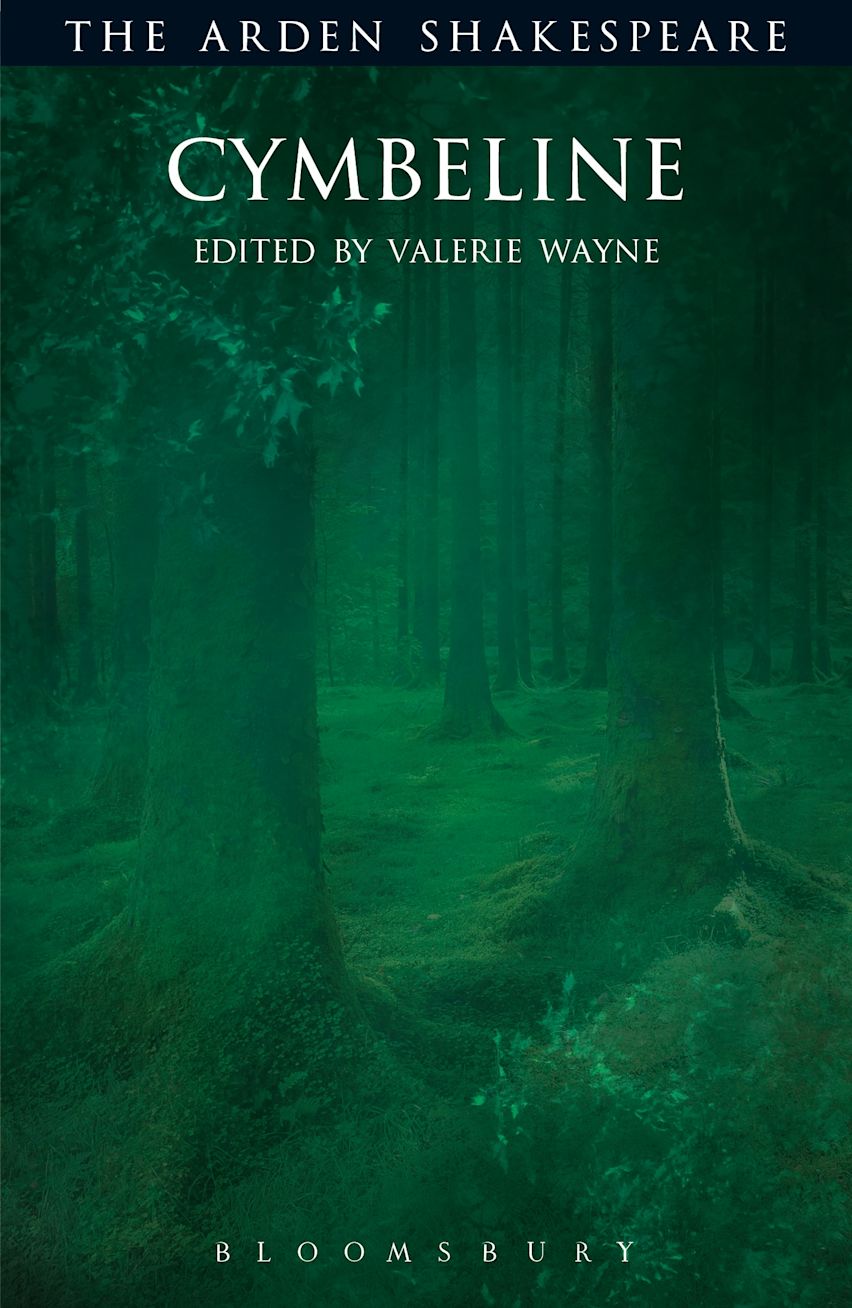
Cymbeline is one of the late “romances” — a problem play in the richest sense — and it rewards attention precisely because it is so hard to pin down. The plot is deliberately, almost comically, improbable: a wager on a wife’s chastity, a sleeping potion, a headless corpse, lost princes raised in a Welsh cave, a Roman invasion, and a final scene in which roughly two dozen revelations unspool in rapid succession, as if Shakespeare is simultaneously writing and parodying his own resolution. The tonal instability is the point — the play shifts registers without warning, from high tragic rhetoric to low farce to pastoral lyric to Roman political drama, and you’re never quite sure how seriously you’re meant to take any of it. This is a play that may be taking the piss out of its own audience, and possibly out of its author too.
Then there are the men. Cymbeline himself is weak and credulous, manipulated by a scheming queen he should never have married. His stepson Cloten is one of Shakespeare’s great portraits of toxic masculinity — aggressive, entitled, sexually menacing, intellectually null — a man whose sense of British superiority is in precise inverse proportion to his actual worth. Posthumus, the romantic hero, wagers his wife’s virtue on a bet with an Italian stranger and then, on the flimsiest of evidence, orders her murder. And that Italian stranger, Iachimo, is a study in a particular kind of cultivated European creepiness — he wins his evidence by hiding in a trunk in Innogen’s bedroom and emerging at night to inspect her sleeping body, cataloguing her physical details with the collector’s appreciative precision of a man who has confused connoisseurship with entitlement. The men in this play are, almost without exception, useless in ways that the play knows are useless and keeps showing us are useless.
Which brings us to Innogen — and here the play becomes genuinely difficult. She is the most active and resourceful character in the drama, doing the actual work of surviving while the men around her posture and blunder. Whether she represents the epitome of feminine grace and constancy, or whether she is a woman of intelligence and will trapped inside a plot that keeps requiring her to forgive people who don’t deserve it, is a question the play refuses to settle. Productions tend to decide for you; the text keeps the question alive.
And then, beneath all this generic instability and gender complexity, Cymbeline is doing something politically precise — which is where the architecture series comes in.
The play is set in Roman Britain — the moment of first contact between the island and the empire — but it was written around 1610, at the court of James I, when the question of what Britain was and who it belonged to was acutely live. James had just united the Scottish and English crowns. The relationship with continental Europe — Catholic, Latin, cosmopolitan — was a constant source of anxiety. The play asks, with deceptive lightness, whether the island can define itself against Rome, or whether resistance to Rome is just provincialism dressed as virtue.
The answer Shakespeare gives is characteristic: deliberately unresolved. Cymbeline’s Britain is both noble in its independence and ridiculous in its pretension. The Roman characters are sophisticated and often right. The British characters are brave and often wrong. The villain Iachimo is Italian, cultured, duplicitous — every English anxiety about continental corruption made flesh. Wales appears but in the bizarre form of Milford Haven, the far west, facing Ireland and the ocean. The final resolution requires Roman ceremony and Roman legal structure to make it work. Britain cannot complete its own story without Rome’s participation.
What Shakespeare is examining — and this is where the gammon/yeoman reading the series has developed becomes exactly relevant — is the fantasy of pre-Roman British purity as a political resource. The idea that somewhere beneath the Roman, Norman, French, European layers there is an authentic British identity — uncorrupted, freeborn, island-formed — that can be recovered and deployed against cosmopolitan contamination. This fantasy has a very long history and a very consistent political function. It is always reactionary in the precise sense: it reacts against the present by invoking an invented past.
The Ancient Briton as political symbol appears whenever the continental threat feels most acute. In the 16th century against Rome and Spain. In the 17th against French absolutism. In the 18th as noble savage counterpoint to Enlightenment rationalism — Blake’s ancient Albion, the Druids reinvented as primordial philosophers. In the 19th as romantic nationalism — the Celtic Revival, the invention of the Eisteddfod in roughly its current form in 1861, Tennyson’s Arthurian cycle doing what the Arthurian legend always does: providing a mythical golden age whose loss explains present inadequacy and whose recovery promises future greatness.
And now. The Brexit campaign’s iconography was saturated with it — Churchill and Spitfires at the surface, but beneath that the older fantasy of the island standing alone against the continent, the freeborn Englishman recovering his ancient liberties from European bureaucratic tyranny. The Domesday Book reimagined as a Brussels regulation. The Norman Conquest reimagined as the EU. The stout yeoman in his field — this precious stone set in a silver sea — as the authentic Briton that cosmopolitan liberalism has betrayed. Crikey maybe even Henry V St Crispin’s Day speech. We few, we happy few, we band of brothers. All ironic Shakespearean propaganda of course with John of Gaunt’s precious stone about to make a shameful conquest of itself.
The historical illiteracy of this is almost total. But the emotional logic is consistent and very old. It is the circle asserting itself against the line. Except that it is a completely fictional circle — there was no pre-Roman British purity, no ancient constitution, no immemorial island freedom. There were warring tribal kingdoms, human sacrifice, slavery, and a population that was itself the product of successive waves of continental migration going back to the end of the last Ice Age. The island was never sealed. It was always porous. Everything that makes it interesting came from somewhere else.
What Cymbeline understands — and this is why it is a more interesting play than its reputation suggests, though that is changing — is that the fantasy of recovered purity is both humanly understandable and politically dangerous. Cymbeline himself is not a villain. He is a man manipulated by bad counsel into a stance of defiant independence that nearly destroys everything he loves. The play ends not in British triumph over Rome but in a negotiated settlement in which Britain voluntarily agrees to pay the tribute it had refused, and everyone celebrates. The circle and the line find accommodation. The island rejoins the continent.
Shakespeare wrote that in 1610. The British are still arguing about whether he was right.
The thread that connects all this to the architecture series is the same thread we have been following since Stonehenge. The question of what the island is, who belongs to it, what it owes to the world beyond its shores and what it can claim as its own — that question is not modern. It is not even medieval. It is as old as the Wall, as old as the Sulis Minerva inscription that had to be in two languages because one wasn’t enough.
The deep literary mythology of British nationhood
Geoffrey of Monmouth’s History of the Kings of Britain — written around 1136, almost entirely fabricated, and one of the most consequential books ever written in Britain. Geoffrey invented the Arthurian tradition in roughly its canonical form, invented the story of Brutus of Troy founding Britain and giving it his name, and provided the mythological architecture within which British — particularly English and Welsh — identity has been arguing ever since. Shakespeare knew it. Spenser built The Faerie Queene on it. It is the foundational fiction and should be read as such.
Raphael Holinshed’s Chronicles — the source Shakespeare mined for the history plays and for Cymbeline — is itself a document of Elizabethan identity construction, showing how history gets shaped into usable mythology in real time.
And then the two great literary monuments to the recovered golden age that bookend the tradition: Spenser’s The Faerie Queene at one end, doing the Arthurian-Protestant-imperial synthesis for Elizabeth, and Tennyson’s Idylls of the King at the other, doing it for Victoria. Read together they show how the same mythology gets redeployed across three centuries for different imperial moments — and how the myth always has a melancholy embedded in it, because the golden age is always already lost, which is what makes it politically useful. You can’t return to something that exists. The impossibility of the return keeps the desire alive.
 At Home He Feels Like A Tourist
Leave a comment