The Magic Flute at the ENO review *****

The Magic Flute

English National Opera, 28th March 2019

I’ve said it before and I’ll say it again. When opera works there is no other art form to touch. But when it doesn’t it can be mystifyingly dull. What’s more it can be the very same opera which is both of these things.

Take The Magic Flute. It is an undeniably daft opera. Its message is the triumph of the light and reason offered by the Enlightenment over the dark forces of Empress Maria Theresa’s absolutist Habsburg regime and the obscurantist Catholic Church. I understand that the Freemasons here are the good guys, even when they don’t appear to be, (though I gather the current mode de jour is to play down Mozart’s funny handshake connections), and that the Queen of the Night, even if she can hold a note (high F6 apparently), is not ideal mother-in-law material.

But even armed with sub-textual knowledge, insight into plot and familiarity with the score, (though that isn’t necessary though, this being Mozart, undeniably the greatest ever composer for dramatic voice), it can still it can still come across as upper class pantomime and take an age to get through. Unless of course it is directed by the genius that is Simon McBurney. There he is above in The Encounter. Mr McBurney OBE is the Artistic Director and a co-founder of Complicite. Complicite might just be the most important, and certainly the most innovative, theatre company in the UK. And therefore maybe the world. I say this secure in the knowledge that I have only seen a handful of their productions but when you see what they do you will know too. Which is what happened to BUD on the evening we went to see this Magic Flute. Mr McBurney has an eclectic list of film and TV, and directing, credits, so you are bound to have seen him somewhere, but it is his work with Complicite, extending far beyond direction and performance, given the vast array of associates involved in the company, that makes him special.

Now the Tourist, given his only rudimentary understanding of opera as an art form, and especially his inability to grasp the basics of musical constructions, find it tricky to opine on the subject. Moreover by rejecting pretty much all of C19 opera, (the bel canto of Rossini, Donizetti and Bellini, the pompous melodrama of Verdi, the sentimental, pot-boiler manipulation of Puccini, the meandering bombast of Wagner – I’ve tried it all and I can’t be doing with it), and seeing it as drama with music, not music and tunes to which the drama is stitched on, I appreciate I am drastically narrowing the field. There is plenty to like musically from the Baroque but you need to get on with gods, monsters and Classical Greece plot wise, and some of then don’t half go on a bit, (I am looking at you Mr Handel). There aren’t actually that many C20 operas that have stood the test of time and get a regular airing. All this means then that the Tourist, especially since he isn’t going to drop £200 for a decent view at the Royal Opera House, or worse still some poncey gaff like Glyndebourne, on the off chance he might be converted, is condemned to see a lot of Mozart, Britten and contemporary opera. Which suits him but doesn’t really qualify him to write about it, even to himself. And he has never seen a Gluck opera, nor Fielio and suspects he might put up with any old nonsense story if Vivaldi’s music backed it up.

Which is why he has failed to document some of his more recent brushes with Mozart. But, with this Flute, once again with BUD as Sancho Panza to the Tourist’s Don Quixote, some clear patterns, worthy of comment, have emerged. Cases in point. We saw the Die Zauberflute at the Royal Opera House in October 2017. Nice perch. Stalls Circle to the side, nose to nose with the pit, though the rear of half of the stage was cut off. Sur-titles on a little screen on the ledge in front. So a strong showing musically, and in terms of the acting from the cast, but less impact from the set and from the libretto. Lesson one then. Having to look down at the translation doesn’t help. Which brings me to the wider, and contentious, claim. For me opera is better in English. Not because I can understand every word that is sung but because I might, particularly if the translation of the libretto captures the meaning, spirit and musicality of the original. As evidence I offer up Jeremy Sams genius offering for The Marriage of Figaro in the Fiona Shaw ENO production. You can berate me as much as you like but, if the singing, and sur-titles, make a connection, (in so far as that is possible when some soprano is going balls-out coloratura on what feels like the twentieth reprise of her showcase aria’s first verse), then the Tourist can start to find a way into the drama. Anathema to the purist but there it is. As for this ENO Flute, Simon Jeffrey’s pithy translation certainly did the trick.

Lesson two. Now I couldn’t tell you why but clearly some opera singers are better than others. Stronger, more powerful, more resonant, more accurate. a wider range, a better understanding of language, breath control, squillo, tessitura, rubato, vibrato, etc, etc. The ROH Flute definitely had the edge on the singing front, even with a “second string” cast when compared to this ENO Flute, (with the exception of Lucy Crowe’s Pamina). The ovation accorded to Greek soprano Christina Poulitsi after she nailed Der Holle Rache was something and well deserved. Goodness knows how excited the punters will have been after Sabine Devieilhe, the dastardly Queen for the other performances and the critic’s darling, squeaked her damndest. Yet, in terms of performance I preferred the ENO version because the singing, and for that matter the musical interpretation from the ENO Orchestra, fitted the drama more satisfyingly than the ROH production.

Which brings me to lesson number three, the most important of all. In opera the director really matters. That is, of course, also true in straight theatre but in opera, where there are so many interpretative decisions to be taken and where spectacle matters, the vision the director brings, can, in the Tourist’s limited experience, may a huge difference, particularly in drawing out the universal themes and creating a “look” that resonants with a modern audience in works that were written a few hundred years ago. Now there are some that are going to prefer their opera unsullied by the hand of the Regieoper. I certainly get that if the creative mind goes on to wild a bender the result can be a mess. On the other hand seeing something that emphasises the drama, the theatre of opera, and imposes some meaning, or at least insight, is more interesting to me than a straight, “period” interpretation, whatever that might be.

Not that David McVicar’s “classic” 2003 ROH production, revived for the sixth time by Thomas Guthrie, with design from John MacFarlane and lighting from Paule Constable, comes straight out unvarnished from 1791. But it does emphasise the “pantomime” and “set-piece” look, feel and structure of what I imagine to be Mozart’s, and his librettist Emmanuel Schikaneder’s, original Singspiel vision. Magic, fable, predictable comic turns from the boy Papageno, starry night skies, Masonic temples, swathes of primary colours, sharply delineated light and dark, some immense puppetry, a spiritual journey. All present and correct but it did jog on a bit and there wasn’t really a thread that held the whole together. The cast was sometimes overwhelmed by the scale of the set and the dramaturgy a little stolid. The daft story, and the aforementioned clash of philosophies, were showcased but nothing really connected.

Now in contrast Mr McBurney’s ENO version was a revelation. In part because he utilises the whole arsenal of typical Complicite aural and visual tricks, video projection, here with on-stage digital blackboard, on-stage Foley artist, a tilting, floating stage, fluttering birds simulated through sheaves of paper, orchestra players incorporated into the action on stage and singers descending into the raised pit and auditorium, to create a spectacle that highlights the artifice and wit of the theatrical experience, but also in the “magical” plot and in Mozart’s spectacular score. It is entertaining for sure but when it needs to make a point, the book-shelf to symbolise Sarastro’s Temple for example, it does. And, as if to directly address one of the banes of the Tourist opera attending life, there is constant on stage movement. No member of the cast is parked. to sing or otherwise.

The three ladies (Susanna Hurrell, Samantha Price and Katie Stevenson) taking snaps of the unconscious Tamino (a properly hunky Rupert Charlesworth) on their phones, the three alarmingly old looking boy spirits (Guillermo Fernandez-Aguayo Martin, Richard Wolfson, and Nat Fukui), Julia Bauer’s Queen of the Night careering around in her wheelchair, the video snake, the “boardroom” table, the coup de theatre trials by fire and water with video backdrop covering the entire width of the stage, a genuine Prosperian “philosopher king” Sarastro, (bass Brindley Sheratt was compelling), and a genuinely strong and courageous Pamina (Lucy Crowe is both the best singer and actor I have ever seen on an opera stage, though appreciate experience is limited), a gentleman of the road Papageno, (Thomas Oliemans) and come to think of it Papagena (Rowan Pierce), with the ability to translate frankly p*ss poor comedy into real pathos, a greasy, lank-haired Monostatos (Daniel Norman) who is pure creep. And a magic flute which literally takes centre stage. Mr McBurney has thought about how it all fits together, about the story he wants to tell, and then worked on every detail to make us believe that this symbolic, numerological gibberish is really saying something to us.

It is as well that Mr McBurney’s creative collaborators were up to executing the vision. At this performance Chris Hopkins took the baton from young Ben Gernon. Sounded fine to me. I have no doubt that chief amongst all this invention was associate and movement director Josie Daxter who has worked with SMcB on his other opera A Dog’s Heart and A Rake’s Progress in Amsterdam. And there there was the set design of Michael Levine, the costumes of Nicky Gillibrand, the lighting design of Mike Gunning, (based on the original work of Jean Kalman), the video of Finn Ross, the sound of Gareth Fry and the aforementioned on stage artists Ben Thompson and Ruth Sullivan.

Now just in case you opera buffs were thinking the Tourist is some sort of lightweight with a toddler-esque attention span that delights in directors upending operatic tradition I offer up a recent visit to the Royal Opera House and Cost Fan Tutte. Overall this was a fine night out with the SO, BUD and KCK for company with much to enjoy. Admittedly in a cheap (for a reason) box which restricted the view but still. It was Mozart, a fine, if not perfectly matched, cast highlighted by Thomas Allen’s Don Alfonso and Serena Gamberoni’s Despina alongside the menage a quatre of Paolo Fanale (Fernando), Gyula Orendt (Guglielmo), Salome Jicia (Fiordiligi) and Serena Malfi (Dorabella), and a barnstorming performance in the pianoforte continuo from conductor Stefano Montanari who amped up the tempi to good effect.

However Julia Burbach’s direction of this revival of German Regie Jan Philipp Gloger’s original production didn’t really work for me. I had seen the original at the cinema and was mystified by some of its conceits then. Same here live. I get the notion that it is daft to believe that our funny lovers, even when the lads are dressed up as “east” Europeans, wouldn’t recognise each other, but it is equally daft to presume that they are all deliberately playing along to rediscover love and something about themselves. So we enter Don Alfonso’s School for Lovers, after a performance of the opera has ended, the scenes are played out in a rehearsal of the opera itself, with stagehands milling about and putting up each of Ben Bauer’s inconsistent designs ahead of each scene, there is plenty of implied guff about defining and reclaiming identity and the sexist title is repurposed to include us all rather that just the “women who are like that” with a simple replacement of an “e” by an “i” – tutti you see. All is artifice, all is deceit, and that includes you audience.

I get the idea. The problem is the plot and libretto. There is no way round it. This story and the words da Ponte sets to Mozart’s glorious sounds to tell it are sexist claptrap. So the gap between what Herr Gloger wants us to understand is the message and what we hear (or more exactly, read in translation) just gets wider and wider. Nothing wrong with director’s manipulating and mining sacred texts to resonate with contemporary audiences and to repurpose the arguments and nothing wrong with exploring the dissonance between what was acceptable then and what is acceptable now but there has to be some internal logic and clarity in what we see and hear that doesn’t require a download of the programme notes in advance to understand.

And the performers have to be convinced by the director’s vision that no-one here is convinced by what they are doing or singing. I don’t think they were, with perhaps the exception of Serena Malfi. So neither was I. Better to recognise the reality of the first, misogynist, take on the opera, and then start to tease out the ironies that might exist in da Ponte’s texts and Mozart’s music. It might not entirely paper over the ugly stereotypes at the heart of the “comedy”, nor the fact that it does go on a bit, but there is plenty to work with in the right hands, as with Shakespeare’s more cloth-eared passages, and, failing this, there is always the music and the farce.

Right that’s the state of play in the Tourist’s head Mozart opera wise. Until the next time when he will likely entirely reverse his opinions.
Bach St John Passion: OAE at the Royal Festival Hall review ****

Orchestra of the Age of Enlightenment, Simon Rattle (conductor), Peter Sellars (director), Choir of the Enlightenment

Royal Festival Hall, 2nd April 2019

JS Bach – St John Passion

  • Camilla Tilling (soprano)
  • Christine Rice (mezzo-soprano)
  • Andrew Staples (tenor)
  • Mark Padmore (tenor, Evangelist)
  • Roderick Williams (baritone, Jesus)
  • George Nigl (baritone)

The Tourist, along with chum for the night TMBOAD, was recently blindsided, in a good way, by the staging of Britten’s War Requiem at the ENO which was far more theatrical than he had anticipated. Well blow me if if didn’t happen again with this St John Passion. I had not really clocked the presence of Peter Sellars on the list of creatives so had only anticipated a semi-staged version, a bit of movement, some subtle lighting, that sort of thing. However, from the moment we saw the OAE lined up on one side of the stage, it was clear something more was on the cards. What we didn’t expect was a full blown, punch to the gut emotional, acted out Passion, complete with modern dress costumes, (red and blue for the Marys, monochrome for the rest), occasional props, an immensely atmospheric lighting design courtesy of Ben Zamora, musical solos from memory, (my favourite was Simone Jandl and her viola d’amore and Katharine Spreckelsen and her oboe da caccia), and even walk-on contributions from Sir Simon Rattle himself.

The St John Passion is a powerful work of act even without the dramatisation, reflecting the subject, (even for those of us who have no faith), and the direct, even simple, way that JSB chose to set it. I can imagine that there will be those who would prefer, in theory, to be left to focus on the music, the voices and the text, but I would defy them not to be bowled over by the extra dimension that Peter Sellars staging brings to the work. This is not the first large scale Bach vocal work that the Tourist and BUD have shared in recent years, we have a B Minor Mass and a Christmas Oratorio under our belt, and the Tourist has a number of independent Bachian choral sojourns on top of this. The Tourist may have waited until his middle ages before he “got” Bach but now he consumes with the zeal of the convert.

Now as it happens Bach himself was reproached by some in the 1720s and beyond for the theatricality of his Passion settings and the fact that he revised them on multiple occasions in later years partly reflected this as well as a more realistic approach to the logistics of the piece and to tighten it up musically. So those who might initially object to this Sellars/Rattle ritualised version as liturgically inappropriate or offensive are in “good” company. There will have been a time after all when staging the Passion in the concert hall rather than the Church will have provoked the ire of some.

Whilst there are some belting chorus parts and chorales in the SJP the thing that really strikes me is the starkness of the settings with minimal instrumental accompaniment to many of the arias and with much use of recitative, and not just from The Evangelist’s narration. A lot of the first two parts is told from the perspective of those around Christ, and, assuming this translation is accurate, the text is very immediate and shorn of ornamentation. JSB cleverly creates a symmetrical structure, centred on the chorale Durch dein Gefangnis, as Pilate seeks to release Jesus, either side of which is the same pattern of choruses, some fugal, solos and chorales but in reverse order. This creates a musical order and narrative structure which informs the “drama”. It is not, as Sir Simon observes in the programme, a very melodic piece even if it does have some very arresting, and surprisingly experimental, musical passages. In short, with these forces, six soloists, a choir of 32 and the OAE numbering 30, it very much has the feel of opera, putting aside its subject. It certainly has emotional clout.

So easy to see why Sir Simon and Peter Sellars long cherished the idea of staging it in this way, finally realised in 2014 in Berlin when Sir Simon was head honcho at the Berlin Phil. The soloists here, led by the very deliberate Mark Padmore, who is pretty much the go too Evangelist, and the superb Roderick Williams as a visibly suffering Jesus, as well as Camilla Tilling, Christine Rice, Andrew Staples and George Nigl, were on top form and all can act as well as sing and the chorus brought real drama to their turns. The fact that the latter four soloists take multiple “roles” creates a texture and an audience empathy that a straight concert hall performance can lack. Contemporary resonance abounds with George Nigl’s equivocating politician Pilate yielding to the “will of the people” and the blindfolding and torture of Christus under investigation.

OK so occasionally some of Mr Sellar’s choreographic tropes grated a little, the hand gestures, the just-so re-creations of classic Renaissance paintings, the singing from prone positions, the pauses to get everyone in the right place, and the sur-titles, whilst a necessary part of the staging, were a bit too curt at times, and, whilst I don’t know where to take the interval the second half, as is usual, is a bit long compared to the first. Overall though this definitely ticked the box for BUD and myself.

Mind you we are, contrary to all appearances a couple of avowed modernists where it comes to our dramatic preferences. And so, I am willing to bet, are the vast majority of punters. Two hours plus of Bach and the story of Christ’s death may not float the boat of many outside us classical music buffs but I doubt there could be a better way to spread the word. Which ultimately is why the old fella wrote this masterpiece in the first place.

Betrayal at the Harold Pinter Theatre review *****

Betrayal

Harold Pinter Theatre, 1st April 2019

The Tourist never had a great deal of confidence in his ability in his chosen career. Unfortunate in a world where self-belief is everything, even in the face of overwhelming evidence that it was misplaced. Still many of those he had cause to interact with seemed to disagree for which he is eternally grateful.

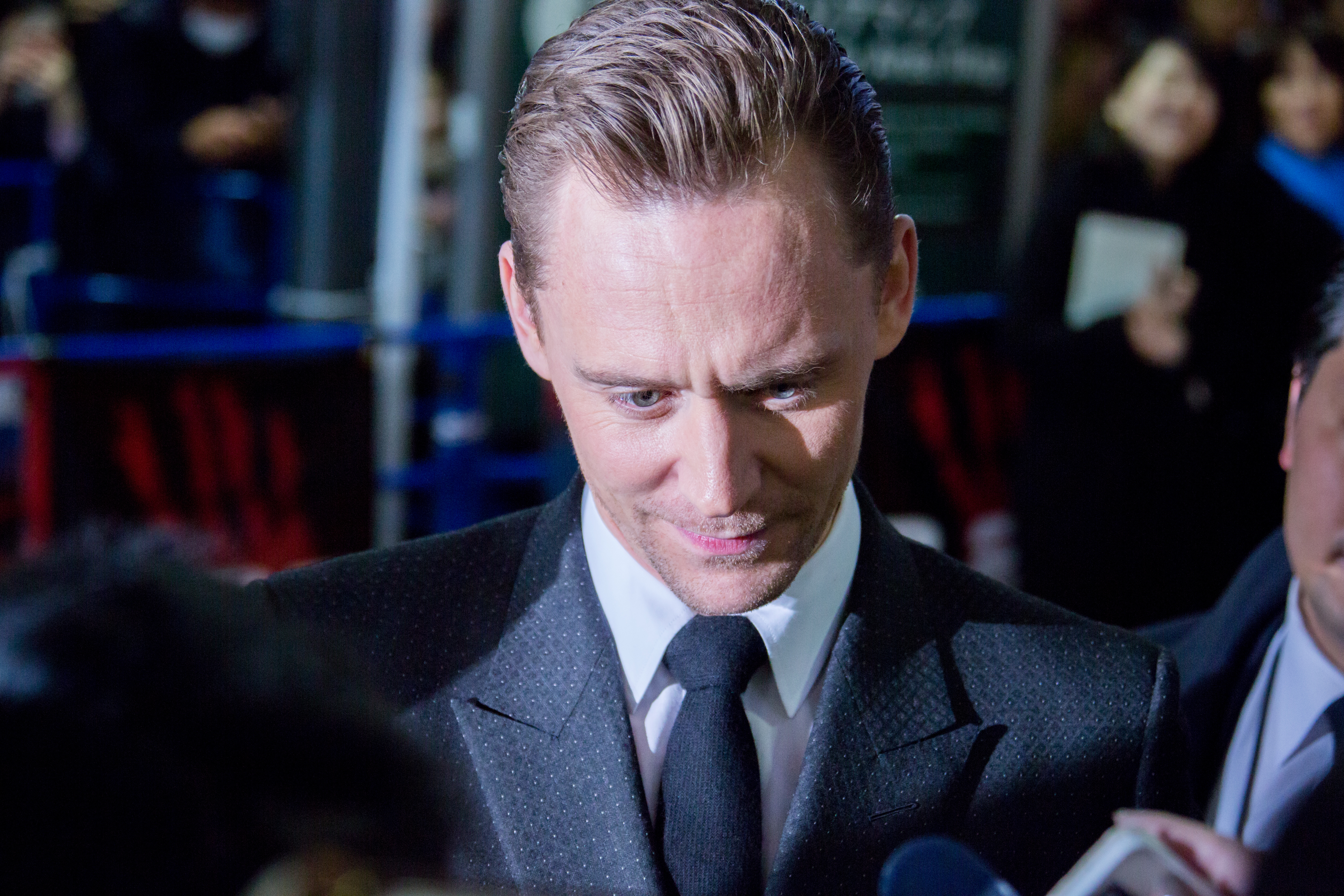
I would be surprised if Tom Hiddleston has this problem. With good reason. He is a mighty fine actor. And I think he knows it. And he is a gorgeous looking fella. And I see he went out with Susannah Fielding, herself a brilliant stage actor, to wit her turns in American Psycho, The Merchant of Venice, The Beaux Stratagem and Bull, and, most recently giving Steve Coogan lessons in comic timing in the uneven, though still often brilliant, This Time with Alan Partridge.

Until now I had only seen TH on stage in Cheek By Jowl’s The Changeling years ago, missing his award winning outings in Cymbeline, Othello, Coriolanus and the limited edition RADA Hamlet. And since I can’t be doing with all that super-hero gibberish the only film I know him from is Ben Wheatley’s adaptation of JG Ballard’s novel High Rise, which is the very definition of pretentious, art-house cinema. Obviously I quite liked it. So it is his TV roles in Wallander, The Hollow Crown and The Night Manager which I know best. He shines. And it is not like he isn’t up against some pretty stiff competition here.

So we come to Betrayal, the conclusion of Jamie Lloyd’s stupendous Pinter season. At first glance taking the role of the cuckold publisher Robert, rather than literary agent Jerry, his mate who has the affair with his wife Emma, seems a surprising decision. Yet he doesn’t even have to open his mouth, just lurking at the back of Soutra Gilmour’s revolve set, for this to immediately make sense. I have said before that there have been a handful of actors in this season who just seem get Harold Pinter’s language. By which I mean they turn it into something natural whilst still retaining that rhythm, whether it is passive or aggressive, that makes it unique to him. Tamsin Greig, Rupert Graves, Al Weaver, Brid Brennan, Tracy-Ann Oberman, Danny Dyer, John Heffernan, Ron Cook. Not always who you might expect but these where the ones who nailed it. To which we can now add Tom H. But Mr H also captures an inner emotional rhythm which makes him very, very special.

It helps that Betrayal, beyond its “going back in time” conceit, is one of HP’s least tricksy plays, indeed it can almost be delivered as the kind of naturalistic melodramas that HP first appeared in as an actor. And that Charlie Cox, an actor whose work is entirely new to me, and Zawe Ashton, who I remember from Jamie Lloyd’s persuasive, if sometimes wayward, production of Genet’s The Maids at Trafalgar Studios, are similarly impressive. And that Jamie Lloyd has pretty much turned himself into the best director of HP since HP himself, (The Homecoming at Trafalgar Studios still ranks as his best). I expect a definitive Caretaker to appear in the not too distinct future given the box office success here.

Betrayal, as I am sure you know, first appeared in 1978, with the affair which it dramatises beginning in 1968 when the play ends, and ending in 1977 when the play begins, with scenes from 1975, 1974, 1971, and proceeding chronologically within the other pivotal year of 1973. I am sure you also know that it is loosely based on HP’s own affair in the 1960’s with TV presenter Joan Bakewell. HP was simultaneously working on his great, unfinished, paean to Proust, a very clear influence. The structure means we already know the what, so that HP can focus on the how, and, especially get to the core of the deceptions to learn the why, of the betrayals. With the sparse plain set, few props and having all three actors always on stage the tripartite relationship is emphasised. What they know and don’t know. What they hide from each other and from themselves. The hurt they cause each other. The victories, defeats and compromises, for there is calculation here entwined with the passions. The key moments, the memories, of the affair, the marriage and the friendship, leap out with uncanny resonance from Mr Lloyd’s minimalist treatment. Robert’s attempts to intimidate Jerry in the restaurant scene and the pain when he finds out on the holiday in Venice, the best single scene of this entire season. Jerry’s needy, self-centredness. Emma’s ill-fated desire for both men. The dependence of the men on each other and on Emma. The truculence of the end of the affair the as mundane mechanics of break up are thrashed out.

As in the rest of the season Jon Clark’s lighting and the Ringham brother’s sound is impeccably delivered. Yet if I had to pick one thing that elevated this Betrayal into something very, very special it is the on stage movement of the three actors – the invisible link between them made visible. The silences are made part of the language and therefore the drama. That’s where Jamie Lloyd has the edge.

One example. The scene where TH is sitting on a chair cuddling Robert and Emma’s child. Whilst she and Jerry are languishing in bed on a stolen afternoon in the flat in Kilburn. Old TH managed to conjure up real tears in the Venice scene but this scene nearly had the Tourist blubbing. In Pinter. WTF.

What next for Tom Hiddleston. Other than the twenty fifth incarnation of this Loki bloke. I can’t wait.

Mozart and Beethoven chamber music for winds at the Wigmore Hall review ****

Alexander Melnikov (piano), Alfredo Bernardini (oboe), Lorenzo Coppola (clarinet), Javier Zafra (bassoon), Teunis van der Zwart (horn)

Wigmore Hall, 31st March 2019

  • Wolfgang Amadeus Mozart – Adagio in B minor K540
  • Wolfgang Amadeus Mozart – Quintet in E flat for piano and winds K452
  • Ludwig van Beethoven – Horn Sonata in F Op. 17
  • Ludwig van Beethoven – Quintet in E flat for piano and winds Op. 16

A wind supergroup. I’ll resist the temptation to make a puerile joke. Still that’s what was on stage on this evening at the Wigmore. To play a couple of chamber music classics from the, er, Classical period. Whilst Beethoven went on to bigger and better things the Op 16 Wind Quintet is a piece of beauty and not insignificant innovation which owes a lot to its Mozartian predecessor but, especially in this direct comparison. also markedly departs from it. As for Mozart’s K452, well Wolfgang himself, at the time, 1784, reckoned it was the best thing he had ever written and who are we to argue. The evening was rounded off with Mozart’s K540 Adagio for piano, one of the most most poignant pieces he ever wrote, and Beethoven’s (only) virtuoso Horn Sonata.

Alexander Melnikov is probably as good as it will ever get, (maybe even than DSCH himself who was a bit of a ragged pianist by all accounts), when it comes to Shostakovich’s mighty Preludes and Fugues and his partnership with Isabelle Faust in the Beethoven violin sonatas is something I would pay good money to hear live. Annoyingly his next visit to the Wigmore with Ms Faust, and Jean-Guihen Queyras on cello, to play the Beethoven piano trios clashes with an even bigger gig; Philippe Herreweghe and the Collegium Vocale Gent taking on the Bach B minor Mass. (I also see the the CVG are touring Glass’s Einstein on the Beach. Now that would be, to use the modern parlance, a thing). I am hoping to see Mr Melnikov accompanying American soprano Claron McFadden in December when they take on some tricksy modern vocal repertoire including some Cathy Berberian staples.

As it happens Mr Melnikov’s fellow band members, all being experts in the HIP field, have close associations with the CVG, especially horn player Teunis van der Zwart. For this concert was unavowedly historically informed. Mr van der Zwart teaches in Holland, Javier Safra in Brussels, Lorenzo Coppola in Barcelona and Alfredo Bernardini in Salzburg, but they are all involved with top rank European period music ensembles and all studied in Holland as far as I can see, this being, with Belgium, the centre of the universe when it comes to HIP teaching and performance. The Tourist can never leave London but if he did that is probably where he would head.

AM set the scene with the Mozart Adagio, the only self-contained work by Mozart in the “melancholic” key of B minor, on his fortepiano. The initial phrases are pretty simple, and, on a fortepiano with its lack of sustain, it is a little underwhelming at first. But, as the second subject emerges, with the constant crossing of left had to right, things hot up and the fortepiano sound, with the twinklier higher notes and buzzy low notes, starts to properly emerge. In the development section Mozart piles up the pathos, first with an ascending harmonic sequence and then, descending, ending in a quick switch to B major, an unexpected twist after all that woe-is-me stuff. I don’t normally get too worked up by Mozart’s solo piano pieces, but this certainly did the trick. There is no doubt that, if you are used to hearing a piece on a modern piano, the fortepiano, with its distinct lack of oomph and narrow range, can be a disappointing alternative but with Mozart it works. My theory is that it turns “too many notes” into “just the right amount”, though to be fair this is not over-burdened with notes in the first place.

The rest of the ensemble then trooped on for the Mozart Quintet which again turned out to be a perfect illustration of why to makes sense to play music on the instruments it was designed for. Assuming the musicians are up to the task, which they were here. I doubt that this will ever become a favourite of mine, compared say to the late symphonies, some of the string quartets and the wind concertos and string/wind quintets, but this was very persuasive, highlighting the way in which WAM passed the phrases backwards and forwards between winds and keyboard, and, on these instruments, giving us a bit of rough to remove the complacent air that tends to creep into Mozart on modern instruments. The first movement starts off slow and the subsequent Allegro doesn’t get up to much, a gentle skip, but this allows the ear to get a taste for the sound, (I know, mixed metaphors), before the much more varied slow second movement where WAM takes us to some very interesting sounding places tonally led by clarinet and horn. This I liked. Just a hint of unease. The closing Rondo is much jollier, as the quickstep interplay between piano and wind becomes more elaborate.

Now the programme, (some excellent notes by Misha Donat), tells me that LvB wrote his horn sonata for one Giovanni Punto who was considered, in 1800, to be one of the greatest virtuoso soloists of the day. He was born Johann Wenzel Stich, in the service of one Count Wenzel Joseph von Thun, (reminding us that for most of human history even the ostensibly free were nothing of the sort), but, after learning his trade in Prague, Munich and Dresden, decided to skip away from his “employer” and take on a new identity to evade capture. I am guessing then that Count Thun wasn’t invited to the premiere of the piece where no less than LvB was the pianist.

The Allegro opening contains a number of remarkable innovations to show off Herr/Signore Punto’s technique, hand-stopping, (altering the pitch by sticking the hand in the bell end – quiet at the back please), a descent into the lowest of low chords in tandem with the keyboard, (the same pitch as a cello’s open C string – that buzzy, growly sound), and a passage of rapid arpeggios which I am guessing are beyond the capability of all but the best horn players. The middle movement is not some drawn out Largo, (that wouldn’t really work on the horn), but serves as an intro to the concluding Rondo and also highlights a dotted motif that permeates the whole sonata. LvB went on to utilise this structure, to greater effect, in later works, piano sonatas but also in the symphonies. One reason why Beethoven’s music, above all others, makes sense.

Whilst Mozart’s Quintet may have been an influence on Beethoven’s equivalent I am not sure, even with the help of the experts, that I can discern this in more than the general shape, notably the gentle, slow intro into the Allegro first movement and some of the more dramatic statements in the development. The horn comes out well in this movement and the keyboard gets the chance to show off one of those massive octave, (four and a half here), leaps that LvB was so beloved of. There is another one of those little repeated dotted rhythms here as well. The central rondo shape, marked cantabile – singsong to you and me – with theme and accompaniment, allows all four wind players to show off, with increasing ornamentation, leaving the piano to take the final turn. The actual Rondo finale has a bouncy quality stemming from its 6/8 “hunting” theme and, with its runs on the keyboard and rapid exchanges between the instruments, this could easily be mistaken for Wolfgang.

A fine programme then delivered by experts in their fields highlighting two of the finest pieces of chamber music ever written for these instruments. I would be very happy if they went on to record this programme. Over to you fellas.

Orestes at Silk Street Theatre review ***

Orestes

Guildhall School, Silk Street Theatre, 27th March 2019

Even the most casual reader of this blog will observe that the Tourist spends an inordinate amount of time in a theatre. A recipe for pity or jealousy depending on your point of view. Despite this satisfying his urge to hoover up the, er, classics of Classical Greek drama is proving surprisingly elusive. There isn’t as much of it about as you might expect. I appreciate that this might be the Firstest of First World Problems but it has, nonetheless, come as a surprise. So first sniff of a Sophoclean, Euripidean or Aeschylean (??) opportunity and the Tourist is straight in. As here. Also taking advantage again of the chance to see tomorrow’s acting and creative talent today, this time from the Guildhall School.

Orestes was written by Euripides and first performed in 408 BCE and tells the story of young Orestes after he has killed his Mummy. It follows on from the events catalogued in Electra, the play about his sister, dramatised by both Euripides and Sophocles, and in between The Libation Bearers and The Eumenides by Aeschylus, the latter two plays in his trilogy The Oresteia. In fact the well educated amongst you will be aware that young Orestes is perhaps the central character in this, to say the least, dysfunctional family tale. He crops up in something like a quarter of the extant plays by the three Greek tragedians.

He kills Mum Clytemnestra to avenge the death of Daddy Agamemnon by said Mummy. Mummy’s justification being that Agamemnon had, before setting off to bash the Trojans because they pinched his brother Menelaus’s wife Helen, (she of the ships), killed little daughter Iphigenia, Orestes’s Sis, to secure some favourable wind. Not a relieving flatulence you understand, but wind to set the fleet off to Troy. Now some would also have it that naughty Clytemnestra actually recruited lover Aegisthus, (who had a claim to the throne of Mycenae albeit via an incestuous route), to kill Hubby. So Orestes, taking no chances, bashed him in as well.

And you thought GoT was complicated. Next Christmas, when it’s all kicking off, cheer yourself up by thinking at least it isn’t as bad as this, the Atreus family curse. In fact it all started with Tantalus, oen of Zeus’s sons, who, to get back at his Dad and the other gods, boiled up his son for them to feast on after they had banished him, Tantalus that is, for having nicked some ambrosia. (Who would have thought they liked rice pudding so much). Tantalus goes to hell, the son, Pelops, is revived but, after some chariot race fixing skullduggery and general cursing, Pelops’s boys Atreus and Thyestes then fall out. Affairs, and some more pie based cannibalism, mean that the next generation, the generation described above, inherits the curse.

And so to this play. Electra opens up with a quick “and previously in the House of Atreus” synopsis whilst a weary Orestes kips next door. Auntie Helen swans in wanting to make an offering at Clytemnestra’s grave, the chorus of Argive women pitch up and Orestes awakes, tormented by Furies. Rough night. Uncle Menelaus and his father in law, so Orestes’s Grandad, Tyndareus, arrive, and Orestes makes his pitch for mercy to then, requesting an opportunity to talk to the Argive men. Cue discussion of the tensions between divine justice and natural law. Menelaus takes a stern line though. After all the Greek people have just about reached the end of their tether what with going to war for years just to get his missus Helen back and are in no mood to listen to any appeals for clemency.

Orestes, with his mate Pylades and Electra, then go direct to the assembly but this fails to forestall the death penalty for Brother and Sister, so the trio hatch a further play involving, you guessed it, more murder, this time of Helen and her daughter Hermione. Helen vanishes, but the trio capture Hermione, as well a slave who saves his own skin with some rousing argument. Menelaus catches the conspirators in the act ……

….. and then, ta-dah, deus ex machina in the form of the god Apollo who sets things to rights by explaining that Helen is in the stars (whaaaaaat), Menalaus must go back to Sparta, Orestes to Athens where the court will acquit him, after which he must marry Hermione, oh, and Electra will marry Pylades. Job done. Humans can go away in peace. Apollo can go back to arching, averting evil and all round being beautiful. As usual with Euripides, the gods don’t come across as the sharpest tools in the toolbox, their relationship with the humans is messy, the nature of justice is questioned and war is, as sagely observed by Boy George, stupid.

The director here Charlotte Gwinner, who has had spells at Sheffield Theatres, Liverpool Everyman and the Bush, opted for the prose translation by one Kenneth McLeish. Now as I am new to this game so have no idea how one translation differs from another, though I can imagine there are some high faultin’ verse options, but there is no messing about here. On with the action and as idiomatic as you like. Mind you I see Mr McLeish translated the complete Greek drama, all 47 plays, as well French farces, Ibsen and much, much else. Clever fellow.

Added to this was an impressive design concept courtesy of Simon Daw and equally uninhibited sound from Elizabeth Purcell and lighting from Guildhall student Christopher Harmon. I see young Harmon wants to make a career of this. On this evidence he will. The split level set showcases a dark, colonnaded underbelly, think vandalised car park/temple underneath a promenade which opens up at the end to reveal …. an Arcadian Olympus. Against this a majority of the final year acting students are able too strut their collective stuff. One or two were familiar from the four/five hander Detroit earlier in the season. I hate singling anyone out but I was very impressed by Uri Levy’s articulate and full throated, delirious but not mad, Orestes and, especially the Electra of Mirren Mack. And the members of the Chorus, complete with school uniform, were also impressive complete with choreography and howls.

I guess I could imagine an interpretation that plumbed the rhetoric more effectively and, as always with these productions, some of the actors are asked to play characters well beyond their years, which they gamely do, but as an astute, compact (90 minute) intro to the play my profound thanks to the Guildhall School. More please.

The Son at the Kiln Theatre review ****

The Son

Kiln Theatre, 20th March 2019

After this, The Father, the Mother and The Height of the Storm, there is still a part of me that gets antsy at the work of Gallic wunderkind, Florian Zeller, and his English translator Christopher Hampton. There is something just too clever, too slick, too contrived about his plays. Just enough experimentation to justify the theatrical form, just enough plot jumps to keep those more accustomed to naturalistic TV drama on their toes. They are technically brilliant but for me he is just a teensy teensy bit guilt of manipulating audience emotions.

Having said that, in the superb space that is the Kiln, the right ratio of stage to audience, this is an utterly enthralling, unbroken 100 minutes of theatre. The Tourist may cavil at the concept behind these plays but, once again, the reality is undeniably affecting. We are back in a minimalist, pastel painted French apartment, grand piano at the rear, on the UK stage where the other two plays in the trilogy started, this time designed by Lizzie Clachlan. This is the home of lawyer Pierre (John Light), his new partner Sofia (Amaka Okafor) and their new baby. And troubled son Nicolas (Laurie Kynaston) after he goes to live with Dad following a spell with Mum, Anne, (Amanda Abbington) after their divorce. We know adolescent Nicolas is troubled because he has skipped his new school for 3 months, writes on the wall, self-harms, bites his nails and shrugs his shoulders under Dad’s interrogation. But just to be sure we know he is disintegrating mentally he upends the flat and a whole bunch of stuff spills out a plastic bag attached to the ceiling to litter the parquet floor of the apartment. Subtle metaphor huh?

Pierre, Anne and Sofia try to help Nicolas, pleading, cajoling, arguing, listening, but eventually have to seek help in the form of a psychiatrist Doctor (Martin Turner) assisted by Nurse (Oseloka Obi, who I say deliver a fine Gaveston in Lazarus Theatre’s Edward II, though he doesn’t say much here). This doesn’t help. The ending is, in many ways, as unsurprising in its attempt to surprise as the development. Yet the dialogue, the dilemmas with which the characters are presented, the ratcheting up of Nicolas’s condition and the inability of his parents to prevent his decline is what makes the play take hold and not let go. Florian Zeller doesn’t feel the need to offer a clear explanation of why Nicolas is in such pain, surely more than the break-up of his parents: he simply analyses the consequences. I don’t know how realistic these behaviours or events might actually be, it feels a little too pat, but there is no doubting the way it connected to the audience, whether they were grandparent, parent, twenty-something or teen.

Michael Longhurst’s direction is perfectly paced, with scenes melting into each other, supported by Isobel Waller-Bridge’s delicate under-scoring and Lee Curran’s considered lighting. This allows John Light to show Pierre’s journey from brisk, business like problem solving to utter helplessness at his son’s condition, Amanda Abbington, with minimal dialogue, to communicate a mother’s incomprehension and guilt at not being able to rescue her son, and Amaka Okafor to reveal Sofia’s ambivalence, wanting to be the sympathetic outsider but caring more about her own happiness with Pierre and the needs of her new child. Martin Turner is perfectly cast as the stern, cruel to be kind, professional. However the evening, (well in this case afternoon), really belongs to Laurie Kynaston. Nicolas, on the page, only just stays the right side of over-written. It would be pretty easy, given the torment that Mr Kynaston has to project, to go too far. He does not. Bored, petulant, despairing, endearing, frightened, threatening, begging, desolate and more. We’ll being seeing a lot more of young Laurie.

So another hit to follow the slippery study of dementia in The Father, the pain of bereavement in old age in The Height of the Storm, and the dissolution of The Mother whose children have left the nest. In the right hands, Mr Zeller’s mix of contextless, multiple perspective, “unravelling of the mind” pyschodrama, with Christopher Hampton’s lucid translation, can be utterly absorbing even if the artificiality grates. In the wrong hands, thankfully not here and not in the other plays given the acting prowess of the likes of Kenneth Cranham, Gina McKee, Jonathan Price and Eileen Atkins, I can see it going very wrong. As, judging by the reviews in has in the transfer of The Mother to the Broadway stage with the doyenne of hauteur Isabell Huppert.

Blood Knot at the Orange Tree Theatre review ***

Blood Knot

Orange Tree Theatre, 19th March 2019

To date I have only seen two plays by Athol Fugard. Both bravely examine racial politics in a South Africa divided by apartheid. Both are two-handers examining the relationship between two men, John and Winston, two prisoners on Robben Island practicing for a performance of Antigone in The Island, and here, in Blood Knot, half-brothers Morris and Zachariah who share a tiny shack in the “Coloured” section of Port Elizabeth. In both plays Mr Fugard is not afraid of taking his time, building out character, situation and message with a wealth of detail. It may not be everyone’s cup of tea but, on both occasions, I have found myself being drawn in to the intense relationships where one man is “freer” than another in a society utterly disfigured by state-sanctioned racism. Though not enough timely convinced by the dramatic qualities.

Mr Fugard, who is actor and director as well as novelist and playwright, has been working at his craft for over five decades, has packed a lot into his life and has garnered numerous awards in the UK, US as well as his native SA. (He even has a theatre complex in Cape Town named after him which is about to show Kunene and the King after its run at the RSC).

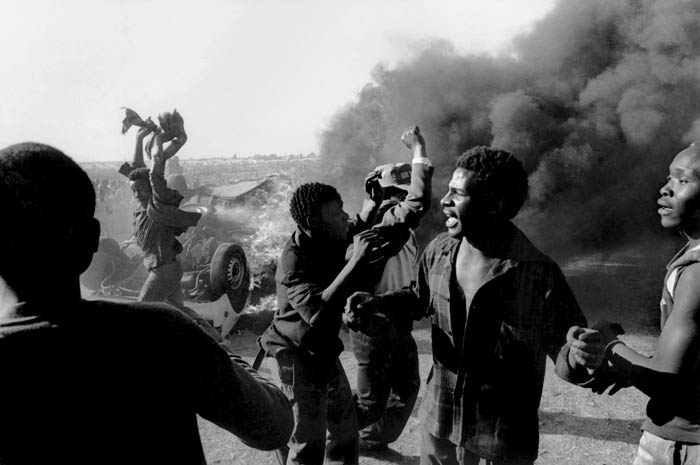
Now I am assuming Blood Knot holds a special place in AF’s heart as he acted alongside his friend and colleague Zakes Mogae at the world premiere in Johannesburg in 1961, multiracial theatre in defiance of the regime. In the same year SA became a Republic and left the British Commonwealth, 69 unarmed black protestors were shot dead by South African police, the Sharpeville Massacre, and Nelson Mandela and the rest of the ANC Executive were found not guilty of treason by the SA High Court. The following year though Mandela was arrested, tried and sentenced to life imprisonment on Robben Island.

Blood Knot, and AF’s other work (with his wife Sheila), his public support of the Anti-Apartheid Movement (which led to an international boycott of SA theatre) and the increasing international presence of his work outside SA, led to restrictions on his movement, including confiscation of his passport, and to constant surveillance and harassment. He worked alongside the progressive black theatre company, the Sergeant Players in the 1960s and 1970s, culminating in The Island, written with its original leads, John Kani and Winston Ntshona, as well as Sizwe Bansi is Dead, with its more obvious Brechtian and Absurd influences, also from 1972. His other most well known plays, A Lesson From Aloes, (which I stupidly missed when it appeared at the Finborough recently), Master Harold … and the boys, which is about to be revived at the NT, and The Road to Mecca, date from the late 1970s and 1980s, but he hasn’t slowed down continuing to examine the issues which have arisen in SA society since the end of apartheid.

Morris (Nathan McCullen) can pass as white but, for reasons that are never made entirely clear, has returned to live with his half-brother Zachariah (Kalungi Ssebandeke, who wrote the very well regarded Assata Taught Me performed at the Gate a couple of years ago). Under Apartheid, people defined as “Coloured” had a different status to those classed as White, Black, East Asian or Cape Malay. This meant that they were not confined to Homelands but their movement and employment was still heavily restricted and their economic prospects constrained. But, as you might expect, such classifications of those with mixed heritage, as well as being reprehensible in principle were difficult to “police” in practice. This is what the play explores.

The fastidious Morris looks after the shack whilst Zac trudges off to work every day. They dream of saving enough from Zac’s earnings to buy a farm, live frugally, with minimal social interaction but share a rich life of imagination. Zac, with Morris’s help since he is literate, strikes up a pen-pal relationship with a woman, but, when they realise she is white, with a policeman brother, they decide that Morris will have to take up her offer of a date in Zac’s place. Zac spends their savings on a fine “white” suit for the meeting, but, when the girl breaks off the correspondence, the clothes become the catalyst for a surreal, and increasingly provocative and complex role-play, or worse, where Morris, as “white” starts to bully Zac, and Zac in turn, harbours a desire to kill Morris. There is no resolution. They are tied together by familial love, but shattered by the system that they live in.

Given the quality of the dialogue, the sure hand of director Matthew Xia, now in charge of the Actors Touring Company and who was behind the revival of Sizwe Banzi is Dead at the Young Vic in 2014, and a very effective set from Basia Binkowska, (who also impressed in the Lyric Hammersmith OthelloMacbeth), I suspect I was always going to be partial to the idea of this. However the careful performances of both actors, with a palpable chemistry between them, definitely helped. I can’t pretend that the claustrophobic, dense structure and rhythm of the play, especially as it moves into the ambiguous final third, didn’t occasionally frustrate and I wasn’t entirely convinced by the distracting electronic sound design of Xana. After two powerful, if sometimes ponderous, performances of AF’s plays I think the next bite of the cherry needs to have a little more dramatic variety and a bigger cast. I gather Master Harold … has one extra character. Phew.

Shipwreck at the Almeida Theatre review *****

Shipwreck

Almeida Theatre, 18th March 2019

The Tourist, as this blog shows, is a nice bloke given to giving creatives the benefit of the doubt. Hence the string of positive reviews on these pages. He likes to think that he is wise in his choice of entertainment. The reality is that he just wants to be liked, even when it manifestly doesn’t matter.

Even so he admits to toddling off to the Almeida to see Shipwreck with some trepidation. Reviews were mixed but rarely overwhelming. The SO, BD and LD had all bailed out in advance, for good reasons, though Dad’s sales pitch was about as convincing as that of The Apprentice candidate, (a clever Trump reference there people), who is fired in week one. The Tourist and BD had abandoned Anne Washburn’s Mr Burns one act in, though this was in part due to “cold-induced fatigue”/teenage hangover, and the SO had to abandon The Twilight Zone, now playing at the Ambassadors Theatre, due to a domestic crisis. A poor familial showing all round. Would lightning strike thrice then?

Certainly not. I bloody loved this. As usual that is of no use to you if you fancy seeing it since it is now all over but it really shows why Rupert Gould and the Almeida have such faith in Ms Washburn’s abilities. There may be some dramatic shortfalls, largely born of excess ambition, but boy can she turn a phrase. Now I don’t know when, or if, this will make its way to the other side of the pond but if it does, assuming you are a member of the very echo chamber it purports to excavate, then you should definitely see it. (I think I can safely assume that the Trumpian side of the cultural divide will have no interest in watching their “opposition” introspect, though they would get apoplectically wound up).

Shipwreck is a meticulous unpicking of liberal America’s current paralysis in the face of angry populism. It may be very time and place specific but its messages are universal. Populist politics, which can and will turn ugly, cannot be dismissed, mocked, pandered to or ignored. It has to be confronted and unpicked, piece by piece, through argument, mobilisation and democratic will. Hand wringing and virtue signalling won’t cut it.

By bringing together seven privileged, articulate, white bar-one, liberal American progressives in a snowbound, holiday farmhouse in upstate New York, and then letting then slug out the arguments one by one, with a useful, if not unsurprising twist, AW is able to rehearse all the arguments in forensic detail. The dialogue is actually centred on June 2017 after the ex head of the FBI, James Comey, offered up his damning testimony before the Senate Intelligence Committee. Comey, you will recall, or maybe you won’t for that is one of the points the play forcibly makes, was the bloke who was fired by Trump, ostensibly on the recommendation of the attorney general Jeff Sessions and deputy attorney general Rod Rosenstein because the FBI rank and file had allegedly lost confidence in their director, but, in reality, because Trump feared the net closing in the the strands of collusion with Russia in the election, taken up subsequently in the Mueller enquiry. Comey, you may also remember, was the chap who rashly indicated that he was re-opening an investigation into the so-called Hilary Clinton e-mails just before the election having previously said there was no case to answer. Confused? I am and that is the point. Keeping up with the truth is tough enough. Unpicking truth, lies and fantasy when narrative and ideology conflict and when there are multiple “reporting” platforms makes it near impossible even for those with the time, inclination and critical faculty to care.

One of the pivotal moments in the debate between the Shipwreck crew comes when, I think, Adam James’s lawyer Andrew reminds then of the time when Trump, in a Republican primary event, claimed the GOP bigwigs had pleaded with him to cool his opposition to the Iraq War. He had not publicly declared any such opposition. He just made it up. And kept repeating it. Then this kind of breathtaking audacity was a surprise. Now many have have become inured to it, just accept it or positively embrace it. Truth has always been a slippery fellow, manipulated by teller and beholder, and more so as time passes, but deliberate, outright fabrication is plainly dangerous to the body politic. But pitifully easy it seems.

The other key moment comes when Andrew’s partner, banker Yusuf, (Khalid Abdalla), admits he voted for the comb-over bogeyman in the election. With the age old excuse of “wanting to shake things up”. Justine Mitchell plays Allie, the sarky, Facebook-ing keyboard warrior “activist”, who criticises the complacency of others but whose logic can send her liberalism way off-beam. The hosts Jools (Raquel Cassidy) and Jim (Elliot Cowan) are more concerned with day-to day accommodation of the changed environment, expecting a reversion to their comfortable mean, whilst Tara Fitzgerald as Teresa and Risteard Cooper as Lawrence are the hippyish slackers, who bang on about the natural birth they have just come from and who see their green-tinged, near-socialism as adequate inoculation. And so all the strands of liberal call and response are represented.

Now I would have been happy with a couple of hours of this fascinating, pointed, if admittedly wordy, to and fro, but, AW being AW, she clearly felt we needed more. So we are introduced to Mark, an orphan of Kenyan descent, who has ended up in the foster care of a traditional, Christian, Trump-voting, rural couple Richard and Laurie, doubled by Risteard Cooper and Tara Fitzgerald. The connection is the farmhouse which Jools and Jim bought from them. Mark then becomes the mouthpiece for racial politics and identity. It is a clunky device but all is forgiven pretty much as soon as Fisayo Akinade as Mark opens his mouth. Now for those that don’t know Mr Akinade, he was the comic turn as Eros in the NT Antony and Cleopatra where he near stole the show from under Ralph Fiennes and Sophie Okonedo. He also starred in Barber Shop Chronicles which, for my sins, I haven’t seen, and in the Donmar’s Way of the World, St Joan and The Vote, as well as the Caryl Churchill short Pigs and Dogs, all of which I have. Here, in a series of monologues, in total contrast to the structure and mood of the group scenes, he charts the subtle, and not so subtle, racial dilemmas in his upbringing, imaging what it would be like to be a slave and describing his difficulties in describing the American racial divide to his own child. It is powerful stuff, sharp, funny and rhetorical, made more so by a very fine performance.

And there’s more. As if enough ideas haven’t been explored, AW then goes on to subvert the dramatic form in a very Churchillian (Caryl not Winnie) way and thereby offer up multiple theatrical opportunities for Mr Goold and, especially, the lighting and sound of veterans Jack Knowles and Paul Arditti. Firstly by having Fisayo Akinade playing a sheepish George HW Bush who is rounded on by the besuited, megalomaniac Trump about the Iraq War. And secondly, and this is where the fun really starts, going all out fantasy as Elliot Cowan (I think), bravely, morphs into a gold-painted, Caesar-esque unhinged tyrant, complete with bird-hooded priests, (yep you read that right), berating a nervous James Comey (Khalid Abdella again) during the infamous one-on-one meeting with Trump in the Oval Office where the POTUS allegedly tried to influence the investigation and demanded his loyalty. Mythic.

As in her previous plays AW shows she doesn’t seem to have an edit function, so even within the tripartite form she crams in so much more. References to Greek tragedy, the nature of art, politics and theatre (“art needs time, space and reflection” as Jools says – not here, AW just gets stuck in), class, incessant social media chatter and mock outrage, the lack of food and drink and their practical shortcomings, disparities in wealth between the couples. But always returning to the uncomfortable idea that the rise of Trump is a retaliation to the pious entitlement and performative shortcomings of white liberalism. And that what these people are most afraid of is losing their economic and cultural dominance to the unenlightened.

No plot, occasionally bonkers, no apologies speechifying, three hours plus, repetition and circularity. Shipwreck is so obviously flawed. But I don’t care because AW, even when she goes too far, can still slum-dunk ideas, message and theatrical thrills which the uniformly excellent cast and Rupert Goold, (and the rest of the creative team, including Miriam Buether symbolic, circular design and Luke Halls, who else, with his striking political and religious iconographic video,) greedily feast upon. It is complex, over-stuffed, baggy, ill-disciplined but in going beyond the usual incredulity at how the Orange One gets away with it, it is brilliant and telling.


Richard III at the Alexandra Park Theatre review ***

Richard III

Headlong, Alexandra Park Theatre, 17th March 2019

Right. Let’s get the gripe out of the way. Maybe in the smaller venues where this production will tour it might creep up to a 4* but Alexandra Park Theatre, whilst an undeniably superb space after the refurbishment, is just a little too cavernous to accommodate the claustrophobic history/tragedy/comedy/thriller/psychodrama/vaudeville which is Dickie 3.

Chiara Stephenson’s Gothic, dark, old-school castle with a twist, namely the introduction of multiple full length, revolving mirrors, together with the lighting of Elliot Griggs, is a winner set-wise. But it utilises barely a third of the huge proscenium stage, and I would guess, since all is shielded in dark fabric, only a similar portion of the depth. To rectify this the actors, in addition to coming on and off through the glass revolves, enter from the auditorium to the side of the stage, and, for the London scene, pop up in the “slips” and bark back to the stage. It is the right look for John Haidar’s galvanic production and Tom Mothersdale scorpion delivery as Dickie but seems lost in all this volume. As do the lines. Not because of the delivery. In most cases this is sound as a pound but set against George Dennis’s throbbing, pounding, electronic sound the intensity is diluted, and occasionally, for the aurally challenged such as the Tourist, lost completely.

Now this being a Headlong production, (albeit in conjunction with Ally Pally, the Bristol Old Vic, Royal and Derngate and Oxford Playhouse, all of which it will travel to, as well as the Cambridge Arts Theatre and Home Manchester), there is still much to admire. With the Mother Courage, This House, Labour of Love, People, Places and Things, Junkyard, The Absence of War, American Psycho, 1984, Chimerica, The Effect, Medea and Enron, Headlong has been responsible for some of the best theatre the Tourist has seen in recent years. He even liked Common, John Haidar’s last outing, putting him in a minority of one. He would therefore never miss anything the company produces. All My Sons at the Old Vic and Hedda Tesman at Chichester already signed up with willing guests.

John Haidar has opted to sneak in a bit of Henry VI to provide context, (complete with first taste of murder before that “winter” even starts), juggles the standard text and cuts out superfluous characters, though doubling is kept to a minimum, and generally encourages a lively approach to the verse, (though nowhere near the gallop of Joe Hill-Gibbons’s Richard II at the Almeida recently) . This means each half barely ticks over into the hour. The focus then, as it should be, is on Tom Mothersdale’s Richard, and the “family” saga, if you will, a family from which Richard is permanently excluded, rather than the politics. Tom Kanji’s Clarence doesn’t take up too much time, the other assassinations are similarly rapidly dispatched, Stefan Adegbola’s smug Buckingham and Heledd Gywnn’s Hastings, (as arresting a presence as she was in the Tobacco Factory’s Henry V), take precedence in the jostling for power, and the scenes with the three women, Dickie’s, to say the least, disappointed, Mum, the Duchess of York (Eileen Nicholas), Edward IV’s Scottish widow Elizabeth (Derbhle Crotty) and sacrificial lamb Anne (Leila Mimmack), are given plenty of air time.

With Heledd Gwynn doubling up as Ratcliffe, Tom Kanji as Catesby and Leila Mimmack as Norfolk, the production achieves an admirable gender balance and also tips Richard’s murderous ascendancy into a joint enterprise, at least until he shafts his mates. The main cast is completed with John Sackville’s ghostly Henry VI, Michael Matus as Edward IV and then Stanley and Caleb Roberts as Richmond (and utility messenger). The stage then is literally set, what with the opening soliloquy and those mirrors, for Dickie to slay his way to the ghostly visitations. Each murder is marked by a red flash and a loud buzz just to make sure we get it.

Now the Tourist has seen young Mothersdale up close in the slightly disappointing Dealing with Clair at the OT recently, in the magnificent John by Annie Baker, as well as roles in Cleansed at the NT and Oil at the Almeida. He’s got it, no doubt. As he shows here. And, as he capers around the stage, in dark Burgundy suit and leather caliper, long-limbed, lank-locked, threatening, cajoling, pleading, squirming at Mummy’s rejection, he is certainly the “bottled spider” of Will’s description. But I am not sure he finds an angle. There is the caricature Richard of Thomas More Tudor myth, as Reformation Elizabethan England found its way in the world ordained by God. There is Richard as psycho executing to a plan, villainy as predestination. There is nudge, nudge, wink, wink comedy Richard who recruits us into the fun. Or there is poor, diddums, “nobody loves me so I’m going to show you” Richard who can’t stop once he gets started. And more. With multiple permutations.

Here we seem to get a bit of everything in this swift, safe production. Not the monomaniac man-child, (any resemblance to a current world leader is surely entirely deliberate), of the brilliant Hans Kesting in Kings of War, not the compulsive egotist of Lars Eidinger in the Schaubuhne production at the Barbican, not the amoral sociopath of Ralph Fiennes at the Almeida with that infamous rape scene, not the trad manipulator of Mark Rylance at the Globe. Of the other recent Dickie’s that the Tourist has enjoyed Tom Mothersdale comes closest to Greg Hicks’ take in the pint-sized, though still extremely effective production, under Mehmet Ergen at the Arcola in 2017. Except that Greg Hicks made every single word count and plumbed some very ugly depths in Richard’s misogynism and unquenchable grievance. And with chain permanently attaching arm to leg he offered a stark visual reminder of his “deformation”.

There are some fine moments, the “seductions”, the ghosts behind the mirrors, TM cringing at Mother’s curses and her recoiling from his touch, some meaningful gobbing, the writhing in the Bosworth mud at the end, and, like I say, this will probably work better at, say, Bristol or Oxford, but I would have preferred a more thoughtful, and yes, longer, interpretation. Still the one thing you know about Richard III’s, like Macbeth’s, Lear’s and Number 38’s, there will be another one along shortly.

English Chamber Orchestra at Cadogan Hall review *****

English Chamber Orchestra, Jessica Cottis (conductor), Ben Johnson (tenor), Ben Goldscheider (horn)

Cadogan Hall, 16th March 2019

  • Ravel – Le Tombeau de Couperin
  • Britten – Serenade for Tenor, Horn and Strings, Op.31
  • Purcell/Britten – Suite of Six Songs from Orpheus Britannicus
  • Stravinsky – Pulcinella Suite

I love Britten’s Serenade, first performed in 1943. It might be one of my favourite ever pieces of classical music, up there with Beethoven’s Seventh Symphony, Bach’s Violin Sonatas and, I am not ashamed to admit, The Four Seasons. I am not alone. There was a delightful senior in the lift at Cadogan Hall who concurred. But it needs a tenor and, especially, horn player, of the highest rank, to pull it off. The ECO of course has it in its genes, Benjamin Britten having been its first patron and founding musical influence.

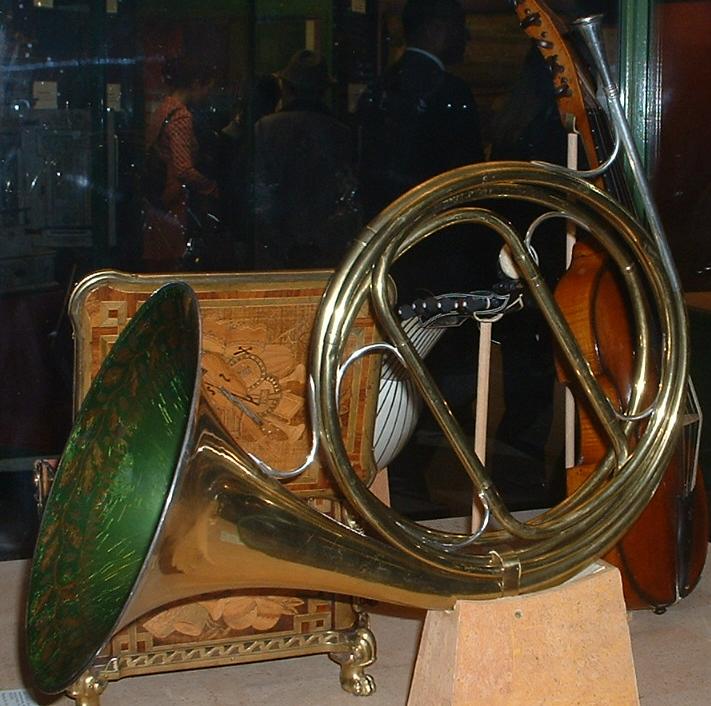
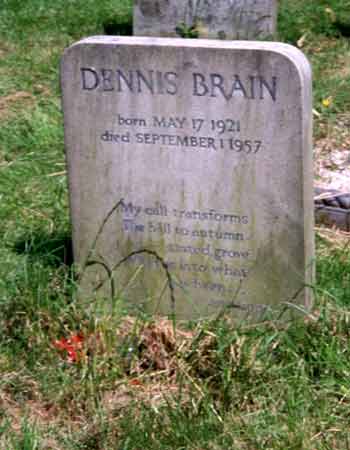
Now there are many fine recordings, (I assume based on the artists involved), but as ever in Britten’s music the best bet is to have the great man conducting and, in this, if not in all, cases, Peter Pears, singing. I can see why the experts reckon the recordings with the mercurial Dennis Brain, for whom the part was written, on horn are definitive, but the first, from 1942 a year after the piece premiered, is a bit period scratchy for my liking, emotional as it is, and the second, a decade later, falls a bit short musically. Dennis Brain might just have been the greatest horn player of the C20 coming from, and there can’t be too many of these, a veritable dynasty of horn players. He died far too young, in rock’n’roll style, by wrapping his sports car round a tree. If he had lived longer who knows what the next generation of modernist composers, the likes of Ligeti and Berio, might have conjured up for him.

As for the Serenade though I actually prefer the later Britten/Pears recording on Decca with the LSO and Barry Tuckwell on horn. More musical, and Pears less comedy toff sounding, even if the horn is a tad less mysterious. I also love the second Bostridge with the BPO and Rattle and their principal horn Czech Radek Baborak. After all Ian Bostridge is surely better than Pears in most of Britten’s supreme vocal music. On that note make sure not to miss his Madwoman in Curlew River with the Britten Sinfonia at Milton Court next March. The staging in 2013 for Britten’s centenary, directed by Netia Jones at St Giles Crippplegate, with players from the BS, and IB in the same role, was extraordinary. One of the best “opera” experiences of the Tourist’s life.

So tenor Ben Johnson and Ben Goldscheider on horn had a lot to live up to. And by and large they did. The Serenade is not performed as often as it should be IMHO which perhaps reflects the combination of small string ensemble, a skilled horn player and a dramatic tenor. Ben Johnson certainly has the flair for the dramatic, he was an ENO Harewood artist, and his clear, if not overwhelming voice, fitted the piece and hall well. Ben Goldscheider, a BBC Young Musician finalist, who is now studying with the aforementioned Radek Baborak, left a deeper impression, adept in the more virtuoso passages and capturing the mystery and thrill of the more striking passages, even if the more lyrical settings lacked a little emotion.

The six movements, (book-ended by solo Prologue and Epilogue for the horn eschewing valves to create natural harmonics), comprise settings of poems by Charles Cotton (Pastoral), Tennyson (Nocturne), Blake (Elegy), a C15 Anonymous Dirge, Ben Jonson (Hymn) and Keats (Sonnet). Serenade literally means “an evening piece” and the poems combine to take us through nightfall from dusk to midnight. The dark heart of the work is the Black “O rose thou art sick” and the scary, pounding march of the Dirge that follows, “This ae night”, but the tunes and, typically with Britten, the atmospheres, by turns haunting, comforting, placid, dancing, of the outer settings, are exquisitely rendered. As usual Britten uses all sorts of clever and arresting techniques, the lilting string chords in the Pastoral, the echoing horn in the Nocturne, the semitone infection in the Elegy shifting the key from major to minor, the vocal repetition in the Dirge against the sinister string Fugue, the hunting horn in the Rondo hymn straight out of Mozart’s playbook and the string sustains in the Sonnet as we drift off to sleep, (not literally of course, and in any event, BG’s off stage Epilogue reprise would soon wake you up).

I see that Australian-British conductor Jessica Cottis played the French horn and trumpet in her youth which perhaps explains her confident way with the Serenade. I intend no offence but, physically, there isn’t much to Ms Cottis, I estimate 3 of her to 1 Tourist. She has a heck of a presence on the podium though. The ECO numbers on the night may only have maxed out in the Stravinsky, but Jessica Cottis teased out plenty of energy and power when required in this and in the rather more phlegmatic Ravel. I see she has had a couple of recent chamber operatic gigs with the Royal Opera House for Mamzer and The Monstrous Child and has appeared as a regular guest conductor after roles as Assistant at the BBC Scottish SO and Sydney SO under Ashkenazy. On the strength of these interpretations if I where looking for fresh musical leadership I would give her a job.

My last exposure to Le tombeau de Couperin was from Angela Hewitt in the solo piano version at the RFH with MSBD and MSBDD. No review on these pages as, thanks to collective misunderstanding, we managed to miss the star turn, Bach’s Partita No 4, which was, to saw the least, bloody annoying. Still the Ravel was superb and MSBDD was particularly chuffed, this being one of his favourite pieces. Now Ravel was a dab hand at lushly orchestrating other composers’ piano works but for his own he was a little more restrained. That isn’t to say that LTDC isn’t brimful of “colour”, that being the standard word to describe Ravel’s gorgeous ideas, just that you can feel the sombre tones which come from the work’s inspiration as a memorial to the close friends Ravel had lost in the Great War. This version of LTDC takes four of the piano’s six movements: the Prelude, where the traces of harpsichord ornamentation, this was after all inspired by the Baroque harpsichord genius Francois Couperin, is most apparent in strings and oboe; the Forlane, a Venetian dance which the Pope at the time had tried to re-introduce to replace the smutty tango, (is there no end to Catholic sex guilt), but which Ravel spices up with some dissonant notes; a courtly Menuet that goes a bit Scottish jig and ends up with a bit of that Ravelian jazz vibe; and finally a Rigaudon which is a medieval Provencal dance with central processional. The whole piece gives woodwind and, especially, brass a good workout which the respective members of the ECO seemed to thoroughly enjoy. I don’t have a recording of this. Clearly I should.

Apparently Henry Purcell composed over 250 songs and vocal works in his short 36 year life with three volumes being published posthumously as Orpheus Britannicus. BB, like so many subsequent British composers, loved HP, as would anyone in their right mind. Indeed they have a lot in common: inventive harmony, matchless word painting and transparent and direct melody in their music for voice. BB, along with Michael Tippett, was instrumental in bringing the near forgotten HP back into the mainstream, in part through settings of songs from the OB volumes. HP had only provided figured bass lines as accompaniment to the vocal parts but that is all BB needed, along with his preferred chamber orchestral forces, to bring the songs to life. Peter Pears, in editing the vocal lines, foregoes any frilly ornamentation and together the lads created some cracking numbers, modest in sound even if the lyrics are a bit British bulldog patriotic. It doesn’t look like they crop up on the Last Night of the Proms. They should. I see that BB himself writing about his and PP’s arrangements hoped to capture “something of that mixture of clarity, brilliance, tenderness and strangeness which shines out in all of Purcell’s music“. Could just as easily have been his own manifesto.

Having literally changed the course of music with those ballets Stravinsky, and Diaghilev as the promoter needed to come up with a new trick after the War. Diaghilev, in yet another inspired move, presented IS with a collection of music by Giovanni Battista Pergolesi, he of the Stabat Mater, (and some criminally ignored operas and unrecorded orchestral pieces), and a book of stories about the stock commedia dell’arte character Pulcinella, or wife-beater and all round yob Mr Punch to us Brits. (BTW Pergolesi, like Purcell died way too young, though he only managed to get to the very rock’n’roll age of 26). From this IS conjured up the ballet Pulcinella which premiered in Paris in 1920 conducted by maestro Ernst Ansermet with choreography by Leonid Massine and designs by some bloke named Pablo Picasso. And so began IS’s neo-classical phase. Oh yessss.

The suite, written in 1922 and subsequently revised, (as IS was wont to do). is scored for chamber orchestra like the full ballet but the vocal parts are dumped and the material is condensed into 8 movements. I have recordings of the full ballet from Abbado and the LSO and Marriner and the ASMF, (unsurprisingly, given its genesis, Baroque specialists love having a go at this). In this performance Jessica Cottis and the ECO trod a nice line between the kind of crisp, HIP influenced, neo-classical Stravinsky now commonplace and the older, lusher, vibrato-ey style, though it didn’t quite make enough off the off-kilter chords and bouncy rhythms, after all most of the movements are based on dances. This is core repertoire for the ECO and it shows.

Next up from the ECO at Cadogan Hall on April 16th a brighter affair, the Mendelssohn VC with some Schubert, Suk and the cinematic Bartok Divertimento, led by the, er, ECO leader Stephanie Gonley and then. on May 22nd, some Mozart, Beethoven and Stravinsky’s Concerto in D, from the other end of his neo-classical period. Looking forward to the former concert but will miss the latter. Clashes with the Stockhausen Donnerstag aus Licht. What have I let myself in for.