
Nightfall at the Bridge Theatre review ***

nightfall-sky

Nightfall

The Bridge Theatre, 10th May 2018

If you haven’t been yet the Bridge Theatre offers up London’s best large scale flexible space. And very nice toilets. You’ve probably know that if you have any interest in things theatrical. You will also have probably have read that the space, and specifically the stage itself, here “thrust” into the audience, is the biggest handicap, as well as attraction, for this production of Barney Norris’s new play.

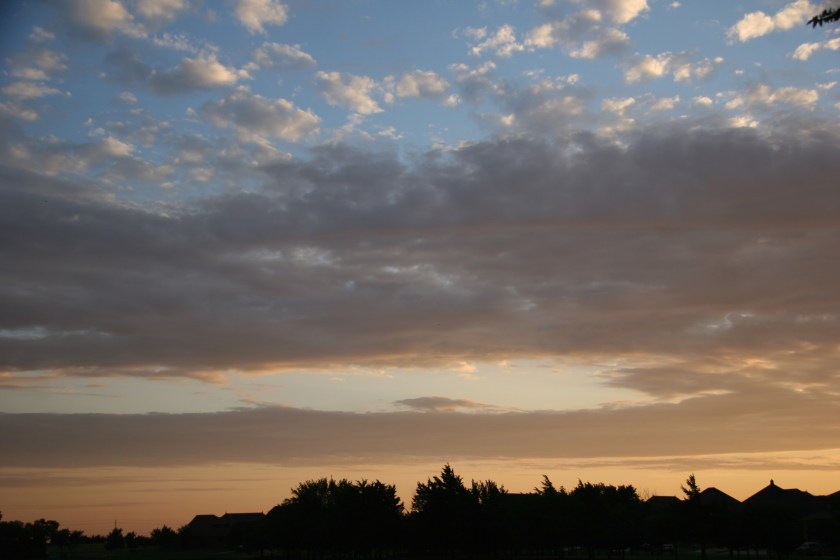
For mercurial designer Rae Smith, after the grim dystopian disappointment of the NT Macbeth, has conjured up a belter here along with lighting designer Chris Davey. A farmhouse cottage, its unkempt back garden, a massive, rusty oil pipe which runs behind it and a stunning realisation of the twilight sky, the backdrop for both acts. It looks amazing. Unfortunately the play itself, and its four characters, struggle to match its majesty. This is a play, as the criterati have unanimously observed, that would work better on a smaller stage. Not just because the subject, a dysfunctional family, is intimate, but also because the production, under the direction of Laurie Sansom, (he of the James Plays), is necessarily static.

That is not to say this isn’t an interesting drama, especially after the disclosures at the end of the first act. It just takes a bit of time to get going. We are on familiar territory. The inverse of the rural idyll. The trap that is the contemporary farm. I have raved before about director Hope Dickson Leach’s The Levelling, one of the best films of last year. which turns this setting into a visually and dramatically compelling narrative (The Levelling film review *****. The idea of Simon Longman’s Gundog at the Royal Court was powerful even if the play itself couldn’t support its weight (Gundog at the Royal Court Theatre review ***). Barney Norris himself has explored relationships in the rural setting of his native Hampshire before I gather, though I haven’t seen any of this work.

Jenny’s (Claire Skinner) husband has died leaving her the struggling farm. She is still grieving and prone to a sip or two of pinot grigio. Daughter Lou (Ophelia Lovibond) works at a local estate agent/developer but dreams of escape. Son Ryan (Sion Daniel Young, so good in Gary Owen’s Killology) has taken on the labouring. We first encounter Ryan with his friend Pete (Ukweli Roach) illegally tapping into the pipe, a ruse to rescue the farm. Pete has a bit of history with crime we learn and had a relationship with Lou, though she is now wary of him.

I understand why Barney Norris takes his time to flesh out his characters before advancing the plot but the wait does drag a little and, curiously, we don’t really get to appreciate why they have ended up tied to this place and each other. There are tensions, though again wisely, there are also still clear bonds between the four of them. As the secrets come out, as you knew then would, the pressure ratchets up. It doesn’t end well. Chekhov’s fingerprints are all over this.

Claire Skinner (a wonder in Terry Johnson’s underrated Prism at the Hampstead) does a grand job of showing Jenny’s slow disintegration and her desperation to keep the kids close at hand. Ukweli Roach and Ophelia Lovibond flesh out the relationship between Lou and Pete, alternately tender and matter-of-fact, and Sion Daniel Young shows us how immature Ryan tries to dodge reality.

It is worth staying with it, for there is truth in these characters, and it is easy to see what attracted Nicholas Hytner in wanting to stage it. I could also see, and hear, why people might be attracted to Barney Norris’s novels, where description and insight presumably augment any overly elegiac plotting. Writing about the everyday for the stage is hard, (the novel or film always works better), but Mr Norris knows how to. Just maybe not for this stage. Mind you I see that £15 will get you a seat up close in the pit for the last week or so and that is well worth it.


The Writer at the Almeida Theatre review *****

writer

The Writer

Almeida Theatre, 9th May 2018

The Writer is …. an absolutely staggering piece of …. writing. No other way to say it. I’d wager there were a few punters in the audience that disagree with me but I think Ella Hickson, along with director Blanche McIntyre and the rest of the creative team, and an outstanding cast, have conjured up a masterpiece. In the same breath it provokes, educates and entertains. It deserves a much wider audience that the well-heeled punters like the Tourist who make up the Almeida throng. Whilst the Almeida may not immediately struck you as part of the solution to the problem of access for telling stories from women on stage, it was heartening to see this project realised there.

It starts with an impellent Lara Rossi, (who is more than a match for Romola Garai, superb as the eponymous Writer), playing a young actor/writer who, post performance, eloquently demolishes the lazy, sexist premises on which a complacent Samuel West’s direction is constructed. As she says theatre is “famous people, doing boring things badly”! Men are judged on what they produce, women on how fuckable they are. They have inevitably met before. We discover though that they are acting out the Writer’s text and sharply shift to a staged Q&A in which the nervous, tongue-tied Writer’s work is undermined by the “real” Director imperiously played by Michael Gould who praises its “promise” but inveigles against it lack of “structure”. Just who is going to watch this sort of stuff?

Scene two switches to the home of the Writer and partner, also Samuel West, who bullies and cajoles the Writer into agreeing to adapting her work into a film. It is all about him. She yearns for, and needs, more. The “biological clock” is invoked. The next, I think deliberately disorientating and galling, scene sees the Writer in a safe, supportive female only space, a jungle-y retreat of sorts, invoking Semele and other Origin mythological mumbo-jumbo (with some fantastic realisation from Richard Howell’s lighting, Emma Laxton’s sound and Zakk Hein’s video). Scene four sees the now confident Writer arguing with Michael Gould’s director about the play to date. He is viciously pulling the prior scene apart, whilst patronisingly banging on about the “rawness” of the opening. The final scene sees the writer with another partner, this time played by Lara Rossi. The compromises and imbalances of scene two are revisited.

From this structure Ella Hickson is able to explore fundamental arguments about how power, the patriarchy and contemporary capitalism, (as Lara Rossi’s character explains early on), affects, and infects, the creative process, art and the theatre and our relationships. It is a polemic of sorts, but Ms Hickson dissects her material, with fearless, supple and sceptical self-awareness. It confronts and confounds the audience, for sure, is intellectually reflexive, but avoids aggressive predictable dialectic. It revels in, and reveals, the artifice of theatre. Which in some ways makes Romola Garai’s performance, remember she has to convincingly “act” this all out, even more remarkable.

If thats sounds like a recipe for a dry evening, think again. The “drama” is delivered with real passion, even anger, with wit, and with a formal inventiveness, that left the Tourist with bum glued to his seat, ears straining, mouth open. Anna Fleischle’s design, (and the on-stage managers), intelligently accommodate the play’s inversions with repeated construction and de-construction. Ultimately though it is the control that Ella Hickson exerts over her themes, assisted by Blanche McIntyre, that makes this brilliant. It twists and turns but it knows exactly what it is doing and saying.

I learnt a lot. I recognise the behaviours exhibited by the men on stage here, especially Samuel West in the second scene. I don’t know how to avoid them. I do know I had to think very hard about what I would say about the play. It will make you want to argue. Ideally not while it is going on although maybe we should.

At one point, forgive me I forget when, the point is made that the Writer will move on to more established theatrical storytelling forms. Presumably this will be so for Ms Hickson thought I doubt she will write anything as powerful as this story about the struggle to tell women’s stories. Mind you Oil was a work of near genius in my book and also shows she isn’t going to fuck about with little subjects. I think she might just be the best and most challenging writer for the British stage right now. Ignore those who will say this is just irritating, indulgent self-therapy. They are wrong. Leave them to watch nonsense like that revival of Absolute Hell or Rattigan knock-offs. This is what theatre is all about.