Beethoven and Shostakovich from the LSO at the Barbican review ****

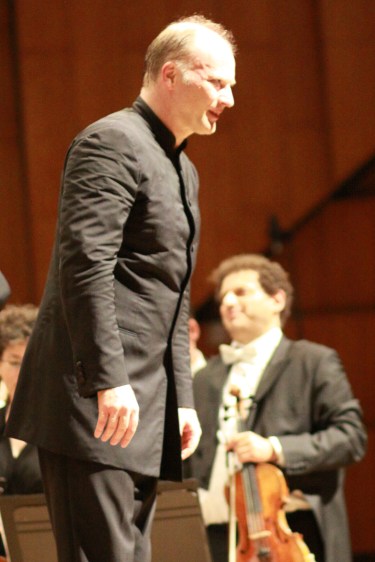
nosedajpg

London Symphony Orchestra, Gianandrea Noseda, Nikolai Lugansky (piano)

Barbican Hall, 8th April 2018

  • Beethoven – Piano Concerto No 4 in G major, Op 58
  • Shostakovich  – Symphony No 8 in C minor, Op 65

I could be imagining it but the LSO seems to be notching up a gear, from its already high level, each time I hear it. You would never get to hear Shostakovich under Sir Simon Rattle’s baton but here we had one of their two Principal Guest Conductors, in the shape of the inestimable Gianandrea Noseda, tackling DSCH’s mighty gloom-fest No 8, and delivering as good a rendition as you are likely to hear. In recent years, if I wanted to hear convincing performances of DSCH symphonies I would probably look elsewhere, to the LPO and Vladimir Jurowski maybe, though the last time I heard them take on No 8, at the Proms in 2015, it wasn’t perfect.

It is all about nailing that epic first movement. I say movement but let’s be honest it is pretty much a symphony in itself. Weighing in at a few minutes short of half an hour, depending on tempi, it winds up, through marches, to an immense tutti, strings blazing, drums rolling, and most of the woodwind and brass involved, before subsiding back to the immense adagio recapitulation of the second theme, with woodwind solos, that DSCH excelled at and which seem to cross all 11 of Russia’s time zones. And, it the conductor and orchestra aren’t careful to establish the line, it can feel like several hours. The tunes themselves aren’t complicated, the key “fate” motif is laid out right at the start, before the two lyrical themes are developed, and it is the fate motif to which orchestra returns before the fabulous cor anglais solo. Time for the LSO’s Christine Pendrill to shine which she did. Her woodwind colleagues also get there time in the sun in the later movements, notably the picccolo of Patricia Moynihan, the bassoon of Rachel Gough and the bass clarinet of Renaud Guy-Rousseau.

Having come out the other end of this movement. DSCH then slaps you, first with one of his textbook sardonic, militarised marches, and then with a moto perpetuo with screams that reeks of the battlefield, (think planes buzzing overhead) and contains the second of the symphonies massive tutti climaxes. The following slow passacaglia movement reworks the fate motif through brass, strings and, memorably, into the bass, before we get some relief in the concluding C major rondo kicked off by the bassoon solo. Even here though we get a repeat of the howling tutti before bass clarinet takes us to some sort of rest with alternate pizzicato and sustaining high strings (the fate motif inverted). As in the first movement, this final allegretto has plenty of action for snare and bass drums and trumpet calls.

DSCH claimed the symphony was, overall, uplifting and life affirming, pointing to the brighter, dancey, folk rhythms in that finale. He must have been taking the p*ss, as so often, given the extreme violence and suffering which characterises the previous movements. This was written over 10 weeks in 1943. Those punters who were expecting a sequel to the story of patriotic resistance apparently laid out in its predecessor, the Leningrad, were sorely disappointed. The Nazis were on the back foot now in Russia but, in retrospect, Dmitry was never going to big up Stalin and the leadership for saving Mother Russia. Its ambiguities are barely concealed, and, when DSCH was once again pilloried for his pessimism in 1948, it was singled out for special criticism.

Yet, for me, all of these middle symphonies wrestle with the same dilemmas. They are just music, so we must be careful not to get sucked too far into the “what did DSCH really mean” cottage industry, but, if we accept that context had an impact then it seems right to believe, that these symphonies, warts and all, are warnings against the depths to which humanity can sink whatever the ideological backdrop. This is not a symphony to set alongside other C minor tragedy to triumph belters, Beethoven 5, Mahler 2, Bruckner 8, it is too brutal overall and the light at the end of the tunnel isn’t bright enough, even with the ocassional tender passages, but I do think it is DCSH’s best, alongside 5 and 10.

Mr Noseda and the LSO are engaged in recording a DSCH symphony cycle. Not sure if this will form part of it but it would be a fitting contribution, assuming the engineers master the Barbican sound. My benchmark recording, as it so often is, is from the maestro Haitink with the Concertgebouw. This performance matched it.

I am afraid I wasn’t as convinced by Nikolai Lugansky’s rendering of Beethoven Fourth Piano Concerto. Mr Lugansky is highly regarded, seen as sympathetic to the music and unshowy, but he is keen on his tinkly rubato, whereas I like my Beethoven direct and muscular. This was too Romantic and insufficiently Classical if you take my meaning. Noseda and the LSO offered up a perfectly apposite support, especially in the strings, but yielded too much to the piano in the second movement, and especially, concluding in the rondo, so it all went a bit arpeggio crazy. Mr Lugansky encored with some Mendelssohn which didn’t help my mood

Still it’s Beethoven and it wasn’t that annoying. And given the quality of the Shostakovich it was a minor irritant. Gianandrea Noseda and the LSO tackle No 10 next. My favourite. Can’t wait.


Andreas Gursky at the Hayward Gallery exhibition review ****

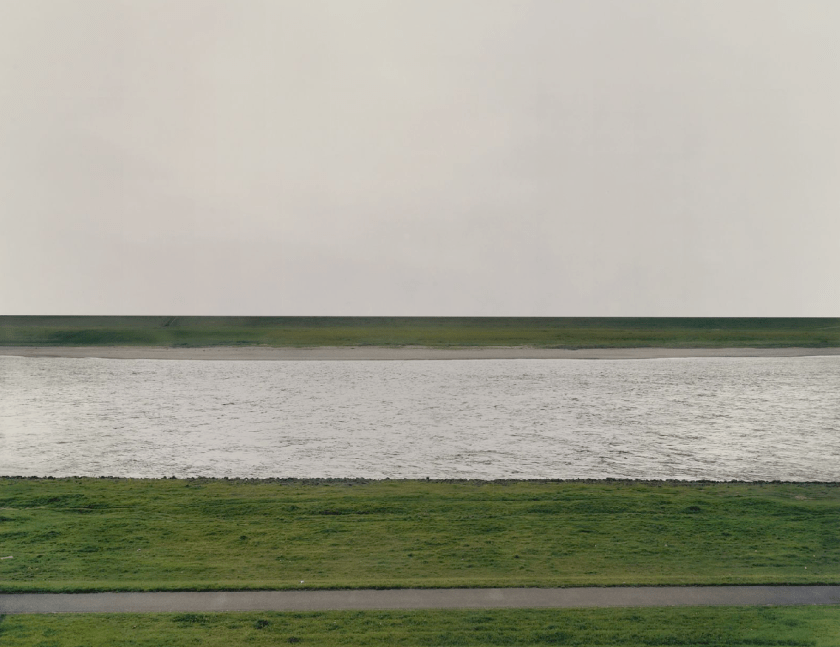
5635684873_dc20fe9861_o

Andreas Gursky

Hayward Gallery, 4th April 2018

Odds are you have seen one of Andreas Gursky’s giant, hypnotic, immersive photographs. He charts the relationship between man and environment, fiddling with perspective, highlighting the repetition of our own industry and locating the beautiful and the ugly, often simultaneously. His viewpoint is oftendistant but his technique and process yields intense clarity and detail. You may start this exhibition thinking “yeah, so what” but by the end you will be enthralled, perturbed and maybe a little overwhelmed.

AG was born in Leipzig in 1955 but grew up in Dusseldorf when his family escaped to the West. His parents ran a commercial photography studio and he studied photography in Essen and then in Dusseldorf under Bernd and Hilla Becher. They are the conceptual artist couple who turned work-a-day industrial buildings into monochrome beauties. His peers, Thomas Struth, Thomas Ruff, Candida Hofer and Axel Hutte, made up the so-called “Dusseldorf School”, the name as bracingly unambiguous as much of their photography. Even those of us with only a cursory interest in photography will have encountered most of these artists. He used film early on but turned digital in the early 1990s extending the scope of his experimentation, notably with perspective and scale.

His early works shows people in his native Germany engaged in leisure activities dwarfed by both the landscapes they seem lost in and by the industrial or commercial activity which crops up at the margin. A sharp contrast of rural and urban, they hark back to the Romantic landscapes paintings of the previous century. He wasn’t averse to manipulation, as are painters, Rhine II, above, has been constructed by editing out a power station. Apparently this is the most expensive photograph ever sold $4.3mn.

Indeed there is a painterly sensibility throughout the exhibition in the use of colour and form, with nods to all manner of artistic movements, and even some straight homage with a photo of three Turner landscapes. These are not “true to life”, Gursky explicitly wants to “construct reality”, which brings them much closer to paintings than photos, albeit in blazing high definition.

Pretty soon he was on to architecture, focussing on the engineering necessities, unusual perspectives, public areas, any people on show once again are tiny in comparison to the structures. There is a minimalist intent to the work even if the outcome is complicated by repetition.

He pushed printing technologies to their limits in the 1980s and 1990s to create scale which allows to look at the pictures up close, to revel in the line by line detail, as well as from further away to take in the whole. It is a lot of fun moving between the two viewpoints, especially where he has taken this to abstract extremes with carpet tiles. pyramids, ceilings and the like. It also works when he has photographed industrial landscapes or townscapes from distant characterised by rectilinear structures, the containers and apartment blocks of the port of Salerno for example, the interiors of factories and warehouses, Amazon, devoid of workers, or a 99 cent store, roof reflecting, or across the roofs of a Tokyo suburb.

This tells us a lot about how organisation and process defines so much of our built environment and maybe something about the alienation that characterises complex economic systems. The perspectives merge background and foreground which again invites close examination. This is often achieved by combining multiple images to eliminate depth of field and it gets more disorientating the longer you look. He evens creates captivating viewpoints from space by manipulating satellite imagery.

As well as engineered structures he also photographs crowds from elevated viewpoints, whether it be open outcry trading floors, the energy of mass raves or the orchestrated choreography of displays in North Korea. These often create a sense of time standing still, especially where the image has been manipulated such as the F1 Pit Stop, despite the apparent frenetic activity (there are way too many mechanics in attendance here and the two crews are at different races!). This manipulation has been taken to greater extremes in more recent work such as the picture of Iron Man and his lady friend on a tropical beach, or the four German Chancellors improbably admiring a Barnett Newman minimalist painting. I’m not sure these measure up, (literally in some cases as these works are smaller in size), to the earlier studies, but they are often witty, like the shelves in the Prada store with product digitally removed.

It was a dullish day on my visit so the newly restored Hayward Gallery top floor lightwells were not shown off to full advantage but that might have been just as well given the dizzying amount of information the eye has to take in across this extensive retrospective, some 70 works in total. Even at the best of times I find it pretty demanding to create an impression of what I have seen or heard in these primitive posts. This exhibition was especially tricky to capture. I suggest you just go and see for yourself. For what is most extraordinary is that, with all the manipulation and technical wizardry, Andreas Gursky seems to capture exactly what we think we see. The eye and brain is no camera. AG knows that and knows we are just a little bit afraid of what we can do.


Coraline at the Barbican Theatre review ****

coraline

Coraline

Barbican Theatre, 7th April 2018

Was I the only person in the audience who knew nothing about Neil Gaiman’s 2003 cult children’s fantasy novella from whence came Mark-Anthony Turnage’s opera Coraline? It certainly felt like it. To be fair the provenance had dawned on me some time before the performance, but when I booked my perch it was the composer which drew me in not the subject. I guess if I had known more I might not have taken the plunge for fear of feeling a bit odd amongst this very youthful, in parts, audience. I am glad ignorance prevailed for I can report that this was a very fine entertainment indeed.

Music first. It isn’t MAT’s most inventive composition that is true though there are more than enough surprises to hold the attention of the musicophile. What it does do is fit Rory Mullarkey’s bracingly direct libretto, and Mr Gaiman’s pleasingly dark fable like the proverbial glove. It is through-composed, retaining MAT’s trademark spiky, jazzy, Stravinskian, often dissonant, tonality, with very little accommodation to its intended audience. Yet the musical ideas are plain enough even to the untutored ear (including mine). Our ageing actresses singing across the melody in their big number, their waltzes shifting to tangoes as we jump the house “divide”, the mouse orchestra, the close harmonies when ghosts are abroad and the way the Mother’s music darkens as we move from Good to Bad. Sian Edwards is an outstanding advocate of smaller scale new opera music, (she conducted the premiere of MAT’s debut opera Greek). The  Britten Sinfonia are about the best advocates of new music in this country. Put them together and the results are unsurprisingly sublime, bringing life to the score even when it flagged a touch. And Britten, whose Noye’s Fludde might be the best opera involving children because it, er, involves a lot of children, feels like he was an influence here.

Coraline, sung on this occasion by Robyn Allegra Parton, is a bolshie tween, who has just moved in to a new home with overbearing Mum, Kitty Whately, and kindly, inventor Dad, Alexander Robin Baker. The neighbours, Mr Bobo (Harry Nicoll), and the Misses Spink (Gillian Keith) and Forcible (Frances McCafferty), are a bit odd to say the least. The former directs a mouse orchestra and the latter were one time, fruity thespians. The front room of the flat has a door; Coraline walks through it to discover …. a mirror image of the room and parents with sown-up eyes, and another mother bent on evil. You can guess the rest even if you don’t know it. And even if you can’t guess there are plenty of people who could tell you.

If I am honest the couple of hours ex-interval running time could have been squeezed down to 90 minutes straight through, though I guess this might have tested the patience of some of the younger members of the audience. I have to say the youngsters were impeccably behaved throughout, reflecting the quality of what they were seeing and hearing, and putting to shame many an older audience what with their coughs, fidgeting, phone screens and snacking. Having just wrestled with a couple of excitable nephew/nieces the prior weekend I can appreciate just how well-behaved this audience was.

I can see why Rory Mullarkey felt the need to labour the story with excess exposition to ensure everyone knew where we were, but there was the odd time when the recitative might have been condensed. This too might have focussed the ear more on the best of MAT’s invention, and the fine stagecraft marshalled under Aletta Collin’s direction. The magic in particular was a tad underwhelming. On the other hand Giles Cadle’s claustrophobic revolving set, at the front of the otherwise blacked-out cavernous Barbican Theatre stage, was a marvel

The cast though was terrific, especially Robyn Allegra Parton as our heroine, who has a lot of singing to get through, and Kitty Whately as Bad Mum/Good Mum. Apparently Ms Whately had a bit of a sore throat for this performance. Only just about audible and it certainly did not inhibit her performance in any way. I recently saw her Sesto in Giulio Cesare, where she also stood out. Even with my ropey ears I heard most every line, which I can’t always claim is the case when the RSC treads the boards here.

Now this is a fair distance from Mr Turnage’s shocking breakthrough opera Greek, based on Stephen Berkhoff’s play, in turn drawn from Sophocles’s tragedy, Oedipus Rex. To this day that remains one of the finest pieces of musical theatre I have ever witnessed, at the ENO in 1990. His last full length opera, Anna Nicole, wasn’t too kid friendly either. I have never seen The Silver Tassie, based on Sean O’Casey’s anti-war play, though there is a concert performance in the diary.

I see MAT has indicated he may call it a day on opera after some critical muppets have had a pop at the score for Coraline, berating its relative simplicity. That would be a great shame IMHO. There is no doubt the audience was thoroughly bowled over by MAT’s family opera, even if these critics, who presumably never were, or never had, kids, are too blinkered to appreciate its appeal.

I don’t doubt a fair few of these critics get off on the gross, uber-mensch, toddler fantasies of racist, anti-semite Richard Wagner. Hmmmm…..

Laura van der Heijden and Petr Limonov at Wigmore Hall review ***

cello-2820987_1920

Laura van der Heijden (cello), Petr Limonov (piano)

Wigmore Hall, 2nd April 2018

  • Britten – Cello Sonata in C major, Op 65
  • Shostakovich – Cello Sonata in D minor Op 40

21st December 1960. Britten and Shostakovich are sharing a box at the Festival Hall. That’s right the two greatest composers of the twentieth century, well maybe the two greatest after a chap called Stravinsky, are both in a box listening to Mstislav Rostropovich playing Dmitri’s First Cello Concerto. I’d like to have been there. Anyway Mstislav persuades Britten to compose a sonata just for him a year later which, at this concert, is set alongside Shostakovich’s own contribution to the form, written in 1934, as he broke away from his early, modernist days, and, unlike his Cello Concertos, not dedicated to Mr Rostropovich.

The admiration and regard that BB and DSCH had for each other is well known but their musical connections, beyond the broad commitment to tonality, is not always clear. Despite the time between these two works I was struck by how this comparison of the two sonatas pointed up their similarities.

Britten begins with a Dialogo, an exchange of single notes and short phrases between the two instruments, which eventually  reveals two themes, a choppy, pleading line for cello and a soothing rise and fall for piano, developed and recapitulated. Next a jerky scherzo, with cello entirely pizzicato, which keeps running off over the horizon. It could be Bartok, or course, but it could have just as easily come from a mid period DSCH quartet. The central Elegia similarly could have seeped out of one of those interminable Largos in any DSCH symphony. Simple but hugely effective. As for the Marcia which follows, well you might be forgiven for thinking this is a parody of a DSCH parody, as the cello troops haphazardly wobble off in entirely the wrong direction thanks to the incompetent piano general, ending up in no man’s land. Then the final Moto Perpetuo, a classic Britten device, but again redolent of DSCH’s chamber scherzos, if a bit more inventive, with a big tutti flourish at the end.

And guess what. The Shostakovich sonata’s final movement incorporates a very similar moto perpetuo. Let’s not get ahead of ourself though. DSCH begins with a restrained opening, with a tiny bit of irritation, that parlays into about the most lyrical second theme you could imagine from this prickliest of composers. Hard to believe this was written at a time when wife Nina had left him for a bit after he confessed to an affair. (I have often wondered what scientist Nina saw in this acidic, direct, conflicted, alcoholic, man-child obsessive. Beyond his musical genius of course. Still the SO is still with the Tourist, without even the defence of talent, so no accounting for taste).

Anyway there is no evidence of DSCH’s rebellious youth or the cacaphonies that got him deep in the shit with Joe Stalin a couple of years later. (Though remember it took a couple of years before the Politburo woke up to the fact that Lady Macbeth of the Mtensk District was seditious formalism. That’s the problem with authoritarian artistic taste. It’s a bit backward).

Halfway in to this monster first movement, just as we might be tiring of DSCH’s impression of Brahms, he hits us with something more rhythmic and darker with cello pizzicato and some plodding from piano, which keeps recurring.

In the second movement we are back to familiar territory with a scherzo in the form of a brisk, marchy waltz. In the middle some fancy cello glissando and legato melody from piano, before the two reverse. Vintage DSCH. The slow movement is also recognisably DSCH though with a recurring squeaky cello motif like someone pretending to cry. It’s odd hearing DSCH do a kind of faux-Romantic sadness in contrast to those immense journeys of genuine human suffering elsewhere in his work.

Back to D minor in the last movement, where a rondo is alternated with contrasting episodes including the aforementioned moto perpetuo for piano. It’s not heroic, but nor is it sarcastic in tone, and for me is one of DSCH’s finest chamber music moments. It’s inventiveness echoes ….. one Benjamin Britten.

So, with the exception maybe of parts of the first movement in the Shostakovich sonata, two very fine pieces of music. I have recordings of the BB by, natch, Mr Rostropovich and BB himself, and the Shostakovich, a cheapo Naxos by Dmitry Yablonsky and Ekaterina Saranceva. There are both excellent and I fear, quite a bit more involving than the performances of Laura van der Heijden and Petr Limonov. These were considered and accurate but I think I may have been spoilt by the recordings. Anyway, given these are not always at the top of the recital agenda, I highly recommend seeking them out when they do appear, especially when together.


Hope to Nope exhibition at the Design Museum review ****

Hope to Nope: Graphics and Politics 2008-2018

The Design Museum, 2nd April 2018

celebrity-2104971_1280

I have banged on before about how satisfying a trip to the Design Museum can be, for the building, (specifically that beautiful roof), the permanent collection and the exhibitions. Not cheap, though make yourself a child, student, pensioner or, better still, since some of these options may defy the laws of physics as we currently understand them, an Art Fund member, to get the cost down. This is the one place in London where I guarantee the “hard of concentration” will not moan and may even forego phones for a few minutes.

When I went to this exhibition, I was passing (sort of) and decided to risk the Easter rush, it was full, though not uncomfortably so, with exactly the sort of audience the curators will have hoped to collect. The exhibition looks at the way graphic design has impacted the politics of protest other the last decade. No ancient history here kids. The important issues of the day are sprightly showcased in the bijou downstairs space. Everywhere you turn is an image and idea that will maybe make you angry, sometimes make you anxious, probably make you smile and certainly make you think.

Obviously for an old-skool, pretentious, Guardian reading, hand-wringing. metropolitan elite, liberal like the Tourist, with only two typing fingers immersed in the rush of digital communication, a lot of what is here feels a bit lightweight. If the late capitalist, neo-liberal machine that has crushed all intellectual opposition is to be tamed, (not overthrown, that doesn’t work), then it is going to require a more rigorous intellectual framework than a few hashtags.. On the other hand Generation Z is unlikely to be sign up for an Althusserian re-appraisal of state and ideology. So this then is the new look of protest. It has got its work cut out. The acceleration of alienation and helplessness is as dehumanising for the powerful, (who still think they can tame it), as the powerless, (whose stake in humanity is shrinking).

In some cases though, the look is persuasive despite, or because of, its brevity. An arresting image has always been a valuable tool for those who seek to persuade. I am reminded of the recent exhibition of Soviet poster art at the V&A (Red Star Over Russia at Tate Modern review ****) or the Nazi posters LD guided me through at the Deutsches Historisches Museum on our recent visit. These were tools of the state however. The revolution in the communication of information we have seen in the last four decades or so, for good or bad, leaves everyone with a stake in the battle of ideas. Interesting, but especially new, times.

The exhibition is organised around three themes, Power, Protest and Personality, though definitions are understandably loose. The exhibition kicks off with the famous Hope poster designed for Mr Obama’s first campaign which has spawned a thousand meme imitations. Western democracies split in half, wild oscillations of political supremacy, the expansion of institutional authority beyond the state, expanding autocracies, inequality fuelled by capital expansion, none of this is new, the problem is whether the fictions of nation-state and credit are still up to the task of accommodating the billions of people now with a stake in the outcomes. When the pendulum swings back away from authoritarianism and populism, as it will, these dilemmas will remain. Now everyone has a view though.

See what few posters showing the shift from Hope To Nope in a decade can do to me. Maybe time to revise my view that all these new modes of communication has no impact on me. The first room also displays material from Hilary Clinton’s presidential campaign and the Remain campaign in the Brexit Referendum which marks a sharp contrast to the output of those “Russian troll farms” and far-right US websites. Appeal to reason or confirmation of prejudice. The Sun’s pastiche of the Bayeux tapestry was new to me: it is pretty funny I admit. Elsewhere my eye was caught by the North Korean anti US propaganda with its mix of revolutionary poster zeal and 60’s pop art, some striking infographics and the spoof VW activism poster from Barnbrook. Overall this space makes a pretty good case of showing that what is sauce for the “levers of power” goose is also sauce for the “critical re-appropriation” gander. Design creates and undermines ideas, identities, governments, nations and corporations. Designers can be apolitical guns for hire or active critical agents.

Globalwarning_A1 2 copy.png

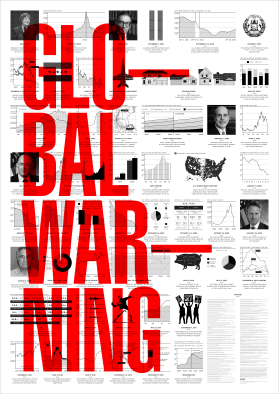
In the Protest space, I was particularly fascinated by the poster designed by Derek Kim, mostly because it is rich in detailed information of the events leading to the financial crisis of 2008. This was not the first, nor will it be the last, but vast buckets of your capital, as in all the hundreds, maybe thousands, of previous financial crises, have been used to steady the ship. I was similarly taken with the Information is Beautiful infogram.

There is a wealth of material drawn from the various Occupy protests and from recent mass protests and marches. Humour, whether satirical, parodic, ironic, sardonic or epigrammatic, has always been, and remains, a vital weapon for getting up the noses of the powerful, or for bursting the bubble of the priggish. They are usually a pretty humourless bunch. Look around at the leaders of the world if you don’t believe. There are some good examples here. Lucille Clerc’s illustrations showing the power of the pen, the Sour Brexit drinks, Oddly Head’s posters about the futility of posters, Sagmeister & Walsh’s pins. Whilst little of the fabric of protest has changed, the speed of dissemination has.

The final space dealing with Personality is a little thinner in terms of ideas and content and the least surprising. You’ll be drawn to the infamous Trump fortune-telling machine and perhaps the Anonymous material with its eye-catching Guy Fawkes mask drawn from a graphic novel and film

I am always wary of people that want you to believe that this time is “different”, “unprecedented”, “grave threats”, “more dangerous”, “massive change”, or any other such hyperbole. We humans, being what we are, are prone to exceptionalism, by identity, geography, or time, and a cursory reading of history will tell you that everyone, ever, has lived in exceptional times. Technology which changes the direction of society isn’t new, to whit the printing press, but this exhibition is an interesting take on the idea that the massive technological leap forward seen in my lifetime has altered the nature of political discourse, and the way graphic design fits into that narrative.

And a lot of cool things to look at and Instagram.


Tallis Scholars at St Johns Smith Square review ****

missa_alma_redemptoris_28luis_de_victoria29

The Tallis Scholars, Peter Phillips (director)

St John’s Smith Square, 31st March 2018

Tomas Luis de Victoria (1548-1611)

  • Surrexit pastor bonus
  • Vidi speciosam
  • Magnificat for double choir
  • Missa pro defunctis Requiem

Francisco Guerrero (1528-1599)

  • Tota pulchra es
  • Hei mihi, Domine

Alonso Lobo (1555 -1617)

  • Versa est in luctum

Having dipped a toe into Early and Renaissance vocal music the Tourist probably finds himself listening to more than the average man on the street to Christian devotional music and Latin texts. This despite him being an avowed atheist and useless at languages. There is next to no cognitive dissonance arising from this set of circumstance, however, but he can now see;

  1. how the C16 and earlier man/woman on the street might get taken in by all the mumbo-jumbo given the power and beauty of the music (and art) that the Church offered (remember there were precious little other aural or visual stimuli to be had – no Candy Crush or Instagram in those days) and,
  2. how pointless it was setting it in a language said man/woman couldn’t understand leaving the door open for the Reformation to shake up the Catholic Church.

It has taken a bit of time but the Tourist has finally discovered the work of one Tomas Luis de Victoria thanks to the influence of some wise teachers. Snapped up a 10 CD disc by Ensemble Plus Ultra, a Gramophone Award Winner, for a bargain £30 after facing off the Amazon machine. I will likely die before I ever really get to grips with this music, (as for so much else), but there will be so much pleasure in the journey. Ensemble Plus Ultra are another in the long line of British early music vocal ensembles who, I expect, will have been inspired by the original wave of scholars and performers from the 1960s and 1970s, including our director for this evening, Peter Phillips, one of the grandaddies of the whole movement.

Now TVic was a big noise in C17 Spain, and along with Palestrina, based in Rome, and Orlando di Lasso, born in Mons in present day Belgium, but who worked all over Europe, was a major force in the Counter-Reformation when the Catholic church bit back. TVic was a performer and, helpfully, a priest but thankfully for us focussed on churning out compositions rather than taking confessions. I gather a fair bit is known about him, he worked in Rome for a spell before Philip II of Spain, the most important bloke in the world then with Spain at the height of its power, gave him the job of Chaplain to his sister, the Dowager Empress Maria in Madrid. This was Spain’s artistic Golden Age and these composers were a proud part of it.

I defy you note to be immediately drawn in by TVic’s grooves. The music is much more direct and “churchy”, with more affective melodies, than some of his European peers and predecessors. He is the master of manipulating, dividing and receding choirs. The polyphony is less complex than, say, Palestrina with more homophony, (everyone belting out the same text), but he creates some surprising textures and dissonances and a lot of melodic contrasts. He wasn’t averse to a bit of word-painting even though he only ever wrote sacred music.

The Surrexit pastor bonus is an Easter motet which is typical of TVic’s style, set for six voices which he combines in all manner of ways in just 3 minutes. It kicks off with dramatic soprano and the higher registers swirl around the lower basses. The Vidi speciosam is similarly scored and uses a popular Old Testament setting, (which also formed the basis for a TVic Mass). It starts off in a fairly restrained way but gradually builds out so that at times it feels like the whole of Wembley Stadium is in the room. TVic churned out 18 versions of the Magnificat but this one, Primi Toni, for two four part choirs, is entirely polyphonic with no plainchant intervals, though it is easy to hear the chant it comes from. There are a fair few effects along the way.

Francisco Guerrero was born and died in Seville, and spent most of his working life in Spain, but when he did venture abroad he packed a lot in, what with being attacked by pirates twice when coming back from the Holy Land, and landing up in debtor’s prison. Unlike TVic he wrote secular pieces in addition to motets and masses, though he also kept it homophonic and had a flair for drama. The first motet here, Toto pulchra es, is drawn from the same source as the Vidi speciosam and is similarly an paean of praise to the Virgin Mary, who was guaranteed to work the church fellas up into a right lather at that time. The second piece, Hei mihi, Domine is rather different with sharp contrasts and syncopated rhythms conjuring up a more impassioned plea for mercy in this Matins for the Dead.

Alonso Lobo was Guerrero’s sidekick at Seville Cathedral and took over when the old boy went walkabout. This chart-topping motet, Versa est in luctum, was written for Philip II’s funeral, and it shows with full-on “oh woe is us” grief-stricken passages from the book of Job apparently. It is his best known number. He had a spell in Toledo, (a city everyone must go to once in their life), and, in his life, was rated equally with TVic and Palestrina.

The meat of the concert was TVic’s Mass written on the death of his beloved employer Dowager Empress Maria. There are a fair few TVic masses, and I have only just started to get to grips with them, but if you need somewhere to start this might be it. TVic had 16 voices at his disposal when writing the piece and he took full advantage with six parts. It is a Mass for the Dead, a Requiem, based on the ancient plainchant melody, which becomes an immense structure in TVic’s hands. He also throws in a Versa est in luctum a la the Lobo motet and a lesson, Taedet animam meam, to serve up a near 50 minute funeral celebration for that is how it feels in spite of the subject. Old Dowager Maria may have shuffled off this mortal coil but in the afterlife she had loads to look forward to based on this music.

Obviously the Tallis Scholars under PP were perfect. They create a big sound but you are always aware of where the music comes from and what its point is and there’s no fancy grandstanding. It is hard sometimes in these concerts not to give in completely to the wall of sound and float off, but the Scholars in tandem with the composers, especially TVic provide enough contrast and drama to bring you back inside the music, its structure and its story.

Another Kind of Life exhibition at the Barbican review ***

3843311166_a42dfd87c4_o

Another Kind of Life: Photography at the Margins

Barbican Art Gallery, 29th March 2018

I am lucky I have the time to visit popular galleries at quieter times. For there are some which, by dint of the material they are presenting, seem to get extremely busy at certain times. There are often queues round the block, (well not quite), of pensioners for the blockbuster exhibitions at the National, and similarly at the Tates, albeit with a more varied demographic. Good to see, if not good for seeing once you’re in.

The Barbican similarly attracts a crowd but here it is much younger and hipper. To stop myself harrumphing when they get in my way, or fiddle with their phones, and to avoid the embarrassment of being stared at given my tramp-like appearance, I find it best to go early before the layabout students are up or late when they are planning their evening’s entertainment.

Seriously though the Barbican curating team seems to be doing something right. Whilst it would be impossible to match the impact of the Basquiat spectacular (Basquiat exhibition at the Barbican review **) which I swear I tried to like but couldn’t, this new collection seems to be packing them in.

Photography, for me, is a less interesting artistic medium than, say paint, but when it shines a bright light on society, as here, than I can get drawn in. The curators have pulled together the work of, I counted, 20 photographers in total, who have documented people who have chosen to live at the margins, or right outside, mainstream society, either because of, or to reinforce, their individual, or collective, identities. The exhibition is careful to explore this theme across cultures and time. I knew next to nothing about any of the artists (bar Boris Mikhailov and Diane Arbus), and can’t pretend much knowledge subsequently, but I was struck by the strength that many of the individuals whose images are captured here derive from peer groups.

Whether it be the retro, rockabilly, multi-racial Parisian gangs photographed by Philippe Chancel, the very cool Teds of Chris Steele-Perkins, Danny Lyon’s Easy Rider biker mates, Bruce Davidson’s early 1950s New York ruffians and, most strikingly for me, Igor Palmin’s Russian hippies, there is an obvious attraction in these rebels. Choose your tribe. I never quite got over being too young for the Summer of Love.

The exhibition kicks off with the legendary Diane Arbus’s portraits of circus performers, nudists, transgender people and others from the 1960s and 1970s. Hard to believe she started as a fashion photographer alongside husband Alan. These portraits border on the intrusive and sensational but there is no doubting their influence on later generations. Take a look upstairs at Katy Grannan’s intimidating portraits of those who aren’t now part of the American Dream, or Alec Soth’s documentation of US survivalists.

The best of the rooms downstairs shows the work of Daido Moriyama and follower Seiji Kurata. The former’s blurred nighttime photos of the murkier side of Tokyo, and the latter’s more polished studies of a similar milieu, are more disquieting than some of the other groups on show. Here is real confrontation. As there is in the Tulsa photos of Larry Clark; he is one of the teens shooting up here.

The most striking documents though downstairs are to be found in the vitrine full of holiday snaps taken at Casa Susanna in the early 1960s. Casa Susanna was a weekend retreat for transgender women and cross-dressing men run by Susanna Valenti and her wife Marie in New York State. Remember this was a time when being publicly transgender was still a criminal offence. The photos were taken by Andrea Susan, one of the guests, which explains their relative quality. They were eventually discovered in a flea market and published a few years ago and inspired the play Casa Valentina at Southwark Playhouse in 2015. Everyone seems to be having a good time. It’s pretty uplifting.

The photographers showcased upstairs are more focussed on individual or small group portraits. Most striking perhaps are Jim Goldberg’s stories of street teenagers, led by Dave and Echo, from California first published in 1995 entitled Raised by Wolves. His observational technique, accompanied by text, video and other material,  is pretty harrowing, and it does, like other material in the exhibition, get you to thinking about the relationship between photographer and subject and your own relationship, as you trot around the gallery in the company of an audience of observers who are firmly within the mainstream of society (even if some may think they are not), with the subjects here, who have been forced, or chosen, or some combination thereof, to be “different”. Queasy voyeurism comes with the price of the ticket here.

The intervention of the photographer is most acute in the small room devoted to Boris Mikhailov’s photographs of a staged wedding of a homeless, alcoholic couple in contemporary Russia. It is provocative but it gets its point across. I found these hardest to look at. Paz Errazuriz’s pictures of transgender women from Chile are doubly arresting, precisely because that is what would have happened to her is she had been caught taking such photographs in Pinochet’s Chile.

You will also be intrigued by the stories behind Pieter Hugo’s portraits of Nigerian men and their captive animals, hyaenas and baboons, that live on the fringes, and alarm, South African society. Mind you some of them are gang members, drug dealers and debt collectors so the fear may be justified. They are certainly imposing and, I think, the photographs which I found most aesthetically pleasing if that makes sense. Pathologist turned conceptual artist,Teresa Margolles’s pictures of transgender prostitutes set amidst the ruins of their nightclub workplaces in Mexico, pulled down by the authorities, in an attempt to move them on, have a similar artistic sensibility.

I realise as I have written this, and learnt more about the photographers involved, that I probably need didn’t try hard enough and need to revisit and relook. That’s what can happen if you have time and an open mind. Time, and open minds, is what changes attitudes, beliefs and behaviours.


Fanny and Alexander at the Old Vic review ****

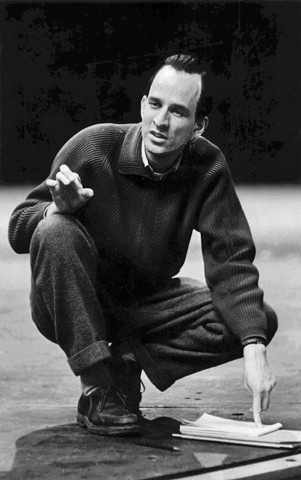
ingmar_bergman_malmc3b6_stadsteater_1958

Fanny and Alexander

Old Vic Theatre, 4th April 2017

I WILL USE BLOCK CAPITAL FOR EMPHASIS AS WE SLIGHTLY UNHINGED KEYBOARD WARRIORS ARE WONT TO DO.

FOR JUST £12 YOU CAN GO AND SEE ONE OF THE REMAINING PERFORMANCES OF FANNY AND ALEXANDER.

That’s right. All seats for the last week of the run are just £12. Even if you hated Ingmar Bergman and this was a load of tosh that would be a bargain. As it happens you shouldn’t and certainly not this, his most approachable story, and it isn’t. There are some 3* reviews for sure, mostly griping about how it doesn’t match up to the film. OF COURSE IT BLOODY DOESN’T.

Bergman took 6 months to shoot it. After 6 months of planning with art director Anna Asp. It is, in the full version, over 5 hours long. There are over 60 speaking parts and more extras than Brexiters in London. It occupies two worlds, reality and something removed from it. It looks beautiful, that’s why it got it’s Oscars. (I have a mind to persuade LD to spend a year in Uppsala University based solely on the film). There are over 1500 costumes. In short he chucked the entire kitchen sink at it, (there may have been several sinks, I will need to schedule another viewing to check). If Bergman had entered it in the category it would have won Best Picture, instead of the eventual winner in 1984, Terms of Endearment. The film about the making of the film is a great film. The autographical material at the heart of the film was enough for Bergman to spawn further work on film and TV.

It is a fairy tale of sorts, but with some real world joy and cruelty. It is mythic in scope, but at its centre are two families. It nods, sometimes vigorously, to Ibsen, Strindberg and Shakespeare. It might be Oedipal. It skewers religion. It sticks two fingers up to authority. In short there is an awful lot going on her. And all within the confines of a conventional Victorian melodrama (sort of). It’s a Top 100 film, certainly, Top 20 probably, and definitely a Top 10 foreign language film for me (though these lists don’t actually exist so beware the hyperbole).

It was never going to be fully captured on stage. Stephen Beresford’s adaptation is not the first time a dramatist has tried to capture Bergman on the stage, and it won’t be the last. Our friend Ivo van Hove has a particular penchant for the Bergman adaptation (After the Rehearsal at the Barbican Theatre review ***). It isn’t easy. I wonder if the best director of Bergman on stage might have been Ingmar Bergman, theatre director (I don’t know if he ever put his own work on stage).

Anyway wisely it seems to me, Matthew Warchus in commissioning the project, Mr Beresford in adapting this sublime material and Max Webster as director have plotted a course through “adult fairy tale” and family saga, and not got too hung up on all the rest. If you just accept the production for what it is I believe you will be, if not maybe transfixed, at least fully engaged by the essentially simple story.

Tom Pye’s set elegantly conjures up the Ekdahl apartment in the theatre, all crimson, before shrinking and transforming into the monochrome “prison” of the Bishop’s palace in the second half. There is constant movement, and a lot of scene changes, but this  brings the required vibrancy and energy to proceedings. The magic works, in a kind of pantomime-ish way. The plot is fleshed out by announcements side-stage which accompany the set-piece meals. Dialogue, where it is not lifted moreorless intact from the film, is snappy and to the point. Mr Beresford has found some real humour. The characters are only really sketched out but no matter, as there is enough to support plot, and the sketches are balanced across the key roles.

Of course this approach leaves a lot off the table. Penelope Wilton’s Helena might have stepped in from a Wildean comedy, Michael Pennington’s Isaak from a certain Shakespeare play, Sargon Yelda’s Oscar is a little earnest (especially as ghost) and it is hard to understand why Catherine’s Walker’s Emilie would marry Bishop Edvard. Kevin Doyle, for my money (I paid more than £12 remember), actually gets more into, and out of, Vergerus, than the rest of the cast, conveying something of his torment. The infidelities of Jonathan Slinger’s Gustav Adolf are played for laughs, though he got applause when he let rip into the Bishop, and Thomas Arnold as Carl and Karina Fernandez as Lydia are morose and not much else. You will need to resist the urge to boo and hiss Lolita Chakrabarti and Annie Firbank’s when they morph into the Vergerus ladies. Gloria Obianyo gets a bit of the requisite strangeness out of Ismael.

I have to say though that young Misha Handley, who was Alexander at my showing, was superb, from his very first solo scene in front of the curtains. It is easily enough to praise “child” actors, though it often comes across as patronising. I can’t tell you if his three colleagues are as good, but if they are then they must all keep up with drama school. OK so the lines flowed naturally from the drama but I couldn’t see the acting here. This could never be a world seen through his eyes alone, how would that be possible without close-ups and POV shots, but the production and his performance still made it feel as if it was, when the action really kicked in, anchored in his perspective.

So ignore the reviews, relax and be carried away by this story of good and evil. Then see the film, long version, and realise what was, not missing, but different. The play is still well over 3 hours, though with a couple of intervals, and especially in the second and third “acts” when things hot up, it never feels like it. It’s resolutely not a “memory” play, and it can’t replicate the camera’s eye. But it is enjoyable and if you go in with the right attitude, you will be sumptuously entertained. It certainly delivers on more of its promise than other recent productions at the Old Vic.

P.S. I see Stephen Beresford comes from Dartmouth. Adding further to my list of “important people from South Devon”.


Great Apes at the Arcola Theatre review ****

Chimpanzee,_Kibale,_Uganda_(23022998774)

Great Apes

Arcola Theatre, 31st March 2018

I sort of lost track with Will Self the author after The Book of Dave. His sprawling, satirical fantasies with a lot of big words, unreliable narratives and narrators, drugs, mental dislocation, is never short of imagination and ideas, but aren’t always that easy, or pleasurable, to read. He is very clever and very funny, and he knows it, and really likes to show it. His influences are many, and obvious, Ballard, Burroughs, Heller, and then back through Kafka, Joyce, Voltaire and Swift. I gather he too has given up on the novel, all of them, not just his.

I did enjoy Great Apes however and its successor How the Dead Live. Our protagonist, artist Simon Dykes (Simon/simian geddit), whose prime artistic concern is, surprise, surprise, perspective, wakes up after a bender to find his girlfriend, Sarah, is a chimpanzee. And so is everybody else. His human “delusion” means he is taken in by psychiatrist Zack Busner, Will Self’s stock character, here an alpha male chimp. From this transparent inversion Self shines a light on human, and chimpanzee behaviours, we’re not so different, and on the nature of mental illness and reality. Because the satire is so primitive, as it were, and has been done to death in those wretched Planet of the Apes films, Self has to concentrate his powers on the narrative and the characters in a way that sometimes escapes him in the other novels. By colliding chimpanzee and human society and culture, Self sheds light on our own behaviours, fears and dysfunctions. It is also adroitly pokes fun at our own human exceptionalism. London, drugs, mental illness, “false” narratives are all explored, as you would expect, but there also some affecting exploration of relationships, which you don’t really expect from the lugubrious Mr Self.

In short its is clever yes, but with a purpose, and it has a proper plot. How then to put it on stage. Well first break it down into the key scenes. Mr Self’s detailed imagining of this alternative society has to run alongside the story of Simon’s journey from human “reality” through “delusion” and eventually to explanation, and Dr Busner’s rise and fall. To get it on to the Arcola stage needed some perspicacious work from adapter Patrick Marmion, which we have. It also needed the creative team of director Oscar Pearce, designer Sarah Beaton, lighting designer Matt Haskins, sound designer Dan Balfour, movement director Jonnie Riordan, costume supervisor Kate Hemstock and the puppetry team of Tom Espiner and Mala Kirkman-Richards, to combine to reveal enough to allow our imaginations to do the rest. In this they succeeded, a remarkable achievement given limitations of space and budget.

Perhaps the most important technical contribution however came from chimpanzee physicality and vocalisation consultant Peter Elliott. Now I will stake a wild guess that there aren’t too many people with that particular job title. His bio shows that he has worked on a number of major films involving primates, real and imagined, and, most remarkably, it says he became the first ever person to integrate with the colony of chimps at the University of Oklahoma.

I am also guessing the cast has down too much auditioning for primate work in the past. The way they combined voice, body and the simple props, benches, ladders and specialised crutches, (not sure if they have a special name), to simulate chimpanzee movement, sound and behaviour, was really impressive. Whilst Bryan Dick playing Simon and Ruth Lass playing Dr Zack, that’s right, in a piece of inspired casting we had a woman playing the alpha male here just to mess up our heads a bit more, the other five actors doubled up, or more. Yep they had to take on the character of not just one but several different chimpanzees. I was particularly struck by the performance of Ruth Everett as Busner’s assistant Jane Bowen, artist Tabitha Buckfast and Eve Knight, a film-maker.

Now I will admit with so much to pack in there were times when ambition overreached execution. Some of the plot had to be chivvied along especially towards the end. To have covered everything in the book would have been technically and dramatically impossible, and some of the intelligent subtleties and artistic allusion of the book gets a bit lost along the way.

Still you will end the evening definitely entertained, in awe of the technical achievement and with plenty to think about even if you may not entirely connect to the characters. Then again they’re chimps aren’t they? How would you connect to them? They’re animals aren’t they? They’re not as special as us are they what with out technology, language and civilisation?


Vincent River at the Park Theatre review ****

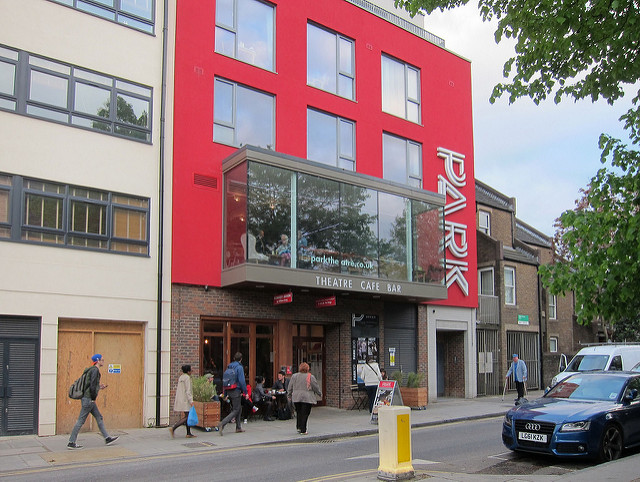
15012666585_dfccc87f20_z (1)

Vincent River

Park Theatre, 29th March 2018

I wonder if the 2070s equivalents of the Finborough Theatre or the Orange Tree Theatre, will be lauded for their Philip Ridley revivals. Mr Ridley’s subject matter and idiom means he is a nailed on certainty to get multiple airings in today’s theatrical world. His art, his novels particularly for young adults, his screenplays, his songs and his plays, again especially those aimed at the youth and away from old fellas like me, have a vitality and urgency, and attention grabbing narrative invention, which is hard to resist.

On paper his first play The Pitchfork Disney takes your breathe away. In the flesh, as it were, it is even more extraordinary. Remember this “in yer face” work was the first of its kind and budding young playwrights everywhere still likely harbour ambitions, knowingly or unknowingly, to capture some of its essence. The Fastest Clock in the Universe, in its dissection of self-image, and Ghost From a Perfect Place, loaded up with more graphic violence, built on its foundations. The ugly themes the plays explore, and our complicity with those themes as observers, remain compelling over two decades later.

And yet there is a bit of me that thinks they might be utter sh*te even as I am watching them, the shock tactics, and their torture porn narratives, pleading with us to see meaning in all this misery. Usual conundrum: are we in some way thrilled by this transgressive violence or are we chin-stroking at what is wrong in the human condition. Compounded by the fact that Mr Ridley is soooo imaginative a writer that you can’t take your eyes off his plays, even as you clock the dissonances.

I don’t know any of the plays which followed these debuts, the Brothers Trilogy, Tender Napalm, Shivered and the later adult plays. I saw the recent staging of the six monologues that make up Angry at the Southwark Playhouse. Not good I am afraid, like a student attempt at sketching out some short “Philip Ridley” style plays and a couple of limp jokes.

So I wasn’t sure what to expect from this revival of Vincent River, Mr Ridley’s fourth adult play, written in 2000, which followed the breakthrough trilogy. Well I can concur with those criterati who say this might just be his best play. There is a violent act which lies at the heart of the play, the theme is clear and vitally important, the behaviour if the characters unpredictable, the story is in real time, there are a couple of lightly shocking interactions and, yes, some drink, drugs and swearing. Yet, importantly, we get to see and feel the impact of real life horror on two real life people uncluttered by Mr Ridley’s fantasy.

Whilst the “twist”, such as it is, is unlikely to surprise I will spare you the detail. A middle aged woman Anita is moving into a threadbare flat in Dagenham having moved from LB Hackney, (Mr Ridley’s cabbie like enthusiasm for London’s geography is on show as usual though Shoreditch has moved on a bit since then). Her son Vincent has been murdered in what transpires was a brutal homophobic attack at a disused railway station. Davey arrives. He clams to have discovered Vincent’s body whilst walking his girlfriend home. The play then explores, across a compact 80 minutes, the connection between the two.

We are reliant on our two actors to let go in this highly charged scenario and, fortunately, they do. Moods change in an instance. I do not think I have ever seen Louise Jameson on stage before though she has had an illustrious theatre career with the RSC and the National Theatre. You will know her best from the telly. Sounds like she is taking on more work in the theatre. Thank goodness. This is not an easy role but you wouldn’t know it from this performance. Anita is grieving for sure, but she is also angry, with her son’s killers yes, with the authorities of course, but also with herself. She still hasn’t yet quite come to terms with her dead son’s sexuality. Tricky to convey. I hope she won’t mind me saying though that debutante, (just about), Thomas Mahy, might have have outshone her. He is a real talent. When the going gets tough and emotional, as it does with his monologue near the end, he is shatteringly convincing. He is more vulnerable than menacing at the start but that worked for me. These characters agree to be honest with each other to seek truth and maybe some absolution. This pair of actors need to be similarly honest. They are.

Robert Chevara is a new director to me though now I see what he can do, and has done, in the world of opera specifically, I see I have been the loser. The play doesn’t require complication. Nicolai Hart Hansen’s set and Martin’s Langthorne’s lighting oblige. The Park 90 space fits the bill. This needs to be seen up close. Mind you I don’t suppose this is the product placement Tanqueray and FeverTree, Anita’s chosen tipple, were looking for,

I see that, for once even allowing for how far I have got behind in documenting my cultural adventures, (trust me you learn a lot by having to write about what you see), this production is still on for a few more performances. Go see it. Obviously if you a big fan of blockbuster musicals this may not be your bag but if you want to see what Philip Ridley is about, without the overt savagery, then this is for you.

So I think this at least will be a play that will be revived at the other end of the century. Hopefully as a warning about the dark times when people were attacked and even killed for their sexuality. Though given that has been true for many centuries I wouldn’t bet on it. Yet another thing to curse organised religion for. The well from which much intolerance springs.

I note that there was indeed another production of this very play in Manchester contiguous with this. As for Mr Ridley’s other plays. Of course they will appear, if only because there is a long line in the history of drama, back to the beginning, which seeks to shock its audience both for noble and ignoble purposes. And Mr Ridley, for all his narrative innovation, (and the gifts he serves up to designers), does have the words to back up his conceits of character and location.

Mind you at the pace with which society, and the art that reflects it, is changing who knows what will be de jour in 50 years time. Maybe there will be no live theatre – just a virtual reality experience you conjure up yourself. Like dreams and imagination. Whatever you do don’t click “I accept” and hand those over to the tech corporatocracy.