Soutine’s Portraits at the Courtauld Gallery review ****

soutine-1

Soutine’s Portraits: Cooks, Waiters and Bellboys

Courtauld Gallery, 31st October 2017

I am afraid that the joys of Soutine’s paintings have passed me by in the past. I could see the vibrant colours and intense animation but all that skew-whiffedness left me a bit bewildered. On my last visit to the Musee de L’Orangerie (sorry for sounding like a pretentious twat) I could see there there was something from the extensive Soutine collection in the Jean Walter-Paul Guillaume Collection, but I got captured by the Cezannes. Easily done.

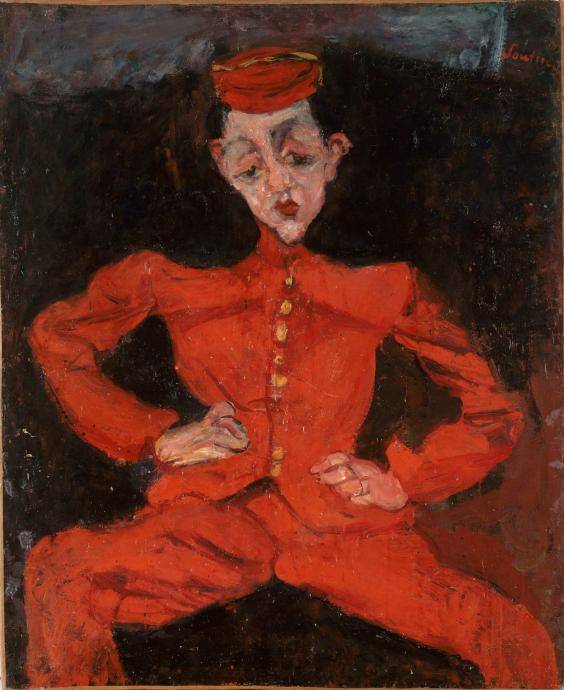
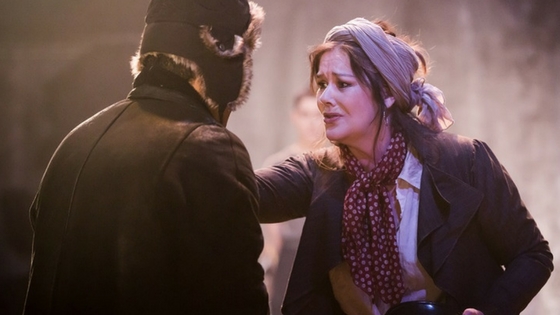
Anyway turns out I should have looked harder. Which is normally the solution to any art appreciation headache. This collection of Soutine’s portraits of various subjects from the French hospitality industry of the 1920’s turns out to be a brilliant introduction to Soutine’s faculties. These people are, with some notable exceptions, bursting with attitude. Painted head on, legs splayed, arms out, eyes staring right back at you, they seem to be willing you for a fight. It is almost as if they would be doing you a favour by “serving” you. Or, in private, they regard you as beneath their contempt. I appreciate that this sounds suspiciously like the stereotype of the disdainful French waiter but it is, nonetheless, plainly there in the canvases, especially in the, ahem, portraits of the waiters, the bell-hops, the valets and even the young page boys. Anyone oik like me who has ever felt intimidated in a fancy dan restaurant or hotel will recognise the look. There are five paintings hung together of the same subject in different guises, playing different roles and with very different moods. Same bloke with a high forehead, red hair, broken nose, but let’s just say he exhibits various degrees of approachability. A bit like you or me on any given work day.

The chefs give off a different vibe. Here you can see, and almost smell, their craft. Even the pastry chefs seem to have an air of meat about them. There is a post WWI Butcher Boy drowned in red but all the Chef’s whites have a reddish hue or flecks. This is where the influence of Soutine on Francis Bacon is most acute. Bacon normally screams carcasse at every opportunity but it seems old Soutine had a similar fascination for the flesh, what with his homages to Chardin’s still lifes and with the rotting joint he stuck up in his flat to the evident annoyance of his neighbours.

The chambermaids are altogether different. Arms down, hands cupped, meek expressions. I can’t really find anything about Soutine’s sexuality but it looks like his eye was drawn to submissive women and saucy boys based on these portraits. These women have more similarity with the elongated simplicity of his mate and fellow Jewish emigre in Paris Modigliani, and as the catalogue points up, even the ethereal women that the genius Gwen John contrived.

Across the whole exhibition, (just 20 paintings in two rooms so no need to work up a sweat, and the Courtauld, as any fool knows, is the most life-affirming space in Central London), the debt to masters such as Rembrandt and Courbet, and colour master Fouquet from an earlier time, is clear. Soutine painted precisely what he saw. This took time but the resulting effect is that he didn’t hang about when he finally saw what he wanted. Hang dog eyes, misshapen ears, pouty lips, chins, foreheads, pointy limbs, whatever leapt out at him, leaps out at us. And all that sticky, oily colour. Vibrant but not in the cartoonish way of some of the German expressionists, but earthy, fleshy, silky. Just like say your man Rembrandt.

Soutine was an outcast in some ways as a Russian emigre, whose Jewishness meant he had to abandon Paris in both wars. Fortunately he made a few quid in his later life but in the end, on the run, he died because he couldn’t get to a hospital quickly enough to treat his stomach ulcer. A small funeral, this was a “degenerate” artist after all, but Picasso pitched up. That tells you something.

His distinctive position as a bridge between the realism of past Masters, and the abstraction of the generation which followed him, took a bit of time to take root despite the acclaim in his lifetime. I would be surprised if his work was everyone’s cup of tea, but if you open your eyes, like I did, I think you might be very pleasantly surprised. Of course no one looks like this but most of us ordinary people look like this.
 

St George and the Dragon at the National Theatre review ***

saint_george_and_the_dragon_c_johan_persson-1000x572

Saint George and the Dragon

National Theatre, 31st October 2017

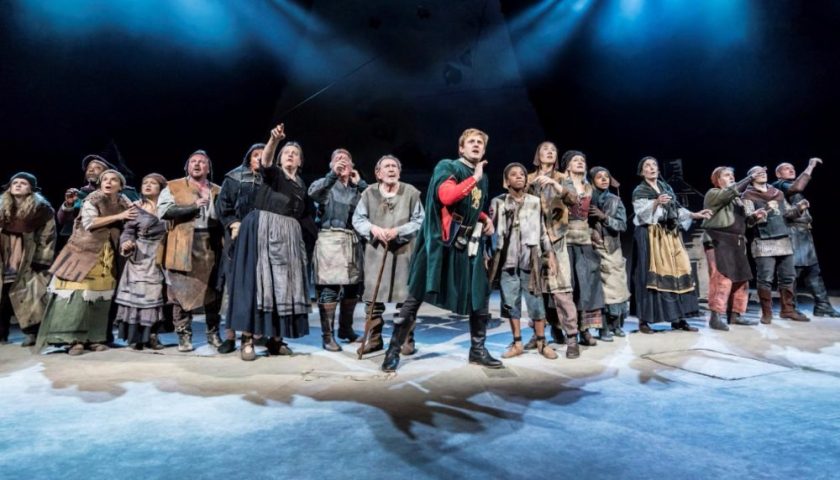
This must have looked a great idea on paper. A state of the nation play, with much to say about ill at ease contemporary Britain, told as allegory, in a format and staging that nods to a fairy tale. Writer Rory Mullarkey took as his inspiration The Dragon, the most well known play from Soviet writer Evgeny Schwartz which was an allegorical satire on Stalinism, with the knight Lancelot in the lead. Clearly Mr Schwartz was a brave man. There is also a whiff of Chaucer and Medieval morality play in Mr Mullarkey’s construction.

Designer Rae Smith has created an imaginative set, like a child’s pop-up book, which roams across the three periods that Mr Mullarkey’s story encompasses, the Medieval, the Early Industrial and our own Post Modern present. Lyndsey Turner, who is expert at these big ideas plays, gives the production plenty of room to breathe, with a light and often amusing tone that matches the “modern fairy tale” mood, and the rest of the creative team conjure up some magical aural and visual effects.

John Heffernan’s George is very affecting, alternately brave, stupid, confused and naive, Julian Bleach’s Dragon is as pantomime camp as you like, Richard Goulding’s henchman who is redeemed has real presence and Amaka Okafor strikes the right balance as feisty champion Elsa. The rest of the 22 strong cast also fit like a glove and we have a groovy 6 strong band.

But there is a but. It just all seemed a bit vague. The idea that we have needed and relied on a hero in the past to rescue us English when things go t*ts up was efficiently conveyed as were some elements of what might constitute our national identity, the things that bind and divide us. A nation remember is just some lines on a map (admittedly some sea is involved here) and a largely fictional shared history and SGATD was neatly rooted in this premise. The dichotomy between the enemy without and the enemy within was also engagingly scrutinised.

It is just that, when all was said and done on stage, we didn’t seem to have moved any further from this point of departure. Enjoyable yes, creative yes but not really very satisfying for me, which, at a time when anyone and everyone theatrical is trying to jemmy in a state of the nation perspective, was a little disappointing. There is more than enough on show to warrant a visit and there are plenty of tickets for the rest of the run, but the play, like the current England it depicts, comes up a bit short.


Mother Courage and Her Children at the Southwark Playhouse review ***

first-look-mother-courage-at-southwark-playhouse

Mother Courage and Her Children

Southwark Playhouse, 7th November 2017

Hmmm. I am torn. This was a mixed bag and no mistake.

The good stuff first. Well it is Brecht so there will always be big issues to chew on, although here the anti-war appeal that lies at the heart of the play felt curiously understated. The production does have a ramshackle design from Barney George which I was quite taken by and which seemed to capture the ravages of a long drawn out war on a society. The transverse staging and the constraining of the larger Southwark Playhouse space had some advantages, particularly when it came to observing the best of the cast. Mind you this did put paid to the Brechtian distancing effect. Hannah Chissick’s direction had some nice touches though this seemed to lack an overall coherent vision. I like the folksy song arrangements by Duke Special which are drawn from the 2009 NT production. Tony Kushner’s translation from 2006 is strong on characterisation but seems somehow to play down the “epic” nature of the action, though the production was partly responsible.

Best of all was the swaggering performance of Josie Lawrence as Mother Courage. Whilst there was a part of me that would have liked a more hard-bitten Courage to ram home the war as commercial opportunity message, her more sympathetic spirit paid dividends in the scenes with her “children”, the Chaplain and the Cook. David Shelley and Ben Fox in these latter two roles also turned in strong performances, as did Laura Checkley’s brassy Yvette and, especially Phoebe Vigor’s Kattrin. I was less convinced though by the rest of the cast whose tone seemed uncertain, notably the sons, Swiss Cheese played by Julian Moore-Cook and Eilif played by Jake Philips Head. Don’t get me wrong, the boxes were largely ticked, it just seemed to me that motivation and understanding was sometimes lacking.

This lack of conviction was ultimately why the production was only a qualified success for me. There were some powerful scenes notably when Courage disowns the corpse of Swiss Cheese, when Courage turns down the Cook’s offer to escape to Utrecht and especially at the end when Kattrin is beating the drum to warn the townspeople, but many of the other scenes have less definition, and those that do work rely too much on the sympathy generated by the performers, which risks melodrama, and which Brecht specifically wanted to eschew. This should be far more threatening and dislocating to convey the true horror and to reveal the economic and religious imperatives that underpin war, whether in the Early Modern Age or now, in the throes of Late Capitalism.

An avowedly non-specific staging also risks, as it does here, the distancing effect offered through Brecht’s setting in the Thirty Years War of the early C17 between Catholic and Protestant. We are supposed to be immersed in Brecht’s epic story but also to think long and hard about what he is telling us, and I am not sure we were fully afforded that opportunity. We are allowed to understand why Courage does what she does, because she has to to survive, but we are not supposed to like her.

The transverse staging was complicated by some early scenes which took place partially in a mezzanine which was, literally, a pain in the neck for half the audience. Music, sound and lighting worked with the staging but the lack of space constrained the pattern of movement, (to avoid problematic sightlines),  which had the perverse effect of slowing the momentum at times.

My conclusion. A brave attempt which is worth seeing for Josie Lawrence’s fine, if ultimately flawed, performance and for some of the ingenuity of the creatives in trying to make this work in this space. And because it is Mother Courage and Brecht. But there have been, and there will be, more coherent and biting productions which do more to reveal the layers of Brecht’s art, passion and instruction.


Suzy Storck at the Gate Theatre review ****

npo2yrr80p17jyxhc4xc

Suzy Storck

Gate Theatre, 4th November 2017

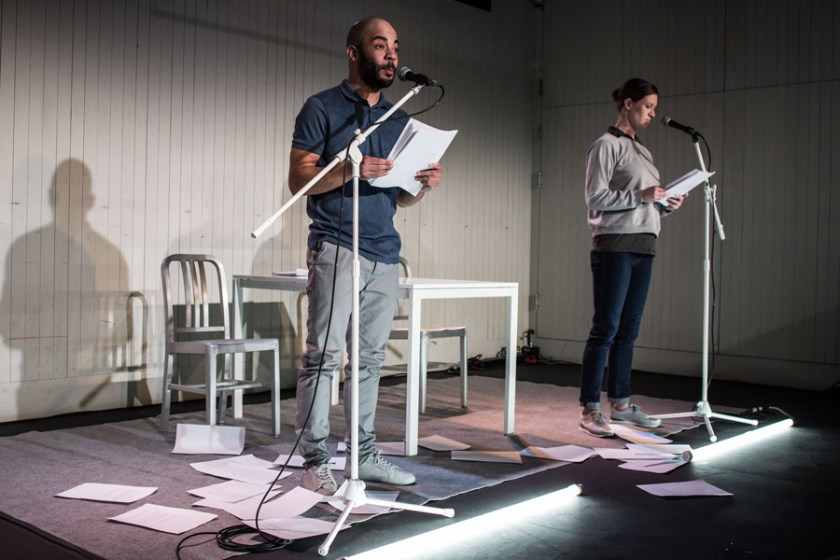
The Gate under Ellen McDougall has found another blinding play, this time courtesy of French writer Magali Mougel (translated by Chris Campbell). Visceral only begins to describe it. Ms Mougel has created a modern-day Medea and invested it with an arresting, and bleak, poetry. This is about as sharp a dissection of the prison of gender roles and maternal “instincts” as you could hope to see in just over an hour.

Suzy Storck has three kids and hates her life. A patronising mother, a selfish husband who offers no support and whinges about how hard he works, an untidy flat, a career that stopped with bagging chickens, a baby that won’t sleep and two older siblings who never stop needing. She’s knackered, it’s boiling hot in her tiny flat, so she opts to knock back the vino and escape with an unfortunate consequence. We flashback to her life before the kids, her childhood memories, meeting and dreaming with husband Hans Vassily, enjoying her job at the poultry factory before it closed, an agonising interview arranged by Mum, the conception of the children.

So far, so predictable you might be thinking. You’d be wrong though. Not because the plot turns up anything extraordinary, quite the reverse. But the disorientating language, rhythm and structure of the play brings the story to exhausting life creating a very recognisable universal out of the painful specific. We have a Chorus in the form of Kate Duchene (also the Mother) and Theo Solomon (also the Children) who comment, probe and articulate. We have some creative intervention from props, video, lighting and sound. The audience even helps out. We have pained monologue and recollection. We have some powerful argument.

Jonah Russell as Hans Vassilly Kreuz, who has popped up to admirable effect in a few things I have seen, is spot on as the ineffectual male sh*t full of self-pity. The whole thing though hinges on the performance of Caoilfhionn Dunne who is shatteringly magnificent. She caught my eye in Mike Barlett’s Wild at the Hampstead Theatre last year as well as in The Nest at the Young Vic and Our Country’s Good and The Veil at the NT. Up close, in the scene where she won’t play the game in an interview for a job in a shop, and in the drunk scene at the end, she is utterly, physically real. Her eyes dull, her limbs hang heavy, the stuff of life drains out of her. Terrific stuff.

Director and designer, Jean-Pierre Baro and Cecile Tremolieres seem to have effortlessly opened up what I suspect is a very existential French text into an equally powerful English equivalent. There is no let up until you get out and down the stairs. But at least you can get out. Unlike Suzy. Well worth seeing.

Minefield at the Royal Court Theatre *****

1063

Minefield

The Royal Court Theatre, 7th November 2017

Argentinian writer, Lola Arias, in her own words, explores the “overlap zones between reality and fiction”. Minefield though is all reality, in the rawest, most uncomfortable and, ultimately, moving way imaginable. She has devised a powerful piece of theatre, documenting the tragedy of war, from the testimony of six veterans of the Falklands/Malvinas war. It has toured the world since its original airing in Brighton in 2016 and, if you can’t make it to this run at the RC, I would thoroughly recommend you try to see it should it turn up near you.

The six veterans, now all in their fifties, Lou Armour, David Jackson, Ruben Otero, Sukrim Rai, Gabriel Sagastume, and Marcello Vallejo, are obviously not professional actors, though they are men of immense talent, but boy can they tell a story. They chart, in English and Spanish, with appropriate sur-titles, the audition process (“the rehearsals for this play took a little longer” than the war), how they became soldiers, (by choice on the British side, by random conscription on the Argentinian), the media representation of the war, their arrival in the Islands, the endless waiting, some specific events (the sinking of the Belgrano, an Argentinian patrol blown up by their own mines, a jet attack), key battles, the last day of the conflict and coming to terms with what had happened to them on their return to civil society.

The production mixes projection (of newspapers, magazines, letters, photos), live video, re-enactment, masks, interviews, some very fine live music, props and mementoes, even some model soldiers, with a barrage of lighting and sound, all to mesmerising effect. We see the conflict from multiple perspectives. There was much that was new to me. The key though was the six honest men up there on stage. And their memories. The war has never left them. Most affecting is Lou Armour watching his younger self on video explaining how an Argentinian officer died in his arms. And Marcelo Vallejo describing to David Jackson, now a psychologist, his years of anger and addiction after the war.

No simple resolutions, still visible disagreement about the causes, let alone the outcome of the war, but it seemed to me that the experience provides some shared catharsis for these participants. A moving, intelligent and never inert remembrance.

Heather at the Bush Theatre review *****

heather-bush-theatre-2

Heather

Bush Theatre, 8th November 2017

For me the best plays take a very few ideas, or even better one idea, and then explore those ideas from multiple perspectives. If the writer loads up the text with too many ideas and messages, usually because he/she can and “it would be a shame not to” it can lead to confusion and drift in my simple mind. Less, as is so often the case, is usually more.

Thomas Eccleshare’s play Heather sticks fast to this rule and I loved it. It first popped up at the Tobacco Factory in 2014, again in Edinburgh I gather, and is now at the Bush for a couple more weeks. I implore you to see it.

I won’t detail the plot and central conceit as this would spoil the elegant twist. The play takes a children’s novel, in the vein of that wretched Potter (love JK Rowling, hate her work, sorry), as a springboard to explore the question of authorial identity and the relationship between art and the nature of the artist that creates it. We get to think about who we find acceptable in the creation of mainstream culture, how culture is represented, owned and marketed and whether rehabilitation is possible or desirable.

There is formal invention in the structure of the play, again I won’t delve too deeply to avoid spoiling, and some very clever and funny wordplay. The three parts of the play do not always entirely ring true but this is sort of the point in a play about how we should regard the representation of the written word. The two actors, Ashley Gerlach and Charlotte Mella, have the characters and the relationship between them absolutely nailed down, and the pace and rhythm of the production under Valentina Ceschi’s direction (she partners the writer in the Dancing Brick company) is spot on. As is the design of Lily Arnold.

That’s it. I won’t labour the point. Along with The End of Hope at the Soho Theatre this is the best way I can think of to spend an hour, (actually slightly less in the case of Heather), this weekend. Take a friend, discuss, eat.

My pick of London theatre – on now and booking ahead

national-theatre-pyrotechnics

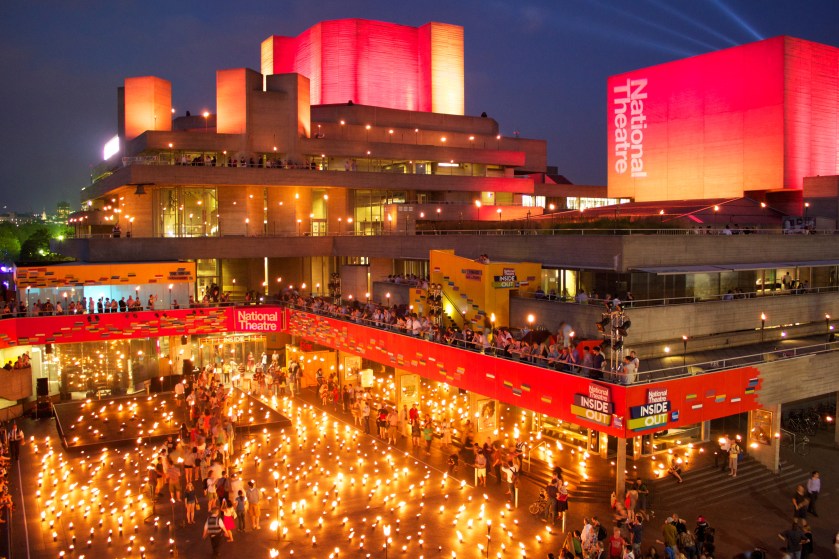
Right let me cut to the chase. Here is my latest attempt to distil the best of what is on now and what is coming up in the world of London theatre. There is a bunch of new stuff notably at the National Theatre, the Barbican, the Donmar Warehouse, the Hampstead Theatre and in the West End which has been announced since my last round-up which should be investigated. Happy theatre going.

Top 10 – all on now

1. The Ferryman at the Gielgud Theatre. I know most of you theatre lovers will have already seen it but if you haven’t you must. The Ferryman at the Royal Court Theatre review *****

2. Oslo at the Harold Pinter Theatre. This shouldn’t work – a straight narrative of the negotiations that led to the Oslo Accord between Israel and the PLO – but it does and is bloody magnificent. Oslo at the National Theatre review *****

3. Follies at the National. I hate musicals. This is different though. Made me want to cry and punch the air. Pretty much sold out but if it transfers snap it up or watch the cinema transmission next week. Follies at the National Theatre review *****

4. The End of Hope at the Soho Theatre. Go see this this weekend if you have nothing else to do. I saw this at the Orange Tree. A two hander which set in Northern Ireland by David Ireland and directed by a student amazingly. Just 60 mins and cheap as chips. It is hilarious and cutting. Highly recommended. Directors’ Festival at the Orange Tree Theatre review

5. Young Marx at the Bridge Theatre. The Bridge’s first offering. Not perfect but still v. funny and the new Bridge Theatre is wonderful. Young Marx at the Bridge Theatre review ****

6. Albion at the Almeida Theatre. Mike Bartlett’s (he who wrote the lines that have you shouting at the telly when Dr Foster is on) latest offering. A state of the nation thing. I loved it. Looks like it is sold out so you should have paid attention when I recommended it months ago. Albion at the Almeida Theatre review ****

7. Beginning at the National Theatre. Two hander on the excruciating pain of dating. Terrific. A few tickets left for the last week. Beginning at the National Theatre review ****

8. Minefield at the Royal Court. Only a couple of dates this weekend. Six veterans from the Falklands War act out their experiences. Really engrossing and moving.

9. Heather at the Bush Theatre. Tiny venue. Gold star from me if you see this. Amazingly clever play about a children’s author who is not what she seems. Only an hour.

10. The Comedy About a Bank Robbery at the Criterion Theatre. I went with LD to see this for the second time recently. Terrible West End venue and full of tourists (no offence intended) but it is still the funniest thing on the London stage so an Xmas treat if you haven’t been. The Comedy About a Bank Robbery at the Criterion Theatre review ****

Top 12 – booking ahead

1. A Very, Very, Very Dark Matter at the Bridge Theatre. I WILL WRITE THIS IN CAPITALS. YOU MUST BOOK THIS. This has just been announced. A new play from Martin McDonagh about Hans Christian Anderson (don’t laugh). McDongah’s last play was Hangmen which me and the SO think is the best play we have seen in the last 3 years. He wrote the classic film In Bruges. It will be caustically funny and gripping. I know it is next year but don’t blame me if you miss out as this won’t transfer since the Bridge is already a commercial theatre.

2. Julius Caesar at the Bridge Theatre. I know. Bloody Shakespeare. But the cast here is to die for. Plenty of tickets.

3. Macbeth at the National. Rory Kinnear and Anne_Marie Duff, our two finest stage actors of their generation, as the Lord and Lady. Will be unmissable. Booking opens next week.

4. John at the National. New Annie Baker play. This will likely sell out in hours as she has a cult following. Booking opens next week. Make sure to look at the “coming soon” part of the National as there is lots of good stuff.

5. Network at the National. High expectations but should be justified. Bryan Cranston as the TV anchor who has a meltdown. Looks like it is pretty much sold out so again should have listened a few months ago.

6. The Encounter at the Barbican. Bear with me on this. It is amazing. Simon McBurney (who is a genius) brings to life a book about a bloke getting lost in the Amazon. They give you fancy headphones and then he takes you on the journey. Booking opens tomorrow.

7. Pericles at the Barbican. From Cheek by Jowl a theatre company I love. A rare(ish) outing for a late(ish) Shakespeare. In French with surtitles so if you are a French speaker this is your time to shine. Booking opens tomorrow

8. The Twilight Zone at the Almeida. Don’t know if this is going to work but it’s the Almeida so I will give them the benefit of the doubt. Based on the 60s sci-fi TV series !! Plenty of tickets.

9. Belleville at the Donmar Warehouse. US transfer. Main draw is that James Norton in the lead who my ladies fancy something rotten. Looks like it may have sold out. Sorry. Elsewhere in the Donmar season is Congreve’s restoration comedy Way of the World which has Linda Bassett in the lead who is a genius actor (only a few tickets left cos us luvvies snap them up) and The York Realist a gay love story set in the 60s. Like the Almeida and the Royal Court the Donmar doesn’t generally do duds.

10. Glengarry Glen Ross at the Playhouse Theatre. Mamet’s shouty modern classic with a stellar cast and Sam Yates given the director’s chair.

11. The Birthday Party at the Harold Pinter Theatre. Pinter’s guest house to avoid with a fascinating cast and Ian Rickson directing.

12. Gundog at the Royal Court Theatre. I pretty much book anything that looks even vaguely interesting at the Royal Court, Orange Tree, Arcola and Young Vic. This is a guaranteed way to see stunning theatre at bargain prices. (though the RC prices have crept up) I can’t tell you why Gundog is on this list. I just have a feeling.


Beethoven and Shostakovich: LPO at the Royal Festival Hall review ***

barnatan-1-gallery

London Philharmonic Orchestra, Andres Orozco-Estrada, Inon Barnatan

Royal Festival Hall, 27th October 2017

  • Beethoven – Piano Concerto No 5 “Emperor”
  • Shostakovich – Symphony No 7 “Leningrad”

Off to the Festival Hall for a couple of big beasts of the repertoire (or at least the repertoire I like). Yet I have to say that, in both cases, the interpretations were a little too polite and not quite the emotional body slams they can and should be.

This was the first time I had heard the LPO under the baton of guest conductor Andres Orozco-Estrada and the first time I had heard soloist Inon Barnatan. There is no point fiddling about in the first movement of the Emperor. Beethoven cuts to the chase pretty quick with a marchy rhythm with a little melodic twist and the two note theme which gets played with in the development. It is all pomp and show and Mr Barnatan with his bright expressive playing had the measure of the beast. The adagio and dancey rondo allegro require a greater connection with the orchestra, notably woodwinds, which was satisfactorily wrought but without real fireworks for me. Still much to admire.

On to the Shostakovich. Now even by DS’s “tombstone” symphony standards this is an absolute monster. You all know the story of its genesis. Written as the Nazi forces encircled the city, with DS pitching in as a fireman, premiered in Kuibyshev in March 1942, score smuggled out for performance in London and then New York, and apparently defiant testament to the heroism of the Soviet people, this is music as history. I know that there is a case for this to be a “requiem” for those who died at the hands of their own Government as well as the invader. But to me it sounds like a straight programmatic account of the war in the East with the ominous drum roll of the first movement giving way to the ghostly dance of the scherzo, the extended despair of the slow movement and the victory march of the finale (albeit tinged with pain for all those lost to the carnage).

Now it does go on a bit. It is easy enough to build tension in the first movement with the trite rat a tat tat of the side drum building to a climactic racket and the scherzo does its stuff as all DS’s scherzos do. But keeping the whole edifice alive through the outer parts of the third movement and first half of the final movement (both clock in at 20 minutes) is tricky and needs a bit of sludge and shaken up tempi I reckon. Percussion, brass and woodwind ticked the boxes but the strings were just a bit too Mahlerian for me.

Overall then I had hoped for a little bit more. Any rendition of the 7th is going to have some, shall we say, opportunities for lapses of concentration, and maybe I needed to try harder, but I have heard better. Mind you the young fella next to me was even more underwhelmed. Having bragged to his mates/colleagues before the piece, and during the inordinately long pause/hubbub after the first movement, he promptly dropped off until the applause kicked in. Maybe not the best choice after a long day at work but hopefully he caught up on his zzzz’s.


Follies at the National Theatre review *****

follies-poster-700x455

Follies

National Theatre, 2nd November 2017

I now think I might be mistaken in my general aversion to musical theatre. I think the problem may be that I just haven’t seen enough Sondheim. You can see from all the proper reviews and audience feedback just how well this production has gone down. Believe it. This is outstanding. Worth the thirty year wait And this from someone who is never happier than when he is locked up with 20 other punters above a pub seeing some obscure piece of European metaphysical miserabilism. So you can trust me on this.

There are a handful of tickets left. Or you can go with the Friday Rush or Day Tickets approach. If you can bear to do this, it will be worth it. This obviously cost a bomb to stage, so who knows if it will transfer, though patently it deserves too. If all else fails get to the cinema on 16th November when the performance will be screened live. Anyway, with a bit of luck, you are not a pompous, prejudiced berk like me and you will have already seen it.

Why so gushing? Design yes, courtesy of the gifted Vicki Mortimer, with her half=demolished theatre come to life on stage. The Olivier stage works best when the revolve is gainfully employed and when there is a hulking piece of stuff in the middle playing its part, as it does here. Direction yes. As others have remarked it is hard to believe this is Dominic Cooke’s first musical. Mind you, most everything he has done before, notably at the Royal Court, has turned to gold. This catapults him right to the top of the directorial league. The 21 piece orchestra, conducted by Nigel Lilley, the musical supervision of Nicholas Skilbeck, the orchestration of Jonathan Tunick and Josh Clayton and the outstanding choreography of Bill Deamer, especially in the tap routines; all combine seamlessly. Lighting and costumes are also to die for. Neon, washes, spotlights, feathers, sequins, heels, frocks, wigs, dickie bows, acres of face slap. Glam and glitz all present, correct and suitably superficial as the tale demands.

The 37 strong cast (bigger than a Premiership squad) is uniformly marvellous. The four leads garner most of the plaudits. Watching Imelda Staunton’s Sally, her girlish excitement as she is reunited with paramour Ben turning to bitter disappointment as reality bites, is about as good as acting gets. This is Imelda Staunton though so expect no less. Her rendition of “Losing My Mind” is spine tinglingly raw. Janie Dee as Phyllis, all disdainful bitterness, matches her. A trail of bile follows her round the stage. It all comes flooding out in the contemptuous “Could I Leave You”. Philip Quast is the big male beast of proper musical theatre and his Ben Stone is, to use another cliche, commanding. Watching him finally fall to pieces in the “Live, Laugh, Love” is as moving as theatre gets. Poor old Ben; money and status can’t buy you love or happiness. In my book, Buddy is the trickiest character to pull off, but not for Peter Forbes, who nails Buddy’s solipsistic refusal to take responsibility, preferring to play the fool, as he does in the “God Why Don’t You Love Me Blues”.

The younger ghostly doppelgangers (Fred Haig, Zizi Strallen, Alex Young and Adam Rhys-Charles) are perfectly matched, to each other and their mature selfs, and move effortlessly round the set. Who else? Tracie Bennett’s Carlotta, as she belts out “I’m Still Here”, even though no-one is listening, makes you want to punch the air. Operatic soprano Josephine Barstow’s duet with her younger Heidi self, play by Alison Langer, is another highlight. As, unsurprisingly, is Di Botcher as besuited Hattie in “Broadway Baby”. There are some other mind-blowing set pieces. The routine where the ladies intertwine with their sequinned and head-dressed younger selves is a highlight, as are the entrances early on down the fire escape stairs. The pastiche/parody routines are jaw dropping, camply serious, not seriously camp.

Here’s the thing though. All this stuff wouldn’t work for me if there weren’t real characters inside all the song and dance stuff and if the text and lyrics didn’t illuminate the characters. I can see that, at its heart, the story of a reunion of the showgirl cast and creator of an interwar Follies review is pretty flimsy. And that the idea of regret over lives lived and not lived, is hardly ground-breaking dramatic material. And bugger all happens. But I cared so much for these people.

And I think that even in the absence of a more upbeat ending as was apparently the case in the 1987 revival, this is still perversely an uplifting piece of theatre. And not just because of the tunes, though the way Sondheim’s music wraps its way around his lyrics, particularly into and out of the big songs, is a wonder to the ears. He just seems to perfectly capture not just the cadence of the words but also the emotions of the characters. No, the reason I came out all puffed up after this is because I think Sondheim, and writer James Goldman, tell us that all of this agonising over what might have been, which is basically what our four leads spend 2 hours bemoaning, is ultimately pointless. You only have one life. It will be full of disappointment and missed opportunities. But you might as well try and be happy with what you have. I appreciate this homily is f*ck all use if you don’t have the basics, or if your relationship threatens your physical or mental well being, but I can only describe what I think I saw and heard. There are plenty of other bright sparks, starting with that Buddha chap, who would agree that the best thing to do is ditch the constant yearning for something better. Dump the act: be yourself.

So there you have it. Redemption for Rufus Norris, AD at the NT, after the string of misses, (not as bad as some think in my book), on the Olivier stage this season. A triumphant revival of a marvellous piece of theatre where no-one, literally, puts a foot wrong. I am still smiling a week later. Loved it. No idea what the original audiences in 1971 Broadway were thinking when they failed to turn this into a monster hit.

Young Marx at the Bridge Theatre review ****

youngmarxw500h500

Young Marx

Bridge Theatre, 1st November 2017

Let me add to the chorus of theatre lovers telling you how wonderful the new Bridge Theatre is. Cracking location by the river (Thames obvs) with a view of Tower Bridge. Wide open foyer space with a long bar for those who fancy a tipple. Pretty comfy seats in the auditorium with, what seemed to me, great sight-lines from wherever you choose to perch. More urinals in the gents than you could shake a stick at. (I appreciate this disclosure is somewhat unsavoury but theatre loos matter). All in all a mighty fine addition to the London culturescape.

Nick Hytner and co-founder Nick Starr have kicked off with an ambitious season which, from the sound of the plays in the pipeline, is set to continue. There were high hopes for this production of Young Marx, and, by and large, they have been realised. The last time co-writers, Richard Bean and Clive Coleman came together with Mr Hytner as director was for Great Britain, which went down pretty well. (I failed to get through it though had a pretty good excuse for leaving). And, of course Mr Hytner and Mr Bean had a moderate success in the past at the NT with a little comedy entitled One Man, Two Guvnors.

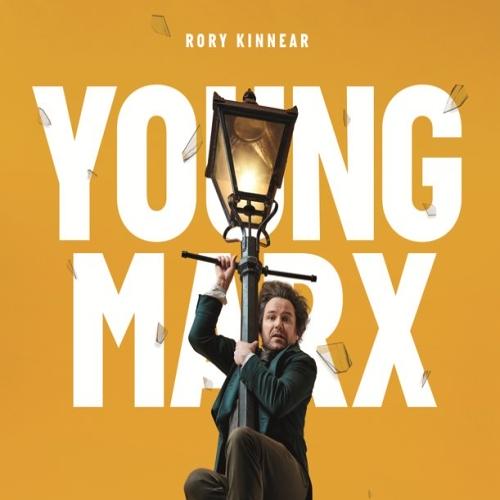
Young Mark is no One Man, Two Guvnors, that would have been too much to hope for, but it is still a very entertaining romp through the life of the young Karl Marx and his compatriot Friedrich Engels. Messrs Bean and Coleman don’t stint on the comedy, visual and oral, and the whole does come across as a series of vignettes with no grand dramatic arc, but it is still well worth the entrance fee. There are plenty of tickets left at prices comparable to the old workhorses of the West End, but for a better play in far more comfortable surroundings.

Rory Kinnear plays the eponymous genius. Now on his day, his Iago in Mr Hytner’s NT Othello in 2013 was about as good as stage acting gets, Mr Kinnear is peerless. Yet recent outings have been a little underpowered, the Trial at the Young Vic and his Macheath in the NT Threepenny Opera. He is back on fine form here. Marx, before bessie Engels went back to his Dad’s Manchester factory and provided the financial security of a stipend, was notoriously impecunious. This, together with his fondness for an ale, provides the backbone of the humour. We see him pawning family heirlooms, dodging creditors and German spies, evading the nascent Old Bill (there is a nice line in copper gags) and arguing with the other emigre revolutionaries that populated 1850s Soho. We also see the goading of his long suffering aristocratic wife Jenny and the overly close relationship with maid Nym. We see Marx as doting father and as inspiring rhetorician. Most of all though we see the close, and ultimately world-changing, friendship with Engels. Our Fred was no mean writer and thinker himself but he devoted his life to what he say as the superior intellect of big Karl. Marx must have wound him up something rotten in these early years but the mutual love and respect (“Marx and Engels, Engels and Marx” like some musical hall duet) is there on the stage.

Oliver Chris as the raffish Engels is the equal of Rory Kinnear’s more estuarine Marx. Nancy Carol’s desperate Jenny and Laura Elphinstone’s loyal Nym are the equal of the chaps both dramatically and intellectually which is a fine touch. The rest of the cast is bang on the money. Mr Hytner has wheeled out the A list for the set, Mark Thompson, lighting, Mark Henderson, sound, Paul Arditti, and music, Grant Olding. That’s why the production looks and sounds great. Beneath a silhouetted panorama of the London cityscape is a giant brick box, a brick building almost, which revolves to supply exterior and interior scenes, notably the cramped Marx household (just two rooms), upstairs in the the Red Lion and the reading room of the British Library. At one point we are transported to a frosty morning on Hampstead Heath as Marx duels with rival August von Willich (Nicholas Burns). The lighting is excellent.

So, all in all, this is a very superior production. As you might expect Mr Hytner’s direction is as energetic as the text of Messrs Bean and Colman. The gags come thick and fast, including some well wrought plays on Marxian concepts such as use/exchange value, alienation, capital accumulation, dialectical materialism and the like. Sometimes the humour is a little obvious, a bit Carry On if you like, but I think this can be forgiven. The farce elements are never overdone, the fight scenes stay the right side of slapstick. The whole thing is a little episodic, though to be fair these episodes from Marx’s life in London, which have been little embellished, are sufficiently entertaining to justify inclusion, and the lurch to tragedy near the end is a bit disconcerting, though again would have been hard to leave out. It might have been nice to have a couple more serious monologues from Marx and Engels, to create a little more message, though the scene where Engels lectures Marx on the plight of Manchester factory workers is arresting.

Minor quibbles though. This is a rollicking debut for the Bridge venture. I cannot wait for the forthcoming Julius Caesar. Nick Hytner directing again. Ben Whishaw, Michelle Fairley, David Morrissey and David Calder in the lead roles. And for 25 quid you can be one of the citizens in this promenade production. Sounds brilliant.