London theatre update

So a few things to note since the last London theatre update.

Booking opens 5th May (earlier for members of various hues) for the new batch of productions at the National Theatre. I reckon tickets for Follies, the Sondheim musical with a cast of thousands and the pocket rocket Imelda Staunton in the lead, will sell like the proverbial hot cakes. I also have my eye on Mosquitoes, the new play by Lucy Kirkwood (Chimerica, NSFW, The Children) with Olivia Colman off the telly.

Booking for the 4 way RSC Shakespeare Roman plays extravaganza is now open at the Barbican.

The new Bridge Theatre inaugural season is announced and I am so excited. Public booking opens 27th April. I recommend all 3 of the openers. Young Marx with Rory Kinnear as Marx, Oliver Chris as Engels, written by Richard Bean and Clive Colman and directed by Nicholas Hytner himself. The Julius Caesar not only has Ben Wishaw as Brutus but David Morrissey (last seen in the magnificent Hangmen by Martin McDonagh – best play of the last 3 years) as Mark Antony. And there is a new work, Nightfall by Barney Norris, which sounds intriguing (the refurbished Bush Theatre has While We’re Here, another new play by busy Barney, coming up). And the Bridge has lined up future new works by Nina Raine (about Bach yesssssss !!!! with Simon Russell Beale yessssss !!!), whose Consent I have yet to see at the NT, and by Lucy Prebble based on Bizet’s opera Carmen, as well as by Sam Holcroft and Lucinda Coxon.

Against at the Almeida will be booking from mid May.

The Old Vic is set to stage The Divide, the new play by Alan Ayckbourn, set in a future dystopian England, after a run at the Edinburgh Festival. Sounds like a cracker, mind you not too many laughs I am guessing from the blurb. No booking details yet.

I am casting an eye over Little Foot (by South African playwright Craig Higginson) and Doubt, A Parable (JP Shanley which was made into a film I gather) at the Southwark Playhouse (who are also bringing back Kiki’s Delivery Service which is a belter if you have littl’uns).

Everything Between Us (by David Ireland), Food and Mr Gillie look like the best of the bunch in the new Finborough theatre season.

And I have booked 3 of the 5 offerings at the end of July at the Orange Tree where they are letting young directors’, studying at St Mary’s round the corner in Strawberry Hill, loose on early plays by James Graham, Brad Birch, David Ireland, Enda Walsh and Kate Tempest. £7.50 a pop to support aspiring talent. Go on.

Finally I am weighing up the RSC Queen Anne at the Theatre Royal Haymarket in the transfer from Stratford but can’t quite make up my mind though Romola Garai in the lead may tip the balance.

Happy theatre going.
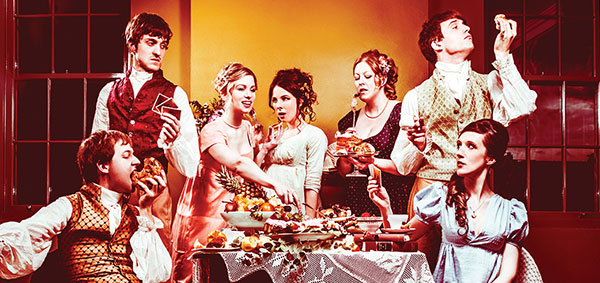
The Lottery of Love at the Orange Tree review ***

headshots20200x700

The Lottery of Love

The Orange Tree Theatre, 13th April 2017

Apparently there is even a noun for it, “Marivaudage”. Slightly sarcastically applied, but it describes a way of writing that is precious or affected, and is derived from our friend Pierre Carlet de Chamblain de Marivaux (I so wish my name was as replete with syllables), whose romcom Le Jeu de l’Amour et du Hasard was on show here in a translation by John Fowles.

This was my first exposure to Marivaux and all up it was OK. The action has been transposed from C18 France to Regency England. Posh daughter Sylvia is engaged to Richard but has never met him. So she asks Dad if she can swap identities with her maid Louisa and Dad says yes, as you would. But our suitor Richard has the same idea and swaps identities with his man Brass. But Dad knows this having received a letter to that effect from a mate. And brother is also pulled in to the deception to spice it up. Cue confusion, some gentle satire on the behaviour of the toffs and the servants, some will she/he, won’t she/he, fall in love, the reveal and an all live happy ever after denouement.

So I guess not the most incisive or surprising of plots (it is after all rooted in the stock characters and plots of commedia dell’arte), though there is a bit of keeping up with who knows what. In fairness, it gets to the point mercifully quickly and director (Paul Miller), cast and especially translator, in the inestimable Mr Fowles, all apply a delicate touch. Kier Charles as Brass lays it on a bit thick as vulgar cockney playing milord but that does at least ratchet up the gag count. Claire Lams as Louisa (who was very good in Kiss Me at the Hampstead Theatre as she needed to be in a play with a slightly one dimensional premise) was a little subtler.

The standout for me though was Dorothea Myer-Bennett as Sylvia. She was the best thing by far in the Philanderer at the Orange Tree as well last year. Shaw can annoy me at the best of times and in contrast to most of the audience and the reviews I really didn’t like this. Otherwise I confess I have not seen her on stage but she was perfect in this, nimble of speech and movement and well beyond caricature. Surely only a matter of time before she is on the telly as an Austen lead (Emma Woodhouse the obvious choice). I assume, with a name like that, this was her parent’s plan from the off.

So overall a pleasant enough afternoon with the pensioners who make up the OT matinee audience though I might have wished for a little more exploration of the class conflicts at the heart of the plot, as well as the love stuff. Still a decent enough entry point in Marivaux. Now I need some more Moliere revivals.

As an aside for those who don’t know the Orange Tree, it is, in my view, the best “fringe” theatre in London, closely followed to be fair by the Southwark Playhouse, Park Theatre, Arcola and Finborough. Not everything turns to gold under Paul Miller’s stewardship, especially in some of the the OT revivals, but when it gets it right it is outstanding. Recent favourites have included Jess and Joe Forever (a stunningly inventive work by Zoe Cooper), The Rolling Stone (a powerful indictment of intolerance in Uganda by Chris Urch), The Brink (another dark new play by Brad Birch), Winter Solstice (a formally inventive comic dissection of the lure of fascism by German playwright Roland Schimmelpfennig, Blue Heart (a superb revival of Caryl Churchill’s amazing diptych) and Sheppey (Somerset Maugham’s last humanist play). So if you’re not a local it really is worth the schlep out to Richmond.  Look out for the next season – unlike some (here’s looking at you Royal Court) the blurbs give you a pretty good idea of what is on offer.

Twelfth Night at the National Theatre review ****

twelfth-night-1280x720-sfw_0

Twelfth Night

National Theatre, 10th April 2017

Now I’m not going to lie to you. The first couple of times when I saw Twelfth Night years ago I had no idea what was going on. Mind you I put no effort in and was, on one occasion I recall, knackered after a few long shifts at work. Even so it put me off a bit. And I still find it a bit more of a tougher nut to crack than the classic Shakespeare tragedies, the history plays and the some of the other comedies.

I know that the whole spiel is that Twelfth Night is a time of mischief and general larking about. I get that we are in a world of sharp reversals in terms of gender, fortunes and behaviours. I can see the “dead” brothers sub-text and the possible link to the death of Hamnet. But that hasn’t stopped me finding the whole thing a bit mannered and a little less than entirely satisfying. And I have previously found Olivia, Viola/Cesario, Sebastian, Orsino and Aguecheek all slightly colourless.

Still never give up. After all if I can’t get my head around these mistaken identity comedy plots then I can’t really count myself a serious theatre-goer can I.

So joys of joys this production has allayed my prior misgivings.

First up, as most everyone has observed, the gender reversal of Malvolio into Malvolia is a stroke of genius. For me it brings a whole new dimension not just to this character, but it spills over elsewhere, particularly into Olivia’s and then Orsino’s relationship with Viola/Cesario. Now you, and they, are really unsure about their identities and sexualities and we get a bit of a head of steam building up to the benefit of the gag quotient.

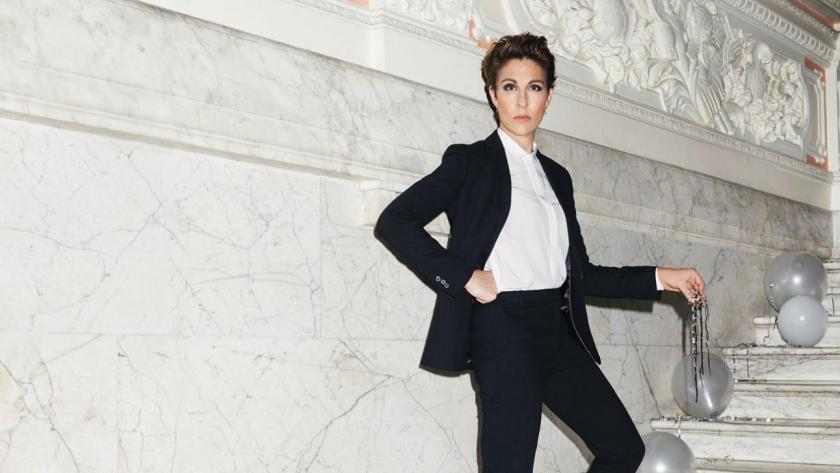
Of course this dimension is only made possible by the genius of Tamsin Greig. So the family loves her from the telly and though I have only seen her a couple of times on stage, in Jumpy and, most recently, in IHo at Hampstead, she blew my socks off. Great actor, impeccable comic timing. Of course you are primed to laugh at Malvolio/a but she took it to a whole new level in the gulling/topiary scene. And I really believe “she’ll be back” to get the bastards who treated her so badly. At last I savoured this downbeat contrast at the end.

I also think Tim McMullan is a brilliant actor. Sir Toby was another reason I have got frustrated by productions of Twelfth Night in the past. The temptation with this character to slice thinly, marinade overnight and then flash fry the scenery before chewing loudly might prove too great for some actors but Mr McMullan wisely eschews (geddit) this. With a Cooganesque swagger he gets the balance between dick and provocateur bang on. The SO loved him in Man and Superman. And just look a his list of NT credits. If he is in it, it will be good, and so it was here.

I would also call out Phoebe Fox as Olivia and Niky Wardley as Maria. In fact the only slightly unconvincing link in the actorial chain was Doon Mackichan as Feste who just didn’t seem comfortable as a fool, having to ensure we could follow all her fool-ish meaning, whilst moving sharply through the set. Oh yes and what a genius set it was. I think Soutra Gilmour must be my favourite set designer (never thought I would have a favourite set designer) what with this, My Brilliant Friend. Les Blancs, The Homecoming, Strange Interlude, Bull, and Antigone in the last few years.

And finally hats off to director Simon Godwin. After all the masterstroke in the gender rewiring of cast and the freedom of choice with set, place and costume, which in turn emphasised the characters own freedom to maybe be what they want to be, was presumably his call.

So I get the play. At last. Hurrah.

Rosencrantz and Guildenstern are Dead at the Old Vic review ****

rosencrantz-guildenstern-are-dead-11849

Rosencrantz and Guildenstern Are Dead

The Old Vic Theatre, 27th March 2017

Sorry I have come a bit late to the party here both in seeing this and then setting down a few thoughts. I am still a Stoppard virgin so you must treat me gently and this is the first time I have seen this.

So how did I fare? Well much like Travesties a few weeks earlier I was left breathless and in awe of Mr Stoppard’s dazzling intellect and wit. I reckon a few more of his plays and a few more years and I might crack this but for now baby steps. When this came on to the scene 50 years ago it must have been a revelation for its early audiences. My near contemporary arrival in the world left less of a mark – still my mum was probably pleased to see me.

To interrogate the nature of how we see events and construct meaning, to question the role of chance, to ask why we make the choices that we do and to examine notions of free will and mortality, and to do this in the context of a play itself that is genuinely full of laughs (not just knowing sniggers) and a plot of sorts that moves forward, and is based on possibly the most famous play ever which itself deals with not dissimilar questions – it’s a miracle of sorts that the whole thing doesn’t just collapse under its own contradictions and ambition.

Now that doesn’t mean there weren’t a few “whoosh over the head” moments for me and it can be hard work to keep up even with the Hamletian anchor. Stoppard properly f*cks about with your head. But for me it yields a theatrical pleasure from all the hard work that is not replicated elsewhere. To think perchance to laugh.

I can’t imagine any improvements to David Leveaux’s production and Daniel Radcliffe and Joshua McGuire seem a perfect match as our hapless heroes. McGuire in particular, who carries more than I realised of the text, is very strong and you can practically hear his brain whirring through the gears as tries to solve the puzzles that he and his chum have to face. And David Haig, who teetered perilously close to annoying in Blue/Orange at the Young Vic with his singular bluster, was just right I think as the Player.

So whilst I may have started with an air of cultural obligation in seeing these two Stoppard plays in recent weeks I come out persuaded and look forward to the next adventure. If you agree, all well and good but if you don’t I completely understand. It might pass the Pete and Bernie’s Philosophical SteakHouse pretension test for me – but I suspect there are a whole bunch of people who secretly hold fast to an “emperor’s new clothes” view and I can see why.

Still packed houses at the Old Vic for properly ambitious theatre must be a good thing. Next up Woyzeck.


The Japanese House exhibition at the Barbican review ***

japanese_house_pack_cover_hr_large

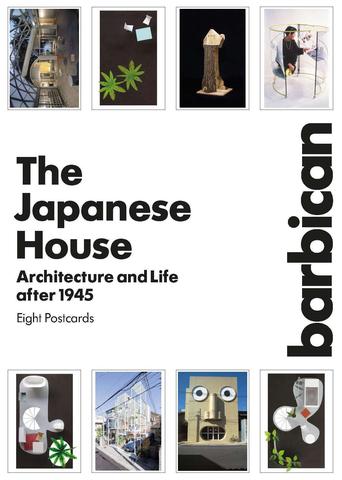
The Japanese House: Architecture and Life after 1945

Barbican Art Gallery, 27th March 2017

Bit of a mixed bag/curate’s egg here. There are some undeniably interesting insights in this exhibition but I was less enamoured of the set piece external and internal installations accommodated within the fabric of the Barbican’s gallery space (which is not a great favourite of mine – it lacks natural light and always feels a bit half-hearted compared to the Hall and Theatre). These installations just felt a bit gimmicky.

What the exhibition does convey is the extraordinary imagination that generations of post WWII architects have brought to Japanese domestic architecture when faced with limitations of space, capital or materials. There are some beautiful solutions, largely delicate and transitory, whether as built projects or simply paper ideas. Resolving the relationship between the interior and exterior is a particular skill on show with many of the houses deliberately putting the interior on show whilst others resolutely turn their backs on the outside world. And many of them are just so dinky.

There is an interesting video tracing the development of rapid build, affordable housing by way of example through the period under review and some excerpts from the domestic films by the post war Japanese masters including Yasujiro Ozu reminding me of another rich seam of cinema that I need to explore. Watching Tokyo Story again recently left me and the SO speechless – a must do for anyone and everyone.

So if you are an architectural buff or a denizen of Japanese culture worth popping along. For the more casual observer there s probably only just enough on show to justify the trip, and it promises maybe a little more than it actually delivers.


Ugly Lies the Bone at the National Theatre review ****

ugly-lies-the-bone-1280x720-sfw

Ugly Lies the Bone

National Theatre, 28th March 2017

Tricky one this. It was by no means perfect, a little too thinly drawn for me, but there was so much to applaud that I think it worthy of a strong positive review.

The playwright, Lindsay Ferrentino is entirely new to me, but the string of awards, the intriguing content and the imprimatur of the NT, was enough to sucker me in. The play focuses on Jess, played by a massive favourite of mine Kate Fleetwood (her performance in Medea at the Almeida, directed I recall by hubby Rupert Goold, and written by a Kate Atkinson in full-on spleen venting mode, was a cracker), who returns ravaged physically and mentally from tours in Afghanistan to her native Space Coast Florida. She undergoes a pioneering virtual reality therapy, which gives set designer Es Devlin and her video, lighting and sound colleagues carte blanche to pump up the pyrotechnics, and boy do they seize the opportunity, whilst rebuilding relationships with sister (Olivia Darnley), an old flame (Ralf Little), sister’s maybe dodgy boyfriend (Kris Marshall) and eventually mother.

The text is direct but funny, Ms Fleetwood draws out Jess’s p*ssed-offedness with the world brilliantly, the supporting cast are uniformly excellent and Indhu Rubasingham’s direction (how is that Tricycle refurb going?) is clear as a bell. The reliance of Jess’s hometown on the NASA space programme is also well articulated to mirror Jess’s personal demons. So all good. I just wanted a little bit more. The technical pyrotechnics were a bit guilty of overshadowing the personal dramas, and the urge to maintain a lightish touch and neatish resolutions, left me liking the characters more than caring for them. Smaller stage, more lines, less fancy-dan stuff might have served it better.

Anyway definitely worth seeing though (on for a few more weeks and plenty of tickets) and I hope to see more of Ms Ferrentino’s work.

Balm in Gilead at the Guildhall School review ***

milton-court_04

Balm in Gilead

Silk Street Theatre, 27th March 2017

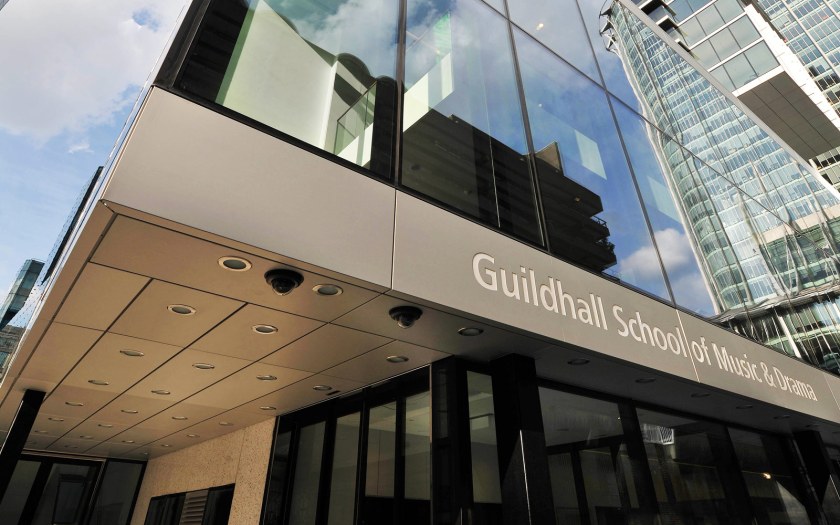
Less a review, more a plug for the terrific music, drama and opera on offer to you, the London public, from the massively talented students (and teachers) at the Guildhall School on the Barbican site. There’s all manner of free stuff and for no more than £10-20 there are plays and operas of the highest quality.

Balm in Gilead was the last play I saw there. Written in the mid 1960s by Lanford Wilson who I didn’t know before this, the play is set in a contemporary New York cafe frequented by assorted prostitutes, addicts and petty criminals. Think Taxi Driver without the Travis nutjob. There are many stories on show but the key narrative is the relationship between Joe, a drug dealer who is in too deep, and Darlene a recent, and naive, arrival in the City.

There are all manner of formal devices employed here. A large cast of largely unsympathetic characters, though sympathetically played, a lot of overlapping dialogue, simultaneous scenes, a fugal song at the beginning and end to highlight the vicious circle in which the characters are trapped, cutaways where characters amplify the plot. The set design was masterful allowing these formal devices to take wing and the cast uniformly strong in putting the case for what I suspect can be a tricky play to convince an audience.

So what else has caught my eye at the School. Well the student’s contribution to the recent Philip Glass days in the Milton Court Concert Hall (which has one of the best acoustics in London I think) was outstanding. Myself and MS thoroughly enjoyed the Tale of Januarie, a new opera by Julian Philips and Stephen Plaice. On the face of it an opera, written in Middle English, based on a bit of Chaucer, with a dense and powerful score, is not an easy sell, but it was pretty much packed out and the kids absolutely nailed it. In the Milton Court Theatre I have also enjoyed a Crucible which exceeded most of the “professional” productions i have seen (this is one of my favourite plays) and a Top Girls (another favourite) which was similarly outstanding. I also had good reports of the recent Great Expectations from TB and partner.

So if you are interested in the future of culture and a cheapskate like me, don’t hesitate to get along to the School’s performances. In the new season I am drawn to The Wager, a contemporary Chinese opera co-produced with the Shanghai Opera, and the Gershwin musical Crazy for You.

Graduation – film review *****

bacalaureat-2

Graduation, 12th April 2017

I haven’t seen too many films at the cinema this year and have so far resisted the temptation to offer up an opinion on any of them, in large part because they had been and gone before I kicked off this blog. (For what it’s worth I was drawn into Silence but ultimately not satisfied, really enjoyed Manchester by the Se, especially Casey Affleck’s performance, was very annoyed by Jackie, just loved Toni Erdmann, admired Moonlight, was gripped by Elle, but this was largely because Isabelle Huppert was Isabelle Huppert, and think the passage of time might see Get Out start to grate on me).

However, Graduation is by some margin the best of them, indeed I would venture one of the most intelligent films I have seen in the past couple of years, (which marked a serious return to cinema going). I am no expert on things cinematic so had no knowledge of the Romanian director Cristian Mungiu, nor of his renowned compatriots who make up the cast.

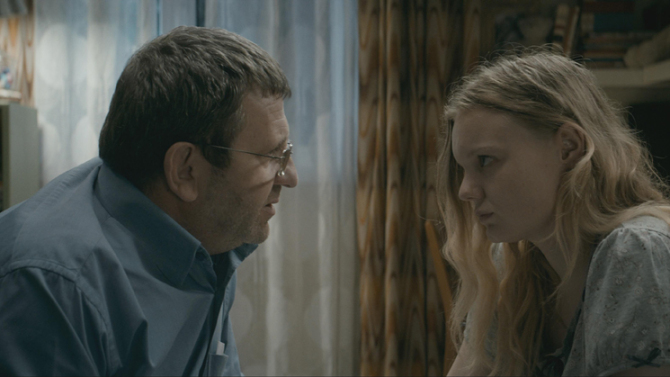
You can read the proper reviews to get the drift but it cleverly manages to be thoroughly absorbing, and gently stomach turning, as it lays bear the moral dilemmas its protagonists face and the shabby compromises that feel are required to resolve them. A proper tragedy then. Adrian Titieni is compelling as a surgeon who wants his daughter to secure a scholarship to go to Cambridge University to study psychology. His relationship with his apparently depressed wife however is falling apart and he is in a relationship with an ex-patient. The assault of his daughter acts as the catalyst for a string of backscratching negotiations and deceits in order ostensibly to ensure her future is not imperilled.

This allows Mungiu to explore the father’s ethical and moral limits and his unclear past, the disillusionment of a generation which returned to Romania post the fall of communism, the pressures to do the right thing in a society plagued by low-level, endemic corruption and the clash between parental love and a young adult’s right to self determination. The film is shot in a naturalistic way, though with some interesting perspectives, and the music of Handel is a persistent counterpoint. The characters are rapidly sketched but then deepen through the film and are utterly believable. The low key progression of events to an enigmatic conclusion,whilst all the while threatening a more dramatic twist, resembles the films of Michael Haneke, which is a massive compliment in my book.

Anyway, please try to see it if you have any interest at all in proper cinema. In fact if I had a favour to call in from you or a way of bribing you then that is exactly what I would ask you to do.


Wolfgang Tillmans at Tate Modern review ****

4.tif

Wolfgang Tillmans: 2017

Tate Modern, 9th March 2017

Oh my giddy aunt. What to make of this. I am slowly clambering my way up the shaky but intriguing edifice that is contemporary art. I have a rough map in my head but still have a long way to go and need to put a lot more hours in. So that means soaking up anything that the smart people at the Tate can throw at me. After all if it never makes its way into a trophy national gallery show then it’s not art is it. But if everything was like this then the journey would be pure pleasure and no pain.

I knew nothing of Mr Tillmans before this exhibition. Well maybe I had seen one or two of the spectral images where he had arsed about with the photographic production process (don’t ask me how) like Exhibit A above. But my oh my, does he get about. Different angles and perspectives, lots of close ups, street scenes, night scenes, landscapes, seascapes, still lives, portraits, self-portraits, fashion shoots, adverts, studio manipulation, the studio itself, colour fields, colour fields in a box. It seems that everything which has been fair game to the fine, the decorative and the commercial artistic worlds in the past and present can be appropriated by Mr T. And all this work is displayed in all manner of ways to further the assault. The OED should probably create an addendum for its definition of prolific.

However, in the hands of a halfwits like me, and, no offence intended, maybe you, this plethora of photos would just be so much garbage. The world is not short of digital images but it is short of this man’s. It is just endlessly fascinating and thought provoking with a host of strikingly attractive images many of which leap far beyond my aesthetic hurdle. Waves, a deconstructed (literally) digital printer, car headlights, lobster claws, fungi, pears, an arsehole and a pair of bollocks in alarming proximity, a pair of jeans in a box. Just some of the stuff I can remember.

And then there is all the material with a political or moral perspective. No empty one-note sloganising here (well maybe a bit), but some developed ideas and provocations drawn from many sources. I particularly liked the room which juxtaposied newspaper and other media stories about key geopolitical events with extracts and lists from psychological and neuroscience journals outlining frontier research on cognition, behaviour and heuristics.

Oh to have the eye and brain of Mr T. Mind you, whilst I am a keen advocate of the elevated audio experience, (though in practice am addicted to my old style I Pod and newer MP3 kit), I have to draw the line at his taste in music. If you have state of the art kit then playing late 80s electronic, white funk/reggae reclusives Colourbox on it is a big mistake, (they were the worst band on 4AD and that is saying something). And a portrait of Morrissey only adds fuel to this particular lapse-in-musical-taste fire.

Still forgive and forget eh major when there is just so much life on show here. You kids with your constant screen tapping and minimal attention spans will love it. Seriously though, and switching off the curmudgeonly, misanthropic pose for a moment, it really will appeal to anyway with a interest in life. So that’s everybody. You look around. So does he. He is just better at knowing how and when to record and extend the experience than you are. So that you can then breathe it all in. The perfect synthesis of high and low art. And a lot of joy in the mundane and a child-like glee in his making process. Not unlike the Rauschenberg retrospective which was next door and just wound up.

Highly recommended and on until mid June.


Austentatious at Leicester Square Theatre review ****

austentatious_sl

Austentatious

Leicester Square Theatre, 26th February 2017

So I am guessing that a good number of people have already stumbled across the comedy joy that this improvisatory troupe bring. So I’ll get to the point. The premise is simple. Take some suggestions from the audience for daft, “unpublished” Jane Austen novel titles and then improvise plot and character over the thick end of an hour around that. I suspect there may be a little “deus ex machina” in the choice of title that is actually picked out of the hat but even so, the revolving cast of actors are so honed at this that there are guaranteed chuckles, titters and, for me, quite a few belly laughs.

Now obviously if you see this you probably will have some regard for the work of Austen. And it helps that the great lady herself was a master at the art of gentle situation comedy. So taking her stock situations and characters and poking fun at them was, in hindsight, always going to be a winner. But this lot are doing it in real time, whilst having to gauge the reactions of each other and audience, resolve the narrative twist and turns, and make it properly funny. I massively take my hat off to anyone brave enough to do improv and it is often a device that disappoints or annoys. But not here. They are outstanding, including the cellist on the night we went, and very clever, as they have to be to incorporate the multiplicity of references and the barrage of sight gags. And I assume the more they practice they better they have become.

So if you think this sounds like your cup of tea then do not hesitate. They regular pitch up here, elsewhere in London, in Edinburgh during the festival and on tour, so it should be easy enough to track them down.

There is very little on which the tourist’s family can agree on in terms of entertainment. The complex negotiations required even to watch a DVD or Netflix film would test the Foreign Office. We are constantly praying for a new comedy series to appear on the box as this is the one likely constant in a sea of argument and resentment. MS, and even more so MSC, are careful to time their visits to avoid any potential TV watching longueurs. We can, just occasionally, look forward to the next Bond movie or backwards, misty-eyed, to anything by Mischief Theatre, but otherwise it every man or woman for him/herself, tapping away or staring aimlessly at their own devices.

For one precious hour though Austentatious brought us together. It might work for you too. “For what do we live, but to make sport for our neighbours and laugh at them in our turn” as Ms A apparently wrote in P and P.