
Three Sisters at the National Theatre review ***

Three Sisters

National Theatre Lyttleton, 9th December 2019

Opportunity partially missed I am afraid. Inua Ellams has come up with a brilliant idea by transporting Chekhov to 1960s Nigeria, specifically during the Biafaran Civil War. Yet his urge to educate and contextualise leaves the dialogue heavy on exposition. And, in deference to the Russian master, his adaptation retains the key elements of AC’s plot, which then leads to a few incongruous shifts in the narrative.

It certainly looks the part with Katrina Lindsay’s mobile set, and especially extensive costumes, along with Peter Mumford’s lighting design, and especially Donato Wharton’s sound design, creating a real sense of time and place. The music, under the direction of Michael Henry, also contributes significantly. The cast is top drawer, with some particular favourites of mine showcasing their talents: Ronke Adekoleuejo (previously The Mountaintop, Cyprus Avenue), Tobi Bamtefa (The Last King of Scotland, Network), Ken Nwosu (An Octoroon, As You Like It, The Alchemist, and Sticks and Stones on the telly recently), Sule Rimi (American Clock, All My Sons, Glass/Kill/Bluebeard/Imp, Sweat, Measure for Measure, Love and Information, The Rolling Stone) and Natalie Simpson (Cymbeline, Hedda Tesman, Honour, The Cardinal). They, and their colleagues, definitely have their moments but in such a broad panorama, with many shifts in pace, action and tone, didn’t really get the opportunity to get under the skin of their characters.

Of course Chekhov’s original play can work in all manner of settings and, as long as translators/adaptors remain true to the tragi-comic timbre, the text can be whatever they want it to be. Inua Ellams’s sisters Onuzo, melancholic but politically aware Lolo (Sarah Niles), restless and resentful Nne Chukwu (Natalie Simpson), who was married at just 12, and initially playful, eventually broken, Udo (Rachael Ofori, who impressed), and brother Dimgba (Tobi Bamtefa), are a long way from where they were brought up, cosmopolitan Lagos, as Igbos returned to the east of the country as war breaks out. Their geographical and psychological separation, and the presence of the Biafran army, fits AC like a glove. Ronke Adekoluejo, as Dimgba’s Yoruba vulgar wife Abosede, adds a bullying edge of superiority to brash comedy, as she takes over the family home. I learnt a lot about modern Nigerian history, the baleful influence once again of the colonising Brits, the coup and counter-coup ahead of Biafra’s declaration of independence in 1967, the ethnic divisions, the war waged through bombing and blockades, the role of women in the war. And I have added Half of a Yellow Sun to my, admittedly thin, holiday reading list. But I didn’t really learn very much about the family, and the attarctions, at the heart of the drama.

Knowing the story made it pretty easy to fill in the gaps and to see how IE had weaved in the key symbols and events in the plot. The birthday party, the fire, here the result of an impressively staged airborne bomb strike, the clock, the photo, the duel. If one were new to Three Sisters I could imagine some of the interactions might have felt a little hazy amidst the spectacle but that didn’t seem to faze the enthusiastic audience at this preview performance. I see that, whilst there are tickets remaining through the rest of the run for the next three weeks (sorry, so far behind), it is been pretty successful and the crowd on our outing, was very enthusiastic, as well as, by NT standards, pretty diverse.

BTW all those dullards taking a pop at Rufus Norris’s tenure at the NT should recognise what he has done to extend the reach of the institution. I appreciate that there is still a way to go but here was a classic play, skilfully adapted by a British-Nigerian artist of immense talent, directed by one of the very best AD’s around right now, Nadia Fall at Theatre Royal Stratford East. Can’t see that would have happened under previous NT regimes. Anything that reduces the proportion of entitled, old, white duffers like me in the NT audience is a good thing.

Though I have to say that, whilst Ms Fall showed her customary energy in the set-piece scenes, and mined the comedy in text and character, even she couldn’t find a way of marrying the big picture events outside the frame and the personal, domestic drama at the core of AC’s masterpiece. Still on the plus side there was none of the sense of ennui that can pervade some productions that are too literal (or, sorry to say, too Russian). I am with those who say that Inua Ellams could have made an even better play by running even further away from the original.
Cyprus Avenue at the Royal Court Theatre review ****

Cyprus Avenue

Royal Court Theatre, 4th March 2019

From one black comedy which imagines taboo breaking violence to make a political point (here big as well as small “p”) to another. Having seen the Ladykiller from The Thelmas at the Vault Festival it was off next evening with the SO, MS and MSC to see David Ireland’s much lauded play about sectarianism on its return to the Royal Court after a run in NYC.

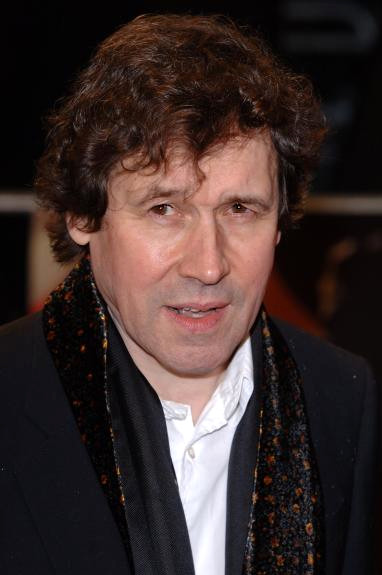
Now I had originally signed up to see Cyprus Avenue on its first outing at the RC in 2016 but had to can it due to a diary clash. Didn’t know anything about David Ireland at that time so was a weensy bit peeved when the uniformly excellent reviews came through, especially after seeing The End of Hope, one of Mr Ireland’s earlier plays, which is one of the sharpest and funniest hours of theatre I have seen on stage in the last few years. So to say I was looking forward to this was an understatement. In fact maybe my expectations were a little too high. Don’t get me wrong. Cyprus Avenue delivers on so many levels. Not least the opportunity to see Stephen Rea on stage. Role for role Mr Rea might just be the most principled actor on Irish, British (or any other) stage and screen. He just doesn’t seem to take dodgy parts for money. To say the role of Eric in Cyprus Avenue could have been written for him is the understatement of understatements. But this is not quite the perfect play.

Actually maybe the understatement of understatements is to say that Eric is not a nice man. The play begins with him shuffling on stage into a nondescript room where he is interviewed by a black woman psychiatrist, (the excellent Ronke Adekoluejo, who, like the rest of the cast, has played the role in Dublin and NYC). Eric’s shockingly direct sexism and racism is quickly revealed. But this is not the half of it as it we flashback to Eric’s blunt treatment of wife Bernie (Andrea Irvine) and daughter Julie (Amy Molloy). And his realisation that his baby granddaughter Mary-May is, in fact, Gerry Adams, Republican, and the leader of Sinn Fein, (until last year). Not just a resemblance. He thinks his daughter really is Gerry Adams, complete with beard and glasses. For Eric, a diehard Unionist, this is anathema. His relationship with wife and daughter disintegrates and he even recruits a hardman, albeit comically incompetent, UVF paramilitary to “resolve” his dilemma. The end is shocking as Eric is forced to assert his bigoted identity, in the face of multiple threats, in the most violent way imaginable.

This is then a black comedy through which David Ireland skewers the lunacy of sectarian politics in Northern Ireland and, by implication, elsewhere. Eric’s religious and political values are so deeply ingrained that hate of Catholics and Republicans, the “Fenians” in his words, is his only currency. His warped logic is mined for laughs but the point is deadly serious. What makes the performance of the crumpled Stephen Rea so remarkable is that, through it all, he still makes Eric recognisably human. Not sympathetic of course. Just very real, his views to him are entirely logical and reasonable. You feel that if he were ever to abandon the certainties of religion and politics his entire psych would collapse in front of us. With a preposterous bunch of “British” religious and political zealots in the form pf the Democratic Unionist Party currently trying to hold our executive, and therefore legislature, and country, to ransom, the play could hardly be more relevant.

This is David Ireland’s metier. using uncomfortable comedy, and shocking violence, to interrogate, and maybe upend, our understanding, expectations and preconceptions of key political questions: sectarianism, identity, race, sexuality and culture. In his first play, What The Animals Say, this is filtered through acting and football, in Everything Between Us the setting is a Northern Ireland Truth and Reconciliation Commission, in the End of Hope, sex and celebrity through a surreal one-night stand, (as is the similar Most Favoured), in Half a Glass of Water, male rape and abuse, (Stephen Rea playing the abuser on its original outing), loyalist paramilitaries again in Yes, So I Said Yes, an age gap relationship in Can’t Forget About You, sectarianism once again in Trouble and Shame, and abuse, religion and homophobia in Summertime.

The sharp eyed amongst you will have noticed a pattern here with the same ideas, situations, issues and characters recurring through his plays. There is I suppose a risk of repetition and self-parody in all this “offensiveness”; indeed I gather that his poorly reviewed play, I Promise You Sex and Violence, was guilty of exactly that, though the title suggests Mr Ireland is alive to the possibility. Senseless violence and the urge to provoke can induce a reaction from the easily shocked or the tiresomely worldly but also even from those, like the Tourist, more open to this sort of caper. There were indeed one or two moments in Cyprus Avenue where I did think the point had been made and it was time to move on. MS was of a similar mind, whilst the SO rightly observed a few drops in pace, and MSC was a little nonplussed by all the savagery really .

Yet for all this duplication the provocation works, the dark, ironic parody is often very funny and the dialogue, in passages, sparks. Ulster American, his latest play, is returning to the Traverse in Edinburgh after selling out last year and, once again, dividing critics with its content. I suspect, one way or another, I will end up seeing it. Mr Ireland treads a line, no doubt, with the subjects he explores and with the way he explores them, but I would contend that is, amongst many other things, the purpose of drama. Trying to work out if people are laughing for the right or wrong reasons isn’t really going to work. As ever, in all art, it is the intention of the creator that is paramount.

Cyprus Avenue just could have done with being a little tighter, less overwritten, offering a little more surprise. On the other hand, for example in the scene where Eric and Slim, (the superb Chris Corrigan), meet, the lines are just so darned good, even when they say essentially the same thing, that I can see why Mr Ireland keeps serving them up. The way their mutual indignation at the backsliding of others in their community is captured, in that odd, overly eloquent tone of florid aggression, is delicious. For me, Martin McDonagh’s The Lieutenant of Inishmore, remains the definitive piss-take of sectarianism and is, line for line, funnier but it is not difficult to see why CA has proved a sell-out.

I assume Vicky Featherstone didn’t have to make too much in the way of adjustments to her sure-footed direction in moving the play from Upstairs too Downstairs at the RC and that Lizzie Clachlan’s spartan set was similarly re-used. The text calls for a muzak version of Van Morrison’s song from which the play’s title is drawn, the post part of East Belfast, but I don’t remember this. Perhaps because that might just be the most horrifying thing of all. Just joking. Anyone I have just put Astral Weeks, the album from which it is drawn on. Still as perfect as when it first came out in 1968. Doesn’t matter how grumpy he gets he is still The Man.