Horn Calls: Philharmonia Orchestra at the Royal Festival Hall review *****

Philharmonia Orchestra, Esa-Pekka Salonen (conductor), Richard Watkins (horn), Allan Clayton (tenor)

Royal Festival Hall, 16th January 2020

  • Carl Maria von Weber – Overture Der Freischütz
  • Mark-Anthony Turnage – Horn Concerto (Towards Alba)
  • Benjamin Britten – Serenade for tenor, horn & strings
  • Richard Strauss – Till Eulenspiegels lustige Streiche

Broke the golden rule. It is bad enough that I inflict this shite upon you and join all the other narcissists clogging up the Interweb and generally adding to the carbon burden. But I had resolved not to comment on anything that I had not sat all the way through. Notes for my own consumption but never yours. Here though I felt compelled to announce just how marvellous a concert this was. Despite walking out after the Britten Serenade and thereby avoiding the Strauss. Which, as it happens, I have heard live a couple of times and loathed. Another bloke in the lift on the way down adopted the same strategy. Why sully the perfect?

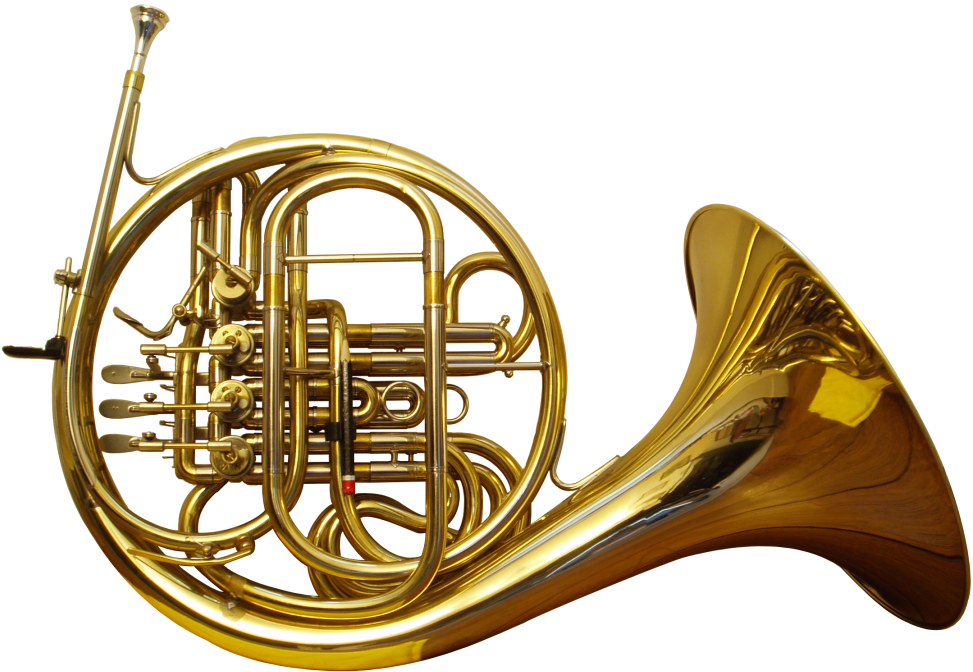
For I cannot imagine much better that this take on one of BB’s most sublime, and rightly popular, compositions. Comparable with the composers own versions surely. I might have guessed that Allan Clayton’s tenor is the perfect instrument for the work but how good is that Richard Watkins. He used to be principal horn for the PO, so he was surrounded by plenty of mates and presumably was attuned to Esa-Pekka’s no messing, forceful take on the work, even if he left before the Finnish maestro came to London. (Apparently E-P S, to add to his many talents, is a dab hand himself on the horn). He now works as a soloist fronting the London Winds and is a member of the Nash Ensemble. Every note was delivered exactly as I imagined BB composed it for the mercurial talent of Dennis Brain, the orchestra’s first principal player. The horn, let’s face it, when it enters its expanded harmonic world, is about the most thrilling, note for note, instrument in the orchestra. Obvs you can have too much of a good thing, but not here.

Which makes Mark-A T’s achievement in this world premiere of his own Horn Concerto that much more remarkable. He has always created contemporary classic music of real immediacy, but here, commissioned by Richard Watkins himself, he channels the German romantic horn tradition, of which Weber was a part, through the horn tributes of the English composing generation prior to him, Tippett, Colin Matthews, Oliver Knussen, and of course Britten himself, whilst still keeping his trademark jazzy syncopations and Stravinskian rhythms. BB’s piece, doh, is a paean to the night, setting those exquisite English texts through the ages, to faultless musical ideas, concentrated and not as flashy as some of his stuff. M-A T, in contrast, is all about the sunrise and the coming day. Alba in olde English meant “a call to the end of the night and beginning of the day”.

The so titled brief opening movement has lots of chirpy orchestral lines bouncing off the horn but, never thickens or overwhelms. The slow second movement is inspired by a late Larkin poem, Aubade, a morning serenade, in which the fear of mortality engendered by sleepless nights is banished by the light and the normality of the working day. The horn is the lyrical and bluesy expressive voice set against some beautiful, lower resister, string writing, punctuated with sustained low pedal points. The finale is also drawn from a poem, John Donne’s The Sun Rising, exactly the poet you want to mirror BB’s own choices, and does exactly what it says on the tin. M-A T offers up dense, chromatic, contrapuntal chords over which the horn soars.

Can’t remember the Weber and, like I say, no interest in the Strauss. But this was sublime and I expect Towards Alba to provide plenty of work for Mr Watkins, and others, in years to come. A fitting tribute maybe to another brilliant exponent of the French horn, Australian Barry Tuckwell, who sadly passed away on this very evening. I see Messrs Watkins and Clayton have recorded BB’s Serenade with the Aldeburgh Strings. Time to buy I think and set alongside BB’s own recording which featured Mr Tuckwell on peerless form and Peter Pears, later on his career, was marginally less the mannered English toff.

Herbert Blomstedt and the Philharmonia Orchestra at the Royal Festival Hall review *****

Philharmonia Orchestra, Herbert Blomstedt (conductor) 

Royal Festival Hall, 14th April 2019

  • Mozart – Symphony No 40 K550
  • Beethoven – Symphony No 3 “Eroica”

Bernard Haitink is 90. Herbert Blomstedt is closing in on his 92nd birthday. Unsurprisingly perhaps neither of them is particularly animated on the conductor’s podium. Mind you neither of them ever has been. Now you might ask yourself, apart from, by reputation, being a thoroughly nice bloke, (probably part and parcel of his fervent faith), at this age what is in it for him, and us, of Herbert Blomstedt continuing his life’s work when he should have retired years ago. To which I respond the world of classical music works to different rules.

Just to be clear. An orchestra of the calibre of the Philharmonia probably doesn’t need a conductor, of whatever vintage, to play this two warhorses effectively and efficiently. But it does need a conductor to lead and shape its musical vision. In its case the soon to be departed Esa-Pekka Salonen, its current Principal Conductor and Artistic Advisor. The reputation of young conductors is made on their skills in interpreting and shaping the music on the page, but their legacy is a function of what they do to the orchestras they are tasked to lead. What they play, why they play it, how they play it, where they play it, who they play it with, what they choose to set down for prosperity. All artistic decisions.

And then there is the commercial imperative. The PO helpfully shows what funds its 11 million quid annual running costs. (Just before any of you philistines get antsy that’s the price of one first team, high end Premiership footballer. I know football clubs are commercial concerns, often listed. But the cost of paying the asserts still makes then a sh*tty investment. Stick to consumer staples I say).

Around 25% comes from its Arts Council grant and tax relief – peanuts to you the taxpayer for the massive contribution to our cultural fabric. The result largely comes from ticket sales (15%), tours (25%), recordings/bookings (10%) and just over 20% from fundraising, all those nice philanthropic types. Now the head honcho conductor isn’t in the front line begging for money, (quite the reverse, E-PS donates a chunk of his earnings to the orchestra), but his, (shamefully still only very occasionally her), standing makes a big difference to the economics.

Of course the Chief Conductor/Artistic Director isn’t the only stick waver employed come show time. There are, depending on the size and status of the orchestra, a host of Guest Conductors, Conductor Laureates, Associate Artists and featured partner conductors who also shape and lead performances. One or two may play a part in the broader life of the orchestra, (the trainees for the big jobs if you will), but most pitch up for, more or less, just the rehearsal and the performance. But they will still have an ongoing relationship with the orchestra. This is important. Music making is a shared endeavour. If the orchestra doesn’t believe in the conductor trust me it shows.

Even so, unless things start to go seriously awry, the beat-keeping on the podium is more for us than them. Mind you in a big piece with a. big orchestra, the conductor is the thing that holds the dynamics together. And, he/she can still be invaluable, with his/her cues, in helping mesh soloist and orchestra together in a concerto. But largely, I would say, it’s all part of the orchestral theatre. So, obviously, it is what goes on beforehand that matters. There aren’t that many scores with nailed-down instructions on tempi, dynamics, articulation, phrasing, shaping ….. and all the other stuff that us non-musicians have no idea about. And even if there are it is not illegal to shake the score up a bit. So someone needs to set the interpretative rules.

And this can make a big difference. Just compare recorded performances of the same piece and you will get the picture. Composer and performer are generally the same in modern music genres. Not so, generally, in classical, art music. Who matters more is a function of musical history. Go delve.

(Now I know that there are plenty of performers and ensembles who work in a different way. No permanent conductor. Playing from memory. Just a leader. But I don’t they would do it for Mahler’s Eighth).

Which, finally, brings me to these performances of Mozart 40 and the Eroica. You and I have heard them billions of times. Old school, HIP, HIP informed, gut, steel, smaller/larger orchestration, fast/slow, Classically cool or fervently romantic. There are loads of ways to cut these delicious cookies. Herbert Blomstedt and the PO just played them. Perfectly. At a fair lick if I am honest which suits me, but never over-revving the PO’s engine, and with some well placed, not too much, vibrato, when it was reasonable to do so. But overall nothing showy. Just the right choices each and every time.

Mozart is not standard Blomstedt territory but he captured the tension in the opening Allegro, the clean textures of the Haydnesque slow movement, the bracing dance of the Menuet and Trio and nailed the forward-looking innovation of the finale. All the repeats present and correct. Maybe the minor key (this and No 25) is HB’s bag.

Beethoven definitely is his territory and this was marvellous. He plainly loves it and made the PO fall in love with this, the most important work of music in the Western canon IMHO, all over again. 50 strings. Count ’em. Violins antiphonally divided. But every texture, every phrase, even when it get a bit blowsy, in the coda to the epic opening movement or the heroic final variation in the Finale, was utterly transparent. He has clearly continued to learn from the new ways of approaching LvB’s music and grafted that on to the decades of dramatic interpretation he has lived through. No need to open the score. Back straight. Legs planted. Just fingers, elbows, shoulders to remind the players what they already knew. Some stand out double bass grooves and well hard thwack timpani. Natural trumpets. And, in the funeral march, plenty of aural elbow room for the woodwind to shine. The change that this piece of music ushered in was plainly heard but never at the expense of its still Classical grounding.

Best of all. He believes in Beethoven’s markings. Even if he, like most, can’t quite get there. I am not advocating blast beat fast a la Gardiner, (though I am salivating at the complete cycle with the ORR next year at the Barbican), but LvB knew what his was up to and if you don’t agree you can go back to your interminable Wagnerian dirges.

Even when taking the well deserved applause HB seemed more concerned with praising the audience than lapping up the audience appreciation. Mark of the man. With Abbado, Boulez, Harnoncourt, Masur and Davies sadly no longer with us this leaves Maestros Haitink and Blomstedt as the granddaddies. (I can’t vouch for Mr Muti). Both prize purity and don’t f*ck about with what is on the page. Haitink still gets my vote but he only seems to do Bruckner or Mahler now. So hearing what a legend does with stuff I love was a real privilege.

There aren’t that many recordings I would own conducted by HB, whether with the various Scandi outfits he has headed up, the Dresden Staatskapelle or the Leipzig Gewandhaus. (Under Barenboim and Chailly these two have climbed to the very top of the orchestral tree but guess who kicked off the journey). But I wouldn’t be without his Nielsen symphonies with the San Francisco Symphony Orchestra. Basically he single handedly showed what the rest of the world what Denmark’s favourite musical maverick (I know, it’s a small field) could do. Priceless.

Philippe Herreweghe and Philharmonia at the Royal Festival Hall review ****

Philharmonia Orchestra, Philippe Herreweghe (conductor),
Bertrand Chamayou (piano)

Royal Festival Hall, 21st February 2019

  • JS Bach – Orchestral Suite No.3 in D
  • Mozart – Piano Concerto No.23 in A, K.488
  • Mozart – Symphony No.41 (Jupiter) 

A rare opportunity to hear modern instruments tackle some core Baroque and Classical orchestral repertoire in an HIP style, which, when it works, can a thrilling musical experience. But here the Philharmonia was under the baton of not just any old conductor but one of the founding fathers of historically informed performance in the guise of Belgian maestro, and Jonathan Pryce look-a-like, Philippe Herreweghe.

Mr Herreweghe is the Artistic Director of the renowned Collegium Vocale Gent which he founded in 1970 whilst studying at the music conservatory in his native Ghent. It didn’t take long before the HIP world stood up and took notice of PH’s authentic and enthusiastic way with the Baroque, especially Bach, and recordings, for example of the Bach cantatas, with the likes of Nikolaus Harnoncourt and Gustav Leonhardt, soon followed. In 1977 PH also founded the La Chapelle Royale to focus on the French Baroque, the likes of Lully and Charpentier, and he has subsequently branched out into other eras and other ensembles (he is principal conductor of the Royal Flemish Philharmonic), but it is his JS Bach interpretations which garner most praise. Generally, if he is the conductor on a recommended recording, you can safely take the plunge. If it is a Bach recording you would be daft not to.

BTW for those Brits who have never been to Ghent – more fool you. Leave St Pancras mid morning and you can still be there for lunch. Easy stroll around the centre taking in a couple of Gothic church crackers, a Belfry (with lift), a C10 castle, the Graslei medieval houses lining the canal – boat trip mandatory, a couple of supernatural art galleries (MSK if, like the Tourist you are drawn to early Flemish and first half of the C20, and the Contemporary Art Museum), two vouchsafed decent hotels (Marriott and Pillows Grand Reylof), some very tidy trough (with a fair few Michelin stars scattered throughout), lashings of great beer and, best of all, the greatest painting ever, the Van Eyck boys’ Adoration of the Lamb. Busy, but not as nuts as Bruges. The city is gearing up for a van Eyck celebration next year. So off you trot.

Now the Collegium Vocale Gent is a regular, if not frequent, visitor to London. They are over for a Bach B Minor Mass on 14th June at the Barbican. There are still plenty of tickets left. So go on, treat yourself. I also see they are taking the Glass opera, Einstein on the Beach, on a tour around the Low Countries. Crikey.

Prior to that though PH put a stripped back PO, and an excellent young French pianist in the shape of Bertrand Chamayou, through its paces. In fact prior to that a string quartet led by PO violinist Adrian Varela offered a free concert of Bach transcriptions (two Bach chorals, BMV 269 and 86, two Art of Fugue Contrapuntuses, is that the plural?), Stravinsky’s Concertino and the suite Punta del Este, from Argentinian, Aster Piazzolla, which was as good as it sounds.

Only four orchestral suites by JSB survive, in contrast to the 100 or more from composition whirlwind Telemann. They likely date from the Cothen years, written for Prince Leopold, and are some of the funkiest grooves the old boy ever laid down. They all begin with a lengthy overture followed by a series of dance movements; so French in structure if not always in sound. The overture of No 3 itself is French style, a slow stately D major opening, then a rapid, dotty fugue before a short reprise. Number three augments strings and woodwinds with timpani and three trumpets, which gives the first idea an Handelian majesty which suits the modern orchestra. JSB wastes no time shifting to the running semiquavers of the fugue which follows. You may well know the overture. If you don’t you will know the Air which follows, “On a G string”. It may be ubiquitous but it is still special. No Bach, no symphonic slow movements. The Gavotte, a courtly knees up, which follows is in two parts. Things heat up in the scrabbling Bouree which follows, but it is the final Gigue which takes us back to the jollity of the opening, trumpets blazing.

Now your man PH doesn’t hang around. Brisk is the usually ascribed epithet. Suits me. But with no dawdling or vibrato to hide behind this called for precision from the PO. Which they delivered. This sharp, clean sound, with steel in the 44 (yep count ’em) strings (literally), controlled wind (if you get my meaning) and hard stick timpani (oh dear), with the perpetual motion of Bach’s invention, is what really got me excited. Getting the balance right with such a full orchestra was always going to be tricky but PH and the PO, for the most part, were on to that.

I was a little less convinced by the Mozart PC. Not Bertrand Chamayou’s subtle and supple playing, proper Classical (not his normal specialism), but more in the drive of the orchestra. They didn’t quite match up in the jolly opening Allegro and in the closing, vivacious sonata-rondo. By the time BC joined the orchestra in the opening they had built up a head of stem that he was hard pressed to match, and things got a bit too racey by the end of the concerto, where WAM launches more than a few surprises. In the beautiful, dreamy F sharp minor Adagio, pretty much all piano and the only passage ever in this key from Wolfgang A, we could hear just how fine a pianist BC is, at least when it comes to delicate emotion. WAM wrote PC’s 22, 23 and 24 in a hurry to drum up some cash. They are, IMHO, his best 3 in the form, with the operatic 23 probably edging 24 to the top spot.

Mozart also churned out the last 3 symphonies in a matter of weeks. Still hard to credit. Jupiter is, of course, the best. And the final movement is the best of the four. The two themes of the opening Allegro jockey for supremacy with more than a whiff of Don Giovanni-esque irony. The Andante takes a simple theme and turns into into something altogether more knowing and the Menuet and Trio elevates that Classical staple to new heights. But that last movement, up there with Beethoven’s best, and therefore the best ever, is something else entirely. Four notes, upside down, inside out, round about, in fact very which way but loose, then twisted around another four themes similarly pushed and pulled, then all weaved together in celestial, head-banging perfection (I know, I know, it’s just music, but f*ck me, what music). Easy enough to make a hash of by going balls-out bluster. Not here though showing how “flexible HIP” is now, really, the only sensible option with Mozart. Even with repeats PH brought this in under the half-hour. I have a Norrington recording with LCP, again with all the repeats, which tops 35 minutes and he is no slouch.

Regular readers will know that I can’t be doing with the staples of the Romantic repertoire. This though pays the wages of the PO and its peers. They barely get near Bach, or even Mozart, at least in an orchestral context. Perhaps that is why they look pleased as punch at the end of this. Happy days. And for those of you who like a little more Romantic in your lives, albeit the early variety, PH is back with the PO in November to show off some Beethoven and Schubert.

Gustavo Dudamel and the Los Angeles Philharmonic Orchestra at the Barbican review ***/***

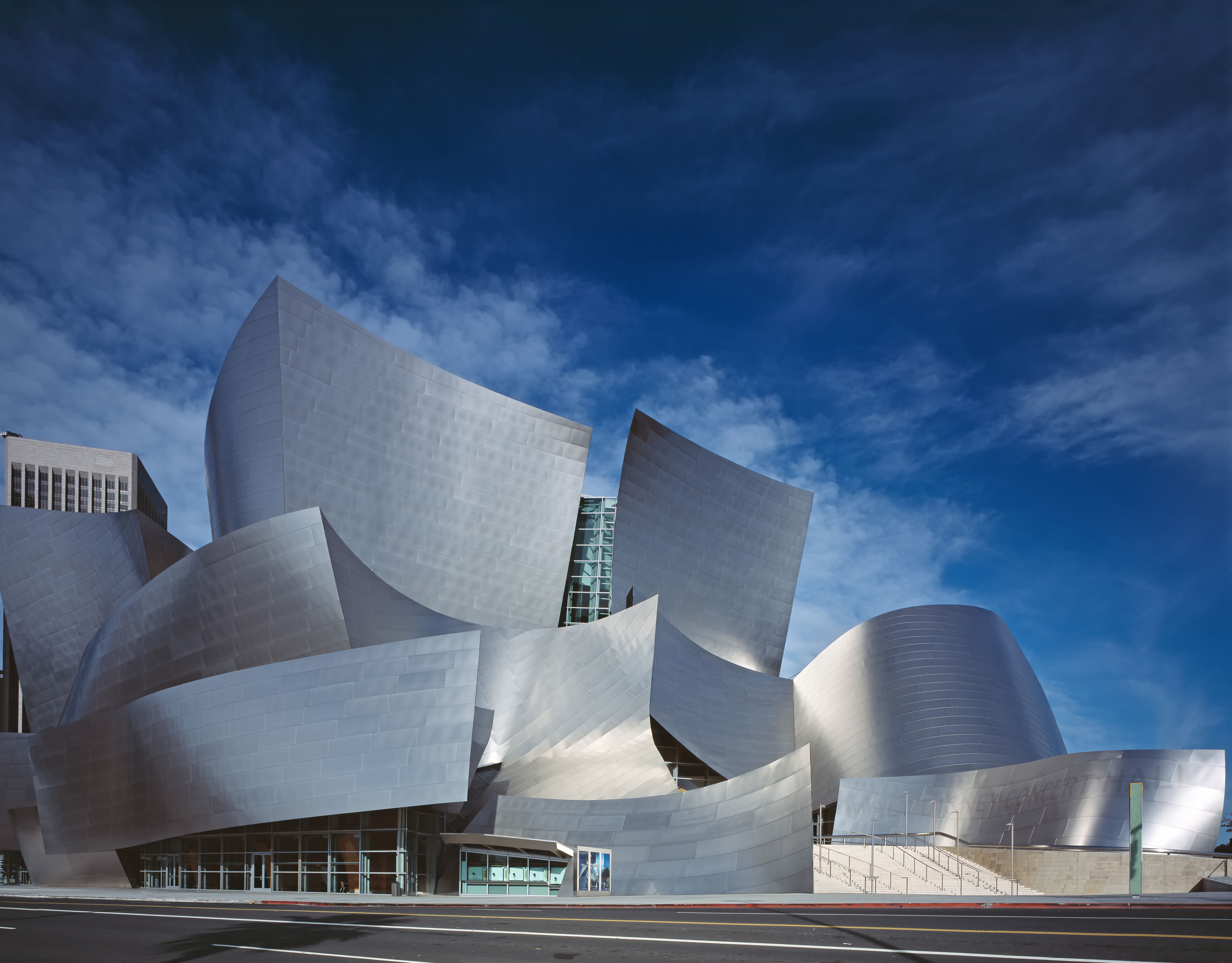
image-disney_concert_hall_by_carol_highsmith_edit

Los Angeles Philharmonic Orchestra, Gustavo Dudamel (conductor)

Barbican Hall, 2nd May and 4th May 2018

  • Esa-Pekka Salonen – Pollux
  • Edgar Varese – Ameriques
  • Shostakovich – Symphony No 5
  • Beethoven – Symphony No 9 “Choral”

Canny students of architecture will realise that the pic above is not of the Barbican. The Brutalist Barbican Estate is a thing of beauty to my eyes, though not to many others I realise, but surely no-one can be anything other than blown away by Frank Gehry’s Walt Disney Concert Hall, home to the LA Phil under current Music Director Gustavo Dudamel. I’ve never been there but I think have been driven past a couple of times. On the bucket list.

There was enough in the two main programmes on offer this year from the LA Phil’s residency at the Barbican for the Tourist to pitch up to both, albeit with some trepidation. The last time I saw Senor Dudamel and his fine head of hair was with his other band, the legendary Simon Bolivar Symphony Orchestra. They bashed out a showy Petrushka and Rite of Spring. In places it was electrifying, in others mystifying, (not mystical). I don’t know if at 37, and into his ninth year at the LA Phil, building on Esa Pekka Salonen’s legacy, S. Dudamel can still be counted a wunderkind. He is still as wilful as ever though.

As was revealed here. The first concert kicked off with a piece by Esa-Pekka Salonen himself, the man who is credited with turning the LA Phil into a contender for the US’s best orchestra, and certainly its most innovative in terms of contemporary classical music. We are lucky to have the fiery Finn, (fiery as Finns go I reckon), in London with the Philharmonia Orchestra, especially when he turns his baton to Stravinsky. As a composer though, I am less sure. This was the European premiere of Pollux, which, in time, will be paired with Castor, to mean both twins of Greek legend, immortal and mortal, are brought to musical life. Pollux is slow and dark, in the composer’s words, Castor will be faster. EPS nicked a bass line from a post-grunge band, slowing it right down, a chorale from a Rilke sonnet about the boy Orpheus and slipped in an Ancient Greek Aeolian echo. All right over my head. It bubbled along pleasantly enough, all clusters and modes, but I am afraid left no mark on me.

I have tried Varese’s Ameriques a couple of times now with limited success. I get how important Varese was, in retrospect, to the development of modern classical music, and I enjoyed the programme of chamber scale pieces delivered by Guildhall School students as part of the Varese immersion day at the Barbican this time last year. But Ameriques is just a noise. Of noise. And it is very noisy. Especially here as GD let his percussion and brass sections run riot. It is difficult not to feel something from the sheer, physical energy of the piece, and the Debussyian and Stravinskyian shards provide texture, but it just doesn’t go beyond the immediate wow.

Now I read a review that contained a remark along the lines that US orchestras can’t really do Shostakovich because they are “too well-fed”. I think that about sums it up. In my limited experience the best performances of DSCH’s symphonies are either the very lean, uncompromising performances from Russia orchestras in days gone by, or from contemporary European orchestras who can capture the essence of those orchestras, whilst harnessing their greater playing skills. Put a Russian conductor in charge of a British orchestra and you have a guarantee of success. Or better still just hand it over to maestro Haitink.

This Fifth would have left a smile on Joe Stalin’s face. DSCH’s Mahlerian tendencies were loud and proud and the D major finale was bombastic, yes, but still felt like genuine, not forced, adulatory. I think GD and the LA Phil were at their best in the second movement scherzo, (as they were in the imposing, fugal scherzo of the Choral Symphony), with its waltzy rollercoaster rhythms and distinct central trios. The Largo third movement, just strings and a touch of woodwind, was way too rich for my blood and the first movement was too mannered as it shifted from slow to fast and back again. The canons, at the opening for strings, and then between flute and horn, and violin and piccolo, in the recapitulation were as striking as ever but the lyrical second theme was too smooth by half. DSCH strings need to have a bit of acid about them, even in this, the friendliest and most “classical” of his symphonies.

GD and the LA Phil were at it again a couple of nights later for the Choral Symphony. I didn’t bother with the Chichester Psalms in the first half as I don’t like it. Sorry. Most of the Beethoven I listen to is “period informed” and/or nips along at a fair lick. The plushest of the recordings I have is probably the oldest, (in terms of how long I have had it), in the form of Karl Bohm and the VPO. GD and the LA Phil offered an even weightier interpretation. As you might have guessed I didn’t take to it.

I heard a fantastic rendition from the LSO in this very Hall under Bernard Haitink. My favourite concert of 2015. The London Symphony Chorus was in fine fettle on that evening as they were here. For me they were the best of the instruments on show. Actually let me rephrase that. All the instruments on show were impressive, it was just that by the time, every one had had their say, the line and structure of Beethoven’s masterpiece got a little lost. The release at the start of the finale felt a little reserved and the coda was bashed through like a getaway car. Julianna Di Giacomo’s soprano is a thing of some beauty but got a little to bright here, Jennifer Johnson Cano’s mezzo was a little indistinct. The lads done well, Michael Konig tenor and especially Soloman Howard’s bass.

All in all then an interesting couple of evenings, if not as involving as I would have expected, for what are, two of the greatest major works ever written. The LA Phil is well upholstered, professional to a man and woman, but put together with GD’s over-emphases and exaggerated tempi, (including the relaxed in the paddock approach to start times), not quite as astonishing as I had been led to expect. To be fair the Barbican Hall acoustic doesn’t take kindly to this sort of full throttle treatment but that’s what rehearsals are for.

Mind you I clearly was in a minority. On both nights the full house went bananas at the end. Horses for courses I suppose.


Shostakovich from the Philharmonia and Ashkenazy review ****

vladimir_ashkenazy

Philharmonia Orchestra, Vladimir Ashkenazy (conductor), James Ehnes (violin)

Royal Festival Hall, 29th April 2018

Dmitri Shostakovich

  • Violin Concerto no. 1 in A minor, Op.77
  • Symphony no. 4 in C minor, Op.43

Apparently Vladimir Ashkenazy was at the premiere of the Fourth Symphony. In 1961, in Moscow, 25 years after it was written, DSCH having withdrawn it after Stalin metaphorically beat up him and his music in Pravda. How amazing is that. 57 years after that premiere a still sprightly 80 year old Mr Ashkenazy bounded up to the podium and delivered as committed a performance of the Fourth Symphony as you are likely to hear. Ably assisted by the massed forces of the Philharmonia, of which he is Conductor Laureate, let loose on a piece of the repertoire which is outside their normal C19 staples.

For those they don’y know it the Fourth is a curious beast. It contains plenty of recognisable DSCH tropes across its hour and a bit and its three “movements”, and is more Mahlerian in concept and execution, than the later symphonies. Indeed it shares the same key, C minor as the Resurrection, and a second movement akin to that symphony’s Des Knaben Wunderhorn third movement scherzo. Alas, if you were a Russian apparatchik in the 1930s it was bereft of the required redemptive triumphalism that Mahler delivered in his final movement. Mahler’s third was also an inspiration though it takes a knowing conductor to locate it.

It has a lot of bits and pieces, showing a resemblance to the modernism of DSCH’s early works, which he was supposed to have left behind. Idea after idea is introduced then discarded. Fun, but a little wearing, especially when compared to the long arcs of narrative in the later symphonies. You can see where all those polystylist Russian composers that followed DSCH, like Alfred Schnittke, got their ideas from. The shorter central movement is easier to read, with its nagging four note motif, but the opening fastish, and the closing slow/fast movement with its two massive codas are, to coin a phrase, all over the shop. DSCH is showing off, but it does get you to wondering where he might have gone if he hadn’t had to tread the line between undermining, and seeking the approval of, the capricious regime. Not saying that old Joe was good for Dmitry just that the ugly reality made him do more with less (ideas not instruments).

I have the well regarded recording by Vasily Petrenko and the Royal Liverpool Philharmonic Orchestra which doesn’t dilly-dally in either of the outer two movements which allows the ear, and brain, to discern a sonata-like structure amidst all the madcap invention. I don’t think Mr Ashkenazy was quite as bold with his tempi, so I don’t think it hung together quite as well as this recording, but this was still a performance to intrigue rather than confuse. Anyway you look at it though, these outer movements, clocking in just under half an hour each are going to have intervals of misunderstanding. Best then to admire the playing of the ton, literally, of members of the PO on stage, especially the woodwind, a match for the LPO in the DSCH symphonies, though the LPO has the benefit of Vladimir Jurowski’s increasingly brilliant readings.

So not the place to start if you don’t “get” Shostakovich. The popular First Violin Concerto certainly is though, especially with a soloist as assured as James Ehnes. The last time I heard Mr Ehnes was in a magical Messaien Quartet, alongside the Shostakovich Second Piano Trio at SJSS (Quatuor pour la fin du temps at St John’s Smith Square review *****). Mr Ehnes is a tall fellow, think Elrond to Mr Ashkenazy’s Bilbo Baggins, and it takes a seeming age for his bow to move across the strings given his very upright style. Looks can be deceiving though, as we all know, for, when Shostakovich asks the soloist to deliver in the lengthy cadenza between the third movement Passacaglia and Burlesca finale, he answered with aplomb. He was similarly convincing in the Passacaglia itself, one of DSCH’s genuinely “grand” inventions with its references to the Leningrad Symphony and the fate motif from Beethoven’s Fifth.

As with the Fourth Symphony there was a hiatus between the work’s completion in 1948 and first performance in 1955 (after Stalin’s death in 1953), by its dedicatee David Oistrakh with the Leningrad Philharmonic, a consequence of the Zhdanov decree. The piece is apparently Hamletian in scope, can’t see it myself, as well as symphonic in form, with a gentle, Elgarian Nocturne, preceding a “possessed” Scherzo (with the classic autobiographical DSCH motif, so common in later works, snuck in for the firs time), the aforementioned Passacaglia and the pumped up finale with glimpses of material from the other movements, including the folky dance of the Scherzo. Once again the PO woodwind shone.

So a fine evening presided over by a genuine grade A maestro. I am a big fan of Mr Ashkenazy piano playing, especially in Beethoven and Chopin, and even when it goes a bit off-piste. Unfortunately I never saw him play the piano live. I don’t suppose I ever will. Meanwhile this was more than adequate compensation.