The Night of the Iguana at the Noel Coward Theatre review ***

The Night of the Iguana

Noel Coward Theatre, 16th September 2019

Last minute purchase. Just about worthwhile. The Night of the Iguana is not normally considered one of Tennessee William’s greatest hits, and I am certainly no TW completist, but the cast, the director, James Macdonald, the designer, Rae Smith, the pretty good, if mixed, reviews and, yes, the price drew me in.

The inspiration for the play came when TW met another young writer, just returned from Tahiti, in Mexico in September 1940, who was also afflicted with the same “troubled heart” that plagued him. Recognition of his talent, and money, was scarce, and TW was close to giving up, but this kindred soul, the environment, and a bunch of perky Germans, sympathetic to the Nazi cause, who appear in the play, spurred him on. A few rum cocktails, long suicidal and literary chats, and a perilous road trip with another guest, seemed to revive our Tennessee and TNOTI was the result. He turned the original 1948 short story into a one act play in 1959 and then into the three acts in 1961.

It concerns the lugubrious Reverend T Lawrence Shannon (Clive Owen) a washed up tourist guide and ex-priest, booted out of his church after an inappropriate relationship with a Sunday school teacher alongside borderline blasphemy. He visits the Mexican resort run by Maxine Faulk (Anna Gunn), the widow of his best friend Fred. She is assisted by a couple of workshy local lads (Daniel Chaves and Manuel Pacific). Alongside the aforementioned incongruous Germans, (Alasdair Baker, Timothy Blore, Karin Carlson and Penelope Woodman), we also meet the grumbling Judith Fellowes (Finty Williams), who leads the tour group which Shannon serially disappoints, and Charlotte Goodall (Emma Channing), a 16 year old member of the group who he may have seduced. More importantly the ageing poet Jonathan Coffin “Nonno” (Julian Glover) then arrives with his niece carer, spinster Hannah Jelkes (Lia Williams). Wheelchair bound Nonno is on his last legs and the couple rely on charity and artistic hustles to get by.

They are an odd bunch who frankly exhibit some pretty dodgy behaviours. Rev Shannon is supposed to be some kind of melancholic, tortured soul, who has lost his faith and suffered a breakdown, but is still irresistible to women. Maxine, (you will know Anna Gunn from her turn as Skyler in Breaking Bad), is pretty direct in her sexual desire, as is, more disturbingly, Charlotte, who says next to nothing, and Hannah is soon apparently under his spell. Yet, with his drinking and self pity, stumbling around the stage in crumpled linen suit, Clive Owen doesn’t highlight any particular hidden depths. Judith may well come across as typecast harridan but she probably has the measure of the man.

Now this being Tennessee Williams, there is poetry in the dialogue between these rather curious characters, even as the plot goes nowhere, and this, alongside Rae Smith’s set, the hotel verandah backed by a massive cliff and verdant planting, Max Pappenheim’s atmospheric sound and, especially, Neil Austin’s lighting, from bright day to dark night via electric storm, is enough to hold one’s attention. And then there is Lia Williams. She normally finds a way to steal the show, even in supporting roles on screen (The Capture, Kiri, The Crown and The Missing) or stage (The Prime of Miss Julie, Mary Stuart, Oresteia, Skylight), but here the rest of the cast are, metaphorically, in her shadow. In the 1964 film version no less an actor than Deborah Kerr played the role alongside Richard Burton and Ava Gardner, so you can probably imagine there is enough for a skilled actor to work on, but Ms Williams is astonishing. Sharp tongued when required, notably in her spats with Maxine, (who was played by Bette Davies in the original Broadway production so you get the idea), dismissive of Shannon’s indulgence, and drinking, yet utterly bewitching when describing her only brief sexual liaisons to him in the third act confessional scene.

TW wrote a ton more full length and one act plays after TNOTI but as his mental health deteriorated, his drug use increased and relationships failed to match that with soulmate Frank Merlo who died in 1963, nothing came close. I still quite make up my mind where TW sits in the pantheon of great playwrights but, for a few minutes as the two lead characters realised how much happier their lives might have been if they could only have been more like the other, I could, once again, forgive the pun, see the attraction. Like Chekhov a chronicler of lost, and odd, souls.

The best theatre coming up in London

It’s been a little while since the Tourist set out his favourite theatre opportunities either on now (in the case of Nine Night), or coming up over the year in London. Nothing too obscure or fringe-y here. Tried and trusted in terms of writer, director, cast and/or venue.

The first ten plays are written by, are about, or have creative teams led by women. We’re getting there.

Top Girls – National Theatre Lyttleton. The English speaking world’s greatest living playwright Caryl Churchill and one of her best ever plays. Still relevant, with its profound feminist critique, near 40 years after it was written. Audacious beginning with the dinner party scene and then the force of nature Marlene takes over.

Small Island- National Theatre Olivier. An adaptation by Helen Edmundson of Andrea Levy’s brilliant novel about race (the Windrush generation) and class in post war Britain. A cast of 40 count ’em directed by Rufus Norris (this should play to his strengths after a couple of duffers).

ANNA – National Theatre Dorfman. The bugger is already sold out but more seats promised. Ella Hickson, who is probably our most talented young playwright, and the Ringham brothers, sound maestros, combine in a tale set in East Berlin in 1968 which the audience will hear through headphones. Think Stasiland and Lives of Others.

Medea – Barbican Theatre. Euripides’s greatest tale of female revenge with Europe’s finest actress, Marieke Heebink, in a production by Europe’s greatest theatre company International Theater Amsterdam (was Toneelgroep) directed by Simon Stone. Don’t let the Dutch (with English sur-titles) put you off.

Three Sisters – Almeida Theatre. Chekhov. New adaptation. Cast not fully announced but Patsy Ferran and Pearl Chanda is a great start and directed by Rebecca Frecknall who garnered deserved praise for her Summer and Smoke by Tennessee Williams. Usual Chekhov tragic-comic ennui. A few tickets left.

Sweat – Gielgud Theatre. Transferring after the sell-out run at the Donmar. Lynn Nottage’s conscientiously researched drama about blue collar America is the best play I have seen this year and one of the best in in the last 5 years. Nothing tricksy here just really powerful theatre.

Blood Wedding – Young Vic. Lorca’s not quite the happiest day of their lives directed by Yael Farber (this should suit her style). The last time the Young Vic did Lorca it was an overwhelming Yerma.

A German Life – Bridge Theatre. Dame Maggie Smith. That’s all you need to know. (Playing Brunhild Pomsel who was Goebbels’ secretary in a new play by Christopher Hampton who did Les Liasions Dangereuses and translates French plays).

The Phlebotomist – Hampstead Theatre. Blood of a different kind.. I saw this last year in Hampstead Downstairs. Now a run in the bigger space for Ella Road’s debut near term dystopic relationship play with Jade Anouka tremendous in the lead.

Nine Night – Trafalgar Studios. Only a few days left and only a few expensive tickets left but Natasha Gordon’s debut play about Jamaican and British identity is a cracker.

Death of a Salesman – Young Vic. Arthur Miller’s greatest play and therefore one of the greatest ever with an amazing cast directed by Marianne Elliott and Miranda Cromwell. This is near sold out but book now otherwise you will be paying twice the price in the West End for half the view as this is bound to be one of the best productions of the year and is bound to transfer. Willy Loman is maybe the greatest male part ever written for the stage.

The Lehman Trilogy – Piccadilly Theatre. I told you to see it at the NT and you ignored me. Do not make the same mistake twice.

Cyprus Avenue – Royal Court Theatre. Probably pointless putting this in as it is pretty much sold out but I missed David Ireland’s sharp satire of Irish republicanism and am not about to repeat that error.

Bitter Wheat – Garrick Theatre. World premiere of new play by David Mamet about Weinstein with John Malkovich in the lead, Woo hoo.

Rosmersholm – Duke of York’s Theatre. Hayley Attwell and Tom Burke in the “greatest ever Ibsen play” which rarely gets an outing. Expect usual Ibsen misery tropes. Directed by Ian Rickson and adapted by Duncan MacMillan, marks of quality.

The Night of the Iguana – Noel Coward Theatre. Talking of less often performed classics by the greats here is a Tennessee Williams with Clive Owen putting in a rare appearance along with Lia Williams, directed by James MacDonald.

Pinter at the Pinter One review ****

chair-2963765_1920

Pinter at the Pinter One

Harold Pinter Theatre, 18th October

  • Press Conference
  • Precisely
  • The New World Order
  • Mountain Language
  • American Football
  • The Pres and an Officer
  • Death
  • One for the Road
  • Ashes to Ashes

Just so you are clear. These are plays by Harold Pinter. Did I mention that?

A combination of diary clashes and me hoping for ticket prices to come my way, (always fun playing Economics 101 with West End theatres), meant that I missed out on Part Two of Jamie Lloyd’s season of all of the one act plays of Harold Pinter, (and many other morsels besides). So no The Lover or The Collection and therefore no Hayley Squires, John MacMillan, Russell Tovey or David Suchet. A shame but rest assured dear reader I am signed up to the rest.

Now Pinter is an acquired taste but once acquired is rarely relinquished. The Lover is a two hander about an apparently adulterous couple which sounds like it went down well although, as with much of Pinter the surface misogyny can discomfort, though being Pinter there is always sufficient ambivalence to undermine the apparent premise. For me HP’s unrelenting picking away at human weakness is not gender bound but I can see why others might disagree. The Collection from 1961 covers similar territory in a similar way but with two couples, one gay, sharing a stage, linked by a possible affair.

Anyway probably better if the Tourist focusses on the programme he did see. Here, in the first half, we are in the world of late Pinter, with politics as the subject, and specifically the excesses which can be visited on the individual by a totalitarian state. Some of the pieces imagine more brutal and sadistic scenarios than others but all can be seen as warnings of what can happen when power corrupts. Their very lack of specificity is meant to show that this sort of oppression is only a few short steps away even in a liberal democracy. Not all of the pieces are up with Pinter’s best, and they have never really been, to be frank, universally appreciated even by criterati, but when they work, notably for me here in Mountain Language, they are very effective.

Press Conference is exactly that. A sketch where a Minister of Culture, who was the head of the secret police, responds about the state’s attitude to children. His brusque matter of fact responses – “We distrusted children if they were the children of subversives. We abducted them and brought them up properly. Or we killed them” – is very funny but also very chilling precisely because Jonjo O’Neill’s politician is speaking as if he were right here, right now in Britain. Precisely is another short sketch where Maggie Steed and Kate O’Flynn play a pair of toff establishment types debating a number, 20 million or maybe more, which turns out is a body count.

Next up was The New World Order from 1991 which saw a cocksure Des (Jonjo O’Neill) and a pumped up Lionel (Paapa Essiedu) discussing how they will torture the gagged, blindfolded and naked man (Jonathan Glew) in the cell with them. No physical violence, the menace is all in the language, which is almost stereotypically Pinteresque in its banal tone. These are almost caricatures of modern day torturers, in sharp suits and, in Paapa’s case, aviator shades. They are trying to impress each other as much as scare the victim. They could be Goldberg and McCann. Taking pleasure in their work. Once again Brits not Americans as in the original premiere. Pinter nails that uninhibited, exuberant arousal that seems to inhabit the cruel.

Mountain Language is an better piece of drama though. Written in 1988 apparently in response to the treatment of the Kurdish people, Pinter actually saw this as a more universal attack on regimes where minorities are victimised through the suppression of language. It is an altogether more expressive piece as Jonjo O”Neill’s callous Sergeant, assisted by the officious voice of Michael Gambon (who took the role at the premiere), and Paapa Essiedu’s Officer, work out want to do with, variously, Kate O’Flynn’s young woman, her elderly woman relative Maggie Steed who can only speak the “mountain language”, Jonathan Glew, this time hooded, and Pappa Essiedu doubling as a prisoner. The prison/detention centre is revealed as a series of rooms in Soutra Gilmour’s suitably depressing cuboid set, all dark walls and utilitarian chairs. No beginning or end but we do get the movement through the set and the contrasts between the characters. And our first proper sight of the mesmerising presence of Kate O’Flynn.

She then bounds on as a US military type for Pinter’s poem American Football written in response to the Gulf War and which satirises the aggressive triumphalism of the victor. This was followed by The Pres and an Officer, a sketch which sees John Sessions impersonating our current POTUS alongside Jonjo O’Niell as the top brass tasked with issuing his orders, here to nuke London, albeit accidentally, reflecting the president’s geographical confusions. I’ll be honest it is a bit soft and one-dimensional but, written in 2008, it is remarkable for its prescience. The presence of a narcissistic, ill-educated, populist bully in the White House clearly wouldn’t have surprise HP who died on Christmas Eve a few weeks before Obama was sworn in.

This was followed by Maggie Steed performing’s HP’s moving short poem Death about the registration of an unknown corpse. Then One for the Road from 1984 the most substantial and well-known of HP’s political plays. It was prompted by HP reading Jacobo Timerman’s book on torture during the Argentinian military dictatorship, but, as you might expect, reveals no specific setting. There is no on-stage violence but the references to the off-stage mutilation of Victor (Paapa Essiedu), the multiple rape of his wife Gila (Kate O’Flynn) and the implied murder of their son Nicky (Quentine Deborne) is upsetting enough. Anthony Sher plays Nicholas the precise officer (“one has to be so scrupulous about language”) who represents the totalitarian regime. He shifts from matey pen-pusher to psychotic tormentor in the blink of an eye though Sher wisely tones down the apoplexy. Think O’Brien in Room 101. And Hannah Arendt’s rule of nobody. Nicholas has all the tools of the state at his disposal, and, it seems, years of experience, but still seems troubled by what he is doing. I can’t quite put my finger on why, though it may be because I am not Mr Sher’s greatest admirer, but this felt a little over-egged to me. It is still a mighty fine play though.

After this varied and variable dissection of the roots and risks of totalitarianism, Act Two ostensibly sees a return to the domestic with two-hander Ashes to Ashes. Yet by contrasting this, here directed by Lia Williams, with the Act One pieces directed by Jamie Lloyd, what we really see is HP’s insights into one theme, the use and abuse of power. Kate O’Flynn is Rebecca who is being “interrogated” by her “estranged” husband Devlin, Paapa Essiedu, but who has done what to whom, and what they each say about how they feel, is even more slippery than usual for HP. Maybe they aren’t married, but lovers. Maybe he is threatening her, or she is mocking him. Is Rebecca describing her dreams? What does the story about the police sirens mean, or the pen? Rebecca’s responses to Devlin’s prompts are oblique to say the least. There are pauses and silences galore and some harrowing imagery. not the least at the end with the apparent description of women, or a woman, or Rebecca herself, being separated from her baby en route to a concentration camp. The whole thing swirls around, and, with acting of this quality, draws you in. In any other hands it would be utter b*llocks but with Pinter the language makes it compelling if ultimately impenetrable.

HP’s reputation and casts should be enough to persuade the uninitiated and/or the curious. Jamie Lloyd can push the envelope a bit far on occasion but he is a master in Pinter. So sign up. If I had to choose I would say 3 and 6. More to follow …..

The Prime of Miss Jean Brodie at the Donmar Warehouse review ****

24795636677_646fd86a04_o

The Prime of Miss Jean Brodie

Donmar Warehouse, 19th July 2018

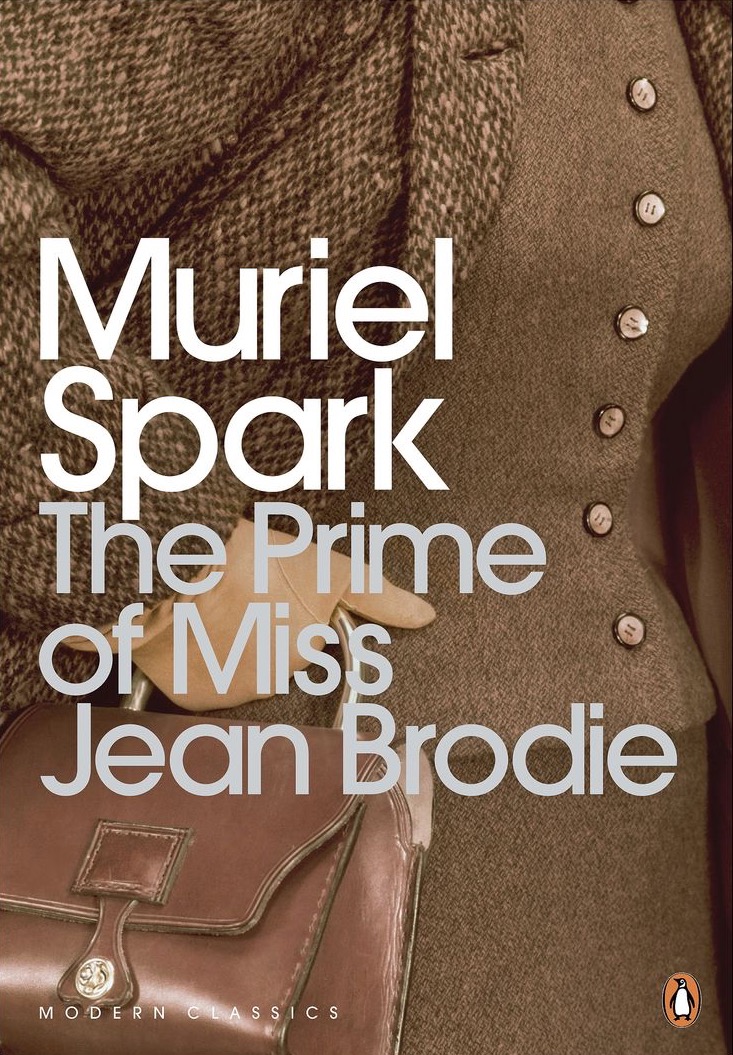
The SO obviously is a big fan of Muriel Spark’s novel. We are both big fans of Ronald Neame’s film version, (only the other day I revisited this director’s magnificently cheesy The Poseidon Adventure), though let’s face it that is largely because Maggie Smith delivers a technicolour Maggie Smith performance. No less than David Harrower, (Knives in Hens, Dark Earth, Blackbird and some classic adaptions), was turning book into text here and Polly Findlay was directing. We have actors of the talent of Angus Wright, Sylvestra Le Touzel and Edward MacLiam and I was particularly keen to see Rona Morison again, who was so good in Orca at the Southwark Playhouse in 2016).

But, more than all of this, the big draw was Lia Williams in the title role. I believe Ms Williams is one of our finest stage actors, most recently seen in the Almeida’s Mary Stuart and Oresteia, (alongside Angus Wright as it happens), and, earlier in her career, Oleanna and Skylight. She is also a mean Pinterite, (if that is the word), and I am looking forward to her directing the opening salvo of plays in the upcoming Pinter season alongside Jamie Lloyd.

Now I had not remembered, from the film, just how ambiguously complex a character Ms Brodie is. An inspiration to the girls, (with Grace Saif, Emma Hindle, Nicola Coughlan, she who brilliantly told a twat of a critic where to get off in his insulting review, and Helena Wilson, all superb alongside Rona Morison’s Sandy), who genuinely wants to help then break free of stifling convention, but also manipulative, desperate, unfulfilled with a nasty undercurrent of fascist sympathy. David Harrower’s adaptation makes all this plain, without any need for histrionics, artfully augmented by Polly Findlay’s methodical direction and Lizzie Clachlan’s pared back design. His subtle inclusion of sub-plots involving Nicola Coughlan’s Joyce Emily, who is spurned by Sandy (and belittled by Miss JB) and goes to fight in the Spanish Civil War, and the framing device of Sandy’s book, worked for me.

Angus Wright as the long suffering, and increasingly frustrated music teacher Mr Lowther, and Edward MacLiam as the more volcanic, and damaged art teacher Teddy Lloyd, were admirable foils to Lia William’s Brodie as they vied for her complex affections. Miss Brodie affects to the aesthetic but real human connection seems to scare her. She provokes rebellion but is actually intellectually conservative. Maybe the guilt of Sandy, as the pupil who betrays Miss Brodie and enters a convent as penitence, (which we see in flash forwards through interviews with Kit Young’s journalist), was a little too forward in Mr Harrower’s adaptation, you know she is Miss Brodie’s nemesis from the off, but it does draw out the darkness in Miss JB’s psyche.

Lia Williams is up against some pretty stiff competition when it comes to theatrical Brodies even if we put Dame Maggie to one side. Vanessa Redgrave, Fiona Shaw and Patricia Hodge, as well as Geraldine McEwan on the telly, have all had a stab. I can’t comment on any of these performances but I can’t imagine they were any better at capturing Miss JB’s dichotomies than this.

With a bit of luck this will end up a run out in the West End. If so I heartily recommend you see it.