My favourite classical concerts of 2017

623x512xrattle625_2-pagespeed-ic_-clbnppbu_4_0

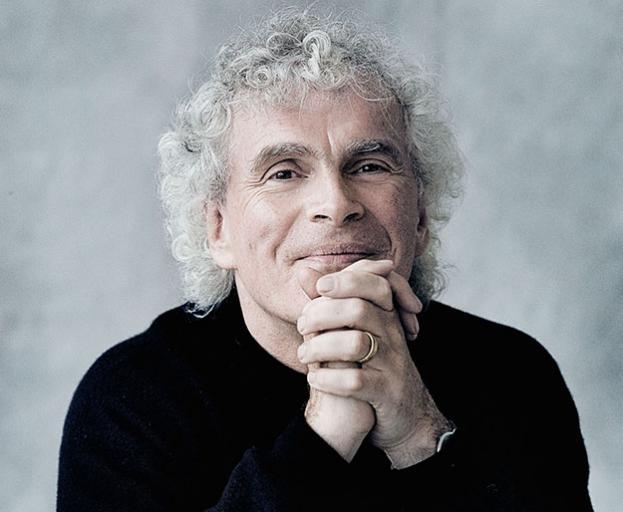
Right I know it is a bit late in the day but I wanted to make a list of the concerts I enjoyed most from last year. So everything that got a 5* review based on my entirely subjective criteria is ordered below. Top is Sir Simon and the LSO with their Stravinsky ballets. Like it was going to be anything else.

Anyway no preamble. No waffle. Barely any punctuation. Part record, part boast. Comments welcome.

  • LSO, Simon Rattle – Stravinsky, The Firebird (original ballet), Petrushka (1947 version), The Rite of Spring – Barbican Hall – 24th September
  • Colin Currie Group, Synergy Vocals – Reich Tehillim, Drumming – Royal Festival Hall – 5th May
  • Isabelle Faust, Akademie fur Alte Musik Berlin, Bernhard Forck – JS Bach Suite No 2 in A Minor BWV 1067a, Violin Concerto in E Major BWV 1042, Violin Concerto in A Minor BWV 1041, Concerto for Two Violins in D Minor BWV 1043, CPE Bach String Symphony in B Minor W 182/5 – Wigmore Hall – 29th June
  • Jack Quartet – Iannis Xenakis, Ergma for string quartet, Embellie for solo viola, Mikka ‘S’ for solo violin, Kottos for solo cello, Hunem-Iduhey for violin and cello, ST/4 –1, 080262 for string quartet – Wigmore Hall – 25th February
  • Britten Sinfonia, Thomas Ades – Gerald Barry Chevaux de Frise, Beethoven Symphony No 3 in E Flat Major Eroica – Barbican Hall – 6th June 2017
  • Nederlands Kamerkoor,Peter Dijkstra – Sacred and Profane – Britten Hymn to St Cecilia, Gabriel Jackson Ave Regina caelorum, Berio Cries of London, Lars Johan Werle Orpheus, Canzone 126 di Francesca Petraraca, Britten Sacred and Profane – Cadogan Hall – 8th March
  • Tim Gill cello, Fali Pavri piano, Sound Intermedia – Webern 3 kleine Stücke, Op. 11, Messiaen ‘Louange à l’Éternite du Jesus Christ’ (‘Praise to the eternity of Jesus’) from Quartet for the End of Time, Henze Serenade for solo cello, Arvo Pärt Fratres, Xenakis Kottos for solo cello, Jonathan Harvey Ricercare una melodia for solo cello and electronics, Thomas Ades ‘L’eaux’ from Lieux retrouvés, Anna Clyne Paint Box for cello and tape, Harrison Birtwistle Wie Eine Fuga from Bogenstrich – Kings Place – 6th May
  • Britten Sinfonia, Thomas Ades, Mark Stone – Gerald Barry Beethoven, Beethoven Symphonies Nos 1 and 2 – Barbican Hall – 2nd June
  • Academy of Ancient Music, Robert Howarth – Monteverdi Vespers 1610 – Barbican Hall – 23rd June
  • Academy of St Martin-in-the-Fields, Murray Perahia – Beethoven Coriolan Overture, Piano Concertos No 2 in B flat major and No 4 in G major – Barbican – 20th February
  • London Sinfonietta and students, Lucy Shaufer, Kings Place Choir – Luciano Berio, Lepi Yuro, E si fussi pisci, Duetti: Aldo, Naturale, Duetti: Various, Divertimento, Chamber Music, Sequenza II harp, Autre fois, Lied clarinet, Air, Berceuse for Gyorgy Kurtag, Sequenza I flute, Musica Leggera, O King – Kings Place – 4th November
  • Maurizio Pollini – Schoenberg 3 Pieces for piano, Op.11, 6 Little pieces for piano, Op.19, Beethoven, Piano Sonata in C minor, Op.13 (Pathétique), Piano Sonata in F sharp, Op.78 (à Thérèse), Piano Sonata in F minor, Op.57 (Appassionata) – RFH – 14th March
  • Britten Sinfonia, Thomas Ades, Gerald Barry – Beethoven Septet Op 20, Piano Trio Op 70/2. Gerald Barry Five Chorales from the Intelligence Park – Milton Court Concert Hall – 30th May
  • Bavarian Radio Symphony Orchestra, Mariss Jansons, Yefim Bronfman – Beethoven Piano Concerto No 4, Prokofiev Symphony No 5 – Barbican Hall – 24th November
  • Britten Sinfonia, Helen Grime – Purcell Fantasia upon one note, Oliver Knussen, George Benjamin, Colin Matthew, A Purcell Garland, Helen Grime Into the Faded Air, A Cold Spring, Knussen Cantata, Ades Court Studies from The Tempest, Britten Sinfonietta, Stravinsky Dumbarton Oaks – Milton Court Hall – 20th September


Ensemble InterContemporain at the Wigmore Hall review ****

ensemble-intercontemporain-wigmore-hall

Ensemble InterContemporain

Wigmore Hall, 20th June 2017

  • Debussy – Premiere rapsodie
  • Bruno Maderna – Viola
  • Messiaen – Le merle noir
  • Philippe Schoeller – Madrigal
  • Luciano Berio – Sequenza 1
  • Ravel – Violin Sonata
  • Matteo Franceschini – Les Excentriques

Ensemble InterContemporain was founded in 1972 by Pierre Boulez and tenures 31 musicians, based in Paris but international in origin, and allows them to focus on contemporary chamber music. Thank you dirigiste France and take note you English philistines.

Having said that I confess I needed a bit of encouragement to pitch up to this which was provided by the Ravel Violin Sonata, which I haven’t heard performed live for donkeys years, as well as the Berio and the Messiaen pieces. I was less interested in the Debussy and the others works were going to be pot luck. But I figured if anyone could make this all work it would be this renowned collective.

Anyway it turned out to be a largely fascinating programme. The Debussy was more colourful than I anticipated. It was written as a test piece for students at the Paris Conservatoire so it gave clarinettist Jerome Comte a chance to work out accompanied by pianist Hideki Nagano (who I think on the night was the most assured performer – I would like to here him play in a solo capacity). The Bruno Maderna is a whole different barrel of fish. This is scored in open form which means the performer (Odile Auboin here) can choose their own route through the score. Interesting but I couldn’t help feeling this made for a somewhat tentative performance with no line I could follow,

The Messiaen piece was also written for students at the Conservatoire, this time flautists. There is a bit of bird song at the off as you might expect, then a few twiddly phrases and finally a mix of serial phrases on the piano and more rhythmic patterns on the flute, here sympathetically played by Sophie Cherrier. Good stuff. Now I confess the structure of the Philippe Schoeller piece escaped me, and the programme notes here went in to pretentious overdrive as they did with the premiered work by Matteo Franceschini. It is a piano quartet “informed” by Renaissance madrigals which contained some dazzling tremolo and glissando sounds as strings and piano came together. It will require some further investigation.

Berio’s Sequenza I is written for flute and, like all the Sequenzas, is a fine, direct piece. It consists of individual notes but you can discern the chords these would create so has a logic which makes listening straightforward. I thought Sophie Cherrier’s rendition was perfect. Ravel’s Violin Sonata (No 2) took him a bit of time to complete and is contemporaneous with his opera L’Enfant et les Sortileges. Like that work it is imbued with the spirit of the jazz, most notably in the “Blues” second movement, but also in phrases in the first movement. The last movement with its dancing semi-quavers for the violin is a personal favourite and I thoroughly enjoy Jeanne-Marie Conquer’s playing.

The soloists all returned for the Franceschini piece which is a collection of six character studies based on real though unnamed “eccentric” people. The first and last studies had a bit of pace about them but the other four were a bit more pedestrian and I am afraid I wasn’t up to the task of following the thread of the music.

Overall this was a rewarding evening listening to some fine musicians explore some exciting repertoire. Both Mr Schoeller and Mr Franceschini were in attendance. It is such a joy to see a composer and performers taking a bow. Glad I took the plunge. Contemporary classical music is a specialist pursuit and I get that for the vast majority of people this is all nonsense. But for me it is important that composers and musicians push the boundaries. The audience for modern and contemporary plastic arts is expanding. In time I think the same will happen for contemporary classical music. Mind you finding some mug to go along with is proving a challenge for me but I am convinced I will prevail, even if I may have to employ a little subterfuge.


Royal Philharmonic Orchestra at Cadogan Hall review ****

cadoganhall2

Royal Philharmonic Orchestra, Martyn Brabbins, Jan Mracek

Cadogan Hall, 16th June 2017

  • Berio – Sequenza V for solo trombone
  • Prokofiev – Quintet in G Minor
  • Debussy – Prelude a l’apres-midi d’un faune,
  • Beethoven – Violin Concerto,
  • Shostakovich – Symphony No 5

A welcome innovation from the RPO at its Cadogan Hall home. As a prelude to the main concert a short chamber concert was served up. In this case, an intriguing pairing of one of Berio’s Sequenzas, here for trombone, alongside Prokofiev’s infrequently programmed (at least in my experience) Quintet. The main concert was a triptych of favoured warhorses which can usually tempt me in.

The Berio piece is the usual exploration of musical technique that these sequenzas demand. There is a healthy dose of humorous novelty at work here in the techniques employed and some of the directions in the score, best of all, the fact that the soloist, has to dress up as a clown (I’ll let you look up Berio’s reasons for this!). The Principal Trombone of the RPO, Matthew Gee, didn’t disappoint, either in his rather elegant outfit (shoes and bald bloke wig being the main concessions) or in playing. The piece is fascinating but smartly doesn’t outstay its welcome.

The Prokofiev Quintet is scored for oboe, clarinet, violin, violin and double bass which gives plenty of opportunity for the quirky invention that our Sergei seemed to revel in. The six movements have plenty of dynamic colour and the derivation of the piece, originally a commission for a chamber ballet, is very clear, I was reminded once again that I need to pay more attention to Prokofiev’s chamber music. So I will.

As for the main orchestral pieces, well the Debussy washed over me as it always does so I am afraid I am no real judge of Mr Brabbin’s interpretation nor the RPO’s performance. The Beethoven however took me back to familiar ground and this was a stirring performance by all concerned. Jan Mracek was making his debut with this orchestra having established a growing reputation in his native Czech. His playing is certainly idiomatic of his homeland which made for an interesting contrast with Mr Brabbin’s very deliberate reading. It livened up for finale though I confess I have heard more uplifting endings.

The Shostakovich was the meat course for me though and here Mr Brabbin’s careful phrasing and cool incision paid dividends. This was a performance that really drew out the Mahlerian parallels especially in movements 2 and 3. No irony in the ending here. This was definitively the response to “just criticism” that Shostakovich claimed it was (probably to save his own skin) and could easily be digested by those partial to a bit of C19 romanticism. The pounding Russian rhythms and banal folksy melodies were in evidence but this was more Autumnal middle Europe than Siberian winter. Stalin would have been made up with this first movement. I am not sure this is how I want my DSCH 5 to always sound but it was satisfying to hear this approach given a full airing.


Nederlands Kamerkoor at Cadogan Hall review *****

resizedimage600221-schreurs-nkk-totaal-rgb-geel-lr

Nederlands Kamerkoor: Sacred and Profane

Cadogan Hall, 8th March 2017

  • Britten – Hymn to St Cecilia
  • Gabriel Jackson – Ave Regina caelorum
  • Berio – Cries of London
  • Lars Johan Werle – Orpheus
  • Lars Johan Werle – Canzone 126 di Francesco Petrarca
  • Britten – Sacred and Profane

Another bit of a catch up here. This was so good though that I thought I better say something about it.

This was the latest in an ongoing stroll through the best choirs that pop up in London with BUD who knows where he is at with this sort of caper. Any sensible consumer of classical music will likely eventually conclude that the most versatile and approachable instrument of all is the human voice, with a smallish choir the optimal way to hear it. And the genius composers of the past for such limited, but pure, forces, the likes of Taverner, Tallis, Palestrina, Byrd, Gibbons, Monteverdi and Allegri, are now augmented by some greats from the mid C20 and from the ranks of contemporary composers.

Anyway this outfit, conducted by Peter Dijkstra, were outstanding. The likes of The Sixteen, The Tallis Scholars, The Cardinal’s Musick and so on are a delight to hear but somehow these guys seemed even better to my ear (Cadogan Hall, along with Wigmore Hall and Milton Court are perfect venues for choirs I think). They just had such extraordinary control both individually and collectively.

Now I know the Britten pieces pretty well but it was in the second of the Lars Johan Werle pieces, and especially Berio’s the Cries of London, that the dazzling virtuously of our Dutch friends really came to the fore. The Berio piece takes the sounds of a Medieval market and turns it into a quite extraordinary piece, challenging and beautiful. And the Lars Johan Werle Canzone somehow manages to sound both contemporary and an eerie take on Monteverdi at the same time. I was just blown completely away by this. The Gabriel Jackson piece was not quite of the same quality and had a bloke playing a few licks on an electric guitar harmonising with the choir which didn’t entirely work for me.

So I gather these guys are keen to expand the contemporary repertoire and are keen to commission new works. Sounds like the Dutch government rightly invests in them as well. For sure they now have a couple of 50+ blokes as groupies eagerly awaiting their return to London.

For those of you that are not familiar with contemporary or indeed Renaissance choral music I would strongly urge you to take the plunge. I guarantee that within a few seconds of one of these outfits opening their lungs all the s**t that swirls around your head thanks to modern life being rubbish will evaporate. You really don’t need to know anything about the music.

On my radar there are a few Monteverdi Vespers coming up (including 23rd June Barbican Academy of Ancient Music), The Tallis Scholars at St John’s Smith Square on 30th June, The Cardinal’s Musick 18th July Wigmore Hall and an Estonian Choir next January 30th at Milton Court with a bit of Arvo Part action. Go on treat yourself.