
Wild East at the Young Vic review ***

Wild East

Young Vic Theatre, 13th February 2019

So after an hour spent in the florid company of an unraveling traveller couple courtesy of Cuzco at Theatre 503, followed by a hour lapping up the detail of natural and man-made beauty through the eyes of John Ruskin (The Power of Seeing at Two Temple Place – do go – it’s free and open late on Wednesdays) how would the Tourist’s day end?

In the bonkers company of April de Angelis. That’s how. You know how something turns out to be not quite what you expect. This hour or so was exactly that. What with her adaptation of My Brilliant Friend and The Village based on Lope de Veja’s Fuenteovejuna, as well as After Electra, (I haven’t seen her acclaimed play Jumpy), I have been much taken with Ms de Angelis’s work. So I signed up for Wild East reading that it was a satire on the corporate interview, (a comfortable space for a recovering running dog/capitalist lackey). I imagined something along the lines of Jordi Galceran’s play The Gronholm Method which went down well at the Menier Chocolate Factory last year.

Should probably have focussed more on the words “surreal”, “outlandish” and “human chaos”, and the reference to Ionesco, in the Young Vic blurb. For that about sums up Ms Angelis’s three hander which debuted at the Royal Court in 2005. Frank (Zach Wyatt) is plainly nervous as he begins his interview/evaluation with Dr Jacqueline Pitt (Lucy Briers) and Dr Marcia Gray (Kemi-Bo Jacobs). So was I as I realised the creatives weren’t joking when they indicated that this would be old-stool bench seating. The audience in the Clare is ranged around an entirely MDF set courtesy of Sarah Beaton. Nothing else. The Tourist managed to find a perch with some back support but there was still a palpable sense of WTF as the cast emerged from audience. As it turned out props, and in some cases bits of costume, also adopted the plywood aesthetic, though this shifted as the play developed.

Frank is an accidental anthropologist, keen to return to Russia, to help a nameless corporation further its greenwashing agenda. Dr Gray is a stiff-backed stickler for the bureaucratic selection “process”. Dr Pitt is unconvinced by Frank’s credentials but clearly has issues stemming from PTSD after a recent “accident” in Russia. Turns out the two women are past lovers and Frank a pawn in their personal battles even as they plead loyalty to the “bosses” that are watching them as they in turn decide who is next for the chop. Or something like that. The targets of April de Angelis’s ire come thick and fast: anthropology and psychology as marketing technique, “developing markets” environmental cover-ups, learned corporate behaviours, the subjugation of personal identity to organisational process, and so on. But it does get pretty messy and pretty weird, especially when it goes full-on shaman at the end.

These are entirely unbelievable characters so it is just as well that the cast play this up, with Zach Wyatt near mugging the audience with his comic portrayal of Frank, who journeys from nerd to willing yes-man, Kemi-Bo Jacobs sounding like she had just stepped out of a science programme from the 1950s as she tries to staunch her insecurity and Lucy Briers adopting a air of sardonic victimhood throughout. Lekan Lawal as director, (the recipient of this year’s Genesis prize), also runs with the “if you can’t beat ’em, join ’em” approach to interpretation of the play, heightened by the use of microphones for key chunks of dialogue.

Another 90 minutes I wouldn’t have missed but another 90 minutes I won’t get back (nor will, literally, my back). Weird day. Still if you don’t want intellect or lumbar to be challenged you can always stay in and watch an interminable “realistic’ US box set on Netflix. Just like billions of other slack-jawed consumers.
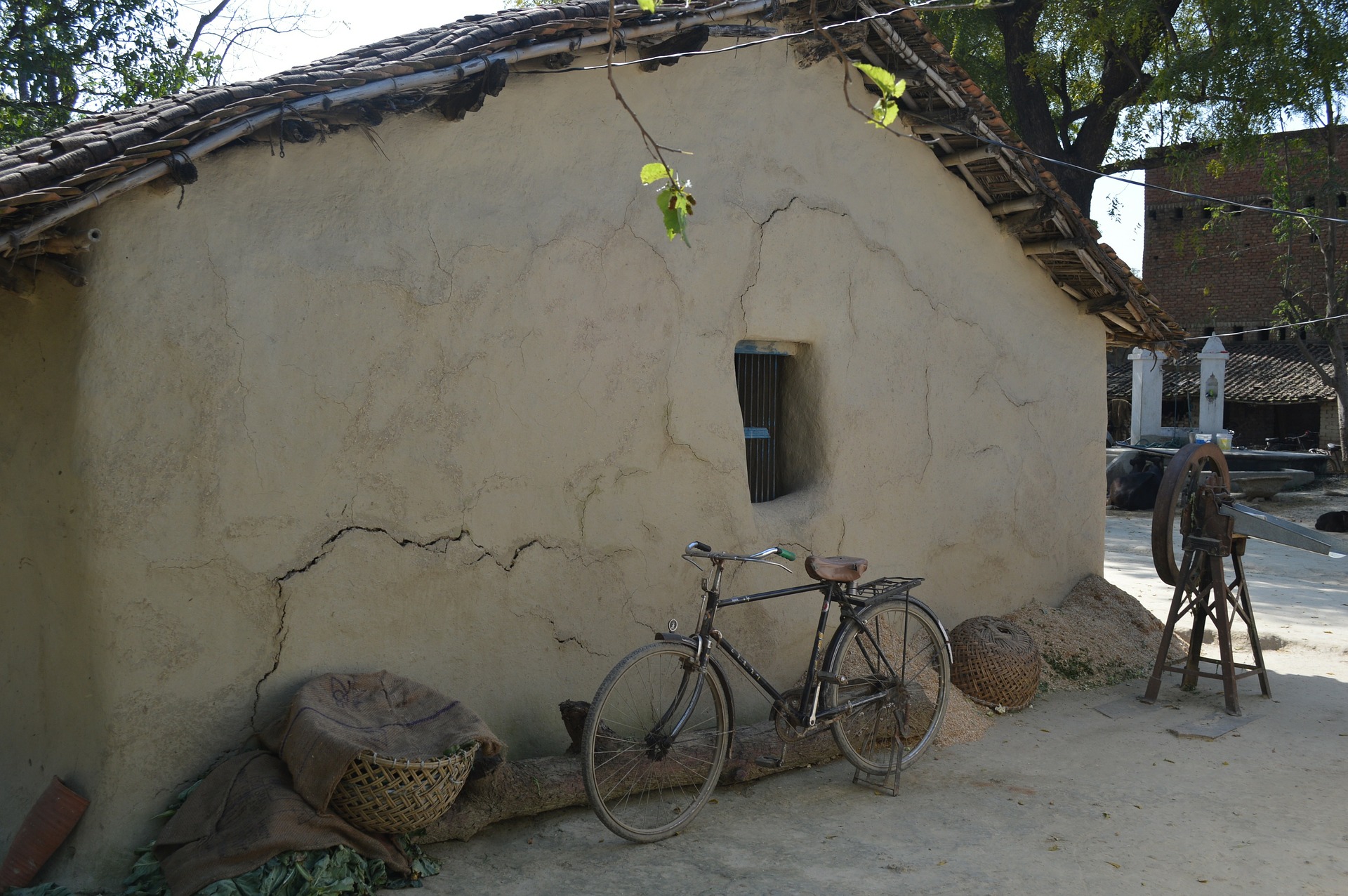
The Village at Theatre Royal Stratford East review ****

village-333070_1920

The Village

Theatre Royal Stratford East, 27th September 2018

One of the many advantages of the idle life of culture is the opportunity to savour the coincidences that it routinely throws up. I see a play, Losing Venice, about the end of Empire, written in a style which apes the dramatists of the Spanish Golden Age. (Losing Venice at the Orange Tree Theatre review ***). A couple of days later I see a play, An Adventure, about the immigrant’s journey out of India. (An Adventure at the Bush Theatre review ****). The next day I see a play, The Village, drawn from the most famous play from arguably the most famous playwright of the Spanish Golden Age, Fuenteovejuna by Lope de Veja, recast in modern rural India, still bearing the scars of post-colonialism. Learn, enjoy, repeat.

Lope de Veja’s 1619 story, based on a real incident in the village of the same name  in Castile in 1476, is pretty much guaranteed to get the pulse racing. A tale of honour, justice, reputation and chastity as so many of the Golden Age plays were, though here slightly subverted, which accounts for its continuing relevance. The women of the village, unable to stomach any more abuse from the local army chief, rise up to collectively kill him. They refuse to incriminate each other saying only that “Fuenteovejuna did it”. April de Angelis, who make such a fine job of adapting Elena Ferrante’s quartet My Brilliant Friend for the Rose Kingston stage (My Brilliant Friend at the Rose Theatre Kingston review ****), sticks pretty close to the plot of the original whilst offering up a text peopled with recognisably human characters. And, with a swagger that largely worked for me, much of the text is written in verse, which adds rhythm and pace to the story.

This, together with Nadia Fall’s kinetic direction and some top class performances especially from Anya Chalotra as Jyoti, and in his own villainous way, Art Malik, are what turns this from what might have been a sullen melodrama, into something altogether more supple and uplifting. The production might have benefitted from a bigger stage to accommodate Joanna Scotcher’s sloping set, and a little more technical sophistication, but, if this is the harbinger of things to come at Stratford Royal Theatre East under Nadia Fall, and the 18/19 season has great potential, then maybe SRTE can become a destination theatre as it was in the glory days of Joan Littlewood (who staged Fuenteovejuna in 1955), rather than an occasional, one-off hit machine (like Five Guys Named Moe).

No need to take my word for it. To save BD from sitting around all day in her PJ’s in front of a screen (though justified by an imminent return to uni) I dragged her alone. Only marginally easier to impress than her Mother, she agreed that this was a powerful, and satisfying, piece of theatre. And, even more extraordinary FKD, who has reason to know, and a bunch of her friends, gave it the thumbs up. Lopa de Veja’s original, whilst not directly informed by Catholic oppression, was a response to the violence of the Inquisition. AdA’s update similar doesn’t pull any punches when it comes to its portrayal of the BJP and the rise of Hindu nationalism.

The rural village, Sahaspur, is getting on with the business of life with Jyoti, daughter of of the joint mayor, Ramdev (Neil D’Souza), the bashful subject of the ardent affections of local Muslim lad Farooq (Scott Karim). He is egged on by comic sidekick Mango (Ameet Chana), she by no-nonsense buddy Panna (Rina Fatania). Both eke out plenty of laughs. Accents are more Bradford than Kolkata. When the sadist Inspector Gangwar (Art Malik) turns up, with soldier sidekicks Ved and Gopi, to fix the election for privileged BJP scion Vihaan (Naeem Hayat), the villagers are cowered, and then outraged, after he rapes Jyoti. The election is contested by Ishani (Sudha Bhuchar) for Congress with adviser Mekhal (Arian Nik) in tow, and it is she who is sent to investigate the Inspector’s murder.

A gripping tale for sure. And Nadia Fall’s high energy direction, with movement from Polly Bennett (especially striking in the revenge scene), lighting from Paul Pyant, sound from Helen Atkinson and composer Niraj Chang (with live on-stage music and Hindi songs courtesy of Japit Kaur), really brings it to life. Yet it will still make you angry that even now this kind of oppression is commonplace, and that horrific sexual violence in India (and elsewhere) is still legitimised by power. The mechanics of the ending are a little less than credible, but no matter, the message of successful resistance is the right one.