
Medea at the Barbican Theatre review *****

Medea

International Theatre Amsterdam, Barbican Theatre, 6th March 2019

Now you can’t always be sure that wunderkind director Ivo van Hove delivers the goods when he comes to the UK, which is now surprisingly often with All About Eve his latest offering. When it comes to the company where he is AD, alongside design partner Jan Versweyveld, International Theatre Amsterdam, (previously Toneelgroep Amsterdam), you can pretty much guarantee theatre of the very best quality.

Especially when the story is Medea, Euripides’s most performed play, and still a rich source of inspiration some 2,450 years after its first performance. If you accept Euripides as the guiding light of drama, and you should, then this must rank as one of the greatest plays ever written. Mind you apparently it didn’t get rave reviews on its first run, Euripides coming last at that particular City Dionysia. The Romans took to it though as did the Renaissance Europe and it’s been a staple ever since.

However, if not re-interpreted for a modern audience, (it’s a two hander in the original), you might beg to differ. Left to the creative devices of writer and director Simon Stone you can be sure it will connect. Which it surely does. Mr Stone, an Aussie as you can see above sporting the casual surfer look, has an impressive track record, initially with new interpretations of classics in Oz and then in Europe, in Basel, Amsterdam and London. His Yerma, with Billie Piper, at the Young Vic was a knockout. And his debut film The Daughter, based on Ibsen’s The Wild Duck, (he brought his stage version to the Barbican a few years ago), is also a triumph.

If that wasn’t enough the lead in his version of Medea is Marieke Heebink, who is one of the most impressive stage actors I have ever seen (Oedipus, After The Rehearsal/Persona, Kings of War, Roman Tragedies, After the Fall). MH has been with the ITA ensemble since 1994 and now seems to get first dibs on the plum mature female roles in the ITA flagship productions though there is stiff competition.

Hence I had been raving about the visit of this production to the Barbican, (hopefully ITA will be back later in the year), for months and buttonholing anyone and everyone to get a ticket for one of the five performances. As usual they completely ignored me. Well more fool you. It was magnificent.

Simon Stone has taken the true story of one Deborah Green and woven this in to the classic Medea story. Ms Green is an American doctor who has spent 22 years in prison for attempting to poison her husband and setting fire to her house in 1995, killing two of her children. Her marriage to fellow doctor Michael Farrar was volatile but it was his affair with Margaret Hacker which prompted Deborah Green to become increasingly unpredictable with Farrar eventually leaving the family house. One of their daughters managed to escape the blaze.

In the play Marieke Heebink plays Anna, a research scientist whose own career has been eclipsed by her former assistant, and husband, Lucas (Aus Greidanus Jr), as she has brought up their two sons Gijs (Poema Kitseroo) and Edgar (Faas Jonkers). Lucas has moved in with the much younger Clara (Eva Heijnen) who happens to be the daughter of Christopher (Leon Voorberg), the head of the Institute where Anna and Lucas work. Anna has returned home after a breakdown and an attempt to poison Lucas. Her increasingly frantic attempts to get Lucas back, to rebuild her family and return to work, all fail and so we build up to the inevitable, though still shocking, conclusion.

All this is played out on Bob Cousins’s unadorned, brilliant white, set, (redolent of lab and hospital), with a panel above on which the sur-titles are projected, (the play is in Dutch with translation from Vera Hoogstad and dramaturg Peter van Kraaij), as well as the videos taken by the two sons for their school project. This allows us to cut to the actors at moments of high drama and provides a vital plot development. Just about the cleverest use of on stage video the Tourist has seen. The blank set does eventually see some adornment in the form of blood and ash but that’s about all. The costumes, courtesy of regular ITA collaborator An D’Huys, are nondescript modern dress.

So all our attention is focussed on the story and the characters. This is, once again, an immensely physical performance, not just from Ms Heebink but also from Aus Griedanus Jr. Watching her unravel and watching him watching her unravel is utterly compelling. There is no sign of a god, no Medea rising up with the dead bodies in the chariot of the Sun God, and Mr Stone has wisely only intersected with the detail of the original plot where it makes sense and fits the narrative of the Green story. Even so it has the same visceral power as Euripides and the same ability to make you sympathise with Medea/Anna who understandably takes revenge as everything that makes up her life is taken away from her.

The set and Simon Stone’s direct text, (created as the performance takes place), also means no time is wasted in scene setting or exposition. Scenes just pile up into each other. This means the play takes just 80 minutes adding to its raw impact and the clarity of its message. There are moments of tenderness and much humour in the family scenes with both of the young actors playing the sons turning in polished performances to match there more seasoned colleagues. Eva Heijnen’s pregnant Clara, in her dismissal of the desperate and bitter Anna, is especially cutting and the drinking scene between Lucas and Christopher shows male privilege at its most crudely transparent. Indeed every scene has been thought through in detail, there is not a wasted line or movement in the entire play. Intensity. Perfectly distilled.

I was pretty sure this would be one of the best things I would see this year, or indeed, any year. It was. Mind you a string of reviews from its previous staging pretty much guaranteed it would be. Even so when theatre is this good there is nothing better. Simon Stone is quoted in the programme notes. “I think theatre could well be the most important art form of this time. Where else do people still come together to collectively experience and think about something?” Quite. Though I would say it is the most important art form of this, or any, time.

Can’t wait for Simon Stone’s next move. Electra might be fun.
Network at the National Theatre review *****

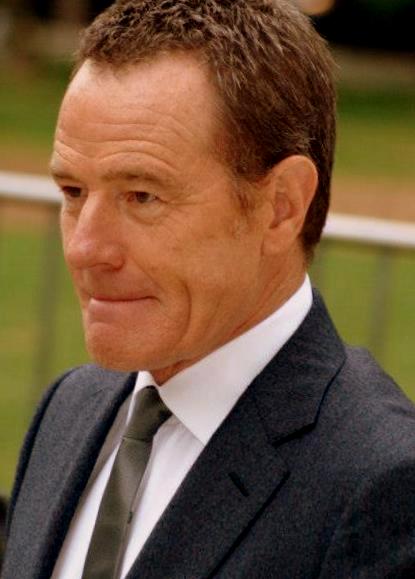
Bryan_Cranston_TIFF_2012

Network

National Theatre Lyttleton, 9th March 2018

Right then. Finally got to see Network. Booked early but this was the first date that BUD, KCK and the Blonde Bombshells could collectively make. A bit nervous because the last time we wheeled the Bombshells out to an Ivo van Hove entertainment it was Obsession at the Barbican which gets more disappointing as time elapses (Obsession at the Barbican Theatre review ***).

You can divide Mr van Hove’s work along three dimensions I reckon depending whether he adopts the “austere, psychologically insightful” or “busy, technological overload” aesthetic, whether or not he works with the Toneelgroep Amsterdam ensemble or other actors, and whether the play is drawn from a classic text or is adapted from a film. Most of the time he hits the jackpot but there is always a risk of disappointment, Obsession, the very dull Antigone a few years ago and the so-so After the Rehearsal/Persona Bergman adaption, being cases in point.

Obviously Network is brilliant. You know that from the reviews when it opened and all the social media buzz. Not just my opinion but the opinion of my guests who were well impressed. Paddy Chayefsky’s 1976 media satire, directed by Sidney Lumet, is a marvellous film. I watched it again ahead of this just to check. Fast-moving, acidic, contemptuous, intelligent, disturbingly prescient, strident, it isn’t subtle but it is hugely effective. I particularly love the performances of Faye Dunaway as Diana Christensen, Robert Duvall as Frank Hackett and Marlene Warfield as Laureen Hobbs.

Now if I am honest Lee Hall did not strike me as an obvious choice to adapt Paddy Chayefsky’s precious script. Then again Mr Hall, the brains behind Billy Elliot, War Horse and Victoria and Abdul on screen, The Pitmen Painters, Shakespeare in Love and Our Ladies of Perpetual Succour on stage, and an adept Brecht translator, is nothing if not versatile. Wisely he and Mr van Hove have elected to faithfully translate most of the vital dialogue from the film, with some minor shuffling between characters. The temptation to tamper with, for example, CCA Chairman Jensen’s excoriating speech about the power of capital, is resisted, as are Howard Beale’s own show sermons. It is unfortunate that the negotiation scenes involving the Ecumenical Liberation Army and the Communist Party of America are abandoned, they tickle me, but something had to give. The relationship between the obsessive TV programming executive Diana Christensen, whose only reference point is her own ambition, and news chief Max Schumacher, is fully preserved as is his wife’s, Louise Schumacher, pain at his betrayal. And all the corporate manoeuvring.

So plot, sub-plots and text vigorously reconstructed, what next? This is where the magic of Mr van Hove and his designer sidekick, Jan Versweyveld, really kicks in. The template they employ is well tested from the longstanding Toneelgroep Amsterdam Shakespeare adaptations, Roman Tragedies, and it more recent cousin, Kings of War. Extensive use of live, on-stage video and video fragments, mixed in real time, a stunning achievement from designer Tal Yarden and team. A thundering soundscape from Eric Sleichim with an on-stage quartet BLINDMAN. Costumes from An D’Huys which are exact re-creations of the mid 1970s setting. There is a “UBS” TV production suite on stage. There is, famously, a restaurant on one side. and costume and make-up desks lurk at the back of the stage. All the guts, the manipulation, of the production are on show and, because key scenes are set in a TV studio, this surely couldn’t be more effective. There is even a slightly time delayed video sequence where Max and Diana stroll along the South Bank with umbrella. (Mind you this couldn’t top the bemusement of some lost tourists caught on camera stumbling across the performance of Bart Siegers, I think, as Enobarbus, in Roman Tragedies, outside the Barbican).

In addition to the thrilling technical wizardry, Mr van Hove, breaks the wall, and ropes the audience in repeatedly as the story unfolds, in the warm-up at the top of the Howard Beale show, when Beale clambers into the audience and, obviously, when the assassin emerges at the end. The messages about the lengths broadcasters will go to to secure ratings, the ugly emptiness of much popular entertainment, the voracious appetite of the capitalist structure which sits behind this, the immorality and venality of those hardened by the system, the co-option of those who purport to stand against it, the alienation that they, and we, experience, ring out load. No updating of the plot required from an analogue to a digital world: the frantic, exhausting hyper-reality of the production does this for us. Remember the film was produced before the rise of neo-liberalism. Paddy Chayefsky died in 1981. If he was angry then, he’d be bloody livid now.

OK so there are one or two moments when being bashed over the head by this story and this production is a little tiring. But that I suppose is exactly the point, and you can chew more slowly on the content after the fact, as we have been doing.

As if this wasn’t enough we have an astonishing performance from Bryan Cranston as Howard Beale. Casting him looks to have been the most inspired of a string of inspired decisions around this production. Now as I understand it, Mr Cranston spent many years as a moderately successful jobbing actor before his turn in Malcolm in the Middle (never seen it), and then, famously, Breaking Bad. I generally can’t be doing with these TV series, preferring to see my pleasures in more concentrated form, as should be clear from this blog. However BB was an exception though it did test my patience at times across the 60 odd episodes. Still it is rare to see such a complete portrayal in any dramatic medium.

For me BC betters Peter Finch’s screen Howard by appearing to retain a better grasp on the forces around him. That is not to say that BC doesn’t show Beale’s mental collapse, just that, once his albeit damaged mind is made up to preach his disgust, he summons up a strength that Mr Finch’s more prophetic Beale lacks. The shift in Beale’s rhetoric post the meeting with Jensen is actually more satisfying on stage. Mr Cranston is riveting in the video close-ups as Beale moves from resignation, to desperation, through wild anger, and on to zealotry and an almost gnomic mysticism.

Michelle Dockery’s Diana is not quite as emptily amoral as Faye Dunaway’s on-screen version, but the relationship with Douglas Henshall’s Max just about works. The collapse of his shallow idealism is matched by his pathetic attempts to secure her empty affection. She never cares, he knows this from the start, he stops caring, in the end neither one of them cares. Beverly Longhurst, as Louise Schumacher, standing in for Caroline Faber gets to deliver the only really compassionate lines in the production when she boots him out. You should be very afraid of Richard Cordery’s Arthur Jensen, that’s what the men consumed by power at the top are like. I was also much persuaded by Tunji Kasim’s Frank Hackett, but frankly barely anyone puts a foot wrong here. Just as well, it would have been chaos if they had.

At its heart I think Network is a plea for our shared humanity not to be broken by an economic complex which seems to be beyond our understanding and influence, and not to be bullied and sedated by technology. What better place to do that than in the elemental forum for shared experience which is the theatre.

Beware the Infotainment Scam people. Mind you I might just have been scammed by Mr van Hove and his collaborators. It felt good though.