Tamburlaine at the RSC Swan Theatre review ****

Tamburlaine

Swan Theatre, RSC Stratford, 17th November 2018

If you scroll down you will see a so-called review of the play Switzerland. Though focussed on the author Patricia Highsmith it referenced her most famous character Tom Ripley. One of the most beguiling bad boys in fictional history. However he was a novice compared to Kit Marlowe’s Tamburlaine. Assuming you accept that Tamburlaine is, by and large, fictional, even if he is supposed to be based on Amir Timur, the founder of the Timurid dynasty in the C14 and ruler of vast swathes of Eurasia and defeater of the Mamluks of Egypt and Syria, the Ottomans and the Sultan of Delhi. Self-proclaimed inheritor of the legacy of Genghis Khan’s Mongol Empire two centuries earlier, self-titled “Sword of Islam” and possibly responsible for the death of 5% of the world’s population. His descendants went on to rule much of Central Asia and found the Mughal Dynasty in India.

Now Marlowe being Marlowe, (I’ve banged on before about just how transgressive he was), and, I am guessing, not armed with much in the way of solid facts, it will have been the dramatic potential in Timur’s rise from obscurity (not true) to ruler of a huge chunk of the known world – now southeastern Turkey, Syria, Iraq, and Iran, through Central Asia encompassing part of Kazakhstan, Afghanistan, Armenia, Azerbaijan, Georgia, Turkmenistan, Uzbekistan, Kyrgyzstan, Pakistan, and even easternmost China – that drew him in. Remember the “real” Tamburlaine came knocking on the door of western Europe, in the process nullifying the Ottoman “threat”, he destroyed the renegade Church of the East and he had diplomatic dealings with France and notably Castile. So he was an ambivalent figure in Renaissance Europe by the time Marlowe came to write his doorstopper in 1587/88, aged just 23. But he was also exotic and bloodthirsty, a combination guaranteed to pull the punters in to the Southwark playhouses.

And it certainly succeeded. Along with Thomas Kyd’s The Spanish Tragedy, Tamburlaine revolutionised the English stage and laid down the building blocks for the great tragedies of the Jacobean period including those of you know who (clue WS). Thrilling plots, complex themes and richly imagined, evocative blank verse. All of which is still apparent today as this production made abundantly clear. Now that isn’t to say that Marlowe didn’t go on a bit, the original is in two parts and you wouldn’t get much change out of seven hours if you watched them back to back. And the language, in keeping with the action, is not what you would call understated. But when cut back for modern tastes, and toned down, it is impossible not to be swept along by the epic events, the OTT posturing and the ostentatious language.

Michael Boyd’s production doesn’t attempt to dilute the drama. Tom Piper’s set may be minimalist in design and intent but when required, cages, platforms, pits, it really delivers. The costumes may be standard issue generic every-age militaria albeit with a twist, a bit of sheepskin here, some leather gloves there, white flowing robes for the whiff of the Asiatic/Oriental, but they are, to use the dreadful contemporary idiom, on point. The themes emerge in an entirely extemporary way: Marlowe the atheist’s dismissal of all religions, his celebration of, and warning against, the rise of the “individual” against the levers of power, the rise of the populist strongman, the creation of Empire, the threats and opportunities wrought by globalisation and exchange.

For this, the episodic tale of Tamburlaine’s violent journey, is, at its heart, a hyped-up history play. There are some remarkable theatrical devices on show from the masterly Mr Boyd and the creative team to bring this to life (and death). The painting on of stage blood, with bucket and brush, for each victim, first by young Callapine (here Dev Prabhakar), the murdered son of the Turkish emperor Bajazeth (a supreme Sagar I M Arya), and then an older version played by Rosy McEwen after her previous character Zenocrate, Tamburlaine’s beloved wife. had died. The “ghosts” live on then, on the fringes of the action, underlining  the price that is paid for Tamburlaine’s power grab. Callapine comes back to seek, but not take, revenge. Whilst the cage in which Tamburlaine imprisons Bajazeth, and on which he and then his wife Zanina (Debbie Korley) (spoiler alert), dash out their brains, is integral to the play it still presents a startling image when it first appears, as does Tamburlaine’s chariot, pulled by his enslaved enemies.

The platform at the back of the stage, and that which descends from the ceiling, are barely more than the maintenance men might employ at your office, but, when some soon to be vanquished unfortunate uses it to lord it over Tamburlaine and his generals, you are struck by the simplicity of the symbolism. A plastic curtain lends the air of an abattoir, undeniably apposite. Even something as innocuous as Bajazeth pronouncing Tamburlaine’s name in a Somerset, (it must be so as we Devonians are sophisticates), accent, mocking the Scythian shepherd’s upbringing, has resonance. This, BTW, is Marlowe’s chosen origin story for Tamburlaine, a long way from reality in fact and time.

All these touches (have I mentioned the tongue?) are reinforced by a muscular score from composer James Jones and complimentary sound and lighting from Claire Windsor and Colin Grenfell (who bathes the Swan thrust stage in a golden glow, gold being the dominant tone of the text). Much was made of Evelyn Glennie’s percussive score for Troilus and Cressida (which I saw through RSC live), which, like Gregory Doran’s production overall, was only a qualified success. Here the sound and score was spot on. 

The production also succeeds because the cast are fully committed. Jude Owusu, in his first major role, belts it out of the park, heads out, picks the ball up, and belts it out again. He is so, so good. And he does it without succumbing to shouty histrionics: he is just well hard from the moment we first meet him. Hard to believe this was the same man who played Charles Darnay in the execrable Tale of Two Cities at Regents Park (though he was the best thing in it). I was much taken with the way David Rubin and Riad Richie painstakingly built out the characters of Techelles and Usumcasane, Tamburlaine’s two lifelong sidekicks. Rosy McEwen was an ethereal Zenocrate, the daughter of the Soldan of Egypt, who Tamburlaine abducts, but with whom she eventually falls in love. 

Mark Hadfield, as he usually does, stood out as the Soldan, as Mycetes, the King of Persia, the first to underestimate Tamburlaine’s military skill, and as Almeda, Callapine’s keeper. His comic timing, for there is comedy amongst the carnage, is superb. Who else? David Sturzaker, who amazingly played Cosroe, Mycetes’s treacherous brother, the King of Fez, then in part 2, Sigismund, King of Hungary and finally the Governor of Babylon (whose inhabitants are all drowned), James Tucker similarly takes on the roles of Meander, Mycetes’s adviser (channeling his inner accountant), the Governor of Damascus, who doesn’t have much a plan to assuage Tamburlaine’s wrath, the Lord of Bohemia, and Perdicas, a wheedling lawyer. Raj Bajaj, notably as Tamburlaine’s insufficiently macho son Calyphas, Salman Akhtar, Ralph Davis, James Clyde, Ross Green, Zainab Hasan, Debbie Korley and Vivienne Smith also take on multiple roles. Edmund Wiseman, who is excellent as Theridamas, does not, only because he, wisely it turns out, defects to Tamburlaine right at the start and sticks with him. 

There is an excellent programme note from voice and text coach Alison Bomber describing how she encouraged the actors to “connect voice, body and imagination” to bring Marlowe’s text to contemporary life, to bring light and shade, to vary the rhythm of the knotty language, so that the verse feels like speech to us. In this she and the cast succeeded admirably. As you can tell a lot happens even in the cut-down version of Tamburlaine. He and his mates get about a bit and come across, and invariably kill, a lot of people, as you have probably surmised from the above. A quick speed-read of a synopsis, as always for Renaissance plays, never does any harm, but I have to say, even with all the multiple casting and olde-worlde talking, this really is a breeze to follow. 

I get that Marlowe, and for different reasons, Jonson, are destined always to lurk in Shakespeare’s shadow, but with a production as good as this it leaves me wanting more. And wishing the poor chap, Marlowe, that is, had stayed away from Deptford that night. 

Switzerland at the Ambassadors Theatre review **

Switzerland

Ambassador’s Theatre, 16th November 2018

A couple of weeks prior to Switzerland the Tourist took in another play by Joanna Murray-Smith, Honour, at the Park Theatre. A very fine cast and a sharp enough dissection of a marriage broken by the cliche of the husband leaving for a younger woman, but alarmingly contrived, and borderline pretentious.

Still Switzerland has a sound reputation and the reviews for this Theatre Royal Bath production were pretty strong. And the SO is a massive fan of the talented Tom Ripley, especially in Anthony Minghella’s cinematic version (as opposed to Rene Clement’s earlier Plein Soleil). So a play which pitched the famously cantankerous Patricia Highsmith, author most famously of the Ripley novels, holed up in the mountains, and a fresh-faced flunkey from her American publisher, looked to be right up our strasse. It wasn’t difficult to guess that the young man would likely take on the attributes of Ms Highsmith’s sophisticated sociopath but even so we were intrigued by the premise.

Metaphysical conflation of an author and their most famous creation may not be entirely original but it should be the entry point into an illuminating and powerful drama. Switzerland started off well enough. William Dudley’s set delivered the lofty interior of a Swiss chalet, complete with distant mountain views and Ms Highsmith’s alarming antique armoury on the walls. The lighting of Chris Davey and sound of Mick Pool both got with the thriller project. A hint of Sleuth and especially Deathtrap, pervaded the stage, and, as it happens, the plot. (BTW both of these are better plays/films – in the case of Sleuth in either cinematic version). Phyllis Logan as Patricia Highsmith certainly looked and sounded the part: a lifetime of booze, fags and isolation leaving her character hoarse and suspicious. Callum Findlay, as the visitor Edward, had enough of the wide-eyed, naif superfan to persuade us that she would have let him stay. There’s a bit of a gear crunch as the irascible Highsmith is then persuaded by Edward to drum up a new Ripley plot, but so be it. 

However, slowly but surely the suspense then starts to drain out of the Ms Murray-Smith’s text. She piles up the biographical details of PH’s ghastly childhood (let’s just say she and her Mummy didn’t get on), adult misanthropy and overt racism, alcoholism, depression, illness, sexuality. Maybe she was insecure and damaged, particularly by the way her talent was dismissed because of the “genre” she chose to work in, and behaved this way for effect, or maybe she was just a nasty piece of work. The play doesn’t delve too deep. The attempt to turn Edward into a vision of Tom with a dapper pressed suit (out of a rucksack no less) and a whisky tumbler in hand is unconvincing. Tom Ripley is undoubtedly one of the C20’s greatest existential (anti-) heroes, up there with Mersault, Antoine Roquentin, Raskolnikov, Patrick Bateman, Rick Deckard, Port Moresby, Gregor Samsa and those two tramps. He is well-mannered, cultured, intelligent but also a narcissistic serial killer, a con-man whose sexuality is unresolved. He literally gets away with murder. What’s not to like? That is the whole point. We can’t help liking him. 

There is not enough opportunity for Calum Findlay to get anywhere close to Ripley though. After a while it begins to feel that all we are getting is Patricia Highsmith’s Wiki page and some quick notes from the 1999 film. I was hoping for and expecting some shift in the direction of the play, not a twist as such, but some leap that took the story beyond prosopography (yep it is a word, look it up, I am trying to find the moment when I can drop it into a casual conversation). It never came. The alter-ego theory was laid out but never explored. So I ended up underwhelmed as did the SO, for broadly similar reasons. For a play about a writer whose books are artfully dramatic this seemed a shame. 

This was even more of a surprise given director Lucy Bailey’s recent pedigree. She directed the two very recent successful Agatha Christie adaptations, Lover From A Stranger and Witness For The Prosecution. The Tourist hasn’t seen either (yet) but, being a high falutin’ sort of fellow he did see Cave, Tansy Davies’s latest opera at the Printworks, which she directed and which was terrific (if you like that sort of thing – which I do). She also has a string of feted RSC Shakespeare to her credit.

So it is, with regret as Sir Alan would have it, that I have to report that Switzerland was a disappointment as a play if not in its execution. In contrast to its predecessor here at the charmingly intimate Ambassadors, Foxfinder which was a fine play let down by the realisation of the revival. 

Mistero Buffo at the Arcola Theatre review ****

Mistero Buffo

Arcola Theatre, 15th November 2018

This probably ranks as one of the Tourist’s least insightful assertions, (and trust me there is stiff and substantial competition), but, in his experience, there are two types of one person theatre. The pure monologue, often fairly static, relying on the appeal of the character and the strength of the writing. The kind of story-telling that has been there since the dawn of human time. Or the multi-role tour de force which relies on movement as much as the word and where the physicality of the performance is as important as the text. 

Either way it is stripped back, and let’s face it, cheap, theatre. Which is why it is a staple of festivals and, specifically, Edinburgh. That doesn’t mean it is necessarily any good, but generally those works that get the nod at Edinburgh, and then get a showing here in London, are invariably worth seeing. I am reminded of Henry Naylor’s plays for example, Angel, which visited this very house, Grounded at the Gate a couple of years ago or Silk Road at the Trafalgar Studios, (the latter a very amusing multi-character delight from Josh Barrow). 

What I will say is that the actors in these shows certainly earn their, presumably, modest, corn. And that was doubly true of Jules Spooner in Mistero Buffo. Mr Spooner is one half of Rhum and Clay Theatre company,  with Matthew Wells, and their aim is to create theatre with “a playful sense of anarchy, vigour and originality”. They trained at L’École Internationale de Théâtre Jacques Lecoq which is the pinnacle of physical theatre. Here he collaborates with director Nicholas Pitt. 

And if you are going to put on a solo performance they why not the iconic Mistero Buffo from the master Italian writer, actor, director, comic, singer, painter, activist and all round Marxist top bloke, Dario Fo. Now you probably know Mr Fo (pictured above) from plays such as Accidental Death of an Anarchist, (which I once saw in the West End in the company of a friend who was, shall we say, under a psychotropic influence, and insisted on shouting out encouragement to the cast at vital moments), Can’t Pay, Won’t Pay, Trumpets and Raspberries and The Open Couple. He brought improvisation, satire, criticism, parody, mockery and farce to attack the Italian state, the Catholic church, organised crime, violence, racism, speaking truth to power, echoing the style of Medieval giullari (or jongleur in French/English as here) and commedia dell’arte. His work and performances have ben continually reworked and his influence stretched far beyond Italy. Indeed I see that Northern Broadsides is currently showing an adaptation of Can’t Pay, Won’t Pay. 

Over 30 years Fo himself took Mistero Buffo around the world delighting atheists everywhere. For the play is essentially a p*ss-take of the absurdity and hypocrisy  of 13 of the New Testament miracles , and Christianity generally. Ir certainly wound up the Vatican. Now if this doesn’t sound like it would be a recipe for an entertaining evening out in 2018 you’d be wrong. First off there’s a fair chance you’ll know the 5 stories included here, reminding you how deeply ingrained that book still is. This means that Fo’s mocking, and Rhum and Clay’s pop culture updates thereon, of said stories is easily digested. Secondly, to be fair, sone of these stories are quite jolly, even with the moralising, and especially when undercut by our combined creatives, which give a pointed relevance. Just what is truth and just what can people be led to believe? Thirdly Mr Spooner is an amazing performer, shifting between characters with chameleonic dexterity. Take the sermon on the mount, the raising of Lazarus (backed by the White Stripes), the marriage at Cana (complete with drum and bass beats) or Crucifixion skits. OK so they are dead ringers for Python, but one man literally creates a crowd in front of your eyes. Finally it is, and he is, very funny.

Rhum and Clay will be touring this for the next couple of years. If it comes anywhere near you don’t miss it. And that is the truth. 

Modern Couples at the Barbican Art Gallery review ****

Modern Couples: Art, Intimacy and the Avant-Garde

Barbican Art Gallery, 15th November 2018

Here’s another smart bit of curating from the team at the Barbican, in collaboration with the Centre Pompidou-Metz here led by Jane Alison. Track the history of modernism in art – not just painting, but sculpture, photography, design, print, literature and architecture, with a nod to the commercial where appropriate – through the couples which created it. 

The net has been cast wide, both in terms of the number of artists involved, 46 partnerships in total, the themes that are explored, including love, sex, passion, politics, collaboration, abstraction, communication, and the nature of the relationships, straight, gay, bi, polyamorous, homoerotic, controlling, liberating, disturbing, equal, unequal, conventional, unconventional. 

With a few exceptions there isn’t a great deal of material here to map each couple but the quantity, and the clear and direct tone, display and messaging, makes up for that. The private connections are fascinating in themselves but also shed a lot of light on how art and artists have changed society since the turn of the C20.

There are a fair few relationships that you might expect to appear, the Bloomsbury Group permutations, Frieda Kahlo and Diego Rivera, Georgia O’Keefe and Alfred Stieglitz, Ben Nicholson and Winifred Nicholson and then Barbara Hepworth, Alma Mahler and Gustav and Oskar Kokoschka (who really couldn’t let go), Jean Arp and Sophie Tauber, Lucia Moholy and Laszlo Moholy-Nagy, the Delauneys. And then there are a few which I didn’t anticipate. The Aaltos, Gustav Klimt and designer and businesswoman Emilie Floge, Nancy Cunard and Henry Crowder. 

It is hard not to be drawn into the stories of those women artists whose contributions, the exhibition argues, may not have been justly recognised in the shadow of their more “famous” partners, Camille Claudel and Rodin, Maria Martins and Duchamp and, arguably, Dorothea Tanning and Leonora Carrington with Max Ernst. The fate of Dora Maar, Picasso’s early muse, and Unica Zurn, the “inspiration” for Hans Bellmer, will likely disturb. A lot of these fellas don’t come across well here. 

Most interesting for me. The intense friendship between Lorca and Dali. The portraits of Romaine Brooks, (her lifelong partner, and oft-subject was the writer Natalie Barney), entirely new too me, Lee Miller, during her years with Man Ray and Roland Penrose, she is a cast-iron genius though here, as elsewhere, the submission is unsettling, and, best of all the extraordinary creative partnership of constructivists Varvara Stepanova and Alexander Rodchenko. Now they were the future, and looking at their work, they still are. And as far as I can see they were genuinely equal with no hint of the f*cked up sadism of the surrealist fringe. There they are above in the 1920’s looking pretty cool. 

Well worth a look. It may end up being more biography than art and it is probably fair to say, like most of the Barbican’s exhibitions, it is designed for the slighter, and maybe outre, attention span, but, let’s be honest that is sometimes what the head, and feet, requires. Don’t expect to be bowled over by amazing art, but do expect to learn something. Tie it in with something else – it’s not like there isn’t plenty going on at the Barbican. 

Macbeth at the Barbican Theatre review ***

Macbeth

Barbican Theatre, 15th November 2018

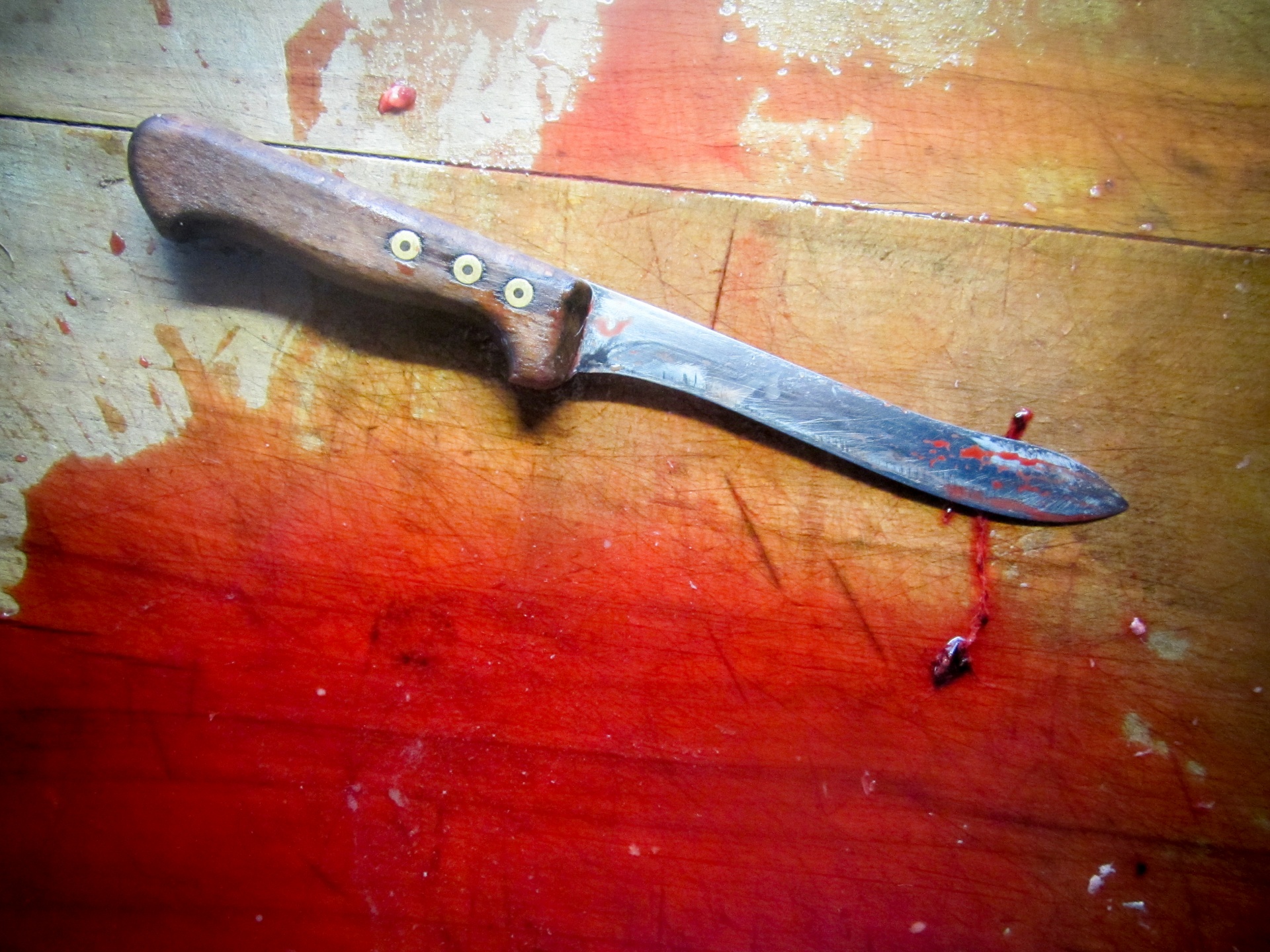
Is this a dagger I see before me … well maybe more of a kitchen knife …

It is pretty tightly plotted (at least if you pare it down). It is quick by comparison to a lot of the Bard – half the length of Hamlet, though that always needs a few nips and tucks – in part perhaps because Thomas Middleton adapted the text that has come down to us. It wastes no time at all in getting going – if anything it is a bit too abrupt at the start I reckon. Other than Macbeth and his lady wife most of the characters don’t get much air time to reveal themselves. It’s language is direct, often shockingly so. It is eminently quotable. There is no welter of arcane classical references. Most interested people know it or know of it (it’s a GCSE set text after all). The themes are easily defined and understood – ambition and patriotism, moral disorder and inversion, violence begetting violence, childlessness and legacy, gender roles and masculinity, the suppression of feeling and equivocation, the supernatural.

It might be built on an edifice of contemporary (when written) conventions, verse speaking, soliloquies, quibbles, audience asides, witches, ghosts, a dumb show, severed heads, but it is the supernatural that gives plenty of scope for coups de theatre. It may also have been intended to massage a royal ego, the patron of the company that first performed it, Jimmy I (of England, No 6 of Scotland) being an expert in the magic field with his best-seller Demonology, and coming just after the failed Roman Catholic plot to blow him up. Yet the supernatural also works on our imagination, (as it works on the power couple), always a good idea in a play, which, together with big Will’s acute psychological insight, and repetitive language – blood, blood and more blood, time, darkness, man – explains why it is so popular.

So why then is it apparently now so difficult to get right? Search me though if I take this somewhat disappointing version, alongside the similarly underwhelming recent NT production, (and plenty more in the last decade), the problem might lie in trying to hang too much on the play. No problem with a clear overarching creative vision but keep it simple. Don’t add all sorts of frills – there are enough interpretative and visual choices to be made from the text itself. Make sure the two leads nail the verse. No mumbling. Ensure they can explain their motivations – remember they are travelling in opposite directions, from normative revulsion to nihilistic emptiness in the case of Macbeth and vice versa for the Lady. The other characters can play it straight. Duncan is a symbol of kingship, Banquo matters because he doesn’t fall for all that weird sister sh*t. (And he can scare us later). The Porter is there to offer ironic commentary, warn against those who say one thing and do another, and, here in this production, very successfully mind the time. Everyone else is pretty much plot collateral.

It works best when we the audience are dragged into the couple’s nightmare. Small space, simple staging, like the landmark Dench/McKellen/Nunn RSC version. Or the Walter/Sher/Doran apparently, which kicked off in darkness. The recent Ninagawa version, though it is different, worked because the Samurai backdrop leant contextual clarity and the age of the couple a desperate poignancy.  The 2015 Justin Kurzel film, if you can forgive the accents, also has a clear aesthetic and some very smart interpretative choices. You can add your own to the list.

In this version however, director Deborah Findlay, seems to have focussed on the details of the visual, and on the “horror” to the exclusion of the themes. Some of this works, notably Michael Hodgson’s Geordie Porter, always present, tapping his watch, chalking up the body count, hoovering incessantly, disturbing in his ordinariness, as well as the digital clock countdown, even if it is a big of a cliche, which links to the theme of time passing. Niamh Cusack as Lady Macbeth, clawing and pawing, also has the measure of most of her key lines and David Acton’s Duncan, whilst a little fruity, is what you expect from a man born (rather than compelled) to rule. However Christopher Eccleston, whilst capturing Macbeth’s military bearing, doesn’t, for me, vary the verse sufficiently, such that he comes across as insufficiently tortured by events. The same is true of the Edward Bennett’s Macduff who comes across as more geography teacher than grief stricken revenger. Mr Bennett is an outstanding Shakespearean, especially in comedy, but he looked lost here. Rafael Sowole’s hefty Banquo was more convincing, especially as ghost. 

Having the witches played by three girls, dressed in red, Don’t Look Now/Shining style and signifying blood, is initially striking but the novelty soon palls. The jump cut fizzing/flickering lighting from Lizzie Powell, and the “spine-chilling” score from Rupert Cross and sound design of Christopher Shutt leans a little heavily towards the cinematic. Fly Davies’ set, with de rigeur upper level, accommodates the interpretation but doesn’t really wow or command the front of the vast Barbican stage. 

Having said all this the production doesn’t drag, it squeezes out a few laughs, not all intended, and its pinball of ideas craves attention. Maybe I should try some of the other current London Macbeth’s, the NYT at the Garrick, or the Michelle Terry/ Paul Ready at the Sam Wanamaker (if it wasn’t so bloody uncomfortable, and more problematically, sold out). Or maybe I’ll just wait. Something wicked will this come again soon. 

The Madness of George III at the Nottingham Playhouse review *****

The Madness of George III

Nottingham Playhouse, 13th November 2018

Flushed with success from his visit to Manchester the Tourist hopped on a train across the Peak District to the proud city of Sheffield, (where I see the Theatres will be staging a Rutherford and Sons next year ahead of a version at the NT, and will then attempt to stage The Life of Pi, which should be interesting), and then on to Nottingham.

An interesting exhibition at Nottingham Contemporary – Feminisms, Gender, Resistance – but the main aim of the visit was the Playhouse and The Madness of George III. Now I booked this on the assumption, as with the Death of a Salesman at the Royal Exchange, that this was as near to a sure-fire winner as it was possible to get in theatrical terms. Alan Bennett at his witty best, but armed here with a riveting biographical story, directed by the ebullient new(ish) Artistic Director at the Playhouse, Adam Penford, and with Mark Gatiss in the lead, and Adrian Scarborough as Dr Willis, in a uniformly excellent cast. 

And sure-fire winner it turned out to be. Apparently it has become the biggest box-office hit in the Playhouse’s history. It was screened to millions (I may be exaggerating here) via the NT Live cinema programme and ensured a bunch of critics left their London mansions to deliver a slew of 4* and 5* reviews. The audience on the evening the Tourist attended plainly loved, explicit in the congratulations during the after-show discussions.

I saw the original NT production with Nigel Hawthorne as George back in 1991, the Apollo Theatre revival a few years ago with David Haig at his actorly best, and have seen the film version a fair few times. So you can probably tell I am a bit of a fan. I will assume that, since you are one of the very select band reading this, that you are too, so won’t bore you with plot or historical details. If you don’t I suggest you see the film tout suite. 

So what was so good about this production? Well first off Adam Penford has cut out a handful of scenes. AB’s play is already, like most of his work, structured as a series of very short scenes in multiple locations. This guarantees momentum but, allied with AB’s constant urge not to leave a potential quip on the table (which is why it is a comedy after all), can mean the characters, other than the King, come across as a bit thinly sketched. Cutting scenes out might seem counter-intuitive but it does actually mean we become more focussed on the “tragedy” of the King’s breakdown, and then the jubilation of his apparent recovery. I was also more aware here of the King’s relationship with his retinue. The political machinations, Whig vs Tory, the plotting of the Prince Regent and his faction, took a bit more of a back seat.

George III’s 59 year rule saw not just the Regency crisis, but the “loss” of American, the union of GB and Ireland, wars in Europe and throughout the burgeoning Empire, rivalry with France, the Agricultural Revolution and the accumulation of capital to fuel the Industrial Revolution, a new way to finance the monarchy, constitutional change and scientific advances (which George was keenly interested in when he was on top form). Whilst AB’s play only incidentally touches many of these profound changes it does brilliantly capture the dichotomy between the public and private life of the monarchy and the metaphor of the King’s breakdown mirroring the political struggle catalysed by the American War of Independence. 

The dynamism of the production was also very well served by Robert Jones’s ingenious set. The various locations were smartly rendered with a series of Georgian style duck-egg painted flats, on stage and suspended, which were moved into place with no interruption to the action at all. Richard Howell’s lighting design, Tom Gibbons’ sound and Lizzi Gee’s movement, as well as some blisteringly quick costume changes, all further contributed to the pace and period feel of the production (most memorably at the end of the first half). A theatre set to point up the theatricality which underpins royalty. 

However, and perhaps unsurprisingly, it was the performance of Mark Gatiss that really made the difference. Adrian Scarborough’s Dr Willis, alarmingly forthright in his proto-psychiatric treatment of the King, (pointing up that he was just a man), in the second half, Debra Gillett’s devoted Queen Charlotte, Louise Jameson’s callous Dr Warren, Nicholas Bishop’s morose Pitt, Amanda Hadingue’s presumptuous Fox and Will Scolding’s nincompoop Prince Regent all caught the eye, but all eyes were on Mr Gatiss. As you might expect the comedy flowed easy for him: but better still was the way he caught the pathos of the king as he was plunged into a mania which he could not control but which he understood. “I am not going out of my mind, my mind is going out of me”. The production also doesn’t hold back from showing the physical pain that was inflicted on him by doctors who didn’t have a clue what they were doing. Mr Gattis’s detailing of the King’s speech, tics, convulsions and agonies is mesmerising. Adam Penford was keen to offer a more sympathetic, and contemporary reading, of the King’s mental illness and to avoid seeing his behaviour solely through the lens of humour. Thanks to Mark Gattis’s performance he certainly succeeded. 

History play, political drama, comedy. tragedy? This production makes the case for all of these in a forthright way. Thank you Nottingham Playhouse. I’ll be back. 

Death of a Salesman at the Royal Exchange Theatre Manchester review *****

Death of  a Salesman

Royal Exchange Theatre Manchester, 12th November 2018

The greatest English language play from the second half of the C20? Waiting for Godot? All That Fall? Or maybe Beckett’s Endgame? No, too tricky by half. A Streetcar Named Desire? It just about sneaks in time-wise but too narrow in scope. Long Day’s Journey Into Night? Maybe but O’Neill has one tone, though certainly not one dimension. Staying in the US perhaps yu might say Glengarry Glen Ross or Angels in America? Who’s Afraid of Virginia Woolf? Or perhaps you think us Brits top the Yankees. Stoppard or Pinter. Or, my personal favourite Caryl Churchill. Serious Money, Top Girls, Cloud 9 or The Skriker anyone?

Nah. It is pretty hard not to argue that Arthur Miller comes out on top. So then it is just which play. A View from the Bridge? Perhaps though much depends on performance. The Crucible? Bullet proof and the mighty Billers reckons it is Miller’s best. For me though it might just be Death of a Salesman. Mind you I have only seen it once before this, though I see London is set to have a bite of the cherry next year with a new production at the Young Vic directed by Marianne Elliot (War Horse, Curious Incident, Angels in America, Company) with Wendell Pierce as Willy Loman, Sharon D Clarke as Linda and Arinze Kene as Biff. I wouldn’t hang about if I were you. This will sell out before it opens I’m sure.

Anyway this production will follow the Manchester Royal Exchange production in seeing Willy through African-American eyes. Adding an extra dimension to the unravelling of his particular American Dream, particularly here with a white wife, making Willy’s and the boys “exclusion” even more pointed. The thing about Death of a Salesman is that you get the big picture satire of the “Dream”, the promise that everyone in America will have the opportunity to achieve riches and success through hard work, application and initiative, but you also get a family tragedy, set across just 48 hours, of near Grecian proportions. All filtered through a formal experiment, as time and event overlap in Willy’s head, which demands attention, but is never intimidating, for the audience. From the very first line Willy utters “it’s all right, I came back” you know what these characters are saying and why they are saying it. If you cannot feel the pain of Willy and those around him then I respectfully suggest you go back to your home planet.

Sarah Churchwell, who is a professor of American Literature at the University of London, has written a very interesting programme note which explains that Willy’s failure to reap the rewards he thinks he deserves, the wealth and the status, the “success”, also points to the perversion of an original “American Dream” which was predicated not just on the trappings of consumerism, but was rooted in a “pursuit of happiness” that hadn’t been degraded by individualistic capitalism. If you “win” all the material trappings are yours. If you “lose” then don’t expect any reciprocal duty of care from the society around you. Blimey. Even if you might not entirely agree with this, the point that Miller’s play, and it’s not so sub-by sub-texts, can hold up under the weight of such interpretation, whilst still putting you through the emotional grinder, is testament to its brilliance. 

I’ll spare you, and me, some half-baked amateur analysis. You can do that yourselves. What about this production? Well this was the Tourist’s inaugural visit to the Royal Exchange now that he is a full-time layabout. Mancunians have much to be proud of in their city, but surely the Royal Exchange must rank somewhere near the top. A super space, a sphere plonked inside the Great Hall of the Victorian commodities exchange, refurbished last after the 1996 IRA bomb, with vibrant public spaces and bars/restaurants spaced around the auditorium. Sorry if I sound like a patronising London twat but I was bowled over. Inside is even better. Now I may have benefitted from splashing out on a front row, stalls seat, but this is, by some way the most comfortable perch I have ever viewed from. I am back for the Mother Courage next year, (and the revival of The Skull in Connemara up the road at the Oldham Coliseum). Can’t wait. 

Now obviously this being my first visit to the Royal Exchange this means that I have missed AD Sarah Frankcom’s previous hits as director, notably the collaborations with Maxine Peake. The Masque of Anarchy, Hamlet, The Skriker, A Streetcar Named Desire, Happy Days. For which I can only blamed personal greed for just like Willy I spent too long chasing money and not enough time feeding the brain. 

Anyway, holding back the tears of disappointment, at least now I was able to see another Royal Exchange regular, Don Warrington, collaborating with Ms Frankcom. I saw his Lear from Talawa Theatre on the telly, which, unlike many others, did not disappoint, but seeing Mr Warrington in the flesh here was mind-blowing. He is a few years older than Willy who is 63, and I assume that Arthur Miller saw Willy as white not black, but as far as I am concerned Don Warrington was Willy Loman. Maybe I am losing the plot like Willy but this for me was as real as theatre gets. It probably helps that I was front row, in the round, with Leslie Ferguson’s stripped back set presenting no obstructions, but this was electric. 

When Mr Warrington was sat in front of me, hunched forward, fingers twitching, the weight of his disappointment weighing down his body, it was as much as I could do to stop myself jumping forward and shouting “don’t do it Willy”. When the inevitable happened at the end I admit to a tear. Maybe Don Warrington is petulant, snappish, irritable and dominating in real life. Maybe he has been crushed by the weight of his own expectations. Maybe he hears things. I doubt it. I reckon he is more like the wry, smooth, relaxed-in-the-paddock police commissioner in Death in Paradise. Either way he is a brilliant actor. Performance of the year so far this year, no question, and there has been some pretty stiff competition. Only wish I had seen him in All My Sons here in 2016.

Mind you Ashley Zhangazha’s Biff runs him pretty close. It has been my pleasure to see Mr Zhangazha’s on a few occasions now, Terror, The Lottery of Love, Human Animals and most, recently, carrying the Public Arts  community version of Pericles at the NT, but again this was another step up. That is not to downplay Maureen Beattie’s Linda or Buom Tihngang’s Happy, or the supporting cast, but the scene where Willy and Biff argue is hair on the back of the neck stiff. It felt like Biff, even in his football days, just didn’t want to believe. Another highlight is the first appearance of Trevor A Toussaint’s imposing Uncle Ben, Willy’s successful, but now dead, brother. Don Warrington’s Willy visibly shrinks when he sees him. Or Howard’s (Rupert Hill) agonising embarrassment when Willy begs him, getting ever hoarser, for a desk job. Or Willy’s pathetic excuses when Biff turns up, in flashback at the Boston hotel, to find him with “Miss Francis” (Rina Mahoney). Or the touching devotion that Linda shows in believing the family’s money problems are on the brink of being solved.

The original title of Miller’s play was, famously, The Inside of His Head. Willy’s interior world and the exterior reality are in constant flux. To stage a production with this much clarity, on a copper disc, with no scenery bar a few branches overhead, no rooms, and few props, in a raised circle on which the non-speaking cast rest.and watch, in a theatre in the round, which itself is in a sphere, could hardly have been more apposite. This staging, together with the casting, may make for a less immediate connection than in other, more “traditional” productions but, for me, Death of a Salesman is as much food for the brain as blood for the heart, if you will forgive the mangled metaphors. And it brings home, from this now 70 year old play, that Willy is still right here, right now in many men. 

A triumph. 

Ligeti, Bartok and Haydn choral works at the Barbican review ****

London Symphony Orchestra, London Symphony Chorus, Francois-Xavier Roth (conductor), Camilla Tilling, Adele Charvet, Julien Behr, Christopher Purves, William Thomas

Barbican Hall, 11th November 2018

  • Gyorgy Ligeti – Lontano
  • Bela Bartok – Cantata profana
  • Haydn – Nelson Mass

Three composers I like. Three works I did not know. A slightly earlier start. A fine end to a fine day.

When I say I don’t know Liget’s Lontano that isn’t strictly true. In fact, even if you are a Ligeti virgin, there is a fair chance you have heard Lontano. For this is the music famously used to signify Jack Nicholson’s descent into full-on barking psychomania in The Shining film. Lontano, along with Atmospheres, is therefore still probably Ligeti’s most famous work, even though, in the five decades that followed their composition, GL went on to explore many other styles and musical ideas. 

Lontano, in Italian, means “far away” or “distant” as a performance instruction which about sums it up. For this is as “other worldly” as it gets, from a composer synonymous with the term. It is built up from layers of very quiet sound, initially cellos and flutes, from the smallish orchestra. These lines move in different tempos and to different rhythms but they combine, legato, to create Ligeti’s trademark micropolyphony. The crystallisation of these sounds brings out sustained, but shifting, harmonies that are very different from traditional or atonal composition but the overall effect is ravishing. And something for which horror and sci-fi film composers ever since should be eternally grateful. It is eerie, mysterious but utterly compelling. Take the bit where the high violins, barely audible, pulse against the throb of the low brass and wind. Given the score doesn’t really offer any metre as such Francois-Xavier Roth could only really prompt the orchestra. No matter. All the LSO had to do was trust Ligeti’s ear and F-XR’s experience with the piece. How GL knew all of his innovations, not just in these micropolyphonic pieces, would work is an utter mystery to me. Genius.

It was performed by the National Youth Orchestra at this years Proms so its a fairly frequent concert hall visitor. Don’t let it pass you by. 

Bartok’s Cantata profana, which was published in 1930, rarely gets an outing. Lasting only 20 minutes yet still requiring a full chorus and orchestra as well as a bass, (here William Thomas standing in for the indisposed Matthew Rose), and a very challenging high tenor part which pushed Julien Behr close to his limit. It is based on a slightly creepy, coming of age, folk ballad about nine brothers who go out hunting, turn into stags, (which I hope is a rare occurrence even in Transylvania), and then refuse to come home when Father asks them. Heady stuff which Bartok pitches somewhere between his more overtly derived folk driven orchestration and the lusher sound-world of his earlier stage works. The LS Chorus seemed entirely at home with the tricky Hungarian idiom of the text and the awkward contrapuntal textures of Bartok’s score, which divides into 8 parts in the second of the three movements..

That’s the thing with Bartok. It normally takes a few listens for me to get the gist of his music. Like Prokofiev I know there is something there worth working on but it doesn’t always reel me in immediately. I can’t always grasp the line and architecture of the whole work but the rhythms and melodies individually are often arresting. I have more work to do on the popular orchestral pieces, am close to cracking the string quartets, think the solo piano collections are fascinating and would love to see Duke Bluebeard’s Castle. The piano concertos and the rest of his chamber music are bit of mystery. Whether Cantata profana on this listening will be added to the to do list is a moot point. 

As an aside if you want a quick burst of Romanian folk filtered through an orchestral lens, look no further than the Concert Romanesc. By none other than Ligeti. A perfect pastiche of a C19 nationalist Romantic tribute. It is really hard to believe this is the same composer as Lontano. 

Not knowing the Nelson Mass, as with any Haydn piece, is no handicap. It’s a mass, sung in Latin, so that’s the text nailed down, it is a relatively small orchestra, (just 4 double basses in the strings, trumpets, timpani and a small pipe-organ here played by Bernard Robertson), and, as usual, Papa keeps his textures homophonic and easy to follow. The Gloria ends with a mighty fugue and the Credo kicks off with an extended canon. What’s not to like? That is not to say it isn’t without drama, the LS Chorus letting fly in the Kyrie and Gloria. Julien Behr was persuasive, as was replacement bass, the ever excellent Christopher Purves. Mozart specialist Camilla Tilling’s soprano lost a little of its silky subtlety though newcomer Adele Charvet’s mezzo more than held its own. Even so there might have been a case for reigning in the 130 strong Chorus a little to offer a little light and shade. 

The Nelson Mass is the third of six that Haydn composed between 1796 and 1802, appearing just after The Creation in 1798. He titled it Missa in Angustiis, “Mass in difficult circumstances”, a reference to Napoleon’s march across Europe. There is a martial quality about some of the music, in the Kyrie and Benedictus for example, but, as usual Haydn can’t suppress his jolly nature throughout. As it happens a few days before its first performance Admiral Nelson (there he is above) secured a famous victory against the French fleet at Aboukir. A couple of years later Nelson went to visit the Esterhazy court and this was performed for him; hence the nickname. 

Mantegna and Bellini at the National Gallery review *****

Mantegna and Bellini

National Gallery, 11th November 2018

11th November was turning into a very busy day for the Tourist. Fresh from the heady Edward Burne-Jones phantasmagoria at Tate Britain and a proper Sunday lunch, it was off to the National, now solo, for these Old Masters, before rounding off at the Barbican for a bit of choral pleasure (I realise that sounds a little dubious).

Anyway this double header was everything the Burne-Jones wasn’t. Indisputably, vibrantly, thrillingly, alive. Now I know that endless bible extracts, with Jesus suffering and the Virgin Mary looking beatific might not strike you as the stuff of reality, any more than the silly romantic legends that make up the pre-Raphaelite world, but trust me they are. The religious settings, like the music of the time, were just the templates to tell more human stories as well as create work of astonishing beauty. If the Church is the only patron, or rather religious images are what wealthy patrons require, then that is what artists will provide. Can’t buck the market. For me this very restriction on subject is what creates the conditions for supreme innovation.

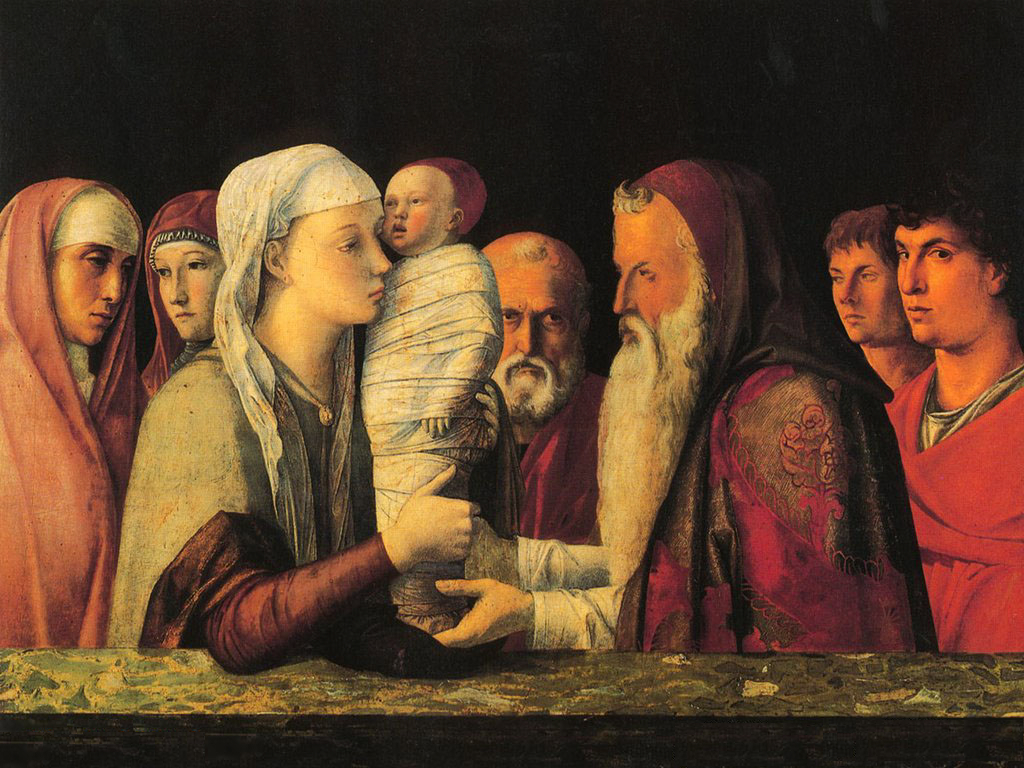
And in this exhibition we get the ultimate BOGOF. In 1453 Andrea Mantegna, already an established painter, trots in to Padua to marry Nicolosia Bellini, daughter of the venerable Jacopo, to become the brother in law of Gentile, and, our subject here, Giovanni. Giovanni, a relative novice, picks up on Andrea’s compositional experimentation and fascination with antiquity, and, in time, for me at least, overtakes him. Mantegna in turn harnesses Bellini’s facility with landscape to produce his greatest works when he moves in 1460 to the Gonzaga court in Mantua. Bellini stays in Venice, but even apart they tread similar paths, though with different results. Mantegna’s precise, flinty, sculptural, sharper, masculine, intellectual work contrasts with Giovanni Bellini’s lighter, softer, airier, more lyrical, enigmatic and emotional output. Same subjects and stories. Radically different ways of seeing and showing them

Guess which is which in the The Presentation of Christ in the Temple above? 20 years separate top from bottom. I’ll leave it to you.

This is not the only direct comparison in this superb exhibition. It would be fascinating just to play that game over a few paintings but here they just keep on coming across the six rooms. Some may be familiar to you (from the National Gallery, British Museum or Berlin museums from which they are drawn)  but it doesn’t diminish the wow factor.  Saint Sebastian, The Agony in the Garden, Crucifixions. The curators walk you through how and why the brothers-in-law created their own interpretations, which, for the interested layman is insightful, though you have to make sure, post comparison, you take the time to examine each painting individually. However there are enough individual unique subjects to offset the comparisons and avoid being overwhelmed by the scholarship.

The exhibition opens with a book of drawings. Pretty much all that remains of Daddy Jacopo’s art. We have to assume, given the importance of family and patronage in making and selling art in the C15, that Jacopo will have had a big hand in the direction of the business. He certainly kick-started the expanded artistic ideas that would emerge from the extended family. Alas this is the last we hear of him. Still the eye is probably already alighting on the two Presentations and your first starter for ten. 

What did Mantegna bequeath the next generation of the Italian Renaissance? The rise of the classical theme. The big picture. Literally in his Triumphs (of Caesar) of which just three are shown here (check them out in Hampton Court Palace when they return). Maybe the birth of the individual in art. That he was a master of perspective following in the footsteps of Masaccio and Uccello, and, in a different way, Donatello, is made pretty clear here. 

And Bellini? Colour, back-stories, people you can identify with, even if they were in deserts or on crosses or generally undergoing some sort of taxing trial or trauma. Maybe Mantegna was the more obvious influencer in his day, but Bellini, “the best Venetian painter of the C15”, may have endured for longer. I reckon I can see in him a thread through to Courbet and, eventually, the modernists. 

Mantegna imposes his narrative from without. Bellini’s flows from within. Pretentious w*ank. Maybe but fast forward to the end and compare Bellini’s OMG portrait of the Doge Leonardo Loredan, the cerulean background, the gold and silver impasto cloak, the confident, steely gaze. Perfectly lit. A very formal, contemporary portrait, that also looks timeless. In oil. Which Mantegna never used. Look then at his Minerva Expelling the Vices from the Garden of Virtue, painted in his 70’s. A complex, symbolic, Classical allegory. Intellectual to a tee. Painted for private contemplation not public edification.

Warm flesh. Cold marble. Head or heart. Fortunately in this exhibition you don’t have to choose. 

Edward Burne-Jones at Tate Britain review ****

Edward Burne Jones

Tate Britain, 11th November 2018

Turns out Burne-Jones isn’t quite as awful as I had previously thought. Don’t get me wrong. All that hippy-dippy, fey, dreamy. dusky-toned, doe-eyed, ginger-permed, long-bodied, nymph-y, mannequin-esque, briar-strewn, Arthurian, industrialisation-denying, fake-Medieval, cod-Renaissance daubing is still guaranteed to do my head in. But I will concede that he could draw. Really draw and there are details, even in the worst of the fairy-tale illustrations, that deserve a properly good look.

I can’t change my immediate reaction to art but I can try to explain it to myself. And, if I am honest, with Burne-Jones, and the rest of the original pre-Raphaelites, and their Arts and Crafts and Neo-Gothic mates, it is in part the context in which they produced their art (and design) that winds me up as much as the work itself. As with this exhibition there are elements that I can concede give me pleasure, the colour (when vamped up as in the stained glass for example), the line and form (notably in drawings, textile, church interiors, tapestries) and the belief in the power of the aesthetic. They started off with the right inspiration, the jewels, (and working practices), of the early Flemish and Italian Renaissance, (the clue is in the pre- moniker) and their vaguely humanist intention to eschew purely religious imagery is commendable. But that doesn’t excuse the lifelessness of their subjects and the utter irrelevance of their mythologies. At the end of the day Burne-Jones ended up churning out knights in armour and pretty ladies for the great and good in Victorian society; the fate of many an artist through history for sure, but these chaps ended up as the reactionaries they purported to abjure. 

The kindness of strangers, well friends in this case, may also have had an effect on my viewing. We were a big party, with the SO, who inclines to the hyper-real in art, (though understanding that paint on canvas in two dimensions could hardly be more artificial), KCK who is an admirer, BUD the ever-curious and the Blonde Bombshells, who know their artistic onions. Me banging on about the preposterous narratives in the paintings, creepy friends and family who are persistently featured (after raiding the dressing-up box), the cut and pastes from Renaissance masters, the pointlessness, introversion and body fascism of this obsession with “beauty”, the upper-class, biscuit tin sentimentality, the failure to move on or develop his art, the dodgy androgynous eroticism, the all-round sameyness, would clearly have been border-line patronising. 

Particularly since I could be found avidly staring at many of the works looking for all the world like some-one who might be enjoying them. And as I discovered that Burne-Jones was not the la-di-dah toff I had assumed but working-class and self-taught. And Jimmy Page has pitched in with his Holy Grail tapestries. Which seems apposite. Led Zep were often musically at their very best (Immigrant Song, Stairway, Achilles Last Stand, No Quarter) just as lyrically they were off with the fairies. 

What was most interesting then? The early drawings, Going to the Battle, Buondelmonte’s Wedding, the stained glass from the V&A (if you ignore the pretty faces), the various pencil studies, the bodycolour nymphs enhanced with metallic paints, King Cophetua and the Beggar Maid, The Morning of the Resurrection, Love and the Pilgrim, the Lucien Freud-like portraits, details of the Briar Rose/Sleeping Beauty and Perseus/Medusa series, The Fall of Lucifer and certain of the tapestries, like the Adoration above. Though I can’t say I “liked” these works, admired might better cover it. And much of the rest still annoyed me. 

So Burne-Jones. Sublime or ridiculous? You decide. For me he was both. Simultaneously. Conservative Victorian or symbolist visionary? Again a bit of both. Style over substance? Certainly but that is exactly what he and his peers set out to deliver I’ll warrant. I can see why people like Burne-Jones’s art. I just can’t quite see exactly what it is they like. It is, at least in the big, showy, famous works, very, very detached from any reality, yet seems to be prized by many for its verisimilitude. I have a feeling you could use Burne-Jones as the ultimate artist in one of those sociology attitude tests. All that useless beauty as Elvis (C not P) once said. 

Me? I would still rather spend a couple of hours with one van Eyck. More beauty. More skill. More reality. More meaning. More life. 

I can’t fault the curation though, Surprisingly this is the first full-scale survey in London of EBJ since 1975, amazing given his popularity, and the Tate has built handsomely on its own catalogue to give us the whole shebang. Downstairs in the tomb-like Manton St galleries. Which doesn’t suit every artist but sets EBJ’s sleepy melancholy and false colour palette off to a tee. There is a kind of cumulative surrender in seeing so many, large-scale, paintings hung together. 

And can anyone tell me who the bloke with the chiseled features and scary eyes is who keeps cropping up?