Company at the Gielgud theatre review ****

Company

Gielgud Theatre, 29th November 2018

Regular readers will know that the Tourist doesn’t like musicals. However, with Company now ranking alongside Follies, Caroline, Or Change, Groundhog Day, Gypsy, Girl From the North Country, Junkyard and White Teeth, the list of exceptions to the rule is growing alarmingly long. Looks like I may need to revise my opinion. Maybe I just don’t like crap musicals. Or, in a witlessly circular way, just musicals I don’t like.

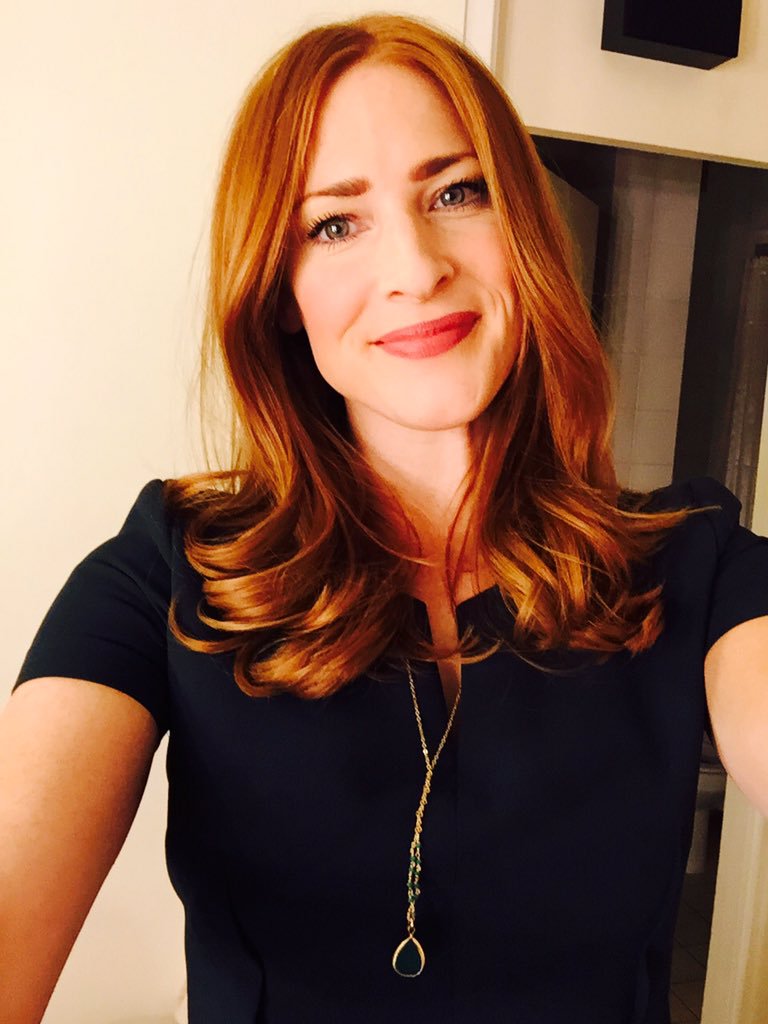
Company, as you can read at great length elsewhere, is very far from being crap. It’s Sondheim for a start. With a twist as the, artistically and commercially, gifted Marianne Elliott (Angels in America, Curious Incident, War Horse) has inverted the story casting Bobbie (Rosalie Craig, there she is) as a single, female thirty-something mulling the “attractions’ of a life of domestic, married bliss. All done with the blessing and assistance of Lord Sir Stephen S, (well he would be if he were British), who is notoriously, and rightly, possessive about his work. And a trademark, stunning multi-neon, multi-light box design a la Curious Incident from Bunny Christie that could even accommodate a bigger stage.

Now there were still one or two moments when the Tourist’s anti-musical radar started twitching. A fair few of the c(C)ompany dance routines were a little too slick, with choreographed “leaning in” and the suspicion of jazz hands. The camp quotient meter lurched close to the red on occasions. Some of the dialogue seemed a little workaday in places. I am probably alone in failing to understand why Patti LuPone, playing Joanne, is a legend, or maybe the cliche of hard-bitten Broadway broad is just not my bag.

But the music, here played by a bad-ass band under musical supervisor and conductor Joel Fram, with its motifs, repetitions, parodies, consistent surprises, and the lyrics, intelligent, arch, acerbic, funny, thoughtful, wistful, put it into a different league from the fluffy, zero to hero, musical norm. It’s not Chekhov, but unlike what I think of as most musicals, it does ring true to life. It doesn’t have a plot or chronology to speak of, rehearsing Bobbie’s central dilemma over and over again, with different partners and different couples, it doesn’t resolve and it certainly isn’t any sort of “genre”. In fact I can see why, in its garish expressionism, why some punters think this production is all actually going on inside Bobbie’s head.

SS, together with book-writer George Furth, set their musical in the New York of 1970, and built it around nine linked scenes that Furth had previously created for a play. “The increasing difficulty of making emotional connections in an increasingly dehumanised society”. That was how SS described the theme at that time. Marianne Elliot has stuck with the setting, but by inverting the gender of the protagonist, (and many of the gender roles in the couples who come together to give her a surprise 35th birthday party), she brings it bang up to date. Mind you, given extended single-dom, Tinder and the quest for on-line perfection, maybe the world has moved closer to the theme. Don’t ask me, this sort of caper is miles outside of my comfort zone, but Company still struck chords, and not just musically, ta-dah. Anyway throwing the so-called “biological clock” into the mix is a master-stroke. The personal is still political.

There are some absolutely stunning set pieces, in part due to illusionist Chris Fisher, lighting design of Neil Austin and choreography and dance routines of Liam Steel and Sam Davies. Bobbie’s Tardis of an apartment, the street and subway scenes, Another Hundred People, the party games, Company and What Would I Do Without You, the daily routine of living together and the imagined future, (this is where the babies come in), in instrumental Tick Tock with the procession of Bobby body doubles, Jamie’s (Jonathan Bailey, brilliant, again) altar-jilting of Paul (Alex Gaumond), Getting Married Today, the barbershop trio of You Could Drive A Person Crazy (the three boyfriends now being PJ, Andy and Theo),

That’s All I Can Remember. Oh hang that’s not a song that’s just a remark. Whatever. Not knowing the songs or the story, such as it is, means I am not a particularly reliable correspondent but I can assure you that you can believe the positive reviews.

Now Rosalie Craig can sing. And she can dance. But best of all she can act, as the Tourist knows from her turns as Rosalind in the Polly Findlay NT As You Like It alongside Patsy Ferran, and as Polly in the NT Threepenny Opera. Here she plays Bobbie as a wry, detached, almost observer, of her own life, (is it a dream?), occasionally breaking out into a more impassioned soliloquy, firstly in Marry Me A Little and then, most vehemently, in the finale Being Alive. She humours her friends, accepting their foibles, justifications and disappointments and accepting with good humour their attempts to couple her up. but you always sense her reticence in embracing an unknown future when compared to her spirited past and predictable present. Her red dress, and forgive me for the crass and cliched observation, her flame-red hair, make her the focus of attention even when the action is flowing around her. Bobbie’s ambivalence towards coupledom is always present.

Whilst I may not have been entirely convinced by Joanne as performed I see exactly why the character is necessary. With Bobby now as Bobbie, the forceful and intelligent, if somewhat embittered, older woman serves as both guardian and warning. Gavin Spokes, (I wondered where I has seen him last – as the unfortunate Major Ingram in James Graham’s Quiz), as Harry gives Mel Giedroyc, as wife Sarah, a run for her money in the hamming it up stakes. Both are very funny. I was also struck by Jennifer Saayeng’s uneasy Jenny, Ashley Campbell’s conflicted Peter and Daisy Maywood’s haughty Susan but this really is a fine ensemble.

From what I read Company always wows audiences and critics when it is performed, from its first run through many major revivals. It’s easy to see why. If it wasn’t for that Hamilton caper this Elliott/Harper production would sweep up all the musical awards for 2018. I wonder, when it gets its next major UK or US outing (for it is off, of course, to Broadway next year), whether anyone would dare return to Bobby.

Plenty of seats left for the remainder of the now extended run to end March. The prices they are charging for the best seats are in the category of “you’re sh*tting me” but for once it might be worth it and, if you want to, or have to, go cheaper, the Gielgud is not the worst of the West End theatres for sight-lines and legroom. Whatever you do through, don’t miss it. Even if, like me, you hate musicals!!!

Love Lies Bleeding at the Print Room Coronet review **

Love Lies Bleeding

Print Room Coronet, 28th November 2018

You probably now Don DeLillo as the US author of provocative, existential contemporary fiction such as White Noise, Libra and Underworld. Well he also writes plays. Five of them to date apparently. IMHO he shouldn’t. They have been compared to Beckett and Pinter. They’re not.

The Print Room under AD Anda Winters has set itself up as a purveyor of knotty, off beat theatre with a pronounced literary bent. This puts it at the more challenging end of the London theatrical entertainment spectrum but then again who wants to watch Bat Out Of Hell every day (or any day come to think of it). When the USP delivers, The Outsider or Babette’s Feast come to mind, it can match the best that the London fringe can offer. When it tries a little too hard then it can turn into a long evening, even in the surprisingly comfortable seats of this shabby chic auditorium.

Love Lies Bleeding was firmly in the latter camp I am afraid. Alex Macklin (Joe McGann no less) is a craggy American land artist now in a persistent vegetative state after a second stroke. His son Sean (Jack Wilkinson) and second wife Toinette (Josie Lawrence) come to visit him and his fourth wife Lin (Clara Indrani) who is caring for him out in his desert hideaway. They discuss whether to accelerate his death. There are a couple of flashbacks with Alex pre-stroke. Oh and an extended metaphor about amaranthus caudatas for you biologists. That’s it.

Whilst it succeeds in its aim of getting us to reflect on the meaning of life, its worth, the question of how life should end, what constitute mercy and the like, we have so much time, even in the 80 minutes or so running time, to chew on these questions that, frankly, the case for killing him off early becomes overwhelming. Hard to fault the acting of the cast, the directing of Jack McNamara, an advocate for DeLillo’s plays (who was the hand behind The Fisherman at the Arcola, which was the polar opposite in terms of dramatic momentum), the inventive set of Lily Arnold and the video work of Andrezj Goulding. But these are paper thin characters in a plot devoid of narrative given to meandering reminiscing and repetitive philosophising. It kicks off with an interesting premise, Alex describing a corpse on the subway, but the play then disappears into its own (dark) metaphysical tunnel. Bleak, wordy, “comedy” so black it isn’t even funny,

Not for me then. Mind you I wouldn’t mind staying in a beach house designed by Lily Arnold. Just not with these people.

The Wild Duck at the Almeida Theatre review *****

The Wild Duck

Almeida Theatre, 28th November 2018

He’s only gone and done it again. Director Robert Icke has taken Ibsen’s perhaps most circumspect, but probably greatest, masterpiece, from 1884, and adapted it to make it shine anew and say something profound about our world today. There may be a small price to pay in terms of subtlety, (and the sense of eyebrows-raised irony that permeates old Henrik’s world), but the gain, in terms of the clarity of text and story, and the lecture on the nature of truth, more than compensates. Mr Icke, to paraphrase Ian Drury, ain’t half a clever bastard, and he has no qualms about showing us that he is, but when he creates theatre as powerful as this then we should all be grateful. Mary Stuart, Uncle Vanya, Oresteia, Hamlet, 1984, Oedipus, Romeo and Juliet and now this. One or two hiccups outside these triumphs for sure but when he takes a classic and lets fly with his intellectual vajazzling you know you are in for a treat.

Gregory Woods (yep, as in his Vanya, Icke has anglicised the names), has just returned from a self-imposed exile. His father Charles is having a party to celebrate his betrothal to his housekeeper Anna Sowerby, also attended by Greg’s old school chum, jobbing photographer James Ekdal. James has married Gina, previously a servant in the Woods household, who may have had an “affair” with patriarch Charles, at least according to Greg’s now dead (unhappy) mum. Greg believes James and Gina’s life is built on a lie. In subsequent acts, set in the Ekdal’s apartment and photography studio, we also meet James’s own broken, alcoholic father Francis, once Charles’s business partner, daughter Hedwig, who is slowly losing her sight, and cynical neighbour, John Relling.

Oh and there is a wild duck upstairs, (or not as it turns out). And, when Bunny Christie’s set extravagantly pays off near the end, (in tandem with the production itself), much more besides. It is artifice, of course, that’s Icke’s point, but it is so dammed affecting.

You might have guessed that Mr Icke treats us to more than the naturalism normally accorded to Mr Ibsen’s play however. The play opens with an empty stage. It’s the old rehearsal room schtick. Kevin Harvey as Gregory, (last seen by me in preposterously high heels and sparkly drag in the marvellous community theatre Pericles at the National), sets the scene armed with microphone and explanation. “All stories are lies”. That’s the gist of it. Edward Hogg’s James enters from the stalls and borrows a jacket from an unfortunate front-rower. He takes the mic and starts to explain his character. And so we continue with the actors coming in, seizing the mic, (Nicholas Day’s Charles started off in a seat next door to the Tourist), and then breaking into the narrative of the play itself to offer reflections on their characters motivations, the way Ibsen’s own life, (notably the illegitimate daughter he fathered with a servant girl and abandoned), interact with the play and to explain sub-text. Gradually though Ibsen’s own words, (filtered through modern Norwegian and then Icke’s idiomatic English from archaic Danish-Norwegian as Greg reminds in an initial aside), take centre stage and the brilliance of his plot is revealed. Simultaneously the stage is, almost imperceptibly, transformed into a period version of the Ekdal household, as the props accumulate and Elliot Grigg’s lighting gradually dims.

Pretty much everyone in the Wild Duck lies to themselves and to each other. For that is what they do just to keep going, just like we all do. Their “life-lies” in Ibsen’s words. Political idealist Greg though is having none of this and, as he picks away at the scabs of the past, starting with his Dad, everything unravels. For him truth is what matters, regardless of the damage caused by its revelation. So he wades in with his size twelves leaving James as the main casualty, as the multiple skeletons cascade out of multiple metaphorical cupboards.

Now you might contest that Mr Icke too has aggressively waded in feet first in his determination to expose the message and the context of the play. Mind you I don’t know how big his boots are nor, indeed, whether he is, indeed, too big for them. It is just a clumsy metaphor. Just like the many that Ibsen employs. And now Icke. The real time “deconstruction” hammers home these metaphors but the attention to detail and intelligence of the “interventions” only serves to increase our understanding and enjoyment. The audible gasp from the audience at the big reveal shows me that Icke’s restoration job has made the Ibsen “original” arguably more powerful and more vivid. It certainly doesn’t want for emotional power. I’ll even forgive him the torch version of Love Will Tear Us Apart. Some might prefer their Old Masters in a mausoleum, dark, dingy and covered with layers of accumulated interpretative varnish. Not me. Get back to the original colours, slap them in a white, light filled room and provide copious notes please.

I’ll warrant that the cast also profited from the reworking. Kevin Harvey strikes just the right note of fractured righteousness in his soft Scouse. Edward Hogg is mesmerising as his pride is undone and his moods shift alarmingly. Nicholas Farrell and Nicholas Day excel as the two estranged fathers and Rick Warden as Relling and Andrea Hall as Anna Sowerby both offer convincing support. However for me the standout was Lyndsey Marshall as Gina, whose pain is most acute but who still has to pull the threads of her family together. “I don’t know if I love you but it is my best guess that I do”. Just marvellous. And finally I was frankly bloody stunned by the performance off Clara Read, as Hedwig in our performance. Little Hedwig is largely the reason why so many lies are told. Most young actors, when surrounded by adult characters, are always still acting however good their performance. Ms Read didn’t appear to be acting, ironic since, as I recall she was the only one on stage who didn’t break the fourth wall. I would love to see her perform again.

The Wild Duck sadly has flown away from the Almeida and, like The Writer, I suspect it may prove a little bit too cerebrally audacious for a West End sojourn. But it does prove the current No 1 rule of London Theatre. Always take a punt when booking opens on anything at the Almeida. Especially when directed by Mr Icke, Mr Goold or Ms Frecknall. Sounds like the Tragedy of King Richard the Second with Simon Russell-Beale is dividing the criterati – I have yet to see it, though reading between the lines and based on Joe Hill-Gibbons’ recent Shakespeare outings I suspect I’ll love it. But the new play by Annie Washburn, Shipwreck, looks tempting, (even if I had some reservations about her last two outings premiered here, Mr Burns and The Twilight Zone), and the Three Sisters, in an adaption by Cordelia Lynn, directed by Rebecca Frecknall, (whose Summer and Smoke is now bowling ’em over at the Duke of Yorks), and with Patsy Ferran and Pearl Chanda in the cast, is near guaranteed to be a belter.

Regular readers of this blog, (ok some kindly chums), have oft remarked that I am prone to generosity in my reviews, if not in life. True. But in this case if you don’t believe me then take the word of the SO who rated this Wild Duck up there with Network and The Lehman Trilogy as her plays of the year. And trust me she isn’t always easy to please. Theatrically that is, not domestically.

One final aside. I spend a lot of time in the theatre. It is therefore quantifiably a large part of my own reality. And sometimes it feels more real than reality. This was one of those times. I could still happily be sat in the Almeida watching the unhappiness of the Ekdals and the Woods three weeks later so immersed was I by the end. Pick the bones out of that.

Stories at the National Theatre review ***

Stories

National Theatre Dorfman, 27th November 2018

Nina Raine has a knack for dramatising contemporary social issues from multiple perspectives and a gift for sharp comedy observation. At least based on her last work Consent as I have not seen her other acclaimed works Tribes and Rabbit. However here I wonder if her determination to cover the ground, and to entertain us in each of the many scenes, may have ended up stalling the momentum of the whole play. As well as serving up a few slightly jarring moments. And the decision to cast, and give free rein to, Sam Troughton in many of the male “candidate” roles, whilst he is very funny, did rather detract from the central dilemma.

Everywoman Anna (unassumingly played by the always accomplished Claudie Blakley) is 39, successful in her theatre career but wanting a baby, after partner, the conceited, and fraught, man-child/mummy’s boy Tom, (our first taste of Sam Troughton’s comic range), decides he wants to split. This despite the couple investing in a couple of years of IVF. Bourgeois Mum (Margot Leicester) and Dad (Stephen Boxer), both excellent, are supportive, if occasionally a little un-PC, as is gay young brother Joe (Brian Vernel). And so the search for the ideal sperm begins. She auditions a procession of possibles (and occasionally their partners), in person as well as mail-order, whose pros and cons are entertainingly dissected, with help from family and friends (most notably Thusitha Jayasundera’s forthright Beth. Tom, who is somewhat younger than Anna, even gets to make his case for a second chance.

The direction is sympathetic, unsurprising given Nina Raine herself takes on the task, Jeremy Herbert’s set of moving boxes is neat and unobtrusive, as is Bruno Poet’s lighting and Alex Baranowski’s music and sound. All the requisite bases are covered, including the grown-up searching for a birth parent, but the narrative lacks surprise and the whole ends up as less than the sum of its parts. In making her conundrum believable, and explaining why she might contemplate some of the prize c*cks on show here as potential donors/fathers, Anna comes over as a bit wet in her exasperated optimism if I am honest. Too many ideas, not always fully developed, with a bit of awkward shoe-horning in of situation, character (a wide-eyed child, a Russian octogenarian) and her research on occasion.

Having said that, given the quality of the lines that Nina Raine puts into the mouths of her characters to elucidate her wry observations, it is impossible to dislike the play even as the lack of a killer punch frustrates. Ms Raine is particularly good at nailing the excuses that the men offer for their hesitancies and the validations they demand for their, brief, potential participation. In fact maybe too good, as this squeezes out the space to understand what Anna is feeling. Or maybe that is precisely the point that Nina Raine was trying to make.

War Requiem at the ENO review ****

War Requiem

English National Opera, London Coliseum, 22nd November 2018

Please probably inevitable that the Tourist, armed with the freedom (and fortunately the budget) to gad about town, his love of Benjamin Britten’s music and his wish to continue to honour those who die in pointless wars was going to end up attending a performance of War Requiem this year. The ENO version, which had the added draw of the Porgy and Bess cast, (augmenting the ENO’s marvellous choir), and the involvement of German photographer artist Wolfgang Tillmans looked the likeliest candidate.

I, or more correctly we, as TMBOAD, a scion of Coventry and admirer of the work, joined me, got way more than we bargained for. I had expected a semi-staged concert performance, with maybe a few arty slides in the background. Instead we got a full scale dramatic interpretation of BB’s oratorio, with the three soloists and choirs telling the story of Wilfred Owen’s war poems, alongside the setting of the Latin Requiem, fully costumed, with very effective lighting from Charles Balfour, augmenting the  and with Mr Tillmans distinctive photographic techniques adding further colour. 

Obviously the War Requiem was not written as an opera but BB being BB it is   naturally dramatic and, up to a point, lends itself to an “operatic” interpretation. Having said that, the very nature and subject of the work, even in its most striking scoring, is steadily paced and having the ENO orchestra, solidly conducted by Martyn Brabbins, in the pit and a chorus constantly in motion, and indeed often prone, inevitably has some impact on what we heard. But this was, moreorless, compensated by what we saw, which was, at times, extremely powerful.

Back to the story. WR was first performed in May 1962 for the consecration of the new Coventry Cathedral, built alongside the ruins of the C14 original destroyed in Luftwaffe bombing raids in November 1940 (see above). BB, a lifelong pacifist, scored the work for soprano, tenor and baritone soloists, chorus, boys’ choir, organ, and two orchestras (a full orchestra and a chamber orchestra). The full orchestrated choirs and soprano are used to accompany the sections of the Latin Requiem. to represent formal, transcendent grief, with the chamber forces and male soloists, representing two opposing soldiers, singing the interspersed English poetry. The children’s choir, accompanied by a chamber organ, present a more distant presence, innocence corrupted, an ever-present BB theme.

BB had originally intended that Peter Pears, an Englishman, sang the tenor role, Dietrich Fischer-Dieskau, a German, the baritone and Galina Vishnevskaya, a Russian, the soprano, but the Soviet authorities prevented the latter from travelling so Heather Harper stepped in. The classic recording with the LSO and Bach Choir conduced by BB, which everyone should own, has the original trio however. (Mind you there are plenty to choose from). 

BB unfortunately couldn’t conduct the CBSO at the premiere but no matter. The performance was a triumph. The Tourist has enjoyed a fair few performances in his time, (and seen the curious Derek Jarman film interpretation which is notable for Sir Larry O’s last ever performance). The music always delivers and so it was here. Now in addition to the contrast provided by the juxtaposition of the poem settings and the six movements of the Requiem itself (Requiem aeternam, Dies irae, Offertorium, Sanctus, Agnus Dei and Libera me, BB apparently uses the interval of a tritone between C and F sharp (an interval of three whole tones, known as the “devil in music”) as a recurring motif to create harmonic distance and then resolution, notably in the Agnus Dei, and thus evoke the notion of conflict and resolution. Elsewhere there are various brass fanfares, string arpeggios, marches and fugues in various three part time signatures, and various repetitions of lines, but the full vocal forces do not combine until the very end. So three is the magic number here.

Even if you don’t know your tritone from your backside your ears will still easily navigate their way through the score even on first hearing, such is the immediacy of B’s orchestration. And there are enough OMG musical moments to pull you up short. And that’s before you even get to the texts. Particular highlights for me are the extract from Anthem for Doomed Youth for tenor in the opening Requiem Aeternam, the soprano and chorus Lacrimosa in the Des irae, the Domine Jesu Christe from the boys’ choir, the Parable of the Old Man and the Young for tenor and baritone, The Sanctus and Benedictus, Strange Meeting with the lilting, poignant lullaby “Let us sleep now ….” and indeed pretty much everything else in the Libera me at the end. 

So, if the music, words and message reliably overwhelm, and get you thinking deeply about the utter horror and pointlessness of war, what is added through a full scale staging. Well, having the chorus on stage, variously signifying troops, refugees, dead bodies, I am assuming, was intriguing. A remarkable choreographic achievement from Ann Yee allied with costume design by Nasir Mazhar. Mr Tillmans most successfully employed close up, sharply exposed photographic images drawn, I believe, from  Coventry Cathedral itself in the three screen back drop to the stage, which dissolved into blocks of muted colour, and there were some fine tableaux (notably a snow/mushroom cloud effect) courtesy of ENO house director Daniel Kramer. Having said that, and despite the remarkable efforts of dramaturg Luc Joosten, carving out a sort of narrative when none is really there, there were a few moments when the various elements didn’t quite gel and the on-stage shuffling, and overt literalism, was more distraction than illumination. 

But no matter. It is one of the finest, acclaimed and most powerful pieces of classical music written in the second half of the C20. The Tourist has seen a fair few performances of impassioned anti-war classical work in the last few weeks, George Crumb’s Black Angels, Shostakovich Eighth String Quartet, Turnage’s The Silver Tassie, but this ranks as the definitive statement. And, with soloists of the calibre of Roderick Williams, David Butt Philip, and, the tremendous Emma Bell as seer/earth mother/angel of death, there was never any real risk of disappointment.

Time Stands Still: Aurora Orchestra at Kings Place review ****

Aurora Principal Players, Iestyn Davies (countertenor), Sally Pryce (harp), John Reid (piano), Nico Muhly

Kings Place, 23rd November 2018

  • Satie – Gymnopédie No. 3
  • Thomas Adès – The Lover in Winter
  • Nico Muhly – Clear Music
  • Debussy – Danse Sacrée et Danse profane
  • Brahms – Gestillte Sehnsucht
  • Nico Muhly – Old Bones (world premiere of ensemble version),
  • Nico Muhly – Motion
  • Thomas Adès – The Four Quarters
  • Dowland (arr. Nico Muhly) – Time Stands Still (world premiere)

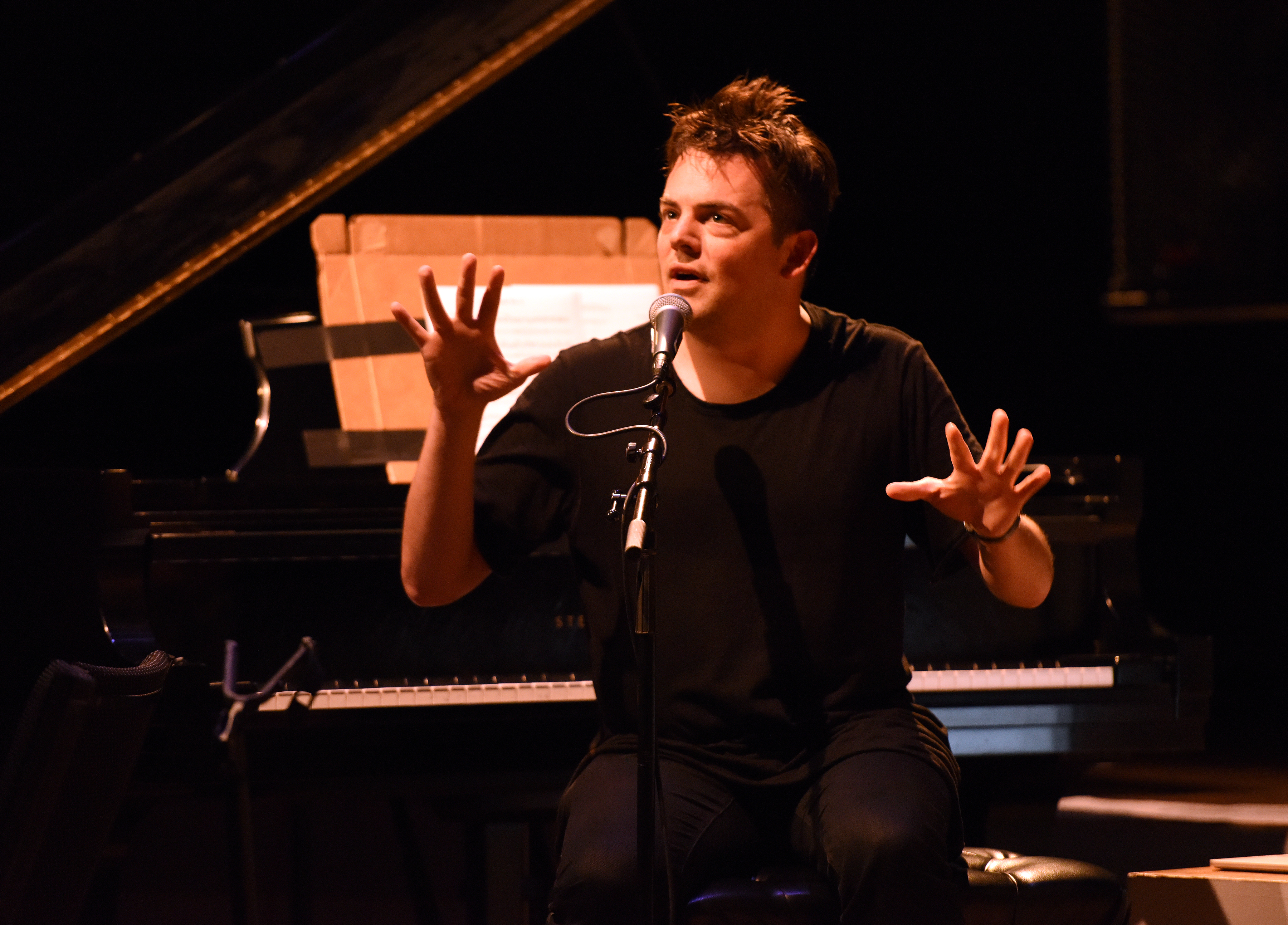
A full house, moreorless, for a diverse programme of chamber music and songs anchored by (relatively) well known works from Thomas Ades and Nico Muhly, whose effervescent presence also graced the evening as performer, conductor and even compere. Oh and did I mention he “curated” the event. The evening was part of the year long Kings Place Time Unwrapped season now coming to an end with the pieces ostensibly linked through their meditation on, er, time and music from an earlier age. 

The musical backbone was provided by the graceful pianism of John Reid, with strings and clarinet from Aurora principal players, Alex Wood, Jamie Campbell, Helene Clement, Sebastian van Kuijk and Peter Sparks. Against this a number of the pieces showcased the unusual harmonies of the harp (Sally Price whose playing was certainly not backward in coming forward), celesta (John Reid again) and the ethereal countertenor of Iestyn Davies

There was a world premiere of a new chamber version of Old Bones, a song cycle about the rediscovery of the body of Richard III in a Leicester car park in 2012, (an event which also formed the opening sequence for the Almeida Theatre production of Shakespeare’s play with Ralph Fiennes in the lead). The arioso of Iestyn Davies was originally accompanied only by a lute, which can be discerned in the fragments of poems about Sir Rhys ap Tomas, the alleged killer of the king, which follows the news commentary intro. The momentum builds into a processional as the text, from Philippa Langley of the Richard III society, eloquently connects the infamous monarch to today.  

Muhly’s Motion for string quartet, clarinet and piano takes as its starting point a verse anthem from Orlando Gibbons, See, see the Word, and applies his trademark post-minimalism energy to Gibbons’s complex vocal counterpoint .

In contrast Clear Music is based on just a fragment of a John Taverner motet. Mater Christi Sanctissima, and is scored for cello. harp and celesta with the latter gifted an inventive solo part for an instrument normally reserved for adding orchestral colour. The texture doesn’t change and the piece is locked in a pretty high register, even in the cello line, but, as usual with Mr Muhly, he creates an engaging piece that doesn’t come anywhere outstaying its welcome. 

Thomas Ades’s Four Quarters from 2010 is a string quartet which takes as it subject the ebb and flow of time, in common with the TS Eliot Four Quartets, poems from which it surely drew inspiration. As usual Ades serves up all sorts of striking  sounds, a wide dynamic range rhythmic complexity, beginning with the eerie babble of Nightfall, followed by Morning Dew evoked through pizzicato, the steady pulses of Days and the astounding harmonic complexity of the last movement, the Twenty Fifth Hour, which is measured in an unusual 25/16 time.

The evening’s outstanding piece of me though was The Lover in Winter, written when Ades was only 18. It is made up of 4 very short songs, in Latin drawn from an anonymous text. It has a bleak, brittle, chilly feel, just chiming piano chords and Iestyn Davies’s exquisite countertenor, though the last song fails up the passion. Melismatic with candid word-painting. 

Mr Davies was also superb in Time Stands Still, a Dowland song which Nico Muhly has re-arranged. The melody is defined by the singer, based on an anonymous love song, with the whole band coming together to provide complementary but recognisably contemporary harmonies. 

The programme kicked off with John Reid in Satie’s ubiquitous piano waltz  Gymnopedie 3, blink and you’d miss it, as well as a helping of (to me) an unremarkable Brahms song and Debussy’s showcase for the harp with its “medieval” first part and  bouncy Spanish inflected second “profane” part. At the end we were treated to Messrs Muhly and Davies presenting an aria from Marnie, which has just finished at the Met, and which I bloody loved at the ENO.

For someone who I gather lives in NYC, Nico Muhly seems to spend a lot of time in London. No surprise that to the Tourist. Indeed he will be back at Kings Place on New Years Eve with the Aurora Orchestra. I can think of worst places to be. Mind you I do have a better offer for once. 


Measure for Measure at the Donmar Warehouse review *****

Measure for Measure

Donmar Warehouse, 22nd November 2018

BOGOF. An inelegant retail term, Buy one get one free. Which is exactly what you get here. Two stripped-down, straight to the point versions of Will’s 1604 riff on justice, told as mirror images with gender reversal. 

So much gender swapping in Shakespeare, whilst interesting, and occasionally illuminating fails to serve a real purpose. So many shouty attempts to point up how “relevant” Shakespeare is to today come over as heavy-handed or desperate. Of course Will is for now, for “all time” because he understood and could illuminate human nature, our psychology whether as individuals or in a  social context, which is the same now as it was in Jacobean times. However there are undeniably times when Will’s punctilious gender politics radar flies a little off course. So some gentle coaxing, some redirection, is needed to change the point of attack.

And this is what Josie Rourke has done in this production. Problem play? Not here. Whilst not everything at the Donmar has come off during her stewardship of the Donmar alongside Executive Producer Kate Pakenham, the productions she has directed (notably St Joan, The Vote, Privacy, Coriolanus, The Weir and Berenice) have all be outstanding IMHO. The Donmar legacy is substantial and IMHO the last few seasons have always been interesting, with some palpable gems, the houses packed and, I am guessing, audiences broadening. Remember where JR and KP took over they were the first women to run a major London theatre. Fortunately now they are not quite alone.

Anyway she has a way with Shakespeare and is unafraid of making bold decisions to shed new light on the works. Now MFM, like its near companion the Merchant of Venice, is intended to be comic in form but deals with serious moral and ethical issues, as the title, drawn from you know who in the new Testament, implies. The slipperiness of justice and mercy are highlighted through abuses of power, in the context of a decadent and troubled society. But, as usual WS doesn’t offer up a simple morality play. He draws on the internal conflicts within the main characters to cover all the bases. Usual story, with no ambiguity, no grey areas, no “tragicomedy”, no complexity, there is a risk of no drama, just a lesson. Even saying this MFM, along with All’s Well That Ends Well and, for somewhat different reasons, Troilus and Cressida is a tricky customer. From classical comedy to medieval Romance to Renaissance satire, and any number of combinations in between, these are fascinating plays.

Angelo, not his ostensible boss, Escalus, is left by the Duke of Vienna to enforce the laws of the corrupted, morally lax state. When the novice nun Isabella comes to plead for mercy on behalf of her brother Claudio, condemned to die for the sin of pre-marital fornication, (which incidentally the 18 year old Will S and the 26 year old Anne Hathaway “committed” pre wedding), he tries to seduce her by trading Claudio’s life for her body. She refuses and threatens to unmask him. Angelo sneers that no-one will believe her. The Duke meanwhile, disguised as a Friar, after telling Claudio he has to accept his tragic fate, then comes up with the classic Renaissance comedy bed switch to trick Angelo into sleeping with his abandoned fiancee Mariana (it was very, very dark in those days) thinking she is Isabella. 

This is the point where verse turns to prose, the Friar unmasks as the Duke, Angelo turns up the treachery dial, and dubious plot manipulation leads to the not actually dead Claudio (there has been a comedy “head” switch to explain this) reunited with Isabella, Angelo forced into marrying Mariana (and the comic lead Lucio to a prostitute, just to ram home the point) and the Duke “proposing” to Isabella. So “tragedy” is averted but far from a comic ending.

So the formal justice of the state is contrasted with the concept of natural justice, the morality and ethics of the individual with that of society and the Church, and lustful and venal behaviour gets its comeuppance, or doesn’t. 

Now it would seem that the Jacobean mind was a bit more up for this lurching from comic to tragic, from deep and dark to light and fluffy, to allow the playwright (here, as the Duke, in the form of an on-stage agent) to push his characters where he (rarely she) will regardless of credibility, cogency or tone. We seem to be less flexible nowadays. Complexity and ambivalence are OK but moral uncertainty is unsettling. The setting for MFM, almost exclusively “indoors”, with dungeons, palaces, courts and chambers also lends any humour a darker, sourer edge than the knockabout and wordplay outdoors in some of the more obviously comic plays. 

Which I think is why productions of MFM, The Merchant of Venice, The Winter’s Tale and Timon of Athens which, whilst being careful not to completely jettison the tonal unevenness and behavioural uncertainties of the texts, offer up a firm(ish) contemporary ethical framework. You need to know where you are so you can then work out where you aren’t as it were, whilst still enjoying all the usual Shakespeare stuff, language, plot twists, rapid scene changes, rule-breaking, bonkers settings (here we are Vienna but everyone has an Italian name reflecting WS’s source, a 1578 play by George Whetstone called Promos and Cassandra). 

So this means Angelo’s blackmail, Venice’s anti-semitism, Leontes’s jealously, the greed, corruption and misanthropy of Timon and “friends” all need to be drawn out and signalled before being muddied. 

Anyway enough of the amateur criticism. What Josie Rourke has done is get to the heart of the male domination which underpins MFM through a, as it turns out, not so simple reversal. So take one, in “period” dress, sees Hayley Attwell as Isabella and Jack Lowden as Angelo in a speeded up, but largely complete, run through and the Duke, Nicholas Burns, as her nemesis at the close. Take two, it’s now 2018 and we are in modern dress, phones brandished, sees the switch of Isabella and Angelo’s lines, so with pronoun and other minor deft changes, we now see Angelo, as a member of some unspecified radical church organisation, as the chaste “victim” and Isabella as the predator. Except that it doesn’t quite pan out that way. 

As Isabella, Hayley Attwell is resolute and defiant convincing us that her principles trump her desire to save her brother’s life but also her yielding to a pragmatic way out. We are in no doubt though of the predatory bargain that the sententious hypocrite Angelo tries to strike (and its obvious parallels for the MeToo generation). And, when the manipulative Duke traps Isabella at the end with his marriage “proposal” she lets out an anguished howl and screams into his face (and, by implication, the face of every bloke through history). Cue dissolve. Part two. Now the blunt and unfeeling enabler of the law, Hayley Atwell is equally as convincing as she soliloquises about her lust for Angelo. Admittedly the mechanics of her move on Angelo and his rejection now stretch credulity a little but it still intrigues. However the most powerful moments come as it becomes clear that even now Isabella is the victim of the men around her, as she is mocked and shamed by them, tricked into bed with (now male ex) Frederick (Ben Allen), and them married off by a gloating Duke, who in turn now lusts after and entraps Angelo. 

Now you might think that this conceptual trickery might prove to be hard going. You would be wrong. The story moves along at a hell of a lick, both times, with minor characters excised, “head” and crowd scenes thinned out and Mariana downplayed. Peter McKintosh bare stage doesn’t get in the way of the message. Ms Atwell, who frankly I could watch for several hours just wrapping Xmas presents, is matched by Jack Lowden. Sule Rimi, as he has been in a number of recent productions I have seen, is also hypnotic as Claudio (especially in his cyclical rejection of the Duke/Friar’s pep talk ahead of his impending death second time around), and the comic interventions of Matt Bardock as Lucio, Jackie Clune as a now female, Russian inflected Pompey and Rachel Denning as Miss Overdone are delicious. 

This was Josie Rourke’s penultimate production at the DW. This theatre’s loss will be film’s gain. Which reminds me. I must see her Mary, Queen of Scots with Margot Robbie and Saoirse Ronan

White Teeth at the Kiln Theatre review ****

White Teeth

Kiln Theatre, 21st November 2018

I have never read Zadie Smith’s 2000 debut novel White Teeth. So I have no benchmark against which to set the adaptation by Stephen Sharkey, directed by Indhu Rubasingham, which is still showing at the Kiln. I gather it is something of a sprawling, hyperbolic tale of multi-cultural Britain across three generations beginning at the end of WWII, (though largely set on the doorstep of the Kiln), through the eyes of two, connected families. It is stuffed with plot, event, location, character and is both comic and tragic. 

Well if that is the case then I would say that the creative team here has done it proud. Not quite a musical, yet not entirely a play, there are times when the surreality of the story telling threatens to break the spell, but if you leave your critical eye, and ear, at home, don’t take it too seriously (as it doesn’t itself …),  and just go with with the exuberant flow you should have a great time. This feels and looks like community theatre, about the community in which it is performed, but, as is usually the case when Indhu Rubasingham is pulling the strings, making it look this spontaneous has, I would surmise, require a great deal of thinking, planning and rehearsing over its 5 years gestation. 

It doesn’t sound like the adaptation has been completely faithful to the book, chopping out strands and characters, and recasting the stream of events (as I gather did the 2002 TV adaptation). The story is told through a series of flashbacks from the perspective of millenial Rosie Jones (a droll Amanda Wilkin), the daughter of Irie (the superb, again, Ayesha Antoine), trying to find out about her “complicated” heritage, probably pregnant, in the present day. We still get the ornate intertwining of the Jones family, the bashful Archie (Richard Lumsden), and headstrong Clara (Nenda Neurer) with the Iqbal’s, peppery Samad (Tony Jayawardena) and forthright Alsana (Ayesha Dharker) and their two very different sons, volatile Millat (Assad Zaman) and studious Magid (Sid Sagar). And the posh Jewish-Catholic family up the hill, Marcus Chalfen (Philip Bird), Joyce (Naomi Frederick) and son Josh (Karl Queensborough) but we have assorted friends and colleagues along the way, notably local “character”, doomsayer and sometime deus ex machina, Mad Mary (the wonderful Michele Austin, who dives in with both feet). 

Unlikely suicide attempts, coin flips, parties, age differences, O’Connell’s, the improbable tank crew, a Nazi eugenicist, an inability to pull a trigger, the development of twins, religion, non-observance, affairs, fundamentalism, the worse named ever terror organisation, experiments on mice, the menage a trois, the unlikely denouement, dentistry. All this remains, but, and why not, now amplified with on stage band (Matthew Churcher on drums, Zoe Guest on guitar and Nanda Neurer, yes that’s right she is also playing Clara, on bass), 13 songs from composer Paul Englishby and multiple dance routines. 

Tom Piper’s set is a faithful line drawing, in exaggerated perspective, of the High Road, across which Oliver Fenwick’s lighting, and Lizzie Pocock’s projections, ring the changes. I  marvelled at the intricacy of Polly Bennett’s movement, which plays up the story’s slapstick strengths. With music director Chris Traves, and sound designer Carolyn Downing, this is, make no mistake, an A list creative team.

Is it easy to follow the story? Amazingly, given the activity, yes it is, in part thanks to some light-touch commentary and exposition when needed. Will it make you smile? Yes, unless you are some crotchety Daily Heil reader in which case I would politely us you to p*ss off out of our City. Are the songs a bit too pastiche, musical theatre, by pop culture numbers? Yes but their sly humour means you will forgive. Do some of the myriad of thoughts and ideas that Zadie Smith apparently threw out in her novel, notably the darker sides of the immigrant experience, get a little bit lost, or smothered? Yes I am guessing they do. Are the characters fully realised? No. But then this comes in at under two and a half hours so what do you expect. If you want Chekhov go elsewhere. 

But if you want theatrical story telling at its very best, homegrown magic realism, made by a team that really cares about what it has doing, brimful of energy, and you are proud of the cultural melting pot which is London, then look no further.

I don’t read much but White Teeth has now reserved a place in the summer holiday luggage. 

Pinter at Pinter 3 review ****

Pinter at the Pinter Three

Harold Pinter Theatre, 19th November 2018

  • Tess
  • Landscape
  • Apart From That
  • Girls
  • That’s All
  • God’s District
  • Monologue
  • That’s Your Trouble
  • Special Offer
  • Trouble In The Works
  • Night
  • A Kind Of Alaska

Just to be clear I am a fan of the work of Harold Pinter. And now it seems is MS, after he joined me at this, the third instalment of Jamie Lloyd’s season devoted to all of Pinter’s one act plays, and all manner of sketches and fragments besides.

If you not a fan, and actually occasionally even if you are, they will be times when the patience is tested by HP’s particular dissection of the psyche, but this is more than compensated by those times when the combination of mood, language and meaning, or lack thereof since the one thing you can depend on with HP is that you can’t depend on anything, leave you stunned at just how someone managed to right this stuff. 

Of course you need the right actors for the job. Here we had Penelope Wilton, a late addition kicking off with Tess a monologue about a posh lady who had experienced better times, Tom Edden, Meera Syal, Keith Allen, Lee Evans, and the now plainly incomparable, Tamsin Grieg. They were, all, unquestionably, the right actors for this job.

Apart From That saw Lee Evans and Meera Syal riffing on asking “how they were”, as simple and effective as comedy gets, Girls is a slightly uncomfortable monologue, (from Tom Edden), about spanking, That’s All is straight out of the Les Dawson school of comedy, God’s District, one of these weak, one joke (Hammersmith) , anti-religion sketches that HP was prone to, Monologue, one man’s nostalgic conversation with an imagined friend, brilliantly captured by Lee Evans, That’s Your Trouble, verbal sparring from two blokes in a pub, Special Offer a curious short sketch about “men for sale” that Meera Syal got saddled with, Trouble In The Works, a Pythonesque word-play on products in a factory (Lee Evans again hilarious) and Night, a tender duet from an old married couple reminiscing about when they fell in love, which is genuinely moving and had no right to be here.

Now it is really hard not to rave about the Lee Evans when he turns his physical comic genius on full beam as he did here. Especially as he came out of retirement especially for this run. He has form with Pinter, having played Gus in The Dumb Waiter in 2007, and has even successfully tried his hand at Beckett.  But the star of the night for me was Tamsin Greig in the two major works on show Landscape and A Kind of Alaska.

In Landscape, from 1968, she plays Beth who is reliving her past life and loves (specifically an affair (?) consummated on a sunny beach), presumably in her mind, whilst her vulgar, frustrated husband, Keith Allen, bothers her and chats about the everyday before, briefly, losing his temper. The deliberate contrast, and what it says about gender, power and the inability to communicate, is brilliant. This is Pinter as Beckett. Nothing much happens, we end abruptly, and there is deliberate repetition. It originally failed to get a licence from the Lord Chamberlain, ostensibly for its swearing, but probably because the LC didn’t like HP, but when censorship was finally consigned to the dustbin of history, Peggy Ashcroft and David Waller brought it to the RSC stage. There are squillions of other playwrights who explore this territory but don’t even get close to Pinter’s insight, in half an hour or so, in a lifetime of trying. 

Keith Allen, and in this respect this is meant as a compliment, has a natural mansplaining air about him. His waspish manner, which, based on previous stage, film, TV and interview performances, fits the role here of Duff perfectly. I am trying to avoid saying he is grumpy and slightly bellicose, but he is. I last say him playing the older Hogarth in Nick Dear’s The Taste of the Town at the Rose Kingston where he similarly fitted the part like a glove, albeit there as an older man riddled with pain and regret. (And he has the look of the older Hogarth if we believe the artist’s self portrait – not always a given). 

In contrast Tamsin Greig spoke her lines, in a soft Irish lilt, through a microphone, presumably to highlight the contrast between the two “monologues”, but it also ensured we could her every breath as she gave voice to the interior thoughts of the plainly damaged Beth. Enthralling.

Then in A Kind of Alaska (1982) she played Deborah, the woman on a hospital bed who wakes from a coma after 29 years to meet the stiff doctor who has “cared” for her, Keith Allen again, and her bemused sister Pauline, (Meera Syal in a role that finally gave her a chance to shine). AKOA is one of HP’s less cryptic offerings, (though the relationship between siblings and between doctor and patient might now be as straightforward as it seems), but it is still fascinating to see how, with an economic text, the bewilderment of a “child” who has become an “adult” without knowing how or what this means. Once again TG was terrific, confused, guilty, emotional, often in the same line. Two women then, locked in the past, but they could scarcely be more dissimilar.

Once again Soutra Gilmour’s set, here a rotating cube containing “period” interiors redolent of the period when many of these works were written, the 1960s, as well as the lighting of Jon Clark and sound of the Ringham brothers is sublime, and cleverly pulls the disparate strands, and writing styles, together. Jamie Lloyd once again proves he is pretty much peerless when it comes to Pinter. With no “guest” directors the contrast between the comic and the tragic in these works was well balanced and the pacing ideal. I don’t know how much rehearsal time the cast had but this really had the feel of a seasoned ensemble. 

Bring on No. 4. Moonlight from 1993 and Nightschool from 1960 where Mr Lloyd has passed over the reins to Lyndsey Turner and Ed Stambollouian. I don’t know either play and it sounds like these might be more muted than 1 and 3 but no matter, there will be something to take away. And the Tourist, and hopefully new fan MS, are primed and ready for the recently announced Betrayal. 

Brodsky Quartet at Kings Place review *****

Brodsky Quartet, In Time of War

Kings Place, 18th November 2018

  • Karen Tanaka – At the grave of Beethoven
  • Erwin Schulhoff – String Quartet No 1
  • Shostakovich – String Quartet No 8
  • Dave Brubeck – Regret
  • George Crumb – Black Angels

It’s been donkey’s years since I last saw the Great British Brodsky Quartet. In fact my guess is there has been a couple of line up changes since then, though Ian Belton on violin and Jacqueline Thomas on cello remain from the original founders in 1972, now joined by Daniel Rowland’s violin and Paul Cassidy’s viola. There were famous back in the day for me and my punky mates because they got involved with pop/rock types. They have never lost the spirit of adventure as this programme plainly shows. The centenary of the end of WWI has seen a lot of fine concerts: this idiosyncratic alternative was one of the best.

Now the main reason to turn up here was not, for once, Shostakovich’s No 8. Mind you that would have been worth the entrance money alone. Having heard a sophisticated, smooth version of DSCH’s quartet masterpiece from the Emersons a couple of weeks earlier, it was exhilarating to hear this much darker, plaintive alternative. This really got inside the meaning of the score, dedicated to “the victims of Fascism and War” in a way that the Emerson Quartet only hinted at. The two outer Largo C minor movements, with their famous DSCH musical monograms, were grimly intense here, the second movement scherzo fugue ferociously pungent and the middle movement waltz bitterly sardonic, on the edge of giving up. The slower fourth movement was here properly, brutally, dissonant with the KGB not just at the door as DSCH remarked, but inside the flat rifling through possessions. This is exactly what the Eighth should sound like, vibrato when vibrato, forte when forte, pianissimo when pianissimo. 

Yet like I say this was not the main attraction nor war it the highlight of the evening. That was reserved for George’s Crumb’s Black Angels. It was written in 1973 as a response to the Vietnam War. It is scored for “electric string quartet” and includes a magic box of percussive and other effects, including vocals, and even featuring crystal wine glasses. Subtitled “Thirteen images from the dark land” and inscribed “in time of war”, it is, by turns, startling, frightening, menacing, ritualistic, elegiac, ethereal, mysterious, very loud and very soft. It is divided into three sections, Departure, Absence and Return each of which contains a painful threnody. There are baroque dances buried in here, but don’t expect Lully or Telemann. And then there is just noise. I haven’t the faintest idea how to convey the sheer breadth of its sound world and depth of its emotion. I suggest you go listen to it and see what you think. Probably best not, as the Brodsky’s refrained from doing here. amplify the music to the “threshold of pain” as Crumb instructed. Though it might have been interesting to observe the reaction of the Kings Place crowd to a heyday My Bloody Valentine take on Black Angels. GC is near 90 years old now but I bet he would still turn the dial up to 11. 

Black Angels has rightly secured a pre-eminent place in the modern string quartet repertoire, but it isn’t easy, so fortunately, here, we were in the hands of experts. It is probably the best half hour or so of “music” I have heard this year.

The Karen Tanaka piece was commissioned by the Brodskys to mark the bicentenary of Beethoven’s Op 18 quartets and takes the first few bars of No  as its inspiration. Interesting if not memorable. Erwin Schulhoff’s upbeat first quartet, with its mix of Czech folk rhythms, Stravinskian jazz and agitated dance probably needs further investigation. He was born in Prague, and this piece was written in 1924 when he was 30 but 17 years later he died of TB in the Wulzburg concentration camp. The Dave Brubeck piece. originally composed for string orchestra in the immediate aftermath of 9/11, says it all in its title.

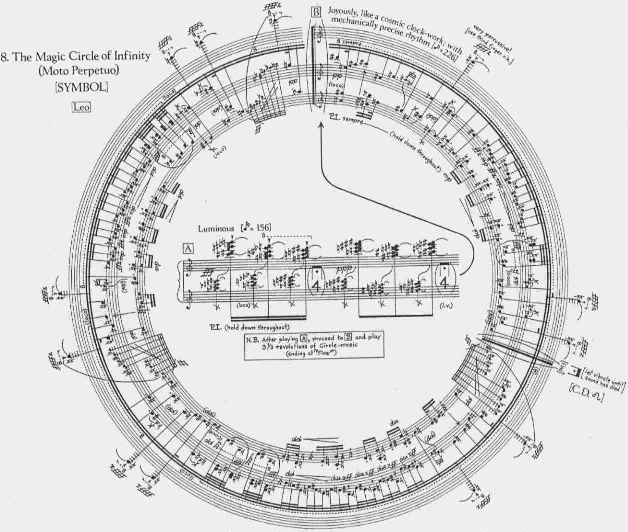
Marvellous stuff. Oh and I caught a glimpse of the score for Black Angels even from my back of the stalls perch. For George Crumb’s scores are almost as intriguing as the extended and innovative techniques in the music itself. The above is not from Black Angels but a moto perpetuo piano piece. Even so see what I mean?