No panto for the Tourist and family. This year’s entertainment was to be Anthony Neilson’s adaptation of the (in)famous Edgar Allan Poe short story about a writer who, let us say, loses a little bit of perspective. Some concern from our party, particularly those of a nervous disposition, as it gradually dawned on them what Dad had signed them up for, but I can cheerfully report that even LD took all the on-stage frights in her stride. For Mr Neilson, who is also directing, and the rest of the creative team, of which more later, have served up plenty of suspense and, occasionally gory, illusion but it is all undercut with humour and an air of wry parody. More Inside No 9 (though not quite as clever) than Texas Chain Saw Massacre.
Now Poe’s original story runs to no more than a few pages and tells of a madman haunted by the “vulture eye” of an old man. His obsession turns to murder which he confesses in fairly short order. So a classic morality tale of crime and punishment with the twist that it is narrated by the unhinged first person. Poe built on the Gothic horror tradition created by Horace Walpole, becoming the father of the psychological horror which film-makers today can’t get enough of, and the scary eye has been a staple of creepy stuff from the dawn of human existence. Check out Odilon Redon’s famous 1883 illustration for a copy of the story shown above. But Mr Neilson was going to need a bit more than that to fill a couple of hours of stage time and to appeal to us jaded sophisticates so Poe’s story has been subjected to some substantial, and largely, successful expansion.
Tamara Lawrance (soooo good in the adaptation of Andrea Levy’s The Long Song on the Beeb recently) plays Camille (or maybe Celeste) a young writer, feted for her first play, but having a bit of difficulty following it up (an NT commission ha, ha). So she holes up in a top floor garret in Brighton, Shining style, to tackle her writer’s block. Her isolated landlady, Nora, an all-in performance from Imogen Doel, is the chatty type, at first a welcome distraction, then increasingly annoying. She comes with a bit of a macabre back-story and an ostentatious patch over one eye. It doesn’t end well.
The story is told through flash-backs and flash-forwards which also involve the copper(s) sent to investigate Nora’s disappearance. It takes a bit of time to get going, though the first half, as Camille and Nora get to, very closely, friend each other, and detective David Carlyle begins his menacing/camp interrogations, doesn’t lack for atmosphere, but the real pay-offs come in the second half, both visually, and plot-wise. Anthony Neilson is probably guilty of a few too many meta twists and references by the end(s), though it does ramp up the breathless WTF quotient, and it doesn’t entirely all hang together, but who cares when there is this much invention on stage.
For designer Frances O’Connor, together with the lighting of Nigel Edwards, the sound and composition of Nick Powell and, especially, the video work of Andrzej Goulding, and everyone in their teams, have conjured up a visual and aural feast. Of course it is artifice, and deliberately so in many cases to keep pace with the knowing tone, but it is still very effective, there are some genuine audience jumps, and, for the slightly sad members of the audience (hello Tourist), a source of endless fun in ticking off the various techniques employed. As the hair-raising manifestations of her own mental state, (or did this really happen or maybe this just a script?), mount up, Tamara Lawrance steps up, never for a moment giving less than 100% commitment. Imogen Doel, and especially David Carlyle, have more in the way of comedy to deliver, which they plainly relish, and there are even a few unsubtle, though still funny, poo-based jokes.
Anthony Nielson I gather is a bit of a one for the collaborative, workshopping approach and his, and I assume, the rest of the creative team’s itch to pack in as much as they can in terms of plot, gags, schlock and stagecraft often shows, but this is still, for the most part, a thoroughly entertaining show that doesn’t take itself too seriously.
Here is another one of the cleverly constructed exhibitions from the Hayward team which brings together a variety of visual works (20 in total), in different media, from different artists which delight, intrigue and entertain. The works span some five decades, (with some new commissions), are informed by a minimalist aesthetic and look to explore our perception of space. Materials are pure and often translucent, indeed many of these works relied on advances in material technologies to become possible, forms and lines are sharp and clearly defined. There is a bit of reflection going on, as in mirroring not contemplation. If art is the manipulation of light then this is, definitively, art.
Before the refurb the gallery offered us Psycho Buildings in 2007, Invisible in 2012, Light Show in 2013 and The Human Factor in 2014. There may have been others the Tourist failed to remember. They pack in the punters, make you think and maybe smile, at least whilst you are there and make good use of the now smartened up Hayward space. Perfect for the Instagram generation.
And that, at the risk of coming across like the old buffer I am, is part of the problem. Whilst individually there are some fine works on show here, the overall effect is a little numbing and, once the novelty has passed, not entirely fulfilling. Still if you take the exhibition as you find it you will enjoy it, no doubt about that, and there maybe one or two artists whose work is sufficiently interesting, work that really does change and engage with the space around it, to make you want to seek out more.
For me those artists would have to include Richard Wilson and his installation 20-50 originally created in 1987. Now there was a bit of a queue to see 20-50 and I confess that we, for on this visit we were a large tribe, the SO, BD, LD, MSBD, TTEW and MSGS alongside the Tourist as expedition leader, frankly didn’t have time. But you must make time, for if you have not seen it then you are in for a treat. The work is doing something of a tour before it sets up in its permanent home in Tasmania where I gather a gambling millionaire has bought it. Now it used to live for many years in the various Saatchi Gallery incarnations (see above) so if you are a contemporary art buff chances are you have seen it. Whilst the outcome will vary according to its location, its function, material and meaning is essentially fixed. Wilson basically floods a room with used engine oil then builds a pier over it so that the viewer is surrounded by the oil on three sides. The mirrored reflection from the utterly smooth, viscous, velvety, unctuous surface makes it feel like you are in a doubled space, stretching down into infinity and revealing every architectural detail of the space above the surface. That surface is dark, unyielding and perfectly flat. The temptation to chuck something in is overwhelming but then so is the desire to preserve this unbroken surface. Oh and the smell is overpowering. This you won’t forget in a hurry.
Mr Wilson is all about intervening into architectural spaces. Inversions, distortions, changing scale and material. He is a big noise in contemporary British sculpture. If you like this check out Slipstream in Terminal 2 at Heathrow, Shack Stack at Grosvenor Waterside, Square the Block on the LSE at the corner of Kingsway and Sardinia Street and A Slice of Reality at Greenwich Peninsula. Readers elsewhere might find one of his public works closer to home. I would loved to have seen Turning the Place Over, Hang on Lads I’ve Got a Great Idea and Queen and Gantry. His work succeeds thanks to the audacity of the ideas, its scale, the way it questions our notions of space and function, the way it disorientates our senses, its humour and the skill and process required in its execution.
Nothing else in the exhibition really comes close. Anish Kapoor’s trademark Non-Object (Door) reflects and distorts the space and things around it including us, like an old style Hall of Mirrors at the funfair. It’s amusing though not as thoughtful as Sky Mirror, Blue on the roof of the gallery which concave, selected surface inverts and saturates in blue the reflected sky above. (The Sky Mirror outside Nottingham Playhouse is another example of the beautifully simple idea. Apparently it is Nottingham’s favourite landmark thus proving the point that contemporary civic art can induce pleasing reactions beyond the purely aesthetic).
Jeppe Hein’s 360º Illusion V is comprised of two rotating mirrors placed at right angles which creates curious double reflections of us and others. Perfect for Homo sapiens who love gawping at each other. Polish artist
Alicja Kwade’s WeltenLinie is an even more satisfying illusion, a steel frame partially filled with double sided mirrors and carefully placed objects which really does mess with our heads. Punters can and do walk into the mirrors, the artificial objects on the floor can and do change shape and colour. You know how it is happening but that doesn’t making it any less fascinating or amusing. Her Medium Median was shown at the Whitechapel Gallery a couple of years ago and was, in a different way, as equally arresting as an installation.
Monika Sosnowka is another Polish artist whose work here, Handrail, subverts interior architecture, here the humble handrail, and is wryly amusing. Larry Bell is an artist I have come across before and his Standing Walls is at the mainmast end of large scale minimalist sculpture. Literally for the purist. As is Robert Irwin’s classic, and slightly menacing, Untitled (Acrylic Column).
Roni Horn is one of a more recent generation of minimalist sculptors who uses glass, here to make a cylinder Untitled (“Everything was slipping as if the universe were a mistake”), which is both simultaneously heavy and light and, for all the world, looks like a pool of water. One of my favourites. As was Ann Veronica Janssens Magic Mirrors (Pink and #2 and Blue). Each is comprised of a shattered pane of safety glass encased by two normal glass sheets lined with filters that allow light to pass through selectively and thus throw shadows on the wall with different, changing and blurring colours. Really captivating as the number of selfies being taken attested to. I will need to check out more of her work.
A century of modernism, and now several decades of minimalism, in art, architecture, design, fashion, graphics and so on, means that we are now all pretty much programmed to embrace this aesthetic. There may be a generation that prefers velour and Toby jugs but they are on the way out. Glass, steel, perspex, resin, artificial light, saturated colours, our world is surrounded by these materials. It is work we work, where we study and where we live. We see, touch and feel spaces and objects informed by mathematics and not messy or maximalist organics. Is this what makes these art works so seductive and will this ever change? Search me.
Handel’s Messiah, Barbican Hall, 19th December 2018
Jacqueline Shave (violin/director), Sophie Bevan (soprano), Iestyn Davies (countertenor), Allen Clayton (tenor), Roderick Williams (baritone)
Christmas on the way. Full house at the Barbican. MSBD as wingman. Messiah. A quartet of outstanding soloists. The Britten Sinfonia Voices. The Britten Sinfonia. And the very wonderful Jacqueline Shave leading the band.
It is of course impossible not to delight in the Messiah. At least that is the received wisdom. Yet, like so much Handel, I was worried it might, well, go on a bit. For this my friends was amazingly the first ever time I had seen and heard a live performance, Which given its Baroque lineage, its status as a Christmas fixture and its frequency of performance, especially by amateur choirs, is something of a surprise even to me. I suspect its appeal to a certain sort of Englishman (and woman), of which there were plenty on show at this performance, explains part of my reticence. The type that stands for the Hallelujah chorus, showing up our shared sheepish enthusiasm for imagined tradition. (And look what a mess that has got us into). It might also be my fear (not too strong a word) of really large scale choral performance. You know, where it all just becomes and aural blur.
So I figured the best way to get over this likely unfounded prejudice was to see an appropriately scaled performance, from an orchestra, choir and soloists at the top of their game, and in the company of MSBD, whose enthusiasm and all round gracious affability knows no bounds.
Well I can report that divvying up the Christ story (with the lead actor written out as it happens) into three sections and loads of parts (I think 54 in total), arias, recitative and chorus, plus the overture and pastoral symphony instrumental, makes for a much lighter affair, with more contrast and texture, than I had expected. Of course you will already know that no doubt, but for the uninitiated, this HIP style of performance, on modern instruments, is definitely the way in. You are probably familiar with the big numbers, the aforementioned Hallelujah chorus (we are suckers for anything fugal), “I know that my redeemer liveth” for soprano, “The trumpet shall sound for bass” as well as the choruses “Surely he hath borne our grief”, “Worthy is the Lamb” and the final Amen with its OTT dramatic pause before the end. Yet to be fair to old GFH is is rammed with good tunes. Pretty much throughout.
GFH never had a problem finding good tunes. he just had a bit of a problem in stopping them. At least that is my limited experience of the operas. other oratorios and assorted vocal extracts I have heard. And it wasn’t just in the vocal music. Those organ concerti can grind on a bit. I prefer those works when the format keeps it short, sweet and long on variation. The Concerti Grossi, bits of the Latin music and some of the trio sonatas. But frankly the old boy churned out, and recycled, so much stuff that I reckon, like your man Vivaldi, it is impossible to really know where you are in any of it, so best to just let it flow.
Messiah benefits from the fact that GFH only had 24 days to turn it around. I don’t hold with all that “genius in direct group chat with God” theory of inspiration, though I can see why the original 700 strong audience at the Musick Hall in Dublin (there it is above), might have felt that way. Sometimes, whatever your skill, you are just on it. And he certainly was here. Though infamously his librettist, who sort of commissioned him, Charles Jennens, didn’t think that much of his score. Bit rich coming from a man whose text, cobbled together from bits of the St James’s Bible and Coverdale Salter, is the very definition of fruity and defiantly non-linear (though to be fair this gave GFH a chance to properly ham up his own music). Anyway the fact that GFH had to take the rich outpouring of ideas and get them down without overworking or extending them was to his, and ultimately our, advantage. And for once he didn’t, or couldn’t, nick tunes from other composers, as he was wont to do. No shame in doing that then as there isn’t now.
Of course Messiah is just an opera without sets or costumes. With a plot we likely know inside out. By 1742 GFH’s actual operas were out of fashion. The public who now turned up and paid to hear music couldn’t be doing with this expensive and drawn out entertainment. (My theory is that the royals and aristos who generally funded opera and similar such entertainments in the C17 were, like the rich have done since time immemorial, mostly just showing off and couldn’t be arsed to watch what they paid for). So the resourceful Handel yet again, a few decades late, simply nicked an idea from Italy, fitted his music to English and served it up to us Protestant Brits (and the Irish) under our then German ruler. Interesting that Jennens became GFH’s bessie and advocate, publishing all his later scores, as he originally opposed the Act of Settlement that brought the Hanoverian line to England.
And he didn’t just nick the idea of the oratorio from Italy. Some of the tunes here are lifted from Italian madrigals that he had previously written, which, together with Jenner’s eclectic libretto, explains why it doesn’t really feel that sacred. And that ultimately is its genius and what probably explains its enduring appeal.
I have said before that the Britten Sinfonia is on the way to being my favourite band, probably because of the repertoire they tackle but also because their ethos, no principal conductor or director, means they can’t. and won’t, get away with just dialling in a performance or grumpily going through the motions with a parachuted in conductor. I get the impression they choose who they work with, and what they work on. And if, as here under Jacqueline Shave, the leadership comes from one of their own, then so much the better. This means the energy they bring to performance, the direct connection with the audience and the texture they create through interpretation is second to none. Now having a professional choir of the calibre of the BS Voices under Eamonn Dougan has opened up even more opportunities.
Now GFH’s original manuscript score is for 2 trumpets, timpani, 2 oboes, 2 violins, viola, and basso continuo (cello, double bass, and harpsichord). The might have proved just a little too hair-shirt for the Barbican Hall so on this evening the BS sported the bassoon of Sarah Burnett, another cello alongside Catherine Dearnley, and another viola alongside Clare Finnimore, and a full 13 violins. Which is still, given the standard Baroque practice leaving later copyists to specify the appropriate instrumentation, as perfectly minimal a band as the work requires. With the 21 strong choir we were treated to absolute clarity with none of the blaring out using huge orchestras and choirs that started at the end of the C18 and continued through the C19. Apparently in 1857 at the Crystal Palace there was a performance with an orchestra 500 strong and a chorus of 2000. And that was not the record. Nuts.
For the bizarre thing is that the beauty of GFH’s invention lies in its restraint. His tunes are always pretty simple to understand, that is what makes them wonderful, and Messiah has a conveyor belt of terrific ideas. But GFH doesn’t feel the need to overdo with the orchestra, often surprisingly spare, and holding back, for example the trumpets and timpani until near the end. The music thus fits the text like a glove and the absence of a defining tonal scheme means that GFH can go where he will with the key to match the “emotion” in the words.
Having the soloists at either side of the stage, walking to the centre for their turns, was at first a little distracting but the payoff, each singer able to “tell”their part of the story and allowing us to focus solely on them and their voices, quickly became apparent. Now I am not smart enough to work out why, in choral works, any particular soloist is more convincing than another, it is a gut feeling, but normally there are one o0f two that stand out. Not here though. All four genuinely wowed. I remember Sophie Bevan from her performance in The Exterminating Angel. Here she had lifted time in the spotlight (not literally, this isn’t Broadway) but the was sublime. I could listen to Iestyn Davies’s countertenor all day, which trust me a few decades ago is not a phrase I thought I would ever write. He probably gets the best of the Messiah arias but even so he didn’t rest easy, ramping up the emotion. Like Mr Davies, I had heard Roderick Williams rich and dramatic baritone pretty recently, in the ENO War Requiem. Wonderful. And hearing the phrasing and virtuosity of Allen Clayton in this, rather than the recent LSO Spring Symphony, which I didn’t really get on with, was a joy.
So, I admit, I get it. Britten Sinfonia under Stephen Layton with Polyphony and two of these soloists now on order.
Confession. This was the first time I had ever seen a production of The Merry Wives of Windsor. The Tourist can’t remember there being an opportunity, RSC or otherwise, in those few periods of his intensive theatre-going in the past, and I don’t think there was a production of sufficient quality over the more fallow years to drag him away from the reality of life, work, kids, drink and the like.
Also, I have to admit, TMWOW has always sounded a bit limp, with the Shakespeare industry being a bit sniffy about its worth, dubbing it “the first sit-com”, compared to the other comedies, Twelfth Night, Dream, Much Ado, As You Like It, Errors, Shrew ….. in fact only The Two Noble Kinsmen of the “pure” comedies seems to get a worse rap. (Well maybe The Taming of the Shrew with its impossible to mitigate misogyny without some dubious directorial device). The other criticism seems to centre on the disappointment of taking one of WS’s most “rounded” characters, analytically as well as literally, out of the history plays and plonking him into a class-based farce as the butt of the comedy.
Well just as Barrie Rutter made a case, albeit not entirely convincing, for WS’s (with John Fletcher) last contractural obligation with his Two Noble Kinsmen at the Globe, so director Fiona Laird has served up a peach for the RSC, (though it is just about to end its run at the Barbican). All I can say is that if TMWOW is normally this funny then all those naysayers who are supposed to know their onions when it comes to the Bard need their heads examined.
If it isn’t normally this funny then Ms Laird is to be further congratulated for making it so to a contemporary audience. Shakespeare’s humour comes from plot – usually will they/won’t they romances and unlikely assignations, from – word-play – badinage, punning and bawdiness – and from physical comedy – which, obviously, is not something made explicit in a text. To make a modern audience laugh it usually makes sense to trust Will and let the plot do what it will, play down the anachronistic, and not always easy to follow, wordery and massively ramp up the caricature, mannerism and visual gags. Which is exactly what this production does. With plenty of new interpolations.
If the audience reaction at the performance the Tourist attended was anything to go by, and it seems this has been supported by critics, professional and amateur alike, this definitively worked. I laughed. A lot. In fact as much as I can ever remember for a Shakespeare comedy. It is not as all round satisfying as the best Much Ado or Twelfth Night production but it was still a revelation.
The plot is contrived. And daft. No question. One theory alleges that Will only had 14 days to come up with it after the Queen requested an entertainment for the Order of the Garter festival in 1597 to feature her favourite of his comic creations, Sir John Falstaff. Now, as I sure you all know, Falstaff is way more than just a comic buffoon, as we see in Henry IV Parts I and II, and as Mistress Quickly explains in her eulogy in Henry V. He may be vain, boastful, corrupt, cowardly, a drunk and petty criminal, but he is charismatic and he embraces life and we, and Prince Hal, therefore love him despite his faults. And he is, of course, fat and as everyone knows us fat people, with our seeming inability to control our appetites, and our apparent physical limitations, are just funny.
Humour invariably validates superiority. It takes what the group or society has deemed as unsettling, threatening or just different and turns it into something safe and tolerable. Falstaff, because the genius Shakespeare created him, is doubly funny because he is both the object of our laughter and also, because of his wit and intelligence, the source. Tricky business humour. I am sure that there are plenty of people who would be happy to make a joke at my expense because I am fat. In the same way it would probably make me happy to make a joke at their expense because they are stupid. Like I say tricky business.
Anyway I suspect big Will didn’t waste too much time mulling over the psychology of humour and just got on with the task, knowing which way the Elizabethan bread of patronage was buttered. Which explains the oft observed “lack of subtlety” in the plot and character. Yet, as all students of the situation-comedy know, the best characters in the genre have one, or more, personality traits amply exaggerated. And the best sit-com plots begin with a plausible set-up that gets incrementally ever more ridiculous. Which, give or take, is what happens in TMWOFW.
Falstaff is on his uppers. He pitches up in Windsor, or, in this production a place that feels suspiciously like Chigwell. He resolves to woo a couple of wealthy married women, Mistress Alice Ford and Mistress Margaret Page. He commands his servants, Pistol and Nym, to deliver the ladies identical love letters. They refuse and tell the ladies’s husbands. Page (Paul Dodds) isn’t too bothered but Ford is the jealous type, and he is introduced to Falstaff by the Host(ess) of the Garter Inn masquerading as a Master Brook in order to unveil Falstaff’s plans. Meanwhile, (yep there is always a meanwhile or two in these plots), three other chaps are trying to woo the Ford’s daughter, Anne; absurd French doctor Caius, asinine youth Master Abraham Slender, cousin (here nephew) to Justice Robert Shallow and young Fenton (Luke Newberry), a gentleman now bereft of his fortune.
Cue confusions, set-ups and comic revenges. By the three suitors on the Host(ess), by the two Mistresses on Falstaff, by “Brook” on Falstaff, by Ford on his wife, by everyone on Falstaff, and by Page and his wife on Slender and Caius, and by Anne and Fenton on the parents. It all ends happily though.
These farcical set pieces, replete with disguise and concealment, offer plenty of opportunity for clowning, which the cast, directed by Spymonkey specialist Toby Park, relish and have perfected over the run in Stratford and now London. David Troughton is a brilliant Falstaff, decked out in “fat suit” and priapic codpiece, and booming out his perfectly timed lines. Rebecca Lacey and Beth Cordingley are sensational as the conspiratorial and true friends, Mistresses Page and Ford, with exaggerated TOWIE accents and hamming up their humiliations of Falstaff, both in the laundry basket scene, here a wheelie-bin, and in the Woman of (now) Brentwood scene. Vince Leigh, who I remember pulled off a similar trick in Propellor’s all -male Taming of a Shrew as Sly/Petruchio, manages to make Ford’s jealousy palpable, and not a little pungent, but still amusing, and even gracious, when his suspicions prove unfounded. It is possible to believe that he and Beth Cordingley could be a couple who care beneath the mutual scorn.
Tim Samuels and Tom Padley make a fine double act as Shallow and Slender. All the servants, Ishia Bennison as Mistress Quickly, here housekeeper to Caius, Steve Basaula as his man Rugby, Nima Taleghani as Falstaff’s pageboy and John Macaulay as Simple, offer wry indulgence to the whims of their “betters”. Charlotte Josephine, Afolabi Alil and Josh Finan are also able to inject at least some of the personalities of Bardolph, Pistol and Nym, though these are more developed in the history plays. TMWOW is, at its heart, a satire on the pretensions and affectations of the “middling” class, their preoccupations with wealth, marriage prospects and position in society. Aristocracy is conspicuous by its absence, other than Falstaff and his young doppelgänger the spendthrift Fenton, though Shakespeare chucks in enough references which gently mock his Court audience, and the servants are generally enablers rather than protagonists. This then is obviously immediately recognisable territory for the modern audience, “we are all middle class now”, made more so here by the Essex milieu.
The comedy also takes a swipe at that staple of “English” comedy, foreigners, and specifically their funny accents. No obviously progressive way to do this so best wade right in. David Acton does exactly that with loquacious Welsh parson Sir Hugh Evans, another from the Shakespeare school of Welsh windbags, but Jonathan Cullen goes even further with Dr Caius, offering a Gallic strangling of the English language which goes well beyond the simply Clouseau-esque. A couple of deft retouches create some priceless, and filthy, moments, one of which I fear I might have made up in my own dirty mind as no-one else seemed to laugh. I particularly enjoyed the addition of the East Europeans who come to remove the wheelie-bin, who are snootily looked down on by the assembled throng whilst they, it transpires, are chatting about the scene’s resemblance to Proust.
The final theme of TMWOW seems to me to lie in the power executed by the women. By casting Katy Brittain as the Hostess of the Garter pub she too, along with the Mistresses, Anne, (another fine performance from Karen Fishwick to set alongside her Juliet in this season), and Mistress Quickly, run rings around the lads. They get their own way, and get revenge on the sexual predators, not through compromise, simpering or abasement but through their own agency, and they have a right laugh in the process. Switching the denouement to the town square, rather than Windsor Great Park, with Elizabeth’s statue towering over it, may slightly invalidate Falstaff’s Herne the Hunter garb, though Epping Forest isn’t too far away I’ll warrant, but it does, finally, leave the women on top. I wonder if Liz I herself would might been pleased with this ending.
Lez Brotherston’s set, turning seamlessly to reveal the skeletal interiors and exteriors of the half-timbered houses, is as ingenious as his hybridised costumes, which mix modern and Elizabethan fashions. There is plenty of blingey accessories on show, particular favourites for the Tourist were the blow-up flamingos, Mistress Page’s all in one cerise pink throne and foot-bath, Anne’s fluffy pooch, the f*ck-off massive gas barbecue, the remote-control golf cart and the white leather bar stools. Caroline Burrell has recreated Tim Mitchell’s lighting design particularly effective when the houses turn neon. Gregory Clarke’s sound design didn’t intrude and Fiona Laird’s own composition completed the jolly mood.
OK so there are a couple of occasions when my snob-o-meter vibrated. The Bread of Heaven chorus and the Dick Emery reference might have been steps too far but that is my problem not Ms Laird’s and the RSC’s. Overall this is a cracker of a show, very funny, easily digested and with a few points to prove. Carry On.
Simon Godwin is a director who has shown he has a bit of a way with the sprawling masterpieces in the dramatic canon in recent years. Especially from the Bard. His recently opened Timon of Athens at the RSC, albeit with the force of nature that is Kathryn Hunter in the lead, seems to have gone down well with the criterati. Previously at the National his Twelfth Night, (OK so that’s not really sprawling but it is stuffed to the gills with characters all wanting time to shine), was a belter, his excellent African inspired RSC Hamlet announced Papa Essiedu to the world, and further back the Tourist can bear witness to the success of his interpretations of Farquhar’s The Beaux Stratagem, Shaw’s Man and Superman and O’Neill’s Strange Interlude, none of which falls into the snappy, straightforward category.
He doesn’t go in for the flashy, but neither is he by any means “conservative”, here being resolutely modern-dress. What I think he does do is think carefully about every single character’s attributes and motivations, and how they fit together, and ensures they have enough “space” to show those attributes and motivations. So even the most far fetched plot seems eminently reasonable. He is at it again with Antony and Cleopatra. You can see that from the string of 4* reviews and the gongs already handed out to the incomparable Sophie Okonedo (who has also I see now bagged a CBE from Her Maj) and the redoubtable Ralph Nathaniel Twisleton-Wykeham-Fiennes (who I believe has never been so honoured though he is, as you might expect with that moniker, a distant relative of our beloved Royals).
So you probably don’t need me to tell you this is probably about as good an interpretation of the still flawed A&C as you are ever likely to see. (And you can still see it if you are crafty, and lucky, with the returns that invariably pop up a day or so ahead). Still, redundancy, and/or sluggishness, have not prevented me venturing an opinion in the past so here goes.
The problem with A&C, which was readily apparent in the last, somewhat unconvincing, RSC offering, lies in the flamboyance of the language, the articulation between the “great events” which provide its context and the domestic “at home with the … ” drama of our ageing lovebirds, and the potentially wearing effect of seeing the celeb couple always “showing off” to real, and imagined, audiences. Simon Godwin however has chosen to take these challenges head on.
First up he takes his time. At near 3.5 hours with the interval, across 42 scenes, this does mean there are one or two moments where audience concentration will waver but, with little in the way of cuts (though I am not expert enough to be sure), it means that the historical big picture is unclouded and that all the characters, and not just the power couple, get the chance to show themselves fully. Moreover the lines themselves are given air to breathe and the detail of the domestic exchanges has been rigorously thought out, especially the comic and ironic inflections. Interestingly only the final suicide scenes feel a little rushed with the snake being a bit of an indulgence. We had come this far so I would have been happy to see a more measured take on Tony’s botching and Cleo’s scrupulous choreographing of her own demise.
Obviously it helps that the acting is so strong. And not just from our Sophie and our Ralph. Tim McMullan as Enobarbus, especially shaven-headed for the part, is as wonderful as everyone says he is. It helps that Enobarbus is gifted with some of the best lines in the play but even so he brilliantly walks the tightrope of truth and cynicism (central to the whole play) in his capacity as detached observer and explainer of events and as the embodiment of corrupted honour. And he does all of this whilst barely appearing to try. Now I am pretty sure that Mr McMuillan doesn’t want for work, so good an actor is he, but I would like, no I demand, a Richard II and an Iago from him in the relatively near future. And a lead role in a new play at the NT.
The other standout was Fisayo Akinade as Eros, given full rein to ramp up the comedy but also squeezing a ton of emotion out of a character that normally is just a bit part. The smart money already knows this young man is going places. Re-gendering Agrippa definitely worked, especially with Katy Stephens stepping up, I really enjoyed the performances of Gloria Obianyo and Georgia Landers as Chairman and Iras, more put upon bessies than intimidated hand-maidens, joining Eros and Enobarbus as the conflicted confidantes required to soothe and distract their nominal bosses.
Hannah Morrish did her steely, vulnerability thing again as Octavia. Nicholas Le Provost did his Nicholas Le Provost voice to perfection as a slightly feeble Lepidus, though Tim McMullan’s impersonation might actually improve on the real thing, and Sargon Yelda was an adept Pompey. In fact the only slightly jarring performance came from Tunji Kasim (who is a fine actor make no mistake) whose Octavius seemed overly stilted compared to the naturalistic verse and prose delivery on show elsewhere.
This delivery and the afore-mentioned deliberate pacing also meant that the “performances” of A&C were foregrounded. A&C were the hammed-up actors in their own blockbuster, not just in terms of the ludicrously over the top way they voice their love but also in the way they inject this passion, this risk-taking, into their behaviour in the political arena. Whilst also knowing they are a bit too old and tired for all this display and that it is unlikely to end well. But there egos can’t help themselves. This is also perhaps what has made the story, and especially the “idea” of Cleopatra, so alluring to subsequent generations. (Though as the preposterous flummery of Dutch/British Victorian artist above shows most of these generations preferred their Cleo to look like she had come from Surrey).
Making sense of the “epic” in the tale whilst still permitting us to make a personal, emotional, connection is Mr Godwin’s, and his casts’, smartest achievement here. Hildegard Bechtler’s revolving set (note to designers: always use the revolve on the Olivier to avoid the “acres of space” illusion) is sumptuously minimal, or minimally sumptuous, making the delineation between efficient Rome (modern war room with split screen conflict footage), sultry Egypt (Alexandrian palace with complete with pool – only slightly Vegas) and all places in between, including a submarine, clear without being fussy. Once again it does slow down proceedings but, like I say, that gives time to process what we learn from each of the sometimes rapid-fire scenes.
I’ve no doubt that Anthony Hopkins and Judi Dench did it better but this was the first time the play properly worked for me. Sophie Okonedo, dolled up in slinky ballgowns (Evie Gurney and the costume team can certainly tailor), breezes through Cleo’s caprice, wit, quick temper, self-obsession, but still manages to make her exposed, needing her soldier-boy especially when he is not there. The bickering is patently borne of adoration and mutual dependence, as well as their individual self-regard.
Ralph Fiennes brings a little of the faded rock star from A Bigger Splash as he dons baggy salvars when relaxing with his lady love. Yet he also, as you might expect, nails military bearing when required. Throughout he does seem troubled, burdened if you will, shoulders hunched, as if he knows how the picture will end. As do we particularly given Simon Godwin’s decision to show us the end at the beginning (and the end, obvs). I had forgotten how many wonderful lines Shakespeare gives Antony to grapple with his failure, his fading from view. Loved it.
Eternity was in our lips and eyes …. ‘fraid not Cleo as this excellent production shows. It will never be the Tourist’s favourite Shakespeare but finally I see the attraction.
London Philharmonic Orchestra, Vladimir Jurowski, The Swingles, London Philharmonic Choir
Royal Festival Hall, 8th December 2018
Elizabeth Atherton – soprano
Maria Ostroukhova – mezzo-soprano
Sam Furness – tenor
Joel Williams – tenor
Theodore Platt – baritone
Joshua Bloom – bass
Stravinsky – Variations (Aldous Huxley in Memoriam)
Stravinsky – Threni
Stravinsky – Tango
Luciano Berio – Sinfonia
I cannot describe how excited I was about this concert, and not just because it represented the final instalment of the year long Changing Faces: Stravinsky’s Journey retrospective in which the London Philharmonic Orchestra (amongst others) has performed the vast majority of Stravinsky’s large scale orchestral and choral works, as well as many of the ballets at operas, at the South Bank. Here, in the final instalment, we were treated to a pair of his late “serial” works for orchestra, Variations, and for choir, Threni, as well as a few welcome surprises. Of course Stravinsky being Stravinsky this was not the miserable, astringent, intellectual fare of the Second Viennesers but an altogether more satisfying feast.
However the real reason for the Tourist’s frenzied anticipation, (OK maybe that was a bit of an exaggeration), was the performance of Berio’s masterpiece Sinfonia. The Tourist hopes to soldier on for a few more years yet and pack in a little more exploration and understanding, (though he feels he may have come close to mapping out the boundaries of what he “likes” and “dislikes”), but he is pretty sure that Sinfonia would be a shoe-in for his list of top ten greatest “classical” music works. Actually, just for fun and in festive spirit, here is the current state of play on that work in progress. In no particular order. Only one piece per composer. Oh and there are 14. Like I say a work in progress.
Luciano Berio – Sinfonia
Ludwig van Beethoven – Symphony No 7
Isaac Albeniz – Iberia
Antonio Vivaldi – The Four Seasons
Arvo Part – Fratres
Johann Sebastian Bach – Sonatas and Partitas for Violin
Benjamin Britten – Serenade for Tenor, Horn and Strings
Gyorgy Ligeti – Etudes
Claudio Monteverdi – Vespers
Wolfgang Amadeus Mozart – Symphony No 41
Steve Reich – Drumming
Dmitry Shostakovich – Symphony No 10
Igor Stravinsky – The Rite of Spring
William Byrd – Mass For 5 Voices
I’ll think you will agree there is nothing intimidating here and, if I say so myself, it contains a fair smattering of “popular” hits. Romantic composers are conspicuous by their absence and, for those of a certain age, in the words of Snap!, Rhythm is a Dancer here. Hopefully though you can see the Tourist is not the type to show off with the obscure or arcane. So, dear reader, if you are “new” to classical music, I say why not take the plunge with a few of these pumping beats.
Anyway back to the business in hand. Sinfonia was originally written for The Swingle Singers, the forerunner of this evening’s revamped ensemble and frankly the only group capable of doing it justice, but Vladimir Jurowski and the LPO still had a lot of work to do to pull this off. I have said before that Mr Jurowski, on his day and in the right repertoire, is as good as any conductor I have ever heard, including Simon Rattle, Bernard Haitink, Claudio Abbado, Nikolaus Harnoncourt, Colin Davies, Mariss Jansons, Georg Solti and John Eliot Gardiner. Any absentees you spot reflects the fact I either haven’t heard them or don’t like them. I have never heard Riccardo Chailly conduct but know I should and that Kirill Petrenko, based on the Beethoven 7 with the BPO at the Proms in September, plainly knows what he is about. F*ck me was that good.
When Mr Jurowski sets up shop permanently in Berlin in a couple of years it will be a blow to London. As will the departure of Esa-Pekka Salonen from the Philharmonia. I imagine there are plenty of people who couldn’t give a flying f*ck about the artistic leadership of London’s classical music ensembles and indeed the future direction of the South Bank but, trust me, culture, even when “highbrow”, really matters. I still have this uncomfortable feeling that olde England is now determined to plough on with making a right b*llocks of everything, from which our abiding advantage, our language, will not be sufficient to save us. We went down the toilet, geopolitically, for most of the Late Middle Ages until a few bright sparks in the C17 and beyond came up with the idea of combining capital, education and technology to travel round the world nicking land, stuff and people. We have been doing the same, that is falling back a little, for a few decades now. We still do many things well but only if we welcome innovation, capital and people. Thus changing who “we” are. Which “we” have always done. Cutting “ourselves” off is not, and has never been, an option.
Jesus what has got into me. Back to Vladimir and the LPO. He is a dab hand in just about anything Russian, and I include Stravinsky in that, but, over the past few years, he, and the orchestra have also sprung a fair few surprises. To which we can now add the Sinfonia. Berio composed the piece in 1968/69 to celebrate the 125th year of the New York Phil. Defiantly post-serial, (old Luciano had a few choice words to say about serial music even when embraced by Stravinsky), post-modern, (that being all the rage then as it still is now), forged in the white heat of the intellectual, and actual, revolutions of the late 1960s, (I realise this is not getting a bit w*anky), you might be forgiven for thinking that Sinfonia will be some arty-farty, hippy inflected guff that hasn’t aged well.
Especially when you start reading about its structure. Originally four movements, which Berio quickly expanded to five with a sort of coda that commented on the previous four, it begins with texts from Le cru et le cuit (The Raw and the Cooked) from French anthropologist Claude Levi-Strauss. Yep that Claude Levi-Strauss. Up there with those other Gallic sorts like Foucault, Derrida, Lacan and Barthes, and worst still those dubious German types like the Frankfurt School, who we Brits are rightly suspicious of. Drinking wine, smoking odd cigarettes, carrying copies of Das Kapital, and, worst of all, thinking and talking all day. Still they, and their descendants, will never infect the stout yeomanry of the English shires with their clever dick mumbo jumbo once we get shot of “Europe”.
Now C L-S had a theory that myths were structured in “musical” form, following either a fugal or a sonata construction. Nope me neither. Anyway apparently there were exceptions to the rule for myths about the origins of water and this is what Berio alighted on for Movement I. Which I guess means it has no form. It is a kind of slow threnody punctuated by all manner of bangs and wallops with the eight amplified voices chiming in with the text. Near the end a piano gets a look in leading a percussive Bugs Bunny scramble. It is a bit nuts. C L-S was baffled by where LB was coming from. So don’t despair if you are too.
But it kind of has a way of drawing you in. Berio saw a sinfonia in a very literal sense, from the ancient Greek, a “sounding together”. A layering of sound, instrumental and vocal, often cacophonous for sure but always individually textured. And most importantly searching for “a balance” which is what distinguishes it from the plink-plonk-fizz of much of the contemporary classical music that preceded it. Thus, in movement II, Berio takes one of his own chamber works O King, for five instruments and mezzo-soprano, and recasts it for the orchestra. It is a kind of lament based on two whole tone scales where the singers gradually build up the name of Martin Luther King. Instrumental and vocal whoops representing the vowels and consonants contrast with a shimmering orchestral backdrop.
All clear. On to Movement III then. “In ruling fliessener Bewegung”. In quiet flowing movement. The sub-title of the third movement scherzo of Mahler’s Resurrection Symphony. For this, cut-up and re-orchestrated, is what, famously, sits behind the movement. Alongside countless other snatches of classical music through history. Debussy, Ravel, Berg, Beethoven, Bach, Stravinsky, Schoenberg, Webern, Hindemith, Strauss, Berlioz, Stockhausen, Boulez and many, many more. And, because I guess it seemed to need it, fragments of Beckett’s The Unnameable are also sung, spoken and stuttered, alongside, behind or over the top of the music. There is also a bit of Joyce, some graffiti quotes, even Berio’s own diary entries.
It is a quite extraordinary experience, unnerving, hilarious, annoying, enigmatic and occasionally sublime, a history of music threaded through what might be someone’s personal history. At first it appears to be a mess, a collage with no structure or pattern. But hang on. Didn’t that musical quotation seem to echo the Mahler? And why did that phrase, which made me laugh out loud, jump out? Once again you are drawn in, looking for something, “keeping going” as Berio would have it, whilst all around “civilisation” is threatened by the forces of repression.
I know, I know. Now I sound like a right dick. And yes, just maybe it is a little bit still of its time, But it is just such a jaw-droopingly extraordinary sound-world, so rich, so un-musical yet so musical., that this must be forgiven. Movement IV returns to the tonality of the second movement with a quotation, again from Mahler’s Resurrection, setting up the voices to wander off into another, choral, world. Had enough of quotation? Berio hasn’t, as Movement V then packs in the mother of self-referencing, meta “analysis” of everything that has gone before. Your ears and brain will be processing the aural information, and telling you things, even if you don’t know how and why it is happening.
Not for one single second of the whole work does any of this feel like hard work. Quite the opposite. There is tension and resolution. It is uplifting even as it is disturbing. And very funny even as it mystifies. And I can’t imagine a better performance than here. I am listening to the recommended recording as I write. The Orchestre National de France under Pierre Boulez with the New Swingle Singers (including founder Ward Swingle himself). The LPO and current Swingles sounded better. And that from somewhere in the back stalls of the Festival Hall. Maybe it was the excitement of it being live but any way up it was tremendous. In the third movement especially the lilt of the Mahler scherzo really was there throughout but it never obscured the other musical phrases. Seating the Swingles behind the first row of strings, though still forcefully amplified, ensured they were both integrated with, and punchily counter-pointed, to the LPO. How so much detail was conjured from so much confusion was, literally, uncanny. I gather there are times when Vladimir Jurowski’s excessive precision can annoy some punters. Not me. And definitely not here.
And a shout out to the sound engineers at work for the performance. I can’t find a reference in the programme. Well done though. Unlike the BBC who managed to nonce up the Radio 3 recording.
So you will have to find another performance but give it a whirl if you can. half an hour of your life that you will never get back. But in a good way. A really, really, really good way.
What about the Stravinsky? Well the appetiser, the Variations in memory of Aldous Huxley who died on the same day that JFK was assassinated, is a twelve note tone row which is subject to a series of eleven mechanical “variations”, inversion, retrograde, and the like, with each variation made up of twelve orchestral parts and each having twelve beats in a metre. It was IS’s last orchestral score. Apparently Huxley himself would have had no truck with such serial musing but, coming in at just five minutes, it was interesting at the time if thereafter, forgettable, apart maybe from the astonishing 12 violin variation – like having Xenakis in da house.
The Threni however is an altogether more substantial affair, IS’s longest serial work, in three parts, each drawing on selected Latin verses from the Book of Lamentations, with the middle section by far the most substantial, It makes much use of sung Hebrew letters. There is no particular narrative, it not being intended for liturgy, and it wheels out a biggish orchestra, (including a sarrusophone and flugelhorn), six soloists and a hefty choir, though tutti are frugally used. It is serial in construction but, and this is where old Igor really shows his musical cunning, it doesn’t really sound like it. It is anchored in the more tonal elements of the twelve note row and regularly allows the dissonance to resolve in consonant highlights. The orchestral and choral textures are distinct and Stravinsky chucks in all manner of single tone chants and antiphonal exchanges such that, on occasion, it really does sound like the high polyphony of Tallis, Byrd and Palestrina, even if it plainly isn’t. Don’t get me wrong. It still has all the necessary austere, other-worldly “tunelessness” you might expect from a twelve tone choral work. It just isn’t ugly. Quite the reverse in many places. Full of drama and contrast. I am not saying you would want to chopping the veg or driving home for Christmas with this in the background, just that it is very different from what you might expect. It is not quite up to the neo-classical Symphony of Psalms from some 30 years earlier but is definitely up there with IS’s swan-song the Requiem Canticles.
IS drew inspiration from an earlier Lamentations of Jeremiah published in 1942 by Czech-Austrian composer Ernst Krenek which more explicitly used twelve tone technique combined with Renaissance modal counterpoint. (Don’t worry Krenek himself spent a couple of years aping Stravinsky’s neo-classicism before he became a disciple of Schoenberg). Whilst the first performance of Threni in Venice in 1958 went off well, the premiere in Paris a couple of months later was a right dog’s dinner with Stravinsky, who conducted, getting into a slanging match of recrimination with his bessie Robert Craft ,who was supposed to have prepared the orchestra, and Piere Boulez who drafted in the woefully under-rehearsed soloists. The chorus probably wasn’t best amused when presented with the original score which was, shall we say, scantily clad in the bar-line department. Mind you given the dynamic range that IS requests of the choir that might have been the least of their problems.
No such shenanigans with the LPO and Mr Jurowski who delivered a beautifully layered interpretation with the LPO chorus, split antiphonally, as persuasive as I had ever heard. In fact they made it look and sound easy which, as the paucity of live interpretations reminds us, it most certainly is not. I would point to Joshua Bloom and late replacement Sam Furness as the pick of the soloists, but then again then had more time to shine in the central passages.
Prior to the Sinfonia the Swingles served up a vocal arrangement of Stravinsky’s Tango, complete with beatbox, which I think improved on the orchestral and piano versions previously heard in this Series. And, after another a cappella treat in the form of the Piazzolla Libertango, the LPO encored with Stravinsky’s Circus Polka to send us on our way with a Yo Ho Ho.
Spare a thought though for Maxim Mikhailov the Russian bass, from a long line of Russian basses, who was booked for the Threni solo part and who sang in the Requiem Canticles here a few weeks ago. He died on 21st November. Seems like he was beaten up on a Moscow street. FFS.
Pinter at the Pinter Four: Moonlight and Night School
Harold Pinter Theatre, 6th December 2018
The Tourist is a bit off the pace what with that the holiday celebrations to enjoy/get through (delete as appropriate). Still three more of the Pinter one act plays season to look forward too as well as the Betrayal with that nice Mr Tom Hiddleston playing the part of Robert (with the actors for Emma and Jerry yet too be announced).
Pinter 4 though brought together a couple of the master’s longer one-act efforts leaving no room for any of the add-ons that have characterised the prior outings. Moreover Jamie Lloyd stood aside here to leave the directorial duties to, respectively, Lyndsey Turner and Ed Stambollouian. Moonlight, from 1993, is concerned with the way memory is constructed, and comes from a similar place to Landscape and A Kind of Alaska, the plays that anchored Pinter 3, whilst Night School, from 1979, is a more “conventional” comedy matching many of the smaller scale comic works in the previous collection.
Now I see that many of the proper reviews were not altogether convinced by Moonlight. The Tourist however actually found it to be one of the most intriguing plays of the season so far, even accepting its recondite character. Civil servant Andy (a testy and crude Robert Glenister) is dying and confined to bed. His wife Bel, (the wonderful Brid Brennan who I had unaccountably never seen on stage until The Ferryman) is, with good grace at his ingratitude, getting on with the job of tending to him. Andy, perhaps whilst dreaming, and in bracing conversation with Bel, looks back on the highs, and lows, of his life, including, maybe, an affair with Maria (Janie Dee) and affection for an old friend, football referee Ralph (Peter Polycarpou). We cut alternately to his two sons, the affected Jake (Al Weaver) and more prosaic Fred (Dwayne Walcott), ostensibly in another flat, engaged in enigmatic, (and on occasion near-nonsensical), conversation and impersonation, which, it transpires, is partly their way of avoiding the death of their father. Their younger sister, Bridget (Isis Hainsworth), dressed in bright red duffel coat, also flits in and out: my guess is she might already have died. She certainly has the best lines at the end.
Lyndsey Turner, never one to make her life easy, lets all of her excellent cast do their stuff leaving Pinter’s words and our imagination do the working out. Which is exactly as it should be. Like I say this is a play about a family constructing and re-constructing their past and present. As we all do. There is no definitive “reality” when it comes to our own stories. We only mis-remember fragments of our lives. HP might not be alone in understanding this but he is pretty much the only playwright whose language can turn this into a stage drama where, whilst the old grey matter is whizzing and fizzing in its quest for meaning, we can still simultaneously care about how so and so and such and such can get from A to B.
In Night School, which started life out on the TV, the versatile Al Weaver (it would be good to see him tread the boards more often) is an ex-con, Walter, who returns home to find his room has been let to the enigmatic femme fatale Sally (Jessica Barden). She, we discover, leads a double life as PE teacher, night-school student and hostess in a night-club owned by the seedy Tully (Peter Polycarpou). Walter, when he is not being verbally prodded by retired East End gangster sort Solto (Robert Glenister thoroughly enjoying himself). or molly-coddling landlady spinster aunts Annie and Milly (Bird Brennan and Janie Dee, likewise), falls hook, line and sinker for Sally, bigging up his gang-land connections whilst falling well short with his chat-up lines.
It is actually quite shocking in its ordinariness. As if Pinter were writing a Pinter play with all the Pinter removed and replaced by Ealing comedy and a dash of Orton. It is East End boarding house in the early 1960s right down to the tea trolley and extravagant dropped aitches.
Pinter may have clicked through the gears in terms of power, class, politics, gender, absurdity and metaphysics across his writing career, becoming part of, whilst remaining critical of, the elite, but I reckon his affection for the early days spent in rep and doing odd-jobs never left him. Maybe that’s the reason for Night School’s relative lack of guile. Ed Stambollouian shakes it up a bit though by having Abbie Finn pounding out rhythms on an on-stage drum kit when she is not playing Mavis and having the prodigiously talented Jessica Barden play Sally with a rudimentary ordinariness. No-one here is special, no-one here is either particularly good or bad and no-one here is judged. I could imagine that in the hands of a less talented cast the humour in the characters could come across as very stilted but I loved it.
I have to assume that Soutra Gilmour had, unbeknownst to me, visited the SE London home of my grandad Sid and grandma Lil in the 1960s, in order to secure inspiration for yet another pitch perfect set. Though not the night-club scene in Night School obviously. Mind you it wouldn’t surprise me at all if there was more to Sid’s younger days than met the eye. All I remember is his bottles of Pale Ale, him telling us kids to “sod off” if we came anywhere near him or his newspaper, a bladder-damaging procession of tea courtesy of Lil, an outside privy, wash-basins and shockingly overt racism.
Moonlight was actually the longest play HP wrote in his last three decades and tends to be dismissed thanks to its awkward and uber-cryptic structure. I disagree and reckon Lyndsey Turner has made a case for more frequent revival. Hard to be as ardent about Night School but committed actors made me laugh and I am very grateful for the opportunity to add it to the Pinter tick list.
Raphaela Papadakis (soprano), Lotte Betts-Dean (mezzo-soprano), Stephanie Gonley (violin), Caroline Dale (cello), Harry Winstanley (flute), Michael Collins (conductor)
Antonio Vivaldi
Gloria in D RV 589
Concerto for Violin in F minor, ‘Winter’ from The Four Seasons, Op 8 No 4, RV 297
Concerto for Violin in E flat major (La tempesta di mare), Op 8 No 5, RV 253
Concerto for Violin and Cello in B flat major, RV 547
Concerto for Flute in D (Il gardellino), Op 10 No 3, RV 428
Vivaldi now is generally the preserve of the specialist Baroque ensembles. With audiences to match. Don’t get me wrong. If you want to hear a performance of the Four Seasons in London and aren’t too sniffy about who performs it you won’t have long to wait. Gloria may not be up their with the Faure or Mozart Requiems or Allegri’s Miserere in the popularity stakes but it still gets a fair few outings. Beyond that though if you, like me, crave repeated fixes of Vivaldi then you normally need to wait for the experts to visit. I can see why Vivaldi’s vast and exquisite output has been hijacked by a just a handful of his pieces. And I can also see why, a la Stravinsky, there are so many classical music buffs who airily dismiss Vivaldi as a lightweight, one-trick pony, before they return to their Wagner or some such other turgid dross.
Well let me tell you they are wrong. I can’t pretend an encyclopaedic knowledge of the RV’s and anyway life, literally, would be too short to “know” all of AV’s music, (even now that so much has been recorded by specialists). The cantatas, much of the sacred music outside the familiar and of course the operas, (with their risibly stereotypical plots) are unknown to me. None of this matters though since Vivaldi’s music is so immediate, so deceptively, but rarely actually, simple that even on the first listen it can be enjoyed. Which means all you need to do, (look away now buffs), is grab some cheap, web regarded collections and switch on your shuffle. Result. Life enhanced. Simple really.
So this all Vivaldi bill by the ECO, under conductor Michael Collins, caught my eye. A Gloria, a Winter, a couple of the best concerti, for respectively violin and flute, outside of you-know-what and then a comparative rarity, one of the handful of double concerti scored for violin and cello. From a chamber ensemble with a fine pedigree; remember their first Patron was Benjamin Britten and some of Britten’s finest recordings of his own music were made in partnership with them. They are not though, and this is in no way intended to be disparaging, experts in the Baroque. In fact they are one of the most versatile of orchestras anywhere on the planet. Look at their immense list of recordings. They will even do weddings. Though it helps if your names are Harry Windsor and Megan Markle.
The Choir of the C21 led by Max Barley is a similarly broad, though still top drawer, church. Our soloists for the Gloria were well matched soprano Raphaela Papadakis and mezzo Lotte Betts-Dean with ECO principals Stephanie Gonley and Caroline Dale taking the instrumental leads along with young flautist Harry Winstanley. Now I can’t pretend that these performances were up there with the best of the Vivaldi interpreters I have heard, La Serenissima under Adrian Chandler, the Concerto Italiano, the Venice Baroque Orchestra, Brecon Baroque and Gli Incognito, but they were still very enjoyable. Especially in the Gloria.
I was particularly taken by the double concerto where Stephanie Gonley and Catherine Dale’s familiarity paid dividends, This is one of only four concertos for this coupling of which one is incomplete. The Allegro comprises arpeggio figures which begin in the ripieno before being taken up by the soloists, offset with more lyrical passages. The slow movement is a conversation between the soloists a la Bach and the final pacey allegro offers more virtuoso opportunity against a triple rhythm accompaniment.
The flute concerto, No 3 of the six which make up Op 10 was likely published in 1728. A cardellino or gardellino is a goldfinch, a popular caged bird in Vivaldi’s Venice, (and in Golden Age Holland, as you will no doubt know from Carel Fabritius’s exquisite painting in the Mauritshuis in The Hague and which inspired Donna Tart’s ambitious novel). The goldfinch often crops up in Renaissance paintings of the Madonna and Child, the little fella symbolising the foreknowledge that mum had about her son’s eventual gory death. No such iconography here though, for Vivaldi the relevance was the wee bird’s song. The tweeting is most obvious in the last movement which allows the flautist to develop ever more extravagant virtuosic tweeting. The first movement isn’t quite so ornithological with the flute offering trills, runs and staccato repeats more in counterpoint to the bouncy riternello dance. The fast movements sandwich a lilting cantabile into which tousle-haired Harry injected a surprising quote of lyricism.
Vivaldi was quite keen on stormy seas. RV 433 is a La tempesta di mare for flute and RV 570 a Concerto grosso with the same sub-title. RV 253 is the violin concerto equivalent, part of the Op 8 twelve titled the Contest Between Harmony and Invention of which the first four are the Seasons. No surprise I guess for a Venetian with a view from the Ospedale della Pieta out over the lagoon to the Lido and beyond to the Adriatic. Now I happen to think that there is as much in the other 8 concertos as there is in the Four Seasons, certainly in terms of tunes, if not in pure rock ‘n’ roll theatricality. An original score for 253 survives in Dresden, probably brought by JG Pisendel the violinist when he returned from studying with Vivaldi. Pisendel was the man who introduced Vivaldi’s music to JS Bach. Diamond geezer.
253’s fast movements are marked Presto not just Allegro so they need to be quick. The central Largo is the three minutes or so of relative calm though even at the end the storm is plainly on its way back. Both storms call for seemingly never-ending (well a few minutes) of descending figurations, the last set against a sort of dotted fanfare rhythm, the first even more frantic arpeggios against a scrubbing ritornello. I enjoyed Stephanie Gonley’s rendition but you probably also need to hear this played at more extreme tempi from one of the big-boned Italian outfits with, say, Federico Guglielmo or Giuliano Carmignola in the hot seat. Same is true of 297 Winter (which has that bit of summer in it just like Summer often feels a bit wintry).
Before the Gloria we were treated to a burst of medieval carol arrangements to beef up the festive quotient. At least those of us not underneath the gallery, where the choir was located, were treated. Still a nice touch. (Now as it happens I have a jolly collection of medieval carols, songs and chants from Pro Cantione Antiqua and the English Medieval Wind ensemble on CD I can recommend). It was as much as MSC and I could do to stop MS popping upstairs and joining in for he is the expert on all things Black Death to the end of the War of the Roses.
I am not actually sure if MS and MSC had heard a recording of the Gloria before but this was certainly their first Vivaldi gig. It is simply not possible for anyone raised in the culture of Western musical tonality not to like Vivaldi’s Gloria. Unless they are dead. And even then it will be on most of the playlists in heaven I would guess. Were that, Pascal’s Wager style, to actually exist. Anyway MS and MSC seemed to like it unless there were being their usual polite selves when it comes to their overly solicitous Dad/Future-Father-In-Law.
The Gloria was composed around 1715 for the residents of the Ospedale. They probably drafted in a few blokes for the tenor and bass lines. The young women of the Ospedale were prodigiously talented, after all Vivaldi composed music for them that even today taxes the very best of musicians (especially for violin), but they probably couldn’t quite get to the gruffer end of the vocal scale. After Vivaldi died in 1741, impoverished after the failed attempt to set up shop in Vienna, the score of Gloria was lost and forgotten until being rediscovered in Turin in the late 1920s. It is a setting of the eponymous section of the Latin Mass divided into twelve sections, all mercifully short and it is resolutely upbeat even as it contrasts keys, moods, tempi, instrumentation and voices.
The Orange Tree, along with the Royal Court, must presumably be one of Martin Crimp’s favourite theatres. Whilst he has primarily been engaged with writing libretti for George Benjamin’s excellent trio of operas in recent years, Into the Little Hill, Written on Skin and Lessons in Love and Violence, and will have his next play, When We Have Sufficiently Tortured Each Other, premiering at the National next year (the Tourist has tickets, yea), many of his early plays started life at the Orange Tree, where he was championed by Sam Walters.
So it was nice to see the Orange Tree hosting English Touring Theatre’s revival of MC’s breakthrough play 30 years after its premiere in this very house. Surprisingly I managed to rope the SO and the Blonde Bombshells into the evening. Now, whilst I have an inordinate amount of time for the opera collaborations and his Chekhov translation, I am still making my mind up on Mr Crimp’s original drama. Mind you this was only the second such exposure, after The Treatment at the Almeida. Now there is no doubt there is something substantial there in his caustic stories which pick away at the underbelly of human behaviours, and in the painfully direct language he employs to tell them, but there is also a streak of irksome pretension which needles me.
Clair (Lizzy Watts) is an estate agent acting for the increasingly loathsome bourgeois yuppie couple Mike (Tom Mothersdale) and Liz (Hara Yannas). Anna (Roseanna Frascona) is their ill-used Italian au-pair. Art-dealer James (Michael Gould) is the increasingly threatening potential buyer. The cast is completed by Gabriel Akuwudike who variously plays Clair’s colleague, a builder and Anna’s boyfriend.
Now the play was originally written a couple of years after the still unsolved disappearance of the estate agent Suzy Lamplugh in Fulham (and who is commemorated in a stained glass window just down the road from the OT in East Sheen). Coincidentally the police were pursuing a new lead in the case as this revival opened. For those familiar with the circumstances of these tragic events it isn’t too difficult to guess where MC goes with the plot. But what he was really trying to expose was the venality of the time, the greed of the property owning classes, as well as playing with his usual themes of power and violence. It could have been written yesterday alas.
Fly Davies has delivered a cube on a raised platform in the centre of the OT stage masked by diaphanous gauze curtains and coldly lit by Joshua Carr. This only serves to heighten the voyeuristic quality that permeates MC’s play. We begin with Clair in her tiny, train-blighted flat on the phone to an unseen caller setting out, for want of a better term, the aggression that underpins the “art of the deal”. Every one of the cast, (even Gabriel Akuwudike at the end), is tasked with drawing out the worst traits in each of the protagonists, (and way more in the case of Michael Gould as James’s sadistic intent is revealed), whilst making sure we know they are still “one of us”. It is an unsettling watch in that respect and, for me, Lizzy Watts, given the truncated part she played, was particularly adept in capturing Clair’s ambitious pragmatism to get on and get the sale done even as her discomfort with James’s behaviour grew.
Clair’s flat also serves as the location for the disturbing, and slightly hyperbolic, ending but most of the action tales place in Mike and Liz’s house which they are looking to trade up from, (see how transactional language now permeates the everyday and which MC cleverly elides with the “business” of relationship). They start off blathering on about their “ethical” stance but their evasive attitudes, their treatment of Anna and the conversations they have behind the backs of Clair and, after his first viewing, James, reveal their true avaricious and condescending colours. Pretty soon they are making jokes about the “crumbling spine” of the buyer they happily gazump and gleefully ramping up the price they will settle for. Hara Yannas and, especially, Tom Mothersdale have plenty of opportunity to reveal the odiousness of the couple which, in terms of their performances, they relish.
Michael Gould as James runs the gamut from curt and business-like, through slightly odd, to Pinteresque menacing, then into creepy, sinister and finally full blown abusive psycho. I do hope in real life he is a kindly uncle type for here, in the scenes with Clair especially, he genuinely made me fell queasy, which is ironic in some ways, given that in a particularly memorable scene, Mike is the one who is actually sick in the play.
So some very fine performances, dextrously directed by ETT director Richard Twyman, of an intelligent play, built out of considered language and symbols, with streaks of dark humour, which deals with the dark side of human nature. So what’s not to like Tourist? Well I think it might just be the cumulative effect of the slightly off-kilter naturalism of the action and dialogue. It feels to me, with the odd stresses and unbroken pessimism, to be about 5% away from where it should be. I appreciate that is a daft thing to say, and I wish to be clear that it is not the subject or the form that I mildly object to, just the tone which I found a little wearing over the 100 minutes. And, whilst I am sure that MC is, like Pinter, merely highlighting the iniquity of misogynistic threat through his characters, thereby to condemn it, it would be reassuring if he this was occasionally made a little more explicit.
Mind you, like all good theatre, the bloody thing has got stuck in my head ever since, and, even with the misgivings, I am looking forward to his new play, so clearly MC is doing something right even as I think he might not be. The SO, hasn’t volunteered much of an opinion on DWC, not one to waste her words, but is happy enough to join me in the next leg of the Crimp journey.
Divine Geometry: London Symphony Orchestra, Kristjan Jarvi, Simone Dinnerstein (piano)
Barbican Hall, 29th November 2018
Charles Coleman – Drenched
Charles Coleman – Bach Inspired
Philip Glass – Piano Concerto No 3
Kristjan Jarvi – Too Hot to Handel
Steve Reich – Music for Ensemble and Orchestra
Funny one this. As part of our project to embrace the classics of minimalism the Tourist, MSBD and MSBDB schlepped off to the Barbican. Primarily to hear the new(wish) Reich piece in its UK premiere, and to catch up with the Glass, similarly making its UK debut. Didn’t really have a Scooby about the other pieces I am afraid.
Now somewhere in Estonia, (actually it relocated to the US) there is a factory which produces conductors. It is family owned and goes by the name of Jarvi and Sons, (in Estonian obvs). For Kristjan, along with older brother Paavo, is son to the veteran, and oft recorded, conductor Neeme. Sister Maarika plays the flute though I have no doubt she too is a dab hand with a baton.
Anyway young Kristjan, who has the gig as the AD of the Baltic Sea Philharmonic which he founded, sees himself as a bit of a musical chameleon and genre-buster. Having got his hands on the LSO again he wasn’t about to waste the opportunity to showcase one of his own works, Too Hot To Handel, nor a couple from his mate Charles Coleman. Drenched takes Handel’s Water Music as its starting point, and Bach Inspired, er, a string-only snatch from the Mighty One’s Well-Tempered Clavier and his “Nun common Der Heiden Helland” chorale, plus a couple of his own movements. Too Hot …. you can work out for yourself. Suffice to say it has pretty much undigested chunks of GF’s Concerto grossi mashed up with KJ’s own Stravinskian, post-minimalism, as well as a lot of running around for the LSO’s three percussionists, Neil Percy, Sam Walton and Jake Brown, and a starring role for Chris Hill on bass guitar (I kid you not).
Worshipping at the altar of the Baroque Gods and drawing the parallels with the Minimalists is self evidently “a good idea” but always better done with the C17 and C18 originals. These pastiches, whilst certainly not dull, and played with gusto by the LSO, ended up as classic classical “classic rock” if you get my drift. Not quite Smashie and Nicey, but skirting awfully close. The Coleman pieces, especially Bach Inspired had a bit more heterogenous invention, and wit, about them but even so it was all a bit weird to be honest. At near 40 minutes and over 13 movements, Jarvi’s own work I am afraid outstayed its welcome, was shown the door but still came back again.
As for the main events, well the Piano Concerto No 3 was a little too close to the pleasant warm waves of swirling arpeggios that Philip Glass can presumably churn out in his sleep and the Steve Reich piece was, guess what, just amazing.
The Concerto was written for this evening’s soloist Simone Dinnerstein and premiered in Boston in 2017. Glass, now 81, has moved a long way from the “hard-core” rhythmic minimalism (“repetitive processes” in his argot) of the 1960s and 1970s. His music now is much more melodic, chromatic, even romantic. When he composes for piano, as with the three concertos, the lovely Etudes and Metamorphosis and the film music transcriptions, he is a right old softie and gets all emotional. It can be moving and occasionally stirring stuff but it is mostly like being immersed in a nice warm metaphorical bath with Brahms and Rachmaninov.
You could be forgiven for thinking popular art-house film soundtracks, which have been, after all, a fair contributor to the old boy’s estate in the last few decades. And one of the reasons, perhaps along with his generosity in collaboration, why his music has been so influential. In fact it is pretty difficult to think of another composer of music in the second half of the C20, and into this millennium, his musical ideas have been quite so pervasive. It will be interesting to see whether Glass’s legacy, like much of post-modernist culture, survives. Whilst love for Schubert, another compositional production line, who I suspect Glass would most liked to be identified with, has pretty much continued to increase year in, year out since his early death, other comparable piece-work composers from the Baroque itself, Bach say, or Vivaldi, spent hundreds of years being ignored. Mind you in the age of digital junk it will be hard to forgot anything ever.
Yet amidst all the familiarity Glass is still capable of surprises and here it comes in the final movement, which is simplicity itself, being a homage of sorts to Arvo Part, he of the “holy minimalism”, with a simple, chiming melody over a bass drone. The introspective concerto, which is essentially three slow to medium paced movements, begins with soft oscillating chords against a processional base-line, which drifts in and out of the similarly paced orchestra. Crotchets become quavers then triplets, rising to a swell and then subsiding. The second chaconne-ish movement is all repeated arpeggios which ends with the unflashiest of cadenzas.
As its dedicatee, and given she is an acknowledged interpreter of Glass’s music, Ms Dinnerstein, who is what you might call a “self-made” performer, more in line with the You Tube pop generation, was unsurprisingly accomplished in her playing, technique, emotion and understanding all present and correct, and if it didn’t wow then that is more the fault of the music than her or the LSO strings. She encored with a Glass Etude. I would have liked more of those.
In less than a month’s time Philip Glass’s 12th Symphony will be premiered in LA under the baton of fellow “minimalist” grandee John Adams. You can’t fault his work ethic.
Music for Ensemble and Orchestra, premiered earlier this year in NYC, is Steve Reich’s first large scale orchestral work for 30 years, following The Four Sections in 1987. Reich is of course as much performer as composer and his ostensible reason for avoiding the orchestra genre was that performers were not really up to the task. Fair enough, but, as he admits, that is no longer true as there are now orchestral players, notably percussionists, but also specialists in the other sections, as well as the latest generation of conductors, who are more than up to the task, and who love and relish the challenge of creating his stunning sound-world. Mr Reich is a year older than his peer Mr Glass but they are chalk and cheese when it comes to productivity, as well as, despite the “minimalist” label, musical style.
SR can go a couple of years without a new piece. This is is no way a criticism for when they do arrive his compositions continue to be works of staggering genius. This, of course, assumes you are predisposed to his marrying of pulse, rhythm and process. Here he has contrasted an “ensemble”, lead strings, principal woodwinds, tuned pianos, vibraphones and keyboards, with an “orchestra” which adds a full string section and brass, in the form of four trumpets, to that ensemble.
The work is made up of five sections/movements, in typical Reich style simply numbered 1 to 5, which together form a Bartokian arch. the tempo is fixed across the sections but the speed varies according to note value: 16ths, 8ths, quarters, then 8ths and 16ths again. The key similarly changes across the movements, a minor third each time, from A to C to E flat to F sharp and back to A. All this remains moreorless gobbledygook to the Tourist but I reckon, as and when a recording appears, the structure that can be felt on first listening, will be understood by this musical dummy after repeated exposure. That is the big picture: second by second though it is the magical intricacy of melodic fragments repeated, echoed, chased and overlapped by different paired members of the ensemble with the rhythmic backbone provided by the rest of the orchestra. A Concerto grossi to match Handel though maybe not quite the Daddy of the form, Corelli.
Mr Jarvi, who likes a lively workout on the rostrum, seemed to have the measure of the piece, though I wouldn’t mind hearing the LSO take it on again under, say, their Conductor the Laureate Michael Tilson Thomas. He is, after all, the expert on great American music of the C20 and there was, I’ll warrant, a Coplandian/Ivesian twinkle in some of Reich’s invention. I see he will be premiering it in San Francisco next year as it revolves around the remaining or the six orchestras that co-commissioned it.



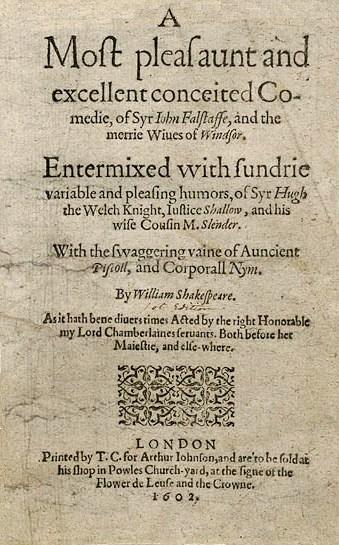
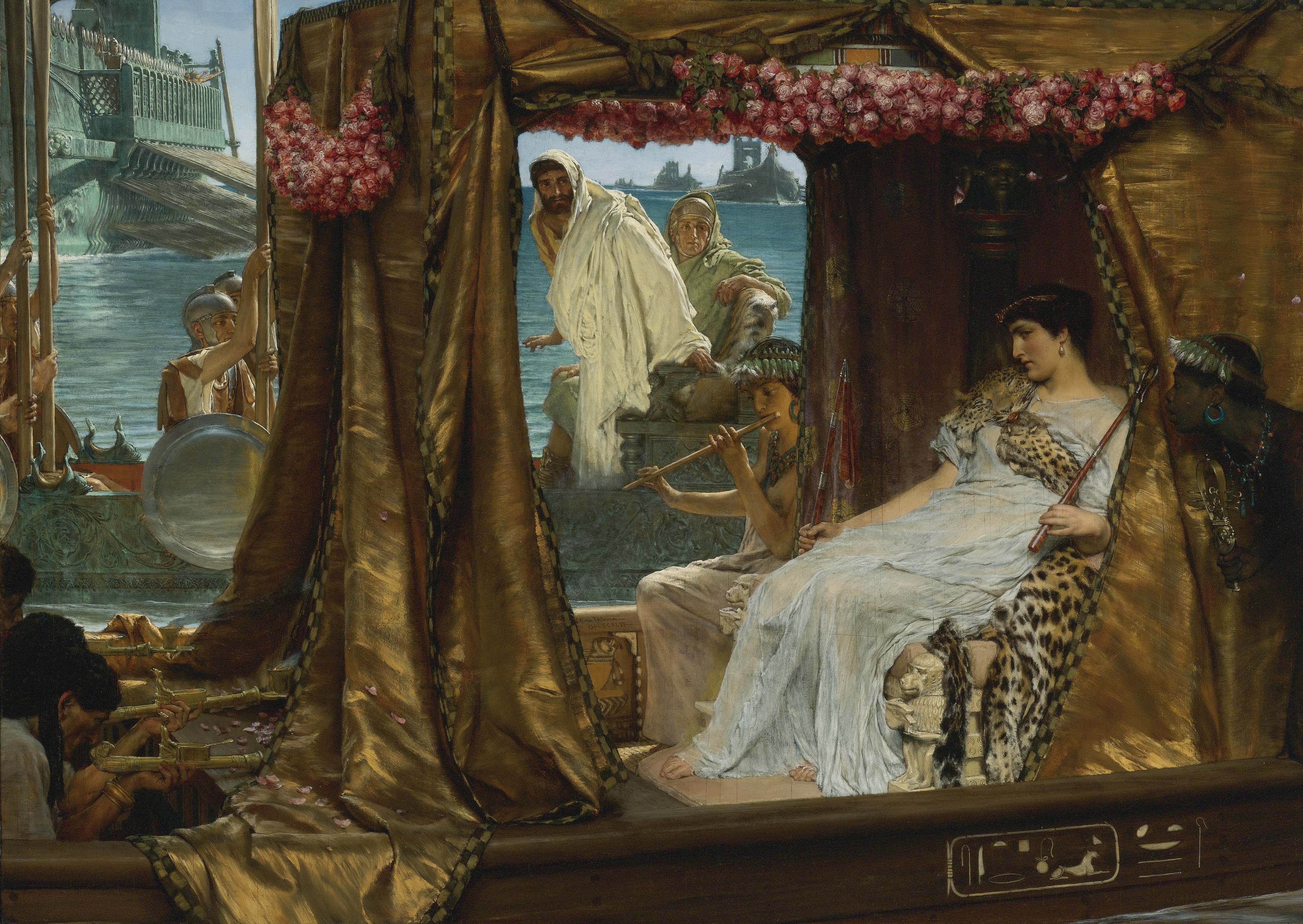

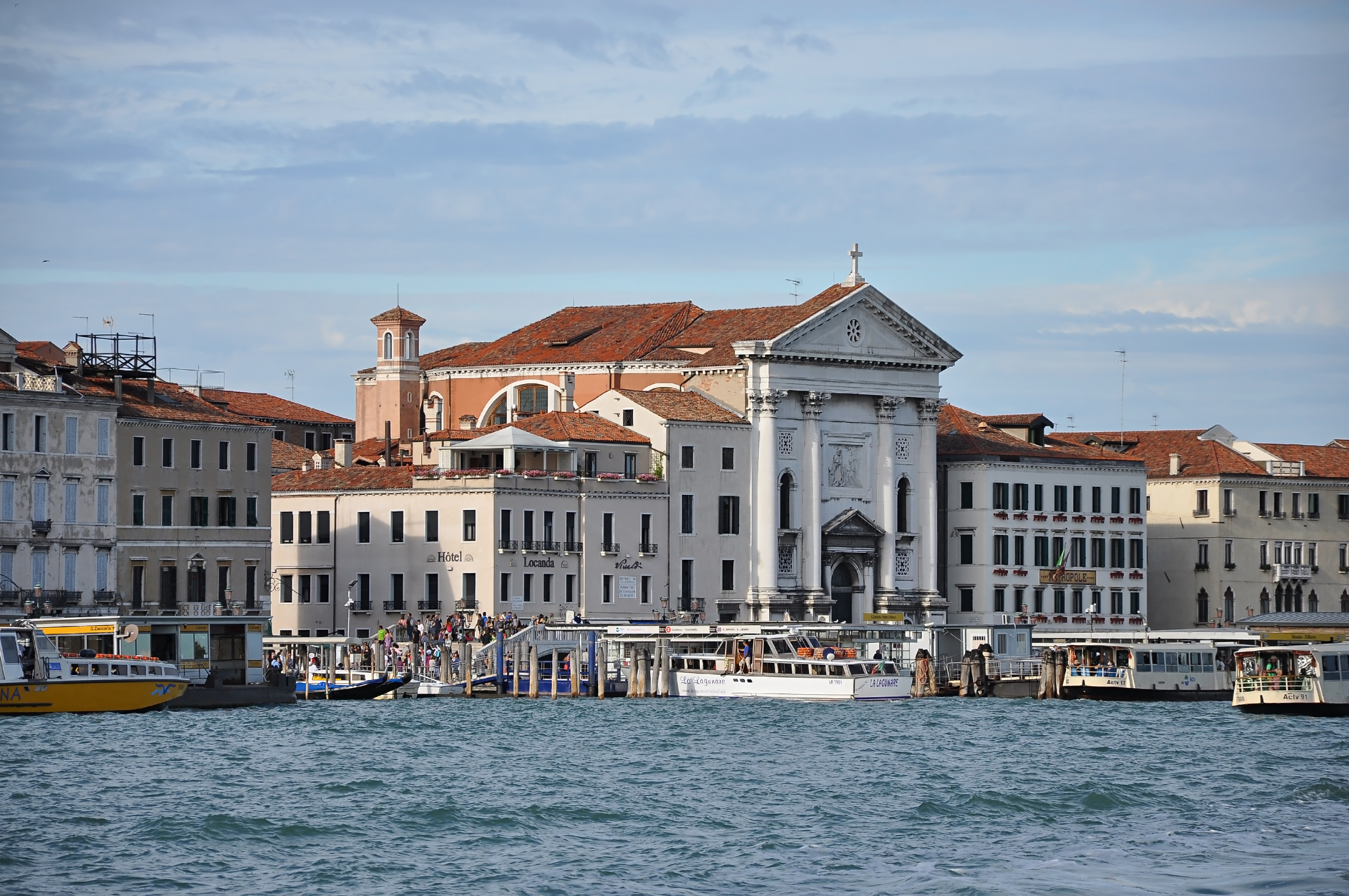


 At Home He Feels Like A Tourist