Vice film review *****

Vice, 30th April 2019

It’s been a shocking year so far in terms of getting to the cinema for the Tourist. No excuses. He has the time, the wherewithal and the desire but the theatre and concert addiction, (there have also been a few notable misses on the exhibition front), have crowded out film. There is also the not insubstantial fact that every time he looks to see what is on offer, most of it looks to be utter sh*te, and that the more intimate, thoughtful art-housey European guff that the Tourist prefers can probably wait until a subscription opportunity presents itself. This is patently a self-con, a great film should be always be seen on a big screen, but the Tourist justifies the primacy of theatre in his cultural life by pointing out that theatre is alive. The same production of the same play will vary, as much because of the reaction of the audience as the performances of the actors, and different productions of the same play ….. well just ask my chum BUD. Film, by contrast, is static. Once committed it never changes.

That doesn’t make film a lesser art form. Far from it. Just, right now, the Tourist cares more about theatre than film. And there is just too much to see and learn about even with the luxury of all the time in the world. Anyone who is able, (not even fit as the Tourist can testify), in retirement and can’t find things to do just isn’t trying hard enough. Anyway, for the moment, cinema is taking a bit of a back seat.

That’s not to say that the Tourist hasn’t racked up a fair few film classics so far this year in the discomfort of his own home. (Never managed to find a chair with the perfect construction to support the Tourist’s generous frame and the rest of the family have selfishly secured a more optimal viewing angle). Moreover, and we shall return to this at some point, the Tourist after years of mocking GoT without ever having seen it has bootcamped almost the entirely Westeros back catalogue in the past few weeks so that he is able to criticise from a position of knowledge. It’s eaten into the available hours mind. For your edification, and the Tourist’s own amusement, here is a list, in reverse chronology of the best of what I have seen since the incident that spared me from incessant wage-slavery. You will see there are a fair few “all time greats” here, as the Tourist values the opinion of experts, is easily impressed and, above all, is keen to show off his cultural “cleverness”. Comments welcome.

(BTW for those who prefer to ignore and belittle the facts expressed by those who know what they are talking about, or see conspiracy to deceive at every turn, may I respectfully suggest they give up on their jobs. After all presumably any skills they might have are either made up or valueless based on their own logic).

  • Roma
  • Strangers On A Train
  • Whatever Happened to Baby Jane
  • Okja
  • Sunset Boulevard
  • Network
  • Marnie
  • Ace in the Hole
  • La Regle de Jeu
  • Mona Lisa
  • I Am Not A Witch
  • Doctor Strangelove
  • Deliverance
  • The German Doctor
  • 13 Assassins
  • Macbeth
  • Baby Driver
  • Don’t Look Now
  • The Piper
  • Sweet Bean (An)
  • Jackie Brown
  • Pulp Fiction
  • Taxi Driver
  • Catch Me If You Can
  • The Player
  • The Last King of Scotland
  • Notes on Blindness
  • The Hunt
  • Casablanca
  • This is England
  • Dazed and Confused
  • Shakespeare in Love
  • Goodfellas
  • Look Who’s Back
  • The Look of Silence
  • Twelve Angry Men
  • A Clockwork Orange
  • Gravity
  • The African Queen
  • Great Expectations
  • King of Comedy
  • The Revenant
  • The Wicker Man
  • Foxcatcher
  • All About Eve
  • The Master
  • The Apartment
  • High Rise
  • Berberian Sound Studio
  • Chinatown
  • A Field in England
  • Elf
  • The Haunting
  • In Bruges
  • The Third Man
  • The Searchers
  • Force Majeure
  • Hidden
  • Citizen Kane
  • Brick Lane
  • Amy
  • Wolf of Wall Street
  • The Birds
  • Beasts of No Nation
  • Hannah and Her Sisters
  • Cinema Paradiso
  • Funny Games
  • The Grand Budapest Hotel
  • A Matter of Life and Death
  • Tokyo Story
  • Hamlet
  • Strictly Ballroom
  • Moon
  • Barton Fink
  • 12 Years A Slave
  • Guess Who’s Coming to Dinner
  • Night of the Hunter
  • Vertigo
  • The Godfather 1, 2 and 3
  • Mad Max 2
  • Gangs of New York
  • Withnail and I
  • Double Indemnity
  • Gladiator
  • The Madness of King George
  • The Lady in the Van
  • Groundhog Day
  • The Last Temptation of Christ
  • Palio
  • American Werewolf in London
  • Dead of Night
  • On the Waterfront
  • The French Connection
  • Rope
  • Audition
  • Blade Runner
  • North by Northwest
  • LA Confidential
  • Babette’s Feast
  • Life of Brian
  • To Catch a Thief
  • The Deerhunter
  • Seven Psychopaths
  • Trollhunter
  • The Crying Game

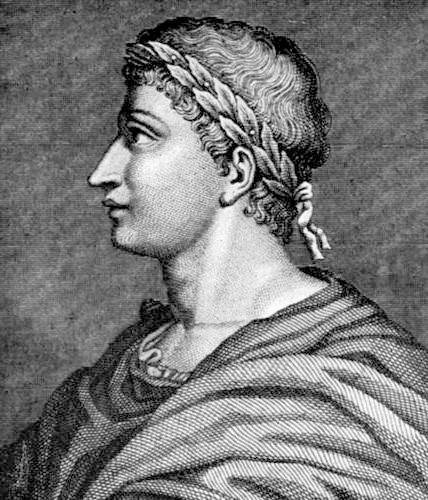
Right, diversion over, on to Vice then. Whilst this didn’t entirely pass me by when it came out and I must have read some decent reviews, it didn’t leap out at me either. Which is odd given the content, a comic hatchet job on, Dick Cheney (above) one of the architects of the America First doctrine of politics, the director and screenwriter Adam McKay is responsible for two of the funniest films ever made in Anchorman and Talladega Nights, and whose The Big Short I thoroughly enjoyed, and the cast, Christian Bale, Amy Adams, Sam Rockwell and Steve Carell, all of whom can, unlike some of their Hollywood peers, actually act. Still a slot in the diary opened up and £3.75 later (yep that’s the pensioner price, even if you aren’t a pensioner) off I trotted.

I loved it. I can see that half of America, and presumably Blighty, would hate it because of its political stance, and many more because of its breathless construction but this, for me, is what makes it so brilliant. Adam McKay doesn’t f*ck about taking sides when it comes to satirising Cheney’s legacy, even as he questions his own veracity, and he mixes up chronology and technique, (a mystery narrator, documentary footage, fourth wall breaks, a nod to Macbeth, crass symbolism, voice-overs, flash-backs, a meta focus group, even a false ending). A kind of cinematic Brechtian satire, familiar from The Big Short, but here more biting and certainly funnier.

Dick Cheney was the Vice President under George W Bush from 2001 to 2009, probably the most powerful in history, and certainly the least liked on his departure. After studying politics at Yale and the University of Wyoming (his home state), he served as an intern for Donald Rumsfeld in the Nixon administration, rose to became Chief of Staff under Ford from 1975 to 1977, represented Wyoming in the House of Representatives from 1979 to 1989, then became Secretary of State under George HW Bush from 1989 to 1993, overseeing Operation Desert Storm in the First Gulf War. He was Chairman and CEO of Halliburton during the Clinton regime before being chosen as GW’s running mate. He was a key player in the response to 9/11 and the Global War on Terrorism, sanctioning wire-tapping and torture, and promoting the invasion of Iraq. Together with his acolytes, including Secretary of Defence Rumsfeld, “Scooter” Libby, David Addington, John Yu and Karl Rove, he expanded the notion of executive privilege and the unitary executive theory and legitimised enhanced interrogation techniques such as waterboarding.

Now Republican administrations, as far as this laymen can observe, seem to function best when there is a genial chump as front man, letting the machiavellian brains behind the throne crack on with doing the nasty stuff. Cheney is particularly important because he was, as even this satire shows, an extremely intelligent man and gifted political operator. It strikes me that the problem with the current administration is that the chief is anything but genial and that there is, in contrast to the relationship between Cheney and GW, no hint of intelligent design behind him, as the GOP is either consumed by an ideology of opposition or, more prosaically, no-one knows what the POTUS is going to do from one tweet to the next, least of all him. Mind you I suppose the caprice, narcissism, limited attention span and questionable work ethic combine to limit the damage, though others are worryingly taking advantage notably in the composition of the judiciary.

What drives these blokes to behave like this? Money? For sure, though Cheney could have made more sticking with Halliburton, especially after smoothing the path for big oil at home and abroad, (specifically in Iraq as Vice shows). Legacy? That only comes once influence is cemented and, if we are to believe the film, Dick only got going after a kick up the arse from wife-to-be Lynne. Faith? Cheney was a Methodist but his religious belief didn’t seem to be at the core of his identity. Ideology? Of course but, in an early amusing scene, Cheney’s politics only become clear to him after he gets going. Not sure I believe that. Our politics are a function of upbringing and environment shaped by experience. For many the critical faculty that higher education brings leads to a politics based on what one stands for. For some though it simply reinforces what they are against. So “conservatives” like Cheney are against rights for minorities. Against change. Against other ways of thinking about the world. Against global co-operation except where it suits their definition of, in this case, America’s interests. Against the “other”. Against collectivism. Against intervention in the working of “free” markets, ironic since “free” markets always seem to require constant intervention in order to be “free” and to resolve the inefficiencies built into the (still required) price mechanism.

Of course when ideology is confronted by immediate, personal reality we can all become a little unstuck. In Cheney’s case this challenge came in his refusal to back GW and his party on the issue of same sex marriage for the very reason that his younger daughter Mary is a lesbian. The film implies that even this principle was abandoned to offer endorsement to his other daughter, Liz’s, successful campaign to become congresswoman for Wyoming. (US politics being more nepotistic than Ancient Rome it would seem). There is plenty of material which documents Cheney’s more equivocal activities whilst in office, notably the Washington Post’s 2007 appraisal and various documentaries, and DC himself was prone to be candid at times, notably his “so” response to a journalist’s remark that the US people had lost confidence in the Iraq War. He has also published a couple of lengthy memoirs which centre on his doctrine of American exceptionalism and influence and gives his side of this ‘story”.

Still it is up to you how much of Adam McKay’s polemic you wish to believe. That’s the problem with knowledge. Even the bit based on experience and perception can be misleading. And, in an ever complex world of information, we seem to getting into a right pickle when it comes to knowledge based on education, that is what comes to us from third parties, outside our own experience. No wonder we are all so confused and angry.

Anyway back to what drives men like DC, almost always men, who are so convinced of their righteousness that they never seem to question what they do or why they do it. Whether their actions are just or whether they simply serve their interests or beliefs, (generally strongest in the abstract fictions that bind us together: money, nationhood, history, culture, freedom, religion). If you ask me they are most dangerous not when their beliefs and values or being formed, nor when their sense of their rectitude is at its strongest in their urge to lead and save us, but when they exercise power simply because they can. I don’t know anything about the academic literature on power but thinking about this will set me on my way. There is a line early on from Rumsfeld which identifies the young Cheney’s dedication to power, loyalty and discretion (read, hiding stuff). And the scene prior to this where Rumsfeld just collapses into giggles when DC asks him “what we believe in”. That just about sums it up.

Anyway it looks like DC ended up as one of this men, a huge influence on where we are now. And Adam McKay’s film, underneath the laughs, and there are lots of them, serves to highlight this. His early labouring days, the hard drinking which led to a drink driving conviction, twice, the Yale drop-out, draft deferments, votes against sanctions imposed on the apartheid regime in SA and against the early release of Nelson Mandela, Desert Storm and the Panama invasion, cuts to military spending, intervention in Somalia, accounting irregularities at Halliburton, the 2000 election with the contested Florida outcome, the creation of a transition office ahead of the result, claims that Iraq possessed WMD and that Saddam Hussain was linked to al-Qaeda, the genesis of Islamic State, the pressure exerted on Colin Powell at the UN, lobbying for big oil and weakening environmental controls, concealment of documents, the Plame affair, the Taliban’s assassination attempt, his various offices in the House and in the Senate, his heart problems and, amongst all of the above, the event for which he is best known in popular imagination, shooting his mate in the bum on a quail hunt. Mr Kay certainly had plenty to choose from when making his “bio-comedy-drama” and most of it gets in one way or another.

The creative havoc that Adam Kay has unleashed on the material though needed to be balanced by a superb central performance and this he gets from Christian Bale. He has put on the pounds to look the part, with great make-up work, and, I assume, he has captured Cheney’s alarmingly blunt, charmless manner to a tee. Physically slow, mentally quick. Scarily self-possessed even when suffering a heart attack. Most intimidating when pausing mid sentence. Obviously CB was never going to win any meaningful awards given the nature of the film but it’s easy to see why he was nominated. As good as his Patrick Bateman, a nihilist from the previous decade.

Sam Rockwell as GW Bush, Steve Carell as Rumsfeld, Tyler Perry as Colin Powell and scores of others, (even Alfred Molina pops up as a waiter in a fantasy sequence, delivering a menu of euphemisms for atrocity), don’t really get much opportunity to inhabit their characters, but Amy Adams as loyal wife and supporter Lynne is utterly convincing.

Fragmentary, full of holes, partial, wild, high-concept but very funny. As Adam McKay indicates at the outset the creative team here “did its f*cking best”. They certainly did.

The Remains of the Day at the Yvonne Arnaud Theatre review *****

The Remains of the Day

Yvonne Arnaud Theatre, Guildford, 13th April 2019

Right all you good citizens of Derby, Salisbury, Cambridge and Bristol. There is still time for you to book tickets to see this excellent adaptation of Kazuo Ishiguro’s celebrated novel The Remains of the Day. A very well crafted script by Barney Norris, (just the fellow to write pensive studies of “Englishness” based on his previous work), in an excellent production from one of our premier touring companies Out of Joint, thoughtfully directed by Christopher Haydon, (latterly of the Gate Theatre), with a pair of sparkling central performances from Stephen Boxer and Niamh Cusack.

Now the Tourist has never been much good at reading. Nothing ever seems to sink in without repeated exposure. Especially with fiction. And especially with fiction he read in his youth. A vague recollection of the big picture, a few specific episodes and a general “I like that author”. Not like the SO who can trot out plot, character, meaning, style, context, like an A* student even for things she read decades ago. Maybe this low level intimidation is what stops the Tourist picking up a book except when on hols. That and spending too much time at the theatre and writing this stupid f*cking blog.

Anyway you probably. like the Tourist. know this work more from the 1993 Merchant-Ivory film with Anthony Hopkins and Emma Thompson as Stevens and Kenton, both quietly upstaged by Peter Vaughan as Stevens Senior. Nominated for 8 Oscars, won none. Mind you that was the year the Academy rewarded Spielberg for Schindler’s List. Fair dos. I see that one Harold Pinter wrote an original screenplay for the film when Mike Nichols was slated to direct. Bits of Harold’s work made it to the end but he removed himself from the credits. Might have been a very different film with him and Mr Nichols in the driving seat.

Instead I remember the central, unrequited, relationship between the stiff Hopkins and the droll Thompson, the look and feel of the thing, (Merchant-Ivory being allowed to film in any toff’s house at the time such was their fame), and the almost elegiac take on the history under examination, the 1950’s and the 1930’s. Yes the politics were there but not as sharply delineated as in this play. Class, deference, knowing one’s place, belief in the wisdom of the elite, are common to both treatments but I was far more struck in this treatment by the desire of many in the aristocratic class in the 1930’s to broker a deal with Hitler, to appease, than I was in the film. And specifically the reasons why, the guilt at having inflicted so much economic misery on Germany post First World War, as well as the memory of the human carnage of that war, and, of course their anti-semitism, which motivated them to pursue this course.

It may just be that, like my reading of the book, I just don’t remember the film very well. Which is salient given that The Remains of the Day is a memory book/film/play. Or maybe more specifically a memory of a history, personal and political, book/film/play. To solve the “problem” of butler Stevens remembering the events at Darlington Hall in the run up to the Second World War, (as he undertakes the road trip in 1958 to pay the visit to the ex-housekeeper, Miss Kenton, prompted by her letter), the film makes generous use of flashbacks. And a cast of thousands.

Well maybe not quite but tons of extras and actors of the calibre of James Fox, Christopher Reeve, Hugh Grant, Michael Lonsdale and Tim Pigott-Smith to fill all the named characters, (trust me, a lot of people found their way to Darlington Hall). Even the minor parts are filled by the likes of Ben Chaplin, Patrick Godfrey, Peter Eyre, Pip Torrens and, the go-to actor for Germans in British films, Wolf Kahler. Blimey even a young Lena Headey, Cersei in you know what, gets a look in. Basically if you could do plummy or gor-blimey, and you weren’t engaged elsewhere, you got a part in the film.

No such technology of budget for Out of Joint and Messrs Haydon and Norris. So a fair bit of character pruning, some adroit exposition to incorporate those written out, and extensive doubling. But this is not just any old “exit Act 1, turn up as someone else in Act 2 with new costume and wig” stagecraft. This is seamlessly executed, on stage choreography, a hat, a coat, a pipe, to turn a cast the cast of 8 into the staff and guests of pre war Darlington Hall and the locals Stevens meets on his pint-sized odyssey of self-discovery. This means that the ghosts of the past are always present. Very clever and very easy to follow.

Stevens devotion to duty even in the face of the shocking demand by Lord Darlington to sack the two Jewish maids, Kenton teasing Stevens about his book, Stevens carrying on his duties even as his father dies and Mme Dupont, (a gender change to accommodate the casting pyrotechnics), whinges about her feet, Reginald’s increasing awareness of what his godfather is up to, Stevens disowning the past in his conversations with Dr Carlisle, the mocking Stevens is forced to undergo from “Sir David” the composite collaborator with Lord D, the radical conservatism, or conservative radicalism, espoused by everyman Morgan in the pub and, of course, the extraordinarily moving scenes between Kenton, or Mrs Benn later on, and Stevens, as the happiness they might might have had slips through their fingers. You flipping noodle Stevens.

All of these scenes are memorable, providing plenty of minor key drama, but the best things about the play are the performances of Mr Boxer and Ms Cusack. I’ll stick my neck out here and say that for me, and remember this is based on my faulty memory, they capture the essence of Stevens and Kenton more that Hopkins and Thompson in the film. The ten year age gap between these actors seems more convincing than the 20 years of the film. Mr Boxer seems to me to bring out more of the interior life of Stevens, the way he buries the emotions that he plainly has in the cause of maintaining the dignified exterior he believes is required of him, the way he is puzzled by, but still craves, Miss Kenton’s attention. Ms Cusack seems more playful as Kenton, holding back the regret until the very end. the structure of the play lends more prominence to the conversations in the pub and the way this changes Stevens’s perspective.

The directness of the political dilemma, and its flawed morality, is far more pointed here than in the film. And the reliability of Steven’s recollection is more nuanced as in the book, (yes I took a quick peep again whilst writing this). In fact generally Mr Norris seems to capture the essence of the book in a, er, more reliable way that the period-drama aesthetic of the film does.

The rest of the cast step up. Miles Richardson captures the naivety, in life as well as politics, of Lord Darlington and the middle class bonhomie of Dr Carlisle. Sadie Shimmin offers us an uncomplicated pub host in Mrs Taylor alongside the hauteur of fascist sympathiser Mme Dupont. Edward Franklin warms to his task as the bespectacled, conscientious godson Reginald, (drawn from the film not the book), Patrick Toomey is the arrogant American politician Lewis (and, I think Farraday, Steven’s current employer) and Pip Donaghy marks out Stevens Senior decline. Top marks to Stephen Critchlow though as he he shifts from Morgan to the real “villain” of the piece the anti-semitic Sir David.

I see a lot of plays but this is one of the more satisfying I have seen so far this year. “Knowing” the content helps of course, and, from a personal geographical perspective a hop to Guildford, and the fine design and accumulated history of the Yvonne Arnaud Theatre, was no inconvenience. I get that Out of Joint rightly values its touring credentials and I am grateful to the Royal and Derngate, (on my list to visit), and the Oxford Playhouse for co-commissioning Barney Norris’s script. But I am stunned that this hasn’t secured, as far as I know, secured a berth in London.

The familiar story, the quality of the acting, the script and the production, (Lily Arnold’s set is another stand-out as is Elena Pena’s sound design), the themes it explores and their contemporary echoes – the dangers of passivity and nostalgia – all would suggest to me that this would pack them in in a mid sized West End venue. There is plenty for the customary theatre demographic to enjoy, (they certainly did on this Saturday afternoon), but, with the right tone, I reckon some younger folk could be persuaded. I know that Out of Joint’s last major production, Rita, Sue and Bob Too, had a false start, understandably, before eventually gathering plaudits as the Royal Court but most of the rest of their historical efforts have popped up in the capital. This, whilst still posing some thorny questions, looks to be a far more commercial proposition than many of those predecessors.

Barney Norris plainly says that “the play must be unlike the book or the film or it shouldn’t exist” in the programme. Fair dos. But, whilst its structure and perspective match his manifesto, there is more than enough of both earlier manifestations to justify your attendance should you know them.

Over to you nice people at ATG.


Mother Courage and her Children at the Royal Exchange Manchester review ****

Mother Courage and her Children

Royal Exchange Theatre Manchester, 28th February 2019

Brecht. Royal Exchange. Headlong (This House, People, Places and Things, Labour of Love, Common, Junkyard, 1984, The Glass Menagerie, American Psycho and Enron – and that’s just what I can vouchsafe), Anna Jordan adapting, Amy Hodge, the Associate Director alongside Jeremy Herrin at Headlong and Julie Hesmondhalgh as Mother Courage (“MC”) herself.

Strap yourself in. This was bound to be an exhilarating theatrical ride. And so it was. Full of great visual moments. Even if the transposition of the story to a future (2080’s) European war, Reds against Blues in a continent divided up by grids, probably subtracted from, rather than added to, its contemporary relevance. Brecht finished Mother Courage in 1939 and he pointedly set it in the Thirty Years War of 1618 to 1648, proportionately the most destructive conflict in human history, as a message of the forthcoming horror. The greatest “anti-war” dramatic statement of all time? Probably, though it is more analysis than fulmination. One pf the greatest plays of the C20, and all time? Certainly. So f*ck about with it at your peril.

On the other hand the whole point of BB’s epic, Verfremdungseffekt, theatre is to set the audience on its toes and get the grey matter working overtime, and to let the theatre makers create their own take. Which they certainly do here. With the utmost respect to Ms Hesmondhalgh who is predictably a mighty presence, the star of the show is a repurposed ice cream van, standing in for the cart of the original text. Not something I expect to write again on these pages. Joanna Scotcher’s design looks like it came from it was sneaked out of a forgotten storeroom at a Hollywood studio marked “Vietnam War/Mad Max for charity”, right the way down to Yvette’s (Hedydd Dylan) pink plastic “catsuit”. There isn’t much in the way of fixed bric-a-brac as it should be in Brecht and as is warranted by the Royal Exchange’s in-the-round space. Which left the van, sans engine but still with its jingle intact, free to perambulate across the stage, pulled, before their respective early demises, by each of MC’s three kids, Eilif (Conor Glean), Swiss Cheese (Simeon Blake-Hall) and Kattrin (Rose Ayling Ellis). Foods, drink, water, shirts, uniform, clothes, guns, furniture, you name it, MC stocked it in the ramshackle van. Everything you need to profit from a prolonged war. It even doubles up as a nightclub.

Music (Jim Fortune), which nods back to Weill, sound (Carolyn Downing) and lighting (Lizzie Powell) was similarly pimped up to match the setting and aesthetic. Musician Nick Lynn, positioned in the circle, served up, often at MC’s request, a barrage of sound at times to set alongside some of the gentler, folksy numbers. And Movement Director Raquel Meseguer put the hours in to marshal the nine strong cast through the 12 scenes (covering 12 years of the conflict).

Now the Tourist knows from Anna Jordan’s other recent, superb, work with Frantic Assembly, The Unreturning, that she is the doyenne when it comes to ambitious, physical theatre. And so it proves here. This adaptation comes in at a couple of hours. It can drift closer to three. With the on-stage intros to each scene and some fairly direct exposition it is easy enough to follow even for the uninitiated, and all the narrative elements are intact, but it scampers along at a heck of a lick and, with all the visual stimulus, the constant motion, the soundscape, the dizzying array of accents, there just isn’t much time to think about what is going on and what Brecht is telling us.

Not a complaint. The production looks and sounds so good that this is easily forgiven but don’t come here looking for any gestural detail in the main relationships, between MC and the children, or between MC and respectively the Cook (Guy Rhys), the Chaplain (Kevin McMonagle) and Yvette. Julie Hesmondhalgh and the rest of the cast, notably these three, are too good for Brecht’s messages not to sink in but the true horrors, the deal with the Recruiting Officer to conscript Eilif, Swiss Cheese’s torture, MC’s denial of her son after the botched ransom, Kattrin’s rape, Eilif’s execution, the Cook’s rejection of Kattrin and Kattrin’s sacrifice don’t always register as strongly as they might. Mind you the bleak conclusion certainly does: MC taking up the van’s harness as a single fire burns out.

MC’s determination, even desire, to profit however from the war, despite the damage it does to her and those around her, does ring clear. Julie H is a ballsy, artful fiercely protective but, ultimately wary and realistic, MC. As she should be. This isn’t Hollywood – we are supposed to engage emotionally with the characters but not be emotionally manipulated by them. Ultimately we aren’t really supposed to sympathise with MC, just to understand why she has to act as she does, to see the damage that war does to those at its periphery as well as the fighting protagonists. MC thinks that her business is the way to safeguard her children. Manifestly it is not. We see that. She cannot.

And to see how war, when churned through the prism of difference and ideology, is an integral part of the economic sub-structure, orchestrated by the powerful. One day perhaps Brecht’s lesson will have no relevance. No sign right now though we should remember that the global and supra-national institutions which were built post WWII to rein back our worst excesses have largely succeeded in restricting conflict to the national, or intra-national, level, though still often as proxies for economic accumulation.

Which is why MCAHC will go on being restaged and re-imagined (Lynn Nottage’s Ruined for example) for new audiences to watch and learn. At the matinee performance the Tourist attended there were, as is to be expected, throngs of school students. They seemed to be all over it. I assumed it was still some sort of set text for drama students. Apparently not. Only Brit playwrights good enough for the Government when it comes to reaching GCSE drama. Interesting in the context of the breakdown of the political order in Europe that this adaptation presages. Still we should be grateful that this shower of a Government hasn’t interfered with syllabus and teaching for, what, all of a couple of years. And, unless the nutters back down, they won’t be able to for many years to come as they sort out the never-ending shower of sh*t that is coming down the tracks once we have “Brexited”. It’s only just begun folks. And not in a nice, Karen Carpenterish kind of way.

Got me to thinking about what our proud youth study for drama at A level. Faustus, Lysistrata, Woyzeck, Antigone, Much Ado About Nothing, A Servant to Two Masters, Hedda Gabler, The Caucasian Chalk Circle, Accidental Death of an Anarchist, Jerusalem, Yerma, The Glass Menagerie, Metamorphosis, Cloud Nine, Our Country’s Good, Bronte, Earthquakes in London, Stockholm, The Crucible, The Visit. Across the various boards. Bloody Hell. If they master that lot then I have nothing to fear for they will know everything there is to know about the human condition. Drama is integral to democracy and citizenship. Ask Aeschylus, Sophocles or Euripides.

Ovid’s Metamorphoses at the Vaults Festival review *****

Ovid’s Metamorphoses

Pants on Fire, Vaults Festival, 23rd February

Seven years in to the Vaults Festival and finally the Tourist takes the plunge. If there is a cutting edge to avoid you can be sure the Tourist finds it. It is not even as if the Waterloo location is inconvenient. It could hardly be more accessible. Still better late than never.

Last year the Festival, which I read somewhere is now the biggest outside Edinburgh, attracted some 70,000 punters over 8 weeks. This year there are over 400 shows from around 2000 artists and performers. You pay £15 or so for an hour or so’s entertainment. The organisers get 30% of the take to cover costs, the artists 70%. That, I am assured, is way more attractive for the creative that the usual economic model. So everyone’s a winner.

Especially when the hour, or in this case, 80 minutes or so is of the quality of Pants on Fire’s Ovid’s Metamorphoses. Now I could bullshit you and pretend I have read Ovid’s magnum opus, basically a history of the world from the creation to the deification of Julius Caesar, part mythic, part factual, in the form of a narrative poem made up of 12,000 lines over 15 books and incorporating over 250 myths. I haven’t. But, such is the pervasive nature of these myths in Western culture, I am, like any reasonably aware culture vulture, au fait with most of the stories.

And that is all you need to enjoy this show. The selected stories are, adroitly, set in Britain during WWII. Think period uniforms. Each of the chosen myths, (I would have been happy to watch the cast of seven take on the entire 15 books, but I guess they, and we, had homes to go to), takes the form of a sketch if you will, with narration, performance, on stage music, various props and enterprising video, lighting and sound design. There is even some puppetry and animation. Whilst the Crescent may be the biggest of the various venues across the Festival this is still a tiny stage so the creative team, led by director Peter Bramley, had to be pretty ingenious to fit it all together. The four panels centre stage which served as backdrop and screens seemed to be in constant motion. Favourite setting? The Underground as the Underworld. Genius. Favourite transformation? Io complete with tin can hooves and gas mask. Double genius. Favourite scene? Narcissus as Hollywood idle with Echo as usherette. Triple genius.

Now I can’t pretend I clocked all of the stories on show but the following were all name-checked. The Creation, Sirens, Gorgons, Apollo, Daphne, Io, Mercury, Cadmus, Diana, Semele, Bacchus, Tiresias, Narcissus, Echo, Cupid, Icarus, Salmacis, Hermaphroditus, Perseus, Arachne, Marsyas, Medusa, Jason, the Minotaur, Hercules, Orpheus, Eurydice, Midas, Achilles, Ajax and Ulysses. At least I think they were. I might have got confused with Unmythable from Out of Chaos that I saw a week or so later, equally as entertaining. Anyway the point is that Metamorphoses is innovative, imaginative and above all very, very funny. I gather that Ovid’s poem ticks the form box marked epic but also takes in the elegiac, tragic and pastoral along the way. It is certainly keen to mock and subvert its own pretension; it is properly “meta” in the modern argot. This is wryly captured in Pants on Fire’s routines. As is the theme of metamorphosis or transformation from one form to another, and the power of love, Amor, to upset various narrative apple carts.

Pants on Fire was founded by AD Peter Bramley, who trained with Jacques Lecoq, in 2004, alongside Heather Winstanley who devised the visuals and produced Ovid’s Metamorphoses. Lucy Eggers composed the original music for OM, the Andrews Sisters style chorus numbers being one of the highlights. Whilst POF have created a number of shows it is this that has garnered awards and toured extensively following its debut in 2010 (at the dear old Greenwich Theatre and then Edinburgh). It is easy to see why. (I do like the sound of their Splice mind you, an hour long theatrical tour through the history of cinema). They are currently working on creating a festival of one person, performance “shorts”. Sounds good.

The cast here included Beth Lockhart who is the other principal of Pants on Fire along with Adam Boakes, Max Gallagher, Sindre Kaurang, Chloe Levis, Bridget Mylecharane and Rosie Ward. A splendid ensemble largely drawn from Rose Buford College where Peter Bramley teaches movement. There were moments when the timing went awry and accents wobbled but frankly that is all part of the improvisational charm.

Theatre is about transformation and can be transformative. Ovid was ploughing the same furrow. Certainly one of the best hour’s entertainments I have seen in this or any other year. It will be back. Don’t miss it.

I Am Ashurbanipal exhibition at the British Museum review ****

I Am Ashurbanipal King of the World, King of Assyria 

British Museum, 15th February 2019

Crikey. Those Assyrians had a way with reliefs carved in gypsum/alabaster. Even if it was primarily all in the service of terrifying aggrandisement. The King hunting, the King and his soldiers slaying his enemies, the King relaxing with the ladies. It is all about the big man. Seeing these panels adorning the main rooms of the Empire’s palaces, painted in bright pigments, you certainly would have known who was the boss.

The Neo-Assyrian Empire took in most of modern day Iraq, Syria and Iran from 911 BCE to 612 BCE and Ashurbanipal was in the hot seat at its zenith from 668 BCE to 627 BCE. One way or another the Assyrians had been a big noise in the region for the previous 1500 years or so but it is only when the factions came together, and decisively defeated their neighbours, that the Empire was able to take in Cyprus, the Eastern Mediterranean, Eastern Turkey, Egypt and the Persian Gulf. The Neo-Assyrian Empire kicked off with Adad-nirari II but it was Ashburanipal’s daddy, Esarhaddon, the son of a “palace-woman” not the Queen, who did the blood-thirsty groundwork for his favourite son. Even so little Ashurbanipal had to initially share with big brother Shamash-shum-ukin who ruled the rebuilt Babylon.

Whilst Ashurbanipal’s geographical inheritance was vast it needed looking after. First he had to take on the various Empires in Egypt including the Nubians. Then he had to decisively crush the Assyrians’ arch-enemies, the Elamites, and finally he had to take on his own older brother when Babylon rebelled. There is plenty of pictorial and written evidence to show just how cruel Ashurbanipal could be when it came to waging war but, as all you students of ancient history know, you can’t build an empire on brain-dashing alone. You needs brains that stay in heads as well. And this is where the exhibition steps in showing just how learned the great king was, (he had been trained to rule, and to spy and intrigue, from an early age), as he amassed his great Library, oversaw an unrivalled system of communication across the Empire, negotiated treaties and vassalships too hold together his various, proud peoples and turned Nineveh into the greatest city on Earth. He wasn’t troubled by modesty mind as the translations show. It all went to sh*te when he died, isn’t that always the way, but what is on show graphically reveals just how magnificent, (assuming you were on the right side, and ideally you weren’t a lion), it all was at its peak.

Now the British Museum has the lion’s share (haha) of the world’s Assyrian artefacts so curating this exhibition wasn’t too much of a struggle, I imagine. Even so much of this material is not on permanent display, there are plenty of astonishing loans on show and the way the story is told, as is usual at the BM, is superb. Most Assyrian art was lifted in the mid C19, (the Victorians went mad for it), having previous been ignored by scholars in Europe and the US. You can argue about the ethics of such an enterprise, but then again you might also want to consider the centuries before when the exquisite calcite alabaster palace reliefs, lamassu and large scale statuary went walkabout, and you also need to think about the wholesale destruction of what remained in situ by ISIS especially around Mosul. At the end of the exhibition this part of the story is highlighted including the work of the BM in supporting and training local archaeologists to examine and conserve what is left.

Highlights? The small-scale lion hunts, (though I reckon, based on the casual manner in which Ashurbanipal is despatching the beasts, that these reliefs may incorporate a little poetic licence even if they are anatomically perfect) . The Garden Party in the palace of Nimrud. (Let us hope Queen Liz doesn’t take up the custom of decorating the Buck Palace gardens with enemy heads). The wall of cuneiform on clay tablets, a summation of the Knowledge of the day, (a word to the wise – if you want your library to resist a fire, use clay). The copy of the Epic of Gilgamesh, the first ever work of literature. The battle scenes illuminated with modern technology. The “painted” relief similarly enhanced. The lamassu, the human headed bull/lions with wings that stand guard. (How do you move these things? With great care I should imagine and without enlisting the services of the congenitally weak and clumsy like the Tourist). The sphinx of his arch-enemy. Taharqa. The imported Nimrud ivories. The decorated bronze helmet.The tiles. The obelisks. The statue of the big fella himself, alongside his bro. The Elamite art, pedestrian when compared to its Assyrian overlords.

The thing with the reliefs is that not only are they historically and aesthetically pleasing and interesting but they also tell an immediate story. It is this clear, (well, with a bit of help from the curators comments), narrative which makes this art and this exhibition special even if you aren’t normally one for the “dusty” as LD terms most History. Obviously some of the content, the pre-flaying, tongue-ripping, the bone-grinding, the beheading, appeals to our voyeuristic cravings, (don’t worry it isn’t TOO realistic), but it is the muscle, the movement, the energy, the vivid impression of something happening (even if the perspectives are that odd mix of profile and frontal/three-quarter that characterised pre-Grecian art), that makes it special.

And a lesson to all would-be tyrannical despots. If you are going balls-out to subjugate your people, do show an interest in reflecting your “glory” in art. Otherwise no-one will remember you.

Rosenbaum’s Rescue at the Park Theatre review ***

Rosenbaum’s Rescue

Park Theatre 200, 29th January 2018

Not quite sure why this didn’t entirely work for me. Alexander Bodin Sophir takes an intriguing story, the escape of 7500 Jews by boat from Copenhagen to Sweden in 1943 just before the Nazis were about to round them up, and puts it into the mouths of a Swedish historian, his German daughter, his Danish-Jewish friend and the latter’s wife as they are holed up at the couple’s house following a power cut. Mr ABS, in this his first play, has the passion to tell the story, his own grandparents escaped this way, and he has put the hours in research-wise, unsurprising given his day-job as documentary maker. He also contrives a punchy, if slightly overwrought, twist to proceedings at the end.

Actually I think I do know why. In the effort to cover all the contended reasons as to how and why these events happened, and to elide this with dramatic personal disclosures, ABS perhaps asks his text and dialogue to do just a bit too much heavy lifting and makes his characters just a bit too predictable.

It is Hanukkah, 2001 in the Scandi chic interior (courtesy of designer William Fricker) of the house of Abraham (David Bamber) and Sara (Julia Swift). They are preparing for a visit from Lars (Neil McCaul) and Eva (Dorothea Myer-Bennett). Lars is researching the events surrounding the evacuation. Abraham, as an observant Jew, is convinced that it was the result of the heroic resistance of the Danish people, and divine intercession, whilst Lars, an atheist, is convinced there was collusion between the Danish government, which had avoided the excesses of occupation elsewhere in Europe through flexible accommodation, and certain sympathetic Nazi higher-ups. Personal recollection, both men where 8 in 1943 plays a part as their friendship arose from a family connection formed at the time. Memories prove somewhat flawed and events open to interpretation especially when a few McGuffinish momentos are chucked in.

Cue snowstorm to ensure the debate rages and then lay on top some past history between the calm Sara and Lars and the fact that Eva, a novelist, sees her identity stemming largely from her German mother, now divorced from Lars. It isn’t tricky to guess the outcomes but all this intrigue does detract from the historical interrogation, and vice versa. ABS’s dialogue smartly, and comically, undercuts some of the more hyperbolic exchanges, notably from Sara and Eva (I am very keen on Dorothea Myer-Bennett’s no nonsense acting talent – here she did a lot with very little). The versatile David Bamber is always a joy to watch whatever he is doing (last seen by me as Noel in Julia Davies’s gloriously smutty Camping – and indelible memory) and the is no exception. Neil McCaul, as the “truth is everything” academic is maybe asked to turn up the apoplectic dial once too often but this does serve an obvious purpose.

The competing narratives of what actually happened are well articulated in Kate Fahy’s production, but she could maybe have cranked the pace up. The parallels with present day Denmark, and by implication the rest of Europe, get a little lost and the science vs religion arguments are a bit heavy handed. I came out actually wishing ABS hand found a way to simply focus on the arguments about what actually happened, and therefore the “truth of history”, in a much shorter double-hander, and reversed the passive-aggressive relationship of Abraham and Lars. Alternatively the personal drama could have proved the catalyst from which the historical argument obliquely emerged.

Still learned a lot. That’s enough.

The Unreturning at Theatre Royal Stratford East review *****

The Unreturning

Theatre Royal Stratford East, 24th January 2019

Denizens of Leicester, Swansea and Oxford. Consider yourself lucky. There is still time for you to catch the tour of Frantic Assembly’s The Unreturning which has already travelled to Plymouth, (the Theatre Royal who cannily commissioned it), Southampton, Edinburgh, Liverpool, Birmingham and Chichester, as well as Stratford East. For make no mistake this is a fine piece of theatre that deserves your attention for a number of very good reasons.

First off Anna Jordan is clearly a very talented playwright. I haven’t seen Yen, her much lauded breakthrough play, though on the strength of this I really hope it is revived soon. I am though looking forward to what she brings to Brecht’s Mother Courage which she has adapted and which has just opened at the Royal Exchange Manchester.

In The Unreturning she has interwoven the stories of George, Frankie and Nat, who return to their home town of Scarborough, damaged from their experience of war. In 1918 George is shellshocked after his experiences in the trenches in WWI and his wife Rose cannot cope with his breakdown; in 2013 disgraced Frankie is not welcomed back as a hero from his turn in Iraq and cannot put a lid on his anger; and Nat is stricken by guilt about the brother Finn he left behind after escaping as a refugee to Norway in 2026 from a future British civil war. Scarborough may be home but they are not welcome. Time may move on but the issues the returning combatants face remain the same.

This is no naturalistic drama however as Ms Jordan has created a far more episodic and lyrical structure for drama and text. That is not to say that the narrative does not quickly come into focus. The three opening monologues which together form a prologue, describe what each of the three protagonists are aching to experience when they come home, and that, together with the experiences they bring back with them (which go well beyond the simple “war is hell”), forms the nub of the play. In each case the multiple characters that Ms Jordan also introduces, as well as the prudent use of a chorus, serve to flesh out the personal histories and create real drama. The chorus, as well as further monologues, also n’tbring real poetry to contrast with the dialogue of each short scene.

As if that was enough, Frantic Assembly’s trademark physicality also brings a further, thrilling, dimension.. At first glance, Andrzej Goulding’s set, a revolving (when pushed, no fancy technology at TRSE) shipping container, is hardly revolutionary, but when combined with his strikingg video design (for which he is more renowned), Zoe Spurr’s prominent lighting design and Pete Malkin’s bold electronic soundscapes, the effect is invigorating. Especially when combined with a four strong cast who are constantly in motion. It is difficult to believe that they play all twenty five named parts, in addition to the chorus, as well as shifting sets and props. An immense technical achievement, especially when I see no attributed movement director. Though as it happens the stock-in-trade of director here, Neil Bettles, who is a Frantic Assembly Associate Director, is movement.

Of course with this much activity it occasionally takes a second or two to work out exactly who is who in each scene though the reason for each of the supporting characters being there is plain enough to fathom. The cast. Jared Garfield (Frankie), Joe Layton (George), Jonnie Riordan (Nat) and Kieton Saunders-Brown (Finn), are all past alumni of Frantic Assembly’s Ignition project which each year supports twelve young men from across Britain from backgrounds which normally preclude access to drama education to create a performance over a week in London. Whilst all of them have gone on to successful TV and theatre careers they have come together to work on The Unreturning offering conclusive proof, if such where needed, of just how effective this venture has been. They are all tremendous, not just in the effort they put in, but in the way they tease out character from relatively few lines and from the ensemble effect they create. I would happily watch this team, with this creative team, in a future production. In fact I would watch them all again in an extended version of each of the three intertwining stories.

Regular readers of this blog will know that the Touris,t given that he loves his theatre, and, he contends, chooses wisely, is easily pleased. But you don’t have to take his word of it. The matinee performance he attended was chock-a-block with local schoolkids, the TRSE not having forgotten its local identity even as AD Nadia Fall looks to broaden its audience and create destination theatre (which this most certainly is). Always a discerning audience, there was the usual shuffling and tittering early doors but pretty soon these young’uns where as gripped as I was.

I see that the proper reviewers were generally not as overwhelmed as I was with many emphasising the triumph of technical style over dramatic substance. They are wrong. Yes it is a viscerally exciting piece, with a clear message, but it is also expertly constructed and beautifully written. I know we are only a couple of months in, and this is not quite the best play the Tourist has seen this year, that honour goes to Sweat at the Donmar, (now transferring to the Gielgud I see – do not miss), but I reckon it it will prove one of the most ambitious and memorable theatrical experiences of this or any other year.

Borders (*****) and Games (****) at the Arcola Theatre review

Borders and Games

Arcola Theatre, 22nd December 2018

I had only seen one of Henry Naylor’s acclaimed plays prior to this double header and that was Angel at this very venue. That was enough to know that I like the cut of his jib. Mr Naylor, prior to writing plays, was, amongst other things, the lead writer for Spitting Image and he has, as far as I can tell, always had an acute political conscience which he is prepared to put to good use in his writing. His first play, Finding Bin Laden, was a satire on the media treatment of the 2003 invasion of Iraq, (and it is now being made into a film,) whilst his second, Hunting Diana, dealt with conspiracy theories surrounding the Princess’s untimely death.

These were showcased at the Edinburgh Fringe as were his next offerings, The Collector, set in an Iraqi jail in 2003, and then Echoes and the aforementioned Angel, to complete the trilogy, Arabian Nightmares. Echoes is a two hander which contrasts two teenage women, one a Victorian colonialist adventurer, the other a Muslim jihadist. Angel is a dramatic monologue about the Angel of Kobane, a Kurdish sniper who became a symbol of resistance against Islamic State. All three plays were multiple prize winners at Edinburgh and have gone on to tour globally as well as to the Arcola.

You kind of know what you are going to get with a play from Mr Naylor. A scrupulously researched examination of a major issue of our time, (with a particular focus on the “Middle East” to date), told from the (often juxtaposed) perspective of individuals involved which sets out to even-handedly explore cause, effect and impact. Part history, part drama, part monologue and part exposition the plays cover a lot of ground in a relatively short span but don’t lack emotional heft. There is enough surprise in terms of dialogue, which is unafraid of deploying poetic symbolism where necessary, to set alongside the unfolding stories to keep the audience on its toes, and there is plenty of opportunity in terms of movement and impersonation to test the mettle of the actors. And, of course, text-based one and two handers are cheap to stage meaning Mr Naylor’s discourse can be quickly spread, as it deserves to be.

Obviously these subjects and structures are not much use to you if your idea of theatre is feel-good musicals but if serious, but never dour, political theatre floats your boat then don’t hesitate to seek out his work.

Borders adds another dimension to HN’s oeuvre to date. Premiered in 2017 at the Gilded Balloon it is another double monologue telling the stories of Nameless, a young graffiti artist in Homs protesting the Assad regime, and Sebastian Nightingale, a photographer who makes his name with an iconic early portrait of Osama Bin Laden, but who goes on to “sell out”, clicking lame-brain celebs for big money. Graffiti specifically, and art more generally, has, I now learn, played an important role in opposition to the regime in Syria since 2011, and Assad and his supporters have brutally punished its practitioners. The story of Nameless’s courage in using her art to incite resistance, and the passion which eventually leads to her exile, is very stirring, especially because, like many of NH’s previous protagonists, she is a young woman in a patriarchal society. Sebastian’s fall from grace, as he debases his own art and principles to chase fame and money, is equally riveting.

You can guess early on that the two of them, outsider and insider, are destined to meet but HN still conjures up a thrilling end. Of course this sort of story-telling, about a conflict few of us here understand at even the most basic level, is occasionally going to have to thwack the audience over the head to get its points across but HN once again finds a way to do this without getting in the way of the personal dramas. There are laughs, quite a few in fact, which often skewer the hypocrisies of Sebastian and of the men who seek to control Nameless. The other characters, played by our two actors, have sufficient presence to go beyond ciphers, Nameless’s Mum, her “boyfriend”, his dad and the elder statesman war correspondent, Messenger, who gnaws away at Sebastian’s conscience. The stories are inevitably contrived but that is probably a necessary pre-condition for theatre with this strong a message.

It wouldn’t work without two remarkable actors and that is precisely what we have here. Now in the original Edinburgh performances, and in the subsequent worldwide tour, Nameless has been played by Avital Lvova, who took over from the sadly missed Filipa Branganca in the tour of Angel, and who is also a fearsomely talented actor. In this Arcola run however the role of Nameless was taken on by Deniz Arixenas. The crib-sheet tells me that Ms Arixenas, who is of Kurdish and Syrian descent, is currently doing her Masters degree in Law with the intention of becoming a human rights lawyer. Acting’s loss is the legal profession’s gain. However if this woman can bring an ounce of her talent on stage to the task of making the world a better place then I can be assured, alongside so many of the young people I know, that the next generation will be able to unravel the mess that my, and previous, generations’ have made of our world. I confess couldn’t take my eyes off her.

Which made Graham O’Mara’s performances as Sebastian all the more exceptional. He nailed that thing where you know that, as a rich privileged beneficiary of the institutional and economic order imposed by the West on the world since WWII, you should help those who haven’t been so lucky, but you just can’t bring yourself to do it. In a connected world where those post-war institutional structures are under pressure, where selfish ideology trumps co-operation and where I suspect, (largely suspect), arguments around the concept of “Western guilt” are likely to intensify, NH has come up with am intelligent shorthand for debate.

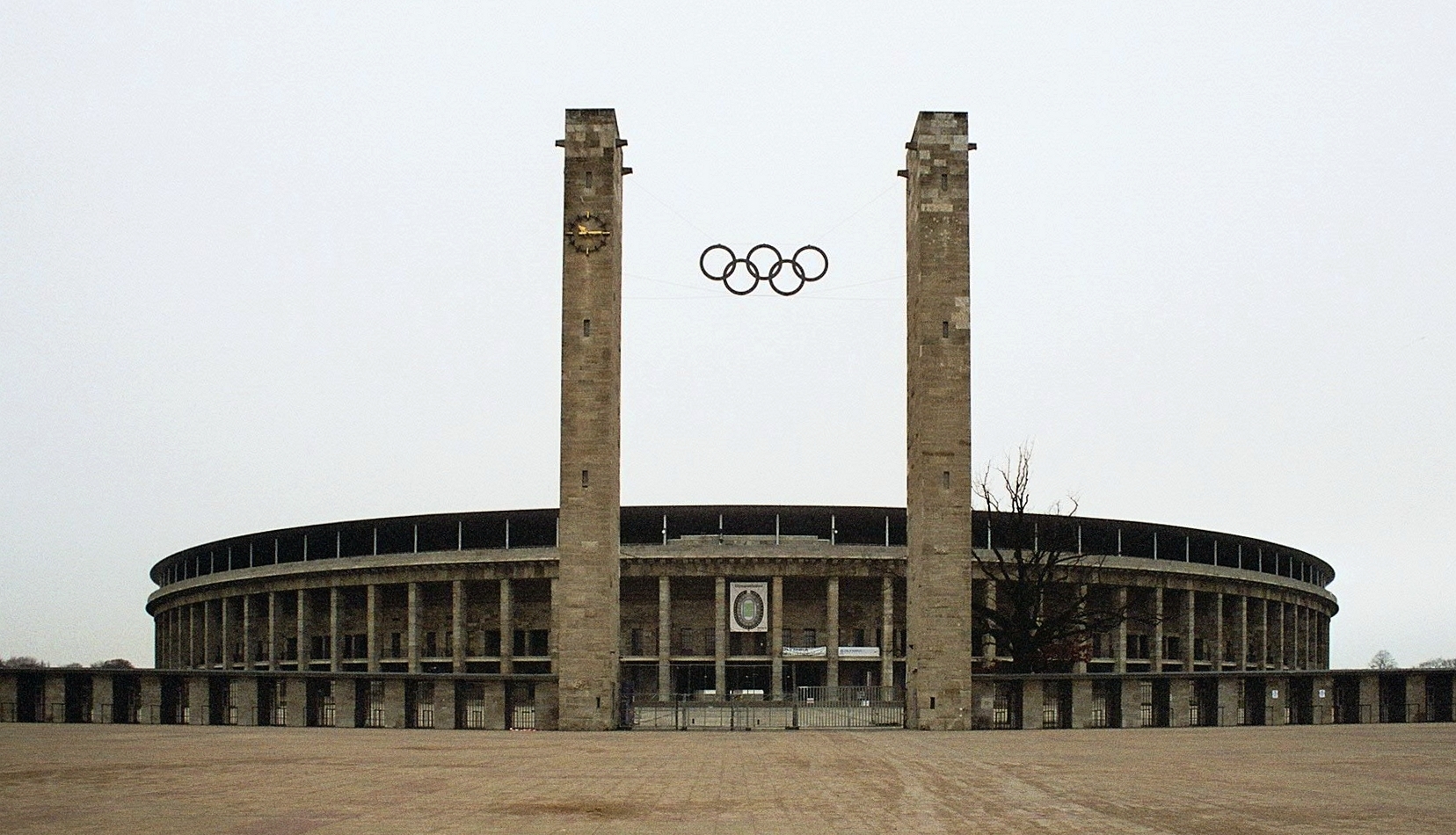
Games heads back a few decades to tell the story of German-Jewish athletes before and during the infamous 1936 Berlin Olympics (Tourist and family had a good look around the imposing stadium, now home to Hertha Berlin, last year). The two protagonists, high jumper Gretel Bergmann and fencer Helene Mayer, actually existed and the main events portrayed in the two-hander actually happened, but from this HN has woven a more nuanced debate on the nature of identity, and the iniquity of fascism, than we had any right to expect Helene Mayer won a gold medal in 1928 in Amsterdam, missed out in Los Angeles in 1932 and won silver in 1936, but despite her fame and success was still forced to leave for the US in 1935 because she was Jewish. The discrimination against Gretel Bergmann was more over,t both before the Nazis assumed power in 1933 and thereafter, as she and other Jewish athletes were denied access to training facilities, competed separately and were stripped of titles. Many left but Helene Mayer returned in 1936 to compete for Germany as the regime succumbed to pressure from the US who threatened a boycott.

Ms Mayer was an enigmatic character, whose German identity might have eclipsed her Jewish heritage and who, at least publicly, was not critical of the Nazis. She returned to Germany again in 1941and lived there until her early death in 1953. Tragic geo-political pawn or naive opportunist who put her own sporting glory above the suffering meted out to her own people? Easy to see then why HN alighted on her story, and that of Ms Bergmann, who died just a year ago aged 103, whose own resistance was implacable and who was determined to point up Hitler’s racial theories for the bollocks it was.

Maybe not quite as powerful as Borders (and Angel for that matter), and a little heavy on the biographical exposition, Games will still make you think and is surprisingly resonant on wider issues of nationalism, self-identity, and the role of politics in sport (or do I mean sport in politics), all subjects you probably thought you had a settled view on. Directed, as was Borders (in conjunction with Michael Cabot), with a confident hand by Louise Skaaping, Games has another pair of actors on top form. Sophie Shad has already written, produced and acted in Kitty’s Fortune which tells the story of a Holocaust survivor and her eagerness to tell Helene’s story shines through. She realistically captures her apparent ambiguities, internal conflicts and the impact of personal grief. Tessie Orange-Turner as Gretel has the physicality and grace of the athlete (maybe she is) and relays her character’s burning sense of injustice. In contrast to Borders the two meet on multiple occasions, Helene is Gretel’s original inspiration, but the use of the space and sparse props, (here two boxes and a flag, just two chairs in Borders), is similarly effective.

Henry Naylor has found a formula to educate us about complex political (and moral) questions without hectoring us and whilst still entertaining and moving us. And he usually brings it in at around an hour. In pretty much any space, (the credits here stop at the lighting design of Vasilis Apostolatos and stage management of Holly Curtis though I don’t doubt many others, from the research end through to the finished production at the ever welcoming Arcola, deserve credit).

I strongly advise you to hunt out more of HN’s his work. I will.

https://athomehefeelslikeatourist.blog/2017/10/07/angel-at-the-arcola-theatre-review/

War Requiem at the ENO review ****

War Requiem

English National Opera, London Coliseum, 22nd November 2018

Please probably inevitable that the Tourist, armed with the freedom (and fortunately the budget) to gad about town, his love of Benjamin Britten’s music and his wish to continue to honour those who die in pointless wars was going to end up attending a performance of War Requiem this year. The ENO version, which had the added draw of the Porgy and Bess cast, (augmenting the ENO’s marvellous choir), and the involvement of German photographer artist Wolfgang Tillmans looked the likeliest candidate.

I, or more correctly we, as TMBOAD, a scion of Coventry and admirer of the work, joined me, got way more than we bargained for. I had expected a semi-staged concert performance, with maybe a few arty slides in the background. Instead we got a full scale dramatic interpretation of BB’s oratorio, with the three soloists and choirs telling the story of Wilfred Owen’s war poems, alongside the setting of the Latin Requiem, fully costumed, with very effective lighting from Charles Balfour, augmenting the  and with Mr Tillmans distinctive photographic techniques adding further colour. 

Obviously the War Requiem was not written as an opera but BB being BB it is   naturally dramatic and, up to a point, lends itself to an “operatic” interpretation. Having said that, the very nature and subject of the work, even in its most striking scoring, is steadily paced and having the ENO orchestra, solidly conducted by Martyn Brabbins, in the pit and a chorus constantly in motion, and indeed often prone, inevitably has some impact on what we heard. But this was, moreorless, compensated by what we saw, which was, at times, extremely powerful.

Back to the story. WR was first performed in May 1962 for the consecration of the new Coventry Cathedral, built alongside the ruins of the C14 original destroyed in Luftwaffe bombing raids in November 1940 (see above). BB, a lifelong pacifist, scored the work for soprano, tenor and baritone soloists, chorus, boys’ choir, organ, and two orchestras (a full orchestra and a chamber orchestra). The full orchestrated choirs and soprano are used to accompany the sections of the Latin Requiem. to represent formal, transcendent grief, with the chamber forces and male soloists, representing two opposing soldiers, singing the interspersed English poetry. The children’s choir, accompanied by a chamber organ, present a more distant presence, innocence corrupted, an ever-present BB theme.

BB had originally intended that Peter Pears, an Englishman, sang the tenor role, Dietrich Fischer-Dieskau, a German, the baritone and Galina Vishnevskaya, a Russian, the soprano, but the Soviet authorities prevented the latter from travelling so Heather Harper stepped in. The classic recording with the LSO and Bach Choir conduced by BB, which everyone should own, has the original trio however. (Mind you there are plenty to choose from). 

BB unfortunately couldn’t conduct the CBSO at the premiere but no matter. The performance was a triumph. The Tourist has enjoyed a fair few performances in his time, (and seen the curious Derek Jarman film interpretation which is notable for Sir Larry O’s last ever performance). The music always delivers and so it was here. Now in addition to the contrast provided by the juxtaposition of the poem settings and the six movements of the Requiem itself (Requiem aeternam, Dies irae, Offertorium, Sanctus, Agnus Dei and Libera me, BB apparently uses the interval of a tritone between C and F sharp (an interval of three whole tones, known as the “devil in music”) as a recurring motif to create harmonic distance and then resolution, notably in the Agnus Dei, and thus evoke the notion of conflict and resolution. Elsewhere there are various brass fanfares, string arpeggios, marches and fugues in various three part time signatures, and various repetitions of lines, but the full vocal forces do not combine until the very end. So three is the magic number here.

Even if you don’t know your tritone from your backside your ears will still easily navigate their way through the score even on first hearing, such is the immediacy of B’s orchestration. And there are enough OMG musical moments to pull you up short. And that’s before you even get to the texts. Particular highlights for me are the extract from Anthem for Doomed Youth for tenor in the opening Requiem Aeternam, the soprano and chorus Lacrimosa in the Des irae, the Domine Jesu Christe from the boys’ choir, the Parable of the Old Man and the Young for tenor and baritone, The Sanctus and Benedictus, Strange Meeting with the lilting, poignant lullaby “Let us sleep now ….” and indeed pretty much everything else in the Libera me at the end. 

So, if the music, words and message reliably overwhelm, and get you thinking deeply about the utter horror and pointlessness of war, what is added through a full scale staging. Well, having the chorus on stage, variously signifying troops, refugees, dead bodies, I am assuming, was intriguing. A remarkable choreographic achievement from Ann Yee allied with costume design by Nasir Mazhar. Mr Tillmans most successfully employed close up, sharply exposed photographic images drawn, I believe, from  Coventry Cathedral itself in the three screen back drop to the stage, which dissolved into blocks of muted colour, and there were some fine tableaux (notably a snow/mushroom cloud effect) courtesy of ENO house director Daniel Kramer. Having said that, and despite the remarkable efforts of dramaturg Luc Joosten, carving out a sort of narrative when none is really there, there were a few moments when the various elements didn’t quite gel and the on-stage shuffling, and overt literalism, was more distraction than illumination. 

But no matter. It is one of the finest, acclaimed and most powerful pieces of classical music written in the second half of the C20. The Tourist has seen a fair few performances of impassioned anti-war classical work in the last few weeks, George Crumb’s Black Angels, Shostakovich Eighth String Quartet, Turnage’s The Silver Tassie, but this ranks as the definitive statement. And, with soloists of the calibre of Roderick Williams, David Butt Philip, and, the tremendous Emma Bell as seer/earth mother/angel of death, there was never any real risk of disappointment.

Brodsky Quartet at Kings Place review *****

Brodsky Quartet, In Time of War

Kings Place, 18th November 2018

  • Karen Tanaka – At the grave of Beethoven
  • Erwin Schulhoff – String Quartet No 1
  • Shostakovich – String Quartet No 8
  • Dave Brubeck – Regret
  • George Crumb – Black Angels

It’s been donkey’s years since I last saw the Great British Brodsky Quartet. In fact my guess is there has been a couple of line up changes since then, though Ian Belton on violin and Jacqueline Thomas on cello remain from the original founders in 1972, now joined by Daniel Rowland’s violin and Paul Cassidy’s viola. There were famous back in the day for me and my punky mates because they got involved with pop/rock types. They have never lost the spirit of adventure as this programme plainly shows. The centenary of the end of WWI has seen a lot of fine concerts: this idiosyncratic alternative was one of the best.

Now the main reason to turn up here was not, for once, Shostakovich’s No 8. Mind you that would have been worth the entrance money alone. Having heard a sophisticated, smooth version of DSCH’s quartet masterpiece from the Emersons a couple of weeks earlier, it was exhilarating to hear this much darker, plaintive alternative. This really got inside the meaning of the score, dedicated to “the victims of Fascism and War” in a way that the Emerson Quartet only hinted at. The two outer Largo C minor movements, with their famous DSCH musical monograms, were grimly intense here, the second movement scherzo fugue ferociously pungent and the middle movement waltz bitterly sardonic, on the edge of giving up. The slower fourth movement was here properly, brutally, dissonant with the KGB not just at the door as DSCH remarked, but inside the flat rifling through possessions. This is exactly what the Eighth should sound like, vibrato when vibrato, forte when forte, pianissimo when pianissimo. 

Yet like I say this was not the main attraction nor war it the highlight of the evening. That was reserved for George’s Crumb’s Black Angels. It was written in 1973 as a response to the Vietnam War. It is scored for “electric string quartet” and includes a magic box of percussive and other effects, including vocals, and even featuring crystal wine glasses. Subtitled “Thirteen images from the dark land” and inscribed “in time of war”, it is, by turns, startling, frightening, menacing, ritualistic, elegiac, ethereal, mysterious, very loud and very soft. It is divided into three sections, Departure, Absence and Return each of which contains a painful threnody. There are baroque dances buried in here, but don’t expect Lully or Telemann. And then there is just noise. I haven’t the faintest idea how to convey the sheer breadth of its sound world and depth of its emotion. I suggest you go listen to it and see what you think. Probably best not, as the Brodsky’s refrained from doing here. amplify the music to the “threshold of pain” as Crumb instructed. Though it might have been interesting to observe the reaction of the Kings Place crowd to a heyday My Bloody Valentine take on Black Angels. GC is near 90 years old now but I bet he would still turn the dial up to 11. 

Black Angels has rightly secured a pre-eminent place in the modern string quartet repertoire, but it isn’t easy, so fortunately, here, we were in the hands of experts. It is probably the best half hour or so of “music” I have heard this year.

The Karen Tanaka piece was commissioned by the Brodskys to mark the bicentenary of Beethoven’s Op 18 quartets and takes the first few bars of No  as its inspiration. Interesting if not memorable. Erwin Schulhoff’s upbeat first quartet, with its mix of Czech folk rhythms, Stravinskian jazz and agitated dance probably needs further investigation. He was born in Prague, and this piece was written in 1924 when he was 30 but 17 years later he died of TB in the Wulzburg concentration camp. The Dave Brubeck piece. originally composed for string orchestra in the immediate aftermath of 9/11, says it all in its title.

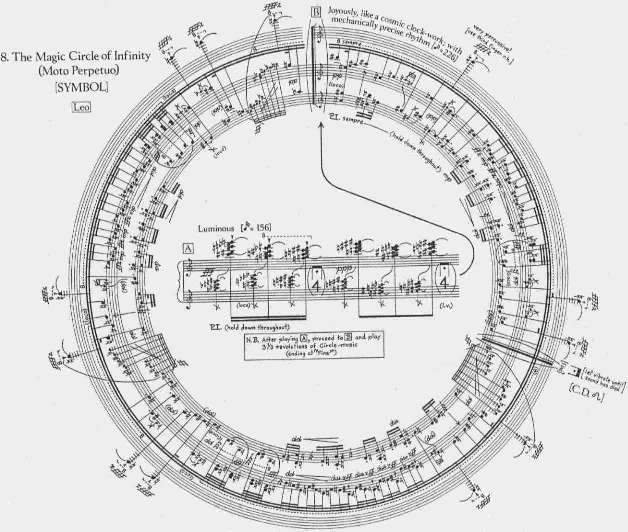
Marvellous stuff. Oh and I caught a glimpse of the score for Black Angels even from my back of the stalls perch. For George Crumb’s scores are almost as intriguing as the extended and innovative techniques in the music itself. The above is not from Black Angels but a moto perpetuo piano piece. Even so see what I mean?