Anglo-Saxon Kingdoms at the British Library review *****

Anglo-Saxon Kingsdoms: Art, Word, War

British Library, 30th December 2018

I mean it isn’t all books. There are charters and letters as well. And pottery, coins, art and jewels. But there are a lot of books. Oh my word though, what beautiful books. If you are at all interested in this period of history and the formation of our country, and you like, as Tubbs would say, precious things, (which haven’t been burnt, or otherwise destroyed, notably by the dispersal of monastic libraries in the 1530s), then this is unmissable. The British Library has wheeled out some of its finest treasures from the period, Beowulf, the Lindisfarne Gospels, the St Cuthbert Gospel and Bede’s works, but it doesn’t stop there, with some extraordinary loans from the British Museum, Cathedrals (Canterbury, Durham, Exeter, Lichfield and Rochester), Oxbridge colleges (notably the Parker Library at Corpus Christi Cambridge) and generous institutions around the world (notably France, the Netherlands, Sweden and, maybe best of all, Italy).

The exhibition begins with the first Anglo-Saxons coming to Britain in the 5th century, takes us through the kingdoms that emerged, Kent, East Anglia, Northumberland, Mercia and Wessex, before England was created, as well as the continuing influence of the Danes, and, finally the Normans. We see how the history, art and literature of these Anglo-Saxon Kingdoms developed, and we see the emergence of the English language, (though don’t expect, unless you are an expert in these things, to be able to read the manuscripts. but do listen to the spoken originals and modern translations provided).

The earliest evidence of the language is contained in some cynic inscriptions and a Kentish law code in the first room, Origins. My first highlight though was the unique Spong Man urn lid from the 5th century, he looks so crestfallen, but then again so might you if you were sat atop someone’s ashes. The St Augustine Gospels from the late 6th century are something special, but the Moore Bede from the mid 8th century, copied out soon after the Venerable’s death at his own monastery Wearmouth-Jarrow, is a jaw-dropper. This is the Ecclesiastical History of the English People, the page on show tracing the journey of St Augustine, in letters. The script is pretty dense but this is basically the beginning of our written history.

The second room, Kingdoms and Conversions, has some exquisite jewellery from, amongst others, Sutton Hoo and the Staffordshire Hoard, but once again I was drawn to the scripts. The fragment of a letter from St Cyprian, bishop of Carthage, possibly from the late 4th century, brought here by Abbot Hadrian, various charters, letters and rules from the 7th and 8th centuries, the beginnings of our systems of law, and the Book of Durrow from c. 700 with its various decorative influences. These are trumped though by the beautifully preserved Echternach Gospels, maybe from Ireland, maybe Northumbria, maybe Echternach itself in Luxembourg, the even more spectacular Lindisfarne Gospels also c. 700, and, drum roll please, the Codex Amiatinus.

OMG. Now even if your are some bored teen being dragged around by your pillock of a Dad I defy you not to be impressed by this. First off, it is bloody enormous, 1030 leaves in total. Secondly the page it is open to, a full page illumination of a scribe at work, is just so vibrant and, finally, the history of the Bible itself is just so fascinating. One of three made at Wearmouth-Jarrow in the early years of the 8th century it was taken in 716 by Abbot Ceolfrith and chums to Rome. AC, poor chap, died on the way but in the 1300 years until now it has been cared for in Italy, latterly at the Biblioteca Medicea Laurenziana in Florence. Welcome home then Codex Amiatinus, if only for a short visit. It is the oldest complete Latin Vulgate version of the Bible; only the fragmentary Leon palimpsest is older. It was assumed to be Italian, from the 6th century, until some top-drawer research revealed that it was actually created during Northumbria’s Golden Age.

Take your time surrounded by these gems. There are more treasures to come but this room, for me, was the pinnacle. The next room, Mercia and Its Neighbours, details the rise of that kingdom, through military power and political skill, and the creation of a third archdiocese at Lichfield alongside York and Canterbury. Once again the Gospels (Barberini, St Chad, Harley Golden) will draw your eye, as will the Lichfield Angel if you have not see it before, but I was particularly interested in the various charters, from King Aethebald dated 736 and from King Offa dated 783, and the evidence of links with Charlemagne in mainland Europe. It made me reflect again on how the powerful choose leaders primarily to validate their own appropriation of land and capital, and spend an awful lot of time arguing with each other to secure leaders more amenable to their ambitions.

The Favourite, Richard II, C18 British history, Brexit newsflow, this exhibition. All entertainments and/or learnings on the Tourist’s plate in the last couple of weeks, all variations in part on this theme. Similarly the next room, The Rise of the West Saxons, which charts the ascendancy of King Alfred and his successors and the idea of an England. Now the Tourist cheerfully confesses that he is addicted to The Last Kingdom, the TV series now in its third season, based on Bernard Cornwall’s The Saxon Stories novels. Now it is a bit daft at times, and cheesy, and the main protagonist, Uhtred of Bebbanburg, and his mates, do, implausibly, get about a bit. He may be fictional but many of the other players on show were for real and, in David Dawson playing Alfred, it has a top-notch actor showing his class. Like I always say, take your education wherever you can.

By 880 Alfred had made peace with the Danes, who were increasingly “naturalising”, and promoted a cultural leap forward, with the development especially of the English language. This legacy continued through grandson Aelthelstan, the first King of England from 927 to 939, who claimed control of Northumbria and submission from the Scots, Welsh and remaining Britons. Aethelstan centralised government, expanded the reach of the law, founded places of religion, (his personal psalter, a pocket gospels, is on display), and got stuck into European politics. So there you are little Englanders. Even when little England first became a reality we were tied to that pesky Europe. It will never go away whatever you may think. BTW, in my final, I promise, “look at me” moment in this post, I walked past the very spot where Aethelstan was crowned not a few hours ago. Outside the police station in Kingston-upon-Thames. I kid you not.

So no surprise that I took a long look at the Council of Kingston document in the exhibition which dates from 838 and confirms the alliance between Ecgberht, Alfred’s grandad, and the Archbishop of Canterbury. The beautiful Stockholm Codex Aureus, on loan from, er, Stockholm, will also detain you but it is the famous historical documents, the Anglo-Saxon Chronicle, Asser’s Life of King Alfred, the treaty between Alfred and Guthrum the Dane, a translation from Alfred himself and the Foothill Letter from the early 10th century, the oldest letter in the English language, that require careful examination. History. Boring. Think again.

Highlights of the next room, the self-explanatory Language, Learning and Literature, include the only surviving manuscript of Beowulf, the greatest Anglo-Saxon literary relic, the Junius Manuscript, 1000 lines of Old English verse, the Old English Hexateuch, the first six books of the Bible and the Old English translation of Boethius’s Consolation of Philosophy. If your interest extends to natural sciences, medicine and mathematics then you will be fascinated by this section.

The next room, Kingdom and Church, is focussed on the elevation of the Church under King Edgar, Alfred’s great-grandson. The highlight here comes at the end with the display of the Utrecht (825), Harley (first half 11th century) and Eadwin (c. 1150), Psalters displayed side by side. Seeing how one was copied into another into another is just amazing. Prior to this though the room is stuffed full of dainties, notably the Benedictional of Aethelwold from the 970s, the Vespasian Psalter from the second quarter of the eighth century, (the earliest Biblical text in the English language), the Boulogne and, especially, Trinity Gospels and the Winchester Troper.

The final room, Conquests and Landscapes, looks at the return of the Danes under Cnut and then the Norman Conquest, culminating with the BL’s Domesday Book and a short video.

I could go on and on but no purpose would be served in this. I have my catalogue accompanying the exhibition and can safely say, as one who regularly purchases such items, (and doesn’t always look at them immediately), that this is one of the most informative, involving and attractive I have ever seen. Even the short exhibition guide is a mine of information and the notes to the exhibits themselves could not be clearer.

All in all, and given the potential bone-dry bear-trap of a subject, early English history, and exhibits, in a word books, (though there is, as I said, plenty of other material on show here), this is a triumph. Maybe not enough to persuade those for whom history and manuscripts are anathema but if you have any interest at all, from any angle, don’t hesitate. No need, as ever with these things, to dutifully read every note or take in every exhibit. But if you can’t find at least a few items that command your attention I would be amazed.

It is on until 19th February. Usual rules apply. First thing in the morning. Sunday afternoon or the later slots on Tuesday when this opens until 8pm. And avoid the last week.
Borders (*****) and Games (****) at the Arcola Theatre review

Borders and Games

Arcola Theatre, 22nd December 2018

I had only seen one of Henry Naylor’s acclaimed plays prior to this double header and that was Angel at this very venue. That was enough to know that I like the cut of his jib. Mr Naylor, prior to writing plays, was, amongst other things, the lead writer for Spitting Image and he has, as far as I can tell, always had an acute political conscience which he is prepared to put to good use in his writing. His first play, Finding Bin Laden, was a satire on the media treatment of the 2003 invasion of Iraq, (and it is now being made into a film,) whilst his second, Hunting Diana, dealt with conspiracy theories surrounding the Princess’s untimely death.

These were showcased at the Edinburgh Fringe as were his next offerings, The Collector, set in an Iraqi jail in 2003, and then Echoes and the aforementioned Angel, to complete the trilogy, Arabian Nightmares. Echoes is a two hander which contrasts two teenage women, one a Victorian colonialist adventurer, the other a Muslim jihadist. Angel is a dramatic monologue about the Angel of Kobane, a Kurdish sniper who became a symbol of resistance against Islamic State. All three plays were multiple prize winners at Edinburgh and have gone on to tour globally as well as to the Arcola.

You kind of know what you are going to get with a play from Mr Naylor. A scrupulously researched examination of a major issue of our time, (with a particular focus on the “Middle East” to date), told from the (often juxtaposed) perspective of individuals involved which sets out to even-handedly explore cause, effect and impact. Part history, part drama, part monologue and part exposition the plays cover a lot of ground in a relatively short span but don’t lack emotional heft. There is enough surprise in terms of dialogue, which is unafraid of deploying poetic symbolism where necessary, to set alongside the unfolding stories to keep the audience on its toes, and there is plenty of opportunity in terms of movement and impersonation to test the mettle of the actors. And, of course, text-based one and two handers are cheap to stage meaning Mr Naylor’s discourse can be quickly spread, as it deserves to be.

Obviously these subjects and structures are not much use to you if your idea of theatre is feel-good musicals but if serious, but never dour, political theatre floats your boat then don’t hesitate to seek out his work.

Borders adds another dimension to HN’s oeuvre to date. Premiered in 2017 at the Gilded Balloon it is another double monologue telling the stories of Nameless, a young graffiti artist in Homs protesting the Assad regime, and Sebastian Nightingale, a photographer who makes his name with an iconic early portrait of Osama Bin Laden, but who goes on to “sell out”, clicking lame-brain celebs for big money. Graffiti specifically, and art more generally, has, I now learn, played an important role in opposition to the regime in Syria since 2011, and Assad and his supporters have brutally punished its practitioners. The story of Nameless’s courage in using her art to incite resistance, and the passion which eventually leads to her exile, is very stirring, especially because, like many of NH’s previous protagonists, she is a young woman in a patriarchal society. Sebastian’s fall from grace, as he debases his own art and principles to chase fame and money, is equally riveting.

You can guess early on that the two of them, outsider and insider, are destined to meet but HN still conjures up a thrilling end. Of course this sort of story-telling, about a conflict few of us here understand at even the most basic level, is occasionally going to have to thwack the audience over the head to get its points across but HN once again finds a way to do this without getting in the way of the personal dramas. There are laughs, quite a few in fact, which often skewer the hypocrisies of Sebastian and of the men who seek to control Nameless. The other characters, played by our two actors, have sufficient presence to go beyond ciphers, Nameless’s Mum, her “boyfriend”, his dad and the elder statesman war correspondent, Messenger, who gnaws away at Sebastian’s conscience. The stories are inevitably contrived but that is probably a necessary pre-condition for theatre with this strong a message.

It wouldn’t work without two remarkable actors and that is precisely what we have here. Now in the original Edinburgh performances, and in the subsequent worldwide tour, Nameless has been played by Avital Lvova, who took over from the sadly missed Filipa Branganca in the tour of Angel, and who is also a fearsomely talented actor. In this Arcola run however the role of Nameless was taken on by Deniz Arixenas. The crib-sheet tells me that Ms Arixenas, who is of Kurdish and Syrian descent, is currently doing her Masters degree in Law with the intention of becoming a human rights lawyer. Acting’s loss is the legal profession’s gain. However if this woman can bring an ounce of her talent on stage to the task of making the world a better place then I can be assured, alongside so many of the young people I know, that the next generation will be able to unravel the mess that my, and previous, generations’ have made of our world. I confess couldn’t take my eyes off her.

Which made Graham O’Mara’s performances as Sebastian all the more exceptional. He nailed that thing where you know that, as a rich privileged beneficiary of the institutional and economic order imposed by the West on the world since WWII, you should help those who haven’t been so lucky, but you just can’t bring yourself to do it. In a connected world where those post-war institutional structures are under pressure, where selfish ideology trumps co-operation and where I suspect, (largely suspect), arguments around the concept of “Western guilt” are likely to intensify, NH has come up with am intelligent shorthand for debate.

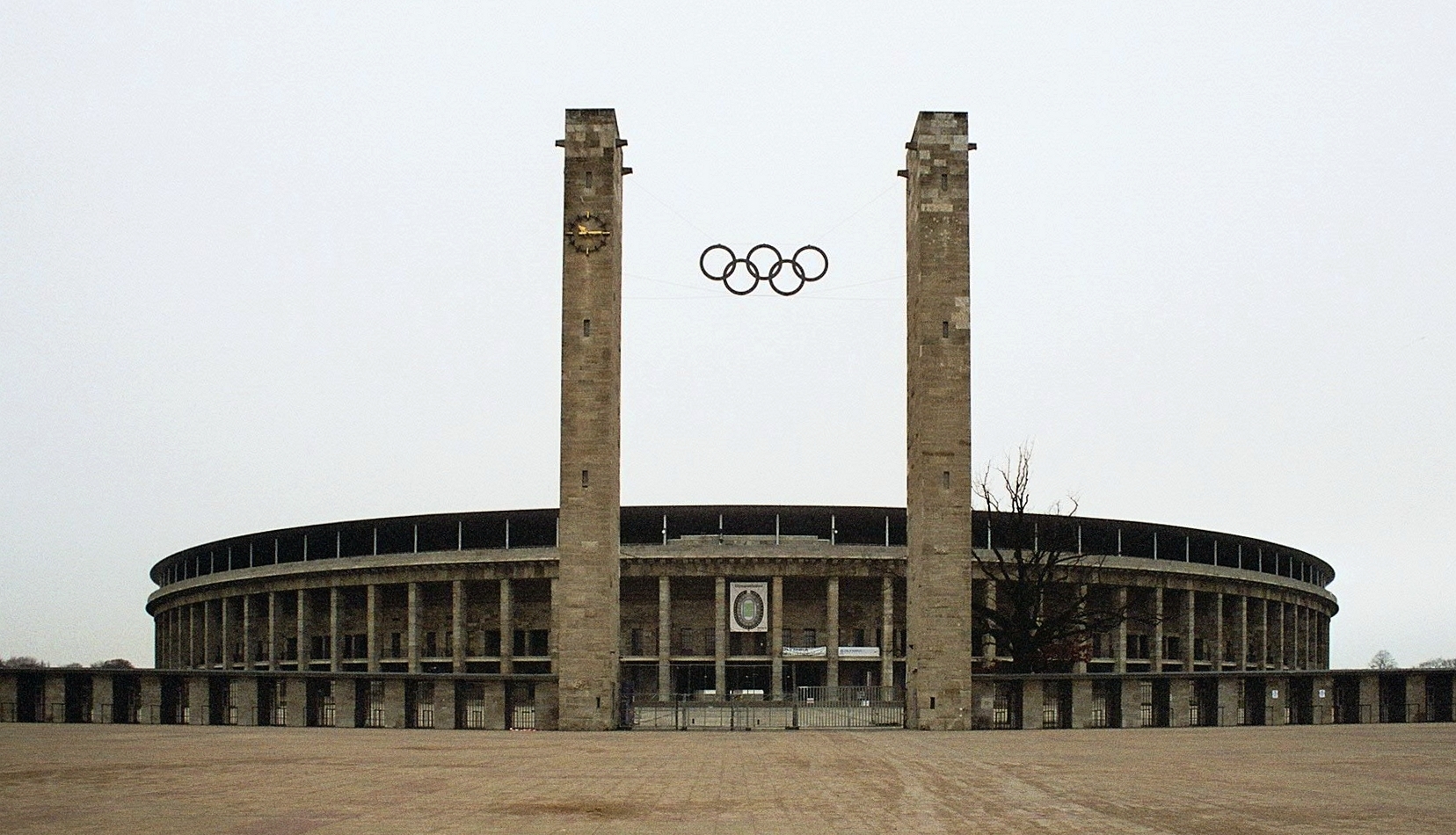
Games heads back a few decades to tell the story of German-Jewish athletes before and during the infamous 1936 Berlin Olympics (Tourist and family had a good look around the imposing stadium, now home to Hertha Berlin, last year). The two protagonists, high jumper Gretel Bergmann and fencer Helene Mayer, actually existed and the main events portrayed in the two-hander actually happened, but from this HN has woven a more nuanced debate on the nature of identity, and the iniquity of fascism, than we had any right to expect Helene Mayer won a gold medal in 1928 in Amsterdam, missed out in Los Angeles in 1932 and won silver in 1936, but despite her fame and success was still forced to leave for the US in 1935 because she was Jewish. The discrimination against Gretel Bergmann was more over,t both before the Nazis assumed power in 1933 and thereafter, as she and other Jewish athletes were denied access to training facilities, competed separately and were stripped of titles. Many left but Helene Mayer returned in 1936 to compete for Germany as the regime succumbed to pressure from the US who threatened a boycott.

Ms Mayer was an enigmatic character, whose German identity might have eclipsed her Jewish heritage and who, at least publicly, was not critical of the Nazis. She returned to Germany again in 1941and lived there until her early death in 1953. Tragic geo-political pawn or naive opportunist who put her own sporting glory above the suffering meted out to her own people? Easy to see then why HN alighted on her story, and that of Ms Bergmann, who died just a year ago aged 103, whose own resistance was implacable and who was determined to point up Hitler’s racial theories for the bollocks it was.

Maybe not quite as powerful as Borders (and Angel for that matter), and a little heavy on the biographical exposition, Games will still make you think and is surprisingly resonant on wider issues of nationalism, self-identity, and the role of politics in sport (or do I mean sport in politics), all subjects you probably thought you had a settled view on. Directed, as was Borders (in conjunction with Michael Cabot), with a confident hand by Louise Skaaping, Games has another pair of actors on top form. Sophie Shad has already written, produced and acted in Kitty’s Fortune which tells the story of a Holocaust survivor and her eagerness to tell Helene’s story shines through. She realistically captures her apparent ambiguities, internal conflicts and the impact of personal grief. Tessie Orange-Turner as Gretel has the physicality and grace of the athlete (maybe she is) and relays her character’s burning sense of injustice. In contrast to Borders the two meet on multiple occasions, Helene is Gretel’s original inspiration, but the use of the space and sparse props, (here two boxes and a flag, just two chairs in Borders), is similarly effective.

Henry Naylor has found a formula to educate us about complex political (and moral) questions without hectoring us and whilst still entertaining and moving us. And he usually brings it in at around an hour. In pretty much any space, (the credits here stop at the lighting design of Vasilis Apostolatos and stage management of Holly Curtis though I don’t doubt many others, from the research end through to the finished production at the ever welcoming Arcola, deserve credit).

I strongly advise you to hunt out more of HN’s his work. I will.

https://athomehefeelslikeatourist.blog/2017/10/07/angel-at-the-arcola-theatre-review/

Mistero Buffo at the Arcola Theatre review ****

Mistero Buffo

Arcola Theatre, 15th November 2018

This probably ranks as one of the Tourist’s least insightful assertions, (and trust me there is stiff and substantial competition), but, in his experience, there are two types of one person theatre. The pure monologue, often fairly static, relying on the appeal of the character and the strength of the writing. The kind of story-telling that has been there since the dawn of human time. Or the multi-role tour de force which relies on movement as much as the word and where the physicality of the performance is as important as the text. 

Either way it is stripped back, and let’s face it, cheap, theatre. Which is why it is a staple of festivals and, specifically, Edinburgh. That doesn’t mean it is necessarily any good, but generally those works that get the nod at Edinburgh, and then get a showing here in London, are invariably worth seeing. I am reminded of Henry Naylor’s plays for example, Angel, which visited this very house, Grounded at the Gate a couple of years ago or Silk Road at the Trafalgar Studios, (the latter a very amusing multi-character delight from Josh Barrow). 

What I will say is that the actors in these shows certainly earn their, presumably, modest, corn. And that was doubly true of Jules Spooner in Mistero Buffo. Mr Spooner is one half of Rhum and Clay Theatre company,  with Matthew Wells, and their aim is to create theatre with “a playful sense of anarchy, vigour and originality”. They trained at L’École Internationale de Théâtre Jacques Lecoq which is the pinnacle of physical theatre. Here he collaborates with director Nicholas Pitt. 

And if you are going to put on a solo performance they why not the iconic Mistero Buffo from the master Italian writer, actor, director, comic, singer, painter, activist and all round Marxist top bloke, Dario Fo. Now you probably know Mr Fo (pictured above) from plays such as Accidental Death of an Anarchist, (which I once saw in the West End in the company of a friend who was, shall we say, under a psychotropic influence, and insisted on shouting out encouragement to the cast at vital moments), Can’t Pay, Won’t Pay, Trumpets and Raspberries and The Open Couple. He brought improvisation, satire, criticism, parody, mockery and farce to attack the Italian state, the Catholic church, organised crime, violence, racism, speaking truth to power, echoing the style of Medieval giullari (or jongleur in French/English as here) and commedia dell’arte. His work and performances have ben continually reworked and his influence stretched far beyond Italy. Indeed I see that Northern Broadsides is currently showing an adaptation of Can’t Pay, Won’t Pay. 

Over 30 years Fo himself took Mistero Buffo around the world delighting atheists everywhere. For the play is essentially a p*ss-take of the absurdity and hypocrisy  of 13 of the New Testament miracles , and Christianity generally. Ir certainly wound up the Vatican. Now if this doesn’t sound like it would be a recipe for an entertaining evening out in 2018 you’d be wrong. First off there’s a fair chance you’ll know the 5 stories included here, reminding you how deeply ingrained that book still is. This means that Fo’s mocking, and Rhum and Clay’s pop culture updates thereon, of said stories is easily digested. Secondly, to be fair, sone of these stories are quite jolly, even with the moralising, and especially when undercut by our combined creatives, which give a pointed relevance. Just what is truth and just what can people be led to believe? Thirdly Mr Spooner is an amazing performer, shifting between characters with chameleonic dexterity. Take the sermon on the mount, the raising of Lazarus (backed by the White Stripes), the marriage at Cana (complete with drum and bass beats) or Crucifixion skits. OK so they are dead ringers for Python, but one man literally creates a crowd in front of your eyes. Finally it is, and he is, very funny.

Rhum and Clay will be touring this for the next couple of years. If it comes anywhere near you don’t miss it. And that is the truth. 

The Madness of George III at the Nottingham Playhouse review *****

The Madness of George III

Nottingham Playhouse, 13th November 2018

Flushed with success from his visit to Manchester the Tourist hopped on a train across the Peak District to the proud city of Sheffield, (where I see the Theatres will be staging a Rutherford and Sons next year ahead of a version at the NT, and will then attempt to stage The Life of Pi, which should be interesting), and then on to Nottingham.

An interesting exhibition at Nottingham Contemporary – Feminisms, Gender, Resistance – but the main aim of the visit was the Playhouse and The Madness of George III. Now I booked this on the assumption, as with the Death of a Salesman at the Royal Exchange, that this was as near to a sure-fire winner as it was possible to get in theatrical terms. Alan Bennett at his witty best, but armed here with a riveting biographical story, directed by the ebullient new(ish) Artistic Director at the Playhouse, Adam Penford, and with Mark Gatiss in the lead, and Adrian Scarborough as Dr Willis, in a uniformly excellent cast. 

And sure-fire winner it turned out to be. Apparently it has become the biggest box-office hit in the Playhouse’s history. It was screened to millions (I may be exaggerating here) via the NT Live cinema programme and ensured a bunch of critics left their London mansions to deliver a slew of 4* and 5* reviews. The audience on the evening the Tourist attended plainly loved, explicit in the congratulations during the after-show discussions.

I saw the original NT production with Nigel Hawthorne as George back in 1991, the Apollo Theatre revival a few years ago with David Haig at his actorly best, and have seen the film version a fair few times. So you can probably tell I am a bit of a fan. I will assume that, since you are one of the very select band reading this, that you are too, so won’t bore you with plot or historical details. If you don’t I suggest you see the film tout suite. 

So what was so good about this production? Well first off Adam Penford has cut out a handful of scenes. AB’s play is already, like most of his work, structured as a series of very short scenes in multiple locations. This guarantees momentum but, allied with AB’s constant urge not to leave a potential quip on the table (which is why it is a comedy after all), can mean the characters, other than the King, come across as a bit thinly sketched. Cutting scenes out might seem counter-intuitive but it does actually mean we become more focussed on the “tragedy” of the King’s breakdown, and then the jubilation of his apparent recovery. I was also more aware here of the King’s relationship with his retinue. The political machinations, Whig vs Tory, the plotting of the Prince Regent and his faction, took a bit more of a back seat.

George III’s 59 year rule saw not just the Regency crisis, but the “loss” of American, the union of GB and Ireland, wars in Europe and throughout the burgeoning Empire, rivalry with France, the Agricultural Revolution and the accumulation of capital to fuel the Industrial Revolution, a new way to finance the monarchy, constitutional change and scientific advances (which George was keenly interested in when he was on top form). Whilst AB’s play only incidentally touches many of these profound changes it does brilliantly capture the dichotomy between the public and private life of the monarchy and the metaphor of the King’s breakdown mirroring the political struggle catalysed by the American War of Independence. 

The dynamism of the production was also very well served by Robert Jones’s ingenious set. The various locations were smartly rendered with a series of Georgian style duck-egg painted flats, on stage and suspended, which were moved into place with no interruption to the action at all. Richard Howell’s lighting design, Tom Gibbons’ sound and Lizzi Gee’s movement, as well as some blisteringly quick costume changes, all further contributed to the pace and period feel of the production (most memorably at the end of the first half). A theatre set to point up the theatricality which underpins royalty. 

However, and perhaps unsurprisingly, it was the performance of Mark Gatiss that really made the difference. Adrian Scarborough’s Dr Willis, alarmingly forthright in his proto-psychiatric treatment of the King, (pointing up that he was just a man), in the second half, Debra Gillett’s devoted Queen Charlotte, Louise Jameson’s callous Dr Warren, Nicholas Bishop’s morose Pitt, Amanda Hadingue’s presumptuous Fox and Will Scolding’s nincompoop Prince Regent all caught the eye, but all eyes were on Mr Gatiss. As you might expect the comedy flowed easy for him: but better still was the way he caught the pathos of the king as he was plunged into a mania which he could not control but which he understood. “I am not going out of my mind, my mind is going out of me”. The production also doesn’t hold back from showing the physical pain that was inflicted on him by doctors who didn’t have a clue what they were doing. Mr Gattis’s detailing of the King’s speech, tics, convulsions and agonies is mesmerising. Adam Penford was keen to offer a more sympathetic, and contemporary reading, of the King’s mental illness and to avoid seeing his behaviour solely through the lens of humour. Thanks to Mark Gattis’s performance he certainly succeeded. 

History play, political drama, comedy. tragedy? This production makes the case for all of these in a forthright way. Thank you Nottingham Playhouse. I’ll be back. 

Forgotten at the Arcola Theatre review ****

Forgotten

Arcola Theatre, 10th November 2018

I was much taken, if not entirely convinced, by the British East Asian Yellow Earth Theatre company’s version of Tamburlaine at the Arcola 18 months ago. And this co-production, with Moongate, of a new play, Forgotten, by Daniel York Loh, which kicked off at the Theatre Royal Plymouth, sounded like it needed seeing.

Daniel York Loh looks like he is a busy fellow. When he is not writing he is acting, directing films or performing in a folk trio. Busy. Just like this play. It started off as a 5 minute script. It now runs to a couple of hours. Apparently his first draft ran to 300 pages. DYL has a lot to say and he means to say it. Mind you this is a story evidently worth telling. Giving a voice to the 140,000 Chinese labourers who left China to initially assist the French, and then the British, effort in WWI. Largely written out of history.

In trying to cram in as much of his research into these events as he can, the appalling famine and poverty blighting China at the turn into the C20, the hierarchical, violent and patriarchal village society, the volatile political situation and domination by foreign powers, the dream of escape and wealth, the Western view of China, and the Chinese view of the West, and Japan, at the time, the experience of the labourers in France and their shabby treatment, and their legacy, after the War, DYL offers a little too much exposition, a slight overdose of plot and leaves his characters looking a little too one-dimensional. Especially given only a six strong cast, (with some doubling up), the compact Arcola studio space and an experiment in form, namely having his band of villagers putting on a Chinese opera as they embark on their adventure.

So the cast and the creative team, director Kim Pearce, designer Emily Bailey, composer Liz Chi Yen Liew, lighting designer Jessica Hung Han Yun, sound designer Luke Swaffield and movement director Quang Kien Van had their work cut out to make this work.

Work it does though and this I think is largely down to the fact that, weaved into the important history lesson, there is a believable human drama here, especially when the friends get to the Western Front in the second act. The play begins at the end but I’ll keep schtum on that. The cast are performing an opera which tells the tale of a Miraculous Traveller, (I am afraid I know nothing about Chinese classical literature),  paralleling the story of the villagers. When all calms down we are in Horse Shoe Village in Shandong province in 1917 where Old Six (Michael Phong Le) and his wife Second Moon (Rebecca Boey) are struggling to earn enough to feed their young child. Big Dog (Camille Mallet de Chauny) is the village outcast, addicted to opium. Eunuch Lin (Zachary Hing) was castrated in a failed attempt to secure a position in the Emperor’s household. All are subject to the cruel whim of foul-mouthed Headman Zhang (Jon Chew). They agree to be recruited into the Chinese Labour Corps (from 1917 China declared war against Germany and Austria-Hungary) meeting the educated Professor (Leo Wan), and when they get to France, Wild Swan (Jon Chew again, equally potty mouthed) along the way. 

Whilst there are battlefield scenes DYL wisely cuts these with other encounters and other characters, as well as the highly stylised opera, to offer multiple perspectives on the experience of the friends. This shines a little light on the more universal East Asian diaspora myth, “silent”, “hard-working” but largely disregarded and culturally held at arms length. 

A valuable, if slightly awkward epilogue, explains what happened to Shandong province after the war and how the Chinese contribution was, literally, painted over in the now largely Americanised Pantheon de la Guerre. (America has a long history of mocking the contribution of France in global conflict). China was properly shafted at Versailles. Most of the surviving CLC returned home, but a few thousand stayed to build a Chinese community in Paris. The British CLC were given a medal, but it was bronze, not the silver awarded to everyone else who fought. There is a cemetery at Noyelles-sur-Mer on the Somme which honours 842 CLC dead. 

So overall Forgotten is an ambitious play, generously and vigorously told by an excellent British East Asian cast (Leo Wan, in particular, is as good here as he was in Tamburlaine and The Great Wave, and I look forward to seeing Michael Phong Le again). Lucy Bailey’s set is effective, Kim Pearce’s direction manages to maintain the momentum even as the scenes jump around. It may not quite be the finished article but it definitely deserves a wider audience. I spy a couple of harsh reviews in the national press. Ignore them. 

Don Carlos at the Rose Kingston review ****

Don Carlos

Rose Theatre Kingston, 9th November 2018

No one could accuse Friedrich Schiller of holding back in Don Carlos. Goethe inspired Sturm und Drang Romanticism, a Kantian paean to the centrality of personal freedom and democracy, the clash of liberty and tyranny, a stab at the sublime, a (loose) history of a turning point in the Spanish Golden Age, a political thriller chock full of intrigue, an (incestuous) love story, an increasingly intense Renaissance style tragedy lifting directly from Shakespeare, most notably Hamlet and Othello, but also Lear, Julius Caesar and Henry IV, which spills over into melodrama: it is big on passion and big on ideas. Operatic in scope you might say. Which is why Verdi wasn’t the only one who espied its potential. 

It took five years to write, finally published in 1787, which might also explain its meandering nature and abrupt tonal shifts, and, if you were unfortunate enough to sit through the original, ostentatious five acts of blank verse in their entirety you wouldn’t get much change out of seven hours. No one ever has mind you. This is kitchen sink drama. As in Freddy chucked the dramatic kitchen sink at it, not as in a pint-sized slice of domestic realism. 

This production, in a translation by Robert David MacDonald, clocks in at 3 hours. Schiller was largely ignored by the English speaking world for a couple of centuries. One reason why he no longer is, as well as Goethe, Lermentov, Gogol, Goldoni and Racine, is Mr MacDonald. Fluent in 8 languages he was the brains behind the Glasgow Citizens Theatre as well as an accomplished playwright in his own right.

Nor could one accuse Israeli director Gadi Roll, and actor Tom Burke, whose inaugural production as theatre company Ara this is, of holding back. Ara is intended to bring non-naturalistic theatre to the regional masses (though I am not sure the good people of Kingston, half an hour by train away from the South Bank, qualify as regional). They have started with a bang here. This is stripped back minimalist European auteur theatre which prizes style as well as content. Designer Rosanna Vize, who normally offers just a little more, makes do with the bare Rose stage and a few chairs, and modern dress with a vague Golden Age/Matrix flourish (and a lot of shades). The constantly moving lighting rigs in Jonathan Samuels’s design are dramatic and very effective (he worked with Gadi Roll on the Belgrade Coventry productions of The House of Bernarda Alba and Don Juan Comes Back From The War which is where Tom Burke met Mr Roll). The mingling of the private and public spheres.

The actors move around the stage in stylised straight lines. In the first couple of acts, the cast, notably Samuel Valentine as Don Carlos himself and Alexandra Dowling as the Princess of Eboli, (though with the notable exception of Tom Burke himself as the Marquis of Posa, the cool, calm voice of reason perhaps), spit their lines out with machine gun intensity, requiring the audience to keep ears and brains on their toes as it were. And there is a lot of shouting, notably from Darrell D’Silva’s Philip II. It is very, very, very dark most of the time and black is the dominant fashion. A nod to Velasquez, Ribera, Murillo et al?

I loved it. I see that the proper critics were less enamoured. Maybe the novelty of the play itself has worn off for these cynical hacks? The less than dynamic staging, the delivery of the lines and some of the acting didn’t past muster for many of them. Now I admit that the deliberately non-naturalistic choices made by Gadi Roll, in terms of look, movement and speech, did take a bit of getting used to, but necessary adjustment made, actually helped to see through to the core of Schiller’s text and messages and helpfully circumvent the worst of the melodrama. And it wasn’t just me. The SO, attracted by the history, and Mr TFP, an expert on German literature and culture, and a man who has read Schiller in German, agreed with me. I am guessing though that not all of the audience were as persuaded.

Young Don Carlos, the Infante, has the hots for Elizabeth of Valois (Kelly Gough). The only problem is Dad, Philip II, has married her. Dad also doesn’t trust the hot-headed Prince to get stuck into the affairs of government. And big Phil remember ousted his own Dad to seize the throne. When Carlos’s boyhood chum, the Marquis de Posa, returns to Court he confides his love and de Posa agrees to advance his suit if he in turn will help free the rebellious people of Flanders, oppressed by nasty Spain. Carlos asks Phil if he can go to Flanders (more exactly the Spanish Netherlands). Phil refuses and instead sends the Duke of Alba (Vinita Morgan). Cue bust up between the Duke and Don Carlos. There is a note and a key and Carlos ends up in the Queens bedroom with the Princess de Eboli who fancies him and wants to escape the clutches of the randy King. Thwarted she goes to Domingo (Jason Morell) the King’s Confessor. He plots with Alba to bring down the Queen and Carlos. A trap is laid but the suspicious King enlists de Posa to help uncover it. The Marquis’s enlightened ideas start to persuade the King but tyrants will be, albeit pragmatic, tyrants. There are some letters. misunderstandings, arrests, imprisonments, failed murders, accusations, double crossings, realisations, escapes and then, just when everyone least expects it, the Spanish Inquisition arrives (with Tom Burke doubling up as the Grand Inquisitor). To remind us that in C16 Spain it was ultimately the Catholic Church that held, literally, the whip hand. 

Obviously it does get a bit silly but the bare bones of the romantic tragedy are involving and there is a brio to the story which is irresistible. The intellectual set piece between the Marquis and the King, “give men the right to think”, is powerful, affecting stuff, which gets to the heart of the struggle between absolutism and representation, filtered, as it is, through the recognition by Philip that the Marquis, even with his heresies, is the son he really wanted. Especially when you realise that the “real” Don Carlos was an utter f*ckwit. A victim of Hapsburg inbreeding, deformed, mentally unstable even before he underwent a trepanation, he might have blinded all the horses in the Royal stables, and was prone to chucking servants out of windows. Phil eventually locked him up. The despot in Philip is plain to see, but we also see his humanity, and his justifications. And de Posa may have right on his side but boy does he know it and, intoxicated by his own argument, he will manipulate anyone and everyone to get what he wants. 

What next for Ara? This was a pretty bold first move. On the assumption that the style, the look, feel and intent of the company is set, I wonder if they might not be better served, at least in terms of critical response, by reviving a more recent play. We shall see. I hope they continue to aim high though. 

Now a few words on the “gosh, how did that Greek/Jacobean/Restoration/Spanish Golden Age/French classicist/German romantic playwright create something so uncannily relevant to today” trope. It’s not because they could see into the future or were especially politically prescient. It is because we, as human beings, either individually or collectively, haven’t moved on much. We may have smartphones, good teeth and a colossal amount of debt, but the way we interact with each other in the body politic, and the core of our individual psychologies, haven’t changed much in the pitifully tiny amount of time where we have, to the detriment of other species I fear, “ruled” this planet. So if a playwright can nail these truths, whether in the 5th century BCE or yesterday, we will listen. Don Carlos was first staged two years before the French Revolution: by the time he published the final version in 1805 the dream has collapsed into the Reign of Terror and Napoleon was Emperor. Then Schiller popped his clogs. And you think we live in worrying times. 

Having now seen this production, and the Almeida Mary Stuart, I hope to be able to bag another Schiller one day, The Robbers, Intrigue and Love, the Wallenstein Trilogy: all look likely candidates. He makes you work hard for your money, there is a lot, maybe too much, discussion, debate, confrontation and contemplation, but that is what the best dramatists do. And his characters are not just good, bad or indifferent. That is the true test of the playwright, the ability to show us many facets of the human condition, not all of which make sense or stack up. Nuance, ambivalence, enigma, complexity. To be on both sides, and on neither. 

Peterloo film review ****

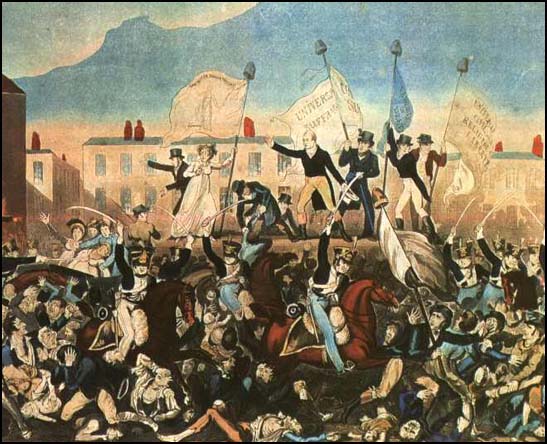
peterloo_carlile

Peterloo, 2nd November 2018

I doubt that there has ever been a more carefully researched, painstakingly assembled or more vividly imagined “history” film than Peterloo. If you like Mike Leigh (I do) you are going to love this. If you like British social, economic and political history (I do) you are going to be very interested in this. If you are concerned about the brutality with which power can crush the legitimate appeals of the ordinary person, (you should be wherever you sit in the system), this is going to stir you. If you understand the power of oratory, (words are what turn ideas into action), then this is going to draw you in. If you like the cast, Rory Kinnear, Maxine Peake, Pearce Quigley, Karl Johnson, Nico Mirallegro, Tim McInnerney, and especially Neil Bell and David Bamber, all stood out for me, but honestly this is a massive assemble of British acting at its best, then you will relish this.

However if you are after a satisfying personal drama, or complex plotting, then you might want to look elsewhere. Which given that this is a film that documents one of the darkest days in British history shouldn’t come as too much of a surprise. (Mind you this wasn’t the only massacre of peaceful protestors in the first half of the C19, more followed in the 1830s, notably in Wales). There is a lot of talking, at the meetings called by the various political radicals and reformers in and around Manchester in 1819, between the founders of the Manchester Guardian and the firebrand liberal orator Henry Hunt who was invited to address the rally in St Peter’s Field, within the family of Joseph (the real life John Lees) which is the emotional centre of the film, between the moreorless vicious magistrates who look to Government to break the sedition and between the Home Secretary and the lackeys who do his business. In this way Mike Leigh shows us why the people of Manchester and their leaders sought reform, of representation, of taxation, of the punitive Corn Laws, and why the authorities became so fearful, and were so consumed with the threat that the radicals posed, that they wilfully sanctioned a cavalry charge by volatile yeomanry and troops into the innocent crowd of 100,000 crammed into a square with minimal exits.. It is also what ensures the universal relevance of the film and the events it portrays. The power of rhetoric and the paranoia of the State are constants in the human condition.

This final scene is as awful as you might imagine but Mr Leigh doesn’t overdo the sound and fury and cleverly links the massacre back t the field at Waterloo which opens the film and which gave the events their sobriquet. As so often with Mr Leigh the film is assembled from linked montages though here many of the scenes are splendidly expansive. The interiors especially, of the powerful and the dispossessed, of Parliament, magistrates houses, pubs, meeting houses, parlours, mills, are richly detailed. The moors around Manchester offer a wild, lyrical contrast to urban industry. I think I saw parts of Lincoln standing in for historic Manchester and, of course, Chatham Dockyard, the period film’s spiritual homeland.

This was the time when “entrepreneurial” capital was looking to the State to underpin its privilege at the expense of labour, the very struggle Engels was to highlight three decades later, when, despite apparent reforms, conditions for the working class had only got worse. Peterloo may have fired up the press in London and no doubt fuelled legislative change but, as the film shows, didn’t cause the mill-owners of Manchester to question their consciences.

Any other director, without the freedom that Mr Leigh has secured, (say thanks to all the producer money here, especially Amazon), would have been forced to compromise. There are one or two occasions when, maybe, just maybe, he might had left some of cinematographer Dick Pope’s stunning assemblies on the cutting room floor, but if he had then he wouldn’t be Mike Leigh and we wouldn’t have this film. And he has ben able to spend his handsome budget to create a film of incredible ambition. In addition to Mr Pope, I would also call out the work of costume designer Jacqueline Durran and her team, the set decoration of Charlotte Watts, composer Garry Yershon’s score and finally, and I might contend most importantly, historian Jacqueline Riding.

If you don’t see it at the cinema make sure to see it at home one day. It is “serious” and it is “important”, so clear the mental decks beforehand but it is richly rewarding and, shot through with humour, it is as entertaining as didactic gets.


Pinter at the Pinter One review ****

chair-2963765_1920

Pinter at the Pinter One

Harold Pinter Theatre, 18th October

  • Press Conference
  • Precisely
  • The New World Order
  • Mountain Language
  • American Football
  • The Pres and an Officer
  • Death
  • One for the Road
  • Ashes to Ashes

Just so you are clear. These are plays by Harold Pinter. Did I mention that?

A combination of diary clashes and me hoping for ticket prices to come my way, (always fun playing Economics 101 with West End theatres), meant that I missed out on Part Two of Jamie Lloyd’s season of all of the one act plays of Harold Pinter, (and many other morsels besides). So no The Lover or The Collection and therefore no Hayley Squires, John MacMillan, Russell Tovey or David Suchet. A shame but rest assured dear reader I am signed up to the rest.

Now Pinter is an acquired taste but once acquired is rarely relinquished. The Lover is a two hander about an apparently adulterous couple which sounds like it went down well although, as with much of Pinter the surface misogyny can discomfort, though being Pinter there is always sufficient ambivalence to undermine the apparent premise. For me HP’s unrelenting picking away at human weakness is not gender bound but I can see why others might disagree. The Collection from 1961 covers similar territory in a similar way but with two couples, one gay, sharing a stage, linked by a possible affair.

Anyway probably better if the Tourist focusses on the programme he did see. Here, in the first half, we are in the world of late Pinter, with politics as the subject, and specifically the excesses which can be visited on the individual by a totalitarian state. Some of the pieces imagine more brutal and sadistic scenarios than others but all can be seen as warnings of what can happen when power corrupts. Their very lack of specificity is meant to show that this sort of oppression is only a few short steps away even in a liberal democracy. Not all of the pieces are up with Pinter’s best, and they have never really been, to be frank, universally appreciated even by criterati, but when they work, notably for me here in Mountain Language, they are very effective.

Press Conference is exactly that. A sketch where a Minister of Culture, who was the head of the secret police, responds about the state’s attitude to children. His brusque matter of fact responses – “We distrusted children if they were the children of subversives. We abducted them and brought them up properly. Or we killed them” – is very funny but also very chilling precisely because Jonjo O’Neill’s politician is speaking as if he were right here, right now in Britain. Precisely is another short sketch where Maggie Steed and Kate O’Flynn play a pair of toff establishment types debating a number, 20 million or maybe more, which turns out is a body count.

Next up was The New World Order from 1991 which saw a cocksure Des (Jonjo O’Neill) and a pumped up Lionel (Paapa Essiedu) discussing how they will torture the gagged, blindfolded and naked man (Jonathan Glew) in the cell with them. No physical violence, the menace is all in the language, which is almost stereotypically Pinteresque in its banal tone. These are almost caricatures of modern day torturers, in sharp suits and, in Paapa’s case, aviator shades. They are trying to impress each other as much as scare the victim. They could be Goldberg and McCann. Taking pleasure in their work. Once again Brits not Americans as in the original premiere. Pinter nails that uninhibited, exuberant arousal that seems to inhabit the cruel.

Mountain Language is an better piece of drama though. Written in 1988 apparently in response to the treatment of the Kurdish people, Pinter actually saw this as a more universal attack on regimes where minorities are victimised through the suppression of language. It is an altogether more expressive piece as Jonjo O”Neill’s callous Sergeant, assisted by the officious voice of Michael Gambon (who took the role at the premiere), and Paapa Essiedu’s Officer, work out want to do with, variously, Kate O’Flynn’s young woman, her elderly woman relative Maggie Steed who can only speak the “mountain language”, Jonathan Glew, this time hooded, and Pappa Essiedu doubling as a prisoner. The prison/detention centre is revealed as a series of rooms in Soutra Gilmour’s suitably depressing cuboid set, all dark walls and utilitarian chairs. No beginning or end but we do get the movement through the set and the contrasts between the characters. And our first proper sight of the mesmerising presence of Kate O’Flynn.

She then bounds on as a US military type for Pinter’s poem American Football written in response to the Gulf War and which satirises the aggressive triumphalism of the victor. This was followed by The Pres and an Officer, a sketch which sees John Sessions impersonating our current POTUS alongside Jonjo O’Niell as the top brass tasked with issuing his orders, here to nuke London, albeit accidentally, reflecting the president’s geographical confusions. I’ll be honest it is a bit soft and one-dimensional but, written in 2008, it is remarkable for its prescience. The presence of a narcissistic, ill-educated, populist bully in the White House clearly wouldn’t have surprise HP who died on Christmas Eve a few weeks before Obama was sworn in.

This was followed by Maggie Steed performing’s HP’s moving short poem Death about the registration of an unknown corpse. Then One for the Road from 1984 the most substantial and well-known of HP’s political plays. It was prompted by HP reading Jacobo Timerman’s book on torture during the Argentinian military dictatorship, but, as you might expect, reveals no specific setting. There is no on-stage violence but the references to the off-stage mutilation of Victor (Paapa Essiedu), the multiple rape of his wife Gila (Kate O’Flynn) and the implied murder of their son Nicky (Quentine Deborne) is upsetting enough. Anthony Sher plays Nicholas the precise officer (“one has to be so scrupulous about language”) who represents the totalitarian regime. He shifts from matey pen-pusher to psychotic tormentor in the blink of an eye though Sher wisely tones down the apoplexy. Think O’Brien in Room 101. And Hannah Arendt’s rule of nobody. Nicholas has all the tools of the state at his disposal, and, it seems, years of experience, but still seems troubled by what he is doing. I can’t quite put my finger on why, though it may be because I am not Mr Sher’s greatest admirer, but this felt a little over-egged to me. It is still a mighty fine play though.

After this varied and variable dissection of the roots and risks of totalitarianism, Act Two ostensibly sees a return to the domestic with two-hander Ashes to Ashes. Yet by contrasting this, here directed by Lia Williams, with the Act One pieces directed by Jamie Lloyd, what we really see is HP’s insights into one theme, the use and abuse of power. Kate O’Flynn is Rebecca who is being “interrogated” by her “estranged” husband Devlin, Paapa Essiedu, but who has done what to whom, and what they each say about how they feel, is even more slippery than usual for HP. Maybe they aren’t married, but lovers. Maybe he is threatening her, or she is mocking him. Is Rebecca describing her dreams? What does the story about the police sirens mean, or the pen? Rebecca’s responses to Devlin’s prompts are oblique to say the least. There are pauses and silences galore and some harrowing imagery. not the least at the end with the apparent description of women, or a woman, or Rebecca herself, being separated from her baby en route to a concentration camp. The whole thing swirls around, and, with acting of this quality, draws you in. In any other hands it would be utter b*llocks but with Pinter the language makes it compelling if ultimately impenetrable.

HP’s reputation and casts should be enough to persuade the uninitiated and/or the curious. Jamie Lloyd can push the envelope a bit far on occasion but he is a master in Pinter. So sign up. If I had to choose I would say 3 and 6. More to follow …..

The Jungle at the Playhouse Theatre review *****

overview_of_calais_jungle

The Jungle

Playhouse Theatre, 4th October 2018

So this was my second attempt to see The Jungle. I had to bail out of the first halfway through as my back wasn’t up to squatting on the floor of the Young Vic. This is not a complaint. Given the subject it is a shameful indictment of just how privileged I am to have come this far in life, and to be this stuffed with entitlement, that I can’t even sit through a couple of hours of theatre without complaining. What a pr*ck.

Given that I couldn’t find a way of getting to see another performance in the Young Vic run I was relieved when this transfer to was announced. This time I was able to secure a more suitable berth in the “Cliffs of Dover” in a Playhouse Theatre transformed by Miriam Buether’s remarkable set. For make no mistake this is a simply marvellous piece of critical theatre. The posters advertising the play highlight the string of 5* reviews. Believe them. There are a few seats left in the remaining weeks. Grab one as I doubt, given the size, and diversity of the cast, that this will be easily staged again in the near future. It is off to St Ann’s Warehouse in Brooklyn so any New Yorkers reading this really have no excuse.

Anyone who vituperatively blathers on about “immigrants” and “asylum seekers” should be made to see this. It probably won’t change their minds, lack of empathy often runs deep, but it might force them to consider, at least for a couple of hours, an alternative, and human, point of view. Joe Murphy and Joe Robertson have written a “history” of the expansion of the refugee camp at Sangatte to over 6000 people, the eponymous Jungle, in the 18 months prior to its clearance by police in October 2016. (Though there are now still a couple of thousand people living rough in the area).

The two Joes set up the Good Chance theatre in the camp. They are now working in Paris. Read about them here. https://www.goodchance.org.uk/. Then give them some money.

This story is largely told through the relationship of two key characters, Syrian wordsmith Safi, who also acts as narrator, and Salar, the de facto leader of the Afghan community and the founder of the restaurant, The Afghan Cafe, the subject of the famous review by AA Gill, which is the setting for the action. Other members of the various communities, a French official and those who came to help, are also lucidly portrayed. In all there are some 23 named roles permanently occupying the “promenade” stage and its various interstices. With the audience seated around them though it often feels like more.

Directors Stephen Daldry, (who only ever deals in theatrical gold now), and Justin Martin have conjured up a riot of movement, sound, dance, music, video, conflict, language and costume, with the help of some of the best in the business (Paul Arditti, Jon Clark and Terry King for instance). The cast is superb. I would pick out Ammar Haj Ahmad as Safi, Ben Turner as Salar, Rachel Redford as idealist teacher Beth, Nahel Tzegai as the calming Helene and Dominic Rowan as the rational Derek, but frankly the whole ensemble is beyond committed.

The thing is though that beyond the production, the activity, the atmosphere of spontaneity, the performance, the polemic, the vital message of hope and despair, there is a bloody fantastic play here. Vivid human emotions are laid bare in just a few lines. The debate between the “optimist” Safi and the “realist” Mahmoud as to how to respond to their situation is electric. The suffering, and salvation, of the Sudanese teenager Okot (John Pfumojena, is humbling. The pride and determination of the camp is palpable. The motives of the volunteers are examined. The conflicts between communities are revealed. Individual journeys are graphically relayed. No-one leaves family, work, culture, community, education, society because they want to nick your hospital bed or school place, people of Britain. They come because the alternative is harassment, dislocation, destitution, torture or worse. Escaping a war zone or failed state is an act of desperation not a punt on economic advancement. And Britain is a destination because we are, (or were), tolerant and we have the language. Those should be reasons to be proud. Not running away and seeking two fingers up to the rest of Europe (and the world).

Throughout the play 6 year old Little Amal (Erin Rushidi I think at the performance I attended) flits wordlessly around the action. Apparently we tried, and try, to prevent these little kids getting to relatives in the UK. Breaks your heart.

The Village at Theatre Royal Stratford East review ****

village-333070_1920

The Village

Theatre Royal Stratford East, 27th September 2018

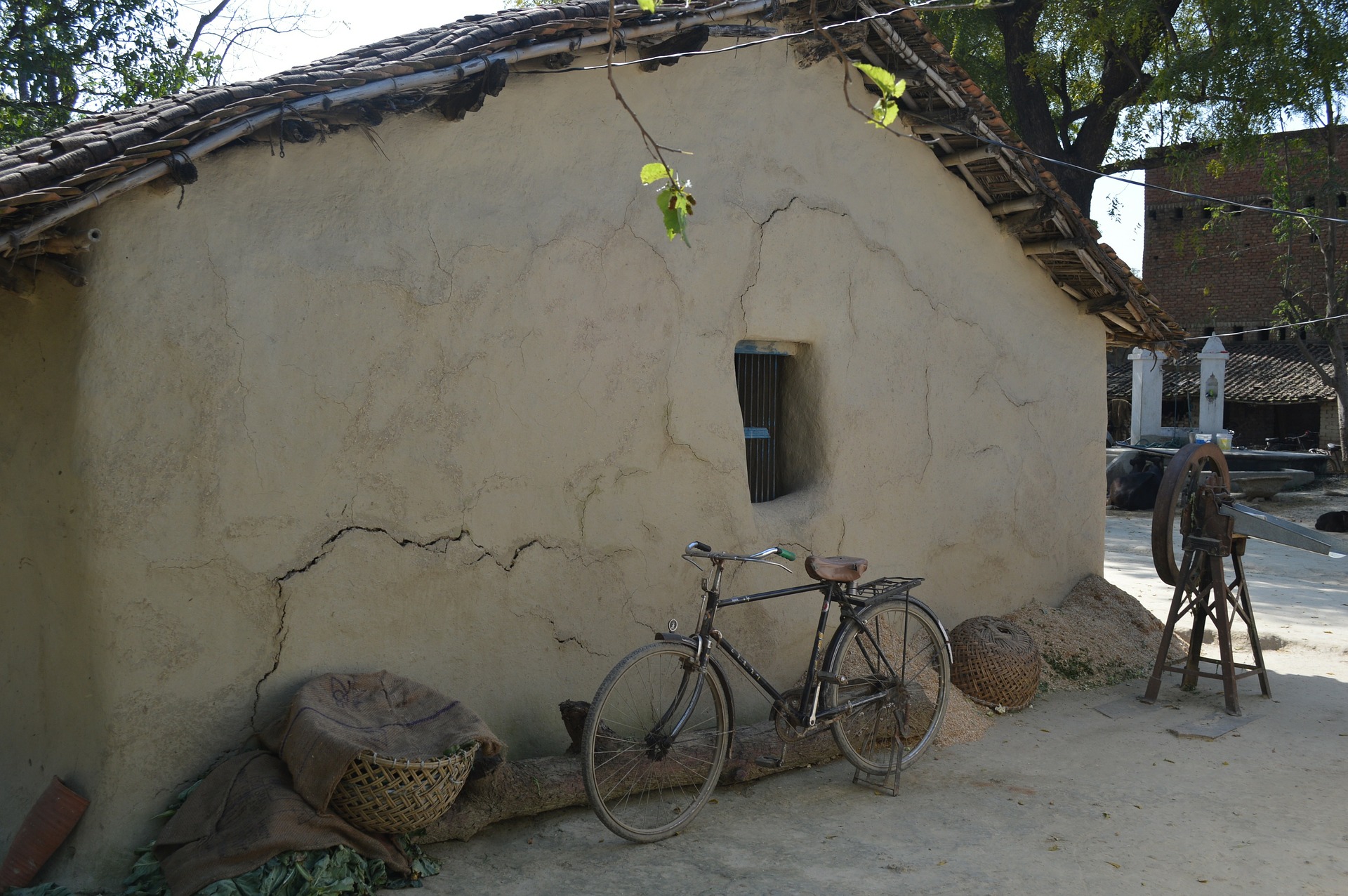
One of the many advantages of the idle life of culture is the opportunity to savour the coincidences that it routinely throws up. I see a play, Losing Venice, about the end of Empire, written in a style which apes the dramatists of the Spanish Golden Age. (Losing Venice at the Orange Tree Theatre review ***). A couple of days later I see a play, An Adventure, about the immigrant’s journey out of India. (An Adventure at the Bush Theatre review ****). The next day I see a play, The Village, drawn from the most famous play from arguably the most famous playwright of the Spanish Golden Age, Fuenteovejuna by Lope de Veja, recast in modern rural India, still bearing the scars of post-colonialism. Learn, enjoy, repeat.

Lope de Veja’s 1619 story, based on a real incident in the village of the same name  in Castile in 1476, is pretty much guaranteed to get the pulse racing. A tale of honour, justice, reputation and chastity as so many of the Golden Age plays were, though here slightly subverted, which accounts for its continuing relevance. The women of the village, unable to stomach any more abuse from the local army chief, rise up to collectively kill him. They refuse to incriminate each other saying only that “Fuenteovejuna did it”. April de Angelis, who make such a fine job of adapting Elena Ferrante’s quartet My Brilliant Friend for the Rose Kingston stage (My Brilliant Friend at the Rose Theatre Kingston review ****), sticks pretty close to the plot of the original whilst offering up a text peopled with recognisably human characters. And, with a swagger that largely worked for me, much of the text is written in verse, which adds rhythm and pace to the story.

This, together with Nadia Fall’s kinetic direction and some top class performances especially from Anya Chalotra as Jyoti, and in his own villainous way, Art Malik, are what turns this from what might have been a sullen melodrama, into something altogether more supple and uplifting. The production might have benefitted from a bigger stage to accommodate Joanna Scotcher’s sloping set, and a little more technical sophistication, but, if this is the harbinger of things to come at Stratford Royal Theatre East under Nadia Fall, and the 18/19 season has great potential, then maybe SRTE can become a destination theatre as it was in the glory days of Joan Littlewood (who staged Fuenteovejuna in 1955), rather than an occasional, one-off hit machine (like Five Guys Named Moe).

No need to take my word for it. To save BD from sitting around all day in her PJ’s in front of a screen (though justified by an imminent return to uni) I dragged her alone. Only marginally easier to impress than her Mother, she agreed that this was a powerful, and satisfying, piece of theatre. And, even more extraordinary FKD, who has reason to know, and a bunch of her friends, gave it the thumbs up. Lopa de Veja’s original, whilst not directly informed by Catholic oppression, was a response to the violence of the Inquisition. AdA’s update similar doesn’t pull any punches when it comes to its portrayal of the BJP and the rise of Hindu nationalism.

The rural village, Sahaspur, is getting on with the business of life with Jyoti, daughter of of the joint mayor, Ramdev (Neil D’Souza), the bashful subject of the ardent affections of local Muslim lad Farooq (Scott Karim). He is egged on by comic sidekick Mango (Ameet Chana), she by no-nonsense buddy Panna (Rina Fatania). Both eke out plenty of laughs. Accents are more Bradford than Kolkata. When the sadist Inspector Gangwar (Art Malik) turns up, with soldier sidekicks Ved and Gopi, to fix the election for privileged BJP scion Vihaan (Naeem Hayat), the villagers are cowered, and then outraged, after he rapes Jyoti. The election is contested by Ishani (Sudha Bhuchar) for Congress with adviser Mekhal (Arian Nik) in tow, and it is she who is sent to investigate the Inspector’s murder.

A gripping tale for sure. And Nadia Fall’s high energy direction, with movement from Polly Bennett (especially striking in the revenge scene), lighting from Paul Pyant, sound from Helen Atkinson and composer Niraj Chang (with live on-stage music and Hindi songs courtesy of Japit Kaur), really brings it to life. Yet it will still make you angry that even now this kind of oppression is commonplace, and that horrific sexual violence in India (and elsewhere) is still legitimised by power. The mechanics of the ending are a little less than credible, but no matter, the message of successful resistance is the right one.