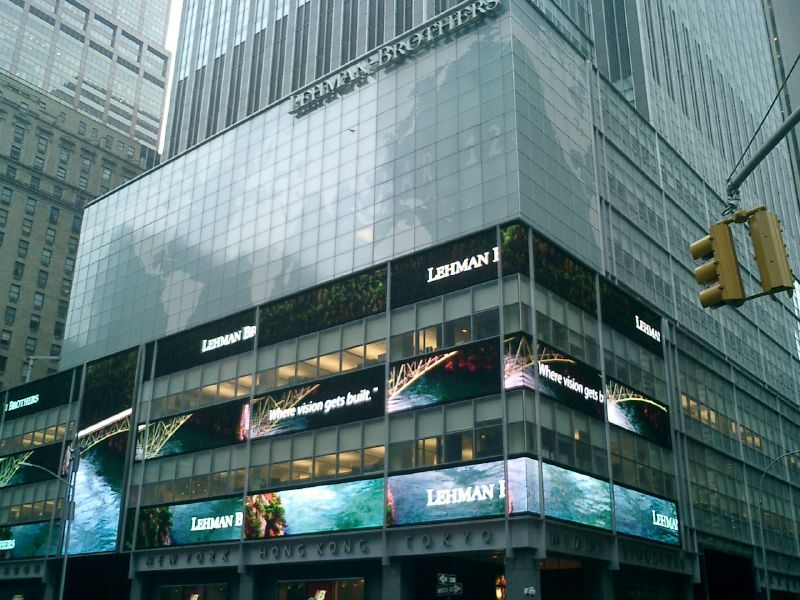
The Lehman Trilogy at the National Theatre review *****

114319196_445326e2cb_o

The Lehman Trilogy

National Theatre Lyttleton, 18th September 2018

So I gather this staging of Stefano Massimi’s play The Lehman Trilogy is a very different take from that lauded across Europe after its premiere in 2015 in Italy. No cast of thousands here. Just three amazing actors in Simon Russell Beale, Ben Miles and Adam Godley, and a minimalist set bearing all the usual hallmarks, (revolving glass cube, neon lights, monochrome, simple props to be shuffled around by the cast), of its designer Es Devlin, with symbiotic and effective video panoramas courtesy of Luke Halls, and thrilling sound and lighting design from Nick Powell and Jon Clark . All this from a director Sam Mendes, who is normally master of the maximalist, last seen in The Ferryman.

Of course no matter how good the production it all starts with the text. Here the Deputy Artistic Director of the NT, and dramaturg maestro, Ben Power has condensed the original play into the sprightliest 3 hours (ex intervals) imaginable. Of course there is a history lesson, but Mr Power, I assume reflecting the Italian original, draws out the themes and repeated motifs, and the key characters, the original three brothers, Henry, Emmanuel and Mayer, and the next generations, Herbert, Philip and then scion Bobbie. The final chapters, as the family cedes control to “outsiders”, and the collapse presided over by the hubristic bully Richard Fuld is, as many others have observed, a bit of a rush, but I don’t think that really matters. This is a story of the founding roots, expansion and degradation of American capitalism and, specifically, how a family of Bavarian Jewish emigres went from a farm supplies shop in Montgomery, Alabama to become one of the most powerful global financial dynasties ever seen. Lehman Bros is fascinating, yes because it is no longer there, but also because it was, to all intents and purposes, the first of its kind.

Our generation knows the importance of these institutions thanks to the crisis of 2008, still impacting the global economy a decade later. Lehman Bros, on that fateful 15th September, was the sacrifice made pour encourager les autres. The biggest bankruptcy in US history, (though the US, European and Japanese “franchises” largely ended up with Barclays and Nomura), Lehmmn was the catalyst for the intervention which we all all still paying for with, at root, the “wrong” cost of capital. The play though resolutely shows that cyclical crises are endemic to financial capitalism, and not just in the events of the 1929 Wall Street Crash. 1857 and 1873 also get a look in. The mis-pricing of complex risk is built into the system. It won’t go away.

We start at the end though with the iconic boxes, which staff used to carry out belongings after Chapter 11 was declared, piled up on the modern office set. These boxes in various configurations, with a few chairs, tables, a spot of graffiti and our imaginations, go on to signify the humble one room shop, the expansion into cotton-broking, the office in New York set up in 1860, the homes of the great and good in the story, particularly the families the three brothers marry in to, a synagogue, the boardrooms and trading floors of the palaces of the post WW II years.

And all the supporting characters, wives, children, business associates, rabbis, friends, even a tightrope-artiste, all are played by our three actors. Throughout they wear the formal frock coat attire from the mid C19. So all these “extras” are conjured up with accent, movement, stance, attitude. Now Simon Russell Beale relishes this sort of caper but Adam Godley near matched him, especially when it came to squeezing humour out of his impersonations. All three of these actors have been at the top of their game for years. Whether on stage, large or small screen, it is a fair bet that they will steal the show in whatever they appear in. To have them all together was revelatory. This is an abstracted story. With a narrative arc of this scale, across this much time and space, intricately juxtaposing the familial with the social, political and economic, it couldn’t be anything else. So everything we see, hear and learn is formed from the basic building blocks of acting and direction. Yet it is so, so rich, symphonic if you will. Look out for the recurring nightmare scenes. Just one example. Simply stunning.

Oh and there was one other genius involved. Candida Caldicot. The soundtrack to this odyssey conjured up live with one piano.

With this story, this cast, this director, this text and this creative team this was always likely to be a winner. No surprise it was an early sell out. This play in this adaptation will re-appear. No question. Whether you get acting of this quality again I am not so sure.

 

Britten’s Spring Symphony from the LSO at the Barbican review ***

spring-awakening-1197602_1920

LSO, LSO Chorus, Tiffin Choirs, Sir Simon Rattle, Philip Cobb (trumpet), Gabor Tarkovi (trumpet), Elizabeth Watts, (soprano) Alice Coote (mezzo-soprano), Allan Clayton (tenor)

Barbican Hall, 17th September 2018

  • Harrison Birtwhistle – Donum Simoni MMXVIII
  • Gustav Holst – Egdon Heath
  • Mark-Anthony Turnage – Dispelling the Fears
  • Benjamin Britten – Spring Symphony

Now here was an object lesson in not doing one’s homework. Benjamin Britten’s music was my first introduction to the classical world and remains one of my all time fave composers, (mind you the list is pretty short). However, I am not persuaded by all of his work, including, I remembered just that tiniest bit too late, the Spring Symphony. So always check that the piece you think you are going to hear is exactly that at the time of booking and always, especially if it is a work of substance as here, listen to it before attending. Both rules ignored on this occasion in the most spectacularly cavalier fashion.

Still it was the LSO. Under the baton of Sir Simon with the LSO Chorus and the combined Tiffin Choirs, Girls’, Boys’ and Children’s. (BD sadly, saddled with tone deaf parents, was never a contender for the first of these crews). And, in the Spring Symphony, three excellent soloists, two of who I knew, Alice Coote and Elizabeth Watts, and one only by reputation, Allan Clayton. All the voices were superb, there are some tricky vocal pyrotechnics required in certain of the poetic settings, and the logistical challenges of getting everyone on stage (or just in front) were adroitly handled. At points the Barbican Hall stage was stuffed to the gills. Sir Simon really does need that bigger stage.

The Spring Symphony was commissioned by Russian emigre conductor Serge Koussevitsky, who had earlier sponsored BB’s breakthrough Peter Grimes. As so often, writing it took a lot out of BB, three years from start to finish, on and off. He originally intended to set Latin texts against a symphonic backdrop but, as was BB’s wont, he persuaded himself that English poetry would be bettered suited. When BB sets canonic English poetry on a smaller scale the results can be astonishing, Les Illuminations, the Serenade, the Nocturne, Phaedra and, I reckon, the Cantata misericordium. And obviously the War Requiem shows he was a dab hand with large scale forces. But the Spring Symphony doesn’t quite hang together IMHO, choruses and orchestra sometimes at odds with each other.

It is (just about) discernibly a symphonic structure, a la Mahler, the first part made up of five sections (Spenser, Nashe, Peele, Clare and Milton, with various ideas laid out, the second a slow movement with three settings (Herrick, Vaughan and Auden), the third a scherzo again with three poems (Barnfield, Peele and Blake) set to music and the rousing finale, setting Francis Beaumont and John Fletcher’s Elizabethan paean to the month of May, London, to thee I do present. There is lots of invention, texture and tone throughout, BB avoids throwing the kitchen sink at everything, with many passages of light orchestration, and percussion, harp, certain woodwind and brass, especially trumpets, (a theme throughout the programme), all get a good look in. Since all the poems reference Spring, doh, there are plenty of Spring-ey tunes, but also some darker material; this was a message of hope in the aftermath of War but BB recognised not all was rosy in the European garden. It just isn’t an entirely satisfying whole for me.

Sir Simon has always been a dab hand with BB, even from his days with the CBSO, though this was at the more portentious end of his interpretative spectrum. Still everyone really does seem to be having fun at the LSO and the Chorus now that he as at the helm. So maybe I need to cheer up, raise my game and work a bit harder on this particular piece.

The concert opened with a new brass fanfare from Sir Harrison Birtwhistle, a gift to Sir Simon. It was, literally a blast, with a laugh at the end from the sole tuba. This was followed by an excellent reading of Holst’s Egdon Heath. I have always liked Old Gustav’s second most famous orchestral piece after you know what, (which the BBCSO is trotting out soon accompanied by Prof Brian Cox – interesting). That heady mix of Englishness, Ravellian orchestration and a hint of Eastern mysticism draws you in but it takes a conductor of Sir Simon’s insight to really persuade. It is a bit scary, even from the off, with the growling double basses, I for one wouldn’t want to go anywhere near Hardy’s heath based on this music. An elusive string melody is set alongside a sad processional in the brass and some meandering oboe. It never really lands anywhere despite the echoes of a dance, a simple stepwise, siciliano, and it can appear to go on a bit. Not here though.

Dispelling the Fears written by Mark-Antony Turnage in 1995 creates an atmosphere of urban, rather than rural, unease, led by the two trumpets of the LSO’s principal Philip Cobb and the Berlin Philhamonic’s Gabor Tarkovi. The two played pretty close together for much of the piece, creating some stunning harmonies, especially lower down the register, against the usual MAT cloth of Stravinsky, jazz, a whiff of blues, some earlyish Schoenberg. It is quite furtive, never really breaking out, with constant dissonance emerging from clashing semi-tones. There are a few passages of relative peace but mostly it prods and pokes. Like most of MAT’s work it really works though you are not always initially sure why.

So there we go. The LSO and Sir Simon once again showing off the Best of British. With the slight caveat that this may not actually be the best of the best British composer (with apologies to Purcell and Byrd).

The Rise and Fall of Little Voice at the Park Theatre review ****

audio-music-music-recording-158835 (1)

The Rise and Fall of Little Voice

Park Theatre, 13th September 2018

Never has the truism “a hard act to follow” been more apposite than with The Rise and Fall of Little Voice and Jane Horrocks. Jim Cartwright wrote the part for her after he heard her extraordinary vocal mimicry in rehearsal and, after transferring stage performance to screen, this is what I guess she will be remembered for. Or maybe Bubble. In Ab Fab. Either way she is a very fine actor as her recent turn in Instructions for Correct Assembly at the Royal Court reiterated (Instructions For Correct Assembly at the Royal Court Theatre review ****).

That is not to say that there haven’t been plenty of revivals since the original in 1992. And there are probably tons of amateur singers with a decent pair of lungs who have also had a go. Jim Cartwright, as this, and maybe even more so Road, shows, has a natural dramatic gift. Maybe he hasn’t quite matched the brilliance of his first decade but his lines are just so good that is is difficult for cast and director not to entertain in his plays. Squeezing every last drop out of his stories however does require real talent such as that delivered by the likes of Lemn Sissay, Michelle Fairley, June Watson and Liz White, with director John Tiffany, in last year’s Royal Court revival of Road. (road at the Royal Court Theatre review ****). This didn’t quite scale those heights but I still thoroughly enjoyed it.

The calling card of this production, from new company The Land of Green Ginger at the Park, was having LV and Mari played by real life Mother and Daughter Sally George and Rafaella Hutchinson. You will likely know Sally George from the telly but she has an illustrious stage CV as well and Ms Hutchinson, as well as following Mum onto the small screen, has singing experience. I was certainly struck by her acting as LV, particularly early on in the more vulnerable passages, but her singing mimicry, notably in the lower registers, was a little more variable. Mum however was as brassily vulgar as you like, alternately grating and sympathetic, dignity never entirely crumbling. With fine support from Kevin McMonagle as Ray Say, Shaun Prendergast as Mr Boo, Linford Johnson as Billy and, especially, Jamie-Rose Monk as Sadie, (who, remember, is allowedT no real voice), this was a very solidly directed (Tom Latter) rendition of this emotionally direct play. Jacob Hughes’s albeit very literal set continued the run of fine realisations in this space.

I would venture to suggest that this narrative of linguistically and culturally rich, but emotionally and economically deprived working class women, which is in a sense what both LV and Mari are, trying to make themselves heard above the men that prey on them, isn’t terrifically fashionable in dramatic circles right now. Playwrights seem more focussed on broader identity and global catastrophe than on class. A shame in some ways. For when it works a punch to the gut, laced with humour as hear, can be so much more memorable than a dry tap on the brain.

The Prisoner at the National Theatre review **

Summer_Vacation_2007,_263,_Watchtower_In_The_Morning_Light,_Dunhuang,_Gansu_Province

The Prisoner

National Theatre Dorfman, 12th September 2018

OK. I should have known better. Having been bemused by Battlefield at the Young Vic in 2016 I still signed up for The Prisoner despite knowing full well I was likely set for a repeat experience. Peter Brook, and long time collaborator Marie-Helene Estienne, are theatrical royalty. The stripped back aesthetic, the philosophical questioning, the emotionally direct text: all this can reveal great truths. But it can also be hard work. Which is what this was.

I am far too simple, too young and insufficiently well versed in theatrical history to have seen Mr Brook’s revolutionary Shakespeare’s interpretations and I can’t speak French. I do have Adrian Lester’s Hamlet at the Old Vic from 2001 in the memory bank to understand just what PB and M-HE can conjure up. That had the assistance of one William Shakespeare however. The Prisoner is in their own words. It isn’t quite the same. Donald Sumpter is a Visitor come to some nameless place to see Ezekiel played bt Herve Goffings. He is the uncle of Mavuso (Hiran Abeysekera) who has killed his father when he discovered the relationship between him and sister Nadia (Kalieaswari Srinivasan). Mavuso is sentenced but is permitted to serve his punishment outside of a prison looking in, watched over by a Man (Omar Silva) and, sometimes, Guards. That’s it.

Why he does this and whether this constitutes justice are the central dilemmas of what was, frankly, a pretty long 75 minutes. It looked beautiful thanks to artfully placed “stage elements” from David Violi and the lighting design of Philippe Vialatte. The international cast performed with utter conviction. The pacing and sparse encouraged meditation but, with no tonal shift or any resolution, well other than when a mouse pitches up, soon became soporific. Drama with all of the drama deliberately sucked out. An old testament parable which might have been done and dusted in one verse. Beckett without the action or laughs (!).

I am ashamed to say this but the piece was beyond me. Still given that it is 50 years since Mr Brook last directed at the NT, and that is when it was still in the Old Vic, I am, perversely, glad I went. No-one said this culture vulture stuff would be easy after all.

Allelujah at the Bridge Theatre review ****

25998114085_2027f69bbf_o

Allelujah

Bridge Theatre, 12th September 2018

Yet again by the time the Tourist gets round to seeing a major London premiere and, worst still given his feckless nature, comments on it, it is as good as over. Mind you the good news is that, as far as I can see, Allelujah was an unqualified success for the Bridge Theatre, playing to full(ish) houses which can only be a good thing. Nick Hytner, the Bridge AD and director here, and Alan Bennett go back a long way. If there was one thing guaranteed to get bums on those plush, comfy(ish) Bridge seats then this was it. Hopefully more people get to see just how marvellous this new theatre is and will return for whatever comes next. If they have any sense at all they will sign up for A Very, Very, Very Dark Matter, the new Martin McDonagh play, which opens here in a couple of weeks.

Now I am not sure there is, maybe bar Queen Liz II, a person more qualified to take on the National Treasure mantle than Alan Bennett. You know pretty much exactly what you are going to get when Mr Bennett puts pen to paper. If you love his wry, quizzical artistic voice, then you were never going to be disappointed by this. And plainly there is a pretty wide demographic who do love that voice. But that voice does come with some drawbacks, a few of which were on show in Allelujah. He can be, dare I say it, just that teeniest bit lazy when it comes to getting a laugh. (Mind you any image of louche behaviour in Yorkshire towns is pretty funny I guess). His characters have aged with him and he can veer towards the stereotypical. Overt nostalgia and sentimentality can seep into the text. He doesn’t really go in for plot, preferring to stitch together episodes to tell his story. All in all then sometimes Alan Bennett can be a bit too Alan Bennett.

Yet slowly and surely, underneath all that Bennettism, he makes his points here such that, by the end of Allelujah, I, and I suspect much of the audience, was both moved and angered by the plight of its subject, the NHS, here becoming a metaphor for the breakdown of community and State by decades of neo-liberalism and “market solutions”. The Bethlehem is an august Yorkshire hospital, meeting its “targets” but threatened by closure simply because it is too small and negates the fatuous “economies of scale” that Government demands. The surprisingly hands-on Chair of its trust, Salter, a robust performance from Peter Forbes, isn’t going down without a fight however, recruiting a documentary team (Sam Bond and Nadine Higgin) to the cause. The action is centred on the geriatric ward, highlighting that many of the patients here have nowhere else to go, from an august cast of twelve, dare I say, mature actors including the likes of Julia Foster, Gwen Taylor and Simon Williams. (I bet rehearsals for Alleluhah were a hoot). They sing, they dance, they reminisce, they moan, they have inappropriate conversations.

One of their number, Joe (a cantankerous Jeff Rawle, an AB regular), is paid a visit by his gay son, Colin, (Samuel Barnett), who just happens to be the slimey management consultant who is behind the closure plan. We also see a pair of grasping relatives, the Earnshaws, (Rosie Ede and Duncan Wisbey), who blame the hospital for robbing them of the inheritance, (note to AB, check out taper relief), feckless work experience teen Andy (David Moorst) and various put-upon staff (Manish Gandhi, Richie Hart, Nicola Hughes and Gary Wood).

The crux of AB’s didactic though is revealed by a pair of excellent performances from Sacha Dhawan as Dr Valentine and by the peerless Deborah Findlay as Sister Gilchrist. She has an alarming system to ensure efficiency on her wards. Yet when she delivers her valedictory “farewell” speech there is real poignancy. Deborah Findlay really is a special actor who never seems to miss a step in the roles she takes on nor in the performances she gives. This is no exception.

Yet if you really want to be reminded of just how biting AB can still be when he wants to then look no further than the closing lines, delivered direct to audience from Sacha Dhawan’s student visa immigrant doctor. AB, by his own admission a “blend of backward-looking radicalism and conservative socialism”, is angry about the country we have become, and the risks we face, and, wisely, uses its most beloved institution, to vent his spleen. Don’t worry this is no in-yer-face political diatribe, it is AB through and through, and he doesn’t preach, but there is a cumulative rage which takes it well beyond 2012’s People or the autobiographical plays.

Nick Hytner is obviously an expert at presenting AB’s material and creating action out of pure text and here he is immeasurably helped by Bob Crowley’s versatile staging and the choreography of Arlene Philips and her assistant Richard Roe. I wouldn’t be at all surprised to see a soundtrack album emerging from the play: if you wanted to keep the old folk happy with a “knees up” at Christmas this fits the bill kids.

Alan Bennett’s The Habit of Art is currently on tout with Matthew Kelly as Auden and David Yelland as Britten and we have Mark Gatiss to look forward to in The Madness of George III at Nottingham Playhouse (to be broadcast on NT Live). I don’t think it will be too long before Allelujah gets another outing. It will be interesting to see just in what direction this country travels between now and then.


Foxfinder at the Ambassadors Theatre review ***

fox-2470929_1920

Foxfinder

Ambassadors Theatre, 10th September 2018

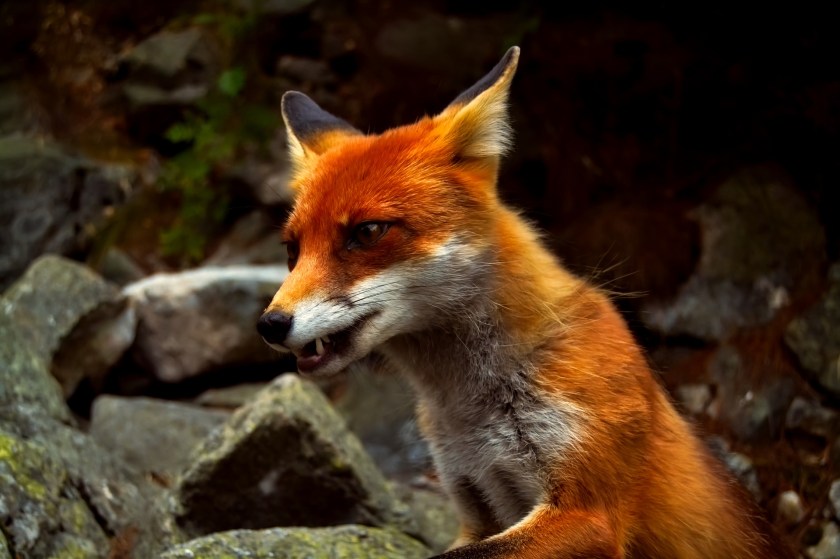
I had not seen Dawn King’s feted breakthrough play Foxfinder but I can see why it caused such a stir when it appeared in 2011 and why it is being made into a film. A near(ish) post-war dystopia, where a shadowy authoritarian regime has taken power following economic collapse and has elevated the fox to an existential threat to agricultural production. Think folk horror, Crucible, 1984, Handmaid’s Tale, Witchfinder General; a disquieting vision of a society ruled through fear and false ideology. (The foxes in our garden are bloody annoying and there is an unpleasant history of rabbit massacre which I will refrain from detailing here, but humanity’s arch enemy seems a tad harsh).

Unfortunately this production doesn’t really conjure up the required unease and at times the cast actually looked a little uncomfortable in their imagined world. The set design from Gary McCann, where basic farmhouse kitchen merges into woodland, is a solid start though jars a little in the proscenium stage of the Ambassadors. This is, by old-skool West End standards, an intimate theatre but this is still a play that is probably more suited to a more claustrophobic setting. (Mind you designer Rae Smith pulled off an extraordinary design coup for Barney Norris’s otherwise slightly underwhelming rural saga at the Bridge Theatre recently). Paul Anderson’s lighting, (bar a couple of missed spots), and Simon Slater’s sound and composition also fit the bill, though once again I could imagine a more dramatic realisation in a more modern space.

Rachel O’Riordan, (who will be moving to the Lyric Hammersmith next year after a very successful stint at the Sherman Cardiff), is a director of proven pedigree, most notably with Gary Owen’s excellent plays. Here however she cannot seem to ratchet up sufficient atmosphere and tension. This in large part I think to the cast. Now I gather that Iwan Rheon has something of a reputation from his stints on the telly in Misfits and as a baddie in Game of Thrones. Now in the interests of full disclosure I have no view on this Game of Thrones caper. I don’t have the patience for multiple series viewed through a screen. 3 hours tops for me. Maybe in two parts. And in the theatre where stories come alive and technology can’t mask mediocrity. A text, some actors, an audience. That’s all you need. And all those who try to bully me in to watching GoT by telling me it’s like Shakespeare always seems to be busy when I offer up the chance to see yet another Lear. Which tells me it isn’t really.

So this means I have no idea if Mr Rheon is a convincing screen presence. In Foxfinder I am afraid he didn’t really seem to get to grips with his character. William Bloor is a young zealot, still in his teens, who is the eponymous Foxfinder sent to investigate why the farm of Samuel Covey (Paul Nicholls) and Judith Covey (Heida Reed) is “underperforming”. The regime believes that an infestation of foxes is the cause, the fox having been elevated to demonic proportions in this debilitated world. William has been trained from an early age to root out and investigate the vulpine threat. The combination of his youth, inexperience and indoctrination should leave him with the fragile “certainty” of the true believer but we don’t really feel that at the beginning of this production. He comes across as more meter inspector than inquisitor.

Paul Nicholls and Heida Reed are also known more for their TV work than stage experience. Whilst individually they moreorless convince, Samuel is the bluff farmer who just wants to get William out of his hair as soon as he can whilst Judith is more concerned for the consequences of being found “guilty”, their relationship doesn’t feel comfortable, meaning the real reason for the farm’s failure is emotionally underpowered. As the three unravel in their different ways and begin to question what they believe we should be on the edge of our seats. Unfortunately though the drama just didn’t really catch fire. Bryony Hannah as the defiant neighbour Sarah Box (every dystopia needs one) was more persuasive. but didn’t have much to play with.

So a play with an excellent central conceit which I think weaves in enough plot development and moral questioning to enthral but needs to threaten and haunt to really work. Nothing wrong with serving up actors whose careers have focussed on the screen but in such an intense four hander maybe the marketing imperative here trumped the creative. Worth seeing but not as intriguing as I had hoped.


The Second Violinist at the Barbican review ***

carlo-gesualdo-dc3a9tail

The Second Violinist

Barbican Theatre 7th September 2018

Ok so I bought a ticket here on a bit of a whim and because it garnered some awards on its premiere in Ireland. Now I know from past experience that the playwright Enda Walsh is not a man who likes to give audiences an easy night out. Disco Pigs is a belter of a play (and film) but, in trying to unravel the darker psychology and psychoses of the everyday, he sounds to me like the sort of dramatist who can be guilty of putting himself above the audience. All well and good if you like that kind of modern Expressionism but if it fails to connect what’s the point.

Still YOLO. What I hadn’t bargained for is just how good a composer Donnacha Dennehy is. This has all the trappings of a chamber opera. Except that there is a fair bit of spoken word, long periods of neither speech nor singing, though plenty to attract the eye and a main character who never opens his mouth. Which means the score has a lot of work to do and doesn’t always precisely articulate with the drama. But it is a fabulous score. Strains of post-minimalism (he studied with Louis Andriessen) with lots of sustained strings, micro-tonality galore, overtones, buckets of dramatic orchestration, hefty percussive rhythms, electronics, nods to Irish folk heritage, odd harmonies. As a rule of thumb if contemporary classical music grabs me by the throat on first listen for me there is something worth investigating. If there is no connection it can be safely discarded. No idea why or what lies behind that decision but this chap is definitely going to have to be listened to.

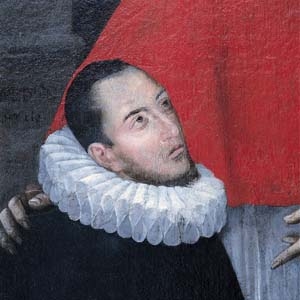
Now as for the play/drama/libretto I am less sure. Martin (Aaron Monaghan), emerging from the pit, is a violinist currently rehearsing (badly) a chamber opera with an unhealthy interest in bad-boy Carlo Gesualdo, the Renaissance prince and composer who mastered dissonance (please listen) but was a bit unhinged to say the least. (there he is above). Martin is not a happy bunny it seems and there is plenty of evidence in his drinking, movement, his calls, game-playing and his digital footprint to show it. But he doesn’t show us directly. Instead we get a drunken night in from Matthew (Benedict Nelson), wife Hannah (Maire Flavin) and her friend Amy (Sharon Carty) who Matthew makes a move on. It doesn’t end well. Presumably this is an acting out of the events that got Martin into the pickle he is in. Or maybe they are the neighbours from hell that Martin really doesn’t need. At the end, in a wood, Martin meets Scarlett (Kimani Arthur) a Tinder chum. Oh and there is a chorus to vocalise some things and to shuffle across the stage.

Though frankly I didn’t really have a clue what was going on. For someone who was effectively a mime artist Aaron Monaghan, apart from some suspect writhing, caught Martin’s dissolution brilliantly. The three singers were crystal clear though their texts were prosaic. The set (Jamie Vartan), lighting (Adam Silverman), video (Jack Phelan) and sound (David Sheppard and Helen Atkinson), all seemed to have a lot to say. I just don’t really know what they were saying. If it was just the breakdown of a life then I suppose it delivered but since I couldn’t find a way in I couldn’t really care. Maybe Martin was looking for beauty in an ugly world, a creative mind that is constantly disappointing himself, (this seems to be what Enda Walsh is driving at in the programme), but any meaning was too impenetrable for me. Past, present and, maybe, future frustratingly elided.

Plenty to look at and a ravishing score but as a work of drama … hmmm. No matter. The score, which really did make the link back to Gesualdo, and the playing of Crash Ensemble under conductor Ryan McAdams alone was enough.

The Height of the Storm at Richmond Theatre review ****

Vincent_van_Gogh_-_Houses_at_Auvers_-_Google_Art_Project

The Height of the Storm

Richmond Theatre, 5th September 2018

I can’t deny that Florian Zeller is a gifted playwright. I am just not sure his work is for me. I saw The Father at this very house in 2016 with Kenneth Cranham in the lead role. Centering on an old fella with Alzheimers allowed Mr Zeller acres of space to deploy his trademark philosophical musings and play games with time and memory. Mr Cranham was great but all that deliberating about what you could and could not believe got a bit samey after a while.

Well he, and his translator Christopher Hampton, are at it again in The Height of the Storm. The nature of memory, the effects of ageing, the making of self, the cracks in a family, all are confronted again, but here set against a love story. Jonathan Pryce is Andre, a retired writer, who has been married to Madeleine, played by Eileen Atkins, for five decades. They live in a large country house in provincial France. Divorced daughter Annie (Amanda Drew) arrives for the weekend. It looks like she is pushing for the house to be sold. Later on younger daughter Elise (Anna Madeley) also pitches up with current estate agent boyfriend (James Hillier) in tow.  A bunch of flowers is delivered. A neighbour and apparent long-standing “friend” of Andre played by Lucy Cohu pops in. But it isn’t very long before we begin to wonder if Madeleine is really there or whether disorientated Andre just imagines her presence and whether the cosy conversations they are having are simply the memories of his now dead wife. Or maybe it is the other way round?

Mr Zeller quite rightly recognises that theatre is all about suspending rationality and playing games with “truth”. And Height of the Storm certainly messes with your head. He writes beautifully but presenting such uncertainty made me, well, uncertain about whether this was entirely satisfying. However the play certainly creates an atmosphere. The set design of Anthony Ward, the kitchen of the family home, is exquisite. The lighting and sound designs of Hugh Vanstone and Paul Groothuis respectively are equally ravishing. Obviously director Jonathan Kent is exemplary – this sort of drama is his meat and drink. And I could watch Jonathan Pryce and Eileen Atkins all day. Mr Pryce exactly shows us how Andre is lost without Madeleine and Ms Atkins in turn shows Madeleine’s fortitude. Florian Zeller was inspired to write the play when he saw an elderly couple cling together as they crossed a road from the window of a Paris hotel on the day of his own wedding. They had become “one being” and that is exactly what the play conjures up and these two masterly actors portray. The desolation of losing the one you love.

There is something powerful at work here and if you want to see two outstanding stage actors at the top of their game, (supported by excellent supporting performances), effortlessly directed then this is for you. At 90 minutes it doesn’t outstay its welcome. Just be prepared though for that “what was going on there then” feeling as you leave.


Blackkklansman film review ****

3508865199_c3c5f53dbb_o

Blackkklansman, 30th August 2018

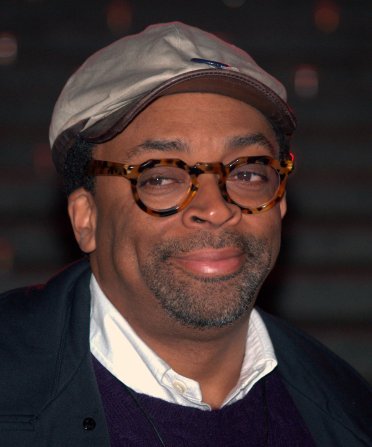
Spike Lee is 61 years old. This photo is a few years old but there is still a twinkle in his eye if you ask me. That twinkle, the eye for mischief, has been in his films from the start. Now I can’t pretend that I have followed his career, after the initial breakthrough in the mid 1980s with She’s Gotta Have It, Do The Right Thing and Malcolm X, but every time I have seen one of his films I have been thoroughly entertained, educated and provoked and made a mental note to see more of his work and revisit the early films. I have failed in this.

However I thoroughly enjoyed Chi-Raq a couple of years ago, with its more than a passing nod to Lysistrata, though the remake of Park Chan-wook’s Oldboy was disappointing, and can add to the acclaim for Blackkklansmen. It is, to its core, a Spike Lee film, the examination of race in the US and the African American experience, the humour, the exaggerated characters, the mixing of fact and fiction, the incorporation of documentary footage, the title sequences, the slick technique, the music, the dolly shots, all in the service of a captivating and extraordinary true-ish story of a black cop in 1970s Colorado Springs who, with the help of a white colleague, penetrates the Ku Klax Klan as they plan a terrorist atrocity.

Mr Lee is a proselytising political film-maker who can, at his best, appear not to be. (I am not talking here about his specifically documentary films such as 4 Little Girls and When the Levees Broke). Political films can, perforce, be a dour watch. Especially if they are about the “business’ of politics, political history, made by directors with an avowedly political agenda or focus on big, global issues, the stuff of international relations. Getting bums on seats with this sort of stuff is not easy. Me Lee here though has managed to incorporate the elements of a thriller, the one sure-fire way to secure an audience for the political, with elements of personal and identity politics in the relationships between the key male characters and the main protagonist, Ron Stallworth, and impassioned student activist girlfriend, Patrice. Best of all the satirical mocking of the KKK and its leader David Duke repeatedly hits the target without diminishing the ugliness of their hate. Remember the criminal fascist Duke is still peddling his sh*te and people are still being emboldened by it.

The period setting is superbly realised. The cast is outstanding. John David Washington’s bone-dry Ron is confident enough to face down face down racist colleagues after joining the force and to persuade boss Chief Bridges (Robert John Burke) to back his plan to infiltrate the KKK. The ever laconic Adam Driver is the perfect foil as Flip Zimmerman, who is sent in undercover to join the KKK cell. We see the political horizons of both expand; Ron after he is sent to monitor a Black rally at the local university, (where Corey Hawkins plays Kwame Ture in a stunning scene), where he meets Laura Harrier’s Patrice, and Flip, as the Jewish heritage he had abandoned is unmasked by the KKK and, specifically, the comically evil Walter (Ryan Eggold). Topher Grace is the spitting image of the young David Duke and brilliantly captures the rhetorical articulacy allied to an idiotic world view. There are some fine cameos on show  from Paul Walter Hauser, following on from his scene stealing performance in I Tonya, from Finnish actor Jaasper Paakkonen as Felix Kendrickson, the leader of the local Klan cell, and from Ashlie Atkinson as his wife Connie, who spews out shocking unthinking vitriol but still ends up as an unwitting victim.

Scene after scene hits home and somehow Spike Lee knits effortlessly knits this all together. Harry Belafonte is immensely moving as Jerome Turner in a scene where he describes the violence meted out to African-Americans in past generations. The Klan meting which ends in a screening of the outrageous DW Griffith’s film Birth of a Nation is properly shocking as is Alec Baldwin playing white supremacist Dr Kennebrew Beauregard. The ending is proper edge of the seat stuff. As if that wasn’t enough Lee leaves us with actual news footage from the Charlottesville rally in 2017. No equivocation here in contrast to some in the US. You will leave the cinema with no doubt what is right and what is wrong.

Blackkklansmen won a price at the Cannes Film Festival. I regret I am not up on these sort of things and have no idea what it was up against, but I am sure the jury here got it right. Mr Lee has packed so much into this film, plot, character, message, tone, spectacle, and the just over 2 hours flies by. Unmissable.

Aftermath at Tate Britain review ****

Otto Dix Skull from The War (1924) - http://www.moma.org/collect

Aftermath: Art in the Wake of World War One

Tate Britain, 29th August 2018

Historians abhor teleology these days. It’s a tricky business identifying events that “changed the history of the world”. For us simple layfolk though the First World War must surely mark a defining shift in the human experience. The scale, (over 10 million dead and 20 million wounded worldwide), the use of technology, the commitment of capital, the ideological fallout, the death-knell of empire. Take your pick. Things really changed after that.

We are approaching the centenary of the end of that War. Time to contemplate. And, here, a time to review the interpretation that artists put on this period. Well specifically the period after the war, (the works span 1916 to 1932). A smart idea. There are innumerable works of art that document the war itself, the exhibition kicks off with many of the most striking, but exploring the aftermath allows for insights into the different ways artists responded to the war’s legacy and to the, maybe, new beginnings. It also means the curators, led by Emma Chambers, were able to extend beyond British art and into Europe, primarily Germany and France (London, Paris and Berlin to be more exact). There are some stunning works on show here, a valuable history lesson, and more diversity of message than you might expect. You’d be daft not to take a look. Particularly if you have any interest at all in this period of history. Which, inevitably, you should. Art helps us to remember and understand in a way that words something fail to convey.

Room 1 looks at the devastation wrought by the war. Many of the artists here were participants in the conflict, either as soldiers, or in an official capacity. The polity back home generally didn’t want to know, nor did the authorities want them to see, the full horror of war. The depictions of battlefields, mud, pitted with craters, shorn of vegetation other than twisted tree stumps, eloquently made the point. Before the war many artistic movements, (Futurism, Vorticism), grappled with the impact of fast changing technologies on society. This impulse found its way into their war art.

The experience of war drained their optimism. Some artists could not contain their shock and anger at what they saw and went beyond symbolic representations of death, such as the abandoned helmet, to show actual bodies. The room also contains some fascinating early footage of the devastation in Flanders, filmed from an airship, and, intriguingly, guide books to the battlefields to help those who visited to pay their respects.

The most devastating works of Paul Nash (Wire), CRW Nevinson (Paths of Glory) and, most interesting here, the long neglected and once vilified Irishman William Orpen (Zonnebeke and Blown Up), may be familiar but are still striking, as is Luc-Albert Moreau’s shocking Chemin des Dames Assault. Richard Carline’s painting of a battlefield from the air (Mine Craters At Albert Seen From An Aeroplane) is intriguing but the most prominent works are the two sculptures, Jacob Epstein’s machine man Torso in Metal and Wilhelm Lehmbruck’s The Fallen Man, maybe the most famous loaned artwork here. Lehmbruck never escaped the horror of war: he killed himself in aged 38 in 1919.

This is not an exhibition of specifically war art though and, with so much to choose from both in the Tate’s collection and down the road at the Imperial War Museum, the curators have shown admirable restraint. They make their point though.

Room 2 intelligently moves on to how the WWI has been remembered, specifically through war memorials. Cenotaphs in Paris and London, dedicated to just one of the countless unknown dead, created a focus for remembrance from their inauguration two years after the armistice to this day. No national memorial appeared in Germany until 1931 but, like Britain and France, local memorials were commissioned. These memorials combined the abstract with, often, detailed figurative representations of the men who served. We were struck by Charles Sergeant Jagger’s dramatic, realist figures and by Eric Kennington’s more cubist maquette for the Soissons Memorial. BUD, my accomplice for the afternoon, was also impressed by the monumental lines of Marcel Gromaire’s famous War portrait and I had my first dose of the master Stanley Spencer with Unveiling Cookham War Memorial.

However it is hard not to drawn to Ernst Barlach’s extraordinary angel The Floating One. Barlach’s sculptures, along with Lehmbruck’s, were largely destroyed by the Nazis, who viewed them as “degenerate” but a mould of this piece survived. There is also, in a similar “Expressionist” vein, a sketch for The Parents monument by the genius Kathe Kollwitz (the model for The Floating One we see more of her later in Room 5). Barlach initially supported the Great War: his participation changed this.

Take a good look too at another Orpen painting, To the Unknown British Soldier In France, apparently a coffin draped with a Union Jack at the entrance to the Hall of Mirrors at Versailles, commissioned at the time of the Treat signing. Read its history though. It didn’t start out this way. Lack of respect, censorship, class division. Decide for yourself.

Room 3 offers yet another perspective on the years following the War. In our world, for those of us lucky enough not to live amongst conflict, images of war appear commonplace but the reality of its human impact is still largely concealed. In the 1920s, in Europe, this was not so, as the plight of damaged war veterans, in economies still disordered, was visible to all. The works here are some of the most poignant, and most angry, in the exhibition. In Britain artists were employed to create a medical record of the injuries suffered by the soldiers. The pastel sketches of Henry Tonks from the Hunterian Museum were not originally intended as “art” but they create a powerful impression. In Germany the veterans were the subject of far more explicitly political paintings and drawings from the hands of Otto Dix, George Grosz, Max Beckmann and Kathe Kollwitz.

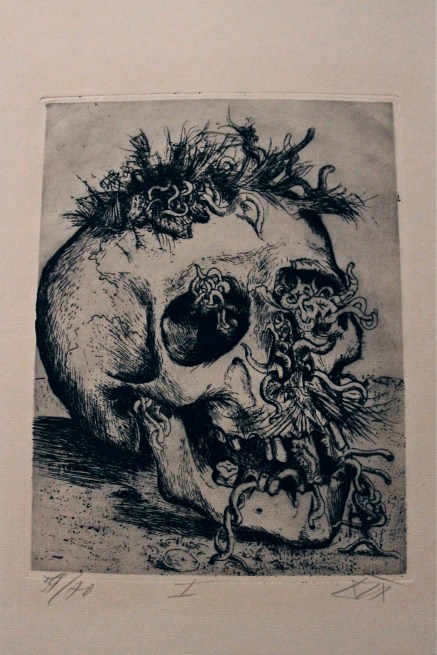
This is the most powerful art in the exhibition, especially the prints from these artists and Georges Rouault in Room 5. Beckmann’s Hell series of lithographs from 1919, the Der Kreig etchings of Dix from 1924 and Kollwitz’s similarly titled etchings from 1922 and Rouault’s sacred Miserere et Guerre photo-etchings from 1927 demand your attention.

Whilst some of the Dadaist work in Room 4 fails to leap out at me, and the Surrealist painting from the likes of Max Ernst and Andre Masson can be safely ignored in my view, do seek out John Heartfield’s photo-montage, After Twenty Years: Fathers and Sons, and then delve into this astoundingly modern artist’s output (and life) inter- and post- war, but especially from the 1930’s.

In Room 6, “Return to Order”, the curators show how the geometric and mechanised avant-garde forms and processes which dominated Western art before the war gave way to more realism and naturalism and a return to the traditional genres of portraiture, landscape and religion through the late 1920s and early 1930s. This despite the still chaotic economic and political backdrop, Pastoralism and classicism were reborn. I am not entirely convinced by this argument but it does give an opportunity to show off another Spencer, Christ Carrying the Cross, Old Military from Franz Lenk and soothing landscapes from the Nash brothers in sharp contrast to their war paintings.

Room 7, in contrast, shows that all was not necessarily well in inter-war society linking back to the political art of the immediate post war period and highlighting the deep divisions between rich and poor. Artists unsurprisingly sided with the left in the profound idealogical arguments that characterised the period. George Grosz’s Grey Day, which contrasts, once again, a veteran with a privileged capitalist, is one of the best paintings in the exhibitions.

The final room then goes a little bit off-piste by bringing together a diverse collection of responses to the rise of the “New City”. Mind you it does make you think about just how quickly the nascent optimism on show here would be snuffed out again by an even more devastating global conflict.

Overall this is an ambitious, powerful, valuable and often still shocking survey of the artistic response to the “Great War” made especially interesting for me by the rage, fury, sorrow and despair contained in the loans from various collections in Germany, (and the George Economou Collection in Athens). There are more than enough unexpected contributions amongst the big hitters and much genuine, if occasionally, unfocussed insight into the artistic response to the impact of war. If you have any interest at all in this period or subject then I would be mightily surprised if you haven’t already gone, or intend to go. That would be the right thing to do.