Beckett Trilogy at the Jermyn Street Theatre review ****(and some other at-home Beckett stuff)

Beckett Trilogy: Krapp’s Last Tape, Eh Joe, The Old Tune

Jermyn Street Theatre, 4th February 2020

Fragments: Beckett by Brook – Rough for Theatre I, Rockaby, Act Without Words II, Neither , Come and Go – VIMEO, Bouffes du Nord – 26th March 2020

Endgame/Rough for Theatre II – Digital Theatre, Old Vic – 9th April 2020

Having put in countless theatre hours over the last few years the Tourist feels ready to get to grips with another of the “writers who changed theatre” in the form of one Samuel Beckett. Anyone with a passing interest in culture generally, and theatre particularly, is going to have encountered the great Irishman, but, to the uninitiated like me his reputation is fearsome. Still no time like the present.

Especially when the equally fearsome Peter Brooke, similarly ascetic and similarly a Parisian expat, has kindly posted up a recording of his (and Marie-Helene Estienne’s) production of Fragments: Beckett by Brook from the Bouffes du Nord in 2018 (and last in London in 2008). I have had a couple of cracks at Mr Brooke and Ms Estienne’s oeuvre with mixed success, Battlefield at the Young Vic, their take on The Mahabharata, and The Prisoner at the NT, both works of elongated, and exacting, beauty. Fragments comprises five short pieces by Beckett, Rough for Theatre I, Rockaby, Act Without Words II, Neither and Come and Go, performed by, drum roll please, Kathryn Hunter, Jos Houben and Marcello Magni. Jacques Lecoq alumni, and all round stage acting royalty, especially when it comes to the tough, avant garde-y stuff.

Now it doesn’t take a genius to work out that Beckett, in addition to posing questions about language, memory, purpose, mortality, despair, isolation, confinement, observation, connection, indeed, the whole futility, with tenacity, of human existence and nature-of-the-self gig, liked a laugh, especially of the mordant, and/or gallows absurd, kind. Which is what PB and the three actors mine in Fragments. It isn’t too much of a leap from this to Python. Honestly. Of course it helps that Belgian actor Jos Houben is peerless as a physical comedy theatre actor, that Kathryn Hunter is the very definition of “shape-shifter”, (whatever you do do not miss an opportunity to see her on stage, most recently in the RSC Timon of Athens), and that Marcello Magni was a founder member of Complicite, (the other two are regular collaborators), about as innovative a theatre company as it gets. Oh, and he was also the voice of Pingu.

Rough for Theatre I is probably the trickiest customer on the bill. A blind beggar, busking on his fiddle, teams up with another chap who has lost a leg. Both reference past lovers/carers/family. They might be abandoned. They search for food. Mutual support turns to annoyance and, maybe, violence. A lot of the classic Beckett stuff is on show, a couple of cranky fellas bound in uneasy interdependence. But it doesn’t quite persuade and turns into a long, old 20 minutes.

Rockaby, with the archetypal old woman, W, in a rocking chair, the ghostly vibe, the simple, pre-recorded, dimeter verse echoing a lullaby, the hypnotic stresses and repetitions, (each of the four sections begins with “more”), the gradual withdrawal of W from the world, and her eventual death, is a work that most definitely does work. Especially in the hands, and eyes, and mouth, of Kathryn Hunter. There isn’t much here to express, but express she does, packing all manner of emotion into less than 10 minutes. Fuck life as W says. But do it gently.

Act Without Words II, like its companion piece, and the likes of Waiting for Godot, Endgame and Krapp’s Last Tape was written ion the 1950s, but unlike them it is a mime piece. Two fellas, of course, emerge consecutively from sacks on stage after being prodded by a large pole, before engaging in their, presumably daily, routines. One is chaotic, a hypochondriac, the other fastidious, a clock-watcher. A recipe for audience bemusement? You might think so from the sound of it, but, in the hands of Messrs Houten and Magni, it is hilarious, Laurel and Hardy-esque, one of the funniest things I have seen on stage. With Rockaby and now this I think I can see the attraction of Beckett.

And Come and Go only added to the attraction. Three middle-aged women, Flo, Vi and Ru, friends since childhood, Houten and Magni decked out with coats, hats and a bit of rouge, sit on a bench, natter, and then, as each moves away in turn, a whispered secret something is exchanged between the remaining pair. At the end they link hands in the “old way”, a Celtic knot. I can imagine this scenario might come across as foreboding, a reference to incipient illness or death, we don’t actually hear the secrets, but in this production it is comic, the whispers more gossipy or bitching. More Cissie and Ada (google it) than “staring into the void”. After all we all like to chide our friends behind their backs with our other friends in the guise of concern.

Neither is a poem of sorts, just 87 words, in ten lines, with apparently just 3 commas. That’s minimalism for you. It is some kind of dialectical journey, maybe to death, who knows. Kathryn Hunter can’t make its meaning clear but blimey does she make every word count.

All in all then highly recommended (it’s still on Vimeo). How all the little tragi-comic stuff can shed a light on all the big stuff which rattles around in our heads. Not, as Peter Brooke says, wall to wall despair and pessimism as Beckett reputation dictates. And showing how the best actors can reveal, even to the dubious like the Tourist, that there is more to Beckett than initially meets the eye, and ear.

On to Endgame. Or to be more precise Rough for Theatre I and then Endgame. From the Old Vic. Now my scheduled performance was a casualty of you know what but the nice people at the Old Vic offered up a filmed version of the production which I snapped up. Now, before the interruption, the draw of Daniel Radcliffe and Alan Cumming, had ensured brisk business for something relatively challenging judging by the wait it took me to secure my favourite perch. For Endgame, Fin de partie in the original French, (the language Beckett always initially used), does jog on a bit coming in at 80 minutes. It is bracketed up there with the likes of Waiting for Godot in the Beckett canon, and, whilst the critics response to the production was decidedly mixed, there was enough to make me gently expectant.

I have to say didn’t really get on with it though. Whether this was down to play or to performance, it is difficult to say. Having now see what PR and M-HE could do with Beckett in Fragments, (and, as you will see below, what Trevor Nunn was able to serve up in his Beckett trilogy), I think the director, here Richard Jones, might have been culpable. True the director’s freedom to interpret is proscribed by the still vice-like grip exerted by the Beckett estate, demanding compliance with the great man’s stage directions, and by the stripping away of realist anchors, the lack of plot, the minimalist aesthetic and so on. Even so I still think the thematic repetition, this really is about four troubled souls going round in circles, and the skill of certain the actors, left Mr Jones only really scratching the surface.

Alan Cumming played Hamm, confined to a chair, (with a rather distracting pair of fake stick-thin beanie legs on permanent display), with a splenetic camp which at first amused but soon curdled. And Daniel Radcliffe, who to his credit, seeks out acting challenges in an almost penitent way since the screen Potter juggernaut was wound up, is similarly one-dimensional as restless servant/foundling Clov. I am afraid he does’t really seem to get with the profundity, opting for a superficial humour in word and deed. The two don’t feel that they have spent an eternity locked together. Contrast this with Karl Johnson and Jane Horrocks, (with facial prosthetics which really do convince), as Magg and Nell, Hamm’s parents, living in wheelie bins downstage left. Much less to say, but by not trying to grasp for comedy that isn’t there, both convey far more .

In order to get under the surface of “life is absurd”, and “in the midst of death we are in life”, (or maybe it’s the other way round), I think I can see that creatives need to delve a bit deeper. If all we see is the outward character, like a realist play, here Hamm as childish despot “actor” doing a turn primarily for himself, or Clov as mild-mannered extra from the Ministry of Silly Walks, it just become too much hard work to listen to what Beckett was saying. I am guessing the existential bitterness at the core of Endgame really is the deal but having the confidence to see that through feels like a big ask. As Hamm says “nothing is funnier than unhappiness” but only I guess if you don’t try too hard to make it too funny in the first place. I will need to try again with the play to test the theory or to accept that it could just be that I simply don’t have the patience to see it through in which case, mea culpa.

As it happens I preferred Rough for Theatre II. Two bureaucrats, Bertrand and Morvan, are in a room assessing the evidence as to whether would be suicide Croker, (Jackson Milner standing stock still for half an hour with his back to us – bravo fella), should jump or not. There is a contrast between the two, Cumming’s Bertrand is sweary, impulsive, keen to crack on, Radcliffe’s Morvan, more measured, though indecisive. The scenario is milked for gags as it echoes the likes of It’s A Wonderful Life, Here Comes Mr Jordan and A Matter of Life and Death from the 1940s. Croker might have been rejected, he might be ill, he might be a tortured artist. The comments of the various witnesses from Croker’s life are mostly banal, only occasionally poignant or profound. The banter between B and V edges towards Shakespearean wordplay, as well as the more visible vaudeville. The end is ambiguous. It could be Pinter, which is probably why I much preferred it

Right finally to the Jermyn Street trilogy. Sorry that took so long but this is how I learn. Firstly the intimacy of the JST served these plays very well especially Krapp’s Last Tape and Eh Joe. Secondly the cast. David Threlfall, James Hayes, Niall Buggy and, even if in voice only, Lisa Dwan have the measure of Beckett. It is rare to see Lisa Dwan’s name in print without the words “foremost Beckett interpreter/scholar” appended, (Not I, the one with the mouth, is her particular Beckett party piece), though she has plenty of other heavyweight acting credits to her name in Ireland and elsewhere, as does fellow Irish actor Niall Buggy. David Threlfall is just an all round top geezer, last seen on stage as the RSC Don Quixote, who has played Beckett on screen, albeit in the hit and miss comedy series Urban Myths. James Hayes has been treading the boards for as long as the Tourist has been mortal, and collaborated with Trevor Nunn at the JST in radio play All That Fall in 2012 with Eileen Atkins and Michael Gambon.

Understandably the Beckett estate rates Trevor Nunn, now 80. He is, after all, pretty much the Father of the House when it comes to theatre direction. Unlike Richard Jones whose USP is showy, scatter-gun, (though often brilliant), opera. Max Pappenheim is able to conjure up a sound design with real impact in a space he knows well and I assume David Howe, normally to be found lighting up the West End, said yes straight away when he got the Nunn call. The monochrome world, specified for Krapp’s Last Tape, persists throughout. Old age and memory is what links the three works. What four old men remember and what they forget.

Krapp’s Last Tape, from 1958, the year after Endgame, was big draw here, with James Hayes, literally, in the chair. Krapp on his 69th birthday, and sporting a natty pair of snakeskin shoes, sets out to make a tape (reel-to-reel kids, ask Grandad, though make sure it is by phone) documenting the last year and to review a similar tape he made when he was 39, made after he had returned from celebrating that birthday in the pub. This tape mocks the commentary of another tape he made in his mid twenties. He is more interested in the definition of the word “viduity” than the death of his mother. (The table is piled up with tapes, a ledger and the dictionary). Some memories annoy him, others, notably a romantic tryst in a punt, enchant him. The 39 year old is confident in the choices he has made, the 69 year old full of regret, notably in his writing. Is this his “final” tape?

Beckett was 52 when he wrote it. You can read whatever you want into it but it seems easy to just take it as autobiography and revel in the power and construction of memory. Failures in love, in work and in drink. It went through many drafts, much like our memories I suppose. The Wiki page is very helpful in fleshing out the characters, real and fictional, mentioned in the monologue and in describing Beckett’s own position at the time of writing.

I can’t pretend I was hanging on every word of James Hayes’s mesmerising performance. but that is because I ended up revisiting my own past in my mind. What better praise can I offer?

Eh Joe is pretty scary. It was SB’s first play for television, first performed in 1966 by Jack MacGowan, for whom it was written, with Sian Philips as The Voice. Joe, in his fifties, is sitting alone on his bed in dressing gown and slippers, with a camera trained on him. He gets up to check windows, curtains, door, cupboard and bed as if in fear. The camera cuts to a close-up of his face from just a metre away which slowly zooms in, nine times, through the remaining 15 minutes or so. Joe is relaxed, though confined, staring at, though not into the camera. Then the voice, here Lisa Dwan, starts hammering away at him, the recording heavily miked, accusatory, recalling their relationship and his abandoning of another woman who attempts suicide. She is the guilt-ridden voice inside his head I guess, the feminine judge of his masculine sin. He has excised the voices of his mother, father and others who may have loved him. The Voice’s words brim with violence. There is Catholic and sexual guilt aplenty. Niall Buggy, for a man who doesn’t speak, is riveting and now I get why Lisa Dwan is so well regarded. Once again it is all about the getting the rhythm and melody of the language to convey interiority.

Lisa Dwan was 12 when she saw Eh Joe on the telly. It stayed with her. I’m not surprised.

Fortunately we were then given a break before The Old Tune, which compared to the two previous plays, was a breeze. Rarely performed, it is a free translation by Beckett of a 1960 radio play, La Manivelle (The Crank) by his Swiss-French mate Robert Pinget. Niall Buggy and David Threlfall are a couple of Dublin old-timers, Gorman and Cream, shooting the breeze on, of course, a bench. They share memories, all the way back to early childhood, but can’t always agree on exactly what. It’s got some laughs.

So that’s that then. No doubt I will be back to Beckett. But for the moment, at least when the performers are on song, memories are made of this ….

The Beauty Queen of Leenane at Queens Theatre Hornchurch review ****

The Beauty Queen of Leenane

Queens Theatre, Hornchurch, 14th November 2019

From one side of London to the other. All on track until the very last gasp, so snuck in a few minutes late to this. A big thanks to the very helpful ushers at this friendly house. TBQOL isn’t starved of revivals but this was my first live viewing of Martin McDonagh’s first play, though somewhat nominally since the next two in the Leenane Trilogy, A Skull in Connemara and The Lonesome West, as well as the first two of the Aran Islands trilogy, followed hot on its heels in the mid 90s. Hence my completist determination to see it.

And the fact that it had attracted some decent reviews at the run at Hull Truck, the co-producer. Whose veracity I can testify to. Designer Sara Perks has delivered a Connemara farmhouse, shared by Mag Folan (Maureen McCarthy) and daughter Maureen (Siobhan O’Kelly), required for all these plays, but with a twist. The walls are half-built, foretasting Maureen’s escape, though beyond the walls all is dark, in Jess Addinall’s moody lighting design. (There is an interview with young Ms Addinall, who started as a temporary technician at Hull Truck, which shines a light !! on her work and ambitions).

At its heart this is a simple story. 70 year old Mag is suffocating the 40 year old Maureen, who, after her two sisters married off, grudgingly tends to her every whim, tea, porridge, lumpy Complan. When she meets old schoolfriend Pato Dooley (Nicholas Boulton) at the farewell party of a visiting American uncle the chance to escape beckons, despite Mag’s interventions. The only other character is messenger Ray (Laurence Pybus), Pato’s younger brother, default setting bewildered, distracted by casual violence. This being MM the course of true love doesn’t run smoothly and things don’t end well.

It is brilliantly written, with exquisite dialogue, by turns comic and tragic, (my favourite, the crucial fire poker is casually described by Mag as “of sentimental value”), and a sturdy plot. That’s why it won a ton of awards when it first appeared in 1996, in Galway itself, before the Royal Court run and then transferring to Broadway in 1998. It is also, intertwined with the bitterness and regret, of all three characters, brimful of pathos, perhaps more so than the other Irish plays. Maggie McCarthy, slumped in her chair, allows us to see Mag’s vulnerability even as she passively-aggressively plots to keep Maureen in her place. Nicholas Boulton shows us the deep sadness at the core of Pato, happy neither in London, where he goes to work, and home in Leenane, and the excitement with which he imagines a new life with Maureen in Boston. And Siobhan O’Kelly is mesmerising as Maureen, whose past, and isolation, explains her awkward, exaggerated behaviours. Daughters turn into their mothers. Who’d have known.

Just a shame some berk in the audience seemed incapable of turning their phone off, twice, much to the chagrin of Ms O’Kelly. If you don’t know how your phone works (which I surmise was the issue here), ask someone younger (yep it was an early boomer), or, better sill, don’t bring it to the theatre. Whatever it is can wait. You are not that important.

My guess is that Hull Truck AD Mark Babych is a big fan of McDonagh’s. Mind you who isn’t. The SO and I still rate Hangmen as the best play we have seen in recent years, LD’s favourite was the Michael Grandage revival of The Lieutenant of Inishmore with Aidan Turner, and everyone I know who saw A Very, Very, Very Dark Matter, despite its flaws, hasn’t forgotten it in a hurry. Mr Babych has plainly lavished a great deal of care on this production and I am a little surprised that it hasn’t toured. Still, London audiences will have another chance to see the play at the Lyric Hammersmith later next year, in a production directed by LH AD Rachel O’Riordan (she kicked off her inaugural season with the superb version of A Doll’s House written by Tanika Gupta).

The Tourist recently saw another play centred on a dysfunctional mother-child relationship, Eugene O’Hare’s misfiring Sydney and the Old Girl at the Park. Chalk and cheese, This is how it should be done.

Blood Wedding at the Young Vic review ****

Blood Wedding

Young Vic, 11th October 2019

I got a bit nervous going into this. For those who don’t know, South African director Yael Farber has a certain style, an aesthetic, and approach to interpretation of classic plays, which isn’t too everyone’s taste. For me it works. Mies Julie, Knives in Hens, Les Blancs, even the much derided Salome at the NT, all drew me in. Very satisfying. We have her take on Hamlet also at the Young Vic to look forward to next year and newbie, the Boulevard Theatre, has lined her up to direct her compatriot, Athol Fugard’s, Hello and Goodbye.

For Blood Wedding though I had roped in the SO, a more forbidding critic, who is not, as most chums rightly are, as tolerant as the Tourist of, shall we say directorial longueurs. And this was near 2 hours straight through. On the benches of the Young Vic main space. And with her back playing up.

As it turned out I had nothing to fear. Lorca’s play, (his day job was poet after all), has a mythic and elegiac quality perfectly suited to Ms Farber’s ethereal approach, though this tale of forbidden love and revenge is not without drama and lends itself to a clear feminist interpretation. All this and more was on show at the Young Vic. A barely there, in the round, set design from Susan Hilferty, with occasional visual declamation via doors on one side, some artful cascades and a rope and harness which permitted muscular bad boy Leonardo (Gavin Drea) and absconding (nameless) Bride (Aoife Duffin) the striking means to pretend gallop. The intervention of the symbolic Moon (Thalissa Teixera), who can now add superb flamenco singing to her acting flair, and woodcutters (Roger Jean Nsengiyumva and Faaiz Mbelizi) made perfect, just about, sense. The bold lighting of Natasha Chivers, the score of Isobel Waller-Bridge, the spectral hum of Emma Laxton’s sound design, the balletic movement of Imogen Knight, witness the closing fight (overseen by Kate Waters) and subsequent requiem.

Most of all though Marina Carr’s beautiful translation. By shifting the setting of Lorca’s revenge tragedy to rural Ireland, though never quite leaving 1930’s Andalusia behind, Ms Faber allowed Ms Carr the opportunity to conjure an English language translation which was sympathetic to the poetry, metaphor and idiom of the Spanish original. A colonised Irish interior, suppressed by Church and State, bears obvious similarities to the paralysed, benighted Spain that Lorca delineated, critiqued and celebrated in his rural trilogy (Yerma and The House of Bernarda Alba as well as BW). The hybrid setting also allowed the natural casting of the magnificent Olwen Fouere as the grizzled, austere Mother and the equally magnificent Brid Brennan as the Weaver. If I tell you that Annie Firbank as the Housekeeper and Steffan Rhodri as the outraged Father also graced the stage, along with relative newcomers Scarlett Brookes, (watch her closely in future) as Leonardo’s spurned wife and David Walmsley as the equally wronged Groom, then you can see that this was a grade A cast top to toe.

Lorca’s story is straightforward. Mother reminds son (the Groom) that his Dad and Bro were killed by the men of the Felix family next door. A dispute over land. Leonardo Felix and the Bride are still in love. Mrs Leonardo knows. The Mother finds out as well but decides to visit the Bride and her Dad. The wedding goes ahead by Leonardo turns up and steals the Bride. Outrage. Vengeance. Fight. Deaths. Sacrifice. It is very heady stuff but its chimerical qualities mean it is a long way from melodrama or even Greek tragedy. Closer to fable.

Anyway Yael Farber and Marina Carr have done a little nip and tuck with the plot but all the primitive elements are still there. That this is a traditional, brutally patriarchal society is never in doubt, as much but what the older women say, as the men, and yet there is still a sense of agency in the striking performances of Aoife Duffin and Scarlett Brooks. There is intentional comedy in the vernacular passages and there is no unintentional comedy in the brutal and fantastical scenes, (though once or twice it skirts close near the end – it is the women who mop up the blood). The cumulative effect is undeniably powerful even when the pace edges towards the, shall we say, Largo. In fact there is something of the minor key symphonic in Yael Farber’s reading.

I am not sure I would recommend this to fans of the Lion King or indeed anyway unfamiliar with this deliberately stylised auteur approach to theatre. On reflection I shouldn’t really have worried about the SO’s reaction. She reads books. Proper books. Lots of them. We are drowning in theme. Imagination, to augment the visual abstraction, is therefore no limitation for her.

The Intelligence Park at the Linbury Theatre review ***

The Intelligence Park

Linbury Theatre Royal Opera House, 2nd October 2019

I have no-one else to blame for this. Having now heard a smattering of his larger scale works thanks in large part to Thomas Ades’s advocacy in his Beethoven cycle with the Britten Sinfonia, having invested in a CD of his chamber works and having thoroughly enjoyed the semi-staged version of his opera The Importance of Being Earnest at the Barbican a few yeas ago, I would certainly count myself a fan of Gerald Barry’s bracing, spikily rhythmic composition.

There were plenty of knowledgeable commentators however, including the composer himself, who warned that this, his first opera from 1990, is not the most transparent of entertainments. Though it was lauded on its first showing at the Almeida, largely for the music I gather, its plot is convoluted, the libretto from Barry’s Irish countryman, and Joycean scholar, Vincent Deane is florid, bordering on the impenetrable, and the aural intensity unyielding. Barry delights in music that bears no necessary connection with character, action or phrasing. 90 minutes, even with interval, is probably as much as even the most sympathetic of listeners can take.

And yet, out of this assault on the senses, comes something which is, well if not enjoyable, is certainly remarkable. The story, whilst admittedly needing more than a nudge from the programme synopsis, is no dafter than most opera buffa, complete with a knowing meta quality which I suspect would have appealed to C18 audiences. Something that Haydn would have attempted. Though also with an underpinning of Handelian serioso that the setting of this opera, and its successor, The Triumph of Beauty and Deceit, (how’s that for a late C18 opera catch all title), implies. Even so GB has said “as to what The Intelligence Park is about, I have no fixed idea” though there may have been with tip of tongue in cheek.

It is Dublin. 1753. Composer Robert Paradies (bass-baritone Michel De Souza) is struggling to complete his opera on the romantic tryst between warrior Wattle and enchantress Daub. Best mate D’Esperaudieu (Adrian Dwyer) pitches up to remind him of his impending marriage to Jerusha Cramer (Rhian Lois) which is required if he is to inherit Daddy’s riches. The boys pitch up to a party at Sir Joshua Cramer’s (Stephen Richardson) townhouse. Jerusha starts singing but is interrupted by her teacher, visiting castrato Serafina (Patrick Terry) who is in attendance with his bessie Faranesi (soprano Stephanie Marshall). Paradies falls for Serafina and falls out with D’Esperaudieu.

Then it gets properly weird as the Wattle and Daub characters, complete with puppet heads (!), pitch into the real proceedings and we find out Jerusha also has the hots for Serafina. Fantasies, arguments, elopements, a series of comic (sort of) vignettes, revenge, a banquet and death all pile up as art and life collide. Though frankly, even as I had secured a better viewing perch, (a few punters gave up at the interval), it all got a bit confusing post interval. No matter. The tropes of classical opera, (and Georgian comedy), were all on show, no doubt there were allusions and quotations that went right over my head, which Nigel Lowery’s ironic, cartoonish Baroque vision, as set and costume designer, director and lighting designer, sought to play up. Think Hogarth on acid.

I also gave up on the subtitles. Not because I could make out what the cast were singing. That was impossible. Not because of any failing on their part. To a man and woman they were tremendous given the singing, acting and, critically, concentrations demands made upon them by GB’s score. Take Stephen Richardson’s bass part which keeps flipping from its lowest register into falsetto, sometimes mid line. (Hats off to repetiteur Ashley Beauchamp who certainly earned his fee). No the fact is, after a while trying to take in Mr Deane’s densely connotative text, it just became too much to take in alongside the music and the visuals. In my experience contemporary opera can veer towards the sombre and static. Not here. This is intensely theatrical.

So you are probably thinking, based on the above, that this was all a bit shit and only really shows the Tourist up as the pseud he is. Well no actually. Just because I can’t cover all the bases in terms of plot, character, message, text doesn’t make this a bad opera. The story is deliberately confusing and the music deliberately unsettling and that is what makes it interesting and intriguing. Being challenged by art is all part of the deal and opera is pretty binary when it comes to comfort or challenge. If you want the former then Handel or Mozart will probably float your boat, and I admit, often mine too. But sometimes exposing yourself, as here, to their evil twin can be bracing. Remember the first time you heard the Sex Pistols? Same thing.

Barry has described The Intelligence Park as being set an an “unsettling diagonal”, a fair description. TIOBE, and Alice’s Adventures Underground which will appear next year on the main ROH stage courtesy of WNO, in part because we know what we are looking at (even through the looking glass) and because they are funnier, (deadpan humour is a big part of GB’s shtick), are easier fare to digest but GB’s musical language is still a long way from most of his historical, and contemporary, peers. Opera, however daft or reactionary the plot, insists that the participants really mean what they are singing. Emotions run high, feelings are big and bold. GB undercuts, though doesn’t subvert, all of that with his music normally going out of its way to upset the expected code. Shifting time signatures. Voices careering across the register. High notes when there should be low and low when they should be high. Stopping mid line. Repetition but of the wrong word at the wrong time. Exaggeration at points of banality or curious indifference at points where emotions should be highest. Unusual accentuation as GB terms it. The plot may be linear. The music is not. There is steady pulse and rhythm often at a fairly brisk lick, with one beautiful lyrical passage excepted, and there is plenty of noise when required. But none of the “divine” interplay of music, libretto and emotion that Mozart and da Ponte conjured up. These obsessive characters are not in control of the music, they are being attacked by it.

This relentless energy and manic aggression is tiring and sometimes frustrating but it is undeniably thrilling and there are so many brilliant, unpredictable musical ideas that it is better to go with it than set your will against it. After all, whilst there may be dissonance, there is harmony, lots of it, just not always pretty. Needless to say the London Sinfonietta took the score in their stride, they thrive on stuff far more challenging than this, but it takes a conductor of guts to take this on. Jessica Cottis is rapidly becoming the opera conductor of choice for challenging new and recent opera and here she wisely promoted vigour and animation over precision.

After the six performances, (same number as for next year’s sold out Fidelio – go figure), at the Linbury this Music Theatre Wales/Royal Opera co-production went on to Cardiff, Manchester and Birmingham. So bravo to them for reviving this, bravo to everyone involved to bring it to fruition despite its challenges and, why not, bravo to all us who listened to it.

Class at the Bush Theatre review ***

Class

Bush Theatre, 15th May 2019

Good intention. Examine the way the education process, despite the best intentions of those who operate it, can fail those who start with least advantage. Interesting central conceit. Take the parents whose son is the subject of their meeting with his teacher, and show them as their child selves. And some fine observation on class, expectation, educational prejudice and the language that educators use. Ultimately though both the Tourist and the SO weren’t completely convinced by the play’s apparent conclusions and by some of the narrative leaps taken along the way.

Dubliners Brian (Stephen Jones) and Donna (Sarah Morris) are the estranged parents of Jayden who have been called in to meet his teacher Ray McCafferty (Will O’Connell). Taxi driver Brian arrives early and his discomfort with environment, (this was his old school), and situation, (he is conscious about his own educational achievement), is palpable. Ray, in his eminently reasonable primary school teacher way, does his best to reassure him. Donna arrives and Ray explains that Jayden has fallen behind in his literary and might need some help, perhaps including the intervention of an educational psychologist. So far so awkward. We then switch to Jayden and Kaylie (again played by Stephen Jones and Sarah Morris) in a “homework club” with Mr McCafferty, attempting to engage their attention. When we switch back to Brian and Donna, after Ray exits to get the required paperwork, they discuss what to do with Jayden and show signs of the affection that still inhabits their relationship. When McCafferty returns however, and Jayden’s issue shifts from a learning “difference” to a “difficulty” and even possible dyslexia, and even a potential catalyst for “delinquency”, things start to kick off as his botched attempts to intervene on behalf of another pupil are revealed, the reasons for the break up of Brian and Donna are rehearsed and both men’s tempers spiral out of control.

A couple more plot ratchets and we’re done. Left with the slightly unsatisfactory feeling that writers (and directors) Iseult Golden and David Horan felt compelled to privilege dramatic tension over further character development. I can see why but, given the quality of the dialogue, laced with humour, in the first half, to us it seemed something of a waste. On the other hand it isn’t easy to see where they might have otherwise gone with the story and the fear of “fizzle out” is understandably. deeply ingrained in the creative writing psyche. Given successful runs in Dublin, Galway and Edinburgh, it is perhaps unsurprising that cast and direction is so accomplished and Maree Kearns set and costume design will be familiar to any parent and teacher either side of the Irish Sea. (The Tourist’s ample behind would often inadvertently take a tiny chair with it after parent teacher meetings at the local primary).

Cyprus Avenue at the Royal Court Theatre review ****

Cyprus Avenue

Royal Court Theatre, 4th March 2019

From one black comedy which imagines taboo breaking violence to make a political point (here big as well as small “p”) to another. Having seen the Ladykiller from The Thelmas at the Vault Festival it was off next evening with the SO, MS and MSC to see David Ireland’s much lauded play about sectarianism on its return to the Royal Court after a run in NYC.

Now I had originally signed up to see Cyprus Avenue on its first outing at the RC in 2016 but had to can it due to a diary clash. Didn’t know anything about David Ireland at that time so was a weensy bit peeved when the uniformly excellent reviews came through, especially after seeing The End of Hope, one of Mr Ireland’s earlier plays, which is one of the sharpest and funniest hours of theatre I have seen on stage in the last few years. So to say I was looking forward to this was an understatement. In fact maybe my expectations were a little too high. Don’t get me wrong. Cyprus Avenue delivers on so many levels. Not least the opportunity to see Stephen Rea on stage. Role for role Mr Rea might just be the most principled actor on Irish, British (or any other) stage and screen. He just doesn’t seem to take dodgy parts for money. To say the role of Eric in Cyprus Avenue could have been written for him is the understatement of understatements. But this is not quite the perfect play.

Actually maybe the understatement of understatements is to say that Eric is not a nice man. The play begins with him shuffling on stage into a nondescript room where he is interviewed by a black woman psychiatrist, (the excellent Ronke Adekoluejo, who, like the rest of the cast, has played the role in Dublin and NYC). Eric’s shockingly direct sexism and racism is quickly revealed. But this is not the half of it as it we flashback to Eric’s blunt treatment of wife Bernie (Andrea Irvine) and daughter Julie (Amy Molloy). And his realisation that his baby granddaughter Mary-May is, in fact, Gerry Adams, Republican, and the leader of Sinn Fein, (until last year). Not just a resemblance. He thinks his daughter really is Gerry Adams, complete with beard and glasses. For Eric, a diehard Unionist, this is anathema. His relationship with wife and daughter disintegrates and he even recruits a hardman, albeit comically incompetent, UVF paramilitary to “resolve” his dilemma. The end is shocking as Eric is forced to assert his bigoted identity, in the face of multiple threats, in the most violent way imaginable.

This is then a black comedy through which David Ireland skewers the lunacy of sectarian politics in Northern Ireland and, by implication, elsewhere. Eric’s religious and political values are so deeply ingrained that hate of Catholics and Republicans, the “Fenians” in his words, is his only currency. His warped logic is mined for laughs but the point is deadly serious. What makes the performance of the crumpled Stephen Rea so remarkable is that, through it all, he still makes Eric recognisably human. Not sympathetic of course. Just very real, his views to him are entirely logical and reasonable. You feel that if he were ever to abandon the certainties of religion and politics his entire psych would collapse in front of us. With a preposterous bunch of “British” religious and political zealots in the form pf the Democratic Unionist Party currently trying to hold our executive, and therefore legislature, and country, to ransom, the play could hardly be more relevant.

This is David Ireland’s metier. using uncomfortable comedy, and shocking violence, to interrogate, and maybe upend, our understanding, expectations and preconceptions of key political questions: sectarianism, identity, race, sexuality and culture. In his first play, What The Animals Say, this is filtered through acting and football, in Everything Between Us the setting is a Northern Ireland Truth and Reconciliation Commission, in the End of Hope, sex and celebrity through a surreal one-night stand, (as is the similar Most Favoured), in Half a Glass of Water, male rape and abuse, (Stephen Rea playing the abuser on its original outing), loyalist paramilitaries again in Yes, So I Said Yes, an age gap relationship in Can’t Forget About You, sectarianism once again in Trouble and Shame, and abuse, religion and homophobia in Summertime.

The sharp eyed amongst you will have noticed a pattern here with the same ideas, situations, issues and characters recurring through his plays. There is I suppose a risk of repetition and self-parody in all this “offensiveness”; indeed I gather that his poorly reviewed play, I Promise You Sex and Violence, was guilty of exactly that, though the title suggests Mr Ireland is alive to the possibility. Senseless violence and the urge to provoke can induce a reaction from the easily shocked or the tiresomely worldly but also even from those, like the Tourist, more open to this sort of caper. There were indeed one or two moments in Cyprus Avenue where I did think the point had been made and it was time to move on. MS was of a similar mind, whilst the SO rightly observed a few drops in pace, and MSC was a little nonplussed by all the savagery really .

Yet for all this duplication the provocation works, the dark, ironic parody is often very funny and the dialogue, in passages, sparks. Ulster American, his latest play, is returning to the Traverse in Edinburgh after selling out last year and, once again, dividing critics with its content. I suspect, one way or another, I will end up seeing it. Mr Ireland treads a line, no doubt, with the subjects he explores and with the way he explores them, but I would contend that is, amongst many other things, the purpose of drama. Trying to work out if people are laughing for the right or wrong reasons isn’t really going to work. As ever, in all art, it is the intention of the creator that is paramount.

Cyprus Avenue just could have done with being a little tighter, less overwritten, offering a little more surprise. On the other hand, for example in the scene where Eric and Slim, (the superb Chris Corrigan), meet, the lines are just so darned good, even when they say essentially the same thing, that I can see why Mr Ireland keeps serving them up. The way their mutual indignation at the backsliding of others in their community is captured, in that odd, overly eloquent tone of florid aggression, is delicious. For me, Martin McDonagh’s The Lieutenant of Inishmore, remains the definitive piss-take of sectarianism and is, line for line, funnier but it is not difficult to see why CA has proved a sell-out.

I assume Vicky Featherstone didn’t have to make too much in the way of adjustments to her sure-footed direction in moving the play from Upstairs too Downstairs at the RC and that Lizzie Clachlan’s spartan set was similarly re-used. The text calls for a muzak version of Van Morrison’s song from which the play’s title is drawn, the post part of East Belfast, but I don’t remember this. Perhaps because that might just be the most horrifying thing of all. Just joking. Anyone I have just put Astral Weeks, the album from which it is drawn on. Still as perfect as when it first came out in 1968. Doesn’t matter how grumpy he gets he is still The Man.

Stones in His Pockets at the Rose Kingston review ***

Stones in His Pockets

Rose Theatre Kingston, 1st March 2019

Like Martin McDonagh’s The Cripple of Inishmaan, and written at the same time, Marie Jones’s Stones in His Pockets is a comedy which examines the impact when a Hollywood film crew descends on a small Irish community. But where one is sharp, dark and intriguing, this, for all of the sorrow at the heart of the play, is a much slighter affair, and can’t seem to make up its mind whether it is satirises or celebrating the outsider view of Ireland it examines. Maybe it was just the production, but the two hander structure, with both actors jumping incessantly between characters, seems to animate the broader, physical humour at the expense of the message about tired stereotyping which, I think, Marie Jones is trying to get across.

Not that it wasn’t funny in places. Though not as funny for me as it seemed to be for others. Some of the audience at the Rose were doubled up in mirth, others sat near stony-faced. Still there was pretty enthusiastic applause at the end for the efforts of Owen Sharpe (Jake) and Kevin Trainor (Charlie), which was very well deserved. Yet I had expected something more given the reception the play was afforded in its early years as it snowballed from its Belfast Lyric premiere, through a community tour, Edinburgh Fringe, the Tricycle and then into the West End for an award winning run of three years. Though perhaps this reflected the combined talents of actors Sean Campion and Conleth Hill (last seen by me steadfastly refusing to be out-acted by no less than Imelda Staunton in Who’s Afraid of Virginia Woolf). It has been revived on numerous occasions in Ireland, the UK and around the world. I even note that Kare Conradi, the AD of the Norwegian Ibsen Theatre (who was over here for The Lady From the Sea a couple of weeks ago), did a stint in a production over there. If it works in the land of Ibsen then who am I to argue.

Charlie Conlon and Jake Quinn are two friends in a rural town in County Kerry who sign up as extras for the Hollywood film. Charlie, on the run from his failed business, has written a script he dreams will be made into a film. Jake has recently returned from NYC, knows everyone in the village, and is besotted by the star of the movie, Caroline. The producers, directors and crew only care about getting the film done on time with plausibility, plot and accents taking a back seat. The “colourful” locals are initially excited at the arrival of Hollywood but soon tire of the glamour, and things take a turn for the worse when one of the villagers, druggie Sean, commits suicide after being humiliated by Caroline in the local pub. The flashpoint is Sean’s funeral. Jake and Charlie get the chance to pitch the script but it is rejected by the film’s for being insufficiently romantic and commercial.

Easy enough to see the tension between the Hollywood view of Ireland and reality. Martin McDonagh takes more direct aim at the liberties taken by Robert J Flaherty in his “documentary” Man of Aran in 1934, but the intent is similar. This touring co-production (with Bath Theatre Royal), is directed by Lindsay Posner, who has delivered it in NYC recently, and is as safe a pair of hands as it is possible to get, whether in classic or lighter theatrical fare (Mamet, Miller, Ben Johnson and Noises Off being particular highlights in my book). Peter McKintosh’s set is your standard Irish outdoorsy caper (see Rae Smith’s bigger budget version for the NT’s Translations last year), with the two actors manipulating a large chest to simulate the indoor scenes.

Moderately entertaining. For sure. Thought provoking. Nope, Fraid not.

A Skull in Connemara at the Oldham Coliseum review ****

A Skull in Connemara

Oldham Coliseum, 28th February 2019

Two successive nights. Two revivals of comedies looking at the nature of “Irishness”. Martin McDonagh’s A Skull in Connemara and Marie Jones Stones in His Pockets. Which did the Tourist prefer? McDonagh’s black comedy of course. Bit trickier to get to, train to Manchester, then an admittedly convenient tram to Oldham on a wet and windy evening, vs a 10 minute walk, but effort rewarded.

Thanks in large part to Chris Lawson who is the Acting Artistic Director (an entertaining if accidental play on words) at the Oldham Coliseum, an alumni of the Almeida and was responsible for this revival. Based on his work here, and the intelligent and accessible programme he has devised for this season, an in-house revival of Barney Norris’s Visitors, co-productions of Moira Buffini’s Handbagged and the musical The Hired Man, and touring productions of Approaching Empty (from the Kiln and worth seeing) and Charlotte Keatley’s local, and now global, smash hit My Mother Said I Never Should, if I were the Board of the OC I would give him the permanent job. Good people of Oldham and Greater Manchester I enjoin you to pitch up for any, or all, of these entertainments. You won’t be disappointed. I might join you for Visitors if I can rustle up the train fare.

I have bored you enough before on this site about the genius of Martin McDonagh’s plays so I’ll pipe down this time. Suffice to say A Skull in Connemara, first performed in 1997, was the second of the Leenane trilogy after The Beauty Queen of Leenane and before The Lonesome West and may be gets slightly overlooked compared to its peers, the later plays and the two produced plays in the Aran Islands trilogy, (the first of which, The Cripple of Inishmaan would provide an even more fruitful compassion with Stones in His Pockets – same conceit, Hollywood comes to rural Ireland – and both written in 1996).

Too often the words “black humour” or “black comedy” are the precursor to an entertainment that is neither dark nor funny. Not here though. This is quite literally graveyard humour. There is normally an expanding kaleidoscope of high (Synge and Beckett) and low (cop shows) culture references in MM’s work. Here surely Elsinore and everyone’s favourite, overly literal grave-digger has been transported to the west coast of Ireland. Loner Mick Dowd (John O’Dowd), amongst other things, is tasked each year with digging up and disposing of the skeletons in the local churchyard to make room for new entrants. His wife, who died seven years earlier, is interred there but, when he finally gets to her exhumation, she has disappeared. Bad news, especially when the village rumours is he bumped her off in the first place, so the story goes, for burning his scrambled eggs. He is assisted in his work by the local gobshite Mairtin Hanlon (Liam Heslin), whose chain smoking brother Thomas (Griffin Stevens) just happens to be the bumptious, corrupt local Garda, role models Starsky and Hutch. The cast is rounded off by the Hanlon’s elderly gran, Maryjohnny Rafferty (Jenny Lee), prone, like Mick to a shot of poteen, to tittle-tattle, cheating at bingo and bigotry.

Now for all his playful meta conversions, inversions and reversions (especially in the “fairy-tale plays” and the films), MM knows how to work structure, plot, character and rhythm. With just four characters in an isolated location, turned in on itself, where everyone’s business and history is shared, MM creates even more opportunity than usual to explore the personal dramas and relationships within the world he has created. Little does she know that he knows the she knows …. And then what do we know? All four characters have secrets of a more or less heinous kind.. Though this is still, by MM’s standards, a pretty “straight” play within the overall literal metaphor of “digging up the past”. He does treat us to some of the devices we have come to know and love: moral instability, dark, ironic humour and plot twists but this is gentler than many of the later plays.

Apart from the Tarantino-esque bone crushing scene choreographed to the sound of Dana’s All Kinds of Everything, Mairtin’s juvenile fascination with violence (road deaths, children drowned in slurry, boiling hamsters as well as his description of a bottle attack he perpetrated to revenge a slight oh how. trainers), his head wound and Thomas attempting to strangle Mick. Around this “comic” aggression though is some fairly good-natured verbal sparring, intended to upend “Oirish” stereotypes but not really with the vehemence, subversion and unpredictability of the later plays and films. The ending is satisfying ambiguous. We never find out whether Mick was responsible for his wife’s death but it feels like he might.

Katie Scott’s set, alongside the twilighted lighting design of Stewart Bartlett and resonant sound of Dan Bottomley, and a large helping of dry ice, is largely responsible for conjuring up a sense of chilly mystery and connection with the (Celtic) past. It slips seamlessly between graveyard (with falling crucifix looming out of the shadows) and the interior of Mick’s cottage. John O’Dowd, who was excellent as Jim in ETT’s touring production of Conor McPherson’s The Weir (another play which springs from the same place, not literally mind, as ASIC and Stones in His Pockets and was also premiered in 1997), brings the right tone of bluff pensive inscrutability to Mick and Liam Heslin’s explosive Martin seems unable to rein in his wild, morbid impulses in the face of repeated incomprehension. Griffin Stevens shows Thomas as a man supremely confident in his own inabilities. Jenny Lee understandably seems to take great pleasure in serving up Maryjohnny’s choicer acerbic lines.

Mining MM’s texts too insistently for laughs can play up the cartoonish tone at the expense of the darker overtones and pointed referencing . Not here though. Mr Lawson gets the balance right, the four characters are larger than life but the interplay between them is convincing and the simultaneous mocking and celebration of the form is well observed. I would have preferred the play ran straight through, and a fuller house would have served the cast better, but if this is what a portent of what is to come, in this very friendly space (I managed to get lost, don’t ask), then Manchester theatre-goers have even more to celebrate.

The Silver Tassie at the Barbican review *****

The Silver Tassie

Barbican Hall, 10th November 2018

  • Mark-Anthony Turnage (composer)
  • Amanda Holden (libretto)
  • Ashley Riches – Harry
  • Sally Matthews – Susie
  • Brindley Sherratt – The Croucher
  • Claire Booth – Mrs Foran
  • Marcus Farnsworth – Teddy
  • Alexander Robin Baker – Barney
  • Louise Alder – Jessie
  • Susan Bickley – Mrs Heegan
  • Mark le Brocq – Sylvester
  • Anthony Gregory – Dr Maxwell/Staff Officer
  • Andre Rupp – Corporal
  • Finchley Children’s Music Group
  • BBC Singers
  • BBC Symphony Orchestra
  • Ryan Wrigglesworth – conductor
  • Kenneth Richardson – stage director

B*gger. B*gger. B*gger. B*gger. B*gger. I never saw Mark-Anthony Turnage’s second full scale opera when it was first performed in early 2000 at the ENO. On the basis of this semi-staged performance from the BBCSO as part of the In Remembrance weekend this was a terrible omission on my part for it is an extraordinary work both musically, and, given the strength of Amanda Holden’s libretto, dramatically. It is intensely powerful and moving even without a full set and staging. It beggars belief that it has not been revived since 2002, (and that it missed out on a run in Dallas thanks to political sensitivities). 

It is constructed as a symphony in four acts, Home, War, Hospital and Dance. Harry Heegan is about to return to the family flat after a football match with his best mate Barney and girlfriend Jessie. Mum and Dad are intensely proud of their son who is about to head off to the war. Next door neighbour Susie joins the party, banging on about God. Mrs Foran from upstairs also turns up escaping abusive husband Teddy. The Silver Tassie, a cup with much significance appears, the men go to war full of optimism. The War act is primarily choral preceded by the mythic Croucher, representing, I think, the war dead and intoning Old Testament-ish doom. An officer complains at the doctors in the Red Cross station. A football game is delayed as the battle begins. The story then switches to the Hospital where an angry Harry is now paralysed, Teddy blinded and Jessie, who refuses to see Harry, is now coupled up with Barney, who saved Harry’s life. The final act sees Harry and Teddy spit out their pain and bitterness at those who still have their futures at the communal dance. 

The opera is based on Sean O’Casey’s eponymous plan and it is therefore we who have to thank for the gripping drama. Whilst it is never made explicit, O’Casey intended that the Heegan family, and the rest of the community, should hail from the East Wall, a working class district of Dublin, adding further pungency to the message of the play (and opera) because, at that time, Ireland was still part of the UK and the republican movement was divided on whether the country should be involved in the war. So as some young men like Harry, Barney and Teddy headed off to war others prepared for insurrection at home. 

O’Casey’s play was rejected by WB Yeats, then head honcho at the Abbey Theatre in Dublin, when it was submitted in 1928, reflecting its political sensitivity. This was after the success of his first three major plays, The Shadow of a Gunman, Juno and the Paycock and The Plough and the Stars. So it premiered at the Apollo in London’s West End. There have been a fair few plays which rail at the futility of war and its consequences on the individuals who fight in it, but I doubt many match the raw power of The Silver Tassie. 

So Amanda Holden, (to be clear not the airhead judge on BGT), and M-AT had something monumental to work with. Even so, and in no way intending to downplay Ms Holden’s contribution which provides M-AT with multiple opportunities to show off his trademark stylistic jagged juxtapositions, it is the score that takes the breath away. M-AT had already shown his dramatic flair in his first opera Greek, and his compositional skill with orchestral pieces such as Three Screaming Popes, Momentum, Drowned Out, Dispelling the Fears and Silent Cities, especially when it came to percussion and brass, but The Silver Tassie is on another level.

The symphonic structure is inspired by mentor Hans Werner Henze’s The Bassarids, with the first act setting out the main ideas and themes, the second the Adagio slow movement, brought to life by the large scale choral scenes (echoing the more Expressionist feel of the act in SO’C’s play), the third a Scherzo and the last act a “dance” finale with “off stage” band. This structure offers rhythmic backbone and plenty of tunes derived from song, (including Robert Burns’s own Silver Tassie), and dance, as well as repeated motifs, which make it easy to follow and show off MA-T’s uncanny ability to capture the emotional interior of the characters. There are episodes of rich orchestral colour but there are also plenty of more economic orchestration.  The score should give the singers plenty of space, but just to make sure the cast were miked, (though M-AT, a couple of rows in front of me, needed to dash up to the sound desk to get the balance right early on).  The second and fourth acts are up there with the best I have ever heard on an opera stage. Even allowing for the fact that this wasn’t an opera stage. 

Sometimes this semi-staging lark can leave singers looking a little awkward unsure of how much to commit to performance versus voice. Costuming can also, sometimes, appear incongruous. Not here though, at east once the first act go going. There were some outstanding vocal performances, notably for me from Sally Matthews and Claire Booth, and Marcus Farnsworth as Teddy was very persuasive. But baritone Ashley Riches as Harry, even from my two perches (side stalls first half, back of circle second), was bloody marvellous not just in his singing but also in the way, pre and post wheelchair, he projected Harry’s exuberance and then his pain into the whole auditorium. 

Now I have nothing to compare it to but, given just how amazing this was, I have to assume that Ryan Wrigglesworth and the BBCSO, and the BBC Singers and Finchley Children’s Music Group (complete with ensemble writhing) got as close as possible to the heart of the music. 

You can listen to it for a couple more weeks on BBC Radio Opera on 3. Do yourself a favour and do so. 

And can I beg the ENO to find a way and time to revive this. With Mr Wrigglesworth on the podium. I will chip in a few quid if it helps. 

Chekhov’s First Play at the Battersea Arts Centre review ***

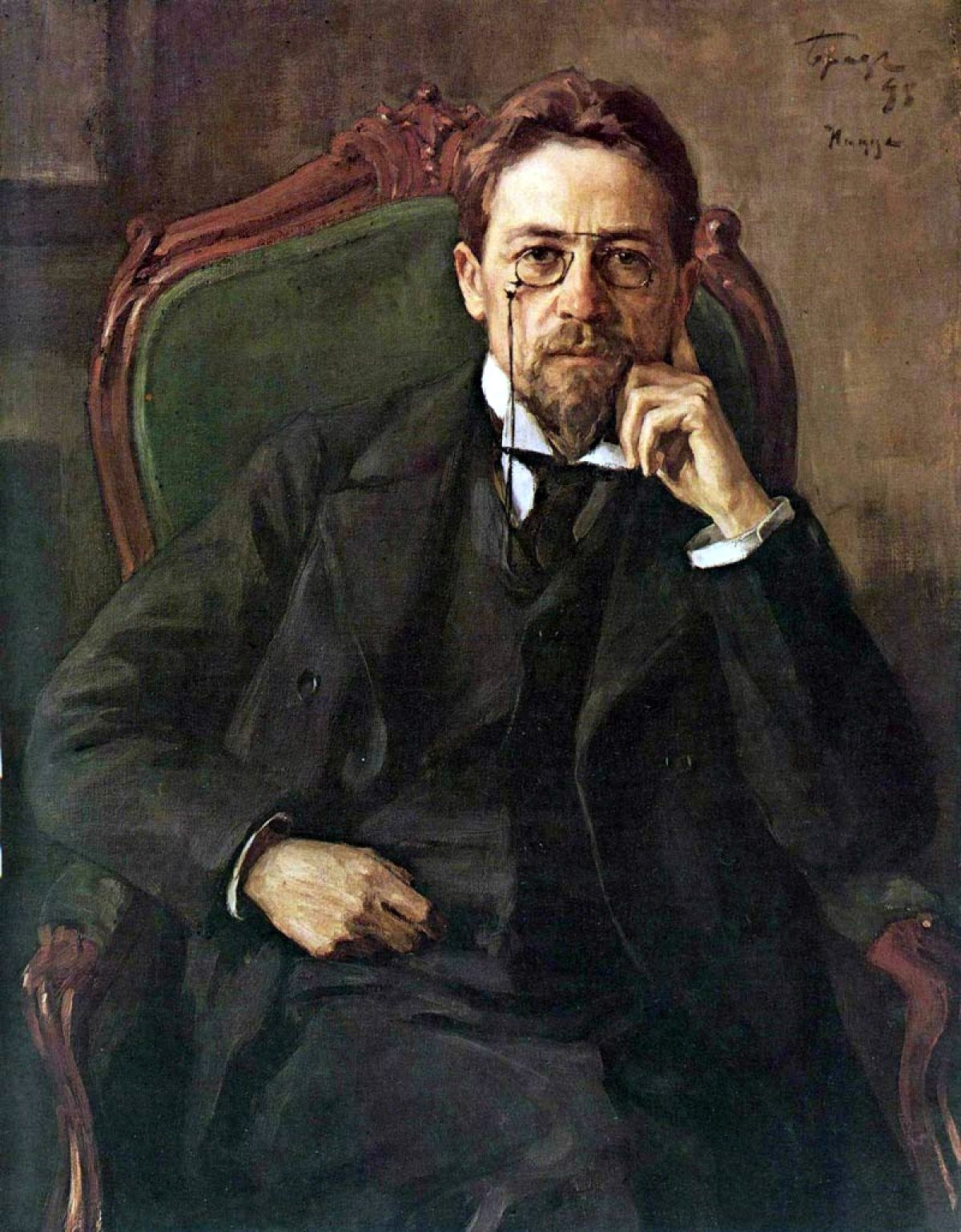
Chekhov_1898_by_Osip_Braz

Chekhov’s First Play

Battersea Arts Centre, 5th November 2018

Some venerable theatre grandees have had a crack a knocking Anton Chekhov’s first play into shape. The venerable Lev Dodin and The Maly Theatre presented a version based on Chekhov’s own text, albeit with nine characters chopped out and a jazz band inserted, which got it down to four hours from Chekhov’s original five hours plus. Based on the Maly Theatre’s latest visit to London I would imagine that was still something of a trial. (Life and Fate at the Theatre Royal Haymarket review ***). As it happens AC wrote it in 1878, aged 19, for Russian acting superstar Maria Yermolova,  diva of the Maly Theatre, but she, not unreasonably, rejected it given its rambling nature and it didn’t get published until 1923.

Chekhov obsessive Michael Frayn conjured up an adaptation in 1984, entitled Wild Honey which has had a few work-outs including at the Hampstead Theatre last year. David Hare similarly produced an adaptation for the Almeida in 2001 and it was this text, Platonov, which formed part of the Young Chekhov trilogy alongside Ivanov, AC’s first “proper” full length play, and The Seagull. the first of the four classics, in the Chichester Festival Theatre production of 2015 which then transferred to the National Theatre.

And it was this, and only this of the three, that I saw, in the spirit of curiosity, in 2016. There was a lot to like, especially in the performances of James McArdle as our eponymous Hamletian hero and Nina Sosanya’s Anna and Olivia Vinall’s Sofya who play his two main love interests, as well as, Jonathan Kent’s keen direction. But I can’t say I was bowled over. This is in part might reflect the fact that I didn’t get to experience the transition towards the multifaceted tragi-comedy of The Seagull via the ripe drama of Ivanov. It might also be that, even stripped down, Platonov in this version is just a bit samey. Our schoolteacher has charisma for sure, a worldly man trapped in a less than worldly place, who thinks a great deal and has the wit and looks to take on his babe magnet mantle. But he is also a bit of a dick, drinks too much and probably deserves what he gets at the hands of Sofya. All the material and characters which populated AC’s later world are present, but not necessarily correct.

This then is the play which Irish company Dead Centre have chosen to present in Chekhov’s last play. Only they have got it down to 90 minutes. And I think I can safely say that AC’s role as one of the daddy’s of naturalism was not in their playbook. This instead is a wild deconstruction, not just of Chekhov, but also of theatre and its practices and, probably, the pursuit of “meaning”. Russians like to talk. So do the Irish. And both are pretty good with theatre suffused with meaning and verging on the absurd.

The audience is presented with headphones on seating which the director of “Chekhov’s First Play”, Bush Moukarzel, (the actual director alongside Ben Kidd), explains in a prologue, whilst toting a gun, will allow him to comment on the unfolding “action”, and the thematic sub-texts,  as our assorted melancholic Russians, sans Platonov himself, take to the stage. Turns out the anhedonic Mr Moukarzel is not happy with the play or the performers though and proceeds to drily tell us so. This comic parody of Chekhov, via a disillusioned auteur, is what I had expected when I signed up and what I had sold to the Captain who had gamely agreed to accompany me.

It didn’t stop there though. Whilst there was plenty to chuckle at in the AC take-down, Dead Centre had, in fact, only just got started. When the director exits, permanently, the show really lets rip, taking potshots not just at Chekhov but at all manner of theatrical conventions, and the cast, and the story, bleeds into the present, at one point referencing the impact of the financial crisis in Ireland and ordering in a Chinese take-away. Platonov, the focus of the “characters” hopes and dreams, finally puts in an appearance, but in a way you least expect, but which itself proves a masterstroke. A wrecking ball, literally, swings in, to demolish the “estate’ to the tune of young Ms Cyrus. The rich landowner turns to manual labour. A doctor knows nothing about medicine. The heiress’s blood is blue. Et cetera, et cetera,

Now I can’t pretend that I fully grasped all of the references and all of the ideas Dead Centre were presenting. No matter. there were enough slack-jawed, WTF moments to keep me transfixed and enough playful returns to the obsessions of AC’s own characters to keep me guessing. I reckon that this, like much devised theatre, might have made more “sense” to the creators than the audience, but wild invention goes a long way here. The Captain, who is the very definition of phlegmatic, professed to enjoy it, and, I suspect, was inwardly chiding me for trying too hard to work out what was “going on”.

Andrew Clancey’s unravelling set, and the sound, lighting, choreography and effects of Jimmy Eadie, Kevin Gleeson, Stephen Dodd, Liv O’Donoghoe and Grace O’Hara, alongside the fully committed cast of Andrew Bennett, Tara Egan-Langley, Clara Simpson, Dylan Tighe, Breffni Holahan and Liam Carney, have give or take, been together on this since its premiere in Dublin in 2015. That explains why the deconstructed mayhem is so precise.

This is an entertainment that will stick in the Tourist’s memory for some time, he suspects. No scrub that. This is something that it will take a long time for him to forget.