The Lehman Trilogy at the National Theatre review *****

114319196_445326e2cb_o

The Lehman Trilogy

National Theatre Lyttleton, 18th September 2018

So I gather this staging of Stefano Massimi’s play The Lehman Trilogy is a very different take from that lauded across Europe after its premiere in 2015 in Italy. No cast of thousands here. Just three amazing actors in Simon Russell Beale, Ben Miles and Adam Godley, and a minimalist set bearing all the usual hallmarks, (revolving glass cube, neon lights, monochrome, simple props to be shuffled around by the cast), of its designer Es Devlin, with symbiotic and effective video panoramas courtesy of Luke Halls, and thrilling sound and lighting design from Nick Powell and Jon Clark . All this from a director Sam Mendes, who is normally master of the maximalist, last seen in The Ferryman.

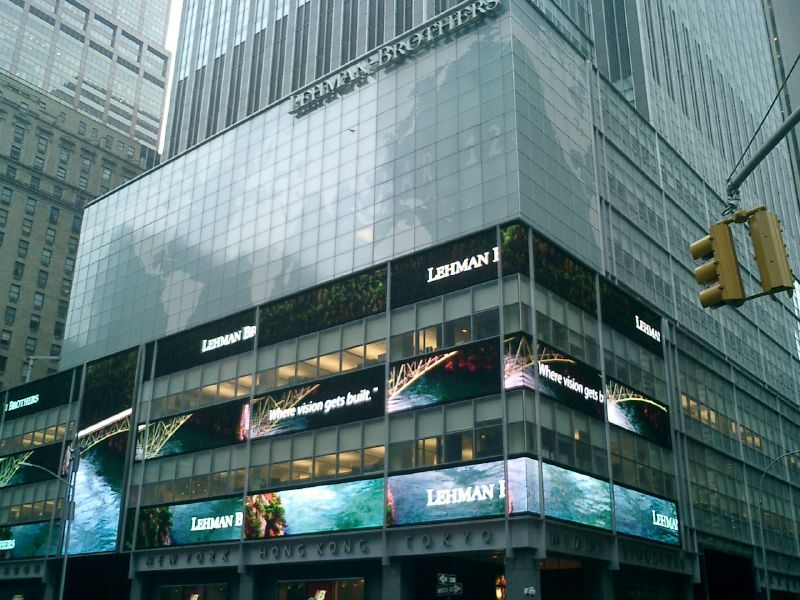
Of course no matter how good the production it all starts with the text. Here the Deputy Artistic Director of the NT, and dramaturg maestro, Ben Power has condensed the original play into the sprightliest 3 hours (ex intervals) imaginable. Of course there is a history lesson, but Mr Power, I assume reflecting the Italian original, draws out the themes and repeated motifs, and the key characters, the original three brothers, Henry, Emmanuel and Mayer, and the next generations, Herbert, Philip and then scion Bobbie. The final chapters, as the family cedes control to “outsiders”, and the collapse presided over by the hubristic bully Richard Fuld is, as many others have observed, a bit of a rush, but I don’t think that really matters. This is a story of the founding roots, expansion and degradation of American capitalism and, specifically, how a family of Bavarian Jewish emigres went from a farm supplies shop in Montgomery, Alabama to become one of the most powerful global financial dynasties ever seen. Lehman Bros is fascinating, yes because it is no longer there, but also because it was, to all intents and purposes, the first of its kind.

Our generation knows the importance of these institutions thanks to the crisis of 2008, still impacting the global economy a decade later. Lehman Bros, on that fateful 15th September, was the sacrifice made pour encourager les autres. The biggest bankruptcy in US history, (though the US, European and Japanese “franchises” largely ended up with Barclays and Nomura), Lehmmn was the catalyst for the intervention which we all all still paying for with, at root, the “wrong” cost of capital. The play though resolutely shows that cyclical crises are endemic to financial capitalism, and not just in the events of the 1929 Wall Street Crash. 1857 and 1873 also get a look in. The mis-pricing of complex risk is built into the system. It won’t go away.

We start at the end though with the iconic boxes, which staff used to carry out belongings after Chapter 11 was declared, piled up on the modern office set. These boxes in various configurations, with a few chairs, tables, a spot of graffiti and our imaginations, go on to signify the humble one room shop, the expansion into cotton-broking, the office in New York set up in 1860, the homes of the great and good in the story, particularly the families the three brothers marry in to, a synagogue, the boardrooms and trading floors of the palaces of the post WW II years.

And all the supporting characters, wives, children, business associates, rabbis, friends, even a tightrope-artiste, all are played by our three actors. Throughout they wear the formal frock coat attire from the mid C19. So all these “extras” are conjured up with accent, movement, stance, attitude. Now Simon Russell Beale relishes this sort of caper but Adam Godley near matched him, especially when it came to squeezing humour out of his impersonations. All three of these actors have been at the top of their game for years. Whether on stage, large or small screen, it is a fair bet that they will steal the show in whatever they appear in. To have them all together was revelatory. This is an abstracted story. With a narrative arc of this scale, across this much time and space, intricately juxtaposing the familial with the social, political and economic, it couldn’t be anything else. So everything we see, hear and learn is formed from the basic building blocks of acting and direction. Yet it is so, so rich, symphonic if you will. Look out for the recurring nightmare scenes. Just one example. Simply stunning.

Oh and there was one other genius involved. Candida Caldicot. The soundtrack to this odyssey conjured up live with one piano.

With this story, this cast, this director, this text and this creative team this was always likely to be a winner. No surprise it was an early sell out. This play in this adaptation will re-appear. No question. Whether you get acting of this quality again I am not so sure.
 

Aftermath at Tate Britain review ****

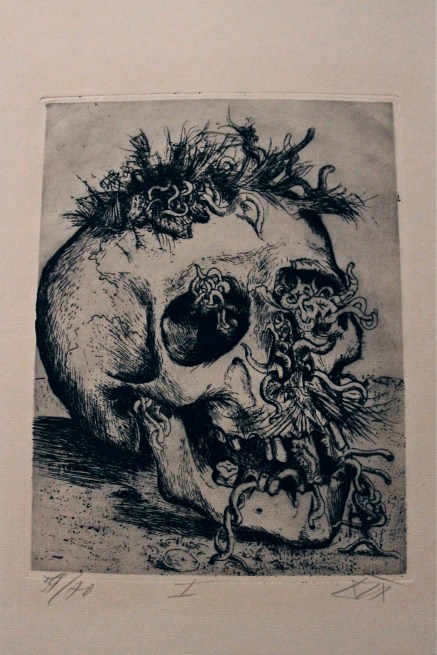
Otto Dix Skull from The War (1924) - http://www.moma.org/collect

Aftermath: Art in the Wake of World War One

Tate Britain, 29th August 2018

Historians abhor teleology these days. It’s a tricky business identifying events that “changed the history of the world”. For us simple layfolk though the First World War must surely mark a defining shift in the human experience. The scale, (over 10 million dead and 20 million wounded worldwide), the use of technology, the commitment of capital, the ideological fallout, the death-knell of empire. Take your pick. Things really changed after that.

We are approaching the centenary of the end of that War. Time to contemplate. And, here, a time to review the interpretation that artists put on this period. Well specifically the period after the war, (the works span 1916 to 1932). A smart idea. There are innumerable works of art that document the war itself, the exhibition kicks off with many of the most striking, but exploring the aftermath allows for insights into the different ways artists responded to the war’s legacy and to the, maybe, new beginnings. It also means the curators, led by Emma Chambers, were able to extend beyond British art and into Europe, primarily Germany and France (London, Paris and Berlin to be more exact). There are some stunning works on show here, a valuable history lesson, and more diversity of message than you might expect. You’d be daft not to take a look. Particularly if you have any interest at all in this period of history. Which, inevitably, you should. Art helps us to remember and understand in a way that words something fail to convey.

Room 1 looks at the devastation wrought by the war. Many of the artists here were participants in the conflict, either as soldiers, or in an official capacity. The polity back home generally didn’t want to know, nor did the authorities want them to see, the full horror of war. The depictions of battlefields, mud, pitted with craters, shorn of vegetation other than twisted tree stumps, eloquently made the point. Before the war many artistic movements, (Futurism, Vorticism), grappled with the impact of fast changing technologies on society. This impulse found its way into their war art.

The experience of war drained their optimism. Some artists could not contain their shock and anger at what they saw and went beyond symbolic representations of death, such as the abandoned helmet, to show actual bodies. The room also contains some fascinating early footage of the devastation in Flanders, filmed from an airship, and, intriguingly, guide books to the battlefields to help those who visited to pay their respects.

The most devastating works of Paul Nash (Wire), CRW Nevinson (Paths of Glory) and, most interesting here, the long neglected and once vilified Irishman William Orpen (Zonnebeke and Blown Up), may be familiar but are still striking, as is Luc-Albert Moreau’s shocking Chemin des Dames Assault. Richard Carline’s painting of a battlefield from the air (Mine Craters At Albert Seen From An Aeroplane) is intriguing but the most prominent works are the two sculptures, Jacob Epstein’s machine man Torso in Metal and Wilhelm Lehmbruck’s The Fallen Man, maybe the most famous loaned artwork here. Lehmbruck never escaped the horror of war: he killed himself in aged 38 in 1919.

This is not an exhibition of specifically war art though and, with so much to choose from both in the Tate’s collection and down the road at the Imperial War Museum, the curators have shown admirable restraint. They make their point though.

Room 2 intelligently moves on to how the WWI has been remembered, specifically through war memorials. Cenotaphs in Paris and London, dedicated to just one of the countless unknown dead, created a focus for remembrance from their inauguration two years after the armistice to this day. No national memorial appeared in Germany until 1931 but, like Britain and France, local memorials were commissioned. These memorials combined the abstract with, often, detailed figurative representations of the men who served. We were struck by Charles Sergeant Jagger’s dramatic, realist figures and by Eric Kennington’s more cubist maquette for the Soissons Memorial. BUD, my accomplice for the afternoon, was also impressed by the monumental lines of Marcel Gromaire’s famous War portrait and I had my first dose of the master Stanley Spencer with Unveiling Cookham War Memorial.

However it is hard not to drawn to Ernst Barlach’s extraordinary angel The Floating One. Barlach’s sculptures, along with Lehmbruck’s, were largely destroyed by the Nazis, who viewed them as “degenerate” but a mould of this piece survived. There is also, in a similar “Expressionist” vein, a sketch for The Parents monument by the genius Kathe Kollwitz (the model for The Floating One we see more of her later in Room 5). Barlach initially supported the Great War: his participation changed this.

Take a good look too at another Orpen painting, To the Unknown British Soldier In France, apparently a coffin draped with a Union Jack at the entrance to the Hall of Mirrors at Versailles, commissioned at the time of the Treat signing. Read its history though. It didn’t start out this way. Lack of respect, censorship, class division. Decide for yourself.

Room 3 offers yet another perspective on the years following the War. In our world, for those of us lucky enough not to live amongst conflict, images of war appear commonplace but the reality of its human impact is still largely concealed. In the 1920s, in Europe, this was not so, as the plight of damaged war veterans, in economies still disordered, was visible to all. The works here are some of the most poignant, and most angry, in the exhibition. In Britain artists were employed to create a medical record of the injuries suffered by the soldiers. The pastel sketches of Henry Tonks from the Hunterian Museum were not originally intended as “art” but they create a powerful impression. In Germany the veterans were the subject of far more explicitly political paintings and drawings from the hands of Otto Dix, George Grosz, Max Beckmann and Kathe Kollwitz.

This is the most powerful art in the exhibition, especially the prints from these artists and Georges Rouault in Room 5. Beckmann’s Hell series of lithographs from 1919, the Der Kreig etchings of Dix from 1924 and Kollwitz’s similarly titled etchings from 1922 and Rouault’s sacred Miserere et Guerre photo-etchings from 1927 demand your attention.

Whilst some of the Dadaist work in Room 4 fails to leap out at me, and the Surrealist painting from the likes of Max Ernst and Andre Masson can be safely ignored in my view, do seek out John Heartfield’s photo-montage, After Twenty Years: Fathers and Sons, and then delve into this astoundingly modern artist’s output (and life) inter- and post- war, but especially from the 1930’s.

In Room 6, “Return to Order”, the curators show how the geometric and mechanised avant-garde forms and processes which dominated Western art before the war gave way to more realism and naturalism and a return to the traditional genres of portraiture, landscape and religion through the late 1920s and early 1930s. This despite the still chaotic economic and political backdrop, Pastoralism and classicism were reborn. I am not entirely convinced by this argument but it does give an opportunity to show off another Spencer, Christ Carrying the Cross, Old Military from Franz Lenk and soothing landscapes from the Nash brothers in sharp contrast to their war paintings.

Room 7, in contrast, shows that all was not necessarily well in inter-war society linking back to the political art of the immediate post war period and highlighting the deep divisions between rich and poor. Artists unsurprisingly sided with the left in the profound idealogical arguments that characterised the period. George Grosz’s Grey Day, which contrasts, once again, a veteran with a privileged capitalist, is one of the best paintings in the exhibitions.

The final room then goes a little bit off-piste by bringing together a diverse collection of responses to the rise of the “New City”. Mind you it does make you think about just how quickly the nascent optimism on show here would be snuffed out again by an even more devastating global conflict.

Overall this is an ambitious, powerful, valuable and often still shocking survey of the artistic response to the “Great War” made especially interesting for me by the rage, fury, sorrow and despair contained in the loans from various collections in Germany, (and the George Economou Collection in Athens). There are more than enough unexpected contributions amongst the big hitters and much genuine, if occasionally, unfocussed insight into the artistic response to the impact of war. If you have any interest at all in this period or subject then I would be mightily surprised if you haven’t already gone, or intend to go. That would be the right thing to do.

Translations at the National Theatre review ****

1804_jeffreys_and_kitchin_map_of_ireland_-_geographicus_-_ireland-weimar-1804

Translations

National Theatre Olivier, 6th June 2018

At the end of the day it is all about the words. That’s theatre. The power of language. Which is exactly what Brian Friel’s play is all about. A modern classic, first seen in 1980, in Derry (with Stephen Rea, Liam Neeson and Ray McAnally no less in the cast), to set alongside Philadelphia Here I Come, Aristocrats, Faith Healer, Dancing at Lughnasa and The Home Place, as masterpieces from his hand. All set in the fictional town of Baie Beag (Ballybeg). All exploring the particularities of Irish history, society and culture but all offering up universal insight. The Irish Chekhov as some would, with very good reason, have it.

So I wasn’t going to pass this up and I was going to insist the SO attend. I have no truck with those currently giving Rufus Norris and the NT a kicking. There have been some absolute belters over the last couple of years which more than compensate for a couple of missteps, so you haters can STFU. Anyway this is a marvellous productions. Rae Smith has conjured up another evocative, organic, set, the “hedge” school in which the play is set is foregrounded, leaving the rest of the Oliver stage as moorland which stretches to a backdrop of rolling mist and clouds. It is 1833 in Ballybeg and embittered Manus, (superbly played by Seamus O”Hara), lame in one leg, is setting up the school run by his father Hugh. He is joined by the voluble Jimmy Jack Cassie whose shambling manner and fondness for a tipple belies his classical education. He and Hugh are equally at home in Latin and Greek as their native Gaelic. Dermot Crowley and Ciaran Hinds offer up a par of towering performances. The hedge schools which were the source of their learning are about to be replaced by a free national school system. Sarah movingly played by Michelle Fox, whose speech is impaired, is joined by Maire (Judith Roddy who was also marvellous in the recent Donmar Knives in Hens), Doalty (Lawrence Kinlan) and Bridget (Aoife Duffin) in the school.

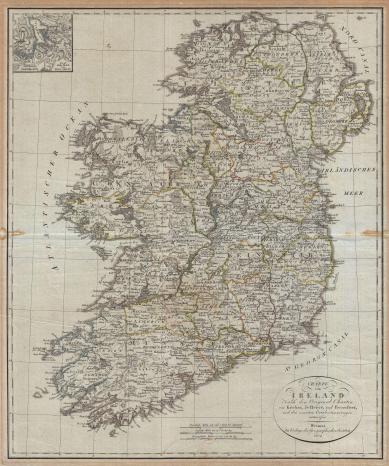
Through their interchanges we quickly become immersed in their domestic worlds, lives that may lack material plenty but are rich in many other ways. The Great Famine is still a decade away but the threat from potato blight is addressed. Translations is not an overtly political play, Brian Friel determined to avoid that commenting  that “the play has to do with language and only language … and if it becomes overwhelmed by that political element, it is lost”. However when Hugh’s other, prodigal, son, Owen, returns after a several year absence, the clash of culture between British coloniser and Irish colonised, is revealed. Owen (Colin Morgan, TV’s Merlin) has returned with two English soldiers, the ruthless and patronising cartographer Captain Lancey (accurately represented by Rufus Wright) and the more sympathetic orthographer Lieutenant Yolland (Adetomiwa Edun). Owen is a translator: the soldiers have been tasked with renaming the Irish place names into English. This was initially it seems a virtuous undertaking but the metaphor is clear and, eventually, as you might guess, the army seeks retribution when one of their number goes missing.

Now Mr Friel’s brilliant central conceit is to have both the English and Irish characters speaking in English. The two English officers speak no Gaelic, though Yolland as he falls in love with both country and Maire, tries to learn. Owen, initially misnamed Roland by the officers, picks his way carefully through his translations. And, it transpires, that a number of the Irish contingent know a great deal more English that they are letting on.

Hopefully my brief description should persuade you just how elegantly, and cleverly, constructed Mr Friel’s play is. But it doesn’t stop there. In scene after scene and line after line, he patiently, but insistently, drives his points home. Even so these characters are no mere ciphers; there is plenty of emotion too. The love scene, ostensibly in two different languages, between Maire and Yolland, is very affecting, Sarah’s yearning for Manus which echoes it, Manus’s flight when he realises there is nothing left for him in Ballybeg,, Hugh’s demons fuelled by drink, Owen’s cultural ambivalence; everyone has a story to tell, and not just in words.

Ian Rickson is as sure-footed in his direction of the marvellous cast as you could wish for though there are moments of over-deliberation. Neil Austin’s lighting, Ian Dickinson’s sound design and the music of Stephen Warbeck all stand out,  and a big hurrah for the voice work of Charmian Hoare and Jeanette Nelson and to dialect coach Majella Hurley, this being a play about language.


Lessons in Love and Violence at the Royal Opera House review ****

Royal 20 A.II, f.10

Lessons in Love and Violence

Royal Opera House, 26th May 2018

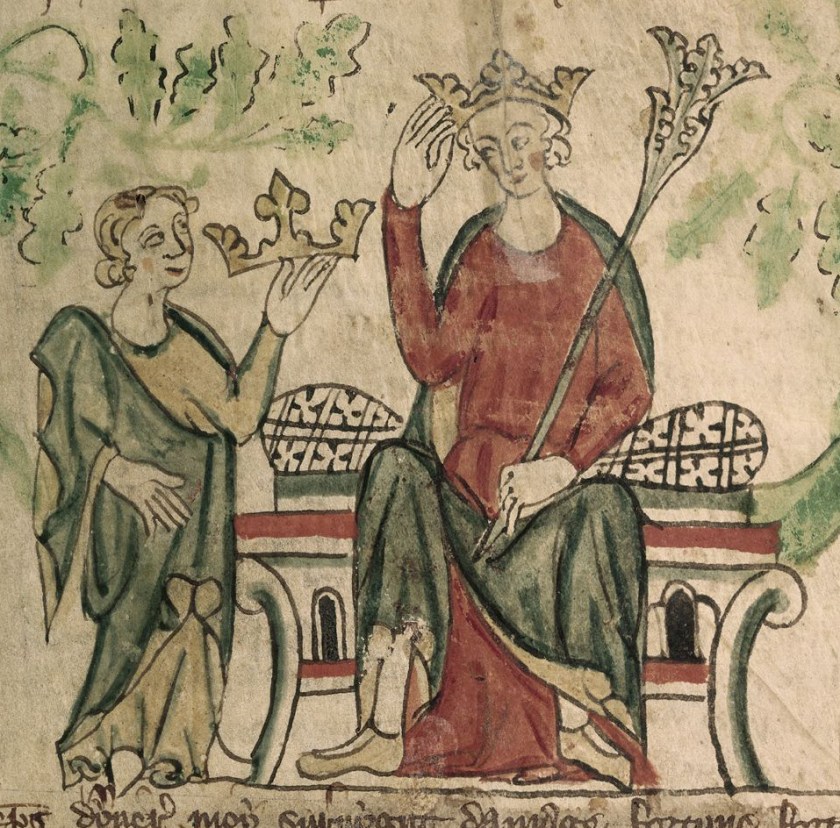
Here is an extract from an illuminated manuscript showing Eddy II getting a crown. Or more precisely a second crown. Not sure what that is all about but given he was by reputation a high maintenance sort of fella maybe two crowns makes sense.

George Benjamin and librettist Martin Crimp had a massive hit, (by contemporary opera standards), with their previous collaboration Written on Skin, which in terms of repeat performances has gone down better than BB’s Peter Grimes. Having finally seen it at the ROH in January last year I can report that it is pretty much as good as it is cracked up to be. GB is a superb dramatic composer for drama and, specifically, for the very particular prose that MC creates. I was not entirely persuaded by the only play of MC’s that I have see, The Treatment (The Treatment at the Almeida Theatre review ***), but I think he is growing on me.

This time round they have taken seven “events” in the life of the infamous Edward II, wisely leaving out his messy end, to tell the story of his relationships with lover Gaveston, wife Isabel and rival Mortimer. The two royal kids are thrown into the somewhat unusual household and we also see associated flunkeys and down trodden hoi polloi who were suffering under Eddy’s spendthrift ways. We begin with the banishment of Mortimer, then Isabel joining the plot to murder Gaveston after seeing the desitution of the people, Gaveston predicting the King’s future and then being seized, the King disowning Isabel after Gaveston’s death, Mortimer and Isabel setting up a rival court and grooming young Eddy (to be the III), the King’s abdication at Mortimer’s behest and finally the young Edward III seizing control from his Mummy.

As you might surmise the focus of MC’s story here is more on the “domestic” struggle between the “couples” and less on the conflict between King and nobles. The relationship between Mortimer and Isabel and Isabel and Edward II is given as much weight as that between Gaveston and the King. This, together with the truncated plot, makes it very different from its most obvious precursor, Marlowe’s Edward II, or, more precisely, The Troublesome Reign and Lamentable Death of Edward the Second, King of England, with the Tragical Fall of Proud Mortimer. Now I happen to believe Marlowe’s play is one of the finest ever written, comparable with Shakespeare’s History Plays. But it does go on a bit. If MC and GB had attempted to set the whole story as an opera I would still be sitting there two weeks later. So Kent, Warwick, the Spensers and all the other nobles. Canterbury and the bishops, Hainault, the Welsh, the sadists and various other hangers-on are absent. As are France, fighting, Kenilworth, scythes and pokers. The key themes in Marlowe’s play, his two fingers to his own contemporary society, namely homo-eroticism, religion and social status are downplayed, Isabella’s role and the passion between the four main protagonists are foregrounded.

Extracting these key episodes and, in some cases, manipulating them to allow GB to weave his marvellous score around them, was a classy move by MC. His libretto, as in pretty much all he writes, swings from the prosaically direct to the cryptically poetic. I mean this as a compliment but his writing is not florid but quite angular with intriguing turns of phrase and clear delineations between characters. I gather that once they have agreed the shape of the work, MC goes off and writes the whole thing, with minimal consultation, before handing it over to GB, who then slowly and patiently builds up the music from the “bottom up”. At least that is what is sounded like from the interview in the programme. But given how distinctive, dark and clever MC’s approach is I can see why it works. GB knows the “voice’ he will write around and, as in their prior collaborations, he knows his musical style, which has itself been through iteration, will fit the libretto.

The music is superb. The orchestration is immensely colourful but GB only uses large scale forces occasionally. Most of the time small clusters of instruments are used to create different moods in each of the seven scenes, notably from bass clarinet, bassoons and brass. The percussion section gets to play with all sorts of new toys. A cimbalom gets an frequent airing. There are probably motifs, patterns and structures within this but you will need to find that out from someone who knows what they are talking about. All I know is that music and drama were perfectly matched across the compact 90 minutes. I think the emotional extremes were more pronounced that in Written on Skin which had a more mythic feel. GB ratcheted up key points in the action by plunging us into dramatic silences. In Scene 3 when Edward and Gaveston private tryst is interrupted by Isabel, the kids and the courtiers and in Scene 2 when the people impinge on the Court a rich musical chaos is invoked. Harmony and counterpoint are wound up into a ball before collapsing.

The production, courtesy of the genius director Katie Mitchell, regular design collaborator Vicki Mortimer, lighting from James Farncombe and movement from Joseph Alford, reflected the enclosed and intimate nature of the drama. Each scene was set in a royal bedroom, which revolved to offer a different perspective. This included the “private” entertainment in Scene 3 with Eddy II and Gaveston and the mirroring “public” entertainment in Scene 7. The “people” were given an audience before Isabel in the bedroom in Scene 2 to air their grievances. Mortimer’s household and the King’s imprisonment at Berkeley are also presented in the confined, intimate setting of the bedroom. A massive fish-tank, which drains of water and therefore life through the scenes, is both visual treat and prominent symbol. There is a Francis Bacon style painting on the wall: that probably tells you all you need to know about the uncomfortable, existential aesthetic the production seeks to traverse. There are one or two predictable Katie Mitchell cliches, slow motion soft-shoe shuffles anyone, but the tableau are undeniably effective, When you are stuck up in the Gods, (you would be hard pressed to be further away from the stage than I was, me being such a tightwad), this matters. At this distance the Court becomes a dolls house, an interesting perspective in itself, so the “choreography” that the director brings to proceedings, matters more than the close up expressiveness of the singers.

The ROH orchestra was on top form. Mind you if you have the composer himself conducting then there is little room for error. This is not a chamber opera, GB’s sound world is too rich, but some of the textures require various players to push their technique which they certainly did. I can’t really tell you much about the skil of the cast, they all amaze me, but Barbara Hannigan, as she always does, was off the scale as Isabel, vocally and as an actor. Stephane Degout bought a petulant, entitled air to Edward II, Peter Hoare’s Mortimer was a mixture of ambition and pragmaticism. Gyula Orendt stood out as Gaveston in his scenes with the King, a mystic of sorts. Samuel Boden’s sweet high-tenor stepped up very effectively towards the end as the Boy King and Ocean Barrington-Cook, (well done Mum and Dad for the name), artfully portrayed the damage done to her and her brother by having to witness the turmoil, despite not having a voiced part (another clever idea from the creators). The children were, I suppose, the ultimate recipients of the “lessons in love and violence” that we the audience were also privy to. Though the production was smartly modern-dress there was no crass attempt to draw any lessons for our own times but the plot, MC’s libretto and GB’s music combined to underscore the tension between the private and the political for those that wield power across history.

My guess is that if I saw and heard this again, perhaps from a more advantaged position, it would merit 5*. A few punters trotted out at various junctures which intrigued me. This surely is as digestible as contemporary. “modernist” opera gets. The historical subject is not obscure, the plot direct, music is beautiful, the libretto intriguing, the staging is excellent and it is hard to imagine the performances being topped. (the vocal parts were largely written for exactly this cast). Not much in the way of tunes and no arias, but surely the most cursory of examination would have revealed this in advance. The dissonance is never uncomfortable and is rooted in chordal progression. And it is short so why not see it through.

I would assume that GB and MC will, in the fullness of time, have another crack at this opera lark given how good they are it but I wonder if they have exhausted for now the “Medieval”. Like Written on Skin there is something of the illuminated manuscript here, (see what I have done there), a jewel like morality tale, (without all the God stuff). Suits me but with this amount of goodwill, (this is a seven way co-production), surely they could get away with something genuinely of the moment next time.


Describe the Night at the Hampstead Theatre review ****

nonperson

Describe The Night

Hampstead Theatre, 23rd May 2018

In our country the lie has become not just a moral category but a pillar of the State. Aleksandr Solzhenitsyn.

Describe the Night hasn’t gone down too well with the London critics. The SO and I think they might have missed a trick. It is ambitious, ranging across several periods of Soviet and post Soviet Russian history, with a fairly cavalier approach to naturalism, and mixes fact and fiction, real and imagined events. Its workshop-py creative methodology shows through, but it was for us highly effective and enlightening. We’ve seen a fair few other plays that have fallen far shorter, despite their more limited intent. So hats off to Rajiv Joseph the writer for giving this a go. I see he won an OBIE, off Broadway award, for best new play with this. That’s probably a bit generous, (or New York is lamentably short of new work which I refuse to believe), but it’s proof that this isn’t the disappointment some have claimed it to be.

Polly Sullivan’s design sees a cliff wall of grey metal filing cabinets punctuated with a raised corridor and spiral staircase down to a dark open space with a couple of spindly birches. This, with some nifty work from Johanna Town’s lighting and Richard Hammarton’s sound, serves as backdrop for an underground KGB/NKVD filing room, an interrogation room, a minicab office, a plush Moscow apartment, a sparsely furnished flat and a forest exterior. The action kicks off in Poland in 1920 during the Russo-Polish war, (a conflict itself near forgotten), where we meet Isaac Emmauilovich Babel played by Ben Caplin and Nikolai Ivanovich Yezhov played by David Birrell. Both actors are superb by the way.

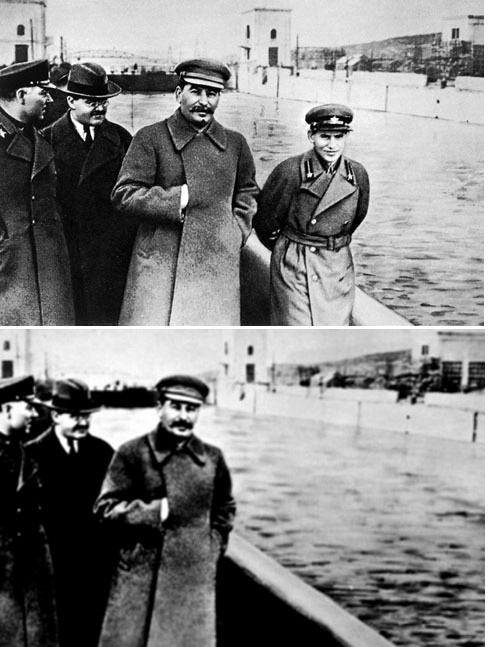
Now Babel was a writer whose stories about his childhood and this war were initially feted by the Soviet authorities but who was eventually arrested, his work confiscated, and he was executed in 1940. Yezhov was a small man, a party functionary, who drank to excess, but rose to become a favourite of Stalin and head of the NKVD through the Great Purge. Eventually though he fell foul of Stalin, his wife Yevgenia Solomonovna Feigenburg (Rebecca O’Mara) was arrested, and he too was executed in 1940, despite trying to save his skin by ratting on his friends including Babel. The photos above show how he was famously “non-person-ned” out of history.

The two meet in a forest near Smolensk as Babel is trying to “describe the night” around him. The literal Yezhov has very little of the poet about him, Babel relishes metaphor,  and the two debate the nature of facts and truth. They strike up a firm, if unlikely, friendship. We move forward to 1930s Moscow where we see Babel, whose estranged wife is in Paris, begin his affair with Yevgenia, (which, in reality, had started earlier before she married Yezhov). In the next scene we have whizzed forward to 2010 and Smolensk, where the plane taking the Polish president, his wife and various political and military elite to the commemoration of the Katyn massacre of 1940, has just crashed. Journalist Mariya (Wendy Kweh) is looking to evade the police and enlists the help of Feliks (Joel MacCormack) to made good her escape so she can tell the story.

For those that don’t know the crash is still the subject of conspiracy theories, despite the Polish and Russian authorities concluding it was down to human error, and the Katyn massacre saw the murder of some 22000 Polish military and intelligentsia by the NKVD, although Soviet authorities only finally admitted this in 2010 having previously blamed the Nazis.

We also seen Wendy Kweh as cantankerous Mrs Petrovna and her “daughter” Urzula, played by newcomer Siena Kelly, living in Dresden in 1989. Urzula wants to escape to the West. They have come to the attention of Vova, extravagantly played by Steve John Shepherd, who you might know as one Vladimir Vladimirovich Putin. We see our putative Putin rewriting his own history in a confrontation with Yezkov, who has “lived on” to control the files of the NKVD/KGB. The real Putin’s early history is somewhat uncertain. Urzula may be the grand-daughter of the illegitimate child of Babel and Yevgenia, who ended up in an asylum thanks to Yezkov, unable to distinguish Babel’s stories from her own memory. Vova also interrogates, unpleasantly, Mariya, mirroring Yezkov’s interrogation of Babel.

And so the stories weave together and what is true and what is fiction becomes ever more uncertain. Babel’s diary, started in 1920, becomes the physical link between the “scenes”. Some have seen parallels in th eplay with other contemporary regimes alongside Russia where the truth is routinely manipulated. Rajiv Joseph is after all an American playwright. There is certainly much to ponder on from Mr Joseph’s particular narratives. and from his mix of fact and fiction, with even some magic realism thrown in, (never be tempted to drink leech soup). History has always been uncertain, from the moment it is “made”. Leaders and states have always sought to confound “truth”. limited only by their shame and intelligence, or lack thereof. The multiplicity of viewpoint that curses our contemporary digital world might seem like it has “never been as bad as this” but it has, as this century of Russian “history”, shows us. People lie. History is rewritten. Truth is fiction and fiction truth where only art might be trusted. The scale of Russia’s current strategy of disinformation may be exaggerated by technology but it certainly isn’t novel.

We thought that Rajiv Joseph’s text and Lisa Spirling’s (AD of Theatre 503) unhurried direction turned into an invigorating display of these “realities”. The cast all seem to have adopted a slightly forced quality in their delivery, which is though entirely consistent with the structure of the play and the world it inhabits. The “workshopped” construction, this version is different from its NYC cousin, does sometimes mean the pace eases ever so slightly, and the play is, perforce, disjointed, but the rewards more than justify this. (I am much happier saying this about Describe the Night than Maly Theatre’s Life and Fate, a similar dramatic exploration of Russian history). There is dark humour throughout. I can imagine a more fleet-footed production, (Stoppard and Kushner, also writers who relish the interplay of ideas and theatre, similarly need momentum), but the play is already asking a fair bit from its audience, (there is definitely a case for reading the excellent HT programme in advance), so a less stagey approach might risk confusion.

For the moment though this is well worth the effort. There are a few performances left at the HT but I have a feeling this will come back in some form or other and will be a “grower” whose reputation will grow with time. Not everything is what it initially seems maybe.

PS. The foyer of the HT contains some of the material from David King’s splendid collection of Soviet graphic art and photographs which formed the backbone of the recent excellent Tate Modern exhibition. There are a few links below to reviews of other cultural events that plough a similar furrow. Treat yourself.

Red Star Over Russia at Tate Modern review ****

Life and Fate at the Theatre Royal Haymarket review ***

Ilya and Emilia Kabakov at Tate Modern review ****

The War Has Not Yet Started at the Southwark Playhouse review ***

The Death of Stalin film review ****

Russian Art at the Royal Academy review ****


Life and Fate at the Theatre Royal Haymarket review ***

vasilij_grossman2c_1945

Life and Fate

Maly Drama Theatre of St Petersburg, Theatre Royal Haymarket, 20th May 2018

The Maly Drama Theatre of St Petersburg was founded in 1944 and is one of just three European theatre companies to have been awarded the title Theatre of Europe from the EU. (No I didn’t grasp the geography of that either). The company has been led by Lev Dodin since 1983 and is renowned for its Russian adaptations of theatrical classics and for its examination of the paradoxes and realities of culture, society, life and politics in the Soviet Union. The relationship between culture and government in Russia continues to fascinate me and I wasn’t going to miss an opportunity to see Theatre with a capital T come to London.

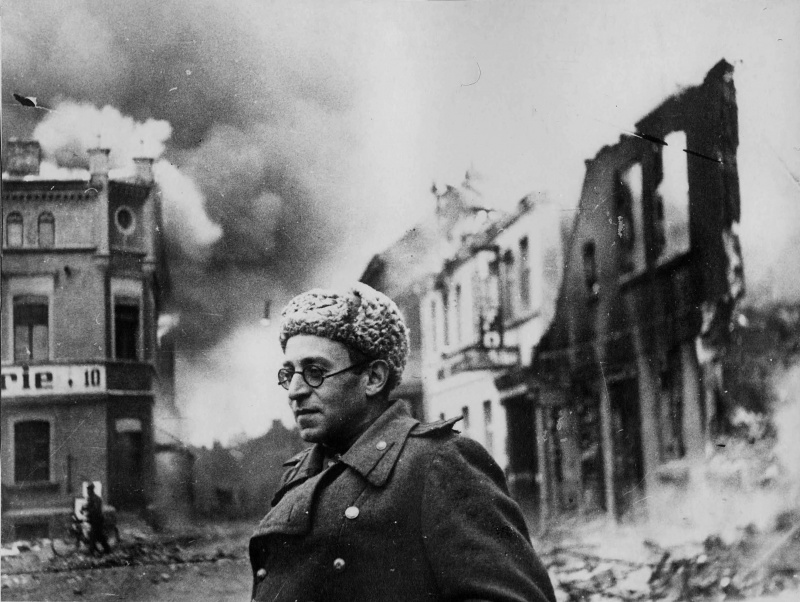
Life and Fate was premiered in Paris in 2007 and is based on the epic novel by Vasily Grossman, pictured above, which documents the life of the Shtrum family through the 1930s and WWII in Soviet Russia. Vasily Grossman was born in 1905, a Jew in Ukraine, and initially trained and worked as a chemical engineer. He took up writing full time after his one of his short stories In the Town of Berdichev attracted attention. In the 1930s he just about managed to stay the right side of the authorities, in contrast to many of his peers, but in 1938 his wife was taken into custody following the arrest of her ex-husband. He became a renowned war correspondent and was one of the first to enter Ukraine following its liberation, only to find his mother, and indeed the whole Jewish population of his hometown Berdichev, had been murdered by the Nazis. Ukrainian complicity in the genocide was covered up.

This personal history provided the material for Life and Fate which VG sought to get published in the thaw that followed Stalin’s death. However the manuscript was seized by the KGB and pronounced unpublishable for at least 200 years. After VG’s death in 1964 a secret copy was smuggled out and eventually published in Switzerland in 1980 and, finally, following Glasnost, in Russia though still with some passages removed.

It is then a Book with a capital B of immense significance. It is also a whopper extending to near 800 pages, echoing War and Peace. In another of the now not uncommon marital coincidences chez Tourist the SO has it near the top of her to-read list having been recently drawn into the world of investigative journalist Svetlana Alexievich, who also shines a light on Soviet and post Soviet life, albeit more recent decades. Unusually it was me that recommended her books. The cultural division of labour, with the SO doing the hard work of reading and writing, and me the easy jobs of seeing and hearing, art, theatre and music, is thus alive and kicking in the Tourist household.

Condensing down this work into three and a half hours of theatre must have been some undertaking, taking time (3 years in fact), effort, research and immersion. The play starts in 1943 after a prominent physicist, Viktor Shtrum, returns to Moscow and the Institute he works in. He lives in a flat with wife Lyuda, and schoolgirl daughter Nadya. Lyuda’s son from her first marriage, Tolya, has been killed in the war. Her first husband Abarchuk is a political prisoner in the gulag along with Krymov, the ex-husband of Lyuda’s sister Zhenya who comes to stay with the Shtrums.

The Soviet labour camp also houses another political prisoner Monidze and criminals Barkhatov and Ugarov. Their plight is contrasted with the prisoners in a Nazi concentration camp, Mostovskoy, Ikonnikov, Ershov and Osipov, overseen by SS officer Liss. There are scenes set in the Battle of Stalingrad with tank Colonel Norikov who is Zheya’s lover, his number two Getmanov and a runner Vershikov, and in the Moscow Institute with colleagues of varying political committment, Sevastnov, Sokolov, Shishakov and Kovchenko.

Fortunately there is no doubling up and the programme notes are excellent in providing context. For the scenes do deliberately mesh into each other, with some very well choreographed rearrangement of the set, and actors from one location often remain on stage when others take the lead. The chronology is also fluid and the presence of Victor’s dead mother Anna is made flesh in the most moving laments in between key scenes.

All this is intended to point up the equivalence between the totalitarian regimes of Nazi Germany and Soviet Russia and in this the play overwhelmingly succeeds. Viktor is Jewish and this leads to his ostracism and expulsion from the Institute as the policies of nationalism and anti-semitism infect Stalin’s regime in ways that mirror the more overt ideology of its enemy. If Viktor repents and confesses he might be able to save himself and his family, and continue with his work, but only if he abandons the truth and his identity.

And then along comes the fickle finger of fate as Stalin himself rings up and “wishes him success in his work”. It seems Viktor is the key to unlocking a nuclear bomb for the Soviets. He is safe. Life goes on. Except that the horror around him doesn’t stop. And Viktor is eventually faced with signing a letter that he knows will condemn dissidents to death.

It is an immense journey which in many ways is cleverly captured on this smallish proscenium stage. BUT it is very Actorly and very Speechy. Declamation is the go to style of delivery and this, compounded by the subject, makes for a gruelling evening. I was fortunately promoted to a much better seat, sightlines being untenable in my normal cheapskate TRH perch This exaggerated the staginess and meant a fair bit of my attention was lavished on the sur-titles for Francine Yorke’s translation. Now, I hear you cry, what did you expect going to see an epic set in the darkest period of the C20 delivered in Russian. Elf the Musical? Well no, I get that this did, to all intents and purposes, do exactly what it said on the can but I do think the production, not the material of course, tended to the overly grandiose.

I would find it invidious to pick out any of the cast or creative team for particular praise though you cannot deny the sheer presence of Sergey Kuryshev as Viktor and Tatiana Shestakova as Anna. I was also struck by Daria Rumyanantseva as Nadia, Alexander Koshkarev as Shishakov and Oleg Dmitriev as Liss but like I say this is large-scale, and I mean large, ensemble acting which I rarely see.

I feel unworthy saying this but the point of this blog is to record what I see, hear and learn. I have no doubt though that the next time one of the major Russian theatre companies comes to London I will be there. As with the visit of the Vakhtangov State Academic Theatre of Russia last year (Smile Upon Us Lord review at the Barbican Theatre review ***) the style may not grab me, the stories obviously do. And I am grateful to those who financed this visit. Anything that promotes mutual understanding of our histories must surely be valuable.

Caroline, or Change at the Hampstead Theatre review *****

20170511_095326

Caroline, or Change

Hampstead Theatre, 18th April 2018

How many exceptions does it take before the rule is unproven?

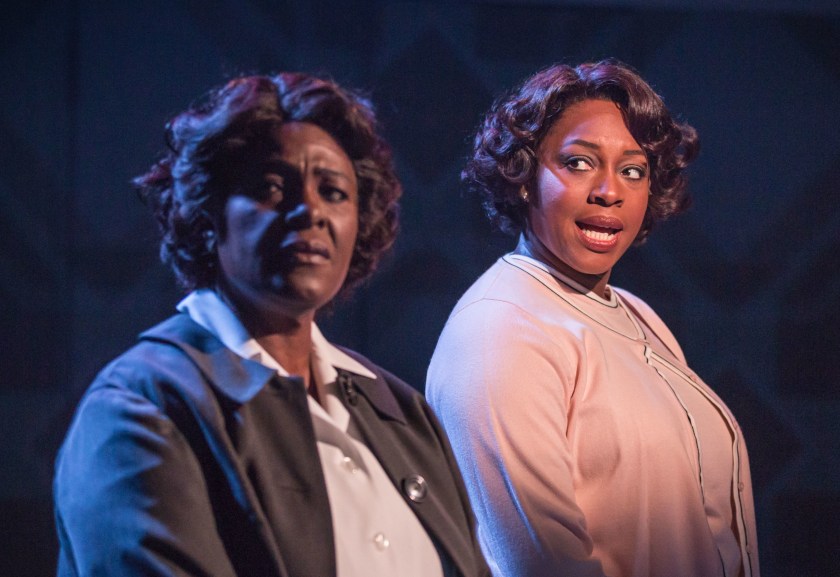
I don’t, as a rule, like musicals, as I have oft repeated on these very pages. I absolutely adored this though. That might be because it isn’t your classic show tunes, jazz hands, fake emotion overload. It might be because Jeanine Tesori’s eclectic score ranges across the history of African-American music, (with help from Jewish American music, and plenty more besides), and reminds us how lost contemporary human culture would be without it. it might be because CoC is operatic in intent and form. It might be because it is through-composed with no awkward recitative exposition. It might be because it is formally inventive, what with its singing appliances, swinging moon (!), split level and revolving stage, courtesy of Fly Davies, and repeated metaphors. It might be because Tony Kushner is a playwright, and here book and lyric writer, of fierce intelligence, politically engaged, unafraid of tackling big issues, or incorporating his own, real, experiences into his work. It might be because Sharon D. Clarke is just about the most powerful actor to be seen anywhere on the British stage. There are moments in this where her entire body quivers under the weight of Black American history. And when she sings. OMG as the young’uns would have it. And she’s not the only one knocking it out the park. Abiona Omanua as Emmie runs her a pretty close second in her own way.

This production was praised to the skies on its original outing at Chichester. I believed the hype, but ummed and ahhed about booking for the Hampstead transfer, trying to rope in some chums. No takers, the SO didn’t bite, her aversion to musicals being ideologically sounder than mine, so I ended up taking the plunge on my tod. In the end it was probably more the urge to collect productions of Mr Kushner’s work that swung it rather than these reviews. At times I was engrossed by both Angels in America at the NT and IHO here at Hampstead even if, ten minutes later, I baulked at his indulgence. His translation of Mother Courage was also used in the so-so recent production of Mother Courage at Southwark Playhouse. I can see why he likes Brecht.

Well I only need to have paid attention to the 5* reviews, and so should you now that this is transferring to the Playhouse Theatre, from late November through to early February next year. I strongly recommend you get tickets. And don’t skimp. It is rubbish upstairs in the Playhouse and you need to take in all the set. I also see that the prices for decent seats, whilst not cheap, are not eye-gougingly expensive.

Music first. Jeanine Tesori’s score is magnificent. I assume it was composed for the orchestral forces on show in this production, 11 strong, with Nigel Lilley conducting. They are certainly put through their paces with Haydnesque chamber passages, a Jewish klezmer dance, hymns and folk tunes wedded to gospel, blues, soul, jazz and spirituals. And still room for a couple of show-tunes. If this all sounds a bit rich, it isn’t. The rhythms are simple and infectious and the melodies and motifs clear and recognisable even to this untrained ear. Ms Tesori doesn’t waste a note. What is most extraordinary is how she renders Tony Kushner’s text so immediately musical, as, presumably, he doesn’t write that way. There is a good interview in the programme, as there always is, from Will Mortimer of the Hampstead Theatre, with TK and JT where they describe their creative process. They seem to like working together. There is also an article written by TK setting out the genesis of CoC and a helpful essay on domestic workers in the US from slavery through the civil rights movement to the present day The HT programmes are always excellent in this regard, with material directly relevant to the production and not too removed or abstract as can sometimes be the case.

Whilst all of the orchestra sounded terrific to me I would highlight the brass and woodwind contributions of Alice Lee and John Graham. Their instruments were always likely to get the lion’s share of the expressive lines, given Mr Kushner is unafraid of emotion, but they sure know how to deliver them. In total I counted 53 songs. Like I say there is no filler, but you can work out for yourselves that, across the couple of hours of performances this means nothing outstays its welcome, so we have dynamism to match the musical invention.

So what’s it about? It is the 1960s in Lake Charles, Louisiana. It is hot and humid.. Caroline Thibodeaux is an African American mother of four kids, Emmie, whose consciousness is being raised by the Civil Rights protests, Jackie and Joe (I am really sorry I don’t know which young actors where in the hotseat on the day of the performance I attended), and an elder son in the army. Caroline’s drunk, abusive husband is long gone. She works as maid to the Gellman family, Stuart Gellman, his second wife Rose Stopnick Gellman, and young Noah (based on Tony Kushner himself). We also get to meet Caroline’s friend Dotty Moffett, trying to “better herself” through night school, and the Gellman grandparents and Grandpa Stopnick, in various imagined scenes, and when they visit Louisiana from New York.

Oh and we are introduced to a singing washing machine, a dryer, a Supremes style trio representing the radio, a moon on a swing and a bus. As you do. These fantasy elements make perfect sense in the context of the story Kushner and Tesori are telling, and provide further contrasts to the already rich mix created by Ms Tesori’s music and by Mr Kushner’s sharp, poetic, lyrical, emotional, analytical, metaphysical and often very funny lyrics. One detail in particular, the illuminated red ring around Ako Mitchell’s neck, to simulate the dryer, but suggesting something way more horrific from America’s past, shows just how many ideas are at work here.

In 1963 self-absorbed Noah is 8, (sorry, as with the boys, I can’t be sure who played Noah), and prone to bothering Caroline, and lighting her cigarettes, as she launders in the Gellman house basement. Noah’s mum recently died of cancer and the relationship with step-mum is delicate. Stuart, still grieving, and Rose’s relationship isn’t perfect either. Caroline gets paid $30 a week. Rose offers her food rather than a raise, and later, condescendingly suggests she take the small change the family leave in their pockets, especially Noah. This idea of change, (both personal for Caroline, and politically for her family and community), and of the unequal economic relationship between the Gellmans and Caroline, of which they are all acutely conscious, is central to the drama, and presents an extraordinarily powerful metaphor.

The assassination of JFK, and his legacy, and the destruction of a statue of a Confederate soldier at the local Lake Charles courthouse, provide wider social and political context and, in the case of the latter, acute contemporary resonance, given, for example, the ugly events last year in Charlottesville. The politics ramps up before, during and after the Chanukah party in the first half of Act 2, which, for me, served up half an hour of the most vital theatre I have seen ever seen anywhere. The aftermath of the party, and an elusive $20 bill, prompts a bust up between Caroline and Noah and then some sort of spiritual epiphany for Caroline, culminating in the passionate song Lot’s Wife, which made me, and half the audience, quietly blu. Emmie though has the last, defiant, word.

Caroline is angry, sullen and resentful at the hand that life has dealt her, but her faith, her dignity, her conditioning and the stark fact that she needs to feed her family, means she cannot fight back. Emmie, from the next generation, can though. Mr Kushner points out in the programme how damaging the failure to resolve issues of race and poverty has been to the American politic, but he also offers a message than change is still possible.

The Hampstead stage is just about big enough to contain the set, though I gather it was more expansive at Chichester, but small enough to let us savour every line and note. I don’t think I missed a word and Michael Longhurst’s direction was exemplary (if you’ve see Amadeus at the National you’ll know what he’s about), ably assisted by Ann Yee’s intricate choreography.

In my own little fantasy world of reviews on this blog site I dole out stars like candy, largely because I get so excited with how much marvellous culture London offers that I really do feel like I am in the proverbial sweet shop. This though is a brook no argument 5* masterpiece.

The best thing I have seen this year. And I was perched up in the gods wishing I was much closer and had booked sooner.

You must see it.