Captain Corelli’s Mandolin at the Rose Kingston review *****

Captain Corelli’s Mandolin

Rose Theatre Kingston, 12th May 2019

WELL F*CK ME. LITERALLY AS I WAS ABOUT TO PUBLISH THIS POST I SEE THAT THE PRODUCTION HAS SECURED A RUN AT THE HAROLD PINTER THEATRE IN JULY AND AUGUST. EXACTLY WHAT I HOPED FOR. YEAH !!!!!!!

Never read the book. Never seen the film. Had no inclination. Assumed it was some soppy love story which would bring no value to my joyless, ascetic life.

Then I saw that Melly Still was directing and that Rona Munro (The James Plays) had adapted Louis de Bernieres’ blockbuster novel. And I am honour bound to support my local theatre which is about to have its funding hacked away by the philistine local council. Whom I support. Doesn’t stop it being anything less than a twattish decision though. Maybe it was a bit ambitious, and vain, to create such a big theatre space here in the first place, but, in the circumstances, and with no AD on the books, the Rose has done a grand job in producing new theatre of the highest quality in recent years.

Grrrrrh. Anyway Melly Still’s last outing here was the adaptation of Elena Ferrante’s My Brilliant Friend. Again a book, (actually a quartet of books), about which I had, (and still have), no knowledge. It was a triumph. She is an Associate Artist at the Rose now. Hence this production of CCM in conjunction with the Birmingham Rep. Hopefully in spite of the above news there will be more opportunities for her to display her talent in many future years. Both of these productions took well loved books, sharpened their focus, highlighted their messages and turned them into exciting, physical dramas using a barrage of theatrical technique.

Now I recognise that this approach risks annoying the super-fan who wants every scene to be played out in full and every character interaction to be carefully drawn. On the other hand all this razzmatazz stagecraft, movement (George Siena, I need to watch out for him), set and costume (Mayou Trikerioti, like George she is Greek, smart call), lighting (Malcolm Rippeth), video (Dom Baker), and, especially, composition (Harry Blake) and sound (Jon Nicholls and Dan Hunt), might leave some of the audience breathless. But that is what makes this production so thrilling.

For me though this is what story-telling is all about. A book is a book and a stage is a stage. If, as here, you have a big story to tell, that crosses time, place and people, then this is as glorious an example of how to make it work within the constraints of the latter as you are ever likely to see. It’s the onset of WWII on the island of Cephalonia. Learned widower Dr Iannis (Joseph Long) lives with his daughter Pelagia (newcomer Madison Clare) who gets engaged to local lad Mandras (Ashley Gayle). But war begins and he goes off to fight. Italian Carlo (Ryan Donaldson) watches his love Francesco (Fred Fergus) die at the hands of the Greeks in Albania. The Italian and German forces pitch up in the village led by the surprisingly, in the circumstances, happy chappy Antonio Corelli (Alex Mugnaioni) who is billeted in the Iannis home. Mandras returns, injured, but Pelagia falls out of love with him. Italy switch sides …. and then …. well it really kicks off.

Love. And War. Doesn’t get much bigger than that. So no surprise that I was carried along by the story. But what I didn’t bargain for, apart from the genius of the staging, (again I will refrain from highlighting any of the exquisite details – they just keep coming), is the way the play examined the specific history of the impact of the war on Greece. On occupier and occupied. And the way music, which pours out of this production, is deployed as the antithesis of the carnage of war. As well as what I had expected. What war does to individuals. And what form love can take.

No programmes left at the Rose, (since, eventually, this filled the house), so I can’t be sure if I had seen any of the cast before but most were new to me. No point picking out any individuals. The whole point is that this is an ensemble. Of cast and creatives. Mind you if you don’t fall for Luisa Guerriero’s character I can only assume you are made of stone. And the sound that is spun out from Eve Polycarpou’s voice is devastating.

Apparently Mr de Bernieres is very happy with the result and sees it as faithful to the intention of his novel. (In contrast, I read, to the film which went off the rails big time). I am not surprised. I loved it. I see that some of the proper reviewers felt that the central love story underwhelmed in comparison to the spectacle of the historical context. Not for me. I can report lump in throat, though I am a lachrymose old bluffer.

Hopefully the Rose and Ms Still can alight next time on a text that will pull in the punters from far and wide as well as titillate the local punters to create something that can be flogged in the West End. Mind you if I were a big shot WE producer I would take this on in a shot. As it stands it has the rest of its run at Birmingham Rep, then the King’s Theatre, Edinburgh and finally the Theatre Royal, Glasgow. Do go and see it.

Don McCullin exhibition at Tate Britain review ****

Don McCullin

Tate Britain, 1st May 2019

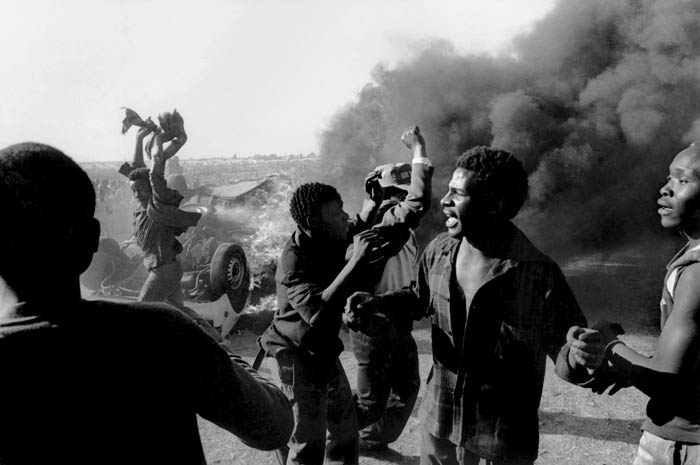
The main event first. The astonishing work of Don McCullin, the renowned “war” photographer, though this epithet doesn’t get close to covering the depth of the work revealed in this retrospective at the Tate, (now finished, sorry). McCullin, now 83, left art college at 15, worked on the railways and then did his National Service, where he worked as a photographer’s assistant having failed the theory paper which would have let him take pictures. In 1959, back in Britain, his mates persuaded him to submit his portrait of gang members, The Guvnors, to the Observer. It was printed and the rest is history.

His work in Berlin, as the Wall went up, and in Cyprus on partition, catapulted him to the top of his profession, he has been lauded with awards throughout his career. From 1966 to 1984 he was a photo-journalist for the Sunday Times Magazine producing iconic work in Vietnam, Biafra, Northern Ireland, the Congo, Bangladesh, Palestine, Beirut, Uganda, Chad, Cambodia, Israel, Jordan, Lebanon, Iran, Afghanistan and elsewhere. He also documented the plight of the poor, homeless and marginalised across Britain. His later work includes landscapes, ancient architectural treasures, notably Palmyra, and even some still lifes.

The exhibition includes work from across his career, as well as original examples of his work for newspapers and magazines and some helpful biographical details. He cites Alfred Stieglitz, the father of art photography in the US and husband of Georgia O’Keefe, as an influence despite their different genre focus. McCullin’s sharp, monochrome images are remarkable, even to this numpty, for their composition and mastery of light, though DM only staged one image in the exhibition, and for their visceral emotional power. Unusually he has printed very image in the exhibition himself which means he has to constantly return to these powerful images.

He clearly had to be very brave to take these pictures. He was wounded in Cambodia, imprisoned in Uganda and kicked out of Vietnam. His camera got in the way of a bullet intended for him. That camera is here in this exhibition. His has been hospitalised on numerous occasions. The UK Government pretended the ship was full and refused him a pass to cover the Falklands War. He hasn’t let up, travelling in 2015 to Kurdistan to document the struggle between Kurds, ISIS, Syria and Turkey.

Given the often appalling suffering, war, starvation and disease, which his photos captured it isn’t a great surprise that DM wrestled with the ethics of what he was doing. There are a couple of quotes below from Wiki which get to the heart of his dilemmas. Ultimately the urge to show the world the horrifying stories behind what he saw rightly trumped any sense of voyeurism. The most affecting works are the close up portraits especially those where the subject is often staring direct into camera. Even in a crowded Tate exhibition these are impossible to pass by. We live in a world saturated with images. It is hard therefore to understand just how much impact DM’s photos and the stories that accompanied them had on our society and discourse, especially in the pre-digital 1960s and 1970s. You will probably already know some of these images such is their importance.

An excellent exhibition if somewhat overwhelming. There is some relief in the early, nostalgic, photos of the British working class but, when it gets difficult, the Tourist opted to focus on a few works to try to take in the documented subjects and events. Not entirely successful. With this many people milling around and with so much history and suffering to contemplate it was hard to avoid being numbed or simply failing to see. Just occasionally though I think I saw the truth which DM wanted to captured. It was pretty scary.

“I have been manipulated, and I have in turn manipulated others, by recording their response to suffering and misery. So there is guilt in every direction: guilt because I don’t practise religion, guilt because I was able to walk away, while this man was dying of starvation or being murdered by another man with a gun. And I am tired of guilt, tired of saying to myself: “I didn’t kill that man on that photograph, I didn’t starve that child.” That’s why I want to photograph landscapes and flowers. I am sentencing myself to peace.”

“Photography for me is not looking, it’s feeling. If you can’t feel what you’re looking at, then you’re never going to get others to feel anything when they look at your pictures.”

The Crucible at the Yard Theatre review ****

The Crucible

The Yard Theatre, Hackney Wick, 29th April 2019

The latest instalment in the Tourist’s engagement with this year’s unofficial Arthur Miller season was director Jay Miller’s often insightful, occasionally daft take on The Crucible which for me, and I know this is not the aesthete’s choice, probably just about trumps Death of a Salesman as Arthur Miller’s greatest play.

BTW it looks like, as any fool might have guessed, that the Young Vic and Marianne Elliott, and the stunning cast, have played a blinder with the now-opened revival of Death of a Salesman. This was predictably likely to be one of the best plays in London this year. And so it seems it is.

BTW again. I have been talking to some ypung people. Or rather I have been talking at some young people. At MS and MSC’s wedding amongst other ocassions so technically they had no means of escape. They, like MS and BD, hold Arthur Miller in low regard. I have a feeling that English Lit teachers may have been giving the poor chap a hard time. I get that there is some evidence in his life to support this, and revealed most explicitly in After The Fall, to pin him as an arrogant misogynist, who abandoned his disabled son, trashed the reputation of ex-wife Marilyn Monroe, stuck with impossibly idealistic political positions secure in his ivory tower and repeated himself to diminishing effect in terms of issues and form in his later plays. But, for me, his greatest plays are about as good as drama gets, and that is what matters.

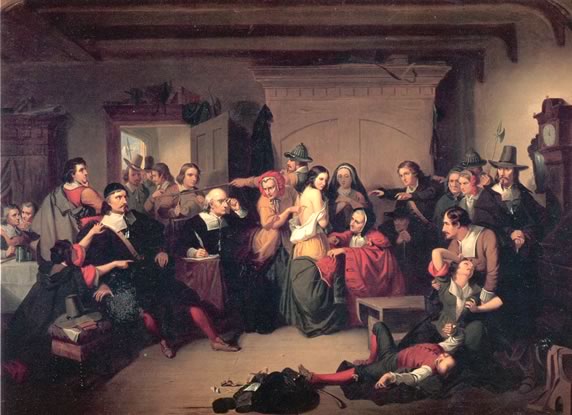
And these plays can still thrive even when starved of creative sympathy. Especially The Crucible. As some sage observes in the Time Out review for this very production The Crucible is “built like a brick shithouse”. Correct. This apparently is the first time that The Yard Theatre has produced a classic play. It has played host to some others’ interpretations, notably Rash Dash’s wham-bam take on Three Sisters. But now Jay Miller and his young cast have given his namesake the shoestring, experimental once-over. Now the Yard, for the uninitiated, is exactly how a privileged, well-off, ageing, ex-City, liberal, insulated, South West Londoner imagines a theatre in edgy East London should look like. Scruffy space, ropey bogs, wooden benches now helpfully rendered fit for purpose with plastic seats. On a site by a canal, in an old industrial estate, next to the ginger line, two brew pubs on the site, (nice pizza courtesy of CRATE), creative spaces, studios, artisanal food-makers, cheek by jowl with old school light industry and breakers yards’. And graffiti. Lots of graffiti. Oh and beards. Lots of beards.

Love it. The Tourist is now looking for ways to get some of his chums to make the trek there. For even with the new material it presents this theatre is making a mark. I like the look of the upcoming Armadillo and its cast and hope that something beyond that might tempt his picky punters. The Yard is now getting Arts Council funding so expect it, like the Arcola, to go from strength to strength.

Probably should have pushed those punters a bit harder on this Crucible. they would have been intrigued. There are a few quirks – the TV screen announcing characters and other visual distractions sat on a chair, the spooky, masked witches that pop up in the later scenes, some extravagant Massachusetts c. 1692 accents, European regie-theater use of microphones, a spot of karaoke – that might bemuse rather than illuminate. But there are other innovations that manifestly do work. The cast kicking off on name-tagged chairs describing characters and context, and even stage directions and Miller’s own footnotes (A not J though that might have worked too); then slowly donning “period” dress (designed by Oliver Cronk) and taking on those accents; the doubling and truly gender blind casting; some dramatic lighting (Jess Bernberg) and ensemble effects; Jonah Brody’s ambient score and Josh Anio Grigg’s killer sound design. Brechtian and disorientating for sure but ramping up the strangeness of the events here and counterpointing the McCarthyite parable.

Since The Crucible is actually a belter of a story independent of its meaning then all this collectively serves to make us more engaged in what is happening as the hysteria in this ramshackle Salem boils over and the epic sacrifices by the Proctors are made. For surely The Crucible is as epic as anything Brecht or Euripides ever conjured up despite its superficially “historical” setting. Hence the link back to those opening quotes from Arthur M highlighting the historical inaccuracies. This is where Jay Miller’s mad genius pays dividends across the full 3 hours he commits to the production.

Young Mr Miller is plainly a clever fellow. For not only has smartly subverted the mythic quality of the play, whilst still retaining its dramatic power, (though like I say I have never actually see a bad production of The Crucible), and emotional connection, (I don’t actually well up when JP hangs on to his name but …..), but he has also feminised A Miller’s muscular language, exaggerated in The Crucible by the C17 New England idiom, with his casting of Caoilfhionn Dunne as John Proctor and Sophie Duval as Giles Corey (as well as Abigail Williams’s chief sidekick Mercy Lewis). Now as it happens these two are the best of the very talented bunch on show. I have seen Ms Dunne before, most recently in Mike Bartlett’s Wild, in The Nest at the Young Vic, on my allotted night at the Gate’s Dear Elizabeth and, most memorably at that same theatre in Suzy Storck, (where Cecile Tremolieres was, as she is here, the innovative designer). This was proof of just how much emotion she can wring from a character and so it proved again with her John Proctor, dim at first, but full beam by the time we get to the confession. Sophie Duval showed us intense pathos when Giles Corey loses his book reading wife to the madness but also plenty of laughs with Corey’s pithy comments about the venal motives of those egging on the teenage accusers.

It is usual to have sympathy for the scorned Abigail Williams. Not much though in Nina Cassells’s take where she has no discernible remorse for the carnage she unleashes. The scene when she meets Proctor, who begs her to recant, is especially chilling. The argument between, in this case, the two women, contrasts with the tetchy and tense arguments between JP and his (good)wife, played by Emma D’Arcy, in the Proctor house and then later the desperate exchange as JP wills her to lie on his behalf. I didn’t see Ms D’Arcy in Mrs Dalloway at the Arcola, (couldn’t find a date that worked for the willing SO), but it seems we missed a trick there. I am reminded that she mastered a tricky role in the unfairly maligned, if scattergun, Against at the Almeida as a complex student. The female side of the casting is completed by Sorcha Groundsell as the alternately, bolshie, brave and intimidated Mary Warren, (the weakest of A Miller’s Crucible characters IMHO). (I gather she has signed up for Netflix series The innocents – good on her). And a spirited (literally) Lucy Vandi as Tituba and the irksome Mr and Mrs Nurse.

As for the gents, Syrus Lowe, fresh from The Inheritance, offers a petulant, self aggrandising Reverend Parris, the willing executioner, as well as the officious Willard and Cheever, Jack Holden manages to avoid the trap of letting Reverend Hale descend into melodramatic self-pity as his faith is broken, and Jacob James Beswick stands out as “the Judges” Hathorne and Danforth, who care more about order and power than true justice.

The doubling shows us that there is good and bad in all of us, though you have to hope yours isn’t going to be exposed by witchcraft trials, and that we are all capable of overlooking or conniving in state sanctioned persecution. The Crucible was written as allegory prompted by his mate Elia Kazan’s naming of 8 members of the Group Theatre to the House Un-American Activities Committee. Following the opening of The Crucible Miller also went before the Committee in 1957, had his passport confiscated, was held in contempt and sentenced to a fine and imprisonment. The “conviction” was overturned the following year but hardened Miller’s political views. He made up with Kazan years later. (As it happens Miller managed to get his work banned in the Soviet Union in the late 1960s as well, proving he was doing something right). Whilst, as I have said, the message of The Crucible and its dramatic power can stand all sorts of treatment, there is no doubt that Jay Miller’s radical take, at its best, offers an exciting and dislocating perspective on the play. A Miller took liberties with the “true” story of the Salem witch-hunts. Jay Miller is simply returning the favour.

The Crucible, like most of A Miller’s greatest plays, is ripped straight from the play book of Sophocles. John Proctor is the archetype tragic hero whose peripeteia (reversal of fortune) is brought on by his hamartia (fatal flaw) which leads him to anagnorisis (self discovery). All the very best plays, the ones that jump out, thump us in chest and head and leave us exhilarated, follow the Greek rules moreorless closely. Well maybe I exaggerate a bit. Though the following, including some of the Greek originals, suggests I might just be right. These plainly should be on everyone’s theatrical bucket list.

  • The Oresteia – Aeschylus
  • Oedipus the King – Sophocles
  • Medea – Euripides – (I know – it broke the rules)
  • Tamburlaine the Great – Marlowe – (see if you don’t end up quite liking the fella)
  • Hamlet – Shakespeare
  • Phedre – Racine
  • Woyzeck – Georg Buchner
  • The Master Builder – Ibsen
  • Long Day’s Journey Into Night – Eugene O’Neill – (four for the price of one)
  • All My Sons – Arthur Miller – (or Death of a Salesman or A View From The Bridge)
  • The Goat, or Who is Sylvia – Edward Albee
  • The Ferryman – Jez Butterworth – (work with me on this)

See what I mean.

Small Island at the National Theatre review *****

Small Island

National Theatre Olivier

If you know Andrea Levy’s Small Island either from the original 2004 book, (not me I confess), or the 2009 Two part BBC adaptation with script from Sarah Williams and Paula Milne and starring the inimitable Ruth Wilson and Naomie Harris then you will know roughly what to expect from Helen Edmundson’s adaptation directed by NT head honcho Rufus Norris. This is an epic social history, set in post-WWII Jamaica and London, and centred on the lives of two ordinary couples, or more specifically two, extraordinary, women, Hortense and Queenie.

It is a brilliant story, brilliantly told, but, even with the NT’s formidable financial and creative resources to hand, it was still an ambitious ask to bring it to life on the stage. Now I reckon Rufus Norris has been unfairly pilloried in some quarters during his stewardship at the NT. Not all the new commissions have come off but there have been some absolute belters as well. Keeping the progressive and conservative stakeholder congregations onside at the NT would test the patience of a saint, especially in these interesting times, and I reckon RN has had a pretty good stab at it. And a couple of the projects where he has taken the director’s helm himself, Everyman and Mosquitos, were superb. Yet for me he is at his best when pulling together multiple narratives and kaleidoscopic forms; as long as the writing on which any work is created is up to snuff and the stories he helps tell make an immediate emotional connection. London Road, Behind the Beautiful Forevers, The Amen Corner, Feast, (both of which I missed), Festen and, I gather his takes on Cabaret, all fit that bill. So I was pretty sure this would work and fill the Oliver stage with technicolour life again.

And it does. Superbly. We first meet Hortense (Leah Harvey) in the Jamaican school she teaches in alongside glamorous American Mrs Ryder (Amy Forrest). A hurricane is coming. Michael (CJ Beckford), the rebellious son of Mr Philip (Trevor Laird) and Miss Ma (Jacqueline Boatswain), who are also Hortense’s, very strict, stand-in parents, (she is the illegitimate daughter of Mr Philip’s affluent white cousin). arrives. Hortense loves Michael but he has eyes only for Mrs Ryder. Cue a brilliant set piece prologue, bravura lighting (Paul Anderson), sound (Ian Dickinson) and, especially, projection design from Jon Driscoll, taking us through the storm, interspersed with Michael and Hortense’s childhood, (not sure who played little M and H but blimey they are brave), and an explosive argument at the dinner table. In this Tempest-ian prologue it soon becomes clear we are in for an aural and visual treat thanks to these creatives in tandem with the sedulous stage and costume design of Katrina Lindsay, music of Benjamin Kwasi Burrell and movement of Coral Messam. Heaven knows how many hours they all put in but not was worth it.

This is worth the ticket price alone. Especially if, like the Tourist, you only pay £15. The proper reviews have come in and they are excellent. If Billers at the Guardian and DC at the Telegraph both say 5 stars then you would be a t*t to miss it. There are plenty of tickets left towards the end of the run from which to take your pick. With acting of this level and stories with this much passion I would happily have paid £75 for centre front stalls but trust me, with stagecraft of this quality and scale you’ll be fine in the cheap seats as well.

Now the characters do take a little time to fully come to life. The setting does dwarf the actors a little in the prologue and, in the preview I attended, the delivery of the dialogue initially lacked a bit of fizz. But when we move to England, the “mother country”, to meet Queenie (Aisling Loftus) and her awkward, repressed suitor, bank clerk Bernard (Andrew Rothney), and then track the progress of Gilbert (Gershwyn Eustache Jnr), during the war as an airman and then when he returns after the war, with Hortense who has married him to realise here dream of escape, things really begin to crank up.

Andrea Levy’s story, replayed deftly by Helen Edmundson, is built on memorable episodes which together create an irresistible momentum topped, at the end of the first, long, half by the arrival of the Empire Windrush, and then in the shorter, more constrained second half, set in 1948, by the return of Bernard and the momentous decision which finally binds the two couples. Queenie’s date with Bernard in the cinema, her first encounter with Michael’s irresistible charm after he too arrives in GB to fight for Empire, Hortense mistaking Gilbert for Michael on first meeting, the ill-fated fight in Yorkshire, Hortense’s desperate betrayal of best friend Celia (Shiloh Coke). Queenie’s tender care for her traumatised father-in-law Arthur (David Fielder), the overt racism Gilbert and Hortense encounter, as postie and would-be teacher, (audience visibly outraged), and from Bernard after he returns. And many more. Each scene is expertly navigated and beautifully mounted.

Small Island is, of course, primarily about race and prejudice, and the journey that the protagonists take, both geographical and emotional. It reflects Andrea Levy’s own, mixed race heritage, and the legacy of Empire. In this adaptation though, and maybe just because of the brilliance of Leah Harvey as the proud, uptight, determined Hortense and Aisling Loftus as the openhearted, optimistic but tough Queenie, I was particularly drawn to the compromises the women had to make to carve out any sort of meaningful life for themselves. All the main characters have dreams that, in order to be realised need to confront unpalatable realities, but the two women, in their own, intertwined, ways have so much more to overcome. This, ultimately, is what makes them so sympathetic and the story itself so warm, uplifting and, dare I say, inspirational.

Without the somewhat syrupy narration, and with the exuberant, (even in some of the darker passages), innovation which was required to bring each scene to life, this stage version is more moving and satisfying than the TV version. It is around three hours, even without the interval, but it never feels like it and, though I can’t be sure not having read the book, it seems to offer a more than faithful distillation of Ms Levy’s intention. Unfortunately she passed away in February before the play opened so we can’t be sure but she was apparently fully signed up to director and adaptor’s vision . The programme contains an extract from her 2014 essay “Back To My Own Country”. Everyone should read it.

“We are here because you were there.” I was particularly struck by this quote from Ambalavaner Sivanandan, prime mover in the Institute of Race Relations, highlighted in the programme notes from Leah Cowan. Remember everyone who came to Britain from Jamaica and elsewhere was a British citizen. Same rights as my grandad. Who just happened to be, I knew even as a child brought up in an entirely white monoculture, an ugly, visceral racist. He’s long gone. Yet it seems the open abuse he habitually lobbed at his black neighbours still hasn’t.

Small Island with bowl you over as a piece of theatre, make you laugh and maybe even cry, but it should also make you think long and hard about our shared history. Do go.

(As an aside can I beg Naomie Harris, Hortense in the TV adaptation, to return to the London stage. You will know her from her film roles as Eve Moneypenny in the last few Bonds or Moonlight, amongst others. I think the last time she was in the theatre was in Danny Boyle’s amazing sounding Frankenstein which I never got to see. Come to think of it it would be good to see Mr Boyle’s boundless imagination let loose again on the Olivier stage. He would fill it I am sure. As for Ruth Wilson, Queenie in the TV Small Island, anyone who saw her magic in Ivo van Hove/Patrick Marber’s Hedda Gabler will be counting the days to her UK stage return).

A German Life at the Bridge Theatre review ****

A German Life

Bridge Theatre, 15th April 2019

It is pretty easy when you spend as much time consuming theatre as the Tourist to go full on luvvie and get well carried away with the “genius” of playwrights, directors, creatives and, especially, actors. So you would probably be wise to ignore all of what follows and the gushing that generally ensues whenever acting royalty treads the boards. But, just for once, this was the real deal.

I see, for example, in today’s Guardian that there is a ranked list of Dame Judi Dench’s film roles. It’s pretty thin pickings, with the exception of some big screen Shakespeare, Iris, Philomena and, especially, Notes on a Scandal. This is not because Dame JD is a poor actress. Nonsense. It is because most films are rubbish. But when a proper text is given to her she is peerless. Which, for anyone who has ever seen her on stage, should be self-evident. I only know her from the recent collaborations with Kenneth Branagh and Michael Grandage, an RSC Mother Courage, Madame de Sade and the Midsummer Night’s Dream at the Rose. Too young and too stupid to have seen her in any major Shakespeare roles unfortunately.

Mind you I had never seen, until now, Dame Maggie Smith, on stage. Never saw The Lady in the Van at the NT or in the West End. Or earlier West End triumphs like Albee’s Three Tall Women and A Delicate Balance, or David Hare’s The Breath of Life. All in the fallow period for the Tourist’s theatre going. So it’s just the film and telly stuff. More often than not DMS stamps her mark on these screen roles so completely that you cannot imagine anyone else playing them. Sardonic, trenchant, caustic, acerbic, take your pick of adjectives, you know what I mean. Yet always something far more profound, revealing and empathetic beyond the natural comic timing.

So I wasn’t going to miss this. Whatever it was. Even if she had read out the telephone directory. As it happens a play based on the testimony of Brunhilde Pomsel, a personal secretary to Joseph Goebbels, the Reich Minister of Propaganda, was always going to be right up my street. Ms Pomsel died in 2017, aged 106, on Holocaust Remembrance Day, having given a series of interviews, aged 102, that formed the basis for a documentary film A German Life, produced and directed by Christian Krones, Olaf Muller, Roland Schrotthofer and Florian Weigensamer. This script in turn formed the basis for a subsequent biography and for Christopher’s Hampton’s translation and adaptation for the Bridge stage.

Ms Pomsel had a relatively unremarkable upbringing, despite the remarkable times, as a child in WWI and in 1920s Germany, and went to work as a stenographer in the late 1920’s for a Jewish lawyer and, soon after, simultaneously, for a right wing insurance broker. In 1933 she moved to a a job in the news department of the Third Reich’s broadcasting department, (having taken up Nazi Party membership), and eventually was posted in 1942 to the Reich Ministry of Public Enlightenment where she was a shorthand writer. Following the fall of Berlin in 1945, and Goebbels’s suicide, she was imprisoned by the Soviet NKVD for 5 years in various concentration camps, escaping to West Germany after her release and working for state broadcasters until her retirement, living in Munich.

Now it is pretty easy to see why the German documentary makers alighted on Brunhilde Pomsel. Yes, her proximity to Goebbels, but also the clarity and honesty of her recollection. Her apparent apolitical stance, she joined the party to get the job and couldn’t quite remember if she voted for the Nazis or the DNVP (the Nationalist party) in the early 1930s, but liked the colours and the meetings, and refusal, even in retrospect to utterly condemn the system she found herself at the heart of, made her a more authentic commentator on what happened to Germany than many others with more pointed conviction in their stories. Her testimony is not concerned with her own personal guilt or innocence and can therefore more credibly get to the heart of the question: what would you have done differently in the same situation?

I am not sure if Mr Hampton had Maggie Smith in mind when he began the process of translating and editing the material from the documentary, though I gather she had plenty of input to the final outcome. I assume that an unbroken monologue, in line with the film, was the only feasible option but I would guess again that Mr Hampton, and the creative team here, Jonathan Kent as director, Anna Fleischle (designer), Jon Clark (lighting), Paul Groothuis (sound), must have had some trepidation at presenting a talking head for near two hours. The set, a naturalistic representation of Ms Pomsel’s apartment, moves gradually towards the front of the thrust stage, Mr Clark’s lighting subtly rings changes and there are a handful of crucial sound interventions, (not least of which is subtle amplification – the Bridge is a brilliant space but not intimate), but otherwise it is just DMS sat in chair.

They shouldn’t have worried (in fact they probably didn’t). From the opening knowing aside “let’s see how this goes”, through Ms Pomsel’s strict childhood, her delight in Weimar Berlin society, the reckoning of Kristallnacht, the fear in Hitler’s bunker, disgust at the Soviets and the search for her Jewish friend post-war (she died in a camp in 1943), DMS is, and this is no exaggeration, spell-binding. You don’t hear and see a German centenarian on stage, it’s still DMS, but this is the vivid, animated story of a real person, conveyed in an entirely naturalistic way, with just hesitant voice, mobile hands and febrile face. Leaving you ample opportunity, as the details build, to reflect on the core question posed above. For it seems to me that any guilt than Ms Pomsel may have carried was actually more the guilt at not feeling guilt, despite all that had happened, and not the guilt of complicity, ignorance or indifference. The banality that lies behind Hannah Arendt’s banality of evil personified. The contradictions about what she did and didn’t know about the concentration camps, or more actually cared to remember about what she knew, especially when contrasted with her own experience in these same camps after the war, are the most pointed passages of testimony and play. “We didn’t want to know about them, we really didn’t”.

This I suppose is why this “evil” is a constant in human history. It’s not lack of resistance or evasive denial that lets this continue. Just “ordinary” people not understanding or caring enough to stop it. This story will never be irrelevant.

I would assume that this will proved to be Dame Maggie’s stage swan song. If so it is a remarkable demonstration of her skill. But beyond that this is a vital story. Powerfully told. It looks like Blackbox Film and Media, the documentary makers, have told, and are telling, other such vital stories. I need to find out more. Not least of which is to see the A German Life documentary. As should you perhaps given the play is sold out.

The Remains of the Day at the Yvonne Arnaud Theatre review *****

The Remains of the Day

Yvonne Arnaud Theatre, Guildford, 13th April 2019

Right all you good citizens of Derby, Salisbury, Cambridge and Bristol. There is still time for you to book tickets to see this excellent adaptation of Kazuo Ishiguro’s celebrated novel The Remains of the Day. A very well crafted script by Barney Norris, (just the fellow to write pensive studies of “Englishness” based on his previous work), in an excellent production from one of our premier touring companies Out of Joint, thoughtfully directed by Christopher Haydon, (latterly of the Gate Theatre), with a pair of sparkling central performances from Stephen Boxer and Niamh Cusack.

Now the Tourist has never been much good at reading. Nothing ever seems to sink in without repeated exposure. Especially with fiction. And especially with fiction he read in his youth. A vague recollection of the big picture, a few specific episodes and a general “I like that author”. Not like the SO who can trot out plot, character, meaning, style, context, like an A* student even for things she read decades ago. Maybe this low level intimidation is what stops the Tourist picking up a book except when on hols. That and spending too much time at the theatre and writing this stupid f*cking blog.

Anyway you probably. like the Tourist. know this work more from the 1993 Merchant-Ivory film with Anthony Hopkins and Emma Thompson as Stevens and Kenton, both quietly upstaged by Peter Vaughan as Stevens Senior. Nominated for 8 Oscars, won none. Mind you that was the year the Academy rewarded Spielberg for Schindler’s List. Fair dos. I see that one Harold Pinter wrote an original screenplay for the film when Mike Nichols was slated to direct. Bits of Harold’s work made it to the end but he removed himself from the credits. Might have been a very different film with him and Mr Nichols in the driving seat.

Instead I remember the central, unrequited, relationship between the stiff Hopkins and the droll Thompson, the look and feel of the thing, (Merchant-Ivory being allowed to film in any toff’s house at the time such was their fame), and the almost elegiac take on the history under examination, the 1950’s and the 1930’s. Yes the politics were there but not as sharply delineated as in this play. Class, deference, knowing one’s place, belief in the wisdom of the elite, are common to both treatments but I was far more struck in this treatment by the desire of many in the aristocratic class in the 1930’s to broker a deal with Hitler, to appease, than I was in the film. And specifically the reasons why, the guilt at having inflicted so much economic misery on Germany post First World War, as well as the memory of the human carnage of that war, and, of course their anti-semitism, which motivated them to pursue this course.

It may just be that, like my reading of the book, I just don’t remember the film very well. Which is salient given that The Remains of the Day is a memory book/film/play. Or maybe more specifically a memory of a history, personal and political, book/film/play. To solve the “problem” of butler Stevens remembering the events at Darlington Hall in the run up to the Second World War, (as he undertakes the road trip in 1958 to pay the visit to the ex-housekeeper, Miss Kenton, prompted by her letter), the film makes generous use of flashbacks. And a cast of thousands.

Well maybe not quite but tons of extras and actors of the calibre of James Fox, Christopher Reeve, Hugh Grant, Michael Lonsdale and Tim Pigott-Smith to fill all the named characters, (trust me, a lot of people found their way to Darlington Hall). Even the minor parts are filled by the likes of Ben Chaplin, Patrick Godfrey, Peter Eyre, Pip Torrens and, the go-to actor for Germans in British films, Wolf Kahler. Blimey even a young Lena Headey, Cersei in you know what, gets a look in. Basically if you could do plummy or gor-blimey, and you weren’t engaged elsewhere, you got a part in the film.

No such technology of budget for Out of Joint and Messrs Haydon and Norris. So a fair bit of character pruning, some adroit exposition to incorporate those written out, and extensive doubling. But this is not just any old “exit Act 1, turn up as someone else in Act 2 with new costume and wig” stagecraft. This is seamlessly executed, on stage choreography, a hat, a coat, a pipe, to turn a cast the cast of 8 into the staff and guests of pre war Darlington Hall and the locals Stevens meets on his pint-sized odyssey of self-discovery. This means that the ghosts of the past are always present. Very clever and very easy to follow.

Stevens devotion to duty even in the face of the shocking demand by Lord Darlington to sack the two Jewish maids, Kenton teasing Stevens about his book, Stevens carrying on his duties even as his father dies and Mme Dupont, (a gender change to accommodate the casting pyrotechnics), whinges about her feet, Reginald’s increasing awareness of what his godfather is up to, Stevens disowning the past in his conversations with Dr Carlisle, the mocking Stevens is forced to undergo from “Sir David” the composite collaborator with Lord D, the radical conservatism, or conservative radicalism, espoused by everyman Morgan in the pub and, of course, the extraordinarily moving scenes between Kenton, or Mrs Benn later on, and Stevens, as the happiness they might might have had slips through their fingers. You flipping noodle Stevens.

All of these scenes are memorable, providing plenty of minor key drama, but the best things about the play are the performances of Mr Boxer and Ms Cusack. I’ll stick my neck out here and say that for me, and remember this is based on my faulty memory, they capture the essence of Stevens and Kenton more that Hopkins and Thompson in the film. The ten year age gap between these actors seems more convincing than the 20 years of the film. Mr Boxer seems to me to bring out more of the interior life of Stevens, the way he buries the emotions that he plainly has in the cause of maintaining the dignified exterior he believes is required of him, the way he is puzzled by, but still craves, Miss Kenton’s attention. Ms Cusack seems more playful as Kenton, holding back the regret until the very end. the structure of the play lends more prominence to the conversations in the pub and the way this changes Stevens’s perspective.

The directness of the political dilemma, and its flawed morality, is far more pointed here than in the film. And the reliability of Steven’s recollection is more nuanced as in the book, (yes I took a quick peep again whilst writing this). In fact generally Mr Norris seems to capture the essence of the book in a, er, more reliable way that the period-drama aesthetic of the film does.

The rest of the cast step up. Miles Richardson captures the naivety, in life as well as politics, of Lord Darlington and the middle class bonhomie of Dr Carlisle. Sadie Shimmin offers us an uncomplicated pub host in Mrs Taylor alongside the hauteur of fascist sympathiser Mme Dupont. Edward Franklin warms to his task as the bespectacled, conscientious godson Reginald, (drawn from the film not the book), Patrick Toomey is the arrogant American politician Lewis (and, I think Farraday, Steven’s current employer) and Pip Donaghy marks out Stevens Senior decline. Top marks to Stephen Critchlow though as he he shifts from Morgan to the real “villain” of the piece the anti-semitic Sir David.

I see a lot of plays but this is one of the more satisfying I have seen so far this year. “Knowing” the content helps of course, and, from a personal geographical perspective a hop to Guildford, and the fine design and accumulated history of the Yvonne Arnaud Theatre, was no inconvenience. I get that Out of Joint rightly values its touring credentials and I am grateful to the Royal and Derngate, (on my list to visit), and the Oxford Playhouse for co-commissioning Barney Norris’s script. But I am stunned that this hasn’t secured, as far as I know, secured a berth in London.

The familiar story, the quality of the acting, the script and the production, (Lily Arnold’s set is another stand-out as is Elena Pena’s sound design), the themes it explores and their contemporary echoes – the dangers of passivity and nostalgia – all would suggest to me that this would pack them in in a mid sized West End venue. There is plenty for the customary theatre demographic to enjoy, (they certainly did on this Saturday afternoon), but, with the right tone, I reckon some younger folk could be persuaded. I know that Out of Joint’s last major production, Rita, Sue and Bob Too, had a false start, understandably, before eventually gathering plaudits as the Royal Court but most of the rest of their historical efforts have popped up in the capital. This, whilst still posing some thorny questions, looks to be a far more commercial proposition than many of those predecessors.

Barney Norris plainly says that “the play must be unlike the book or the film or it shouldn’t exist” in the programme. Fair dos. But, whilst its structure and perspective match his manifesto, there is more than enough of both earlier manifestations to justify your attendance should you know them.

Over to you nice people at ATG.


Blood Knot at the Orange Tree Theatre review ***

Blood Knot

Orange Tree Theatre, 19th March 2019

To date I have only seen two plays by Athol Fugard. Both bravely examine racial politics in a South Africa divided by apartheid. Both are two-handers examining the relationship between two men, John and Winston, two prisoners on Robben Island practicing for a performance of Antigone in The Island, and here, in Blood Knot, half-brothers Morris and Zachariah who share a tiny shack in the “Coloured” section of Port Elizabeth. In both plays Mr Fugard is not afraid of taking his time, building out character, situation and message with a wealth of detail. It may not be everyone’s cup of tea but, on both occasions, I have found myself being drawn in to the intense relationships where one man is “freer” than another in a society utterly disfigured by state-sanctioned racism. Though not enough timely convinced by the dramatic qualities.

Mr Fugard, who is actor and director as well as novelist and playwright, has been working at his craft for over five decades, has packed a lot into his life and has garnered numerous awards in the UK, US as well as his native SA. (He even has a theatre complex in Cape Town named after him which is about to show Kunene and the King after its run at the RSC).

Now I am assuming Blood Knot holds a special place in AF’s heart as he acted alongside his friend and colleague Zakes Mogae at the world premiere in Johannesburg in 1961, multiracial theatre in defiance of the regime. In the same year SA became a Republic and left the British Commonwealth, 69 unarmed black protestors were shot dead by South African police, the Sharpeville Massacre, and Nelson Mandela and the rest of the ANC Executive were found not guilty of treason by the SA High Court. The following year though Mandela was arrested, tried and sentenced to life imprisonment on Robben Island.

Blood Knot, and AF’s other work (with his wife Sheila), his public support of the Anti-Apartheid Movement (which led to an international boycott of SA theatre) and the increasing international presence of his work outside SA, led to restrictions on his movement, including confiscation of his passport, and to constant surveillance and harassment. He worked alongside the progressive black theatre company, the Sergeant Players in the 1960s and 1970s, culminating in The Island, written with its original leads, John Kani and Winston Ntshona, as well as Sizwe Bansi is Dead, with its more obvious Brechtian and Absurd influences, also from 1972. His other most well known plays, A Lesson From Aloes, (which I stupidly missed when it appeared at the Finborough recently), Master Harold … and the boys, which is about to be revived at the NT, and The Road to Mecca, date from the late 1970s and 1980s, but he hasn’t slowed down continuing to examine the issues which have arisen in SA society since the end of apartheid.

Morris (Nathan McCullen) can pass as white but, for reasons that are never made entirely clear, has returned to live with his half-brother Zachariah (Kalungi Ssebandeke, who wrote the very well regarded Assata Taught Me performed at the Gate a couple of years ago). Under Apartheid, people defined as “Coloured” had a different status to those classed as White, Black, East Asian or Cape Malay. This meant that they were not confined to Homelands but their movement and employment was still heavily restricted and their economic prospects constrained. But, as you might expect, such classifications of those with mixed heritage, as well as being reprehensible in principle were difficult to “police” in practice. This is what the play explores.

The fastidious Morris looks after the shack whilst Zac trudges off to work every day. They dream of saving enough from Zac’s earnings to buy a farm, live frugally, with minimal social interaction but share a rich life of imagination. Zac, with Morris’s help since he is literate, strikes up a pen-pal relationship with a woman, but, when they realise she is white, with a policeman brother, they decide that Morris will have to take up her offer of a date in Zac’s place. Zac spends their savings on a fine “white” suit for the meeting, but, when the girl breaks off the correspondence, the clothes become the catalyst for a surreal, and increasingly provocative and complex role-play, or worse, where Morris, as “white” starts to bully Zac, and Zac in turn, harbours a desire to kill Morris. There is no resolution. They are tied together by familial love, but shattered by the system that they live in.

Given the quality of the dialogue, the sure hand of director Matthew Xia, now in charge of the Actors Touring Company and who was behind the revival of Sizwe Banzi is Dead at the Young Vic in 2014, and a very effective set from Basia Binkowska, (who also impressed in the Lyric Hammersmith OthelloMacbeth), I suspect I was always going to be partial to the idea of this. However the careful performances of both actors, with a palpable chemistry between them, definitely helped. I can’t pretend that the claustrophobic, dense structure and rhythm of the play, especially as it moves into the ambiguous final third, didn’t occasionally frustrate and I wasn’t entirely convinced by the distracting electronic sound design of Xana. After two powerful, if sometimes ponderous, performances of AF’s plays I think the next bite of the cherry needs to have a little more dramatic variety and a bigger cast. I gather Master Harold … has one extra character. Phew.

Shipwreck at the Almeida Theatre review *****

Shipwreck

Almeida Theatre, 18th March 2019

The Tourist, as this blog shows, is a nice bloke given to giving creatives the benefit of the doubt. Hence the string of positive reviews on these pages. He likes to think that he is wise in his choice of entertainment. The reality is that he just wants to be liked, even when it manifestly doesn’t matter.

Even so he admits to toddling off to the Almeida to see Shipwreck with some trepidation. Reviews were mixed but rarely overwhelming. The SO, BD and LD had all bailed out in advance, for good reasons, though Dad’s sales pitch was about as convincing as that of The Apprentice candidate, (a clever Trump reference there people), who is fired in week one. The Tourist and BD had abandoned Anne Washburn’s Mr Burns one act in, though this was in part due to “cold-induced fatigue”/teenage hangover, and the SO had to abandon The Twilight Zone, now playing at the Ambassadors Theatre, due to a domestic crisis. A poor familial showing all round. Would lightning strike thrice then?

Certainly not. I bloody loved this. As usual that is of no use to you if you fancy seeing it since it is now all over but it really shows why Rupert Gould and the Almeida have such faith in Ms Washburn’s abilities. There may be some dramatic shortfalls, largely born of excess ambition, but boy can she turn a phrase. Now I don’t know when, or if, this will make its way to the other side of the pond but if it does, assuming you are a member of the very echo chamber it purports to excavate, then you should definitely see it. (I think I can safely assume that the Trumpian side of the cultural divide will have no interest in watching their “opposition” introspect, though they would get apoplectically wound up).

Shipwreck is a meticulous unpicking of liberal America’s current paralysis in the face of angry populism. It may be very time and place specific but its messages are universal. Populist politics, which can and will turn ugly, cannot be dismissed, mocked, pandered to or ignored. It has to be confronted and unpicked, piece by piece, through argument, mobilisation and democratic will. Hand wringing and virtue signalling won’t cut it.

By bringing together seven privileged, articulate, white bar-one, liberal American progressives in a snowbound, holiday farmhouse in upstate New York, and then letting then slug out the arguments one by one, with a useful, if not unsurprising twist, AW is able to rehearse all the arguments in forensic detail. The dialogue is actually centred on June 2017 after the ex head of the FBI, James Comey, offered up his damning testimony before the Senate Intelligence Committee. Comey, you will recall, or maybe you won’t for that is one of the points the play forcibly makes, was the bloke who was fired by Trump, ostensibly on the recommendation of the attorney general Jeff Sessions and deputy attorney general Rod Rosenstein because the FBI rank and file had allegedly lost confidence in their director, but, in reality, because Trump feared the net closing in the the strands of collusion with Russia in the election, taken up subsequently in the Mueller enquiry. Comey, you may also remember, was the chap who rashly indicated that he was re-opening an investigation into the so-called Hilary Clinton e-mails just before the election having previously said there was no case to answer. Confused? I am and that is the point. Keeping up with the truth is tough enough. Unpicking truth, lies and fantasy when narrative and ideology conflict and when there are multiple “reporting” platforms makes it near impossible even for those with the time, inclination and critical faculty to care.

One of the pivotal moments in the debate between the Shipwreck crew comes when, I think, Adam James’s lawyer Andrew reminds then of the time when Trump, in a Republican primary event, claimed the GOP bigwigs had pleaded with him to cool his opposition to the Iraq War. He had not publicly declared any such opposition. He just made it up. And kept repeating it. Then this kind of breathtaking audacity was a surprise. Now many have have become inured to it, just accept it or positively embrace it. Truth has always been a slippery fellow, manipulated by teller and beholder, and more so as time passes, but deliberate, outright fabrication is plainly dangerous to the body politic. But pitifully easy it seems.

The other key moment comes when Andrew’s partner, banker Yusuf, (Khalid Abdalla), admits he voted for the comb-over bogeyman in the election. With the age old excuse of “wanting to shake things up”. Justine Mitchell plays Allie, the sarky, Facebook-ing keyboard warrior “activist”, who criticises the complacency of others but whose logic can send her liberalism way off-beam. The hosts Jools (Raquel Cassidy) and Jim (Elliot Cowan) are more concerned with day-to day accommodation of the changed environment, expecting a reversion to their comfortable mean, whilst Tara Fitzgerald as Teresa and Risteard Cooper as Lawrence are the hippyish slackers, who bang on about the natural birth they have just come from and who see their green-tinged, near-socialism as adequate inoculation. And so all the strands of liberal call and response are represented.

Now I would have been happy with a couple of hours of this fascinating, pointed, if admittedly wordy, to and fro, but, AW being AW, she clearly felt we needed more. So we are introduced to Mark, an orphan of Kenyan descent, who has ended up in the foster care of a traditional, Christian, Trump-voting, rural couple Richard and Laurie, doubled by Risteard Cooper and Tara Fitzgerald. The connection is the farmhouse which Jools and Jim bought from them. Mark then becomes the mouthpiece for racial politics and identity. It is a clunky device but all is forgiven pretty much as soon as Fisayo Akinade as Mark opens his mouth. Now for those that don’t know Mr Akinade, he was the comic turn as Eros in the NT Antony and Cleopatra where he near stole the show from under Ralph Fiennes and Sophie Okonedo. He also starred in Barber Shop Chronicles which, for my sins, I haven’t seen, and in the Donmar’s Way of the World, St Joan and The Vote, as well as the Caryl Churchill short Pigs and Dogs, all of which I have. Here, in a series of monologues, in total contrast to the structure and mood of the group scenes, he charts the subtle, and not so subtle, racial dilemmas in his upbringing, imaging what it would be like to be a slave and describing his difficulties in describing the American racial divide to his own child. It is powerful stuff, sharp, funny and rhetorical, made more so by a very fine performance.

And there’s more. As if enough ideas haven’t been explored, AW then goes on to subvert the dramatic form in a very Churchillian (Caryl not Winnie) way and thereby offer up multiple theatrical opportunities for Mr Goold and, especially, the lighting and sound of veterans Jack Knowles and Paul Arditti. Firstly by having Fisayo Akinade playing a sheepish George HW Bush who is rounded on by the besuited, megalomaniac Trump about the Iraq War. And secondly, and this is where the fun really starts, going all out fantasy as Elliot Cowan (I think), bravely, morphs into a gold-painted, Caesar-esque unhinged tyrant, complete with bird-hooded priests, (yep you read that right), berating a nervous James Comey (Khalid Abdella again) during the infamous one-on-one meeting with Trump in the Oval Office where the POTUS allegedly tried to influence the investigation and demanded his loyalty. Mythic.

As in her previous plays AW shows she doesn’t seem to have an edit function, so even within the tripartite form she crams in so much more. References to Greek tragedy, the nature of art, politics and theatre (“art needs time, space and reflection” as Jools says – not here, AW just gets stuck in), class, incessant social media chatter and mock outrage, the lack of food and drink and their practical shortcomings, disparities in wealth between the couples. But always returning to the uncomfortable idea that the rise of Trump is a retaliation to the pious entitlement and performative shortcomings of white liberalism. And that what these people are most afraid of is losing their economic and cultural dominance to the unenlightened.

No plot, occasionally bonkers, no apologies speechifying, three hours plus, repetition and circularity. Shipwreck is so obviously flawed. But I don’t care because AW, even when she goes too far, can still slum-dunk ideas, message and theatrical thrills which the uniformly excellent cast and Rupert Goold, (and the rest of the creative team, including Miriam Buether symbolic, circular design and Luke Halls, who else, with his striking political and religious iconographic video,) greedily feast upon. It is complex, over-stuffed, baggy, ill-disciplined but in going beyond the usual incredulity at how the Orange One gets away with it, it is brilliant and telling.


Richard III at the Alexandra Park Theatre review ***

Richard III

Headlong, Alexandra Park Theatre, 17th March 2019

Right. Let’s get the gripe out of the way. Maybe in the smaller venues where this production will tour it might creep up to a 4* but Alexandra Park Theatre, whilst an undeniably superb space after the refurbishment, is just a little too cavernous to accommodate the claustrophobic history/tragedy/comedy/thriller/psychodrama/vaudeville which is Dickie 3.

Chiara Stephenson’s Gothic, dark, old-school castle with a twist, namely the introduction of multiple full length, revolving mirrors, together with the lighting of Elliot Griggs, is a winner set-wise. But it utilises barely a third of the huge proscenium stage, and I would guess, since all is shielded in dark fabric, only a similar portion of the depth. To rectify this the actors, in addition to coming on and off through the glass revolves, enter from the auditorium to the side of the stage, and, for the London scene, pop up in the “slips” and bark back to the stage. It is the right look for John Haidar’s galvanic production and Tom Mothersdale scorpion delivery as Dickie but seems lost in all this volume. As do the lines. Not because of the delivery. In most cases this is sound as a pound but set against George Dennis’s throbbing, pounding, electronic sound the intensity is diluted, and occasionally, for the aurally challenged such as the Tourist, lost completely.

Now this being a Headlong production, (albeit in conjunction with Ally Pally, the Bristol Old Vic, Royal and Derngate and Oxford Playhouse, all of which it will travel to, as well as the Cambridge Arts Theatre and Home Manchester), there is still much to admire. With the Mother Courage, This House, Labour of Love, People, Places and Things, Junkyard, The Absence of War, American Psycho, 1984, Chimerica, The Effect, Medea and Enron, Headlong has been responsible for some of the best theatre the Tourist has seen in recent years. He even liked Common, John Haidar’s last outing, putting him in a minority of one. He would therefore never miss anything the company produces. All My Sons at the Old Vic and Hedda Tesman at Chichester already signed up with willing guests.

John Haidar has opted to sneak in a bit of Henry VI to provide context, (complete with first taste of murder before that “winter” even starts), juggles the standard text and cuts out superfluous characters, though doubling is kept to a minimum, and generally encourages a lively approach to the verse, (though nowhere near the gallop of Joe Hill-Gibbons’s Richard II at the Almeida recently) . This means each half barely ticks over into the hour. The focus then, as it should be, is on Tom Mothersdale’s Richard, and the “family” saga, if you will, a family from which Richard is permanently excluded, rather than the politics. Tom Kanji’s Clarence doesn’t take up too much time, the other assassinations are similarly rapidly dispatched, Stefan Adegbola’s smug Buckingham and Heledd Gywnn’s Hastings, (as arresting a presence as she was in the Tobacco Factory’s Henry V), take precedence in the jostling for power, and the scenes with the three women, Dickie’s, to say the least, disappointed, Mum, the Duchess of York (Eileen Nicholas), Edward IV’s Scottish widow Elizabeth (Derbhle Crotty) and sacrificial lamb Anne (Leila Mimmack), are given plenty of air time.

With Heledd Gwynn doubling up as Ratcliffe, Tom Kanji as Catesby and Leila Mimmack as Norfolk, the production achieves an admirable gender balance and also tips Richard’s murderous ascendancy into a joint enterprise, at least until he shafts his mates. The main cast is completed with John Sackville’s ghostly Henry VI, Michael Matus as Edward IV and then Stanley and Caleb Roberts as Richmond (and utility messenger). The stage then is literally set, what with the opening soliloquy and those mirrors, for Dickie to slay his way to the ghostly visitations. Each murder is marked by a red flash and a loud buzz just to make sure we get it.

Now the Tourist has seen young Mothersdale up close in the slightly disappointing Dealing with Clair at the OT recently, in the magnificent John by Annie Baker, as well as roles in Cleansed at the NT and Oil at the Almeida. He’s got it, no doubt. As he shows here. And, as he capers around the stage, in dark Burgundy suit and leather caliper, long-limbed, lank-locked, threatening, cajoling, pleading, squirming at Mummy’s rejection, he is certainly the “bottled spider” of Will’s description. But I am not sure he finds an angle. There is the caricature Richard of Thomas More Tudor myth, as Reformation Elizabethan England found its way in the world ordained by God. There is Richard as psycho executing to a plan, villainy as predestination. There is nudge, nudge, wink, wink comedy Richard who recruits us into the fun. Or there is poor, diddums, “nobody loves me so I’m going to show you” Richard who can’t stop once he gets started. And more. With multiple permutations.

Here we seem to get a bit of everything in this swift, safe production. Not the monomaniac man-child, (any resemblance to a current world leader is surely entirely deliberate), of the brilliant Hans Kesting in Kings of War, not the compulsive egotist of Lars Eidinger in the Schaubuhne production at the Barbican, not the amoral sociopath of Ralph Fiennes at the Almeida with that infamous rape scene, not the trad manipulator of Mark Rylance at the Globe. Of the other recent Dickie’s that the Tourist has enjoyed Tom Mothersdale comes closest to Greg Hicks’ take in the pint-sized, though still extremely effective production, under Mehmet Ergen at the Arcola in 2017. Except that Greg Hicks made every single word count and plumbed some very ugly depths in Richard’s misogynism and unquenchable grievance. And with chain permanently attaching arm to leg he offered a stark visual reminder of his “deformation”.

There are some fine moments, the “seductions”, the ghosts behind the mirrors, TM cringing at Mother’s curses and her recoiling from his touch, some meaningful gobbing, the writhing in the Bosworth mud at the end, and, like I say, this will probably work better at, say, Bristol or Oxford, but I would have preferred a more thoughtful, and yes, longer, interpretation. Still the one thing you know about Richard III’s, like Macbeth’s, Lear’s and Number 38’s, there will be another one along shortly.

I Am Ashurbanipal exhibition at the British Museum review ****

I Am Ashurbanipal King of the World, King of Assyria 

British Museum, 15th February 2019

Crikey. Those Assyrians had a way with reliefs carved in gypsum/alabaster. Even if it was primarily all in the service of terrifying aggrandisement. The King hunting, the King and his soldiers slaying his enemies, the King relaxing with the ladies. It is all about the big man. Seeing these panels adorning the main rooms of the Empire’s palaces, painted in bright pigments, you certainly would have known who was the boss.

The Neo-Assyrian Empire took in most of modern day Iraq, Syria and Iran from 911 BCE to 612 BCE and Ashurbanipal was in the hot seat at its zenith from 668 BCE to 627 BCE. One way or another the Assyrians had been a big noise in the region for the previous 1500 years or so but it is only when the factions came together, and decisively defeated their neighbours, that the Empire was able to take in Cyprus, the Eastern Mediterranean, Eastern Turkey, Egypt and the Persian Gulf. The Neo-Assyrian Empire kicked off with Adad-nirari II but it was Ashburanipal’s daddy, Esarhaddon, the son of a “palace-woman” not the Queen, who did the blood-thirsty groundwork for his favourite son. Even so little Ashurbanipal had to initially share with big brother Shamash-shum-ukin who ruled the rebuilt Babylon.

Whilst Ashurbanipal’s geographical inheritance was vast it needed looking after. First he had to take on the various Empires in Egypt including the Nubians. Then he had to decisively crush the Assyrians’ arch-enemies, the Elamites, and finally he had to take on his own older brother when Babylon rebelled. There is plenty of pictorial and written evidence to show just how cruel Ashurbanipal could be when it came to waging war but, as all you students of ancient history know, you can’t build an empire on brain-dashing alone. You needs brains that stay in heads as well. And this is where the exhibition steps in showing just how learned the great king was, (he had been trained to rule, and to spy and intrigue, from an early age), as he amassed his great Library, oversaw an unrivalled system of communication across the Empire, negotiated treaties and vassalships too hold together his various, proud peoples and turned Nineveh into the greatest city on Earth. He wasn’t troubled by modesty mind as the translations show. It all went to sh*te when he died, isn’t that always the way, but what is on show graphically reveals just how magnificent, (assuming you were on the right side, and ideally you weren’t a lion), it all was at its peak.

Now the British Museum has the lion’s share (haha) of the world’s Assyrian artefacts so curating this exhibition wasn’t too much of a struggle, I imagine. Even so much of this material is not on permanent display, there are plenty of astonishing loans on show and the way the story is told, as is usual at the BM, is superb. Most Assyrian art was lifted in the mid C19, (the Victorians went mad for it), having previous been ignored by scholars in Europe and the US. You can argue about the ethics of such an enterprise, but then again you might also want to consider the centuries before when the exquisite calcite alabaster palace reliefs, lamassu and large scale statuary went walkabout, and you also need to think about the wholesale destruction of what remained in situ by ISIS especially around Mosul. At the end of the exhibition this part of the story is highlighted including the work of the BM in supporting and training local archaeologists to examine and conserve what is left.

Highlights? The small-scale lion hunts, (though I reckon, based on the casual manner in which Ashurbanipal is despatching the beasts, that these reliefs may incorporate a little poetic licence even if they are anatomically perfect) . The Garden Party in the palace of Nimrud. (Let us hope Queen Liz doesn’t take up the custom of decorating the Buck Palace gardens with enemy heads). The wall of cuneiform on clay tablets, a summation of the Knowledge of the day, (a word to the wise – if you want your library to resist a fire, use clay). The copy of the Epic of Gilgamesh, the first ever work of literature. The battle scenes illuminated with modern technology. The “painted” relief similarly enhanced. The lamassu, the human headed bull/lions with wings that stand guard. (How do you move these things? With great care I should imagine and without enlisting the services of the congenitally weak and clumsy like the Tourist). The sphinx of his arch-enemy. Taharqa. The imported Nimrud ivories. The decorated bronze helmet.The tiles. The obelisks. The statue of the big fella himself, alongside his bro. The Elamite art, pedestrian when compared to its Assyrian overlords.

The thing with the reliefs is that not only are they historically and aesthetically pleasing and interesting but they also tell an immediate story. It is this clear, (well, with a bit of help from the curators comments), narrative which makes this art and this exhibition special even if you aren’t normally one for the “dusty” as LD terms most History. Obviously some of the content, the pre-flaying, tongue-ripping, the bone-grinding, the beheading, appeals to our voyeuristic cravings, (don’t worry it isn’t TOO realistic), but it is the muscle, the movement, the energy, the vivid impression of something happening (even if the perspectives are that odd mix of profile and frontal/three-quarter that characterised pre-Grecian art), that makes it special.

And a lesson to all would-be tyrannical despots. If you are going balls-out to subjugate your people, do show an interest in reflecting your “glory” in art. Otherwise no-one will remember you.