The Mask of Orpheus at the ENO review ****

The Mask of Orpheus

English National Opera, 25th October 2019

No idea where we were in the story for much of the getting on for four hours with with the two intervals. Not helped by Peter Zinovieff’s impenetrable libretto, sung and spoken, the bloated rock star gets lost in early 80’s WAG Club setting courtesy of Lizzie Clachlan’s set and frock-maker Daniel Lismore’s preposterous spangly costumes, the tripartite two singer, one acrobat/dancer, Myth/Hero/Human, casting for our hero, heroine and baddie, and the wilful directing of Daniel Kramer, where spectacle trumps sense.

Who gives a fuck though when you have a score like this. With an ENO orchestra at the top of its game lovingly conducted by Martyn Brabbins, (who has history with this work), and James Henshaw, (yep it takes two). Up to now the Tourist’s exposure to Sir Harrison Birtwhistle has been fleeting. A few chamber pieces. None of the orchestral works bar the latest Donum Simoni MMXVIII, and certainly none of the operas. And, let’s face it, you are not going to sit down and listen to recordings. Nope the full on Sir Harry experience requires a live opera in performance.

Now I get it. As a contrast I don’t know where Xenakis’s music comes from, and I am conscious that I am probably just taking on board all the cultural baggage attached to its interpretation, but it definitely isn’t of this world, (though of course it is, it still being just notes on a page) . Whereas Sir HB’s tunes, for all that “elemental”, “earthy”, “massive”, “mythic”, “ritualistic”, “visceral”, and the like, that is applied to described most definitely does come from this planet, underneath our feet for sure, as many intuit, but also from within our selves. Which made its pairing with the Orpheus myth kind of inevitable. For all the racket that the brass, wind, percussion and electronica, entirely stringless, (well bar plucked like electric guitars and mandolin), that make up the score conjure up, this still very, well, human. The brass and wind is the flow, the percussion the accent.

Right poncey pseud-ery over. I could read the excellent ENO programme over and over, plough through the learned reviews, do the rounds on Wiki, but frankly it would get me no closer to the truth of what I heard and saw. Just impossible to take it all in. You know the story. O&E get it on, marry, snakebite, death, offer to O to go underground …. but don’t whatever you do Mr music man look ba….. oh shit, you did. Various endings depending on who you believe. All four are given a work-out here. In various other permutations and combinations of the whole story . 126 different elements in total. A prologue and epilogue. Act I – 3 scenes, 2 Passing Clouds and an Allegorical Flower. Act II – 17 Arches and the Second Flower. Act III – 8 Episodes and the Final Cloud.

Unstructured time. Flash-backs, flash-forwards, flash-arounds, flash-simultaneity. Contradiction and ambiguity. The antithesis of linear story-telling. With the aforementioned O&E, and the not so blessed cheesemaker randy Aristaeus, done three ways. So if the words don’t grab you, (and they very rarely will though the repetitions and exclamations will start to bite), you can turn to the songs, or the mime, or the dance, or the bath/barbecue/dentist chair/chrysalis/sexy time/funeral parlour/bobbly skin fellas/bee video effects (you can probably work out that I may not quite have fully grasped the messages), or the aerial silks, or the OTT costumes complete with, I forget, billions of Swarovski crystals.

And the cast and creatives really work hard. Matthew Smith and Alfa Marks as the very fit, in both senses, Hero O&E dancers. Tenor Daniel Norman and mezzo Clare Barnett-Jones as the Myth Orpheus/Hades and Myth Eurydice/Persephone respectively, who had the mother of all costume changes and the sweet mezzo tone of Marta Fontanals-Simmons as Woman Eurydice. James Cleverton, Simon Bailey and Leo Hedman as respectively The Man, The Myth/Charon and The Hero Aristaeus. And Claron McFadden as the Oracle, and Hecate, who marshals the crew who make up the three way judges, priests, women and furies.

But for balls out, (well not quite), on stage all night, haring round the stage, holding everything together whilst appearing, as the part demanded, pissed, the star of the show is Peter Hoare. I don’t know if he gets paid anymore for this role compared to his more normal C20 repertoire, but he should. Mind you I see he started off as a percussionist before taking up singing. Which I guess, deep down, makes him connected to the music in a way that maybe others aren’t. Even when said percussion, which Sir Harry explores in every conceivable combination, is drowning him out despite amplification. (Oh and do remember by the time we get to Act III some of the text isn’t even in English anyway).

When all else fails though, as it often did, I just closed by eyes and drowned in the sound. Three is the magic number. Orpheus remember makes sweet music. But when the going gets tough, arch after arch, the music gets bigger and louder with a literally earth shattering 40 minute climax at the end of Act II. The sampled harp chords which create the electronic interludes composed by Barry Anderson at IRCAM. The synthesised voice of Apollo. The scraps of, I hesitate to say, melody that are repeated again and again. Orpheus’s memories. Restless rhythms. The pulses, the marches, the clunks, the shimmers, the drones. The massive, monumental structures. The raw immediacy. Never heard anything like it and when surrendered to whatever it is, ignoring all the guff on or above the stage, I swear I have never felt anything like it.

I gather the original production, on this very stage in 1986, and only now revived, went for a more mythic, indeterminate Greek vibe, with singer, mime and puppet per the score and with masks. I think I might have got on better with this but frankly I can’t blame the much maligned and now departing Daniel Kramer for chucking the camp, surreal kitchen sink at this. If, budget-wise, you’ve got it, then you might as well flaunt it. Maybe it was all clear in his head but I doubt it. David Pountney, the director of the original, had the good grace to say he had no idea what it was all about.

Once in a lifetime experience. In which case I wouldn’t mind another life. Or many lives. For that is what it would take to wrap your ears around it. In the absence of that the memory will suffice and maybe I should relent and try the benchmark (only) recording from the BBCSO under Martyn Brabbins and Andrew Davies. In fact YOLO and its Christmas so I will.
A View from the Bridge at the Royal and Derngate Theatre review ****

A View From The Bridge

Royal and Derngate, Northampton, 24th October 2019

The Tourist’s last exposure to Arthur Miller’s oppressive tale of an ordinary man brought low by his particularly disturbing brand of hamartia was Ivo van Hove’s stripped bare psychodrama with Mark Strong at his very best as Eddie Carbone, alongside Nicola Walker as wife Beatrice and Phoebe Fox as woman-child orphan niece. Miller’s debt to the Greeks is rarely hidden. Here Ivo and Jan Versweyveld didn’t spare us one iota of gut wrenching intensity as Eddie tumbled into his hell of shame and betrayal.

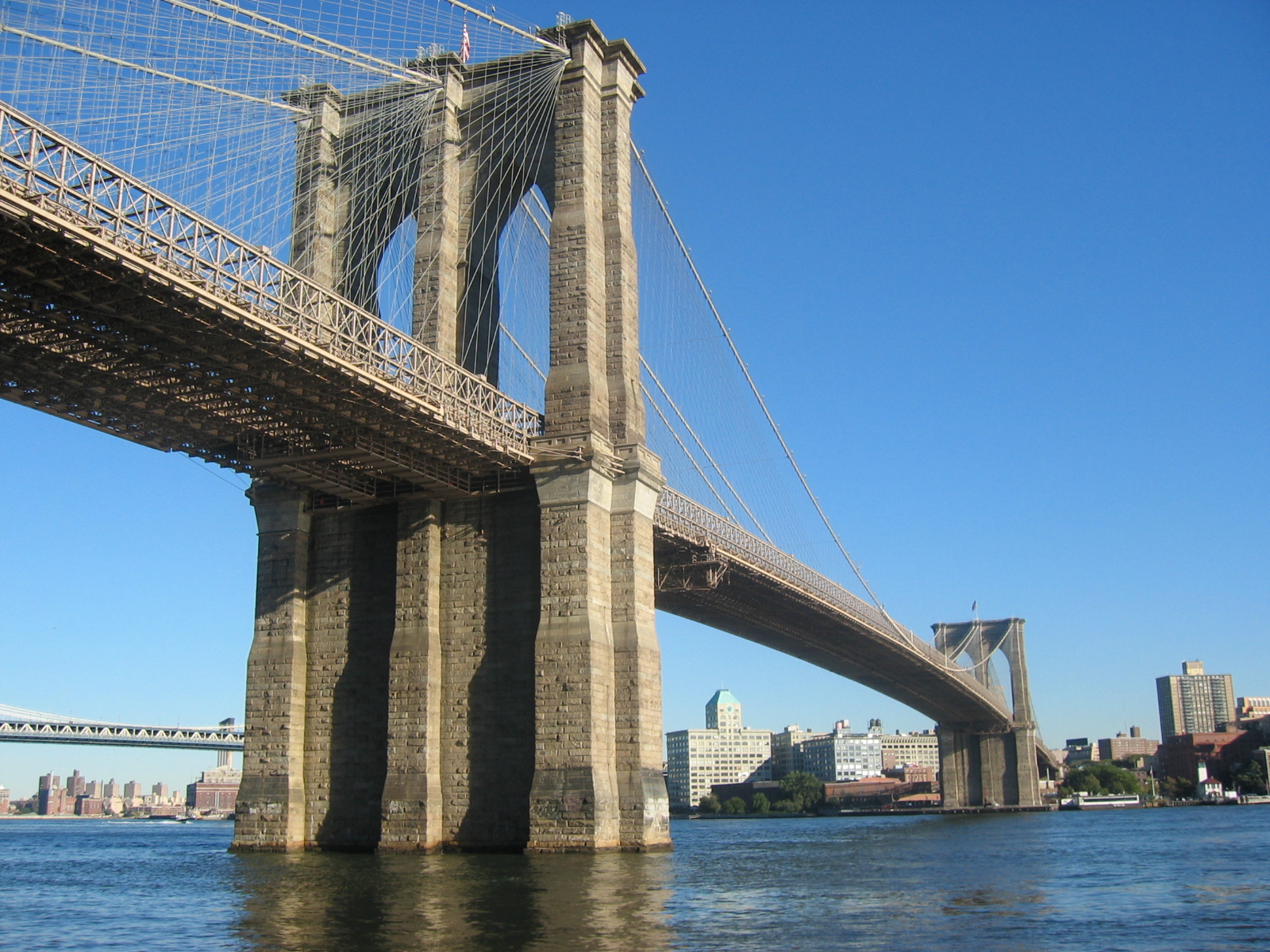
Juliet Forster, the Associate Director at the York Theatre Royal, the co-producer, takes a more traditional, naturalistic path, with an Eddie in Nicholas Karimi who, as his disgust at the passage of Catherine, (Lili Miller in a commendable professional debut), from child to woman and her relationship with the, in his eyes, effete Rodolpho, (a nuanced Pedro Leandro), boils over, lashes out with tragic consequences. Robert Pickavance as the lawyer Alfieri, the chorus who frames the story, locates us slap bang in 1950s Red Hook, the Italian-American neighbourhood in the shadow of Brooklyn Bridge, dominated by the longshoremen who work the docks and their families. Rhys Jarman’s set, enclosed by steel beams and metal staircases, slips unobtrusively from the main room of the apartment where the Carbones live, and where most of the action takes place, to the docks themselves and Alfieri’s office. Aideen Malone’s lighting creates atmosphere without gloom and Sophie Cotton’s sound accents appropriately.

Eddie’s repugnant desire for Catherine, and the dearth of physical intimacy with Beatrice are not underplayed, but it is the way in which this represses and displaces his ungovernable emotions, mixed up with the machismo of his Sicilian background, that powers the obsession which breaks him. We cannot empathise with Eddie, he is wrong, but we can see how he is what he is. The more he strives to preserve his reputation and honour the more they dissolved.

The plight of the immigrant, the uncertainty of work, home and status, the conformity of community, the role of the law, gender stereotyping, all themes with relevance, and which Miller is careful to explore, are underplayed here in deference to the plot. There are some very fine supporting performances not least from Laura Pyper, whose dignity and commitment to her man never wavers, and especially, Reuben Johnson as Marco, the virtuous elder of the cousins, whose restraint when talking about the family he has had to leave behind contrast with the explosive anger he lets loose when he finds out that Eddie has denounced him and Rodolfo to the authorities.

So all the elements are there in this production, the pacing is never hurried, the lines are never snatched, the tension builds progressively. It just lacks the punch that comes from great Miller interpretations. Solid if not spectacular. But with Miller that is normally enough. Though clearly not for the numbnut who felt the need to unwrap a few sweets in the last 20 minutes or so at the back. You wonder why he didn’t just stay at home in front of the telly.

Thomas Ades and the LPO at the Royal Festival Hall review *****

London Philharmonic Orchestra, Thomas Adès (conductor), Kirill Gerstein (piano), Ladies of the London Philharmonic Choir

Royal Festival Hall, 23rd October 2019

  • Sibelius – Nightride and Sunrise, Op 55
  • Thomas Adès – Concerto for piano & orchestra
  • Holst – The Planets, Op 32

An opportunity to break MS into the world of modern/contemporary classical music in the admittedly unthreatening person of the mighty Thomas Ades, here both composer and conductor. Mr Ades is quite possibly my favourite living composer and his take on Beethoven with the Britten Sinfonia provided some of my favourite performances in the last few years. I am pleased to say that my favourite son, whose intellectual curiosity fortunately knows no boundaries. is now a convert. Indeed we both regarded this UK premiere of TA’s 2018 piano concerto, his second after In Seven Days from 2008, as the highlight of the evening, surpassing his predictably astute reading of The Planets.

First up though Sibelius’s sleigh ride inspired tone poem. Now there must have been a time when I thought I liked Sibelius. I have a symphony cycle recording from Simon Rattle and the CBSO and the violin concerto, and I seem to remember both were purchased on the back of live renditions. But now I find him pretty much unlistenable. Big slabs of music where not much happens. Organic yes, nature in all its glory as here, yes, clear themes gently mutated. Night Right and Sunrise is a game of two halves. The chugging sleigh ride rhythms giving way to a restorative chorale. Audience and orchestra deep in concentration, the string players especially in that dotted quaver/semi-quaver repeat, but even TA was unable to help me get it.

Kirill Gerstein, with TA conducting, first performed the piano concerto with the commissioning Boston Symphony Orchestra in March, with performances following in New York, Leipzig, Copenhagen and Cleveland, with Helsinki, Munich, Amsterdam and LA to come. So you can see that this is a “big thing” music wise and will have given TA and KG the opportunity to play with some of the top rank orchestras worldwide. I would be very surprised if this isn’t seen as an instant classic with KG, who plainly loves it, (already performing from memory), being compelled to yield his first mover advantage in the very near future. Hopefully he will get his recording in first as this definitely deserves it.

The first movement, marked Allegramente, jolly, opens with drum rolls and is in sonata form with a march tune between the two themes and an extended cadenza at the end. The second slow movement, Andante gravemente, starts with a melody and countermelody after a chordal intro, and follows this with a lovely second melody idea set against a rising harmony. The final Allegro giojoso restores the merry mood, with a jaunty canon following an opening tumbling theme before a brass clarion heralds a new bouncy boogie with a choral climax. These themes and the call to arms that punctuate them are reworked in many ways but always with soloist, orchestra and conductor flaunting their Gershwinian jazz trousers. Like so much of TA’s music it probably couldn’t exist without Stravinsky, Ravel and Britten, but there is also, more surprisingly as sense of Bartok in the slow movement and Rachmaninov in the finale. But it is Prokofiev that keeps coming to mind especially in the improvisatory piano line with shifting tonality, syncopation, counterpoint, imitation, repetition and light-hearted dissonance all contributing to the buoyant mood. Like a contemporary artist who believes in the enduring value of paint and colour, TA takes inspiration from the best that his forebears have come up with in the last 150 years for this combination and defiantly reworks it. We weren’t the only happy punters.

I love The Planets but recognise that, outside of the big thrills, over familiarity can sometimes dampen the wow factor. Not here though. As with his fresh take on Beethoven, TA, isn’t all driven tempi and flash harry. There are passages of surprisingly muted, dare I say traditional, interpretation, in Mars, in Jupiter, in Uranus. Mind you that’s not to say the LPO, all 109 of them just about crammed on to the RFH stage, didn’t make a heck of a racket in said Mars and Jupiter. Mercury and Uranus showed up TA’s ear for detail amidst the perky Disney bops. However it was in the pulse-y interplay between harp and flute and the strings in Saturn and Neptune that impressed me most.

Top class. MS has asked for another. I will need to tread carefully after this.

Sing Yer Heart Out For The Lads at the Spiegeltent Chichester

Sing Yer Heart Out For The Lads

Spigeltent, Chichester Festival Theatre, 17th October 2019

There are a few candidates for my favourite play of 2019. Lynn Nottage’s stunning Sweat at the Donmar Warehouse, or either of the revivals of the Miller classics at the Old and Young Vics respectively, All My Sons and Death of a Salesman. Still TBD but this revival of Roy Williams’s 2002 play about racism, nationalism, football and aggressive masculinity will run them close. So far I have only seen this and RW’s previous offering, The Firm, but I am most definitely a fan. He writes about stuff that matters, politics, race, institutions, friendship, identity and obvs, Marvin Gaye, with big gestures and authentic dialogue. As far as I can tell his work pulls no punches, literally in some cases, and he doesn’t hold back from examining uncomfortable truths about our society. The good news is that TRSE is set to revive Sucker Punch next year directed by Roy Alexander Weise and that Rafe Spall will star in the monologue RW has co-written with Clint Dyer at the NT, Death of England.

Spiegeltents are wood and canvas tents which originated in Belgium in the C19 for the purpose of travelling entertainment. Perfect for housing the replica of the King George pub, designed by Joanna Scotcher, in which SYHOFTL is set, on the afternoon of Saturday the 7th October 2000 for the England-Germany World Cup qualifier at Wembley (the one after which Keegan walked as manager). Or at least the tent would be if it wasn’t lashing down with rain outside. Of course this was one of those days where the deluge was followed and preceded by clear skies, (that’s climate change for you), but I am pleased to report that the tent, bar a bit of shaking, stood up to the storm. What it did mean is that for 5 minutes or so the cast had to bellow to make themselves heard and it added another dose of ferocity to what is already a play steeped in violence. Terrific atmosphere.

It opens with Jimmy (Martyn Ellis, more usually a musicals man), the father of landlady Gina (Sian Reese-Williams) pottering in the pub ahead of the match. Now this being South West London, (I want to call it as a non-gentrified of Fulham), everyone has a full on Eastenders type accent, quite something coming from as Welsh as it gets, Ms Reese-Williams, who excels here. They are joined by her lippy teenage son Glen (Billy Kennedy) and her ex Mark (Mark Springer) who recently left the army. When they leave Glen, desperate to be accepted on the “street”, is left with two of his new friends Duane (Harold Addo) and tough-guy Bad “T” (Dajay Brown) who bully Glen and try to steal drinks from the bar. Gina returns and chides them. One by one the rest of the pub team regulars turn up, in England kit regalia, to watch the match. Pub football team captain Lawrie (Richard Riddell) who is looking for a fight and nakedly racist, his conciliatory ex copper brother Lee (Alexander Cobb), the mendacious Alan (Michael Hodgson) who, it transpires, is a local councillor for far right political party Britain First, Becks (James Jack Ryan), Jess (Kirsty J Curtis), Phil (Rob Compton) and finally Barry (Makir Ahmed), Mark’s conflicted younger brother.

Against the backdrop of the game, banter turns to threat, debate to violence, fuelled by alcohol. The tenor of the dialogue reflects this. It is, at times, funny, as well as viscerally disturbing, and the cast, superbly marshalled by director Nicole Charles whose last outing was Emilia at the Globe, completely immerse themselves in their roles. This is vital theatre, not just because of the staging, but also because it dares to expose the reality of racism and misogyny in C21 Britain. I have rarely seen a trio of performances more affecting than those of Richard Riddell, whose twitching belligerence seems to hid some deeper resentment, Mark Springer whose spell as a squaddie leaves him aggrieved and determined to confront the racism of his former friends, and Michael Hodgson whose needling of Mark and whose warped arguments are especially unnerving. (He also stood out as first the Porter and then Duke Capulet in the last RSC season).

RW also packs in plenty of plot, which I can see some might feel veers towards the melodramatic; the arrival of the coppers after Glen’s phone is nicked, as well as Sharon (Jennifer Daley), Duane’s Mum, at the end of the first act, (and which memorably here, saw a police car actually arrive outside the tent), and even more so the tragic conclusion. But it certainly gets you on the edge of your seat.

You don’t need to be reminded that racism is still associated with football. And the kind of attitudes and behaviours that are depicted in SYHOFTL are also still prevalent. Relevance, character, language and spectacle make this production a classic. What’s more, for once, I was one of the older members in this matinee audience. I can see why the this might have frightened the pensioner horses of Chichester but the students, for I am pretty sure that’s who they were, were transfixed.

I understand the Spiegeltent went on to host a variety of one-nighters after the run of SYHOFTL. If you ask me there must surely be case for bringing this production up to the big smoke as has happened with so many CFT productions. I can see an ideal pitch on the South Bank next door to the National. In which case I implore you to grab a ticket. In an ideal world an enterprising producer would find a way to overcome the health and safety and blocking issues and stage this in a pub. Downstairs from a theatre upstairs would be a neat inversion. Imagine this in the Latchmere below the 503. What would be a real shame is if this superb realisation of this modern classic didn’t reach an extended audience.

Macbeth at the Chichester Festival Theatre review ***

Macbeth

Chichester Festival Theatre, 16th October 2019

Still waiting for that, ha ha, killer production of Macbeth. This unfortunately wasn’t it. Paul Miller, the inestimable AD of the punching-above-its-weight Orange Tree, had money to spend here. An 18 strong cast (with many actors in minor roles that had caught my eye before), so minimal doubling, led by John Simm and Dervla Kirwan as milord and lady, a beautifully designed set from Simon Daw, with lighting (Mark Doubleday), sound (Max Pappenheim) and video (Tim Reid) to match all set with the excellent sight-lines afforded by the Festival Theatre. And a full house boosted by enthusiastic GCSE’ers.

It certainly looked and sounded impressive. A circular glass floor which split open during the murders covering a pit of bodies. Some well tailored costumes in the non-specific militaristic style which defines modern Macbeths. A banqueting table straight out of Heals which would enhance the poshest Xmas lunch. Every lighting trick in the book including overhead “crown”. Atmospheric video signalling ghosts, heaths, blood, clouds, Dunsinane, Birnam Wood. Weird Sisters (Roseanna Frascona, Lauren Grace, Leah Gayer) sporting Strawberry Switchblade chic who keep popping up, again in the modern Macbeth fashion to frame the action. A proper Porter (Harry Peacock). An explicit nod to the Macbeth’s grief at the loss of their child. Dissonant strings and menacing percussion.,

But for all that it was, well, bloodless. Which for Macbeth is not a good look. John Simm especially, and Dervla Kirwan, delivered the verse faultlessly, (even up to my perch at the back which afforded a perfect view of the visual feast). Yet they both lacked a bit of passion, at least until things got going in Act V post the Macduff genocide. They were well supported by Beatriz Romilly as the gender-switching Malcolm, Stuart Laing as Banquo and Michael Balogun as Macduff. Mr Miller’s deliberate pacing, this ran for 3 hours, brought clarity to each individual scene and petty much nothing was left out. However Macbeth is a story that needs momentum. A hurtling towards the inevitable conclusion. We know the story so crack on. Then the repetition and call backs in the text have greater impact and the madness more harrowing.

I couldn’t help thinking that, with these two outstanding actors, half the cast and just the Orange Tree space to play with, Paul Miller might have actually come up with something more visceral if he had stayed at home. Being right up close as the blood flows and the minds unravel. No need for all this overthinking. Mind you I guess directors, like us all, have to follow the money.

Exquisite Sound. Designer Fury. Signifying … well not nothing but not as much as it should have done. Still there’s always tomorrow. And Tomorrow. And Tomorrow. Because the one thing you know is that Macbeth will be coming to a theatre near you soon.

Posh at the Rose Kingston review ****

Posh

Rose Theatre Kingston, 15th October 2019

Another play on the wish list. Not that Laura Wade’s Posh hasn’t had regular outing since it first appeared at the Royal Court in 2010. And, memorably it was made into a film The Riot Club, in 2014 directed by Danish director Lone Scherfig to Ms Wade’s screenplay . A thinly veiled satire on the covert Bullingdon Club, where Oxford University’s finest men get shitfaced and cause havoc all in the name of …. well wankerdom and entitlement I suppose. Open only to super toffs from the “top” public schools. Expensive threads, fancy dining and immediate payment for damage done in whatever venue is daft enough to let them in, Call me Dave and BoJo the Clown were members. Enough said. Apparently as the world moves on, Oxbridge democratises its intake and thanks in part to the play, there are very few dickheads who are up for this now. It may die soon. Hurrah.

Of course BoJo, like so much in his dodgy past, has renounced the Club and is no doubt cracking on with penning vague policy about banging up the real crims who get lashed up and smash things up on a Saturday night.

Anyway Ms Wade’s play is far more than just an excuse for us snarky grammar school types to vent our indignation at those whose confidence far exceeds their ability. As with Home, I’m Darling and The Watsons, Ms Wade dissects misogyny, here it its most repellent incarnation, as well as class. Her early plays show that she can turn her writing hand to just about anything ranging across subjects, concepts and form, but it is the execution that she stands out. Writing plays that are this dramatically sharp, theatrically entertaining and above all, this funny, is a rare gift.

Now the Rose Kingston unsurprisingly made much of the appearance of one Tyger Drew-Honey, the undeniably good looking young man who first appeared on our screens in the comedy Outnumbered, this being his stage debut. He plays Alexander Ryle the villain of the piece, though he has stiff competition, but this is most definitely an ensemble play. I can report that young Tyger did himself proud, especially in the second half when his twisted, fascistic take on class envy fired up his chums, and in the epilogue when Jeremy (Simon Rhodes), the Tory MP uncle of George Balfour (Joseph Tyler Todd) offers him a job despite, or maybe because as the Club, past and present, closed ranks, he was held responsible for the evening’s outrages. Mr Rhodes does a nice line in Establishment privilege and Mr Todd, an ex Cambridge graduate setting out on his acting career was superb as the butt of all jokes, George.

He wasn’t the only recent Cambridge graduate on show. Adam Mirsky who played airhead Guy Bellingfield, Chris Born who was James Leighton-Masters, the increasingly reluctant President, Isobel Laidler who played the molested daughter of the pub’s proprietor, Rachel, are all alumni though I am guessing are a long way from the characters they are playing. If it helps, knowing a few young’uns of recent vintage from that very place, I am pretty sure that the Posh-types are now very thin on the ground there though it is a shame a previous generation has its incompetent hands now on the levers of power. George Prentice who played aristo Miles Richards (Bristol), Matthew Entwhistle who played Toby Richards and Ollie Appleby who played the gay Hugo Fraser-Tyrwhitt (Exeter) are all current undergraduates at unis which will also have, potentially, offered some insight into their characterisations. The cast was completed by Jack Whittle as Harry Villiers, Jamie Littlewood as nouveau riche Greek scion Dmitri Mitropolous, Taylor Mee as Ed Montgomery, Ellie Nunn as Charlie, the sex worker who shows up the boys for what they are, and Peter McNeil O’Connor as the pub owner Chris whose trust is betrayed.

No point highlighting any particular performance. The play is written to give everyone an opportunity to alternately elicit the audience’s amusement, fury and sympathy. Will Coombs’ set, the private dining room of the pub, didn’t quite have the measure of the expansive Rose stage but at least this gave room for the histrionics of the Club to play out. Lucy Hughes’s direction blocked well in this regard and she had an eye and eye for the rhythm and pacing of the play. Whilst Ms Hughes has spent many years teaching this is also her professional debut. I’d be surprised if she doesn’t get another gig sharpish.

Posh is, intentionally, a brutal play and Ms Hughes didn’t pull any punches. Maybe a little forced at the beginning but once the ten members of the club are assembled the production caught fire. The misplaced pride in the Club’s history, the portraits of long dead members looking down on them, the pathetic ritualistic traditions, the empty bragging and swaggering, the bullying and exploiting of weakness, the sexual predation, the condescension and contempt All faithfully rendered. The original production featured such luminaries as Leo Bill, David Dawson, Joshua McGuire, Richard Goulding, Harry Hadden-Paton, Henry Lloyd-Hughes, Tom Mison, Kit Harington and James Norton. Didn’t harm their careers. Here’s hoping some of the raw talent on show here, which gives the production such energy, gets a similar break.

Of course there is the risk of an ambiguity at the heart of Posh. Are we laughing at, or with, the Club? I think Ms Wade’s intention is clear however and Lucy Hughes, in her direct reading, reflected this. Hopefully if I ever see it again it will be a period piece, such behaviour consigned to the dustbin of history. Somehow I have my doubts.

The Permanent Way at The Vaults review *****

The Permanent Way

The Vaults, 13th October 2019

I have to hand it Debbie Hicks and Alexander Lass, producer and director of The Permanent Way. Whilst David Hare’s 2003 verbatim dissection of the Tory rail privatisation in the 1990s, and the four fatal disasters which followed, is an undeniably powerful piece of theatre, which was praised at the time, it takes guts to revive it. Especially in a two month run. With a cast of nine. Admittedly the economics at the Vaults are attractive for theatre makers and performers, that is why the Festival goes from strength to strength, and the USP of a site specific production about the railways, under Waterloo with trains rumbling every few minutes, is self evident. And a few coats, uniforms, lamps and four benches is all that was needed set and costume wise (Ruth Hall). Even so I was surprised when this was announced, though very pleased as it had been on my watch list for years.

I was even more surprised that the Vaults was packed with twenty somethings on the Sunday afternoon when I attended. I guess this is ancient history from their perspective but then again, as our politics and civic discourse becomes more polarised, and with rail nationalisation firmly on Labour’s policy agenda, I guess the relevance of the play needs no explanation.

Now when I was their age, fresh out of uni, and keen to do something worthwhile, I sought work in the public sector. Civil service exams completed it was off for interviews at various departments (at least I think that was the chronology). Ever the statto, Department of Transport was top of the list. Some kind mandarin chaps quizzed me on the thorny issue of rail privatisation, already firmly on Thatcher’s agenda. To paraphrase I said it was a shite idea. How to split infrastructure from operations and how to make competition work across a fixed capital public good? The chaps didn’t really demur. Didn’t get an offer mind but it was pretty clear that if this jejune, if opinionated, grad could see this was bonkers idea, then so could everyone tasked to make it happen. From one entity to 113.

And so it came to pass. David Hare offers us a High Powered Treasury Thinker (Lucas Howe), a Senior Civil Servant (Jonathan Coote) and an Investment Banker (Anna Acton) to walk us through the how and why of privatisation, all retrospectively seeking exculpation. Wendy (Sakuntanla Ramanee), in a neat touch, just makes the tea. A turn of the political wheel and we meet John Prescott (Paul Dodds) and a Senior Rail Executive (Tej Obano) who ooze complacency. A Very Experienced Rail Engineer (Jonathan Tafler) warns of the dangers presented by the split of responsibilities and the lax safety regime, driven by commercial imperatives, before the four “accidents” are forensically examined. Southall (19th September 1997, 7 dead, 150 injured), Ladbroke Grove (5th October 1999, 31 dead, 523 injured), Hatfield (17th October 2000, 4 dead, 70+ injured) and Potters Bar (10th May 2002, 7 dead, 76 injured). For those that doubt the connections, after all the actions taken in the years after these tragedies, there have been minimal fatalities on Britain’s railways, outside of incidents on level crossings.

The cast, including Jacqui Dubois and Gabrielle Lloyd as well as the above, take on the roles of the bereaved, union leaders, campaigners and pivotally, a British Transport Policeman (Jonathan Coote), the MD of the eventually nationalised Railtrack (Lucas Hare), yes it turned out you couldn’t leave the infrastructure in private sector hands, and a Bereaved Widow, the author Nina Bawden, whose husband died at Potters Bar (Gabrielle Lloyd). The diversion into the schisms between the various groups of the bereaved feels prescient.

The play was inspired by Guardian journalist Ian Jack’s book, the Crash That Stopped Britain, and was based on interviews carried out by the cast of those involved selected by Max Stafford-Clark and transport journalist Christian Wolmar, (who I see is not standing this time as the Labour candidate in Richmond Park where, one expects, the hypocrite and quarter billionaire Zac Goldsmith, will lose out to the Lib Dems). This process is classic Joint Stock Theatre, which was founded by Hare and Stafford-Clark and out of which the original creator of The Permanent Way, Out of Joint …. well, emerged.

What is extraordinary is that David Hare added very little in terms of connecting tissue to the interviews. All he did was extract and order. Given the subject matter it is unsurprising just how vital and moving so much of the testimony is. What is surprising however is just how well it works as drama. There is a bit of policy wonking at the start but nothing intimidating and by the time we got to the aftermath of the crashes I was properly immersed. Of course it helps that this interests, and angers, me, but I think the rest of the audience were similarly engrossed.

For that we must thank director Alexander Lees, the movement, in a very tight transverse space, of Sian Williams, the lighting of Rick Fisher and the sound of Roly Witherow. And a very committed cast. The setting helped but this would have been just as effective in a standard theatre. A string of 3* reviews seemed a little stingy in my view. Political theatre at its best. And every single word is true.

Of course you could always just nip “upstairs” to see the complex in action, or, more often than not, inaction. And this at the London terminal for South Western Railways, better looked after than most because all us posh types use it. An under-invested infrastructure, owned and operated by the state at arms length through Network Rail, (most of the track, stations and signalling), regulated by the Office of Rail Regulation, with passenger train operators under short term franchises awarded by the Department of Transport, or through open access, and freight operators through open competition, paying to use that infrastructure. Rolling stock in the hands of leasing companies, sub-contractors a plenty for maintenance. Most franchises receive subsidies, with contracts and legalese rampant, conditions on service, punctualities and control of fares never ending. And of course there is the irony that one way or another most of the operating companies involve a European state owned rail company (Keolis, Deutsche Bahn, Nederlandse Spoorwegen, MTR Hong Kong and soon Trenitalia). Ooh and then there’s LNER, accidentally nationalised. I am pretty sure this was never the intention of the Thatcherite nutters. We pay more (fares and subsidies) and get less. Go figure.

Blood Wedding at the Young Vic review ****

Blood Wedding

Young Vic, 11th October 2019

I got a bit nervous going into this. For those who don’t know, South African director Yael Farber has a certain style, an aesthetic, and approach to interpretation of classic plays, which isn’t too everyone’s taste. For me it works. Mies Julie, Knives in Hens, Les Blancs, even the much derided Salome at the NT, all drew me in. Very satisfying. We have her take on Hamlet also at the Young Vic to look forward to next year and newbie, the Boulevard Theatre, has lined her up to direct her compatriot, Athol Fugard’s, Hello and Goodbye.

For Blood Wedding though I had roped in the SO, a more forbidding critic, who is not, as most chums rightly are, as tolerant as the Tourist of, shall we say directorial longueurs. And this was near 2 hours straight through. On the benches of the Young Vic main space. And with her back playing up.

As it turned out I had nothing to fear. Lorca’s play, (his day job was poet after all), has a mythic and elegiac quality perfectly suited to Ms Farber’s ethereal approach, though this tale of forbidden love and revenge is not without drama and lends itself to a clear feminist interpretation. All this and more was on show at the Young Vic. A barely there, in the round, set design from Susan Hilferty, with occasional visual declamation via doors on one side, some artful cascades and a rope and harness which permitted muscular bad boy Leonardo (Gavin Drea) and absconding (nameless) Bride (Aoife Duffin) the striking means to pretend gallop. The intervention of the symbolic Moon (Thalissa Teixera), who can now add superb flamenco singing to her acting flair, and woodcutters (Roger Jean Nsengiyumva and Faaiz Mbelizi) made perfect, just about, sense. The bold lighting of Natasha Chivers, the score of Isobel Waller-Bridge, the spectral hum of Emma Laxton’s sound design, the balletic movement of Imogen Knight, witness the closing fight (overseen by Kate Waters) and subsequent requiem.

Most of all though Marina Carr’s beautiful translation. By shifting the setting of Lorca’s revenge tragedy to rural Ireland, though never quite leaving 1930’s Andalusia behind, Ms Faber allowed Ms Carr the opportunity to conjure an English language translation which was sympathetic to the poetry, metaphor and idiom of the Spanish original. A colonised Irish interior, suppressed by Church and State, bears obvious similarities to the paralysed, benighted Spain that Lorca delineated, critiqued and celebrated in his rural trilogy (Yerma and The House of Bernarda Alba as well as BW). The hybrid setting also allowed the natural casting of the magnificent Olwen Fouere as the grizzled, austere Mother and the equally magnificent Brid Brennan as the Weaver. If I tell you that Annie Firbank as the Housekeeper and Steffan Rhodri as the outraged Father also graced the stage, along with relative newcomers Scarlett Brookes, (watch her closely in future) as Leonardo’s spurned wife and David Walmsley as the equally wronged Groom, then you can see that this was a grade A cast top to toe.

Lorca’s story is straightforward. Mother reminds son (the Groom) that his Dad and Bro were killed by the men of the Felix family next door. A dispute over land. Leonardo Felix and the Bride are still in love. Mrs Leonardo knows. The Mother finds out as well but decides to visit the Bride and her Dad. The wedding goes ahead by Leonardo turns up and steals the Bride. Outrage. Vengeance. Fight. Deaths. Sacrifice. It is very heady stuff but its chimerical qualities mean it is a long way from melodrama or even Greek tragedy. Closer to fable.

Anyway Yael Farber and Marina Carr have done a little nip and tuck with the plot but all the primitive elements are still there. That this is a traditional, brutally patriarchal society is never in doubt, as much but what the older women say, as the men, and yet there is still a sense of agency in the striking performances of Aoife Duffin and Scarlett Brooks. There is intentional comedy in the vernacular passages and there is no unintentional comedy in the brutal and fantastical scenes, (though once or twice it skirts close near the end – it is the women who mop up the blood). The cumulative effect is undeniably powerful even when the pace edges towards the, shall we say, Largo. In fact there is something of the minor key symphonic in Yael Farber’s reading.

I am not sure I would recommend this to fans of the Lion King or indeed anyway unfamiliar with this deliberately stylised auteur approach to theatre. On reflection I shouldn’t really have worried about the SO’s reaction. She reads books. Proper books. Lots of them. We are drowning in theme. Imagination, to augment the visual abstraction, is therefore no limitation for her.

A Taste of Honey at Richmond Theatre review ***

A Taste Of Honey

Richmond Theatre, 9th October 2019

Not quite sure I know how a production such as this is taken under the wing of the National Theatre, and let’s face it it’s none of my business anyway. But I do think I can work out why this particular tour, which has taken in in some fair sized commercial theatres came to pass. This production of A Taste of Honey, with Lesley Sharp and Kate O’Flynn in the leads, was a qualified success in 2014 on the South Bank. But the NT needs to be more, er, National. So spread the cost and risk so that the NT provides the brand and product and the theatres stump up the cash. Take a renowned play, though probably better known as a film, with historical appeal and contemporary relevance, and wait for the curious punters to roll in. Let Bijan Sheibani, who has since had a monster hit with Barber Shop Chronicles, (which, in another of the coincidences that continue to punctuate the Tourist’s cultural adventures, I saw for the first time literally the next day), show his best. And cast big TV and musicals star Jodie Prenger as the brassy Helen, alongside relative newcomer, Gemma Dobson as punchy daughter Josephine.

Shelagh Delaney famously wrote A Taste of Honey, the archetypal kitchen sink drama, when she was just 19. It would be pretty unusual for a working class woman to announce herself as a writer for theatre in this way in 2019. To do so in 1958 was, literally, a miracle. For which Joan Littlewood and the Theatre Workshop, who first staged it at the Theatre Royal Stratford, were rightly grateful. Whilst she never quite went on to repeat the success of this mix of rich characterisation, sincere dialogue and dramatic allusion in her subsequent work, (the harsh reviews for her second play The Lion in Love stopped her from writing for the stage for the next 20 years), her place in theatrical history. Her ambition was fuelled after seeing a production of Terence Rattigan’s Variations on a Theme and thinking she could do better. She was right. But in a world dominated by grammar school boys, she was never entirely at home, despite her fierce intelligence.

ATOH is still remarkable for its absence of judgement, its focus on two irreverent women, its atmosphere and its poetry. Helen and Josephine rub along, and rub up against each other, in their dingy Salford flat. Helen escapes with booze and dickhead blokes, namely one-eyed spiv Peter (Tom Varey). Teenager Josephine escapes through a fling with Nigerian sailor Jimmie (Durone Stokes). Pregnant she then turns to her gay, arty student best friend Geoffrey (another talented newcomer Stuart Thompson) for tea, sympathy and bitching.

If you don’t the story it is pretty easy to guess, its novelty, and scandal, having worn off with repeated replication. No matter it is still brilliantly executed. Or at least it would be in this production if it wasn’t for the endless and unnecessary scene changes, the very busy set from Hildegard Bechtler ,which just didn’t fit properly into the Richmond stage, the fussy lighting of Paul Anderson, and the jazz interludes from the three piece band of David O’Brien, Alex Davis and George Bird, awkwardly wedged on stage, with music from Benjamin Kwasi Burrell and on stage singing. In moderation all of these elements would work but it was all just a bit too much distraction for a text that doesn’t need and, towards the end, does, whisper it, run out of steam a bit.

Whilst I am at it Jodie Prenger and Tom Varey also verge a little too much on the side of over expression which leaves the determined yet vulnerable Gemma Dobson as the best of the five strong cast.

I am very glad that I got to see this important slice of theatrical history and I think it will do well when it comes to London at the end of the tour at the Trafalgar Studios. But if we want a better idea of why it is, even through the prism of sixty years of social change, (for the better of course), such vital drama, then Tony Richardson’s film is a better bet. I see Rita Tushingham (there she is above), whose debut role as Josephine was lauded nearly as much as Shelagh Delaney’s screenplay, is starring in Edgar Wright’s upcoming horror film alongside other legends Diana Rigg, (any way else out there fantasising about Lady Oleanna turning up at their Christmas lunch), and Terence Stamp. I wonder why. Looking forward to that.

Valued Friends at the Rose Theatre Kingston ***

Valued Friends

Rose Theatre Kingston, 8th October 2019

I am all for revivals of modern plays that have something to say to us right now. Assuming the play was good enough in the first place. And that the director and creative team have a clear idea of how they craft that relevance whilst still staying true to the time and place in which they were written. In my experience texts from the 1970s and before, or those written in the last 20 years, fare best in this regard but those through the 1990s, and especially the 1980s, pose the most headaches. Recreate or update? And this was, remember, a fertile period for drama after a decade or so of artistic stasis. Largely because us luvvies like nothing better than to censure society, politics and culture that shifts rightwards. Thatcherism was a heaven sent artistic opportunity.

This is the context in which Stephen Jeffreys, who passed away last year, wrote Valued Friends in 1989, which premiered at the Hampstead Theatre before a West End transfer. The original cast consisted of Peter Capaldi, Jane Horrocks, Serena Gordon, Tim McInnerney, Martin Clunes and Peter Caffrey. Four thirty-somethings, Marion (here Catrin Stewart), Paul (Sam Frenchum), Howard (Michael Marcus) and Sherry (Natalie Casey), have rented a flat in Earl’s Court then an up and coming, (they always are), part of London since meeting at uni. Posh developer Scott (Ralph Davies) wants to ponce up the block and sell on and makes them an offer he thinks they can’t refuse to get out. However the bourgeois Marion sees an opportunity to negotiate and persuades vacillating partner Paul, the relaxed in the paddock intellectual Howard and the impecunious motormouth Sherry to hold out. A few turns of the wheel later and Sherry is paid off, setting out to travel the world and find herself, and the other three have bought the flat at a discount to do it up, with the help of builder and homespun philosopher Stewart (Nicolas Tennant). High flyer Marion eventually cashes out after splitting up with man-child music journo Paul, who becomes ever more obsessed with making money from the property.

Sounds interesting eh. I can certainly see why director Michael Fentiman was drawn to reviving it and what the Rose and co-producer Original Theatre Company agreed. Especially when you consider Stephen Jeffrey’s reputation. The Libertine, which popped up at the Theatre Royal Haymarket in 2016 with Dominic Cooper in the lead, is probably his most famous play but Mr Jeffreys was as much teacher, in his roles at the Royal Court, as he was writer. Which, given his skill in pacing, character, structure and language, is unsurprising. Valued Friends is a very well built play, full of telling detail. I am just not sure this production fully reflected that or whether its line of attack would make sense to an audience who wasn’t there at the time it appeared. The nature of their relationship with “property” is rather different.

For trust me the desire to succeed, to get on, to make money, infected us all. And that was most obviously expressed in the delirium of property ownership. Of course that urge, that need, remains but a decade of single digit average price inflation and falling volume of transactions, despite cheap money, doesn’t compare to the madness of the late 1980s, peaking at over 30% in the year before SJ wrote Valued Friends. A group made up of a struggling journalist, a second rate stand up (Sherry), and admin worker (Marion) and a PhD student wouldn’t be contenders to buy a prime flat in inner West London today, but, trust me, there was nothing far fetched about this then for all the money illusion. SJ takes this phenomenon to make broader points about accumulation, credit, greed, the erosion of community, the rise of individualism and the failure of markets. There is more to his dialogue that meets the eye, or ear maybe, sorry mixed metaphors, but this is subtly woven in to a still credible story of friendship and relationships.

It is funny but it is not just a comedy. However it seems that Mr Fentiman didn’t quite trust that reading and decided to dial up the laughs. Now I gather Natalie Casey is best know for her work in Two Pints of Lager and a Packet of Crisps, Hollyoaks and West End musicals. All outside my ken I am afraid. She brings a feisty tenacity to Sherry, who keeps knocking at the comedy door despite making no money, but as an actor she is a bit full on and shouty. Conversely Ralph Davies’s reptilian Scott falters as the negotiation lengthens. And Nicolas Tennant’s turn as Stewart, whilst dissonantly amusing, rather distracts from an ending that already forces resolution. Sam Frenchum (so good in The Outsider adaptation at the Coronet), Michael Marcus and Catrin Stewart are much more sympathetic to the characterisation I think but still feel a little awkward at times, especially in the on-off relationship of the couple.

Michael Taylor’s set design, which shifts from student-y squalor to swish minimalism, does the job, and Madeleine Girling’s costume are spot on, but the lighting (Nic Farham) and sound (Richard Hammerton) are a bit too conspicuous.

Happy enough, especially for my tenner investment here, but couldn’t help thinking what it would be like to see a production of a play by Mr Jeffreys that really hit home.