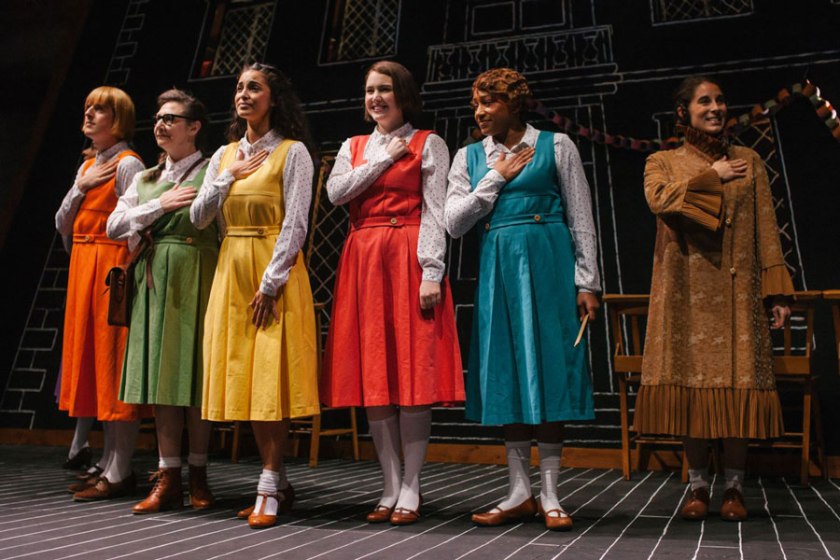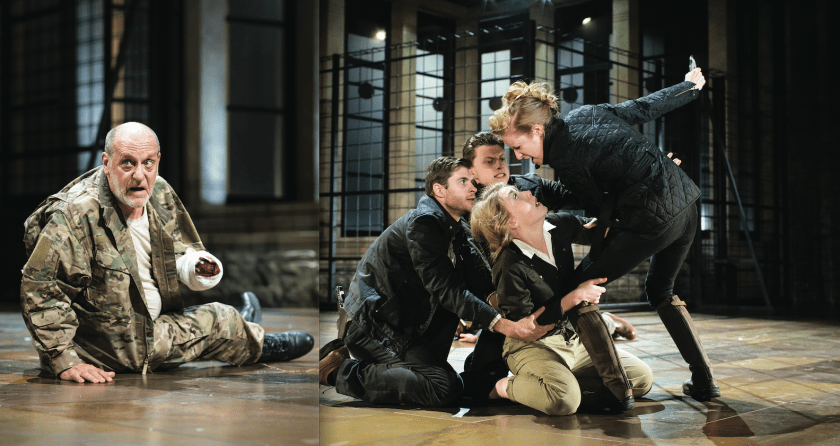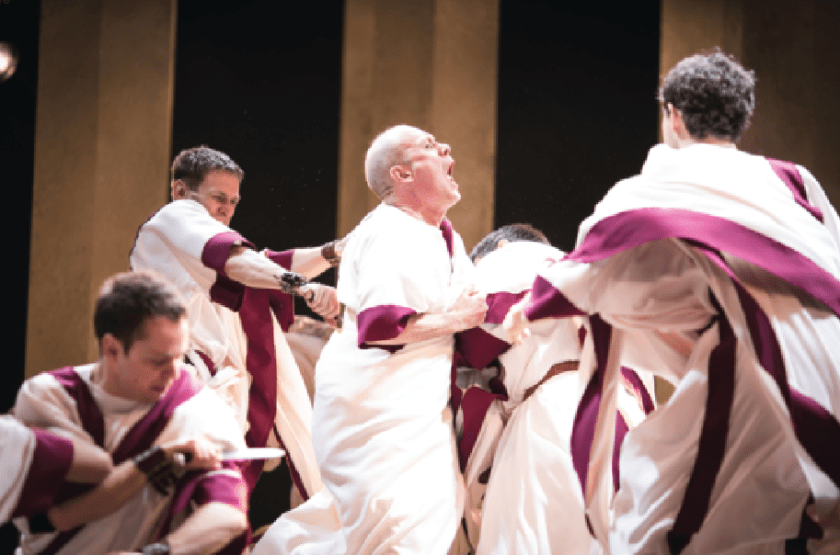
Julius Caesar at the Barbican Theatre review ****

screen-shot-2017-04-07-at-10-31-13

Julius Caesar

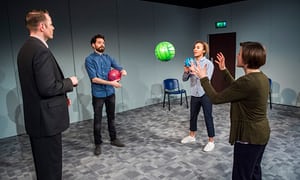
Royal Shakespeare Company, Barbican Theatre, 11th January 2018

The third instalment, (for me), of the RSC “Rome” season at the Barbican which originally aired at Stratford. And, as is so often the case with this idiotic blog, it is about to end and is sold out anyway. Et tu numbnut.

Now JC (1599) was written a fair few years before its sequel, Antony and Cleopatra (1606), but both draw heavily on Plutarch, (via Sir Thomas North’s translation), for the guts of the story. Yet they could not be more different in tone. JC is austere in its construction of architecture and language, dripping with rhetoric. A&C is loose-limbed and florid as we watch the saucy couple get it on, often funny, and certainly over the top. All will be revealed when I see A&C as the last part of the RSC quartet shortly. (I note this attracted the most glowing reviews of the four).

I have to say that, generally, JC is my favourite of the two. Here we have four chaps, (unfortunately this is a terrible play for female roles even if the sensible trend to cast Cassius as a woman is followed, though it is not here), whose actions and relationships can be interpreted in an infinite variety of shades. In this production we have an unyieldingly peremptory Julius Caesar courtesy of Andrew Woodall, (nailing all that third person humblebragging), an overly smug and somewhat vain Brutus from Alex Waldmann, a Mark Antony who is more devious than he at first appears from James Corrigan and a vituperative, beguiling Cassius from Martin Hutson. I have to say this latter performance brought out facets of Cassius that I had not observed before, and, as with his Saturninus in the RSC Titus Andronicus, Mr Hutson near stole the show. Alex Waldmann is the go-too if you want a character “plagued by doubts”, (last seen by me as a brilliant Henry VI in the Rose Kingston’s War of the Roses), but the way Martin Hutson works off of his uncertain Brutus is just mesmerising.

Will S’s brilliant innovation in JC is to telescope all of the action up to the big man’s brutal knifing by the conspirators into what seems like just a couple of days. This means the reasons for the conspiracy, to take down Caesar who has got way too high and mighty in an echo of the Roman kings of pre-Republic days, come flying out of the blocks thick and fast. This resolutely includes the personal as well as the political.

Angus Jackson’s direction allows the momentum to build whilst still clearly laying the arguments around the use and abuse of power, the morality of rebellion against oppression and the legitimacy of political assassination. It is not what Caesar has done, but what he might do. On whose behalf are the conspirators acting, the people or themselves and their own class? The hoi-polloi is never happier than when they have a “strong” leader remember. The uncertainty around what would happen after QE1 died, in the context of the struggle between Protestant and Catholic, would have been clear to Will S’s contemporary audience. The impact of uncertainty is just as clear now.

But big Will didn’t stop there. Oh no. The carnage “unleashed” in the aftermath of JC’s death as Mark A and Octavius put the plotters to the sword, whose own resolve is shattered, is just as effective and thought-provoking. That is the problem with regime change. It usually goes t*ts up because none of these blokes thinks about what happens next. All summed up in two minutes with the horrific murder of Cinna by the confused mob.

Because we never learn Will S can keep on teaching us. Clever huh.

And, in this production, with complete clarity in the delivery of the lines, it was very easy to see that the main players were as much victims, as shapers, of events. The conspirators were uncertain, their tone and movement revealing the dissension between them. Caesar has got all imperious in part because no-one stopped him. Mark A’s sycophancy reflected an eye to the main chance: his famous rhetorical speech to the crowd, cynical, a man realising he could seize control. Watch him build up, then tear up, Caesar’s will. Cassius egging on Brutus, not prepared to take the lead. Brutus and Cassius falling out big time in the tent but always knowing they had to make up since they only, ultimately, had each other. Kidding themselves they really were “honourable” even to the end by getting some poor sap to administer the “coup de grace”. Honour in our appallingly individualistic society may look like an anachronistic concept, but the effect on the audience of its study in this play suggests it still has a place in our hearts and minds.

No need for modern dress. Togas are fine. Would sir like Doric or Corinthian columns. No need for video of an orange Donny spouting hate or rioting millenials. No need to ham up the famous lines or cut out Will’s words. Frankly no need for an interval if it were my choice. One of the best ways to see and hear JC is still Mankiewicz’s 1953 film with Gielgud. Mason and Brando. Not to be confused with Stuart Burge’s 1970 film with Gielgud effortlessly shifting from Cassius to Caesar, but with execrable performances from Charlton Heston as MA and, worse still, Jason Robards as Brutus who appears to have wandered out of an old folks’ home.

Now I am not saying that JC cannot benefit from a little bit of tidying up and reshaping. I think Phyllida Lloyd’s all-female outing at the Donmar was the best of her trilogy last year, (and was a top ten production for me), and Hans Kesting’s speech to the crowd in Toneelgroep Amsterdam’s Roman Tragedies might just be the best 10 minutes of theatre I have ever seen. It’s just that the play can be as, if not more, powerful as a whole, without needing the full directorial vajazzle. I see that many of the proper reviews felt this production was all a bit old-skool, declamatory. I disagree. It is about the power of language to change the direction of political action. Praxis if you will. So emphasising that language should not be seen as embarrassing.

The good news is that we have another chance to see JC in the very near future, (from 20th Jan), as Nick Hytner and team at the Bridge Theatre have a crack. With Ben Wishaw as Brutus, Michelle Fairley as Cassius, David Morrissey as Mark Antony and David Calder as Caesar. How about that for casting. Can’t wait.


Rameau to Mahler: LSO at the Barbican review ***

rattlelsoedit7

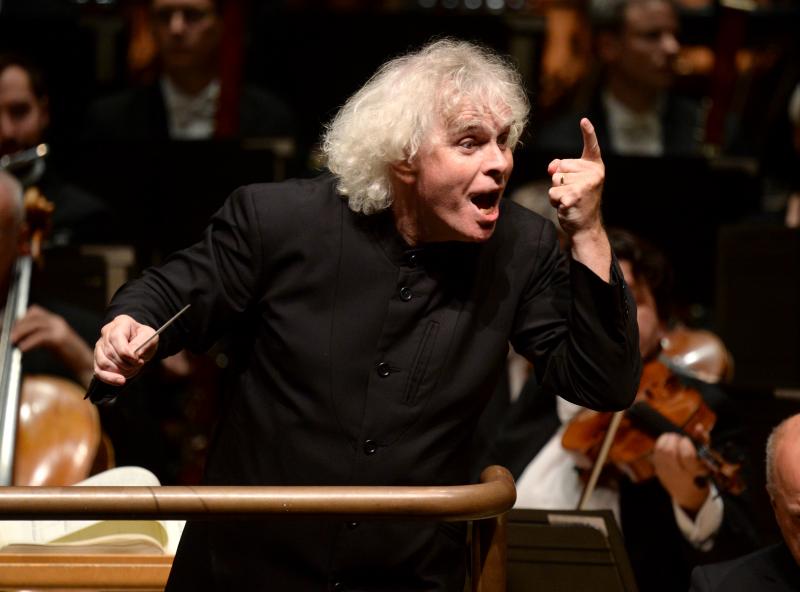
London Symphony Orchestra, Simon Rattle, Magdalena Kozena

Barbican Hall, 11th January 2017

  • Schubert – Symphony No 8 Unfinished
  • Mahler – Ruckert Lieder
  • Handel – Three Arias
  • Rameau – Les Boreades Suite

Now I admit I hummed and harred about this particular gig. I am as excited as the next person about the return of Sir SR to London to lead the mighty LSO, but also recognise that, as his musical taste and mine are not entirely congruent, I had better carpe diem where I can. When he does serve up a favourite, chances are it is going to be the dog’s proverbials, to wit the simply stunning triptych of Stravinsky ballets, a highlight of last year (Stravinsky from Rattle and the LSO at the Barbican review *****).

So eventually I took the plunge here, intrigued by the Baroque on offer, recognising that I need to do more work on Schubert and wanting to see whether Sir SR is as nice to his wife, mezzo-soprano Magdalena Kozena, on stage as he is to the LSO and everyone else. The Mahler Ruckert Lieder and the three showy Handel Arias, one from Agrippina and two from Ariodante, certainly meant the missus had to put a shift in, two frocks and an hour in total either side of the interval. The Rameau has been a staple party piece for the Berlin Philharmonic for years, and it seemed interesting to see what the LSO would make of it.

As it turned out this programme also piqued the interest of Mrs TFP, who is rightly suspicious of my Renaissance/Baroque and Contemporary leanings, but who was happy to come along for the ride here. The Germanic quotient was also sufficiently high for her.

So what did I learn. Well …. aaah … I still don’t think I am ever going to embrace Schubert. I assume Sir Simon and the LSO gave this a respectable work-out but it is still just doodling for me, without the rhythmic discipline of Beethoven and with too many strands. Even the finished bits sound unfinished to me. I am really sorry as I know there are a lot of Schubert groupies out there.

Now the Mahler took a bit of time to get going but songs 3,4 and 5 (in Rattle’s sequence) let loose all of that Mahlerian drama and suspense, with the growly stuff at the bottom, the sniff of folk tunes and the aching strings all deployed to great effect. Mrs TFP combed the text scrupulously for mistranslation and therefore snaffled up the stories. I didn’t understand a word of what Ms Kozena was saying and, given it is the usual Romantic, Love/Fate/Man/Artist tripe, (with one about a lime tree apparently), I didn’t really care, but at times the noise was ravishing. Unsurprisingly I guess soloist and band were well matched thanks to Sir SR, though I wonder if Ms Kozena may have topped these renditions in previous performances. No matter. This was concentrated Mahler which for me is a good thing.

On the subject of concentrated musical pleasure, I cannot believe I am the only one who prefers to take his Handel operas from the set lunch, and not the full tasting, menu. The music induces a nice warm glow, for sure, but they can go on a bit. So I thought a triple helping of well chosen arias would hit the spot. These three are undoubtedly showy, particularly the final Dopo notte, but it didn’t feel as if orchestra and soloist were entirely comfortable in parts, and, I was reminded that old George Fred, once his lady singers got up a head of steam, was apt to encourage them further with interminable repeats. Even so it left me grinning from ear to ear.

As did the Rameau suite. So this is apparently one of those all singing, all dancing (literally) extravaganzas that the French Baroque invented. It was Rameau’s last opera tragedie and boy did he chuck the kitchen sink at it judging by this suite. An everyday tale of windy Gods, the orchestral colour is dazzling, with state of the art technology to boot. I absolutely adored it, as did Sir SR and the LSO. Very funky.

So another entertaining evening in the hands of Sir Simon, but also a reminder not to push the boat out too far in terms of repertoire I enjoy.


Cell Mates at the Hampstead Theatre review ***

cellmatesv2list

Cell Mates

Hampstead Theatre, 10th January 2018

This was my first experience of the work of prolific playwright/novelist/diarist/academic Simon Gray whose stage texts were so adored by luminaries such as Peter Hall, Harold Pinter, (who directed many of his premieres), and Alan Bates, (who starred in them). Cell Mates, of course, is (in)famous for being the play that national treasure, and all round wonderful person, Stephen Fry bailed out of whilst suffering a bout of depression. Simon Gray in turn wrote, somewhat acerbically, about this very episode.

This is the first London revival of the play since that fateful night in 1985. It is based on the true story of the relationship between notorious Dutch-born, British spy and double agent George Blake, and Irish petty criminal and fixer Sean Bourke. After divulging top secret intelligence and details of military exercises to the Soviets in the 1960s Blake had been sentenced to 42 years for treason. In Wormwood Scrubs he met Bourke and they hatched a plan to “spring” Blake in 1966, with help from communist sympathisers on the outside, who then fled to “sanctuary” in Moscow. When Bourke got out he followed Blake to Moscow and then found himself trapped there, by the KGB, with, it seems, the connivance of Blake.

So a meaty story of prison breakout and spy drama. But Simon Gray is less interested in the plot which might naturally unfold from this extraordinary story and more in the relationship between the two men. Both clearly were remarkable in their own ways. Blake, by all accounts, was a gifted, if flawed, character. Schooled in Egypt after his father’s early death, flirting with religious vocation, he joined the Dutch resistance in his teens, was caught by the Nazis, but escaped to Britain. His linguistic skills saw him posted to some hairy places fairly early on in his career before he was turned by a Soviet agent whilst he was imprisoned in Korea. His idealogical shift had, ironically, been fuelled in part by a course in Russian he took at Cambridge. Bourke, as his plan demonstrates, was a resourceful man, with a liking for a drink, and ” a strong sense of the dramatic, an ability to dissemble and an obsessive pride” to use Blake’s own words. Textbook Irish Rover.

We see the conspiracy hatched in prison, the immediate aftermath of the breakout and then four scenes set over a year or so in Blake’s flat in Moscow. So with this back story, and these characters, you might expect high drama. You would be wrong. The tone is surprisingly low-key. The two men clearly come to depend on each other but we do not, I think, really understand why. They find themselves effectively imprisoned once again and I guess we are supposed to reflect on how this came to pass, and whether, in the case of Blake (who is still holed up in Moscow in his 90s), a life of duplicity doomed him to permanent unhappiness and loneliness.

There is some, unsubtle, humour provided by the two KGB agents played by Danny Lee Wynter and Philip Bird, who “observe’ the pair along with maid Zinaida played by Cara Horgan. The two leads, Emmet Byrne as Bourke and, especially, Geoffrey Streatfeild as Blake, do an admirable job in fleshing out the enigmatic couple and Edward delicately directs what is clearly a cherished project for him.

Overall it was just a little too restrained for my liking though. I could see that I was watching something worthwhile but I was never quite persuaded that it really was worth my while. Alan Bennett’s double header, Single Spies, is also by no means a perfect drama, but shed more light, for me, on the curious mix of arrogance, principle and self-loathing that seemed to compel the likes of Blunt, Burgess and Blake on their journey to treachery.

The Here and This and Now at the Southwark Playhouse review ****

4189

The Here and This and Now

Southwark Playhouse, 10th January 2017

OK homo sapiens. Enough with the exceptionalism. There is nothing special about you. Maybe you are more “intelligent” than any species that has inhabited the earth so far but you have only been around for a couple of hundred thousand years. Peanuts. You will likely be just background extinction, likely a consequence of your own selfish, insatiable behaviours. Annoyingly you will take a load more species with you. But your Holocene existence will barely register in earth history terms and you will be soon forgotten. Actually never remembered. And you will have proved pretty rubbish in terms of adapting to your environment for all your boasts if you can’t even manage a million years of existence.

So, whatever dystopian future awaits, no point getting too worked up about it. Worth trying to slow it down a bit but all your technology and institutions won’t prevent the inevitable.

Happy New Year.

Which brings me to THATAN. (I thought the acronym sounded suitably sci-fi and pharmacological, appropriate to the play). Southwark Playhouse has snapped up this and the forthcoming The War Has Not Yet Started from the Theatre Royal Plymouth. Great theatre, great city, great county. And, give or take a couple of flaws, it is well they did. For this latest offering from fashion journalist turned playwright, (and Plymouthian), Glenn Waldron, is, at its best, very, very funny. It kicks off with its four characters, Niall (Simon Darwen), Helen, (Becci Gemmell), Gemma (Tala Gouveia) and Robbie (Andy Rush), at an off-site (or away-day, take your pick, it is still one of modern Western capitalisms most unattractive inventions). It transpires they are sales reps for a pharma company. Niall, the boss, is making a pitch. The script they work from is excruciating but very funny. Newbie Gemma then has a faltering turn, followed by bolshie cynic Robbie, and finally the less assured, turning into hysterical, Helen. Mr Waldron’s observation here is truly acute, and because of this, his satire is bitingly effective. They are selling a useless drug for, prosaically, liver spots with minimal benefits in a desperate, faux-sincere way.

Then the gears switch. First Gemma and Robbie do a “what is life all about” dialogue, with background flirting. Slight but still effective, with its message of savouring the “special moments” in life. And then we roll forward to the 2020’s, post apocalypse, caused by, ta-dah, increased antibiotic resistance which has led to half the population popping its clogs. I won’t spoil the scene. Suffice to say that Mr Waldron gets away with this outrageous leap in tone, because, once again, his writing is laugh out loud funny. And best forget about Bill Paterson’s sonorous contribution at the very end.

The performances are uniformly perfectly pitched, Bob Bailey’s design does just about what it needs to do and Simon Stokes direction shows why his Plymouth stronghold is such a vital hub.

So forgive Glenn Waldron for joining the long list of playwrights wrestling with the “what will wipe us out” schtick and applaud the fact he has, at least, found a new scenario. Forgive the slightly clumsy shift in tone and banish any implausibilities which pop into your head. Just relish the very funny. black comedy that he has served up. And will him to find a way to take the tone he has expertly crafted in the first half of this 80 minute play and inject into another contemporary story. For that might result in something truly magnificent. I can now see I was an utter berk for missing his previous work, Natives, at this very venue. On the strength of this I hope it pops up elsewhere one day soon.

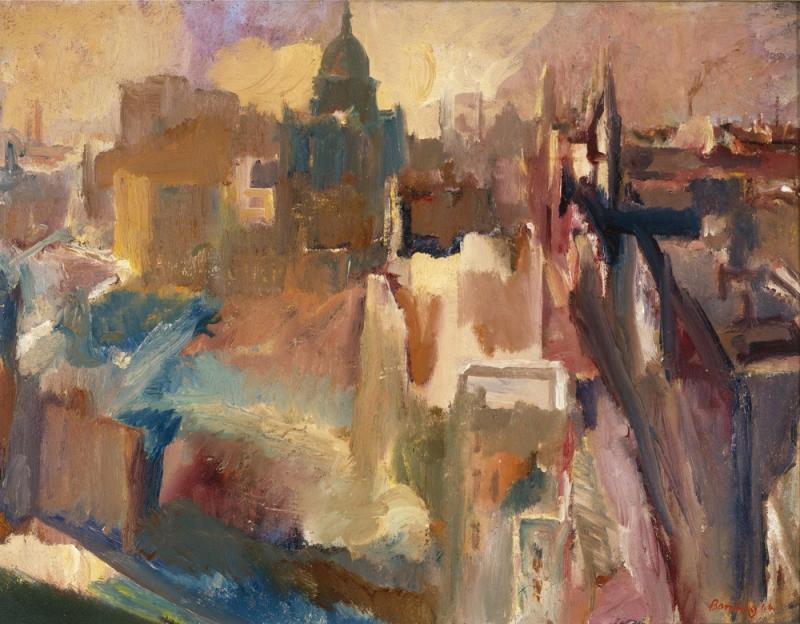
Bomberg at Pallant House Gallery review *****

bomberg2c20evening20in20the20city20of20london2c20194420museum20of20london

Bomberg

Pallant House Gallery, 9th January 2017

Best British painter of the twentieth century? The mighty triumvirate of Francis Bacon, Lucian Freud and David Hockney from the second half of the century certainly would be in with a shout, though Bacon is easy to admire though sometimes hard to like, and Hockney spectacularly drops the ball sometimes. Of these three Freud would get my personal vote. Then again the oddball Stanley Spencer gives me more pleasure though, where he is concerned, you can have too much of a good thing. At the beginning of the century, and assuming his birthplace doesn’t disqualify him, Walter Sickert surely must be near the top of the list, for his own work and for his profound influence on others.

I would also put in a shout for some personal favourites, Gwen John, Michael Andrews, Richard Hamilton, and, resolutely unfashionably, Graham Sutherland and John Piper. Right now Peter Doig might also get a nomination.

But, if it were just down to me, David Bomberg (1890-1957) would get the prize. Usual story. Feted at the beginning, ignored by most during his lifetime, only managed to scrape a living, died in poverty, reputation resurrected soon after his death, critical stock rising ever since. And, in the last decade or so, finally beginning to be recognised as the master he was.

Whilst this exhibition suffers a little from the absence of some of his most famous early modernist works, from the Tate’s collection notably, it is still, in my view, a stunning exposition of his work. The early experiments with cubism and vorticism, the moving evocations of inter war East End life, the failed war painting commissions despite being more talented than peers, the sun-bleached landscapes following the sojourns in Palestine and Spain and the free-flowing abstractions (thanks Cornwall) and expressionist portraits of the later years. 

Line, light, angles, volume, draughtmanship. All plain to see. But what does it for me is the vast, and never ending, array of colour he employed. Take your time to soak in all the works displayed, (there is nothing duff here at all), then run around again and just seize on all that colour. Oh, and remind yourself just how clever Bomberg was at telling the story behind the painting. With many figurative painters the story takes time, and/or requires assistance, to crack. With Bomberg place, time, personality, drama are immediately apparent.

Whilst Bomberg may not have got justly rewarded in commissions for his brilliance, and was unable to secure a position at a premier artistic institution, there were some who appreciated what he might show them, notably his students at Borough Polytechnic. And fortunately there were enough enlightened souls there, and from the artistic groups based there, to secure his legacy, which informs this exhibition, and offers an insight into his artistic philosophy, “the Spirit in the Mass”. Not sure I completely grasped where he was coming from but I think I followed the gist. The remarkable people at the Ben Uri collection, with whom he worked, have also lent a hand in stewarding many of his key works over the years and co-curated this exhibition.

Hanging over much of the exhibition is a sense of detachment and disenchantment. This maybe reflects his struggles to get by financially from his work, the horrors he faced on the front in WW1 and the damage to London he documented in WW2, the observation of the struggles of working class life, and, most vividly, his position as an outsider thanks to his first generation immigrant status and his Jewish faith. The landscapes he chose to capture are harsh not verdant. Yet the paintings are never angry, dark or hectoring.

It would be really tricky to pick out the highlights but if you backed me into a corner I would say the Self-Portrait drawing from 1909, Ju-Jitsu from 1913, Barges from 1919, Ghetto Theatre from 1920, Pool of Hezekiah from 1925, Kitty from 1929, The Gorge at Ronda from 1935 and Cyprus from 1948. Look at these, and surely you will have to agree with me. If you don’t, well, as it happens, the Pallant House permanent collection is as good a place as any to view the alternative candidates for best British artist of the C20 (though not Bacon, Freud or Hockney – prohibitively expensive).

If the genteel surroundings of Chichester are not accessible, (remember the Cathedral round the corner itself has much for the artistic eye to feast upon), then this will travel to the Laing Gallery in Newcastle and then  the Ben Uri itself in London. Do not miss this.


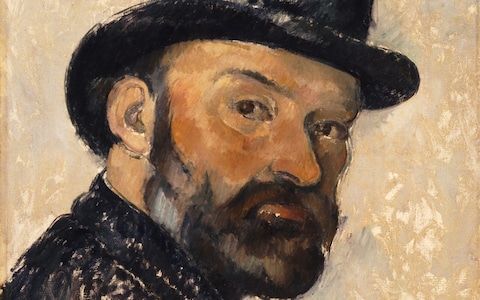
Cezanne Portraits exhibition at the National Portrait Gallery review *****

telemmglpict000144445074_trans_nvbqzqnjv4bqzlqlfcnmmfbevdw0poi8ucqaflowhejdex2ul5mxpwe

Cezanne Portraits

National Portrait Gallery, 14th December 2017

Frankly they could have hung the 50 or so paintings here upside down and turned the lights off. I would still have given it 5 stars. It’s Cezanne. The painter who showed all the other painters who have come since how to paint,  by showing them how all the other painters who came before had painted.

Line, mass, volume, light, colour. These are the preoccupations of all painters for sure but it was Cezanne’s obsession with seeing the underlying structure of things that was his gift to the world.

If this meant making the subjects of his portraits sit for days on end then so be it. If this meant working and re-working tiny parts of his paintings or giving up entirely if he didn’t get it right then so be it. Clearly if you are not going to churn out sycophantic likenesses to order then you ain’t going to drum up too much business. So it was with Cezanne. Though fortunately once banker Dad was on board with the painting gig, our Paul didn’t have to worry too much about earning a living. which meant he could paint the same thing, or person, again, and again, and again, and again, and again …. until he, rather than subject/buyer, was satisfied. Though by all accounts he rarely was.

This then is why we have so many likenesses of the same subject, Dad, Mum, Uncles. Mates, son Paul, and, of course, wife Hortense (painted 29 times). This exhibition set out to collate and show these “repeats” to best advantage, and this, together with the insight into his early and late portraiture, is what made the exhibition truly revelatory to me. Odds are, one way or another, if you have a healthy interest in art and seek out most of the great collections in the Western world. you will get to see an awful lot of the paintings on display here. But to see the same subjects, hanging together, is properly thrilling.

Cezanne wasn’t interested in delving into the psychology of his sitters. No journey into the soul, or other such claptrap, on show here. Nor was he interested in mimetic likeness, with or without flattery, in contrast to the portraiture of the previous three centuries. Photography changed all that. Nor, as far as I can see, did he care too much about the social context in which his subjects might be placed. Few of the more mature portraits have much in the way of backdrop or background. The outdoors, famously in the context of that bloody hill, inspired PC but not really when it came to pictures of people. He found it just too difficult apparently, (though right at the end there is a dark, disturbing picture of his gardener, M Valier, ostensibly outdoors though you would be hard pressed to believe it).

On the other hand though I don’t think Cezanne wanted to show himself in these portraits either, even in the self-portraits. I reckon for a lot of the Impressionist, Post Impressionists, Expressionists, Post Expressionists, and anyway else who dabbled in portraiture in the C20, the picture often says as much about the artist as the sitter. PC only wanted to capture what he saw. Nothing more, nothing less. Most of the time his subjects are doing nothing other than sitting and looking.

The first couple of rooms show PC’s early experiments with portraiture. The influences of, variously, Courbet, Manet, Pissarro, and in a different way, Zola, are explained. We start to see how the techniques are refined, bolder brushstrokes, use of the palette knife, maybe too much at first, (the renderings of his Uncle Dominique), the building of the whole from little patches of colour, the “constructive brushstrokes” that evolved from his landscapes. Repetitions, eliminations, areas where ground is absent. To capture light, for sure, but also to render shape, mass, volume, in an entirely new way. Making the animate, not inanimate, but very, very still, and properly intense. Cutting everything out between eye and mark. Breaking it down to build it back up. Dialectical painting. The room with the multiple, depersonalised portraits of Hortense is where it all makes sense.

Always the same but always different. Obsessive. Not giving a f*ck what anyone else thought. A cast iron nutter. All, as any fool knows, perfect maxims for any artist to follow.

There has, I gather, never been a comparable exhibition of Cezanne’s portraits. It took a decade to pull this together. Cezanne produced around 160 portraits out of a total 1000 works. That means around a third are gathered together here. If you were in Paris last year you will no doubt have seen this. If you are in London now and haven’t seen this you are a mug. Sorry to be so rude but it’s true. Fortunately you have a month still to put this right. Exhibition of the year in 2017. Obviously. Once in a lifetime opportunity. Probably. So get on with it. Now. And if you are anywhere near Washington, (DC not Tyne and Wear), from March this year, book now.

Try this. Look at someone you know very well. Look at them again. Then stare at them. For a vey long time. Think about what you see. It is a revelation. Look at a Cezanne portrait. Really look. That is what he was about. Never really occurred to me to do this until I started reading about “art”. Just goes to show. You may look but you rarely see. Of course it also means you will be prone to spouting all manner of dreadful, pretentious guff.

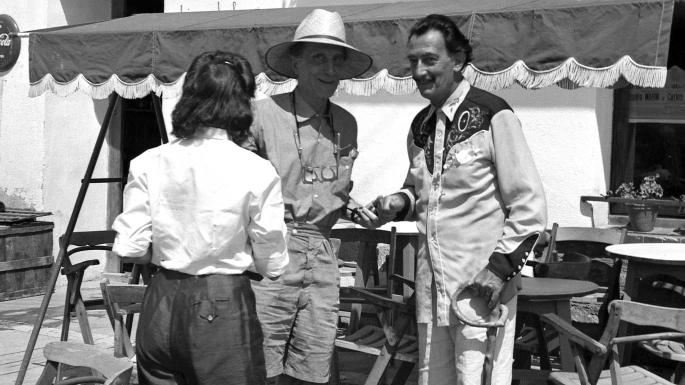
Dali/Duchamp at the Royal Academy review ***

methode2fsundaytimes2fprod2fweb2fbin2fac990400-a81f-11e7-b7be-58a193c81665

Dali/Duchamp

Royal Academy, 29th December 2017

I don’t really get Salvador Dali. Maybe it is the over-familiarity with images of his work. Maybe it is the obviousness of the in-yer-face Freudian, symbolism. Maybe it is the flat, lifeless effect of his paintings. Maybe it is the fact that once he found a formula that worked he didn’t let go. Or maybe it was the fact that he was a bit too full of himself. I admit there is a lot of fun to be had in scouring the canvases, (and, in this fairly concentrated display, you get a fair few for your money), for his wackier conceits. But it is a transitory, and for me, slightly cheap, pleasure. Mining the sub-conscious always seems to require Surrealists to think just that little bit too long and hard about what they want to show and tell. Contrived not automatic.

Now in contrast your man Marcel Duchamp was the real deal. I am glad I have no artistic talent, (actually I am not but I have learnt to live with the disappointment), because if I were a plastic artist then I would be constantly peeved by the discovery that any great idea in modern art had already been realised by M. Duchamp. The rejection of painting and embracing of “non-traditional” media, ready mades, “anti-art” and the challenging of the commodification of art, conceptualism, game-playing and changing identity, Scratch the surface of many a contemporary artist and M. Duchamp will be visible and, without him, public discourse on the question of “what is art” would be far more muted.

The exhibition does an excellent job in portraying the friendship between these ostensibly disparate figures. Both were driven by a need to tear down convention, in art and life, and their understanding clearly went beyond a shared passion for smutty jokes and dodgy puns. IMHO though Dali’s impact, in retrospect, has been superficial, a poster art dead end, whereas, as this exhibition fleetingly shows, Duchamp’s artistic enquiry was profound. Whatever your reaction to a urinal turned upside down and signed R, Mutt you will have had a reaction. And this is 2017, (well 2018 since it has taken this long to get off my lardy arse to write this). Imagine what those lucky few observers must have thought when then first saw this 100 years ago. An artist with a female alter-ego. Commonplace now but revolutionary then. A bloke who convinces everyone he has given up art to become a chess professional. Brilliant. Taking stuff he found and sticking it together to make new things. Most major modern and contemporary artists from the middle of the last century onwards, and students today, will have had a period when they have a go at this. The results are normally awful. But Duchamp got there first. Sticking a tache on the Mona Lisa. A bona fide meme if I am not mistaken, so be grateful to M. Duchamp. Chance, language, gesture, semiotics, maths, provocation, the rejection of “craft”. All fundamental tenets of the today’s artistic conversation, all “invented” by M. Duchamp.

As you might expect carving a way through the work of these two boundary-breakers, given their eclectic output, and constraints on what they could beg, steal or borrow, likely presented a headache for the curators. They have chosen to cram as much as they can into a few of the RA rooms, which highlights the imaginations of both artists even if it does make viewing a jostled affair. It also means there is little escape from the overt misogynism of both. I was most interested in Duchamp’s early paintings (Cezanne’s influence plain to see), the wealth of holiday snaps, Duchamp’s St Sebastian, that moustache in L.H.O.O.Q. , Dali’s experiments with Cubism, then Duchamp’s (so much better). Best of all The Bride Stripped Bare …. , reconstructed by Richard Hamilton, and Duchamp’s messing around with optical discs.

I suspect I was in the minority but I would have been so much happier just with Duchamp alone, with as much contextual material as the curators here, Dawn Ades and William Jeffett, Sarah Lea and Desiree de Chair. would have dared to throw at me. Even so there was much to chew on here and more to go away and learn.

Daisy Pulls It Off at the Park Theatre review ***

daisy-pulls-it-off-park-theatre

Daisy Pulls It Off

Park Theatre 200, 16th December 2017

Funny thing the memory. Even more curious is consciousness itself. It used to be that clever folk conceptualised consciousness as a kind of “theatre of the mind”. Apparently now the cutting edge of neuroscience, psychology and philosophy says this dualism is claptrap and tends towards a more functionalist explanation. As the bard said “there are more things in Heaven and Earth, Horatio, than are dreamt of in your philosophy”. A very clever man, and great admirer of Mr Shakespeare, a certain Mr Tom Stoppard even had a crack at writing a play about The Hard Problem.

Anyway the point is that I distinctly remember really enjoying Denise Deegan’s play Daisy Pulls It Off at the Globe Theatre, (now the Gielgud), when it was such a smash hit in the mid 1980s. As did the SO. It was very funny. Or so I thought.

This latest revival at the Park Theatre was OK. Occasionally funny, but quite often a bit of a chore. Daisy Drags It Out. Now as I understand it this production, directed by Paulette Randall, presents pretty much the original script. It reverts to the original seven strong cast, which means some doubling or trebling up for all but two of them. Which, in my view, led to some of the more amusing moments in the play. Ms Randall and her creative colleagues have chosen to cast the production in a largely age, colour and gender blind way. Anna Shaffer, who debuts as Daisy, was most age appropriate. In contrast, Freddie Hutchins doubled up as Belinda alongside his Mr Scoblowski, Pauline McLynn was a plucky Trixie and Claire Perkins revelled in her roles as Monica, Mr Thompson and Mademoiselle. The rest of the cast, Lucy Eaton, Melanie Fulbrook, Shobna Gulati, are all excellent actors, based on other stage and TV performances I have seen, and it was hard to fault their industry or execution here. The production was played moreorless “straight”, as intended, with any hamming up emerging largely from character or costume changes and not from an overly arch, or slapstick, delivery. Libby Watson’s set and costumes were on the money and, in the hockey match and the rescue scene on the cliff-top, the cast conjured up some fine visual drama from inventive movement, using only minimal props.

So why was this such a disappointment, for me, and for LD, who gamely agreed to come along, despite being somewhat suspicious about Dad’s big build up. Well, as I say, I don’t think it was the production, or the cast. I see that some, though by no means all, other proper reviewers got a real buzz out of this. Three possible explanations then. Either it wasn’t as good as I though it was first time around, (though, with the magnificent Lia Williams, alongside Samantha Bond and Kate Buffery, this production did launch some extraordinary acting talent). Or I, and the world around me, has moved on, such that reverent spoofs such as this are no longer novel. Finally it may be that my memory has, to coin the vernacular, “played tricks on me”. This third explanation is likely scientific fact, and not just doddery middle age, the second explanation probably has a great deal to do with it, but I worry that the first may actually bear the bulk of the responsibility. It just may not be as good a play as I thought it was.

I wouldn’t put you off from seeing this if you are new it. There are laughs, (though apparently, to my surprise, there is nothing amusing about the words “frightful muff”), some spirited performances and some fine stagecraft. It does warm up in the second half but never really takes off. The underlying message, snobbery can and will be routed, is so gentle as to be barely perceptible and, it turns out, the whole thing is just a little too in thrall to its sources.  An A for effort, a C for achievement, I am afraid to say.

Titus Andronicus at the Barbican Theatre review ****

screen-shot-2017-07-20-at-15-01-21

Titus Andronicus

Barbican Theatre, 13th December 2017

Titus Andronicus is a comedy right. Yet I see it is customarily bracketed with the other Shakespearean tragedies, and here forms part of the RSC’s latest take on the quartet of Roman tragedies, entitled, er, Rome.

Now I know this comedy/tragedy/history play division is confusing at the best of times, but here, trust me, it is piffle. Big Will packed sad bits and sundry trials for his heroes even in the lightest of his confections. And, even in the most miserable passages of the serious stuff there are plenty of gags, (though sometimes a bit obscure I admit). In this play though all I really see is one long, (it only just about stops short of one scene too many), parodic, black comedy. This kind of thing is ten a penny now, particularly in the world where art-house and horror cinema mix, but big Will was on to this over 400 years ago. Since there has never been anyway to match him, in English at least, in most other forms of dramatic expression, it should be no surprise that he could effortlessly turn his pen to a genre p*ss-take.

After all the revenge tragedy had been a sure-fire box office hit in the previous three decades before Titus Andronicus hit the South Bank in 1594. Jasper Heywood had translated Seneca’s tragedies, Troades, Hercules Furens and, most famously, Thyestes, in the 1560’s. Thyestes particularly spawned a whole host of imitations, not least of which Titus Andronicus itself which draws on elements of Seneca’s gore fest. (I see that the Arcola staged a version of Caryl Churchill’s version of Thyestes directed by Polly Findlay a few years ago. Wish I had seen that). Norton and Sackville’s Gorboduc came out in 1561. First early modern tragedy, first blank verse drama, a veiled commentary on contemporary politics. (Wish I had seen that too. Especially with Lizzie I in the room). And, most successfully, Thomas Kyd’s The Spanish Tragedy had wowed audiences in the 1580s already.

So Will S and chums were keen to meet the public demand for extreme violence on stage. And a few plot holes, (Will was never one to worry overmuch about these), wasn’t going to stand in their way. Lest we forget though young Will wasn’t yet the dominant force he would become in English drama. One farce, The Comedy of Errors, one decidedly dodgy comedy, The Taming of the Shrew, and a few, albeit brilliant, propaganda plays, Henry VI (1,2,3) and Richard III, might not have been enough to guarantee a hit. So Will collaborated with one George Peele, who apparently contributed the busy first Act, (where Titus A, bloody livid after losing most of his sons in the war with the Goths, sets up the cycle of revenge), the scene at the beginning of Act II when the dastardly Aaron goads the Goth brothers, Chiron and Demetrius, into planning their heinous crime, and the beginning of Act IV, the reveal with its classical allusions, specifically Ovid and the rape and revenge of Philomela. Remember dear readers the several hundred year veneration of Classical Antiquity ushered in the patriarchy’s very unhealthy obsession with sexual violence as well as nice pictures of urns.

Anyway it seems to me that Peele’s contributions provide the stout backbone of the classically driven tragedy plot which then leaves Will to engage in the genre twisting anddark humour. Now I admit that a lot of what I thought was funny in the play was not always shared by the entire audience. There were a few other titterers at some of the smutty innuendo and the ludicrous ,cartoonish violence. There may even have been others wryly smiling at Marcus Andronicus’s flowery blank verse when he stumbles across the mutilated Lavinia. For this is the only way I can fathom this bizarre incongruity. He should be hollering for the Roman equivalent of an ambulance not waxing lyrical about her fragrancy and showing off his classical education.

What else? Saturninus suddenly getting the hots for Tamora. The Roman brothers “accidentally” falling into the pit containing Bassanius’s murdered corpse. Titus A thinking it is a good idea to chop his hand off. His chat with that poor fly. Lavinia spelling out the names of the Dumb and Dumber bad boys in the sand. Little Lucius’s knowing asides to us followed by a gag about Horace’s poetry. Aaron taunting us with his “will he, won’t he” dangling of his new baby and then the unsuspecting Nurse talking herself into an early grave. The gruesome pie, of course, and finally the three blink-and-you-miss-them concluding deaths in as many seconds

Others may want to take this all at depressing face value. I can’t. The only way to accommodate the abrupt shifts in tone, I reckon, is to assume that Will was trying to subvert the very thing he had created. I think director Blanche McIntyre is happy to go with the blackly comic flow without over-egging it. Well maybe the messenger on a bike was a bit over the top. Though it got the biggest laugh of the night, proving that nothing works better than a blatant sight gag in Shakespeare.

Make no mistake TA was a huge hit in its first few years but thereafter was confined to the scrapheap by most every commentator until, surprise, surprise, Messrs Brooke and Olivier, worked their magic in 1955. Trying to take this too seriously just want wash in my book. It isn’t a sick pantomime for sure, there is too much stunning rhetoric to allow that to happen, but neither is this a proto-Lear. I don’t see any point in trying to fight against the dramatic conventions which shaped its construction, or in trying to pretend there is some great insight into the human or political condition here. The creative team seem to be suggesting this could be a metaphor for our uncertain political age. Nonsense. Things might look a bit sh*tty out there, and civic discourse is coarsening, (in part because every Tom, Dick and Harry think they can have a view – ah the irony), but government in Western democracies isn’t yet based on vendetta and cannibalism.

David Troughton as Titus A kicks off his performance as stiff, martial hero, a wizened Coriolanus, wedded to the justice of the battlefield and certain in his pronouncements. A brass band follows him around – a smart touch. Limbs and mind unknot as events unfold so that, by the end, he is as batsh*t crazy as you like in chef’s whites and a nice line in one-armed knife work. Martin Hutson’s toddlerish, paranoiac Saturninus is very amusing, and the similarity with a certain contemporary leader well observed. Attempts to shoehorn in other echoes of a chaotic White House administration, and some street riots signposted “austerity”, are less effective however. Hannah Morrish didn’t get much of a look in as Virgilia in the RSC Coriolanus but here, as a noble Lavinia even when mute, she was excellent. Nia Gwynne’s Tamora was a little underpowered. In contrast Stefan Adegbola as Aaron, once he get to open his mouth after prowling around in Act I, didn’t hold back. Let me say it. Aaron is an ugly, racist caricature which pandered to Will S’s contemporary audience. No Othellian complexity here.

Having guffed on above about embracing the funny side of TA I must say that, when the mutilation comes on stage, this production doesn’t hold back on visceral impact. A couple of nurses, a surgery trolley, a saw and some top-drawer illusion courtesy of Chris Fischer mean TA’s hand-job, (as it were), is the best of the gruesome bunch with the stylised throat-slitting of the two bad boys, suspended upside down, coming a close second. Lavinia’s rape and mutilation was genuinely shocking. 

So a production that, with a few maybe superfluous details, looks (and sounds) the part and delivers unflinching horror realism. A memorable central performance, with some excellent support in large part. A director who is not afraid to go where the words and plot take her, even if this points up the anachronistic structure of the play. Ms McIntyre is also very alert to the nature of our “enjoyment” of the play. Is it a bit sick to laugh at some of this? And if you are horrified then why did you turn up in the first place? Just how far can we go in pretending that Shakespeare is always “for all ages” or should we recognise that, early on at least, he was bound to his own time?

Of course it could just be that the diet of Tarantino and Korean revenge films which brings BD and I together has left me inured to this kind of thing. Anyway go see for yourself. There are a few tickets left for the remaining performances. And don’t forget to insert your tongue firmly into your cheek as you walk in.


Peter Wispelwey (cellist) at Kings Place review ****

42545-pieter-wispelwey-2-c-frits-de-beer-bt

Peter Wispelwey, cello

Cello Unwrapped: Bach Through Time Concert III. Kings Place Hall 1, 8th December 2017

  • JS Bach – Cello Suite No 1 in G, BWV 1007
  • Benjamin Britten – Cello Suite No 3, Op 87
  • Gyorgy Ligeti – Sonata for solo cello
  • JS Bach – Cello Suite No 3 in C, BWV 1009

If I had to pick my favourite venue in London for classical music it would probably be King’s Place. The design is lovely. The acoustic is perfect, especially upstairs. The welcome is warm. (I lost a book there once. They found the book and then they found me). The programming is interesting. In particular the year long seasons which artfully pull together chamber music across a genre or theme. This year, Cello Unwrapped; in the last couple of years, the Baroque and Minimalism. Next year, Time Unwrapped, a more ambitious conceit which is chock full of interesting programmes. To be fair it has helped that the last three years have focussed on particular favourites of mine in terms of period and instrument but, even so, I heartily recommend Kings Place to anyone who isn’t already a regular. Bear in mind too that I am only really a consumer of the classical events: there is plenty of other stuff, music, comedy, spoken word, going on there as well. Finally they make a decent cup of tea in the caff upstairs, the loos are spotless, and there is usually some free art to soak in before, after or during the interval. And, in the summer, there is a pleasant saunter available along the canal.

Now I appreciate that the very best chamber music is likely to be found elsewhere in London, specifically the Wigmore Hall. The Wigmore certainly has its charms, but the legroom isn’t up to much and, if you intend to spend a fair time in her formidable company, you had better get used to seeing the back of other peoples’ heads. I am partial to Cadogan Hall but the repertoire is mostly orchestral and requires careful sifting. St John’s Smith Square delivers some stirring stuff for Early Music, Baroque and Contemporary enthusiasts like the Tourist but there is no hiding the fact that it is a Church, atmosphere therefore trumping sound and comfort. Mind you it is a beautiful lump of Baroque, fancy enough to satisfy, but not so fancy as to make one queasy. Thomas Archer’s buildings have taken a bit of a hammering in London, (go see St Paul’s Deptford if you don’t believe me), so it is good that this, maybe his best, looks so perky. I am also very, very partial to Milton Court Concert Hall, largely for the same reasons as Kings Place, and St Luke’s Old Street, where the interior has been brilliantly re-crafted by architects Levitt Bernstein. But, in both cases, the number of concerts which match the Tourist’s tastes, is constrained.

I digress. It was the programme here that attracted me as I confess no knowledge of Ms Wispelwey before this evening. Bach obvs, it being impossible to hear the cello suites too many times in a lifetime, but also the Britten which echoes old JSB, and the Ligeti, which, in its own way, is also an homage to the old boy. Ligeti is rapidly becoming my favourite mid/late C20 Modernist. It’s great this “finding out about new music” lark.

Apparently Britten intended to emulate Bach and compose six cello suites but this, unfortunately, was the last, written in 1972. His last operas, Owen Wingrave and Death in Venice, and then his failing heart, got in the way. Shame. I prize Britten’s chamber pieces above all of the rest of his glorious music. Obviously more personal but deeper, spikier and, if it is possible, cleverer. There are times, though, when Britten’s genius can be too satisfying, like a musical Vermeer, You just want him to cut loose. In some of the knottier passages of the chamber music this is what you get.

Actually scrub all the above. The reason why BB is the greatest English composer since Byrd, (sorry Purcell and Elgar fans), is the operas, of course. You can keep your Italian melodramas: give me Billy Budd, The Turn of the Screw or Curlew River, (yep opera doesn’t have to be full orchestra and divas belting out love arias, in fact it is better when it isn’t), any day of the week. The whole must always be greater than the sum of the operatic parts in my book, and singing cannot smother drama.

Now this last suite has some deceptively simple ideas but the overall effect is still one of immense variety of expression. A four note motive is set against a repeated bass in one of Britten’s favoured mournful Passacaglias, with repeated pizzicato, which precedes the 3 Russian folk songs arranged by Tchaikovsky and the Orthodox hymn the Kontakion chant, which act as the conclusion. Remember this was written for, and first performed by his friend, the great Russia cellist Mistislav Rostroprovich, after hearing his performance of the Bach suites. After BB’s death Mr Rostroprovich couldn’t bear to play this piece.

Earlier in the piece we have a very quick, unsettling Moto Pertpetuo which appears to invert the motif and a stately Fuga which sets it against the main line, and suggests the counterpoint which JSB famously conjures up in his suites. Elsewhere we hear a Dialogo, marked allegretto, which flips across two staves, a Barcarola, which echoes the famous Prelude from JSB’s No 1 Suite which opened this recital, a jittery Marcia, and a strange Canto. Mr Wispelwey, in very droll fashion, introduces the piece by, er, introducing each of the short movements, which provided both bearings and an insight into Britten’s compositional process. All in all, a very satisfying rendition of one of BB’s finest works, IMHO.

The Ligeti sonata is made up of two movements, both written relatively early in his career, 1948 and 1953. The first, Dialogo, a slow movement, was written for a cellist who GL fancied. It is based on Hungarian folksong, (always a rich source of inspiration for the great man), and alternates from high to low ranges, apparently representing a conversation between a man and a woman. The Second movement is a Capriccio is a rapid Moto Perpetuo that, in places, would be tricky enough on a violin, let alone cello. It’s brilliant. Like the Britten the debt to JSB isn’t hidden, notably in the manic string crossing, as ears and mind rush to keep up with the musical invention. The thing about Ligeti for me is that his music always seems to be having a laugh. None of this thorny intellectualism that can so often block your path into contemporary music. There is a celebration of Ligeti’s music at the South Bank in May. Yea. I am signed up.

No need for me to rabbit on about the Bach in detail. You will know these pieces. They are, in essence, just dances. But what dances. If you don’t know them then you should. No point living a life without the best of Bach. Make it your New Year’s resolution.

I shall be looking out again for Mr Wispelwey’s recitals. He made these technically demanding pieces look easy, (well maybe not that easy), and has a very direct style which made it relatively straightforward to follow the line of the music. He has a winning charisma, and a natty shirt/waistcoat combo, but when it all got seriously emotional on stage, we were rapt. He knows the Bach suites like the back, front and sides of his hands, he has recorded them three times. I just bought the last recording, played on a Baroque cello, tuned at a lower pitch (392 vs 440 normally). Apparently he plays fast and loose with the usual tempo interpretations. Can’t wait to find out what it sounds like.