The Antipodes at the National Theatre review ****

The Antipodes

National Theatre Dorfman, 23rd November 2019

I’ll tell you what. That Annie Baker backs herself. Here is another long play, near 2 hours straight through, where, visually, nothing much happens, bar a properly weird interlude, and dense with word. And this time it is a story about stories, Yep that’s right. The meta of meta. Six assorted punters (five men and just one woman) are ranged around a glass, conference style table telling each other stories in an attempt to create a story. Mediated by their distracted passive aggressive boss Sandy (the ever wonderful Conleth Hill), with occasional interruptions from his chipper assistant Sarah (Imogen Doel) to take food orders, excuse Sandy’s absences and chivvy the crew, and the voice of mogul “Max” (Andrew Woodall) who is bankrolling the enterprise. And with a note taker, Brian (Bill Milner), who eventually, memorably, gets stuck in.

It looks and feels like a scriptwriter’s meeting but its real purpose is never fully revealed and the rules of engagement are vague. Just see what happens seems to be Sandy’s instruction and from this all sorts of stuff pours out, from personal disclosures and confessionals, jokes, classical myth and allusion, gods, monsters, religious dualism, stories about stories, right through to various creation myths. It is affecting, thoughtful, funny, intriguing. Chloe Lamford’s set, complete with Perrier overload, Natasha Chiver’s garish lighting, Tom Gibbons’s sound, Sasha Milavic Davies’s movement (much use of swivel chairs), all echo the hyper-reality, or do I mean hyper-banality, of Annie Baker’s text, which gradually shifts the apparently mundane into the realms of the extraordinary. No surprise that Ms Lamford and Ms Baker co-direct.

It doesn’t quite scale the heights of profundity that it sets out to achieve, or the genuine grace of predecessor John, and it probably stole 20 minutes of my life more than it should have, but you still couldn’t fault its ambition and verve. In trying our patience, and venturing into the Freudian “uncanny”, it gets right under your skin even if it doesn’t shed too much fresh light on the creation of collective, and self, narrative. But it does cover all the bases, maybe too many, as concept overwhelms even this committed execution. Though with actors of this quality, Fisayo Akinade, Matt Bardock, Arthur Darvill, Hadley Fraser, Stuart McQuarrie and Sinead Matthews as the writers), individual character emerges out of the ensemble.

I guess the point was that whilst the urge to share our truth and humanity, and bring meaning to pointless existence, through stories remains undimmed, our capacity to do so might be fading, (especially as chaos in the outside world seeped into the ill-judged ending). Or maybe not. The vagueness of purpose is all part of the attraction in Annie Baker’s practice, so best just to go with the intractable flow and don’t pull too hard on the individual, intellectual, threads. It won’t be one of my top 10 2019 theatrical events but was still a story that could not be missed.
Shook at the Southwark Playhouse review *****

Shook

Southwark Playhouse, 16th November 2019

The Papatango New Writing Prize is apparently the biggest of its kind in the UK, offering its winner the guarantee of a production and a commission to support a follow up play. The Funeral Director, Hanna, Trestle, Foxfinder, and especially Matt Grinter’s Orca, have all impressed me. Many of the writers have gone on to successful careers. This year’s winner, Shook, is as good, if not better than its predecessors, and, on the basis of this, I pray that its writer Samuel Bailey, has more ideas up his sleeve.

Shook is set in a young offenders institute where three young men, with expectant partners, are taking a class in parenthood facilitated by Grace (Andre Hall). Jonjo (Josef Davies) is initially skittish, agonised by the violent crime he has committed, whose nature and context takes time to emerge. Scouser Cain (Josh Finan) is incapable of self-censorship and sports an empty swagger. In contrast Riyad (Ivan Oyik) is more self-assured, deadpan in attitude, but keen to use education to help him thrive post his impending release. Samuel Bailey’s pin sharp dialogue initially accentuates the masculine banter, and is very funny, but gradually the deeper truths about the three young men emerge. Cain’s hyper-activity masks his helplessness, life inside preferable to the chaos of his upbringing, to Jonjo’s harrowing realisation that his reaction to provocation has ruined his chance of the normal family life he craves and Riyad’s temper and bravado sabotage his fierce intelligence. They may be young offenders, the exchange of sweets reminds us of their youth, but upbringing, society and system seem destined to conspire to break any chance they have of rehabilitation.

The characters are brilliantly crafted, back-stories and expectations, emerging naturally which is remarkable given the deliberately confined setting, and is helped by having the matter-of-fact Andrea as an emotional foil to contrast with the disclosures that emerge from the three men’s burgeoning friendship. The play doesn’t set out to be didactic or hammer home a message but still secures the audience’s sympathy for the wasted lives that seem set to emerge. The classes may ultimately be futile but at least offer some opportunity of catharsis for the three.

Jasmine Swan’s naturalistic set, is perfectly realised, and director George Turvey, focusses as much on the movement and non-verbal, as verbal, communication between characters, which, given the quality of the dialogue, is no mean achievement. Above all though it is the three young actors who utterly persuade. We are asked to imagine their lives before, beyond and outside, that we do so reflects their total commitment.

Fascinated to see what Mr Bailey comes up with next.

The Watsons at the Menier Chocolate Factory review *****

The Watsons

Menier Chocolate Factory, 16th November 2019

Fannyed about and failed to book this when it came to Chichester. Wasn’t about to make the same mistake again so quick off the mark when the transfer to the MCF was announced and a three line whip to include the SO and, a new fellow traveller, TSLOM, whose literary knowledge might even exceed that of the SO herself.

Anyway, and at the risk of coming all over key board warrior alone in his bedroom, IT IS ABSOLUTELY VITAL THAT YOU DO NOT MISS THIS ON ITS THIRD OUTING. It will show at the Harold Pinter Theatre from 8th May to 26th September, and there are plenty of tickets left, which gives you no excuse even if you wait.

For this is one of the funniest and smartest plays you are likely to see in this or any other year. No great surprise given Laura Wade’s track record (Home, I’m Darling, Tipping the Velvet, Posh, Alice, Breathing Corpses, Colder Than Here) and a sympathetic, I assume, director in the form of partner Samuel West (Prue and Timmy’s boy for you canal lovers).

Easy enough to find out the central premise. The Watsons was a novel from 1803/4 that Jane Austen abandoned, (as she did in 1817 with Sanditon, which, as I am sure you are aware, Andrew Davies and ITV recently “completed”). JA produced about 80 pages, laying out all the characters, and some clues as to where it would end up, though whether as novella or full blown novel isn’t clear. Apparently loads of punters have had a stab at completing it, the Austen industry being a continuing British success story, though I doubt have been as successful in their efforts as Ms Wade.

On to the bijou stage at the MCF, mediated through Ben Stones’s, ingenious white box with props and plinth stage, and Mike Ashcroft’s precise movement direction, we meet all the characters from the original novel at a ball, obviously. Emma Watson (Grace Molony – perfect) is the youngest daughter of a widowed, and poorly, clergyman (John Wilson Goddard). She was brought up by a wealthy aunt, and is thus educated and refined, but after her benefactor remarries, she returns home to Daddy and her daft sister Margaret (Rhianna McGreevy). The sisters are, by dint of economic circumstance, looking to make a “good match”, with more than one eye on the dashing, though plainly caddish, Tom Musgrave (Laurence Ubong Williams). His shortcomings are identified by Emma’s level headed eldest sister Elizabeth (Paksie Vernon). Their neighbours include super toff, Lady Osborne (Jane Booker) and her super awkward son (Joe Bannister), and his sprightly sister (Cat White). At the ball, accompanied by kindly chaperone Mrs Edwards (Elaine Claxton), she is introduced to local vicar Mr Howard (Tim Delap), a potential Mr Right, even if he veers towards the priggish, and his eager young nephew, Charles. Soon after Margaret returns home with grasping brother Robert (Sam Alexander) and his snobbish wife Mary (Sophie Duval). Nanny (Sally Bankes), looks on bemused.

So far, so, er, Jame Austen. And then the maid arrives, who is, to say the least a bit lippy and forward. Yes it is, and I am giving nothing away here, our very own playwright Laura (played by Louise Ford -also perfect), hot from “reality” to rescue Emma from making a crappy marriage choice from the three candidates, and boost female agency. When Emma, who isn’t, it must be said, altogether happy with the intervention, and the rest of the cast, have adjusted to this surprising turn of events the fun really begins. Meta doesn’t begin to describe as the cast take umbrage with being “characters” in a “play” and rebel against Laura’s authorship of their “lives”. This permits the dissection of class and gender, as in previous plays by Ms Wade, but against the backdrop of who owns a story, genius in the context that this was both unfinished and that so many of us have an obsessive interest in its author and her books, and the social mores it represents, well beyond what is there on the page, (JA I mean not LW, though, of course, as the conceit unfolds, we are very much invested in LW, the character of LW the playwright).

There are precedents for the play, notably Pirandello’s Six Characters in Search of an Author, which LW self-deprecatingly admits, but this is much more immediate in its impact. LW doesn’t abandon the comedy that flows from parody, though there are no cheap laughs here, nor does she abandon the search for logic in the face of what she is articulating. Even if that logic is as daft as the very idea of the willing suspension of disbelief in the first place. This is not clever-clever, up its own arse theory theatre, though. It will make you think about its themes but never at the expense of making you chuckle.

Sam West’s direction, and Ben Stokes’s costumes, are geared to this purpose, the conventions of period drama never entirely subverted even when the cast threatens anarchy to plot, and there is a knowing warmth throughout. This may be satire, but everyone involved plainly loves, and fetishises Austen, as much, if not more than the audience. When the production, including Richard Howell’s lighting, Gregory Clarke’s sound and Isobel Waller-Bridge’s music, opens up on the Harold Pinter stage expect the brilliance of Laura Wade’s creation to be even more apparent.

Repeat. Do not miss this.

Little Baby Jesus at the Orange Tree Theatre review ****

Little Baby Jesus

Orange Tree Theatre, 28th October 2019

No flies on this. Arinze Kene’s coming of age play which first appeared at the OvalHouse in 2011 is high octane stuff. Which here, under the direction of this year’s winner of the JMK Award, Tristan Fynn-Aiduenu, and a committed cast of Anyebe Godwin as Kehinde, Rachel Nwokoro as Joanne and Khai Shaw as Rugrat, got the production it deserved. (I see there are all deservedly up for Offie Awards). Missing AK’s one man show Misty in 2018 has become even more of an oversight on the basis of this but his take on Biff Loman in the Young Vic Death of a Salesman ranks as one of the best in London theatre in 2019.

Joanne carries a lot of swagger and attitude but worries about her mum’s mental health. Kehinde is a sensitive soul with his eye on a mixed race girl. Rugrat is the class clown who lacks direction. All are negotiating their way through inner city life. School, relationships, gangs, parents, emotions, money, ambition. But this is no fulmination of worthy dialogue. Instead AK mixes monologue, poetry, audience address and participation, recollection, history, comedy, physical theatre, dance, song, to tell their, interconnected, stories, notably Kehinde’s search for his now absent twin sister. It is generous, exciting, uplifting, and sometimes a little confusing as these stories overlap and are often left hanging. It starts off with laughs, a lot of them, but ends up somewhere far more contemplative.

If stage acting is about losing the fear then, trust me, these three show no fear. It really pains me to say this, so good are all three, but Rachel Nwokoro, has got IT. I can see that she has no interest in being tied down to a traditional acting career but I dearly hope I see her on stage again.

Tara Usher’s design is admirably straightforward , Bethany Gupwell’s lighting, dominated by an overhead halo, just about keeps up, Nicola Chang’s sound is superb and I hope DK Fashola, as movement consultant, got properly rewarded for his contribution.

Tristan Fynn-Aiduenu has directed a number of his own plays, including Sweet Like Chocolate, Boy, but I think I am right in saying this is his biggest directing gig to date. There are a number of established BME British directors, Indhu Rubasingham obviously, Nadia Fall, Lynette Linton at the Bush, (and who directed Sweat at the Donmar, my choice for best play of 2019), Roy Alexander Weise, about to take up the, shared, reins at the Royal Exchange Manchester, Nancy Medina, Matthew Xia, Beijan Sheibani, as well as up and coming talents such as Nicole Charles, Ola Ince, Gbolahan Obisesan and Emily Lim, all of whose work I have seen in the last few months. There’s a way to go but this, along with the wealth of BME acting, and lately writing, talent getting an opportunity to tell their stories, is encouraging. It permits me to see and hear stories that I would otherwise not. Which, when you come to think of it, is the whole point of theatre.

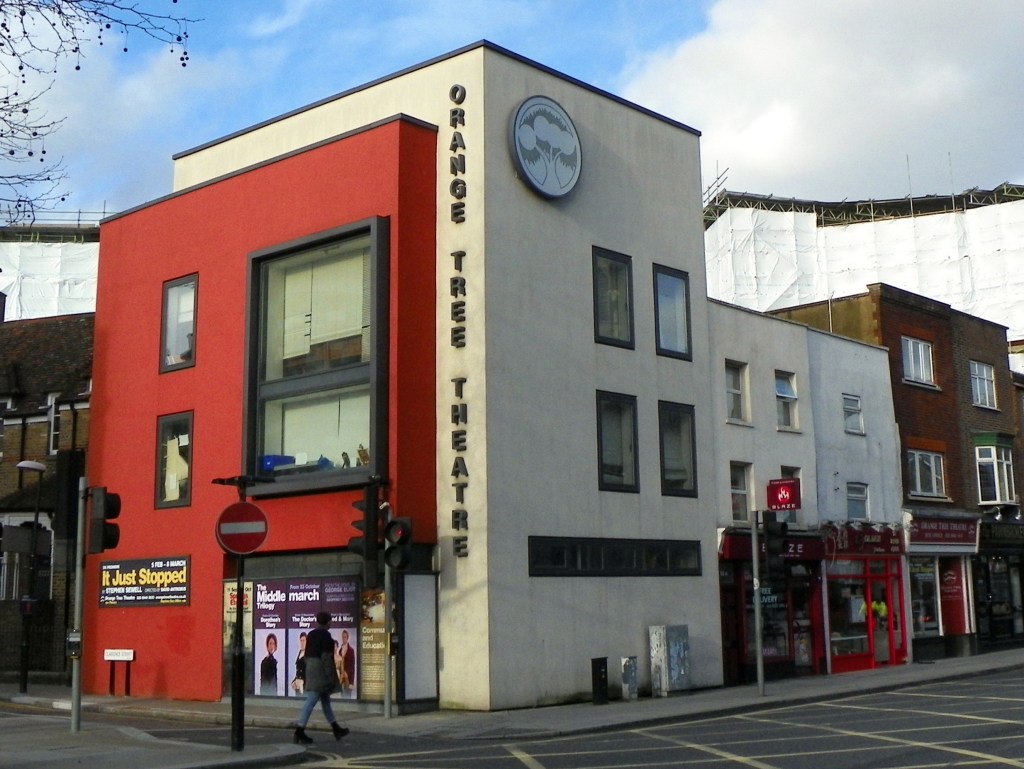
P.S. The photo of the Orange Tree was taken a few years ago. The sharp eyed amongst you will see the poster promoting the OT’s trilogy based on Middlemarch from 2013. Not, if I am honest, an unqualified success but an opportunity to remind me to implore you, in this, the week of the bicentenary of her birth, to read Middlemarch. Either for the first time. Or again. It is the greatest story ever told in the English language. Even if it is about the middle class in middle England.

The Lovely Bones at the Rose Theatre Kingston review *****

The Lovely Bones

Rose Theatre Kingston, 26th October 2019

The Lovely Bones, co-produced by Birmingham Rep, Royal and Derngate, Northern Stage and Liverpool Everyman, is just to wrap up its tour in Chichester. If you saw it good on you. If you didn’t then make sure you sign up for what ever director Melly Still does next. After triumphs such as My Brilliant Friend, which you can catch at the NT as we speak, Captain Corelli’s Mandarin, her RSC Cymbeline, and further back her NT Coram’s Boy, it is plain she is the Queen of physical theatre adaptation. What with her role as Associate at the Rose, and with Christopher Haydon about to arrive as the new Artistic Director, and better seating, things are really looking up for the Tourist’s local theatre.

Now some might recoil from Ms Still’s insistence on the primacy of visual spectacle alongside the text. Not me. And not, based on a spot of vox-popping of neighbours post performance, the audiences. Or it must be said most critics. To which we must give many thanks to adapter Bryony Lavery. Ms Lavery is set for a busy 2020. Her 1997 original play Last Easter will have its London premiere at the Orange Tree, she is adapting Philip Pullman’s La Belle Sauvage for the Bridge Theatre, her adaptation of Oliver Twist with Ramps on the Moon will tour, her adaptation of Oscar and the Pink Lady will take the stage in Sheffield and Theatre Royal Stratford East have chosen her musical version of Red Riding Hood for its Xmas 2020 panto. Not bad for a pensioner.

It is pretty easy to see why collaborators keep returning to her as an adapter of broad appeal theatre. Of course the subject and structure of The Lovely Bones, which is narrated by the now dead Susie Salmon, raped and murdered by a neighbour aged 14, may not quite fall into the category broad appeal. But Alice Sebbold’s 2002 debut book was a best seller and the 2009 film directed by Peter Jackson, whilst generating a mixed critical response, grossed around US$100mn. So safe to say it has “brand recognition”. And, whilst the subject matter is initially, and self evidently, unsettling, the way the story develops, with Susie torn between willing her family and friends to nail her killer and watching them get on with their lives and get over her death, is more compelling. In someone ways it is an unsentimental story told, deliberately, in a sentimental way. There is a Heaven but not that of Christian dogma, her family is broken by her death, but it still celebrates American family and community, it does operate like a slickly paced, artfully plotted thriller, but that was not the real point of its writing, there is some supernatural mumbo-jumbo but, obviously given the initial formal liberty the reader will take it in her stride, and the baddie does get his comeuppance in a melodramatic twist.

So there is enough in the way of event and character to justify a theatrical interpretation. And the mechanism by which Ms Laverty and Ms Still realise this is disarmingly straightforward, In the book Susie narrates whilst looking down on family, friends and the killer from her Heaven. Here Susie walks among them, although of course they cannot see or sense her. Until, of course, they can. Heaven, with its host of other victims, led by Franny (Avita Jay) who becomes Susie’s mentor, appears and disappears at the drop of a jump light, but mostly we are in the world of the living with the brilliant Charlotte Beaumont’s teen Susie as stroppy cheerleader in her own investigation armed only with conviction and banana yellow loons.

Ava Innes Jabares-Pita’s set is overhung with a huge sloping two way mirror, not a new conceit but one that works to great effect here, as we are drawn to see events from two different perspectives. Otherwise we have a bare stage with floor lighting to symbolise house, and with the busy cast carting stuff on and off stage (cornfield, clapboard houses, clothing) to advance the many scenes. As with Ms Still’s previous work, it is lighting (Matt Haskins), sound (Helen Skiera), music (Dave Price, whose playlist guides us efficiently through 70s and 80s) and movement (Mike Ashcroft) which generate the thrills through the brilliantly choreographed ensemble. Scenes begin as quickly as others end so that the whole story is crammed into less than a couple of hours and there are countless moments of theatrical ingenuity.

Of course with all this visual activity theatre-makers run the risk of scrambling the plot and cartooning the characters. Not here though. Ms Laverty gives us as much dialogue as we need, leaning on Susie’s punchy narration, without, as far as I could make out, condensing any of the key plot elements . And the characterisations, Dad Jack’s (Jack Sandle) guilt and grief, Mum Abigail’s (Catrin Aaron) withdrawal, sister Lindsey’s (Fanta Barrie) indefatigability, detective Len Fennerman’s (Huw Parmenter) entanglement, are all sufficiently well sketched to hit home. OK so maybe the various friends, mysterio-goth Ruth Connors (Leigh Lothian), sensitive boyfriend material Ray Singh (Samuel Gosrani), (and his No Nonsense Mum Ruana), and the additional composites created in the form of Sophie (Radhika Aggarwal) and Leah (Leah Haile), only just about stand up to scrutiny, but this is true of the book too. And the less said about hard drinking, homily wielding Grandma Lyn (Lynda Rookie) who comes to look after the family when Abigail leaves, the better.

Nicholas Khan as the killer Harvey screams creepy psycho from the off, but as with the rest of the production, and in keeping with the book, effect and momentum are prioritised over psychological insight. He is convincing mind you. Then again so is Samuel Gosrani doubling up as family dog Holiday who is, in that doggy way, immediately on to Harvey. Those familiar with Melly Still’s Captain Corelli’s Mandolin will know just what the actor as animal routine can bring to this sort of production.

Of course there are times when theatre is best served by two people getting deep and wordy. But its real power lies in its dynamism and in the shared experience, and, in this regard, Melly Still is, in my book, a brilliant practitioner. I am willing to bet that the version of The Lovely Bones on the night that I enjoyed it, (for just a tenner, grab those secret seats people), will have looked different to that presented on the first night in Birmingham. Which is exactly as I would want it to be.

A Taste of Honey at Richmond Theatre review ***

A Taste Of Honey

Richmond Theatre, 9th October 2019

Not quite sure I know how a production such as this is taken under the wing of the National Theatre, and let’s face it it’s none of my business anyway. But I do think I can work out why this particular tour, which has taken in in some fair sized commercial theatres came to pass. This production of A Taste of Honey, with Lesley Sharp and Kate O’Flynn in the leads, was a qualified success in 2014 on the South Bank. But the NT needs to be more, er, National. So spread the cost and risk so that the NT provides the brand and product and the theatres stump up the cash. Take a renowned play, though probably better known as a film, with historical appeal and contemporary relevance, and wait for the curious punters to roll in. Let Bijan Sheibani, who has since had a monster hit with Barber Shop Chronicles, (which, in another of the coincidences that continue to punctuate the Tourist’s cultural adventures, I saw for the first time literally the next day), show his best. And cast big TV and musicals star Jodie Prenger as the brassy Helen, alongside relative newcomer, Gemma Dobson as punchy daughter Josephine.

Shelagh Delaney famously wrote A Taste of Honey, the archetypal kitchen sink drama, when she was just 19. It would be pretty unusual for a working class woman to announce herself as a writer for theatre in this way in 2019. To do so in 1958 was, literally, a miracle. For which Joan Littlewood and the Theatre Workshop, who first staged it at the Theatre Royal Stratford, were rightly grateful. Whilst she never quite went on to repeat the success of this mix of rich characterisation, sincere dialogue and dramatic allusion in her subsequent work, (the harsh reviews for her second play The Lion in Love stopped her from writing for the stage for the next 20 years), her place in theatrical history. Her ambition was fuelled after seeing a production of Terence Rattigan’s Variations on a Theme and thinking she could do better. She was right. But in a world dominated by grammar school boys, she was never entirely at home, despite her fierce intelligence.

ATOH is still remarkable for its absence of judgement, its focus on two irreverent women, its atmosphere and its poetry. Helen and Josephine rub along, and rub up against each other, in their dingy Salford flat. Helen escapes with booze and dickhead blokes, namely one-eyed spiv Peter (Tom Varey). Teenager Josephine escapes through a fling with Nigerian sailor Jimmie (Durone Stokes). Pregnant she then turns to her gay, arty student best friend Geoffrey (another talented newcomer Stuart Thompson) for tea, sympathy and bitching.

If you don’t the story it is pretty easy to guess, its novelty, and scandal, having worn off with repeated replication. No matter it is still brilliantly executed. Or at least it would be in this production if it wasn’t for the endless and unnecessary scene changes, the very busy set from Hildegard Bechtler ,which just didn’t fit properly into the Richmond stage, the fussy lighting of Paul Anderson, and the jazz interludes from the three piece band of David O’Brien, Alex Davis and George Bird, awkwardly wedged on stage, with music from Benjamin Kwasi Burrell and on stage singing. In moderation all of these elements would work but it was all just a bit too much distraction for a text that doesn’t need and, towards the end, does, whisper it, run out of steam a bit.

Whilst I am at it Jodie Prenger and Tom Varey also verge a little too much on the side of over expression which leaves the determined yet vulnerable Gemma Dobson as the best of the five strong cast.

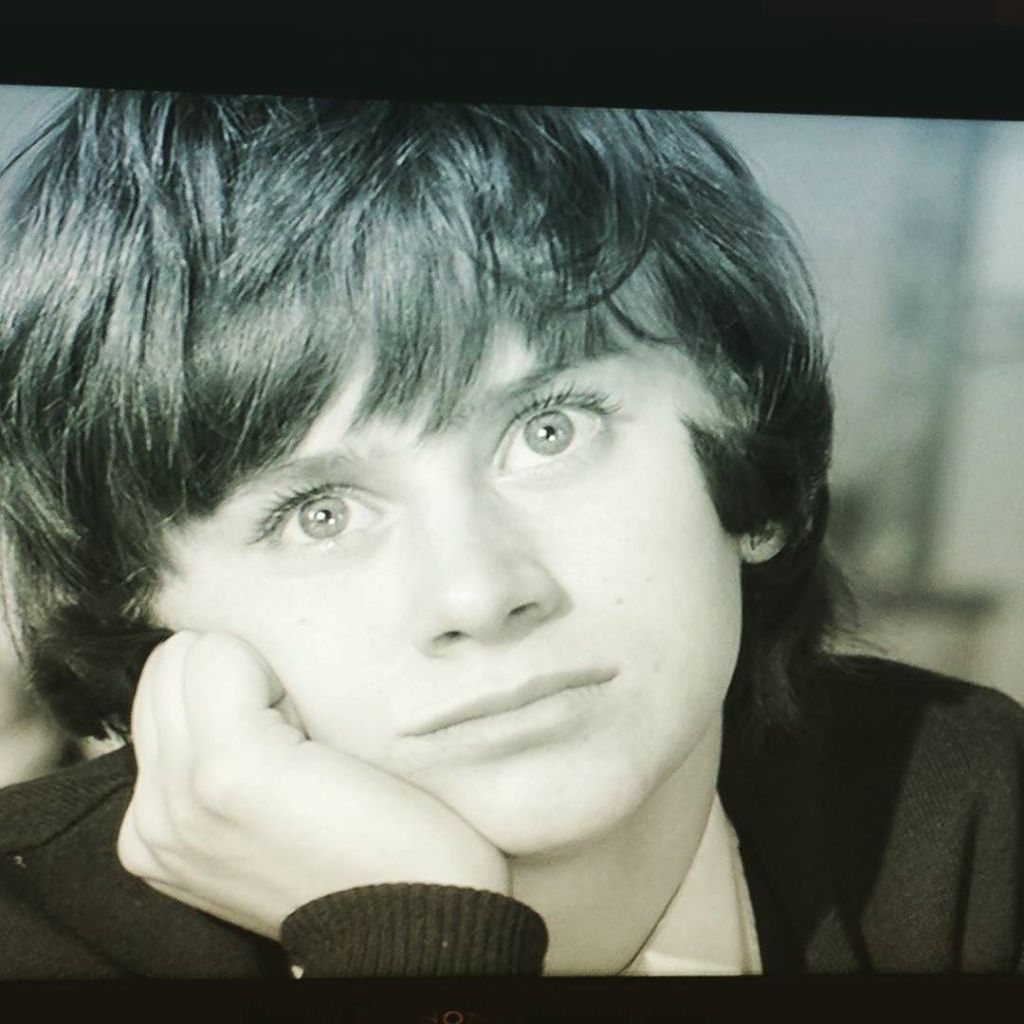
I am very glad that I got to see this important slice of theatrical history and I think it will do well when it comes to London at the end of the tour at the Trafalgar Studios. But if we want a better idea of why it is, even through the prism of sixty years of social change, (for the better of course), such vital drama, then Tony Richardson’s film is a better bet. I see Rita Tushingham (there she is above), whose debut role as Josephine was lauded nearly as much as Shelagh Delaney’s screenplay, is starring in Edgar Wright’s upcoming horror film alongside other legends Diana Rigg, (any way else out there fantasising about Lady Oleanna turning up at their Christmas lunch), and Terence Stamp. I wonder why. Looking forward to that.

The Last King of Scotland at the Sheffield Crucible review *****

The Last King of Scotland

Crucible Sheffield, 28th September 2019

The Tourist generally agrees with all those smart people paid to review theatrical productions. That is a) because they now what they are doing, they are experts with experience and should be listened to, rather than some halfwit with his/her half baked opinions on social media, and b) because, and this is a subset of a), those professional opinions will inevitably influence the ever reflexive Tourist even if he waits until after he has seen an entertainment before passing comment.

Sometimes though I just think they are wrong. With The Last King of Scotland being a case in point. To be fair it did get some decent reviews in the local and specialist theatre press but the broadsheets gave it a pasting. And I cannot, for the life of me, see why. The elements of stagecraft used to convey the story were resoundingly successful in my view and any criticism focussed on the characters, most specifically Doctor Nicholas Garrigan, is misplaced. Why the fictional good Scottish doctor ended up tending the monster Idi Amin is an enigma, not answered in Giles Foden’s book, nor in this adaptation from Steve Waters. Is it fear? Is it professional pride? Is it love? We never know and that is exactly why the story is so compelling in my view.

Now I am a big fan of both book and the film 2006 film, directed by Kevin Macdonald, who also oversaw the film of Touching the Void, taken from a very fine book which itself is the current subject of an excellent theatrical make-over courtesy of David Greig. Who in turn is responsible for another current play of a film(s) of a book in the form of Solaris at the Lyric Hammersmith. The screenplay for TLKOS was penned by Jeremy Brock and no less than Peter Morgan, whose sumptuous magnum opus The Crown you may have heard of and is just about to return to our screens complete with its new roster of A list actors. Note that the Tourist and the SO last night took in Lungs at the Old Vic starring the outgoing Queen Liz and Phil the Greek in Claire Foy and Matt Smith. It’s a small world this drama lark.

Anyway the film deservedly earned Forrest Whittaker an Oscar for his portrayal of Idi Amin Dada Oumee and plenty of praise for the lovely James McAvoy, soon due to grace the London stage in Cyrano. No less than Gillian Anderson and David Oyelowo starred alongside them, but for me the best performance came from Simon McBurney OBE who played Stone, the jaded Foreign Office flunkey who attempts to recruit Garrigan to the British cause as they switch tracks and watch on helplessly as Amin rises to power. I always assume Mr McBurney takes on these film roles to fund his day job as one of the planet’s greatest theatre makers through his company Complicite, but he is never less than compelling even in the likes of Harry Potter or Mission Impossible.

In this stage adaptation however it is hard to take your eyes off Tobi Bamtefa who plays Amin, from the coup in Uganda which overthrew the repressive regime of Milton Obote in 1971 through to his deposal in 1979 and the return of Obote and civil war. Mr Bamtefa was a member of the original Barber Shop Chronicles cast and had a small part in Lee Hall’s adaptation of Network at the NT, as well as a few TV roles, and he is set to join the cast of Inua Ellams’s Three Sisters, set in Nigeria and coming up at the NT. But this was his first major stage opportunity I believe and he grabbed it with both ample hands. The character of the imposing, capricious Amin comes with audience preconceptions, (at least those old enough or interested enough to know something of the history), but, for me, Tobi Bamtefa was utterly convincing. Impossible to take your eyes off him as he turns from briskly comic to bizarrely cruel in an instant. Which is exactly as it should be. The scenes between him and Daniel Portman’s Garrigan were electric, from the early encounter when the doctor fixes Amin’s hand all the way through to full blown bedroom meltdown at the end. Adventure, idealism, influence, fear, fascination, love are all a part of why Garrigan stays long after, morally, he should have escaped. And, like all evil tyrants, Amin exerts a powerful charisma alongside brutal, erratic power. That is the warning from history which the play delivers.

Although the two leads dominate there are strong supporting performances from Akuc Boc as Kay Amin and Joyce Omotola as his other wife Malyam, as well as John Omole as Peter Mbalu-Mukasa, Garrigan’s doctor colleague and Kay’s lover. The scene where Garrigan refuses to perform and abortion for the couple, despite knowing the consequences for them should Amin find out, is riveting. Baker Mukasa plays Jonah Wasswa, the Minister of Health and eventually just about everything else, George Eggay the Archbishop who defies Amin and Hussina Raja is, amongst other roles, Pritti, a Ugandan Asia who takes on Amin at the time of the expulsion. Peter Hamilton Dyer is Perkins the hapless ambassador, Eva-Jane Willis his inhibited wife who rebuffs Garrigan’s advances and Mark Oosterveen plays Stone, here linked to the secret services.

Last King of Scotland aficionados will see that the plot here is much closer to book than film, which latter took a few liberties with Giles Foden’s original events and characters. To be fair, with its fictional TV clips with three recurring journalists (local, UK and US) to provide historical exposition, these events do move on at a fair lick which perhaps overly accelerates Amin’s descent from national saviour into crazed murderer. This, together with Garrigan’s, deliberate, passivity, might frustrate some viewers but it worked for me. Gbolahan Obisesan’s direction, (whose adaptation of Chigozie Obioma’s novel The Fisherman is well worth seeing), doesn’t try to resolve this equivocation which makes the central message even more disturbing. It is pretty easy to think that, confronted with such atrocity, we would walk away if we could but, more often that not, the reality is we wouldn’t, instead choosing to become complicit in the horror.

There are plenty of memorable scenes visually, facilitated by Rebecca Brower colourful set and costume designs, Sally Ferguson’s lighting and Donato Wharton’s sound, even if sometimes the spacious Crucible stage swallows up the action. The film’s infamous meat hook scene is here eschewed but the horror is still effectively conveyed with a grisly scene near the end. Theatre cannot of course convey the immensity of such horror but it can, think Macbeth, Titus Andronicus or Richard III, try to get inside the mind of the man who presides over it. The Last King of Scotland doesn’t get anywhere close to this, that would be too much to ask, but as a slice of theatre, and history, with a moral message, this definitely worked.

Mother of Him at the Park Theatre ****

Mother of Him

Park Theatre, 19th September 2019

I confess that the main motivation for seeing Mother of Him was Tracy-Ann Oberman. You will probably know her from her many, and varied, TV roles but she is also a feted stage actor. However until now I had only seen her once before: in Party Time and Celebration, part of Jamie Lloyd’s season of one act Pinter plays, where she shone amidst such acting luminaries as Ron Cook, Phil Davies, Celia Imrie and John Simm.

Here she played Brenda Kapowitz, a single mother in Toronto, estranged from Steven (Neil Sheffield), with two sons, Matthew (Scott Folan) and Jason (young Harri Agarwal at my performance). This was not your average family drama however as Matthew stands accused, alongside a friend, of raping three young women necessitating house arrest and the early appearance of lawyer Robert (Simon Hepworth).

Canadian writer Evan Placey based this, his debut play, on a true story but this is no crime, trial or punishment drama with the action all taking place in the family home in the lead up to the trial. Instead Mr Placey focuses almost entirely on Brenda as she oscillates between belief in Matthew’s innocence and her natural urge to protect her son(s) and disgust at what he might have done. She seeks to shield Jason from the truth whilst husband Steven seems to shirk responsibility instead trying to prise Jason from his mother. Matthew is curiously inert, making no attempt to defend or explain himself when questioned by Robert, maybe in misguided loyalty to his dominant friend or maybe because he is in denial. This even extends to his scenes with his girlfriend Jess (Anjelica Serra) who seeks him out despite Brenda’s misgivings.

Now I am not sure if Mr Placey intended to shift the axis of the plot quite so markedly or just underwrote the other characters. Director Max Lindsay, who has brought Evan Placey’s previous plays to the UK, plainly thought the former, and, given the acting prowess of Tracy-Ann Oberman, why not. Her Brenda is understandably angry, with Matthew, with her husband, at times with her lawyer and at the press parked outside their apartment, who we hear but do not see, and who are pointing blame at her. She is determined to hold things together, including her work, but is also vulnerable, as she runs the gauntlet of emotions, some very uncomfortable, that Mr Placey’s text unflinchingly explores. Her frustration with Matthew’s impenetrability is made more acute because of her, I think, previously controlling nature. The end, for both of them, as they face separation, is both painful and tender.

T-AO is brilliant, sharp and affecting, even when the interactions with the rest of the cast don’t quite ring true. This is not down to the dialogue, more, I would say, because of how the characters have been created in relation to Brenda. Get over this, and the dominant acting it required, as I did, and what you have is an intriguing play brought into focus by a commanding central performance. Lee Newby’s monochrome set, whilst good on paper, wasn’t quite up to the task, dramatically, or practically at this performance, and did get a little in the way of the story.

The producers here were also responsible for What Shadows, Pressure and Madame Rubinstein, at the Park, and this comes close to matching them. Whilst the writing isn’t anywhere near that of Bruce Norris, whose Downstate at the National recently similarly sought to avoid passing judgement on the actions of its protagonists, it did, similarly, try to address the reality of heinous crimes though not here accused or victim. I do hope I will be able to see TA-O again. Maybe next time back in Shakespeare.

The Night of the Iguana at the Noel Coward Theatre review ***

The Night of the Iguana

Noel Coward Theatre, 16th September 2019

Last minute purchase. Just about worthwhile. The Night of the Iguana is not normally considered one of Tennessee William’s greatest hits, and I am certainly no TW completist, but the cast, the director, James Macdonald, the designer, Rae Smith, the pretty good, if mixed, reviews and, yes, the price drew me in.

The inspiration for the play came when TW met another young writer, just returned from Tahiti, in Mexico in September 1940, who was also afflicted with the same “troubled heart” that plagued him. Recognition of his talent, and money, was scarce, and TW was close to giving up, but this kindred soul, the environment, and a bunch of perky Germans, sympathetic to the Nazi cause, who appear in the play, spurred him on. A few rum cocktails, long suicidal and literary chats, and a perilous road trip with another guest, seemed to revive our Tennessee and TNOTI was the result. He turned the original 1948 short story into a one act play in 1959 and then into the three acts in 1961.

It concerns the lugubrious Reverend T Lawrence Shannon (Clive Owen) a washed up tourist guide and ex-priest, booted out of his church after an inappropriate relationship with a Sunday school teacher alongside borderline blasphemy. He visits the Mexican resort run by Maxine Faulk (Anna Gunn), the widow of his best friend Fred. She is assisted by a couple of workshy local lads (Daniel Chaves and Manuel Pacific). Alongside the aforementioned incongruous Germans, (Alasdair Baker, Timothy Blore, Karin Carlson and Penelope Woodman), we also meet the grumbling Judith Fellowes (Finty Williams), who leads the tour group which Shannon serially disappoints, and Charlotte Goodall (Emma Channing), a 16 year old member of the group who he may have seduced. More importantly the ageing poet Jonathan Coffin “Nonno” (Julian Glover) then arrives with his niece carer, spinster Hannah Jelkes (Lia Williams). Wheelchair bound Nonno is on his last legs and the couple rely on charity and artistic hustles to get by.

They are an odd bunch who frankly exhibit some pretty dodgy behaviours. Rev Shannon is supposed to be some kind of melancholic, tortured soul, who has lost his faith and suffered a breakdown, but is still irresistible to women. Maxine, (you will know Anna Gunn from her turn as Skyler in Breaking Bad), is pretty direct in her sexual desire, as is, more disturbingly, Charlotte, who says next to nothing, and Hannah is soon apparently under his spell. Yet, with his drinking and self pity, stumbling around the stage in crumpled linen suit, Clive Owen doesn’t highlight any particular hidden depths. Judith may well come across as typecast harridan but she probably has the measure of the man.

Now this being Tennessee Williams, there is poetry in the dialogue between these rather curious characters, even as the plot goes nowhere, and this, alongside Rae Smith’s set, the hotel verandah backed by a massive cliff and verdant planting, Max Pappenheim’s atmospheric sound and, especially, Neil Austin’s lighting, from bright day to dark night via electric storm, is enough to hold one’s attention. And then there is Lia Williams. She normally finds a way to steal the show, even in supporting roles on screen (The Capture, Kiri, The Crown and The Missing) or stage (The Prime of Miss Julie, Mary Stuart, Oresteia, Skylight), but here the rest of the cast are, metaphorically, in her shadow. In the 1964 film version no less an actor than Deborah Kerr played the role alongside Richard Burton and Ava Gardner, so you can probably imagine there is enough for a skilled actor to work on, but Ms Williams is astonishing. Sharp tongued when required, notably in her spats with Maxine, (who was played by Bette Davies in the original Broadway production so you get the idea), dismissive of Shannon’s indulgence, and drinking, yet utterly bewitching when describing her only brief sexual liaisons to him in the third act confessional scene.

TW wrote a ton more full length and one act plays after TNOTI but as his mental health deteriorated, his drug use increased and relationships failed to match that with soulmate Frank Merlo who died in 1963, nothing came close. I still quite make up my mind where TW sits in the pantheon of great playwrights but, for a few minutes as the two lead characters realised how much happier their lives might have been if they could only have been more like the other, I could, once again, forgive the pun, see the attraction. Like Chekhov a chronicler of lost, and odd, souls.

Until the Flood at the Arcola Theatre *****

Until the Flood

Arcola Theatre, 10th September 2019

I am in awe of actors, and indeed other performers, who are prepared to step out on a stage alone to entertain, inspire and educate us. A one character monologue is tricky enough. To present multiple characters surely more so. To inhabit 8 different, very different, people with no more than a jacket and a chair. 8 fictional characters though all based on the testimonies of real people. To also pack a emotional punch, lay bare the fault-lines of race in modern America but never harangue or proselytise. Surely impossible.

Not when Dael Orlandersmith takes to the stage with her work Under the Flood. The Tourist first alighted on Ms Orlandersmith’s work through the revival of Yellowman at the Young Vic a couple of years ago which tells the story of two friends Eugene and Alma across three decades, dissecting race, gender and, especially, colourism, and was way better than anticipated. Until the Flood, where she is both writer and performer, also blew me away despite now raised expectations.

It was first performed in St Louis in 2016 and as a response to the shooting of Michael Brown and in the suburb of Ferguson and the protests that followed. 18 year old unarmed African American Michael Brown was shot by a 28 year old white police officer Darren Wilson in August 2014. The circumstances of the killing were contested with the account of Michael Brown’s friend Dorian Wilson, who was with him, significantly diverging from that of the police officer. The police response to the unrest which followed the killing was viewed by many as excessively heavy-handed. A grand jury decided not to indict Wilson and a US Department of Justice investigation concluded that he had shot Brown in self defence. Many in the community believed this to be a cover-up given inconsistencies in witness statements and forensic evidence and biases in the legal process.

Prior to this short run at the Arcola the play was a highlight at the Edinburgh Festival. Dramatisation of cause celebres is a staple of recent American theatre but DO goes a stage further by attempting to show the character types which inhabit the world where this kind of tragedy is possible, almost inevitable, and to show the behaviours, prejudices and reactions that underpin it. There is Paul, a young black man, consumed by fear of the police and violence, hanging on until he can escape to college. The unapologetic white homophobe racist, Dougray, who revels in his hate, describing how he would gun down a group of black teenagers. Rusty, the retired white police officer who excuses shootings as inevitable given the stresses of the job. Connie, the white liberal woman whose attempts at balance only serve to highlight the assumptions she makes. Louisa, the wise black senior woman who tells us of the overt racism of her childhood, including so-called “sundown” laws. The pumped up, frustrated black youth who only sees disrespect around him. A black, female, lesbian minister who speaks to a convincing tolerance. Reuben, the barber shop owner who refuses to conform to the stereotype that two students, one black, one white, who come to Ferguson to study the case, wish to impose on him.

All these characters become more than their race or situation in DO’s hands – education, class, employment, neighbourhood change, gender roles, all get a look in – but it is race, and maybe more importantly, shared white privilege, is what pulls the narratives together. Takeshi Kata’s set offers a shrine to Michael Brown’s memory backed by video designs from Nicholas Hussong introducing each character and offering, along with Justin Ellington’s sound, snatches of the events in Ferguson. I suspect Neel Keller didn’t have too much to do by way of directing DO who is a mesmeric stage presence. It is tough to listen to, and moving as you would expect, but DO still finds humour.