Ghosts at the Royal and Derngate review

Ghosts

Royal and Derngate Theatre Northampton, 2nd May 2019

A little bit of back to back Ibsen action. First this Ghosts and then, a few days later, Rosmersholm at the Duke of York’s. And the Tourist’s first visit to the Royal and Derngate which, he has Benn rather slow to observe, has been producing some very tempting offers as of late. I gather most of the drama here, (plays not fist-fights), takes place in the Royal with the larger Derngate offering a broader range of entertainment (Wet, Wet, Wet on the evening of the afternoon the Tourist attended, for those few of you who might be tempted by such). Both are wrapped inside a fine, open foyer area and I gather there are other spaces as well, the Underground Studio and a Filmhouse. All round very impressive.

As was this production of Ghosts, masterminded by director Lucy Bailey in a new version from Mike Poulton. Mr Poulton has a long history of adapting the European classics, Chekhov, Schiller, and a definitive version of Turgenev’s Fortune’s Fool. His last outing was the excellent RSC two part Imperium, the story of Cicero, which I caught on its London transfer. I last saw Ghosts in 2013/14, two versions pretty much back to back. In Richard Eyre’s West End take Lesley Manville pretty much wiped the floor with any other Helen Alving’s past and future. In the other, Stephen Unwin’s ETT version at the Rose Kingston (his final play there as AD), well let us just charitably say it didn’t quite match it. But Ghosts is such a fine play in my book that it is hard to go too far wrong.

Having said that it is possible to get bogged down in old Henrik’s miserabilism. Religion, syphilis, potential incest and assisted suicide are never likely to make their way into the repertoire of, say, Mischief Theatre, (though Ghosts: The Musical might prove tempting), but there is more in terms of plot and character beyond a metaphor for late C19 moral hypocrisy. Helen Alving, holed up in her gloomy mansion, is a woman of rare depth, her doomed son Osvald does have moments of joy, at least potentially, Pastor Manders is not entirely devoid of sympathy, Jakob Engstrand wants to atone and Regina will, I think, one day come to terms with her parentage.

Indeed if it wasn’t for the prize c*nt, the dead Captain Alving, things might have been very different. He was the faithless husband who ruins his wife’s, his son’s and Regina’s lives. The sins of the father and all that. (The Danish/Norwegian title is Gengangere, “the thing that walks again”, which is more like a revenant than a ghost, someone and something that comes back to haunt others). By confronting the past Helen knows she is going to make things worse, of course, but this is also, as with all of Ibsen’s important women, a catharsis to break free from that past and to engage with the truth however ugly. To reject the social mores and religious convention that trapped her in the painful marriage, even if it is too late for her son and her dead husband’s illegitimate daughter.

Lucy Bailey, Mike Poulton and designer Mike Britton have worked together before and it shows. Adaptation flows into direction which is perfectly framed by the set. Mr Britton was apparently inspired by Edvard Munch’s art. Munch produced numerous illustrations of Ibsen’s plays and designed a production of the play in 1906 shortly after HI’s death. The darkest of dark blue-greens, think Farrow and Ball Green Smoke but darker, creates a fitting “psychological” backdrop. Gauze screens divide reception rooms and conjure up spectres. Props, costumes and architecture details are spot on period, straight out of a Vilhelm Hammershoi interior (as above). This is what Ibsen should look like. After the effective orphanage fire the set does angle back to create a “pit” which the actors have to clumsily navigate but otherwise this was perfection.

Made more so by Oliver’s Fenwick’s moody lighting and by Richard Hammarton’s sound design and composition. No barely audible ambient background noise here. A proper soundscape. With lots and lots of rain and a proper fire. And some top drawer cello, violin and piano chord dissonance.

It is possible to judge the success of a production of Ghosts as pure drama by the reaction of the uninitiated members of the audience to the various disclosures. Ibsen, being a genius, doesn’t just bounce them out in a line or two of clumsy exposition, they emerge, organically, from the plot. Mr Poulton’s adaptation perfectly registers these twists, not quite turning it into a thriller, that would be asking too much, but definitely more than enough to persuade the Ibsen-curious. Well maybe not all, as I overhead some student-y types complaining it was too “text-y” afterwards. Trust me kids this is as racy as Ibsen gets.

Penny Downie, particularly in the scenes where she rounds on Manders, was a fine, dignified, Helen Alving. Pierro Niel-Mee’s Osvald was a little too camp for my taste. I know he is an artistic type but too much surface petulance risks losing the despair of what might have been. Declan Conlon’s Jakob by contrast was well rounded and Eleanor McLoughlin wisely held back to make her escape at the end more pointed. James Wilby did verge on the shouty at times but his Pastor was sufficiently human, confused, and, finally, ashamed, to make the initial friendship with Helen believable (sometimes a problem if he is overly puritanical).

Apparently Ibsen only took a few weeks to write Ghosts in 1881, whilst summering in Sorrento, though it didn’t get staged until the following year by a Danish company in Chicago. The subject matter was in part a two-fingered riposte to all the churchmen and stiff-necks back home in Norway who got wound up by the his previous play, the far milder A Doll’s House. There his heroine Nora walks out on her sh*t-head husband. Here we see what can happen when a wife is convinced to stay. If HI thought he had wound up his conservative enemies with A Doll’s House, they went batsh*t when Ghosts arrived back home. Even when the King of Sweden loaded up HI with medals and honours galore years later, as he was recognised as Scandi’s greatest cultural export (at least until ABBA, just joking), his maj told him off for writing Ghosts.

HI famously said “we go through life with a corpse on our back”. This masterly version shows just why Ghosts is probably, IMHO, the Ibsen play which best represents this maxim. If our Henrik never stopped picking away at the scabs of his own life and the society around him then Ghosts is when the blood started to properly flow.

I will be back at the R&D. I have seen three of the Made in Northampton shows that are currently touring, Touching the Void, The Remains of the Day and the Headlong Richard III. The first two are outstanding and I see that Touching the Void is coming to London later this year. Mandatory viewing. I missed Our Lady of Kibeho which, judging by the reviews, was a massive oversight. So I am not going to make the same mistake with The Pope, Two Trains Running and A View From The Bridge in the rest of this season.

I can see why the R&D has garnered awards though, and, I say this with the greatest respec,t it is hard to reconcile the fact that its AD, James Dacre, has the ex-editor of the Daily Mail for his dad. It would seem that, in this case, the sins of the father have not been visited on the son.

Edmond de Bergerac at Richmond Theatre review ****

Edmond de Bergerac

Richmond Theatre, 1st May 2019

Alexis Michalik is a loving looking chap. Oozes Gallic charm. The wunderkind of French theatre. So its good to know he is half-British. He kicked off as an actor but it is his plays, which have run to packed houses in Paris and beyond, and garnered multiple awards (5 Molieres for Edmond), which he directs himself, that have turned him into a star. First Le Porteur d’Histoire, then Le Cercle des Illusionnistes, most recently Intra Muros, which was adapted in English at the Park Theatre recently (though didn’t get great reviews). His most famous play though is Edmond which appeared in 2016, a theatrical paean to the creator of Cyrano de Bergerac, Edmond Rostand, and already made into a film.

Cyrano is the most performed play in the French language. A massive hit when it hit Paris in 1897, a broad fictionalisation of a real life nobleman, novelist, playwright, epistolarian and duelist in C17 France (1619-1655), written entirely in classical alexandrine verse (12 syllables per line) and about the most uplifting love story you are ever likely to see. Apparently the curtain call on the first night went on for over an hour and the French Foreign Minister emerged from the audience to go backstage and pin the Legion D’Honneur on Rostand there and then.

Cyrano regularly gets an airing in British theatres, luvvies love it, usually in Anthony Burgess’s wonderful translation, and you may well know know it from the film adaptations, either the faithful French classic version from 1990 starring Gerard Depardieu and directed by Jean-Paul Rappeneau (there were others before this) or the rather freer 1987 interpretation Roxanne starring Steve Martin and directed by the underrated Aussie director Fred Schepisi.

If it you have never seen a version you are probably aware of Cyrano’s defining feature, to wit, his huge nose. This is what prevents him wooing his beautiful cousin Roxane who he adores. When he befriends the handsome but inarticulate Christian, who also falls for Roxane’s charms, he sees a way to woo her vicariously with his exquisite love poetry. It works, Roxane and Christian are secretly engaged, but there love in turn attracts the wrath of yet another suitor, the Comte de Guiche who sends the lads off to the brutal war with the Spanish. Cyrano, on Christian’s behalf, but unbeknownst to him, writes to Roxane every day though and eventually Roxane comes to the front. She loves the poet and Christian realising the pretence asks Cyrano to confront Roxane and explain. He doesn’t drop his mate in it though, Christian is killed in battle, Cyrano sees off the Spanish.

Over the next 14 years, Cyrano, now a satirist, visits Roxane every day in the convent she has holed up in mourning Christian. Finally, after sustaining a head wound, he arrives late and faints. Roxane asks him to read one of “Christian’s letters” but in the dark he recites in from memory. He dies. Roxane realises her true love. Cue tears. At least for the Tourist (and not in the Steve Martin version). You would have to be made of stone not to get caught up in this.

Now that is actually the film plot, there’s a bit more to the play, but that’s the gist of it. Except, of course, the plot is turned into something transcendent by the verse. Can’t speak French but Anthony Burgess, albeit with what apparently is know as a “sprung” rhythm, is faithful to Rostand’s intention.

It is on the French language curriculum and is regularly revived in France so Alexis Michalik was taking a bit of a risk with his text. a bit like Tom Stoppard and Marc Norman with their script for Shakespeare in Love the 1998 Oscar winning film starring Joseph Fiennes, Gwyneth Paltrow and Judi Dench, directed by John Madden. Like SIL, Edmond, (de Bergerac here to avoid confusion with a David Mamet film), mixes the “real life” business of putting on a play with the plot of the play itself, in this case just the one play though.

Edmond Rostand (here Freddie Fox) is a failing twenty something poet, playwright and dreamer drawing his sorrows in drink with beau monde, womanising mate Leo (Robin Morrissey). Steadfast wife Rosemonde (Sarah Ridgeway) is on his case to provide for her and his two kids. In desperation he pitches an idea to the famous actor Constant Coquelin (Henry Goodman); an heroic comedy, based on the life of Cyrano de Bergerac, for the Christmas slot. Only problem. He hasn’t written anything. Still, the legendary Sarah Bernhardt (Josie Lawrence) believes in Edmond, and the services of diva Maria Legault (Chizzy Akudolu) to star in the play are secured. A couple of wide-boy Corsican producer/gangsters, the Floury brothers, step in with the cash (Nick Cavaliere and Simon Gregor) and, always at the last minute, Edmond delivers his three, then four, then five, act masterpiece.

We meet the prim Georges Feydeau (David Langham), Rostand’s rival and the master of farce, the philosophising Monsieur Honore (Delroy Atkinson) owner of the bar, where, along with the Palais Royal theatre, and the Rostand house, the bulk of the scenes are set, Jean (Harry Kershaw), M. Coquelin’s beloved son, would be pastry chef and terrible actor, and Jeanne (Gina Bramhill), the wardrobe mistress and saviour of the premiere who captures Leo’s heart, aided, of course, by Edmond’s words. Which are, you guessed it, what gets Rostand’s creative juices flowing when to comes to writing the play.

Many of the cast take on multiple other roles, we even meet Maurice Ravel and Anton Chekhov at one point, in the quick-fire and frenetic scenes. Movement director Liam Steel, in this production from the Birmingham Rep does an outstanding job, alongside director Roxana Gilbert in marshalling all this activity. Edmond de Rostand is not pure farce or musical but at times it looks like it. The plot is cleverly constructed, if a bit baggy, drifting in and out of the plot of Cyrano itself, the cast give their all and the set that Robert Innes Hopkins has created is brilliantly versatile allowing the sevens to shift rapidly with no loss of momentum.

I think it may have left some of the Richmond Theatre midweek matinee audience a bit nonplussed but that wouldn’t be the first time. For me, and I hope the audiences at the Birmingham Rep, York Grand Opera House, Royal and Derngate Northampton and Cambridge Arts Theatre where it toured prior to this, it was a delight. It deserves a bigger audience, why not the West End. Fair enough it would help to know a little big about its foundations, less of a problem in France where, as I have said, Cyrano de Bergerac is part of the cultural fabric, and there are occasions where M. Michalik is perhaps overly in love with his creation but for me it was one of the, positive, theatrical surprises of the year so far.

I haven’t seen nearly enough of Roxana Silbert’s work for the Birmingham Rep or, prior to that, Paines Plough. I was taken with Chris Hannan’s What Shadows which came to the Park Theatre, though that had a lot to do with Ian McDiarmid’s complex portrayal of Enoch Powell, and I can thoroughly recommend the Birmingham Rep’s latest co-production with the Rose Kingston, an adaptation of Captain Correlli’s Mandarin. I guess, when Ms Silbert joins the Hampstead Tate as AD I will be able to make a more informed judgement.

I wouldn’t want to single out any one member of the cast of Edmond but, if forced, I would highlight Freddie Fox whose performance is up there with his Tristan Tzara in Tom Stoppard’s Travesties. His default mood is despondency but, as the frazzled nerves give way to a determination to succeed, and the tender affection for Jeanne builds, (don’t worry he doesn’t cheat on Rosemonde in a clever inversion of Cyrano), so we get to see a rounded hero emerge. I am also partial to Delroy Atkinson who was so good in Roy Williams’ The Firm, (still on at Hampstead), though he, like the rest of the players, stays in one dimension. If you know Henry Goodman and Josie Lawrence from other performances you certainly won’t be disappointed.

Now apparently the original Cyrano play was responsible for the word panache finding its way into the English language. M. Michalik aims, and succeeds, in capturing that spirit. I suspect even the master of comic opera translation into English, Jeremy Sams, may have been stretched to the limit in bringing clarity to the chaos here, but, if you just roll with the comic punches, and are in love with theatre, then you really should try to see this should it pop up elsewhere. The show is funny, clever and, in the end, like its inspiration, heart-warming.

Don McCullin exhibition at Tate Britain review ****

Don McCullin

Tate Britain, 1st May 2019

The main event first. The astonishing work of Don McCullin, the renowned “war” photographer, though this epithet doesn’t get close to covering the depth of the work revealed in this retrospective at the Tate, (now finished, sorry). McCullin, now 83, left art college at 15, worked on the railways and then did his National Service, where he worked as a photographer’s assistant having failed the theory paper which would have let him take pictures. In 1959, back in Britain, his mates persuaded him to submit his portrait of gang members, The Guvnors, to the Observer. It was printed and the rest is history.

His work in Berlin, as the Wall went up, and in Cyprus on partition, catapulted him to the top of his profession, he has been lauded with awards throughout his career. From 1966 to 1984 he was a photo-journalist for the Sunday Times Magazine producing iconic work in Vietnam, Biafra, Northern Ireland, the Congo, Bangladesh, Palestine, Beirut, Uganda, Chad, Cambodia, Israel, Jordan, Lebanon, Iran, Afghanistan and elsewhere. He also documented the plight of the poor, homeless and marginalised across Britain. His later work includes landscapes, ancient architectural treasures, notably Palmyra, and even some still lifes.

The exhibition includes work from across his career, as well as original examples of his work for newspapers and magazines and some helpful biographical details. He cites Alfred Stieglitz, the father of art photography in the US and husband of Georgia O’Keefe, as an influence despite their different genre focus. McCullin’s sharp, monochrome images are remarkable, even to this numpty, for their composition and mastery of light, though DM only staged one image in the exhibition, and for their visceral emotional power. Unusually he has printed very image in the exhibition himself which means he has to constantly return to these powerful images.

He clearly had to be very brave to take these pictures. He was wounded in Cambodia, imprisoned in Uganda and kicked out of Vietnam. His camera got in the way of a bullet intended for him. That camera is here in this exhibition. His has been hospitalised on numerous occasions. The UK Government pretended the ship was full and refused him a pass to cover the Falklands War. He hasn’t let up, travelling in 2015 to Kurdistan to document the struggle between Kurds, ISIS, Syria and Turkey.

Given the often appalling suffering, war, starvation and disease, which his photos captured it isn’t a great surprise that DM wrestled with the ethics of what he was doing. There are a couple of quotes below from Wiki which get to the heart of his dilemmas. Ultimately the urge to show the world the horrifying stories behind what he saw rightly trumped any sense of voyeurism. The most affecting works are the close up portraits especially those where the subject is often staring direct into camera. Even in a crowded Tate exhibition these are impossible to pass by. We live in a world saturated with images. It is hard therefore to understand just how much impact DM’s photos and the stories that accompanied them had on our society and discourse, especially in the pre-digital 1960s and 1970s. You will probably already know some of these images such is their importance.

An excellent exhibition if somewhat overwhelming. There is some relief in the early, nostalgic, photos of the British working class but, when it gets difficult, the Tourist opted to focus on a few works to try to take in the documented subjects and events. Not entirely successful. With this many people milling around and with so much history and suffering to contemplate it was hard to avoid being numbed or simply failing to see. Just occasionally though I think I saw the truth which DM wanted to captured. It was pretty scary.

“I have been manipulated, and I have in turn manipulated others, by recording their response to suffering and misery. So there is guilt in every direction: guilt because I don’t practise religion, guilt because I was able to walk away, while this man was dying of starvation or being murdered by another man with a gun. And I am tired of guilt, tired of saying to myself: “I didn’t kill that man on that photograph, I didn’t starve that child.” That’s why I want to photograph landscapes and flowers. I am sentencing myself to peace.”

“Photography for me is not looking, it’s feeling. If you can’t feel what you’re looking at, then you’re never going to get others to feel anything when they look at your pictures.”

Some quick notes on exhibitions visited so far in 2019

The Tourist has been shockingly remiss so far this year in documenting his adventures in the visual and plastic arts. Some plagiarised comments on the I Am Ashurbanipal survey of Assyrian art at the British Museum aside, I have failed to document any other exhibition visits. So, for the sake of completeness, here are some brief comments lest I forget. Sorry reader. This is for me not you.

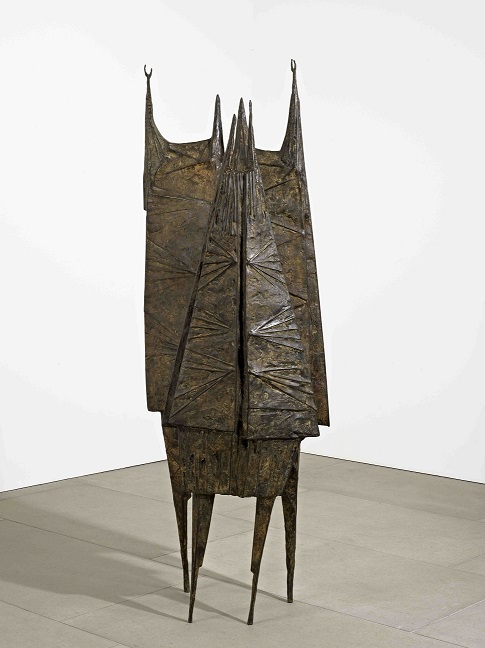
Figure, Totem, Beast: Sculpture in Britain in the 1950s – Tate Britain – 4th January, 2019 – ****

One of my favourite periods. At the intersection of figuration and abstraction. The curators showing the anxieties that plagued society and Western art in the aftermath of the horror of WWII and with the Cold War hanging over it. New materials and processes combined to create sculpture both brutal and beautiful. Some real heavyweights here. Henry Moore, Jacob Epstein, Elizabeth Frink, Eduardo Paolozzi, Reg Butler, William Turnbull. alongside lesser known names for me such as Kenneth Armitage, Bernard Meadows, FE McWilliam, Geoffrey Clarke, Louise Hutchinson and Luciano Minguzzi. And a reminder that Lynn Chadwick was a genius. And how influential this generation was across the world.

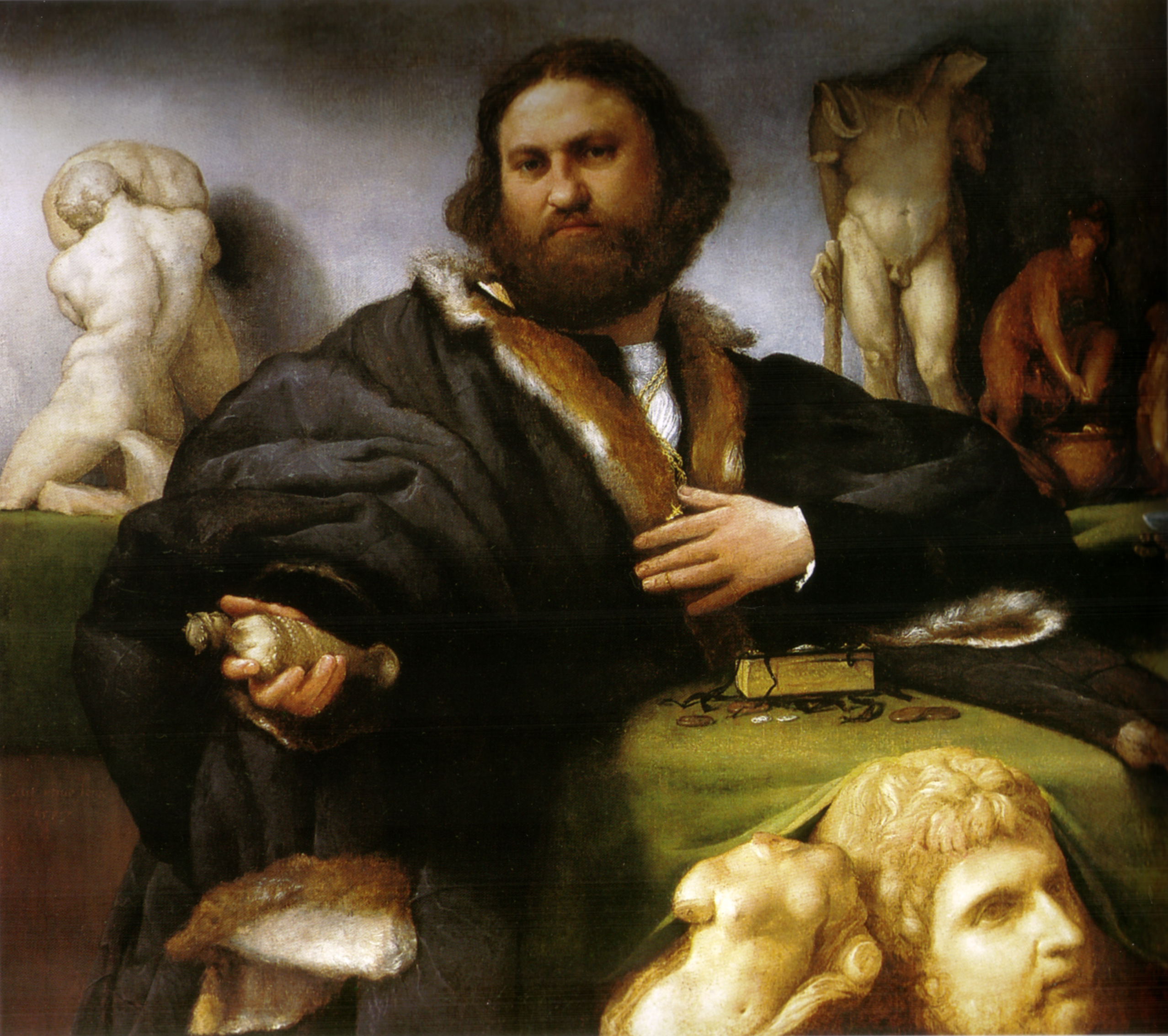
Lorenzo Lotto Portraits – National Gallery – 10th January, 2019 – ****

Lotto (1480-1556/7) may have have been lumped in with the Venetians but he got about a bit depending on who commissioned and paid him (Treviso, Marches, Rome, Bergamo, Ancona, Loreto). High Renaissance, never Mannerist but his portraiture evolved through time. Influenced by Giovanni Bellini, early portraits followed the classicism of Giorgione, then the psychological insight comparable with Antonello de Messina, later on more dramatic like Corregio. Forgotten then rediscovered at the end of the C19. Portraits are intense and self aware and often contain clues and insights into the position and status of the subjects. Not a happy chap based on his correspondence. Pointless addition of old stuff similar to items in the portraits for no discernible reason other than padding out the 30 paintings.

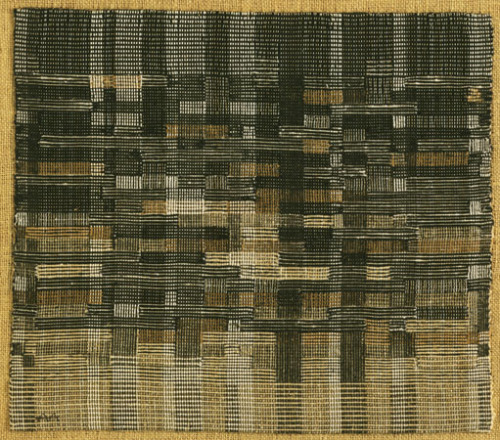
Anni Albers – Tate Modern – 17th January 2019 – ****

Anni Albers combined the craft of hand-weaving with minimalist abstraction. Student at Bauhaus school but discouraged from “fine art” classes so took up weaving. Influenced by Paul Klee and husband Josef Albers. Both educators. Forced out of Nazi Germany. Ended up at Black Mountain College in North Carolina. Influence on Op Art and Abstract Expressionists. Small scale pictorial weavings, large wall hangings, textiles, prints drawings. Studied and inspired by ancient art and technique and folk weaving. “On Weaving” 1965. Different materials, textures, weaves, threads, colours, geometries.

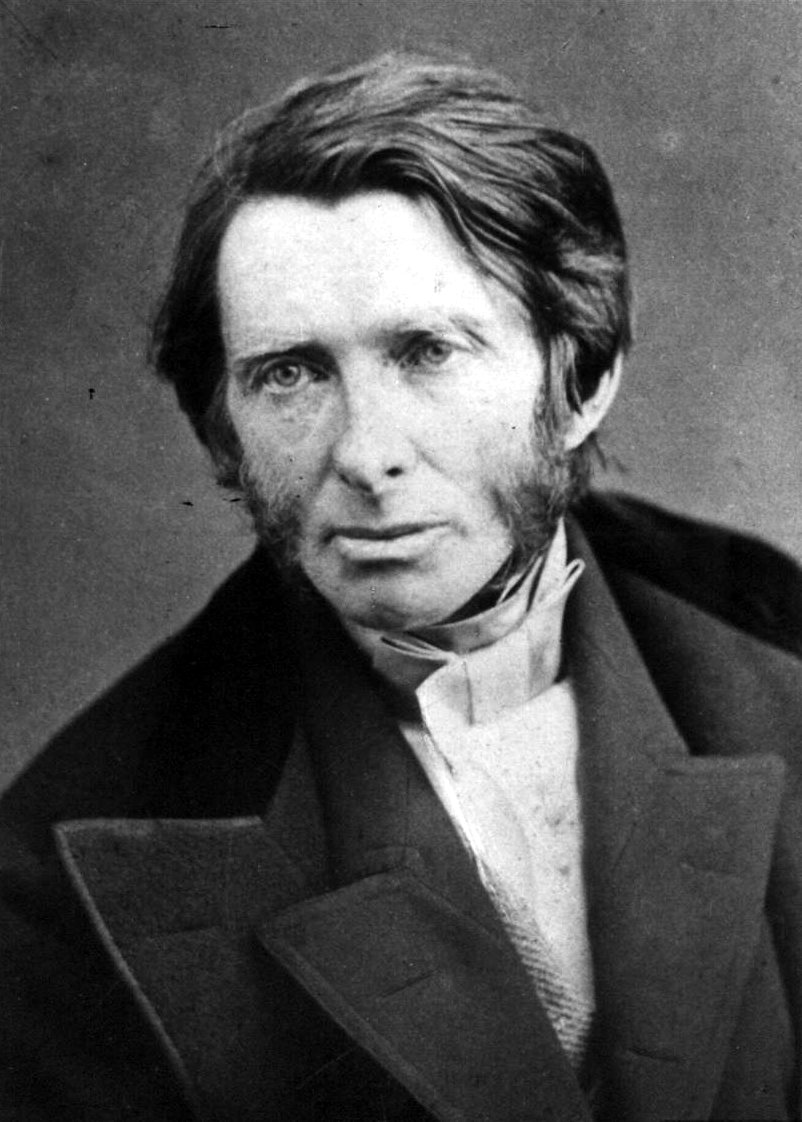
John Ruskin: The Power of Seeing – Two Temple Place – 13th February 2019 – ***

Artist, art critic, educator, social thinker. (1819-1900). In conjunction with Museums of Sheffield which Ruskin created for the people. 190 paintings, drawings, daguerreotypes, metal work, and plaster casts to illustrate how Ruskin’s attitude to aesthetic beauty shaped his radical views on culture and society. Last 25 years retreated into mental illness. Medieval Gothic as inspiration for communal enterprise, makers, guilds, not capitalist production. Detailed, precise drawings and watercolours of nature. Venetian architecture. Landscapes. Collections of objects. Contrast with his religious faith. Influence on Neo-Gothic, architecture, pre-Raphaelites, Arts and Crafts.

Pierre Bonnard: The Colour of Memory – Tate Modern – 14th March 2019 – ***

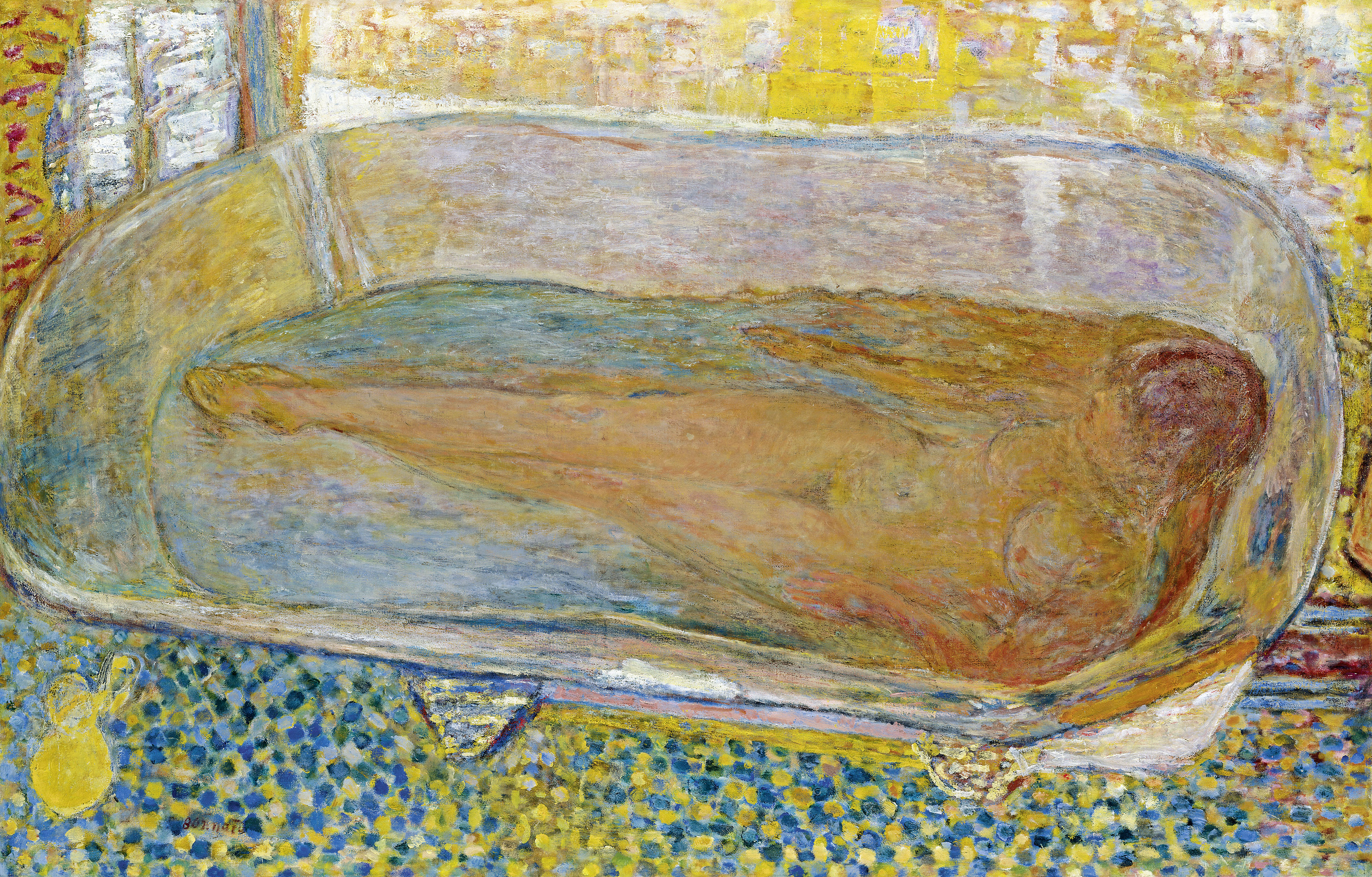
1867 to 1947. Bold use of colour though thin not vibrant. Member of Post-impressionist group Les Nabis. Early work influenced by Gaugin and Japanese prints. Shift into modernism. Landscapes, townscapes, portraits, domestic scenes. Popster designs, lithographs and illustrations. Odd angles, cropping and viewpoints. Martha de Meligny was model who became his wife. Always distinct use of colour, small marks, not from life, used photos and note in studio. Intimate, transient subjects. Overworked and sometimes twee or dull.

Sorolla: Spanish Master of Light – National Gallery – 28th March, 2019 – ****

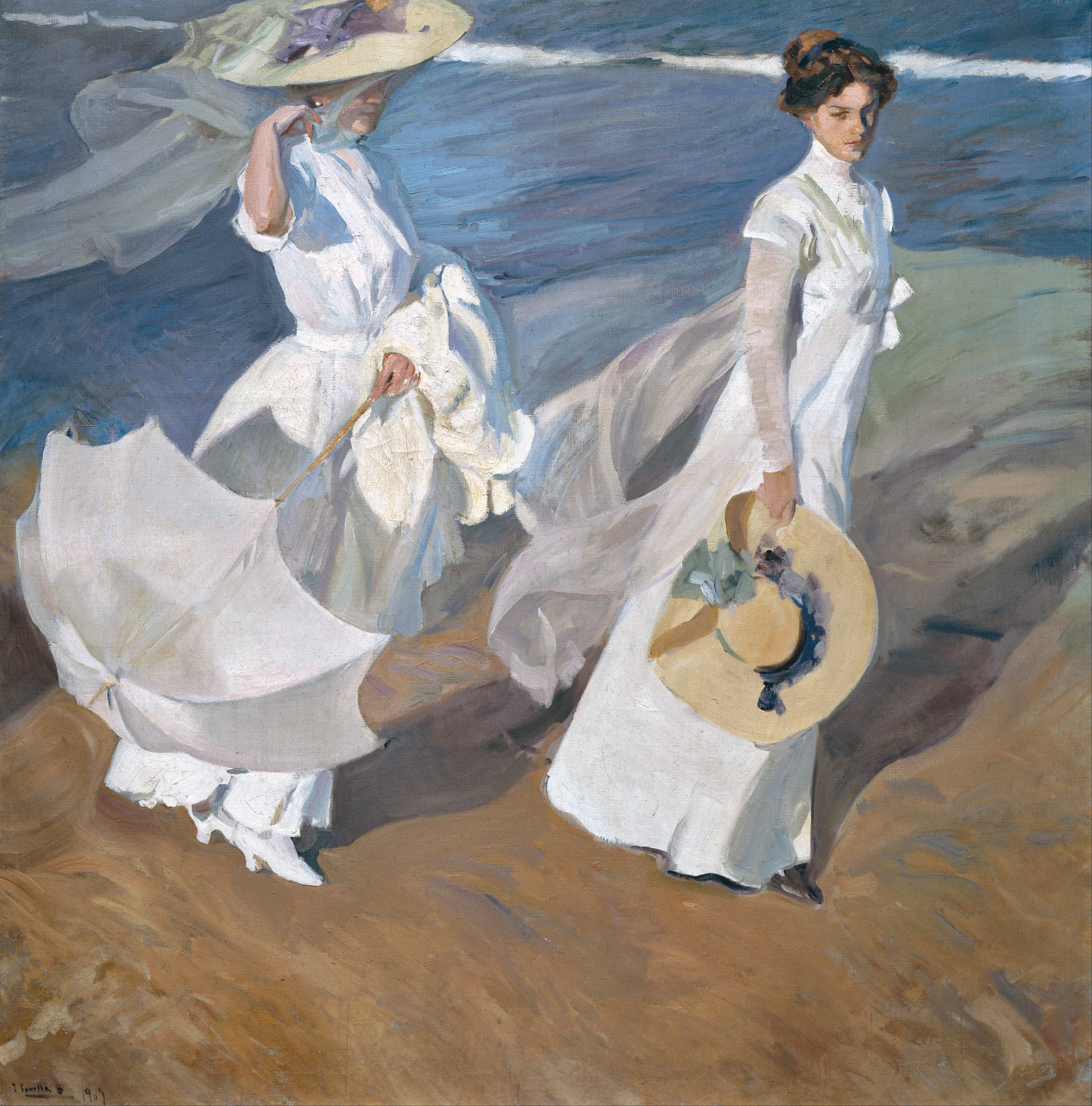
Joaquín Sorolla y Bastida (1863–1923). First UK exhibition of Spain’s leading Impressionist in over a century. Known as the ‘master of light’ for his iridescent canvases. 58 works. Seascapes, garden views, beach bather scenes, portraits, landscapes and genre scenes of Spanish life. Very popular in his day, native of Valencia. Child prodigy, worked quickly, excellent draughtsman. Very striking and lovely paint but no real substance and same techniques and effects across the works. Period when he did examine social issues and contemporary cause celebres (Another Marguerite!) however but these are more moral instruction akin to Dickens in paint. Scenes of rural Spain commission for NYC Hispanic Society. Influence of Singer Sargent and back to Goya and Velasquez. The paint equivalent of a very sweet tooth. Lovely but you can have too much in one sitting. The sunlight is exquisite though. Beach scenes, Sewing the Sail and Raisin Factory stood out. Spanish Art moved up and on with Picasso and Dali but Sorolla still very popular in Spain.

Right I feel better for making those notes. A smidgen of understanding for all those poor youngsters about to take exams and revising like billy-o. Just like LD is right now.

Vice film review *****

Vice, 30th April 2019

It’s been a shocking year so far in terms of getting to the cinema for the Tourist. No excuses. He has the time, the wherewithal and the desire but the theatre and concert addiction, (there have also been a few notable misses on the exhibition front), have crowded out film. There is also the not insubstantial fact that every time he looks to see what is on offer, most of it looks to be utter sh*te, and that the more intimate, thoughtful art-housey European guff that the Tourist prefers can probably wait until a subscription opportunity presents itself. This is patently a self-con, a great film should be always be seen on a big screen, but the Tourist justifies the primacy of theatre in his cultural life by pointing out that theatre is alive. The same production of the same play will vary, as much because of the reaction of the audience as the performances of the actors, and different productions of the same play ….. well just ask my chum BUD. Film, by contrast, is static. Once committed it never changes.

That doesn’t make film a lesser art form. Far from it. Just, right now, the Tourist cares more about theatre than film. And there is just too much to see and learn about even with the luxury of all the time in the world. Anyone who is able, (not even fit as the Tourist can testify), in retirement and can’t find things to do just isn’t trying hard enough. Anyway, for the moment, cinema is taking a bit of a back seat.

That’s not to say that the Tourist hasn’t racked up a fair few film classics so far this year in the discomfort of his own home. (Never managed to find a chair with the perfect construction to support the Tourist’s generous frame and the rest of the family have selfishly secured a more optimal viewing angle). Moreover, and we shall return to this at some point, the Tourist after years of mocking GoT without ever having seen it has bootcamped almost the entirely Westeros back catalogue in the past few weeks so that he is able to criticise from a position of knowledge. It’s eaten into the available hours mind. For your edification, and the Tourist’s own amusement, here is a list, in reverse chronology of the best of what I have seen since the incident that spared me from incessant wage-slavery. You will see there are a fair few “all time greats” here, as the Tourist values the opinion of experts, is easily impressed and, above all, is keen to show off his cultural “cleverness”. Comments welcome.

(BTW for those who prefer to ignore and belittle the facts expressed by those who know what they are talking about, or see conspiracy to deceive at every turn, may I respectfully suggest they give up on their jobs. After all presumably any skills they might have are either made up or valueless based on their own logic).

  • Roma
  • Strangers On A Train
  • Whatever Happened to Baby Jane
  • Okja
  • Sunset Boulevard
  • Network
  • Marnie
  • Ace in the Hole
  • La Regle de Jeu
  • Mona Lisa
  • I Am Not A Witch
  • Doctor Strangelove
  • Deliverance
  • The German Doctor
  • 13 Assassins
  • Macbeth
  • Baby Driver
  • Don’t Look Now
  • The Piper
  • Sweet Bean (An)
  • Jackie Brown
  • Pulp Fiction
  • Taxi Driver
  • Catch Me If You Can
  • The Player
  • The Last King of Scotland
  • Notes on Blindness
  • The Hunt
  • Casablanca
  • This is England
  • Dazed and Confused
  • Shakespeare in Love
  • Goodfellas
  • Look Who’s Back
  • The Look of Silence
  • Twelve Angry Men
  • A Clockwork Orange
  • Gravity
  • The African Queen
  • Great Expectations
  • King of Comedy
  • The Revenant
  • The Wicker Man
  • Foxcatcher
  • All About Eve
  • The Master
  • The Apartment
  • High Rise
  • Berberian Sound Studio
  • Chinatown
  • A Field in England
  • Elf
  • The Haunting
  • In Bruges
  • The Third Man
  • The Searchers
  • Force Majeure
  • Hidden
  • Citizen Kane
  • Brick Lane
  • Amy
  • Wolf of Wall Street
  • The Birds
  • Beasts of No Nation
  • Hannah and Her Sisters
  • Cinema Paradiso
  • Funny Games
  • The Grand Budapest Hotel
  • A Matter of Life and Death
  • Tokyo Story
  • Hamlet
  • Strictly Ballroom
  • Moon
  • Barton Fink
  • 12 Years A Slave
  • Guess Who’s Coming to Dinner
  • Night of the Hunter
  • Vertigo
  • The Godfather 1, 2 and 3
  • Mad Max 2
  • Gangs of New York
  • Withnail and I
  • Double Indemnity
  • Gladiator
  • The Madness of King George
  • The Lady in the Van
  • Groundhog Day
  • The Last Temptation of Christ
  • Palio
  • American Werewolf in London
  • Dead of Night
  • On the Waterfront
  • The French Connection
  • Rope
  • Audition
  • Blade Runner
  • North by Northwest
  • LA Confidential
  • Babette’s Feast
  • Life of Brian
  • To Catch a Thief
  • The Deerhunter
  • Seven Psychopaths
  • Trollhunter
  • The Crying Game

Right, diversion over, on to Vice then. Whilst this didn’t entirely pass me by when it came out and I must have read some decent reviews, it didn’t leap out at me either. Which is odd given the content, a comic hatchet job on, Dick Cheney (above) one of the architects of the America First doctrine of politics, the director and screenwriter Adam McKay is responsible for two of the funniest films ever made in Anchorman and Talladega Nights, and whose The Big Short I thoroughly enjoyed, and the cast, Christian Bale, Amy Adams, Sam Rockwell and Steve Carell, all of whom can, unlike some of their Hollywood peers, actually act. Still a slot in the diary opened up and £3.75 later (yep that’s the pensioner price, even if you aren’t a pensioner) off I trotted.

I loved it. I can see that half of America, and presumably Blighty, would hate it because of its political stance, and many more because of its breathless construction but this, for me, is what makes it so brilliant. Adam McKay doesn’t f*ck about taking sides when it comes to satirising Cheney’s legacy, even as he questions his own veracity, and he mixes up chronology and technique, (a mystery narrator, documentary footage, fourth wall breaks, a nod to Macbeth, crass symbolism, voice-overs, flash-backs, a meta focus group, even a false ending). A kind of cinematic Brechtian satire, familiar from The Big Short, but here more biting and certainly funnier.

Dick Cheney was the Vice President under George W Bush from 2001 to 2009, probably the most powerful in history, and certainly the least liked on his departure. After studying politics at Yale and the University of Wyoming (his home state), he served as an intern for Donald Rumsfeld in the Nixon administration, rose to became Chief of Staff under Ford from 1975 to 1977, represented Wyoming in the House of Representatives from 1979 to 1989, then became Secretary of State under George HW Bush from 1989 to 1993, overseeing Operation Desert Storm in the First Gulf War. He was Chairman and CEO of Halliburton during the Clinton regime before being chosen as GW’s running mate. He was a key player in the response to 9/11 and the Global War on Terrorism, sanctioning wire-tapping and torture, and promoting the invasion of Iraq. Together with his acolytes, including Secretary of Defence Rumsfeld, “Scooter” Libby, David Addington, John Yu and Karl Rove, he expanded the notion of executive privilege and the unitary executive theory and legitimised enhanced interrogation techniques such as waterboarding.

Now Republican administrations, as far as this laymen can observe, seem to function best when there is a genial chump as front man, letting the machiavellian brains behind the throne crack on with doing the nasty stuff. Cheney is particularly important because he was, as even this satire shows, an extremely intelligent man and gifted political operator. It strikes me that the problem with the current administration is that the chief is anything but genial and that there is, in contrast to the relationship between Cheney and GW, no hint of intelligent design behind him, as the GOP is either consumed by an ideology of opposition or, more prosaically, no-one knows what the POTUS is going to do from one tweet to the next, least of all him. Mind you I suppose the caprice, narcissism, limited attention span and questionable work ethic combine to limit the damage, though others are worryingly taking advantage notably in the composition of the judiciary.

What drives these blokes to behave like this? Money? For sure, though Cheney could have made more sticking with Halliburton, especially after smoothing the path for big oil at home and abroad, (specifically in Iraq as Vice shows). Legacy? That only comes once influence is cemented and, if we are to believe the film, Dick only got going after a kick up the arse from wife-to-be Lynne. Faith? Cheney was a Methodist but his religious belief didn’t seem to be at the core of his identity. Ideology? Of course but, in an early amusing scene, Cheney’s politics only become clear to him after he gets going. Not sure I believe that. Our politics are a function of upbringing and environment shaped by experience. For many the critical faculty that higher education brings leads to a politics based on what one stands for. For some though it simply reinforces what they are against. So “conservatives” like Cheney are against rights for minorities. Against change. Against other ways of thinking about the world. Against global co-operation except where it suits their definition of, in this case, America’s interests. Against the “other”. Against collectivism. Against intervention in the working of “free” markets, ironic since “free” markets always seem to require constant intervention in order to be “free” and to resolve the inefficiencies built into the (still required) price mechanism.

Of course when ideology is confronted by immediate, personal reality we can all become a little unstuck. In Cheney’s case this challenge came in his refusal to back GW and his party on the issue of same sex marriage for the very reason that his younger daughter Mary is a lesbian. The film implies that even this principle was abandoned to offer endorsement to his other daughter, Liz’s, successful campaign to become congresswoman for Wyoming. (US politics being more nepotistic than Ancient Rome it would seem). There is plenty of material which documents Cheney’s more equivocal activities whilst in office, notably the Washington Post’s 2007 appraisal and various documentaries, and DC himself was prone to be candid at times, notably his “so” response to a journalist’s remark that the US people had lost confidence in the Iraq War. He has also published a couple of lengthy memoirs which centre on his doctrine of American exceptionalism and influence and gives his side of this ‘story”.

Still it is up to you how much of Adam McKay’s polemic you wish to believe. That’s the problem with knowledge. Even the bit based on experience and perception can be misleading. And, in an ever complex world of information, we seem to getting into a right pickle when it comes to knowledge based on education, that is what comes to us from third parties, outside our own experience. No wonder we are all so confused and angry.

Anyway back to what drives men like DC, almost always men, who are so convinced of their righteousness that they never seem to question what they do or why they do it. Whether their actions are just or whether they simply serve their interests or beliefs, (generally strongest in the abstract fictions that bind us together: money, nationhood, history, culture, freedom, religion). If you ask me they are most dangerous not when their beliefs and values or being formed, nor when their sense of their rectitude is at its strongest in their urge to lead and save us, but when they exercise power simply because they can. I don’t know anything about the academic literature on power but thinking about this will set me on my way. There is a line early on from Rumsfeld which identifies the young Cheney’s dedication to power, loyalty and discretion (read, hiding stuff). And the scene prior to this where Rumsfeld just collapses into giggles when DC asks him “what we believe in”. That just about sums it up.

Anyway it looks like DC ended up as one of this men, a huge influence on where we are now. And Adam McKay’s film, underneath the laughs, and there are lots of them, serves to highlight this. His early labouring days, the hard drinking which led to a drink driving conviction, twice, the Yale drop-out, draft deferments, votes against sanctions imposed on the apartheid regime in SA and against the early release of Nelson Mandela, Desert Storm and the Panama invasion, cuts to military spending, intervention in Somalia, accounting irregularities at Halliburton, the 2000 election with the contested Florida outcome, the creation of a transition office ahead of the result, claims that Iraq possessed WMD and that Saddam Hussain was linked to al-Qaeda, the genesis of Islamic State, the pressure exerted on Colin Powell at the UN, lobbying for big oil and weakening environmental controls, concealment of documents, the Plame affair, the Taliban’s assassination attempt, his various offices in the House and in the Senate, his heart problems and, amongst all of the above, the event for which he is best known in popular imagination, shooting his mate in the bum on a quail hunt. Mr Kay certainly had plenty to choose from when making his “bio-comedy-drama” and most of it gets in one way or another.

The creative havoc that Adam Kay has unleashed on the material though needed to be balanced by a superb central performance and this he gets from Christian Bale. He has put on the pounds to look the part, with great make-up work, and, I assume, he has captured Cheney’s alarmingly blunt, charmless manner to a tee. Physically slow, mentally quick. Scarily self-possessed even when suffering a heart attack. Most intimidating when pausing mid sentence. Obviously CB was never going to win any meaningful awards given the nature of the film but it’s easy to see why he was nominated. As good as his Patrick Bateman, a nihilist from the previous decade.

Sam Rockwell as GW Bush, Steve Carell as Rumsfeld, Tyler Perry as Colin Powell and scores of others, (even Alfred Molina pops up as a waiter in a fantasy sequence, delivering a menu of euphemisms for atrocity), don’t really get much opportunity to inhabit their characters, but Amy Adams as loyal wife and supporter Lynne is utterly convincing.

Fragmentary, full of holes, partial, wild, high-concept but very funny. As Adam McKay indicates at the outset the creative team here “did its f*cking best”. They certainly did.

The Crucible at the Yard Theatre review ****

The Crucible

The Yard Theatre, Hackney Wick, 29th April 2019

The latest instalment in the Tourist’s engagement with this year’s unofficial Arthur Miller season was director Jay Miller’s often insightful, occasionally daft take on The Crucible which for me, and I know this is not the aesthete’s choice, probably just about trumps Death of a Salesman as Arthur Miller’s greatest play.

BTW it looks like, as any fool might have guessed, that the Young Vic and Marianne Elliott, and the stunning cast, have played a blinder with the now-opened revival of Death of a Salesman. This was predictably likely to be one of the best plays in London this year. And so it seems it is.

BTW again. I have been talking to some ypung people. Or rather I have been talking at some young people. At MS and MSC’s wedding amongst other ocassions so technically they had no means of escape. They, like MS and BD, hold Arthur Miller in low regard. I have a feeling that English Lit teachers may have been giving the poor chap a hard time. I get that there is some evidence in his life to support this, and revealed most explicitly in After The Fall, to pin him as an arrogant misogynist, who abandoned his disabled son, trashed the reputation of ex-wife Marilyn Monroe, stuck with impossibly idealistic political positions secure in his ivory tower and repeated himself to diminishing effect in terms of issues and form in his later plays. But, for me, his greatest plays are about as good as drama gets, and that is what matters.

And these plays can still thrive even when starved of creative sympathy. Especially The Crucible. As some sage observes in the Time Out review for this very production The Crucible is “built like a brick shithouse”. Correct. This apparently is the first time that The Yard Theatre has produced a classic play. It has played host to some others’ interpretations, notably Rash Dash’s wham-bam take on Three Sisters. But now Jay Miller and his young cast have given his namesake the shoestring, experimental once-over. Now the Yard, for the uninitiated, is exactly how a privileged, well-off, ageing, ex-City, liberal, insulated, South West Londoner imagines a theatre in edgy East London should look like. Scruffy space, ropey bogs, wooden benches now helpfully rendered fit for purpose with plastic seats. On a site by a canal, in an old industrial estate, next to the ginger line, two brew pubs on the site, (nice pizza courtesy of CRATE), creative spaces, studios, artisanal food-makers, cheek by jowl with old school light industry and breakers yards’. And graffiti. Lots of graffiti. Oh and beards. Lots of beards.

Love it. The Tourist is now looking for ways to get some of his chums to make the trek there. For even with the new material it presents this theatre is making a mark. I like the look of the upcoming Armadillo and its cast and hope that something beyond that might tempt his picky punters. The Yard is now getting Arts Council funding so expect it, like the Arcola, to go from strength to strength.

Probably should have pushed those punters a bit harder on this Crucible. they would have been intrigued. There are a few quirks – the TV screen announcing characters and other visual distractions sat on a chair, the spooky, masked witches that pop up in the later scenes, some extravagant Massachusetts c. 1692 accents, European regie-theater use of microphones, a spot of karaoke – that might bemuse rather than illuminate. But there are other innovations that manifestly do work. The cast kicking off on name-tagged chairs describing characters and context, and even stage directions and Miller’s own footnotes (A not J though that might have worked too); then slowly donning “period” dress (designed by Oliver Cronk) and taking on those accents; the doubling and truly gender blind casting; some dramatic lighting (Jess Bernberg) and ensemble effects; Jonah Brody’s ambient score and Josh Anio Grigg’s killer sound design. Brechtian and disorientating for sure but ramping up the strangeness of the events here and counterpointing the McCarthyite parable.

Since The Crucible is actually a belter of a story independent of its meaning then all this collectively serves to make us more engaged in what is happening as the hysteria in this ramshackle Salem boils over and the epic sacrifices by the Proctors are made. For surely The Crucible is as epic as anything Brecht or Euripides ever conjured up despite its superficially “historical” setting. Hence the link back to those opening quotes from Arthur M highlighting the historical inaccuracies. This is where Jay Miller’s mad genius pays dividends across the full 3 hours he commits to the production.

Young Mr Miller is plainly a clever fellow. For not only has smartly subverted the mythic quality of the play, whilst still retaining its dramatic power, (though like I say I have never actually see a bad production of The Crucible), and emotional connection, (I don’t actually well up when JP hangs on to his name but …..), but he has also feminised A Miller’s muscular language, exaggerated in The Crucible by the C17 New England idiom, with his casting of Caoilfhionn Dunne as John Proctor and Sophie Duval as Giles Corey (as well as Abigail Williams’s chief sidekick Mercy Lewis). Now as it happens these two are the best of the very talented bunch on show. I have seen Ms Dunne before, most recently in Mike Bartlett’s Wild, in The Nest at the Young Vic, on my allotted night at the Gate’s Dear Elizabeth and, most memorably at that same theatre in Suzy Storck, (where Cecile Tremolieres was, as she is here, the innovative designer). This was proof of just how much emotion she can wring from a character and so it proved again with her John Proctor, dim at first, but full beam by the time we get to the confession. Sophie Duval showed us intense pathos when Giles Corey loses his book reading wife to the madness but also plenty of laughs with Corey’s pithy comments about the venal motives of those egging on the teenage accusers.

It is usual to have sympathy for the scorned Abigail Williams. Not much though in Nina Cassells’s take where she has no discernible remorse for the carnage she unleashes. The scene when she meets Proctor, who begs her to recant, is especially chilling. The argument between, in this case, the two women, contrasts with the tetchy and tense arguments between JP and his (good)wife, played by Emma D’Arcy, in the Proctor house and then later the desperate exchange as JP wills her to lie on his behalf. I didn’t see Ms D’Arcy in Mrs Dalloway at the Arcola, (couldn’t find a date that worked for the willing SO), but it seems we missed a trick there. I am reminded that she mastered a tricky role in the unfairly maligned, if scattergun, Against at the Almeida as a complex student. The female side of the casting is completed by Sorcha Groundsell as the alternately, bolshie, brave and intimidated Mary Warren, (the weakest of A Miller’s Crucible characters IMHO). (I gather she has signed up for Netflix series The innocents – good on her). And a spirited (literally) Lucy Vandi as Tituba and the irksome Mr and Mrs Nurse.

As for the gents, Syrus Lowe, fresh from The Inheritance, offers a petulant, self aggrandising Reverend Parris, the willing executioner, as well as the officious Willard and Cheever, Jack Holden manages to avoid the trap of letting Reverend Hale descend into melodramatic self-pity as his faith is broken, and Jacob James Beswick stands out as “the Judges” Hathorne and Danforth, who care more about order and power than true justice.

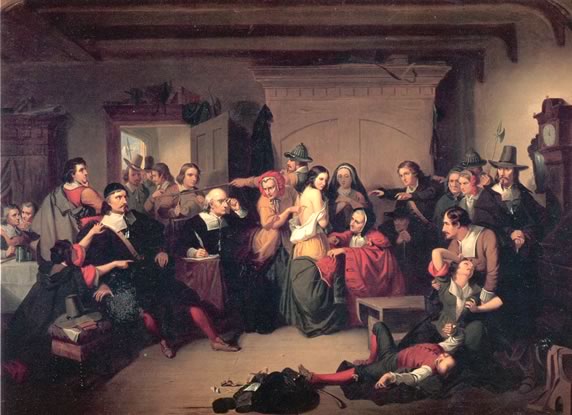
The doubling shows us that there is good and bad in all of us, though you have to hope yours isn’t going to be exposed by witchcraft trials, and that we are all capable of overlooking or conniving in state sanctioned persecution. The Crucible was written as allegory prompted by his mate Elia Kazan’s naming of 8 members of the Group Theatre to the House Un-American Activities Committee. Following the opening of The Crucible Miller also went before the Committee in 1957, had his passport confiscated, was held in contempt and sentenced to a fine and imprisonment. The “conviction” was overturned the following year but hardened Miller’s political views. He made up with Kazan years later. (As it happens Miller managed to get his work banned in the Soviet Union in the late 1960s as well, proving he was doing something right). Whilst, as I have said, the message of The Crucible and its dramatic power can stand all sorts of treatment, there is no doubt that Jay Miller’s radical take, at its best, offers an exciting and dislocating perspective on the play. A Miller took liberties with the “true” story of the Salem witch-hunts. Jay Miller is simply returning the favour.

The Crucible, like most of A Miller’s greatest plays, is ripped straight from the play book of Sophocles. John Proctor is the archetype tragic hero whose peripeteia (reversal of fortune) is brought on by his hamartia (fatal flaw) which leads him to anagnorisis (self discovery). All the very best plays, the ones that jump out, thump us in chest and head and leave us exhilarated, follow the Greek rules moreorless closely. Well maybe I exaggerate a bit. Though the following, including some of the Greek originals, suggests I might just be right. These plainly should be on everyone’s theatrical bucket list.

  • The Oresteia – Aeschylus
  • Oedipus the King – Sophocles
  • Medea – Euripides – (I know – it broke the rules)
  • Tamburlaine the Great – Marlowe – (see if you don’t end up quite liking the fella)
  • Hamlet – Shakespeare
  • Phedre – Racine
  • Woyzeck – Georg Buchner
  • The Master Builder – Ibsen
  • Long Day’s Journey Into Night – Eugene O’Neill – (four for the price of one)
  • All My Sons – Arthur Miller – (or Death of a Salesman or A View From The Bridge)
  • The Goat, or Who is Sylvia – Edward Albee
  • The Ferryman – Jez Butterworth – (work with me on this)

See what I mean.

Creditors at the Jermyn Street Theatre review ****

Creditors

Jermyn Street Theatre, 27th April 2019

I am still tiptoeing my way into Strindberg. A long history of ignoring him after an early dismissal many years ago was corrected with the companion piece to this, a version of Miss Julie, also translated by Howard Brenton, also directed by JST AD Tom Littler and also co-produced with The Theatre By The Lake which seems to serve the good people of Cumbria very well and probably needs a visit. There was also Polly Stenham’s version, simply Julie, in 2018 at the NT, a variation on her usual style. Neither were completely convincing, the former because of the play, the latter because of the production, but I recognise there is food for thought here, though far less than with Ibsen and Chekhov where I am now properly in the swing after some similar false starts many years ago.

It’s the underlying misogyny, even when old August may well be confronting it, and the violent swings in emotion which seem to be more necessitated by plot than character, which put me off. That is not to say that the grumpy Swede had nothing to say about the nastier side of love and passion just that the way he tackles it feels artificial to me. Now I know. It’s theatre. It isn’t real and doesn’t have to look like. Except that this is intended to be naturalistic and, like his contemporaries, offer an insight into the human condition, and specifically that thing that gets bound up in the phrase “love/hate relationship” or, more lazily I think, “the battle of the sexes”.

Mind you I have to say that this Creditors was a more engaging experience than Miss Julie. Maybe I am getting better at this theatre viewing lark, which would be heartening given the time and money invested, or maybe the way in which Creditors approaches the three way romantic tussle, here MFM rather than FMF, was more “relatable” (ugly word) to me, though I hasten to add I have never been caught up in such a scenario. The benefit, (or maybe curse), of being dull and painfully inept when it comes to matters of the heart.

What it can’t be, obviously is the creative approach. Like I say its the same team. Even down to the set where Louie Whitemore employs the same basic structure to create the seaside hotel reception room in which the sensitive, would-be artist, Adolf is convalescing with his fervent wife Tekla, that she employed to create the Scandi period kitchen for Miss Julie. Maybe the cast here was a little more to my taste though it is the same James Sheldon playing Adolf here in Creditors as the sexy servant Jean in the Miss Julie. I have a lot of time for Dorothea Myer-Bennett most of whose recent performances I have seen (Rosenbaum’s Rescue, Holy Sh*t, The Lottery of Love, The Philanderer) and she always stands out even if the play isn’t entirely convincing. Here she captured Tekla’s independent spirit, her devotion to Adolf and her still unresolved passion for the third character in this conflicted trinity, Gustaf.

He was played by David Sturzaker, another very fine theatre actor as it was my pleasure to discover recently in the multiple parts he mastered in the RSC’s excellent Tamburlaine. Here he shows how Gustaf’s insistent charm first cast doubts in Adolf’s mind about Tekla’s history, fidelity and ambition and then, as it is revealed that his presence in the hotel is no coincidence, he attempts to “win back” his ex-wife whilst Adolf eavesdrops from the room next door. These two scenes sandwich that between Tesla and Adolf where Adolf’s suspicions are angrily voiced despite her attempts to reassure.

Pretty straightforward huh and maybe not an especially original subject for drama you might think. But it is the way that Strindberg explores the motives and psychologies of his three protagonists, and the the way their emotional ambiguity is expressed, that turns it into something compelling. Why is Adolf so weak and open to persuasion? Tekla has expanded his artistic horizons and the marriage has been happy so why does he fall so easily for Gustaf’s Iago-like duplicity? She is intelligent, educated, sophisticated and worldly so why just WTF is Adolf’s beef? What is driving Gustaf to wreak this emotional havoc? Revenge, love for Tesla, wounded pride at the way Tekla, thinly disguised, ridiculed him in her autobiographical novel, toxic masculinity? Are Adolf and Tekla hiding something about their own history? Who is dependent on whom? Is Tekla still attracted to Gustaf’s “stronger” character? Is this just a game for Gustaf? Why the melodramatic ending?

Howard Brenton, like so many theatre types, is fascinated by the interiority, (yep it’s a real word), questions that Strindberg poses. As he is with other literary greats – see my forthcoming attempt to pick the bones of his latest play Jude inspired by Hardy (and, somewhat bizarrely, Euripides). As with Miss Julie this seemed, at least to this novice, an admirably forthright adaptation but then I know no better. It certainly, like the Miss Julie, serves up contemporary dialogue and caustic humour to set against the period setting and it comes in at a crisp 80 minutes or so. Same goes for Tom Littler’s direction and the unfussy lighting of Johanna Town and sound of Max Pappenheim. Howard Brenton has written a play, The Blinding Light, about Strindberg’s drift into madness, his “Inferno” period, which was directed by Tom Littler, and they have also combined for AS’s dances of Death, so you have to think they know what they are about here. So I am guessing this is about as good as it gets when it comes to modern interpretations of our August. Especially in the very intimate surroundings of the JST.

There is a lot more to Strindberg than the early, naturalistic plays which deal with that are most often performed. There are the the later more ambitious, symbolist works (A Dream Play, Ghost Sonata and The Dance of Death). Various history plays. Theatre director and producer. Novels. Poems. Essays. Scientific investigations. Painting, (his symbolist landscapes, example above, tick the boxes for the Tourist). Also dabbled in theosophy, though this was very trendy in fin de siecle artistic circles, occultism and alchemy. Not surprising he went a bit bonkers. A social/anarchist with a strong antipathy for all forms of authority but also an anti-semite. A campaigner for women’s rights who helped transform the role of women in drama who was also an ugly misogynist in print and whose wives where decades younger than him.

When you read about his him, his plays and his place in Swedish culture it is easy to see whay he holds such an important place in world drama. Am I persuaded? I’ll let you know in a few more years, and after a few more productions.

Three Sisters at the Almeida Theatre review ****

Three Sisters

Almeida Theatre, 25th April 2019

It creeps up on you this Three Sisters. As with her feted take on Tennessee Williams’s neglected Summer and Smoke last year, Almeida Associate Director Rebecca Frecknall is unafraid of letting the play take its time to unfold and delivers a similar, dreamy quality to events in this Chekhov staple. And, with Cordelia Lynn’s loose-limbed, idiomatic, yet poetic, adaptation, (draw from Helen Rappaport’s literal translation), and Hildegard Bechtler’s barely-there set and timeless costumes, (if there had been some old rope lying around I would have guessed she were the taking the p*ss), she has some very willing accomplices. This is a Three Sisters pretty much stripped of context or artifice, no birch trees or big frocks here, where we are forced to focus entirely on the relationships between the characters. Time, space and place, and even action at some points, are erased to just leave people, their language and their interaction (or lack thereof – there aren’t many great listeners is Chekhov).

Fair enough. This is, after all a play about (father and mother-less) three sisters and their dodgy brother (I’ve always wondered if Anton C had a Bronte thing going on), bored sh*tless and pointlessly dreaming of returning to the buzz of metropolitan Moscow. And marriage. And its frustrations. And parenthood. And its frustrations. And old age. And its frustrations. And work. And its frustrations. And money. And its frustrations. And unrequited love and its frustrations. And idealism. And its frustrations. And denial. And its frustrations. And sacrifice. And emotional manipulation. And politics. And class. And knowledge. And drink. In fact the whole meaning of life gig. There’s a party. A bunch of soldiers come. There’s a duel. Then they go. A clock gets smashed. A piano doesn’t get played. And, in the background, there is the march of history with the first Russian Revolution just 5 years away from when AC completed TS.

Patsy Ferran is back with Ms Frecknall after her award winning performance in S&S but as Olga the oldest, unmarried, sister and the self sacrificing glue that holds the family, just about together. She is mesmeric but actually has less to say and do than Pearl Chanda as Masha or Ria Zmitrowicz as the youngest Irina. Here Irina veers towards needy, self-obsessed, Gen Z-er, reinforcing the abstracted nature of the interpretation. In any one else’s hands this might not have worked but Ria Zmitrowicz is good enough to get away with it, For me though Pearl Chanda as the sardonic Masha is the pick of the three. Masha is the engine room of the play, the catalyst for its sharp humour and for the changes in the direction of the meandering plot. Her infatuation with Peter McDonald’s solemn philosophising widower Lieutenant Vershinin, needs to mix a genuine passion with a sort of bored, going through the motions. And she needs to bait her cuckolded Latin teacher husband Kulygin who knows exactly what is going on. Elliot Levy’s portrayal of Kulygin certainly captured his foolishness and compulsion to deflect tension with humour but not so much his underlying sadness and yearning for Olga.

The other central female character is Natasha, (another precise performance by a favourite of mine Lois Chimimba), who goes from gauche, brittle servant to imperious lady of the house after marrying the weak, vacillating Andrey (Freddie Meredith) who spunks the, limited, family fortune away gambling. Natasha, with her doting on her new born son Bobik, her antipathy to devoted family retainer Anfisa (Annie Firbank) and her pursuit of the unseen Protopopov, the head of the local council which Andrey joins to give him purpose, is here the most conventionally Chekhovian, at least from my memory of previous productions I have seen.

Mind you my memory is far from perfect as, for a few minutes in the second act I think I may have drifted off into The Cherry Orchard as I confused the confused Ferapont (Eric MacLennan) with Firs and the drunk army doctor Chetbutykin (Alan Williams) with Leonid Andreieveitch Gayev. Fortunately the ever attentive BB’s, who, along with my other guests, BUD, KCK and, of course, the SO, put me right and, as usual, saw in the production all that I missed. This is one of the joys of Chekhov. We all agreed on the overall tone of the play, in a word melancholic, and the direction of the plot, but because there is so much of themselves explicitly voiced by these complex characters we all focussed on different facets and dimensions off their existence, to then share our findings, albeit briefly, at the end.

Normally having set out situation and the arrivals, (there are always arrivals and a departure, after moreorless dramatic disclosures, in Chekhov), here the soldiers, including the unfortunate Baron Tuzenbach (Shubham Saraf) who pines for Irina, a troubled poet Solyony (Alexander Eliot), photographer Fedotik (Akshay Sharan) and Rode (Sonny Poon Tip), AC plays start to move through the gears drawing you in with major key attempted resolutions, before drifting off into a minor key conclusion. Not here though. Once the pace is set, at Irina’s name day party, it doesn’t really alter. It is as if the ominous, “keep calm and carry on even if it is all going to sh*t” ending feeds backwards into the rest of the play. But the absence of any distraction here, (dusky lighting and ambient sound by Jack Knowles and George Dennis are as non-specific as set and costumes), the intimacy of the space, the dedication of cast and director to the intention and, especially, Cordelia Lynn’s adaptation reeled us all in and held us there. It feels its length, just shy of three hours, and there are times when words, and only words, test the patience but ultimately it is a rewarding, if nebulous, experience.

For it is perfectly possible to never get out of a wistful second gear in Three Sisters. Nick Hytner did this in his 2003 NT production, despite a cracking cast. I plumped for this in contrast to Michael Blakemore’s West End production a few months later. Which appears to have been a mistake even though MB used a Christopher Hampton rather than a Michael Frayn adaptation. Alternatively, as Benedict Andrews proved at the Young Vic in 2012, it is possible to pimp it up, rev up to fifth gear and set out on the highway. That wasn’t perfect but it was bloody exciting in parts. I think I have seen a couple of other takes before record-keeping began, (yes I am a boy and I like making lists), but don’r remember them too well but there’s always the ennui.

I see the reviews are a bit all over the place. I can see why. In this case I think the only way to be sure is to see for yourself. And, if you like it, then mark down Rebecca Frecknall’s next outing. I suspect she will have her way with Ibsen one day soon. That could be very interesting. Meanwhile we have another Three Sisters in the pipeline. This time at the NT with Inua Ellams shifting the action to 1960s Nigeria and with Nadia Fall in the director’s chair. Neither, in my experience, reach for the soporific so this should be fun.

Tartuffe at the National Theatre review *****

Tartuffe: The Imposter

National Theatre Lyttleton, 24th April 2019

Top Girls. Downstate. Small Island. Follies which I can vouch for from the first run. And now this Tartuffe. All superb. If the NT is still going through a dodgy patch artistically then f*ck knows how good it is going to be when it gets back on track. This punter for one is very happy. And having paid £15 for this, as well as Small Island, and just a few notes more for Downstate, combined this has to represent just about the best bullseye the Tourist has ever spent.

For those of you Londoners, (I accept that for those outside the capital the N in NT may be a source of frustration despite the NT Live and touring initiatives), who whinge about not being able to get to see the NT “sold-out” productions I say the following. Sign up. Watch the updates. Book early. And take a risk. There will always be a few hot playwrights or big name actor productions where the members will beat you to it, but generally you will be OK. Risk a few quid. Worst case if your busy social life means when the date looms you are positively FOMO’d then, for a couple of quid, you can get credit for next time. And, if it does turn out to be sh*te, think of it as a necessary donation to maintain society’s cultural fabric. Any one of these recent productions was still eminently, and cheaply, bookable just a few weeks in advance. If you wait for reviews and chase the big hits you’ll end up paying twice the price in some cramped West End mausoleum. Here endeth the lesson.

Until now I hadn’t seen a convincing adaptation of Tartuffe or, frankly, any of Moliere’s plays. Started too late in my learning and maybe just unlucky. Played with too much fidelity to the “original” conception and it’s just unfunny caricature. Depart too far from the central hypothesis of hypocrisy, especially religious, or cram to much in in a bid for relevance and it can become chaotic or risibly naive. Keith A Comedy?, Patrick Marmion’s take at the Arcola recently smacked of the latter. As for the recent RSC Tartuffe, no comment. Sounded interesting but just a bit too far for the Tourist to go to knacker his back again in the Swan.

For this version, at the time of booking, I didn’t know the cast and, in any event, had never see anything by our Tartuffe here, Dennis O’Hare. Translator/adaptor John Donnelly was also new to me. Forget actors. I can’t stress enough how important the role of the adaptor is to making ye olde theatre work for modern, attention deficit audiences. But, as I say, in this case, no form guide. So that just left director Blanche McIntyre as the only confirmed draw. That was enough however. Ms McIntyre was the canny brains behind the RSC’s 2017 Titus Andronicus with David Troughton in the lead and The Writer, Ella Hickson’s brilliant feminist discourse at the Almeida last year. Next up she will tackle Bartholomew Fair at the Sam Wanamaker.

What can I say? Result. John Donnelly and Blanche McIntyre have created a Tartuffe who genuinely appears to believe his own hype and an Orgon (Kevin Doyle) who desperately wants his sins expiated. He is a speculator who has made a fortune trading around some dodgy war time activity facilitated by the government. (Think big oil, Cheney and Iraq if you find this too hard to believe). He is holed up with family, and Tartuffe himself, in his hyper-designed Highgate palace, Robert Jones’s set offering a nod to French baroque routed through World of Interiors.

Dennis O’Hare’s Tartuffe comes with prayer beads, topknot, bizarre South American accent and compromised personal hygiene. His spiritual philosophising veers from trite to acute. His religion is eclectic but filled with Goop-y self-help, lifestyle, homilies. Kevin Doyle’s agitated Organ believes the rest of his family sees his family’s antipathy to Tartuffe’s wisdom as reflecting their selfish claims on him and his wealth. So far, so recognisable. The difference here is that our shaman Tartuffe might just be right rather than the pious Christian hypocrite of most interpretations. And Orgon might just be justified in ridding himself of his ill-gotten gains and the guilt that comes with it to try to live a simpler life, albeit steeped in nostalgia. And there is a hint of something more like love in their complex relationship. (Maybe the pink and green neon St Sebastian on the back wall had something to say about this?)

From this starting point Mr Donnelly builds a consistent thesis all the way through to the expeditious deus ex machina which concludes the business. Here Orgon is saved from Tartuffe’s disclosure because the government doesn’t want its illegal war-time activities disclosed. Tartuffe is still the vehicle for much comedy but his genuine belief in his mission shifts the focus of the play into more satirical territory, closer to Moliere’s original intention. The original was quickly banned, not because Louis XIV, (and the public by all accounts), didn’t love it but because the Church and Aristocracy couldn’t stomach the p*ss taking.

The rhyming couplets, at least until the end, are abandoned which allows the retributive message, the farce in the plot, the fine jokes (Spymonkey’s Toby Park was involved) and the characters, (with their roots in the stock characters of Roman comedy), to emerge with more than usual clarity. Money makes their worlds go around and Orgon is the ATM. Kitty Archer, (who stood out in her debut One for Sorrow at the Royal Court), as daughter Marianne is a spoilt brat, but painfully aware of it, as she debates the forced marriage to Tartuffe per Daddy’s demands, or pauperdom with posh “street poet” boyfriend Valere, (some cracking lines for Geoffrey Lumb – “rhyme is a bourgeois concept”). Susan Engel does a fine turn as Orgon’s dismissive mother Pernelle who even, at one point, starts to fall for Tartuffe’s logic. Olivia Williams as wife Elmire shines in the “seduction” scene, here showing the wrong done to women by being used as sexual pawns in male games. Hari Dhillon’s Cleante and Kathy Kiera Clarke as Dorinne both offer a knowing, though still selfish, take on the action. Enyi Okoronkwo’s doltish son Damis gets some good laughs out of being a few lines off the pace.

I can see why some might want their Tartuffe to be lighter and less didactic. See the pic above. More comedy less message. Tough. There’ll probably be the same bunch who can’t contemplate Shakespeare without doublets. The reason theatre lives is because it changes as we do. And Tartuffe is a classic because it can speak to all times. This certainly did.

Small Island at the National Theatre review *****

Small Island

National Theatre Olivier

If you know Andrea Levy’s Small Island either from the original 2004 book, (not me I confess), or the 2009 Two part BBC adaptation with script from Sarah Williams and Paula Milne and starring the inimitable Ruth Wilson and Naomie Harris then you will know roughly what to expect from Helen Edmundson’s adaptation directed by NT head honcho Rufus Norris. This is an epic social history, set in post-WWII Jamaica and London, and centred on the lives of two ordinary couples, or more specifically two, extraordinary, women, Hortense and Queenie.

It is a brilliant story, brilliantly told, but, even with the NT’s formidable financial and creative resources to hand, it was still an ambitious ask to bring it to life on the stage. Now I reckon Rufus Norris has been unfairly pilloried in some quarters during his stewardship at the NT. Not all the new commissions have come off but there have been some absolute belters as well. Keeping the progressive and conservative stakeholder congregations onside at the NT would test the patience of a saint, especially in these interesting times, and I reckon RN has had a pretty good stab at it. And a couple of the projects where he has taken the director’s helm himself, Everyman and Mosquitos, were superb. Yet for me he is at his best when pulling together multiple narratives and kaleidoscopic forms; as long as the writing on which any work is created is up to snuff and the stories he helps tell make an immediate emotional connection. London Road, Behind the Beautiful Forevers, The Amen Corner, Feast, (both of which I missed), Festen and, I gather his takes on Cabaret, all fit that bill. So I was pretty sure this would work and fill the Oliver stage with technicolour life again.

And it does. Superbly. We first meet Hortense (Leah Harvey) in the Jamaican school she teaches in alongside glamorous American Mrs Ryder (Amy Forrest). A hurricane is coming. Michael (CJ Beckford), the rebellious son of Mr Philip (Trevor Laird) and Miss Ma (Jacqueline Boatswain), who are also Hortense’s, very strict, stand-in parents, (she is the illegitimate daughter of Mr Philip’s affluent white cousin). arrives. Hortense loves Michael but he has eyes only for Mrs Ryder. Cue a brilliant set piece prologue, bravura lighting (Paul Anderson), sound (Ian Dickinson) and, especially, projection design from Jon Driscoll, taking us through the storm, interspersed with Michael and Hortense’s childhood, (not sure who played little M and H but blimey they are brave), and an explosive argument at the dinner table. In this Tempest-ian prologue it soon becomes clear we are in for an aural and visual treat thanks to these creatives in tandem with the sedulous stage and costume design of Katrina Lindsay, music of Benjamin Kwasi Burrell and movement of Coral Messam. Heaven knows how many hours they all put in but not was worth it.

This is worth the ticket price alone. Especially if, like the Tourist, you only pay £15. The proper reviews have come in and they are excellent. If Billers at the Guardian and DC at the Telegraph both say 5 stars then you would be a t*t to miss it. There are plenty of tickets left towards the end of the run from which to take your pick. With acting of this level and stories with this much passion I would happily have paid £75 for centre front stalls but trust me, with stagecraft of this quality and scale you’ll be fine in the cheap seats as well.

Now the characters do take a little time to fully come to life. The setting does dwarf the actors a little in the prologue and, in the preview I attended, the delivery of the dialogue initially lacked a bit of fizz. But when we move to England, the “mother country”, to meet Queenie (Aisling Loftus) and her awkward, repressed suitor, bank clerk Bernard (Andrew Rothney), and then track the progress of Gilbert (Gershwyn Eustache Jnr), during the war as an airman and then when he returns after the war, with Hortense who has married him to realise here dream of escape, things really begin to crank up.

Andrea Levy’s story, replayed deftly by Helen Edmundson, is built on memorable episodes which together create an irresistible momentum topped, at the end of the first, long, half by the arrival of the Empire Windrush, and then in the shorter, more constrained second half, set in 1948, by the return of Bernard and the momentous decision which finally binds the two couples. Queenie’s date with Bernard in the cinema, her first encounter with Michael’s irresistible charm after he too arrives in GB to fight for Empire, Hortense mistaking Gilbert for Michael on first meeting, the ill-fated fight in Yorkshire, Hortense’s desperate betrayal of best friend Celia (Shiloh Coke). Queenie’s tender care for her traumatised father-in-law Arthur (David Fielder), the overt racism Gilbert and Hortense encounter, as postie and would-be teacher, (audience visibly outraged), and from Bernard after he returns. And many more. Each scene is expertly navigated and beautifully mounted.

Small Island is, of course, primarily about race and prejudice, and the journey that the protagonists take, both geographical and emotional. It reflects Andrea Levy’s own, mixed race heritage, and the legacy of Empire. In this adaptation though, and maybe just because of the brilliance of Leah Harvey as the proud, uptight, determined Hortense and Aisling Loftus as the openhearted, optimistic but tough Queenie, I was particularly drawn to the compromises the women had to make to carve out any sort of meaningful life for themselves. All the main characters have dreams that, in order to be realised need to confront unpalatable realities, but the two women, in their own, intertwined, ways have so much more to overcome. This, ultimately, is what makes them so sympathetic and the story itself so warm, uplifting and, dare I say, inspirational.

Without the somewhat syrupy narration, and with the exuberant, (even in some of the darker passages), innovation which was required to bring each scene to life, this stage version is more moving and satisfying than the TV version. It is around three hours, even without the interval, but it never feels like it and, though I can’t be sure not having read the book, it seems to offer a more than faithful distillation of Ms Levy’s intention. Unfortunately she passed away in February before the play opened so we can’t be sure but she was apparently fully signed up to director and adaptor’s vision . The programme contains an extract from her 2014 essay “Back To My Own Country”. Everyone should read it.

“We are here because you were there.” I was particularly struck by this quote from Ambalavaner Sivanandan, prime mover in the Institute of Race Relations, highlighted in the programme notes from Leah Cowan. Remember everyone who came to Britain from Jamaica and elsewhere was a British citizen. Same rights as my grandad. Who just happened to be, I knew even as a child brought up in an entirely white monoculture, an ugly, visceral racist. He’s long gone. Yet it seems the open abuse he habitually lobbed at his black neighbours still hasn’t.

Small Island with bowl you over as a piece of theatre, make you laugh and maybe even cry, but it should also make you think long and hard about our shared history. Do go.

(As an aside can I beg Naomie Harris, Hortense in the TV adaptation, to return to the London stage. You will know her from her film roles as Eve Moneypenny in the last few Bonds or Moonlight, amongst others. I think the last time she was in the theatre was in Danny Boyle’s amazing sounding Frankenstein which I never got to see. Come to think of it it would be good to see Mr Boyle’s boundless imagination let loose again on the Olivier stage. He would fill it I am sure. As for Ruth Wilson, Queenie in the TV Small Island, anyone who saw her magic in Ivo van Hove/Patrick Marber’s Hedda Gabler will be counting the days to her UK stage return).