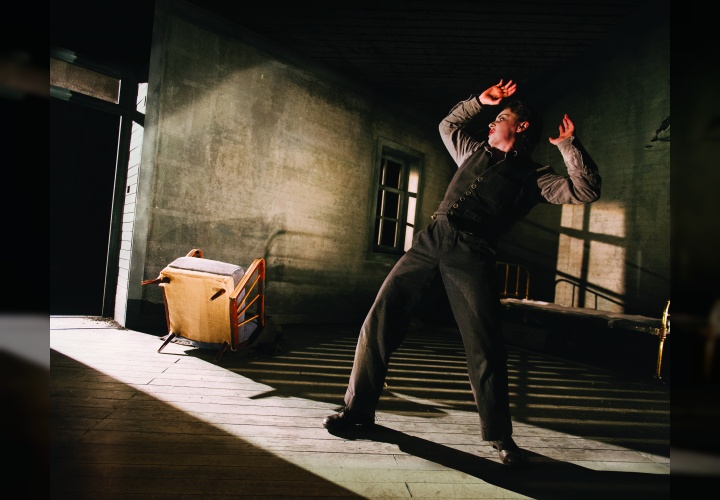
Man to Man at Wilton’s Music Hall review ***

man20to20man20new_720x580-2-720x500-blur

Man to Man

Wilton’s Music Hall, 15th September 2017

I am confused about this. Is it an expressionistic masterpiece that explores the nature of gender identity and German history through devastating poetry, or a piece of pretentious fuck-wittery which couldn’t be bothered to serve us up a coherent story? Was it a visual and aural treat using the best that lighting, sound, video and set designers can conjure up in this always atmospheric space, or a bunch of hackneyed theatrical tropes to mask the fact that the content was tired and banal? Was this an intense bravura one woman metamorphosis or an actor crawling up the wall in a baggy suit doing funny accents?

Truth to tell is was a bit of both but net, net I am pleased I saw it. This might, though, have been one of those nights when I should have been flying solo. Instead I roped in the SO and the TFP’s who I suspect got more sustenance from the curry beforehand than this work. And I have form with the TFP’s. It was the German connection you see. Still maybe next time I will get it right.

Man to Man tells the (true) story of Ella Gericke who is forced to assume the identity of her dead husband Max to keep herself alive in pre WWII Germany, Her struggle to evade exposure is set against the rise of Nazism, the war itself, the reconstruction of Germany and, finally, in an addition to the original play, the fall of the Berlin Wall. But this is no ordinary narrative. This is a memory play and Ella’s memories are, to say the least, personal, confused and distorted. Which means over the 75 minutes or so you have to be on your mettle to keep up. We see Ella forced to deceive her workmates and enter a masculine world fuelled by beer and schnapps. We see her rueing, I think, the absence of a child in her life. She gives up her own passport to a woman she cares for so that the woman might escape Germany. She has to avoid conscription but cannot bring herself to renounce her Max identity to do so. She denounces one of her neighbours. She ends up, I think, in the SA and has to kill to evade capture. She works in a factory after the war and conspires with the bosses to illegally bring in female labour posing as men. She returns to the grave of her husband.

And these are just the bits I can remember. The story is like a series of inchoate shards colliding through time (sorry that is the best I can come up with). It examines themes of identity, gender obviously, but also Germany itself over the period (I started thinking about Ella’s male/female divide as a metaphor for East and West though I may have got carried away with all the symbolism), as well as grief, loss, deception, alienation and power.

Now all this is portrayed by one woman, Maggie Bain, in one room, though this is as far from a monologue as it is possible to get in a theatre. She adopts a broad Glaswegian accent to portray the husband, which I fear to say, was not always as clear as it might have been. My ears and the Wilton space are to blame. This contrasted with the voice of Ella, though over time the separate identities seemed to bleed into each other. All I can say is that whatever Maggie Bain was paid, it wasn’t enough. The production, created by directors Bruce Guthrie and Scott Graham, with a text translated by Alexandra Wood, from the original German, places huge demands on its sole actor, both in terms of voice and body. Mind you I can see why an actor would relish the chance to take this on. (The UK premiere saw the fiercely intelligent, chameleon Tilda Swinton take on the role of Ella which makes eminent sense).

Now apparently this is what German playwright Manfred Karge is all about. No lazy Anglo-Saxon naturalism for Mr Karge. This is the full-on, modern European theatrical experience (I know we are in Europe but you get my drift). But it isn’t dull, worthy and full of theory in a way that might imply. But it is elliptical and does ask a lot of the audience. So if you do take the plunge, for this production, which is off to Birmingham, Edinburgh, Newcastle and Liverpool (and even New York thereafter), or a future production, do bear this in mind. It looks and sounds amazing, with props, lighting, video, projection, sound, music, movement, even some puppetry, all used to maximum effect, but be prepared to relax into the moments when your theatre of the mind will be frantically asking “what the fuck is going on”.

Consider yourself warned.

 

Thebes Land at the Arcola Theatre review ****

thebes-land

Thebes Land

Arcola Theatre, 14th September 2017

Thebes Land was a hit last year at the Arcola, winning a Best Production Offie, and is back for another run as part of a short festival of Latin American theatre. Director Daniel Goldman has created a new English translation of Franco-Uruguayan playwright Sergio Blanco’s work, which has been performed around the world. It is not difficult to see why.

Trevor White play T, a playwright who is attempting to dramatise the life of Martin Santos, a parricide who has been imprisoned for life, played by Alex Austin, who doubles up as Freddie the actor chosen to play Martin. From this simple premise the play explores a whole host of themes. Martin’s culpability for his shocking crime in the face of extreme provocation. The nature of retribution and the justice of imprisonment. What is is to be a man and the burgeoning relationship between playwright and murderer/actor. The value of art and education in rehabilitation. The concept of theatrical illusion and the gap between observer and observed. How truth is constructed. The Oedipal impulse and myth.

Now if all this sounds to you like a recipe for bum-aching, brain-numbing, smart-arsed hard work you’d be wrong. Well almost wrong as there are a couple of times when it felt the conceptual envelope had been pushed a little too far, and that some sight excisions might have been contemplated. But overall this is an impressive construct. Our two actors have the exact measure of this play now. Trevor White reveals T’s ambivalent and changing motives and the way in which his intellectualism is slowly punctured by Martin’s humanity. Alex Austin is genuinely outstanding as he shows Martin and Freddie slowly seeping into each other. There is a great deal of leavening humour. There are enough changes in the direction of the “real” and “imagined” characters, and their relationships, to keep you on your toes, if not quite the edge of your seat. There are scenes of real pathos and shock. The set, a large cage, is drenched in metaphor. You even learn a bit about the precepts of theatre.

All in all a very satisfying night out at the ever inventive Arcola. I see the proper reviews focus on different facets of the play though most seemed to like it albeit not entirely convincing as to why. That about sums it up.


Loot at the Park Theatre review ****

loot_460x375

Loot

Park Theatre, 14th September 2017

There has been a lot of progress in the last 50 years in this country. Good people are more tolerant and accepting of the identity of others (though there are still plenty of bigoted d*ckheads to be found polluting the discourse), The fairy tales of religions are losing their grip on peoples’ thoughts, (though some still get fired up by this tosh and just will not leave us unbelievers alone). The police will always have unconscionable biases and corruptions but great strides have been made in remedying institutional failings.

Oh and the idea of shoving a dead body around a set for comedic effect in the theatre is unlikely to outrage any but the most conservative of Mail readers. All this means that the dark satire of Joe Orton’s famous play Loot is now muted, and the outrage which greeted its first performances seems quaint to this observer. BUT it is still, when performed well, a very funny, subversive play and its targets are still worth taking aim at. Taking the piss intelligently out of the institutions which create the superstructure is still a vital artistic imperative. And an antidote to all those digital crusaders who get wound up for nanoseconds about ephemera.

And be assured this production, directed by Michael Fentiman, at the Park is very good indeed, and it would be a shame if the remaining sold out performances are the last we see of it. The set and costumes from Gabriella Slade are exemplary – the action cleverly all takes place in an all-black funeral parlour with a hefty dose of religious iconography. The costumes put us slap bang in the middle of the 1960s, not the flower power generation but the more mundane, tired, conservative world which was the reality. The production kicks off with a speech from that tiresome crone Mary Whitehouse. And we have an actor as corpse rather than a dummy which adds a new and funny dimension.

The excellent cast take a great delight in playing up the characters faults and rapidly firing off the lines in the faux sincere way that they require (and largely avoiding the Carry On-esque trap that bedevils amateur interpretations). Everyone here is on the take in some way. Following a “bank job” lovers Dennis (Calvin Demba) and Hal (Sam Frenchum) need somewhere to store the loot. Hal’s Mum has just passed away but her murderous nurse Fay (Sinead Matthews) has designs on his Dad, McCleary (Ian Redford), or, more exactly, his money. Truscott (Christopher Fulford) is the copper investigating the bank robbery but poses as an inspector from the Water Board to grill the others. Cue the acid humour and farcical form and a conclusion where everyone gains financially though loses morally, not that they give a sh*t.

Sam Frenchum show’s up Hal’s jealously in the face of Dennis’s bisexuality and avarice. This is where the restoration of the cuts demanded by the Lord Chamberlain (yes kids we had a bloke in a wig telling us what we could watch until the 1960s) is most welcome, sharpening the ambivalent relationship between the two lads. Shades of Orton and Halliwell’s own relationship? Ian Redford’s McLeary feigns, but cannot entirely claim, innocence. Sinead Matthews is outstanding as the hypocritical Irish nurse and her comic timing is flawless. And Christopher Fulford as Truscott defines splenetic as our bent copper whose twisting of judicial logic ends up with, for example, the priceless concept of Christ’s crucifixion as a put up job. Oh and Anah Ruddin as Mrs McLeavy almost steals the show despite not uttering a word.

So no longer a shocking black satire: more a clever parody with astute commentary on “that old whore society” as Orton observed.  I am guessing it helps if you have a feel for the period but the stereotypes and absurdities are recognisable and the laughs abundant. Like Ben Johnson but without the need for a degree in Ben Johnson studies to understand it. If the production pops up somewhere else (beyond Newbury where it is off to next) take a look. It is perfectly possible to make a sh*tshow of Loot which entirely misses the points in the pursuit of forced laughs and overplayed farce. Indeed, by all accounts, the first productions failed until Orton rewrote and licked it into shape and the 1970 film version is weak.

If you are interested get along to the Queer British Art exhibition at Tate Britain (Queer British Art at Tate Britain review ***). Not a treasure trove of great art but a fascinating journey through gay history in Britain in the century or so proceeding the Sexual Offences Act 1967 which partially decriminalised homosexuality. Orton’s play premiered a couple of years before the Act. The exhibition shows some of the library books that Joe Orton and Kenneth Halliwell “defaced” and for which they were unbelievably imprisoned for 6 months.


Encounter drawings at the National Portrait Gallery review ***

encounter-press-release-banner-4-600x204

The Encounter: Drawings from Leonardo to Rembrandt

National Portrait Gallery, 7th September 2017

Short, sweet and eclectic. The exhibition of 50 or so portrait drawings at the NPG contains works by some of the greatest draughtsmen revered by art history from the Renaissance and Baroque, but blink and you might miss them.

Now drawings from masters are rare treasures indeed, either being disposed once the work for which they were prepared having been completed or having suffered through the vicissitudes of time. So it is always welcome to get a chance to have a good long peek. We get a quick overview of the process of drawing at the outset and the survey covers a range of media; chalks, charcoal, pastel, ink, metalpoint. There are a series of 8 Holbein sketches from the Queen’s collection, (which were full of life in a way I had not anticipated), a wall of fine drawings from the Carraccis with 4 I think from Annibale, courtesy of the Chatsworth collection, a couple of dashing young men from sculptor Bernini, some exquisite little heads from Rembrandt, a preparatory sketch of a toff from Durer, a Rubens, a van Dyck, a Pisanello, a Pontormo, a Parmigianino, a muscle man from Leonardo and a partridge in a pear tree (I may have made the last bit up).

My highlights were the Head of an Old Woman by Domenico Ghirlandaio, Michelangelo’s teacher, in metal-point with white shading on some sort of orange paper, a curly-haired youth also in metal-point on grey paper from Benozzo Gozzoli, (he of the fancy and perfectly preserved frescos in the Magi Chapel in the Palazzo Medeci-Riccardi in Florence), and the final drawing another Old Woman in a ruff and cap attributed to Jacob Jordaens.

So if this is your bag then well worth a detour but for us generalists I wonder if there may not be quite enough here to make this a must see. Sacrilege for some I suspect but your time might be better spent focussing on a part of the National Gallery next door (not forgetting to hand over a few quid for that privilege).


Cat On a Hit Tin Roof at the Apollo Theatre review ***

l-r_jack_oconnell_brick_and_sienna_miller_maggie-_cat_on_a_hot_tin_roof_-_photographer_credit_johan_persson

Cat On a Hot Tin Roof

Apollo Theatre, 13th September 2017

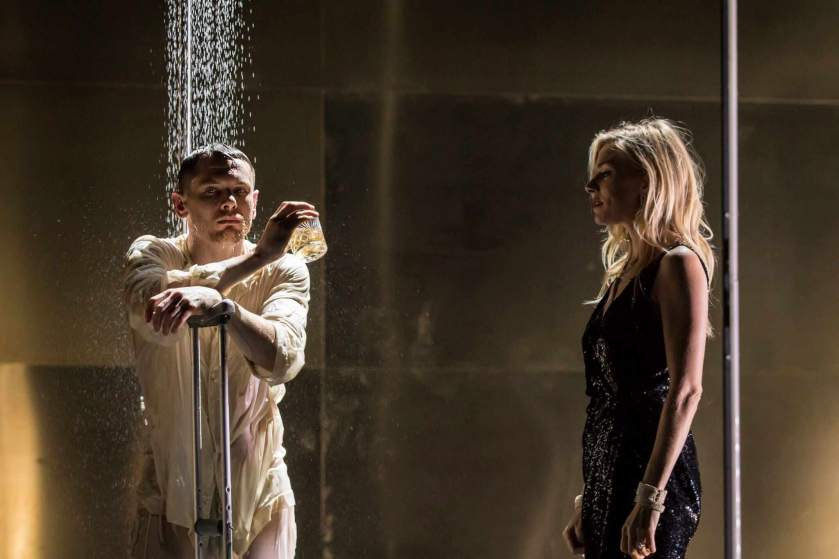
Hmm. I was expecting so much more of this production. It’s Tennessee Williams. An all star cast. The imprimatur of the Young Vic. And Benedict Andrews, who was responsible for the, by all accounts, revelatory A Streetcar Named Desire at the Young Vic, is directing, with the help of a top notch creative team.

To be fair, in large part, it delivered. The motives, pain, frustrations and jealousies of the characters were laid bare. In particular I liked (slightly against my expectation) Sienna Miller’s Maggie whose breezy confidence and famously catty (doh) put-downs belied her internal mortification. Lisa Palfrey (last seen by me in the excellent Junkyard) perfectly captured Big Mama’s desperate optimism, especially in the face of the revelation of Big Daddy’s diagnosis. Rising star Hayley Squires (so emotionally powerful in I, Daniel Blake) embraced Mae’s grasping with vigour shoving her fertility into Maggie’s face. When Brian Gleeson finally got the chance to let rip, as Gooper’s mask slips, we saw what a fine actor he is. Colm Meaney’s Big Daddy was moreorless on the money, but I wasn’t entirely persuaded by his key scene with Brick, and his accent left me straining to hear on a few occasions, (and for once I hadn’t been a skinflint so was in prime position). Big Daddy should bully everything in his orbit, inanimate as well as animate.

Which brings me to Jack O’Connell’s Brick. Other than his performance in This is England I don’t really know Mr O’Connell, but I can see the intent behind his casting. Brooding yes, intense yes, self loathing yes, but I am not sure he fully inhabits Brick’s vulnerability. This is not a easy character to play but there are, in the angry exchanges with Maggie and Big Daddy, enough lines to create a more ambiguous character than was offered here. In fact overall I was not as persuaded as I would have liked to be by the interaction between the characters. Tennessee Williams’s poetry gives ample opportunity for the main protagonists to project their inner demons but this has to work as a whole and this dynamic fell a little short for me. All this deception, of self and each other, all this conflict, has to weave together.

This was compounded by the set and design of the production. Taking the action out of the historical specificity of the mid 1950s Mississippi Delta plantation was brave, but a little foolhardy I believe. The brushed metal panelling which surrounded the bright space may have suggested sun, heat and, the blindingly obvious, gold, but opened up the stage, when claustrophobia might serve better to convey the stench of death and decay which haunts this play. Tennessee Williams plays work so well because of the language he gifts to his damaged people but also because he simultaneously shines a light on the society in which they are trapped, here a world of immense wealth built originally on the immense cruelty of slavery. This wasn’t really visible in this production. And sticking Jack O”Connell and eventually Sienna Miller in the buff certainly renders explicit the theme of repressed desire but Mr William’s words are just as effective. Mind you they are both mightily beautiful.

Now I feel like I am carping a bit. I would not put any one off seeing this production in the remaining weeks. It is just that with this company, with this director and this cast taking on this C20 masterpiece, I expected a winner. Still onwards and upwards.

Judith at the Arcola Theatre review ***

howard-barkers-judith-a-parting-from-the-body-credit-nick-rutter

Judith: A Parting from the Body

Arcola Theatre, 7th September 2017

I am guessing they don’t watch Bake-Off in the Barker household.

Howard Barker does not write easy plays. By his own admission he wants each of us to experience his plays as an individual: none of that namby-pamby rush of joy in the realisation that we are all sharing in the theatrical experience. His “Theatre of Catastrophe” will always try to make themes more complex and ambiguous. He has created his own company, The Wrestling School, to produce his work in Britain. Obviously he is adored in the rest of Europe where there like a challenge. Oh and he doesn’t backslide on the subjects for his plays, taking historical or literary stepping off points to create works with multiple viewpoints which explore the darker side of the human condition. Mischief Theatre it ain’t.

Judith: A Parting from the Body was originally produced by RENO Productions at the Arcola in 2015 as part of a double bill with the premiere of The Twelfth Battle of Isonzo. This is the same cast but just a workout for Judith which clocked in at an hour or so. Now you arty types will know the Old Testament story of Judith beheading Holofernes like the back of your hand. It was a Renaissance and Baroque art staple based on a story which I understand is itself a common subject in the so called Power of Women topos, “heroic or wise men dominated by women”. Through time the depiction of Judith became more sexualised and titillating. On the face of it antifeminist claptrap but there may be scope for more complex readings and this is what Mr Barker succeeds in doing with his play.

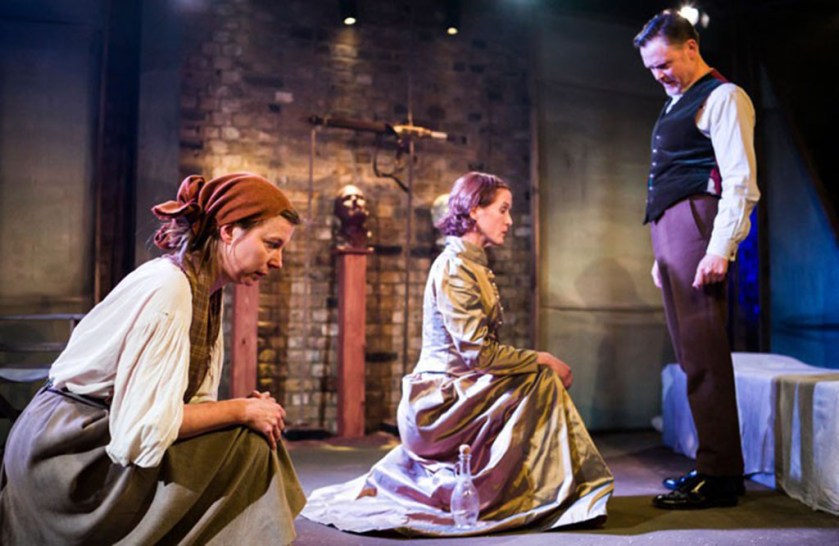
Liam Smith as general Holofernes expounds on the nature of power and sacrifice demanded by war. But his philosophising gives way to loneliness and vulnerability. Judith, a beautiful widow played by Catherine Cusack, with her plebian maid (Kristin Hutchinson), enters the enemy Assyrian camp on the eve of the battle and gets to his tent. There is much enigmatic chat and sexual frisson  between the three before Judith does the deed to save her city of Bethulia. Yet Judith and the maid become fascinated with Holofernes and his motives and Judith’s emotions become conflicted.

Now I am not saying this was an comfortable night out. Mr Barker is not interested in simply getting us from A to B in the standard way. The language veers abruptly between mellifluous poetry to profane banality. These characters are full of contradiction. Love and violence are intertwined. Nothing is made easy to grasp. I can’t pretend I was bowled over but it was intriguing and as I whizzed through the script on the way home, I started to get more out of it. I will add Mr Barker to my list of challenging playwrights where I must do more work.

The three strong cast were faultless, they know this inside out. Same was true of director Robyn Winfield-Smith and the set of Rosanna Vize was perfectly imagined. The small space at the Arcola was also a perfect fit. So no better advocates than these I think. Yet is is still a hardcore offering. So if you fancy a bit of dramatic pummelling take the plunge. I see the production is off to Poole and Colchester.


Prism at the Hampstead Theatre review ****

prism

Prism

Hampstead Theatre, 14th September 2017

Full disclosure. I love Terry Johnson’s plays. The marrying of “high” and “popular” culture themes and structures, the mix of humour and, as he calls it “brainy stuff, the abrupt lurches in tone: all this works for me. I have many more plays to get through (here’s hoping for some revivals) but favourites so far are Insignificance, which explores the nature of fame by throwing together Marilyn Monroe (of which more later), Einstein, Je DiMaggio and McCarthy (and is coming up shortly at the Arcola), Hysteria which pits Freud and Dali in a farcical set-up and Dead Funny which pulls apart the nature of comedy. So this is not likely to be an unbiased review. And it isn’t. I thoroughly enjoyed Prism with just a couple of tiny misgivings.

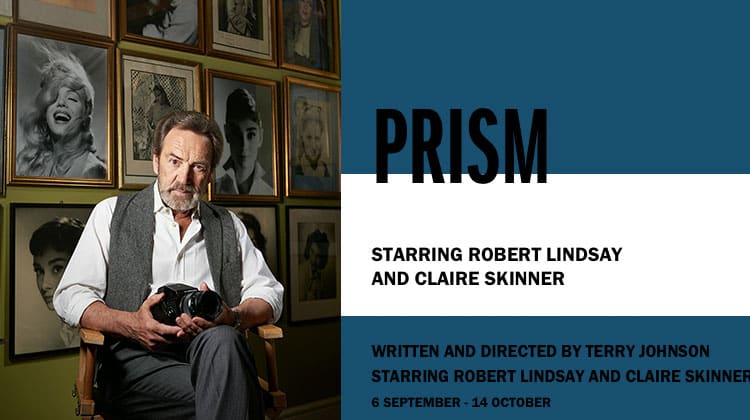
This is Mr Johnson’s first full length play in a decade or so though he keeps busy directing and writing for television and film. So for me this was something of an event. The idea for the play came from Robert Lindsay who is also a rareish sighting on the stage nowadays, which is a shame as he is a great actor in my book. Prism is based on the life of Jack Cardiff (1914-2009) about whom, I cheerfully admit, I knew nothing before this evening, though I was aware of his work. For Cardiff, who won a couple of Oscars, was the cinematographer behind such classic films as Powell and Pressburger’s Life and Death of Colonel Blimp, A Matter of Life and Death, Black Narcissus and The Red Shoes and John Huston’s The African Queen, of which more below. There were many others over his six decade career, as well as some directing assignments. By all accounts Mr Cardiff revolutionised the art of cinematography and he mixed with all the Hollywood greats. He was also something of a “ladies man” as my gran would say, and a fine looking fellow in the mould I think of a young Michael Caine.

If you are familiar with the films I name-checked above, as I am sure you are, you will know that the way these films are lit is jaw-droppingly impressive. Light, and the way we see things, is sort of the point of this play. And the golden age of Hollywood film has served Terry Johnson well as context before with the plays Insignificance and Hitchcock Blonde.

We first meet Jack Cardiff with his son Mason (Barnaby Kay), who has fashioned a studio of sorts out of a garage for his Dad to write his memoirs. This studio has one of his cameras (minus its vital prism thanks to Mason past carelessness) as well as photos of Hollywood leading ladies and Mr Cardiff’s own capable reproductions of Old Masters, such as Vermeer, Rembrandt, Renoir and Van Gogh, who captured light in paint before the photographic age and inspired our Jack.

Mr Cardiff is sliding into dementia, which provides the backdrop for much of the first act gentle humour here, so needs the help of a carer Lucy (Rebecca Night), who is also tasked with keeping the memoir on track. We also meet Jack’s second wife, Nicola (Claire Skinner) who was his assistant so is somewhat younger than Jack and is finding his decline difficult to cope with.

There is more than meets the eye here, quite literally. In a smart second act coup de theatre we shift to the location set for the filming of The African Queen with Barnaby Kay now playing Humphrey Bogart and Rebecca Night playing Lauren Bacall. And Claire Skinner metamorphoses into Katherine Hepburn. Now I go weak at the knees at the very though of Katherine Hepburn so, again, may not be the best judge of Ms Skinner’s performance but I was captivated. The flirting scene between Cardiff and Hepburn is terrific as are the references to the much reported hardships the cast had to undergo in the filming.

Mr Johnson also pulls another cracker from his bag marked “theatrical devices” with a scene involving Jack lighting Marilyn Monroe (Rebecca Night) followed by a fracas with Arthur Miller (Barnaby Kay). But this is an exact repetition of an earlier scene where Jack is explaining his work to carer Lucy. The doubling and trebling of roles here is a key element of the structure of the play as we probe Jack’s fading memory.

We learn about Jack Cardiff’s life, with Terry Johnson working his usual magic by stretching and shifting real events, the nature of light and ways of seeing in art and film, and the nature of memory. Lovely, very funny, insightful dialogue, the usual big ideas refashioned in comedy drama with real narrative and momentum and a more poignant, valedictory note (I won’t spoil the ending) than in previous Terry Johnson plays.

As usual Mr Johnson directs his own work, (some very interesting insights in the programme about this process), which means what he wrote and intended is what you see and hear. Tim Shortfall’s set is clever but not clever, clever and the performances are excellent. Minor quibbles are the slight lack of momentum through the middle of Act 1 as the “real” characters are mapped out, with Mr Cardiff’s dementia milked for laughs a little bit liberally, and the slicing in of Lucy’s tough background and circumstances, I didn’t see the point of this other than to lurch us from laughing to sadness in an instant which is a bit of a trait from this playwright.

So, as you can see, I really enjoyed and admired this, but like I say, I am a sucker for Terry Johnson’s plays. My guess, judging from the audience reaction, is that the overall reception may be a little more muted. But this seems to have been the fate of Terry Johnson’s work from the start. Some people rave, some people shrug their shoulders. What I would say is that even if you are not familiar with his work, if you have any interest in the subject, in film, like the cast or just want a funny, interesting night out then don’t hesitate.


Against at the Almeida Theatre review ****

1470x690_against_nb

Against

Almeida Theatre, 9th September 2017

The more plays I see the more I realise there are many ways to build a work of theatrical drama. You can build the foundations on language and the space around it, You can create powerful, memorable, immediate characters. You can construct a plot of more or less complexity to draw the audience into the narrative. Or you can explore ideas, from the individual mind all the way through to the global. And you can do all of this in a more, or less, naturalistic way. The joy of theatre is that all is possible and that it is a shared and ever changing experience. Which means when it works, (which is not as often as you might think), it knocks all other art forms into the proverbial cocked hat.

Some playwrights (and the directors, actors and the rest of the team that bring these works to life) take these elements, in various combinations, and give them a thorough, muscular work-out. Some are more subtle however. On the basis of Against, as this is the only one of his plays I have seen, Christopher Shinn is one of the latter. In fact he is at the extreme of dramatic subtlety. This is I suspect a very difficult trick to pull off, but in this play I think he largely succeeds.

Luke is a techhie billionaire in Silicon Valley with fingers in rocket science, solar energy and AI pies. Following a “message” from “God” he decides to explore the causes and meaning of violence in contemporary America. His devoted assistant, Sheila, joins him on the journey. He travels across the country visiting the parents of a student who murdered his peers in a shooting spree, the college where this took place, a campus plagued by sexual violence, a prison where he meets the father of a horribly abused child, some remarkably eloquent addicts and an Amazonian type warehouse (as in Amazon the company not the women of legend) owned by a fellow billionaire type. He returns at one point to his childhood home and to mummy. We hear of Luke’s other exploits as his messianic search for knowledge builds into a cultish following. Simultaneously he falls in love with Sheila, and, on his journey of discovery, finds out stuff about himself and his fellow Americans. The relationship between two of the workers at the warehouse is also sketched out to reinforce the power of love.

Now the cynics amongst you are probably already rolling your eyes at the seeming naivety of this set-up. And I accept that Mr Shinn’s dialogue at times would only encourage you in this impression. There is a fair amount of faux philosophising from the characters and there are some surprising shifts in tone and position. I think this put off a number of the proper reviewers. Yet, slowly and surely, Mr Shinn breathes life into the characters and situations, and the gentle meandering rhythm of the drama gives us, the audience, plenty of time to reflect on what we are seeing and hearing. And this is what makes this a worthwhile play to my thinking.

In no particular order the play got me cogitating on the following. How would a powerful entrepreneur, who claimed to have been directed by a “God”, be received in contemporary society? Should Silicon Valley billionaires have such power? How can they influence society with their wealth and their control of digital media and networks? Is our belief in technology to overcome limitations on growth about to get a terminal shock or will we have further great leaps forward? Why is violence so prevalent in today’s society? Is it worse now than historically? Does the media scare us into an unwarranted fear of violence? Why is it always blokes that do bad stuff? Is violence an inherent part of the human condition? Will insights from neuroscience and social psychology help us? Do humans need conflict? How are violence and hate to be squared with our tendency to altruism and love? How do we “turn the other cheek”? Why do people get so angry about the behaviour and identity of others?

Now you might say to yourself, blimey there can’t have been much going on on the stage for the Tourist to drift off and start musing over all this stuff. On the contrary the light touch that Mr Shinn, and director Ian Rickson (who always ensures clarity, most recently in Edward Albee’s Goat), explicitly allowed these thoughts to float around as the scenes progressed. Answers to the questions were not really on offer, beyond a simplistic love trumping hate, but I am not sure that should be seen as a failing. It’s only a play after all. The conclusion, whilst not particularly original (a nod to Chekhov methinks), did sort of make sense in the context of what had gone on before.

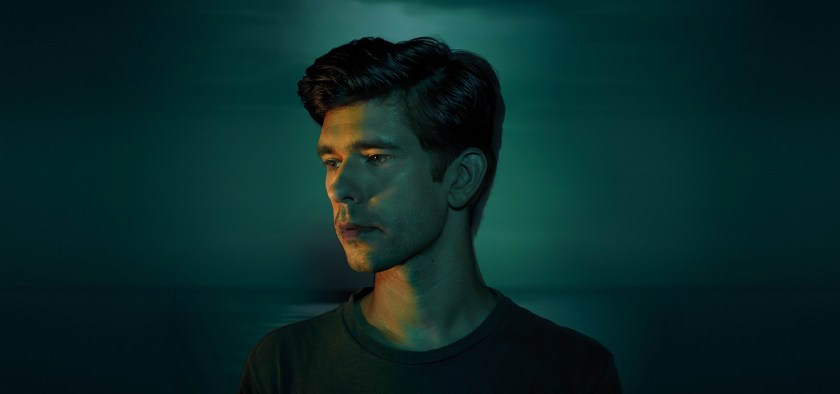
Given the structure of the play and the loftiness of the ambition we did need an outstanding performance from our lead, and that is what we got. Man-child Ben Whishaw looks the saviour part and managed to carry off the strange mix of authority and guilessness that I think the character Luke was supposed to possess. He uses his twitching body as much as his voice to portray his inner struggles. There were times though, when even his willingness to suspend his disbelief stretched ours a little too far, but no matter, he is still a tremendous stage actor. Amanda Hale as the partner on the journey had a little less to play with but struck exactly the right note. And the rest of the cast were able to invest the remaining characters with real identities in spite of, or perhaps because of, the somewhat didactic dialogue.

Best of all I didn’t have to make up my own mind about Against. For I was treated to the company of the Captain, who can sniff bullshit out at a range of a couple of miles. And there was enough here to engage the Captain’s mighty intellect. And that my friends is as high a recommendation as you need. Trust me.

PS. One final thing. As the play of ideas swirled round my head I was drawn to remembering a few books I had read which seemed to mark out similar territory to this play.. I don’t read much now, I don’t have the patience and in matters literary I defer to the SO who consumes fiction at demonic pace. But they popped into my head so here you are.

First up Messiah by Gore Vidal. This is more a satire on Christianity but this was the great man flexing his genius in the early 1950’s. For those who don’t know Gore Vidal – put this right. He might just be the greatest author of the second half of the C20.

Next up The Last Temptation of Christ, Nikos Kazantzakis’s novel or probably better still Scorsese’s film. Not an easy watch with its glacial pacing but a powerful piece of cinema. No idea why all the religious types get so wound up about it – I would have thought it captures the dilemmas Christian wrestle with to a tee.

Anyway I see I am getting a bit too zealous about the messianic theme in the play so final thought: Steven Pinker’s The Better Angels of Our Nature: Why Violence has Declined.  Now I confess I only just about getting to grips with this but it seems to squarely take on some of the issues that Mr Shinn’s play is grappling with. And it is a text that straddles the academic world (BD is knee deep in it for her degree) and the “popular science” market And I see that is was endorsed by none other than Messrs Gates and Zuckerberg, which seems sweetly ironic in the context of this play.


London Philharmonic Orchestra at the Royal Albert Hall review ****

dmitri-shostakovich-1233767711-editorial-long-form-0

London Philharmonic Orchestra, Vladimir Jurowski, Alina Ibragimova (violin)

Prom 71, Royal Albert Hall, 6th September 2017

  • Igor Stravinsky – Funeral Song,
  • Igor Stravinsky – Song of the Volga Boatmen,
  • Sergei Prokofiev – Violin Concert No 1 in D Major
  • Benjamin Britten – Russian Funeral
  • Dmitri Shostakovich – Symphony No 11 in G Minor “the Year 1905”

What with one thing and another, but mostly my stupidity at missing the booking opening, I only made it to one RAH Prom this year and missed out on two or three that I really wanted to hear/see. Never mind BBC Radio 3 came to the rescue with their recordings. BTW I WILL PERSONALLY KICK SHIT OUT OF ANY POLITICIAN WHO HAS THE TEMERITY TO FUCK ABOUT WITH THE BBC. I can’t move quickly but I am a big lad so you don’t want to get in my way. Understood. Just joking. I think.

Moving swiftly on. The main reason for picking this Prom was the opportunity to hear the LPO with personal favourites Vladimir Jurowski (a man who seems to conduct with his shoulders and head as much as his hands and eyes, riveting from my choir perch), and the meticulous violinist Alina Ibragimova, having a crack at some hardcore C20 Russian repertoire. And specifically Shostakovich 11 which gets an outing now and then but not regularly enough to miss. Having said that I still can’t decide how much I like it.

Before the main event we had some early works from clever clogs Stravinsky. The score for Funeral Song, Op 5, was only recently rediscovered and is a memorial to teacher and mentor Rimsky-Korsakov. The latter’s influences are fairly clear, (we must thank N R-K for Stravinsky’s mastery of orchestral colours), but, for me,, the louder voice was Wagner, not a good thing to my ears. This was followed by Stravinsky’s arrangement of the Song of the Volga Boatmen, which is a rousing, if very short, ditty which served as the original Russian anthem post 1917 Revolution.

I don’t know if I will ever “get” Prokofiev. I have heard some convincing performances of his works recently, the Quintet and Martha Argerich playing the Piano Concerto No 3 (mind you I reckon Martha could leave you open mouthed in admiration playing Happy Birthday on the spoons). And the piano sonatas I remember seeing performed have been interesting. But there may be too many ideas in the music for me. My ears and brain crave repetition and structure. There is enough rhythm in Prokofiev but there is a lot of flitting about. So I may not be up to it. Still I will keep trying. This Violin Concerto created the same confusion for me. Ms Ibragimova puts line and detail into her performances and really convinces. There were passages of real interest, even when it all got a bit too lyrical, and there were such clever twists and one blinding fast passage, but once again it was just too “bitty”. Sorry. Moreover, whilst I was close enough to hear the violin clearly even with my ropey ears, I suspect the gallery punters might have been working a bit harder.

In contrast to Prokofiev Britten is dead easy for me to understand. Russian Funeral is the only piece he wrote for brass band and it is an open, Mahlerian march bookending a disquieting scherzo. The march is taken from a Russian funeral song (which appears again in the DSCH symphony), hence the title, and the whole thing reflects Britten’s anti-war stance. I loved it.

Now the main event. It is a heck of a slab. An unbroken hour, four movements, slow, faster, slow, fastish. It is based on four revolutionary songs and takes the events of the failed 1905 uprising. The programme is pretty clear, The Palace Square in winter as the revolutionaries march to petition the Tsar. The fighting starts, the Imperial Guard opens fire and the assembly is brutally quashed. We then mourn the thousand dead and finally look forward to when the proletariat will succeed in throwing off the yoke of their oppressors. Now there are some absolutely belting tunes in all of this, but it is a long, drawn out affair. This is one of the DSCH symphonies that drifts towards the cinematic which is fine except we have no pictures for the eyes so the ears get a bit of an overload. And the contrast between the icy despairing chords of the Adagios and the martial drumming of the Allegro movements is a bit overwrought. As ever with DSCH you can sometimes have too much of a good thing.

Having said that it certainly clears out the passages and conjures up an epic vision of the struggle. There isn’t very much of the sardonic or sarcastic audible here, or if there is, it is well hidden, so I can see why this went down a treat with the big boys in the Party when it was served up in 1957 as part of the 40 year celebrations. DSCH did make a few veiled comments pointing to what wad happened in 1956 in Hungary but it didn’t leap out. But then the old chap never did give much away. From the perspective of the centenary of the Revolution though it does feel a bit odd especially when you know what DSCH delvers when he nails it. Can’t fault the playing though and Mr Jurowski wisely gave as much room as was needed to the expansive phrases. No point rushing this edifice as it isn’t going to make much of a difference. And when needed he and the band turned it up to 11, indeed right at the end when the bells come in, we were treated to a 12 on the Tufnel scale.

When all is said and done, and despite the shortcomings, No 11 is still an extraordinary wall of sound and the LPO nailed it. Thanks lads and lasses.


road at the Royal Court Theatre review ****

cw-18805-medium

road

Royal Court Theatre, 7th September 2017

Another useless review as this revival of Jim Cartwright’s seminal debut play is about to end its run. But I would be pretty confident it will pop up again somewhere in the next few years. And that is because, as this production shows, despite it being set firmly in the mid 1980s, it is as relevant today as it was then.

The play is set on an unnamed road in an unspecified Lancashire town, largely, over one night. The vignettes are threaded together by our pukish narrator Scullery, here played by Lemn Sissay, of whom more later. We alternate between scenes of raucous comedy and tragic monologues (and most memorably an affecting duologue). The dignity of labour is in short supply in this part of the North, money is tight and hope crushed by circumstance. So most of the residents are focussed on living for today with lashings of booze and sex offering release. For some characters though the absence of money, of love, of friends fuels nostalgia, or worse, despair.

Now too often this set-up can turn into a theatrical misery fest. What makes this different is Jim Cartwright’s beautiful writing. It is a cliche but there is real warmth and poetry here. The words are so powerful that you feel you immediately know these characters despite there being no attempt to provide a before of after to their lives outside this night. He doesn’t need to bash you over the head with the message and never offers up caricatures or stereotypes. John Tiffany’s expert direction does not deny the irony of a bunch of well heeled punters in Sloane Square gawping at a bunch of actors playing those left behind in “Thatcher’s Britain”, but still allows the pathos to shine through. I haven’t the faintest idea how we reconcile the social, economic and cultural divide between the haves and haves nots in this country today but road remains a powerful document of that divide.

Chloe Lamford’s set is a model of effective economy, with a glass lightbox acting as a device to frame some of the key scenes/monologues and heighten the voyeurism. And John Tiffany, much like in his recent Glass Menagerie (The Glass Menagerie at the Duke of York’s Theatre review ****), with lighting designer, Lee Curran, takes the opportunity to plunge the backdrop into darkness at the crucial moments. I gather this makes for a very different (and shorter) experience to the original promenade version of the play but it facilitates absolute audience concentration. For an ageing post-punk type like me the soundtrack was also a joy – an ensemble routine set to the Fall’s Hit the North was the highlight. There is a parallel between the poetry of Mark E Smith (just to remind you the greatest songwriter of all time) and Jim Cartwright’s lines. I even tolerated Elbow as the backing to a surprisingly effective conclusion involving the whole cast.

And the cast were excellent. I have seen the TV version of the play with the mix of cast members from the original Royal Court productions and other acting luminaries and, for me, this troupe matched them (though as the play is so well written that shouldn’t be too much of a surprise). I think I have heard Lemn Sissay, the poet and broadcaster, on the radio but his performance here was terrific and I now see from his biography what an admirable man he is. Michelle Fairley shows just how powerful an actor she is as hilarious seductress Helen, and then again as the desperate, wheedling Brenda. I am so looking forward to her Cassius in the forthcoming Julius Caesar at the Bridge Theatre with Ben Whishaw, David Calder and David Morrissey – surely a winner. Mark Hadfield similarly shows, firstly, his comic timing as pissed lothario Brian and, secondly, his ability to invest imagery into Jerry’s nostalgic reminiscences. June Watson as lonely pensioner Molly nearly brought a tear to my eye, I kid you not. Mike Noble’s curious Skin-Lad is the one ostensibly violent character in the plan and his missive was delivered with real menace and mystery.. Faye Marsay as Clare, (hard to believe this was her stage debut), and Shane Zaza (watch this young man) as Joey, really hit home with the play’s most astonishing scene as the young couple who have literally given up on life. Liz White as Valerie delivered another affecting monologue lovingly bemoaning her workless, drink addled, pathetic husband. She also played Carol, who, along with Mike Noble now as Eddie, Faye Marsay now as Louise and Dan Parr as Brink, deliver the final, famous (at least to me), epiphanous scene with total conviction, helped of course by the voice of the master, Otis Redding.

So any way you look at it this was an excellent and worthy revival, of a masterly play on the stage where it premiered. I haven’t seen any of Mr Cartwright’s other plays, including Little Voice, either on the stage or TV, though not for want of trying. I hope I shall. And I highly recommend you find a way to see road. I suspect that, unfortunately, its power or concerns will not diminish through time.