
Steve Reich: London Sinfonietta at the Royal Festival Hall review ****

London Sinfonietta, Synergy Vocals, Micaela Haslam, Andrew Gourlay (conductor), Sound Intermedia

Royal Festival Hall, 12th February in 2019

Steve Reich

  • Clapping Music
  • Runner for Large Ensemble
  • Music for 18 Musicians

Is it possible to have too much of a good thing? The good thing, in this case, being the minimalist music of Steve Reich. There are those music lovers for whom just a few minutes sets their teeth on edge I gather. Not me though. Repetition, repetition, repetition. That’s what I crave. Except that it isn’t really repetitive. It is just structured sound. Built on rhythm. Which evolves. As has Mr Reich’s music. Perfectly demonstrated in this programme.

SR composed Clapping Music in 1972 as an antidote to all the paraphernalia and kit that the Steve Reich Ensemble required to perform his major compositions at that time, (as witnessed by Music for 18 Musicians after the interval). Two performers and their hands. One part fixed, the other repeatedly moving from unison to one beat ahead then back again. Clever clogs. SR, and the two performers here, David Hockings and Tim Palmer. Looks easy? Try it with the help of the app. It isn’t.

Runner for Large Ensemble, of winds, percussion, pianos and strings, is a relatively recent work, from 2016, and comprises five sections played without a pause. The tempo remains broadly constant but note durations vary from sixteenths to eighths to a standard Ghanian bell pattern, (Ghana being the source of many of SR’s works), and then reversed. It ends in the wind section with pulses played for as long as the players can sustain. It is not a long work, 15 minutes or so, and has a little less melodic interest that much of what we might term “late period” Reich (though here’s hoping with having many more compositions to come). This is as close to High Baroque as minimalism gets. I loved it.

Though I could listen to SR’s music all day. As it now seems could half of London. Programmes of Reich and Glass’s music, at least the large scale works, now sell out and audiences are no longer comprised of solitary, rather dubious looking, fifty-something blokes (hello Tourist), but the hip and trendy creative twenty-somethings from East London.

I have blathered on before on this blog about Music for 18 Musicians so I’lll keep this short. This was a turning point for SR as pulse and rhythm of the works from the 1960’s and early 1970s (Piano Phase, Violin Phase, Drumming) was augmented by expanded ideas around structure and, especially, harmony, and electronic intervention was curtailed. The movement between chords is still restricted, but, over the piece, there are repeated cycles of 11 chords, each held for two “breaths” from the voices and wind section(clarinets) which the strings follow. The 4 pianos and the mallet instruments deliver a regular rhythmic pulse, and, as the chords are stretched out, small “pieces” in arch form are built on top to create harmony and changes in instrumentation. The effect is like early polyphonic voice compositions with a cantus firmus overlaid with instrumental “melismas”. The sections are divided by cues from the mettalophone who becomes a sort of director and the modulations within chords are marshalled by the bass clarinet. here Timothy Lines. (Andrew Gourlay only conducted Runner).

All clear. It takes a few listens to get the picture and even then it is easy to get lost in the apparent repetition but it helps to get the map in mind. Then the choreography of sound (and movement as percussionists shift position), the way the focus and texture of the sound shifts across the ensemble, becomes clearer, and moves beyond the “hypnotic wash”. Understanding the process reveals the beauty. At least that’s what I think. Synergy Vocals lead by Michaela Haslam are the world’s experts in Reich’s work and the London Sinfonietta has form in Reich too, and together they were, mostly faultless in delivering the seamless ebbe and flow of the music.
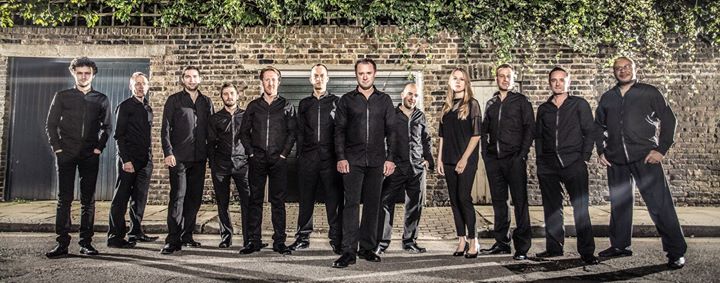
Steve Reich’s Drumming and Tehillim at the Royal Festival Hall review *****

67544afa6d1

The Colin Currie Group, Synergy Vocals

Royal Festival Hall, 5th May 2017

  • Steve Reich – Tehillim 1981
  • Steve Reich – Drumming 1971

There are a handful of sacred founding texts when it comes to the world of US minimalist music. Terry Riley’s In C certainly, John Adams’s Harmonielehre and Short Ride in a Fast Machine, Philip Glass’s Glassworks, early operas and Music in Twelve Parts and Steve Reich’s Music for 18 Musicians and Drumming. There are plenty of other works I would want to add from these, and other composers, to capture the full glory of the genre, and I have plenty more to explore, but, so far, my stand out favourite is Drumming.

And this performance from what is now Reich’s own favourite interpreter, Colin Currie, and his colleagues, was, jaw droppingly, brilliant.

Now I went along to the performance of Music in Twelve Parts at the Barbican Hall on 1st May. No review as I only managed the first six parts. No reflection on the music or the performance; only because I misjudged the timing so had to scoot off. It was a fine rendition of this seminal Glass work, although at times, it did end up in that one-dimensional cul-de-sac that Glass’s music can be prone to. The effect of layer upon layer of the tiny cells of music is obviously hypnotic and trance-like but, to me, still fascinating, as is hearing the shifts between “movements” within the parts. This is the most minimalist of minimalism to my ears – no narrative, no resolution, chords slowly emerging, taking repetition to its ultimate conclusion. And when it hits the points of apparent stasis despite all the instruments (and voice) feverishly playing it is mind-blowing. But sometimes, and this was the case here, if that apparent stasis is not perfectly delivered it can be a bit wearing.

In contrast this performance of Drumming was, I think, unbeatable. You see, for me, whilst this is still firmly minimalist in terms of the overall effect, the methods that Reich employs here add up to so much more. The use of phasing, where one musician takes a phrase and then others repeat the phrase but with changes to the tempo so that gradually they step out of sync, is Reich’s signature. In this piece however, there is greater alternation in the phrases of beats and rests, which creates much greater rhythmic drama. The three sections, before for the finale where everything comes together, offer a spine tingling variation in timbre and register, as the tuned bongo drums of the canonic first section (mostly obviously indebted to Reich’s visit to Ghana ahead of the composition), is followed by the marimbas and the three female voices, and then the shift to the very different world of the glockenspiels (augmented by the whistling !! and the shrill piccolo). Put all this together and you have a real musical narrative, which I think is in contrast say to the Glass piece above. And all this from just one repeated rhythm – that is its genius.

To make it really work you need an ensemble which is both experienced but also fearless. Like most larger scale minimalist works it requires immense concentration (though the repeats here were kept to a minimum which is wise I think) but to really let go all the musicians have to trust their colleagues. There is nowhere to hide (unlike large scale Romantic works say). There was nothing tentative here and that is what made this performance truly stand out. The same ensemble was superb this time last year with it Reich programme topped by Music for 18 Musicians but this surpassed that. The audience (which is getting bigger and more diverse I think for these works – brilliant stuff) was up on its feet immediately the piece concluded and deservedly so.

Tehillim which proceeded Drumming was also very well performed (especially the extraordinary singing of Synergy Vocals the experts in this field) but, as this is a newish addition to Colin Currie’ Reich repertoire, it was not as overwhelming. Here the combination of four female voices (singing Hebrew psalms) with the six percussion instruments and a small chamber orchestra means the melodic lines are more prevalent and the use of phasing here is more redolent of canons from Medieval Western music (readers will know that is a good thing in my book). The rhythmic drive of Reich’s percussion led pieces gives way to the illusion of harmony and counterpoint. This is why he is such a clever fellow.

Anyway I think you can tell that I loved it. Please seek out Drumming even if you hate “classical music” – the key recording is still Reich’s own. You won’t regret it. We have had a couple of good years for minimalist music in London, what with the various anniversaries of its leading lights, but I will keep my eyes peeled for future dates.