
Pinter at the Pinter One review ****

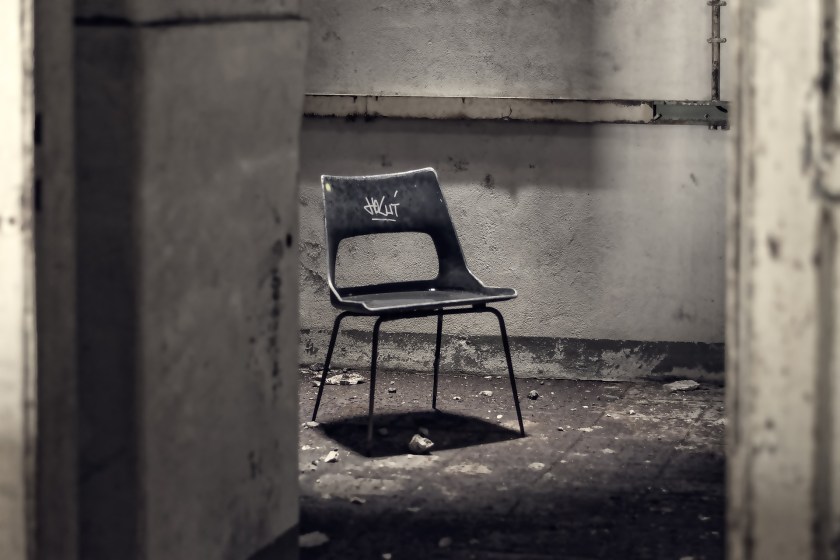
chair-2963765_1920

Pinter at the Pinter One

Harold Pinter Theatre, 18th October

  • Press Conference
  • Precisely
  • The New World Order
  • Mountain Language
  • American Football
  • The Pres and an Officer
  • Death
  • One for the Road
  • Ashes to Ashes

Just so you are clear. These are plays by Harold Pinter. Did I mention that?

A combination of diary clashes and me hoping for ticket prices to come my way, (always fun playing Economics 101 with West End theatres), meant that I missed out on Part Two of Jamie Lloyd’s season of all of the one act plays of Harold Pinter, (and many other morsels besides). So no The Lover or The Collection and therefore no Hayley Squires, John MacMillan, Russell Tovey or David Suchet. A shame but rest assured dear reader I am signed up to the rest.

Now Pinter is an acquired taste but once acquired is rarely relinquished. The Lover is a two hander about an apparently adulterous couple which sounds like it went down well although, as with much of Pinter the surface misogyny can discomfort, though being Pinter there is always sufficient ambivalence to undermine the apparent premise. For me HP’s unrelenting picking away at human weakness is not gender bound but I can see why others might disagree. The Collection from 1961 covers similar territory in a similar way but with two couples, one gay, sharing a stage, linked by a possible affair.

Anyway probably better if the Tourist focusses on the programme he did see. Here, in the first half, we are in the world of late Pinter, with politics as the subject, and specifically the excesses which can be visited on the individual by a totalitarian state. Some of the pieces imagine more brutal and sadistic scenarios than others but all can be seen as warnings of what can happen when power corrupts. Their very lack of specificity is meant to show that this sort of oppression is only a few short steps away even in a liberal democracy. Not all of the pieces are up with Pinter’s best, and they have never really been, to be frank, universally appreciated even by criterati, but when they work, notably for me here in Mountain Language, they are very effective.

Press Conference is exactly that. A sketch where a Minister of Culture, who was the head of the secret police, responds about the state’s attitude to children. His brusque matter of fact responses – “We distrusted children if they were the children of subversives. We abducted them and brought them up properly. Or we killed them” – is very funny but also very chilling precisely because Jonjo O’Neill’s politician is speaking as if he were right here, right now in Britain. Precisely is another short sketch where Maggie Steed and Kate O’Flynn play a pair of toff establishment types debating a number, 20 million or maybe more, which turns out is a body count.

Next up was The New World Order from 1991 which saw a cocksure Des (Jonjo O’Neill) and a pumped up Lionel (Paapa Essiedu) discussing how they will torture the gagged, blindfolded and naked man (Jonathan Glew) in the cell with them. No physical violence, the menace is all in the language, which is almost stereotypically Pinteresque in its banal tone. These are almost caricatures of modern day torturers, in sharp suits and, in Paapa’s case, aviator shades. They are trying to impress each other as much as scare the victim. They could be Goldberg and McCann. Taking pleasure in their work. Once again Brits not Americans as in the original premiere. Pinter nails that uninhibited, exuberant arousal that seems to inhabit the cruel.

Mountain Language is an better piece of drama though. Written in 1988 apparently in response to the treatment of the Kurdish people, Pinter actually saw this as a more universal attack on regimes where minorities are victimised through the suppression of language. It is an altogether more expressive piece as Jonjo O”Neill’s callous Sergeant, assisted by the officious voice of Michael Gambon (who took the role at the premiere), and Paapa Essiedu’s Officer, work out want to do with, variously, Kate O’Flynn’s young woman, her elderly woman relative Maggie Steed who can only speak the “mountain language”, Jonathan Glew, this time hooded, and Pappa Essiedu doubling as a prisoner. The prison/detention centre is revealed as a series of rooms in Soutra Gilmour’s suitably depressing cuboid set, all dark walls and utilitarian chairs. No beginning or end but we do get the movement through the set and the contrasts between the characters. And our first proper sight of the mesmerising presence of Kate O’Flynn.

She then bounds on as a US military type for Pinter’s poem American Football written in response to the Gulf War and which satirises the aggressive triumphalism of the victor. This was followed by The Pres and an Officer, a sketch which sees John Sessions impersonating our current POTUS alongside Jonjo O’Niell as the top brass tasked with issuing his orders, here to nuke London, albeit accidentally, reflecting the president’s geographical confusions. I’ll be honest it is a bit soft and one-dimensional but, written in 2008, it is remarkable for its prescience. The presence of a narcissistic, ill-educated, populist bully in the White House clearly wouldn’t have surprise HP who died on Christmas Eve a few weeks before Obama was sworn in.

This was followed by Maggie Steed performing’s HP’s moving short poem Death about the registration of an unknown corpse. Then One for the Road from 1984 the most substantial and well-known of HP’s political plays. It was prompted by HP reading Jacobo Timerman’s book on torture during the Argentinian military dictatorship, but, as you might expect, reveals no specific setting. There is no on-stage violence but the references to the off-stage mutilation of Victor (Paapa Essiedu), the multiple rape of his wife Gila (Kate O’Flynn) and the implied murder of their son Nicky (Quentine Deborne) is upsetting enough. Anthony Sher plays Nicholas the precise officer (“one has to be so scrupulous about language”) who represents the totalitarian regime. He shifts from matey pen-pusher to psychotic tormentor in the blink of an eye though Sher wisely tones down the apoplexy. Think O’Brien in Room 101. And Hannah Arendt’s rule of nobody. Nicholas has all the tools of the state at his disposal, and, it seems, years of experience, but still seems troubled by what he is doing. I can’t quite put my finger on why, though it may be because I am not Mr Sher’s greatest admirer, but this felt a little over-egged to me. It is still a mighty fine play though.

After this varied and variable dissection of the roots and risks of totalitarianism, Act Two ostensibly sees a return to the domestic with two-hander Ashes to Ashes. Yet by contrasting this, here directed by Lia Williams, with the Act One pieces directed by Jamie Lloyd, what we really see is HP’s insights into one theme, the use and abuse of power. Kate O’Flynn is Rebecca who is being “interrogated” by her “estranged” husband Devlin, Paapa Essiedu, but who has done what to whom, and what they each say about how they feel, is even more slippery than usual for HP. Maybe they aren’t married, but lovers. Maybe he is threatening her, or she is mocking him. Is Rebecca describing her dreams? What does the story about the police sirens mean, or the pen? Rebecca’s responses to Devlin’s prompts are oblique to say the least. There are pauses and silences galore and some harrowing imagery. not the least at the end with the apparent description of women, or a woman, or Rebecca herself, being separated from her baby en route to a concentration camp. The whole thing swirls around, and, with acting of this quality, draws you in. In any other hands it would be utter b*llocks but with Pinter the language makes it compelling if ultimately impenetrable.

HP’s reputation and casts should be enough to persuade the uninitiated and/or the curious. Jamie Lloyd can push the envelope a bit far on occasion but he is a master in Pinter. So sign up. If I had to choose I would say 3 and 6. More to follow …..

The Turn of the Screw at the Open Air Theatre review *****

britten_-_the_turn_of_the_screw_twelve-tone_theme_tetrachords

The Turn of the Screw

Regent’s Park Open Air Theatre, ENO, 29th June 2018

Benjamin Britten. The Turn of the Screw. Members of the ENO Orchestra conducted by up and coming talent Toby Purser. Timothy Sheader directing. A Soutra Gilmour set. At the Open Air Theatre. On a beautiful late June evening. In the company of the SO, (who loves her Henry James and surprised herself by enjoying Deborah Warner’s staging of Death in Venice in 2013 at the ENO), BUD and KCK. Of course I was going to love this.

One of the aims here was to extend young BUD’s operatic education beyond Mozart. As he remarked here, not a lot of tunes.. Not sure I agree but there is no doubt in my mind that Britten’s music became darker through time, cleverer, from an already very high base, more progressive and less conservative, whilst never embracing the fearsome avant-garde, and richer, even as textures got sparser. The tonality is tempered with lots of (lovely)  dissonance.

I think TTOTS occupies a key place in the development of all of Britten’s art. It was composed in 1954, just after Gloriana, and three years after Billy Budd. In the same year Britten composed his Canticle No III, Still Falls the Rain for tenor piano and, Britten’s favourite, horn. This is recognisably BB, like a trip-hop version of the Serenade Op 31, but this, and the Winter Words song cycle from 1953, seem more melancholic than the warmer equivalents before the war. Britten himself said that his music was forever changed by the WWII, as was true for pretty much all Western art, notably by a visit to Belsen, but I don’t think this really becomes apparent until the mid 1950’s.

Anyway TTOTS is definitely an example of the “less is more” BB where surface effect is toned down a little, (though not jettisoned entirely, there are plenty of ravishing musical ideas here), in the service of greater structural and emotional depth. And structurally this is a score of genius as a tightly wound serial “screw” theme and set of 15 variations built on a different semitone, opens each scene, ratcheting up the tension. So, you see BUD, there is a “tune”, you just hear it in a different way.

Which I think is why it is such an effective piece of musical theatre, an opinion with which BUD heartily conferred. TTOTS is apparently BB’s most performed opera. And probably the most performed opera in English. And, after your man Puccini, probably the most performed opera from the C20. Certainly the most performed of those operas written since the war. In part this reflects its chamber structure. With just 13 instrumentalists and a cast of 7, this is no big budget affair. As was intended. However I also think it reflects near perfect synthesis of story, libretto and music. All three offer a sufficient challenge to an audience but in no way is this intimidating. It always takes a bit of time to get swept up into a Britten opera, but swept up you will be, even if it isn’t the massive, warming, rush of Mozart.

In retrospect it was pretty much a nailed on certainty that BB and Myfanwy Piper would alight on Henry James’s novella. BB, and his various librettists, always started with an artistic inspiration. Usually the story revolved around an “outsider” estranged from the society around him. There’s usually some sort of spiritual dimension. And, nailed on, there will be some sort of uneasy “corruption of the innocent” theme. TTOTS has all of the requisite elements in spades. Better than this though is the ambiguity embedded in the story. What really happened at Bly? What was, or is, the nature of the relationship between Miles and Flora, Miss Jessel and Peter Quint? Who, and what, can we see? Who, and what, do the characters really see? After all only the Governess apparently sees the ghosts in HJ’s original. Is this all in the Governess’s mind then? How are we being manipulated? Strange to think then that the story came to HJ via none other than the future Archbishop of Canterbury in 1895.

Myfanwy Piper’s text reads like a poetic, musical impression of Henry James’s book but it picks its highpoint carefully. On to this BB’s score is perfectly stitched. In the book, told through the first person narrative of the Governess, it is up to you to imagine what happens. In my estimation, and those way smarter than me, its psychological depth and disturbing themes, take it beyond your bog standard gothic ghost story. In the innumerable film and TV versions, the ghosts can be made to seem like the extensions of everyday reality that HJ intended (I think), thanks to the trickery of the camera, but you all get one view, one take on the story. In a version for stage as here, (or notably The Innocents or the 2013 Almeida take), Quint and the Governess are undeniably corporeal, (any design team which could escape that mortal fact would get my money, no question), especially if they are going to sing, and the children are going to sing to them, and scenes unfold where the Governess is not present. So the mystery and ambivalence has to come from the music. And I cannot imagine anyone better than Britten at facilitating this.

But BB and MP take things a lot further. Take Miles’s famous Malo song that is repeated by the Governess at the end. Haunting for sure with viola, horn and harp. Malo in Latin could either mean “bad”, “to prefer” or an apple, symbol of innocence. “I would rather be… in an apple tree … than a naughty boy … in adversity”. The Latin words recited in the lesson prior to this contain all sorts of sexual references. Miles wanting “his own kind” and reflecting on his “queer life”. Mrs Gross’s line about Quint being “free with everyone” allowed to linger in the Regent’s Park air. Blimey. This is how the opera adds a new dimension contrasting the order and convention that the Governess clings to with the liberty that Quint offers whilst not seeking to mask the implication of abuse.

So, as you can see, I am a fan of this opera. What about the production then. Sandra Gilmour has imagined the remote country house of Bly as a large, dilapidated conservatory fronted by overgrown grass and a jetty leading to the “lake” and into the audience. It was amazing. Timothy Sheader, after a decade at Regents Park, now knows exactly how to use the unique space to best effect. TTOFTS was pushed out to an 8pm start to ensure sunset and early twilight matched the change in dramatic mood in the story and provided a perfect backdrop for lighting designer Jon Clark to show off his skills. Quint and Jessel make entrances from within the audience. Even the parakeets flew over on cue, “the birds fly home to these great trees”, at our performance. The debacle of last years Tale of Two Cities is entirely forgiven. The pacing was sublime and the musicianship top notch, especially, the viola of Rebecca Chambers, the clarinet of Barnaby Robson, the horn of John Thurgood and the harp of Alison Martin. Putting the orchestra inside the conservatory, behind a panel of ancient glass, thus lending them a ghostly quality, was a genius touch.

On this evening ENO Harewood Artists Elgan Llyr Thomas played Peter Quint with William Morgan taking the Prologue. Mr Thomas’s tenor voice is clear and direct, through the melismas especially, and fitted the space. I was a little less sure about his wig and beard combo. Anita Watson was a suitably unhinged Governess, for me she was convinced this was really happening, and Elin Pritchard a very disturbing, steampunky Miss Jessel. Janis Kelly, who has in her time played Flora. Miss Jessel and the Governess, now played a protective Mrs Gross. Daniel Alexander Sidhorn’s precociousness made for an arresting Miles though I have to say Elen Wilmer’s Flora was, for me, the more impressive voice. As an actor though Master Sidhorn is the real deal. Simultaneously vulnerable and malign.

Indeed Elen matched the elder Elin in look and movement creating a “bond” between Flora and Miss Jessel as disturbing in its way as that between Miles and Quint, an unexpected bonus. Mind you when Miles dons his purple shirt to match Quint’s and when he takes over from Quint on the piano, (young Sidhorn is either a mighty fine  pianist or an even better “piano mimer”), the audience was bolt upright in their collective seats. And, on top of all of this, Mr Sheader really messed with our heads with a provocatively erotic scene as the Governess, “lost in my labyrinth”, asleep, is joined silently by Quint and Miss Jessel, or more specifically her hair, with Flora’s symbolic dolly and with Miles’s symbolic jack-in-the-box. Oh and did I say Miss Jessel is pregnant here.

One final thing. It’s outside. Which means a little technology is required to keep the volume stable as it were for both ensemble and singers. Which meant every word, with a couple of exceptions when Anita Watson’s soprano heads off to the higher registers, was crystal clear. Didn’t stop me consulting the libretto on occasion but what it did mean is that, for maybe the first time ever, I could savour every word of the libretto, to set alongside this stunning score and this tremendous production. This is what theatre, and opera, should all be about.